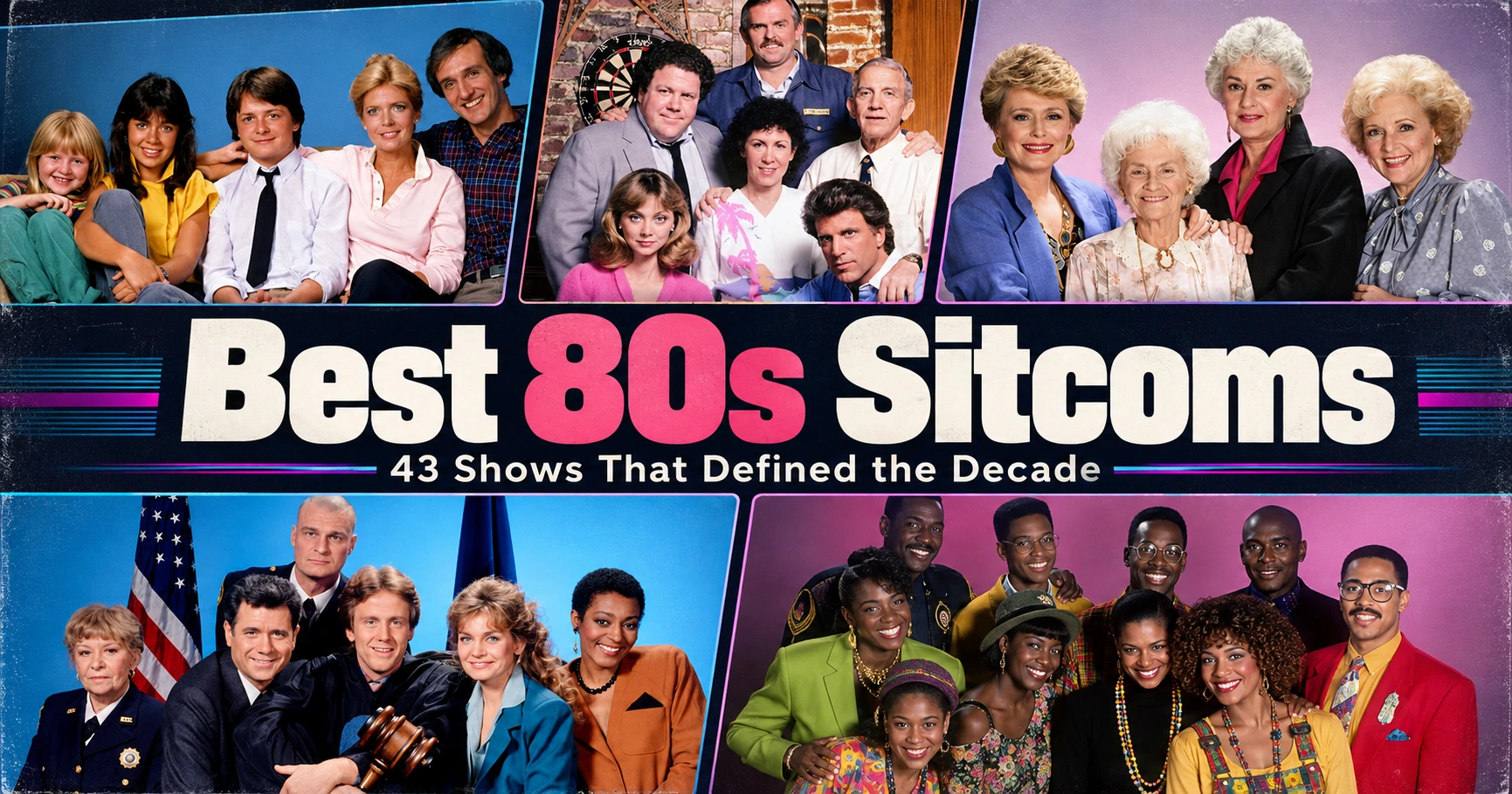
Best 80s Sitcoms: The Shows That Defined Comedy
If you grew up with one TV in the house, these shows were part of the furniture. From Cheers and Family Ties to Night Court, The Golden Girls and Roseanne, the best 80s sitcoms turned bars, kitchens, courtrooms and suburban living rooms into places we visited every week — whether we had the remote or not.
What were the best 80s sitcoms?
The best 80s sitcoms include Cheers, Family Ties, The Golden Girls, The Cosby Show, Night Court, Newhart, Who’s the Boss?, Growing Pains, Roseanne, A Different World, Perfect Strangers and Designing Women. This guide goes deeper with 43 shows, including the syndicated oddballs and half-forgotten favorites that were just as much a part of growing up Gen X.
Why 80s Sitcoms Took Over the Living Room
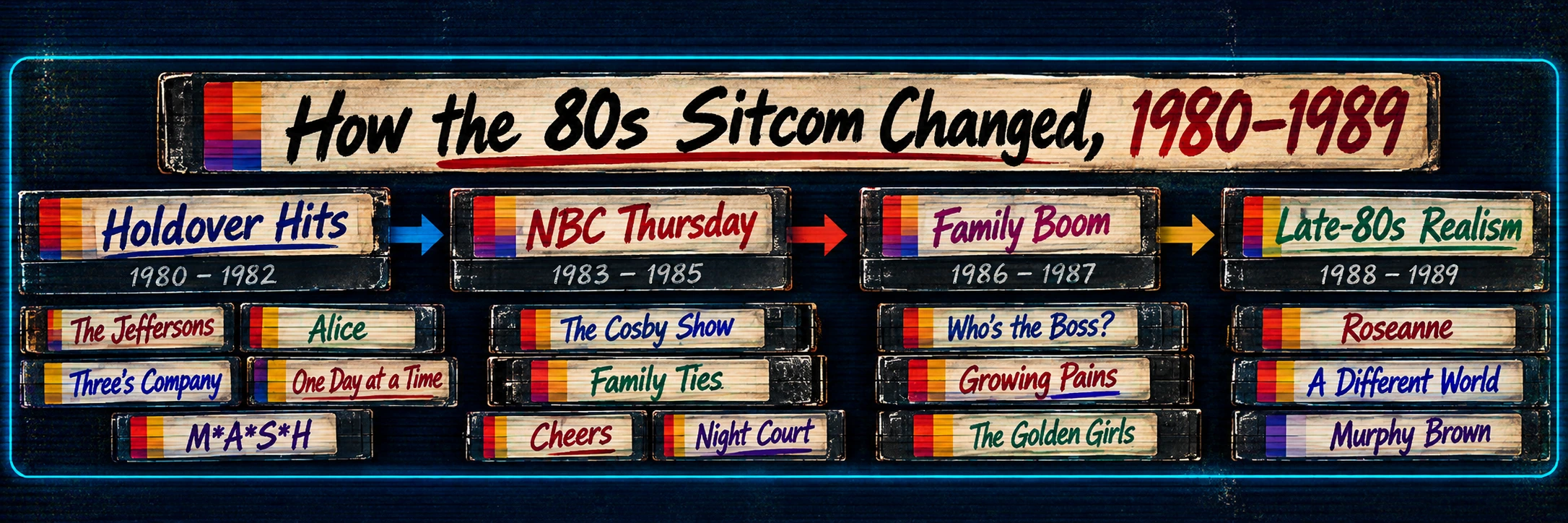
The 1980s did not begin with a clean comedy reset. Early in the decade, The Jeffersons, Three’s Company, Alice, One Day at a Time and M*A*S*H were still huge parts of the schedule. The full 1980s TV guide makes that overlap obvious, and the 1981 and 1982 Nielsen rankings show it in black and white: the first version of 80s comedy still had one foot planted firmly in the 70s.
Then the center moved. NBC’s 1984 Thursday lineup — The Cosby Show, Family Ties, Cheers and Night Court, followed by Hill Street Blues — became one of the most famous blocks of programming in network history. The bigger story is what happened around it: family comedy came roaring back, ensemble comedy got smarter, and the decade made room for everything from a Boston bar to a Miami kitchen table to a Manhattan night court.
By the time Roseanne arrived in 1988, sitcoms had stretched again. The living room could be wealthy or working class, traditional or improvised, suburban or urban. The best 1980s sitcoms were not one style. They were a decade of television learning how many different kinds of rooms an audience would happily return to every week.
18 Best 80s Sitcoms That Defined the Decade
Numbers matter, but they are not the whole story. The year-by-year Nielsen lists show what America watched; this list is about the 18 sitcoms that best explain the decade — the ratings monsters, the craft giants, the family-room fixtures and the shows that left fingerprints all over what came next. These are the classic 80s sitcoms whose characters, chemistry and weekly routines still make the decade snap back into focus.
Cheers
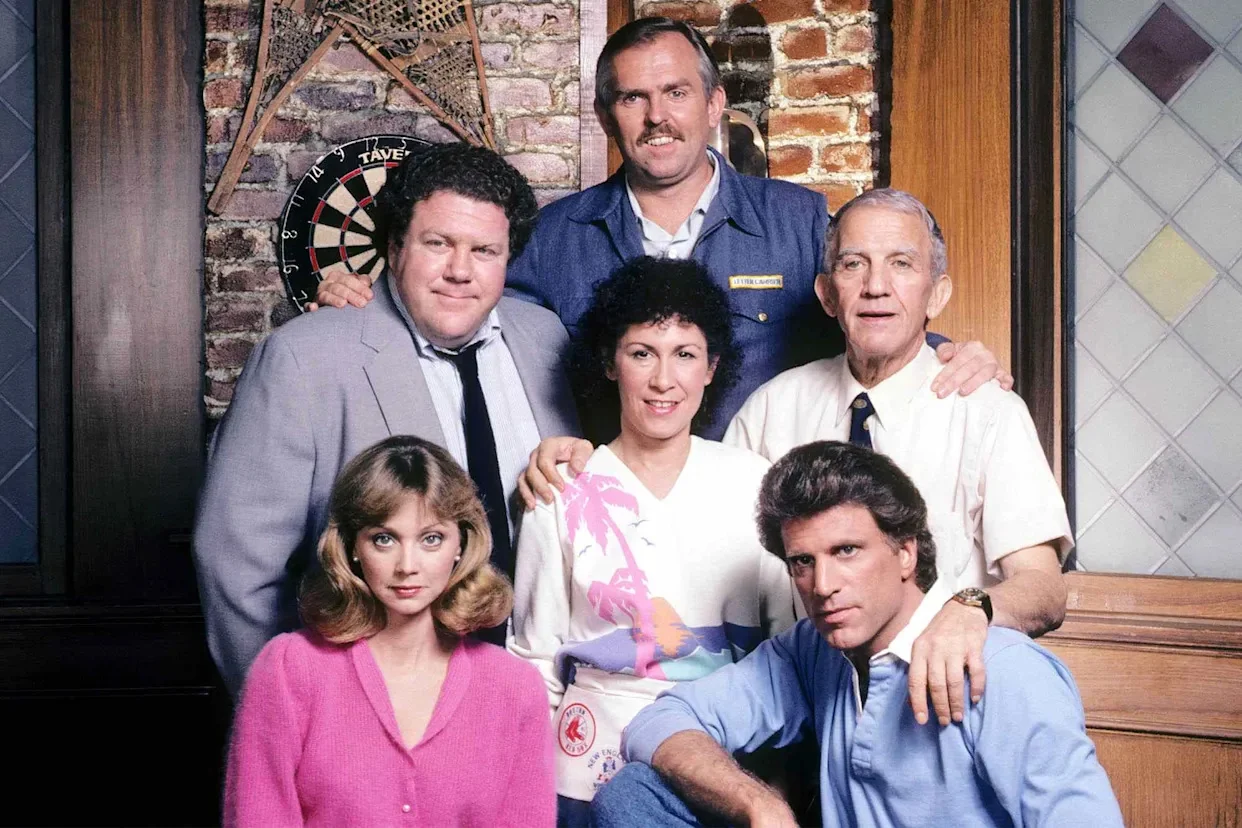
Cheers is the kind of sitcom that makes its premise sound almost too small: people sit in a Boston bar and talk. But that room became one of the richest comic worlds of the decade because the show understood that the bar was not the story — the people who kept coming back were. Sam Malone’s vanity, Diane Chambers’ intellectual certainty, Carla Tortelli’s hostility, Norm Peterson’s ritual entrance and Cliff Clavin’s bottomless supply of questionable facts all fit together because every character had a different reason for needing the place.
The cast evolved without breaking the show. Coach gave the early seasons warmth; Woody Boyd brought a different kind of innocence after Nicholas Colasanto’s death; Frasier Crane grew from romantic complication into an essential regular; and Rebecca Howe changed the Sam-Diane chemistry without simply copying Diane. That flexibility is a huge part of why the series could survive major departures and still feel like Cheers.
For Gen X viewers, the show also became part of the weekly rhythm of NBC’s rise. It began as a critical favorite with modest ratings and grew into one of the network’s defining comedies. More than almost any sitcom of the period, it proved that character accumulation mattered: the jokes landed harder because viewers already knew who would exaggerate, who would roll their eyes and who would still be sitting on the same stool when the next episode started.
Family Ties
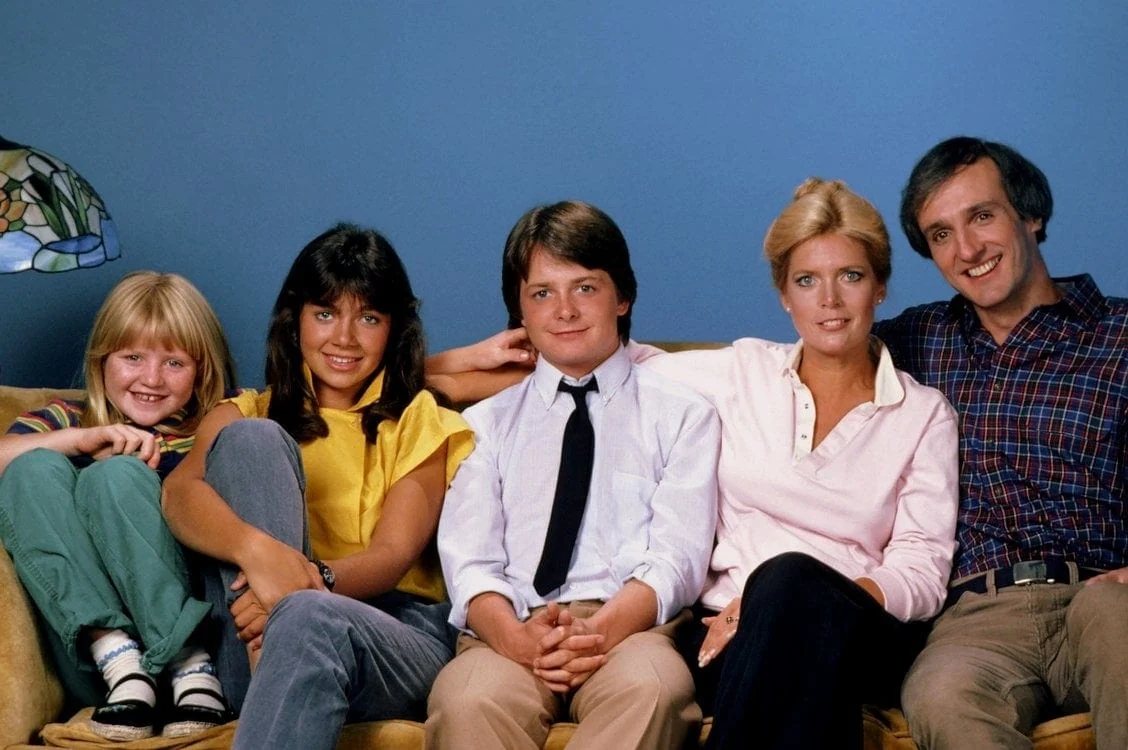
Family Ties started with a perfect early-80s generational joke: Steven and Elyse Keaton were former 1960s idealists who had somehow raised Alex P. Keaton, a teenage conservative who treated Ronald Reagan, Wall Street and a three-piece suit like sacred objects. That conflict gave the series a clear identity, but the show would have burned out quickly if politics were the only thing it had. Instead, the Keatons became a believable family whose arguments kept circling back to affection.
Michael J. Fox’s Alex became the breakout because the character was more complicated than his slogans. He could be smug, ambitious and hilariously self-important, then suddenly vulnerable when a story pushed him beyond the limits of his confidence. Meredith Baxter and Michael Gross gave Steven and Elyse enough authority and warmth to keep the show from becoming “Alex and everybody else,” while Justine Bateman’s Mallory provided a completely different teenage worldview. Tina Yothers and later Brian Bonsall filled out a household that felt crowded in a recognizable way.
The series also captures one of the central tensions of 80s family television: parents who came of age in one America trying to understand children shaped by another. That made Family Ties more than a topical comedy. It became a weekly argument about what success, family and adulthood were supposed to look like — which is a big reason the Keaton living room still feels like such a precise piece of the decade.
The Golden Girls
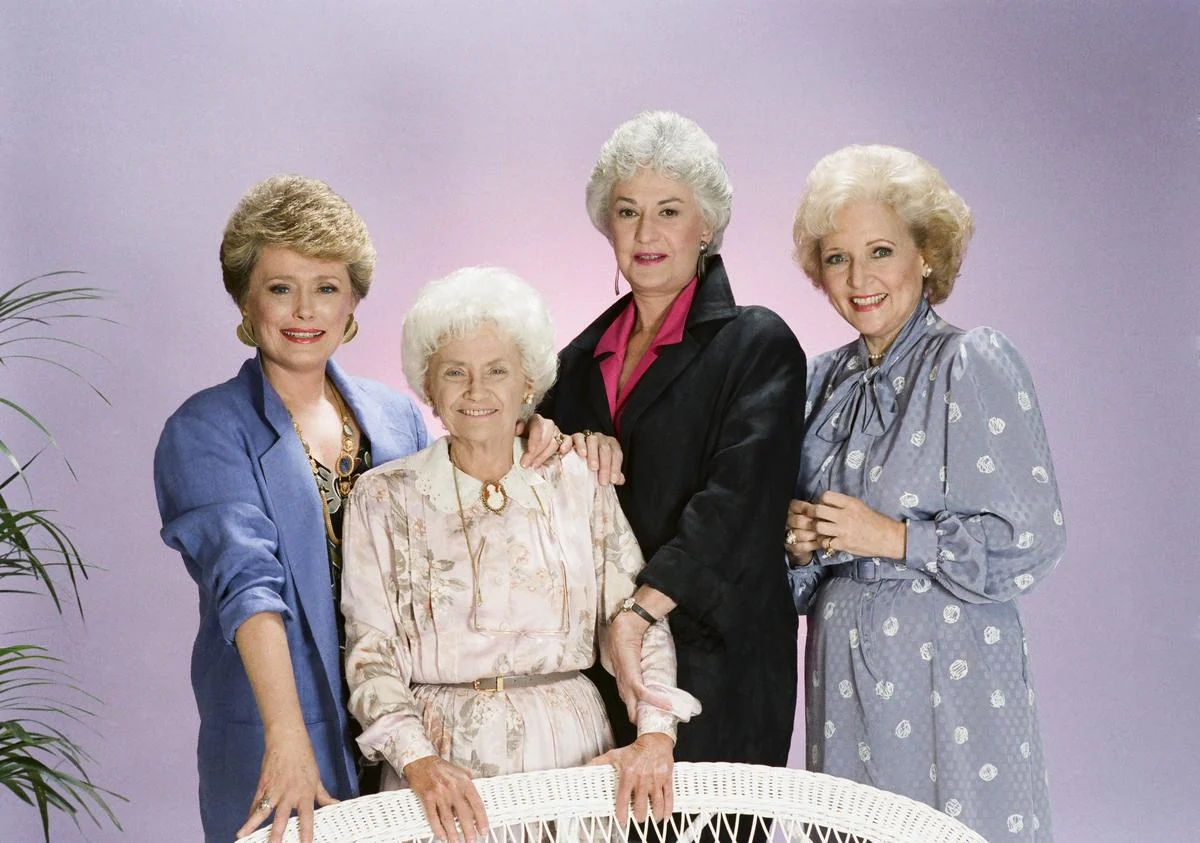
When The Golden Girls premiered in 1985, its basic setup was quietly radical for mainstream network television: four older women were not supporting players, someone’s mother, or the punch line to somebody else’s story. Dorothy, Rose, Blanche and Sophia were the center. Their dating lives, work, sex, health, money, friendships and family histories were the material. The show never acted as if those subjects needed to be softened just because the characters were older.
The chemistry was almost mathematically clean. Bea Arthur’s Dorothy could flatten a room with one look. Betty White made Rose’s innocence and St. Olaf stories stranger the longer she talked. Rue McClanahan turned Blanche’s confidence into a comic weapon, while Estelle Getty’s Sophia could puncture everybody’s dignity in a single sentence. The Miami house and, especially, the kitchen table became one of the decade’s great sitcom spaces because nearly any story could end with the four women talking it through over food.
The deeper reason the show mattered is that it treated friendship as a family structure. These women had children, ex-husbands and complicated histories, but the people reliably present at the end of the day were each other. That idea helped widen what a family-centered sitcom could be, and it did so while remaining one of the broadest, most accessible comedies on television.
The Cosby Show
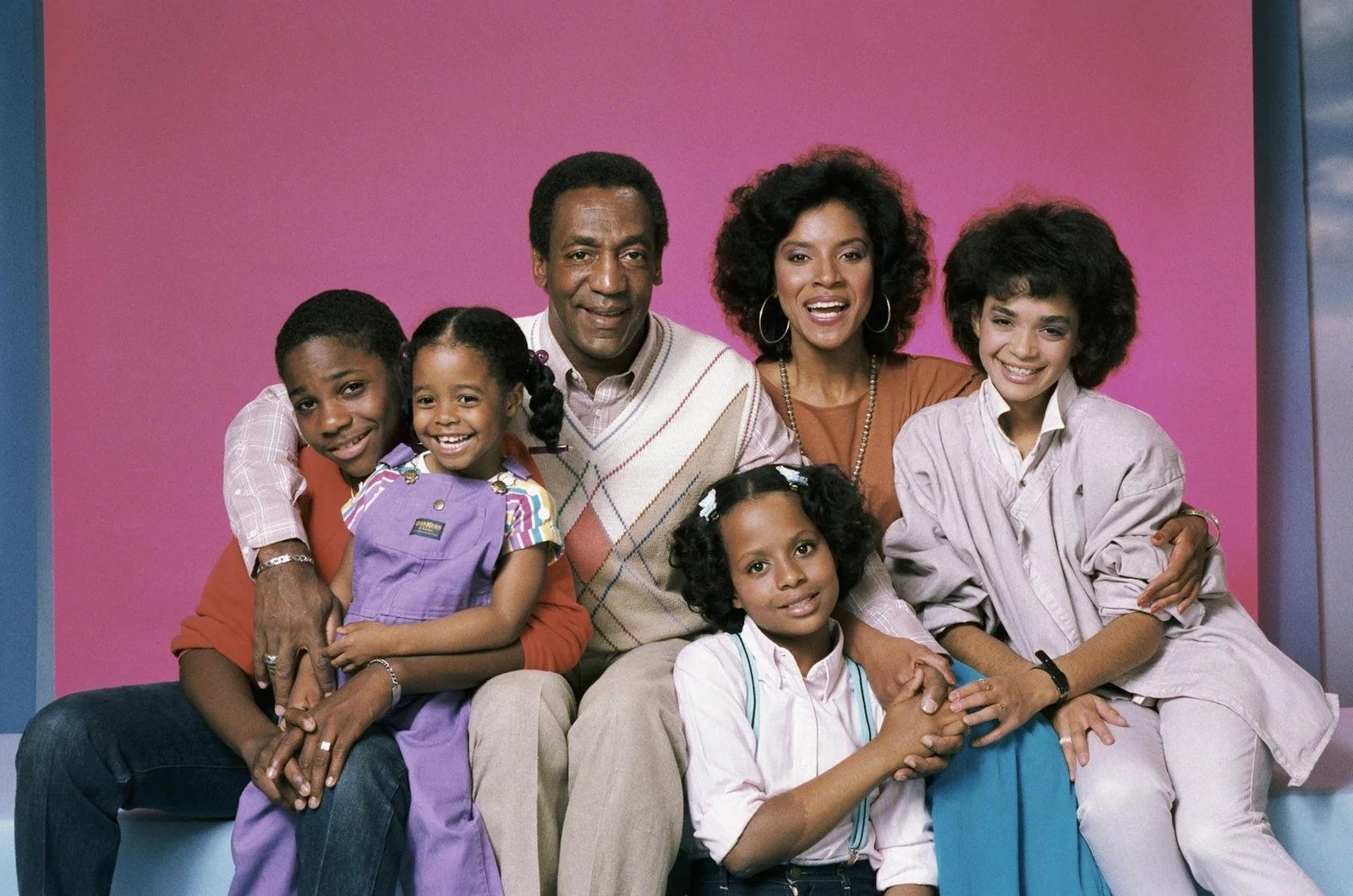
It is impossible to explain 1980s television ratings without The Cosby Show. Whatever viewers make of the series today in light of Bill Cosby’s later criminal history, the program’s impact on network television during its original run was enormous. Cliff and Clair Huxtable were affluent professionals raising five children in a Brooklyn brownstone, and the show’s success helped place family comedy back at the absolute center of prime time.
The ensemble mattered as much as the premise. Phylicia Rashad’s Clair was never written as a secondary parent; she was intelligent, authoritative and fully capable of ending an argument before Cliff finished turning it into a performance. The children were distinct enough to generate their own stories — Sondra, Denise, Theo, Vanessa and Rudy each represented a different stage of family life — which gave the show years of material without requiring a gimmick beyond the household itself.
Its industry effect reached beyond one series. NBC’s Thursday schedule became a launchpad and audience funnel for Family Ties, Cheers and Night Court, helping create one of the defining programming blocks of the decade. Historically, the series also put an upper-middle-class Black family at the center of America’s most-watched television. That cultural fact and its ratings dominance remain part of the story even when the legacy of its star makes revisiting the show more complicated now.
Night Court
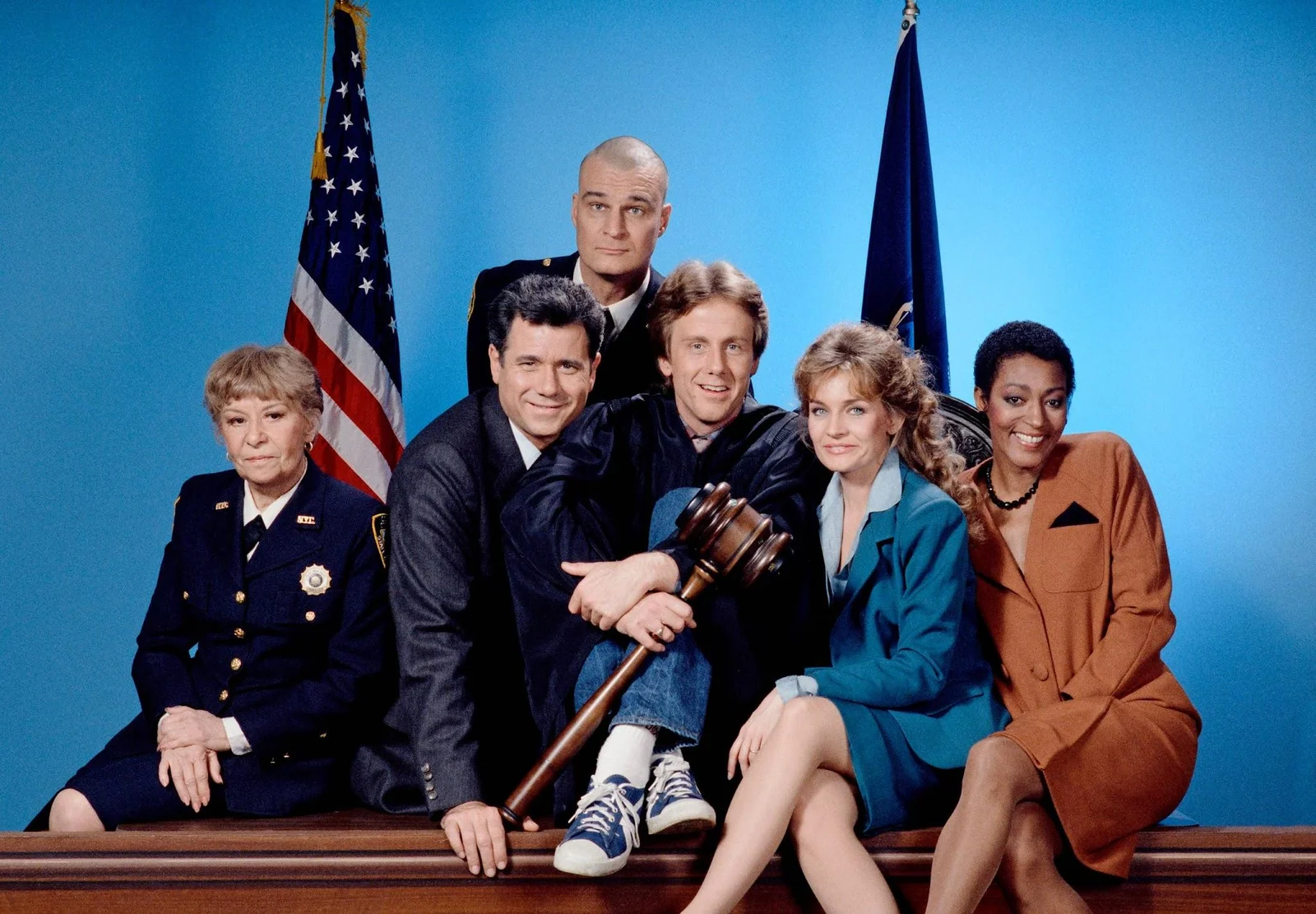
A Manhattan arraignment court operating after dark gave Night Court permission to be weird before the first joke was written. Judge Harry Stone’s courtroom attracted petty criminals, eccentrics, con artists, oddball witnesses and people who seemed to have wandered in from an entirely different television show. The setting made almost any premise plausible because nighttime court was already a place where normal rules felt slightly suspended.
Harry Anderson played Stone with a mix of boyish enthusiasm, compassion and magician’s mischief. John Larroquette’s Dan Fielding was the opposite: ambitious, vain and spectacularly inappropriate, yet too funny and eventually too human to remain a simple villain. Richard Moll’s Bull Shannon gave the room a visual punch line before he spoke, while Markie Post’s Christine Sullivan, Charles Robinson’s Mac and Marsha Warfield’s Roz helped turn the courthouse into a real ensemble rather than a parade of defendants.
The show mattered because it proved a mainstream hit could be surreal without becoming inaccessible. One episode could be almost cartoonish; the next could land on loneliness, grief or compassion. For Gen X viewers, it also came attached to the rhythm of NBC Thursday nights. You did not need to know the legal system. You just needed to hear that theme and know the courtroom was open.
Newhart
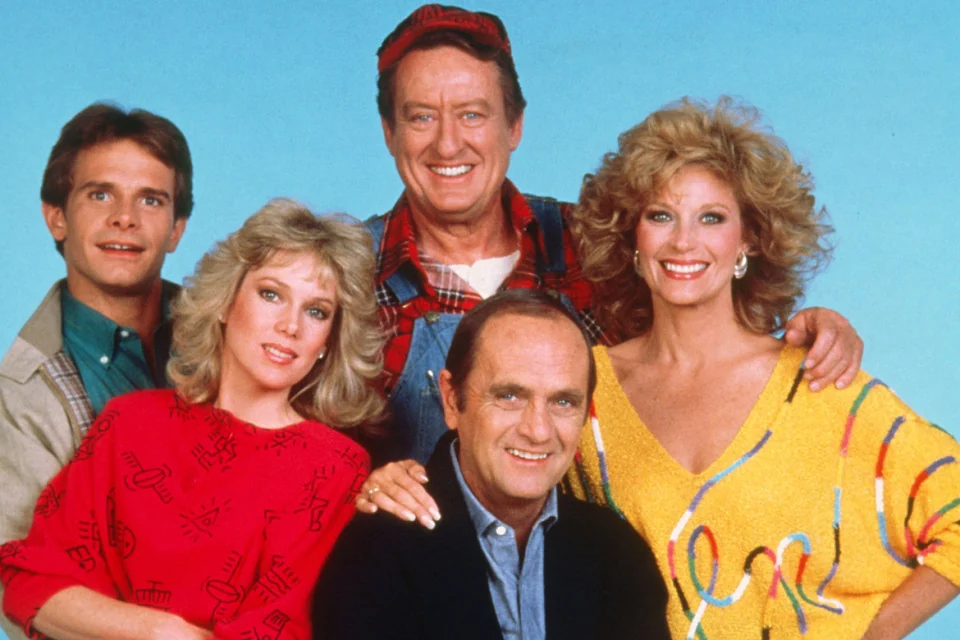
Newhart was built around one of comedy’s most durable weapons: Bob Newhart listening to somebody ridiculous. As Dick Loudon, an author who leaves New York to run an inn in a small Vermont town, Newhart spent much of the series trying to remain rational while the people around him became progressively more eccentric. The laughs often came from the pause after someone said something absurd and Dick realized he was the only person in the room who understood how absurd it was.
Mary Frann’s Joanna gave Dick a partner who could play along or puncture his frustration, while Tom Poston’s handyman George Utley added warmth. Peter Scolari’s Michael and Julia Duffy’s Stephanie embodied a spectacularly self-absorbed 80s yuppie energy. Then Larry, Darryl and Darryl entered the show’s orbit and became a running joke so efficient that simply introducing themselves could get a response.
The series is important because it sits outside the louder family-sitcom boom. Its humor was drier, slower and more dependent on character rhythm. It trusted silence. It trusted the audience to notice tiny reactions. And by the time it reached its famous finale, Newhart had turned that patience into one of the most memorable long-form jokes in sitcom history.
Who’s the Boss?
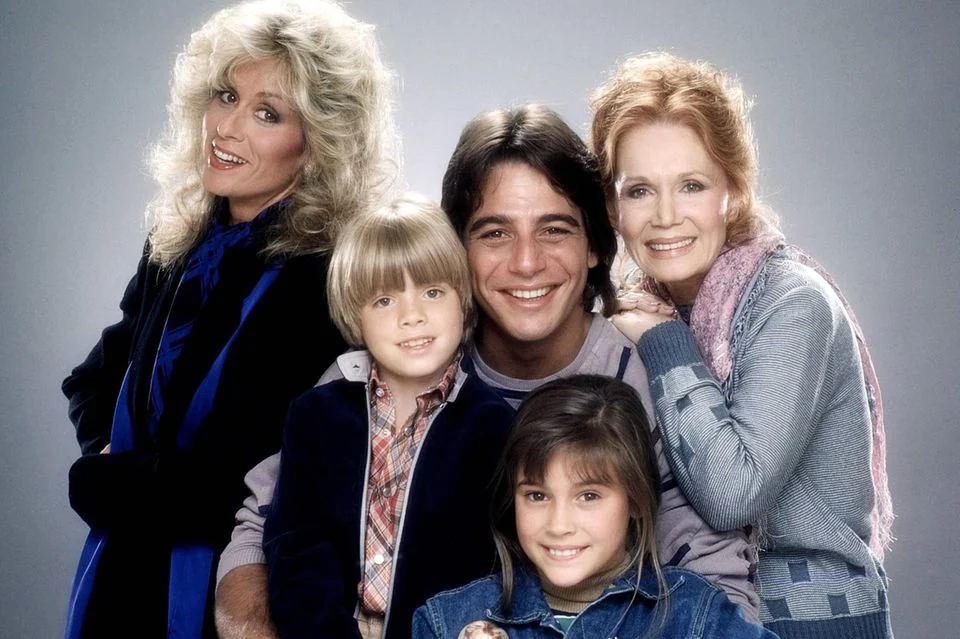
The premise of Who’s the Boss? was simple enough to sell in one sentence and modern enough to keep generating stories: former baseball player Tony Micelli moves from Brooklyn to Connecticut with his daughter Samantha and becomes the live-in housekeeper for advertising executive Angela Bower and her son Jonathan. The gender-role reversal was obvious, but the show never treated Tony’s domestic competence as a humiliation. He was good at the job, proud of his daughter and emotionally available in a way television dads had not always been.
Tony Danza and Judith Light gave the series its long-term engine. Their relationship could move from employer-employee friction to friendship to romantic tension without erasing the household that had formed around them. Alyssa Milano’s Samantha grew from a kid into a teenager in front of the audience, Danny Pintauro’s Jonathan gave Tony another child to care about, and Katherine Helmond’s Mona supplied a wonderfully independent older-adult perspective that kept the show from becoming too tidy.
For Gen X, the show was one of ABC’s most reliable family comedies and a good example of why the decade’s sitcom boom was not as traditional as it sometimes looks in hindsight. The home was conventional; the arrangement inside it was not. The series made that contradiction feel completely normal.
Growing Pains
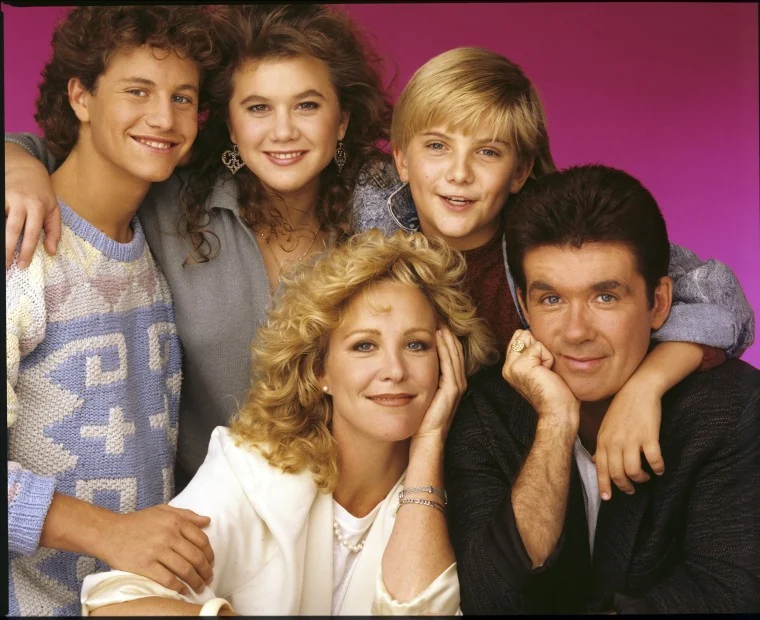
Growing Pains arrived in 1985 with a family setup that felt familiar and slightly rearranged. Psychiatrist Jason Seaver moved his practice into the family home so his wife Maggie could return to work as a reporter. That gave the series a father who was unusually present for the daily kid problems while still treating both parents as adults with careers and identities outside the house.
Alan Thicke and Joanna Kerns gave the Seaver household a comfortable center, but Kirk Cameron’s Mike became the breakout. Mike’s confidence, shortcuts and endless attempts to talk his way out of consequences made him a very specific kind of 80s teenage lead. Tracey Gold’s Carol was smarter, more responsible and therefore frequently exasperated by him, while Jeremy Miller’s Ben occupied the younger-sibling role with enough mischief to keep the family from dividing into “Mike versus the adults.”
The show’s strength was that it rarely needed a huge gimmick. School, dating, sibling fights, work, responsibility and parents realizing their kids were changing could carry an episode. That everyday quality is why the Seaver house still feels familiar to viewers who grew up with the series. It was idealized, sure, but it was idealized in a way that still allowed everybody to be annoyed with each other before dinner.
Roseanne
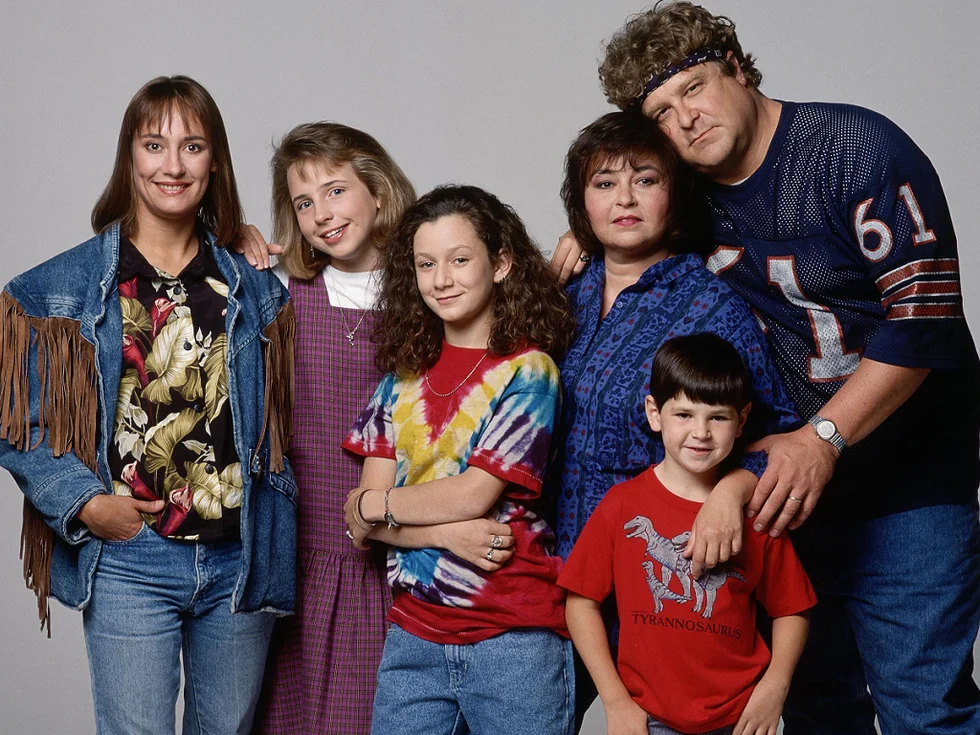
When Roseanne premiered in 1988, the Conner house looked and sounded different from the polished sitcom homes that had dominated much of the decade. Roseanne and Dan worked, worried about money, got tired, snapped at the kids and did not always resolve problems with the kind of speech that made the audience applaud. Financial pressure was not saved for a special episode. It was part of the wallpaper.
Roseanne Barr’s stand-up voice gave the show its point of view, while John Goodman’s Dan provided warmth without sanding down the family’s rough edges. Laurie Metcalf’s Jackie could be chaotic, supportive and exasperating in the same scene. The kids — Becky, Darlene and D.J. — were written with sharper edges than many sitcom children, especially Sara Gilbert’s Darlene, whose dry delivery made her feel like she was already commenting on the genre from inside it.
The show’s immediate success mattered because it signaled a late-decade change. Audiences were ready for a family sitcom that looked less aspirational and more economically recognizable. The 90s would carry that story much further, but the breakthrough belongs to the 80s: Roseanne arrived before the decade was over and helped reset what a mainstream family comedy could sound like.
A Different World
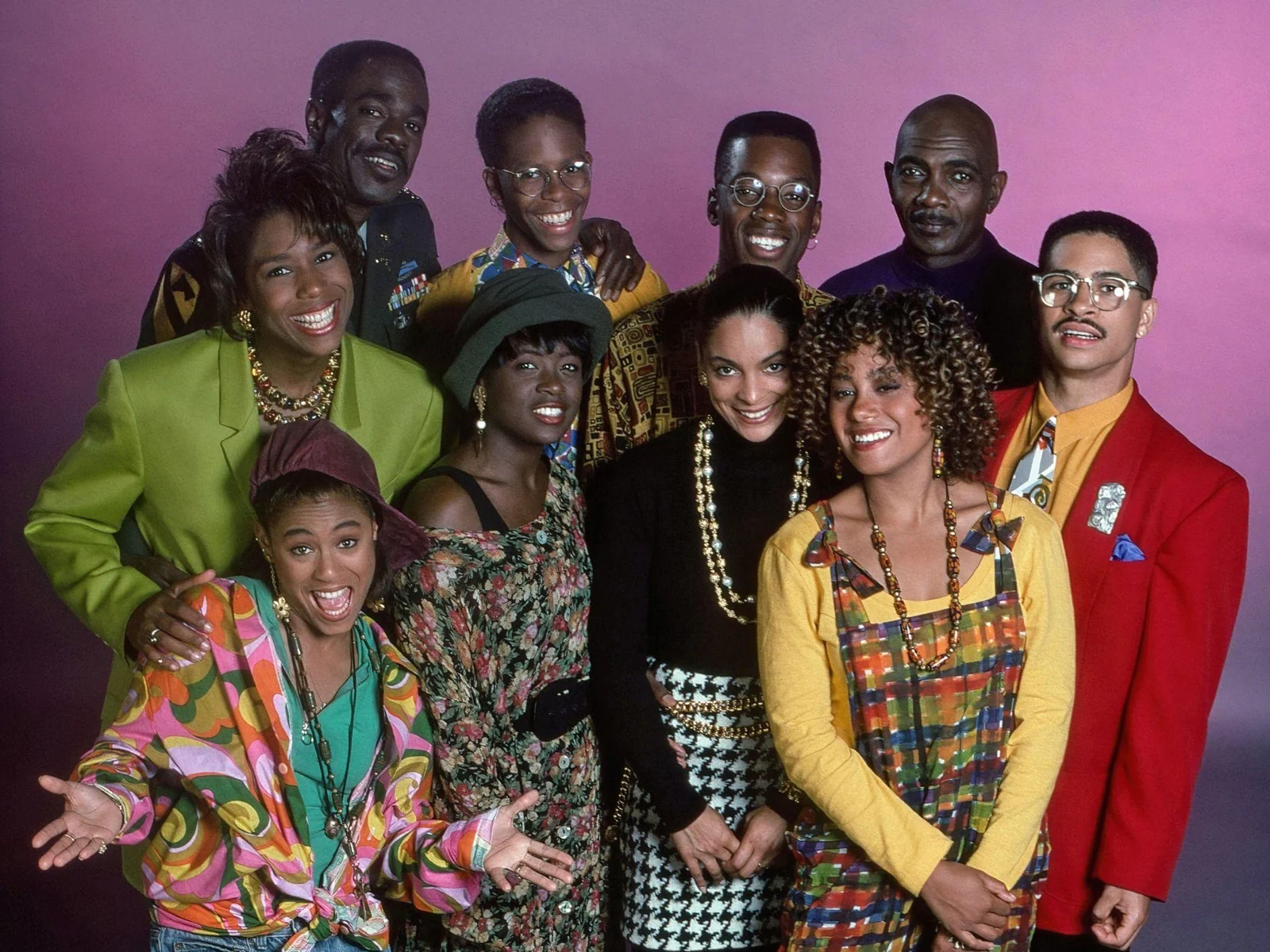
A Different World began in 1987 as a vehicle connected directly to The Cosby Show, following Denise Huxtable to the fictional historically Black Hillman College. But the show became much more important once it stopped behaving like an extension of another series and started building Hillman into a world of its own. Under Debbie Allen’s creative influence, the campus, friendships and experiences of Black college students moved closer to the center.
The ensemble gave the show its identity: Jasmine Guy’s Whitley Gilbert was privileged, theatrical and far more layered than her first impression suggested; Kadeem Hardison’s Dwayne Wayne turned flip-up glasses and awkward confidence into one of the era’s most recognizable character looks; Dawnn Lewis, Darryl M. Bell, Cree Summer, Charnele Brown and Glynn Turman helped make the campus feel populated rather than staged around one star.
For Gen X viewers, the series mattered because it moved the coming-of-age sitcom beyond the family home. College meant friendships, ambition, class differences, romance and the first serious choices of adulthood. By the end of the 80s, A Different World had become its own institution — one that would carry much of its cultural weight into the early 90s without losing the foundation built in the decade before.
Perfect Strangers

Perfect Strangers took one of television’s oldest comedy structures — two mismatched people forced to share a life — and gave it a very 80s immigrant-cousin twist. Larry Appleton had moved to Chicago to build an independent adult life when Balki Bartokomous arrived from the fictional island of Mypos and effectively destroyed Larry’s plan to be a controlled, sophisticated city person.
Mark Linn-Baker’s Larry was the anxious planner; Bronson Pinchot’s Balki was the emotional, literal-minded optimist. That difference created verbal misunderstandings, but the series became memorable because both actors were willing to turn an apartment into a physical-comedy obstacle course. Balki’s “Dance of Joy,” Larry’s increasingly desperate reactions and the pair’s ability to escalate a tiny problem into total chaos gave the show a live-wire energy that was different from the calmer family comedies around it.
The series also became important to ABC’s late-80s comedy identity. Its success helped establish a lane for younger, broad, family-friendly comedies that would soon define Friday nights. Underneath the catchphrases, the show worked because Larry and Balki genuinely liked each other. The culture clash was the setup; the cousin relationship was the reason viewers stayed.
Designing Women
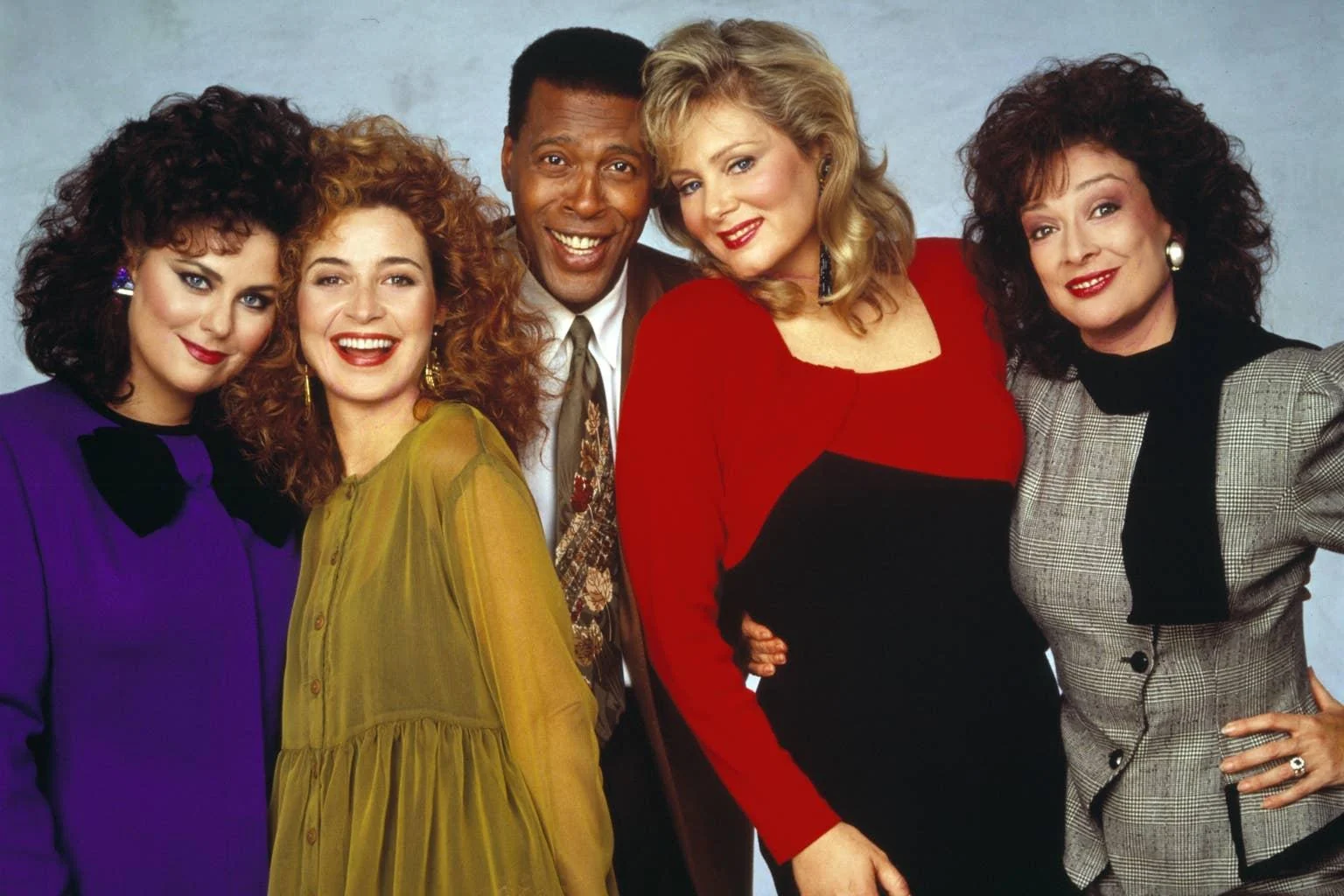
Designing Women premiered in 1986 with a premise that sounded modest — four women working at an Atlanta interior-design firm — and quickly revealed that the firm was mostly a stage for arguments, friendships, politics and some of the sharpest speeches on network television. Dixie Carter’s Julia Sugarbaker could turn an insult into a closing argument. Delta Burke’s Suzanne was vain, glamorous and much more vulnerable than she wanted anyone to know.
Annie Potts brought warmth and practicality as Mary Jo, while Jean Smart’s Charlene supplied optimism and curiosity without becoming naive. Meshach Taylor’s Anthony added another point of view to a workplace that could move from absurd client problems to race, sexism, class and Southern identity without feeling like an entirely different show had arrived.
What made the series distinct was its willingness to let the women be adult, opinionated and occasionally wrong. The characters did not exist primarily as wives or mothers, even when family life mattered to them. They had work, friendships and public opinions. For a decade filled with household comedies, Designing Women demonstrated how much mileage television could get from a workplace where the real product was conversation.
227
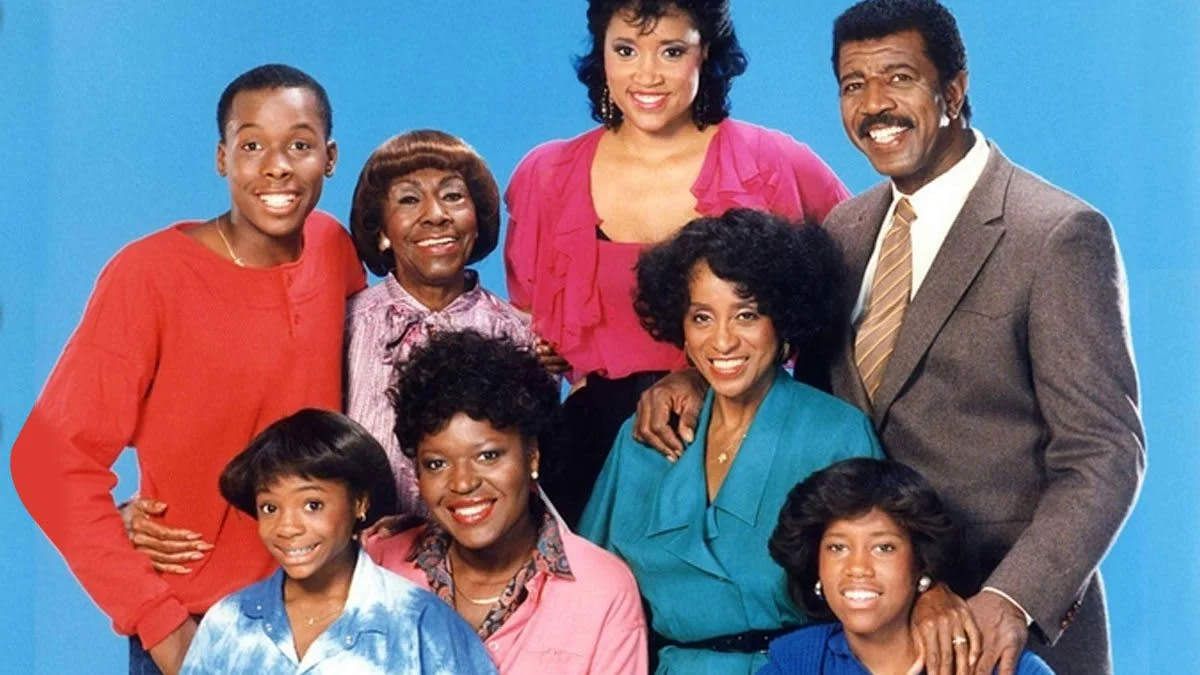
227 expanded the family sitcom into a neighborhood sitcom. Marla Gibbs, already familiar to viewers from The Jeffersons, played Mary Jenkins, whose Washington, D.C. apartment building gave the show a steady stream of family stories, neighbor gossip and front-stoop conversations. The setting mattered because the Jenkins family was the center, but the building was the world.
Hal Williams played Mary’s husband Lester with a grounded presence, while Regina King grew up on screen as their daughter Brenda. Alaina Reed Hall’s Rose brought another layer of community, but Jackée Harry’s Sandra Clark was the character who could change the temperature of the room just by entering it. Harry’s performance was theatrical, flirtatious and completely committed, giving the series one of the most recognizable comic personalities of NBC’s mid-to-late-80s lineup.
The importance of 227 is easy to lose when nostalgia narrows the decade to a few mega-hits. It was part of a much larger NBC comedy ecosystem and a strong example of Black family and community life existing on television without the show needing to carry the same cultural burden as a ratings phenomenon. It could simply be funny, specific and rooted in a place viewers understood.
Kate & Allie
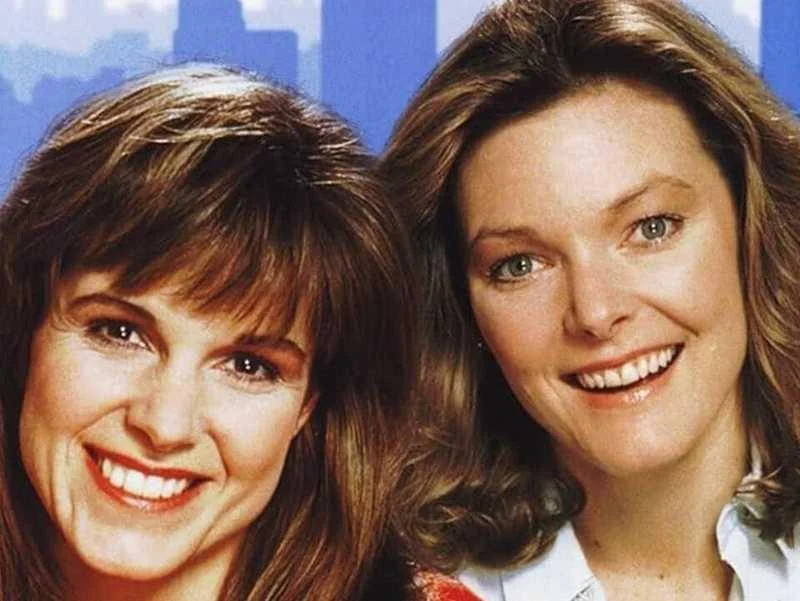
Kate & Allie looked gentle, but its basic household arrangement was one of the more contemporary premises of the mid-80s. Kate McArdle and Allie Lowell were divorced mothers who decided to share a Greenwich Village home and raise their children together. Instead of treating divorce as the end of the family story, the series began there and asked what a practical, supportive life afterward might look like.
Susan Saint James and Jane Curtin gave the title characters different energies that fit together naturally. Kate was looser and more spontaneous; Allie was more cautious and organized. Their children complicated the arrangement in ways that kept the series from feeling like a two-person concept, and the show generally trusted ordinary domestic problems — work, dating, parenting, money, boundaries — to carry the comedy.
That low-key quality is exactly why Kate & Allie deserves a place in a decade overview. Not every important sitcom announced itself with a catchphrase or high-concept gimmick. Some simply reflected how family structures were changing. At a time when divorce had become a common part of American family life, the show put two women building a workable household at the center and treated that choice as normal rather than tragic.
ALF
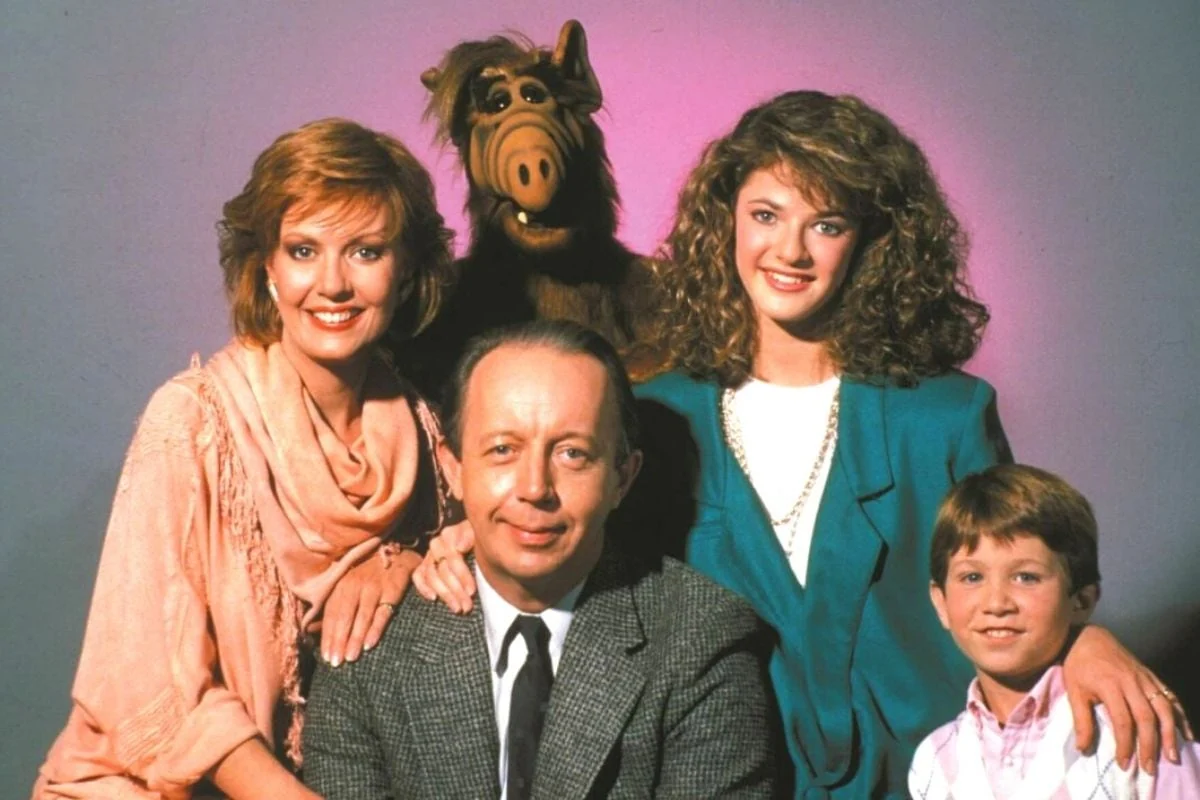
There may be no better example of an 80s sitcom premise than ALF: an alien from the planet Melmac crashes into a suburban family’s garage, moves into the house and spends the next four seasons insulting everybody while trying not to get captured by the government. The concept was pure high-concept television, but the series survived because the Tanner family gave the absurdity a stable domestic frame.
Max Wright’s Willie Tanner was the increasingly exhausted adult trying to keep the secret together. Anne Schedeen’s Kate was often the person least impressed by ALF’s schemes. Lynn and Brian Tanner gave the alien younger allies, while ALF himself became less a visitor than the family’s impossible houseguest — selfish, funny, occasionally sincere and always one bad decision away from exposing everybody.
For Gen X kids, the character was everywhere beyond the show: merchandise, talk-show appearances, lunchboxes and general pop-culture saturation made ALF feel larger than a single NBC time slot. But the television series worked because it kept returning to a familiar sitcom question: what happens when one person in the house refuses to behave? The answer just happened to involve a puppet from space with a dangerous interest in the family cat.
Married… with Children
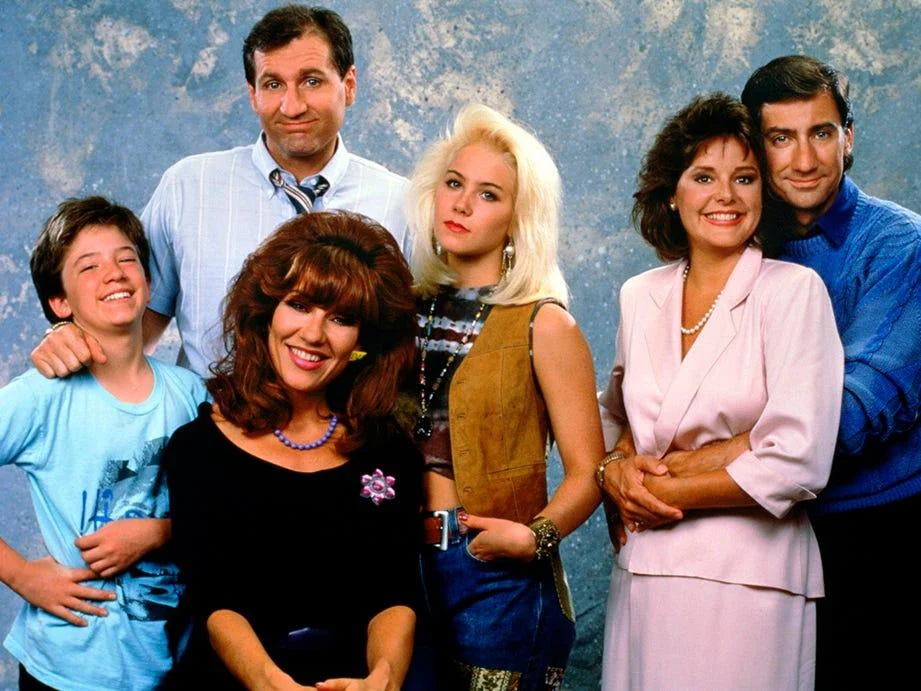
When Fox launched Married… with Children in 1987, the network needed shows that looked different from the big three. The Bundys were that difference in sitcom form. Al hated his shoe-store job, complained constantly about his family and treated his high-school football glory like ancient mythology. Peggy avoided housework with almost ideological commitment. Kelly and Bud were not written as adorable sitcom children; they were weapons in the family insult economy.
Ed O’Neill and Katey Sagal understood that the show worked only if the characters were exaggerated without becoming completely hollow. Christina Applegate’s Kelly and David Faustino’s Bud grew into essential parts of the rhythm, while the family’s neighbors Steve and Marcy gave the Bundys somebody respectable to offend. The jokes were broader, meaner and more sexual than what viewers expected from the traditional family block.
The show’s importance in the 80s is partly institutional. Fox was still establishing itself as a fourth broadcast network, and Married… with Children gave it a recognizable attitude: irreverent, cheaper-looking, less concerned with good taste and willing to mock the television-family ideal. The series would run deep into the 90s, but its identity was forged in those late-80s years when merely being on Fox felt slightly outside the mainstream.
The Facts of Life
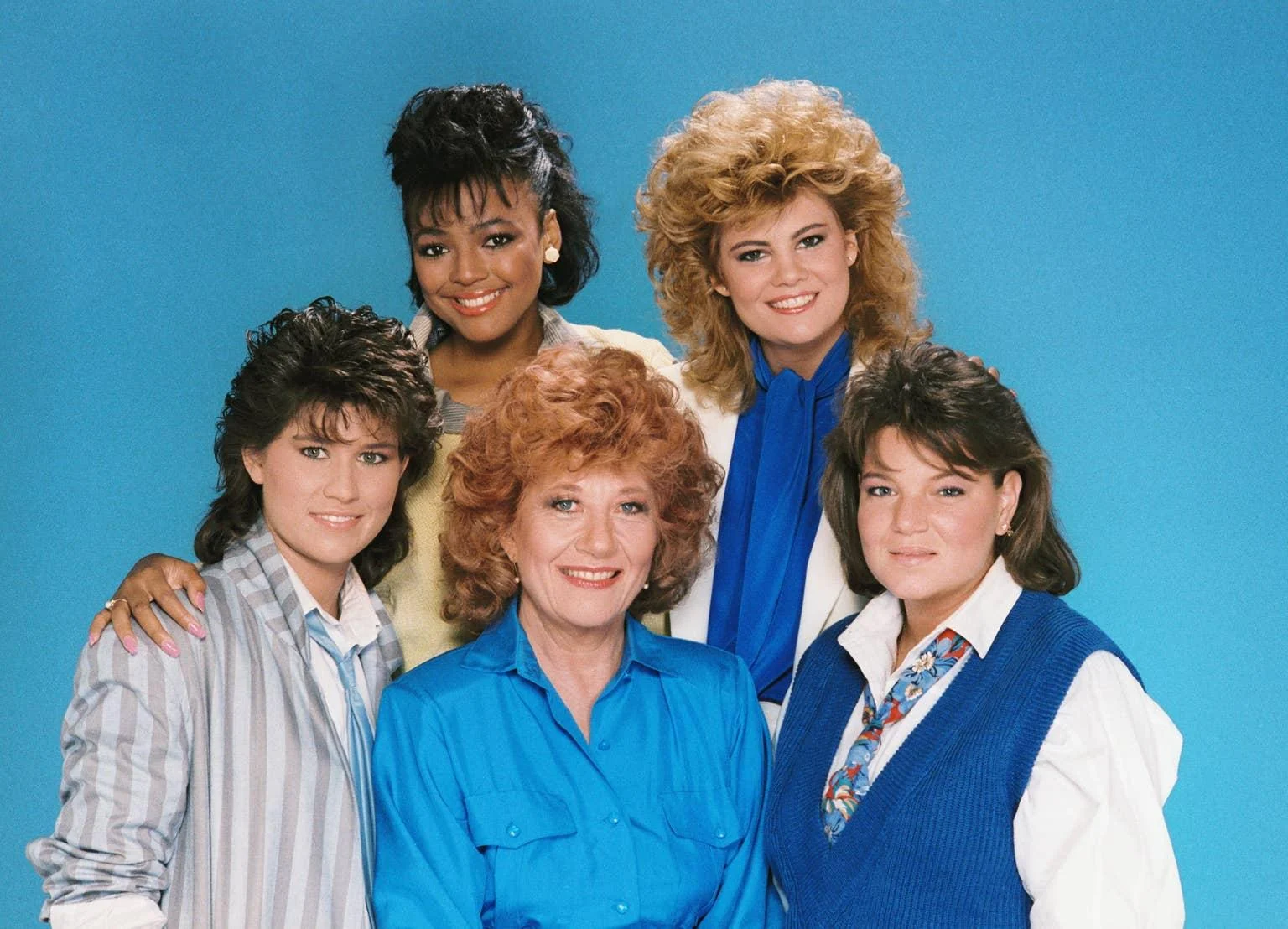
The Facts of Life technically began in 1979 as a spinoff of Diff’rent Strokes, but its cultural life belongs overwhelmingly to the 80s. The show tightened its original large cast into a core group built around Blair, Tootie, Natalie and Jo, with Charlotte Rae’s Mrs. Garrett serving as mentor, authority figure and emotional center. That smaller ensemble gave the series a clearer identity and allowed viewers to watch the girls change over time.
Lisa Whelchel’s Blair brought privilege and confidence; Kim Fields’ Tootie had curiosity and energy; Mindy Cohn’s Natalie had a distinctive comic voice; and Nancy McKeon’s Jo added a tougher, more working-class point of view that immediately changed the chemistry. The series moved with them from Eastland school stories into jobs, relationships and young adulthood rather than trying to keep everyone permanently frozen at one age.
For younger Gen X viewers, that progression mattered. The show dealt with friendship, body image, dating, family trouble, school pressure and the era’s familiar “serious issue” stories while still remaining a comfortable weekly comedy. It was one of the clearest examples of a sitcom audience growing alongside the cast — and of a spinoff eventually becoming more culturally durable than the premise that created it.
Silver Spoons
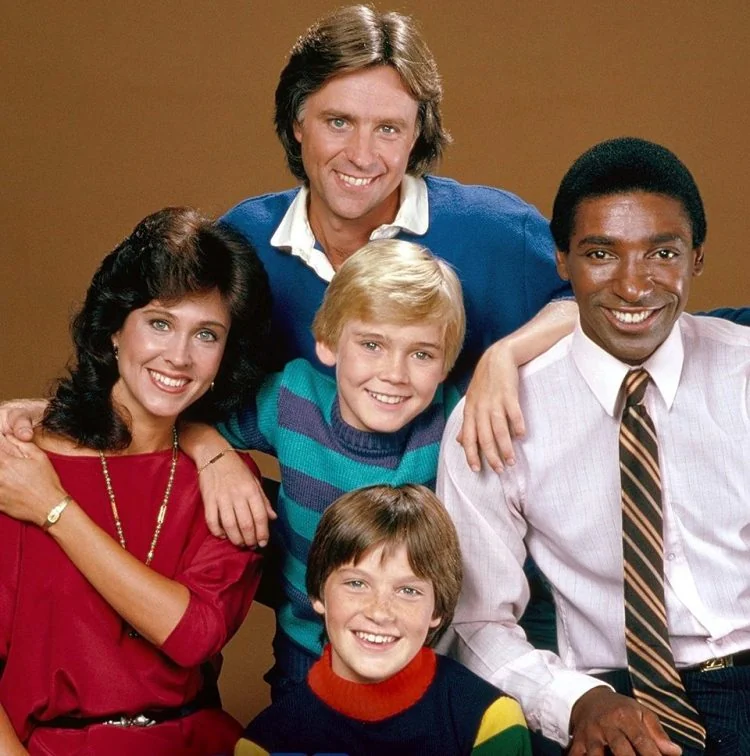
Silver Spoons was childhood wish fulfillment wrapped around a role-reversal family comedy. Ricky Stratton discovers that his wealthy father Edward is alive and living in a mansion filled with arcade games, toys and, most memorably, a miniature train that runs through the house. The visual fantasy was immediate: this was not merely a rich house; it looked like a kid had been allowed to design parts of it.
The actual sitcom engine was that Ricky was frequently more mature than Edward. Ricky Schroder played the son as responsible and earnest, while Joel Higgins’ Edward was wealthy, affectionate and not always eager to behave like a conventional adult. Erin Gray’s Kate added stability and eventually became more central to the family, while Franklyn Seales and later Alfonso Ribeiro helped broaden the household and Ricky’s social world.
For Gen X viewers, Silver Spoons sits in that category of shows where the set is almost as memorable as the stories. The arcade cabinet, train and mansion became part of the fantasy of 80s television abundance. Underneath it, though, the show kept returning to a simple family theme: money can buy an extraordinary playroom, but father and son still have to figure out how to become a family.
How 80s Sitcoms Took Over the Nielsen Ratings
Memory can flatten a decade. Nielsen rankings put the sequence back in place. Early-80s top tens were still crowded with 70s holdovers. By the middle of the decade, comedy had become the engine of network television again.
Family Sitcoms, Workplace Comedies and the Other Sides of 80s TV
The family room came back
80s family sitcoms became one of the decade’s dominant forms. Family Ties, The Cosby Show, Who’s the Boss?, Growing Pains, ALF and later Roseanne all used the home as the main stage, but they did not tell the same story. Some were aspirational, some cozy, some ideological, and some looked like the bills were sitting on the kitchen counter because they probably were.
The workplace became a hangout
Workplace sitcoms of the 1980s could turn a job into a second home. Cheers and Night Court made work feel less like employment and more like a reason for a cast of oddballs to keep colliding. The real pleasure was familiarity. You knew who would be sitting on which stool or standing behind which bench before the episode even started.
Adult friendship got more room
The Golden Girls built its family out of friendship and shared space rather than parents and kids. Designing Women did something similar through work and chosen community. Those shows widened what a mainstream sitcom could center without losing the broad audience.
The late decade got rougher around the edges
Married… with Children and Roseanne arrived with less interest in polished perfection. One was aggressively cartoonish, the other grounded in working-class pressure, but both reflected a late-80s appetite for comedy that pushed against the smooth network ideal.
Why Gen X Remembers These Shows So Clearly
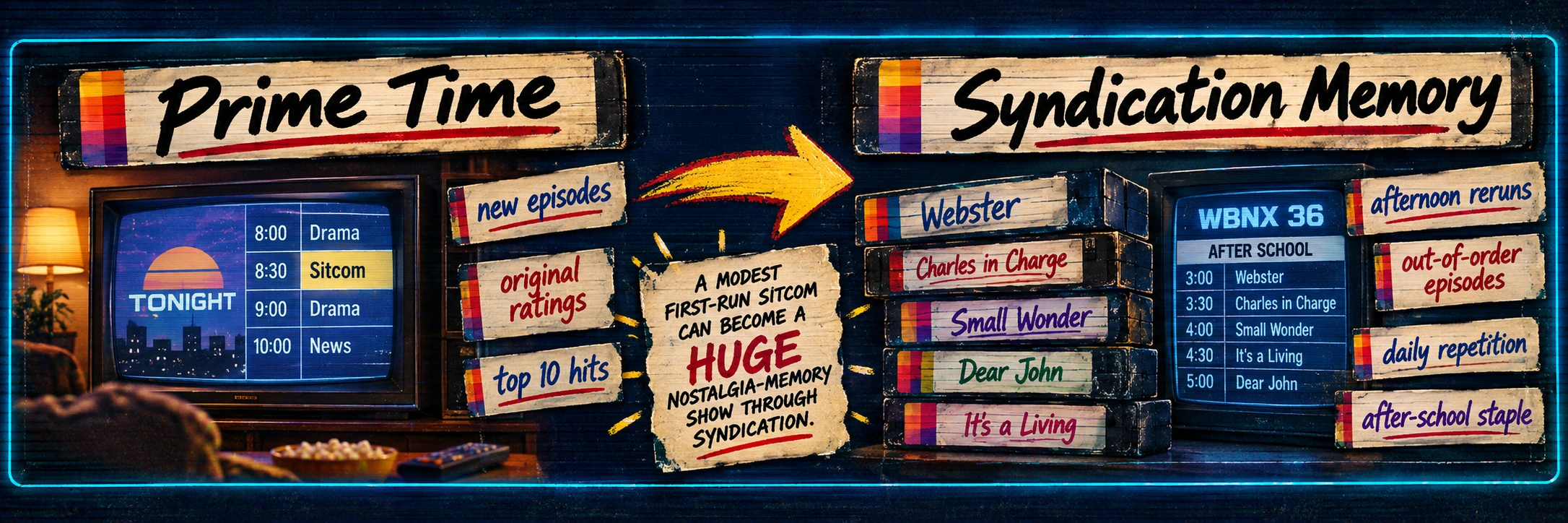
Part of the answer is simple repetition. We heard the themes every week because there was no “skip intro” button. We saw the same living rooms, kitchens, bars and offices often enough that the sets became mental real estate. Syndication then turned some of these shows into after-school or early-evening fixtures, so a series could occupy your childhood twice: once in prime time and again in reruns.
But the structure mattered too. A good sitcom gave you a world that reset just enough. You could miss a week and still know who everybody was, yet the best shows let relationships accumulate. Sam and Diane could change. Alex could grow up. Dorothy, Rose, Blanche and Sophia could reveal more about themselves. The Seaver kids could age right in front of the audience.
That mix of routine and forward motion is why the best 80s sitcoms can trigger a memory faster than a photograph. Sometimes all it takes is a bass line, a front door, a kitchen table or the opening shot of a bar. It is the same reason the TV shows that defined Gen X childhood are so hard to separate from where we were sitting when we watched them.
The Second Shelf Was Part of 80s TV, Too
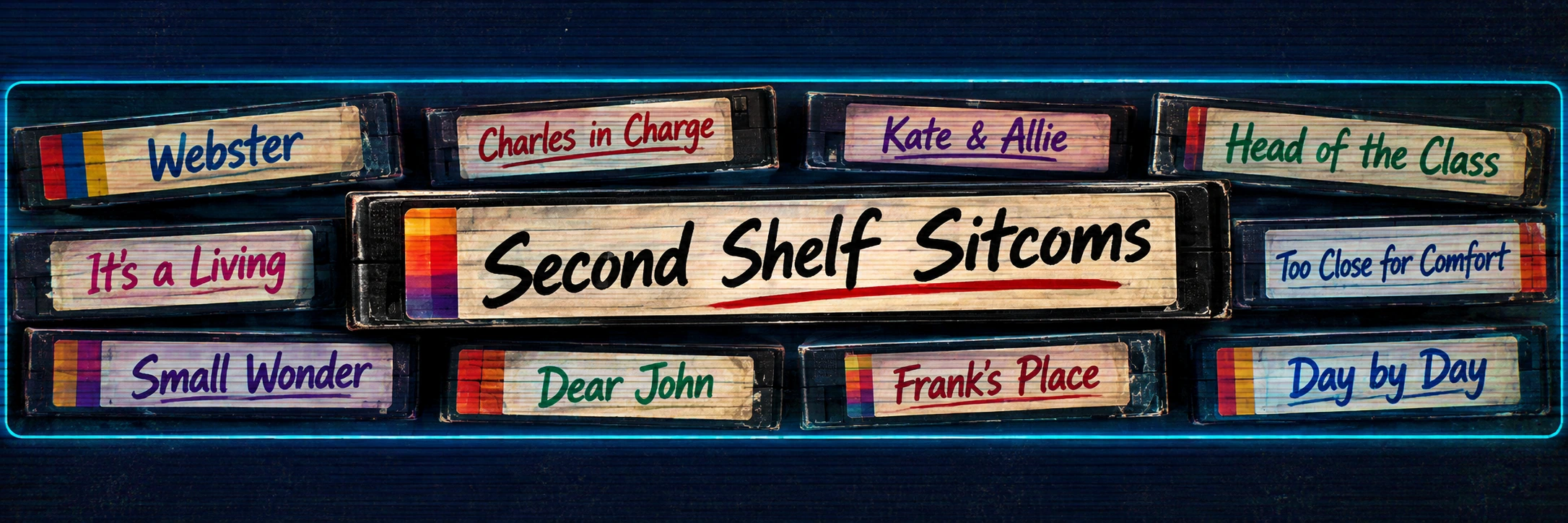
A decade this crowded cannot be reduced to eighteen titles without losing some of the texture. Diff’rent Strokes began in 1978 but stayed on the air through 1986, making Arnold Jackson and “Whatchu talkin’ ’bout?” part of early-80s childhood whether the calendar purists like it or not. Gimme a Break! gave Nell Carter a family-and-household comedy built around a widowed police chief and his daughters. Benson carried Robert Guillaume’s character out of Soap and into a government-household workplace comedy that ran until 1986.
Mama’s Family is another great example of the decade refusing to fit cleanly into one box. It bounced from NBC to first-run syndication, with Vicki Lawrence turning Thelma Harper into a character who could anchor a whole household of irritation. Head of the Class moved family-style ensemble comedy into a high school classroom. Amen gave Sherman Hemsley another huge personality to play, this time around a Philadelphia church. Murphy Brown, arriving in 1988, pushed workplace and adult comedy toward the sharper, more topical tone that would become even more important in the 90s.
Then there were the shows that were never the defining ratings giants but still feel welded to the decade: It’s a Living, Small Wonder, Dear John, Empty Nest, Frank’s Place, The Days and Nights of Molly Dodd, Webster, Charles in Charge, Too Close for Comfort and 227. That is the part nostalgia lists usually miss. The biggest hits explain the center of the decade; the second shelf explains what flipping channels actually felt like. If those are the shows that light up the old memory bank, the forgotten 80s TV shows shelf goes even further.
Before Streaming, the TV Schedule Was Part of the Experience
One reason these shows are so tightly wired into Gen X memory is that we usually remember them in groups. A sitcom did not live alone on a home screen. It lived next to whatever the network scheduled before and after it. If one show pulled the family into the room, the next show inherited everybody already sitting there.
The NBC Thursday-night block is the famous example, but ABC and CBS built their own comedy neighborhoods. That mattered because a new show could borrow an audience long enough to become familiar. It also meant the network could move a series and accidentally change its whole future. We did not think in those terms as kids. We just knew that certain nights had a rhythm: dinner, homework if somebody remembered, then a run of shows you could identify from the first notes of the opening theme.
The fixed schedule also made failure visible. If you missed an episode, there was no immediate on-demand rescue. Maybe you taped it. Maybe a friend told you what happened. Maybe you caught the rerun in summer. That scarcity made a successful sitcom feel more communal because millions of people were seeing roughly the same thing in roughly the same window.
For a year-by-year look at that shared schedule, use the 1980s TV Nielsen guides. They show exactly when comedy moved from one part of the dial to the center of it.
The 1980s Sitcom Map: Four Different Eras of Comedy
1980–1982: the 70s were still in the room
If you actually watched television at the start of the decade, 1980 did not arrive with a brand-new set of opening credits. The Jeffersons, Three’s Company, Alice, One Day at a Time, Diff’rent Strokes, WKRP in Cincinnati, Happy Days, Laverne & Shirley and M*A*S*H were still part of the weekly routine. Some were fading, some were still enormous, and some were simply part of the television furniture. The first thing an honest 80s guide has to admit is that decades overlap.
The newer comedies did not all know what the next era was supposed to be yet. Bosom Buddies played with gender disguise and young-adult apartment life. Too Close for Comfort turned a San Francisco family home into an early-80s hit. Private Benjamin translated a movie comedy into television. Gimme a Break! built a household around Nell Carter’s force of personality. None of those series, by itself, explains the decade. Together, they show network comedy trying to figure out what came after the giant 70s sitcom era.
That uncertainty matters because nostalgia has a habit of jumping straight from Three’s Company to Cheers as if nothing happened in between. In reality, the early 80s were full of experiments, holdovers, spinoffs and shows that were popular enough to matter at the time but did not remain cultural monuments.
1982–1984: character chemistry starts winning
Cheers, Newhart and Family Ties all premiered in 1982. In hindsight that looks like a fault line. They were wildly different shows, but all three relied heavily on character chemistry rather than a single mechanical premise. Cheers could take place almost entirely in one bar because the people were the engine. Newhart let Bob Newhart’s dry, controlled style collide with increasingly strange Vermont characters. Family Ties used the generation gap as the setup and then found a breakout star in Michael J. Fox.
This was also the period when sitcoms got more comfortable with nontraditional households and adult friendships. Kate & Allie centered two divorced women raising children together. Night Court made a workplace full of oddballs feel like its own after-hours family. Webster and Punky Brewster widened the range of family structures. The sitcom was no longer one living room, one married couple and one problem.
1984–1987: comedy becomes the center of prime time
The middle of the decade is the part most people remember as the 80s sitcom boom. NBC’s Thursday lineup became a ratings machine, and the success of The Cosby Show changed the network’s fortunes. Family Ties surged with it. Cheers, after its famously modest first-season ratings, finally had an audience large enough to match its critical reputation. Night Court joined the block. Then The Golden Girls arrived on Saturday and became a smash of its own.
ABC answered with Who’s the Boss?, Growing Pains, Perfect Strangers and a growing emphasis on family comedy. CBS continued with Newhart, Kate & Allie and later Designing Women. Even first-run syndication mattered more than people remember. Charles in Charge, Small Wonder and the syndicated revival of Mama’s Family reached viewers through a different route than the big three networks.
1987–1989: the edges get rougher
Late-decade sitcoms started pulling away from the polished center. Fox launched Married… with Children in 1987 and made the anti-family sitcom part of its identity. Roseanne arrived in 1988 and put money problems, exhaustion and working-class frustration right into the weekly comic rhythm. Murphy Brown centered a sharp-edged professional woman in a newsroom. The Wonder Years used nostalgia and voice-over to make family comedy bittersweet. A Different World moved away from its spinoff origins and built Hillman College into a world of its own.
By the time the decade ended, sitcoms had become broader, more adult, more self-aware and more willing to let imperfect people stay imperfect. The 90s did not invent that shift. It inherited it.
25 More Classic 80s Sitcoms Worth Remembering
Diff’rent Strokes
Arnold and Willis Jackson moved into the Drummond penthouse in 1978, but the show’s biggest cultural footprint sits squarely in early-80s childhood. Gary Coleman’s timing, the famous catchphrase and the series’ willingness to pivot from broad comedy to heavy “very special episode” territory made it one of the era’s defining kid-facing sitcoms.
Benson
Robert Guillaume carried Benson DuBois out of Soap and into a governor’s mansion, where the character evolved from household manager to political insider. The show became a workplace-government comedy with a smart central performance and one of the decade’s more unusual spinoff journeys.
Gimme a Break!
Nell Carter’s Nell Harper moved in to help a widowed police chief raise his daughters. Her presence gave the series a huge comic center, but the household structure also let it move between kid stories, adult stories and emotional material without changing shows.
Mama’s Family
Thelma Harper began as a sketch character and ended up anchoring one of the decade’s strangest network-to-syndication success stories. Vicki Lawrence’s performance turned petty family grievances into an entire comic worldview.
Mork & Mindy
Robin Williams turned an alien-from-Ork premise into a weekly showcase for speed, improvisation and physical comedy. The series began in 1978 but remained part of the early-80s schedule through 1982, making Mork one of the decade’s first inherited pop-culture icons.
Amen
In Amen, Sherman Hemsley traded George Jefferson’s dry-cleaning business for a Philadelphia church, playing deacon Ernest Frye with the same gift for comic arrogance. The church setting gave NBC another ensemble world with family, community and workplace elements all mixed together.
Webster
Webster took one of the decade’s most familiar sitcom ideas — an unexpected child changing an adult household — and gave it a setup that was both warm and complicated. After his parents die, young Webster Long moves in with George Papadapolis, a retired football player who had been his father’s teammate, and George’s wife Katherine. Alex Karras and Susan Clark played George and Katherine as adults who cared deeply about Webster but had not exactly been preparing to become parents. Emmanuel Lewis, meanwhile, was not just there to deliver cute lines. Webster was usually the emotional center of the show and often the person forcing the adults to figure out what being a family actually meant.
The chemistry worked because George and Katherine were different kinds of imperfect. George could be stubborn, physical and old-school; Katherine was more polished but hardly a natural homemaker. Webster slipped between them with enough confidence to keep the show from becoming overly sentimental. Recurring characters widened the world, including Ben Vereen as Webster’s Uncle Phillip, whose presence gave the series room to acknowledge that Webster had a family history that did not begin when he entered the Papadapolis home.
For Gen X viewers, Webster also belongs to that huge 80s category of shows that could move from broad kid comedy into genuinely heavy material without warning. That tonal jump was normal television then. One week you were laughing at Webster running circles around George; another week the show wanted to teach you something serious. It ran on ABC and later continued in first-run syndication, which helped keep it in the after-school television ecosystem long after its initial network peak.
Charles in Charge
Charles in Charge had a premise that was almost engineered for 80s television: a college student gets room and board by becoming the live-in caretaker for somebody else’s kids. Scott Baio’s Charles was young enough to understand the children and old enough to be responsible for them, which meant the show could bounce between family stories, dating stories and college-age problems without needing to leave the house. Willie Aames gave the series its comic counterweight as Buddy Lembeck, Charles’ best friend and the guy most likely to turn a simple plan into a mess.
The strange part is that the show effectively had two lives. The original CBS season centered on the Pembroke family. When the series returned in first-run syndication in 1987, the Pembrokes were gone and the Powell family moved into the same house, allowing Charles to resume almost the exact same job with an entirely new set of kids. Nicole Eggert, Josie Davis and Alexander Polinsky became the younger faces most viewers from the syndicated years remember, while Ellen Travolta’s Lillian gave Charles a family connection of his own.
That network-to-syndication resurrection is a big reason the show belongs on an 80s sitcom map. Charles in Charge was not simply a CBS series that got canceled; it became part of the much larger first-run syndication machine that filled local stations with new sitcom episodes outside the big-network system. For a lot of Gen X kids, where it aired mattered less than the fact that Charles and Buddy seemed to be on television constantly.
Small Wonder
Small Wonder is one of those shows that can make somebody who did not grow up in the 80s ask whether you are remembering it correctly. Robotics engineer Ted Lawson builds a child-sized android named V.I.C.I. — Vicki — and brings her home, where the Lawsons decide to pass her off as their adopted daughter. Tiffany Brissette played Vicki with the stiff posture, flat delivery and literal-minded responses that made the joke work. Dick Christie and Marla Pennington played Ted and Joan Lawson, while Jerry Supiran’s Jamie occupied the impossible position of being a kid whose “sister” was secretly a robot.
The other essential ingredient was Harriet Brindle, played by Emily Schulman, the aggressively curious neighbor kid who was always one conversation away from discovering what the Lawsons were hiding. The comedy was broad and rarely interested in realism. Vicki could lift impossible weight, process information instantly or misunderstand ordinary human behavior, and the family would spend the episode trying to keep the secret from collapsing. It was basically domestic farce with a circuit board.
But the real reason Small Wonder occupies such a large space in Gen X memory is distribution. It was a first-run syndicated show rather than a traditional network hit, which meant local stations could drop it into afternoon and weekend schedules where kids encountered it over and over. The production values and premise may look gloriously strange now, but that is part of the point: this was exactly the kind of wonderfully specific television that could become a childhood fixture without ever being a prime-time ratings giant.
Head of the Class
Head of the Class flipped the usual classroom sitcom. Instead of a teacher trying to control a room full of troublemakers, Charlie Moore walked into the Individualized Honors Program and found students who were brilliant, ambitious and sometimes far too convinced that being smart meant they already understood everything. Howard Hesseman played Charlie with enough looseness to keep the show from turning into a weekly lecture. His job was less about teaching facts and more about reminding the students that books, test scores and academic competition were not the whole world.
The ensemble was the real engine. The class included a deliberately broad mix of personalities, backgrounds and types: the overachiever, the artist, the athlete, the socially awkward genius, the kid who was smart enough to coast and the student who wanted desperately to prove something. That structure let the series move from school pressure and parental expectations to friendship, dating and the fear of not living up to everyone’s idea of your potential. The kids were gifted, but the problems were still recognizably teenage.
For ABC, the show also filled a useful space between family sitcom and youth ensemble. It was a school show that parents could watch without feeling exiled from the room. Hesseman eventually left and Billy Connolly took over the teacher role, but the basic idea survived because the classroom itself was the star. For Gen X viewers who spent the decade hearing that grades, college and “your future” were always right around the corner, Head of the Class hit a very familiar nerve.
Mr. Belvedere
Mr. Belvedere dropped a formal English gentleman into a Pittsburgh family that had absolutely no intention of becoming formal. Christopher Hewett’s Lynn Belvedere arrived as a household employee, but the show quickly figured out that his real job was to act as referee, adviser, critic and occasional co-conspirator. Bob Uecker’s George Owens gave him the perfect opposite: loud, sports-minded and skeptical of Belvedere’s refinement. Ilene Graff’s Marsha was juggling family responsibilities with law school, while Kevin, Heather and especially Wesley supplied the weekly reasons the adults needed help.
Brice Beckham’s Wesley and Belvedere became the emotional core. Wesley could be selfish, curious, scared, obnoxious or surprisingly perceptive, and Belvedere had a way of correcting him without turning into a generic sitcom parent. The show often ended by letting Belvedere write in his journal, which gave the episode a slightly different rhythm from the usual family-comedy wrap-up. The household would descend into chaos, Belvedere would restore some kind of order, and then he would privately record what he had learned about these strange Americans.
The series is also a good example of how durable a simple family setup could be in the middle of the decade. It did not need a robot, an alien or a millionaire mansion. It needed recognizable family problems and a central character who could look at them from a different angle. If you watched ABC in the 80s, that theme song and the sight of Belvedere standing in the Owens kitchen are instant memory triggers.
Square Pegs
Square Pegs lasted only one season, but few short-lived sitcoms look more completely stamped with the year they were made. Sarah Jessica Parker’s Patty Greene and Amy Linker’s Lauren Hutchinson were two Weemawee High freshmen who wanted desperately to stop being outsiders. The problem was that almost every attempt to become “in” only made their awkwardness more visible. Instead of presenting high school as a clean hierarchy of cool kids and nerds, the show filled the halls with kids who were all performing some version of who they wanted to be.
The supporting cast turned that idea into a full social ecosystem. Jami Gertz played the relentlessly preppy Muffy Tepperman, Tracy Nelson was popular girl Jennifer, and Merritt Butrick’s Johnny Slash brought a New Wave attitude that made the show feel connected to actual youth culture instead of an adult writer’s generic idea of teenagers. The music, clothes, slang and visual style are now almost comically period-specific, but that is exactly why the series has aged into such a useful time capsule.
Created by former Saturday Night Live writer Anne Beatts, Square Pegs also had a sharper voice than its brief run might suggest. It understood that teenage humiliation usually comes from trying too hard while pretending you do not care. For Gen X viewers who remember school before social media but definitely not before social pressure, Patty and Lauren’s doomed efforts to fit in still feel painfully recognizable.
Buffalo Bill
Buffalo Bill was meaner, darker and more uncomfortable than the average network sitcom of 1983. Dabney Coleman played Bill Bittinger, the host of a local Buffalo talk show and a man with an almost heroic ability to make every room about himself. Bill was vain, manipulative, petty and professionally insecure, and the series did not spend much time asking the audience to discover the lovable guy hiding underneath. The joke was often that there was no hidden saint. He really could be that awful.
That made the people around him essential. Joanna Cassidy, Geena Davis, Max Wright, John Fiedler and Charlie Robinson were part of a station ensemble constantly absorbing, resisting or exposing Bill’s ego. The local-TV setting also gave the show a backstage texture that felt different from the family rooms dominating prime time. Ratings, talent, management, office politics and on-air humiliation could all become part of the story because Bill’s public persona and private insecurity were always colliding.
The series lasted only 26 episodes, but its reputation outgrew its run because it pointed toward a kind of comedy that television would become much more comfortable with later: flawed workplaces, abrasive leads and humor built around people who were not required to become nicer by the closing credits. In an 80s sitcom archive, Buffalo Bill matters precisely because it shows how much experimentation was happening outside the safest hits.
Murphy Brown
Murphy Brown arrived in 1988 already sounding like a challenge to the softer edges of network comedy. Candice Bergen’s Murphy was a veteran television journalist returning to the fictional newsmagazine FYI after a stay at the Betty Ford Clinic. She was smart, famous, difficult, competitive and completely uninterested in becoming more agreeable just because somebody else found her intimidating. That alone gave the series a very different center from the family comedies filling much of the schedule.
The newsroom ensemble kept Murphy from becoming a one-person show. Faith Ford’s Corky Sherwood arrived with a pageant background and a very different relationship to television fame. Joe Regalbuto’s Frank Fontana brought investigative energy and neurosis; Charles Kimbrough’s Jim Dial embodied old-school broadcast authority; and Grant Shaud’s Miles Silverberg had the unenviable job of trying to manage people who had been in television longer than he had been an adult. Outside the office, Phil’s bar functioned as the place where the newsroom could exhale.
What made the show important at the end of the decade was its willingness to let current events and professional culture into the sitcom without losing the comedy. It treated journalism as a real workplace, not just a backdrop, and let an adult woman be ambitious without making ambition the problem she needed to fix. Much of the series’ biggest cultural footprint would come in the 90s, but the foundation — the voice, the newsroom and Murphy herself — was unmistakably built in the late 80s.
The Wonder Years
The Wonder Years premiered in 1988 and immediately made nostalgia feel less like a clip show and more like memory itself. Fred Savage played Kevin Arnold, a kid growing up in suburban America at the end of the 1960s and beginning of the 70s, while Daniel Stern’s adult narration looked back on every embarrassment, misunderstanding and tiny victory with the knowledge Kevin did not yet have. That gap between what the kid felt and what the adult remembered was the show’s real engine.
The family was ordinary by design. Dan Lauria’s Jack could be exhausted, intimidating and quietly tender. Alley Mills’ Norma was beginning to imagine a life beyond the role everyone assumed she would play forever. Wayne was the older brother who could make Kevin miserable on command, Karen represented the generational changes moving through the house, Paul Pfeiffer was the best friend who knew nearly everything except how life would actually turn out, and Winnie Cooper became tied forever to Kevin’s first understanding of love and loss.
For Gen X, the series created a strange double nostalgia. We were watching an 80s television show looking backward at the childhood of the generation just before us, yet the emotions still landed directly on our own school years. The period music and historical backdrop mattered, but the stories were about things that did not need a date: parents getting older, friendships changing, first crushes going wrong and realizing, a little at a time, that childhood was not going to last.
Frank’s Place
Frank’s Place barely lasted a season, but it remains one of the clearest examples of 80s television attempting something the sitcom format was not really built to handle yet. Tim Reid played Frank Parrish, a professor who inherits a New Orleans restaurant and discovers that ownership comes with employees, regulars, traditions and obligations he does not fully understand. The restaurant was not simply a workplace set. It was a doorway into a specific community with its own rules, history and rhythms.
Creator Hugh Wilson, who had already made WKRP in Cincinnati, approached the series with a looser mixture of comedy and drama. There was no need for every scene to race toward a punch line, and the show could let a funny situation become sad, strange or reflective without announcing that the genre had changed. New Orleans itself mattered to the tone: food, music, neighborhood relationships and local traditions were part of the storytelling instead of decorative background.
That sophistication probably helped make the series memorable and harder to sell as a conventional hit at the same time. Frank’s Place did not give viewers the easy reset of a standard sitcom universe, and it asked network television to slow down and observe people. Its short life is part of why it belongs here. The 80s were not only producing giant family comedies; they were also testing forms that would look much less unusual on television decades later.
The Days and Nights of Molly Dodd
The Days and Nights of Molly Dodd felt like it had wandered in from a different television future. Blair Brown played Molly, a divorced New Yorker moving through work, romance, friendship and the general uncertainty of adult life without the neat weekly structure that most sitcom characters were given. She was not chasing one giant goal. She was trying to make a life from a series of imperfect decisions, chance encounters and relationships that did not always resolve on schedule.
Creator Jay Tarses built the series as a single-camera comedy-drama with a quieter rhythm than the big multicamera hits. That gave Brown room to make Molly observant, funny, frustrated, self-aware and occasionally completely wrong without forcing every emotional beat into a setup-and-punch-line pattern. New York was not merely the backdrop; the city’s unpredictability suited a show about somebody whose life rarely seemed to stay inside the plan.
Its television journey is almost as interesting as the show itself. NBC aired the first seasons, then Lifetime picked it up and continued producing new episodes. At a time when cable still felt secondary to the broadcast networks, that move hinted at a future in which distinctive shows could survive by finding a different home. Molly Dodd was never a mass-audience sitcom monster, but it helped prove there was room for adult comedy that was smaller, stranger and more personal.
Dear John
Dear John began with a brutal sitcom premise: John Lacey comes home and discovers that his wife has left him. Judd Hirsch played John as a decent, intelligent man who suddenly finds himself rebuilding an adult life he thought was already settled. Instead of sending him immediately into a new romance, the show put him in a support group for divorced, widowed and separated people, which gave the series an ensemble full of characters carrying their own versions of disappointment.
The group was where the comedy really lived. Jane Carr’s Louise Mercer ran the meetings with an enthusiasm that could be almost as overwhelming as the problems people brought into the room. Jere Burns’ Kirk Morris became the breakout wild card: smug, self-involved and endlessly confident in advice nobody should follow. Harry Groener and Isabella Hofmann helped round out a collection of adults who were supposed to be healing but were just as capable of making one another’s lives more complicated.
That setup placed Dear John firmly in the late-80s shift toward sitcoms about what happens after the traditional family arrangement breaks down. Divorce was not a one-episode crisis here; it was the starting line. The show could be broad, but underneath the jokes was a very adult idea: sometimes the next stage of your life begins because the version you planned has already ended.
Empty Nest
Empty Nest spun out of the world of The Golden Girls in 1988 and built its own household around Dr. Harry Weston, a widowed pediatrician played by Richard Mulligan. The title was a joke almost immediately, because Harry’s house was never particularly empty. Dinah Manoff’s Carol moved back into his life with a nearly unlimited supply of anxiety, while Kristy McNichol’s Barbara brought a more grounded personality and a career as a police officer. The daughters were adults, but Harry was still very much their father.
Then there was Charley Dietz. David Leisure played the neighbor as a walking invasion of personal space, forever appearing at Harry’s door with confidence wildly out of proportion to his judgment. Park Overall’s Laverne, Harry’s nurse, supplied a completely different comic rhythm with her Southern delivery and ability to say what everybody else was avoiding. Add Dreyfuss the dog and the occasional crossover from the women next door, and the series had a comfortable ensemble almost immediately.
The show mattered because NBC understood that the audience for family comedy did not disappear when the kids grew up. Empty Nest was about middle age, widowhood, adult children and the realization that a quieter house does not necessarily mean an easier life. Paired with The Golden Girls, it also helped create a Saturday-night comedy neighborhood that treated older adults as central characters rather than somebody else’s parents.
It’s a Living
It’s a Living may have one of the most 80s broadcast histories of any sitcom on this list. The series began on ABC in 1980, disappeared after a short network run, found a second life in reruns and then came back with new episodes in first-run syndication. Its setting was the elegant Above the Top restaurant high over Los Angeles, but most of the comedy came from the people working there rather than the customers who could actually afford the view.
Barrie Youngfellow, Gail Edwards, Marian Mercer and Paul Kreppel became long-term anchors, with Kreppel’s lounge pianist Sonny Mann supplying a steady stream of questionable charm. Ann Jillian was a major presence during the network years and early revival, while Crystal Bernard and Sheryl Lee Ralph were among the performers who helped reshape the ensemble later. The premise let the show mix workplace frustration, dating, friendship and the simple fact that service employees still have lives even while somebody at table twelve needs another drink.
Its network-to-syndication journey is the real reason it deserves more than a footnote. It’s a Living demonstrated that cancellation no longer had to mean disappearance. A show could build familiarity in reruns, come back outside the networks and become more memorable in its second life than it had been in its first. If you remember seeing it constantly but cannot remember what night it was on, that is almost the perfect description of 80s syndication culture.
Too Close for Comfort
Too Close for Comfort began with a setup that probably sounded terrifying to every parent with grown children: Henry and Muriel Rush live upstairs while daughters Jackie and Sara occupy the apartment downstairs. Ted Knight’s Henry was a conservative cartoonist who had very strong opinions about how his daughters should live, date and make decisions even though they were adults. Nancy Dussault’s Muriel usually had the harder job of keeping Henry from turning concern into a full-scale family emergency.
The character who pushed the show into a different comic gear was Jim J. Bullock’s Monroe Ficus. Monroe began in the daughters’ orbit and gradually became one of those sitcom characters who could walk through the door and immediately change the scene. His odd confidence and Henry’s impatience became a dependable pairing, while the San Francisco setting gave the series just enough of an adult-life frame to keep it from being a standard parents-and-kids show.
Like several other series in this section, Too Close for Comfort also lived through both network television and syndication, which extended its cultural footprint beyond its original ABC run. For Gen X viewers, Ted Knight was the center of gravity: his sputtering reactions and escalating frustration could turn an ordinary family disagreement into an event. The show’s basic question was simple and durable — when your children grow up, how far away do they actually have to move before you stop parenting them?
My Sister Sam
My Sister Sam gave Pam Dawber a very different household from Mork & Mindy. She played Sam Russell, a successful freelance photographer in San Francisco whose independent adult life changes when her teenage sister Patti moves in. Rebecca Schaeffer’s Patti was old enough to challenge Sam but young enough to need her, which meant the relationship could slide between sisters, roommates and reluctant parent-and-child depending on the episode.
The supporting cast made Sam’s world feel like an adult working life rather than a generic sitcom apartment. Joel Brooks played her high-strung agent J.D., Jenny O’Hara was the sharp-tongued assistant Dixie, and David Naughton’s Jack Kincaid brought neighbor-and-romantic-interest energy. The photography business gave the series a mildly glamorous surface, but the real stories were about boundaries: how much freedom Patti should have, how much authority Sam actually wanted and whether either sister was ready for the arrangement they had created.
The show looked like it might settle into a long CBS run, but its momentum faded and it ended after two seasons. That brevity has unfortunately become tangled with the later tragedy surrounding Rebecca Schaeffer, but the series itself deserves to be remembered on its own terms too: as a warm mid-80s comedy about two sisters trying to construct a family after loss without either one really knowing the rules.
Valerie / The Hogan Family
Few 80s family sitcoms changed identity as dramatically in public as the show that began as Valerie and became The Hogan Family. Valerie Harper played Valerie Hogan, raising three boys while her airline-pilot husband Michael was frequently away. Jason Bateman’s David was the oldest and quickly became the standout kid, with Jeremy Licht and Danny Ponce playing younger brothers Mark and Willie. The original version fit neatly into the decade’s family-comedy boom: busy mother, three boys, a father whose job kept him moving in and out of the household.
Then the behind-the-scenes conflict with Harper changed the series itself. Valerie Hogan was written out, Sandy Duncan arrived as Michael’s sister Sandy, and the title shifted first to Valerie’s Family: The Hogans and then The Hogan Family. Most shows would have collapsed under that kind of disruption. Instead, the series made the loss part of the family’s reality and rebuilt its center around Sandy helping Michael raise the boys.
That survival is the reason the show matters beyond the title confusion. It became an accidental demonstration of how flexible the 80s family sitcom could be when real-world production chaos forced the fiction to change. Jason Bateman’s early performance also stands out in hindsight; even as a teenager he had the dry timing and controlled exasperation that would become familiar much later. For viewers at the time, though, this was simply the Hogan house somehow staying on television even after the show around it had been rebuilt.
Just the Ten of Us
Just the Ten of Us started as a Growing Pains spinoff, but the Lubbock family was large enough to create its own gravitational field. Bill Kirchenbauer returned as Coach Graham Lubbock, now trying to manage life with his wife Elizabeth and eight children. The title was the joke: when a household already contains ten people, privacy, money, dating and simple logistics become sitcom premises before anybody has written a plot.
The show gradually centered much of its energy on the four oldest daughters — Marie, Cindy, Wendy and Connie — played by Heather Langenkamp, Jamie Luner, Brooke Theiss and JoAnn Willette. They had different personalities and different ideas about school, boys, religion and what growing up was supposed to look like, which gave the series a teenage ensemble inside the larger family ensemble. Graham’s protective instincts could collide with the daughters’ independence almost by default.
Its place in television history is also tied to ABC Friday nights. Just the Ten of Us became part of the early version of the comedy block that would soon be branded TGIF, helping establish the idea that Friday could belong to younger viewers and family sitcoms. It never became as large as the shows surrounding it, but for anyone who remembers that era of ABC, the Lubbocks are part of the bridge between the mid-80s family boom and the full TGIF machine of the 90s.
Day by Day
Day by Day arrived in 1988 with a premise that feels surprisingly current: Brian and Kate Harper walk away from high-powered careers so they can spend more time with their family, then turn their home into a day-care center. Doug Sheehan and Linda Kelsey played the parents, while Christopher Daniel Barnes’ teenage son Ross supplied a lot of the family friction. The day-care setup meant the house was permanently full, so the show could mix parenting stories with workplace comedy without ever leaving home.
The supporting cast now looks almost absurdly recognizable in hindsight. Julia Louis-Dreyfus played Brian’s former business associate Eileen Swift, years before Seinfeld. Courtney Thorne-Smith played Kristin, the teenager Ross was perpetually trying to impress, and a very young Thora Birch appeared as Molly. Created by Andy Borowitz and Family Ties creator Gary David Goldberg, the series had some of the same interest in parents and children trying to renegotiate what family roles were supposed to look like.
And then there is the episode Gen X television nerds tend to remember: a full-blown Brady Bunch fantasy that brought several original Brady cast members back together. That kind of self-aware nostalgia was unusual enough in 1988 to feel like an event. Day by Day lasted only 33 episodes, but it is a perfect late-80s artifact — a family sitcom about work-life balance, loaded with performers who would become much more famous, and already beginning to look backward at the television childhood that came before it.
How NBC, ABC, CBS and Fox Fought for the Living Room
NBC’s mid-80s comeback is the headline because it was dramatic. The network went from struggling to dominant, and comedy was central to that change. The Cosby Show gave Thursday an enormous lead-off audience. Family Ties benefited and became a giant hit in its own right. Cheers finally had the audience support to match its critical reputation. Night Court added another distinct workplace comedy to the same night. By the late decade, NBC could also point to The Golden Girls, A Different World, 227, Amen and Empty Nest.
ABC built a different identity. Who’s the Boss? and Growing Pains were family-centered, Perfect Strangers gave the network an odd-couple hit, and the late-80s Friday comedy strategy began assembling the ingredients that would become TGIF. ABC’s comedy was often warmer, younger and more family-heavy than NBC’s adult ensembles.
CBS had its own rhythm: Newhart, Kate & Allie, Designing Women and Murphy Brown showed a network comfortable with slightly older-skewing ensembles and adult characters. Fox, meanwhile, entered the national conversation by doing the opposite of respectable network comedy. Married… with Children was rude, cheap-looking by big-network standards and intentionally anti-aspirational. That difference was the brand.
And then there was syndication, the part nostalgia lists often flatten out. Mama’s Family, Charles in Charge, Small Wonder, It’s a Living and other shows could build enormous familiarity without ever following the exact network path. If you were a kid with local UHF stations and afternoons to kill, those shows could feel as big as prime-time hits because they were always on.
Why the Best 80s Sitcoms Lasted
The sitcoms that survived the decade usually stopped being about their elevator pitch. Cheers was not really about running a bar. Family Ties was not really about liberal parents and a conservative son after the audience got attached to the Keatons. The Golden Girls was not simply “four older women share a house.” Newhart was not simply “a man owns an inn in Vermont.” The premise got people in the door; chemistry kept them there.
That is why ensemble balance matters so much when you revisit these shows. Norm and Cliff could carry a scene without Sam. Sophia could blow up a conversation with one line. Mallory’s worldview mattered because Alex needed somebody inside the family who operated on a completely different frequency. Larry, Darryl and Darryl became memorable because Newhart understood the value of recurring characters who could alter the temperature of a scene the instant they walked in.
The decade also produced a huge range of comic performance styles. Michael J. Fox was fast and reactive. Bea Arthur could flatten somebody with a look. Jackée Harry made entrances into events. Bob Newhart weaponized silence. John Larroquette turned Dan Fielding’s sleaze into baroque performance. Roseanne Barr brought stand-up timing and a working-class point of view that did not sound like the polished network norm.
That variety is why “80s sitcom” is not really a single genre. The best 80s comedy shows could be family comedies, workplace comedies, romantic comedies, social satire, kid television, adult ensembles, syndicated oddities or prestige experiments that happened to share a laugh track — and sometimes did not even share that.
How Syndication Turned 80s Sitcoms Into Gen X Memory
Prime-time ratings tell you what America watched when the episodes were new. Syndication tells you what Gen X actually lived with for years afterward. A show could be only moderately successful in first run and still become enormous in cultural memory if local stations replayed it every afternoon. Conversely, a genuine top-ten hit could fade if it was not rerun heavily or did not translate well into later viewing habits.
That gap between original success and memory is one of the biggest things nostalgia gets wrong. The huge 80s TV hits nobody talks about anymore prove it from one direction, while the shows we wore out in reruns prove it from the other. Ratings history and nostalgia history are related, but they are not the same thing.
Sitcoms were especially strong in syndication because episodes were short, largely self-contained and easy to run out of order. By the late 80s, a kid could encounter the same decade in layers: new episodes in prime time, older seasons in local reruns, 70s holdovers in afternoon syndication and brand-new first-run syndicated sitcoms in whatever slot a station needed to fill. That after-school blur has its own story in the shows Gen X watched in reruns.
That is also why the decade feels so crowded in memory. We were not watching one linear timeline. We were watching multiple eras of television at once.
80s Sitcoms FAQ
What were the biggest sitcoms of the 1980s?
The answer changes by season. By the mid-to-late decade, The Cosby Show, Family Ties, Cheers, The Golden Girls, Night Court, Growing Pains and Who’s the Boss? all reached the Nielsen top ten. Roseanne then exploded near the end of the decade.
Why did sitcoms become so dominant in the middle of the 80s?
A major factor was NBC’s turnaround and its powerful Thursday comedy lineup. The success of The Cosby Show helped create a huge audience flow for neighboring comedies, while ABC and CBS developed their own strong family and ensemble hits.
Where can I find more 80s family sitcoms?
If the family-room shows are the ones you remember best, the 80s family sitcoms guide stays with the homes, parents, kids and gloriously overdecorated living rooms — from Family Ties and Growing Pains to Who’s the Boss?, ALF and more.
Are early-80s holdovers like The Jeffersons and Three’s Company really 80s sitcoms?
If we are talking about what Gen X actually watched during the decade, absolutely. They began earlier, but they were still major parts of early-80s television. Their beginnings belong to the 70s; the years we kept watching them belong to the 80s story too.
Where can I see the actual Nielsen rankings?
Use the 1980s TV by year guide to move from 1980 through 1989. That is where the annual Nielsen rankings live, so you can see what America was actually watching while all of these sitcoms were fighting for the same few channels.