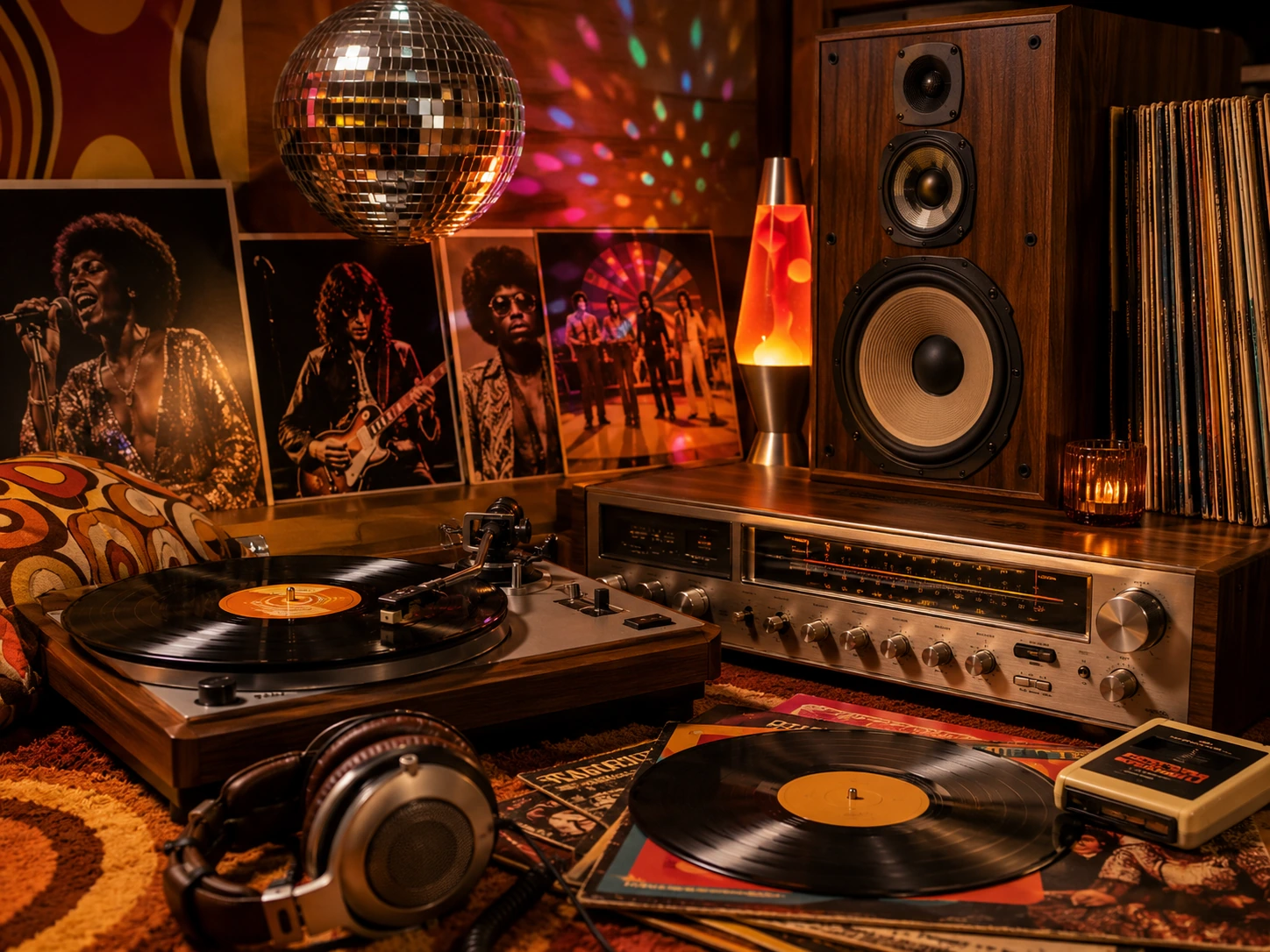
NOW SPINNINGTHE 70s RECORD DEPARTMENT
Vinyl • 8-tracks • AM/FM • songs from 1970–1979
Smells Like Gen X • Complete 1970s Music Guide
70s Music
Songs, Genres & Year-by-Year Hits
The best 70s music did not stay inside one
genre. Disco ruled dance floors. Classic rock filled arenas.
Soul, funk and R&B owned the groove. Soft rock took over the
dashboard radio, while punk, singer-songwriters, movie songs,
television themes and novelty hits kept the decade impossible
to reduce to one playlist.
This is the complete 1970s record department: eight major
music guides, ten year-by-year song countdowns, the decade in
three acts and the music many Gen X kids heard through parents’
records, older siblings’ albums, roller rinks, car radios and
television speakers before we controlled the stereo.
Quick Answer • Information Counter
What Music Defined the 70s?
The decade was defined by
disco, classic rock, arena rock, soul, funk, R&B,
soft rock, singer-songwriters, punk, country crossover,
movie songs and television themes. No single style
owned all ten years. Start with the
major genre guides
or browse the
top songs from 1970 through 1979
to hear how quickly the mix changed.
A whole record crate, not one sound.
Disco balls, FM guitars, deep grooves, AM gold, movie
themes and songs the family radio played into the floor.
Drop the needle
Four Doors Into the Decade
Start With the Big 70s Sounds
Pick the section of the record store you remember first:
the dance floor, the arena, the groove or the dashboard radio.
Together they cover the sounds that dominated the decade.
The decade moved from singer-songwriters, soul and hard rock
into glam, funk, disco, punk, new-wave signals and polished
late-decade pop. Each year has its own countdown.
One Decade • Three Completely Different Record Crates
The 70s Music Decade in Three Sides
The opening years still carried the weight of the 60s. The
middle became enormous. The final years pushed disco, punk,
electronics and sharper production directly toward the 80s.
1970–1972 • The Album Takes Control
Songwriters, Soul and Heavy Records
Singer-songwriters, soul, hard rock, folk, early glam and
ambitious albums shared the same cultural space. Radio
remained broad enough to move between them without apology.
Disco reached maximum visibility, punk rejected the polish,
movie soundtracks became events and the late-decade studio
sound began pointing toward new wave and the 1980s.
The House Soundtrack Before We Controlled the Stereo
Why 70s Music Still Hits
The decade remains powerful because its genres had strong
identities, its records sounded physical and its songs kept
reappearing through radio, movies, television and family record
collections.
The 70s Were Never One Playlist
Disco exploded while rock became enormous. Funk got sharper,
soul stayed emotionally direct, punk arrived to make trouble
and soft rock quietly took possession of the glove box.
That variety is the reason a single year can move from a
dance-floor record to a guitar epic to a ballad without
feeling historically confused.
For many Gen X listeners, 70s music first arrived through
somebody else’s choices: parents’ records, older siblings’
albums, kitchen radios, jukeboxes, roller rinks, television
variety shows and car stations that played genres back-to-back
as though boundaries were merely suggestions.
The songs also kept returning. A record could reappear in a
movie, a commercial, a television theme or an oldies format
years later. Follow that connection through
70s movie songs
and
70s TV theme songs.
The Record Department Connects to the Whole Site
Keep the Music Rewind Going
Return to the complete 70s experience, cross into the Toy
Department or follow the changing music technology and culture
into the 80s and 90s.
Quick answers about the decade’s biggest genres, disco, soft
rock, the strongest music years and the best place to begin.
What music defined the 70s?
70s music was defined by disco, classic rock, arena rock, soul, funk, R&B, soft rock, singer-songwriters, punk, country crossover, novelty hits, movie songs and television themes. The decade did not have one dominant sound; it had several scenes competing on the same radio dial.
What were the biggest music genres of the 1970s?
The decade’s largest mainstream genres included rock, disco, soul, funk, R&B, soft rock and pop. Country-pop crossover, punk, reggae and early new wave also became increasingly important as the decade moved toward 1980.
Why does 70s music still sound so good?
Many 70s recordings combined strong songwriting, distinctive musicianship, memorable studio production and clear genre identity. The decade also produced albums, singles, soundtracks and theme songs that remained in heavy rotation long after their original release.
When did disco become popular?
Disco developed through clubs and dance records earlier in the decade, then became a dominant mainstream force during the second half of the 1970s. Its largest pop-culture moment arrived near the end of the decade with dance-floor hits, films and widespread radio play.
What is 70s soft rock?
70s soft rock blended pop songwriting, smooth vocals, acoustic textures, keyboards and polished arrangements. It became a major part of AM radio, car listening and the adult-contemporary sound that followed into the 1980s.
What were the best years for 70s music?
That depends on the listener. Early-decade fans often favor 1971 and 1972 for albums and singer-songwriters, rock fans frequently point to the middle years, and disco or punk listeners may prefer 1977 through 1979. The year guides on this page show how quickly the mix changed.
Where can I find the top songs from each year of the 70s?
This page links to separate song guides for every year from 1970 through 1979. Each year page offers a focused snapshot of the hits and sounds that defined that part of the decade.
Where should I start exploring 70s music?
Start with the year-by-year song guides, then choose the sound you remember most: disco, classic rock, soul and funk, soft rock, one-hit wonders, movie songs or television themes.
Get the Weekly Gen X Drop
New song countdowns, music histories, decade guides, videos
and exactly the kind of radio-fueled memory damage you came
here for.