The Cosby Show in the 80s: The Ratings Giant That Changed NBC
A disastrous shirt, a formidable mother, and the family comedy that gave NBC its Thursday-night engine.
By Gizmo
A NETWORK COMEBACK.

Inside This Article
- The shirt was a disaster. Thursday night wasn’t.
- Theo’s plan for adulthood meets the family accountant
- NBC needed more than a good sweater
- Clair Huxtable had already heard that excuse
- Gordon Gartrelle, meet Denise’s sewing machine
- Denise looked as if she had somewhere else to be
- Rudy didn’t need the adults to explain the joke
- Vanessa lived in the dangerous middle
- Sondra and Elvin discovered that approval had conditions
- An anniversary party with an exceptionally good record collection
- Stevie Wonder let the children into the studio
- The brownstone had a life beyond the furniture
- A director who knew when to leave a face alone
- Third place first, then the view from number one
- The half-hour after eight became valuable real estate
- The family took Hillman seriously
- A house could be comfortable without representing everybody
- The adults turned the house into a small, hostile economy
- Theo eventually needed a different answer
- Good reviews arrived before the victory lap
- The late eighties made a bigger, busier house
- The reputation changed. The cast’s work is still there.
- Questions Readers Ask
The shirt was a disaster. Thursday night wasn’t.
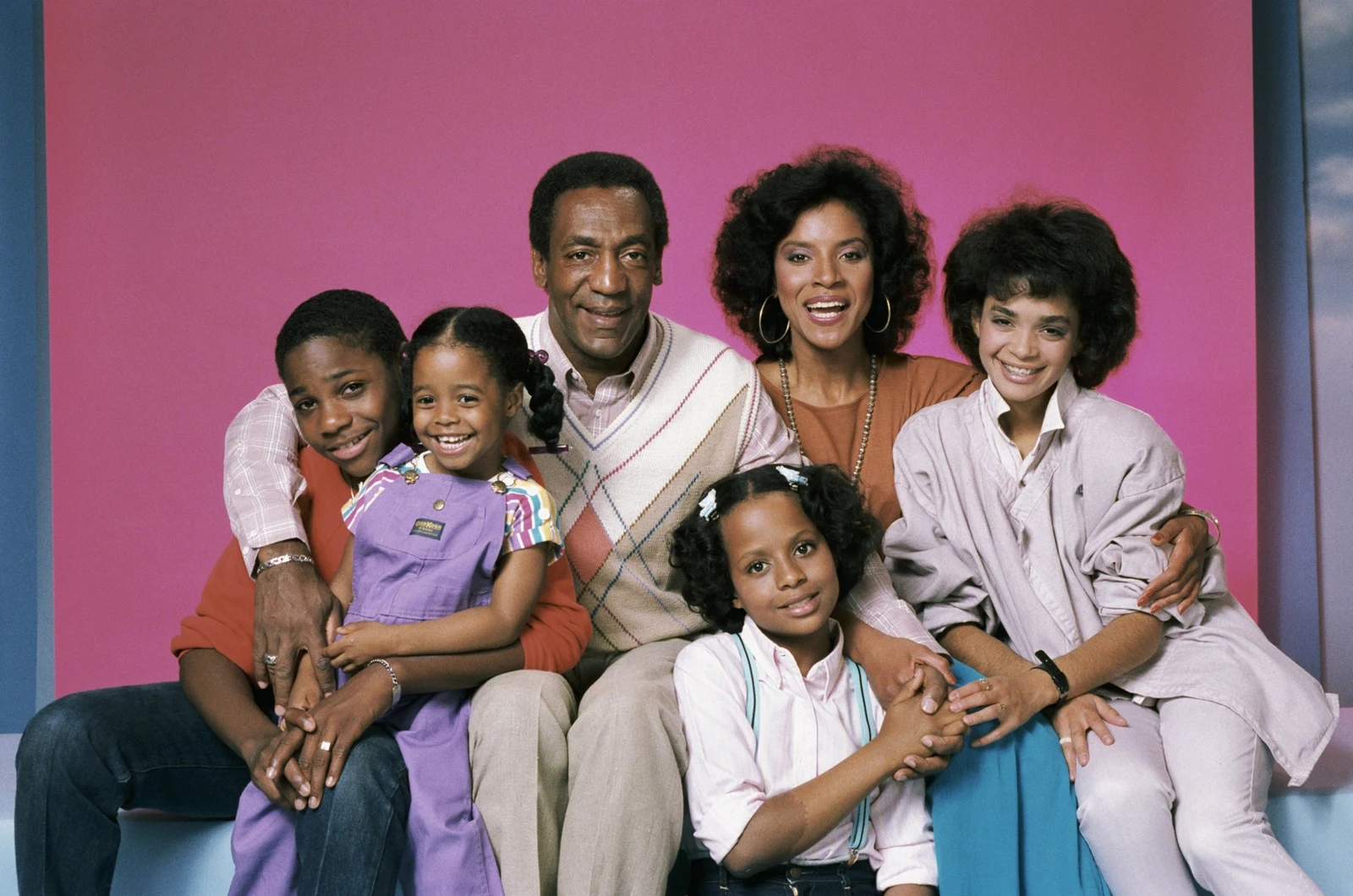
Denise Huxtable had made her brother a shirt. In the broadest possible legal sense, anyway. There were sleeves, a collar, and enough bright fabric to attract assistance from passing aircraft. Theo, who had expected to emerge looking like a young man with impeccable taste, instead looked like the victim of an ambitious school project. His expression did the rest.
That was the sort of emergency that made The Cosby Show enormous. No oil empire was collapsing. Nobody had been shot beside a swimming pool. A teenager wanted expensive clothes, his sister overestimated her sewing skills, and their father had thoughts. Suddenly a perfectly ordinary family argument had become something worth discussing the next day.
The show arrived on NBC on September 20, 1984, and helped turn Thursday into the network’s most valuable piece of real estate. The Huxtables brought an affluent Black family into millions of homes, gave Phylicia Rashad a magnificent weekly stage, and reminded television executives that people still liked a good sitcom. An astonishing discovery, apparently, for an industry already responsible for several decades of them.
Looking back requires honesty about Bill Cosby and the serious sexual-assault allegations against him. His public image changed profoundly; a warm fictional father cannot settle questions about the man who played him. The series also belongs to Rashad, Malcolm-Jamal Warner, Lisa Bonet, Tempestt Bledsoe, Keshia Knight Pulliam, and the many people whose work filled that brownstone. Their performances deserve to be examined rather than erased inside a single name.
This is the story of the show’s 1980s ascent: the children, the music, the comedy, the arguments, and the ratings that changed NBC. It starts with a family able to afford almost anything except a quiet evening.
Theo’s plan for adulthood meets the family accountant
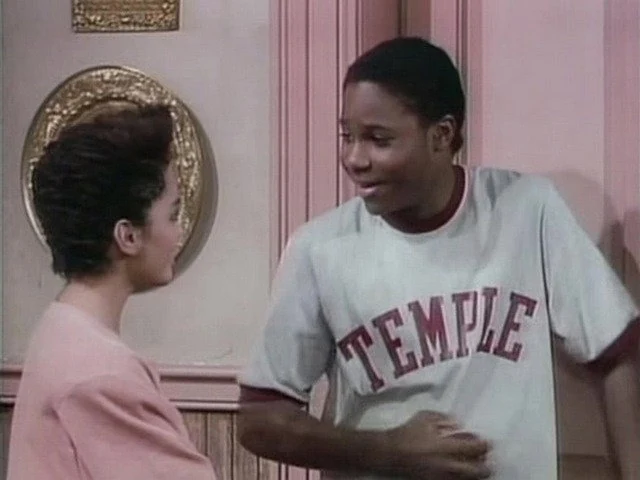
The pilot gives Theo a position familiar to anyone who ever negotiated with a parent while holding a terrible report card: perhaps the entire system is wrong. College, he suggests, may be unnecessary. His father is a doctor and his mother is a lawyer, but he would be content with an ordinary job. Surely there is something admirable about a young person accepting himself.
Malcolm-Jamal Warner makes the argument appealing because Theo believes it. He is not delivering a villain’s speech about avoiding responsibility. He wants the discussion to end with his parents recognizing that their expectations have become unreasonable. He is also conducting this debate from the considerable comfort of their house. A useful location for criticizing ambition, provided somebody else keeps paying the bills.
Cliff answers with Monopoly money. Income arrives, then disappears into the costs of living. The demonstration is simple enough for a child watching at home to follow, and merciless enough for an adult to appreciate. Theo keeps trying to rescue his imagined independence. Cliff keeps finding another expense. Even a fantasy paycheck apparently comes with deductions.
The scene works because it gives both performers room. Warner builds a case; Cosby waits, listens, and punctures it. The joke needs Theo’s confidence as much as Cliff’s reply. Turn the son into a complete idiot and the exchange becomes bullying. Make the father endlessly wise and it becomes a lecture. Instead, the pair play a familiar family contest in which love does not automatically require agreement.
There is a sharp little surprise in the refusal to reward Theo’s appeal for unconditional approval with a swelling musical lesson. His parents love him. They still expect him to work. The show repeatedly separated those ideas, sometimes gracefully and sometimes with a heavier hand. In its opening episode, the collision produced an unusually clear introduction to the household.
It also established Warner as more than a child hired to stand opposite the star. His face registers optimism, calculation, annoyance, and reluctant understanding without losing the awkwardness of a teenager trying to get through dinner. Theo is capable of being ridiculous without becoming disposable. That distinction gave the series somewhere to go as he grew older.
For younger viewers, the scene offered the delicious possibility that a child might argue back with some skill. For adults, the pleasure came from recognizing the sales pitch. Both audiences had a reason to stay. NBC had placed the show at eight o’clock, when that combination mattered enormously.
NBC needed more than a good sweater
In 1984, NBC had programs critics admired and a larger problem convincing enough people to watch them. Cheers and Hill Street Blues supplied quality. Quality did not guarantee a winning weekly average. A network could be proud of its reviews and still spend an uncomfortable amount of time looking up at its competitors.
Grant Tinker and Brandon Tartikoff were building a stronger schedule, but a schedule needs an entrance. The Cosby Show became one. Its place at the beginning of Thursday let an accessible family comedy attract viewers before the evening moved into bars, courtrooms, and a police precinct. You did not need to know anyone’s backstory to understand a child arguing about grades.
Cosby was famous already, through stand-up, commercials, children’s television, and earlier series. Fame was useful; it was not a guarantee. His previous television ventures included successes and disappointments. Treating the new sitcom as an inevitable triumph would make the executives look far more clairvoyant than their profession generally permits.
Producers Marcy Carsey and Tom Werner helped turn the proposal into a series. The creation credits name Cosby, Ed. Weinberger, and Michael Leeson. That combination matters when remembering a show so often discussed as the achievement of one performer. A familiar comic personality needed a family around it, stories to play, a director to organize them, and a production capable of delivering every week.
The pilot’s appeal was unusually easy to explain. An experienced comic played a father. The children were recognizable. The mother had authority. The house felt like somewhere people lived, argued, and occasionally hid something from one another. There was no elaborate premise for a network promo to untangle before reaching the joke.
The gamble also ran against an industry mood that had become skeptical about the sitcom’s future. Prime-time soaps were thriving. Action heroes had helicopters, cars, boats, and considerably fewer objections to property damage. A living room was less expensive and less flashy. It still required exceptionally good people sitting in it.
The show became a central part of the 1980s television landscape because it made the old room feel inviting again. NBC’s comeback involved many programs and decisions, but this was the program that handed the network a dependable opening move. The rest of Thursday finally had a crowd waiting outside.
Clair Huxtable had already heard that excuse
Phylicia Rashad did not play Clair as a pleasant woman stationed beside the more interesting parent. Clair listened with an attorney’s attention to the exact point at which somebody’s story stopped making sense. A child might survive the first question. The follow-up was where the trouble began.
Rashad’s great advantage was control. She could let a smile linger while the person opposite her gradually realized it offered no protection. She could lower her voice instead of raising it. The pause before a response often contained the entire family’s recent legal history. Cliff had his monologues; Clair had the ability to make a monologue seem suddenly unwise.
Her professional life gave the character a center beyond motherhood. Clair was a lawyer who also had children, a husband, opinions, pleasures, and limited patience. The scripts did not need to stage a courtroom case every week to establish that her intelligence existed outside the kitchen. Rashad carried that confidence into ordinary conversation.
One of the character’s defining confrontations comes when Elvin treats her offer of coffee as evidence that she serves her husband. Clair explains the difference between doing something considerate and accepting a subordinate place in a marriage. Geoffrey Owens lets Elvin’s assumptions emerge with just enough confidence to make the correction satisfying. He has entered the wrong house for this particular theory.
The exchange also reveals how well Rashad and Cosby play the marriage when the writing trusts them. Cliff understands what is happening. He does not need to seize the scene or rescue the younger man. Sitting nearby while Clair takes apart the argument gives him a perfectly good comic role. Sometimes a husband’s most intelligent contribution is to recognize that proceedings are already in capable hands.
Clair had humor and appetite as well as discipline. She enjoyed music, teased Cliff, and joined the household’s performances. Without those qualities she would have become the adult who arrived to stop the fun. Rashad instead made her a reason the fun worked: somebody in the room was smart enough to notice the absurdity and affectionate enough to participate.
The contrast with many sitcom wives is striking. Clair’s competence is attractive. Her husband likes her strength, even when it interferes with his latest attempt to get away with something. Their private amusement gives the children a parental team to face. A child hoping to exploit a division between these two needs a better plan than simply asking the other parent.
Rashad received Emmy nominations for the role, although she did not win a competitive acting Emmy for playing Clair. That gap between a performance’s cultural prominence and its awards record is worth remembering. A trophy count alone cannot explain how completely an actor claimed a character.
Gordon Gartrelle, meet Denise’s sewing machine
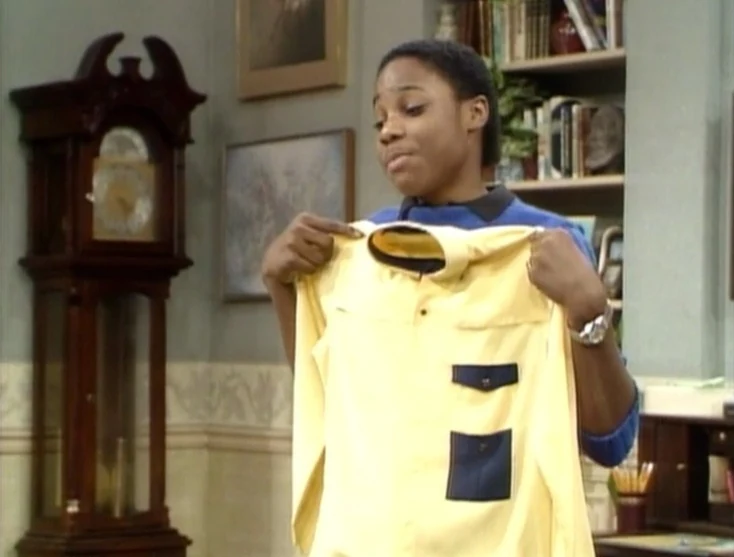
In “A Shirt Story,” Theo wants clothes with a price tag his father finds indefensible. Denise offers a cheaper solution: she will make the shirt herself. It is a beautiful sibling arrangement until the moment anyone sees the result.
The episode aired October 18, 1984, early enough that the audience was still learning the family. John Markus’s script found an efficient shortcut. Theo cared about looking good. Denise had confidence in her abilities. Cliff regarded an expensive teenage purchase as an invitation to investigate the decline of civilization. Three personalities, one garment, and no need for a guest villain.
Bonet handles the reveal with the calm of somebody who thinks there is still a reasonable discussion to be had. Warner looks as though he has been personally betrayed by geometry. The lopsided shirt becomes funny before anybody explains why it is funny. A good visual joke gives the audience a head start, then lets the actors make the embarrassment worse.
The shirt also catches something precise about adolescence. Theo is purchasing a version of himself: older, cooler, more desirable, less obviously a boy whose father controls the clothing budget. A designer label promises to do work that confidence has not yet learned to do. The replacement promises to save money. Unfortunately, it makes a rather different statement.
Cliff’s victory is not simply that the shirt costs too much. The household has let the children try to solve the problem, and their solution has produced something he could hardly have improved upon as evidence. Parenting seldom supplies such cooperative exhibits.
The scene has lasted because it is easy to recognize without having seen the episode recently. Someone means well, claims expertise, and produces a result that friendship requires everyone to discuss delicately. A sibling relationship removes the delicacy almost immediately. Theo’s distress is real enough to understand and small enough to enjoy.
It is also an example of the show at its least pompous. Nobody has to explain what family means. The family is busy making one another’s lives inconvenient. Affection is there in the willingness to help, annoyance in the result, and familiarity in the fact that they all know exactly where to press. Many 1980s family sitcoms chased the same balance. This episode found it in a shirt that should probably have remained a sketch.
Denise looked as if she had somewhere else to be

Lisa Bonet gave Denise the wonderfully distracting air of someone whose real life continued outside the scene. She was not waiting politely for her turn to represent the teenage daughter. Her clothes, posture, and dry reactions suggested a person making choices her parents had not approved in advance.
That mattered in a household with such accomplished adults. Cliff and Clair were formidable, and the show often endorsed their judgment. Denise brought a different kind of confidence, one built less on credentials than on an assumption that life should include exploration. She seemed capable of considering an impractical plan long after everybody else had begun discussing the consequences.
Bonet’s presence made the character stylish without requiring a weekly announcement about fashion. The layered clothes and changing hair felt like expressions of taste rather than a costume department’s lecture on youth culture. Denise could be awkward, distracted, or wrong while still looking like the person younger viewers wanted to study for ideas.
Her relationship with Theo supplied some of the show’s easiest sibling comedy. The two occupied nearby territory: old enough to resent supervision, young enough to need it. They understood one another’s ambitions and were perfectly prepared to exploit the weak spots. A sister can be your ally against parental authority and, on another afternoon, the author of your worst shirt.
Denise’s move to Hillman College provided the starting point for A Different World in 1987. Sending her away changed the family’s shape, but it followed an obvious question raised by the character: what happened when the Huxtable household’s least orderly daughter had to organize her own days?
The spin-off soon developed beyond that initial arrangement. Denise returned to the parent series, and by 1989 her story included a marriage to Martin Kendall, played by Joseph C. Phillips, and a stepdaughter, Olivia, played by Raven-Symoné. Those developments belong to the changing late-decade household rather than to the image of the original children frozen forever beside the stairs.
Denise was sometimes written as scattered enough to invite an easy parental victory. Bonet usually supplied something more elusive. She let the character seem uninterested in winning the same competition as everyone else. In a family where achievement was practically a second language, that made Denise both aggravating and necessary. She could disappoint the adults without feeling like a mistake the series needed to correct.
Rudy didn’t need the adults to explain the joke
Keshia Knight Pulliam’s Rudy was small enough for the grown-ups to underestimate and observant enough to make that a recurring error. Her expressions often arrived a fraction before the line: suspicion, delight, a practical calculation about whether the current activity remained worth her time.
“Goodbye Mr. Fish,” the second broadcast episode, turns a dead goldfish into a family ceremony. Cliff organizes the solemn business of helping a child understand loss. Rudy’s attention proves rather less ceremonial. The comedy comes from the distance between an adult’s carefully prepared lesson and a child’s actual priorities.
That episode establishes a useful rule for the younger children. They do not exist only to deliver wisdom that embarrasses the adults. Sometimes they simply refuse to be as interested as the adults would prefer. A parent may believe an important emotional milestone is taking place. The child is already wondering what comes next.
“Slumber Party” gives Cliff a room full of children to entertain. Its pleasures are physical and immediate: the size difference, the patience required, the uncertainty of getting a response from the quiet child. Peter, played by Peter Costa, brought a memorable silence to the show. Surrounded by people who had something to say, he made saying very little into an event.
Pulliam also understood the delight of performing with complete commitment. In the family’s anniversary lip-sync, Rudy attacks her moment as though the entire production has been waiting for her. She is tiny, the voice on the record is enormous, and the mismatch is the joke. Her confidence makes the audience surrender to it.
The younger children helped prevent the series from turning entirely into a debate club for accomplished parents and argumentative teenagers. Their scenes used different rhythms: shorter attention spans, blunt questions, games whose rules made sense only to the participants. The household felt bigger because its members were not all having the same experience of the day.
Rudy’s appeal did not require every line to be adorable. She could be selfish, bored, bossy, or determined to have the last word. Those rough edges made the sweetness less exhausting. A television child who exists solely to charm an audience becomes a small professional obligation. Rudy usually seemed to have other business.
Vanessa lived in the dangerous middle
Tempestt Bledsoe’s Vanessa had a difficult position in the family: younger than the children allowed more freedom, older than the child still able to get away with being little. The resulting combination of grievance and ambition is excellent sitcom material. Someone else is always receiving the privilege you deserve.
Bledsoe gave Vanessa a watchful intelligence. She noticed changes in status, read the mood of the room, and understood that a sibling’s problem might become useful information. She also brought a particular urgency to embarrassment. For a teenager, an incident at school can feel more consequential than anything in the national news. The adults’ inability to grasp that merely adds to the injustice.
Her school stories let the show examine the family’s prosperity from a child’s uncomfortable angle. In “Vanessa’s Rich,” Vanessa’s classmates react to what they learn about the Huxtables’ money. Wealth that looks reassuring to a parent can become socially awkward for a child who would rather blend in. The brownstone stops being background and becomes something she has to explain.
That is a more interesting problem than having Vanessa announce gratitude for her advantages. She benefits from them and can still dislike the attention they attract. Bledsoe plays the hurt without making the character unusually noble. Vanessa wants the problem fixed on terms that protect her pride, which is to say she wants what most people want.
The sisters’ shared space gave the series a smaller, less supervised country inside the house. Bedrooms are where children rehearse versions of themselves before taking those versions downstairs. A look between sisters can carry more information than a confession to a parent. The show was often funniest when it allowed those private alliances to remain slightly messy.
One famous Vanessa confrontation belongs to 1990, when her unauthorized concert trip prompts Clair’s furious response. It is often folded into memories of the eighties because the series feels so closely attached to that decade. The distinction is useful: Vanessa’s 1980s story already contains plenty of insecurity, competition, and attempted independence without borrowing the next decade’s biggest scene.
As the children grew, Bledsoe’s performance helped the house age with them. Vanessa was not Rudy with a larger wardrobe, nor Denise waiting for another chance at rebellion. She wanted recognition, tested boundaries, and sometimes made a painfully elaborate situation out of something she hoped would go unnoticed. Adolescence: a business model with an alarming rate of avoidable complications.
Sondra and Elvin discovered that approval had conditions
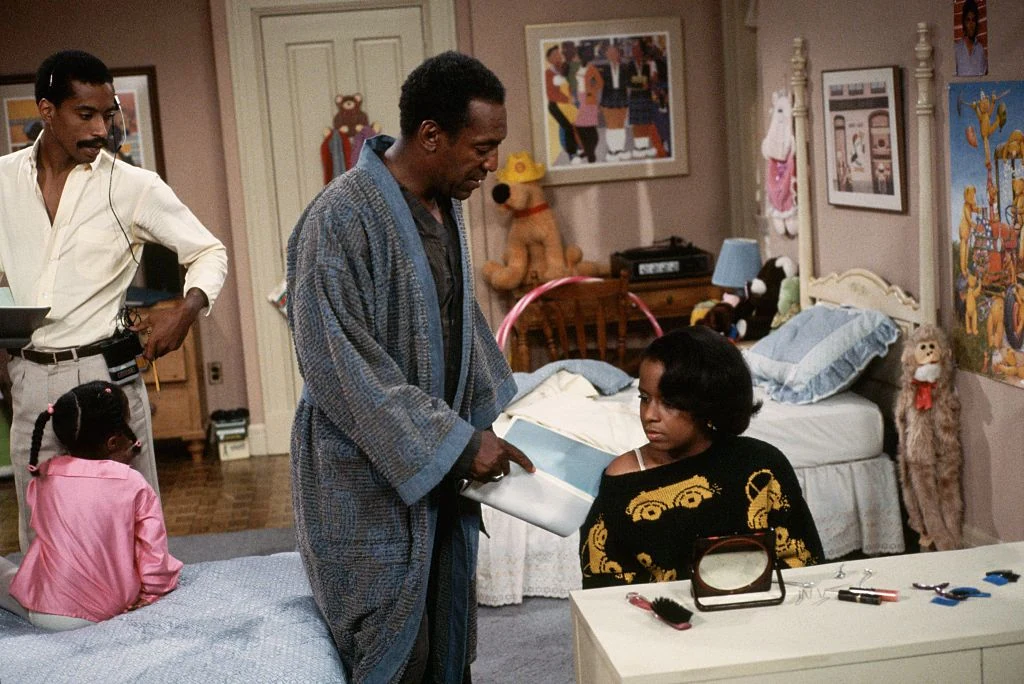
Sondra entered the series after the original pilot, giving the Huxtables an eldest daughter already at college. Sabrina Le Beauf made her seem familiar with the house’s rules and reasonably confident she had mastered them. Then Geoffrey Owens’s Elvin arrived with opinions.
Elvin was a terrific addition because he gave the parents somebody to evaluate who was technically an adult. Children can be instructed. A daughter’s boyfriend must be handled with enough diplomacy to preserve the daughter’s willingness to visit. Cliff’s enthusiasm for an alternative suitor in “Cliff in Love” is funny partly because it is so transparently self-interested. He has spotted a better candidate and would like the appointment confirmed.
Owens did not make Elvin a simple fool. He gave him the earnestness of a person who has never quite examined the assumptions he is repeating. When Clair challenges his ideas about women, he has to revise his understanding in public. The discomfort is deserved, but the performance leaves room for him to learn instead of requiring the show to throw him away.
Sondra and Elvin’s plans after their marriage offered the parents another test. The wilderness-store scheme in “Call of the Wild” was not the graduate-school future Cliff and Clair had been anticipating. They had invested in education, encouraged serious goals, and received a proposal involving outdoor merchandise. Somewhere in the distance, a carefully framed diploma appeared to sigh.
The joke has two targets. The younger couple underestimate practical difficulties. The older couple discover that raising accomplished children does not confer permanent voting rights over their decisions. A parent may finance a degree without obtaining a lifetime option on every choice that follows.
Le Beauf’s steadier presence helped distinguish Sondra from Denise. Sondra seemed closer to the parental ideal, which made her departures from it more unsettling. It is one thing for the child expected to improvise to improvise. It is another when the supposedly sensible one arrives with a plan that makes everybody stare.
The birth of twins, Winnie and Nelson, added a further generation before the eighties ended. Their names nodded to Winnie Mandela and Nelson Mandela, placing a connection to Black political history within the family’s ordinary conversation. The children who had been raised in the house were beginning families of their own. Cliff’s hope that independence might eventually produce fewer people needing something from him remained, understandably, a work in progress.
An anniversary party with an exceptionally good record collection
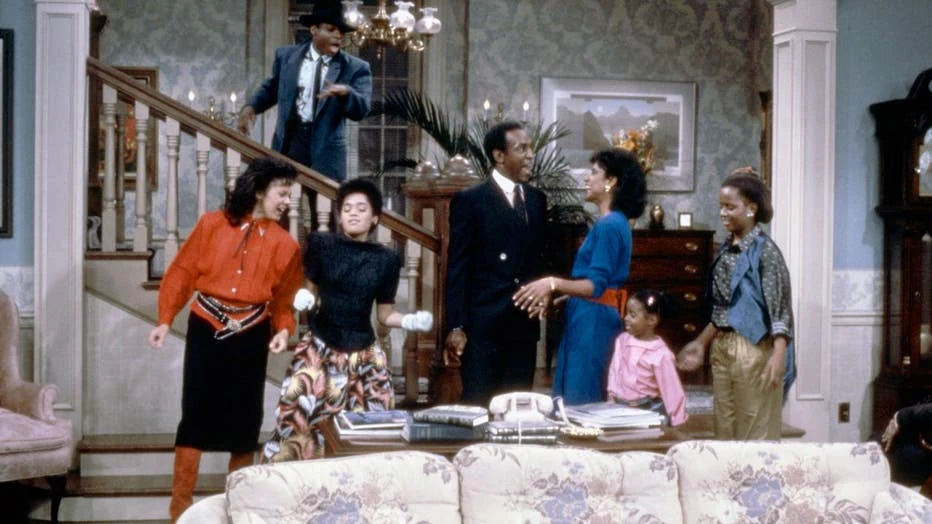
“Happy Anniversary” barely needs its title to bring back the image. The Huxtables perform to Ray Charles’s “Night Time Is the Right Time” for Cliff’s parents, Anna and Russell. The furniture is familiar. The performers are family members. The confidence level is somewhere between a living-room party and a Las Vegas residency.
Broadcast on October 10, 1985, the episode lets the music carry a long stretch of pleasure. Theo, Cliff, Rudy, and the others each have their place in the performance. Rudy’s emphatic lip-sync is the scene’s great ambush. The audience can see a child giving herself completely to a voice several sizes larger than her body.
The grandparents’ reactions are essential. Clarice Taylor and Earle Hyman do not merely sit there validating the younger cast. Their delight gives the performance a destination. This is a family doing something for people it loves, with all the slightly excessive preparation and private amusement that implies.
Taylor’s Anna and Hyman’s Russell also changed the household’s pecking order whenever they visited. Cliff might be an authority to his own children, but his parents had known him before he acquired the credentials. An adult child’s impressive explanation is less imposing to people who remember the original version.
The series used that history for affectionate correction. Russell brought his own assurance, and Anna possessed the ease of someone who did not need to win every argument aloud. Their visits made the family feel as though it extended backward, with habits and loyalties established before the opening credits.
The anniversary performance is also a reminder that the show allowed Black musical pleasure to fill the screen without apologizing for its specificity. A Ray Charles recording did not require translation into a supposedly more universal choice. The family knew the music, enjoyed it, and invited viewers to catch up.
There is a temptation to describe every successful family scene as heartwarming, a word television publicity has worked nearly to death. This one earns the feeling through energy and comic timing. The affection sits inside an entertaining performance. Nobody has to stop the party to announce that affection is important.
The episode’s lasting appeal is wonderfully practical: put funny, expressive people in a room, give them a great song, and let the audience enjoy their enjoyment. Television has spent considerably more money obtaining much less.
Stevie Wonder let the children into the studio
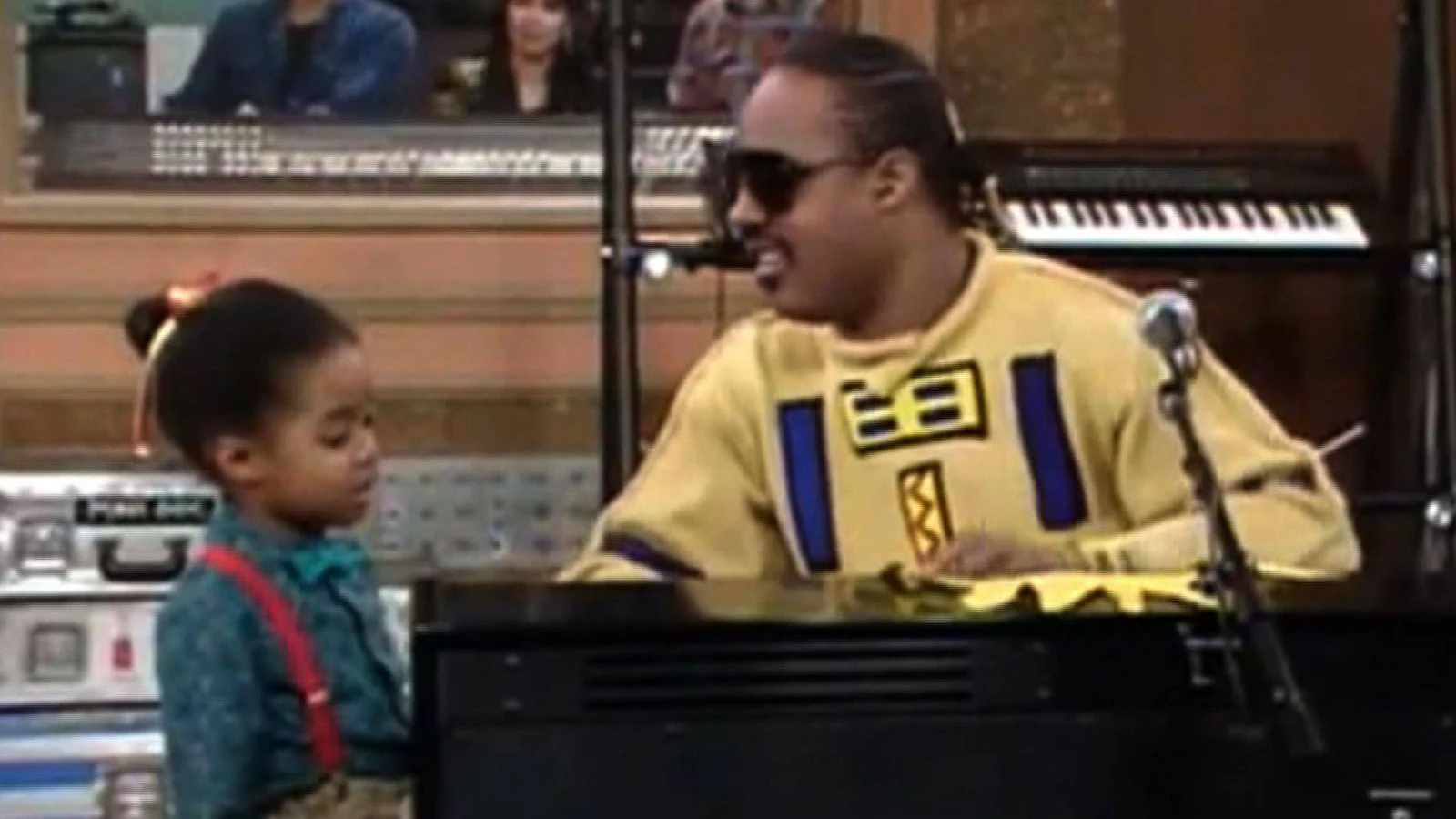
“A Touch of Wonder” takes the family into a recording studio with Stevie Wonder, and the guest appearance becomes something more enjoyable than a celebrity walking through the front door to receive applause. The studio contains equipment the Huxtable children want to understand. Wonder lets them participate.
The sequence with the Synclavier is particularly memorable. Voices become samples. Small sounds are captured and played back as part of music. For children who knew records as finished objects, this offered an unusually inviting glimpse of how a sound might be taken apart and rebuilt.
Wonder is generous without becoming solemn. He engages the cast, plays with what they contribute, and makes the technical demonstration feel like an afternoon that has gone unexpectedly well. The episode does not need a character to declare that music brings people together. People are visibly having a good time making it.
Questlove later discussed the sequence’s influence in an interview with Democracy Now!, remembering the fascination of seeing sampling technology presented this way. That response makes sense: the episode offered a national audience a playful encounter with tools that would become central to many listeners’ musical lives.
The show’s broader musical world was unusually rich for a domestic sitcom. Jazz lived in the household alongside older popular songs, rhythm and blues, and the children’s tastes. The parents’ record collection was part of who they were. Music had texture, history, and the power to interrupt a plot because somebody wanted to listen.
That confidence also shaped the changing opening sequences. The theme, “Kiss Me,” was credited to Stu Gardner and Cosby, and its arrangements changed across the run. The family did not spend eight years arriving in exactly the same musical wrapper. Later eighties openings used movement and performance to make the cast feel like an ensemble before the story began.
For a show associated with comfortable routines, that willingness to change the opening mattered. Viewers recognized the household, but each season could announce a slightly different mood. The children looked older. The dancing changed. A familiar program found a small way to make its return feel like an occasion.
The musical episodes were sometimes indulgent, and a viewer waiting for a tightly plotted comedy had reason to notice. Yet the best passages offered something a more efficient script might have trimmed away: people taking pleasure in a shared cultural language. That was part of the Huxtables’ appeal, and it sounded like their house.
The brownstone had a life beyond the furniture
The Huxtable house was one of the show’s most persuasive performers. Its staircase gave children somewhere to hover, make an entrance, or retreat after an argument. The kitchen encouraged conversations that started with food and ended with an investigation. Bedrooms offered temporary privacy, which is the only kind a sitcom family can afford.
Production designer Garvin Eddy helped create that world. The interiors were working television sets, arranged for cameras and performers, but the decoration suggested people with established tastes. Books, art, records, and comfortable furniture made the place look accumulated rather than delivered in one shipment marked SUCCESSFUL FAMILY.
The distinction matters visually. A spotless luxury house can become a showroom that discourages the audience from imagining anyone living there. The Huxtables’ home had order without excluding activity. Children came through it carrying schoolwork, clothes, arguments, and schemes. The room was expensive; the behavior was familiar.
Ellis Wilson’s Funeral Procession became one of the best-known works associated with the set. “The Auction” connects Clair to the painting through a fictional family history. The actual work belongs to the history of a real Black artist. On the show, art was something a character cared about enough to pursue, rather than a vague symbol of good taste hanging behind a lamp.
That story gave Rashad an interest with emotional weight. Clair wanted a connection to family, and the picture carried it. The episode let a domestic comedy spend time with the question of what a household keeps, what it loses, and what it might try to recover when circumstances change.
The home’s prosperity also created a productive tension with the children’s complaints. A teenager arguing that life is unbearable while standing in that living room does not automatically lose the right to be unhappy. The setting does, however, give the audience a useful second opinion.
Some viewers saw an aspiration. Others saw a fantasy whose bills remained conveniently offscreen. Both responses were available because the house was so specific. It was not presented as the average American residence. It was the home of a doctor and a lawyer raising a large family with high expectations and a great deal of furniture to walk around while delivering them.
Within the broader culture of the 1980s, those rooms offered a different sort of television wealth from the mansions of prime-time soaps. Nobody needed to sabotage a company before dessert. The struggle might be over a sandwich. On certain evenings, the sandwich received equally serious attention.
A director who knew when to leave a face alone
Jay Sandrich had directed The Mary Tyler Moore Show before helping establish the Huxtables’ television rhythm. His work connected the series to a tradition of ensemble comedy in which reactions mattered as much as the line that provoked them.
Watch how often the show trusts someone listening. Theo waits to discover whether his argument has survived. Clair studies the latest account of events. Denise registers the distance between what she intended and what she produced. Cutting too quickly would flatten those moments. The audience needs time to notice that a person has understood something inconvenient.
Cosby’s stand-up background encouraged extended bits, and that created both opportunity and risk. A performer comfortable holding a room can turn an ordinary action into an elaborate routine. The director still has to keep the scene connected to the people sharing it. Otherwise a family comedy becomes a solo concert with relatives serving as furniture.
At its best, the series gives the other actors a stake. Rashad can interrupt, Warner can resist, Pulliam can become interested in something else. Their responses keep the star’s performance from floating away from the household. A sandwich is funnier when someone nearby has good reason to object to what is happening to it.
The writers deserve the same attention. Earl Pomerantz, John Markus, Carmen Finestra, and the rest of the staff helped turn family situations into playable scenes. The finished series often looked relaxed, which can hide the work of choosing exactly where a conversation should become uncomfortable and when the audience should be allowed to breathe.
The first season won the Emmy for outstanding comedy series in 1985. Sandrich also won for directing, and Ed. Weinberger and Michael Leeson won for writing the pilot. Pomerantz received a writing nomination for “Goodbye Mr. Fish.” Those honors recognized work beyond the famous face on the poster. The household’s ease depended on craft.
The relationship to Mary Tyler Moore’s ensemble comedy is useful because the rooms are different but the attention is familiar. A character’s pride, a small mistake, and an audience aware of both can carry a scene. You do not always need a louder premise. Sometimes you need to keep the camera on the person who has just realized the premise is happening to them.
Third place first, then the view from number one
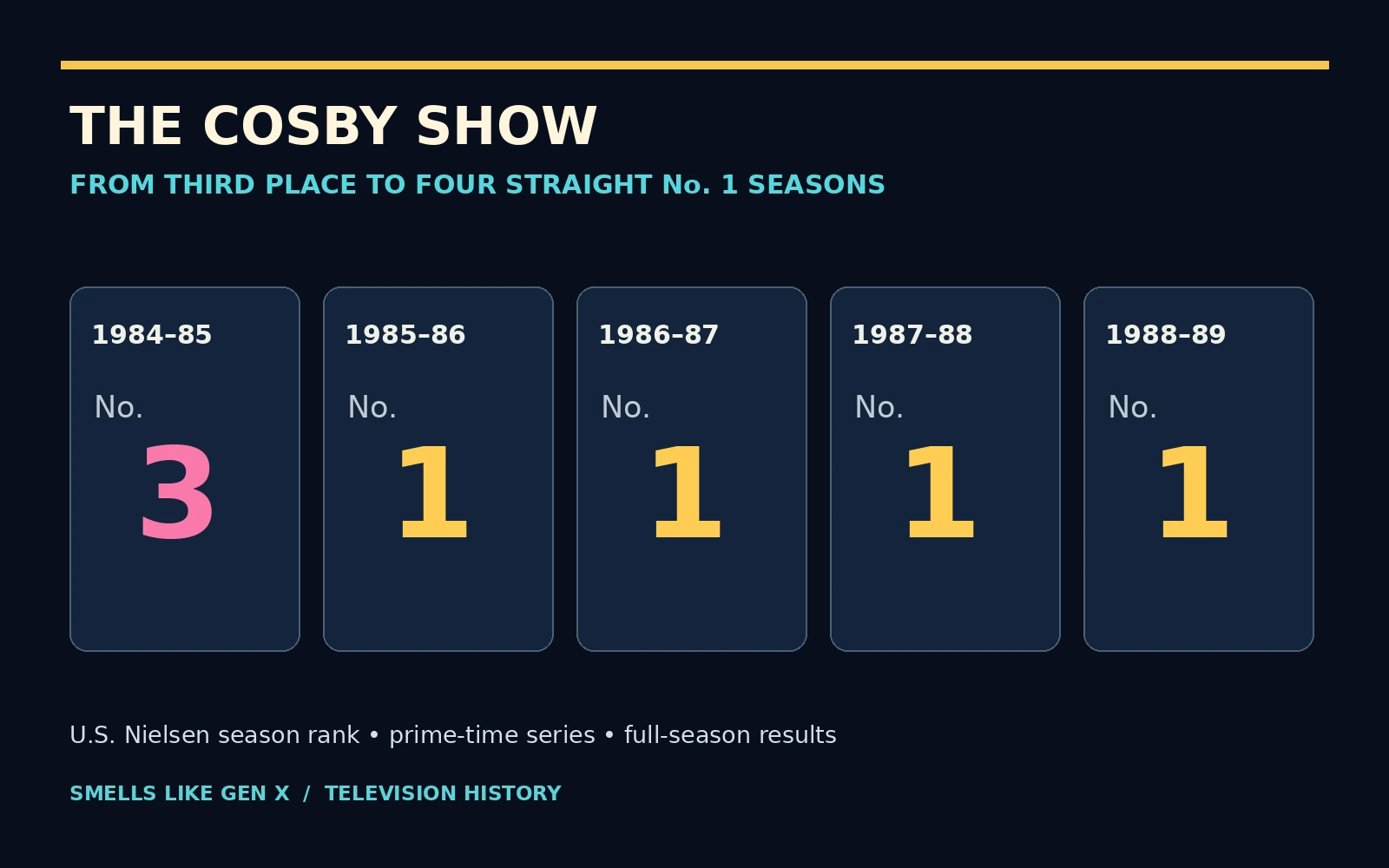
The clean version of the ratings story is that The Cosby Show arrived and immediately became the biggest series in America. The actual season-by-season story is slightly more interesting. It finished third in 1984–85, behind Dynasty and Dallas. That is an extraordinary first season. It is also third place.
The 1985 television rankings show a moment when prime-time soaps still occupied the top two positions and a new family comedy was already pressing against them. The shift did not require the audience to abandon melodrama overnight. It required enough people to add a different kind of pleasure to their week.
By 1985–86, the Huxtables were first. They remained first in 1986–87, 1987–88, and 1988–89. A weekly victory is news for a day. Repeated first-place seasons change the way a network plans its future.
The numbers should be read as the household measures used at the time, rather than casually converted into modern streaming statistics. A rating described a percentage of television households. A share referred to the households using television at that time. Neither is a count of unique people who ever saw a clip.
For a sense of the scale, the show’s 1986–87 average household rating was 34.9. That meant a remarkable portion of the available television universe was regularly choosing the same program. The 1987 season’s biggest hits put the Huxtables’ position beside the rest of the field, rather than reducing an entire year to one famous sitcom.
Success also made routine business decisions much less routine. A lead-in with that audience could lift the show after it. A guest appearance could reach an enormous public. A new spin-off had a promotional advantage unavailable to a series launched from an empty corner of the schedule.
The ratings did not certify that every episode was equally good. They showed how effectively the program had become a habit. Families knew where to find it, advertisers knew people would arrive, and NBC could build around that expectation. Television executives enjoy discovering a hit. Discovering one that opens an entire evening is rather better.
The four first-place seasons ending before 1990 are the heart of this feature’s ratings story. Later competition belongs to the next stage of the series. The eighties alone supply enough evidence of how dramatically one household altered a network’s position.
The half-hour after eight became valuable real estate
Family Ties was already on NBC when the Huxtables arrived. Placing the Keatons after them turned two compatible family comedies into a powerful opening hour. The households were different enough to have their own jokes and familiar enough that changing channels required a particularly persuasive alternative.
Alex P. Keaton wore ambition like formalwear. Theo Huxtable regarded ambition more cautiously when it involved homework. Putting them in neighboring half-hours offered two entertaining responses to parental expectations. One son wanted to become a financial institution. The other hoped the current conversation about his grades might end.
The Keatons’ generation-gap comedy benefited from the audience arriving earlier, but it also earned its place through Michael J. Fox and a strong ensemble. A lead-in can persuade people to sample a show. It cannot make an unappealing one endlessly watchable by decree.
After the family hour came Cheers and Night Court, with Hill Street Blues closing the 1984 Thursday lineup. The evening moved from domestic arguments into adult workplaces without losing a sense of people who knew one another well. It was an unusually coherent invitation to keep the television where it was.
The 1986 rankings capture the result: NBC had a major comedy engine rather than an isolated success. The next year made the strength even harder to miss. The first half-hour drew the crowd; the following shows gave that crowd reasons to stay.
When A Different World took the 8:30 Thursday position in 1987, NBC used the Huxtables’ popularity to launch a new household beyond the household. The college setting extended familiar interests in education and young adulthood while creating space for a different ensemble.
It is easy to look backward and call all of this “Must See TV,” but NBC’s famous branded campaign belongs to the 1990s. The eighties supplied much of the programming strength the later phrase celebrated. The 1990s Thursday-night story develops that next chapter; the Huxtables helped make the earlier one possible.
The practical achievement was simple enough to describe from a sofa: turn on NBC at eight and there was a good chance you would still be there later. For a network coming back from years of frustration, that was a very pleasant problem to have.
The family took Hillman seriously
Hillman College existed in the Huxtables’ world before it became the setting for a separate weekly series. Cliff and Clair spoke of education as something that connected them to a wider Black community and a family history. A college sweatshirt was not just a convenient costume. It suggested loyalties outside the house.
The parents’ enthusiasm also supplied comic pressure. Children raised by people who believe deeply in education do not get to treat an application as an optional household craft. Denise’s choices were watched with interest, advice, concern, and the particular parental confidence that additional advice would surely help.
“Hillman,” broadcast in 1987, took the family to the fictional historically Black college. The visit broadened the series’ world beyond a prosperous private home. It let the Huxtables belong to an institution with other people, traditions, and expectations around them.
The appearance of Lena Horne in an earlier episode offered another version of that connection between generations. A famous performer was someone the children could encounter, ask about, and admire. The show often placed cultural achievement within visiting distance rather than presenting it as a remote textbook category.
A Different World premiered in September 1987 with Denise at Hillman. Its initial version carried the obvious advantage of a familiar character and a huge lead-in. Its later creative growth, particularly after Debbie Allen became a central force behind the series, gave the campus a more distinctive life.
Denise did not remain the spin-off’s center, but the move still changed the possibilities around the original show. Black college life could occupy network prime time as an ongoing setting. Education was no longer merely what the parents wanted the children to obtain offscreen.
The later Hillman years have their own story and a different balance of characters and issues. The eighties launch belongs here because it demonstrates how the Huxtables’ success generated room for a show that eventually pushed beyond the original family’s comfortable boundaries.
For young viewers, that expansion offered a concrete image of life after high school. The parents’ recurring demand to study was suddenly attached to a place with friendships, conflict, performances, and a life of its own. The homework still had to get done, unfortunately. Television’s generosity had limits.
A house could be comfortable without representing everybody
The Huxtables did not introduce Black family life to television. Good Times, The Jeffersons, and other series had already built memorable households with different pressures, incomes, and comic temperaments. Treating 1984 as the moment Black families first appeared would erase people who had been entertaining audiences for years.
The new series instead made a particular family exceptionally visible: two successful professionals, children expected to achieve, and a household whose Black cultural life was present without requiring every episode to become a lesson about prejudice. Its popularity gave that picture an enormous reach.
There was pleasure in seeing the children allowed ordinary mistakes. A bad grade did not automatically become a tragedy. A foolish purchase could remain a foolish purchase. Theo was given the room to be embarrassed, selfish, funny, loved, and wrong. Those are small privileges on a sitcom and substantial ones in a television culture that had often offered narrower roles.
The house’s insulation also drew criticism. If viewers treated the Huxtables’ prosperity as proof that racism had become easy to overcome, the pleasant picture encouraged a dishonest conclusion. A doctor and a lawyer enjoying their lives could not explain the circumstances of every Black family outside the frame.
The series sometimes made that confusion too easy by giving obstacles tidy domestic solutions. Hard work, education, and parental attention matter. They do not erase discrimination or produce equal opportunities by themselves. A successful sitcom family cannot perform the job of an entire social history, particularly while trying to finish before the next half-hour.
What remains compelling is the specificity of the family’s tastes. The art, jazz, grandparents, college affiliations, and cultural references were not empty declarations that the Huxtables were interchangeable with any other affluent household. They made the family’s identity visible in the way its members lived.
The Black sitcoms of the 1970s provide a useful comparison because they show the variety the conversation needs. The Huxtables added another home to that television neighborhood. They were never required to demolish the others to make room for it.
The fairest reading allows both the pleasure and the limits. Viewers could value an inviting portrayal without mistaking it for an average. Critics could question the program’s omissions without pretending the cast’s work had no meaning. The series was powerful enough to invite disagreement, and the disagreement was part of its eighties success.
The adults turned the house into a small, hostile economy
“Theo’s Holiday” takes the pilot’s money lesson and expands it into a household production. Theo believes adult independence will be manageable. His family decides to provide a demonstration with unusually high participation.
The house becomes a miniature world of rent, jobs, loans, meals, and people who expect to be paid. Family members take roles that remove the protections Theo normally receives from being their son or brother. He discovers that being charming is not the same thing as supplying a reference.
The pleasure lies in the family’s commitment to the bit. They are not merely refusing a request. They have prepared characters, rules, and an entire obstacle course. There is something both loving and faintly alarming about adults willing to stage an economy to win an argument with a teenager.
Warner keeps the episode moving because Theo continues trying. He adjusts his strategy, looks for a workable opening, and discovers another cost. His confidence takes a beating without disappearing altogether. That persistence is more entertaining than an immediate surrender.
The story is broader than the pilot and less naturalistic, but it uses something the series had earned: the audience knows how these people enjoy performing for one another. The anniversary lip-sync comes from the same family impulse. Give the Huxtables a shared project and somebody will soon be taking it very seriously.
The episode is also a useful example of the show’s sharp edge. Its parents can be controlling. They have resources, authority, and enough free household labor to create an instructive afternoon. A viewer revisiting the scene as an adult may laugh at the ingenuity while wondering whether a shorter conversation would have served everyone adequately.
That double response improves the comedy. The parents are right that independence costs money. They are also enjoying their advantage. The child is naïve, but his wish to get outside the family’s supervision is understandable. Nobody needs to be entirely innocent for the scene to work.
Some of the era’s best domestic comedy depended on this willingness to let affectionate people become a little unreasonable. The Huxtables loved one another, and they also liked winning. Pretending those impulses never overlapped would have made the house considerably less recognizable.
Theo eventually needed a different answer
By 1989, the boy who had tried to negotiate his way around poor grades was a young adult. In “Theo’s Gift,” he learns that he has dyslexia. The diagnosis changes the explanation for difficulties the family has been discussing since the first episode.
The story does not require the audience to forget Theo’s earlier laziness or occasional evasions. It asks the parents, and the viewers, to recognize that effort is not the only variable. A person may work hard and still need a different way of learning. That is a more generous place for the series to arrive than another demonstration that father has correctly identified every problem.
Warner gives the development weight because viewers have watched Theo struggle over several seasons. The character’s frustration is not newly invented for a serious episode. His relationship with school already belongs to the show’s history, which makes a new explanation feel consequential.
The timing matters. The episode aired in October 1989, so this change belongs to the eighties portion of the series even though much of Theo’s later progress continues into the nineties. The younger viewer who once enjoyed his evasions could now see him being taken seriously in a different way.
There is an emotional shift in watching the parents reconsider. Their expectations came from love, and love did not guarantee that their first interpretation was complete. The family’s authority becomes more interesting when it is capable of adjustment. Clair and Cliff do not have to become foolish for Theo’s experience to teach them something.
The episode also offers a useful corrective to the show’s fondness for ingenious parental lessons. Sometimes a child does not need a more elaborate illustration of adult wisdom. Sometimes the adults need additional information. That possibility makes the household feel less sealed off from real life.
The series’ full arc carried Theo much further, but the 1980s ending already shows why Warner mattered. He had grown from an appealing comic opponent into a character whose disappointments and achievements invited genuine concern. His face remained expressive, but the boy inside the expression had become more complicated.
For all the attention paid to the father’s routines, this is one of the strongest arguments for remembering the ensemble. A long-running family comedy gives actors the chance to make growing up visible. Warner used that chance. Theo’s progress was something the audience had been watching, not a fact delivered in a final speech.
Good reviews arrived before the victory lap
Tom Shales greeted the premiere enthusiastically in The Washington Post, praising a bright spot in the fall schedule. That early welcome is more revealing than a retrospective list compiled after the series had become unavoidable. Critics could see something appealing before the ratings made approval seem obvious.
The first-year Emmy for outstanding comedy series gave the program another form of recognition. It won against a field that included Cheers, Family Ties, Night Court, and Kate & Allie. The company was strong, and several competitors were helping NBC build the same comedy revival.
Contemporary enthusiasm should not be flattened into the claim that everybody loved every creative choice. The series’ relaxed pacing could feel beautifully observed or overly pleased with itself, sometimes within the same episode. A long routine rewarded an audience enjoying the performer and tested one waiting for the story to continue.
There were also occasions when a visiting celebrity or an educational purpose arrived with the seams showing. “Mr. Quiet,” with Tony Orlando, moved into a community-center story that felt different from the show’s strongest domestic material. Expanding the world was worthwhile; losing the family’s comic texture was a risk.
Those uneven passages help explain why the best episodes remain so easy to distinguish. The shirt story has an object everyone understands. The anniversary has a performance everyone can enjoy. Theo’s school problems have a person whose disappointment the audience knows. Clear stakes keep a gentle show from drifting into pleasantness for its own sake.
The family’s lessons sometimes arrived wrapped too neatly. An adult would have a carefully timed insight, the child would recognize the point, and the episode would close with the household restored. Real families tend to require more follow-up and considerably worse timing. The series’ comfort came partly from offering the version in which the conversation finally worked.
That comfort is not automatically a defect. It becomes one when the writing assumes affection will cover a thin joke or a predictable answer. At its strongest, The Cosby Show earned its warmth through funny behavior. At its weakest, it expected viewers to be grateful that warm people were present.
The difference is worth preserving when discussing a giant hit. Admiration becomes more convincing when it can tell a great scene from an adequate one. The Huxtables supplied enough great scenes to survive a little honest discrimination.
The late eighties made a bigger, busier house
By the seasons reflected in the 1988 rankings and 1989 rankings, the series had become an institution. That success carried a creative problem: a family cannot remain exactly the same age for the convenience of a Thursday schedule.
Sondra and Elvin married and became parents. Denise left, returned, and brought a changed life with her. Theo moved toward adulthood. Vanessa had new social problems. Rudy was no longer the very small child whose blunt responses had introduced the household. Keeping the family together required more than putting everyone back on the sofa.
Raven-Symoné’s Olivia arrived in 1989 with Denise and Martin’s story, adding a younger child to a cast that had visibly grown. Her confidence offered a new source of small-person comedy. The device was familiar to long-running family shows, but a device still depends on casting. A child who can hold a scene changes how obviously the machinery shows.
Joseph C. Phillips’s Martin also brought a different relationship into the house: Denise had made an adult choice that the family had not supervised. The parents now had to respond to a marriage already in existence. The situation gave Bonet’s independence a less theoretical form.
The expanded cast made room for new combinations and diluted others. Not every viewer wanted additional relatives or more children. The early household’s clean arrangement had become part of the show’s appeal, and familiarity can make any alteration feel like an unauthorized renovation.
Still, refusing change would have created its own absurdity. A series devoted to education and responsibility eventually has to let its children acquire some of both. The most interesting late-decade moments come when the parents discover that successfully raising a child does not ensure a convenient adult.
The show remained a ratings leader through the end of the decade, but the texture had changed. The family was busier, the children’s choices carried different consequences, and the original premise had accumulated history. Watching those seasons beside the pilot makes the passage of time visible in faces, voices, and the kinds of arguments people think they can win.
That is one of the quiet pleasures a long-running sitcom can provide. The set stays familiar while the people outgrow their first positions inside it. Even a household with this much space eventually has to make room.
The reputation changed. The cast’s work is still there.
The distance between Cliff Huxtable’s reassuring television image and the allegations against Bill Cosby has changed how many viewers encounter the series. Nostalgia cannot settle that conflict, and nobody owes a television program the recovery of an old feeling.
Cosby’s 2018 criminal conviction was overturned by Pennsylvania’s Supreme Court in 2021 over a prior non-prosecution commitment and the resulting due-process issue. That ruling was not a finding that all allegations were false. His subsequent public and legal history is separate from the fictional household and should not be rewritten as a reassuring sitcom ending.
For some people, watching is no longer possible or desirable. Others distinguish the work of the ensemble from the conduct associated with its star. The series is unusually difficult to separate because the title, the central performance, and the earlier public persona were so closely joined.
Rashad’s timing, Warner’s vulnerability, Bonet’s individuality, Bledsoe’s alertness, and Pulliam’s confidence remain visible in the work. Remembering those contributions does not require pretending the larger context disappeared. It requires looking carefully enough to see more than one person in a scene.
The historical achievement also remains measurable. NBC gained a dominant comedy anchor. A prosperous Black family occupied the center of prime time. A generation of viewers encountered characters whose everyday arguments made them laugh, and some saw forms of family life television had rarely given such sustained attention.
The series’ influence can be followed into the wider 1990s television landscape, where other Black family and ensemble comedies brought different voices, incomes, and ambitions to the screen. They were not simply copies of the Huxtables. The space was large enough for other households, and it needed them.
The eighties story ends with a network transformed and a family that had become far more famous than the executives who scheduled it could have expected. The best scenes are still specific: a disastrously sewn shirt, a child taking over a song, a mother waiting for an excuse to finish, a teenager discovering that his struggle has a name.
Those details explain the ratings better than a solemn claim that the show changed everything. People came back because, at its best, something funny and recognizable happened in that house. NBC built an evening around the return visit.
Questions Readers Ask
When did The Cosby Show premiere?
It premiered on NBC in September 1984. Its first season finished third in the network season rankings, before it moved into an extraordinary run at number one.
How many seasons did it finish at number one during the 1980s?
Four consecutive seasons, from 1985–86 through 1988–89. That success helped make NBC’s Thursday-night comedy lineup a national television habit.
Who played Clair Huxtable?
Phylicia Rashad played Clair, whose authority and comic timing gave the Huxtable household a strong center opposite Cliff and the children.