Three's Company in the Early 80s: The Sitcom That Carried Over
The roommates changed, Furley kept the keys, and Jack had more chances than ever to explain himself.
It might be Cindy, Terri or Furley. It’s definitely the worst possible moment.
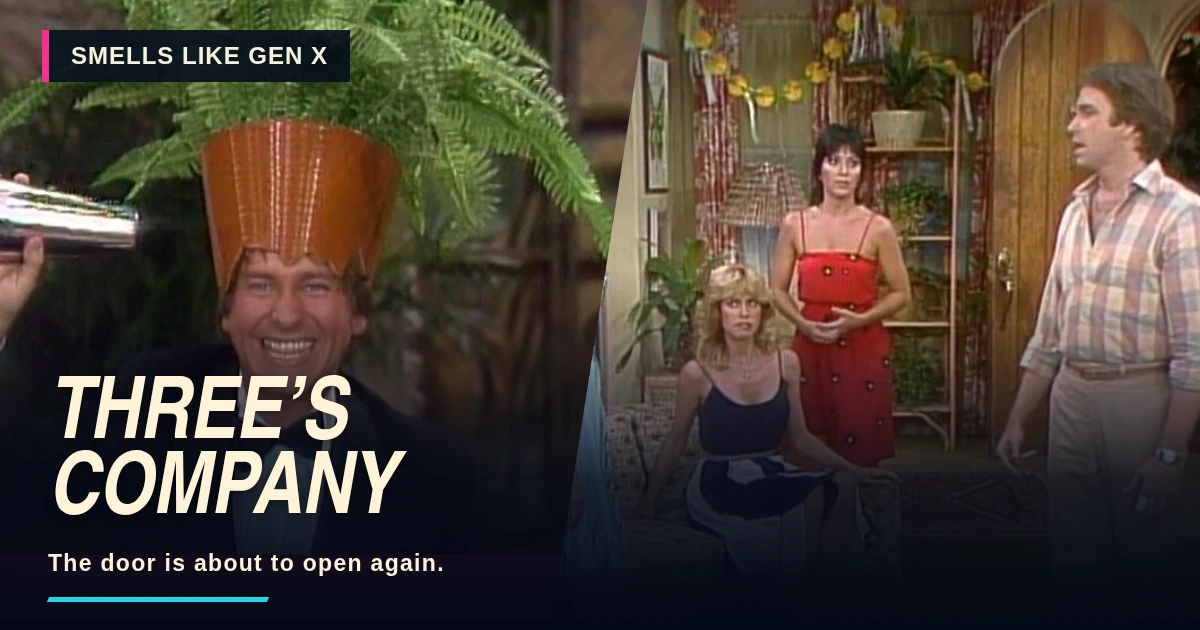
There goes the apartment door. Somebody comes in just late enough to miss the first half of a sentence. Janet sees the trouble coming. Jack sees a small opening to explain himself and runs through it so fast he makes the whole thing worse. Then there’s the little pause before the audience laughs, when you can practically see John Ritter deciding which way his knees are about to go.
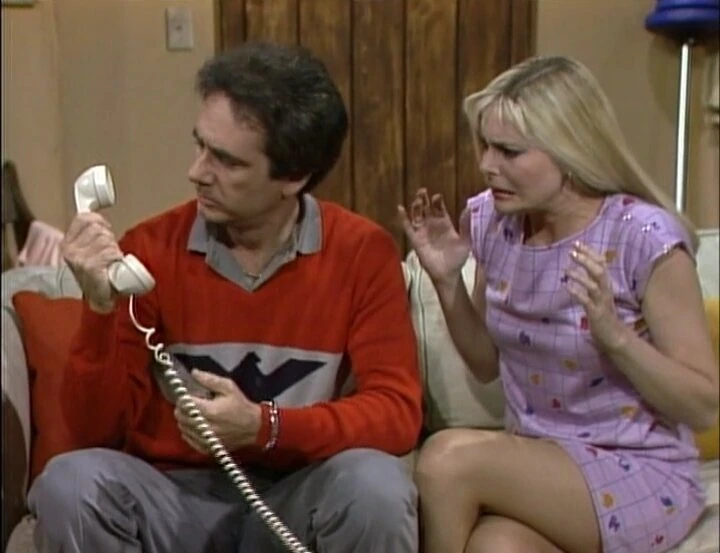
The apartment was already familiar when the ’80s rolled around. So were Jack Tripper and Janet Wood. The landlord and the third roommate were the faces that could make you sit up during a rerun and try to place the year. Is that Chrissy on the phone, Cindy coming through the door, or Terri trying to get a sensible answer out of anybody? Did the landlord walk in wearing one of those neck scarves that only Don Knotts could have pulled off?
Our ’70s sitcom guide remembers the original Three’s Company apartment, when Ritter, Joyce DeWitt and Suzanne Somers made the place feel like a room you already knew. Here I’m going back for the years when Ralph Furley had the keys, Terri moved in, and Jack eventually got a restaurant with his name on the door. The place was still good for a laugh even after half the furniture in your mental picture had changed.
Inside This Article
- The door had an exhausting job
- Janet Wood was the person I’d have trusted with the rent
- John Ritter could get a laugh before he landed
- Which blonde was in the kitchen?
- Terri came home from a real shift
- Don Knotts had the keys and the wardrobe
- Jack’s Bistro looked like a good idea until opening night
- The show was still there when the living room changed
- The last night in the apartment
- Apartment 201, in case you’re keeping track
The door had an exhausting job
I loved knowing more than the people on the screen. If Jack was talking about a meal and somebody outside the door thought he was talking about a date, we got to sit there with the whole answer and watch a grown man work hard to find the worst available explanation. Every time he seemed about to straighten it out, somebody with a perfectly legitimate reason to be there would enter the apartment.
A lot of sitcoms put a problem in the living room. This one needed you to know the way to the kitchen. It had to be possible for Janet to catch the beginning of a conversation while Furley heard the end, and for somebody else to get out of the room before either of them turned around. On a rerun, it was fun to see where the actors were headed before the person they were trying to avoid got there.
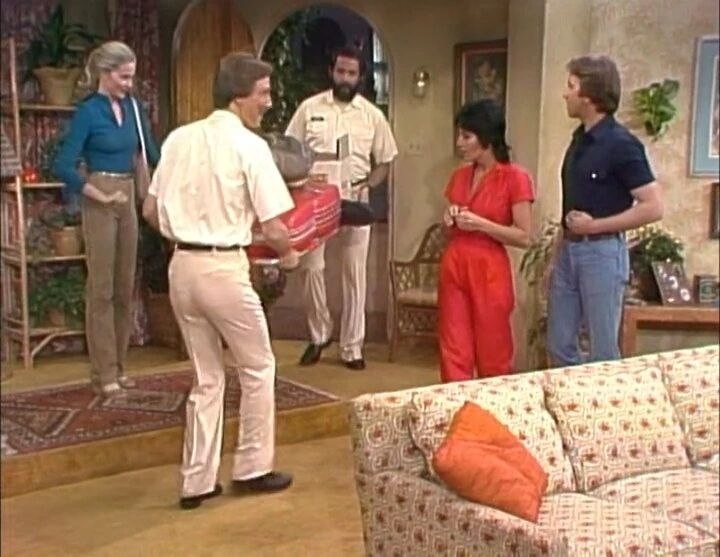
My favorite bit of timing is the part where somebody nearly fixes it. Jack can start a perfectly workable explanation. Then he hears a noise or sees the person he was hoping would stay in the kitchen. You can tell by the expression on his face that the explanation is getting a second story added to it. The first floor was already shaky.
The next time you put on a later episode, watch Janet when that happens. Joyce DeWitt can give you the instant she realizes what he’s about to say, then wait just long enough for him to hear it come out of his own mouth. Ritter gets the big laugh. She’s done an awful lot to get him there.
Janet Wood was the person I’d have trusted with the rent
DeWitt has a way of looking at Jack that says she’s heard a version of this story before and has already calculated how much time it’ll cost her. She could do plenty with a glare. I like it even better when Janet thinks she understands what’s going on and the next person through the door gives her one more thing to worry about.
Jack needs somebody around who remembers what he said earlier. Janet is also the friend who can keep a joke going when she ought to know better. Think how many times she’s the one with something sensible to do that afternoon, and how often we wind up watching her do something considerably more difficult because it would help a roommate. There’s a little recognition in that. If you’ve ever shared rent with friends, you know what it’s like to come home and find out somebody has volunteered your evening.
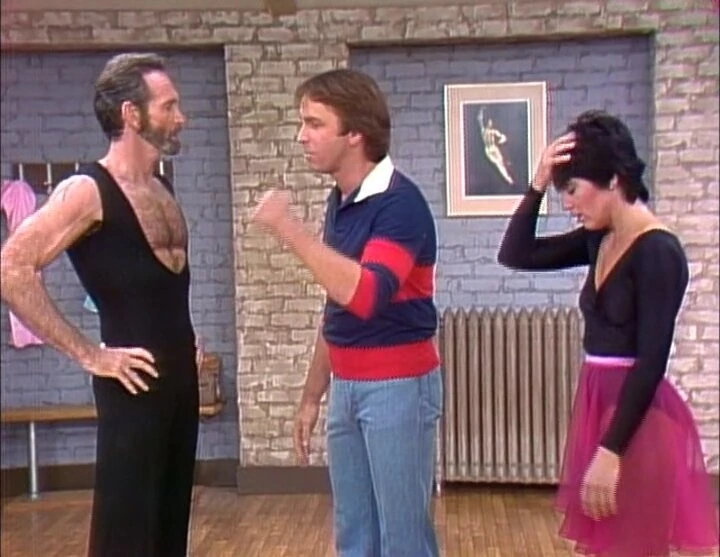
Janet also has a job, dates and ideas of her own. “Up in the Air” begins with a party she wants to attend. Jack goes along and the dance gets the big laugh. Janet’s investment in the evening makes his behavior matter. Imagine inviting a friend to be your backup at a party and spending the rest of the night keeping people from asking what he’s doing. You can appreciate the dance and feel for her at the same time.
I’m glad Janet stays as long as she does. A different roommate can change the way the whole apartment feels. Janet keeps the thread running through those changes. When the show finally sends her down the aisle, there’s a lot of television to remember while she’s getting there.
John Ritter could get a laugh before he landed
There’s a moment in a good Ritter scene when his feet know what has happened before Jack does. He’ll make a turn, pull up short or shift his weight on the way to a chair. You see the trouble register in his body while his face is still making a case for everything being fine.
It’s why I’d put on “Up in the Air” for somebody who only knows the show from photographs. Jack’s worked himself up about flying and gets to the party in a condition that gives him a very different idea of how to behave. Then the music comes on. Ritter makes that dance funny in motion and in the recovery between moves. The part I keep waiting for is the tiny instant you think he’s done. Of course he has one more thing left in him.
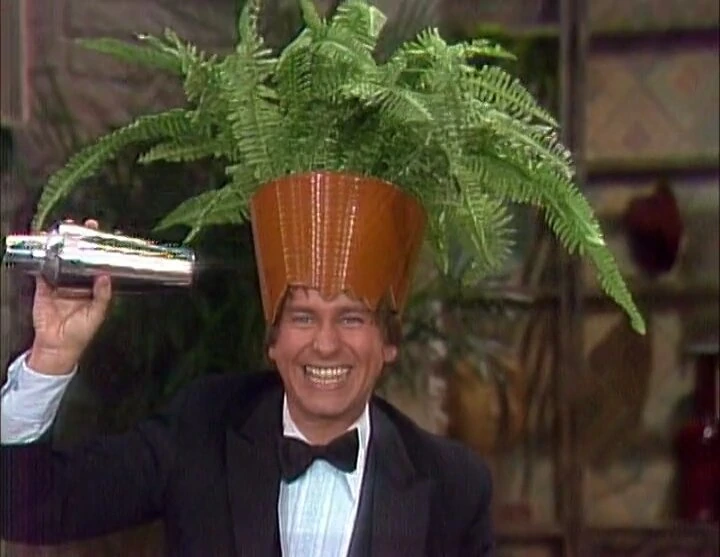
Plenty of funny people can take a fall. Ritter could make you understand which part of the fall Jack thought he could still save. That’s a useful thing to know about the guy you’re following around for half an hour. Even his good days seem to involve a lot of frantic repairs.
He won a comedy lead actor Emmy in 1984 for playing Jack. Put on the dance if you want a quick reminder of what an audience could get from him on a Tuesday night. Then watch him try to finish an ordinary conversation in the next episode. The small moves are worth paying attention to, too.
Which blonde was in the kitchen?
Suzanne Somers was still part of the early-’80s transition. The original trio had made the series one of ABC’s biggest hits, as our 1979 TV guide’s Three’s Company section makes plain. In the 1980–81 season, Chrissy’s appearances dwindled and Cindy Snow arrived. Jenilee Harrison played Chrissy’s cousin, who could turn simply carrying something across a room into a matter of concern for anybody standing nearby.
Cindy gets remembered as the roommate between Chrissy and Terri. Give her a couple of episodes and you can see what Harrison’s there to do. She has a wonderfully wholehearted way of coming in to help. The other people in the room have to figure out where to stand while she does it. If Jack’s already holding something he wants to keep intact, the scene has one more thing to worry about.
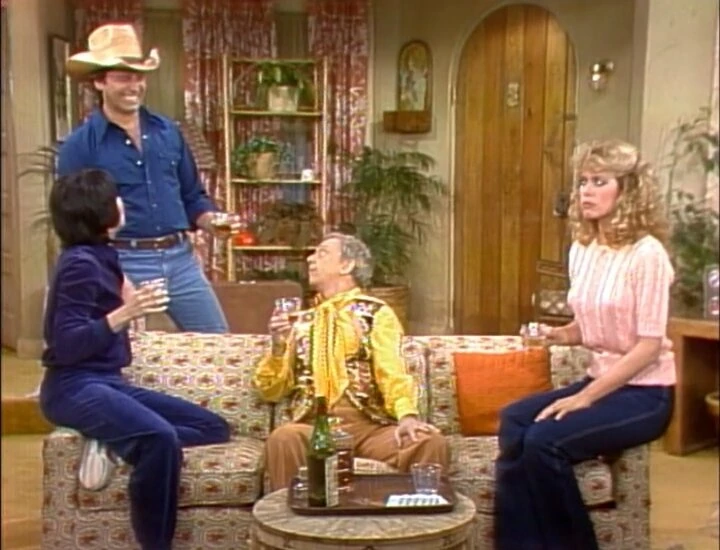
I can see why memory puts all the roommates in the same mental snapshot. The walls and the couch make a strong case for treating it as one place. Cindy’s run overlaps with Terri’s arrival, which makes the change on screen a little less neat than a cast list makes it look. You can still run into Cindy after Priscilla Barnes has taken up residence.
That’s part of the pleasure of revisiting the years in sequence. You see the original arrangement loosen, then another set of reactions take hold. If you spent years catching the show out of order, there’s a nice little thrill in realizing exactly when the apartment you remember started to look that way.
Terri came home from a real shift
Priscilla Barnes’s Terri Alden is a nurse. Her introduction gives Jack reason to remember that before he knows he’s going to share an apartment with her. “Jack Bares All” brings them into each other’s company in a hospital and then makes the bad first impression everybody’s business. She already has plenty to do before the roommates make a day of explaining themselves.
I like the way Terri can step into a goofy conversation with the expression of somebody who had a regular job to do five minutes ago. She can be game for the joke and still wonder why it requires her to put down what she’s carrying. That’s a different rhythm from Cindy’s rush into the room. It gives Janet a colleague in the practical work of living with Jack, and it gives Jack another good reason to be nervous when an explanation is thin.
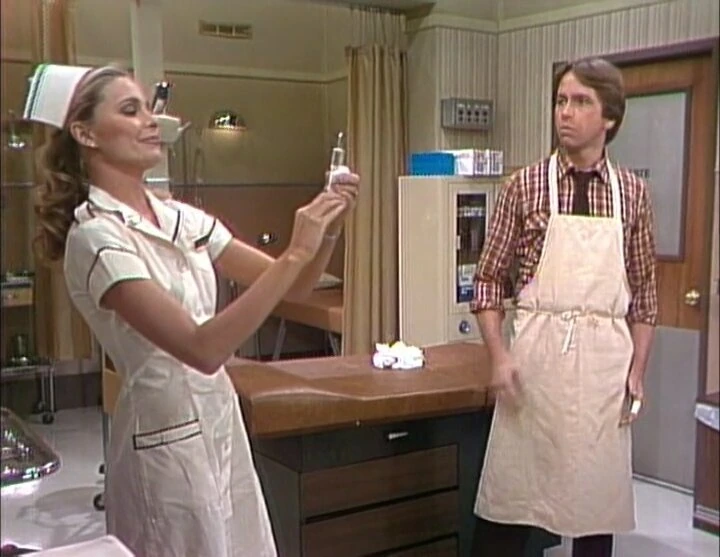
“Terri Makes Her Move” is worth watching after the introduction. I always enjoy the early days of a new roommate on a sitcom. Everybody suddenly notices the things they got away with when the last person lived there. Jack, Janet and Terri are still finding out how much they can say without somebody taking it in an unintended direction. The answer is going to be very little. Watching them learn it is the fun.
By the time Jack’s restaurant is open, the three of them have that easy familiarity the format needs. They can walk into the same room with different ideas of how to help and leave you sure that somebody will have to make it right by the time the evening’s over.
Don Knotts had the keys and the wardrobe
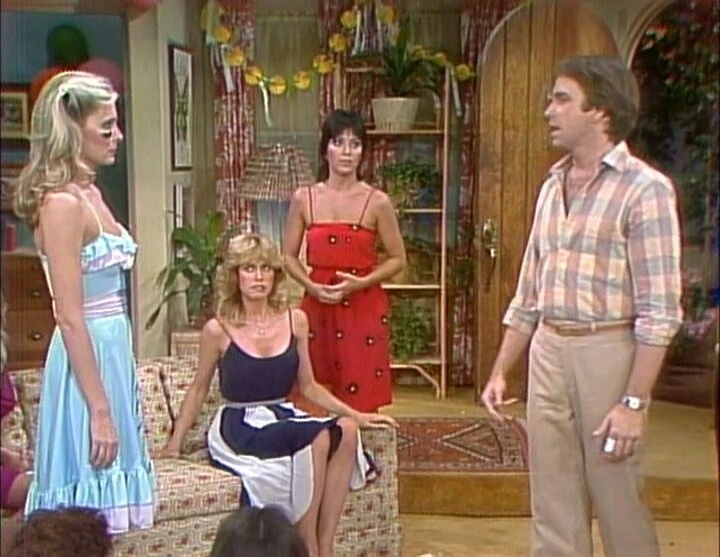
Ralph Furley could come into the room looking as though the evening had been expecting him. I can picture one of the outfits before I can place the plot. A shirt, a scarf, a pair of trousers that made sense only as part of the whole enterprise. You knew what he thought of his chances with the ladies before he’d got a word out.
Don Knotts arrived as the landlord in 1979, which is one of those dates that always seems a little earlier than I expect. Furley belongs to the ’80s picture in my head because he stuck around through the later changes. He could walk in while Jack was doing one of his explanations and give the thing a new audience. You could practically feel Jack trying to guess how much Furley had heard.
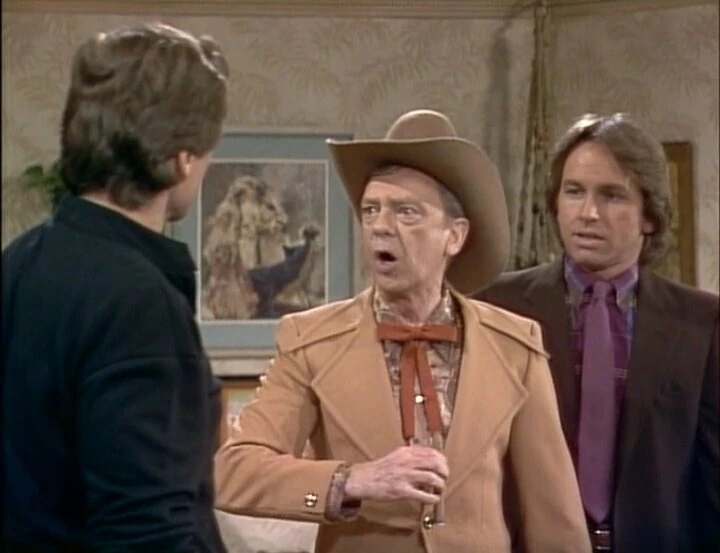
There’s a recognizable little kindness in the character. Furley wants to be respected and liked, and his efforts to look sophisticated only make it easier to see. I enjoy him in the scenes where that bluff lasts right up to the instant somebody actually needs him. Knotts knew how much comedy there was in a man whose confidence was a couple of sizes bigger than his experience.
Larry Dallas, Richard Kline’s friendly source of poor ideas, could set off trouble from the other direction. Larry might hand Jack a plan he was already proud of. Furley might walk in just late enough to see it taking effect. You can get most of the way to a half hour on that combination.
Jack’s Bistro looked like a good idea until opening night
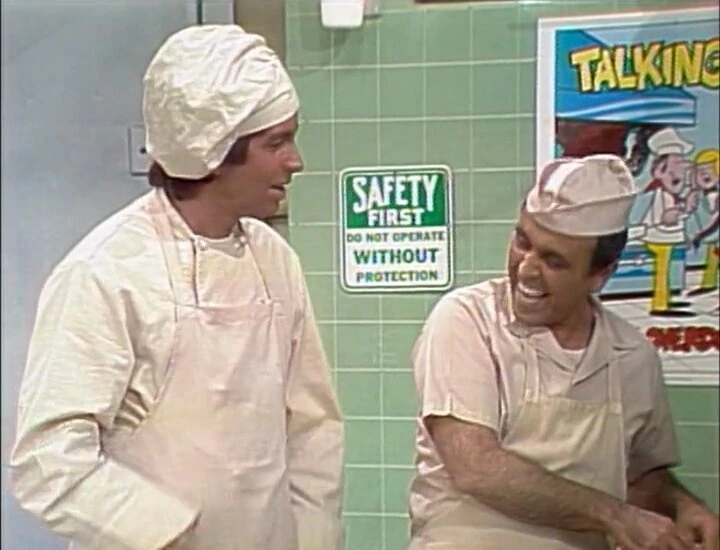
Jack’s job as a cook gives the last few years something I’m glad they tried. A restaurant puts his hopes out where the rest of the gang can see them. He has a room to fill, food to get to tables and a good reason to think the night ought to go smoothly if everybody would please do what he asked. You know how much chance he has of getting that wish.
In “Opening Night,” Larry’s mistake on the flyers leaves Jack in need of diners, and Larry brings in his Greek relatives. They enjoy themselves. The plates have a much worse evening. I laugh at the gap between a busy restaurant looking like success and the dawning feeling that every crash in the dining room is coming out of Jack’s pocket. If you’ve ever worked someplace on a big opening night, you know the relief at seeing customers walk in before finding out what they’re going to ask for.
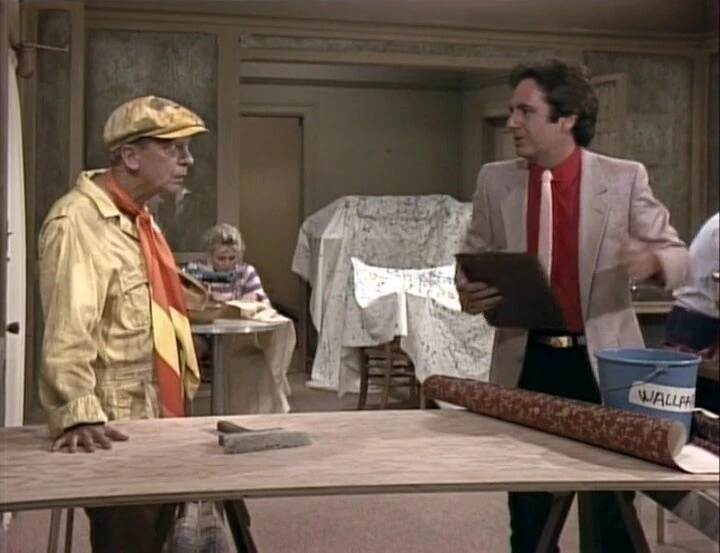
“Borrowing Trouble” is another good one if you want to spend time around the Bistro. The women try to get rent money to Jack by making it look like he’s won something. He buys a leather coat. I feel for the person who’s ever gone through a lot of effort to help somebody and then stood there listening to what they bought. Jack really could get himself into a mess without needing the whole apartment to start one.
The restaurant is also a reminder that Ritter could make a character’s competence part of the comedy. Jack cares about doing a good job. You can laugh at how he manages the evening and still want him to make enough to keep the door open tomorrow.
The show was still there when the living room changed
Look at the 1979–80 TV rankings and there’s Three’s Company near the top. Look at the 1982–83 TV rankings and there it is again, this time with Terri already settled in. Two people who say they watched the show at its peak can picture different roommates and both remember tuning in when it was a hit.
As a kid, I could enjoy Jack looking like he’d lost control of his arms. A grown-up in the room might have caught whatever Jack had said that made Furley go quiet. There was space for both laughs. Years later I still enjoy discovering that the person who laughed first probably heard a different joke from the one I thought we were all watching.
Some of the misunderstandings about Jack’s supposed sexuality carry the assumptions of their original era. That’s easy to hear on a rewatch. It’s also easy to see the cast’s timing in a scene where the problem is a restaurant flyer, a coat or a party that got out of hand. I’m happy to spend time with those episodes and see how much everybody can do with a bad idea and one more person at the door.
The last night in the apartment
The 1984 ending spends time on Janet’s marriage and Jack’s plans with Vicky Bradford, played by Mary Cadorette. Jack and Vicky move into the short-lived follow-up Three’s a Crowd. There’s something odd about seeing him with a life that doesn’t require somebody to come through the apartment door just when he needs a minute.
I liked the living arrangements we’d been watching. I can also see the sense in letting Jack and Janet go somewhere after all those years of watching them figure out how to get through another afternoon. Janet gets her own future. Jack has one last chance to make a straightforward plan and see how long it lasts. If it had gone perfectly, I’d have wondered who was playing him.
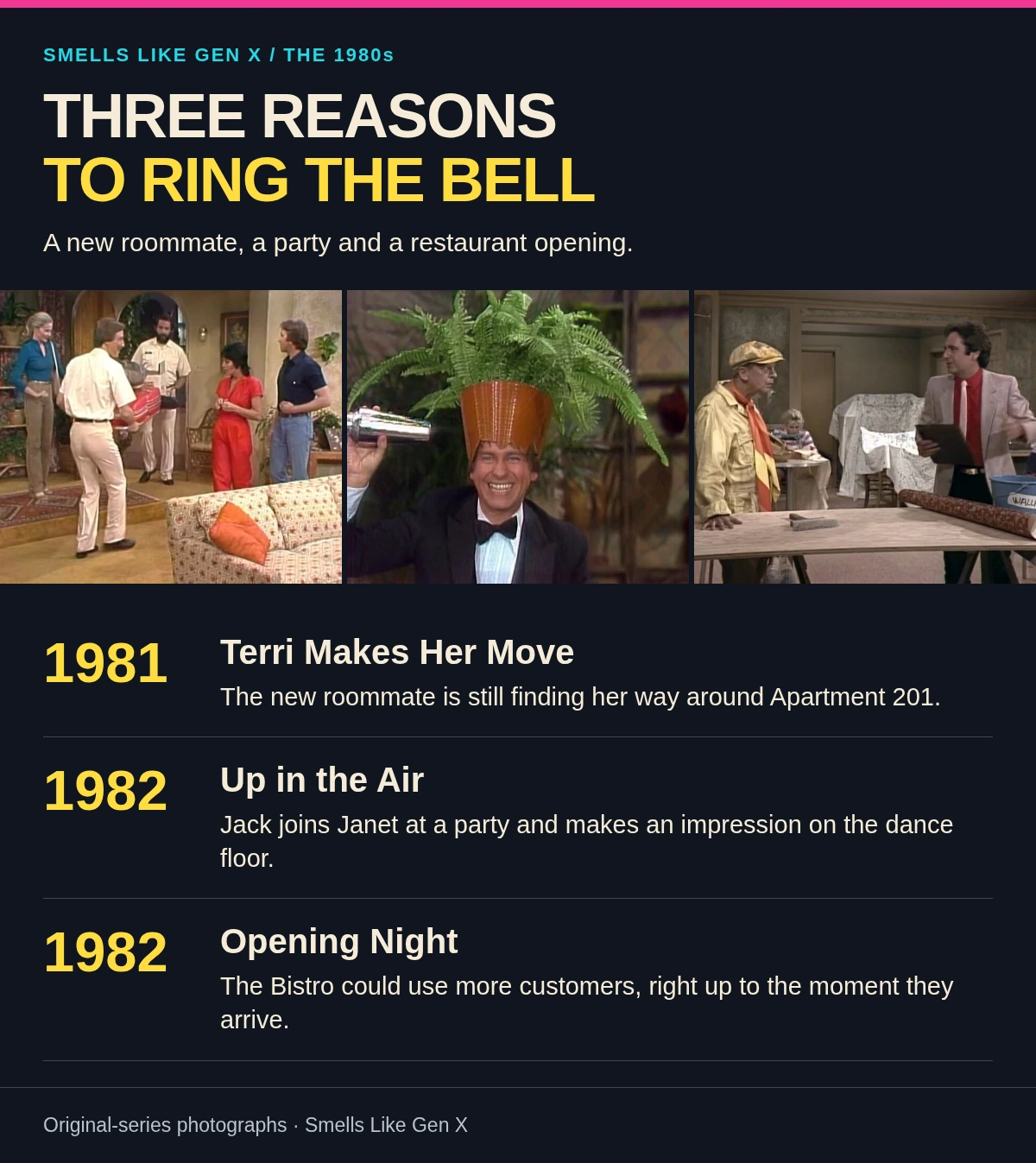
For a three-episode visit I’d do “Terri Makes Her Move,” “Up in the Air,” and “Opening Night.” You’ll get an apartment that’s just worked out who lives there, a dance you can enjoy even when you know it’s coming, and a dining room full of people who’ve accidentally turned a nice night out into Jack’s next rent problem. If somebody’s heading for the wrong door, give them a minute.
Apartment 201, in case you’re keeping track
When did Three’s Company end?
The original ABC sitcom ran from 1977 to 1984. Three’s a Crowd followed Jack and Vicky during the 1984–85 season.
Who moved in after Chrissy?
Jenilee Harrison played Cindy Snow, Chrissy’s cousin, beginning in the 1980–81 season. Priscilla Barnes arrived as nurse Terri Alden in 1981. Cindy also appeared during Terri’s first season.
When did Don Knotts join?
Knotts joined as landlord Ralph Furley in 1979 and stayed through the original series finale.
What’s the episode with Jack’s wild dance?
“Up in the Air,” from the sixth season. Janet brings Jack to a party and the dance floor gets more Jack Tripper than it bargained for.