Roseanne Changed the Tone
A working-class family sitcom reached number two and made polish optional for mainstream success.
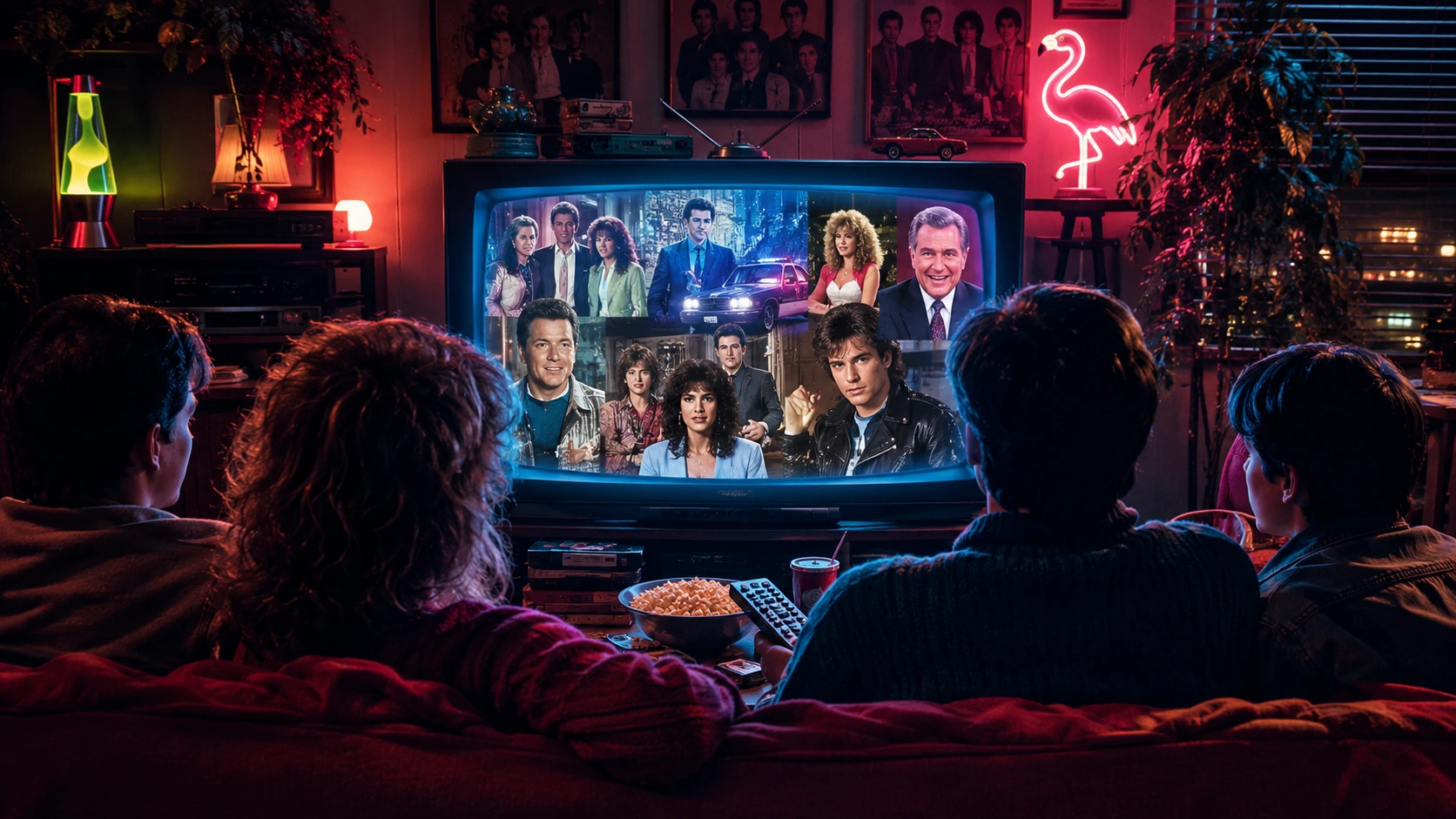
According to the Nielsen rankings for the 1988–89 television season, The Cosby Show remained America’s most-watched program with a 25.6 rating. Roseanne ranked second, followed by A Different World, Cheers and 60 Minutes.
The ranking captures television at the edge of a new decade: polished comfort still ruled, but working-class realism, younger voices and sharper adult comedy were already pushing prime time toward the 90s.
 Now Broadcasting
The Cosby Show ranked number one in the 1988–89 Nielsen season with a 25.6 rating. Roseanne ranked second at 23.8, A Different World ranked third at 23.0, Cheers ranked fourth at 22.3 and 60 Minutes completed the top five at 21.7.
The Golden Girls, Who’s the Boss?, Murder, She Wrote, Empty Nest and Anything but Love completed the top ten.
NBC placed five programs in the top ten, ABC supplied three, and CBS held the leading newsmagazine and comfort mystery. The biggest new story was Roseanne, which reached second place during its first season.
The decade’s great comfort machines still worked, but the audience was embracing rougher homes, younger perspectives, adult workplace tension and a more recognizably lived-in version of mainstream television.
A working-class family sitcom reached number two and made polish optional for mainstream success.
Five of the ten biggest programs aired on NBC, including three of the top four.
A Different World turned Black college life and emerging adulthood into a top-three force.
60 Minutes and Murder, She Wrote remained huge through authority, rhythm and reliability.
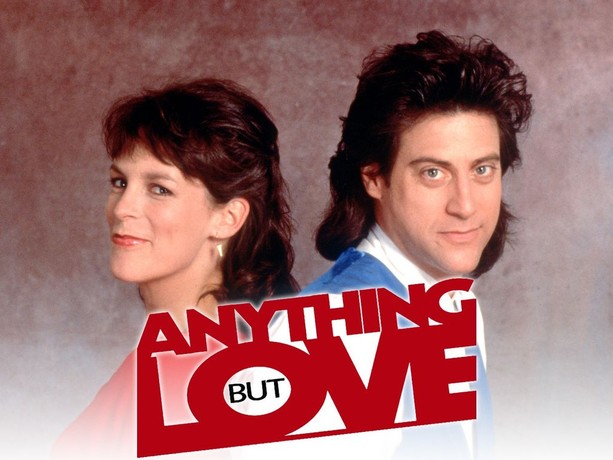
Anything but Love making the top 10 in 1989 is one of the best reminders that late-80s television was more flexible than people often remember. It is easy to flatten the era into giant family sitcoms, broad domestic comedy, and glossy network packaging, but a show like this proves there was room for something looser, more verbal, and more obviously adult. Built around the chemistry between Richard Lewis and Jamie Lee Curtis, it felt caffeinated, neurotic, flirtatious, and just self-aware enough to signal that the next phase of TV comedy was already warming up in the wings.
What makes the show interesting in this specific year is that it did not really operate like a traditional family sitcom at all. It was urban, workplace-centered, and built on conversational rhythms rather than household sentiment. The energy came from romantic tension, timing, personality, and a kind of late-80s adult frazzle that felt closer to real social irritation than to studio-polished family harmony. That gave it a distinct flavor inside the Nielsen top 10. It was not trying to be everybody’s fantasy home. It was trying to sound like grown-ups with jobs, baggage, and a little too much mental static.
There is also something very transitional about its success. Anything but Love feels like a bridge between old-school network sitcom structure and the more character-driven, tension-heavy, city-based comedy that would be increasingly common in the early 90s. It still belongs to the broadcast era of broad appeal, but it carries more conversational abrasion and more grown-up ambiguity than many of the shows surrounding it on this list. That matters because one of the real stories of 1989 is that TV audiences were becoming more open to voices that felt less airbrushed.
It may not be the loudest title in this countdown decades later, but its placement tells a valuable truth about the era: the audience was not only rewarding familiarity. It was also rewarding vibe, rhythm, and personality. In a year when television was slowly shedding some of its showroom sheen, Anything but Love fit because it sounded like adults trying to hold it together in real time.
Empty Nest landing at #9 tells you just how good late-80s NBC had become at turning emotional familiarity into ratings. As a spinoff, the show clearly benefited from the goodwill orbiting The Golden Girls, but it did not survive on borrowed affection alone. It locked into something viewers wanted from the period: warm, adult-centered comedy that acknowledged family strain, loneliness, aging, and domestic chaos without turning any of that into a lecture. The result was a sitcom that felt easy to settle into, which is exactly what made it so effective.
One of the reasons the show worked so quickly was tone. Empty Nest did not chase flashy gimmicks. It ran on recognizable relationships, emotional weather, and the kind of conflict that felt close enough to real life to matter but soft enough to stay comforting. Network TV in the late 80s was still fantastic at manufacturing that feeling, and this show is one of the clearest examples.
It also says something bigger about how the networks programmed success by this point. A hit was no longer just an isolated hit. It could be part of a whole ecosystem of tone, scheduling, and audience trust. NBC, especially, was building worlds that felt related even when the premises differed. Empty Nest fit beautifully into that system because it took the emotional intelligence of its parent universe and reshaped it into something slightly more paternal, slightly more melancholy, and just as watchable.
From a cultural standpoint, the show’s popularity reinforces a key late-80s truth: viewers were more than happy to embrace sitcoms that centered adults rather than kids, and life-stage anxiety rather than pure family chaos. That gave shows like Empty Nest a different texture from the standard suburban sitcom machine. It felt like comfort TV for people with mortgages, regrets, and children who kept boomeranging back into the house.
Murder, She Wrote sitting comfortably in the top 10 in 1989 is one of the clearest pieces of evidence that late-80s television was not just powered by youth culture or sitcom noise. Angela Lansbury’s Jessica Fletcher had become an institution because the show understood one of broadcast TV’s oldest and strongest promises: if viewers trust the formula, they will keep coming back. Week after week, the series delivered an elegant mystery, a dependable emotional texture, and the pleasure of watching a smart central character calmly outclass everybody else in the room.
What made the show especially strong in this era was its composure. It never looked desperate to seem trendy. It did not need neon flash, youth slang, or a high-concept hook to stay relevant. It knew exactly what it was, and that confidence is part of why it lasted. In a TV culture increasingly crowded with punchier comedy and louder personalities, Murder, She Wrote remained valuable because it offered rhythm, control, and the reassuring sense that intelligence could still anchor a mainstream hit.
Its place on this list also says something meaningful about audience breadth in 1989. Broadcast television was still genuinely mass audience television, and that meant a lineup could include both broad sitcoms and a murder mystery led by an older woman without anyone blinking. That kind of range is part of what made network TV feel culturally central in the period. Murder, She Wrote was not a niche show tucked away for a specialized audience. It was one of the biggest things on television.
There is also a kind of late-80s classiness to its endurance. The series felt polished without being sterile, familiar without being stale, and formulaic in the best possible way. It gave viewers competence, atmosphere, and closure, which is basically catnip for appointment television. In a season where a lot of programming was moving toward sharper edges, this show proved there was still tremendous power in grace, order, and a lead performance that made sophistication feel inviting instead of distant.
By 1989, Who’s the Boss? had become a model of how to keep a mainstream sitcom appealing without sanding off all its personality. On the surface, it had the ingredients of a classic broad hit: a family setup, a dependable ensemble, and a premise that could support both heart and jokes. But what kept it alive in the upper tier was the push-pull underneath all that comfort. The show always understood that audiences liked coziness, but they also liked unresolved tension, role reversal, and the feeling that there was more happening beneath the punchlines.
Tony Micelli and Angela Bower gave the series one of the era’s strongest long-game emotional hooks. That mattered because the show was not just running on household chaos or cute-kid momentum. It was powered by chemistry, class difference, gender-role inversion, and the constant possibility that this polished domestic arrangement might shift into something more openly romantic. The surrounding cast helped give the series range too. Mona could throw in chaos, Samantha could embody teen transition, and Jonathan could ground the household in sweetness.
The reason it matters in a 1989 countdown is that it represents late-80s network polish at peak efficiency. This was aspirational TV, but it was not so slick that it lost the audience. It let viewers enjoy a brighter, cleaner version of domestic life while still keeping enough emotional friction in play to avoid feeling generic. That balance was hard to pull off, and Who’s the Boss? pulled it off for years.
Culturally, it also fits the year because 1989 prime time had not fully abandoned the fantasy of order yet. Before the early-90s shift toward even more overt realism took hold, shows like this still held major power by making adult competence, family intimacy, and romantic possibility look inviting. It was a dream house with just enough sparks flying around inside it to keep the place from feeling staged.
The Golden Girls ranking #6 in 1989 is the kind of result that makes total sense the second you remember how absurdly good this show was. Yes, it was funny. Yes, it was warm. Yes, it had one of the great sitcom ensembles of the decade. But what really made it endure was that it respected both its characters and its audience. It did not talk down to viewers, and it did not reduce its premise to novelty. It trusted that Dorothy, Rose, Blanche, and Sophia were enough to sustain not just punchlines, but a full emotional world.
That is part of why the show never felt flimsy. Each of the four women was a fully functioning comic engine with a distinct rhythm, point of view, and emotional role in the ensemble. The dialogue snapped, but the relationships underneath it mattered. A lot of sitcoms from the era could do setup-punchline efficiency. Far fewer could make the audience believe these people truly inhabited the same home and shared the same life. The Golden Girls did, and that made the humor land harder because the emotional stakes were always quietly present.
In the bigger television culture of 1989, the show also stands as one of the era’s smartest acts of rebellion hiding inside a mainstream hit. A sitcom centered on older women was not supposed to become one of the most beloved and quoted series on TV, yet it did exactly that. Not because viewers were tolerating the premise, but because the writing was faster, richer, and often more truthful than what many “safer” sitcoms were doing. That remains part of its legacy: it broadened what mainstream comedy could center without ever turning its difference into a sermon.
The reason it belongs so firmly in the 1989 story is that it represents mature late-80s television at its best. It could be silly, but it was never shallow. It could be broad, but it never felt empty. And in a season increasingly defined by tonal transition, The Golden Girls still managed to feel modern because its wit, emotional intelligence, and character architecture were strong enough to outlast trend cycles.

60 Minutes being the fifth biggest show in America in 1989 is the kind of fact that instantly widens the story of the era. This was not just a television landscape built on sitcoms and soft-focus domestic comedy. It was still a medium where a news magazine could command huge attention because audiences saw it as essential, credible, and tied to the national conversation. The ticking stopwatch was not background noise. It was a signal that this hour meant something.
That matters because 60 Minutes does not just represent a different genre. It represents a different relationship between audience and television. Viewers were not coming for comfort in the same way they came to sitcoms. They were coming for authority, revelation, and the feeling that television could still function as a major civic stage. In an environment increasingly full of personality-driven entertainment, that kind of seriousness still had enormous market value.
There is also something distinctly late-80s about its endurance. The country was media-savvy enough to understand television as performance, but still trusting enough to gather around journalism that carried institutional weight. 60 Minutes existed right at that intersection. It was not naïve, and it was certainly not casual. It made being informed feel like part of the weekly ritual. In a very real sense, it helped define what “mainstream” still meant before fragmentation accelerated even further in the next decade.
Its top-five finish also reminds us that late-80s TV was broader than nostalgia sometimes allows. The era could hold cozy murder mysteries, relentlessly polished sitcoms, sharp adult banter, and hard-edged reporting all at once. That is part of what made broadcast television feel so culturally central. 60 Minutes did not survive on the margins. It stood shoulder to shoulder with entertainment giants and looked perfectly natural doing it.

Cheers at #4 in 1989 is what it looks like when a sitcom evolves into infrastructure. By this point, it was no longer simply one of NBC’s important shows. It was one of the foundational pieces of how late-80s TV defined quality comedy for a mass audience. The premise remained beautifully simple, but the execution had become almost impossibly refined: character-based humor, literate dialogue, emotional continuity, and a setting so solid that it could absorb endless variations without losing its core identity.
What made Cheers special this deep into its run was not novelty. It was precision. The show knew the room, knew the rhythms, knew how to let characters bounce off each other with the ease of people whose history felt real rather than merely written. That kind of ensemble mastery is rare, and it explains why the series held up even as the rest of television shifted around it. It was not trying to chase trends because it had already become one.
It also symbolizes the mature version of NBC’s late-80s dominance. The network was not just stacking hits; it was stacking hits that made network television look well-made. Cheers gave audiences an adult comedy that still played broadly, which is a very difficult trick. It felt smart without becoming alienating, warm without becoming mushy, and character-driven without losing accessibility. That is a large part of why it continued to matter in a season increasingly open to rougher edges and new tonal voices.
In a year when Roseanne was beginning to rewrite the emotional grammar of mainstream sitcoms, Cheers functioned almost like the gold standard of the previous model at its highest level. It represented what late-80s broadcast comedy had already perfected: a gathering place, a stable social world, and a tone that made wit feel communal. The bar still mattered because everyone watching knew exactly what kind of craftsmanship they were getting when they walked in.
A Different World ranking #3 in 1989 is one of the most revealing placements in the entire countdown because it shows how quickly the show had become more than a successful spinoff. The college setting instantly gave it a different rhythm from the standard home-based sitcom formula, but what really fueled its rise was its ability to feel socially alive. It had youth, style, ensemble energy, romantic complication, and enough specificity to seem like it was actually in conversation with its moment rather than merely recycling a familiar TV template.
That mattered because college shows can often feel vague. A Different World did not. It increasingly found a stronger identity in its campus culture, its character interplay, and its sense of generational movement. It carried a feeling of becoming, which is a powerful thing on television. Viewers were not just dropping in on a static arrangement. They were watching a world with forward motion. That gave the show a charge that distinguished it from more settled, more domestic sitcom giants.
It also occupies an important place in the actual history of late-80s television because it helped widen the cultural imagination of what a major network hit could center. A sitcom rooted in Black student life and HBCU-inspired campus energy was not treated like a marginal offering. It was one of the biggest shows on American television. That kind of mainstream visibility matters, especially in a season where the rankings otherwise show how much power still sat inside very established network formulas.
In the context of 1989, A Different World feels like a signpost. It retains the warmth and accessibility of the network era, but it also points toward a more socially textured version of television comedy. It is youthful without being empty, stylish without being disposable, and broad without sanding away what makes it distinct. That combination is exactly why its success deserves more than a passing mention in any serious look at late-80s prime time.
Roseanne hitting #2 is the defining tonal event of the 1989 television year. Other shows on this list were huge. This one felt like a message. It did not simply become a hit in the existing late-80s system; it challenged the emotional packaging of that system. Suddenly, one of the biggest comedies in America was not centered on polished aspiration, elegant domestic order, or breezy sitcom idealism. It was built around a family that looked tired, sounded irritated, worried about money, and still managed to be funny as hell.
That realism is what made the show feel seismic. The Conners did not live in a fantasy version of middle America. Their house looked used. Their stress felt earned. Their jokes came with exhaustion, affection, and a level of bluntness that set the series apart from many contemporaries. The show understood that viewers did not necessarily need television families to be glamorous. They needed them to feel recognizable. In late-80s prime time, that was a major disruption.
But the key to Roseanne is that it was never just realism for realism’s sake. The series worked because it combined working-class texture with sharp performance energy and genuine comic confidence. Roseanne Barr’s presence gave the show bite, but the ensemble around her kept it human. John Goodman, Laurie Metcalf, and the rest of the cast turned what could have been a one-note persona vehicle into a fuller family ecosystem. That is why the show landed so hard. It was honest, but it was also built.
Culturally, this is the show in the 1989 top 10 that most clearly points into the next phase of television. It told the industry that mass audiences would reward sitcoms that admitted people were stretched thin, annoyed, and not living inside a catalog. In a decade that often sold upward-looking polish, Roseanne sold endurance. It did not ask viewers to imagine a better life. It asked them to recognize the one they already had.
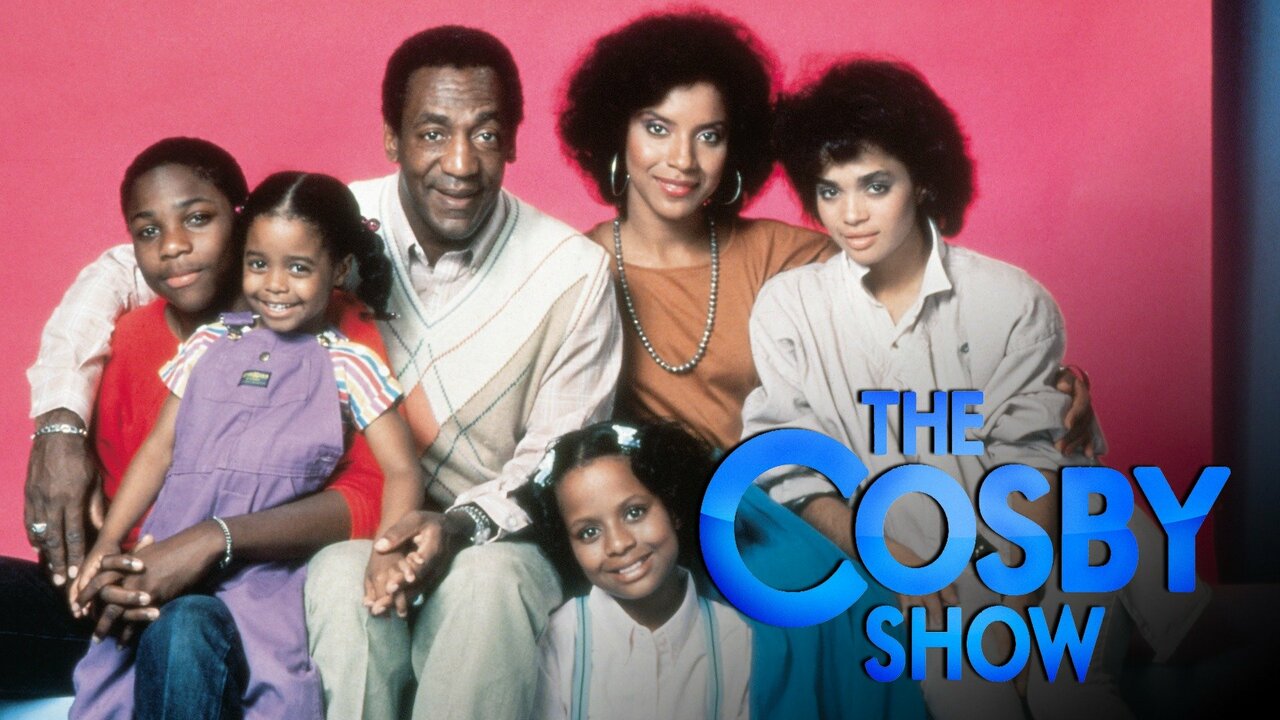
Even with all the change bubbling underneath the surface, the 1989 story still begins with The Cosby Show at #1. That fact alone says a lot about how durable the late-80s network order still was. The show remained the center of gravity because it had become more than a sitcom. It was a viewing habit, a scheduling anchor, a cultural routine, and one of the clearest examples of how a network hit could project warmth, confidence, and broad appeal all at once.
Part of the reason it stayed so powerful was that it offered aspiration without alienation. The Huxtables were polished, funny, successful, and deeply watchable, but the series packaged that world with enough humor and ease to feel welcoming rather than remote. That was one of the show’s great broadcast gifts. It made competence and comfort look attractive without turning them into a museum display. Viewers did not just admire the household. They settled into it.
Its importance in the 1988–89 season becomes even clearer when you look at what was rising underneath it. Roseanne was bringing a rougher realism into the mainstream. A Different World was building youth momentum and cultural specificity. Cheers remained a standard of adult ensemble comedy. Yet The Cosby Show still sat above them all, which means it was not simply surviving on habit. It was still functioning as the broadcast center of the room.
That also explains why the rest of NBC’s comedy empire looked so strong around it. A #1 show this stable does more than win its own time slot. It sets the tone for an entire night, strengthens surrounding shows, and helps turn network viewing into ritual. In a year when prime time was clearly starting to sound more varied and more lived-in, The Cosby Show remained the most powerful symbol of the smoother late-80s model. It was still the house everyone else had to build their neighborhood around.
The top TV shows of 1989 reveal a lineup in transition rather than decline. The late-80s strengths remained powerful: polished writing, familiar rhythms, stable audience relationships and broad accessibility.
But Roseanne made it impossible to pretend the culture had stopped moving. Anything but Love hinted at sharper adult comedy, while A Different World pushed youth and cultural specificity further into the mainstream.
For Gen X, this was television acquiring texture. Prime time remained comfortable, but it had more bite. It still loved polish, but audiences were increasingly willing to trust shows that looked a little scuffed.
Television shared the year with Batman, Indiana Jones and the Last Crusade, Game Boy, Nintendo, TMNT, Paula Abdul, New Kids on the Block and a Billboard chart sprinting toward the 90s.
The complete Billboard Hot 100 number-one rewind from the final full year of the decade.
Watch the Countdown → Chart FlashbackRichard Marx, Warrant, Gloria Estefan, Paula Abdul and New Kids on the Block.
Watch the Top Five → MusicThe Billboard year-end hits that closed the decade with pop, rock, dance and ballad overload.
Explore the Songs → MoviesBatmania, Indiana Jones, buddy-cop sequels and late-80s movie-event energy.
Explore the Movies → ToysGame Boy, Nintendo, TMNT and the toy aisle racing toward the next decade.
Explore the Toys → FadsHard Rock Cafe shirts, biker shorts, fanny packs, crimped hair, hair extensions and rat tails.
Explore the Fads →Rewind the entire decade one Nielsen season at a time, from the network-heavy opening of 1980 to television standing on the edge of the 90s in 1989.
Clear answers about the 1988–89 Nielsen season, Roseanne’s breakout and the complete top five.
The Cosby Show ranked number one during the 1988–89 Nielsen season with a 25.6 rating.
The top five were The Cosby Show, Roseanne, A Different World, Cheers and 60 Minutes.
It ranked second during its first season and proved that a rougher, working-class family sitcom could become one of television’s largest mainstream hits.
Yes. It ranked third during the 1988–89 Nielsen season with a 23.0 rating.
Network television popularity was measured by season rather than by January-through-December calendar year. The season ending in 1989 is therefore the standard reference.
NBC placed five programs inside the top ten. ABC placed three, while CBS placed two.
New articles, countdowns, videos and whatever other corner of the Gen X television schedule gets unlocked next.