A Different World in the 80s: How Hillman Found Its Voice
Revisit A Different World in the 80s: Denise’s debut, Whitley and Dwayne, Debbie Allen’s changes, and the campus comedy that gave Hillman a life of its own.
The shows, the moments, and the nights we were there for it.
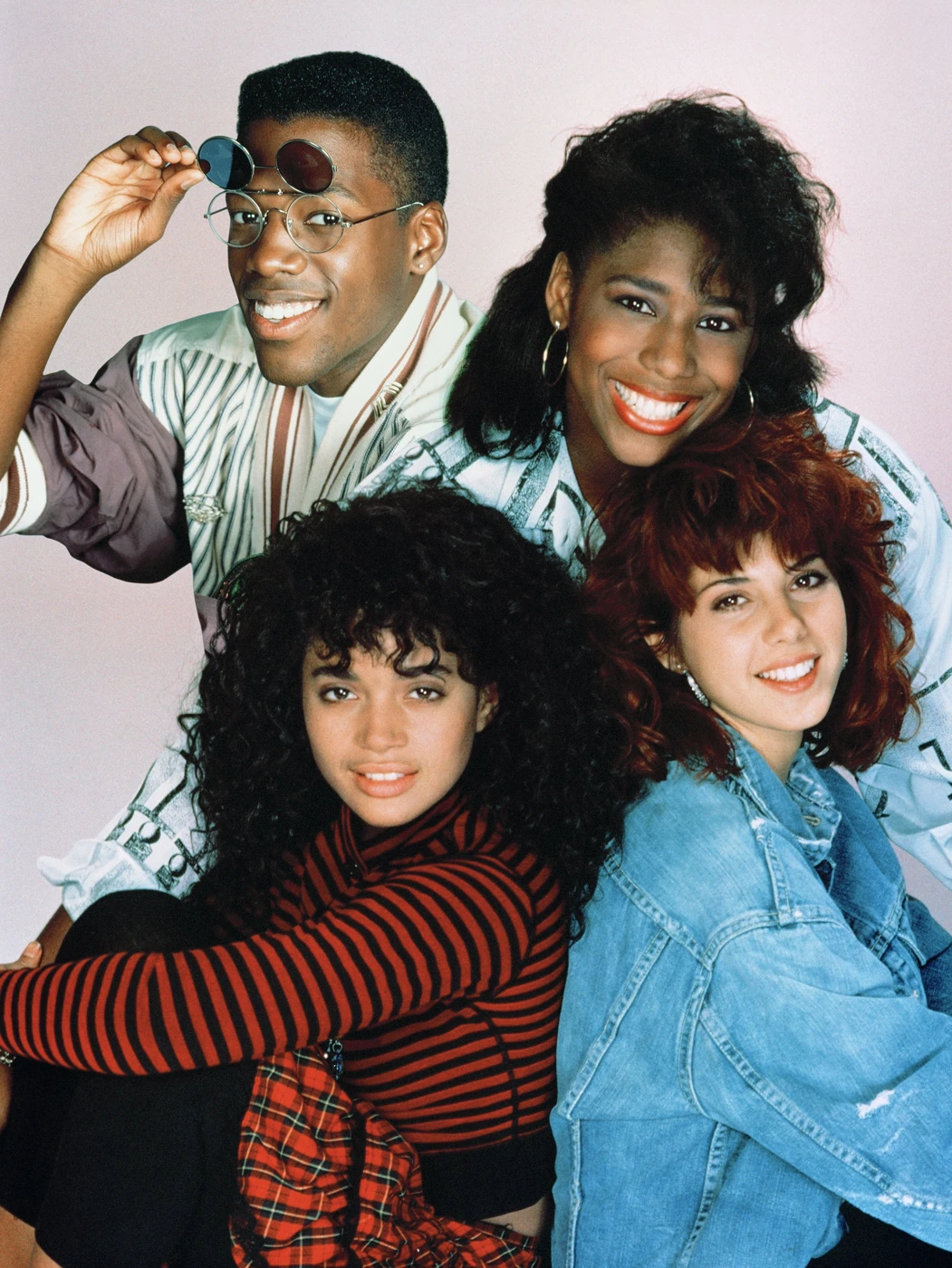
Whitley Gilbert had a remarkable gift for making a perfectly ordinary room seem insufficiently expensive. The clothes, the posture, that exquisitely offended voice: Jasmine Guy played her as a young woman who regarded inconvenience as a personal attack. Across campus, Dwayne Wayne wore glasses with sunglasses attached to them and pursued romance with considerably more confidence than success. Put these two people in the same conversation and higher education immediately became more entertaining.
Neither character was supposed to be the main reason people tuned in when A Different World arrived on NBC in September 1987. That distinction belonged to Lisa Bonet’s Denise Huxtable, leaving the family orbit of The Cosby Show for the fictional Hillman College. Viewers already knew Denise. Hillman was the new place they were being asked to visit.
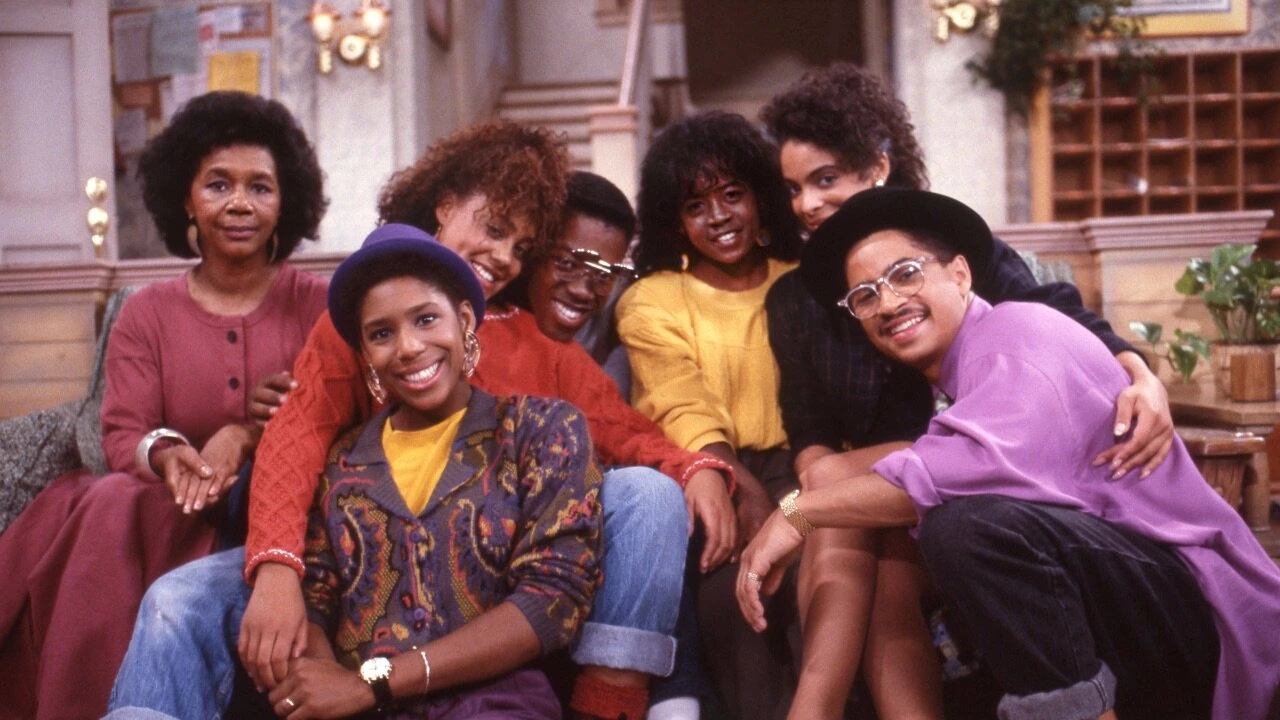
By the fall of 1988, the arrangement had changed. Bonet was no longer a regular, Debbie Allen had joined the creative leadership, and Hillman was becoming much more than the address on Denise’s mail. Kim Reese had classes to pass and shifts to work. Freddie Brooks arrived with enthusiasm that often outran her judgment. Jaleesa Vinson was trying to build an adult life while living among people still figuring out how to behave like adults. Whitley remained available to explain where everyone else had gone wrong.
The best part was that the comedy did not require them to agree. Money, ambition, family expectations, dating, friendship, and the business of belonging all looked different depending on whose side of the dorm room you occupied. A historically Black college gave those disagreements a setting with its own traditions and possibilities. Hillman began to feel like somewhere, rather than the space between two other Thursday-night hits.
This is the story of A Different World in the 80s: its uneven but enormously successful first year, its sharper second one, and the performances that made the transformation worth watching. The later romances and landmark 1990s episodes have their own history. Here, the pleasure lies in watching a series discover that its most interesting subject was already waiting on campus.
Inside This Article
- Thursday at 8:30: A Very Good Place to Start
- Denise Huxtable Arrives With Her Own Following
- Maggie, Jaleesa, and the First Hillman Household
- The First Season Was a Hit Before It Found Its Feet
- Debbie Allen Knew the Campus Needed a Pulse
- Whitley Gilbert, Owner of the Room
- Dwayne Wayne and the Confidence of Those Glasses
- Before the Great Romance, There Was Irritation
- Kim Reese Has a Shift to Finish
- Freddie Brooks Arrives Without a Volume Control
- Jaleesa and Walter: Adults, More or Less
- Ron Johnson Is Here to Help Himself
- The Adults Had Better Things to Do Than Indulge Everyone
- A Shared Room Is a Very Small Country
- Put Some Rhythm in the Campus
- When the Opening Theme Changed Its Voice
- “Radio Free Hillman” Makes Dwayne Pick a Side
- “No Means No” Was Not Just Another Bad Date
- Hillman Offered More Than One Way to Be Young and Black
- A New Center, Without Pretending the Past Vanished
- Second Place, Third Place, and the Difference Between a Number and a Show
- The Parts That Still Feel Like a Sitcom
- The Hillman That Was Ready for the Next Decade
- A Few Hillman Questions, Answered
Thursday at 8:30: A Very Good Place to Start
On September 24, 1987, NBC introduced Hillman in one of television’s friendliest neighborhoods. The Cosby Show was at 8, A Different World followed at 8:30, and Cheers came next at 9, Eastern and Pacific. For a new sitcom, that was less a cold call than an invitation delivered by the country’s most successful comedy.
There was an obvious reason to expect the audience to stay. Denise had already brought a distinctive energy to the Huxtable household. Bonet made her seem observant, stylish, slightly elusive, and not particularly interested in turning every thought into a speech. Sending her to college promised a change of scenery without asking viewers to start from zero. The first broadcast episode, “Reconcilable Differences,” makes housing an immediate problem. Denise and Jaleesa are not a comfortable fit; trying Whitley as an alternative does not produce the peaceful arrangement Denise imagines. College, apparently, involves discovering that somebody else’s room may contain somebody else’s personality. A devastating loophole in the brochure.
It is a useful introduction because none of the women has to be a villain for the living situation to go badly. Jaleesa brings expectations shaped by an adult life already underway. Whitley brings enough expectations to furnish a second residence. Denise wants room to be herself without quite recognizing the adjustments that living with other people requires.
One small chronology trap is worth clearing up: the episode titled “Pilot” aired the following week, on October 1. The production starting point and the first story viewers actually saw were not the same thing. For anyone revisiting the show in order, the real launch is that September roommate collision.
Denise Huxtable Arrives With Her Own Following
Denise was a strong choice for a spinoff because she did not feel designed to deliver a lesson. Bonet’s appeal included the sense that Denise might be thinking about something entirely different from the conversation in progress. Her clothes suggested a personality beyond the family living room. Her timing let a look or a pause do work that another actor might have filled with dialogue.
Those qualities remained attractive at Hillman. They did not automatically make Denise the engine of a weekly college comedy. An ensemble needs people to collide, want things, make mistakes, and drag each other into trouble. A character whose charm includes seeming a little detached from the fuss can end up watching other people provide the fuss.
That tension helps explain why the first year is more interesting than its reputation as the season before the good version. You can see a recognizable star in a series that has not entirely worked out how to use her. Sometimes Bonet’s relaxed presence settles the room beautifully. Sometimes the plot seems to need her to be a broader sitcom heroine than the performer makes convincing.
Denise also carried a complicated advantage: a famous family off campus. The Huxtable connection made Hillman instantly familiar, but it gave the series a ready exit whenever establishing its own people became difficult. A visit from someone viewers already loved was a treat. It was also a reminder that this new show still had a very successful parent down the hall.
Denise begins the series as a sophomore, not a freshman arriving for her first experience of college. That detail changes the flavor of the launch. We are joining a life in progress, not watching a complete beginner discover every campus ritual. The show nonetheless asks Bonet to serve as our guide into an environment that frequently remains less sharply defined than the young woman at its center.
Removing Denise would have sounded like a disastrous idea in September 1987. By the following fall, the surprising discovery was how many other people on the call sheet had been ready to carry stories of their own.
Maggie, Jaleesa, and the First Hillman Household
Marisa Tomei’s Maggie Lauten gave the early series another route into its dorm-room comedy. A white student attending a historically Black college, Maggie was neither a visiting guest nor a problem to be solved before the credits. Her presence offered possibilities for a show interested in who felt at home, who felt conspicuous, and what friendship looked like across different experiences.
The first season did not always pursue those possibilities with much patience. Like a lot of young sitcoms, it sometimes reached for the nearest workable misunderstanding. There were good performers in the room, but the room itself needed more history, more daily habits, and a stronger sense that the people lived there when a plot was not happening.
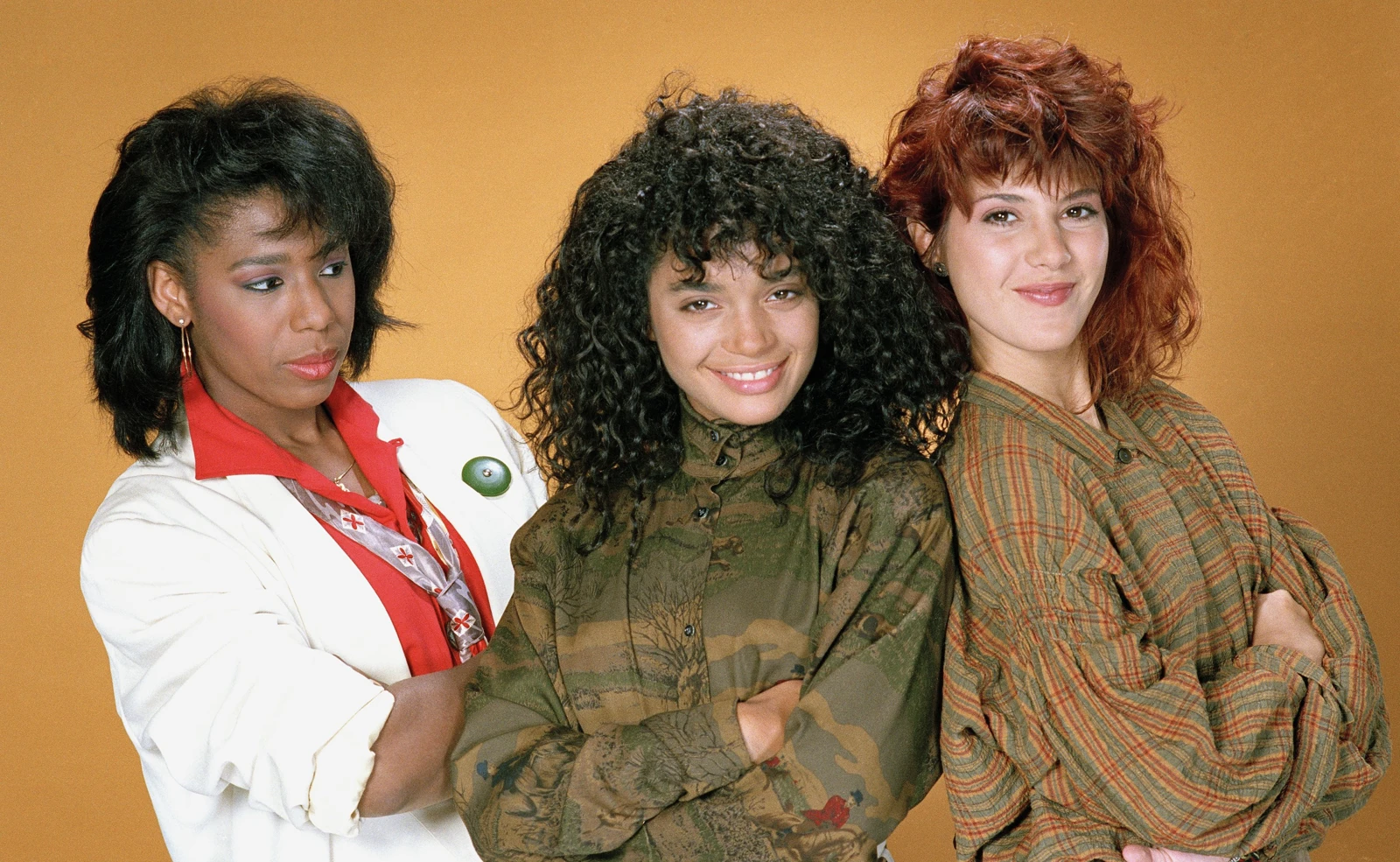
Tomei brought a lively directness that helped. Beside Bonet’s more inward style and Dawnn Lewis’s brisk authority, she supplied a third rhythm rather than another variation on Denise. The three women looked and sounded different. That was already more promising than a dorm populated entirely by people with one joke apiece.
Jaleesa was the particularly useful complication. A 26-year-old divorcee returning to school did not have the same stakes as a teenager trying to look sophisticated. She had already tested one version of adulthood. College was an opportunity to change direction, with less room for pretending that consequences belonged to somebody else.
Lewis made that difference funny without making Jaleesa joyless. Her impatience often had a sensible basis. If everyone else had spent as much energy finishing their work as they spent explaining why they had not, she would have had a quieter evening. At the same time, being older did not confer immunity to bad romantic judgment or embarrassment. Hillman had not hired her to supervise the entire student body, however strongly a particular evening might suggest otherwise.
Maggie disappeared from the regular ensemble after the first season. Jaleesa stayed, and the series found more room for her. It was an important choice: Hillman needed someone for whom going back to school was a deliberate, adult gamble, not merely the next stop after high school.
The First Season Was a Hit Before It Found Its Feet
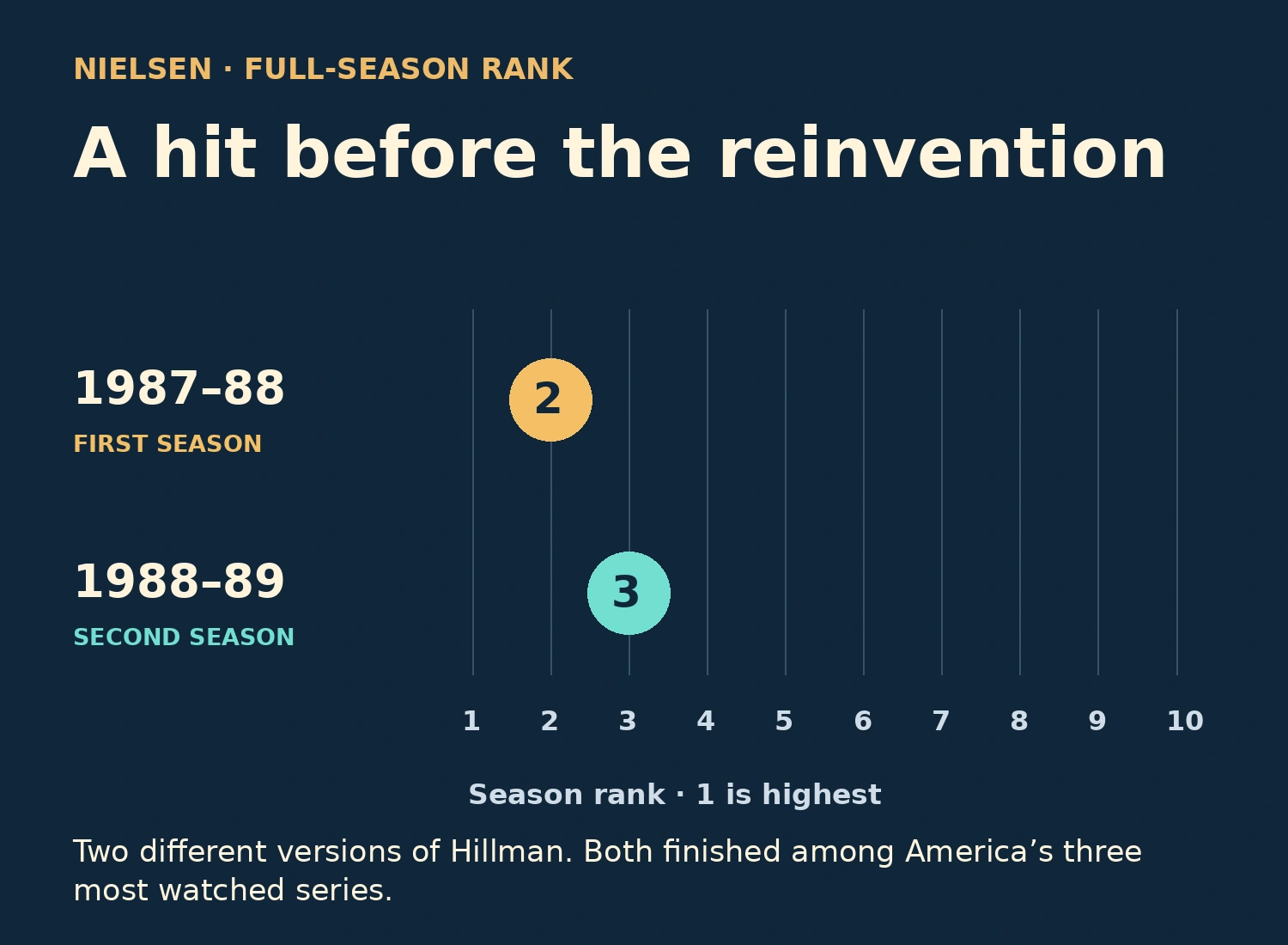
There is a tidy version of this history in which a failing series received a miraculous second chance. The ratings spoil that version. A Different World finished the 1987–88 season in second place, behind The Cosby Show. Whatever its creative uncertainties, NBC did not have an audience emergency on its hands.
That distinction matters. The first-year show was not something almost nobody watched, rescued from obscurity by a visionary producer. It was something a tremendous number of people watched while the people making it reconsidered what it ought to be. The position of the series among the top TV shows of 1988 captures that odd combination: enviable success and a noticeable need for a clearer identity.
The weaker stories often treated college as a convenient place for ordinary sitcom business. In “Porky de Bergerac,” for instance, a pig mask becomes part of Denise’s dating predicament. There is room for silly comedy in a college show. In fact, any college series that excludes silly behavior has probably lost track of its subject. The problem is balance: a campus needs to offer more than a new excuse for a familiar embarrassment.
What kept the first season from being disposable was the cast. Guy’s Whitley was already difficult to ignore. Hardison made Dwayne’s persistence more endearing than it had any right to be. Lewis gave scenes an adult center without flattening them. Even when a plot was thin, a reaction or a little shift in allegiance suggested a more interesting show nearby.
It is tempting, on a rewatch, to regard every early scene as an audition for what came later. That is unfair to the people doing the first version. They were making a comedy under unusually bright lights, with a familiar star and an extremely visible timeslot. Their work established the friendships, irritations, and performance styles the next season would refine. The needed change was not “make it popular.” It was “make Hillman worth visiting for reasons beyond the show that comes on before it.” Those are very different assignments.
Debbie Allen Knew the Campus Needed a Pulse
Debbie Allen did not come to A Different World to remove the jokes and replace them with a prospectus. Her experience included performing, choreography, directing, and the particular miracle of getting an ensemble to move as though its members belong together. A college comedy needed that kind of coordination as much as any dance number.
Allen joined as a producer and director for the second season in 1988. A Howard University graduate, she brought a personal understanding of historically Black college life. She also brought a practical question: why did so much of this college feel interchangeable with any other sitcom location?
In her Television Academy interview, Allen described bringing writers and actors into a more open conversation about the work, along with a stronger emphasis on campus culture. Her objection was not that entertainment was beneath the subject. It was that the subject offered much better entertainment than the show had been finding.
You see the result in the second year’s busy rooms. There are people working while other people socialize. There are teachers with actual authority, students whose confidence exceeds their preparation, and friendships complicated by unequal resources. Hillman has places to gather and reasons for the same characters to keep running into one another. It begins to have a timetable outside the half hour.
Allen’s arrival also coincided with substantial changes in front of the camera. Bonet and Tomei were no longer regulars; Charnele Brown and Cree Summer joined the central ensemble. That was a large adjustment, and it should not be reduced to a claim that Allen single-handedly created every good thing the series did. Writers, cast members, directors, and the earlier groundwork all mattered. Her creative leadership gave those pieces a more confident direction.
The improvement was a matter of specificity. Instead of asking a generic college to support a Denise Huxtable sitcom, the show began asking what these particular students might do at this particular institution. Suddenly the place had more comic possibilities, not fewer. Knowing where you are turns out to be helpful. Someone should tell the people who design airport parking lots.
Whitley Gilbert, Owner of the Room
Some performers play a snob by announcing that everybody else is beneath them. Jasmine Guy gave Whitley a more elaborate system. A small adjustment of the chin, a precisely deployed syllable, a look of wounded disbelief: Whitley seemed to discover other people’s inadequacies afresh every time. The disappointment was exhausting. For her, anyway. For us, it was excellent television.
Her Southern delivery was part of the pleasure, but the voice alone would have worn out. Guy supplied an alert intelligence beneath it. Whitley noticed things. She was often wrong about their importance, and spectacularly bad at acknowledging other people’s priorities, but she was not an empty dress waiting for someone to explain the world.
That distinction made her useful in stories that required more than a punch line. Whitley might begin a conversation assuming that her comfort was the only relevant issue and then discover that somebody else’s trouble was real. Guy did not have to turn her into an entirely different person to show a moment of decency. A slightly less defensive expression was enough.
She also made the familiar sitcom rich girl more particular. Whitley’s money came with manners, family pressure, ideas about appropriate company, and an expectation that her future should look a certain way. Her fussiness was funny partly because she worked so hard to maintain it. Living with college students is a terrible environment for anyone trying to keep reality outside.
The second season’s “For She’s Only a Bird in a Gilded Cage” gives that problem a magnificent visitor: Diahann Carroll as Whitley’s mother, Marion Gilbert. Marion’s interest in finding her daughter a husband collides with Whitley’s desire to study. A character who frequently treats other people as supporting players suddenly has a parent prepared to organize her entire plot.
Carroll received a 1989 Emmy nomination for the guest performance. It was a nomination, not a win, and the distinction needs no embellishment. Watching Carroll and Guy share a scene provides its own explanation. Whitley’s formidable manner did not develop in an empty room. Someone had been setting standards before she learned to object to them.
Dwayne Wayne and the Confidence of Those Glasses
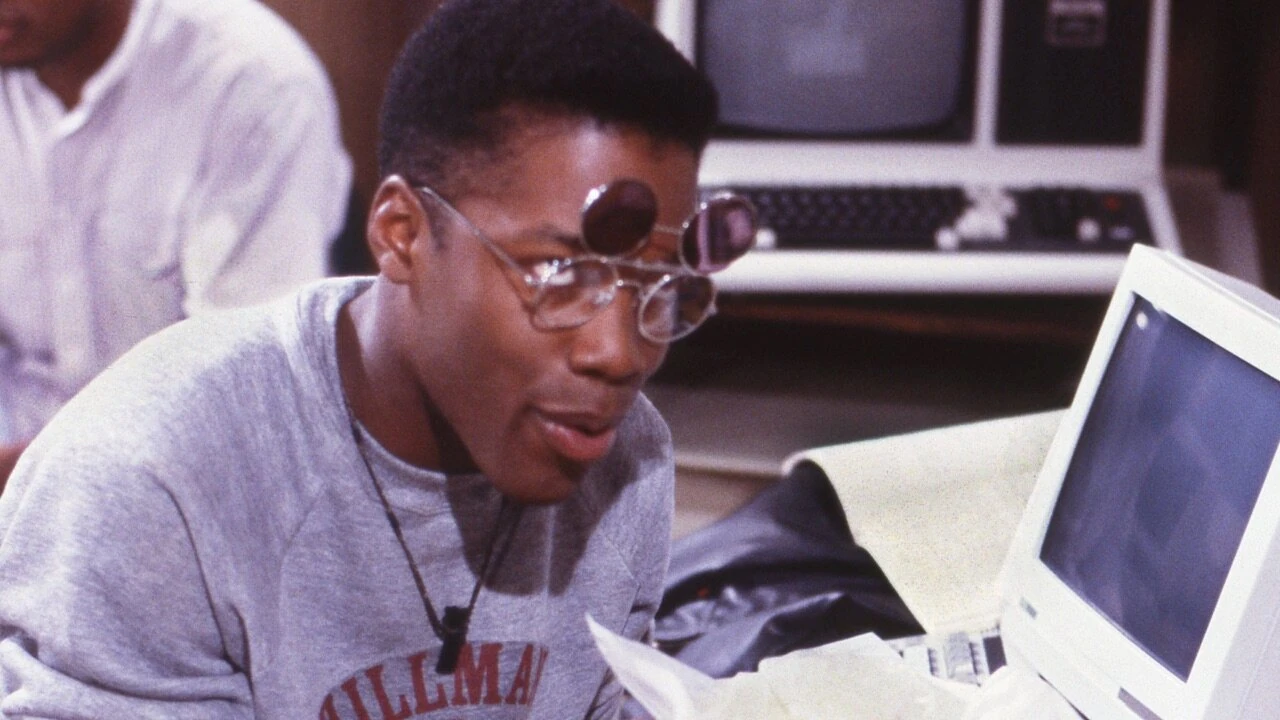
The flip-up sunglasses were an outstanding piece of character shorthand. Dwayne Wayne did not enter a scene hoping to pass unnoticed. He arrived equipped for a world in which a romantic opportunity might present itself between classes and require immediate visual clarification.
Kadeem Hardison made the hardware funny by refusing to let it do all the work. Dwayne was eager, quick, sometimes annoying, and brighter than his most desperate attempts at charm suggested. Hardison let his face register the moment a scheme began to fail. The gap between the Dwayne in his imagination and the one receiving the actual response was a reliable source of comedy.
He also had an academic life. In the second-season opener, “Dr. War Is Hell,” he wants to avoid Colonel Taylor’s feared calculus class. That is a better use of a college setting than simply putting a textbook in his hand. A course has a reputation, a teacher inspires dread, and an otherwise confident student would like to preserve his confidence by remaining elsewhere.
“Life with Father” adds a very personal difficulty. Dwayne’s girlfriend Suzanne is Taylor’s daughter. Suddenly the intimidating professor is not confined to the classroom. Few romantic obstacles offer quite such efficient scheduling.
The joke works because Hardison can look both pleased with himself and sincerely alarmed. Dwayne is not a smooth operator whose success the audience is asked to envy. He is a student improvising a version of sophistication, occasionally discovering that the people around him are not following his script.
Revisiting these episodes, it is easy to let the character’s later importance swallow his early awkwardness. Resist that temptation. This Dwayne is still learning which instincts deserve to be trusted. His mathematical ability, his loyalty, and his willingness to speak up are all there, but so is the young man who believes a little extra enthusiasm might solve a problem that requires listening.
Before the Great Romance, There Was Irritation
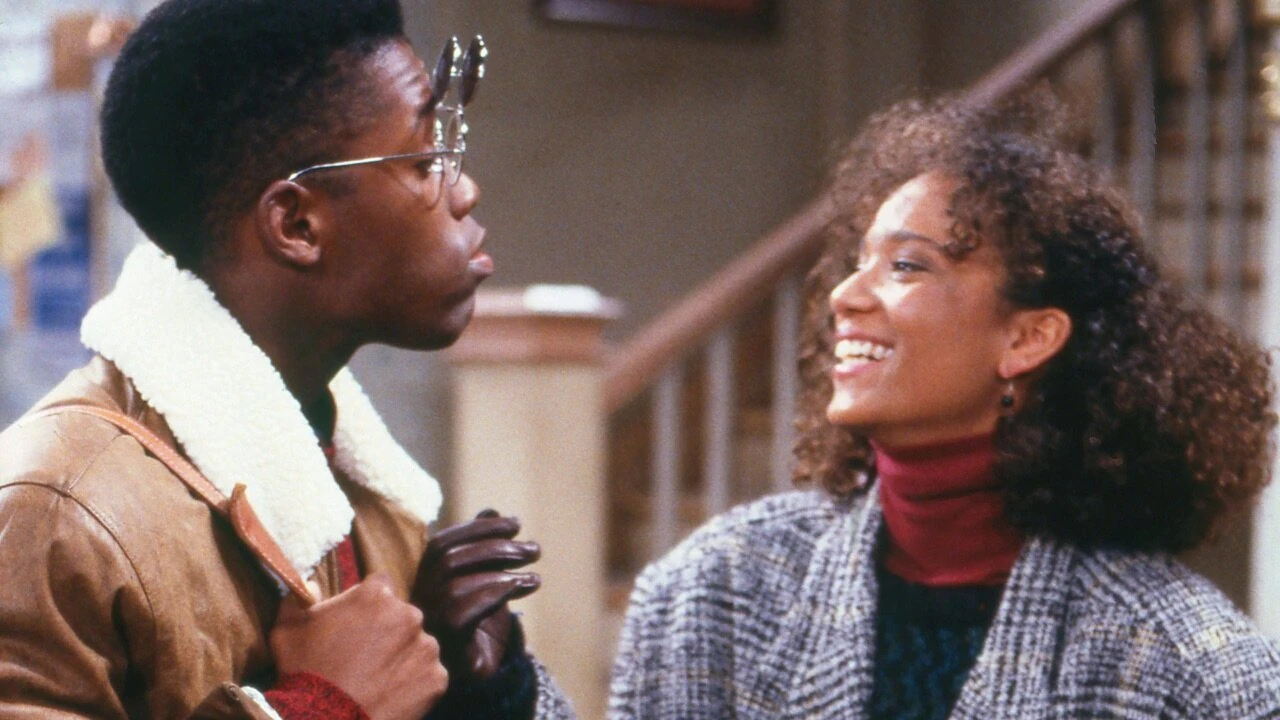
Knowing where Whitley and Dwayne eventually end up can make every early encounter seem like a sign nailed to the scenery. In the 1980s episodes, the better pleasure is uncertainty. These people are funny together before they are a destination.
Whitley values polish. Dwayne has prepared a presentation on his own appeal, which is not the same thing. He gets under her skin because he is difficult to dismiss completely. She gets under his because her opinion matters to him more than either of them would find convenient.
“Dream Lover,” in November 1988, turns Whitley’s unexpected dreams about Dwayne into a threat to her carefully managed self-image. Attraction is embarrassing enough without suggesting that your own standards have stopped consulting you. Guy gets plenty to play in the difference between what Whitley feels and what she wants to admit.
The show benefits from leaving other relationships in the picture. Dwayne has romantic interests besides Whitley; Whitley has a whole social imagination in which Dwayne does not seem like the obvious leading man. Their scenes retain the friction of two people with independent lives rather than the slightly airless feeling of characters standing beneath a giant arrow labeled Future Couple.
That independence is important to the comedy. Whitley’s pride is more interesting when it obstructs her choices, not merely when it delays a kiss. Dwayne’s persistence is more appealing when he has friends, work, and intelligence beyond the pursuit. The series becomes richer as their attraction finds a place among those other concerns.
Later viewers may arrive with an entire romance already in mind. Here, let them be young and frequently exasperating. There is something lovely about watching a familiar television partnership before its participants have realized how much trouble they are going to cause each other.
Kim Reese Has a Shift to Finish
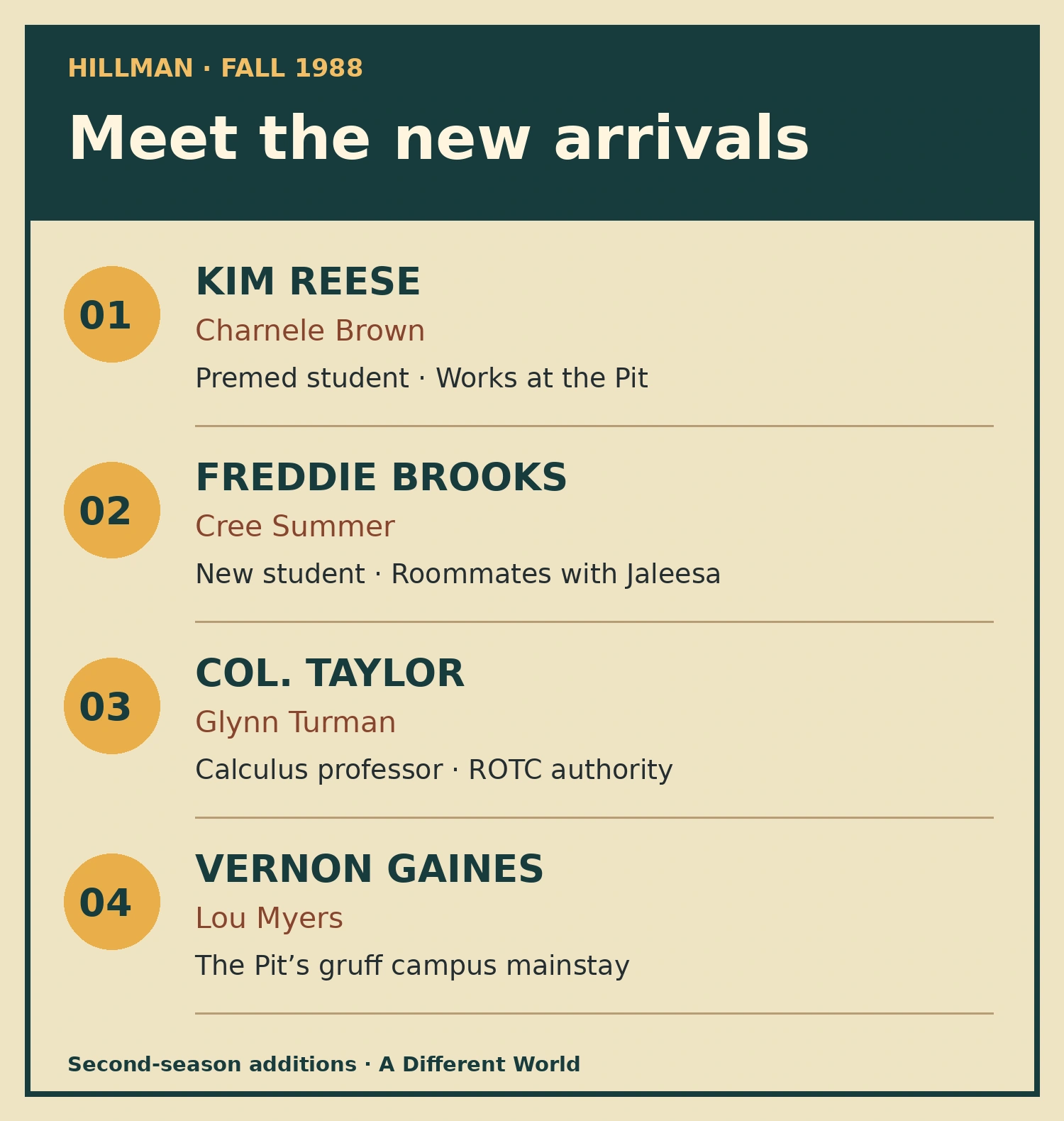
Charnele Brown’s Kim Reese changed the temperature of Hillman. She was ambitious, conscientious, and busy. Not sitcom-busy, where a character mentions an obligation and then spends the afternoon discussing someone else’s date. Kim had a premed goal, work at the Pit, and the look of someone performing mental arithmetic about how many hours remained in the day.
Making her Whitley’s roommate was an inspired way to let money become a daily disagreement rather than a topic reserved for a special speech. Two women might share a room without sharing assumptions about work, privacy, responsibility, or the cost of breaking something. Whitley was accustomed to a cushion. Kim did not have the same one. In “Take This Job and Love It,” Kim helps get Whitley work at the Pit to pay for damage to Kim’s car. It is a neat reversal: the woman whose labor is often taken for granted now has reason to watch her roommate discover what a shift involves. The comedy does not need to pretend that employment automatically builds character. Whitley already has plenty of character. Some of it is the problem.
Brown made Kim’s seriousness appealing because it had edges. She was not a saint assigned to teach rich people responsibility. She became tired, worried, irritated, and overwhelmed. Her competence did not mean she had limitless patience for everyone else’s chaos.
“High Anxiety” takes her workload seriously enough to make overcommitment the problem. A student who tries to do everything is not necessarily coping well simply because nobody has caught her dropping anything yet. That remains one of the show’s more recognizable college observations: being praised as dependable can become another thing you have to carry.
For younger viewers, Kim offered a picture of someone aiming at a demanding future without losing her place in a comedy. For an adult returning to the show, the job schedule becomes harder to ignore. The question is not just whether she gets the grades. It is when anyone expects her to sleep.
Freddie Brooks Arrives Without a Volume Control
Freddie looked as though she had come to college expecting her life to become more interesting immediately. Cree Summer supplied curls, bright energy, and a voice capable of making an ordinary statement sound like a newly discovered possibility. Hillman did not need another person who knew exactly how things should be done. It needed somebody ready to ask an inconvenient question at the wrong moment.
There is an easy, lazy version of a character like Freddie: the eccentric friend who arrives, says something odd, and disappears until the next useful interruption. Summer gave her more appetite than that. Freddie wanted experience. She wanted connection. She wanted to be taken seriously, even when her newest idea did not deserve quite the confidence she placed in it.
That eagerness allowed the show to explore a different kind of vulnerability from Kim’s. Kim’s trouble often came from trying to meet every demand. Freddie’s came from not yet understanding which demands, promises, or attractions deserved suspicion. Neither approach made a student foolish by definition. Each created its own blind spots.
“I’ve Got the Muse in Me,” from January 1989, puts Freddie’s hopes for writing alongside the temptation to treat alcohol as a shortcut to inspiration. It is a recognizable young-person mistake: deciding that the accessory associated with a creative life must be the thing that produces the creativity. If only buying the notebook completed the novel.
Summer’s performance kept Freddie from becoming a neatly packaged warning. Her enthusiasm remained attractive even when it led her astray. The point was not that she should stop being curious. It was that curiosity did not remove the need for judgment, and that judgment was something she was still developing.
Beside Jaleesa’s experience, Whitley’s certainty, and Kim’s discipline, Freddie made the women’s ensemble feel genuinely varied. These were not four versions of a sensible heroine. Sometimes the person most in need of advice was also the one who made an evening feel less predictable.
Jaleesa and Walter: Adults, More or Less
Jaleesa had enough life behind her to recognize trouble. That did not mean she had retired from encountering it. Her relationship with Walter Oakes gave the show a romance with a different rhythm from the students’ more breathless pursuits.
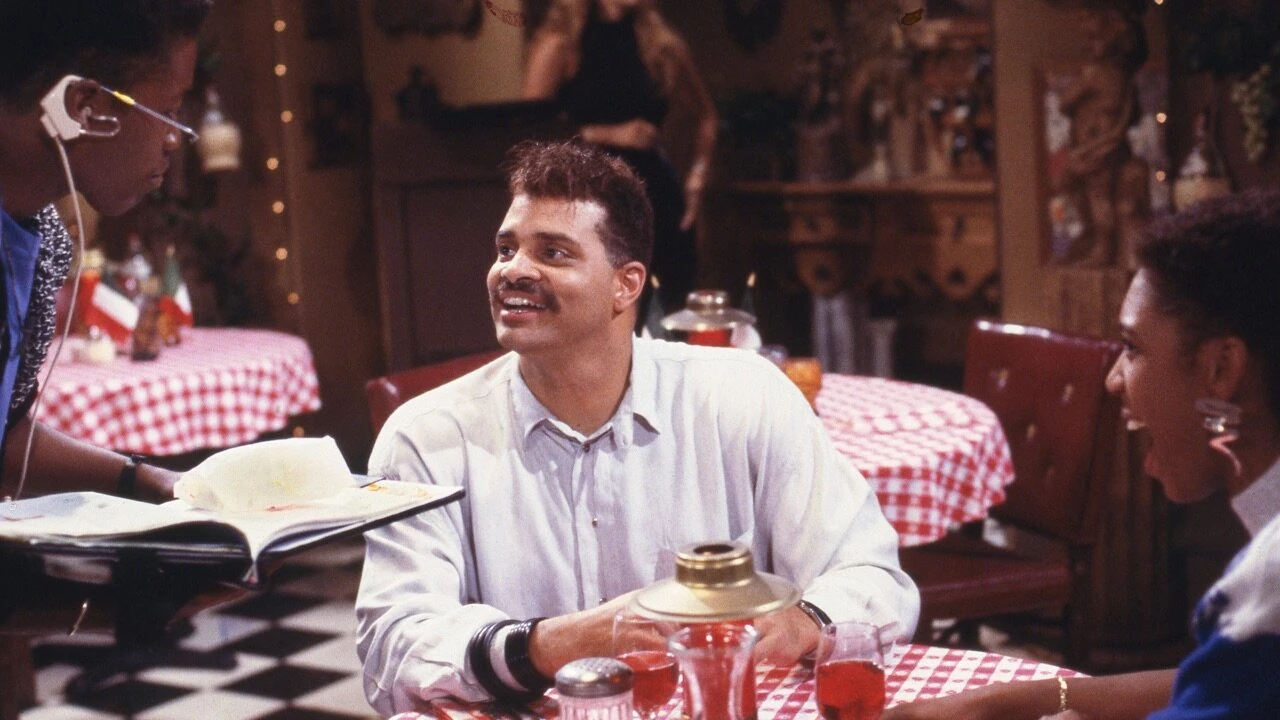
Sinbad’s Walter was a dorm director and gym teacher, part of the campus’s adult machinery but not immune to making a fool of himself. Sinbad brought a loose, approachable comic presence; Lewis answered with precision and impatience. Their scenes worked because neither seemed built solely to set up the other’s joke.
“Some Enchanted Late Afternoon” sends them into the awkward business of beginning a romance. It is a useful reminder that being older than your classmates does not make the early stages of dating any less exposed. You may have accumulated better explanations for your behavior. That is not quite the same as behaving better.
When Jaleesa’s ex-husband Lamar visits in “The Thing About Women,” Walter’s jealousy adds a different complication. Jaleesa has a past that is not waiting for his permission to exist. A returning student does not become a blank slate just because she has a new class schedule.
The relationship also helped make Hillman feel like a place where employees and students inhabited overlapping worlds. Walter was not a remote authority who appeared only to restore order. He had his own wishes and insecurities, which occasionally made him less equipped to restore order than his title implied.
Lewis deserves particular credit for keeping Jaleesa from becoming the designated adult in every scene. Responsibility was part of the character, not her entire personality. When she wanted something, competed for attention, or lost patience, the show let her be a participant rather than a supervisor. That was better for Jaleesa, and considerably better for the comedy.
Ron Johnson Is Here to Help Himself
A friend who knows exactly how to make your life easier can be a wonderful thing. Ron Johnson frequently resembled that friend until the details emerged. Darryl M. Bell gave Ron the charm of a man who had already decided that his latest shortcut was reasonable and would appreciate everyone else catching up.
His friendship with Dwayne supplied a different kind of intimacy from the women’s dorm-room arrangements. They knew how to encourage each other, irritate each other, and occasionally mistake doing one for doing the other. Bell and Hardison looked comfortable sharing a scene, which made their disagreements land without requiring a reminder that these men were supposed to be friends.
“Two Gentlemen of Hillman” puts them together on a research paper and lets their incompatible approaches to the assignment create trouble. Dwayne has to reckon with the difference between enjoying Ron’s company and depending on him to do the work. Anyone who has ever received the phrase “group project” as an educational threat will recognize the problem.
That story is separate from “It’s Greek to Me,” the March 1989 fraternity-pledging episode. There, the friendship meets another test as the two pursue membership. Putting the episodes together shows how much better the series used the college setting in its second year. Coursework and campus organizations generate different pressures; they do not have to become interchangeable reasons for the same argument.
Ron was allowed to be less academically earnest than Dwayne without becoming a character who existed outside the institution altogether. He wanted a good time and a promising future, preferably without encountering an unnecessary obstacle between them. His definition of unnecessary was generous.
The important thing was that the show did not confuse loyalty with perfect behavior. Ron and Dwayne’s affection mattered partly because it survived an honest appraisal of each other’s faults. A campus friendship that never interferes with your plans has either been remarkably fortunate or has not yet met Ron.
The Adults Had Better Things to Do Than Indulge Everyone
Colonel Bradford Taylor seemed like the kind of professor whose course acquired a reputation before you learned where the classroom was. Glynn Turman brought an upright, exacting presence that made Dwayne’s concern about calculus immediately understandable. There was authority in the way Taylor occupied a room. He did not need the students to find him adorable.
That made him a valuable addition. Sitcom colleges can become strange institutions where no one with the power to assign a grade ever appears. Taylor reminded Hillman that education involved standards, not just meeting friends in a building with a collegiate name.
Lou Myers’s Vernon Gaines offered another kind of authority at the Pit. Gaines was not a professor, but his workplace was a center of campus life. Students ate there, worked there, talked there, and made problems for themselves there. Myers gave him a wonderfully weathered impatience: the sense that he had seen a great deal and was not impressed by a new explanation for familiar nonsense.
Neither man needed to be effortlessly wise all the time. The second season even found odd-couple possibilities in bringing Gaines into Taylor’s living arrangements in “High Anxiety.” Letting adults inconvenience each other was a healthy choice. Otherwise the campus risked dividing into young people with lives and older people who stood ready to comment on them.
Mary Alice’s Lettie Bostic added a warmer, grounded presence to the late-1980s dormitory world. Her manner did not suggest that the students’ latest emergency was necessarily the largest event in human history. That was useful perspective, delivered without making the students’ feelings worthless.
With Walter, Taylor, Gaines, and Lettie in circulation, Hillman had more than a collection of young stars waiting for a plot. It had people responsible for its daily operation. They also had enough personality to become somebody else’s daily problem. The second season understood that a college is partly an institution and partly an ongoing negotiation over who is allowed to make noise.
A Shared Room Is a Very Small Country
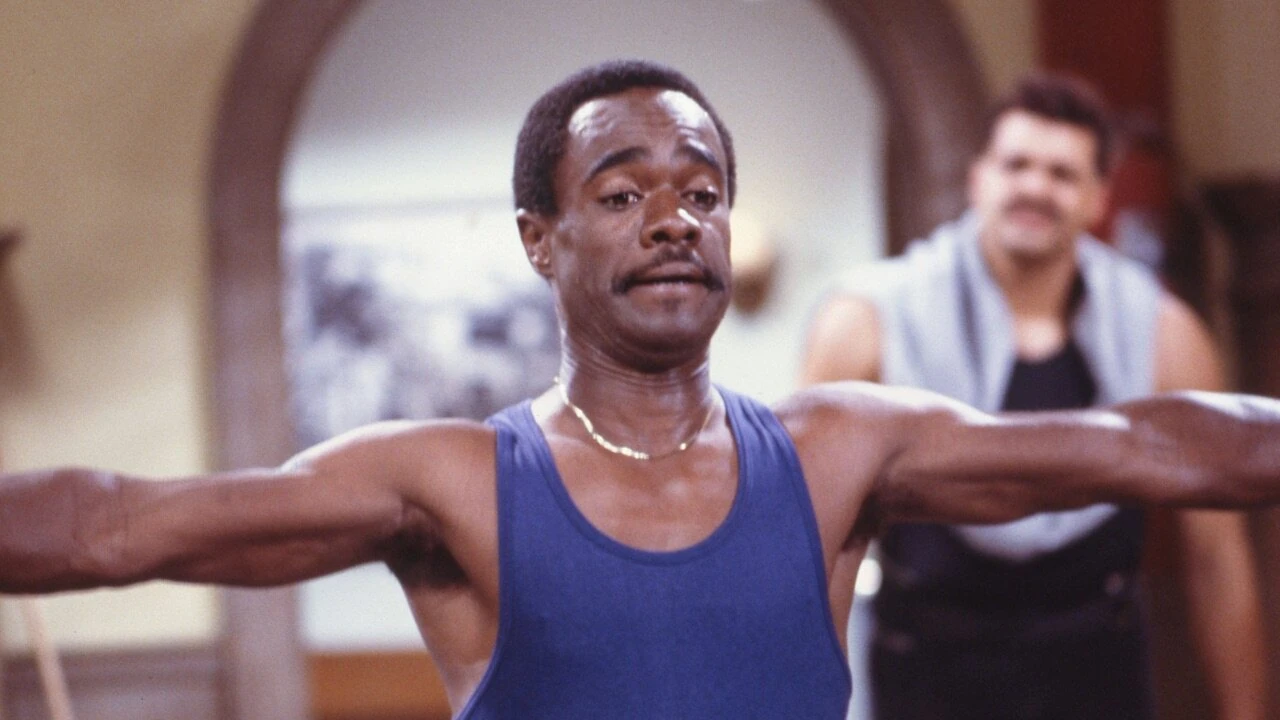
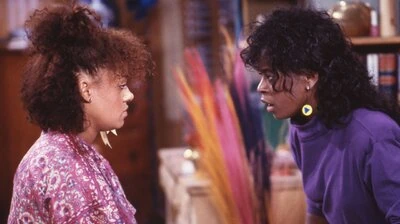
Whitley and Kim did not need to travel across town to encounter a difference in class. They only had to look across the room. That proximity gave the show a regular source of conflict without requiring either woman to arrive prepared to debate an issue.
Privacy, for instance, is easy to regard as a personal entitlement until two people are trying to claim it in the same space. In “All’s Fair,” Kim’s boyfriend takes up enough room in her life to crowd Whitley out of the room they share. The usually demanding roommate suddenly has a legitimate grievance. This is one reason their pairing worked: neither woman owned the moral high ground as a permanent address.
The show also let support develop between people who annoyed each other. “It Happened One Night,” broadcast in January 1989, centers on Kim’s fear that she may be pregnant and Whitley’s response to that worry. Kim is the one facing the scare; confusing her story with Denise’s departure from the series makes a mess of two very different pieces of history.
Whitley’s involvement matters because she cannot solve this situation by correcting Kim’s taste or invoking better manners. A worried friend needs company, discretion, and someone willing to remain present. Guy’s capacity to soften without erasing Whitley makes that change believable.
The Thanksgiving story “If You Like Pilgrim Coladas” provides another angle. Whitley takes a homesick Kim out to a restaurant, and their holiday becomes something other than the family occasion Kim is missing. The episode does not require them to forget their differences. It lets a shared evening make those differences less decisive.
These are small stories beside the famous later romances, but they establish something essential. Friendship is not merely liking the same things or having the same money. Sometimes it is the person who regularly drives you mad noticing that you need help, and having the decency not to make that help entirely about herself.
Put Some Rhythm in the Campus
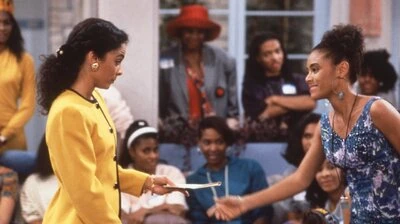
In “A Stepping Stone,” Hillman’s campus culture becomes an event the characters actually participate in. The December 1988 story centers in part on an interdormitory step competition, with Whitley’s wish to lead the team putting her personality under a particularly unforgiving spotlight.
A group performance is a bad place to assume that having the strongest opinion makes you the best leader. Everyone else has to move with you. Whitley’s difficulties do not require the show to explain her personality again; they let us watch it cause a practical problem.
Stepping also gives the episode a physical energy that ordinary conversation cannot supply. The coordinated movement, the teamwork, the pleasure in a shared performance: these are parts of college life that disappear if every story takes place with two people seated beside a telephone.
Allen’s background made her especially well suited to a series that needed its social world to move. That does not mean every dance sequence should be read as her personal signature, or that a single sitcom event stands for every HBCU tradition. It means the show had leadership interested in making campus activity visible, with the cast doing more than discussing an event that happened offscreen.
The same episode gives Dwayne a tutoring story involving a struggling football player. Academic responsibility and a campus competition share the half hour. That pairing makes Hillman feel busier and more plausible than a college where everyone drops all obligations for the main character’s latest concern.
Among the 80s school TV shows, this is one of Hillman’s advantages. Its students are not simply waiting to escape the institution. They are trying to make something of being there: a team, a friendship, a reputation, a future. An evening’s entertainment grows out of the place itself.
When the Opening Theme Changed Its Voice
There are television themes that announce a title and television themes that change the room. A Different World had an especially memorable handoff: Phoebe Snow sang the first-season version, and Aretha Franklin took over with the second season in 1988. Snow’s recording belongs to the Denise-era show. Franklin’s became attached to the Hillman many viewers picture first: a busier campus, a stronger ensemble, and characters with enough momentum to carry their own half hour. The change in singer was not the reason for that creative shift, but it gave the shift an instantly recognizable sound.
Dawnn Lewis’s connection to the song is a particularly good piece of this history. She helped write it, separately from becoming Jaleesa. The theme and the performance in the dorm room were two different contributions to the same series, even though Lewis was not the voice heard singing the opening each week.
There is no need to print the lyrics to explain their appeal. The musical greeting promises a place apart from the familiar world, with enough lift to make that promise inviting. Franklin’s presence makes the invitation feel thoroughly assured. Hillman may have a few things to sort out, but the opening is not suffering from a lack of confidence.
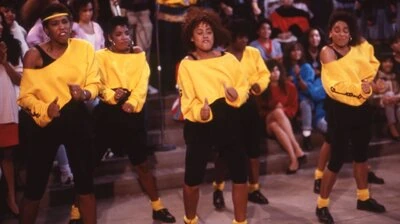
The series also welcomed music into its stories. “Three Girls Three,” in November 1988, gave Jaleesa and Whitley an opportunity to become backup singers for guest star Gladys Knight. It was a broad show-business setup, certainly, but it drew on performers who brought more to the room than line readings. Watching this cast take an opportunity to perform was part of the fun.
The theme belongs in the larger company of 80s TV theme songs that made an opening sequence worth sitting through. With this one, hearing a different singer can tell you which version of the series you have returned to before the first dorm-room disagreement has even begun.
“Radio Free Hillman” Makes Dwayne Pick a Side
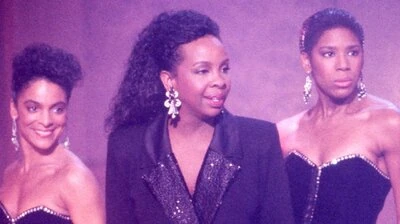
“Radio Free Hillman” begins with a familiar collision: a student wants to play something that an administrator does not want broadcast. The January 5, 1989, episode turns a dispute over a suggestive rap record into a campus argument about expression and authority.
Dwayne takes the conflict beyond complaining. His response includes a sit-in at the dean’s office. Rosalind Cash plays Dean Hughes, giving the administrative side an actual presence rather than leaving it as a disembodied rule the students can argue against without resistance.
Whitley is caught in the middle, which is a better place for her than simply assigning her the most conservative position and waiting for someone to correct her. Loyalty, caution, self-interest, and principle are not always neatly aligned. A friend can make a stand in a way that complicates your own comfortable arrangements.
The episode’s interest lies partly in Dwayne’s seriousness. Hardison’s eager young man is still recognizable, but here his energy goes into something besides making an impression on a woman. He is willing to inconvenience authority, and himself, for a position he wants to defend.
It is also a story rooted in the late 1980s, when arguments about rap and objectionable language were becoming an especially visible part of the larger culture. Hillman’s students do not have to leave campus to encounter that disagreement. The music they choose to play brings it through the door.
The result is more engaging than an episode that pauses its characters while each side receives a carefully balanced paragraph. These are still people with reputations to protect and relationships to negotiate. The question is what happens when a principle stops being something you approve of in theory and becomes a reason to spend an uncomfortable afternoon in somebody else’s office.
“No Means No” Was Not Just Another Bad Date
The March 30, 1989, episode “No Means No” brings a dangerous situation into Freddie’s eager search for experience. She is interested in Garth Parks, a baseball player played by Taimak. Dwayne has reason to be worried about Garth’s behavior toward women. What begins within the show’s familiar dating world becomes a story about coercion and consent.
The episode is important to the 1980s history of the series, not a later example borrowed from its more frequently discussed 1990s run. By the spring of its second season, A Different World was already willing to ask its audience to distinguish a man getting his way from a woman freely agreeing.
That distinction also bears on Dwayne’s own understanding. In discussing Garth’s account of an earlier encounter with Walter, he faces behavior that cannot be dismissed as ordinary romantic success. A boast told among men is not necessarily an innocent story. Listening critically matters.
The story should not be reduced to an account of Freddie failing to follow advice. Responsibility belongs to the person exerting pressure, not to the person who hoped a date would be enjoyable. Freddie’s trusting manner is part of her character; it is not an excuse for somebody else to ignore her boundaries.
Summer’s openness makes the change in tone painful without needing a new character to arrive as the week’s example. This is the same young woman whose enthusiasm has been funny elsewhere. Caring about her does not require the show to put her personality on hold.
There are limits to what a network sitcom can resolve in a half hour, and not every turn of a serious episode escapes the conventions of the format. Still, placing this story inside Hillman’s ongoing friendships gives it a weight that a detached warning would lack. These students have to take what happened back into their understanding of one another.
For a series often remembered first through romantic comedy, “No Means No” is a necessary part of the picture. Hillman was becoming a place where the show had the confidence to let an evening stop being funny.
Hillman Offered More Than One Way to Be Young and Black
The difference between Whitley and Kim is not a footnote to Hillman’s appeal. It is the appeal in miniature. Two Black women share a room and do not share a bank balance, a temperament, or an idea of how to spend an afternoon. The series does not need to locate their differences outside the campus to make them interesting.
Likewise, Dwayne’s academic ability and Ron’s talent for finding an easier route belong to friends in the same community. Jaleesa’s experience and Freddie’s inexperience are not competing definitions of authenticity. Hillman accommodates both, and then makes them deal with each other.
That range separates the show from a narrow idea of representation in which every character must behave well enough to justify being on television. Whitley is allowed to be impossible. Ron is allowed to dodge responsibility. Freddie is allowed to overdo things. Their faults provide comedy without making any one person responsible for explaining an entire population.
The setting also offered an appealing future. College meant assignments and bills, but it also meant friends, style, performances, new interests, and the possibility of becoming someone your old neighborhood did not yet know. The show made education visible as a lived experience, with attractions beyond a speech about its value.
That does not establish that watching Hillman caused a particular national change in college enrollment. Sweeping numerical claims need evidence beyond an affectionate recollection of the show. What the episodes themselves demonstrate is more immediate: a historically Black college occupied a prominent weekly place on network television, populated by people viewers had reasons to follow.
There is a useful connection to the argument over J.J. and the legacy of Good Times. Black sitcoms had long faced competing expectations about entertainment and responsibility. Hillman’s ensemble offered another answer: make room for several kinds of people, then let their different wants create the story. A broader cast of personalities carries more than one star forced to carry everything.
A New Center, Without Pretending the Past Vanished
The move from Denise’s series to Hillman’s series involved a genuine loss as well as an opportunity. Bonet’s presence had mattered. So had Tomei’s. A stronger second year does not make the first cast disposable, or turn their departures into a simple story about removing the wrong people.
Bonet’s pregnancy was part of the circumstances surrounding her departure from the regular ensemble. Accounts of the creative discussions differ in emphasis, and later recollections have added detail. The clear onscreen fact is simpler: Denise was no longer the weekly center when the second season began. The show had to make its college interesting without relying on her.
Bill Cosby retained the series’ creator credit. Allen’s transformative contribution was as a producer and director, working with the writers and performers who developed the new direction. Those jobs deserve to be described accurately rather than collapsing the entire production into one familiar name.
The parent series remained an important part of the history. For the NBC setting and the Huxtables’ dominance, the 1980s story of The Cosby Show provides the other half of the relationship. Hillman’s achievement was to become more than an extension of it.
Contemporary coverage noticed the change. An August 1989 Washington Post profile credited Allen with improving the series, despite its already enviable ratings. The second year supplied the stronger argument itself. Kim and Freddie did not arrive to fill empty chairs with copies of the women who left. They created new disagreements, loyalties, and ways into the campus. Hillman became more convincing because the series allowed the center of attention to move.
Second Place, Third Place, and the Difference Between a Number and a Show
It is hard to overstate the advantage of that original Thursday slot. Viewers finishing The Cosby Show did not need to find Hillman; NBC had placed it directly in their path. The network then had Cheers waiting on the other side. A young comedy rarely receives a more comfortable introduction.
But comfort is not the whole explanation for a series that developed its own cast loyalties. By the 1988–89 season, viewers had Kim and Freddie to meet, Whitley and Dwayne to watch more closely, and a campus with more happening in it. The show finished that season third, following The Cosby Show and Roseanne.
That makes the top TV shows of 1989 a particularly helpful comparison. The season-ending year is 1989 even though the second season began in October 1988. It is the Allen-era Hillman being measured, not simply a tally of programs that premiered during the calendar year.
The move from second to third is not evidence that the revamp failed. Nor does the improved comedy prove that the timeslot stopped helping. Ratings record the audience a show attracted under particular circumstances; they do not tell us whether Whitley’s latest offended pause was better timed than the one last week.
Roseanne‘s arrival also helps explain how busy this moment was for network comedy. One series was finding new energy in a family kitchen, another in a college ensemble. The Conners’ 1988 debut and Hillman’s second year offered very different rooms full of people whose lives did not stop when a problem became inconvenient.
The useful conclusion is not that success arrived after popularity. It is that an already popular show grew into something more distinctive while remaining one of the country’s most watched series. That is a better story than the imaginary cancellation rescue.
The Parts That Still Feel Like a Sitcom
Admiring Hillman’s improvement does not require pretending that every episode became subtle. The show still liked a convenient misunderstanding, a broad romantic predicament, and a neatly arranged lesson. Now and then a character appeared to have learned something in time for the closing credits that would require considerably longer in an actual dorm.
Whitley’s extravagance was a delight until a scene leaned on it one time too many. Dwayne’s eagerness was charming until persistence looked less like confidence and more like an inability to hear a response. Ron’s shortcuts supplied laughs, but the friendship needed other notes if Dwayne was not to resemble a man who had accidentally enrolled in permanent babysitting.
The second season was better at finding those other notes. A serious problem revealed Whitley’s generosity. An academic story gave Dwayne something to care about beyond romance. Jaleesa’s awkwardness with Walter reminded us that maturity is not a complete defense against feeling foolish. Some of the pleasure is theatrical rather than naturalistic. These actors knew how to make a reaction register across a room. Guy could send a sentence on a scenic route before landing its insult. Hardison’s embarrassment had excellent visibility. Sinbad did not specialize in disappearing into the furniture. Demanding that this become an entirely different style of comedy would remove much of what makes it enjoyable.
The fair criticism is narrower: the people are strongest when the plot gives their particular qualities something to do. A story that might belong to any 1980s sitcom is less satisfying than Whitley trying to lead a step team or Kim discovering that her dependable reputation has become an unreasonable workload.
That is why the early transformation still holds up. The series did not become flawless. It became much better at using the funny, complicated people already available to it.
The Hillman That Was Ready for the Next Decade
Watch the 1987 and 1988 openings close together and the change feels larger than a cast adjustment. The first invites you to follow someone you know into a new place. The second gives you more reasons to recognize the place itself. The actors no longer seem to be waiting for Denise to tell them whose story comes next.
For a viewer approaching college age, Hillman offered an unusually vivid picture of the life just beyond the family home. For someone revisiting it after paying bills and holding jobs, Jaleesa’s determination and Kim’s exhaustion may become more noticeable. The show makes room for both readings without either audience having to pretend the jokes are about somebody else.
It also belongs to the larger story of the 1980s, a decade whose television is often reduced to wealth, spectacle, and exceptionally determined shoulder pads. Hillman’s students wanted futures, but the series found comedy in the work and friction of getting there, not simply in displaying the reward.
The fall of 1989 offers a useful glimpse of the connection still being renegotiated. In “Forever Hold Your Peace,” Whitley and Dwayne travel to New York for her father’s second wedding and cross paths with the Huxtables. Hillman’s people are now the visitors carrying their own concerns into that familiar world. The family connection remains available, but it no longer has to supply the college show’s entire reason for being.
That is a satisfying change for Whitley in particular. A wedding is an occasion on which appearances matter, family history refuses to stay politely in the background, and other people’s choices become very difficult to ignore. Her personality belongs naturally in the middle of it. The episode has the recognizable pleasures of a return visit without requiring the series to move back home. By this point, Hillman has enough life waiting for its students when they return.
The later years would bring developments that deserve space of their own. The 1990s legacy of A Different World continues that story; it should not be folded backward until every famous episode seems to have happened in 1988.
Within 80s television, the first two seasons remain a particularly satisfying example of a show discovering its strength in public. Denise brought an audience to Hillman. Whitley, Dwayne, Jaleesa, Kim, Freddie, Ron, and the people trying to keep the campus running gave that audience reasons to stay. Not everyone had found a sensible plan. Fortunately, a campus full of sensible people would have left Whitley with far less to complain about.
A Few Hillman Questions, Answered
When did A Different World premiere?
The first broadcast was September 24, 1987, on NBC, with “Reconcilable Differences.” The episode titled “Pilot” aired on October 1. Lisa Bonet’s Denise Huxtable was the original central character, continuing her story from The Cosby Show. She begins this series as a sophomore at the fictional Hillman College.
When did Debbie Allen change the show?
Allen joined the creative leadership as a producer and director for the second season, which began October 6, 1988. Kim Reese and Freddie Brooks joined the regular ensemble, while Denise and Maggie were no longer regulars. The sharper focus on Hillman’s people and campus culture emerged through the work of Allen, the writers, and the cast.
Was Hillman a real college?
No. Hillman was a fictional historically Black college, not a real institution issuing degrees. That distinction does not make its cultural setting incidental. The series drew on recognizable HBCU experiences and traditions, while inventing its own students, staff, classrooms, workplaces, and relationships. Allen brought her experience as a Howard University graduate to the work.
Who sang the theme in the 1980s?
Phoebe Snow sang the first-season theme. Aretha Franklin took over for season two in 1988. Dawnn Lewis, who played Jaleesa, was also a co-writer of the song. Recognizing Franklin’s version as the sound of Hillman is understandable, but it was not the recording that introduced the series in September 1987.
Was the first season really unsuccessful?
Not in the ratings: it finished second for 1987–88. The revamped second season finished third for 1988–89. The change was a creative reinvention of an existing hit, helped throughout by NBC’s Thursday lineup. Judging the two versions only by their season rank misses much of what made the later ensemble more engaging.
Sources & Further Reading
- Debbie Allen on shaping the series: Television Academy interview
- First-season broadcast and episode guide
- Second-season dates, plots, and individual cast credits
- 1987–88 season ratings: Classic TV Archive
- 1988–89 season ratings: Classic TV Archive
- Diahann Carroll’s 1989 guest-performance nomination
- Contemporary response to Debbie Allen’s changes
- Cast and crew recall the early series and its theme