M*A*S*H in the Early 80s: How a 70s Giant Finished Strong
The helicopters still came over the ridge. By the time they took Hawkeye home, it felt like we knew everybody in camp.
Potter, Margaret, Klinger and the crew we spent the early ’80s with.
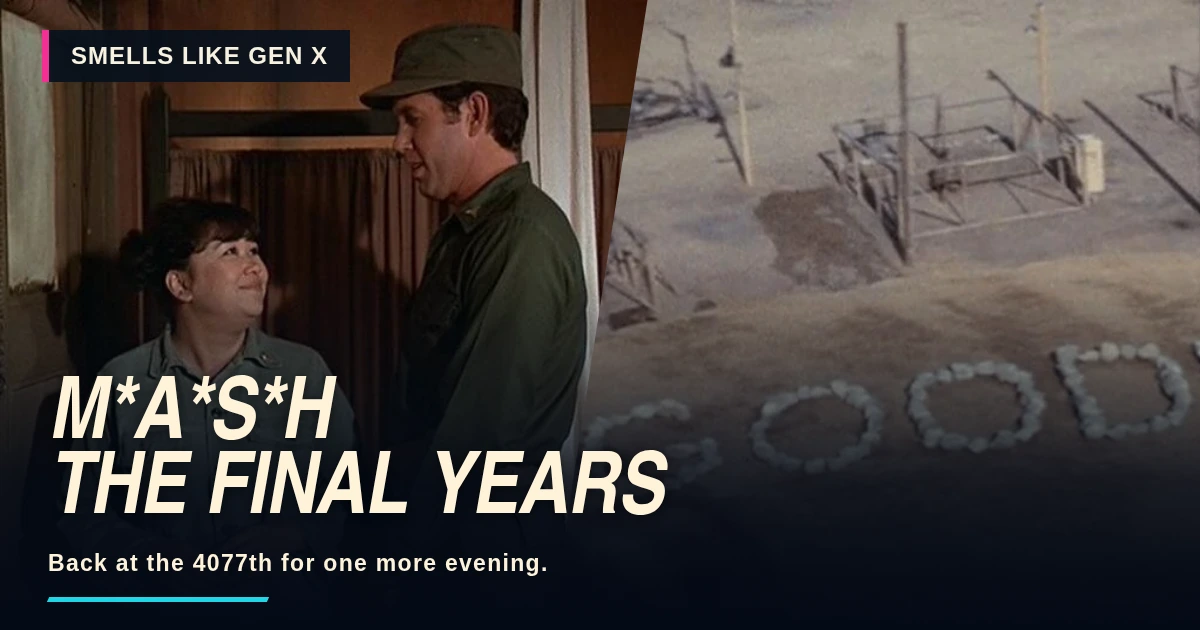
Two helicopters come over the ridge. A soft guitar starts up. Somebody in the room recognizes it before the title appears, and whoever was about to get up for a drink gives it another minute.
That’s how M*A*S*H comes back to me. There’s a good chance I couldn’t have told you whether the episode on the set was new or a rerun. I could tell you in a second which version of the camp we were visiting. Radar at the desk was one thing. Klinger at the desk was another. If Colonel Potter was in the room and Charles Winchester was making a face, I knew my way around.
The CBS show was a ’70s fixture, and a lot of us remember it in one long stretch. For this trip, I’m picking it up when the calendar rolled into the ’80s. Hawkeye and B.J. already knew how to get a rise out of each other. Margaret could run a room full of people who needed to be told twice. The jokes still got you through supper. Every so often an episode would make you set the fork down.
If your favorite camp memories involve Henry Blake, Trapper or Radar, our ’70s MASH feature has their years covered. Here I want to spend time with the bunch who were still there when the war finally ended on February 28, 1983. They’d been waiting to go home for so long that it almost felt rude when they did.
Inside This Article
- I could tell the year by who answered the phone
- Hawkeye and B.J. had been stuck together long enough to get on each other’s nerves
- Give Margaret the floor
- The Christmas episode I’d watch again
- Klinger at Radar’s desk
- The guy from Boston had a good ear
- The camp got quieter when it needed to
- The remote was staying put
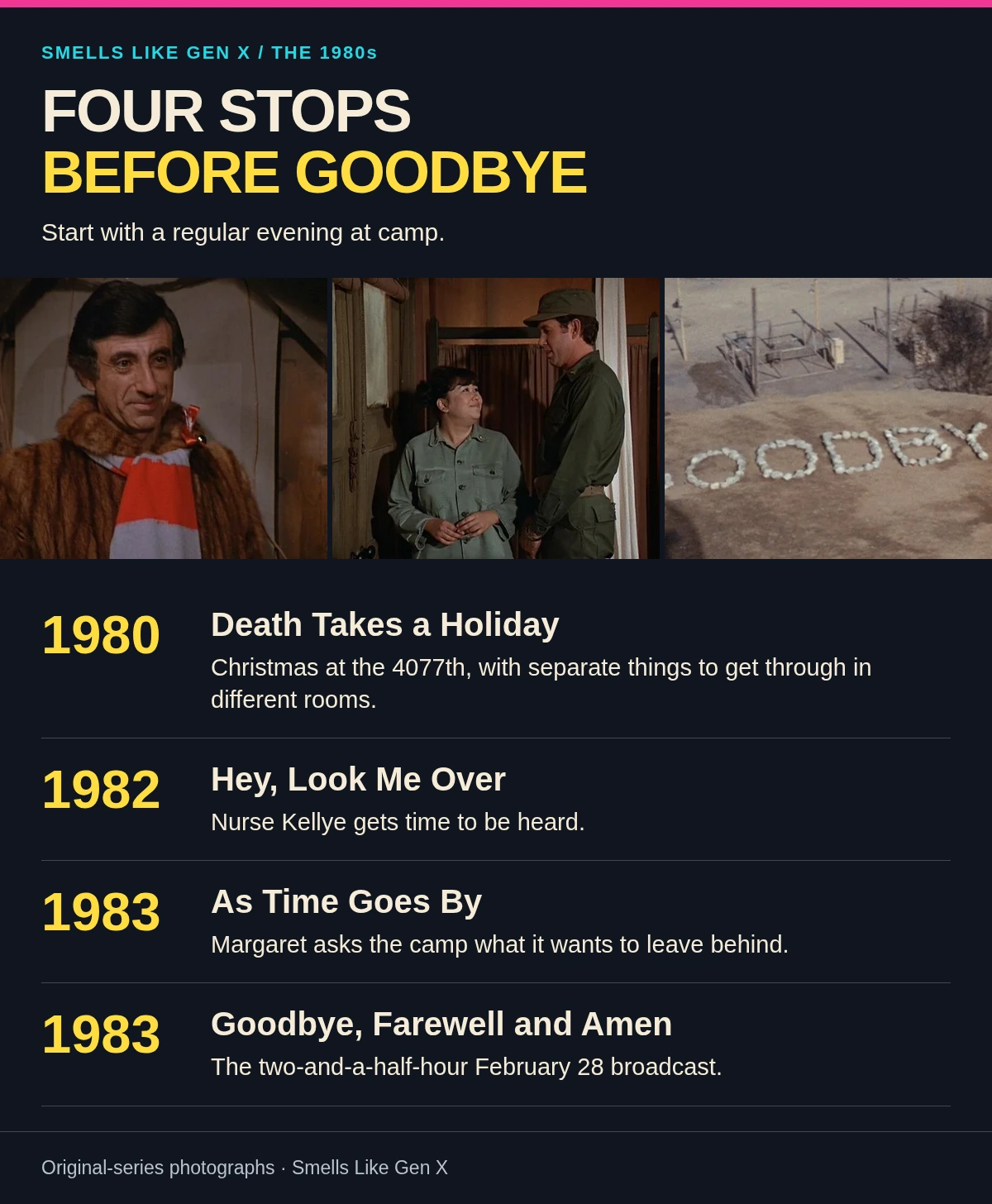
- The week before goodbye
- Goodbye was a whole night of television
- Three nights back at the 4077th
- Back at the 4077th
I could tell the year by who answered the phone
Reruns can play a trick on you. Watch two in a row and the commanding officer can change over dinner. Everybody’s still wearing olive drab. The mess tent hasn’t moved. If the picture is fuzzy enough, it takes a second to realize you’ve just jumped several years.
By 1980, Colonel Sherman Potter was in charge and Klinger was doing the company clerk’s work. Radar’s farewell had aired in fall 1979. B.J. Hunnicutt had long since made a home on Hawkeye’s side of the Swamp, and Charles had established his right to be miserable about sharing it. You’d still recognize Loretta Swit as Margaret and William Christopher as Father Mulcahy from earlier episodes. They had different people to get exasperated with.
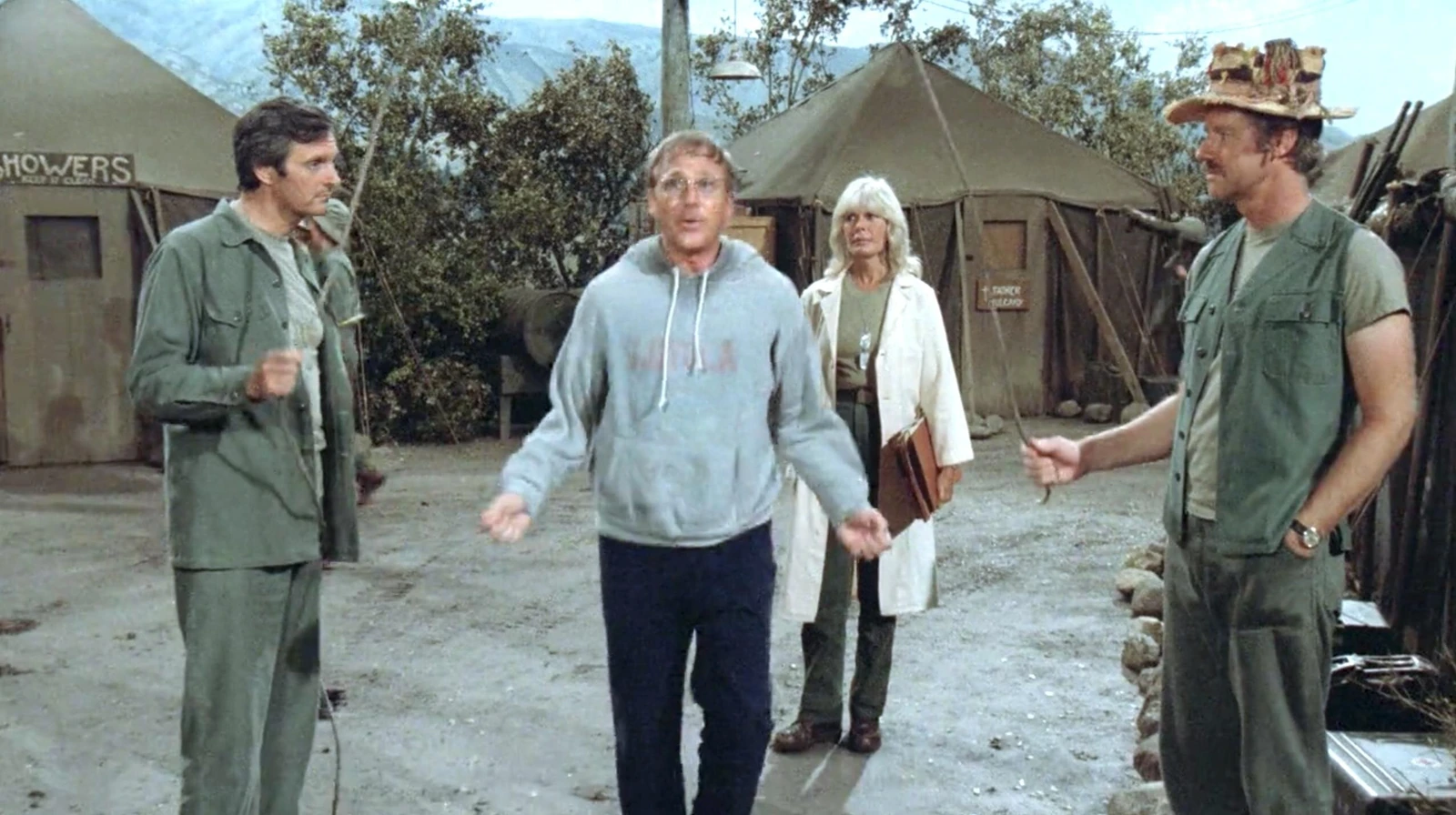
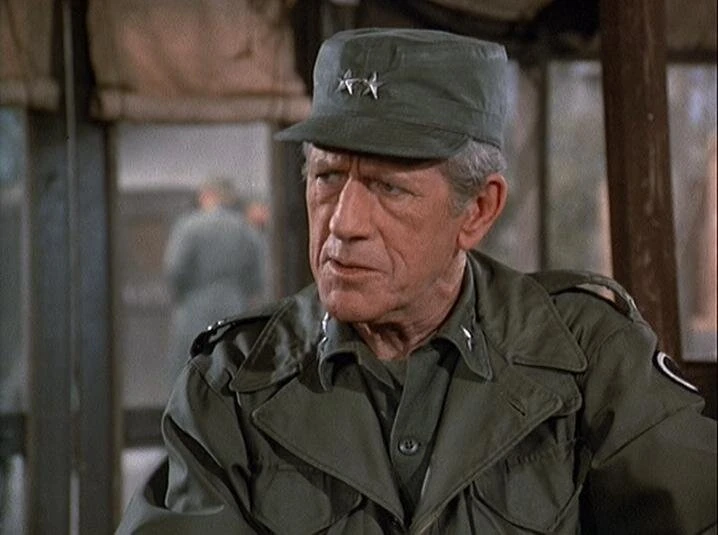
I like those first minutes of a rerun when the room gives away its age. You can read the new mix in how people stand. Harry Morgan’s Potter has the habit of a man who’s had to tell competent adults to behave themselves before. Jamie Farr’s Klinger has to pick up the phone and get somebody on the other end to do a thing for him. David Ogden Stiers can make Charles look personally insulted by the quality of the coffee.
It feels like arriving at work when you know the crew. You haven’t clocked in and you already know who’s going to tell you how the day is going. The camp was familiar enough by the ’80s to give the viewer that feeling before any of the week’s trouble showed up.
Hawkeye and B.J. had been stuck together long enough to get on each other’s nerves
I like Alan Alda and Mike Farrell best when Hawkeye’s mouth is running a little too fast and B.J. has heard enough. A tent is a small place to be somebody’s best friend. You have to listen to their good joke, their bad joke and then the long explanation of why the second one was actually pretty good.
B.J. had Peg and Erin waiting at home. That gave the show a particular way of making the distance feel real. It comes out in the letters and the bits of family life he hears about secondhand. Home can keep changing while you’re still sleeping a few feet from the same guy’s socks. You get some idea why B.J. could be genuinely happy to have Hawkeye there and desperate to get back to his own people in the same afternoon.
Hawkeye can be a lot. If I’m picking a late episode to watch, I’m happy when somebody gets through that running commentary and catches him with a question he can’t answer fast. There’s a charge in seeing Alda play the split second where the joke has stopped doing its job. Farrell could keep up with him in a funny scene and give him somewhere to go when the room went quiet.
By the final night you knew enough about their friendship to care whether they managed to say goodbye. Think how many sitcoms could get away with making that a big part of the last episode. These two had spent so much time turning embarrassment into a joke that an honest farewell was going to take some doing.
Give Margaret the floor
There’s a late episode I like to use when somebody remembers only the old nickname for Margaret Houlihan. “Hey, Look Me Over,” from the fall of 1982, gives Kellye Nakahara’s Nurse Kellye a story of her own and gives Margaret something worth noticing about the nurses she supervises. It’s a good re-entry point because the camp looks entirely familiar and the people you’re being asked to follow make it feel fresh.
Loretta Swit could turn an inspection into a matter of life and death with one look. She could also let you see when Margaret’s idea of being in charge had gotten in the way of what a colleague needed from her. That’s the kind of thing I appreciate more now. Anybody who’s worked a shift with a strong boss knows the difference between getting a clean report and actually taking care of the people who made the report possible.
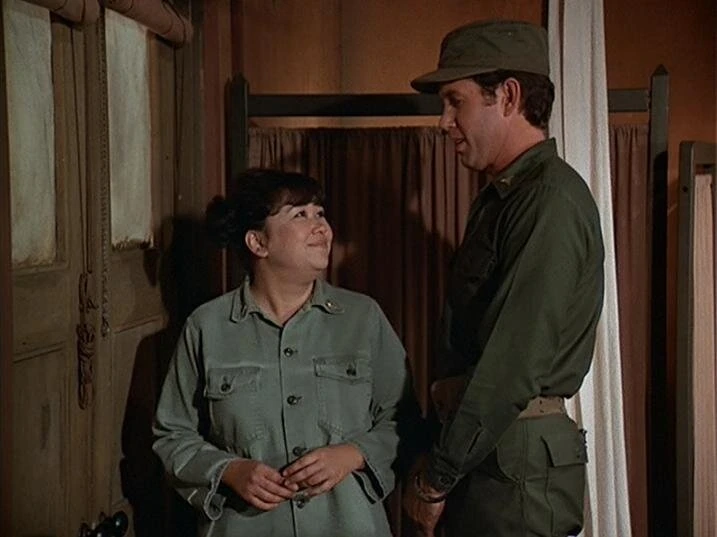
Nurse Kellye has a sharp exchange with Hawkeye in that episode, too. I love seeing a person who’s spent years at the edges of his field of vision get fed up with how little he’s bothered to see. You’re so used to following Hawkeye’s attention around the camp that the moment lands on the viewer as well. I’d seen her plenty. Had I been paying attention?
This is where a long-running series has an advantage. It can give an hour’s worth of the audience’s curiosity to a woman who has been walking past the center of the frame for years. You already know her face. Suddenly you want to hear what she thinks about the whole place.
The Christmas episode I’d watch again
“Death Takes a Holiday” has a Christmas party for children and a wounded soldier the doctors try to keep alive into the next day. They know somebody at home may have to spend every future Christmas remembering the date on the telegram. In the same episode, Charles gives chocolates anonymously and is furious when he learns they’ve been traded for food the children need.
I remember the little indignation in Charles more clearly than a lot of big speeches on television. Of course he thinks he chose the proper gift. Of course he’s offended when someone does something practical with it. And then he has to stand there with the knowledge that the children will eat. His own good intentions aren’t much use in telling him how to feel about that.
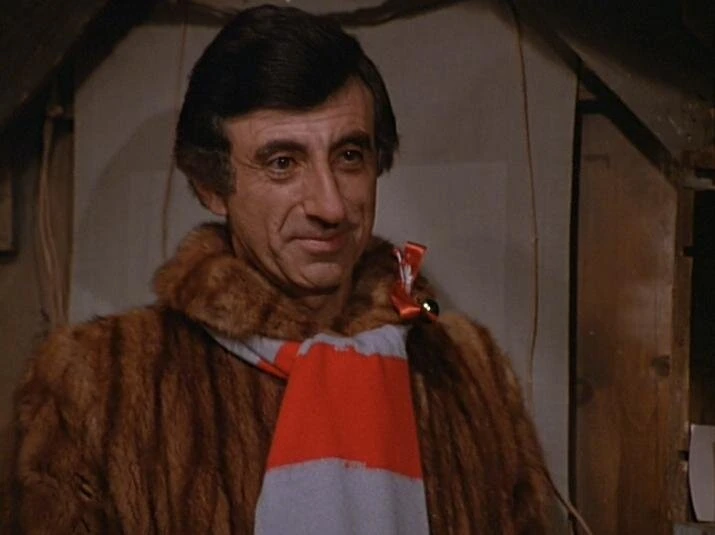
There’s a good reason the Christmas celebration and the doctors’ vigil belong in the same episode. Anyone who’s worked a holiday while other people are celebrating knows that the day can have two entirely different tempos. One room is trying to make things special for the kids. Down the way, somebody is willing the hands on the clock to move a little faster. People get through both rooms with whatever kindness they have handy.
If you go back for one ordinary-length episode before the finale, try this one. Watch how little Charles has to say when Klinger recognizes what he did. The show trusts you to notice how much a small gesture can cost a man who’d prefer everybody to think he does his best work alone.
Klinger at Radar’s desk
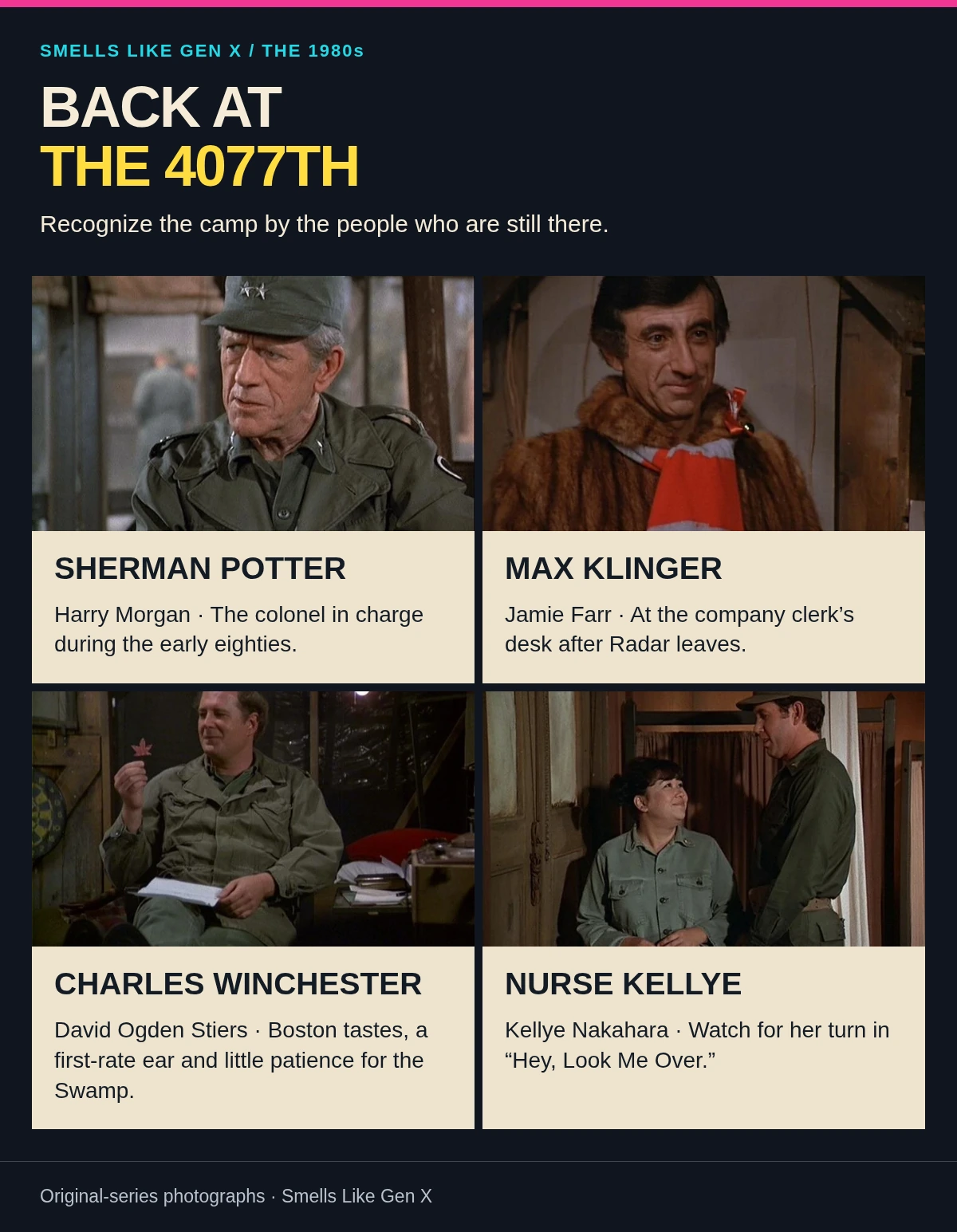
There’s a Klinger frozen in pop-culture memory who’s always standing there in a dress with a plan to get out of the Army. In the years we’re talking about, I also see him behind that desk, trying to get supplies, take messages and keep Potter from asking for something he’s already asked for. Jamie Farr got a lot of mileage out of both kinds of aggravation.
The desk gives Klinger an actual place in the operation. Anybody who’s worked with a really good receptionist, dispatcher or office manager knows how much the people with the fancy titles depend on the person who knows which number to dial. Put one of the surgeons on that phone and watch what happens when the other end says no. Klinger has spent years looking for a way around a rule. Turns out the camp has work for a person like that.
Then the last episode gives him a reason to stay in Korea. Soon-Lee, played by Rosalind Chao, is trying to find her family. Klinger marries her and stays to help. The man who spent a big chunk of the series trying to find the fastest way back to Toledo is the one willing to wait. I still enjoy the sight of him deciding that going home can take a while.
The guy from Boston had a good ear
Charles had expensive tastes and a first-rate opinion of his own ability. David Ogden Stiers could lift one eyebrow and remind you how miserable Charles was about being within hearing distance of Hawkeye. The show gave him one particular refuge. Put on a recording he loved and he could get a long way out of Korea without leaving the tent.
That makes his scenes with the Chinese musicians in “Goodbye, Farewell and Amen” especially hard to shake. He works with prisoners who play instruments, and music gives them a way to spend time together. Later he learns what happened to them. I remember the feeling of watching something he’d relied on for comfort become tied to a memory he couldn’t stand. You know the record won’t sound the same to him again.
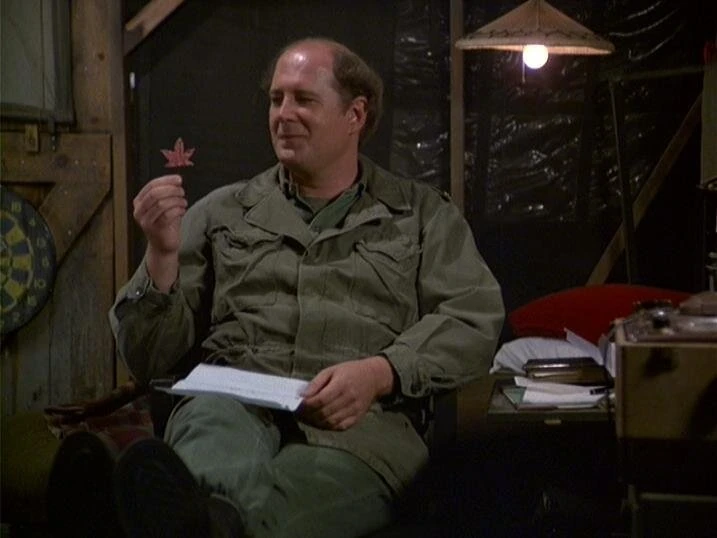
The late series earns that by letting Charles care about things without making him easy company all of a sudden. Watch him in the Christmas episode and in the finale. The neatest-looking man in camp has something to give in both, and other people still get to decide what becomes of it. I could watch Stiers work through that feeling for a whole scene.
The camp got quieter when it needed to
Sometimes a late episode would wander off in a direction you hadn’t signed up for when the helicopters came over the ridge. “Follies of the Living—Concerns of the Dead” follows a dead soldier as he moves around the camp. Klinger, sick and feverish, is the one who can see him. I love the choice of Klinger for that job. The poor guy has enough trouble convincing people he’s seeing what’s right in front of him on a good day.
“Where There’s a Will, There’s a War” puts Hawkeye in a dangerous forward position and gives him time to write a will. Think of the junk you’d leave a friend if you wanted them to remember something they said to you twenty years ago. The dollar value would be irrelevant. The whole point would be the look on their face when they recognized why you picked it.
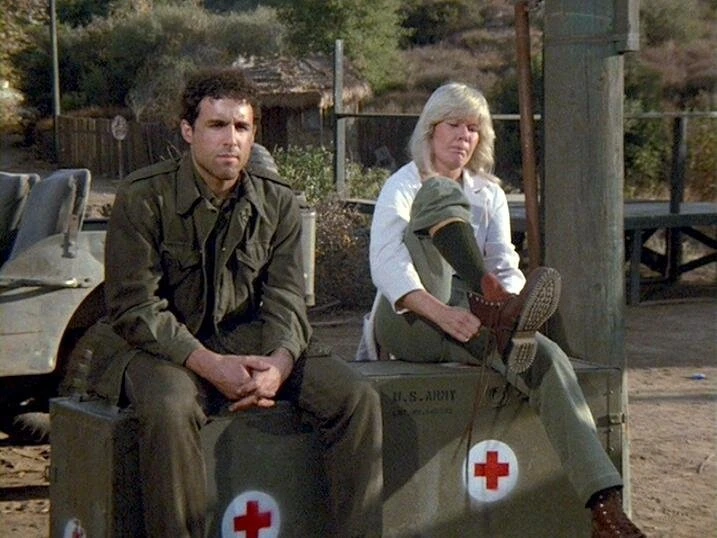
I wouldn’t call either one an especially relaxing half hour. I’m glad both could turn up in a show that would also let you watch a couple of grown men fuss about who touched their stuff. People don’t live at one temperature. I tend to remember the light episodes more fondly because I know what sort of day can come around next.
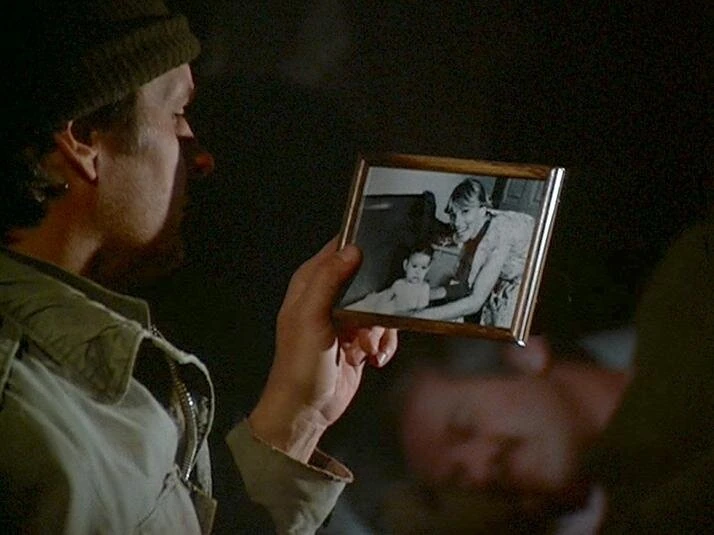
The remote was staying put
Our 1981 TV rankings have the 4077th in the same top five as Dallas, the Dukes, 60 Minutes and The Love Boat. That sounds about right as a snapshot of what could come out of one television. A fight over a Texas oil company could be a major event. An orange Charger could go through the air. Somebody with a microphone could make your dad tell you to stop talking. The television only needed one spot in the room to deliver all of it.
The year after that, the 1982 television lineup still gives you the feeling that the shows you knew were fighting for the same attention as all the new ones. M*A*S*H kept the advantage of familiarity. You didn’t have to catch every episode to know what it meant when Potter’s expression changed or Margaret said a name with a particular amount of emphasis.
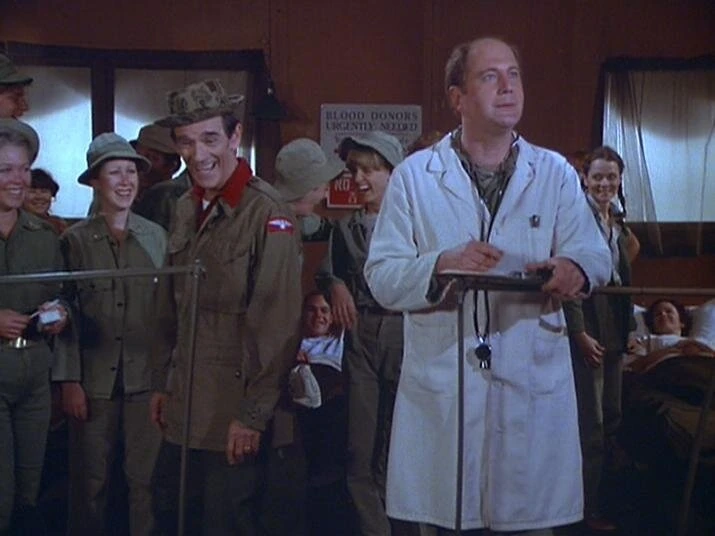
Today I can see a listing for “the finale” and put it on whenever I like. That’s handy. The old way had a peculiar excitement to it. You’d hear a certain episode was coming and make sure somebody knew you wanted that set. With the last M*A*S*H, the rest of the house probably knew without your help.
The week before goodbye
“As Time Goes By” aired the week before the finale. Margaret wants a time capsule. The people around her have different ideas about what should go into it. There’s something beautifully familiar about that. You can ask a roomful of people to put one memory in a box and spend the rest of the evening finding out how different their version of the same year was.
It’s a fine episode to put between an ordinary day at the camp and the big farewell. You’ve still got Margaret trying to get something done and Hawkeye supplying commentary. The job they’re doing gives them room to remember people the viewer may have missed for years. A baseball belongs to one kind of memory. A thing somebody wore to work belongs to another. I like the sight of those lives sharing a container.
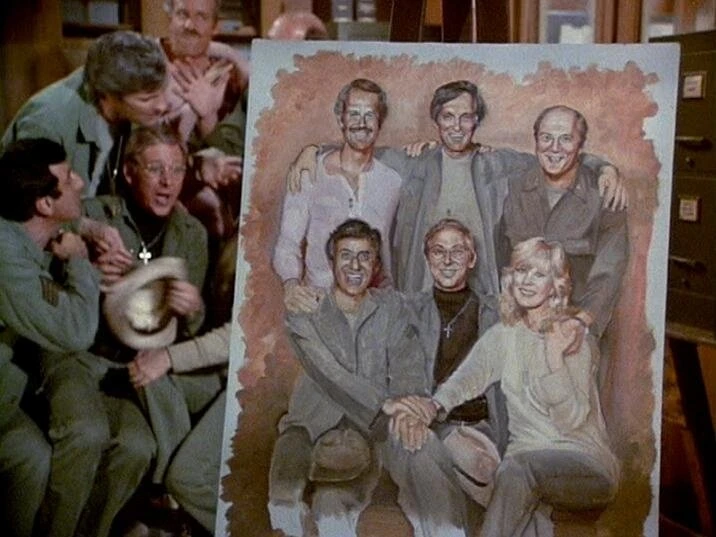
The show was nearing the end of an eleven-season run. On screen, the people in the camp were about to go back to a country where most people would have little idea what their days had looked like. A time capsule is a little corny and I’m entirely willing to go along with it. Somebody ought to remember the small stuff.
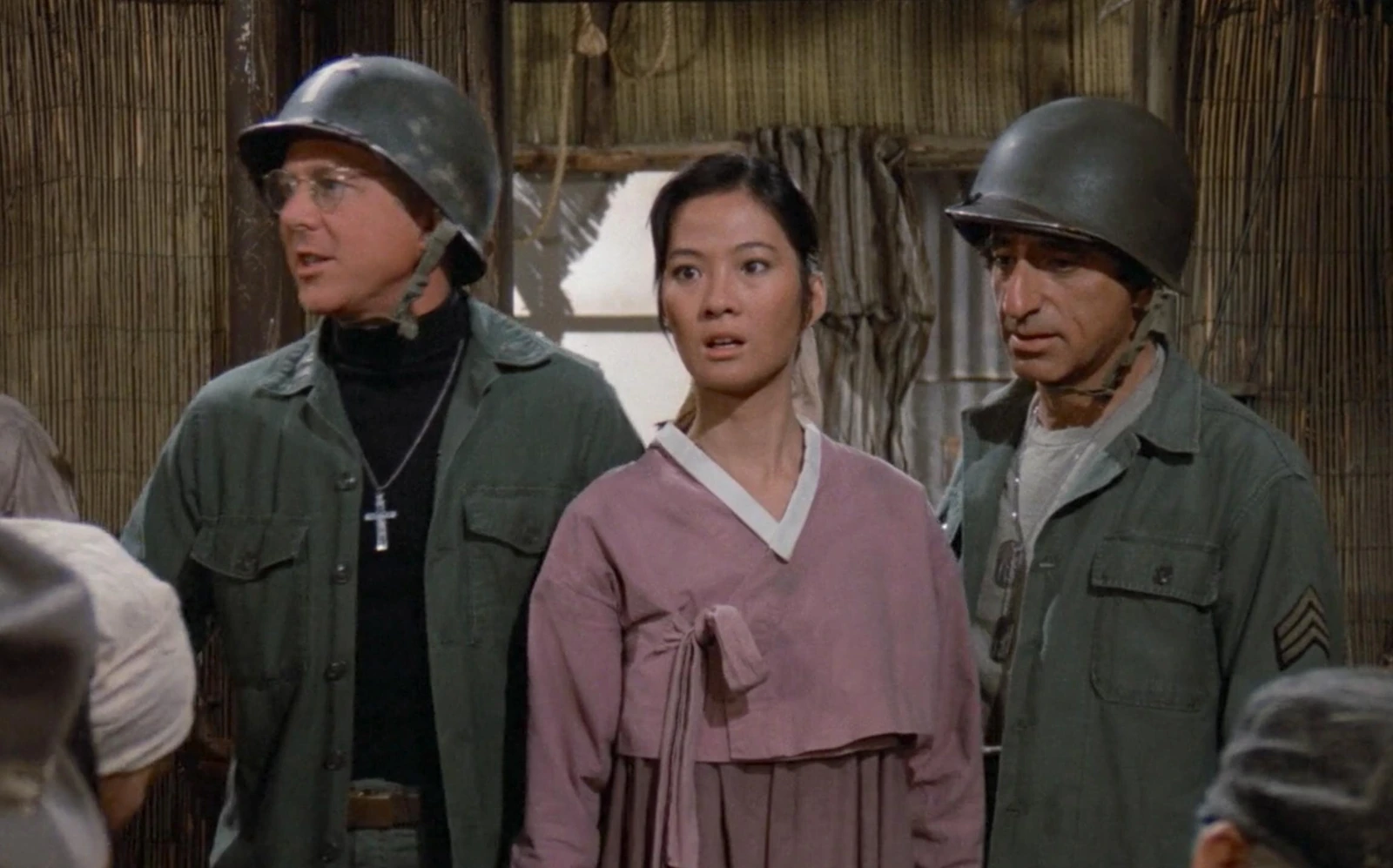
Goodbye was a whole night of television
The final broadcast was called “Goodbye, Farewell and Amen.” CBS aired it on a Monday, February 28, 1983. It took up two and a half hours on the schedule. More than 100 million people watched. The 1983 TV guide puts the rest of that season back around it, which helps if, like me, you can remember the final image more readily than what the network had on the next night.
It starts with Hawkeye away from the camp and trying to remember what happened on a bus. The awful memory that comes back takes the episode into territory that would have been hard to fit around one half hour of television. I remember wishing the first version of his story could be the right one. It’s a feeling the episode gives you before you know what you’re wishing away.
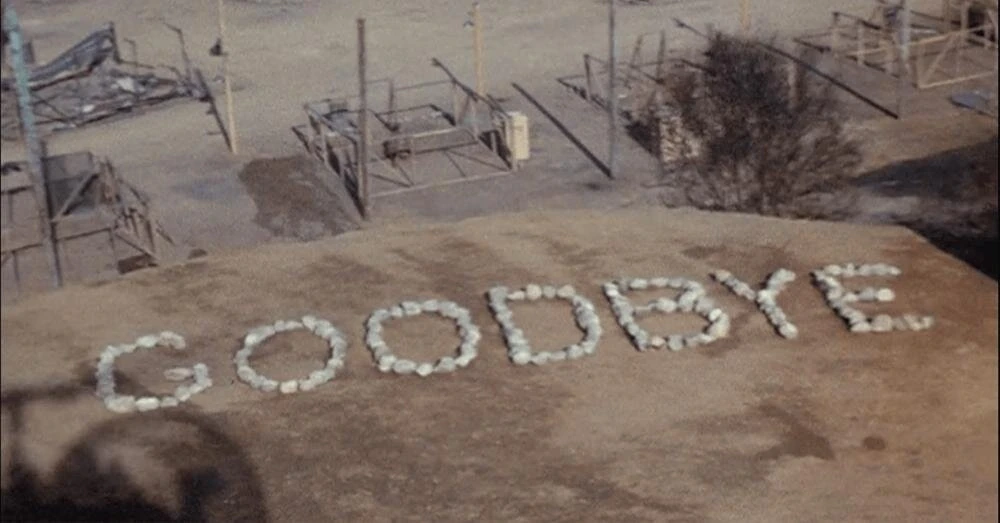
There are people packing, finishing work and figuring out how to leave. The war stops and the things they’ve been carrying take a little longer to put down. I’m glad there’s room for Potter and Margaret and Mulcahy to have their own farewells. After all the years of getting the camp through another day, everybody has a different thing to do with the last one.
Then Hawkeye looks down from a helicopter and sees what B.J. has left him on the ground. A whole friendship went by with these men trying to get around how they felt about saying goodbye. All B.J. needed at the end was a pile of rocks and a spot Hawkeye could see on the way out. It still gets me.
Three nights back at the 4077th
I’d start with “Death Takes a Holiday.” You get a good evening of the familiar group, and the Klinger and Charles exchange makes a nice reminder of how funny and gentle the show could be in the middle of a difficult job. The episode makes sense whether you’ve watched the preceding six or just happened on it after supper.
Next I’d put on “Hey, Look Me Over” and “As Time Goes By.” They’re from the final season and give Margaret a full evening’s worth of good material. You can see some of the people the camp counts on and spend time with the things they think are worth saving. Then give the finale its own night. That’s how it arrived the first time.
If you wind up watching an old Radar episode before any of those, I understand. There’s pleasure in changing the channel on purpose and winding up in a part of the camp you haven’t seen in a while. I still like it when the first thing I hear is that guitar.
Back at the 4077th
When did MASH end?
The original CBS series ended on February 28, 1983, with “Goodbye, Farewell and Amen.” The episode occupied a two-and-a-half-hour broadcast slot.
Was Radar still on MASH in the ’80s?
Radar’s two-part farewell aired in October 1979. Jamie Farr’s Klinger took over the company clerk’s duties. Both versions of the office were familiar to viewers watching reruns in the ’80s.
Which were the final three seasons?
Season nine began in fall 1980, season ten in fall 1981, and the shorter eleventh season in fall 1982. Episodes from season eight had also aired in early 1980.
What episode has the time capsule?
“As Time Goes By” aired February 21, 1983, a week before the finale.