The Golden Girls in the 80s: How Four Women Became a Ratings Force
Four women, one Miami house, and the sharpest table conversation on Saturday-night television.
By Gizmo
THE COMEBACKS.
THE COMPANY.

Inside This Article
- Cheesecake was optional. Having the last word was not.
- The house came with a spare room and a formidable landlord
- Dorothy’s face had already filed the complaint
- Rose had a story, and the exit was suddenly very far away
- Blanche treated desire as a renewable resource
- Sophia packed a purse and very little restraint
- Stan’s knock was never entirely good news
- A little romance exposed some very ordinary assumptions
- Jean came to visit. Rose had not read the situation.
- Blanche’s brother disturbed the family story she preferred
- Old friends did not always get a reassuring ending
- Dorothy was sick, and being told otherwise made it worse
- Frieda Claxton was not interested in becoming lovable
- Money was a subject the kitchen could not avoid
- The room could turn a game show into a family argument
- A charming actor was not a communal resource
- The table worked because nobody was simply the sensible one
- Saturday night did not mean a small audience
- The theme offered the thank-you the women rarely said aloud
- The awards had to make room for all four
- The welcome was sincere. Some of the jokes were less generous.
- The friendship was the life they were building now
- Questions Readers Ask
Cheesecake was optional. Having the last word was not.
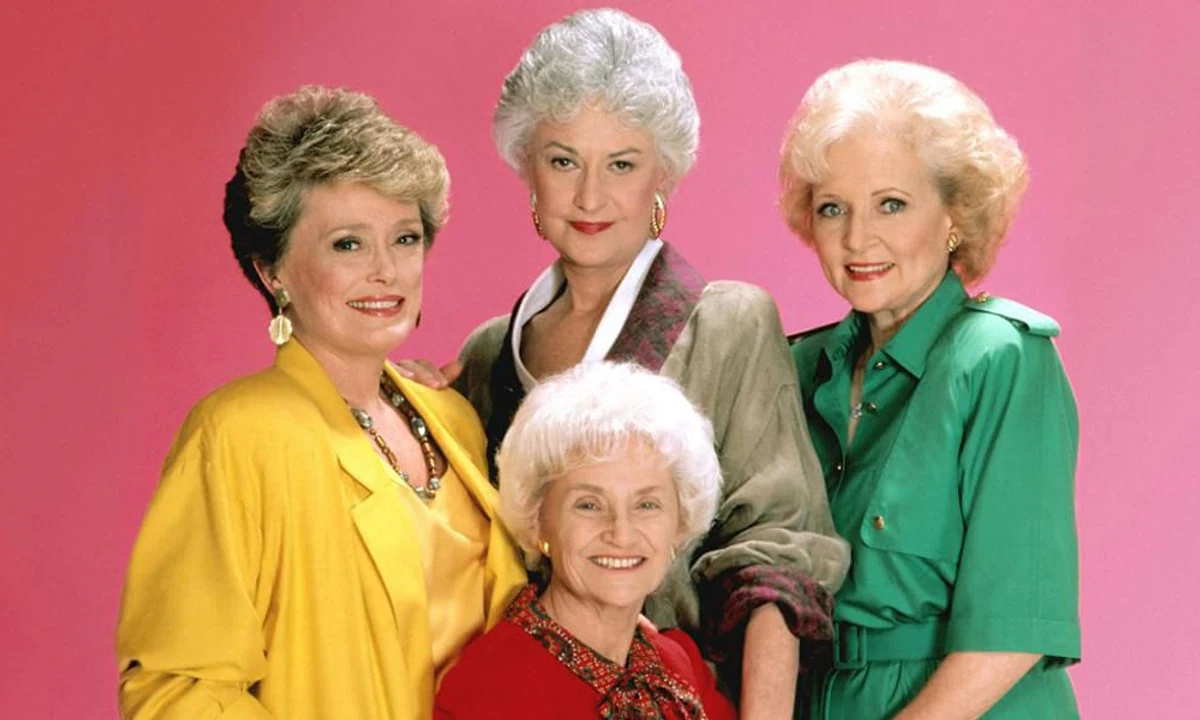
Dorothy Zbornak could stop a conversation without saying a thing. A look from Bea Arthur suggested that the speaker had reached a disappointing new frontier, and that Dorothy would appreciate a moment to consider how humanity had arrived there.
Unfortunately for Dorothy, she shared a house with Rose Nylund, Blanche Devereaux, and Sophia Petrillo. Silence was unlikely to become a permanent arrangement. Rose had a story. Blanche had a date. Sophia had already identified the insult most likely to improve the evening.
When The Golden Girls premiered on NBC on September 14, 1985, it gave four older women the sort of comic freedom television too often reserved for men who behaved badly in bars. They wanted money, sex, companionship, respect, and a little peace from the people currently offering advice. They were capable of generosity and astonishing pettiness, sometimes before the coffee had finished brewing.
The show became a major Saturday-night hit because its stars made those differences irresistible. Arthur’s slow burn, Betty White’s innocent certainty, Rue McClanahan’s luxuriant vanity, and Estelle Getty’s sharp little ambushes did not cancel one another out. They made the kitchen table a place where the next sentence might take the evening anywhere.
The eighties supplied the launch, the ratings climb, the early awards, and many of the stories that showed how much life remained beyond the age at which television usually started handing women grandmother roles. These women had no interest in quietly retiring from the business of wanting things. They did, however, have several opinions about what everyone else wanted.
The house came with a spare room and a formidable landlord
Blanche owned the Miami house, which gave the arrangement a practical beginning before friendship turned it into something larger. Dorothy and Rose needed somewhere to live. Blanche needed roommates. Financial necessity, that reliable matchmaker, introduced people who would not necessarily have selected one another as a first choice.
The pilot immediately threatens the arrangement through Blanche’s engagement. A new husband might mean a different household and no place for the women already living there. The question is domestic and emotional at once: how secure is a home when somebody else’s romantic decision can change its terms?
Sophia arrives after a fire at Shady Pines, carrying a purse, a history with Dorothy, and very little inclination to make the transition easy. Estelle Getty’s entrance changes the energy because the oldest person in the room is not the most easily managed. Dorothy has a mother again within conversational striking distance.
The pilot also includes Coco, a cook played by Charles Levin, who does not continue as a regular. The finished series finds its strongest arrangement among the four women themselves. They can provide conflicting advice, domestic labor, emotional support, and a remarkable quantity of obstruction without requiring an additional resident to organize the room.
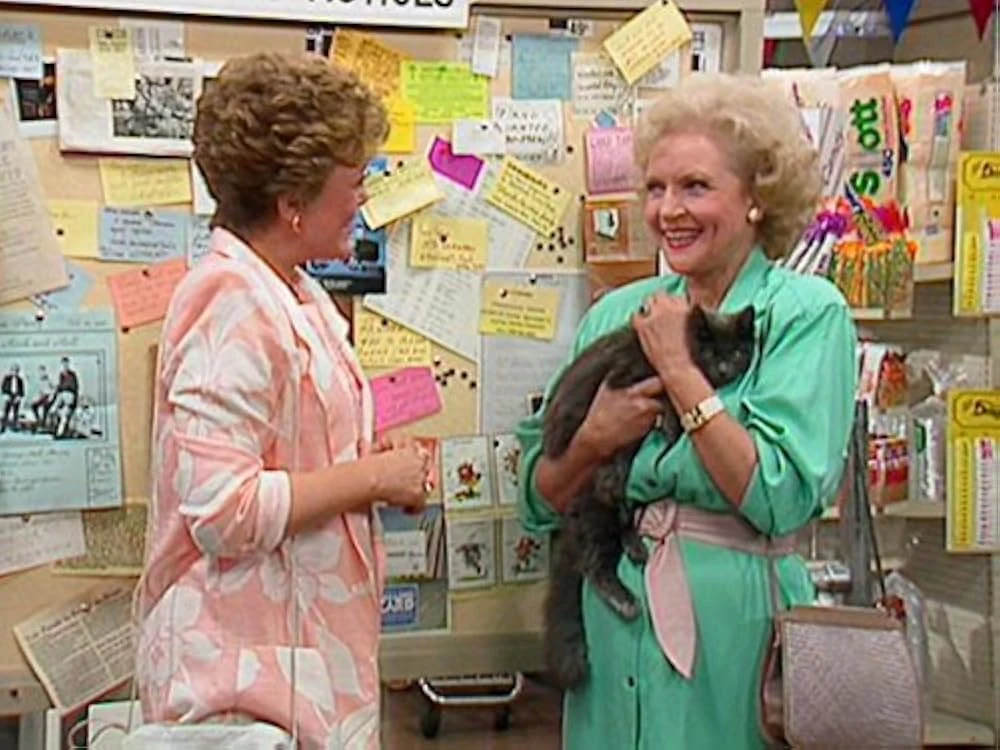
The later flashback “The Way We Met” revisits the beginnings through a grocery-store bulletin board and Blanche’s room advertisement. The memory is funny because the audience now knows the consequences. An ordinary search for housing has become a family, although nobody at the beginning has signed up for all the stories that will come with it.
The house never becomes a place without practical pressures. Rent, work, repairs, and living with people whose habits are not yours remain part of the comedy. The women’s friendship is stronger because it has to function in a shared kitchen rather than survive only through scheduled visits.
That setting distinguished the show from a cozy portrait of independent women enjoying leisure. Dorothy and Rose worked. Blanche had her own obligations. Sophia had already lived through a marriage, children, immigration, and loss. They were not four interchangeable retirees assigned to discuss the weather.
The result was one of the most inviting homes in 1980s television, partly because the welcome did not require constant harmony. You could belong there and still be told, at considerable volume, that your current plan was idiotic.
Dorothy’s face had already filed the complaint
Bea Arthur knew the value of allowing the audience to get there first. Dorothy would hear Rose’s explanation, absorb the implications, and let a pause spread across her face. The reply was often excellent. The pause had already done half the work.
Arthur brought the command audiences knew from Maude, but Dorothy was a different woman. She had a teacher’s impatience, a wounded romantic history, and a need for companionship that did not sit comfortably beside her ability to spot everyone’s faults. Knowing better is of limited comfort when your own life has not followed the better plan.
Her marriage to Stan had ended badly, leaving a store of resentment the series could draw on without inventing a new injury every week. Dorothy had invested years in a life that had not protected her from abandonment. Arthur let that history sharpen the jokes without turning the character into a permanent grievance.
She could be cruel, especially when the script reached too quickly for a joke about her looks or romantic prospects. The better writing allowed Dorothy to be desirable, amused, and vulnerable as well as formidable. A woman capable of recognizing nonsense is still entitled to want someone to call.
Her work as a teacher gave her authority outside the house. “Dorothy’s Prized Pupil” turns that role toward a painful encounter with immigration enforcement after a student’s achievement attracts attention. The episode asks more of Dorothy than delivering a sharp correction; she has to confront the limits of what her good intentions can protect.
Her relationship with Sophia supplies another limit. The woman who can intimidate a room remains a daughter whose mother remembers exactly where to press. Arthur often makes the reaction funnier by resisting the obvious explosion. Dorothy has heard this sort of thing before, which is hardly a reason to enjoy it now.
The performance is especially rewarding to revisit after years of television characters announcing every feeling. Arthur can make exasperation, hurt, and reluctant amusement pass through the same expression. The audience is trusted to read it.
Dorothy is the house’s most reliable skeptic, but the show needs her hope as much as her skepticism. She keeps trying: another relationship, another classroom, another effort to get through an evening without a story from St. Olaf. The last ambition has the poorest success rate.
Rose had a story, and the exit was suddenly very far away
Betty White’s Rose did not think she was interrupting the conversation. She believed she was helping it reach the correct destination, which happened to require a lengthy detour through Minnesota and several people whose names nobody else could comfortably repeat.
St. Olaf became a wonderfully elastic source of customs, relatives, animals, disasters, and civic pride. The other women could recognize an approaching story and still find themselves trapped inside it. White’s gift was making Rose’s certainty so complete that the absurdity seemed to belong to everyone else’s failure to understand.
The contrast with White’s earlier Sue Ann Nivens on The Mary Tyler Moore Show was a major part of the casting’s pleasure. Sue Ann could hide calculation beneath sweetness. Rose’s sweetness was more sincere, which let White find laughs in literal-mindedness and an apparently bottomless faith in unlikely explanations.
Rose was not invariably gentle. Competition could bring out an entirely different woman, particularly when a prize or some point of hometown pride was involved. The sudden fierceness worked because White did not treat it as a separate personality. Rose could be kind and still consider losing an unacceptable administrative error.
“Yokel Hero” turns St. Olaf pride into a practical problem when Dorothy and Blanche improve the account of her achievements for an award application. Their teasing familiarity with her stories becomes an invitation to embellish. Rose has to face the gap between the person she is and the much more impressive person her friends have submitted.
The character’s losses also keep the stories from becoming mere noise. She is a widow who remembers Charlie with love and carries a life the other women did not share. Some of the tales are ridiculous. The need to keep a connection to that earlier life is not.
“In a Bed of Rose’s” gives her a particularly alarming new experience when a boyfriend dies after spending the night with her. Rose’s fear that she brings disaster to the men she loves becomes more complicated when she discovers that this man was married. White has to play guilt, surprise, and wounded trust inside a premise that sounds like a very dark joke. Her sincerity keeps the story attached to Rose, rather than letting it become an elaborate excuse for everyone else’s bedroom comments.
White can let Rose seem bewildered without making her feelings less important. A misunderstanding may hurt her even when the audience understands why it happened. That vulnerability gives the house a reason to soften after a particularly sharp exchange.
The temptation is to call Rose the innocent one and stop there. The performance is more entertaining than that label. She can be stubborn, proud, competitive, and unexpectedly practical. The other women underestimate her often enough to make the next surprise enjoyable. A person with this much experience telling a story is not necessarily easy to interrupt.
Blanche treated desire as a renewable resource
Rue McClanahan made Blanche’s vanity wonderfully active. She did not simply believe she was attractive. She arranged the room around the proposition, improved a story to support it, and expressed polite astonishment when someone failed to reach the expected conclusion.
The Southern accent gave the performance a musical generosity. Blanche could stretch a phrase, luxuriate in an implication, or turn a small recollection into an event requiring the others’ full attention. Her confidence made even a disappointing date sound like a chapter in a much larger romantic history.
That confidence was also fragile. Age, family judgment, competition, and the possibility of being overlooked could shake it quickly. McClanahan found the worry beneath the display without treating the display as worthless. Blanche enjoyed herself, and the audience was allowed to enjoy her enjoying herself.
“Blanche and the Younger Man” uses a date with an aerobics instructor to bring the age question into an ordinary social situation. The character wants to remain desirable on her own terms. The evening has its own ideas about those terms.
“End of the Curse” begins with a pregnancy fear and moves into Blanche’s distress over menopause. The episode’s strength lies in recognizing that her concern is about identity as much as biology. A woman who has made desirability central to her self-image has to imagine a future she initially interprets as a loss.
The show does not require Blanche to become less interested in sex to grow as a person. It asks her to recognize how much of her confidence depends on the reaction of other people. McClanahan can make that recognition funny and bruising without turning the character into a moral lesson about vanity.
Blanche’s ownership of the house also complicates her place among the women. She can imagine herself as generous hostess and still want the other residents out of the way when a date is expected. Shared living has introduced an inconvenient committee into her private affairs.
The performance mattered because older female desire was so often presented as an embarrassment or a quick joke. Blanche was funny, sometimes embarrassing, and very much the person pursuing the story. She was not waiting at the edge of somebody younger’s romance. She had an evening planned, and she would appreciate everyone treating it with the appropriate seriousness.
Sophia packed a purse and very little restraint
Estelle Getty gave Sophia the advantage of looking as though she might need assistance just before making it clear that everyone else needed protection. The small frame, glasses, and ever-present purse set up an expectation the dialogue could demolish.
Sophia’s stories about Sicily were a different weapon from Rose’s St. Olaf excursions. Rose generally wanted to contribute. Sophia often knew exactly how the story would position her in the argument. She had a past available and was prepared to deploy it selectively.
The purse became a wonderful piece of physical continuity. It gave Getty something to carry, hold, and gather around herself when the conversation moved on. Sophia seemed ready to leave, settle in, or inspect a situation without surrendering ownership of her immediate territory.
The scripts originally linked some of her bluntness to a past stroke, but the character quickly grew beyond an explanation for saying outrageous things. She was a mother, widow, friend, and occasional romantic participant. The insult was often only the visible part of a longer feeling.
Her arguments with Dorothy worked because Getty and Arthur played different kinds of power. Dorothy had size, command, and the responsibility of dealing with the latest complication. Sophia had history and the knowledge that parental authority does not disappear merely because the child has grown into Bea Arthur.
Nancy Walker’s Angela, Sophia’s sister, added another person able to reopen old grievances. “The Sisters” and “Long Day’s Journey into Marinara” make family history feel less like a comforting album than a collection of unfinished disputes. Years apart have apparently given both women time to prepare additional material.
Sophia could also be selfish, manipulative, or thoughtless. The show was better for not pretending age had purified her. Living a long time may supply experience. It does not ensure that every use of that experience will improve everybody else’s afternoon.
Getty’s supporting-actress Emmy in 1988 recognized a character who could steal a scene with very little dialogue. The best thefts were not always the insults. Sometimes Sophia’s face revealed a concern she would rather conceal, and the audience saw the affection before Dorothy was allowed to hear it. That small gap made the mother-daughter comedy more than an exchange of ammunition.
Stan’s knock was never entirely good news
Herb Edelman’s Stan Zbornak brought Dorothy’s past through the front door wearing the air of a man who hoped the latest explanation would work better than the previous one. A familiar greeting could make her face close before he reached the request.
Edelman understood that Stan needed a certain pathetic appeal. Make him entirely hateful and Dorothy’s occasional softness becomes foolish. Make him charming enough and the original hurt loses its force. He sits awkwardly between the two: selfish, needy, familiar, and occasionally capable of being the person she once loved.
“Stan’s Return” comes early in the first season, so the series does not preserve him as an abstract villain from a marriage viewers never saw. He is an actual nuisance who can visit. Dorothy has to respond to the person rather than simply finish a speech about what he did.
Money keeps the relationship attached to practical consequences. “The Audit” gives Dorothy and Stan a tax problem that refuses to respect the emotional convenience of divorce. Separating a household does not necessarily separate every piece of paperwork the household has generated.
“The Stan Who Came to Dinner” turns illness and hospitality into another test. The women have good reason to care and equally good reason to suspect that caring will become a larger commitment than anyone intended. Stan’s need has a habit of expanding to fit the available room.
The relationship also lets Arthur move beyond the performance of righteous anger. Dorothy knows him too well for every encounter to be simple. An old kindness can interrupt a current judgment. Familiarity can feel comforting even when the person providing it is a poor candidate for renewed trust.
That confusion becomes especially clear when Stan prepares to marry again in 1989 and supports Dorothy during a frightening time with Sophia. The show lets her feel something she would prefer not to feel. The other women can see the danger without making the feeling itself ridiculous.
Stan is funny because he keeps arriving with another plan. He matters because Dorothy’s history cannot be made tidy simply by delivering a better insult. The marriage ended, but the years inside it still belong to her. Edelman and Arthur make those years visible in the uncomfortable space between knowing someone and knowing better.
A little romance exposed some very ordinary assumptions
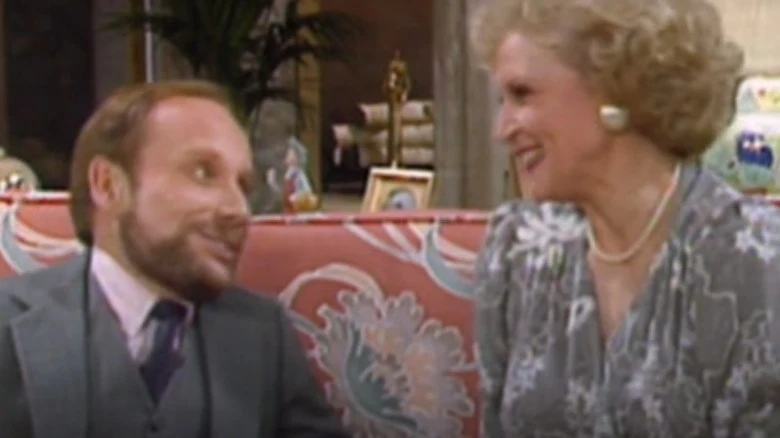
In “A Little Romance,” Rose dates Dr. Jonathan Newman, played by Brent Collins. She is reluctant to tell her housemates that he is a little person, fearing their response. The situation gives the comedy a clear target: the awkwardness and assumptions of the people meeting him.
Blanche’s embarrassment is particularly useful because McClanahan can make an attempt at graciousness grow steadily worse. The more determined Blanche becomes to behave normally, the more obviously she reveals that she has decided the situation is extraordinary.
Collins gives Jonathan a composure that lets the others expose themselves. He does not need to perform distress to make their behavior uncomfortable. He can recognize the problem, answer it, and remain a person with his own judgment about the people in the room.
The episode is not free of jokes rooted in the era’s habits. Some of the comedy depends heavily on surprise and difference, and modern viewers may find particular choices less comfortable than the intended message. The stronger material makes the others’ behavior the spectacle, rather than treating Jonathan as a prop.
Rose’s anxiety also reveals something about friendship. Knowing people are kind does not guarantee that they will handle every unfamiliar situation well. She wants the relationship to be hers before it becomes a household discussion. Living with Blanche and Dorothy makes that a difficult boundary to maintain.
The story’s later turn prevents a simple conclusion in which Rose has completed a lesson and receives a romance as a reward. Jonathan has preferences and family concerns of his own. The relationship cannot be explained entirely through the housemates’ reactions to his height.
That is a useful early example of what the series could do when a guest character had enough independence. The women encounter someone whose presence reveals their habits, then discover that the person has a life beyond helping them understand themselves.
The episode belongs to December 1985, only a few months into the run. The show was already testing how far its broad comedy could travel into a social discomfort and return with something more than a reassuring speech. The result is uneven in places, but its best exchanges depend on a very familiar human problem: trying so hard not to be awkward that the effort becomes the awkwardness.
Jean came to visit. Rose had not read the situation.
“Isn’t It Romantic?” brings Dorothy’s friend Jean, played by Lois Nettleton, into the house. Jean is a lesbian, and she develops feelings for Rose. The story uses the difference between what Dorothy understands and what the others assume, but it gives Jean feelings more substantial than a misunderstanding.
Nettleton plays the attraction with quiet vulnerability. Jean has suffered a loss and finds herself drawn to someone kind. That is an emotional situation the series understands well, regardless of whether Rose is equipped to recognize what is happening.
Betty White’s performance lets Rose be unaware without making her response malicious. Once she understands, the scene does not need her to become an expert in someone else’s life. Kindness is available before perfect understanding, a point the episode makes most effectively when it stops trying to explain itself.
Blanche supplies an entirely different reaction. McClanahan finds comedy in the possibility that another woman’s preference has somehow failed to include her. The vanity is so complete that it redirects a serious conversation toward Blanche’s need to be considered attractive. It is a joke rooted firmly in the character rather than in Jean’s dignity.
Dorothy’s handling of the visit also has complications. She knows her friend and knows her housemates, yet still attempts to manage information in ways that create additional awkwardness. Intelligence does not exempt her from deciding she can arrange other people’s emotional lives.
The episode aired in November 1986, when such a story on a major network carried a different context from a present-day rerun. It should not be called television’s first sympathetic lesbian portrayal; that would erase earlier work. Its importance lies in how recognizably it fits this particular house and these particular women.
Jean is welcomed as Dorothy’s friend, becomes emotionally exposed, and receives a response the audience can recognize as humane. The comedy continues around her without requiring her to become a punch line merely for wanting someone.
That balance helps explain the show’s lasting connection with LGBTQ audiences. The women’s household already offered a form of family built through choice and mutual reliance. This episode lets that house make room for another person’s desire without pretending that all the residents have suddenly become perfectly enlightened hosts.
Blanche’s brother disturbed the family story she preferred
“Scared Straight,” from 1988, gives Blanche a different encounter with sexuality through her brother Clayton, played by Monte Markham. He is afraid to tell her he is gay. The situation becomes tangled through a claim involving Rose, whose innocence provides cover for a conversation Clayton has been avoiding.
The important conflict is not whether Blanche can continue making jokes. It is whether she can see her brother clearly when his life contradicts the version she has assumed. Family pride can look generous while requiring the family to behave according to a script nobody remembers approving.
McClanahan is especially good at letting Blanche’s self-assurance become a defense. A woman who believes herself broad-minded may still recoil when the issue enters her own family. The show gives her room to be wrong rather than treating her earlier sophistication as an automatic qualification.
Clayton’s fear also gives the deception a purpose beyond a farcical arrangement. He wants to preserve a relationship that matters to him. A lie may be foolish and still come from a reasonable fear about what the truth will cost.
The housemates bring different responses to the problem, which is part of the show’s strength on social questions. The four women do not become a single committee delivering the approved answer. Their histories and blind spots remain visible.
The episode’s later continuation belongs to the nineties and should not be silently imported into the eighties story. Here, the focus is the first difficult admission and Blanche’s reaction to it. The relationship still has somewhere to go.
Placed beside “Isn’t It Romantic?,” the story shows the advantage of returning to a subject through different characters. Jean’s visit and Clayton’s disclosure do not create the same emotional stakes. One involves hospitality, attraction, and grief; the other asks what love inside an existing family will accept.
The series did not always handle these matters with equal subtlety. Its willingness to let the women’s shortcomings become part of the problem, however, gave the better episodes more force. An affectionate character can hold a prejudice. Watching her face it is more interesting than being told that everybody in a beloved sitcom house has always known better.
Old friends did not always get a reassuring ending
“Old Friends” begins the third season in 1987 with Sophia befriending Alvin, played by Joe Seneca. Their conversations on a bench give Getty a different pace from the kitchen’s quick insults. Sophia can sit, listen, become interested, and look forward to seeing someone again.
Alvin has Alzheimer’s disease, and the friendship becomes painful as Sophia encounters its effects. The story does not require a long medical explanation to make the loss understandable. What matters is the changing reliability of a relationship she has begun to value.
Seneca’s performance gives Alvin presence beyond the diagnosis. He has humor and habits, and Sophia responds to him as a person. The episode needs that connection first. Without it, the story would be an announcement about an issue rather than the disruption of a friendship.
Getty lets Sophia’s concern emerge without stripping away her familiar manner. She can be blunt and impatient while also frightened by something she cannot control. Age has supplied experience with loss, not immunity to another one.
The bench is a useful setting because it changes what viewers are watching for. There is no household traffic to keep the scene moving, no immediate task to complete. A visit has value because the person arrives. When that expectation becomes uncertain, the absence can carry the scene.
The episode pairs this material with Rose’s attempt to retrieve her teddy bear from a determined young Sunshine Cadet. The contrast is large: one plot concerns memory and decline, the other a familiar object and an unexpectedly ruthless negotiation. Some viewers may find the tonal movement abrupt.
Yet the pairing also reflects the series’ view of a household. A serious problem does not cause every other person’s day to stop. Someone can be suffering while someone else is furious about a teddy bear. The show’s world remains comic without requiring the suffering to become small.
“Old Friends” is one of the clearest reasons not to remember Sophia only through her most quotable insults. Getty could make the woman behind them visible. The episode gives her a friendship outside the family and allows that friendship to hurt. The kitchen will still be there afterward, but it cannot fix everything that happens away from the table.
Dorothy was sick, and being told otherwise made it worse

The two-part “Sick and Tired,” broadcast in September 1989, begins with a problem Dorothy cannot solve through intelligence or force of personality. She feels profoundly unwell. Doctors fail to identify an explanation, and one of them treats her distress as though the failure belongs to her.
Arthur’s authority makes the dismissal particularly unsettling. This is a woman accustomed to making herself heard. The usual tools—clarity, skepticism, a formidable expression—do not secure the response she needs. She is placed in the position of having to persuade someone that her own experience is real.
The eventual diagnosis of chronic fatigue syndrome gives the story an answer, but the emotional climax concerns the earlier treatment. Dorothy later confronts the doctor who dismissed her. The anger is specific: uncertainty did not require contempt.
The language around the illness reflects 1989. The doctor’s dismissive manner is easier to recognize across the years: he has turned his own uncertainty into a verdict on the person asking for help. It is an ugly reversal of authority, and Arthur makes the humiliation visible before Dorothy finds the words to answer it.
Sophia’s presence is important because Dorothy is not facing the experience entirely alone. Their familiar relationship allows concern to exist beneath the ordinary irritations. A mother who spends much of the series undermining her daughter’s dignity can still be the person determined that someone take her seriously.
The second plot gives Blanche an attempt at writing a novel that becomes an exhausting comic ordeal. McClanahan’s increasingly disordered state supplies a very different sort of fatigue. The contrast could have trivialized Dorothy’s story, but the actors’ distinct performances keep the two tracks from feeling interchangeable.
The show asks viewers to move between an absurd creative marathon and an illness that is not a joke. That flexibility was part of its ambition. It could make room for an adult problem without pretending that the other women had ceased to be funny.
The fifth season continued into 1990, but “Sick and Tired” belongs to the final months of the eighties. It closes this period with one of Dorothy’s strongest stories: a woman who has supplied endless answers for other people trying, with difficulty, to obtain an answer for herself.
Frieda Claxton was not interested in becoming lovable
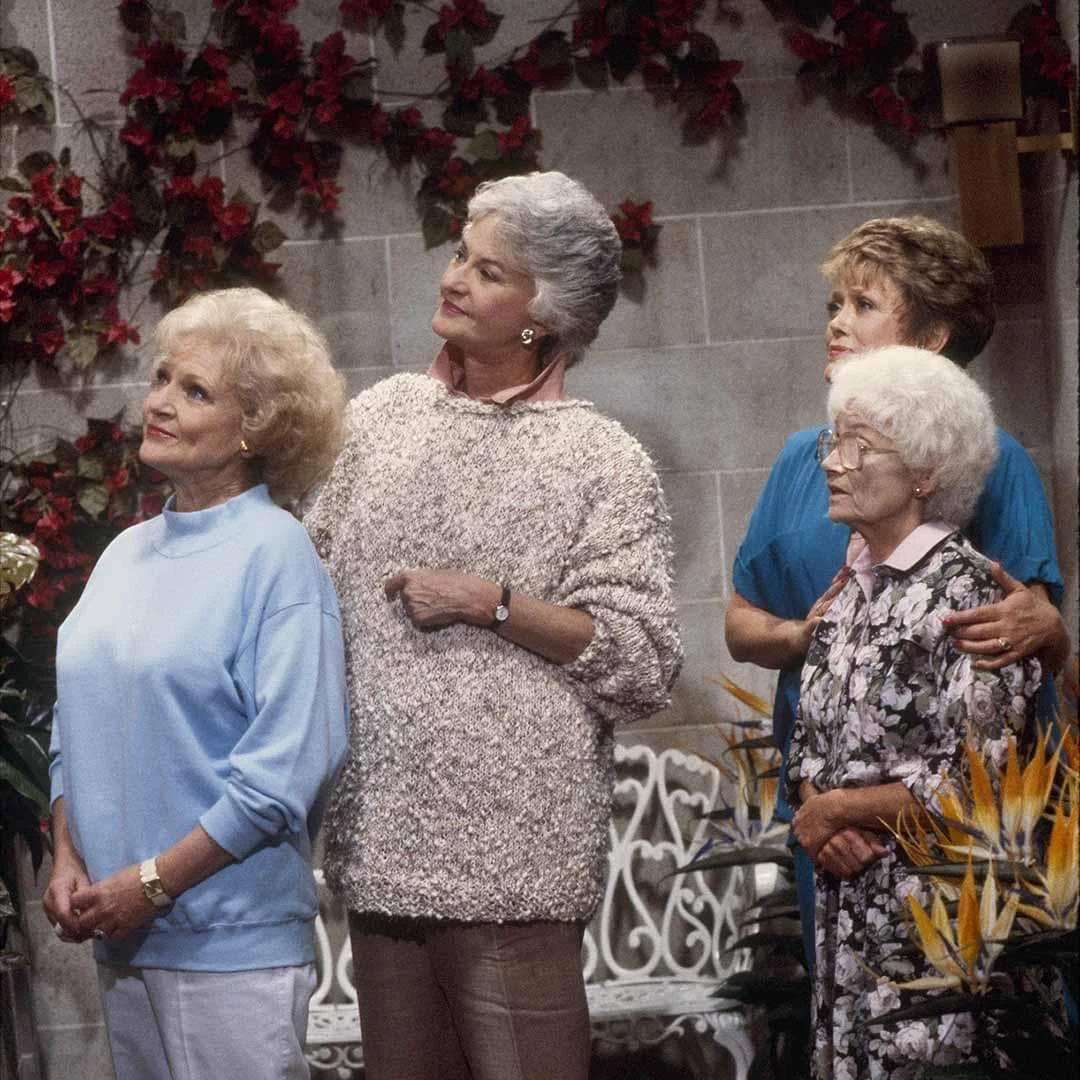
“It’s a Miserable Life” gives Rose someone unusually resistant to her belief in human goodness. Frieda Claxton, played by Nan Martin, objects to the effort to save an old tree on her property. She is rude, hostile, and apparently quite content with the arrangement.
The confrontation leads to Claxton’s sudden death, leaving Rose with guilt as well as unfinished civic business. The episode then does something less reassuring than a conventional story about a misunderstood older neighbor. It allows the possibility that a person really has spent a great deal of time making other people miserable.
White’s discomfort is the useful center. Rose wants to find evidence of kindness because kindness is part of how she understands the world. Accepting that she may not find it requires more than hearing Dorothy supply a sensible conclusion.
The funeral becomes a darkly comic search for something generous to say. A promising arrival briefly seems to offer the warm memory the occasion needs, until the apparent rescue proves to be another misunderstanding. The show keeps taking the comforting explanation away.
That refusal gives the episode its bite. Old age is not a guarantee of wisdom, secret sweetness, or a history everybody will be grateful to discover. The central quartet themselves are more interesting because their years have not cured vanity, impatience, or selfishness. Claxton represents a much harsher possibility.
The comedy also belongs to the awkward social work of funerals: people trying to perform respect when their actual memories make cooperation difficult. The room needs a story it can agree to tell. The available evidence keeps interrupting.
The episode’s warmth comes less from redeeming Claxton than from the women continuing to help Rose through her response. They can disagree with her interpretation and still recognize that she is upset. Friendship does not require everyone to share the same conclusion about a difficult neighbor.
It is a useful counterweight to the show’s more reassuring evenings. This house does not always discover that everybody is lovely underneath. Sometimes the lesson is simply that people differ, an unpleasant person has died, and the living still have to decide how they want to treat one another afterward.
Money was a subject the kitchen could not avoid
The women’s living arrangement offered companionship, but it also answered an economic question. Maintaining separate homes is expensive. Losing a spouse, ending a marriage, or reaching an uncertain stage of working life can change what independence costs.
“Job Hunting” makes Rose’s employment problem an early story rather than assuming that a pleasant Miami house guarantees comfortable finances. She loses her position and struggles to find another. Her optimism does not make the search simple, and her friends cannot solve it merely by praising her character.
White gives the disappointment a quieter register than Rose’s usual confusion. A person who has skills and experience can still be treated as though she has become less useful. The show lets that humiliation enter the house without making it the only thing Rose is.
Dorothy’s work as a substitute teacher supplied another form of uncertainty. Her intelligence and professional pride did not place her above practical worry. Blanche’s ownership gave her advantages the other women did not share. Sophia’s security depended partly on family and a shared household.
Those differences were useful. The series could present the women as a unit without pretending they had identical resources. A financial decision might mean something different to the landlord, the roommate, and the person whose daughter was already managing part of her life.
“Brother, Can You Spare That Jacket?” sends a search for a winning lottery ticket toward a homeless shelter. The episode’s moral direction becomes more explicit than the show’s most relaxed comedy. Its underlying observation is still sharp: the women’s concern about money exists near people whose insecurity has become much more severe.
The story risks using other people’s hardship as a lesson for familiar characters, a familiar problem in sitcom issue episodes. It is strongest when the encounter interrupts the women’s assumptions rather than simply arranging for them to demonstrate generosity.
The money stories also help explain the show’s emotional appeal. Friendship is not only an agreeable feeling here. It is a practical resource, a way of surviving a difficult month or avoiding complete isolation when something goes wrong. That does not make every financial problem easy. It makes the kitchen table somewhere a problem can at least be spoken aloud.
The room could turn a game show into a family argument
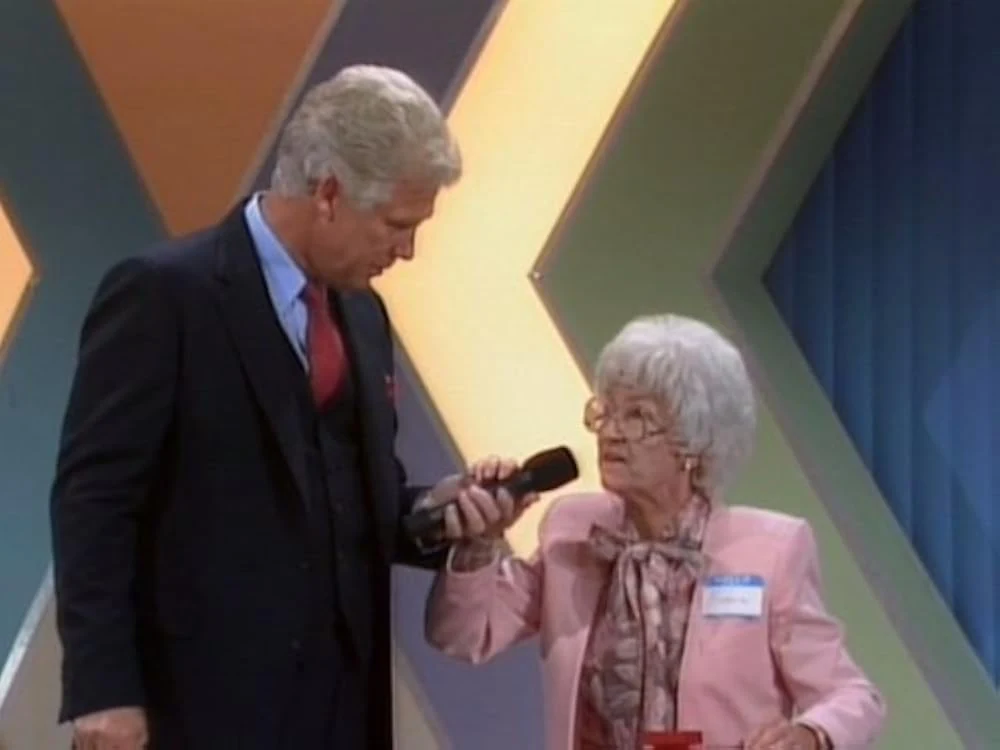
“Grab That Dough” takes the women to Hollywood in 1988 and gives their familiar disagreements a louder setting. There are travel frustrations, missing comforts, a television studio, and the promise of money. The friendship enters a system designed to make people competitive.
The episode is enjoyable partly because the women know how game shows are supposed to feel. A trip to television ought to be glamorous, efficient, and rewarding. Arriving as actual participants reveals less flattering possibilities. The cheerful surface does not necessarily extend backstage.
Getty’s Sophia is particularly well equipped for a format that rewards quick responses while encouraging people to remain pleasant. Her relationship with pleasantness has always been negotiable. A host can invite an answer without controlling the form in which it arrives.
Rose’s competitiveness, Blanche’s expectations, and Dorothy’s impatience all become useful in the new environment. The show does not need to invent substitute personalities because the group has left the house. It simply gives their established habits a different machine to jam.
That is a good test of an ensemble comedy. If the characters remain funny only at their assigned table, the furniture may be doing too much work. Here, the women carry their relationships into the studio and quickly discover fresh ways to irritate one another.
Other departures from the house do similar work. A local play, a political campaign, or a trip can reveal what each woman expects from the world. The larger setting matters because it puts those expectations in public, where the others cannot always repair the damage privately.
The game-show story does not carry the emotional weight of “Old Friends” or “Sick and Tired.” It should not have to. The series needed nights when the main ambition was to put very funny performers inside a clear, escalating inconvenience and let them compete.
The balance is part of the appeal. A household capable of confronting illness and loneliness is still allowed to have a thoroughly annoying holiday. The women deserve an adventure, even when the adventure turns out to involve the sort of organizational competence that makes staying home look like a luxury package.
A charming actor was not a communal resource
“The Actor” offers the women a different kind of competition in 1987. A visiting performer, played by Lloyd Bochner, pursues Dorothy, Rose, and Blanche separately. Each woman has reason to think she has been singled out. The actor has been rather less selective than advertised.
The premise lets the show make vanity specific. Blanche expects admiration and considers the attention plausible. Dorothy’s feelings involve a different vulnerability. Rose approaches the encounter with her own mixture of openness and misplaced confidence. One smooth man has entered three different stories about what the evening means.
Bochner’s polish is important. The character needs enough appeal to make the attention believable and enough calculation to make the exposure satisfying. If he were obviously absurd from the beginning, the women would have to become foolish merely to keep the plot alive.
The theatrical setting also gives Arthur room to make Dorothy’s love of performance visible. Her cultural interests are not just ammunition against Rose. She can admire talent, want to participate, and hope an attractive person has noticed something in her beyond a sharp response.
McClanahan can turn Blanche’s certainty into a comic trap. The same confidence that makes her enjoyable also makes her reluctant to consider that someone is using a familiar line on more than one available listener. A woman proud of her experience can still be fooled by the version of events she prefers.
The friendship becomes the useful fact the actor has underestimated. The women may compete and conceal things, but they also compare notes. Living together introduces an inconvenient intelligence service into his romantic itinerary.
The story fits the show’s larger treatment of desire. Wanting romance does not make the women ridiculous. The ridiculousness comes from vanity, deception, and the attempt to manage what everyone else knows. Those are comic habits available at any age.
It is also a welcome reminder that the series could put its stars inside a well-built farce without attaching a major social argument. A man tells several women what each wants to hear. The women discover the arrangement. The audience gets the pleasure of watching a polished performance encounter a much more experienced ensemble.
The table worked because nobody was simply the sensible one
A weaker version of the show would have assigned one woman permanent wisdom and let the other three supply the mistakes. Dorothy often appears best qualified for the job, which makes it especially useful when the writing remembers her pride, impatience, and romantic blind spots.
Rose can be naïve and still recognize a hurt the others have missed. Blanche can be self-absorbed and still offer generous support. Sophia can be outrageous and still see the practical answer. The women exchange authority depending on whose experience fits the problem.
That movement keeps the kitchen scenes alive. The audience knows the habits but cannot always predict who will be right. A St. Olaf story might be irrelevant or might eventually contain the point. Dorothy’s interruption can be deserved and premature at the same time.
The actors also give the table four different speeds. Arthur can stretch a pause. White can proceed with serene confidence. McClanahan can make an account feel deliciously expansive. Getty can arrive with the short line that collapses the whole arrangement.
The writing needs those differences more than it needs a new location. A relatively simple problem can become several minutes of excellent comedy because each woman hears a different invitation in it. One hears a chance to advise. Another hears a chance to tell a story about herself.
The food helps the scenes feel lived rather than formally assembled. Coffee and cheesecake give hands something to do and suggest a reason to remain after the practical business has ended. People often talk more freely once the conversation appears to have become incidental.
The house’s comfort is therefore inseparable from its friction. A permanent agreement would silence the particular qualities that make the women good company. They need enough trust to argue without turning every disagreement into a referendum on whether the household should exist.
This is why the show belongs beside the best 1980s ensemble sitcoms, even though its setting is domestic. Like Cheers, it finds a family among people with different histories who keep returning to the same room. The invitation is warm. The conversation is not required to be gentle.
Saturday night did not mean a small audience
The Golden Girls became a major hit on Saturdays, a fact that now requires a little imagination for viewers accustomed to a very different network weekend. In the eighties, Saturday could still be a powerful night for a regular series rather than a place to leave something nobody expected to discuss.
The first season finished seventh in the 1985–86 Nielsen rankings. The show rose to fifth in the 1986–87 season and fourth in the 1987–88 season. In 1988–89, it remained in the top ten at sixth.
Those are full-season positions, not claims that every episode held the same weekly rank. The distinction prevents a familiar hit from acquiring an imaginary record of uninterrupted number-one finishes. The actual performance is impressive enough without assistance.
NBC used the series within a successful Saturday comedy lineup that included 227 and, later, Amen. Empty Nest arrived in 1988, giving the network another related household. The women’s success belonged to an evening of programming decisions, not an isolated miracle occurring outside a schedule.
The first attempt at an Empty Nest spin-off, embedded in a 1987 Golden Girls episode, differed markedly from the eventual Richard Mulligan series. That earlier version starred Rita Moreno and Paul Dooley. Remembering the distinction keeps the development history from becoming a cleaner story than the actual process.
The ratings also complicate the idea that the show appealed only to viewers near the characters’ ages. A top-ten network sitcom reached across households. Younger people could enjoy the jokes before recognizing all the adult disappointments underneath them. The series did not require its audience to be the same age to understand an argument.
The women’s sexual lives, work, children, parents, and health were presented as subjects worth a large audience’s time. That commercial success mattered. A program does not have to carry a manifesto to make executives reconsider what sorts of people can occupy the center of a hit.
The series’ later ratings and final seasons belong to the early-1990s Golden Girls story. The eighties already establish the essential result: four women who might once have been treated as somebody else’s relatives became the people viewers made plans to watch.
The theme offered the thank-you the women rarely said aloud
Andrew Gold’s “Thank You for Being a Friend,” sung for the series by Cynthia Fee, gave the opening a directness the women themselves usually avoided. The song announced affection. The episode could then get on with the insults.
That division of labor suited the show beautifully. A comedy in which four friends repeatedly assured one another of their devotion would have run out of air. Letting the theme carry the welcome meant Dorothy could look exhausted before the first proper conversation had finished.
The opening montage also presented the women as people in motion. They laughed, danced, embraced, competed, and reacted. The images promised an active household rather than a quiet destination at the end of life. Viewers were being invited into company, not asked to admire a display of respectable aging.
The music’s brightness did not tell the entire truth about the stories that followed. Loneliness, money, grief, and rejection regularly entered the house. The optimism worked because the program generally found someone else in the room to hear about the problem.
The theme became an easy shorthand for the series, but the performances supplied its meaning. Rose’s generous impulse, Blanche’s occasional selflessness, Sophia’s concealed worry, and Dorothy’s willingness to show up made the friendship credible when the script needed something more than a joke.
The women seldom expressed gratitude neatly. They might bring food, listen longer than they wished, offer a bed, make a phone call, or join an ill-advised plan. Those actions gave the opening promise something to rest on. The house could remain noisy, competitive, and difficult because care had already become part of its ordinary routine.
The awards had to make room for all four

Betty White won the lead-actress comedy Emmy in 1986 for Rose. Rue McClanahan won in 1987 for Blanche. Bea Arthur won in 1988 for Dorothy. Estelle Getty received the supporting-actress comedy Emmy in 1988 for Sophia. By the end of that year, every member of the central quartet had been recognized for her work on the series.
The awards are useful here because the show’s chemistry can make the labor look effortless. Four distinct performances somehow settle into one familiar household. The trophies acknowledge that the familiar rhythm depends on people making precise choices.
White’s openness, McClanahan’s theatrical confidence, Arthur’s command, and Getty’s compact timing are not interchangeable. A line delivered by the wrong woman can lose its shape. The casting gives the writers four different ways to get to a laugh and four different ways to reveal hurt afterward.
The series itself won outstanding comedy series in 1986 and 1987. Those early honors put a successful new hit beside the other major comedies of the period, rather than treating it as a novelty whose main achievement was existing with older female leads.
Creator Susan Harris and executive producers Paul Junger Witt and Tony Thomas provided the framework. Harris had already shown an appetite for mixing sharp comedy with subjects television sometimes preferred to handle cautiously. The Golden Girls gave that appetite a particularly accessible household.
Director Jay Sandrich guided the pilot, while Terry Hughes became closely associated with the regular series. The staging had to serve four performers whose timing differed. A camera cut that arrived too early could spoil Arthur’s reaction; a scene that hurried past White’s complete confidence could lose the second layer of the joke.
The writing staff developed the characters across seasons, keeping the insult, the story, and the emotional turn connected. The strongest scripts did not assign a serious speech to someone because the episode had reached its designated moral. They made the feeling grow from a relationship already at work.
Awards cannot certify every script, and the series had weak episodes alongside its best. The quartet’s record nevertheless captures something the audience recognized without a ceremony: this was not a star and three people waiting to speak. Any one of the four could take possession of the room, and the others knew how to make the takeover funnier.
The welcome was sincere. Some of the jokes were less generous.
Affection for The Golden Girls does not require pretending every joke has become more delightful with age. The series sometimes relied on insults about bodies, appearance, or perceived femininity that were easier to write than the character comedy surrounding them.
Dorothy was an especially frequent target. Arthur’s skill could make a response satisfying, but an actor’s ability to survive a joke is not proof that the joke deserved another repetition. There are moments when the writing mistakes the availability of a familiar target for a fresh idea.
The women’s histories also wander. Ages, relatives, childhood details, and remembered events do not always remain consistent across seven seasons. The inconsistency is part of the experience of watching an era of network comedy produced for weekly audiences rather than constant, searchable continuity inspection.
The looseness can be distracting. A passing line may supply a relative the next season appears to have forgotten, and the women’s histories occasionally prove more flexible than the available bedrooms. The performances are more dependable guides to the characters than a rigid family tree assembled from every passing joke.
Some issue episodes become too pleased with the final lesson. The women encounter a problem, learn something, and return to the familiar room with the shape of the conclusion clearly marked. The best stories, such as Sophia’s friendship with Alvin, leave a feeling that cannot be tidied so easily.
The broad farce can also outrun plausibility. A guest, deception, or household scheme occasionally requires intelligent women to stop asking obvious questions. Strong performances make those evenings pleasant, but they do not turn every convenience into brilliant plotting.
Fair criticism protects what the show does unusually well. Its humor is sharpest when the women’s needs collide, not when an insult arrives merely because a category of person has entered the scene. Its emotion is strongest when the relationship earns it, not when the music announces that everyone should be moved.
The early contemporary welcome recognized the comedy as well as the premise. Tom Shales praised the premiere’s energy and wit. The show deserves to be judged with the same attention to whether it is actually funny. Its best work supplies a persuasive answer without needing anybody to excuse it on the grounds of nostalgia.
The friendship was the life they were building now
The Golden Girls arrived in a decade full of television families, but its household had a different starting point. These women had already been wives, mothers, daughters, workers, and people whose plans had not held. Sharing a house did not put them outside those histories. It gave them a way to continue.
That is why the show connects naturally to the changing television families of the 1970s without merely repeating their arrangements. Divorce, independence, and chosen support networks had already become television subjects. This house asked what those changes looked like later in life.
There was no need for the women to become substitutes for children in a conventional family sitcom. Sophia was older than the others and still wanted her own friendships. Rose’s confusion did not eliminate her adult losses. Blanche’s vanity did not make her a teenager. Dorothy’s authority did not remove her wish to be loved.
For younger viewers, the pleasure might begin with the insults and the stories. Rewatching as an adult can reveal a different joke underneath: apparently age does not deliver the settled confidence people were promised. It may simply provide more examples of how the first plan went wrong.
The women’s friendship answers that uncertainty without pretending to cure it. Somebody else can hear the problem, make an unhelpful suggestion, say something outrageous, and eventually do the useful thing. The help is imperfect because the people are imperfect. That makes the warmth less sugary.
The series became part of the wider 1980s cultural landscape by giving that arrangement enormous visibility. Older women were not waiting to be visited between scenes about younger people. They were arranging dates, looking for work, arguing with relatives, confronting doctors, and occasionally making a complete nuisance of themselves on television.
The decade’s other domestic hits, from Family Ties to The Cosby Show, found comedy in parents and children negotiating a home. These four women brought their own pasts and negotiated a new one.
At the kitchen table, that new life could look wonderfully ordinary. A plate, coffee, someone with a problem, and somebody else certain she had the answer. Dorothy would look across the table. Rose would begin. Sophia would wait for her opening. Blanche would wonder whether any of this would interfere with her date.
Questions Readers Ask
When did The Golden Girls premiere?
The NBC sitcom began in September 1985, bringing Dorothy, Rose, Blanche, and Sophia together in a shared Miami home.
Who played the four Golden Girls?
Bea Arthur played Dorothy, Betty White played Rose, Rue McClanahan played Blanche, and Estelle Getty played Sophia.
Was The Golden Girls a hit in the 1980s?
Yes. It quickly became a major NBC comedy success, with its ensemble and sharp writing making it much more than a novelty about older roommates.