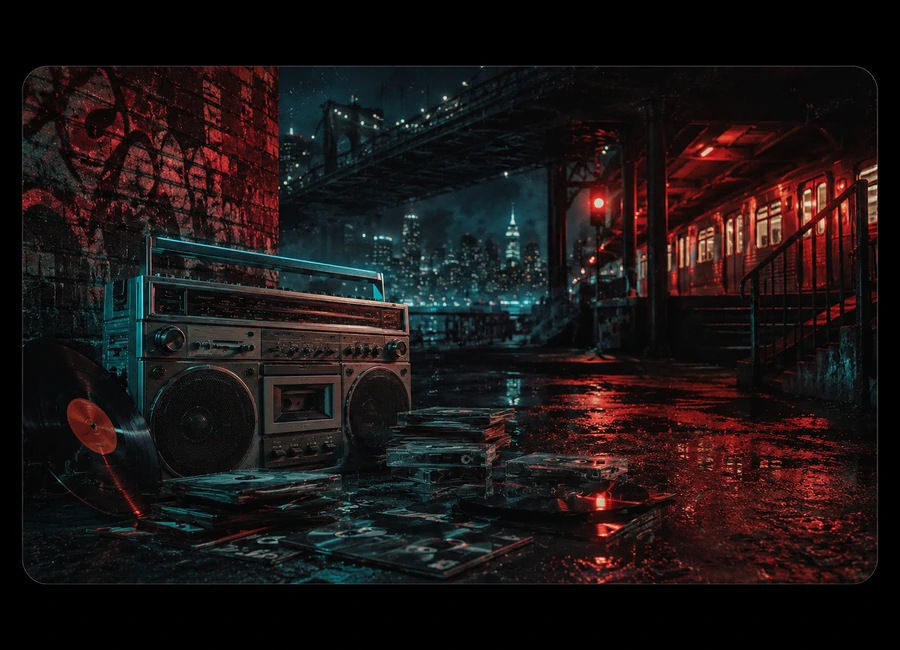
90s Hip-Hop One-Hit Wonders
90s hip-hop one-hit wonders were not always novelty songs, and they definitely were not always throwaway records. Some were regional breakthroughs. Some were underground cuts that caught daylight. Some were radio smashes. Some were MTV moments. Some came from artists with real catalogs, real respect, and one song that became the mainstream memory stamp anyway. This is the Gen X rewind for the rap records that hit once, hit hard, and never fully left the room.
The best 90s hip-hop one-hit wonders and one-signature-song rap records include Skee-Lo’s “I Wish,” Craig Mack’s “Flava in Ya Ear,” Camp Lo’s “Luchini AKA This Is It,” Lord Tariq and Peter Gunz’s “Déjà Vu (Uptown Baby),” Luniz’s “I Got 5 on It,” Paperboy’s “Ditty,” Ahmad’s “Back in the Day,” Domino’s “Getto Jam,” Black Sheep’s “The Choice Is Yours,” Nine’s “Whutcha Want?,” Mad Lion’s “Take It Easy,” Channel Live’s “Mad Izm,” The Lady of Rage’s “Afro Puffs,” Nonchalant’s “5 O’Clock,” Crucial Conflict’s “Hay,” Cool Breeze’s “Watch for the Hook,” and other rap records that broke through through radio crossover, MTV visibility, regional scenes, soundtrack energy, club play, or pure word-of-mouth. It sits inside the larger 90s Hip-Hop and Rap rewind, not the broader all-genre party lane.
Not Every 90s Hip-Hop One-Hit Wonder Was a Joke Record
The phrase “one-hit wonder” gets tossed around like a cheap insult, but in hip-hop it gets complicated fast. A rapper could have one major crossover single and still have albums, respect, regional importance, underground credibility, mixtape love, battle history, production influence, or a cult following that casual Top 40 listeners never noticed. Hip-hop does not fit neatly into the same one-hit box as disposable pop.
That is why this list skips the easiest novelty lane. This is not a countdown of obvious wedding-DJ rap monsters or goofy punchline records that became bigger than the artists behind them. This page is about records that feel like hip-hop first: dusty loops, regional slang, hard drums, jazz samples, basslines, sharp hooks, street-corner confidence, car-stereo memory, underground pressure, and videos that burned themselves into the decade.
Some of these artists had one mainstream hit. Some had one signature song that overshadowed everything else. Some were never one-hit wonders to hip-hop heads, but one song became the track everybody outside the deep catalog remembers. That tension is the whole point. A “one-hit wonder” in rap is often less about skill and more about access: which song got radio, which video got rotation, which hook got a clean edit, and which track happened to catch the national ear before the industry moved on.
In the 90s, that could happen fast. One CD single, one video premiere, one soundtrack placement, one mixtape dub, one radio mix-show push, one summer of car stereos, and suddenly an artist had a permanent memory slot. The album might have been ignored. The follow-up single might have disappeared. The catalog might have been better than the hit. But the one song became a name tag.
For the wider decade map, start with 90s Hip-Hop and Rap. For the major records that shaped the whole era, jump into 50 Essential 90s Hip-Hop Songs and 90s Hip-Hop Songs That Defined the Decade. If you want the album side of the story, Best 90s Hip-Hop Albums is where the bigger full-length statements live. This page lives in the weird middle: the songs that had one huge moment and then became permanent Gen X memory.
One Song Could Carry the Whole Moment
A cassette single, a CD single, a clean radio edit, one wild video, one mixtape dub, one car-stereo summer — that was all it took for a rap record to become permanent.
Some of these were real records
The best one-hit rap songs were not punchlines. Some were lyrical, regional, stylish, grimy, weird, political, reflective, or ahead of the room that first heard them.
One song became the name tag
Hip-hop heads may know the catalog. Casual listeners often remember the one track that hit radio, MTV, or the party and refused to leave.
The intro still works
The beat starts, the sample drops, the hook comes in, and suddenly your brain is standing in front of a CD rack at Sam Goody.
Why the 90s Made So Many One-Song Rap Legends
The 90s were built for one-song explosions. Radio was expanding. MTV mattered. Regional scenes were breaking through. CD singles were everywhere. And one hook could make an artist feel unavoidable for a whole summer.
Radio could turn one track into a national memory.
A clean edit could do ridiculous work. Once a rap song became safe enough for daytime radio, it could jump from hip-hop listeners to everyone with a car, clock radio, boombox, or school dance DJ who had exactly twelve records and too much confidence.
That is why this page connects so tightly to 90s Rap Radio Crossover. Songs like “I Wish,” “Ditty,” “Back in the Day,” “Déjà Vu,” and “I Got 5 on It” traveled because the hooks were strong enough to survive repeated spins without losing the room.
Radio did not always reward the deepest album or the best rapper. It rewarded the song that could survive the commute, the request line, the countdown, the mall speaker, and the edited version that sounded like somebody attacked the master tape with a remote control.
MTV made one song feel bigger than a whole album.
The video era could freeze a rapper in one image forever. A good clip gave the song a setting, an outfit, a color palette, a dance move, a crew, a car, a neighborhood, or one ridiculous visual that your brain stored permanently without asking permission.
That is the Hip-Hop on MTV in the 90s effect. One video could turn a regional cut or underground-adjacent record into something people across the country remembered, even if they never bought the album.
It also meant artists could get trapped by their own best visual. One outfit, one video concept, one hook, one camera angle, and suddenly that was the public version of them forever. The 90s were generous like that. Also rude.
The Hook Got the Airplay. The Video Sealed the Memory.
Clean Enough to Spin, Strong Enough to Stick
The right hook could survive edits, countdowns, request lines, bad car speakers, and that one friend who taped over the intro by accident.
Radio did not just play songs in the 90s. It certified them. If a rap record could make it through the clean-edit machine and still feel alive, it had a shot at becoming a one-song monster. The missing words did not always hurt the song. Sometimes the blank space made everybody more aware of the real version.
That mattered because hip-hop was still negotiating public space. A record might be huge in a neighborhood, a city, a club, a mixtape circuit, or a college radio lane, but mainstream radio required translation. Hooks became more important. Choruses got cleaner. Singles had to be more immediate. A rapper could be great for a whole album, but one track had to do the paperwork.
MTV added the second layer. Videos made songs easier to remember because they gave the track a world. Craig Mack’s bugged-out presence. Camp Lo’s vintage swagger. Lord Tariq and Peter Gunz turning Bronx pride into a bright, hooky moment. Skee-Lo making insecurity feel funny and human. These were not just records. They were little 90s movies.
That visibility created a strange kind of immortality. Some artists became household names for a single season. Others became the answer to “Who did that song again?” decades later. Either way, the records survived because the hook, beat, and image all arrived at once.
The same machinery also helped push rap into movies, trailers, and soundtrack CDs. That is why this page connects naturally to 90s Hip-Hop Movie Soundtracks, especially for songs that traveled through soundtracks, videos, and radio at the same time. By the late 90s, that crossover pressure also fed into the shinier world of The Shiny Suit Era of Late-90s Rap.
The Video Burned It In
One video could make the artist feel larger than the album cycle. That was the magic and the curse.
Regional Hip-Hop Made the One-Hit Story More Interesting
A one-hit wonder could be a national blip, but it could also be a signal from a city, a crew, or a scene that had way more going on than radio was ready to explain.
One Track Could Point to a Whole City
The Bay, the Bronx, Atlanta, Chicago, Brooklyn, New Jersey, D.C., and the West Coast all had records that broke through just enough to leave a permanent mark.
The 90s hip-hop map was widening every year. New York still mattered. Los Angeles still mattered. But the story was not that simple anymore. The Bay had its own flavor. Atlanta was loading the next era. Chicago had speed and bounce. New Jersey had a different kind of grit. Southern scenes were pushing bass, slang, club language, and regional confidence into places that did not know what to do with it yet.
That is why some of the strongest one-hit or one-signature records are regional postcards. Luniz’s “I Got 5 on It” belongs beside West Coast Hip-Hop in the 90s, but it does not sound like the most obvious Los Angeles lane. Cool Breeze’s “Watch for the Hook” points straight toward Southern Hip-Hop in the 90s and the Dungeon Family orbit. Camp Lo’s “Luchini” drips Bronx style and belongs in the wider East Coast Hip-Hop in the 90s story.
The industry often treated those records like isolated accidents. But they were rarely accidents. They were symptoms. A city had been building. A crew had been recording. A local sound had been developing. The national audience just caught one track at the right time and acted like it appeared from space.
Some Signature Songs Were Too Raw to Be Pop, But Too Strong to Stay Hidden
Not every record on this page was a giant pop hit. Some became signature songs because heads kept them alive: college radio, mix shows, late-night video blocks, mixtapes, record-store recommendations, and somebody’s older cousin with better taste than everyone else.
The Heads Kept These Alive
Some songs did not need pop permission. They had enough drums, voice, and attitude to survive in the crates.
The underground had its own version of a one-hit wonder.
A mainstream one-hit wonder is usually about charts. A hip-hop-head one-hit wonder is different. It might be the one song everyone in the scene agrees on. The one beat people quote. The one 12-inch single that became the artist’s calling card. The one record that makes crate-diggers nod like they just found a receipt from 1994.
That is where artists like Nine, Jeru the Damaja, O.C., Artifacts, Channel Live, Bahamadia, and Mad Skillz come into the conversation. These records were not always massive pop songs, but they became signature tracks that defined how many people remembered the artist.
Those records gave the decade texture.
If you only remember the obvious crossover hits, 90s hip-hop starts to look too clean. The deeper one-signature records remind you that the decade was full of smoke, dust, battle energy, weird samples, low-budget videos, shouty hooks, basement drums, and records that sounded like they came from a wall covered in flyers.
This is where the list connects to Alternative Hip-Hop in the 90s, Conscious Rap in the 90s, 90s Hip-Hop Groups That Changed Everything, and 90s Rap Duos and Groups. A lot of the best one-song memories were tied to crews, collectives, scenes, and movements bigger than one single.
90s Hip-Hop One-Hit Wonders and Signature Rap Songs
This is not a novelty-rap dump. This is a rewind of signature tracks, regional flashes, radio breakouts, underground moments, and one-song mainstream memories that still sound like the decade.
1. Skee-Lo — “I Wish”
“I Wish” is one of the cleanest examples of a 90s rap one-hit wonder that still feels like a real hip-hop record. Skee-Lo did not need gangster fantasy, shiny-suit polish, or cartoon gimmicks. He built a whole song around insecurity, short-guy frustration, hoop dreams, and the very Gen X feeling of wanting a better car, better game, better luck, and maybe a few more inches of height.
What makes it last is the honesty. The beat is bright, the hook is instantly sticky, and the verses are funny without turning into disposable novelty. It was self-deprecating at a time when a lot of mainstream rap was flexing harder and harder. Everybody had an “I wish” list. Skee-Lo just put his over a beat.
It also worked because it was clean enough to travel through 90s rap radio crossover. School dances, radio, MTV, parents’ cars, middle-school bedrooms — “I Wish” could move through all of them without losing its personality.
2. Craig Mack — “Flava in Ya Ear”
Craig Mack is exactly why the one-hit label gets messy in hip-hop. “Flava in Ya Ear” was not some random pop accident. It was weird, hard, bugged-out, and unforgettable. The beat sounded like it came from another planet, and Mack’s voice had enough personality to make the whole thing feel slightly unstable in the best way.
It also arrived at a major East Coast label moment, before late-90s pop-rap got glossier. The remix became legendary, but the original still has that strange snap that makes it feel like nobody else could have made it. Craig Mack had more music, but this one became the giant shadow.
It belongs next to East Coast Hip-Hop in the 90s and helps set up the later commercial turn covered in The Shiny Suit Era of Late-90s Rap.
3. Camp Lo — “Luchini AKA This Is It”
“Luchini” sounds like champagne spilled on a Bronx rooftop in a 70s movie that somehow got released in 1997. Camp Lo had style for days: slang-heavy verses, fly-kid confidence, retro flavor, and a horn loop that made the whole thing feel like the party was already expensive.
This was not a cheap radio grab. It was too stylish for that. The hook worked, the beat was undeniable, and the whole record felt cooler than whatever you were doing when it came on. Camp Lo had a whole album with loyal defenders, but for casual listeners, “Luchini” became the instant flashback.
It also shows how far East Coast rap had stretched by the late 90s. Not every New York record had to be grimy stairs and winter coats. “Luchini” was cinematic, colorful, slang-drunk, and weirdly timeless.
4. Lord Tariq and Peter Gunz — “Déjà Vu (Uptown Baby)”
“Uptown Baby” turned neighborhood pride into a national hook. The Steely Dan sample gave it bounce, but the real engine was Bronx identity. Lord Tariq and Peter Gunz made the song feel local and huge at the same time, which is exactly the kind of trick 90s rap could still pull off.
It was everywhere for a minute: radio, video blocks, car stereos, parties, and any room where somebody could shout the hook like they had personally been appointed Bronx ambassador. The duo did not turn that moment into a long mainstream run, but the record never really left the memory bank.
The song sits right at the intersection of 90s rap duos and groups, East Coast pride, and radio-ready sample hooks.
5. Luniz — “I Got 5 on It”
“I Got 5 on It” is not just a one-hit wonder. It is a cultural password. The beat is eerie, smooth, and instantly recognizable, and the hook became a phrase that traveled way beyond the song. Luniz gave the Bay Area a national anthem that crossed over without sanding off the regional flavor.
The genius is the mood. It does not sprint. It creeps. It rides. It turns a simple phrase into a whole atmosphere. The record became party music, car music, smoke-session music, and eventually nostalgia shorthand for a very specific mid-90s looseness.
It also mattered because it gave a national audience a different West Coast feel. It belongs with West Coast Hip-Hop in the 90s, but it was not just polished L.A. sunshine. It was Bay Area atmosphere cutting through.
6. Paperboy — “Ditty”
“Ditty” is sunny, breezy, and more hip-hop than people sometimes remember. The beat swings, the hook sticks, and Paperboy rides the track with the kind of laid-back confidence that made early-90s rap radio feel wide open.
It was not trying to be the hardest record in the room. Its job was to feel good, move easily, and live in car speakers with the windows down. Paperboy did not become a long-term household name, but “Ditty” remains a perfect one-song breakthrough that still sounds like a summer afternoon with a bassline.
It also overlaps with the room-moving side of 90s Hip-Hop Dance and Party Songs, without sliding into novelty territory.
7. Ahmad — “Back in the Day”
“Back in the Day” is nostalgia inside nostalgia now, which is almost unfair. Ahmad made a song about looking back on childhood, and now Gen X hears it and looks back on the 90s looking back on childhood. That is a full emotional boomerang.
The song worked because it felt warm without going soft. It had a smooth groove, a reflective hook, and a point of view that did not need to posture. Ahmad had talent beyond the single, but “Back in the Day” became the defining mainstream moment.
It belongs beside the more reflective side of Conscious Rap in the 90s, even though it was warmer and more personal than political.
8. Domino — “Getto Jam”
Domino’s “Getto Jam” sits in that laid-back West Coast lane where the groove does most of the talking. It is smooth, melodic, and built for sunshine, car stereos, and people trying to look cooler than they actually were.
It crossed over because it had enough bounce for rap fans and enough melody for radio. That sweet spot mattered in the 90s, especially as G-funk, R&B hooks, and melodic rap kept changing what mainstream hip-hop could sound like.
Domino did not need to bulldoze the room. He floated through it. “Getto Jam” is one of those records that feels casual until you realize how much work the groove is doing.
9. Positive K — “I Got a Man”
“I Got a Man” is funny, yes, but it is also built like a sharp hip-hop sketch. Positive K turns a back-and-forth conversation into a full record, playing both sides with timing, personality, and just enough absurdity to make the whole thing stick.
The song became a radio staple because the structure was immediately understandable. You knew the situation in three seconds. The beat gave it bounce, the hook gave it replay value, and the call-and-response format made it feel like something happening in real time.
It works because it is character rap, not lazy novelty. The 90s had room for that kind of record before everything started getting sorted into narrower lanes.
10. Black Sheep — “The Choice Is Yours”
Black Sheep were not an empty one-song act, but “The Choice Is Yours” became the giant mainstream memory. The hook, the bounce, the “engine engine number nine” moment — all of it became part of the decade’s permanent hip-hop vocabulary.
The song comes out of the Native Tongues orbit, which means it carries that playful, smart, sample-driven energy that also connects to Alternative Hip-Hop in the 90s. It is fun without being dumb. Clever without being stiff.
It also works as a bridge into 90s Hip-Hop Groups That Changed Everything, because Black Sheep were part of a larger creative world, not just one hook.
11. Us3 — “Cantaloop (Flip Fantasia)”
“Cantaloop” made jazz-rap feel like the coolest thing on the planet for a minute. Built around a Blue Note sample and a groove that sounded like a lounge suddenly found a breakbeat, the song slipped into radio, MTV, commercials, dorm rooms, and CD collections trying to look sophisticated.
It gave casual listeners an accessible doorway into jazz-rap without making the music feel like homework. It fits naturally beside A Tribe Called Quest and 90s Jazz Rap, even though Us3 came from a different angle.
The song is also a time capsule of the decade’s crate-digging curiosity. Jazz samples were not just decoration; they gave hip-hop another language.
12. Mad Lion — “Take It Easy”
Mad Lion’s “Take It Easy” brought dancehall flavor into a hip-hop setting with enough grit to keep it from feeling watered down. The vocal tone alone makes the track stand out. It does not sound like everything else around it, which is exactly why people remembered it.
The 90s were full of moments where hip-hop, reggae, dancehall, and club culture brushed against each other. “Take It Easy” lives in that lane where one voice, one hook, and one mood could make a record feel larger than its chart life.
It also shows how wide the 90s hip-hop map really was. The decade was not just coastal rivalry and radio gloss; it was also sound-system pressure, dancehall influence, and rougher crossover energy.
13. Nine — “Whutcha Want?”
Nine’s voice sounded like gravel learned how to rap. “Whutcha Want?” is grimy, heavy, and instantly recognizable because nobody else sounded quite like that. The beat knocks, but the voice is the weapon.
This is not a cute one-hit wonder. It is a record that made underground-leaning East Coast rap feel like it could still scratch its way onto wider radar. It had enough hook to stick, but it did not clean itself up into something polite.
The song’s staying power comes from texture. You remember the roughness. You remember the threat in the delivery. You remember how it felt less like a performance and more like somebody had kicked open the door to the booth.
14. Channel Live featuring KRS-One — “Mad Izm”
“Mad Izm” is a perfect 90s underground-to-mainstream-adjacent record: smoky, raw, energetic, and boosted by KRS-One presence without losing Channel Live’s identity. It sounded like a cipher had kicked the door open.
It links naturally to Conscious Rap in the 90s, not because it was lecture music, but because it came from the side of hip-hop where knowledge, weed smoke, battle energy, and basement beats could all share the same room.
The track also captures how features worked before every collaboration felt like a spreadsheet. KRS-One’s presence gave it weight, but the record still belonged to Channel Live.
15. The Lady of Rage — “Afro Puffs”
The Lady of Rage was never just a one-song artist in talent terms. She had presence, voice, and credibility. But “Afro Puffs” became the signature solo moment — the record casual fans still pull up first when her name comes up.
The song hit with Death Row weight, West Coast production energy, and a voice that cut through the room. Rage sounded powerful without trying to fit into anyone else’s lane. This belongs next to Women of 90s Hip-Hop and the broader West Coast hip-hop story.
What still stands out is command. Rage did not sound invited. She sounded inevitable. In a decade where women in rap were too often treated like special categories instead of full MCs, “Afro Puffs” walked in heavy and made the room adjust.
16. Nonchalant — “5 O’Clock”
“5 O’Clock” is a darker, more reflective kind of one-hit wonder. It was not built to be a party record. It was built around pressure, routine, survival, and the feeling that the day is already closing in before you even catch your breath.
Nonchalant’s delivery made the song feel calm and heavy at the same time. The hook stuck because it was simple, but the mood is what made the record different. It is a reminder that 90s hip-hop one-hit wonders were not all hooks and jokes.
This was hip-hop for the grind, not the flex. It also belongs near Women of 90s Hip-Hop, because the decade had far more women with real mic presence than nostalgia lists usually admit.
17. Crucial Conflict — “Hay”
Crucial Conflict’s “Hay” brought Chicago energy into the national conversation with a flow pattern and rhythm that did not sound like New York or L.A. That mattered. The 90s were starting to make more room for regional sounds, and records like this helped prove the map was bigger than the coasts.
The song had speed, bounce, chant power, and a rural-urban twist that made it feel different from everything else in rotation. It was playful, but it was also tied to a very specific regional cadence.
“Hay” is one of those records that sounds easy until you actually listen to the flows. The rhythm is doing more work than people give it credit for. It helped prepare listeners for a rap map where Midwest voices would not have to sound coastal to be heard.
18. Cool Breeze featuring Goodie Mob, Outkast, and Witchdoctor — “Watch for the Hook”
“Watch for the Hook” is less a solo one-hit moment than a Dungeon Family group photo exploding through the speakers. Cool Breeze got the headline, but the record works because it feels like Atlanta rap culture stepping into the room with reinforcements.
It connects directly to Southern Hip-Hop in the 90s and Outkast and the Rise of Southern Hip-Hop. Cool Breeze may be remembered nationally by one song, but that one song points to a whole movement.
That is what makes it more valuable than a normal one-hit record. It is a doorway into Dungeon Family, Organized Noize, Goodie Mob, Outkast, and the larger Atlanta sound that would keep getting harder to ignore.
19. Tracey Lee — “The Theme (It’s Party Time)”
Tracey Lee’s “The Theme” is a pure mid-90s party-rap record with enough bounce to live in clubs and enough lyrical presence to avoid feeling like throwaway noise. It is one of those songs that serious hip-hop fans remember more fondly than mainstream nostalgia usually does.
The record had “walk into the party like you own the lease” energy. The beat moved, the hook worked, and Tracey Lee sounded sharp enough to make the song feel less like a gimmick and more like a proper entrance theme.
It belongs near 90s Hip-Hop Dance and Party Songs, but it has enough MC presence to avoid getting lost in the chant-record pile.
20. Ill Al Skratch — “Where My Homiez?”
“Where My Homiez?” could hit a party, a car, or a late-night mood depending on when you heard it. Ill Al Skratch blended rap with R&B feeling in a way that fit the 90s perfectly.
The song had bounce, but it also had emotion. That combination helped it stick with listeners who wanted more than a chant record. It belongs in the overlap zone where rap records could still feel smooth without losing the drums, right beside New Jack Swing, Rap, and R&B in the 90s.
That balance mattered. 90s rap and R&B crossover was not just about softening hip-hop for radio. Sometimes it gave rap records more emotional range.
21. Jamal — “Fades Em All”
Jamal’s “Fades Em All” is a grimier kind of one-hit memory. It had that hard mid-90s East Coast sound: dusty, aggressive, head-nod heavy, and not especially interested in becoming polite for the radio.
Jamal had serious connections and talent, but this track became the signature for a lot of listeners. The beat hits with enough weight to make you remember a time when a single could feel like it came from a basement, a mixtape, and a late-night video block all at once.
It belongs to the tougher side of East Coast Hip-Hop in the 90s, where the drums were dirty, the hooks were blunt, and nobody cared if your parents understood it.
22. Blahzay Blahzay — “Danger”
“Danger” is one of those records that sounds like New York itself is clearing its throat. The hook is blunt, the beat is raw, and the energy is pure mid-90s East Coast territorial confidence.
It was not a glossy crossover record. It was a warning shot. That is why it stuck with heads and still gets remembered as a one-song blast from a duo that captured a very specific mood. Not every classic had to become a pop smash. Some just had to make the right rooms lose their minds.
The record also has that exact mid-90s feeling where the hook sounds less like a chorus and more like someone yelling from a corner you probably should not walk past.
23. Artifacts — “Wrong Side of da Tracks”
Artifacts were not one-dimensional, but “Wrong Side of da Tracks” became their signature because it captured a whole subculture with love, specificity, and drums. Graffiti culture, hip-hop identity, and East Coast underground energy all landed in one record.
The song matters because it does not feel like a marketing angle. It feels lived in. It gives you train yards, tags, crews, and the kind of hip-hop culture that existed before everything had to become a lifestyle brand.
This also connects to 90s Hip-Hop Fashion in a broader cultural sense, because graffiti, clothes, crews, sneakers, jackets, and visual identity were all part of how hip-hop lived outside the headphones.
24. Masta Ace Incorporated — “Born to Roll”
Masta Ace is absolutely not a one-hit wonder if you know the catalog. That needs to be said loudly before somebody throws a backpack at the screen. But “Born to Roll” became the big crossover memory for a lot of people because it hit cars, bass systems, and video rotation in a way few of his other records did.
The song feels designed for speakers that were probably not installed legally. It connects to car culture, booming systems, and the side of 90s rap where the vehicle was practically another instrument.
It also shows how a record could become a signature because of physical impact. Some songs were lyrical memory. Some were video memory. “Born to Roll” was speaker memory.
25. AZ featuring Miss Jones — “Sugar Hill”
AZ is another artist where the one-hit label is unfair if we are talking skill. His verse on Nas’s “Life’s a Bitch” alone gives him permanent hip-hop credibility. But as a solo mainstream radio memory, “Sugar Hill” became the one.
The song is smooth, reflective, and quietly aspirational. It does not shout for attention. It glides. This one links naturally to Nas, Illmatic, and 90s Rap Storytelling because AZ’s presence in that world mattered even if “Sugar Hill” became his most recognizable solo crossover.
The record’s appeal is in the contrast. AZ could rap with precision, but “Sugar Hill” wrapped that skill in a warm, accessible, almost dreamlike track.
26. Jeru the Damaja — “Come Clean”
Jeru the Damaja is not a pop one-hit wonder. He is a respected MC with a serious catalog. But “Come Clean” is the record that became the public monument: DJ Premier production, water-drop weirdness, and a vocal performance that sounded like Brooklyn had lost patience with everybody.
The beat is minimal and unforgettable. It does not chase radio. It lurks. That is why it became such a defining underground-era record. It proved a song could become iconic without smoothing the edges or begging for mainstream approval.
It belongs near Conscious Rap in the 90s and East Coast Hip-Hop in the 90s, but it is really its own little warning sign.
27. O.C. — “Time’s Up”
O.C.’s “Time’s Up” is one of the great “if you know, you know” 90s hip-hop records. It was never a goofy mainstream one-off. It was a statement of standards: stop faking, stop posing, stop watering the culture down.
The song became O.C.’s signature because it captured a mood many rap fans felt in the mid-90s. As hip-hop got bigger, shinier, and more profitable, records like “Time’s Up” reminded everyone that credibility still mattered.
It also shows how the one-hit label can accidentally flatten a serious artist. O.C. was part of a deeper lyrical ecosystem. “Time’s Up” just happened to become the sharpest public summary of what he stood for.
28. Main Source — “Looking at the Front Door”
Main Source had enormous importance beyond one song, especially because of Large Professor’s production influence and the group’s role in early-90s hip-hop. But “Looking at the Front Door” became the accessible signature: funny, frustrated, sharp, and painfully recognizable if you ever watched a relationship become a sitcom with worse lighting.
The song’s genius is conversational detail. It is not trying to be hard. It is trying to be honest about domestic stress, pride, arguments, and the moment you realize the front door might be the only peaceful place in the house.
It belongs beside 90s Hip-Hop Groups That Changed Everything, because Main Source’s impact goes deeper than one recognizable single.
29. Heather B — “All Glocks Down”
Heather B’s “All Glocks Down” is not the biggest song on this list, but it deserves the spot because it captures a rawer side of 90s hip-hop that rarely gets included when people only talk about chart hits. The record is direct, hard, and completely uninterested in softening itself.
Heather B brought presence and edge at a time when women in rap were often boxed into narrow roles. She did not sound like an accessory to anybody else’s record. She sounded like the room needed to move.
This belongs firmly in the wider Women of 90s Hip-Hop conversation, especially the tougher, less-polished side that usually gets skipped.
30. Mad Skillz — “The Nod Factor”
Mad Skillz had bars, period. “The Nod Factor” became the track that put that skill set into a clean, memorable package: sharp rhymes, crisp production, and the kind of confidence that made you understand the name was not decorative.
This is a hip-hop-head one-hit wonder: the song people bring up when they want to remind you that the 90s had dozens of MCs who could rap circles around bigger stars but never got the same mainstream machinery.
That is why it belongs near the end of the core list. It proves this page is not only about chart memory. It is about signature memory.
31. Casual — “I Didn’t Mean To”
Casual’s “I Didn’t Mean To” is a Hieroglyphics-adjacent reminder that the 90s West Coast was not just G-funk, gangsta rap, and sunshine grooves. There was a whole alternative, lyrical, left-field lane happening too, and Casual brought sharp rhymes with a loose, conversational snap.
The song never became a giant pop event, but it became a signature for listeners who found their way into that Bay Area underground orbit. It had humor, technical skill, and the kind of off-center confidence that made 90s independent-minded rap feel exciting.
It connects naturally to Alternative Hip-Hop in the 90s and the less obvious side of West Coast Hip-Hop in the 90s.
32. Del the Funky Homosapien — “Mistadobalina”
Del is absolutely not a one-song artist if you know the catalog, but “Mistadobalina” became the early signature for a lot of listeners. It was weird, funky, playful, and completely outside the more predictable West Coast images that dominated mainstream attention.
The song had personality for days. Del sounded like he had wandered in from a smarter, stranger cartoon universe where the drums still hit. It was funny without being empty and unusual without feeling forced.
For casual Gen X listeners, this was often the first Del record that stuck. For deeper hip-hop fans, it was a doorway into the broader alternative lane.
33. Heltah Skeltah and O.G.C. — “Leflaur Leflah Eshkoshka”
“Leflaur Leflah Eshkoshka” is Boot Camp Clik energy packed into one grimy, chant-ready record. The title alone sounds like something you had to hear out loud before it made any sense, and the hook had that mid-90s underground magic where nonsense could become a password.
This was not glossy crossover rap. It was raw, crew-heavy, and built for heads who liked their beats dusty and their hooks shouted from a basement stairwell. The record helped make Boot Camp’s larger world feel accessible without watering it down.
It fits the one-signature-song lane because a lot of casual listeners remember the hook first, then discover the deeper crew universe later — exactly the kind of thing covered in 90s Hip-Hop Groups That Changed Everything.
34. Smoothe da Hustler featuring Trigger tha Gambler — “Broken Language”
“Broken Language” is pure lyrical pressure. It is not here because it was a shiny radio smash. It is here because it became a signature underground record built on relentless back-and-forth energy, hard delivery, and the kind of verbal style that made people rewind lines because their brains needed a second.
The song feels like a street-corner cipher with the volume turned up. Smoothe and Trigger sound locked in, trading dense patterns and punchy phrasing over production that refuses to get cute.
This is a perfect example of why the post needs to be more hip-hop than novelty. “Broken Language” was not built for broad pop memory, but it became a signature song because heads carried it.
35. Da Bush Babees — “We Run Things (It’s Like Dat)”
Da Bush Babees brought a different flavor to mid-90s rap: playful, Caribbean-influenced, sharp, and connected to the alternative side of East Coast hip-hop without sounding soft. “We Run Things” became the kind of signature track that people remember because it had bounce and identity.
The record lives in that zone where hip-hop, reggae influence, and Native Tongues-adjacent openness could all touch without losing the drums. It was not trying to be the biggest record in America. It was trying to sound like itself, which is harder than people think.
For listeners who found the group through this track, it opened a lane that was lighter on the surface but still musically rich.
36. Kurious — “Uptown Shit”
Kurious had one of those voices and deliveries that made him feel instantly specific. “Uptown Shit” is playful, funky, and tied to a New York energy that did not need to sound grim to feel authentic. It had character, and character was one of the decade’s best currencies.
The song is not a giant mainstream monument, but it is a signature record for the kind of listener who remembers digging through CDs, tapes, and late-night video blocks for something that did not sound like every other record.
It belongs here because one-hit wonder pages get boring when they only include the obvious. “Uptown Shit” gives the list texture: smaller, cooler, weirdly durable, and completely of its era.
37. Gravediggaz — “Diary of a Madman”
Gravediggaz were more than a one-song act, especially with Prince Paul and RZA involved, but “Diary of a Madman” became one of the most recognizable entry points into horrorcore’s 90s moment. It was dark, theatrical, strange, and unlike almost anything else that could sneak into wider hip-hop conversation.
The song works because it commits. It does not treat horror imagery like decoration. It builds a whole atmosphere around madness, courtroom drama, dread, and grimy production.
As a signature song, it shows another corner of the decade’s range. 90s hip-hop could be party music, street reporting, jazz-loop cool, radio crossover, and also this haunted basement of a record.
38. Funkdoobiest — “Bow Wow Wow”
Funkdoobiest came out of the Soul Assassins orbit with a sound that was funky, dusty, and very 90s in the best possible way. “Bow Wow Wow” became the kind of signature track that head-nod fans remember even if the broader public only caught a glimpse.
The record has that Cypress Hill-adjacent haze without feeling like a clone. It is loose, gritty, and built around a hook that sticks just enough to make the track travel.
This one adds another texture to the page: Latino hip-hop presence, West Coast underground flavor, and a crew-based sound that deserved more nostalgia oxygen than it usually gets.
39. Bahamadia — “Uknowhowwedu”
Bahamadia’s “Uknowhowwedu” is smooth, precise, and quietly commanding. It was not built like a crossover sledgehammer. It was built like a cool room where every word knew exactly where to sit. Her flow was calm but razor sharp, which made the record feel effortless.
This belongs in the one-signature-song conversation because Bahamadia had more skill and respect than one casual-memory slot can hold. But for a lot of listeners, this is the track that opens the door.
It also strengthens the connection to Women of 90s Hip-Hop and Conscious Rap in the 90s. Not every important woman in 90s rap was operating in the same style.
40. Paris — “The Devil Made Me Do It”
Paris brought political intensity, West Coast force, and a confrontational edge that made “The Devil Made Me Do It” feel bigger than a single. It was not built for easy background listening. It was built to make a point and make listeners sit up.
The song became a signature because it sounded fearless. While plenty of 90s rap dealt with social pressure and street reality, Paris brought a sharper political lens and a delivery that felt like a warning.
This one broadens the page beyond radio memory and party memory. One-hit and signature-song records could also be political memory, connecting it directly to Conscious Rap in the 90s.
Some of These Artists Were Not Really One-Hit Wonders
This is where hip-hop refuses to fit inside a lazy label. A casual listener’s one-hit wonder can be a hip-hop head’s respected catalog artist.
One mainstream memory does not erase the catalog.
AZ, Jeru the Damaja, O.C., Masta Ace, Main Source, Black Sheep, Artifacts, The Lady of Rage, Bahamadia, Del, and others deserve more respect than a flat “one-hit wonder” label. But each had one song that became the most widely recognized entry point for a lot of casual listeners.
That is the difference between a true one-hit wonder and a one-signature-song artist. The first may really be remembered for one major hit. The second has more depth, but one track became the public name tag.
Hip-hop is full of that tension because the culture has always had multiple audiences at once: radio listeners, album buyers, underground heads, regional fans, mixtape people, video watchers, club crowds, and that one guy who insists the B-side was better.
The one song can still matter.
Even when the label is unfair, the song’s role still matters. “Come Clean,” “Time’s Up,” “Sugar Hill,” “Born to Roll,” “The Choice Is Yours,” and “Uknowhowwedu” became entry points. They were doors into deeper catalogs, regional scenes, production styles, and hip-hop worlds that deserved more than one radio moment.
That is why these records belong in the rewind. The one song did not shrink the artist. It gave a lot of people their first key.
And honestly, leaving a song behind that still gets mentioned thirty years later is not exactly failure. Plenty of artists had bigger budgets, louder marketing, and more chances — and still did not leave a hook anyone remembers.
What These One-Hit Rap Songs Still Tell Us About the 90s
The Song Outlived the Moment
Some records get a season. These got memory. That is a different kind of win.
The best 90s hip-hop one-hit wonders still matter because they reveal how wide the decade really was. This was not one sound, one coast, one label, one style, or one lane. The same era gave us jazz-rap, grimy East Coast cuts, West Coast grooves, Bay Area atmosphere, Southern signals, dancehall crossover, women with real mic presence, political records, underground statements, radio-friendly hooks, and songs that became bigger than the artists’ mainstream windows.
They also remind us that hip-hop history is not only written by the biggest albums and most obvious superstars. Sometimes a single track tells you everything about a moment. “Luchini” tells you style mattered. “I Got 5 on It” tells you the Bay had its own mood. “Watch for the Hook” tells you Atlanta was not waiting for permission. “Come Clean” tells you Premier could make water drops sound threatening. “I Wish” tells you insecurity could be a hit if the beat was right.
These songs also prove that one record can be enough to leave a mark. Not enough to define an artist’s whole worth, maybe, but enough to freeze a moment. One beat. One hook. One video. One car ride. One mixtape dub. One school dance. One late-night radio block. One song that made you ask, “Who is this?” before the DJ talked over the outro like a criminal.
That is the real Gen X power of these records. They are not always the biggest songs of the decade. They are not always the most critically celebrated. But they sound like a specific time when hip-hop was expanding faster than the industry could categorize it, and sometimes one song was all it took to leave a permanent dent.
Follow the 90s Hip-Hop Sound Through the Decade
These one-hit and signature rap records came from a decade that changed every year: early-90s sample energy, jazz-rap, New Jack crossover, grimy East Coast records, West Coast grooves, Southern breakouts, late-90s radio polish, and one-song moments that got stuck in memory.
Where to Go Next in the 90s Hip-Hop Rewind
90s Hip-Hop One-Hit Wonders FAQ
What counts as a 90s hip-hop one-hit wonder?
For this page, a 90s hip-hop one-hit wonder is either an artist with one major mainstream rap hit or an artist with one signature song that became the casual-listener memory. Some artists on this list had deeper catalogs, respected albums, underground credibility, or regional importance, but one track became the song most Gen X listeners immediately remember.
Why are some respected artists included?
Because hip-hop one-hit wonder status is not always about talent or catalog depth. Artists like AZ, Jeru the Damaja, O.C., Main Source, Masta Ace, Black Sheep, Artifacts, Del, Bahamadia, and The Lady of Rage had more to offer than one song, but each has a signature track that became the mainstream or casual-memory shorthand.
Why skip the obvious novelty rap records?
This page is focused on records that feel more connected to hip-hop culture, regional scenes, underground credibility, radio crossover, and signature rap moments. The goal is not to make a novelty playlist. It is to remember the songs that hit hard, stuck around, and still feel like part of the real 90s rap map.
What is the difference between one-hit wonders and forgotten 90s hip-hop songs?
One-hit wonders usually had one clear signature song that broke through. Forgotten 90s hip-hop songs may include deeper album cuts, regional favorites, soundtrack tracks, underground records, and singles that did not become the artist’s one defining mainstream moment.
Does this page belong under 90s hip-hop or 90s music?
This page belongs under the 90s Hip-Hop and Rap structure because it is focused on rap records, MCs, regional hip-hop scenes, underground cuts, radio crossover, and signature hip-hop songs. It can still link naturally to 90s Music, but the main home is the hip-hop section.
Where should I go next?
Start with 90s Hip-Hop and Rap, then jump into 50 Essential 90s Hip-Hop Songs, 90s Rap Radio Crossover, East Coast Hip-Hop in the 90s, West Coast Hip-Hop in the 90s, and Southern Hip-Hop in the 90s.