G-Funk and the 90s West Coast Sound
G-Funk was the sound of 90s West Coast rap turning menace into melody, funk into bass weight, and car speakers into public property. It was smooth enough for radio, heavy enough for the trunk, and relaxed enough to make everything else sound like it had shown up overdressed. From The Chronic and Doggystyle to Warren G, Nate Dogg, DJ Quik, Above the Law, Tha Dogg Pound, Death Row, Long Beach, Compton, and the Bay Area’s own funk-heavy lanes, G-Funk made the larger 90s hip-hop and rap story sound warmer, wider, smoother, and way more dangerous at sunset.
G-Funk is the 90s West Coast rap sound built around deep bass, slow bounce, melodic synth leads, funk samples, clean drums, smooth hooks, and laid-back flows. Dr. Dre, Snoop Dogg, Warren G, Nate Dogg, DJ Quik, Above the Law, Tha Dogg Pound, and others made it one of the defining sounds of 90s music, especially from the early to mid-90s when car stereos, MTV, radio, soundtracks, and CD binders all got taken over by that smooth-but-dangerous California glow.
What G-Funk Was, Besides the Sound of Every Car Trying to Rattle Apart
G-Funk was the 90s West Coast sound that made rap feel like it was cruising instead of sprinting. It pulled from funk, especially the Parliament-Funkadelic universe, then stretched that DNA into deep basslines, whining synths, slow grooves, clean drums, melodic hooks, and flows that sat in the pocket instead of fighting the beat for attention.
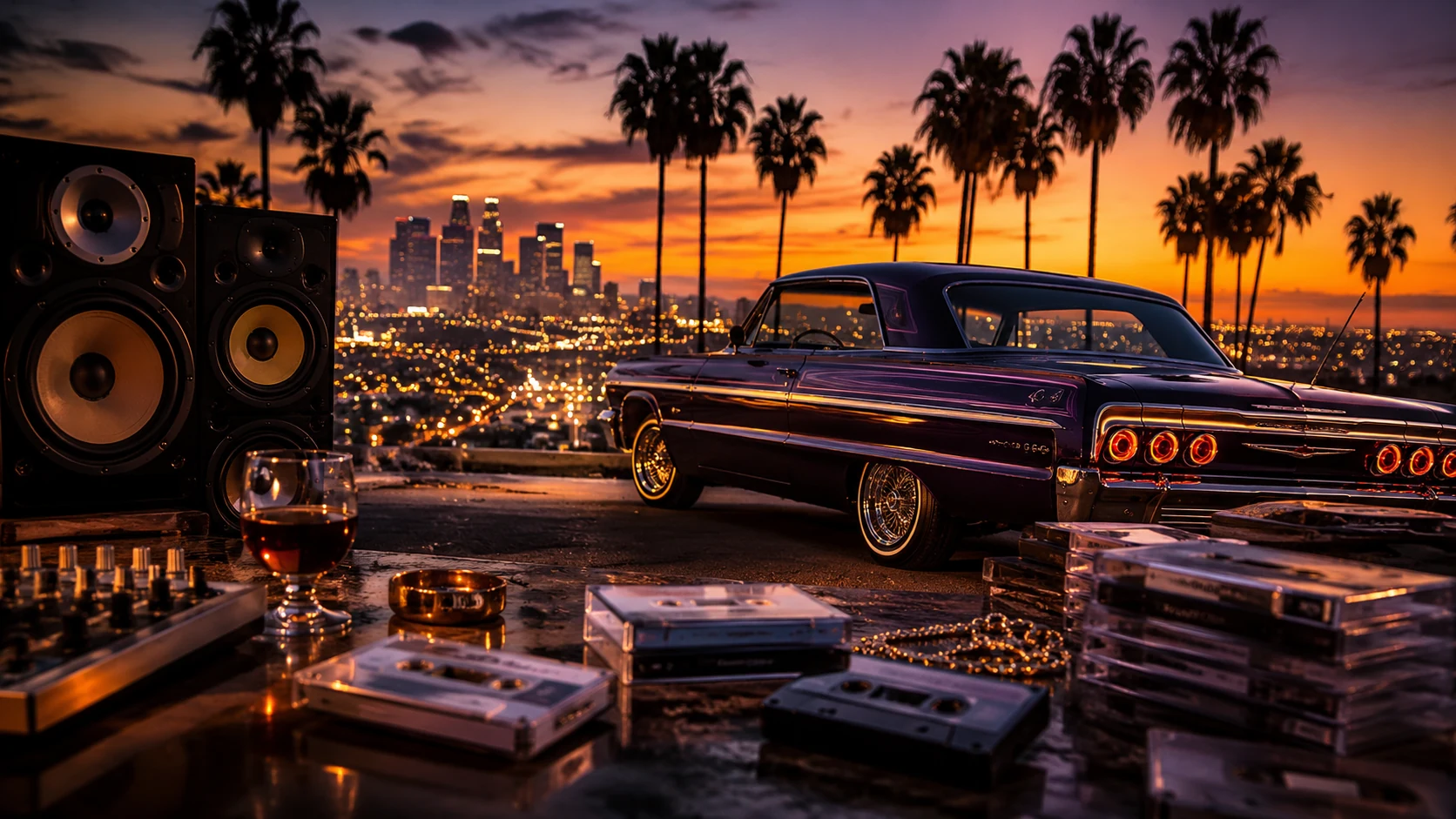
The sound became inseparable from West Coast hip-hop in the 90s because it matched the region’s imagery so perfectly: lowriders, palm trees, house parties, hot streets, studio smoke, radio dominance, and the feeling that every song should be tested through a car stereo before anyone was allowed to call it finished.
But G-Funk was not just “smooth rap.” That sells it short. The best G-Funk records were smooth and tense at the same time. They could make the hook feel like a party while the verses dealt with police pressure, street politics, ego, revenge, paranoia, survival, and the kind of neighborhood rules that did not come with a helpful pamphlet.
That contradiction is the whole trick. G-Funk made trouble sound beautiful. It gave danger a bassline. It turned menace into something you could nod your head to in traffic, which was probably not emotionally healthy but was extremely effective.
It also gave 90s rap a different kind of cool. A lot of East Coast records from the same period hit like concrete stairs and winter air, which was perfect in its own way. G-Funk came in with more space, more melody, more low-end warmth, and a kind of confidence that did not need to rush. It was not softer. It was just leaning back while still holding the whole room hostage.
It was smooth without being soft
G-Funk could glide, but it was not harmless. The melodies were inviting, the bass was heavy, and the subject matter often had teeth. That is why the records worked on radio without losing the edge that made them feel real.
A lot of the sound’s power came from contrast: sunny textures, dark stories, playful hooks, serious consequences. It was backyard party music with sirens somewhere in the distance.
It made production feel like geography
G-Funk sounded like place. You could hear heat, distance, car culture, local slang, and West Coast attitude in the way the tracks moved. The beats did not feel cramped. They had room to cruise.
That space mattered. It let voices stretch out. It let hooks breathe. It let basslines become characters. It made the whole record feel wider than the speakers could technically handle.
The G-Funk Sound: Synth Whines, Slow Bounce, Bass Weight, and Pocket
You know G-Funk before anyone explains it. The beat leans back. The bass rolls. The synth curls into the room like smoke. The hook opens up. The rapper sounds like he has all day, even if the story says absolutely nobody should be relaxed right now.
Funk Bones, Rap Muscle, and Car-Speaker Physics
G-Funk did not rush. It pulled the tempo down, gave the bass more room, let the synths sing, and trusted the groove to do half the talking.
The calling card
That high, curling synth line became the instant G-Funk signal. It sounded playful, eerie, and triumphant all at once, like a keyboard had learned how to smirk.
The trunk test
The bass had to move. G-Funk production was made for cars, and if the speakers did not threaten the plastic interior, what were we even doing?
The lean
G-Funk beats often moved slower than East Coast boom-bap, leaving more space for hooks, swagger, and that very specific West Coast head-nod.
The radio weapon
The hooks helped the records cross over without sanding away the attitude. Nate Dogg alone could make a chorus feel like public infrastructure.
The sound’s genius was restraint. A lot of G-Funk beats did not need to be crowded. They gave the bassline space. They gave the synth lead space. They gave the rapper space. That looseness made the records feel expensive, even when you were hearing them through a cheap stereo with one speaker coughing for its life.
The pocket mattered too. Snoop Dogg became the clearest example, but the larger G-Funk feel depended on not rushing the groove. The flow could be conversational, melodic, slippery, deadpan, funny, or menacing, but it had to sit right. If boom-bap often rewarded attack, G-Funk rewarded control.
The drums were usually crisp but not frantic. The basslines were not just support; they were the furniture. The synths did not decorate the track; they helped define the whole weather system. The hooks gave listeners something to grab immediately, which is why the sound could hit at house parties, in clubs, on radio, on MTV, and in cars driven by people who absolutely should have been paying more attention to the road.
That is why so many records from this lane still feel good instantly. The sound is physical before it is intellectual. You feel the bounce, the bass, the space, and the hook first. Then the lyrics remind you that the party may have some legal complications.
G-Funk Came From Funk, Car Culture, and a Lot of Borrowed Groove
G-Funk did not come out of nowhere. It pulled from funk records, West Coast party traditions, car culture, electro-funk, local rap scenes, and producers who understood that the right bassline could make a neighborhood feel like a movie set.
The “funk” in G-Funk is not decorative. The sound leaned on the feeling of older funk records: rubbery bass, cosmic synths, guitar flickers, big grooves, playful menace, and the idea that a record should move your body before it asks permission. The George Clinton and Parliament-Funkadelic influence became part of the DNA, but the 90s West Coast producers did not just copy old records. They rebuilt the attitude for rap.
Earlier West Coast rap helped set up the sound too. Electro-funk, party records, local tapes, and the late-80s rise of N.W.A. created the environment. The West already had its own identity before G-Funk became national shorthand. G-Funk was the moment that identity became smoother, bigger, and impossible to ignore.
It also helped that the music understood cars. West Coast listening culture was not just headphones and bedrooms. It was car stereos, parking lots, cruising, swap meets, house parties, and the social theater of pulling up with music announcing you before you opened the door. Subtle? No. Effective? Obviously.
G-Funk also inherited the humor of funk. That part gets missed when people only talk about danger and street mythology. Funk was weird, playful, theatrical, cartoonish, nasty, cosmic, and funny. G-Funk kept some of that smirk. The records could be hard, but they also had jokes, voices, skits, ad-libs, and swagger that made the whole world feel alive.
Old grooves, new attitude
G-Funk took older funk textures and gave them rap structure, street detail, sharper drums, and 90s production shine.
The sound had history
Ice-T, N.W.A., Too $hort, Above the Law, and other West Coast voices helped build the road before the G-Funk wave took over.
Built to move
These records were made for motion. The car was not just a place to listen. It was part of the sound’s natural habitat.
Before G-Funk Took Over, the West Coast Was Already Rewiring Rap
The G-Funk explosion makes more sense when you remember the West Coast had already spent years building pressure. By the time the early 90s arrived, California rap was not asking for permission. It was already loud, regional, controversial, funny, political, and fully aware that New York did not own the whole map.
The late 80s gave the West Coast national force. N.W.A. made Compton unavoidable. Ice-T helped define a colder street-reporting lane. Too $hort showed how local tapes, Oakland game, and independent hustle could build a career without waiting for the usual industry gatekeepers to wake up. The bridge from 80s Rap, R&B & Dance into 90s G-Funk is not just trivia. It is the setup.
G-Funk softened the textures but not the pressure. It made the music warmer, slower, and more melodic, but the stories still came from the same larger reality: police tension, gang conflict, street economies, neighborhood pride, and a generation trying to turn chaos into style before someone else turned it into a news segment with scary graphics.
That is why G-Funk hit so hard. It did not erase the harder West Coast history. It gave it a new sound system. The bass got bigger. The hooks got smoother. The production got cleaner. And suddenly the same region that had already scared half of suburban America was now giving that same suburban America choruses it could not stop singing.
Dr. Dre Made G-Funk Sound Like a Blockbuster
Dr. Dre did not invent every ingredient, but he organized the sound with such force that G-Funk became one of the defining musical languages of the 90s. The deeper album story belongs on Dr. Dre and The Chronic Changed 90s Rap, but you cannot explain G-Funk without putting Dre behind the boards.
The Chronic Made the West Coast Sound Huge
The drums hit clean, the bass rolled, the synths curled, the hooks opened up, and suddenly G-Funk sounded like the new center of gravity.
The Chronic worked because it sounded polished without feeling polite. Dre gave the record weight and clarity. The production was spacious, but not empty. It was funky, but not soft. It was hard, but not cluttered. Everything had room to breathe, which made the bassline and voices feel enormous.
Dre also understood casting. The record did not just showcase beats. It introduced voices and personalities that made the whole universe feel alive. Snoop Dogg’s arrival was the obvious lightning strike, but the larger Death Row orbit gave the music crew energy, hook power, menace, comedy, and mythology.
The Dre version of G-Funk was clean enough for mainstream takeover and sharp enough that it did not feel watered down. That balance is why it traveled so fast. Radio could play it. MTV could package it. Cars could punish their speakers with it. Parents could misunderstand it completely, which is always good for sales.
Dre’s real superpower was making the records feel cinematic without turning them into bloated drama. The tracks were clean, but they still had grit. The hooks were big, but the verses still had bite. The sound was expensive, but it did not feel like it had been scrubbed by a committee of nervous label people wearing bad blazers.
Snoop Dogg Turned the Pocket Into a Personality
If Dre made G-Funk sound cinematic, Snoop made it feel effortless. His voice slid through the beat instead of wrestling with it, and that changed how the whole sound felt. For the full deep dive, keep Snoop Dogg and the G-Funk 90s ready.
Snoop’s delivery was the perfect G-Funk vehicle because it had timing, humor, menace, melody, and laziness in the best possible sense. He sounded like he had already solved the beat before the verse started. Other rappers attacked tracks. Snoop lounged on them, which somehow made the records hit harder.
That flow gave G-Funk its most famous human shape. The synths could whine, the bass could roll, and the drums could snap, but Snoop’s voice made the whole thing feel conversational. He turned laid-back delivery into tension because the calm sounded earned, not empty.
Doggystyle became such a defining G-Funk album because it took the blueprint and let Snoop’s personality fill the whole frame. It was funny, dangerous, catchy, ridiculous, confident, and very 90s in the way only a record that scared parents and dominated house parties could be.
Snoop also made space sound cool. He did not need to cram every bar with syllables. He knew when to stretch a word, when to pause, when to let the beat carry the room, and when to land a line so casually that it felt like he had not even tried. That is harder than it sounds, which is why so many imitators sounded like they were doing an impression of being relaxed.
Relaxed but exact
Snoop sounded loose, but the timing was precise. That is what made the flow feel casual without becoming sloppy.
Cool with teeth
The charm was real, but so was the edge. Snoop’s best 90s work made humor and menace live in the same verse.
Instant memory
G-Funk hooks stuck fast, and Snoop knew how to make phrases feel like they had always existed.
Warren G, Nate Dogg, and the Smooth Side of G-Funk
G-Funk was not only Dre’s darker studio shine. Warren G and Nate Dogg gave the sound a smoother, cooler, more melodic Long Beach lane, the kind of music that could make a street story feel like a summer memory until the lyrics reminded you things were not exactly peaceful.
Cooler Grooves, Cleaner Hooks, and Nate Dogg Doing Nate Dogg Things
Warren G and Nate Dogg made G-Funk feel more conversational, melodic, and breezy without losing the street tension underneath.
“Regulate” is the obvious centerpiece because it tells a story, rides a smooth groove, and lets Nate Dogg turn the hook into something that sounds like it should be protected by historical preservation laws. It was cinematic without being overblown, relaxed without being lightweight, and instantly understandable even to people who had no idea how to behave around a cassette single.
Warren G’s production lane mattered because it softened the edges without removing the attitude. His version of G-Funk felt cooler, more melodic, and less explosive than Dre’s. That gave the sound range. Not every G-Funk record needed to kick the door in. Some could roll up slowly, nod, and still take over the room.
Nate Dogg deserves his own paragraph every time because his hook work basically changed the physics of rap choruses. He did not just sing hooks. He made them feel like the emotional center of the record. Smooth, low, mournful, funny, streetwise, and weirdly comforting, his voice helped turn G-Funk into something bigger than production style.
The Long Beach lane also made G-Funk feel more human. It was less about studio empire and more about cruising, storytelling, friendship, bad decisions, and that strange calm that comes from people who have seen too much but still know how to make the song ride.
DJ Quik Had His Own Funk Lane, Because One Coast Was Not Enough Drama
DJ Quik belongs in every serious G-Funk conversation, even when people try to make the sound all about one producer and one label. Quik’s records had bounce, polish, musicianship, humor, swing, and a cleaner funk sensibility that made his lane instantly recognizable.
Quik’s production often felt brighter and more musical than the darker Death Row version of the sound. His drums snapped, his bass moved, his grooves had personality, and his records could be funny, nasty, smooth, and technically sharp without sounding like homework.
That matters because G-Funk was never as narrow as the highlight reels make it seem. The sound had different rooms. Dre’s room was cinematic and dominant. Warren G’s room was cooler and more melodic. Quik’s room had polish, bounce, musicianship, and enough personality that you knew who was behind the boards before anyone checked the credits.
Quik also proved that the West Coast’s funk connection was not just sample nostalgia. It could be arrangement, timing, swing, and actual musical feel. His best records move because the grooves are built to move, not because somebody pasted a synth line on top and called it a day.
And unlike some producers who treated the beat like a backdrop, Quik made the track feel like a living conversation. Bass, drums, keys, vocal tone, and little musical details all moved together. His records had bounce, but they also had wit. You could hear the smirk in the mix.
Clean but not sterile
Quik’s records sounded polished, but they still had bite, bounce, humor, and personality.
Musical movement
His grooves often felt arranged rather than simply looped, which gave the tracks a different kind of life.
Instant handwriting
Quik’s production had a signature. You could hear the bounce, the crispness, and the smirk.
Above the Law Deserves More Credit in the G-Funk Story
G-Funk history often gets simplified until it sounds like one album magically appeared and invented the whole thing. That is convenient, but it is also lazy. Above the Law helped shape early West Coast funk-rap textures before the sound became mainstream shorthand.
Above the Law’s place in the story matters because they were working with funk-heavy production, street perspective, and West Coast identity before the wider audience had a neat label for it. Their records helped point toward the sound that would soon dominate radio, cars, and every teenage bedroom with a poster wall and questionable incense choices.
Cold 187um’s production deserves special attention. His work helped build a bridge between older funk influence and the smoother, heavier, more atmospheric West Coast rap that exploded in the 90s. If you only start the story at the most famous records, you miss some of the wiring behind the wall.
Above the Law also reminds us that G-Funk was not just one commercial moment. It was a developing sound with multiple contributors, regional experiments, label connections, underground groundwork, and artists who were shaping the lane before everyone else started driving on it.
Death Row Made G-Funk Feel Like the Main Event
Death Row Records did not own G-Funk, but it absolutely turned the sound into a blockbuster. The label had production, voices, videos, controversy, mythology, hooks, and a sense that every release came with both a hit single and a possible emergency meeting.
Big Hooks, Bigger Mythology, and Studio Smoke Everywhere
The Death Row era made G-Funk feel massive: cleaner mixes, heavier bass, bigger personalities, and videos that turned the sound into a national image.
Death Row’s peak was ridiculous because the records sounded expensive and dangerous at the same time. The Chronic made the blueprint. Doggystyle turned Snoop into a superstar. Tha Dogg Pound carried the crew energy forward. Nate Dogg made hooks feel permanent. The Lady of Rage brought one of the strongest voices in the building. The whole label sounded like it was winning an argument before the debate even started.
The visual side mattered too. Videos, cars, studio imagery, magazine covers, red-carpet menace, and constant headlines made Death Row feel less like a label and more like a weather event. Sometimes the mythology threatened to swallow the music, but the records were strong enough to survive the circus.
The label’s chaos can make the story feel messy because, well, it was messy. But strip away the noise and the musical impact is still enormous. Death Row helped make G-Funk a national sound, a visual identity, and one of the clearest musical memories of 90s rap.
The Bay Area Had Its Own Funk, Slang, and Independent Muscle
The Bay Area was not just sitting around waiting for Los Angeles to tell it what West Coast rap sounded like. The Bay had its own funk, its own slang, its own business sense, its own darker lanes, and its own independent movement. Some of it overlapped with G-Funk. Some of it ran parallel. All of it made the West Coast map bigger.
Fog, Slang, Record Crates, and Independent Muscle
The Bay had its own temperature: funk-heavy, slang-loaded, independent-minded, and way too specific to be treated like an L.A. side note.
Too $hort brought Oakland game, blunt humor, and a conversational delivery that felt like somebody telling you the rules while leaning against a car. E-40 bent language until it needed a chiropractor. Spice 1 brought a darker, more cinematic edge. The Luniz gave the Bay one of the decade’s most indestructible crossover basslines. The Bay’s funk-heavy records did not always fit neatly into the G-Funk label, but they shared the larger West Coast love of bass, groove, local slang, and music that sounded right in motion.
The Bay also mattered because of its independent energy. Artists could build loyal regional audiences through local stores, tapes, trunk sales, street networks, and word of mouth. Not every important West Coast record needed MTV to validate it. Some records were already huge where they mattered before the rest of the country caught up.
That independent mindset helped shape the larger 90s rap economy. While major labels were turning West Coast music into national spectacle, Bay Area artists were showing that local control, slang, personality, and hustle could build something durable. Basically, entrepreneurship before everyone started calling every minor activity a “brand.”
Oakland game
Blunt, funny, direct, and funk-rooted, Too $hort helped define Bay Area confidence long before casual listeners understood the map.
Slang engineering
E-40’s flow and vocabulary made the Bay sound like nobody else. The man treated language like it owed him money.
Bassline immortality
“I Got 5 on It” was not strictly G-Funk, but its bassline, mood, and Bay Area cool belong in the larger West Coast groove conversation.
Nate Dogg and the Rise of the Rap Hook That Refused to Leave
G-Funk needed hooks, and nobody made hooks feel more inevitable than Nate Dogg. His voice gave records warmth, sadness, humor, street wisdom, and that strange feeling that the chorus had existed before the song was even written.
Nate Dogg’s genius was that he did not over-sing. He did not turn every hook into a vocal audition. He sat inside the groove, low and smooth, and made the chorus feel like part of the beat. His voice could be comforting and cold at the same time, which made him perfect for G-Funk’s emotional contradictions.
On records like “Regulate,” “Ain’t No Fun,” and countless West Coast features, Nate helped turn rap songs into full sing-alongs without making them feel less like rap. That mattered commercially, but it also mattered musically. He made the hook a character.
The G-Funk hook formula traveled because it worked. A strong chorus could make a hard record easier to enter. It could make a street story feel cinematic. It could give radio something to grab without neutering the track. It could turn a song into a memory before the first verse was even done.
G-Funk Was Built for Cars, Not Tiny Laptop Speakers from the Future
To understand G-Funk, you have to understand the car as a listening room. The mix had to work while moving. The bass had to travel. The hook had to cut through road noise. The whole song had to feel right with windows down and no adult supervision within useful distance.
If the Speakers Survived, Turn It Up Again
G-Funk understood bass as a public announcement. The car was part of the music, and the rearview mirror was basically a percussion instrument.
The trunk test was not official science, but it was more useful than half the opinions in music magazines. Did the bass hit? Did the hook ride? Did the synth line cut through? Did the song feel bigger once it left the bedroom? Could it make a normal drive feel like a video? Congratulations, the record understood its assignment.
This is why G-Funk production feels physical. It was designed for motion and space. The bassline had to roll under the track. The drums had to snap without crowding the groove. The hook had to open up wide enough for everybody in the car to catch it, including the friend in the backseat who never chipped in for gas.
Lowrider culture also helped give the sound a visual body. Chrome, paint, hydraulics, slow cruising, parking lots, and street pride made the music feel like part of a whole public ritual. The songs did not just play in cars. They made the cars feel like characters.
That physical quality is one reason the sound still works. Even when you hear it now through earbuds, the music remembers it was built for something larger. It remembers chrome, heat, pavement, parking lots, and the ancient 90s ritual of someone saying, “rewind that,” as if the driver did not have enough to deal with.
Radio, MTV, and the Moment G-Funk Became Everywhere
G-Funk did not stay local for long. Once the hooks got big, the videos got expensive, and the basslines started traveling, the sound moved through radio, MTV, malls, dorm rooms, house parties, and suburban bedrooms where someone was definitely hiding the CD from their parents.
The Sound Became a Whole Visual World
Once G-Funk hit radio and video rotation, it was no longer just a sound. It was cars, palms, studio smoke, chrome, cable TV, and a decade suddenly leaning west.
The sound was built for crossover without feeling like it was begging for crossover. That is the important distinction. G-Funk had hooks, melody, and polish, but it still carried edge, slang, humor, and street tension. It gave radio something easy to repeat and gave fans something harder underneath the surface.
MTV made the imagery unavoidable. Lowriders, palm trees, Death Row videos, backyard parties, fish-eye lenses, studio shots, jerseys, khakis, Chucks, and California sunlight turned the music into a visual shorthand. People who had never been near Long Beach or Compton suddenly knew the look, even if they understood absolutely none of the context.
Radio also changed the scale. Songs like “Nuthin’ but a ‘G’ Thang,” “Gin and Juice,” “Regulate,” and “California Love” did not just live on rap stations. They moved into the larger 90s soundtrack. They became part of the same decade memory as grunge guitars, R&B slow jams, pop hooks, and soundtrack singles. The CD binder did not care about genre purity. It cared about what hit.
That crossover story also feeds naturally into Hip-Hop on MTV in the 90s and 90s Rap Radio Crossover, because G-Funk is one of the clearest examples of rap moving from specialty programming into the center of the decade’s pop culture traffic.
Hooks opened the door
The choruses made G-Funk travel fast, especially once the beats were clean enough for mainstream rotation.
The image became national
Videos turned the sound into a visual world: cars, palms, studios, crews, parties, and sunlit trouble.
The real archive
The albums and singles lived in scratched jewel cases, Case Logic binders, and glove compartments that had seen things.
G-Funk Fit 90s Soundtracks Because It Already Sounded Cinematic
The 90s were a golden age of soundtrack albums, and West Coast rap fit perfectly because so much of the music already felt like it came with opening credits. For the bigger soundtrack lane, jump into 90s Hip-Hop Movie Soundtracks.
VHS Glow, Jewel Cases, and End-Credit Bass
G-Funk already sounded cinematic, so soundtrack albums had an easy job: put the bass under the scene and let the car headlights do the rest.
G-Funk worked in movies because it already had scene-setting built in. A slow bassline, a curling synth, a sunny street, a car rolling through frame, and suddenly the song felt like part of a larger world. It could make a comedy feel cooler, a drama feel heavier, or an end-credit sequence feel like a victory lap.
Soundtracks also gave artists another route to the mainstream. A song could attach itself to a movie, show up in a trailer, hit radio, and then end up in a teenager’s CD collection because they bought the soundtrack for one track and accidentally discovered five others. This was how we lived before playlists did all our thinking for us.
G-Funk and G-Funk-adjacent records were especially useful because they had atmosphere. They did not just fill silence. They gave the scene temperature. The right West Coast track could make a street shot feel hotter, a party feel bigger, or a car ride feel like something was about to happen.
G-Funk Misconceptions That Need to Be Retired Immediately
Because G-Funk became so famous, it also became easy to flatten. The sound gets reduced to one producer, one label, one synth noise, one city, or one exaggerated idea of “smooth gangsta rap.” The real story is wider and more interesting.
It was only Death Row
Death Row made the sound massive, but Above the Law, DJ Quik, Warren G, Bay Area artists, and other West Coast lanes helped shape the wider picture.
It was always soft
The production could be smooth, but the subject matter often dealt with violence, pressure, paranoia, street politics, and survival.
It was only party music
Some records were party-ready, sure. Others were dark, reflective, angry, cinematic, or built around consequences hiding under the groove.
It was one sound
Dre, Quik, Warren G, Above the Law, and Bay Area artists did not all sound the same. G-Funk had lanes, not just one freeway exit.
The biggest misunderstanding is that G-Funk was simple because it was accessible. Wrong. Accessibility is hard. Making a beat that feels relaxed, catchy, dangerous, polished, funky, and physically huge is not easy. If it were, every 90s rap album would have sounded that good instead of occasionally sounding like somebody dropped a keyboard down the stairs.
The sound worked because it balanced contradictions. Smooth but hard. Melodic but street. Commercial but regional. Funny but tense. Warm but paranoid. Those contradictions are why the best G-Funk records still feel alive instead of like museum pieces.
Essential G-Funk Songs from the 90s
This is not every G-Funk-adjacent song worth playing, because then we would be here until somebody finds your old CD wallet. These are the core records and related tracks that explain the sound: synth lines, slow bounce, Long Beach smoothness, Death Row weight, DJ Quik polish, Bay Area flavor, and enough Nate Dogg to make the chorus legally binding.
Core G-Funk Tracks, 1–20
- “Nuthin’ but a ‘G’ Thang” — Dr. Dre feat. Snoop Dogg
The G-Funk mission statement: smooth, heavy, funny, relaxed, and suddenly everywhere. - “Let Me Ride” — Dr. Dre
A cruising anthem with polish, bounce, and the confidence of someone who knows the mix is perfect. - “Dre Day” — Dr. Dre feat. Snoop Dogg
Diss record, video event, label flex, and G-Funk attitude all rolled into one smirking track. - “Who Am I? (What’s My Name?)” — Snoop Doggy Dogg
Snoop stepping fully into solo-superstar mode while the beat leans back like it pays rent. - “Gin and Juice” — Snoop Doggy Dogg
House-party chaos, Long Beach cool, and one of the most durable hooks of the entire decade. - “Doggy Dogg World” — Snoop Doggy Dogg
Retro-funk polish and Snoop completely at home inside the G-Funk frame. - “Regulate” — Warren G feat. Nate Dogg
Long Beach storytelling, smooth groove, and Nate Dogg making a hook feel immortal. - “This D.J.” — Warren G
Cool, melodic, and proof Warren G’s lane had more than one classic moment. - “Do You See” — Warren G
Reflective, smooth, and one of those records that feels better once the sun starts dropping. - “Ain’t No Fun” — Snoop Doggy Dogg feat. Nate Dogg, Warren G & Kurupt
Very 90s, extremely quotable, and carried by one of the most recognizable hooks in the Death Row orbit. - “Afro Puffs” — The Lady of Rage
A rugged Death Row showcase with enough force to cut through the label’s loudest personalities. - “Black Superman” — Above the Law
An important early G-Funk marker from a group that deserves more credit in the sound’s origin story. - “V.S.O.P.” — Above the Law
Part of the early West Coast funk-rap foundation that helped set up the bigger G-Funk wave. - “Tonite” — DJ Quik
Party bounce, polished funk, and Quik making musical control sound effortless. - “Dollaz + Sense” — DJ Quik
A diss record with bounce, precision, and the rare ability to sound fun while being absolutely vicious. - “Safe + Sound” — DJ Quik
Smooth menace, crisp production, and Quik’s mid-90s polish in full effect. - “Keep Their Heads Ringin’” — Dr. Dre
Dre bringing clean production, hook power, and soundtrack-era dominance into the mid-90s. - “Murder Was the Case” — Snoop Doggy Dogg
Darker and more dramatic, but still sitting inside the Death Row/G-Funk universe. - “New York, New York” — Tha Dogg Pound
Not exactly subtle, but subtlety was not really the brand. Big West Coast energy with national tension attached. - “Big Pimpin’” — Tha Dogg Pound
Death Row chemistry, laid-back swagger, and the label’s G-Funk universe stretching outward.
Core G-Funk Tracks, 21–40
- “California Love” — 2Pac feat. Dr. Dre
A massive West Coast anthem that pushed G-Funk-adjacent energy into blockbuster territory. - “How Do U Want It” — 2Pac feat. K-Ci & JoJo
Radio-ready Pac with summer heat, slick production, and major mid-90s crossover power. - “Picture Me Rollin’” — 2Pac
Cruising mythology, confidence, and a title that practically comes with tinted windows. - “To Live & Die in L.A.” — 2Pac
A late-era Los Angeles love letter with warmth, sadness, and West Coast glow. - “All About U” — 2Pac feat. Nate Dogg, Snoop Dogg & others
Death Row-era party energy with enough familiar voices to feel like a whole scene in one track. - “Foe Life” — Mack 10
Hard West Coast energy with the bounce and regional pride of the late-90s lane. - “Bow Down” — Westside Connection
Regional pride turned into a stomp, with West Coast chest-thumping at full volume. - “Players Holiday” — T.W.D.Y. feat. Too $hort, Mac Mall & others
Bay Area smoothness, celebration, and a different regional flavor of West Coast groove. - “Sprinkle Me” — E-40 feat. Suga-T
Not pure G-Funk, but fully West Coast funk energy with Bay Area slang doing acrobatics. - “I Got 5 on It” — Luniz
Bay Area crossover magic with a bassline that still activates old muscle memory. - “Gettin’ It” — Too $hort
Oakland smoothness, funk confidence, and Too $hort sounding like he has been explaining life to people forever. - “The Ghetto” — Too $hort
More reflective than the caricature, with funk roots and a heavy sense of place. - “Born and Raised in Compton” — DJ Quik
Early Quik bounce, Compton identity, and the sound of a producer already knowing his lane. - “Just Lyke Compton” — DJ Quik
Quik’s humor, observation, and bounce all moving together with that polished West Coast snap. - “Indo Smoke” — Mista Grimm feat. Warren G & Nate Dogg
Soundtrack-era smoke, smoothness, and Nate Dogg making everything feel official. - “Gz and Hustlas” — Snoop Doggy Dogg
A deep Doggystyle cut that shows how fully Snoop could live inside the sound. - “Lodi Dodi” — Snoop Doggy Dogg
A remake filtered through Snoop’s Long Beach cool and the G-Funk-era universe. - “Serial Killa” — Snoop Doggy Dogg feat. D.O.C., Tha Dogg Pound & RBX
Darker crew energy with Death Row atmosphere all over it. - “What Would U Do?” — Tha Dogg Pound
Combative, sharp, and wrapped in the tense mid-90s West Coast climate. - “Never Leave Me Alone” — Nate Dogg feat. Snoop Dogg
Nate’s smooth hook gravity turned into a full mood, because the man did not miss when the pocket was right.
Essential G-Funk and G-Funk-Adjacent Albums
These albums explain how the sound moved: Dre’s blockbuster blueprint, Snoop’s star-making debut, Warren G’s smoother lane, Quik’s funk polish, Above the Law’s early foundation, Bay Area grooves, Death Row’s machine, and the wider West Coast orbit that made the whole decade feel like one giant bassline with parole complications.
The Albums That Made the Sound Stick
G-Funk albums were built for cars, bedrooms, parties, and arguments over who had the best system. The CD binder was basically a portable weather report for your taste.
The Chronic — Dr. Dre
The blueprint that made G-Funk sound huge, polished, dangerous, funny, and unavoidable. Start here, obviously.
Doggystyle — Snoop Doggy Dogg
Snoop’s pocket, Dre’s production world, Death Row confidence, and hooks that basically moved into the decade rent-free.
Regulate… G Funk Era — Warren G
The smoother Long Beach lane, with Nate Dogg helping make choruses feel like permanent fixtures.
Black Mafia Life — Above the Law
An important early piece of the G-Funk foundation, especially for anyone pretending the sound started from one single doorway.
Quik Is the Name — DJ Quik
Compton funk, bounce, humor, and Quik’s signature sense of musical movement arriving fully formed.
Safe + Sound — DJ Quik
Polished, funky, sharp, and one of the strongest examples of Quik’s version of West Coast production.
Dogg Food — Tha Dogg Pound
Death Row chemistry, Daz/Kurupt energy, and the label’s G-Funk machine still running hot.
All Eyez on Me — 2Pac
Not just a G-Funk album, but loaded with West Coast production, Death Row energy, and mid-90s California mythology.
Bow Down — Westside Connection
Late-90s West Coast pride with enough stomp and attitude to make subtlety leave the room.
Conversation — Twinz
Long Beach smoothness and Warren G production ties, the kind of record that rewards people who dig past the obvious hits.
G-Funk Classics, Vol. 1 & 2 — Nate Dogg
A reminder that Nate’s voice could carry mood, hooks, and an entire lane almost by itself.
In a Major Way — E-40
Bay Area slang, funk, bounce, and personality that does not fit neatly into G-Funk but absolutely belongs near the conversation.
These records also belong inside the bigger Best 90s Hip-Hop Albums conversation, because G-Funk was not just a singles format. The best albums built worlds: skits, hooks, crew appearances, studio atmosphere, local attitude, and enough bass to make the CD player feel personally threatened.
What made the albums matter was immersion. The singles got people in the door, but the albums made the world feel complete. You got the sound, the slang, the guests, the skits, the jokes, the menace, the smooth cuts, the harder cuts, and the feeling that the whole thing belonged to a specific place and moment.
The G-Funk Years That Hit Hardest: 1993, 1994, and 1995
G-Funk’s influence stretches across the decade, but the early-to-mid 90s are where the sound became unavoidable. Use the year pages to see what else was fighting for radio space while the West Coast was making car stereos work overtime.
1993 is where Doggystyle made Snoop feel like the new voice of the moment. 1994 is where Warren G and Nate Dogg made the smoother Long Beach side feel impossible to avoid. 1995 is where the sound kept spreading through albums, soundtracks, and radio, even as the rest of hip-hop was getting more crowded and more regional.
Those years also show how quickly G-Funk moved from breakthrough sound to cultural furniture. One minute it felt new. The next minute it was everywhere: cars, parties, videos, soundtracks, radio countdowns, mixtapes, mall stores, bedrooms, and school parking lots where everybody suddenly had very strong opinions about bass.
Why G-Funk Still Holds Up
G-Funk still holds up because the records feel good before you even start analyzing them. Bass, space, melody, pocket, humor, menace, hooks, and car-speaker confidence do not expire just because your knees now make a noise when you stand up.
The groove still works
The best G-Funk records move immediately. You do not need a dissertation. The bassline handles the introduction.
The choruses stuck
G-Funk understood melody in a way that helped rap cross into radio without turning into empty pop candy.
The personalities were huge
Dre, Snoop, Nate Dogg, Warren G, Quik, Rage, Kurupt, Daz, and others gave the sound voices you could recognize instantly.
It sounded like somewhere
G-Funk carried West Coast geography in the production: heat, cars, space, local slang, neighborhood tension, and sunset glow.
The sound also aged well because it was not trying to be futuristic in a way that now feels embarrassing. It was rooted in funk, groove, and physical speakers. That gives it a sturdier foundation than some 90s production tricks that now sound like a computer trying to flirt.
G-Funk’s influence also outlived its peak. Later West Coast rap kept borrowing its bass weight, melodic hooks, relaxed flows, and car-ready production logic. Even when the mainstream moved on, the sound never really disappeared. It became part of hip-hop’s permanent vocabulary.
Most importantly, the records still do the thing they were made to do. They make the room warmer. They make the car feel cooler. They make a normal afternoon feel like the opening shot of a video where everyone is mysteriously better dressed than you.
That is the reason G-Funk still feels bigger than nostalgia. Nostalgia can get you to press play once. The groove is what makes you leave it on.
Where to Go Next
G-Funk and the 90s West Coast Sound FAQ
What is G-Funk?
G-Funk is a 90s West Coast hip-hop sound built around deep bass, slow bounce, melodic synth leads, funk samples, clean drums, smooth hooks, and laid-back flows. It became one of the defining sounds of 90s rap through artists and producers like Dr. Dre, Snoop Dogg, Warren G, Nate Dogg, DJ Quik, Above the Law, and others.
Why is G-Funk associated with the West Coast?
G-Funk is strongly associated with the West Coast because it matched California rap’s car culture, lowrider imagery, funk roots, regional slang, warm production, and street storytelling. It became especially tied to Los Angeles, Long Beach, Compton, and the broader 90s West Coast rap scene.
Who were the biggest G-Funk artists?
The biggest G-Funk and G-Funk-adjacent names include Dr. Dre, Snoop Dogg, Warren G, Nate Dogg, DJ Quik, Above the Law, Tha Dogg Pound, Daz Dillinger, Kurupt, The Lady of Rage, and several artists connected to Death Row and the wider West Coast scene.
What are the most essential G-Funk songs?
Essential G-Funk songs include “Nuthin’ but a ‘G’ Thang,” “Let Me Ride,” “Gin and Juice,” “Who Am I? (What’s My Name?),” “Regulate,” “This D.J.,” “Black Superman,” “Tonite,” “Dollaz + Sense,” “Ain’t No Fun,” “Afro Puffs,” and “Keep Their Heads Ringin’.”
What albums best explain G-Funk?
The most important G-Funk and G-Funk-adjacent albums include Dr. Dre’s The Chronic, Snoop Doggy Dogg’s Doggystyle, Warren G’s Regulate… G Funk Era, DJ Quik’s Quik Is the Name and Safe + Sound, Above the Law’s Black Mafia Life, Tha Dogg Pound’s Dogg Food, and several Death Row-era releases.
Is G-Funk the same as gangsta rap?
No. G-Funk is a production style and musical feel, while gangsta rap is more about subject matter and perspective. They overlapped heavily in 90s West Coast rap, but not every G-Funk record is gangsta rap, and not every gangsta rap record is G-Funk.
Was G-Funk only a Death Row sound?
No. Death Row made G-Funk massive, but the sound also involved artists and producers outside that label, including Warren G, DJ Quik, Above the Law, Bay Area artists, Long Beach voices, and other West Coast contributors.
Why does G-Funk still hold up?
G-Funk still holds up because the basslines, synth hooks, melodic choruses, relaxed flows, funk roots, and car-ready production still feel good. The sound has a physical quality that works beyond nostalgia.
What should I read next?
Start with West Coast Hip-Hop in the 90s, then keep going with Dr. Dre and The Chronic Changed 90s Rap, Snoop Dogg and the G-Funk 90s, and the main 90s Hip-Hop and Rap rewind.