01
“…Baby One More Time” — Britney Spears
The late-90s teen-pop explosion in one song: a massive hook, an instantly recognizable video, and the exact moment pop kicked the door open again.
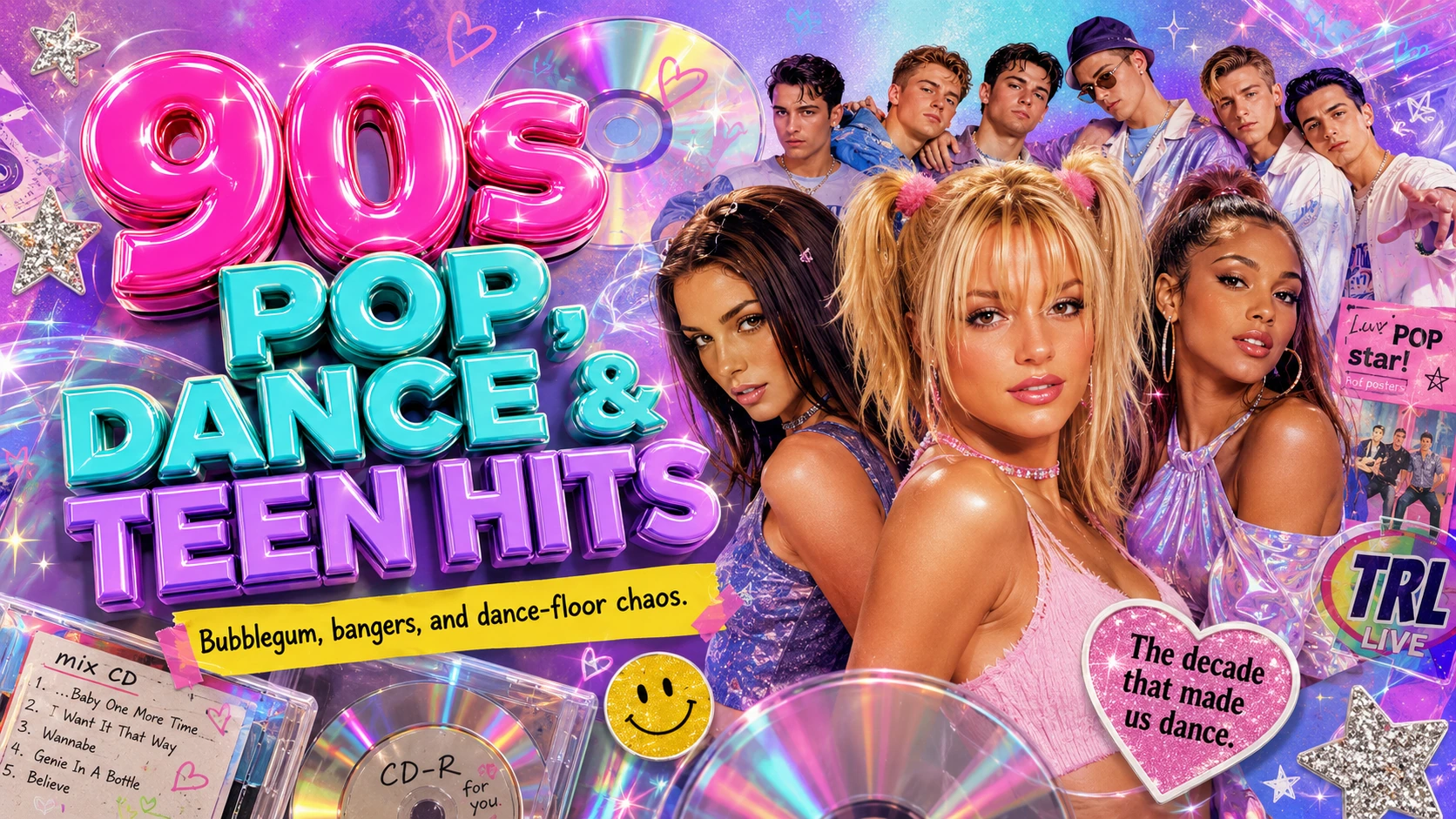
The 90s had a whole other soundtrack running beside grunge guitars and rap classics: glossy dance-pop, Eurodance imports, boy-band harmonies, girl-group attitude, pop queens, school-dance slow jams, CD singles, mall speakers, teen magazines, and videos that made every chorus feel like a national emergency. This is the bright, shiny, absurdly catchy side of the decade — and yes, you still know every word.
90s pop, dance, and teen hits were the hook-heavy songs that took over radio, MTV, malls, school dances, CD binders, and late-90s countdown culture. The sound stretched from dance-pop and Eurodance to boy bands, girl groups, pop queens, Latin pop crossovers, teen idols, club remixes, and soundtrack ballads. It was polished, colorful, ridiculously marketable, and engineered for maximum chorus impact — which is why half these songs still detonate the second the first eight seconds hit.
90s pop did not happen by accident. It was the perfect collision of radio, MTV, mall culture, CD buying, teen magazines, big-budget videos, international production, and songs that understood the ancient science of making a chorus so sticky it should have come with a warning label.
By the 90s, pop songs were not just floating out of car speakers. They were on music-video countdowns, in department stores, on movie soundtracks, in school gyms, in dance clubs, in teen magazines, in CD towers, in mall record shops, and eventually on homemade mix CDs labeled with silver Sharpie like they belonged in the Smithsonian. A big pop hit could be a song, a video, a hairstyle, an outfit, a crush, a poster, a choreography routine, and an argument at lunch about which group member was obviously the best one.
The decade also stretched pop wider than people give it credit for. Early-90s dance records brought club energy into the mainstream. Eurodance made American radio sound like a laser-lit gymnasium. Teen pop turned late-90s fandom into a full-contact sport. Girl groups and boy bands made harmonies feel like destiny. Solo women turned pop into a battlefield of image, voice, and reinvention. Latin pop made the end of the decade feel global and explosive. And TRL made it all feel like something you had to witness live, or at least catch after school before someone else got the remote.
That is why this lane of 90s music still hits differently. It is not only nostalgia for songs. It is nostalgia for a time when music felt communal in the messiest possible way. You found out what was hot from countdown shows, radio blocks, mall speakers, sleepovers, school dances, CD singles, soundtrack albums, and that one friend who somehow had everything before everyone else. Probably from LimeWire later. We are not calling witnesses.
Because everything around the music got bigger too: videos, malls, radio formats, teen magazines, CD packaging, celebrity coverage, dance culture, and the idea that a song could be a full pop-culture event.
Pick a Lane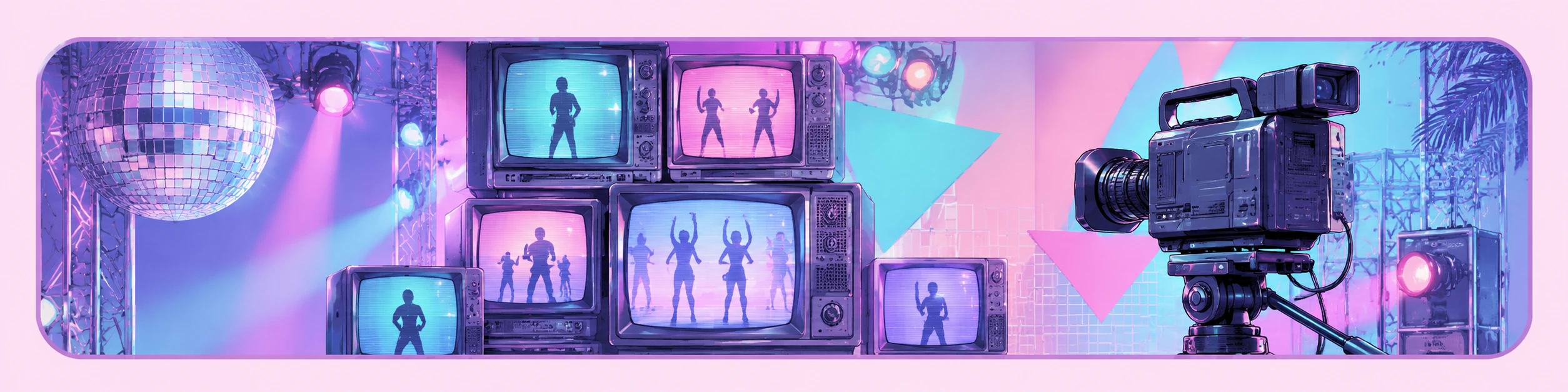
Big visuals turned singles into moments. You did not just hear a hit; you saw the outfits, moves, sets, attitude, and drama that came with it.
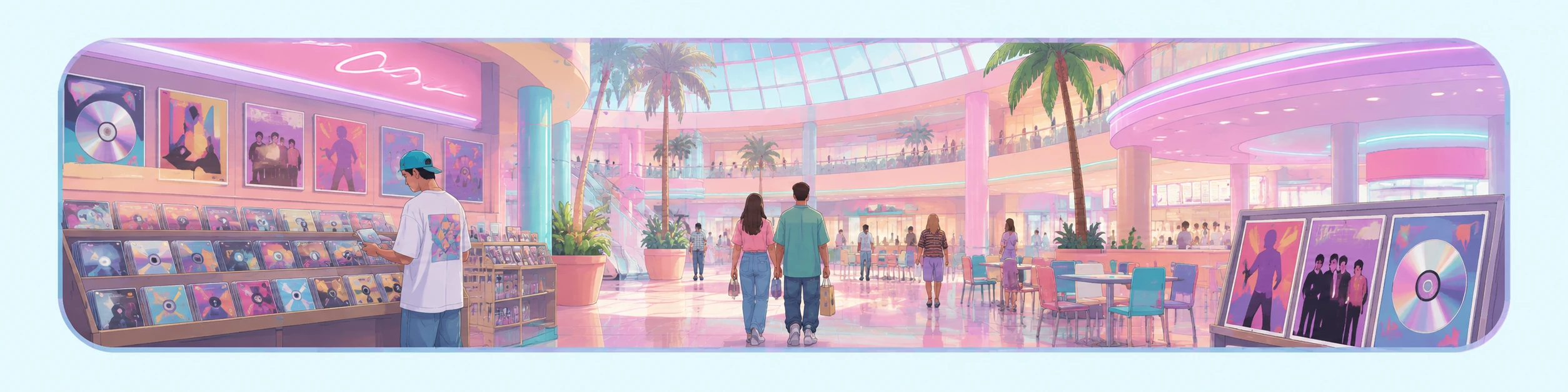
Record stores, clothing stores, food courts, and kiosks blasted the same hooks until buying the CD felt less like a choice and more like surrender.
Drums were shinier, choruses were bigger, remixes were everywhere, and producers knew exactly where the explosion needed to land.
Posters, magazines, countdowns, call-in votes, and video premieres made pop feel like a club everyone had somehow joined at once.
Eurodance, Latin pop, Swedish hitmakers, club remixes, and international crossovers made pop feel bigger than one country or one scene.
This was not one sound. It was a whole glittery apartment complex: dance pop downstairs, Eurodance shaking the walls, teen pop in the lobby with a poster tube, boy bands harmonizing in the elevator, girl groups owning the roof, and a school dance somewhere making every adult wish the speaker system had a volume limit.
The sweet spot where pop hooks met dance-floor production. Radio-friendly, club-ready, and allergic to subtlety in the best way.
Covered BelowBubblegum hooks, choreographed videos, magazine covers, and the late-90s pop boom that turned fandom into a lifestyle.
Covered BelowSolo stars who made the decade bigger: reinvention, vocals, videos, dance cuts, ballads, and pop-cultural gravity.
Covered BelowHarmonies, choreography, favorite-member debates, and an entire economy of posters, lockers, and extremely serious crushes.
Covered BelowGirl power, R&B crossover, fashion, personality, attitude, and friend-group identity packed into three-and-a-half-minute blasts.
Covered BelowSynths, beats, dramatic vocals, rap breaks, and choruses that made every gymnasium feel like a club with bad lighting.
Covered BelowLate-90s crossover heat that made pop feel global, slick, danceable, and ready for a music-video wind machine.
Covered BelowCountdowns, premieres, request battles, live appearances, and that after-school ritual where pop became a daily event.
Covered BelowFast songs, slow songs, awkward circles, gym-floor sneakers, and the DJ who somehow played everything too loud and not loud enough.
Covered BelowOne-hit wonders, novelty monsters, and lightning-strike songs that owned one giant moment and never fully left the room.
Covered BelowRadio edits, club mixes, import singles, B-sides, jewel cases, sticker price anxiety, and the tiny thrill of owning the hit.
Covered BelowTeen mags, mall stores, fashion, commercials, soundtrack tie-ins, posters, bedroom stereos, and all the stuff around the song.
Covered Below90s dance-pop was not always pure club music, and it was not always pure pop. That was the point. It lived in the middle — catchy enough for daytime radio, rhythmic enough for a dance floor, polished enough for a video, and simple enough for everyone to remember after hearing it once while pretending not to like it. Then they bought the single anyway. We saw you.
The lane stretched from early-90s club crossover to late-90s chart fireworks. Madonna kept reinventing. C+C Music Factory and Black Box brought dance-floor muscle into the mainstream. Robin S., CeCe Peniston, and Crystal Waters made house-pop feel glamorous and urgent. Ace of Base turned melancholy into global radio candy. Cher’s “Believe” changed late-90s pop production in a way that never really went away. And by the end of the decade, dance-pop was everywhere: clubs, malls, proms, commercials, and radio blocks where nobody was safe from a massive chorus.
Teen pop did not sneak into the room. It arrived wearing a headset mic, carrying a choreography count, smiling like it had already pre-sold the tour merch. By the late 90s, pop was being built with a younger audience in mind: bigger hooks, brighter videos, cleaner branding, magazine-ready personalities, and songs that sounded perfect on a bedroom stereo, a school bus radio, or the speaker system at a mall store selling jeans with unnecessary pockets.
Britney Spears’ “…Baby One More Time” turned teen pop into the center of gravity. Christina Aguilera brought vocal firepower and glossy radio domination. Hanson made kid-band sincerity and giant choruses feel weirdly unstoppable. Mandy Moore and Jessica Simpson became part of the same teen-star ecosystem. B*Witched made Irish bubblegum-pop feel like recess with a drum machine. Even when adults acted above it, the machinery was impossible to ignore. The songs were built to be sung, clipped, quoted, argued over, and replayed until somebody in the house yelled down the hallway.
The late-90s pop detonation: school hallway imagery, massive hooks, video culture, and a debut single that sounded like the future of teen pop had arrived with a backpack.
Glossy teen-pop packaging with a voice that could blow the doors off the room. “Genie in a Bottle” was sleek, flirty, and everywhere.
“MMMBop” was sunshine, chaos, and surprisingly durable pop songwriting dressed as kid-band mania.
Bright, chanty, playful, and designed for maximum late-90s bounce. “C’est La Vie” understood the assignment.
Boy bands had been around long before the 90s, but the decade perfected the machine: carefully balanced personalities, clean harmonies, synchronized moves, music videos with wind machines, and enough favorite-member debates to ruin a perfectly normal lunch period. Backstreet Boys and *NSYNC turned the late 90s into a harmony arms race. 98 Degrees leaned harder into romantic ballads. Boyz II Men, while rooted in R&B, helped prove just how massive male vocal groups could become across pop radio.
What made this era special was not just the songs. It was the fandom. Posters, magazines, taped TV appearances, countdown votes, mall appearances, CD singles, and that deeply serious energy of choosing a favorite like it was a legally binding contract. The best boy-band songs were engineered to feel personal and communal at the same time: a love song aimed at one imaginary person and also every person screaming in the arena.
If boy bands sold crush fantasy, girl groups sold personality. The Spice Girls turned “girl power” into a global slogan and made every friend group assign members like it was a school project. TLC mixed style, wit, vulnerability, and R&B/pop crossover into something cooler than almost anything else on the radio. Destiny’s Child arrived at the end of the decade with precision, ambition, and a future takeover already warming up. All Saints gave UK pop a moodier, cooler edge. En Vogue and SWV carried vocal-group excellence across R&B and pop spaces, reminding everyone that harmonies could be glamorous, powerful, and lethal.
The best 90s girl-group records were not just catchy. They had identity baked into them. You could hear the attitude, see the fashion, and feel the friend-group politics. These songs soundtracked sleepovers, car rides, school dances, getting-ready rituals, and every moment where somebody suddenly decided they were the main character in a music video. Honestly, we support growth.
Personality as pop architecture. “Wannabe” was not just a hit; it was a friend-group sorting system with a beat.
Cooler than cool, funny when needed, serious when it mattered, and responsible for some of the decade’s smartest pop/R&B crossover.
Late-90s arrival, tight harmonies, sharp attitude, and the early signal that the next era was already loading.
Smoother, moodier, and slightly less bubblegum — proof that girl-group pop could be relaxed and still stick.
One of the biggest mistakes people make with 90s pop is treating it like one giant bubblegum category. The women who dominated the decade were wildly different. Madonna kept mutating. Janet Jackson brought groove, intimacy, and big pop architecture. Mariah Carey blended vocal fireworks with hip-hop-adjacent pop crossover. Whitney Houston turned soundtrack ballads into national monuments. Alanis Morissette blew the door open for confessional pop-rock crossover. Celine Dion made adult-contemporary drama feel cinematic. Shania Twain crossed country-pop into stadium-sized radio. Jennifer Lopez arrived at the end of the decade with dance-pop glamour and movie-star heat.
This is the section where “pop” becomes a huge umbrella instead of a narrow lane. Some songs were dance-floor anthems. Some were breakup therapy. Some were karaoke weapons. Some were soundtrack events. Some were built for radio programmers; others felt like they forced programmers to catch up. Together, they made 90s pop feel bigger, more flexible, and much harder to dismiss.
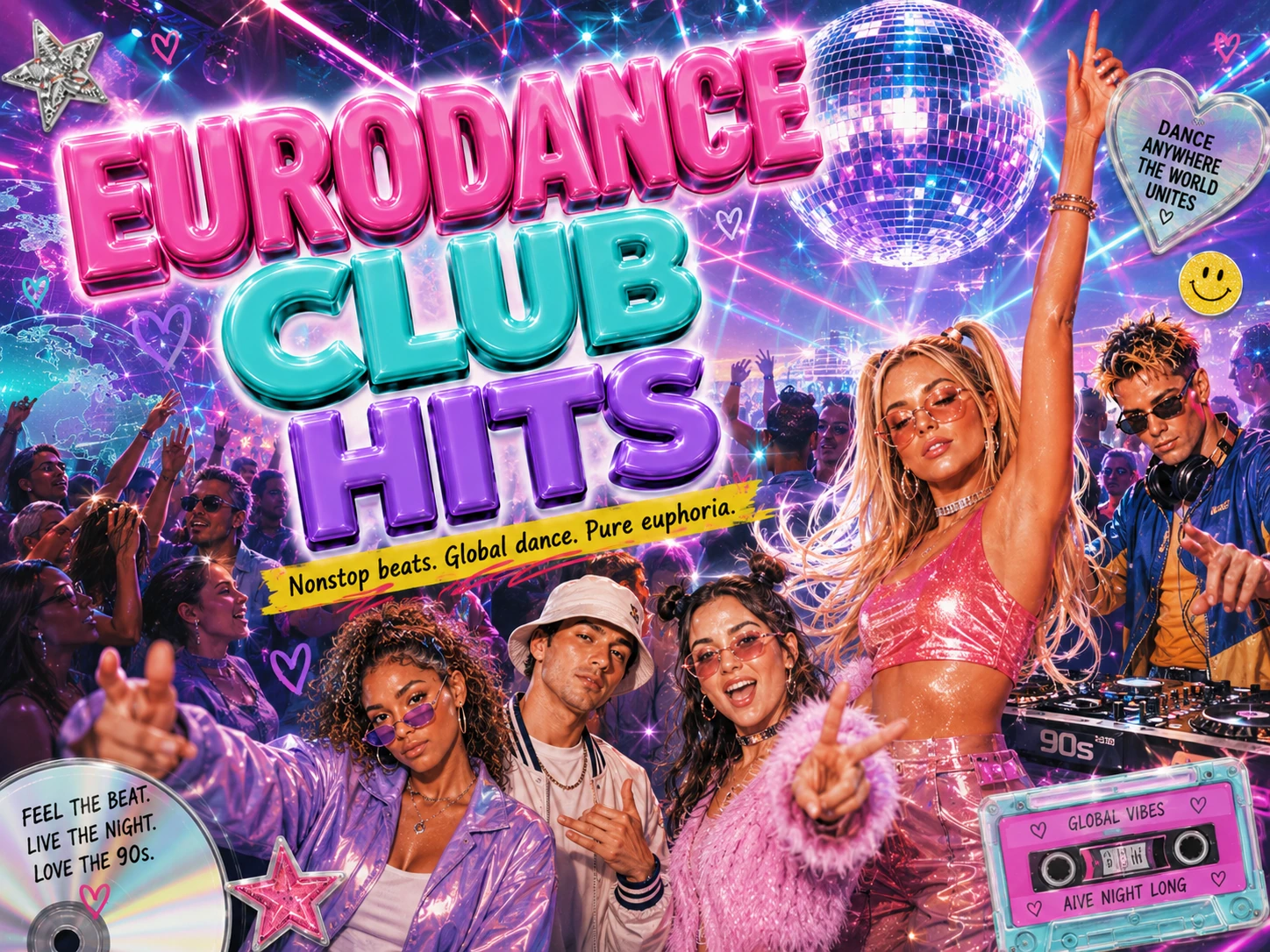
The 90s would be incomplete without the dance records that sounded like they were beamed in from a nightclub inside a laser printer. Eurodance brought fast beats, huge synths, dramatic diva vocals, rap breaks, and choruses that required no context whatsoever. You could hear the first two seconds of “What Is Love,” “Rhythm Is a Dancer,” “Be My Lover,” or “Another Night” and instantly know the room was about to become slightly more embarrassing and much more alive.
These songs were everywhere because they worked everywhere. Clubs, radio, skating rinks, school dances, sports arenas, commercials, compilation CDs, and that one party where someone’s older sibling controlled the stereo and became a legend for eleven minutes. Eurodance did not care about cool. It cared about movement, repetition, and making the hook so unavoidable that resistance became pointless.
“Another Night” and “Run Away” helped make Eurodance feel like a radio format all by itself.
Big vocals, big beats, and “Be My Lover” energy that could power a roller rink for a month.
“What Is Love” became both sincere dance drama and pop-culture shorthand. Rare double crown.
Sports-arena adrenaline, club drive, and the eternal instruction to get ready for this.
The late-90s Latin pop explosion gave the decade one more adrenaline shot before Y2K started making everyone pretend they understood computers. Ricky Martin’s “Livin’ la Vida Loca” arrived like a full-scale event: horns, hips, guitars, charisma, and a chorus that was basically a confetti cannon. Jennifer Lopez’s “If You Had My Love” blended dance-pop, R&B, Latin flavor, and movie-star polish into a sleek debut moment. Enrique Iglesias brought romantic drama into the crossover lane with “Bailamos.” Marc Anthony brought powerhouse vocals and salsa-pop energy to a broader audience. Gloria Estefan’s earlier crossover success helped make the lane possible.
This was not a side note. It changed the feel of mainstream pop at the end of the decade. Suddenly the glossy side of 90s music had more percussion, more movement, more international momentum, and more music-video wind machines than any responsible civilization needed.
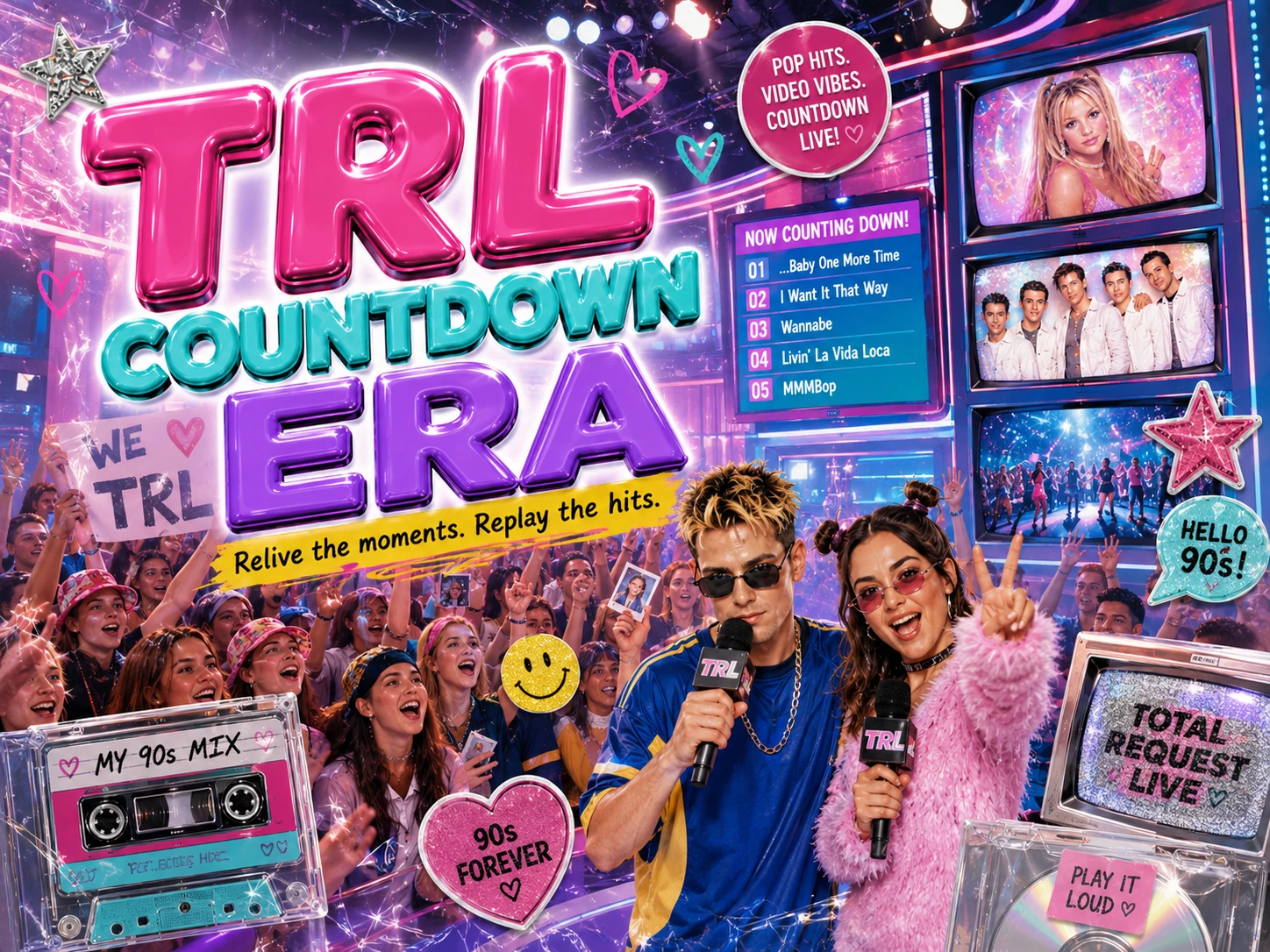
It is hard to explain to anyone raised on instant access how big a music video could feel in the 90s. You had to catch it. You had to wait for it. You had to hope it made the countdown. You had to sit through songs you did not care about because your favorite might be next. Then TRL turned the late-90s pop machine into a daily ritual. Videos were not just promotional clips; they were events, rankings, arguments, and proof that your favorite artist was winning the afternoon.
That mattered for pop because image was part of the song. The school hallway in “…Baby One More Time,” the airport heartbreak of “I Want It That Way,” the attitude of “No Scrubs,” the desert gloss of “Genie in a Bottle,” the monster-party nonsense of “Everybody,” the global weirdness of “Blue (Da Ba Dee)” — these videos became memory anchors. You did not just remember the hook. You remembered where the artist stood, what they wore, who danced behind them, and which friend would not shut up about it the next day.
It turned music into a scoreboard. Pop fans could watch, vote, argue, and feel like the countdown actually meant something. That kind of shared attention is hard to recreate now.
A 90s video gave a song a whole visual identity. Outfits, choreography, lighting, sets, and attitude became part of how the song lived in your head.
Scarcity made everything feel more dramatic. You waited, watched, taped, rewatched, and acted like missing a premiere was a personal tragedy.
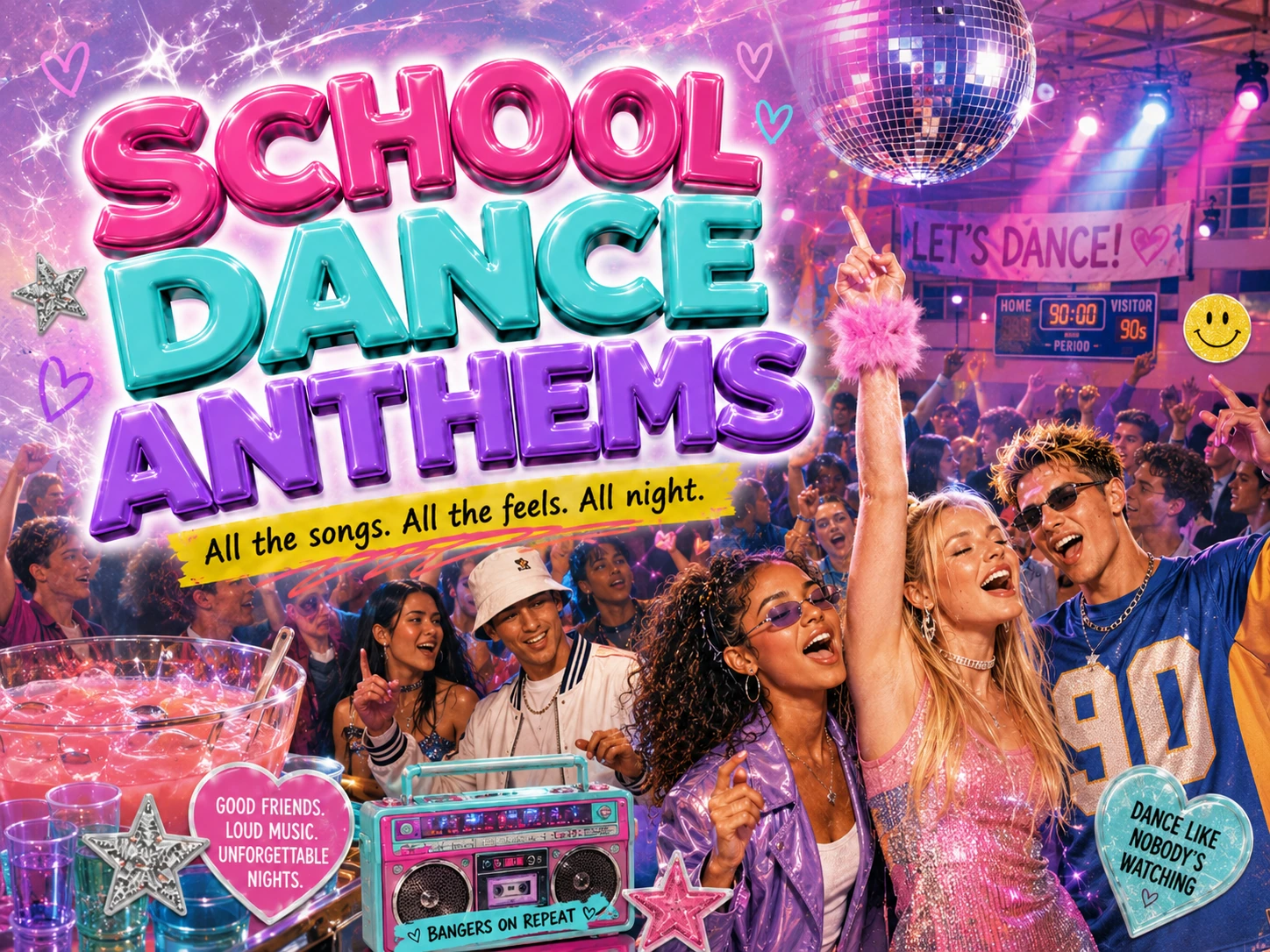
A good 90s pop song did not just live on radio. It survived the real test: a school dance with bad punch, folding tables, balloon arches, a DJ who might be somebody’s uncle, and a room full of kids pretending not to care while absolutely caring. Fast songs created the circle. Slow songs created panic. Party songs created unity. And the right chorus could turn a gym into a memory factory.
This is where pop, dance, R&B, and pop-rap all overlapped. “Gonna Make You Sweat,” “Another Night,” “This Is How We Do It,” “No Diggity,” “I Want It That Way,” “Truly Madly Deeply,” “Kiss Me,” “Macarena,” “Jump Around,” and “Livin’ la Vida Loca” could all exist in the same night. Was it coherent? Absolutely not. Was it perfect? Also yes.
The 90s were a golden age for songs that seemed to appear out of nowhere, dominate every speaker within a five-mile radius, and then retreat into nostalgia like they had completed a mission. Some were novelty-adjacent. Some were dance-floor imports. Some were alternative-pop crossovers. Some were pure bubblegum. This lane is for true one-hit wonders, near-one-hit pop flashpoints, and novelty monsters — not artists like Hanson, who get unfairly shoved into that box because one song became gigantic enough to block out the rest of the story. All of these songs had the same superpower: one hook, one giant moment, and then decades of random reactivation at weddings, parties, grocery stores, and your own brain at 2:17 a.m.
Plastic, absurd, impossible to ignore, and proof that novelty pop can survive by being absolutely committed to the bit.
Late-90s digital weirdness, nonsense syllables, and a hook that walked straight into the future wearing platform shoes.
A global line-dance takeover so powerful that it required no one to understand what was happening.
Retro-swing novelty pop with a roll call chorus that somehow became an international civic requirement.
Pub-shout resilience, sports-bar immortality, and the sound of getting knocked down then immediately becoming unavoidable.
Sun-baked pop weirdness that sounded like a road trip, a shrug, and a chorus you could not dislodge.
Slacker-pop sunshine, summer haze, and that late-90s feeling of being vaguely employed by vibes.
A one-album lightning bolt: mall-bright, anti-cynical, and bigger than its chart life suggests.
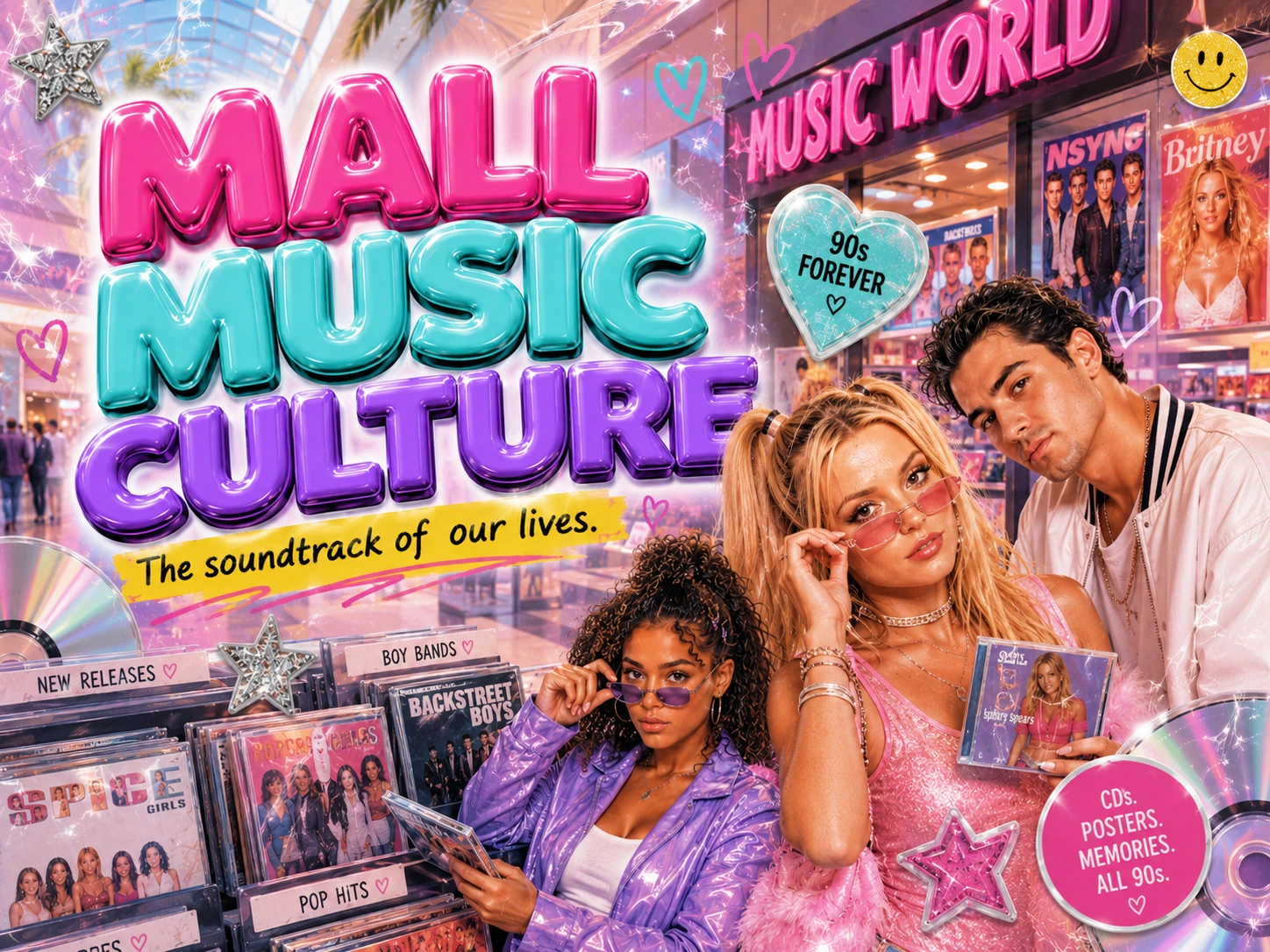
Where pop hits followed you from the food court to the CD bins.
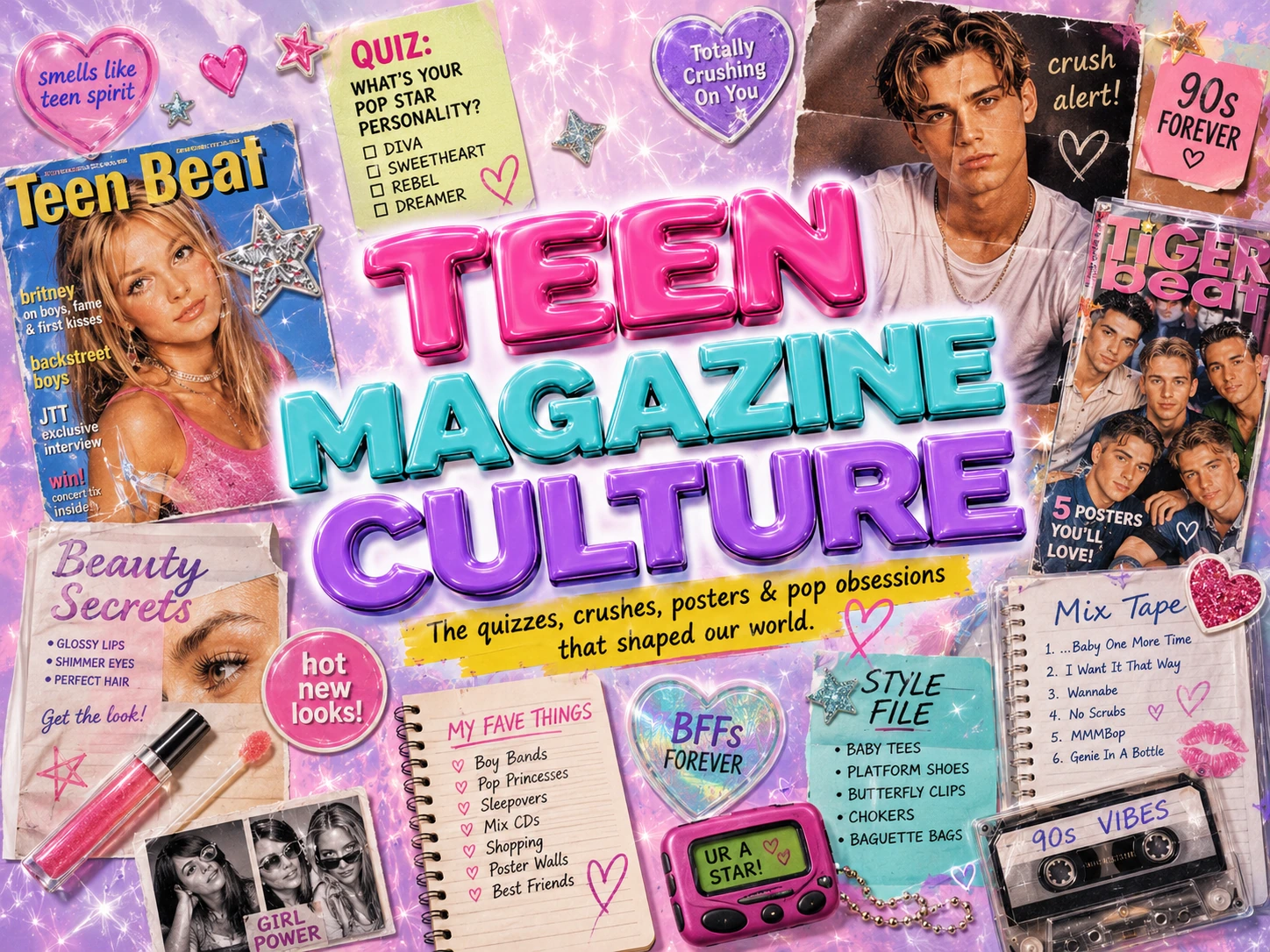
Quizzes, posters, crushes, and pop-star mythology in glossy paper form.
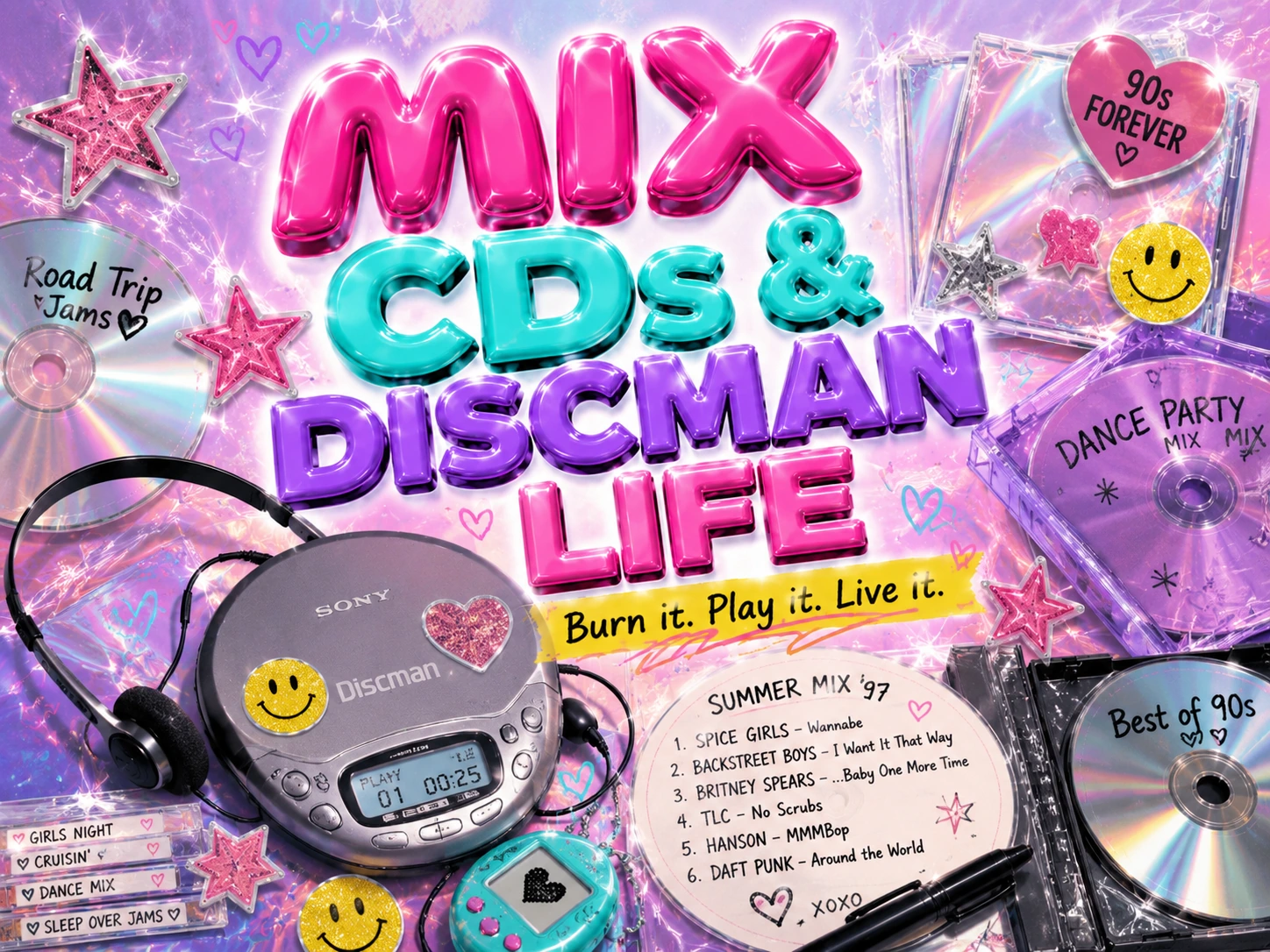
Burn it, label it, guard it, skip-proof it. Allegedly.
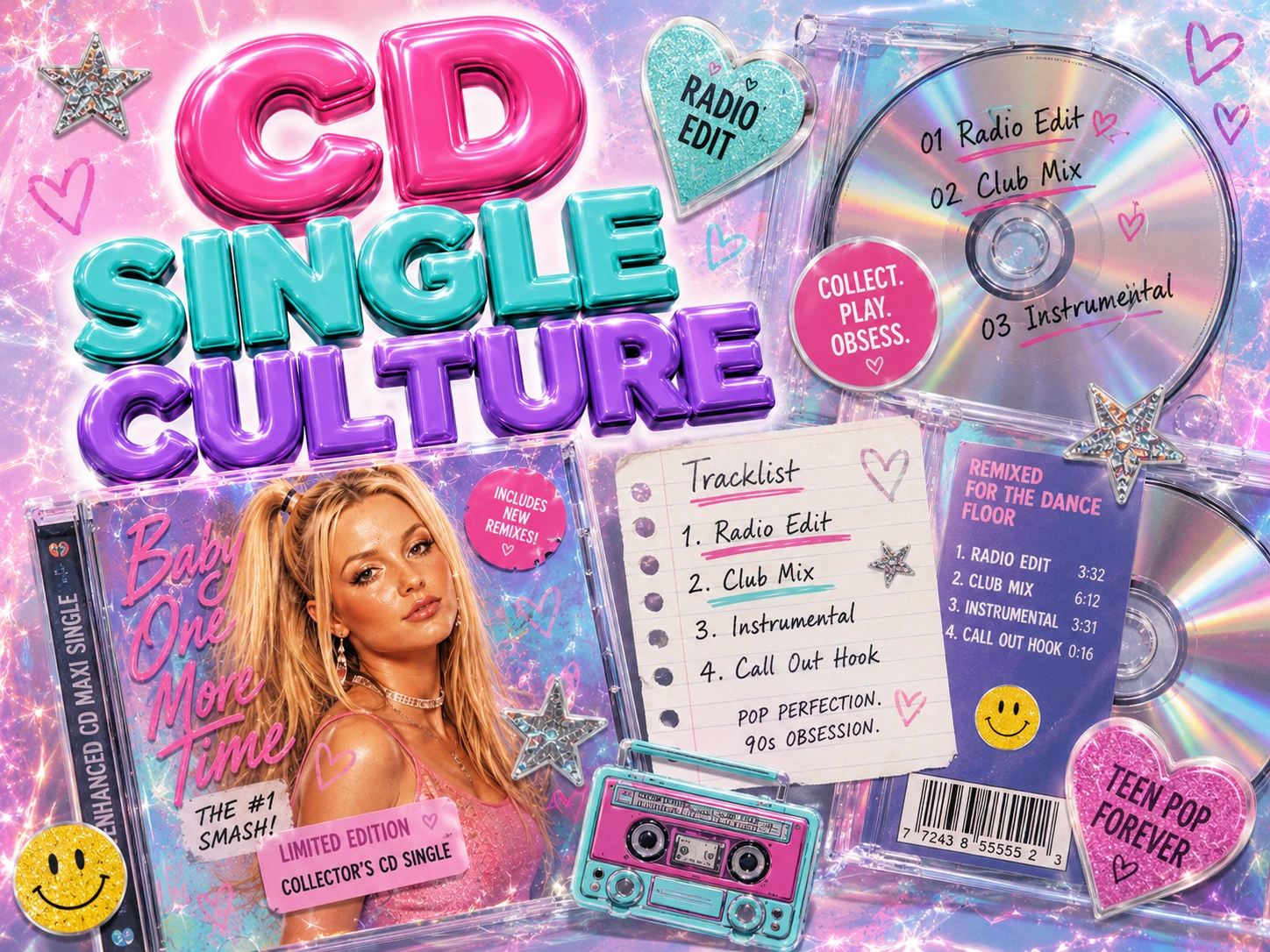
Radio edits, club mixes, B-sides, and tiny plastic treasure.
90s pop lived in objects. Jewel cases. Liner notes. CD singles. Fold-out posters. Cassette singles. Maxis with five remixes you pretended to understand. Magazine clippings taped inside lockers. Plastic CD binders that eventually developed the structural integrity of wet lasagna. The music felt physical because you had to go get it, borrow it, tape it, burn it, label it, protect it, and then yell at someone for scratching it.
Mall culture made pop unavoidable. You heard the same songs in clothing stores, record shops, food courts, arcades, department-store speakers, and the car on the way home. Teen magazines turned artists into personalities. TRL turned videos into standings. School dances turned singles into memories. Pop was not just a genre; it was wallpaper for growing up in public.
The songs were the center, but the lifestyle around them is why this lane still feels so loud. 90s pop lived in places, objects, routines, outfits, and rituals. It was not just what came out of the speaker. It was where you were when it came out of the speaker, who was there, what you were wearing, and whether your Discman skipped right before the chorus like a personal attack.
Pop hits followed you through record stores, clothing shops, food courts, arcades, kiosks, and that one store that smelled like perfume, plastic bracelets, and financial regret.
Posters, magazine tear-outs, taped-up photos, and favorite-member loyalty turned pop stars into room decor with emotional consequences.
These songs were background music for truth-or-dare, prank calls, nail polish fumes, snack raids, and whisper-level drama after midnight.
Fast songs made the room brave. Slow songs made everyone panic. Line dances created temporary civilization. Then the lights came on and reality returned, rude as ever.
Owning the music meant carrying it around in a zippered binder that weighed twelve pounds and somehow still lost the one disc you needed.
Quizzes, style tips, crush rankings, embarrassing interviews, and posters made the music feel like a whole social universe.
TRL and video countdowns made pop feel like sports. Rankings mattered. Premieres mattered. Screaming outside a window apparently counted as civic participation.
Butterfly clips, chokers, shiny pants, platform shoes, frosted tips, baby tees, tinted sunglasses, glitter gel, and enough lip gloss to signal aircraft.
This is not a clinical chart ranking. It is a Gen X/Xennial rewind through the songs that explain the glossy side of 90s music: the radio monsters, the dance-floor staples, the teen-pop explosions, the Eurodance imports, the crossover ballads, the mall-speaker classics, and the songs you still pretend you do not know while singing the entire chorus.
The late-90s teen-pop explosion in one song: a massive hook, an instantly recognizable video, and the exact moment pop kicked the door open again.
A personality bomb disguised as a song. Friend-group politics, girl power, nonsense syllables, and a chorus that traveled everywhere.
A perfectly confusing pop ballad that somehow made emotional sense to everyone. The airport video helped. The chorus did the rest.
Late-90s disco-pop with futuristic vocal processing, emotional armor, and a hook so big it made a comeback feel like a coronation.
The late-90s Latin pop boom going full fireworks: horns, guitars, charisma, and a chorus that felt like a worldwide release valve.
Sleek, moody, and hooky without losing the teen-pop gloss. Also the warning shot that this lane had serious vocal firepower.
Cool, funny, sharp, and endlessly quotable. Pop crossover with actual attitude and enough staying power to outlive the vocabulary.
Sunny, strange, unstoppable, and secretly better built than people admitted. The chorus was less a hook than a hostage situation.
Swedish pop minimalism, melancholy, and a chorus that somehow sounded sunny and weird at the same time. Peak mall-speaker dominance.
A club-rooted pop moment that made fashion, dance, attitude, and video culture feel like one glossy command.
The reason 90s pop still works is not just because the songs were catchy, although let’s be honest, the hooks were criminal. It is because those songs were tied to a whole way of experiencing music before everything became frictionless. You had to wait for videos. You had to listen for radio premieres. You had to buy the single, borrow the CD, tape the song, burn the mix, carry the Discman, flip through the booklet, read the thank-you notes, and protect the disc like it contained the launch codes.
These songs were there when music still had ritual. You heard them in malls, cars, school dances, sleepovers, skating rinks, bedrooms, arcades, movie trailers, commercials, and every countdown that made the afternoon feel like an event. Even the songs you mocked got absorbed into your operating system. That is how you end up thirty years later hearing one chorus and instantly remembering a hallway, a crush, a friend’s room, a summer night, a dance floor, or a CD binder that weighed as much as a small appliance.
Want to zoom into a specific year? Start with the year-song pages and watch the decade mutate from early-90s dance crossover to late-90s teen-pop takeover.
Coming next: the giant pop-song countdown this section is already begging for.
Eurodance, house-pop, club hits, remixes, and the songs that turned every room into a dance floor.
Britney, Christina, Hanson, B*Witched, late-90s radio, and the full teen-pop takeover.
Countdown culture, request wars, video premieres, and the after-school pop ritual.
The best 90s pop songs include “…Baby One More Time,” “Wannabe,” “I Want It That Way,” “Believe,” “The Sign,” “Fantasy,” “Vogue,” “Livin’ la Vida Loca,” “Genie in a Bottle,” “No Scrubs,” “MMMBop,” and “Torn.” The decade’s pop sound was broad, covering teen pop, dance-pop, Eurodance, pop/R&B crossover, Latin pop, and big soundtrack ballads.
90s teen pop was a glossy, youth-focused style built around huge hooks, clean production, big videos, magazine-ready stars, choreography, and songs aimed at younger listeners. Britney Spears, Christina Aguilera, Hanson, Backstreet Boys, *NSYNC, 98 Degrees, B*Witched, and others helped define the late-90s teen-pop boom.
The biggest 90s boy bands included Backstreet Boys, *NSYNC, 98 Degrees, Take That, and groups with strong pop/R&B crossover like Boyz II Men. The late 90s turned boy bands into a major pop-cultural force through videos, magazines, countdown shows, touring, and intense fan loyalty.
Eurodance is a high-energy dance-pop style popular in the 90s, usually built around fast beats, synth hooks, dramatic vocals, and sometimes rap verses. Artists and groups like Real McCoy, La Bouche, Snap!, Haddaway, Corona, Culture Beat, 2 Unlimited, and Eiffel 65 helped bring the sound to radio, clubs, school dances, and compilation CDs.
Popular 90s school dance songs included dance hits like “Gonna Make You Sweat,” “Another Night,” “Be My Lover,” “Macarena,” and “Rhythm Is a Dancer,” plus slow-dance songs like “I Want It That Way,” “Truly Madly Deeply,” “Kiss Me,” “My Heart Will Go On,” and pop/R&B crossovers like “No Scrubs” and “The Boy Is Mine.”
TRL mattered because it turned music videos into daily pop events. Fans watched countdowns, voted for videos, waited for premieres, and saw artists become part of an after-school ritual. It helped make late-90s pop feel communal before streaming made music instantly available.
CD singles gave fans a cheaper way to own a hit without buying the full album. They often included radio edits, remixes, instrumentals, and B-sides, which made them part of the collecting culture around 90s pop, dance, and teen hits.
80s pop was shaped by MTV’s rise, synths, and superstar albums. 90s pop kept the visual power but added more dance-club influence, Eurodance, pop/R&B crossover, hip-hop-adjacent production, teen-pop marketing, TRL countdown culture, CD-single collecting, and a more global late-decade sound.