How 1970s Sitcoms Started Talking About Real Life

How 1970s Sitcoms Started Talking About Real Life
1970s Sitcoms & Social Issues: How TV Got Real — Preview
NETWORK
1970s
TONIGHT • THE SITCOM GETS REAL
Race, class, divorce, work, war—and the laugh track stayed.
1970s TV • Sitcoms • Culture • Prime Time

How 1970s Sitcoms Started Talking About Real Life

The best 1970s sitcoms started talking about social issues prime time once kept at arm’s length: race, divorce, poverty, abortion, women at work, war and generational anger. If you grew up Gen X, there is a good chance you met some of those arguments in reruns before you even knew what they were called.

THE QUICK ANSWER

The laugh track stayed. The safety rails did not.

All in the Family made social conflict part of the weekly sitcom engine, and the best 1970s sitcoms around it widened the territory to race, class, women’s lives, divorce, poverty, sexuality, war and changing ideas about family. These socially conscious sitcoms did not invent serious television. What they did was make messy, unresolved real life feel at home inside mainstream comedy.

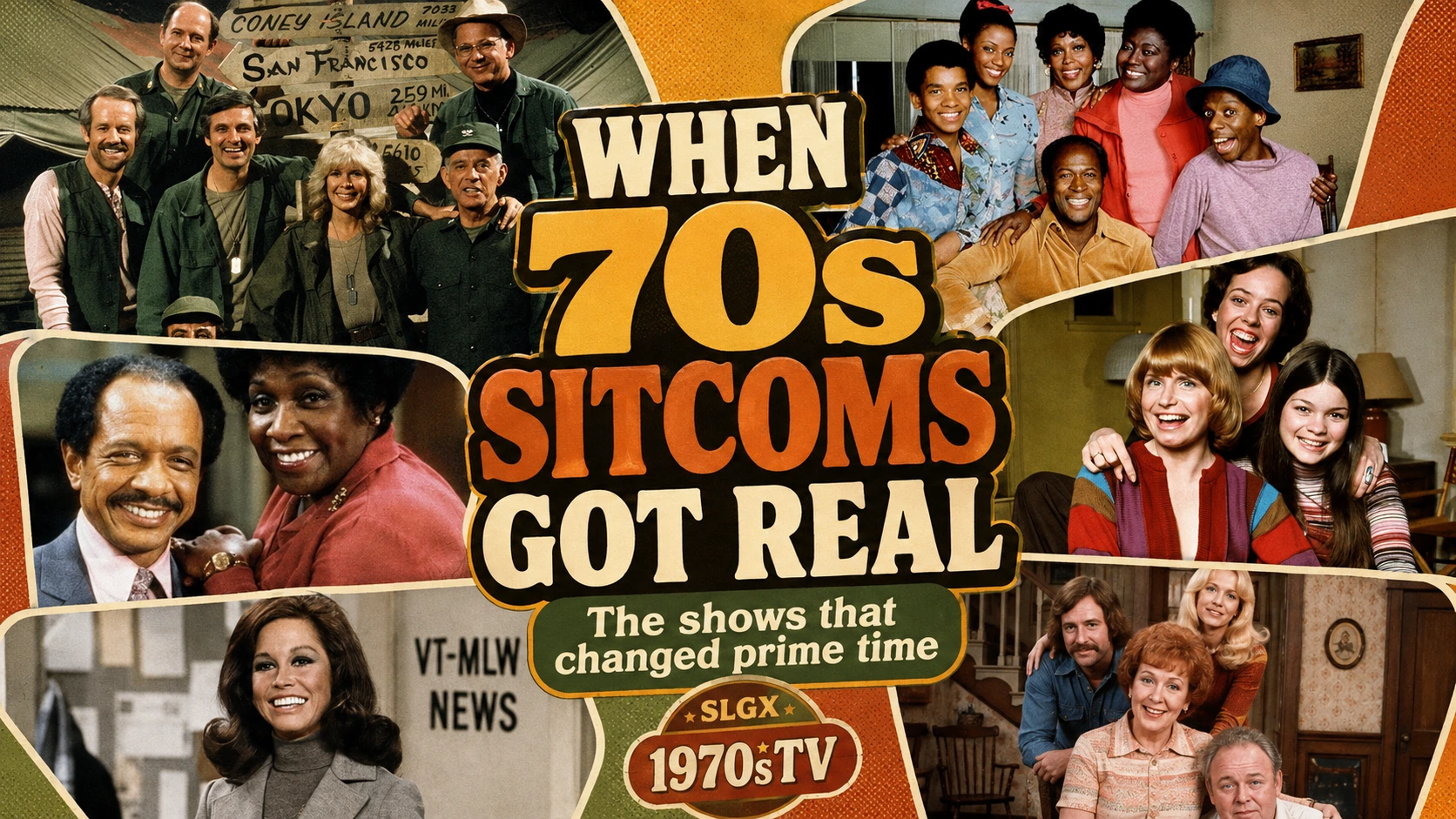
1970s sitcom ensemble publicity photograph
Prime time, meet real life.The news did not stop just because the sitcom started.
Before the arguments got louder

Before 1971, sitcoms were already edging closer to real life

What changed was not the existence of serious subjects. It was how often sitcoms let those subjects stay in the room.

There is a very tidy version of television history in which the 1950s and 1960s were one endless row of neat lawns, polished kitchens and fathers who always knew best, and then Archie Bunker stomped through the door in 1971 and shattered the furniture. It makes a great before-and-after picture. It is also too simple.

Television had been testing the edges of the old sitcom long before the Bunkers arrived. That Girl centered a young unmarried woman trying to make a life and career in New York. Julia put Diahann Carroll at the center of a network series as a widowed Black nurse and mother. The Dick Van Dyke Show had already made the workplace, marriage and adult frustration feel more recognizable than the squeaky-clean domestic comedy that dominated the public memory of early television. Variety shows, satirists and dramatic programs had tangled with civil rights, Vietnam, generational conflict and censorship.

So the breakthrough of the 1970s was not that television suddenly noticed America existed. The breakthrough was that a half-hour comedy could make social conflict part of its weekly operating system. The difficult subject no longer had to arrive as a one-night lesson, receive a solemn speech and disappear before next week’s sponsor. It could be baked into the characters. The family could keep arguing. The rent could still be due. The marriage could remain imperfect. The prejudices could survive an episode because real people do not become different people just because the closing credits rolled.

That shift sounds obvious now because later television absorbed it so completely. But think about what the classic sitcom machine had traditionally promised. Familiar characters entered a problem, chaos followed, and by the end of the half-hour the emotional furniture was usually back where it belonged. Continuity mattered less than comfort. A father could learn patience this week and need to learn a suspiciously similar lesson six episodes later. The world outside the set was often less important than the rules inside it.

Then the culture itself became harder to keep outside. The civil rights movement had transformed American public life. The Vietnam War divided families and generations. Women were challenging old expectations at work and at home. Divorce rates were rising. Cities were changing. Inflation and unemployment were not abstract economic terms to households watching television; they were grocery bills, layoffs, rent checks and arguments after dinner. Network executives could still prefer broad entertainment, but the audience sitting in front of the set was living in a country that no longer looked much like the safest sitcom version of America.

The best 1970s comedies understood that this did not mean comedy had to stop being funny. In fact, the opposite happened. Real disagreement produced sharper jokes because characters wanted different things. Archie did not need a contrived misunderstanding; the world changing around him was enough. Maude did not need to discover an issue; she had an opinion before she entered the room. Fred Sanford did not need to become a symbol of working-class life in every episode; he just needed to worry about the business, needle Lamont, scheme, brag and survive. Ann Romano’s independence mattered because it complicated everything from money to dating to motherhood.

And this is the key to the whole decade: the great social sitcoms were not memorable because they were “important.” Plenty of important television has disappeared. The ones that still sit near the top of any serious look at the best sitcoms of the 1970s lasted because the people were worth coming back to. The arguments belonged to people we wanted to watch. If the characters had only been delivery systems for messages, the reruns would have died decades ago. Instead, we still remember the chair, the apartment, the kitchen table, the cab garage, the precinct and the operating room.

REMEMBER THIS?For a lot of Gen X kids, these were not “issue shows.” They were simply the old shows that came on after school—and then, somewhere in the middle of a joke, the adults started arguing about something you knew was bigger than the joke.
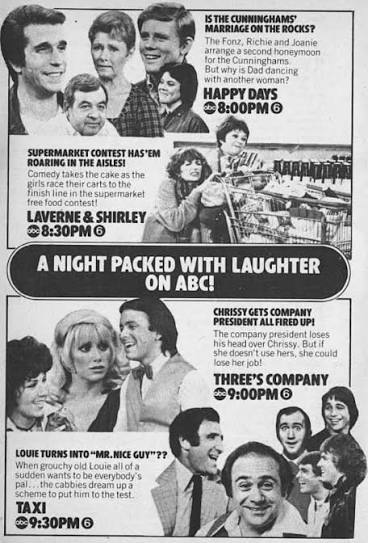
American television schedule from the 1970s featuring popular sitcoms
On paper it was just a schedule. In the living room, those half-hours became arguments about what America looked like and who finally got to be part of the picture.
January 1971

All in the Family made the argument the show

The Bunkers did not occasionally bump into the culture war. They ate dinner with it.

All in the Family is the hinge because the argument was not decoration. The argument was the format. Put Archie Bunker in a room with Mike Stivic, add Gloria, let Edith listen longer than everybody else, and almost any fracture running through early-1970s America could become personal before the first commercial break.

Archie was frightened by a changing country and furious that the old rules no longer seemed to guarantee him authority. That fear came out as prejudice, bluster, nostalgia, resentment and sometimes astonishing cruelty. But the show was too smart to make him a cardboard villain. He could be loving. He could be wounded. He could be funny enough to make you lower your guard. He could be embarrassed, scared or unexpectedly tender. The audience had to deal with a character who was recognizably human without being asked to approve of everything he believed.

Mike was supposed to be the liberal counterweight, and the series repeatedly refused to let that make him automatically admirable. He could be pompous, self-righteous and perfectly willing to enjoy Archie’s house while lecturing Archie about the world. That balance mattered. The show did not become a debate program with one side labeled correct. It became a family where everybody arrived carrying history, ego and blind spots.

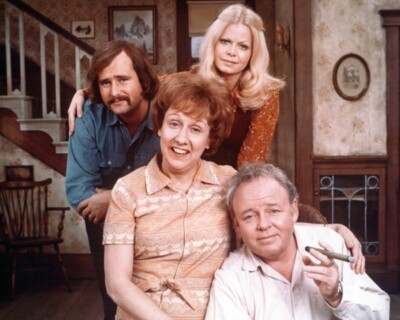
All in the Family cast in the Bunker living room
The Bunker living room turned the national argument into family business. Archie’s chair was only a few feet from the people most likely to challenge him.

Gloria is sometimes remembered as if she were simply caught between the men, but the series gave her a front-row seat to the changing expectations of women. She could push back against her father and her husband. Edith, meanwhile, became one of the most quietly radical characters on the show. Archie underestimated her because he equated softness with weakness. Again and again, the audience discovered that Edith’s empathy gave her a moral clarity the louder people in the room lacked.

The subjects were the ones viewers were already hearing in the news and arguing about at work: racism, antisemitism, women’s liberation, homosexuality, religion, generational conflict, unemployment, politics, war, aging and the changing terms of marriage. The Smithsonian’s National Museum of American History notes that the Bunkers’ conflicts centered on the divisive social and political issues of their era. The Library of Congress places the series squarely in the rise of political and social satire on television.

But the most important innovation was not the list of subjects. It was recurrence. Archie did not stop being Archie because one episode embarrassed him. Mike did not stop needling him. Edith did not suddenly become the head of the household. The family changed by inches, if at all. That was closer to real life than the old one-episode lesson plan, and it gave the writers a bottomless engine. The same prejudice could return in a new disguise. The same generational wound could open around a different subject.

The series also created a problem television is still arguing about: what happens when the character being satirized becomes beloved? Some viewers clearly laughed at Archie. Others laughed with him. Some did both from week to week. Satire does not control the audience once it leaves the writer’s room. That ambiguity made All in the Family more culturally powerful and more complicated than a simple story about progressive television defeating old-fashioned prejudice.

And the Bunker living room mattered as much as any speech. Archie’s chair, the little table beside it, the front door, Edith moving through the room—those things turned national conflict into domestic routine. You could be arguing about race or war, but you were still in a house where somebody had to answer the phone and somebody was going to sit in the wrong chair. That ordinary physical world kept the show from floating away into rhetoric.

Once CBS proved millions of people would come back every week for a family that fought about the country as fiercely as families fought about dinner, the possibilities changed. The door was open. Norman Lear and other producers did not have to keep repeating Archie’s exact formula. They could ask what would happen if the next show started somewhere else entirely.

PLEASE STAND BY • SLGX CHANNEL 70
One Living Room Becomes a Whole Neighborhood

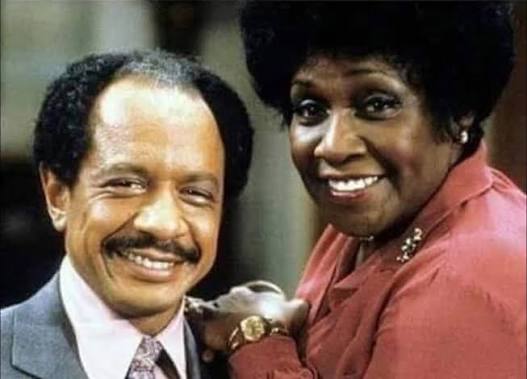
The Bunkers opened the door. Before long, prime time had room for the Findlays, Sanfords, Evanses, Jeffersons, Romanos and a much wider argument about what American life actually looked like.

TV
70s
The Lear family tree

Norman Lear made social issues part of the family sitcom

Archie’s house was only the beginning. The next shows changed the address, the money, the race, the family structure and the point of view.

The easiest mistake is to treat Norman Lear’s 1970s run as one giant show with different furniture. The connection is obvious—direct language, social conflict, working people, characters who could be abrasive and lovable at the same time—but Lear’s television world kept changing perspective. Instead of asking one fictional family to represent everything happening in America, the shows created a neighborhood of competing experiences.

That mattered because “relevance” could have become a formula very quickly. Put a hot topic in the script, have two characters argue opposite sides, land on a lesson, cue applause. Lear’s best shows resisted that by grounding the conflict in different kinds of households. A white working-class family in Queens did not experience change like a Black junk dealer in Watts. A prosperous Black family on the Upper East Side did not experience race or class like the Evans family in a Chicago housing project. A divorced woman raising teenage daughters had different pressure points from Maude Findlay.

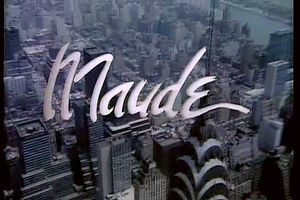
Maude television series title card
Maude
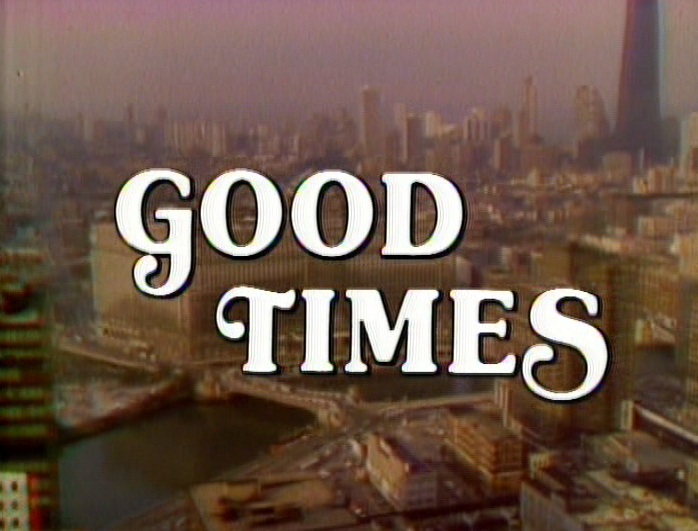
Good Times television series title card
Good Times
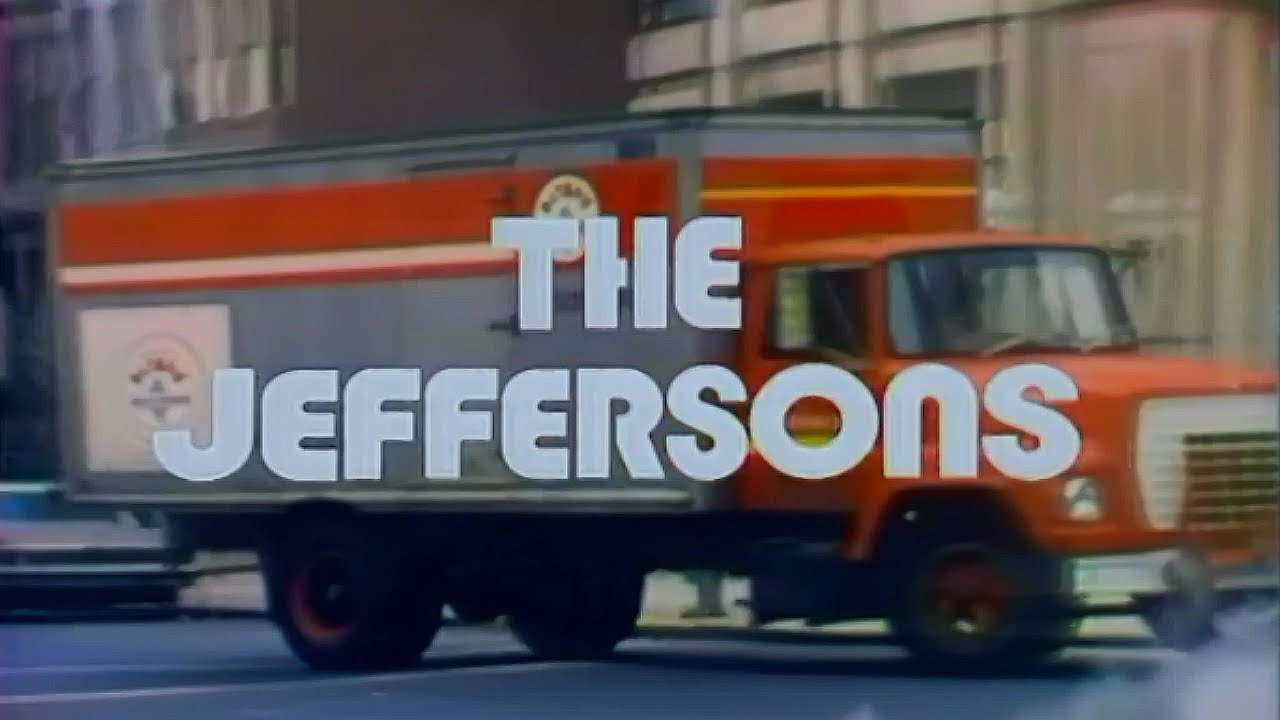
The Jeffersons television series title card
The Jeffersons
1972 • TUCKAHOE

Maude

Maude moved a middle-aged woman with money, confidence and a political vocabulary to the center of the screen. Maude Findlay did not politely request permission to have an opinion. She arrived with one, usually before Walter had finished his sentence.

That alone changed the texture of the sitcom. Maude could be feminist, liberal, bossy, compassionate, vain, self-dramatizing and dead wrong. The series was willing to let an outspoken woman be as flawed as the loud men who had always been allowed to dominate comedy.

The two-part “Maude’s Dilemma” in November 1972 remains the most famous example of the show’s willingness to go where network comedy rarely went. Maude, pregnant at 47, decides to have an abortion. The story aired before the Supreme Court’s Roe v. Wade decision in January 1973. What makes the episode historically striking is not only the subject but the person making the decision: an established, middle-aged television lead with a husband and an adult daughter, not an anonymous guest character created for one week of controversy.

The show did not make Maude easy to agree with. That was the point. She wanted to be the most enlightened person in the room and often discovered that declaring yourself enlightened was not the same thing as understanding everyone else.

1972 • WATTS

Sanford and Son

Sanford and Son gave NBC a working-class Black father and son running a junk business in Los Angeles. The Television Academy Foundation describes the series as chronicling the adventures of cantankerous widower Fred Sanford and his grown son Lamont. That simple setup opened a different part of the American picture.

Fred was no polished symbol of respectable representation. He was cheap, theatrical, stubborn, scheming, proud, jealous and frequently hilarious. Redd Foxx brought a nightclub comic’s rhythm into the network living room, and the rough edges were part of the appeal. Lamont wanted a bigger life and spent half his time wondering whether loyalty to his father was keeping him trapped.

The class element is essential. Their business was not decorative. Money mattered. The neighborhood mattered. The junkyard mattered. The show could touch race without having to make every story a formal debate about race because Black working-class life itself was finally being treated as ordinary sitcom territory.

That ordinariness was a kind of progress all by itself. Fred did not have to be noble to justify being on television. He got to be a pain in the neck.

1974 • CHICAGO

Good Times

Good Times placed economic pressure inside the family comedy so completely that you could not separate one from the other. James and Florida Evans were not poor because a particular episode needed a lesson. Money was the weather of the series.

That changed the stakes. A job was not just a workplace gag. Losing one could shake the household. Rent was not a prop. Pride and desperation could coexist. The Television Academy Foundation’s program history specifically notes recurring stories about financial problems, evictions and discrimination.

The Evans family was also warm, funny and recognizable in ways that prevented poverty from becoming the whole identity. Florida’s strength mattered because the pressure was real. James’s anger mattered because providing for the family was tied to his sense of himself. The children could be funny, ambitious or foolish without the series pretending their circumstances were irrelevant.

The show’s later emphasis on J.J. and “Dy-no-mite!” remains part of the conversation because it exposes the commercial tension inside socially conscious television. A breakout comic character can keep a show popular and also pull attention away from the balance that made the family meaningful. That tension does not make Good Times less important. It makes it a perfect example of what network television was trying to do: represent something real and still win the ratings battle.

1975 • MANHATTAN

The Jeffersons

The Jeffersons changed the economic picture again. George and Louise had moved on up. The dry-cleaning business was successful. The apartment was expensive. The view was better. None of that erased race, marriage, ego or insecurity.

That was a crucial expansion of Black sitcom life. The Jeffersons did not have to prove that Black families could endure poverty; they got to argue about what happened after success. George could be ambitious, proud and prejudiced. Louise could enjoy the new life while refusing to let George confuse money with wisdom. Their neighbors and friends created a social world where race and class collided in different combinations.

The interracial marriage of Tom and Helen Willis gave George another place to expose his own contradictions. A character who had experienced racism could still carry prejudice. The show refused the comforting idea that belonging to a marginalized group automatically made someone morally uncomplicated.

And because the series was funny first, none of this arrived under glass. George strutted. Florence cut him down. Louise rolled her eyes. The social story was living inside a sitcom engine strong enough to survive eleven seasons.

1975 • INDIANAPOLIS

One Day at a Time

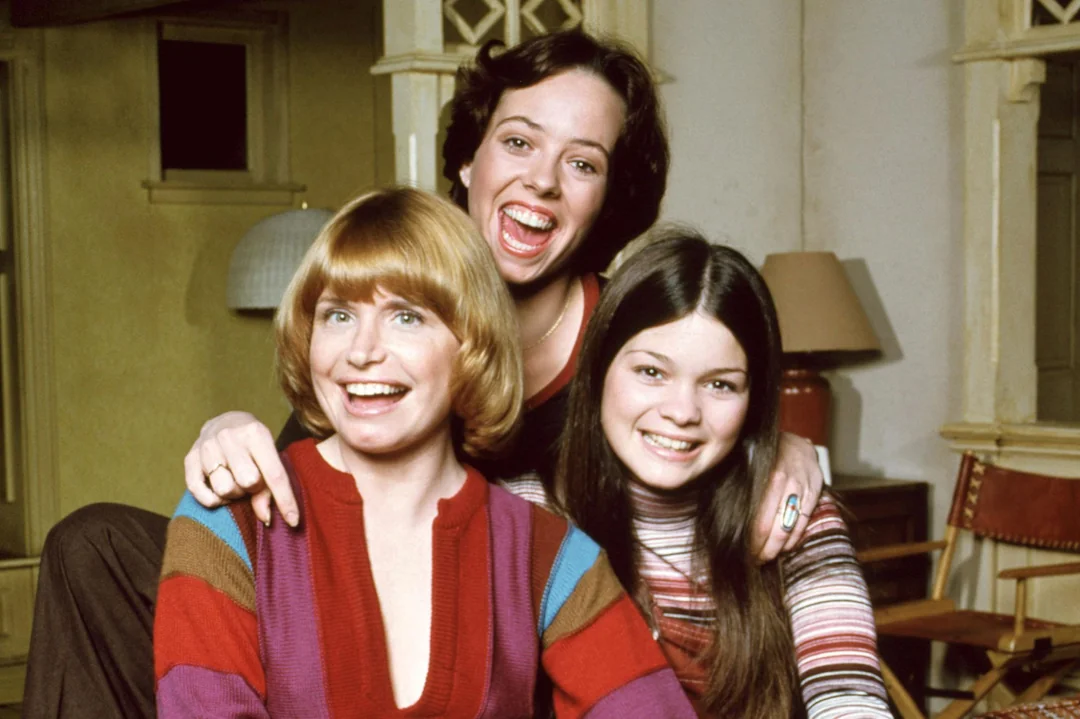
One Day at a Time moved the argument inside a family that had already broken one of television’s old assumptions. Ann Romano was divorced, raising two teenage daughters and trying to build an adult life on her own terms. The Television Academy Foundation describes Ann as facing many of the same experiences as real American women: divorce, single parenting and reentering the job market.

The premise mattered because divorce was not a temporary crisis the series intended to reverse. Ann did not spend the show waiting for the old family structure to be restored. She had to make money, parent teenagers, date, define boundaries and decide what independence actually meant when independence still came with bills and fear.

That made the show particularly good at the gap between the slogan and the lived reality. “Women’s liberation” could sound abstract in public debate. Ann experienced it as a landlord, a boss, a boyfriend, a daughter slamming a door and a paycheck that had to cover everything. She could be strong without being invulnerable.

For Gen X viewers who encountered the show young, that apartment felt ordinary long before the culture around it did. That is how television changes the picture sometimes: not with a speech, but by letting a different kind of family become familiar.

WHAT LEAR REALLY CHANGED

He multiplied the point of view

Look at the five shows together and the achievement becomes larger than any individual controversy. They do not agree with one another because their characters do not occupy the same America.

Archie worries about losing the country he thinks he knew. Maude assumes the country should catch up with her. Fred Sanford knows survival involves hustle. Florida Evans fights to protect dignity when money is thin. George Jefferson treats success as proof that he beat the system and then discovers the system still followed him upstairs. Ann Romano is trying to turn independence from an idea into a daily life.

That range is why the Lear era still matters. The shows did not merely add “issues” to sitcoms. They added people who experienced the same era from different rooms. By 1975, The Jeffersons and One Day at a Time were doing it from two more completely different addresses.

See where the decade’s comedies rank →
Not waiting to be rescued

The Mary Tyler Moore Show, Maude and One Day at a Time changed women’s lives on TV

Work, divorce, ambition, sex, anger and independence stopped being side plots and became the lives of the leads.

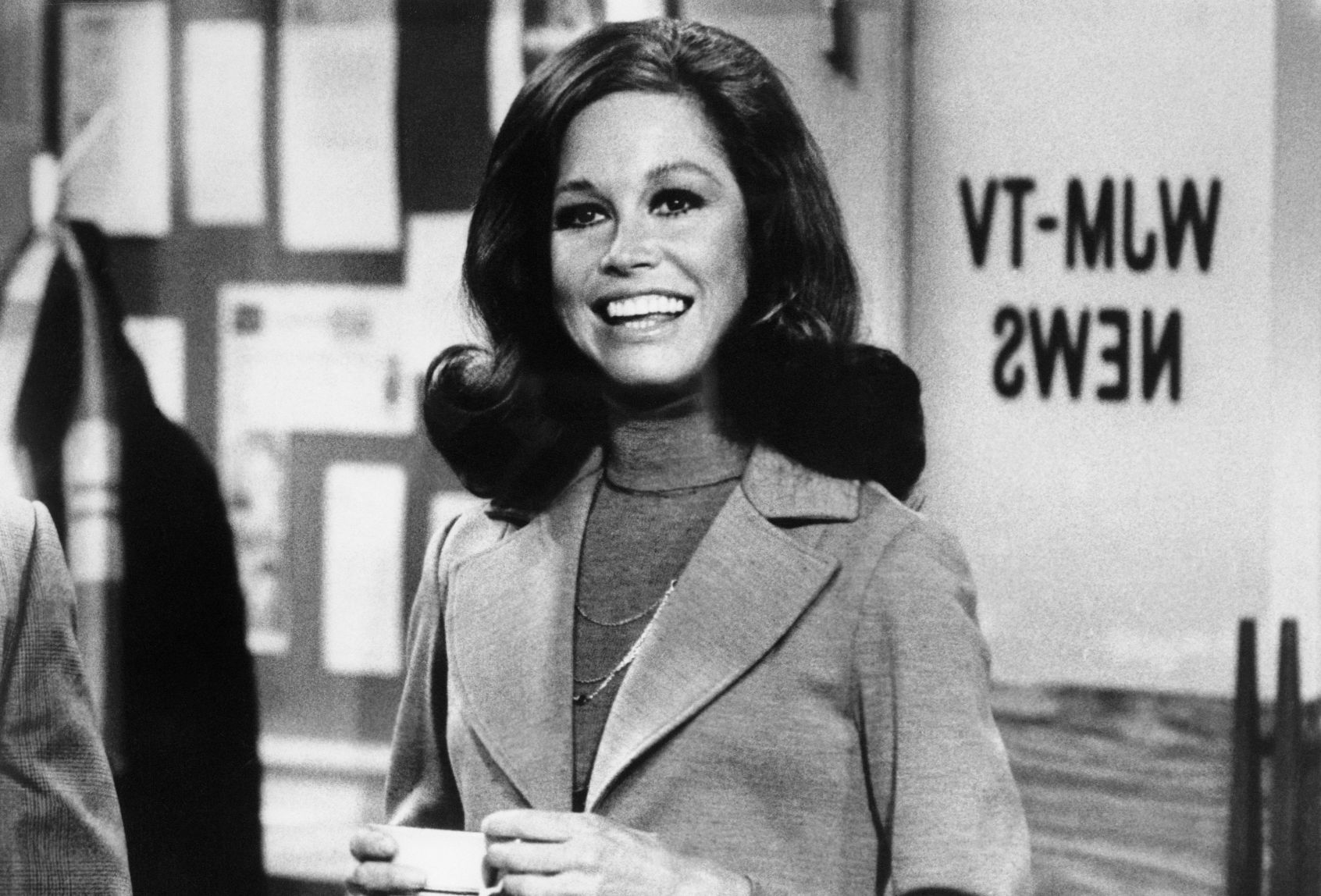
If Archie Bunker made the political argument impossible to ignore, The Mary Tyler Moore Show changed television in a quieter way. Mary Richards was single, employed, living in her own apartment and building a life that the show did not treat as a temporary holding pattern before marriage. That sounds almost comically ordinary now. In 1970, the ordinariness was the point.

Mary’s job at WJM was not a cute hobby until the right man arrived. Work was one of the central relationships of her life. Lou Grant, Murray Slaughter, Ted Baxter and the newsroom formed a kind of chosen family, but the show never pretended career was effortless. Mary had to negotiate authority, confidence, sexism, friendship and the awkward truth that being good at your job does not stop your co-workers from being ridiculous.

The Television Academy Foundation identifies the series as a major model for the working-woman sitcom, and you can see why in the tone. Mary was not constantly announcing that she was a symbol of liberation. She went to work. She paid rent. She dated men who were not automatically the answer to her story. She failed, recovered, got angry and kept moving. Television slowly learned that a woman doing those things could be the whole premise.

Rhoda took a character who had often been the funny, insecure best friend and made her the center. That mattered too. Rhoda Morgenstern was not Mary Richards with a different wardrobe. She carried different anxieties about appearance, family and self-worth. Her famous television wedding became a huge event, but the character’s later divorce also made clear that marriage did not have to be the permanent finish line of a woman’s sitcom story.

Alice put another version of independence on the screen: a widowed mother working in a diner and trying to support a child while holding onto a dream of singing. The economic texture was different from Mary’s Minneapolis apartment and different again from Ann Romano’s life. A woman at work could be a newsroom producer, a diner waitress, a divorced mother starting over or a loud middle-aged political force named Maude.

Mary Richards arrived in the television year of 1970, and by the time Maude and Ann Romano joined the schedule, the idea of a woman carrying a comedy through work, divorce, dating, anger and independence no longer felt like a one-show exception.

That variety is what made the decade important. Television did not suddenly stop judging women by old standards. Far from it. Female characters were still more likely to have their looks, age, sexuality and anger turned into jokes. Networks still worried about likability. A man could be abrasive and be called strong; a woman who behaved the same way could be called impossible. The scripts themselves sometimes carried the sexism they were trying to question.

But the center of gravity had shifted. Women were increasingly allowed to want things that did not orbit a husband: authority, money, respect, privacy, sex, work, friendship, control of their own decisions. They were also allowed to discover that getting those things did not end the story. Independence created new problems because adulthood always does.

That is why Maude and Mary belong in the same history even though their shows could not feel more different. Maude announced the revolution from across the room. Mary made it look normal enough that you almost forgot a revolution had happened.
Mary Richards at WJM on The Mary Tyler Moore Show
Mary Richards at WJM: the working woman was not a special-event storyline. The job was simply where a huge part of her adult life happened.
THE QUIET REVOLUTIONThe radical part of Mary Richards was how little the show needed to call her radical.

She went to work. She dated. She made mistakes. She had friends. She paid rent. Television slowly learned that a woman doing those things could be the whole premise.

The family picture changes shape

Divorce and changing families became part of 1970s sitcoms

The sitcom family did not disappear in the 1970s. It stopped pretending there was only one respectable version.

The old television family was never as uniform as nostalgia makes it seem, but by the 1970s the range became impossible to miss. The family on television was changing shape because the family in America was changing shape. Divorce, remarriage, single parenthood, stepfamilies, multigenerational homes and financial stress all became more visible.

The Brady Bunch had already turned a blended family into bright, reassuring entertainment. It usually treated the household as a problem that had essentially been solved before the opening theme ended: six kids, two parents, one house, one Alice. That comfort was part of its enormous rerun appeal. But other 1970s shows were more interested in the unsettled part.

One Day at a Time begins after the marriage is over. Ann Romano’s family is not waiting for a replacement father to restore the missing piece. The questions are practical and emotional: how much freedom do the girls get, how much money is there, how does Ann date without surrendering authority, when does a mother get to be a person who wants something for herself?

Maude gave us remarriage and adult children in a household where everybody had history before the pilot. All in the Family made generational conflict part of the architecture by putting Mike and Gloria under Archie’s roof. The Jeffersons kept a long marriage at the center while allowing George and Louise to disagree about what success meant. Good Times showed a two-parent family under relentless economic pressure without treating poverty as evidence that the family itself was broken.

The change was not simply that television acknowledged divorce. It was that parents were allowed to be imperfect without losing their right to be the center of a family comedy. Ann could be overwhelmed. James could be angry. George could be selfish. Maude could be overbearing. Archie could be Archie. The idealized father who dispensed wisdom from the head of the table now had to share the schedule with adults who were guessing.

That felt closer to the world many Gen X kids were actually growing up in. Plenty of us knew stepfamilies, divorced parents, single mothers, grandparents in the house, parents working odd hours or money getting tight. Even if our own family looked nothing like the one on screen, television was finally admitting that “family” was not a single floor plan. The broader 1970s family-TV lineup ranged from that messier sitcom realism to the warmer comfort of The Waltons and Little House on the Prairie.

Ann Romano with daughters Barbara and Julie on One Day at a Time
Ann Romano with Barbara and Julie. The family started after the divorce, not before it, and the show never treated their household as something waiting to be repaired.
Who gets to be ordinary?

Black sitcoms brought race and class to the center of prime time

Representation mattered, but so did the kinds of problems Black characters were finally allowed to have.

One of the easiest ways to flatten 1970s television history is to treat every Black sitcom as the same story of “representation.” The shows themselves were more specific than that. Sanford and Son was built around a working-class father-son business. Good Times was about a family holding itself together under economic pressure. The Jeffersons was about a family that had achieved the upward mobility so many older stories treated as the finish line—and discovered that money did not erase race, marriage, ego or class anxiety.

That range was the point. Black characters did not have to stand in for one approved idea of Black life. Fred Sanford could be cheap, vain, funny and impossible. Florida Evans could be exhausted and still demand dignity from everyone in the apartment. George Jefferson could be successful and still carry his own prejudices into the penthouse. Louise could love him and tell him when he was full of it.

Black sitcoms of the 1970s also showed why class cannot be separated from the decade’s race story. Television had spent years presenting middle-class comfort as if it were simply normal. The 1970s widened the economic frame. Rent, jobs, layoffs, small businesses, cramped apartments and social mobility became comedy material because they were already life material.

Good Times is particularly important because its argument was not only about poverty. It was about dignity under pressure. James wanted work not merely because the family needed cash, but because providing was tied to his identity. Florida often became the emotional center because she refused to let hardship define the family’s value. J.J.’s art and humor offered another response to the same conditions. The family could love one another fiercely and still be tired of struggling.

Then The Jeffersons flipped the frame. George had money. He owned successful businesses. He had escaped the economic circumstances that television often used to define Black characters. That did not make him less Black or make racism vanish. Instead, the show got to explore what upward mobility changed and what it did not. George could enter an affluent world and still encounter prejudice; he could also reproduce prejudice himself.

What’s Happening!! added another tone. Raj, Dwayne and Rerun were teenagers and young men whose lives could revolve around school, dating, jobs, friendship and neighborhood comedy. The show did not have to carry the same social weight as Good Times in every episode to matter. Sometimes being allowed to be goofy, young and ordinary is part of representation too.

The contradictions were real. Network executives and producers could lean toward catchphrases and broad stereotypes because those laughs were easy to sell. A breakout performer could bend an ensemble around himself. White writers and executives still held enormous power over what stories reached the screen. A television family could be asked to carry the burden of representing millions of people who did not share one experience.

But the picture had widened permanently. By the end of the decade, there was no plausible way to pretend Black American life belonged only in dramas, news reports or occasional guest roles. Black families and characters had become part of the regular machinery of network comedy—and they occupied more than one economic and social lane.

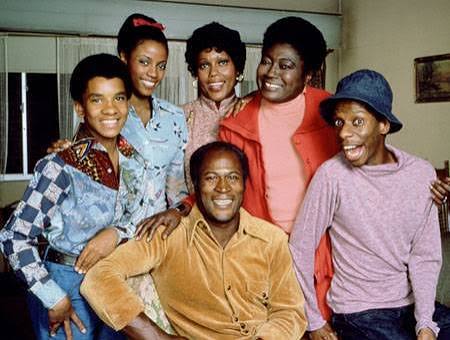
The Evans family from Good Times
The Evans family — love and pride under constant economic pressure.
George and Louise Jefferson from The Jeffersons
George and Louise Jefferson — success changed the address without erasing race, marriage or class.
There was a paycheck under the punchline

Workplace sitcoms made jobs, money and class part of the story

The 1970s sitcom started noticing that jobs were not just places to meet funny co-workers. They were how people survived.

Earlier sitcom characters had jobs, of course, but the household economy was often strangely frictionless. The 1970s made the paycheck visible. That was especially important in a decade when inflation, recession and unemployment were part of everyday conversation. People watching television knew what it meant to postpone a purchase, worry about hours, take a job you did not love or keep working because everybody at home was counting on the money.

Good Times put the economics right on the table, but it was hardly alone. When it joined the 1974 television schedule, money trouble was no longer something a family comedy had to hide between the jokes. Sanford and Son was built around a marginal small business. Alice centered on a working mother in a diner. Laverne & Shirley began with two blue-collar women working in a Milwaukee brewery. Taxi gathered people whose dreams were somewhere beyond the garage and then asked what it felt like to keep punching the clock anyway.

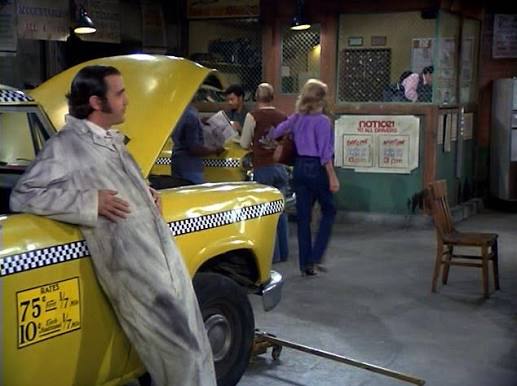
That last idea was quietly radical. Alex Reiger did not need a grand career arc to be a worthy lead. Bobby could want to act, Tony could want to box, Elaine could imagine a different life, and the cab company could remain the place where all those ambitions collided with rent. The comedy came from the gap between the life you pictured and the life you were living.

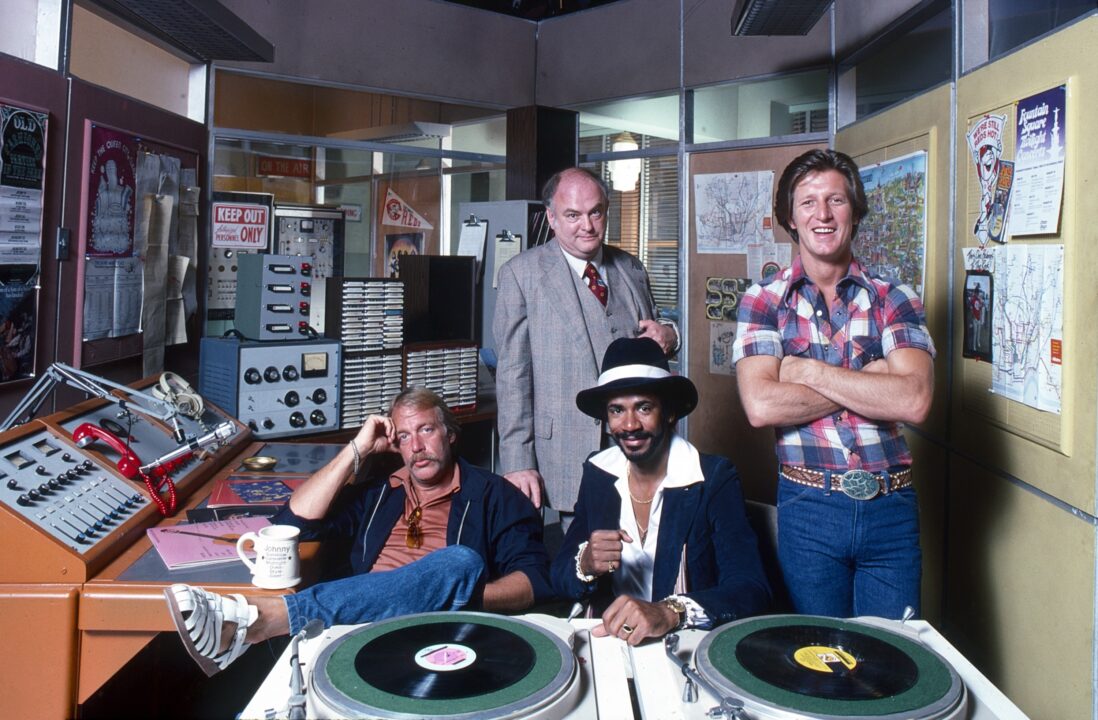
WKRP in Cincinnati approached work from a different angle. Radio could be absurd, creative, commercial and insecure all at once. The station was a workplace family, but it was also a business that needed ratings, advertising and management decisions. The characters cared about the music and the work even when the work drove them insane.

Barney Miller made bureaucracy funny in perhaps the most 1970s way possible. The detectives were not glamorous TV cops speeding through the city. They were tired public employees filling out paperwork in a shabby precinct. Their work brought them into contact with every kind of urban problem, but their own day was still coffee, forms, bad plumbing, low-level frustration and waiting for something to happen.

What connects these shows is the refusal to treat work as invisible adult wallpaper. The boss, the shift, the paycheck, the dream you had before the job and the person you became because of it—those became legitimate sitcom material. That is one reason the decade still feels recognizable. Most adults do not spend their lives solving mysteries or inheriting fortunes. They go to work.

Sunshine Cab garage from Taxi
Taxi — the garage where dreams and the night shift kept colliding.
WKRP in Cincinnati radio station interior
WKRP in Cincinnati — creative work, commercial pressure and one very strange office family.
Laverne and Shirley at the Shotz Brewery
Laverne & Shirley — blue-collar work was part of the premise, not background scenery.
A hospital in Korea, an audience living through Vietnam

M*A*S*H proved a comedy could leave a bruise

The show did not need a living-room argument. The institution itself supplied the conflict.

M*A*S*H arrived in the television year of 1972, set during the Korean War but airing while Vietnam remained a living American wound. The Television Academy Foundation’s oral-history archive describes a mobile surgical hospital where doctors and nurses patched up wounded soldiers who arrived by helicopter, ambulance or bus. The setting gave the show distance from the current war without giving it emotional safety.

That distance was one of its greatest tools. Hawkeye Pierce did not need to stand in front of the camera and announce a position on Vietnam. He could rage against military absurdity in Korea while viewers supplied their own contemporary associations. The show’s antiwar feeling came through bodies, exhaustion, bureaucracy and the recurring obscenity of talented people having to repair young men so the machinery could keep going.

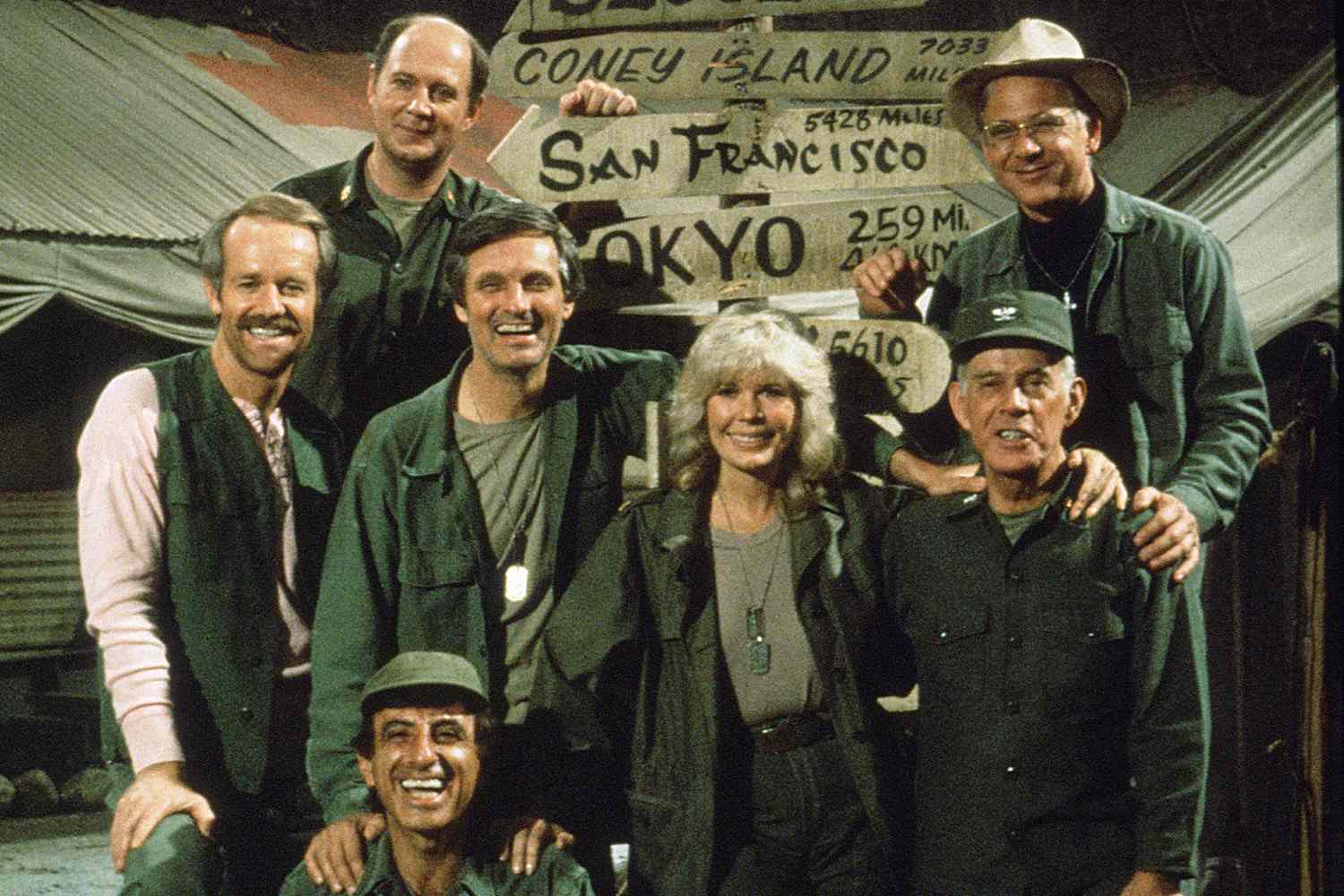
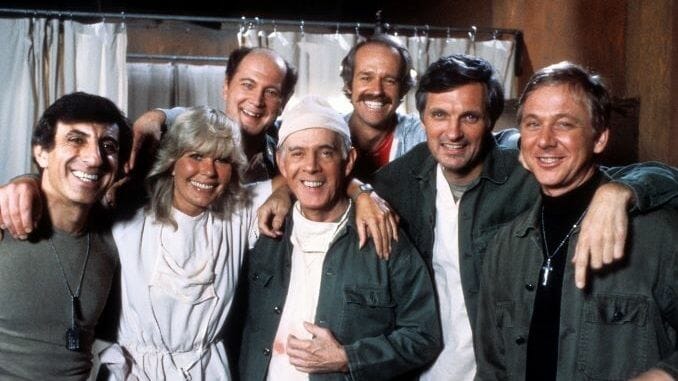
M*A*S*H cast standing in front of the 4077th sign
The 4077th looked like a collection of comic oddballs until the helicopters came in. The people were the reason the tonal shifts mattered.
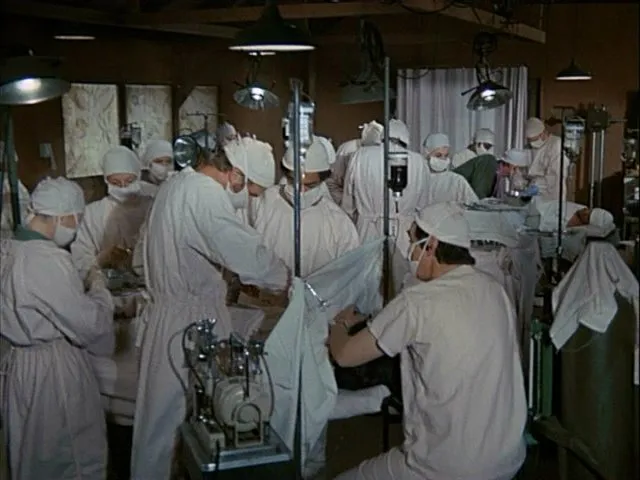
Operating room scene from M*A*S*H
M*A*S*H could move from a joke to the operating room in seconds. Comedy was how the characters survived what came through the doors.

The comedy was not a contradiction. It was survival. Hawkeye’s jokes, Trapper’s mischief, Klinger’s schemes, Radar’s innocence and the strange rituals of the camp created a buffer against what came through the operating room doors. That is why the tonal turns worked. When the helicopters arrived, the jokes could stop because the characters had been using jokes for exactly that reason.

Larry Gelbart later discussed fighting against the use of a laugh track, and the Academy archive includes extensive recollections about balancing comedy and drama. That production battle tells you something about how new the form still felt. Network comedy was expected to tell the audience when to laugh. M*A*S*H wanted the freedom to let a scene breathe without reassurance.

The famous death of Henry Blake at the end of “Abyssinia, Henry” made the larger point brutally clear: this was not a world where beloved characters were guaranteed a reset. Gelbart described the episode in the Academy archive with the idea that M*A*S*H was not all happy endings. War did not care that a character was funny, popular or central to the ensemble.

The show also let emotional consequences accumulate. Margaret Houlihan could grow beyond the early caricature. Colonel Potter brought age and war experience different from Henry’s. Characters became tired in ways that felt earned. The institution remained absurd, but the people inside it changed because of what they saw.

That tonal elasticity may be one of the decade’s biggest gifts to later television. A comedy did not have to stop being a comedy because a character died, a marriage hurt, a war broke someone or an episode ended without relief. Laughter and pain could live in the same half-hour because they already live in the same people.

Subjects television used to circle around

Maude, Soap and Three’s Company pushed sex, abortion and sexuality into prime time

Sometimes television handled the subjects with courage. Sometimes with stereotypes. Usually with both progress and the limitations of its time visible at once.

The sexual revolution did not arrive on television as one clean line of progress. Network Standards and Practices still existed. Advertisers still cared. Affiliates still complained. Audiences still organized. The result was a strange mixture of genuine breakthroughs, coy language, broad farce and stories that now look both daring and painfully dated.

Maude provides the clearest example because “Maude’s Dilemma” did not hide behind metaphor. In November 1972, Maude discovers she is pregnant at 47 and ultimately decides to have an abortion. The Paley Center’s catalog records the first part airing November 14, 1972. The timing matters: the story aired before the Supreme Court issued Roe v. Wade in January 1973.

The episode remains remarkable because it centers Maude’s decision rather than turning her into a side character in somebody else’s moral lesson. Walter has feelings. Carol has feelings. The audience certainly had feelings. But Maude is the one whose life and body are being discussed. Network comedy was not simply acknowledging abortion existed; it was asking viewers to remain with a familiar lead while she made a decision many Americans considered explosive.

All in the Family repeatedly entered territory around homosexuality and masculinity that most earlier sitcoms would have avoided or reduced to a wink. The treatment was still filtered through the language and assumptions of the era, but the subject itself could no longer be kept entirely off-screen. Archie’s certainty about who people were was frequently the thing the story set out to puncture.

By 1977, Soap arrived almost preloaded with controversy. The Television Academy Foundation’s archive includes Fred Silverman remembering that the series created the kind of controversy at ABC that All in the Family had created at CBS. Billy Crystal’s Jodie Dallas is identified in that archive as television’s first regular gay character. The distinction was significant, but the writing also shows the limits of the era. Jodie could be sympathetic and dimensional while storylines around him still relied on confusion and assumptions that feel crude now.

That double truth is important. “Groundbreaking” does not mean “fully modern.” It means a boundary moved. Sometimes the first characters through that boundary had to carry stereotypes the culture had not learned to discard.

Three’s Company turned sexual anxiety into a farce machine. The central deception—that Jack had to pretend to be gay so a landlord would accept him living with two women—only makes sense in a culture simultaneously obsessed with changing sexual norms and deeply uncomfortable with homosexuality. The show usually wanted laughs rather than social analysis, but the premise itself is a little time capsule of what television believed could be acknowledged, misunderstood and played for comedy.

Sexuality also changed the way women were written. Mary Richards dated without the show assuming every relationship had to lead to marriage. Ann Romano’s dating life existed alongside motherhood. Maude’s marriage included adult sexual and emotional frustration. The characters were still constrained by network television, but they were allowed to be adult women rather than permanently chaste sitcom archetypes.

None of these programs settled the culture’s arguments. If anything, they demonstrated that comedy could become a place where the arguments happened in public. Viewers could laugh, complain, write letters, switch channels and come back the next week. The set had become part of the national conversation whether the networks were comfortable with that or not.

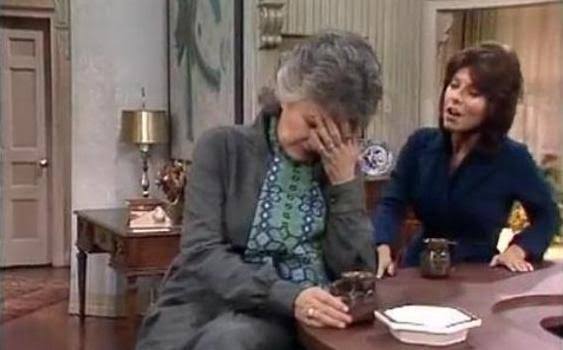
Scene from the Maude episode Maude’s Dilemma
“Maude’s Dilemma” put an abortion decision in the hands of an established middle-aged sitcom lead before Roe v. Wade was decided.
The quieter version of the revolution

Barney Miller let the changing city walk through the precinct door

No speeches from the mountaintop. Just tired detectives, paperwork and a steady parade of people carrying the decade in with them.

Barney Miller deserves special attention because it shows how the decade’s social comedy matured. It premiered in 1975 and was set in a Greenwich Village police station. That location allowed the series to encounter race, sexuality, homelessness, drugs, mental illness, aging, immigration, bureaucracy and urban frustration without requiring the detectives to go searching for a “topic.” The topic simply got booked at the desk.

The show’s genius was underreaction. Barney had seen enough to know that most situations became worse when everybody started performing. Harris could be vain and ambitious. Fish could complain about age, health and exhaustion. Yemana could drop a line so dry it seemed to arrive from another room. Wojo could be sincere and sometimes painfully slow to understand the social situation in front of him.

Because the detectives were not written as perfect representatives of enlightened 1970s values, the precinct could absorb change realistically. Somebody said the wrong thing. Somebody else corrected him. A person who looked strange to one detective turned out to be more complicated. The paperwork still had to get finished.

That is a different model from All in the Family. Archie’s house put conflict at center stage and let the sparks fly. Barney Miller often let the social story sit off to the side until the viewer realized it had become the emotional center of the episode. The comedy trusted the audience to notice.

The setting also stripped away the glamour television usually gave police work. This was not a high-speed chase show. The squad room looked worn. The coffee was terrible. The city outside was complicated and frequently absurd. The detectives were civil servants, not superheroes. That ordinary texture made the people who passed through the station feel less like plot devices and more like the citizens whose problems public institutions are supposed to handle.

By the late 1970s, that quieter confidence was becoming part of the best sitcom writing. The show did not have to announce that television was entering forbidden territory. It had already entered. Now the question was whether the characters could behave like human beings once they got there.

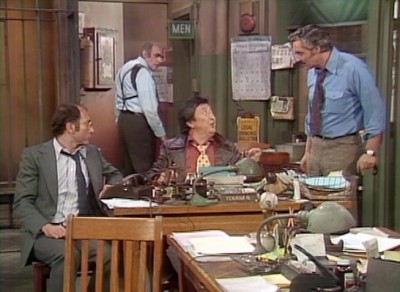
The squad room on Barney Miller
The 12th Precinct looked worn because it was supposed to. Barney Miller made social change feel like another complicated person walking through a very ordinary city office.
The boundaries keep moving

By the late 70s, “serious” no longer had to mean “special episode”

The strongest comedies were getting less interested in proving they were relevant and more comfortable letting real life simply exist inside the characters.

Early in the decade, a show that tackled race, abortion or women’s liberation could feel like a television event because the boundary itself was visible. By the end of the 1970s, some of the best series had moved into a more relaxed phase. The subject did not always need a trumpet blast. The characters already lived in the changed world.

Taxi is a perfect example. It arrived alongside WKRP in Cincinnati in the television year of 1978, when workplace comedy could be ridiculous, bruised and grown-up all at once. Its social realism is not usually the first thing people remember because the show is full of giant comic performances. But underneath Louie’s abuse and Reverend Jim’s magnificent confusion is a workplace full of adults who have not become what they expected to become. Money, class, failed ambition, loneliness and compromise are not special topics. They are Tuesday.

WKRP in Cincinnati could be frantic and silly, yet it also understood commercial pressure, workplace politics, race, music culture and the uneasy line between what a station wanted to say and what management thought it could sell. The people were funny because they cared about a place that often made caring difficult.

Soap went in the opposite stylistic direction and turned taboo into serialized lunacy. Three’s Company made the sexual revolution into doors slamming and mistaken identities. Barney Miller barely raised its voice. The point is not that all these shows were socially progressive in the same way. The point is that the sitcom had become flexible enough to hold radically different versions of modern adult life.

And comfort never disappeared. Happy Days, Laverne & Shirley and family comedies could offer nostalgia, friendship and broad physical laughs on the same schedule as Maude or Hawkeye. The 1970s did not replace escapism with relevance. It expanded the dial.

LATE 70sSoapSex, religion, sexuality and family chaos turned into serialized farce.
LATE 70sBarney MillerUrban social change wandered into the precinct and sat down at the desk.
LATE 70sTaxiEconomic disappointment and deferred dreams became character comedy.
LATE 70sWKRPThe workplace was ridiculous because the people inside it actually cared.
No rose-colored picture tube

The 70s sitcom revolution had blind spots, compromises and outright failures

Being groundbreaking is not the same thing as getting everything right.

It is easy to watch the strongest episodes now and turn the whole decade into a victory lap. That would miss half the story. Network television still answered to advertisers, standards departments, affiliates and ratings pressure. Writers could push, but there were lines around the push. Some stories ended more neatly than the real problem ever could. Some problems were brought up because they were fashionable enough to become television material and then vanished when the fashion changed.

Representation frequently arrived carrying stereotypes with it. A show might open a door and then lean too hard on the most marketable character. A groundbreaking gay character could be written through assumptions that now feel painful. A Black family could be asked to represent far more than one fictional family should have to carry. A strong woman could still be surrounded by jokes reminding viewers how unusual the culture thought her independence was.

Good Times contains one of the clearest examples of the tension. J.J. became a phenomenon because Jimmie Walker was funny and the catchphrase exploded. But the larger the comic persona became, the more critics and even people associated with the show worried that the family’s balance was being distorted. Commercial television rewards what gets the biggest response. That can be the exact thing that flattens a show’s original intention.

Soap moved gay representation forward by making Jodie a regular character, but some of the writing around gender and sexuality now lands awkwardly or worse. Three’s Company depended on stereotypes about gay men for much of its central farce. All in the Family could expose bigotry and still risk giving prejudiced language a warm home inside a beloved character. Every breakthrough came through the culture that produced it.

Women gained enormous ground on screen while still being judged through narrow ideas of attractiveness, motherhood and likability. Mary Richards was independent, but the industry around her was still male dominated. Maude could be powerful, yet the very fact that a middle-aged woman being loud and politically opinionated felt revolutionary tells you how little space women had been given before.

There is also the danger of congratulating television for conversations activists and ordinary people had already forced into public life. Sitcoms did not create the civil rights movement, feminism, gay rights or antiwar politics. Television usually arrived after people had already been marching, organizing, arguing and paying real-world costs. Network comedy translated some of those conflicts into a form a mass audience could encounter at home.

And sometimes the “relevant” sitcom became preachy. There are episodes where the characters stop feeling like themselves because the message needs to land. You can almost hear the writer moving pieces into position for the final speech. The best shows survived because they knew that a joke and a contradiction usually reveal more than a lecture.

That is why Barney Miller and Taxi feel so modern compared with weaker examples of topical comedy. They trust character. A social problem does not need to be solved by 8:30. It can remain part of the air.

None of these limitations erase the change. They make the change more useful to study. Television was learning in public, with tens of millions of people watching, laughing, complaining and arguing back. Progress on network TV rarely arrived as a clean before-and-after picture. It arrived as a messy schedule.

The best 1970s sitcoms did not tell America, “We solved this.” They said, “We are finally going to talk about it.”
THE GEN X RERUN EFFECT

Gen X inherited 1970s sitcoms—and their arguments—in reruns

Here is the part of this story that feels specifically Gen X. Depending on where you land in the generation, some of these shows were first-run television you remember from the family set and some were already reruns by the time you were old enough to understand them. Either way, syndication scrambled the decade into one giant afternoon.

You could come home from school and watch a 1971 All in the Family, a mid-decade Good Times, a later Barney Miller and a bright Brady Bunch episode without having the slightest idea which America came first. To a kid, they were all simply “old shows,” separated from the present by sideburns, furniture and the particular fuzzy look of television videotape.

That did something strange and useful. We absorbed arguments before we understood the vocabulary. Archie was the loud guy in the chair before we knew what a culture war was. George Jefferson was funny and furious before we understood the history behind what he was reacting to. James Evans worrying about work registered as adult tension before we had words like inflation, unemployment or structural inequality.

Maude could be arguing about feminism while we were still mostly interested in whether somebody was going to yell. Mary Richards going to work every day seemed normal because by the time many of us saw the show, television had already repeated that image enough to make it normal. Ann Romano’s divorced household could enter our heads as just another family before we understood why centering a divorced mother had once felt new.

And then there was M*A*S*H. A lot of us knew the theme, the tents, Radar, Klinger and Hawkeye’s jokes before we understood what the show was saying about war. We learned its emotional grammar backward. First the funny characters were familiar. Later we noticed why the helicopters changed the room.

Reruns also removed the original controversy. Nobody sat us down and explained that an episode of Maude had caused national outrage, or that Soap had been considered dangerous before it aired. The episodes simply existed in the television ecosystem. That is how yesterday’s boundary becomes tomorrow’s background noise.

There is something powerful in that. Culture changes not only when a controversial program airs once, but when the controversial image becomes ordinary enough to repeat at 4:30 in the afternoon. A single woman with a career. A divorced mother. A Black family in a penthouse. A precinct dealing with a gay citizen as a person rather than a punchline. Each rerun could make the picture a little less unusual.

Of course, Gen X also inherited the parts that aged badly. We heard language in old sitcoms that would stop a modern room cold. We saw stereotypes presented with a laugh track. We watched adults smoke everywhere, men talk over women and jokes land on people who would not be the target now. Syndication preserved progress and prejudice in the same amber.

That may be why so many of these shows are still interesting to revisit. They are not museum pieces from a single moral moment. They are arguments caught in motion. You can see the culture trying to move and resisting the movement at the same time.

And because we met the shows as characters before we met them as history, the emotional memories stayed. Archie’s chair. Florida’s kitchen. George’s front door. Mary throwing the hat. Hawkeye walking into surgery. Barney looking across the squad room like he had already filled out the form for whatever nonsense was about to happen.

The reruns gave Gen X a weird education in American change. Nobody handed us a syllabus. The set was just on.

01The ChairArchie planted in one spot while the whole country seemed to move around him.
02The ApartmentMary building a grown-up life that did not need a husband to make it legitimate.
03The Kitchen TableThe Evans family stretching love, pride and money farther than any of them should have had to.
04The RerunAdult arguments landing in front of kids who would understand a little more every time they came back around.
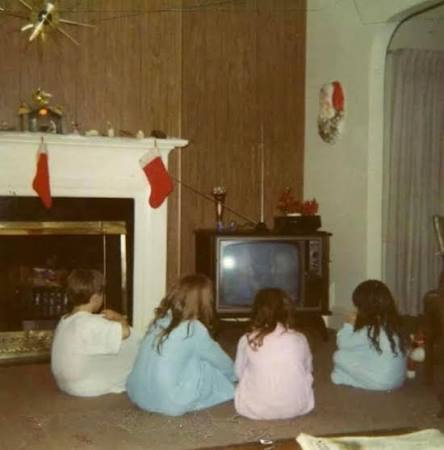
Child and family watching a CRT television in a period living room
For Gen X, a lot of this history arrived as ordinary reruns on an ordinary CRT set. Nobody handed us a syllabus. The television was just on.
The secret was never the subject

The shows lasted because character came before the lesson

“Relevant television” is not automatically good television. The classics survived because the people were worth coming back to.

There is a reason we remember Archie Bunker and not a thousand earnest television lectures from the same period. Archie was a character before he was a cultural argument. So were Maude, Fred Sanford, Florida Evans, George Jefferson, Mary Richards, Hawkeye Pierce and Barney Miller.

That distinction separates lasting social comedy from programming that feels like homework. A writer can choose an important subject and still produce a dead episode if the characters only exist to deliver positions. The strongest 1970s sitcoms began with the opposite question: what would this person do when the world forced the issue?

Archie did not become uncomfortable with social change because the script needed a conservative point of view. Social change threatened the identity he had built. Maude did not speak loudly because the script needed a feminist point of view. Speaking loudly was part of how she occupied the world. George Jefferson’s ambition was inseparable from race and class because success had become proof, to him, that nobody could ever put him back where he started.

That is also why the humor could remain viciously funny. The jokes were not a spoonful of sugar to make the medicine go down. The jokes came from personality. Fred Sanford lying to Lamont is funny even if you remove every social context. Ted Baxter mangling the news is funny before you think about workplace hierarchy. Reverend Jim is funny before you start writing an essay about failed ambition.

Once the characters are alive, serious material can enter without destroying the show. The audience already cares. A money problem hurts because we know the family. A death hurts because the character has made us laugh for years. A prejudice stings because it comes from somebody we have watched at breakfast.

That may be the most durable lesson the 1970s left to television writers: do not write an “issue” and then search for a character to carry it. Build a character honest enough that the issue has somewhere human to land.

What the decade left behind

Five things 1970s sitcoms changed for good

The specific controversies belong to their time. The storytelling permissions are still with us.

  1. 1
    Characters could disagree without the show fixing everybody.

    Conflict stopped being a temporary misunderstanding and became a lasting part of personality, family and politics. Archie did not have to become Mike. George did not have to stop being George. People could love one another and remain fundamentally different.

  2. 2
    Money became part of family comedy.

    Jobs, rent, class and economic pressure could shape the story instead of being politely invisible. The paycheck entered the script, and with it came a more recognizable version of adult life.

  3. 3
    Women could have adult lives that were not just marriage plots.

    Work, divorce, motherhood, sexuality and independence became ongoing character material. Mary Richards, Maude Findlay and Ann Romano did not all want the same life, which was exactly the advance.

  4. 4
    Black families could occupy more than one television lane.

    Working-class struggle, small-business hustle, teenage life and upper-middle-class success all became part of mainstream sitcom storytelling. No single family had to be the entire picture.

  5. 5
    Comedy could carry emotional consequences.

    M*A*S*H, Barney Miller, Taxi and others proved that a half-hour could make you laugh and still let sadness, compromise or discomfort remain when the scene changed.

Add those five changes together and the modern sitcom becomes easier to recognize. The family can be messy. The workplace can matter. The lead can be difficult. Politics can live inside personality. A joke does not cancel the pain that came before it. None of that belongs exclusively to the 1970s, but the decade helped move those possibilities into the center of American television.

Before sign-off

1970s sitcoms, social issues and real life: questions we still ask

Which 1970s sitcom most changed what television could talk about?

All in the Family is the clearest answer. Earlier programs had addressed social change, but the Bunkers made political, racial, generational and cultural conflict part of one of the biggest mainstream sitcoms in America rather than an occasional special topic.

What real-life issues did 1970s sitcoms address?

Major 1970s sitcoms dealt with racism, class, poverty, women’s liberation, divorce, abortion, birth control, war, sexuality, generational conflict, workplace equality, aging and changing ideas about family. Different shows approached those subjects with very different levels of seriousness and success.

Was All in the Family the first socially aware sitcom?

No. Television had already produced socially significant comedies and boundary-pushing programs, including Julia, That Girl and others. What All in the Family did was make direct social conflict central to one of the biggest mainstream sitcoms in America and return to those conflicts week after week.

Why was Maude’s abortion episode such a major television moment?

The two-part story began airing in November 1972 and had an established middle-aged sitcom lead decide to have an abortion. It aired before the Supreme Court’s January 1973 Roe v. Wade decision and made a subject network entertainment rarely addressed into explicit prime-time conversation.

Which 1970s sitcom centered on a divorced mother?

One Day at a Time, which premiered in 1975, centered on Ann Romano, a divorced mother raising two teenage daughters. The premise made divorce, single parenting, money, dating and women’s independence part of an ongoing family sitcom.

Why was The Mary Tyler Moore Show important to women on television?

Mary Richards was a single working woman whose career, friendships and independent adult life were the permanent center of the series rather than a temporary stage before marriage. The show helped establish a model later workplace and female-led comedies could build on.

How did Good Times and The Jeffersons differ in their portrayal of Black life?

Good Times centered a working-class family dealing with persistent economic pressure in Chicago, while The Jeffersons centered a financially successful Black family living in Manhattan. Taken together, they helped widen prime time beyond the idea that one Black sitcom had to represent one universal Black experience.

Why does M*A*S*H belong in a discussion of 1970s social sitcoms?

Because it expanded what comedy could emotionally carry. Set during the Korean War but airing during and after Vietnam, M*A*S*H used humor, medicine, bureaucracy and loss to examine war without turning the series into a weekly political speech.

SLGX
70s TV
Written by
Gizmo

Smells Like Gen X looks back at the television, music, toys and pop culture that stuck with us long after the set clicked off.

Smells Like Gen X • 1970s Television • Keep the dial right here.

Get the Weekly Gen X Drop

New videos, rewinds, and savage nostalgia — first.

SUBSCRIBE WATCH VIDEOS

MORE REWINDS