Foxx builds the voice before television
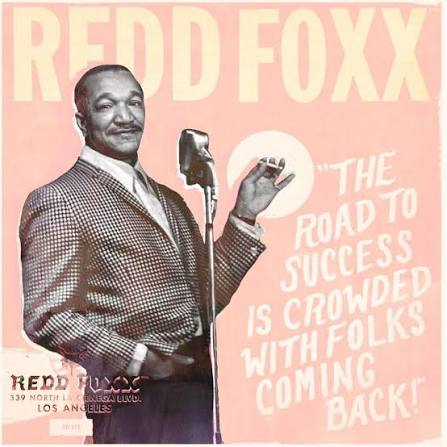
Nightclubs and comedy records establish Redd Foxx as an adult comic with timing, danger and a loyal audience before NBC gives him a prime-time room.
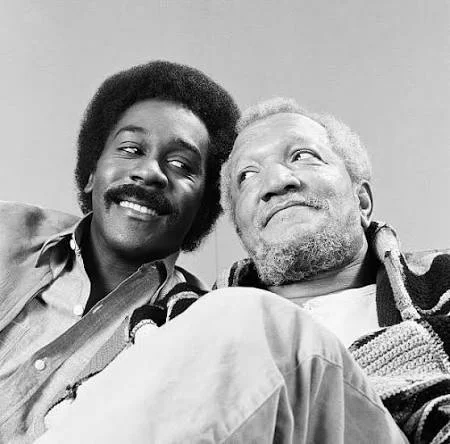
A Watts junkyard, one exhausted son and a nightclub comic who could make a fake heart attack feel like national news. Fred had another plan. Lamont already knew it was terrible.
For Gen X, the theme often reached us from another room. By the time we found the television, the junkyard was open and the argument was already moving.
Sanford and Son became a landmark because Redd Foxx brought nightclub timing, danger and control into a network sitcom centered on a Black father and son in Watts. Demond Wilson gave the relationship enough resistance to prevent Fred from becoming one long performance, while Quincy Jones, LaWanda Page, Whitman Mayo and the neighborhood cast made the junkyard a complete television world.
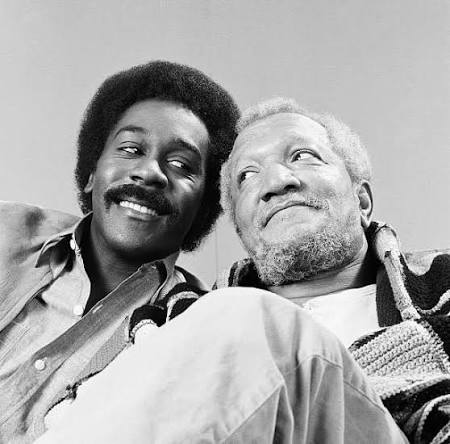
For Gen X rerun viewers, Sanford and Son and Redd Foxx often arrived first as sound. Quincy Jones’s bass line and brass could reach the kitchen before the picture did. By the time we got back to the room, the junkyard was already open and Fred was probably preparing to make Lamont regret standing nearby.
The set was not glamorous. That was the point. The living room looked crowded, the yard looked used and the business depended on things other people had thrown away. Fred saw value in every object and labor in every task he expected Lamont to perform.
The routine was dependable without becoming calm. Fred had a plan. Lamont knew the plan was terrible. A customer, relative or neighbor would enter and make the truth harder to avoid. By the credits, the scheme might be ruined, but the father and son were still in the same room.
That attachment underneath the insults is why the reruns lasted. Fred could call Lamont a dummy and then panic at the thought of being left alone. Lamont could threaten to leave and still return to the business, the house and the father who had turned guilt into a professional skill.
The series became a national hit because the comedy was loud. It stayed alive because the relationship was not simple.
The show also understood the odd intimacy of reruns. We often met Fred and Lamont out of order, in afternoon blocks or local-station lineups, with no concern for which season had technically produced the episode. The house stayed the same, the relationship stayed legible and the routine welcomed us back.
That familiarity is part of the larger 1970s TV experience: one shared screen, a theme recognizable from another room and characters who could make an old episode feel like part of the current day.
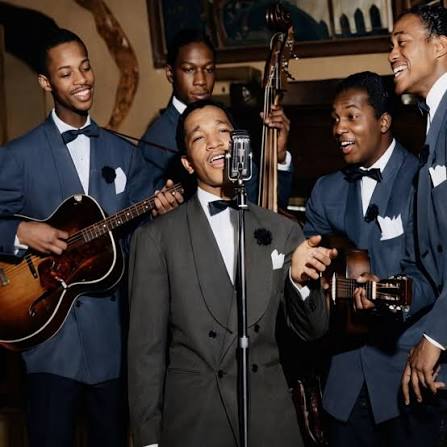
Redd Foxx arrived on network television with a career behind him. Years of nightclub work and comedy records had taught him how to hold a room, how to stretch a pause and how to let an audience hear danger approaching before the line arrived.
Norman Lear and Bud Yorkin were adapting the British junk-dealer comedy Steptoe and Son. The premise supplied the frame: an older father, a younger son, a salvage business and a relationship neither man could escape.
Foxx made the American version impossible to separate from his own history. Fred Sanford did not sound like a standard sitcom father with rougher dialogue added. He sounded like a performer who understood hustlers, clubs, insults, pride and the value of controlling the pace.
Demond Wilson supplied the necessary opposition. Lamont could not merely wait for Foxx to finish. He needed enough frustration, skepticism and emotional authority to make the father-son conflict feel like a partnership.
When the series premiered in January 1972, the network was not creating Foxx’s voice. It was finally broadcasting it to the whole country.
Foxx’s party records mattered because they carried a performance identity outside mainstream television approval. Listeners already knew the danger, attitude and phrasing that network audiences would later treat as a sudden discovery.
The transition to NBC required limits, but limits did not remove the accumulated experience. Foxx knew how to make a censored sentence imply a sharper one and how to let the audience finish the thought without losing the laugh.
The British source gave the American series a durable situation, but a situation is not a voice. Watts, Foxx, Wilson, Quincy Jones and the supporting cast rebuilt the room.
The salvage business remained essential because it kept money visible. Fred was a business owner, but the operation depended on hustle, improvisation and Lamont’s labor. A strange item could become a sale, a scam or an argument simply by being pulled from beneath another strange item.
The setting also changed the cultural meaning. A network comedy centered on a Black father and son in working-class Los Angeles carried weight beyond the mechanics of the source program.
The series did not turn Fred into a model of respectability to justify his place on television. He could be selfish, prejudiced, dishonest and impossible. Foxx’s performance gave those flaws comic force without pretending the character had no loneliness or attachment.
That transformation belongs inside the larger history of The Best Black Sitcoms of the 1970s, where network breakthroughs and creative control changed across the decade.
Fred’s fake heart attacks worked because everyone knew the routine. Fred knew it was fake. Lamont knew it was fake. The audience knew it was fake. Foxx still committed as though death had arrived because Lamont had objected to one more terrible plan.
The chest clutch, the appeal to Elizabeth and the sudden vision of reunion formed a complete theatrical piece. Sometimes Foxx rushed into it. Sometimes he let the grievance grow first. The repeated destination made the path more interesting.
“You big dummy” worked the same way. It was not only an insult. It was Fred’s method of recovering authority after Lamont had exposed him. The volume, wounded pride and retreat mattered more than the words.
Foxx also understood when to stop performing. Quiet references to Elizabeth or the possibility of Lamont leaving revealed the fear beneath the hustle. Those moments worked because the series did not polish Fred into a different man.
A strong performance can make a repeated routine feel communal rather than tired. The room knew what was coming, and Foxx knew exactly how long to make us wait.
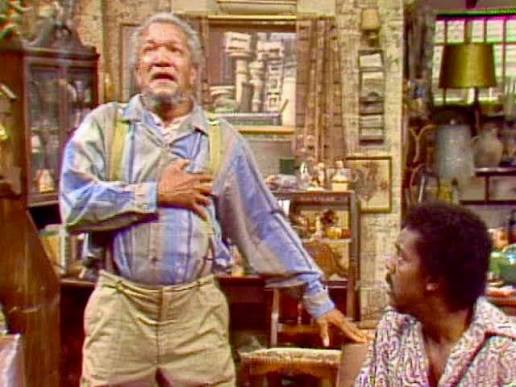
His physical comedy was rarely random motion. A hand moved to the chest, the knees softened, the eyes found the ceiling and the voice changed register. Every piece told the audience that Fred was building another emergency for his own benefit.
Foxx’s greatest control often appeared after the laugh. He could remain inside the expression while the room reacted, then restart the scene with one smaller line. That patience came from live performance, not from a catchphrase factory.
Lamont had one of television comedy’s hardest jobs: stand beside a performer built to steal focus without becoming scenery.
Wilson gave Lamont frustration, sarcasm and a visible desire for another life. He could accelerate the scene by challenging Fred or slow it with a stare that told the audience exactly how exhausted the son had become.
The character carried the possibility of escape. Lamont wanted romance, travel, business improvement and basic peace, but independence meant leaving a father who depended on him.
Fred exploited that loyalty whenever necessary. Illness, guilt, crisis and sudden affection could all appear when Lamont moved too close to the door.
The strongest episodes let Lamont’s future drive the story. Fred’s interference then threatened something real rather than creating random trouble.
The insults worked because the attachment underneath them was never completely in doubt.
Wilson also made Lamont funny without requiring the son to become as theatrical as the father. A clipped reply or long stare could puncture Fred’s entire production.
The balance protected the show emotionally. Fred needed someone he could manipulate, but the audience needed someone capable of naming the manipulation. Lamont gave us that position without becoming detached from the family.
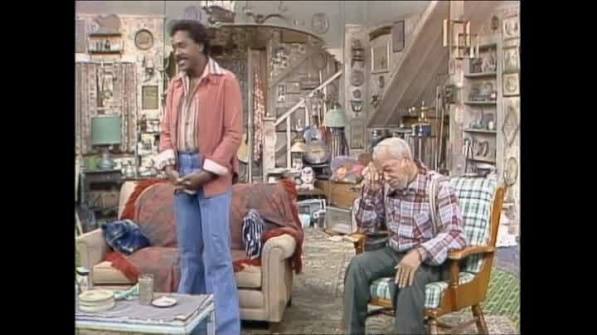
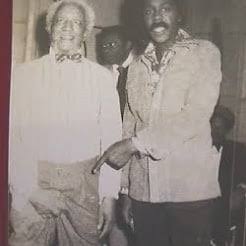
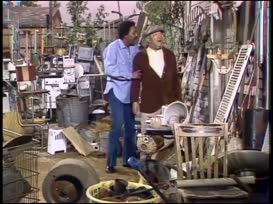
Sanford and Son Salvage was the perfect stage for Fred because nothing in it had a fixed meaning. A broken object could become merchandise. A customer could become a mark. A pile of junk could become evidence that Lamont was not working hard enough.
The clutter created stories. The business did not need a new office, restaurant or vacation every week. The next problem could already be sitting in the yard.
That setting also located the comedy in working-class Los Angeles. Money was not abstract. Bills, customers, repairs and sales were close enough to touch.
Fred’s business pride existed beside his laziness. He wanted the identity of a successful owner while assigning the physical part of success to Lamont.
The yard therefore held the entire relationship: a livelihood Lamont needed, an obligation he resented and a home Fred feared losing.
For rerun viewers, the familiar set became part of the pleasure. We knew the route through the room. We knew which drawer might open. The junk changed less than the schemes.
The visual clutter also made the set feel lived in rather than decorated. Objects did not appear because a designer wanted a stylish background. They looked as though Fred had kept them because someday, under the correct conditions, somebody might pay too much.
The house and yard became one of the decade’s recognizable comedy homes. It belongs beside the Bunker living room and the Evans apartment not because the rooms looked alike, but because work, family and social pressure could not be separated inside them.
LaWanda Page’s Aunt Esther entered with no obligation to protect Fred’s ego. Their insult battles became ritual combat because both actors understood escalation.
Fred attacked Esther’s appearance and religion. Esther attacked his morality, laziness and face. The cruelty was stylized into performance, but the family history underneath it gave the exchange a reason to continue.
Whitman Mayo’s Grady created a different rhythm. His confusion wandered where Fred’s comedy attacked. During Foxx’s absence, Grady’s larger role proved that the ensemble could function while also confirming that the original center could not be replaced.
Bubba, Rollo, Julio, Donna, Smitty and Hoppy opened routes beyond the father-son loop. The story could become romance, family conflict, business trouble, neighborhood misunderstanding or police comedy without leaving Fred’s territory.
The recurring faces also made Watts feel inhabited. Customers, friends, relatives and officers entered a business rooted in a community that already knew Fred’s schemes.
Donna brought another pressure entirely. She represented the possibility that Fred could build companionship outside his dependence on Lamont, although his vanity and immaturity usually complicated the opportunity.
Julio and the police officers also exposed Fred’s assumptions. Sometimes the story pushed back against his prejudice; sometimes the period limitation remained visible. The community gave the series room to challenge Fred without pretending he changed permanently.
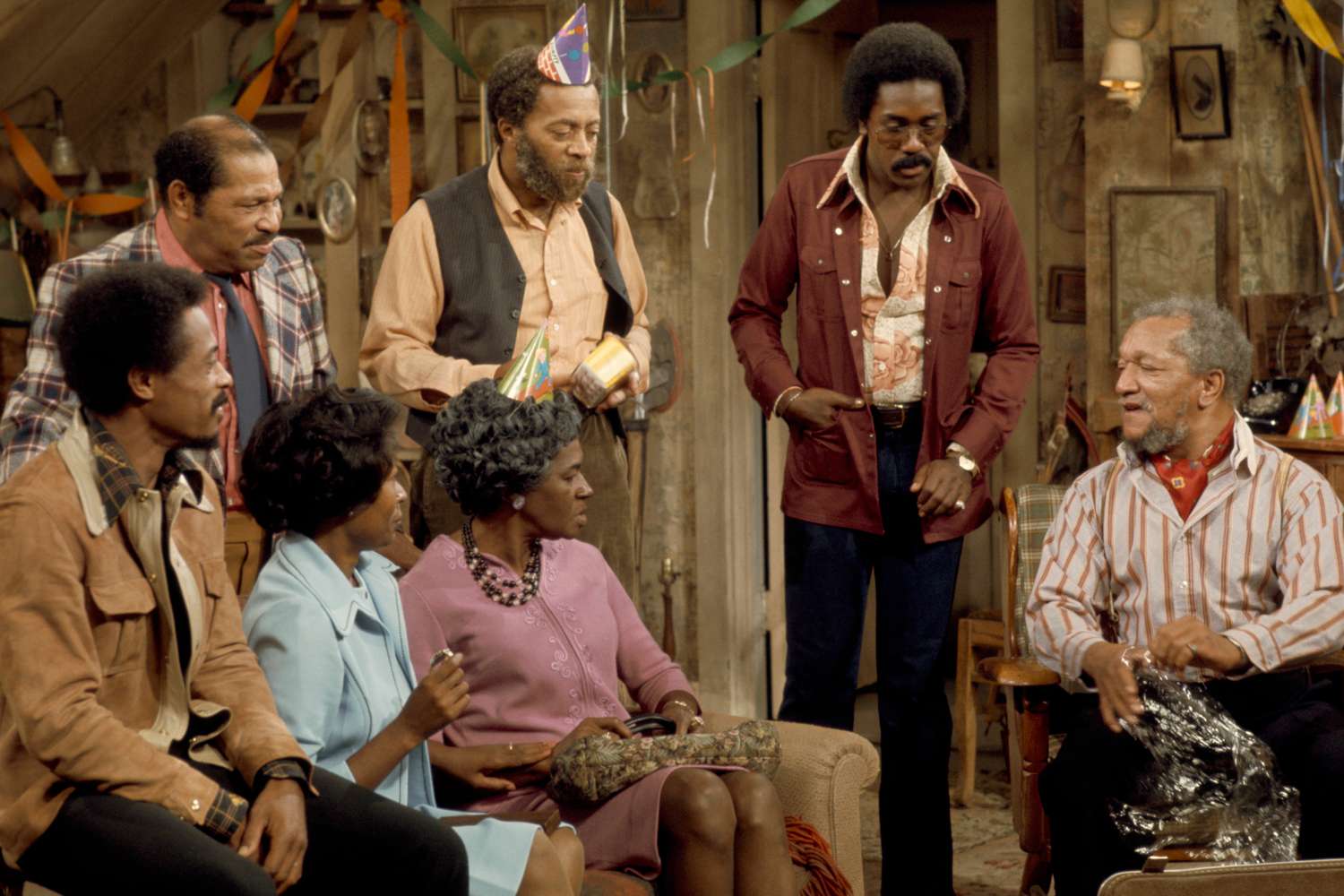
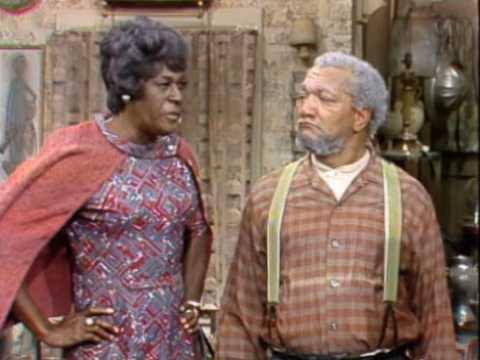
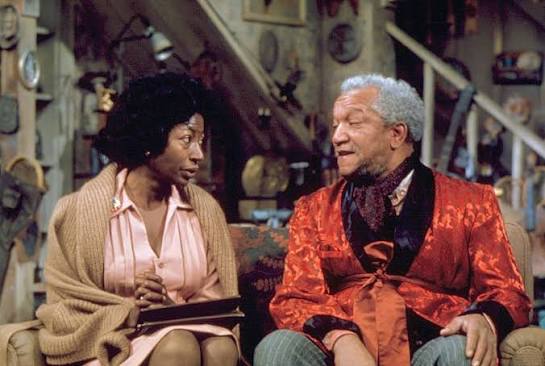
Quincy Jones’s “The Streetbeater” did more than identify the series. The bass, brass and bounce gave the junkyard movement before the camera entered the house.
You could hear the theme from another room and know exactly which television world had opened. For Gen X rerun viewers, that recognition often came before we knew Jones’s name.
The studio audience became part of Foxx’s instrument. A large laugh gave him material. He could hold the face, repeat a word or change direction because he understood live comic rhythm.
The sound of a drawer opening, a door closing or Fred building toward “Elizabeth” became a library of shared cues.
The staging could be simple because the performance and soundtrack made the room larger than the set.
That combination is why the series remains alive in memory even when the details of a plot have disappeared.
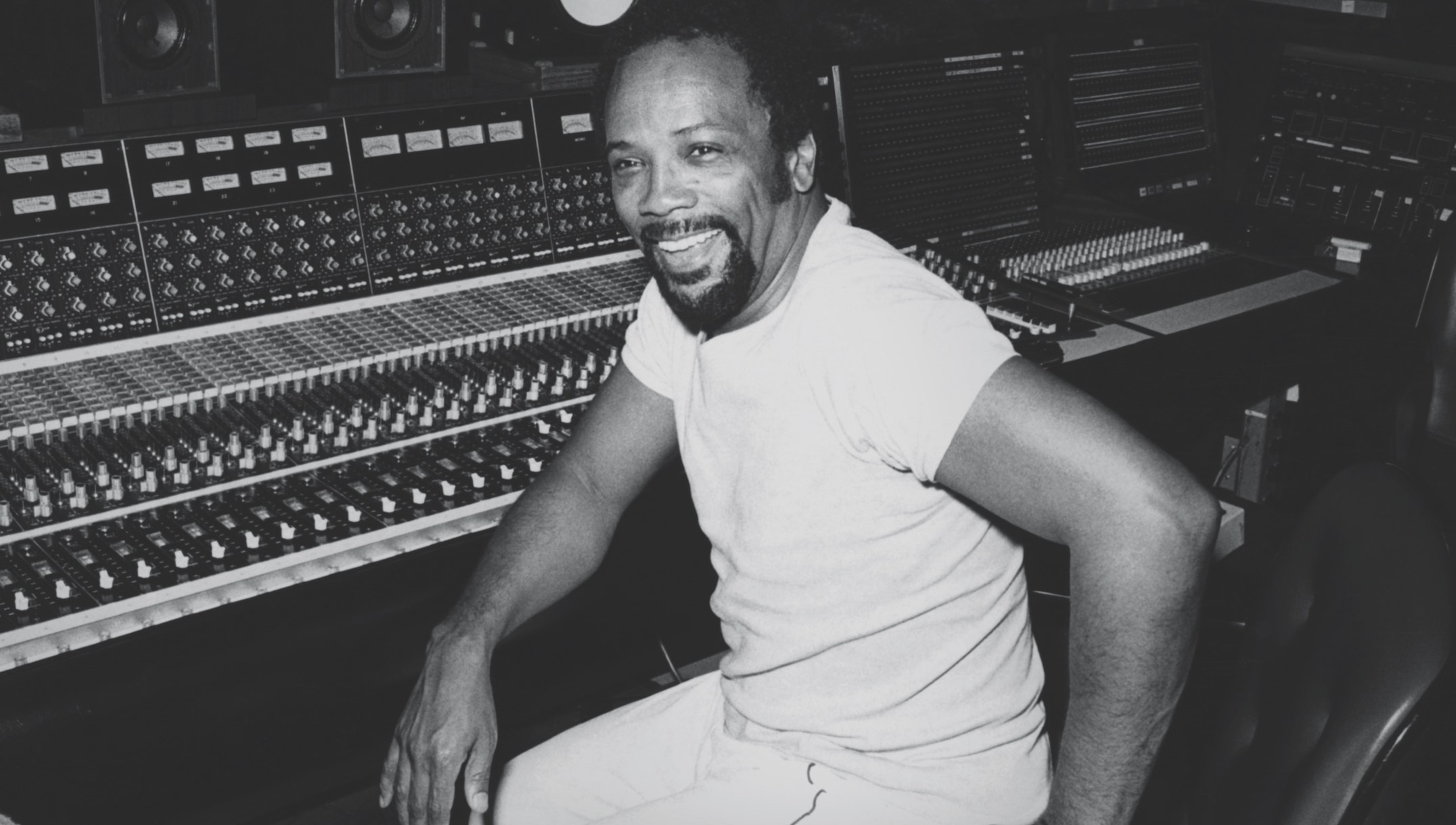
The series demonstrated that a mostly Black cast could become a mass-audience network hit without making its central character safe, polished or endlessly admirable.
Fred’s flaws did not cancel the breakthrough. They were part of it. A Black working-class lead could be as comic, selfish, affectionate and contradictory as any other major television character.
The show also gave a veteran Black nightclub comedian national visibility without erasing the timing and edge that had built his earlier career.
That success belonged to a larger movement across 1970s comedy. Good Times and the Complicated Legacy of J.J. Evans would explore a different working-class family structure, while The Jeffersons and the Sitcom That Moved On Up would move Black family comedy into a very different economic setting.
The shows should not be collapsed into one story. Sanford and Son’s identity came from Foxx, Wilson, Watts, salvage, performance and a father-son bond that could turn money trouble into emotional leverage.
Sanford and Son also arrived during a moment when All in the Family had shown that network comedy could survive arguments about race, class and politics. Sanford and Son used a different household and a different performance tradition to prove that the change was larger than one living room.
The breakthrough mattered to viewers who rarely saw a Black working-class household treated as the unquestioned center of a hit. Fred did not visit somebody else’s series. Everybody else entered his junkyard.
The emotional engine of Sanford and Son was not whether Fred and Lamont loved one another. The audience rarely doubted that. The engine was how aggressively both men avoided saying what the attachment required.
Fred translated need into crisis. He became sick, offended, abandoned or suddenly sentimental whenever Lamont moved toward independence. The manipulation was obvious, but the fear beneath it was consistent.
Lamont translated love into obligation. He complained about the yard, Fred’s laziness and every ruined opportunity, yet he kept returning because leaving would mean accepting what happened to the father left behind.
The relationship was not presented as healthy instruction. It was a durable comic knot. Each man knew where the other was vulnerable, and both used that knowledge when the argument became serious.
This is why the softer moments did not need long speeches. Foxx could mention Elizabeth or Wilson could stop fighting for a beat, and the audience understood the history inside the pause.
The great father-son sitcoms often depend on affection that appears indirectly. Here it arrived through insult, guilt, work, food, money and the certainty that tomorrow’s argument would happen in the same room.
Foxx’s importance gave him leverage, and disputes over salary and working conditions led to absences from the series.
Grady moved toward the center while Fred was away. The ensemble kept the production functioning, but the altered rhythm showed how completely the property depended on Foxx.
The conflict belongs to the decade’s larger history of Black stars, compensation and network power. A performer could deliver major ratings and still fight for authority that matched the value being created.
Foxx returned, and the original series continued until 1977. Later revivals attempted to recover the chemistry, but a successful premise cannot automatically reproduce a specific partnership and moment.
The tension between creator, performer and network also connects the show to How Norman Lear Changed Television, which follows the larger production system without letting one program consume the whole story.
The dispute also changed what viewers saw. A behind-the-scenes negotiation became an on-screen absence, forcing the series to test whether the surrounding world could carry the missing center.
That test strengthened Grady’s place in television memory, but it also made the restoration of Fred and Lamont feel immediate when Foxx returned.
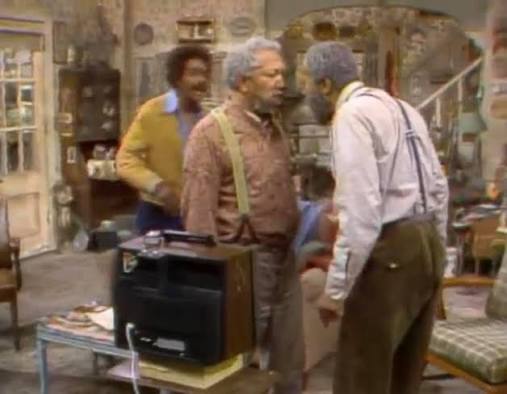
Redd Foxx arrived with a career behind him and became a television star almost overnight.
The timeline restores the famous routines to the production pressures and ensemble growth surrounding them.
Nightclubs and comedy records establish Redd Foxx as an adult comic with timing, danger and a loyal audience before NBC gives him a prime-time room.
Norman Lear and Bud Yorkin develop an American version of Steptoe and Son and pair Foxx with Demond Wilson.
Sanford and Son premieres in January and quickly becomes one of NBC’s defining comedies.
Quincy Jones’s theme gives the show a swaggering musical identity before Fred or Lamont speaks.
Aunt Esther, Grady, Bubba, Rollo, Julio, Donna, Smitty and Hoppy deepen the comic world around Fred and Lamont.
Foxx’s absence pushes Grady and other supporting characters toward the center and exposes how completely the series depends on its star.
The series concludes after six seasons and 136 episodes, leaving the rerun life to begin almost immediately.
Later revivals revisit Fred and the junk business, but the original father-son chemistry remains the defining version.
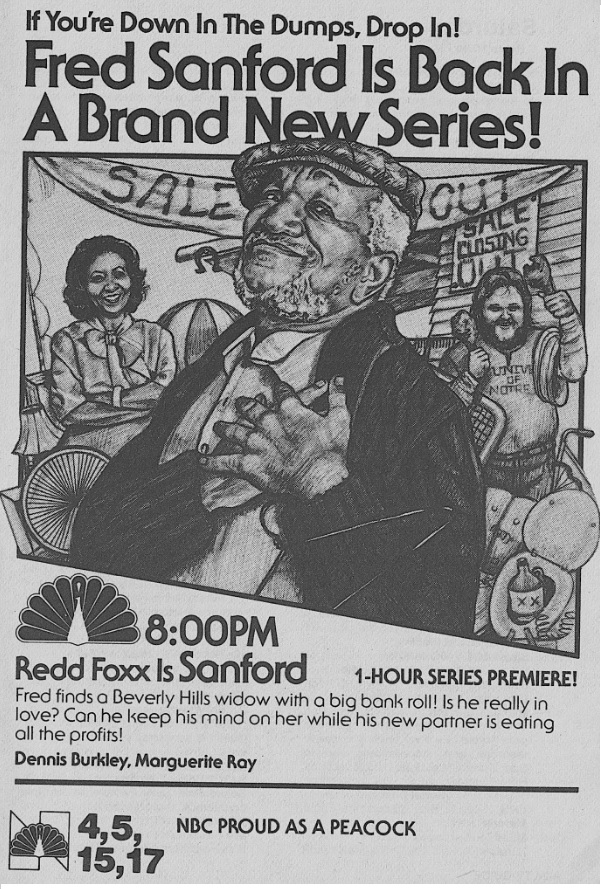
Fred needed Lamont, but he also needed a neighborhood that refused to accept his version of the truth.
Each recurring character introduced a different speed, pressure or form of authority.
The junk dealer, widower and born performer who could turn any accusation into a larger speech about his own suffering.
The son who wanted independence but remained tied to the business and the father who could weaponize affection.
LaWanda Page gave Fred an opponent with equal volume, stronger moral certainty and no fear of his insults.
Whitman Mayo’s warm confusion created a softer rhythm and helped carry the series during Foxx’s absence.
Lynn Hamilton’s Donna offered Fred mature companionship and regularly exposed how immature he still was.
Friends, neighbors and officers widened the junkyard into a community rather than a two-man set.
Begin with stories that reveal Foxx’s timing, the father-son bond and the neighborhood ensemble.
The list is a doorway, not a ranking of every episode.
Fred and Lamont’s attempt to sell a porcelain figure establishes the hustle, the argument and the danger of Fred believing his own sales pitch.
Fred’s fantasy and performance meet a real celebrity guest in one of the show’s most remembered episodes.
A party setup gives the supporting cast room to collide and demonstrates how much comedy the house can hold.
The episode reflects the era’s cultural debates through the father-son relationship.
A straightforward job becomes a showcase for frustration, delay and the men’s inability to complete anything simply.
Fred’s confidence in his own argument meets a system that does not share his interpretation.
The dating plot reveals Fred’s vanity and the supporting cast’s refusal to protect it.
Education and memory deepen the relationship beyond the usual junkyard scheme.
The plots are often simple. The pleasure is in how the actors stretch, resist and redirect them.
Watching for the performance choices makes familiar reruns feel less automatic.
He checks who is listening, repeats the grievance, changes volume and lets the audience anticipate the explosion.
Lamont reacts, but he also has wants, pride and his own comic impatience. The partnership works because he pushes back.
Fred often invents illness, crisis or obligation when Lamont threatens to leave. The manipulation is funny because the fear is consistent.
When Esther enters, Fred loses the privilege of controlling the insult. Page attacks with equal force and a different authority.
Their slower confusion and friendship make Fred’s speed more visible and give the show more than one path to the laugh.
Every object in the yard has potential value, and every sale can become another argument about work, loyalty and pride.
Foxx’s timing remains the strongest reason to return. He could control delay, repetition and audience response with a precision that does not depend on 1970s nostalgia.
Wilson’s work also ages well because Lamont has a life beyond reaction. His desire to leave gives the relationship weight.
The ensemble remains valuable because Page, Mayo and the regulars do not simply echo Fred. They arrive with their own rhythms.
The period jokes need context. Fred’s racial, ethnic and gender prejudices are part of the character, and some stories challenge them more effectively than others.
The show’s breakthrough does not make every line timeless. The honest rewatch keeps the cultural importance and the discomfort in the same frame.
Fred is often more complicated than his ugliest remark. He is insecure, jealous, lonely and terrified of becoming unnecessary. That complexity explains the durability without excusing every joke.
The insult battles deserve the same double view. Page and Foxx were extraordinary performers competing over rhythm, but some of the language came from a period willing to turn appearance, religion and identity into easy ammunition.
The most useful rewatch listens for who controls the scene, who is allowed to answer and whether the story recognizes Fred’s worst assumptions as flaws rather than truth.
For Gen X viewers, Sanford and Son often belonged to afternoons and local rerun schedules rather than NBC’s original Friday night.
The routines became call-and-response memory. We knew the chest clutch, heard “Elizabeth” approaching and waited for Aunt Esther’s answer.
Knowing the routine increased the pleasure because everyone in the room shared the anticipation.
The familiar set also became comforting. Fred would have a plan. Lamont would know it was terrible. Both men would still be standing in the same house by the credits.
That is why the catchphrases survived without reducing the series to catchphrases. The lines remained attached to performance, relationship and a room we recognized instantly.
Sanford and Son Redd Foxx searches often begin with the famous routines, but the reruns last because the relationship under those routines never becomes disposable.
Local scheduling also changed the show’s audience. Children who had not heard Foxx’s earlier albums and were too young for the original NBC run still learned the routines through repetition.
The rerun life made Fred Sanford feel less like a character from one six-season series than a permanent resident of the television dial.
A rerun could end at the commercial break. The object stayed in the room.
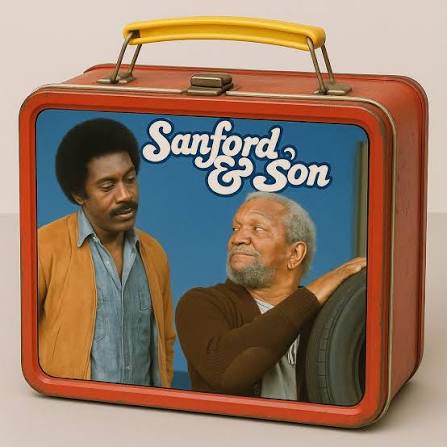
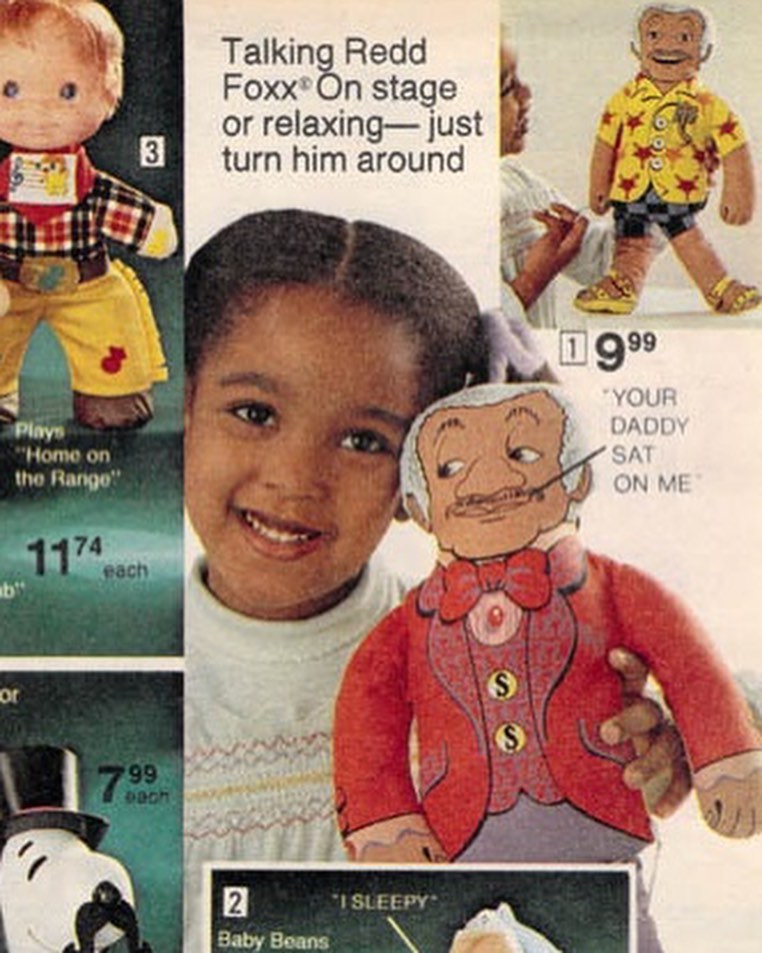
Sanford and Son merchandise turned Fred Sanford’s face, voice and catchphrases into lunch-box art and novelty toys that carried the show into school and bedrooms.
The talking Redd Foxx doll is especially revealing. Television had made Foxx’s voice so recognizable that the product could sell the promise of hearing Fred outside the sitcom set.
The lunch box did something similar in a quieter way. The junkyard became portable, attached to the ordinary routines of school and family life.
These objects are not the reason the show mattered, but they show how thoroughly it entered popular memory. A working-class sitcom had become a visual brand children could recognize instantly.
The junkyard shared the television year with other sitcoms, crime shows, variety programs and changing network strategies.
These guides place each season back beside the rest of the schedule.
Put Sanford and Son back beside the rest of that television year.
Put Sanford and Son back beside the rest of that television year.
Put Sanford and Son back beside the rest of that television year.
Put Sanford and Son back beside the rest of that television year.
Put Sanford and Son back beside the rest of that television year.
Put Sanford and Son back beside the rest of that television year.
The quick answers cover the source series, theme music, production dispute, setting and where to begin.
Yes. It was adapted from the British sitcom Steptoe and Son, about a father and son working in the junk business.
Quincy Jones composed “The Streetbeater,” the instrumental theme identified with the series.
A contract dispute led to Foxx’s absence during part of the run and increased the role of Grady and other supporting characters.
The series was set in Watts, Los Angeles, where Fred and Lamont operated their junk business.
The original NBC series ran for six seasons and produced 136 episodes.
It became a major network hit centered on Black working-class characters and transformed veteran comedian Redd Foxx into a prime-time star.
The routine was a manipulation tactic Fred used whenever Lamont challenged him or threatened to leave, but Foxx’s timing turned it into recurring comic theater.
Begin with the premiere, one Fred-and-Lamont business disaster, an Aunt Esther episode and one ensemble story before moving into later seasons.
These oral-history collections document the series, creators and performers.