Lear begins adapting a British family conflict
Norman Lear and Bud Yorkin draw inspiration from Till Death Us Do Part and begin developing an American household built around a reactionary father and the younger generation arguing across the table.
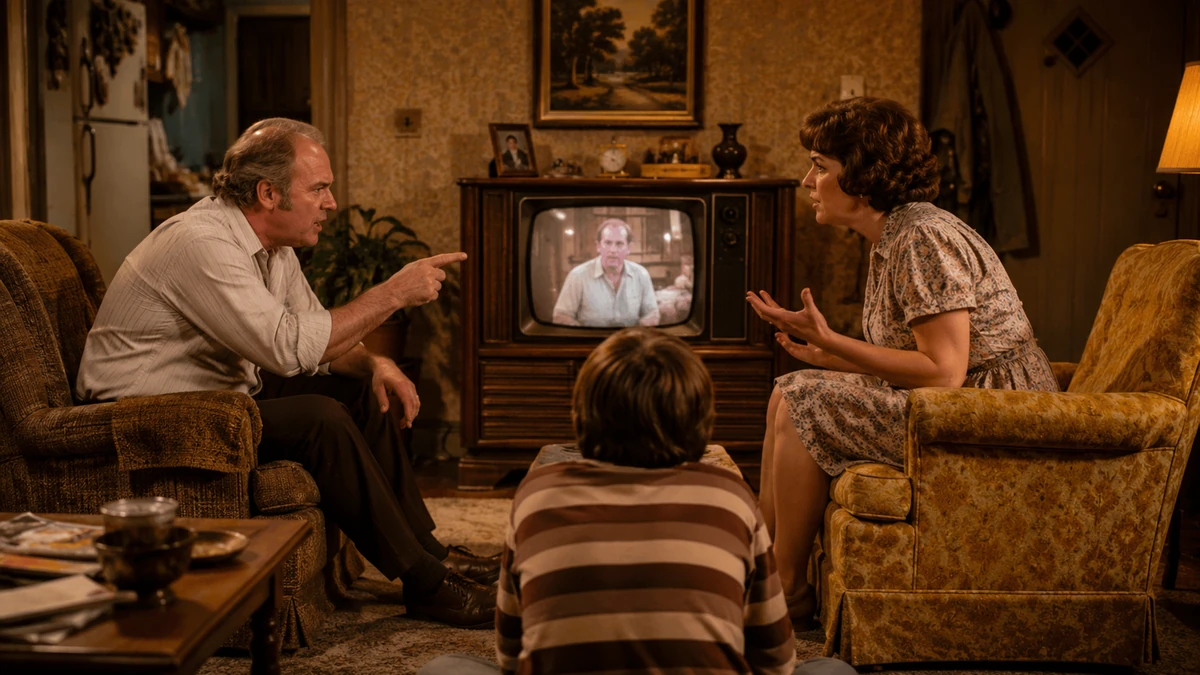
Archie Bunker did not politely enter prime time. He dragged race, class, politics, war, gender and generational resentment into a living room that looked like somebody’s uncle had been sitting there since 1947.
For Gen X viewers, the revolution often arrived as an afternoon rerun. We knew the chair, Edith’s voice and the word “Meathead” before we understood that television comedy had once been afraid of this room.
All in the Family changed television by making race, class, politics, gender, religion, sexuality, war and generational conflict regular material for America’s most popular family sitcom. Its breakthrough was not Archie’s offensive language by itself. It was building a believable family whose love could not erase disagreement—and whose disagreement could not erase love.
We knew the opening song before we knew what a LaSalle was. Archie and Edith leaned into the piano, one voice confident and the other wandering somewhere above the melody, and the room was established before the front door opened.
We knew the opening song before we knew what “Gee, our old LaSalle ran great” meant. We knew Archie would call Mike a meathead, Edith would race toward the kitchen and somebody would slam the front door. The show arrived through syndication so often that the Bunker house seemed less like a set than a relative’s place we visited without being asked.
That rerun experience changed how the show traveled across generations. A child watching in the 1980s or 1990s encountered arguments rooted in the 1970s, but the family dynamics required no translation. Most households had some version of the person who thought the world had become ridiculous, the younger person determined to correct every sentence and the family member doing unpaid emotional traffic control.
The series also taught many younger viewers that old television was not necessarily gentle television. A black-and-white memory of the past could be shattered by one episode. The clothes were dated. The nerves were live.
Then an episode would stop being merely funny. A Christmas dinner became an argument about Vietnam. Edith faced danger inside the home. Archie admitted something about his father. The rerun that looked brown and dated suddenly had live wires behind the wallpaper.

That was the Gen X education: old television was not automatically gentle television. The clothes, language and kitchen appliances belonged to another decade. The fear of losing status, the need to be right and the exhaustion of loving people who make you furious required no translation.
The show escaped its original CBS schedule through reruns, magazines and local listings until Archie’s chair seemed available every afternoon.
A TV Guide cover turned the cast into the face of the week. Newspaper listings and local rerun ads made the Bunker house a place viewers could revisit long after the original prime-time broadcast.
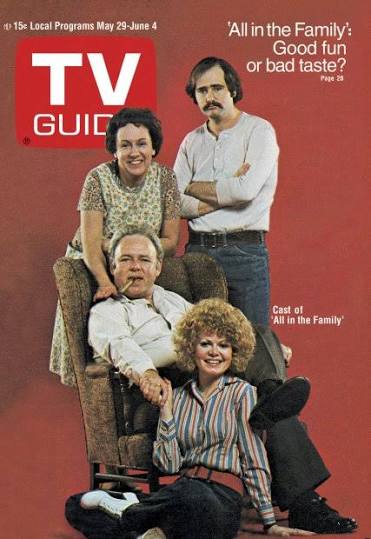
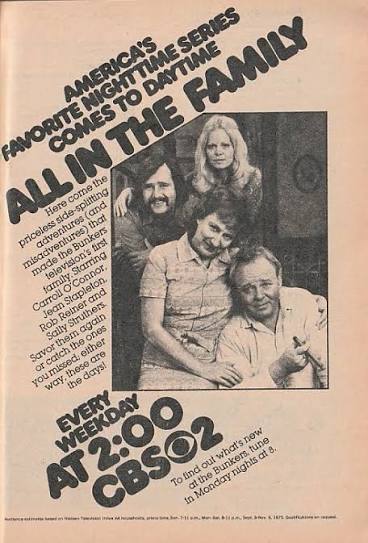
There are old television shows that feel like artifacts, sealed behind the fashions and furniture of their time. All in the Family is not one of them. The chairs are worn, the wallpaper is unmistakably early 1970s and the language can land with a jolt, but the engine underneath the show is still running: a family loves one another, drives one another crazy and cannot agree on what America is becoming.
For many Gen X viewers, the Bunkers were not something we discovered through a prestige-TV syllabus. They were simply there. Archie and Edith appeared in afternoon reruns, weekend marathons and living rooms where the adults laughed at one level while the kids understood just enough to know somebody had crossed a line. The show came with a sound all its own—the piano, the front door, Archie’s chair, Edith’s voice from the kitchen and the sudden hush when a joke gave way to something serious.
The series mattered because it put national conflict inside a recognizable home. Race, gender, class, religion, war, unemployment, sexuality, aging and political resentment did not arrive as abstract topics. They walked through the Bunkers’ front door, sat at their dinner table or showed up in the person their daughter married. America’s arguments became family arguments, which meant nobody could simply change the channel emotionally.
Norman Lear and producer Bud Yorkin adapted the premise from the British sitcom Till Death Us Do Part, but the American version quickly became its own force. It was not brave because Archie Bunker said offensive things. It was brave because the show built enough character, conflict and consequence around those things that viewers had to decide why they were laughing and what the laughter revealed.
This page owns the exact show’s history and legacy. The wider decade discussion belongs in How 1970s Sitcoms Started Talking About Real Life, while the creator-level story belongs in How Norman Lear Changed Television.
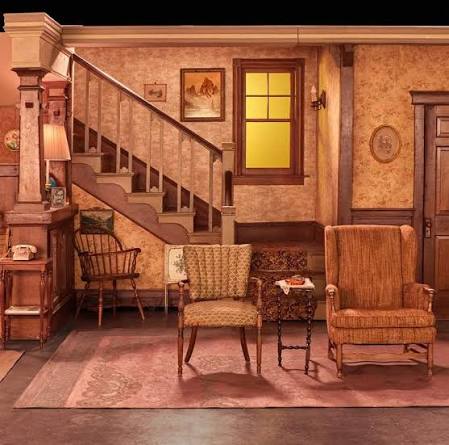
The sepia palette, mismatched chairs and narrow pathways made the house feel inherited rather than designed for television.
The room was not aspirational. That was the point. The furniture had history, the walls seemed to remember older paint and Archie’s chair appeared to have molded itself around decades of certainty.
The front door functioned like a weekly challenge. Neighbors, relatives, strangers and social change entered through it. Archie could control the chair, but he could not control who crossed the threshold or what they brought into the room.
The dining table offered a second battleground. Meals created the expectation of family unity while the conversation immediately revealed its limits. Somebody was always passing food through an argument about the country.
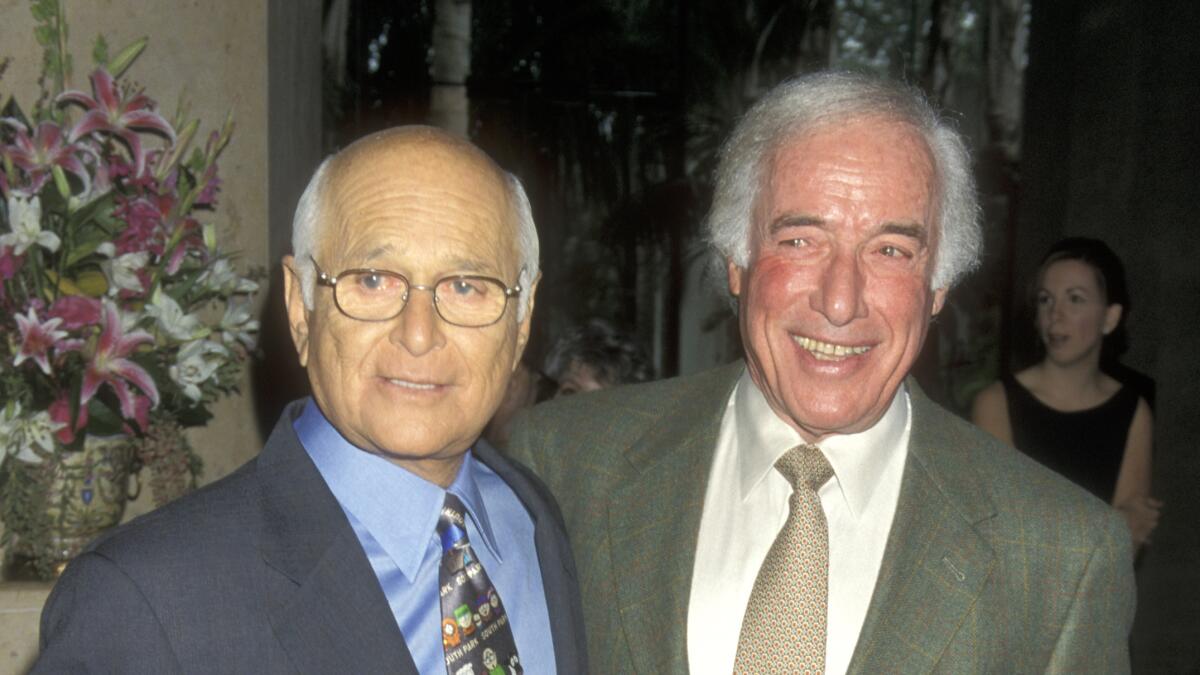
Lear had seen the potential in Johnny Speight’s British series, built around a reactionary working-class father whose certainties collided with a younger generation. He developed American pilots under earlier titles and with different cast combinations, but the project struggled to find a home. The problem was obvious: network sitcoms were designed to attract the widest possible audience without frightening advertisers. Archie Bunker seemed custom-built to make at least part of that audience furious.
By the time CBS aired the premiere on January 12, 1971, the network was prepared for outrage. A disclaimer warned that the program intended to expose prejudices by making them a source of laughter. Switchboards were staffed. The feared avalanche of complaints did not arrive—partly because the first episode drew a small audience. The show began as a midseason replacement with little indication that it would become the center of American television.
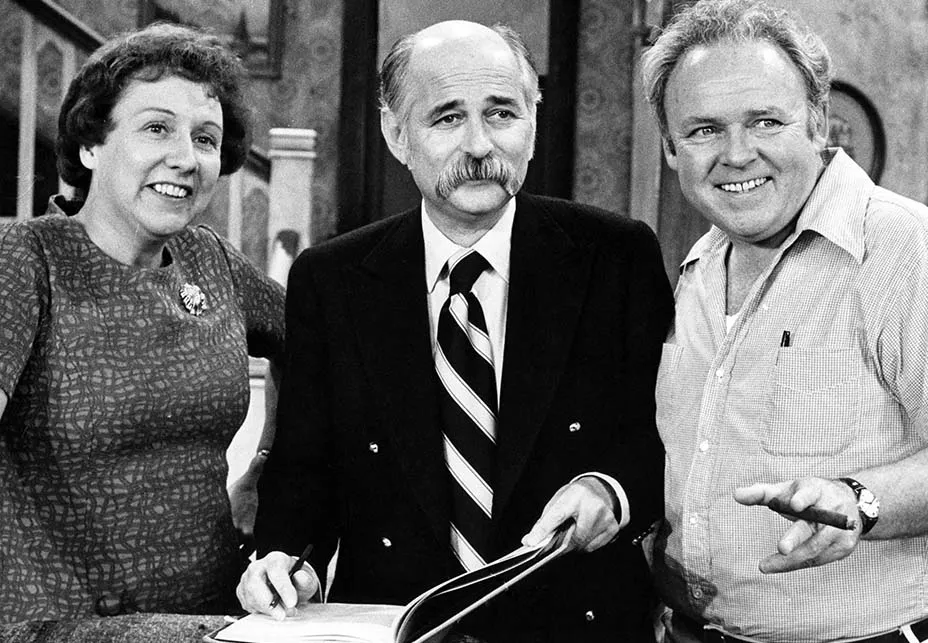
Critical attention, word of mouth and Emmy recognition changed the equation. The audience grew, and the same series CBS had introduced with nervous precautions became the country’s top-rated program. It held the No. 1 position for five consecutive seasons, proving that difficult subjects were not poison to popular television when the characters were compelling enough.
The timing helped. CBS was remaking its schedule for a changing audience, moving away from many rural comedies and toward programs with urban settings and contemporary concerns. All in the Family did more than fit that shift. It announced it with a bullhorn.
The idea spent years looking too dangerous for network television, then became the most-watched program in America and sent its chairs to the Smithsonian.
Norman Lear and Bud Yorkin draw inspiration from Till Death Us Do Part and begin developing an American household built around a reactionary father and the younger generation arguing across the table.
An earlier version features different performers as the younger couple. The premise remains too volatile for a network schedule still built around safer domestic comedy.
Lear keeps reshaping the project while the cultural distance between older parents and adult children becomes harder for television to pretend does not exist.
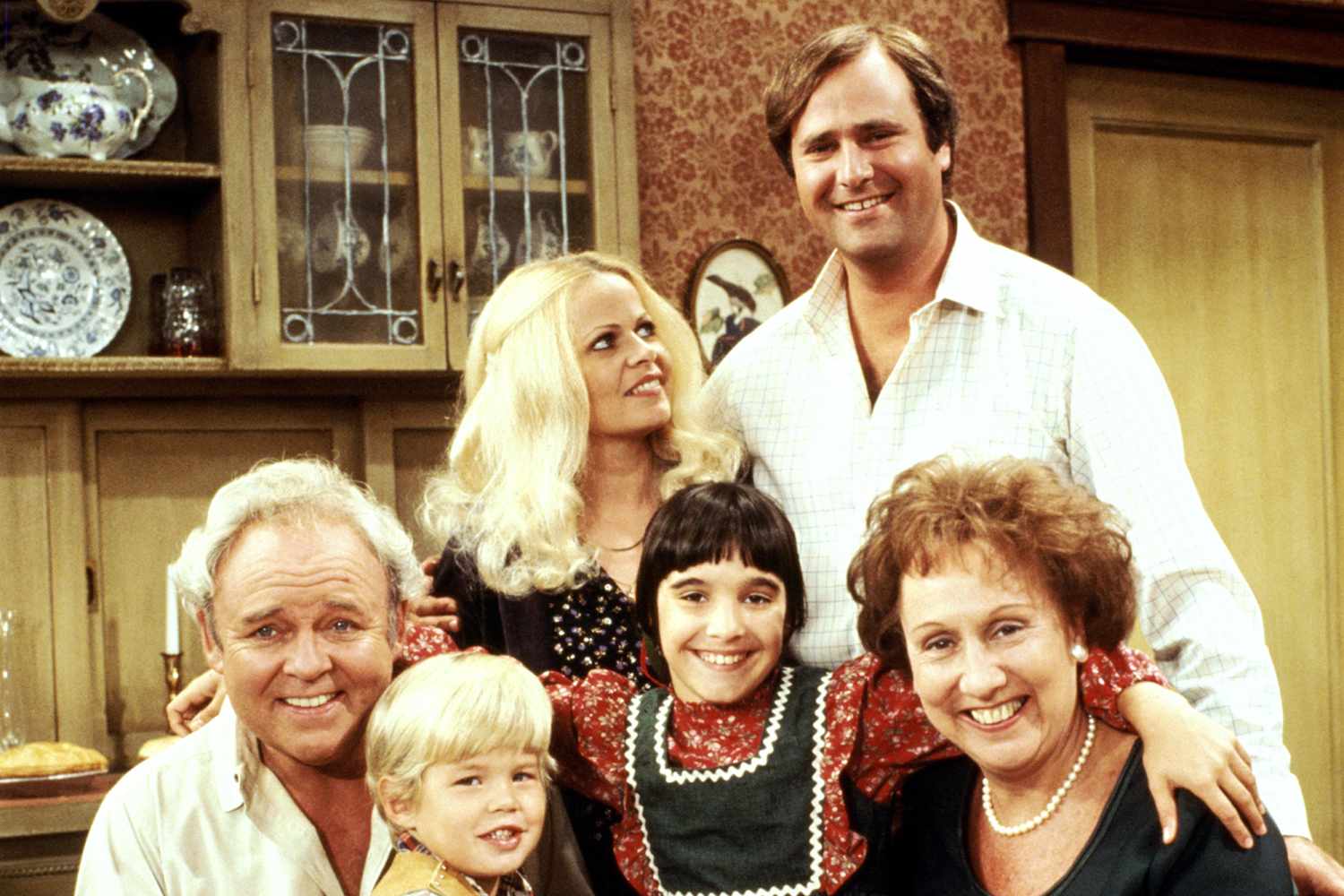
Carroll O’Connor, Jean Stapleton, Rob Reiner and Sally Struthers become the household viewers will recognize.
CBS prepares for complaints, but the midseason debut begins quietly. Critical attention, summer reruns and Emmy recognition build the audience.
The most confrontational sitcom on network television becomes the country’s most-watched program.
Maude and the Jeffersons grow from supporting characters into major series, proving the Bunker world contains more than one political or cultural point of view.
“The Draft Dodger,” “Edith’s 50th Birthday” and “Two’s a Crowd” push familiar characters into grief, terror and confession without abandoning comedy.
The Stivics move west, ending the original household structure and forcing the series to build a later family around Archie, Edith and Stephanie.
All in the Family concludes after nine seasons. Archie’s story continues in Archie Bunker’s Place, but the living-room era has reached its closing point.
The easiest version of the show would have made Archie the villain, Mike the enlightened hero, Gloria the peacekeeper and Edith the harmless comic relief. That version might have lasted a season. The actual series became a landmark because every member of the household could be loving, selfish, perceptive, ridiculous and wrong.
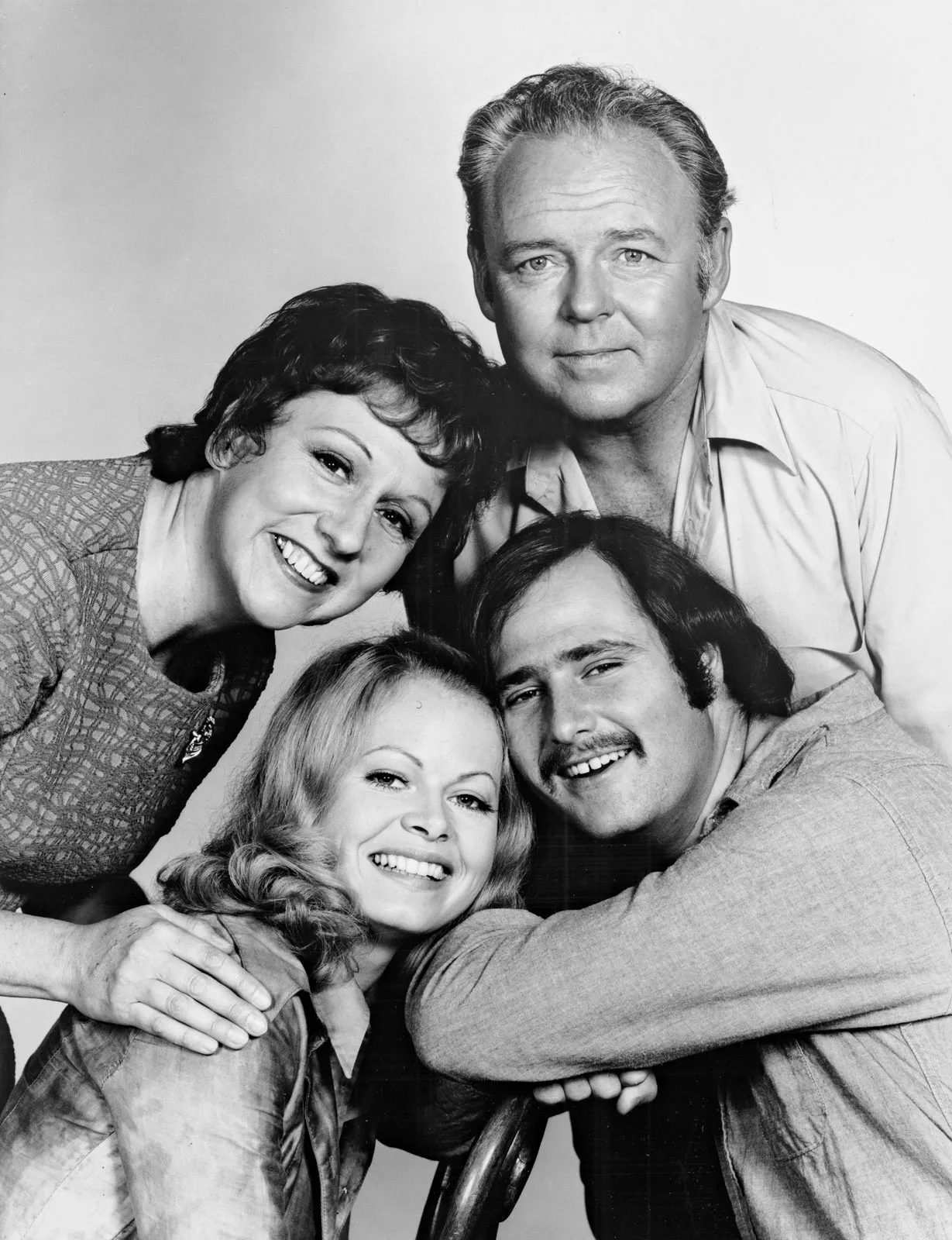
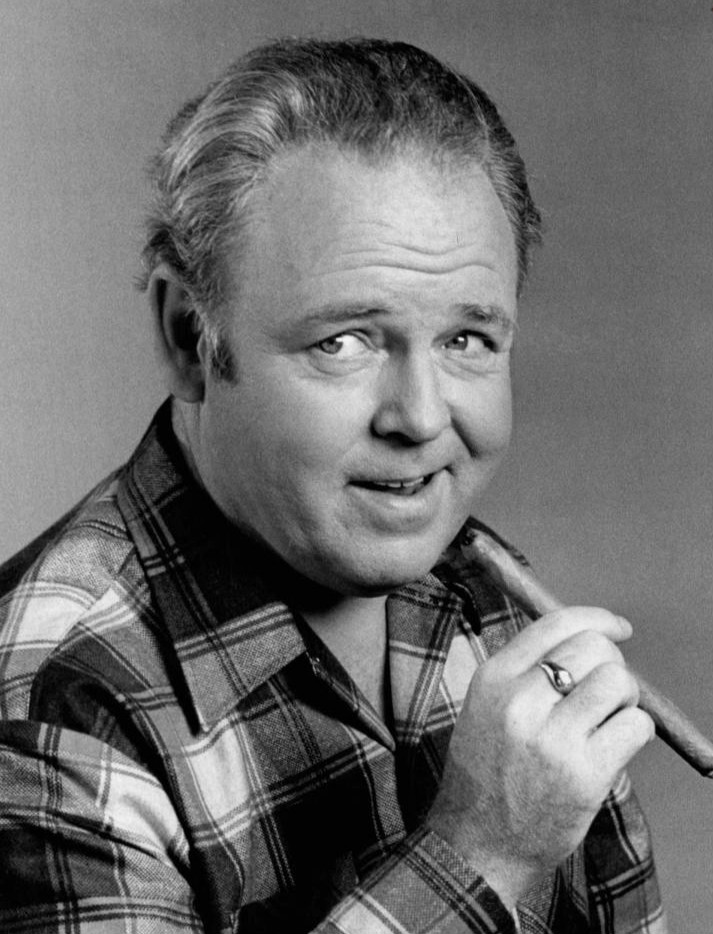
Archie is defensive, prejudiced, funny, frightened and deeply attached to a world he believes is disappearing. Carroll O’Connor plays the bluster without sanding off the harm. Just as important, he finds the insecurity beneath it. Archie wants respect, fears irrelevance and treats certainty as armor.
Edith initially appears to absorb Archie’s noise, but Jean Stapleton gradually reveals the household’s moral authority. Edith’s kindness is active, not passive. She understands people Archie dismisses, recognizes cruelty beneath jokes and can stop him with a quiet sentence when shouting would only create more shouting.
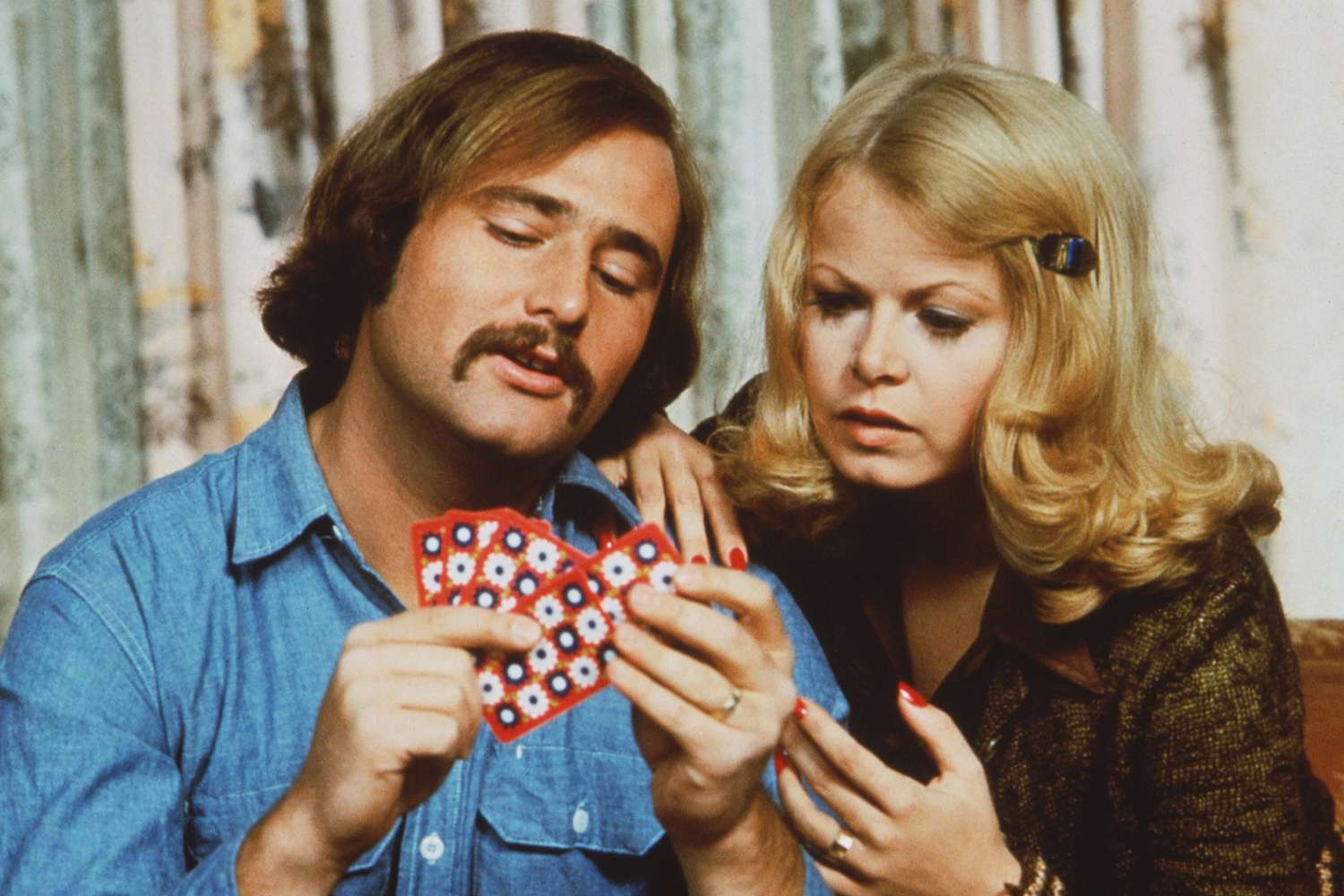
Gloria loves her father but refuses to inherit his worldview. Sally Struthers gives her a temper, vulnerability and comic impatience. She is not simply the bridge between Archie and Mike; she is a young woman testing how much of the family script she intends to keep.
Mike is educated, liberal and often correct about the issues. He is also smug, provocative and perfectly capable of enjoying his own righteousness. Rob Reiner keeps the conflict alive by making Mike more than the writer’s mouthpiece. Archie may be wrong, but Mike does not always know how to be right without being unbearable.
The Jeffersons expand the show beyond the Bunker household. George can match Archie in stubbornness and prejudice, while Louise and Edith often see through both men. Their presence prevents Archie’s racial assumptions from remaining theoretical and opens the door to one of television’s most durable spin-offs.
Maude challenges Archie from the opposite political direction. Stephanie brings a child back into the house after Mike and Gloria leave. These characters change the emotional geometry without turning the series into a reset. The Bunkers age, lose people, gain responsibilities and keep moving.
The writing understood that political conflict becomes sharper when affection remains. Archie could insult Mike and still panic when Mike was in danger. Mike could condemn Archie’s beliefs and still recognize the old man’s fear. Edith could love Archie while refusing to accept his cruelty. That contradiction is the show.
The broader history of changing households belongs in How the Television Family Changed During the 1970s. The Bunker version is specific: a working-class family where love remains even when agreement becomes impossible.
Carroll O’Connor found fear, humor, tenderness and cruelty inside the same man—and never allowed one quality to cancel the others.
Archie is a blue-collar World War II veteran who believes he followed the rules and received less security than he was promised. He experiences social change as evidence that the world is rewarding everyone except him.
That resentment does not make his targets responsible. The show’s strongest writing understands the distinction. Economic anxiety can explain why a scapegoat feels useful without justifying the choice of scapegoat.
Archie’s language is a form of control. He misuses words, repeats inherited phrases and treats familiarity as proof. When Mike corrects him, the factual mistake becomes emotional territory. Archie would rather defend the wrong word than admit the room contains knowledge he does not possess.
O’Connor’s charisma creates the central risk. Archie is funny. Viewers can recognize a father, uncle, coworker or part of themselves in him. Satire becomes harder when the target is entertaining enough to attract affection.
The series responds by surrounding Archie with people who answer, resist and experience the consequences. He is not the only voice, even when he is the loudest. Edith’s empathy, Mike’s argument, Gloria’s anger and the Jeffersons’ presence keep the room from becoming an unchallenged monologue.
Archie also changes in limited, uneven ways. He can develop affection for people he once reduced to categories while retaining prejudice elsewhere. That inconsistency feels true. Personal contact can disrupt one belief without magically rebuilding a worldview.
Jean Stapleton gradually revealed that kindness was not weakness, confusion was not stupidity and patience had a limit.
Edith enters many early scenes as motion and sound: rushing from the kitchen, stretching a story beyond Archie’s attention span and absorbing insults with a familiar smile.

The performance slowly changes how we read that behavior. Edith notices. She listens to the person nobody else has allowed to finish. Her stories wander because she follows emotional connections rather than Archie’s demand for efficiency.
Her kindness is active labor. She keeps the household functioning, translates anger, remembers obligations and extends dignity to visitors Archie dismisses. The family treats the work as natural because Edith has made it reliable.
Landmark episodes place her body and fear at the center: menopause, a breast-cancer scare and the assault story of “Edith’s 50th Birthday.” These are not simply controversial subjects. They allow a sitcom wife’s private experience to become important enough to reorganize the family.
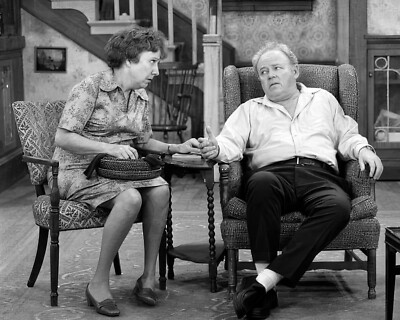
Edith’s greatest moments often arrive when the patience ends. She does not need Archie’s volume to stop him. A quiet refusal can expose how completely he depends on her moral permission.
For Gen X viewers, Edith could initially look like the adult woman who tolerated too much. Rewatching reveals the more complicated achievement. She survived inside a narrow role and kept expanding it until the house had to acknowledge her authority.
The Stivics challenge Archie’s worldview while carrying their own ego, marriage problems and blind spots down the stairs.
He has education, political confidence and a language for social justice Archie lacks. He also enjoys correction, assumes good politics prove good character and can dominate Gloria while lecturing Archie about equality.
Rob Reiner’s performance protects the conflict from becoming too easy. Mike is not a writer standing outside the family. He eats Archie’s food, occupies Archie’s house and knows exactly how to provoke him.
The nickname “Meathead” is insulting, but it also becomes a strange family claim. Archie’s hostility and attachment grow together.
She pushes against Archie’s assumptions while discovering that a liberal husband can carry traditional expectations into marriage.
Sally Struthers gives Gloria a temper and comic force that prevent her from becoming the neutral daughter between two men.
Her growth belongs to the decade’s changing television woman, not merely to the debate between Archie and Mike.
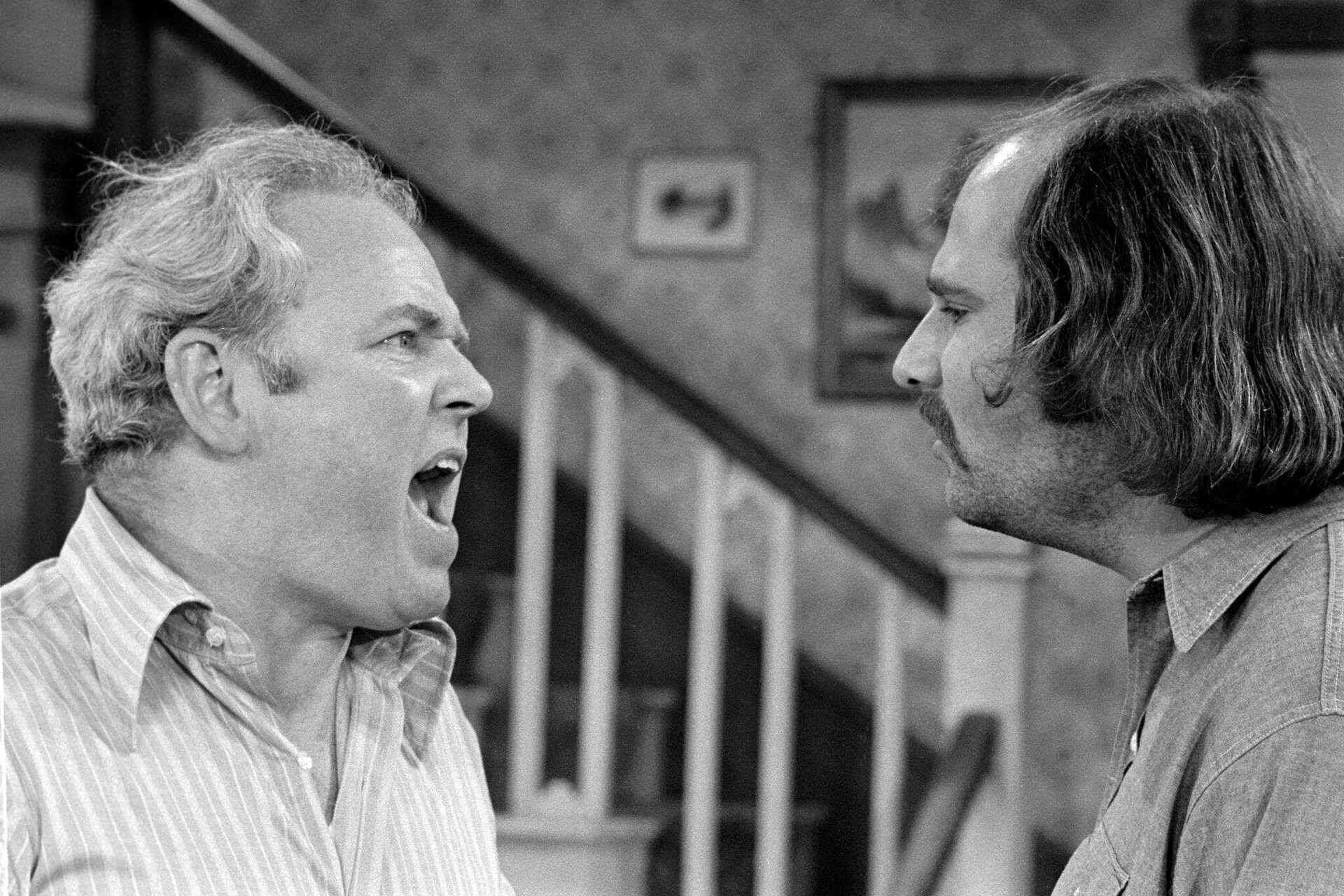
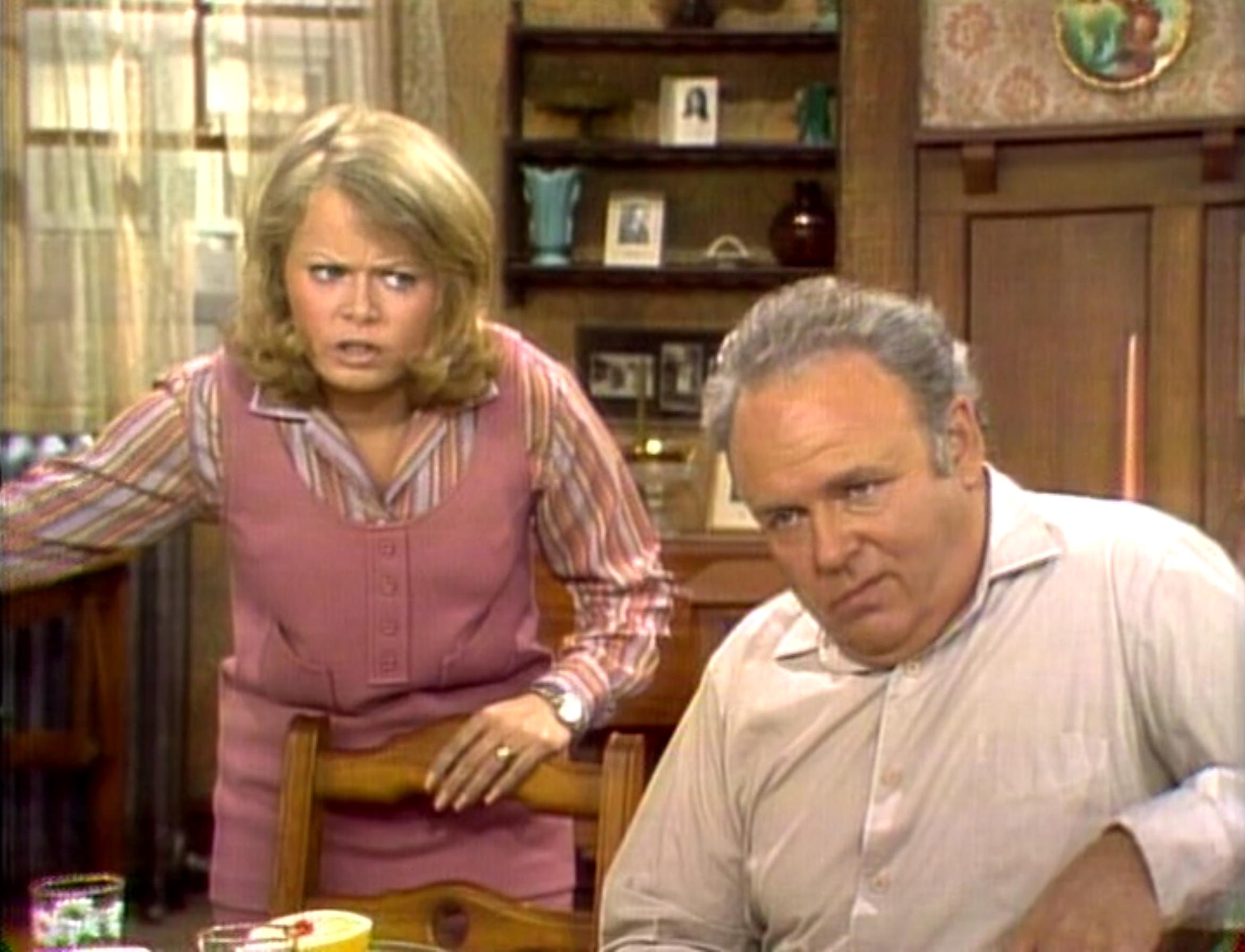
The Stivics’ move to California ends more than a cast arrangement. It removes the daily generational argument from the staircase and forces Archie to confront a house where the younger future is no longer physically present.
The politics were built on wages, housing, pride and the fear of becoming unnecessary.
Archie’s worldview is inseparable from work. He believes labor, military service, homeownership and age have earned a permanent place in the social order. When the order changes, he experiences the change as theft.
The Bunker house reflects that history. It is an achievement and a burden. Repairs matter. Bills matter. The chair represents ownership because much of Archie’s life has been organized around having something that cannot be taken away.
Mike’s education complicates the conflict. He has language and opportunity Archie did not possess, but he is living in Archie’s home while criticizing the values that paid for it. The contradiction does not make Archie right; it gives the argument emotional weight.
The show frequently exposes how class resentment can be redirected toward race, immigration, gender or youth. Archie identifies people with less power as the reason he feels less secure because the institutions above him are harder to confront.
That analysis remains one reason the show feels current. Economic fear does not produce one political result automatically, but it creates pressure that somebody will try to explain, exploit or aim.
All in the Family used the familiar mechanics of a stage-like sitcom: entrances through the front door, arguments at the dining table, characters moving between living room and kitchen, and an audience reacting in real time. The setting was limited, but the emotional range was enormous.
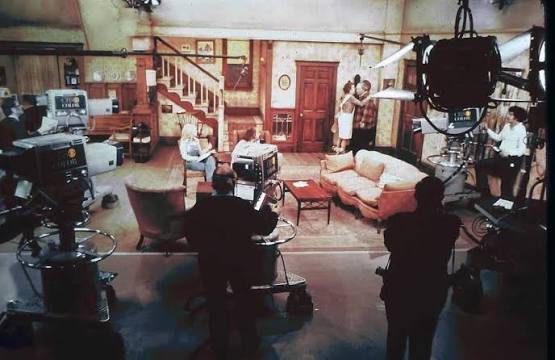
The live-audience response mattered. Laughter could arrive as release, recognition or nervous surprise. At times the audience laughed at Archie because he was ridiculous. At other times it laughed with him before the episode turned the joke around. The show used that instability. It made viewers aware that comedy can reveal a prejudice before a person has decided whether to admit it.
Archie’s mangled words became part of the rhythm, but the language was not only a bag of catchphrases. His misuse of words showed how he protected himself from ideas he did not understand. Mike’s corrections were often factually accurate and emotionally useless. Edith’s stories seemed to wander until they landed exactly where the household needed them.
The production did not rush away from silence. When a subject became serious, the show allowed the studio audience to settle. That willingness to stop chasing the next laugh gave episodes room to become something more than topical comedy. The transitions could be abrupt because family arguments are abrupt. One moment somebody is mocking a haircut; the next, a buried fear has surfaced.
The Bunker living room was small enough to recognize and large enough to contain the whole country.
Archie and Edith sing toward a lost past while the series spends the next half hour testing whether that past was ever as simple as the melody suggests.
Archie and Edith sing toward a past that feels safer in memory. The half hour that follows keeps asking who was excluded from that safety and what nostalgia costs when it becomes policy.
Watch the opening on YouTubeThe opening is intimate: two adults at a piano, singing slightly imperfectly in a room that looks lived in. Before the argument begins, the audience is invited into affection.
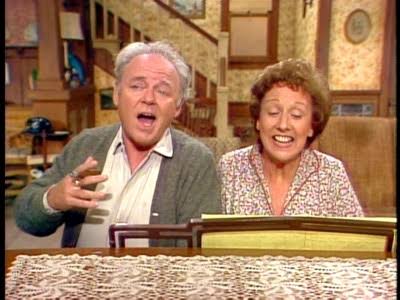
The song gives Archie’s worldview emotional shape. He misses certainty, familiar roles and a time he remembers as more respectful. Nostalgia does not need to prove the memory accurate. It gains power from feeling rather than evidence.
Edith’s voice complicates the performance. She joins Archie, but her warmth does not mean she shares every conclusion he draws from the past. The duet represents a marriage where shared history and different moral instincts coexist.
For Gen X viewers, the lyrics contained references that were already antique. We might not have understood every name or product, but we understood adults talking about a world that had supposedly made more sense.
The closing image of Archie and Edith still together after another argument creates the show’s central tension: conflict has not destroyed the marriage, and marriage has not resolved the conflict.
The central character’s comic power created the risk that satire would be heard as celebration.
Archie is not written as a moral model. He is written as a recognizable man whose prejudice, fear and occasional tenderness occupy the same body.
Norman Lear intended to expose intolerance through comedy, but intention does not control every audience response. Some viewers laughed at Archie. Some laughed with him. Many moved between the two positions depending on the episode or issue.
Carroll O’Connor’s performance makes the character emotionally legible. That is necessary for drama and dangerous for satire. A flat villain would be easier to reject and far less useful for understanding how prejudice survives inside ordinary life.
The show builds counterpressure through consequence and other voices. Archie’s assumptions are challenged by the people he loves, the neighbors he cannot dismiss and situations where his confidence produces humiliation or harm.
Yet the risk remains. Catchphrases can travel farther than context. A viewer can repeat the insult and forget the episode’s reversal. The same problem follows later antiheroes whose charisma outruns the critique.
The mature response is not to deny the ambiguity. It is to examine how the episode frames the joke, who receives agency, whose pain is visible and whether Archie’s humanity is being used to understand responsibility or avoid it.
The series is remembered for the list of subjects it brought into prime time, and that list is extensive: racism, antisemitism, homophobia, women’s rights, abortion, rape, breast cancer, menopause, religion, labor, unemployment, gun ownership, war, draft resistance, aging and death. Yet a checklist can make the program sound more mechanical than it was.
Its deeper subject was fear of change. Archie fears losing status, work, control and a language everyone understands. Mike fears becoming trapped by the compromises of adulthood. Gloria fears repeating the limitations placed on women before her. Edith fears conflict but increasingly understands that avoiding conflict can protect the wrong person.
Class runs through nearly every argument. Archie’s resentment is not only ideological. He has spent his life working, believes the rules were promised to him and suspects that every social change moves him farther from security. The show does not endorse the targets he chooses, but it understands the economic anxiety that makes a target emotionally useful.
That understanding is why the program could challenge prejudice without pretending prejudiced people arrive from another planet. Archie is not an outsider invading a decent family. He is the father of the family. He pays bills, loves his wife, works hard, behaves generously in one episode and cruelly in the next. The danger is ordinary, which makes the comedy more unsettling and more honest.
The show sometimes reflected the blind spots of its era. Not every storyline has aged evenly, and some language remains harsh. A serious rewatch should neither excuse the damage nor pretend the series intended every line as approval. Its method was confrontation, and confrontation is messy. The best episodes still provide enough moral and emotional framing to make the difference visible.
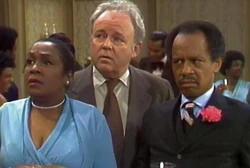
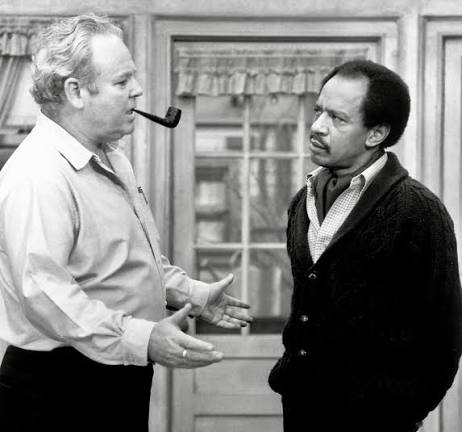
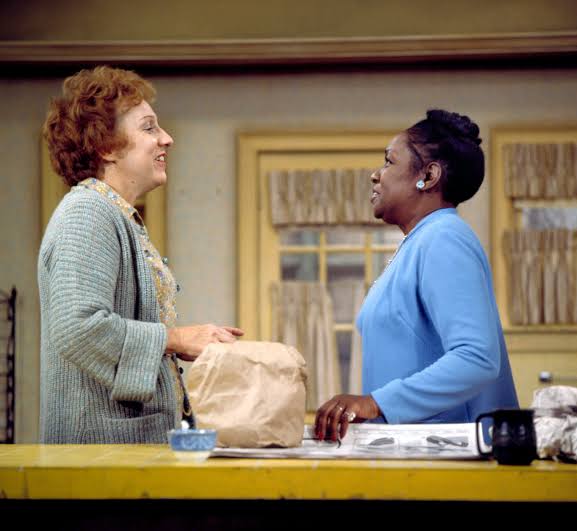
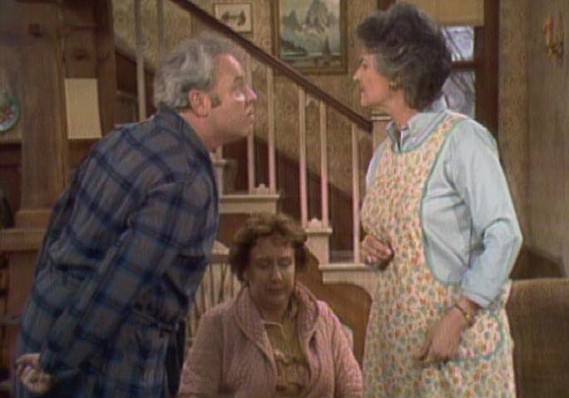
Supporting characters became leads because the world was too large to remain organized around one man’s reaction.
George and Louise Jefferson begin as neighbors who force racial assumptions into direct relationship. George can be stubborn, status-conscious and prejudiced in his own directions, which prevents the writing from treating him as a saint assigned to correct Archie.
Louise and Edith develop a quieter connection. Both women understand husbands who fill the room and both possess clearer emotional vision than the men acknowledge.
The Jeffersons moves George and Louise into a different economic world, turning class mobility, marriage and race into the center rather than a Bunker subplot. The exact show history belongs in The Jeffersons and the Sitcom That Moved On Up.
Maude arrives as Edith’s cousin and Archie’s political opposite. She is liberal, feminist, confident and just as capable of making the argument about her own certainty.
That complexity allowed Maude to become more than an anti-Archie spin-off. Maude and the Sitcom That Refused to Whisper owns that separate show history.
The broader Black-sitcom context belongs in The Best Black Sitcoms of the 1970s, while this page focuses on how those supporting characters changed All in the Family itself.
Warmth came from recognition, not from forcing everybody to become admirable before the closing credits.
The scripts build jokes from character rather than attaching interchangeable punch lines to a controversial premise. Archie’s mangled language, Edith’s wandering stories, Mike’s corrections and Gloria’s temper each have separate mechanics.
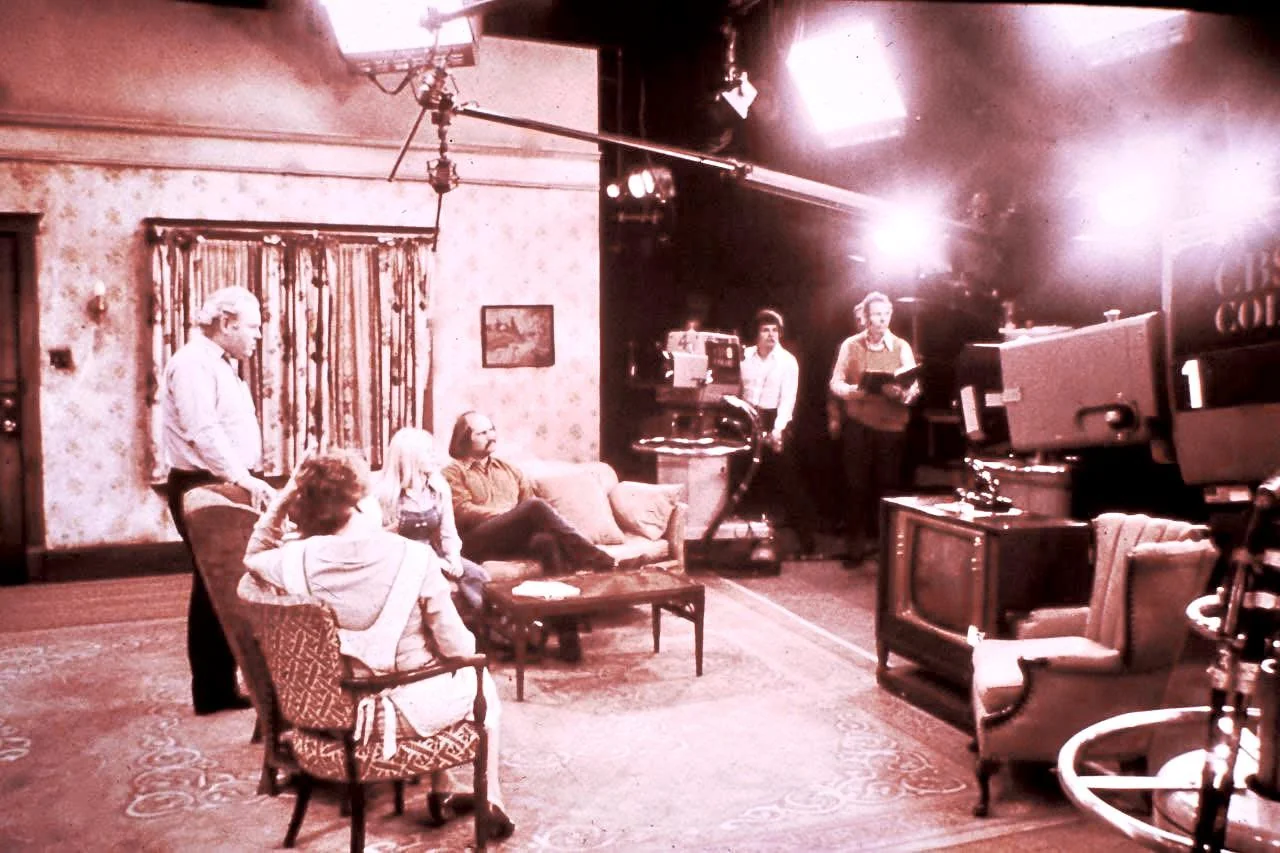
That specificity allows scenes to continue after the laugh. Archie can be wounded without becoming wise. Mike can be correct without becoming generous. Edith can forgive without pretending the insult did not happen.
The live audience adds pressure. A line lands, the actors hear the room and the next reaction changes because the embarrassment is now public. Laughter can become evidence inside the scene.
The production does not need a large world. A front door, staircase, dining table, kitchen entrance and two chairs create enough routes for the family to collide. The limited geography concentrates the emotional stakes.
The show also understands that affection and irritation often occupy the same relationship. Archie and Mike are not secretly best friends waiting for one speech. They are relatives who may never agree and still become attached through years of conflict.
This is why the series can move from broad comedy to fear without becoming a separate program. The rooms and people remain the same. Only the pressure changes.
This is not a list of the ten funniest installments. It is a starting route through the series: the premiere, the episodes that tested network boundaries, the stories that expanded Edith and Archie, and the farewells that changed the household.
The premiere establishes the entire pressure cooker in less than half an hour: Archie defending the old order, Mike poking every bruise, Gloria caught between loyalty and impatience, and Edith keeping the house from flying apart. It is rougher than the polished years that followed, but the central idea is already there. The Bunkers are not a symbolic family assembled for a debate. They feel like people who have been arguing around that table for years.
For Gen X viewers who found the series out of order, the pilot feels less like an introduction than the first recording of a family argument that had apparently been running forever. Nobody needs a backstory before the sparks start because the relationships explain themselves through rhythm.
One of the first episodes to show how aggressively the series could challenge Archie’s assumptions. The writing lets him reveal his prejudice, then forces him to discover that his supposedly foolproof instincts are built on stereotypes. It remains important because the joke is not simply that Archie is wrong. The episode shows how prejudice survives by dressing itself up as common sense.
The episode remains uncomfortable because the language and framing belong to the period. Its importance lies in making Archie’s confidence—not the identity of the people he judges—the unstable object in the room.
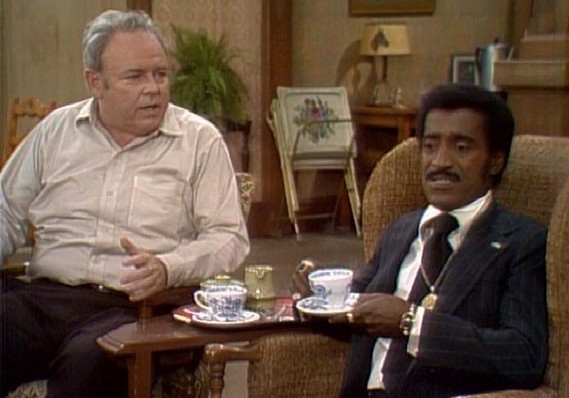
Sammy Davis Jr. visits the Bunker home and turns celebrity guest casting into one of the show’s sharpest demonstrations of social discomfort. Archie wants to enjoy the status of having a famous guest while holding onto every contradiction that fame exposes. The famous photograph at the end works because the episode has spent its time tightening the spring.
The famous photograph lands because Sammy understands the room, the camera and Archie better than Archie understands himself. Celebrity gives Archie status for a few minutes, then takes control of the image.
Maude arrives as the rare person capable of meeting Archie at full volume. Their clash is funny because neither lacks confidence and neither is interested in retreat. The episode also reveals how productive the show’s supporting-character universe could be. Maude was not created as a quiet side note. She entered like a separate sitcom already running at full speed.
Maude enters with enough force to carry another series because she is not simply a correct answer to Archie. She has ego, blind spots and a fully developed appetite for conflict.
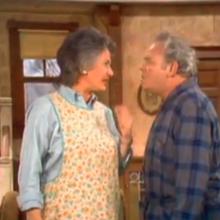
Jean Stapleton receives the emotional center as Edith faces a breast-cancer scare. The episode treats fear without abandoning the rhythms of the series, and it shows why Edith could never be reduced to Archie’s cheerful wife. Her vulnerability, practicality and private courage give the story weight that no topical premise could manufacture by itself.
The episode reveals the cost of Edith’s role. She is not simply cheerful. She performs stability for everyone else, and the possibility that she may not be able to continue exposes how dependent the family is on work it rarely names.
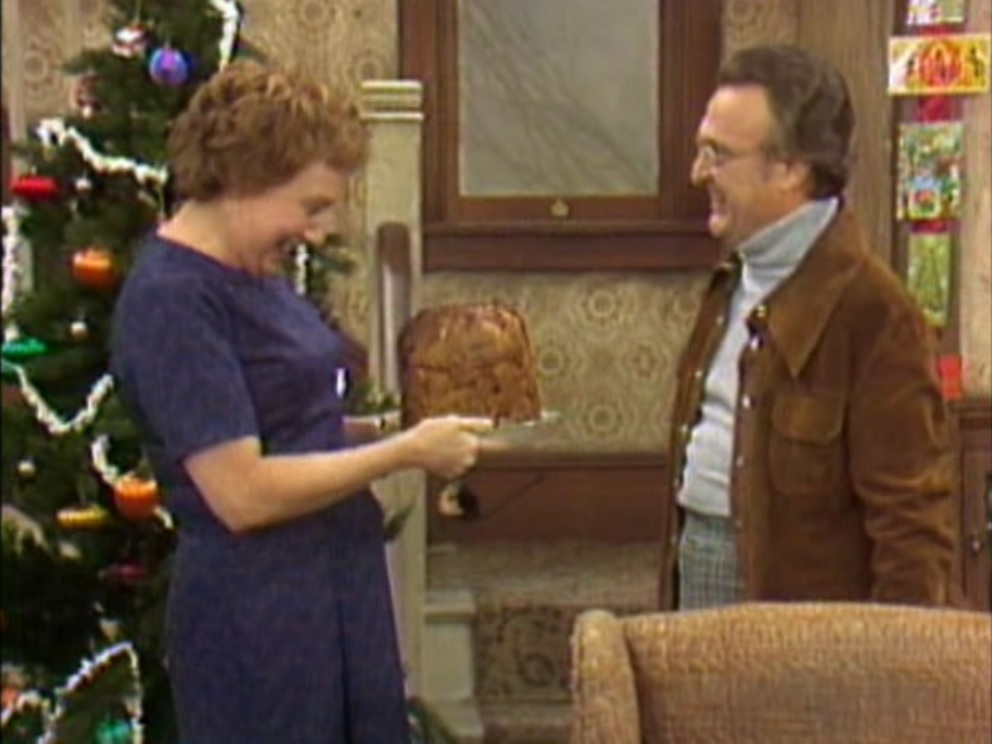
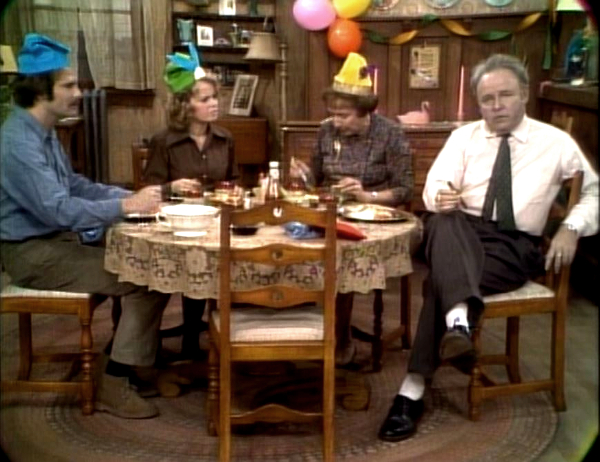
Christmas dinner brings together Archie’s friend, whose son died in Vietnam, and a young draft resister. The episode does not offer a tidy winner. It lets grief, patriotism, anger and conscience sit at the same table. That refusal to simplify the emotional cost is precisely what separated the show from a lecture with punch lines.
For Gen X viewers, the episode often arrived after Vietnam had become history-class material. The acting restores the conflict to the dinner table, where grief does not behave like a position paper and nobody leaves with a clean victory.
This two-part story is among the most difficult episodes the series attempted. Edith survives a sexual assault in her home, and the writing centers her terror and aftermath rather than treating the event as a plot twist for Archie. It is painful television, but it demonstrates the show’s belief that a familiar sitcom room could hold subjects viewers usually encountered only in drama or not at all.
The power comes from violating the assumed safety of the Bunker house. The room we knew through jokes and door slams becomes dangerous, then remains the room Edith must learn to occupy again.
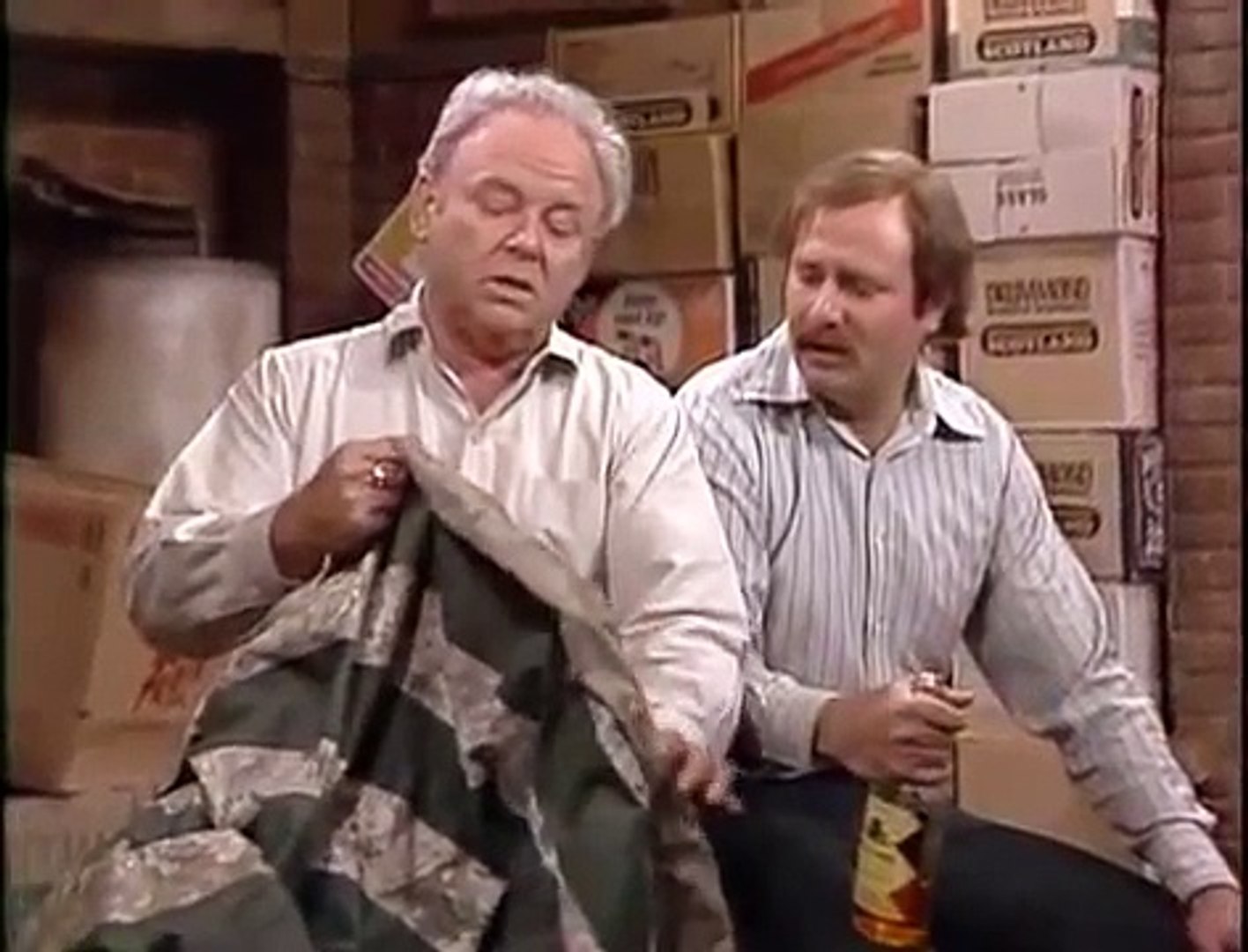
Archie and Mike are trapped together in the storeroom of Archie’s Place, and the shouting gradually gives way to disclosure. Archie talks about the father who shaped his fear and anger. The episode does not excuse him, but it adds the history beneath the posture. For a character famous for never admitting weakness, that crack in the armor matters.
The episode shows why O’Connor’s performance was essential. Archie’s vulnerability does not erase the bigotry, and the bigotry does not make the vulnerability fake. Television rarely allows both truths to remain visible.
Mike, Gloria and Joey leave for California, ending the original four-person household that powered the series. The farewell works because affection and resentment have always lived side by side. Archie cannot suddenly become emotionally fluent, and Mike cannot forget years of conflict. The goodbye feels true to a family that loves one another without ever learning how to make that love easy.
The departure changes the architecture of the show. Archie and Edith remain, but the daily generational argument no longer walks down the stairs. The empty space proves how much conflict had become a form of belonging.
The final episode under the original title turns toward Archie and Edith’s marriage. The plot involves Edith hiding a serious health problem, but the deeper point is Archie’s dependence on the person he has too often taken for granted. It is not a grand retrospective. It is a reminder that the loudest man in the house was never the strongest person in it.
The episode is not a grand retrospective. That restraint fits. The loudest man in the house confronts the fact that the quiet person has always been carrying more weight.
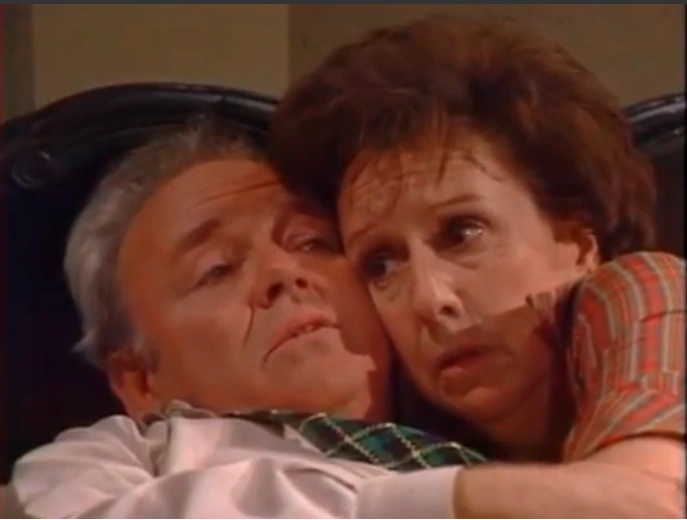
Menopause becomes the center of a family sitcom story rather than a whispered medical footnote. Archie responds with confusion and selfishness because he experiences any change in Edith as disruption to the system that protects him.
Jean Stapleton keeps the episode from becoming a lesson delivered through a symptom list. Edith is frustrated, frightened and still recognizably herself, expanding what a sitcom wife is permitted to experience on screen.
A swastika is painted on the Bunker home because the attacker mistakes the family’s identity. Archie wants to treat the incident as somebody else’s problem, but the threat exposes the physical danger behind ideological hatred.
The episode widens the show’s method. Prejudice is not only something Archie says. It exists outside the living room as a force capable of finding the wrong address and still destroying a life.
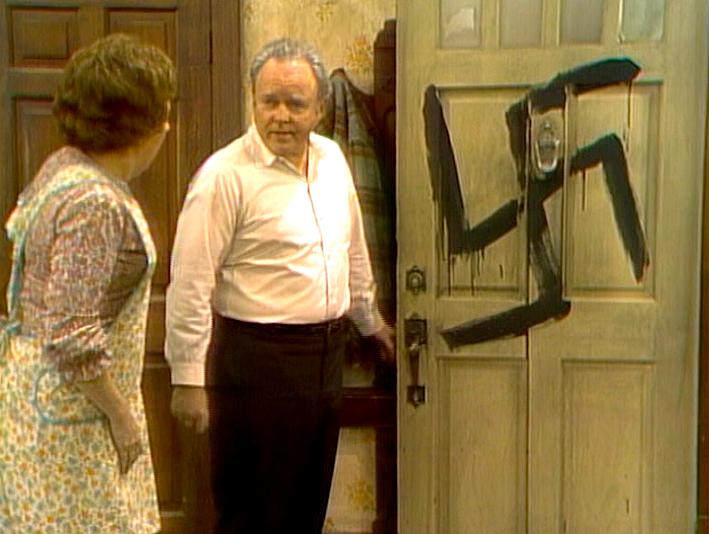
The episode does not flatten a dead son, a grieving father or a young resister into talking points.
Holiday sitcoms usually promise reunion, forgiveness or temporary peace. “The Draft Dodger” uses that expectation to make the conflict more painful.
Archie wants the meal to confirm familiar values. His friend wants the sacrifice of his son recognized. The draft resister carries a moral conviction that cannot be expressed without sounding, to the grieving father, like judgment on the dead.
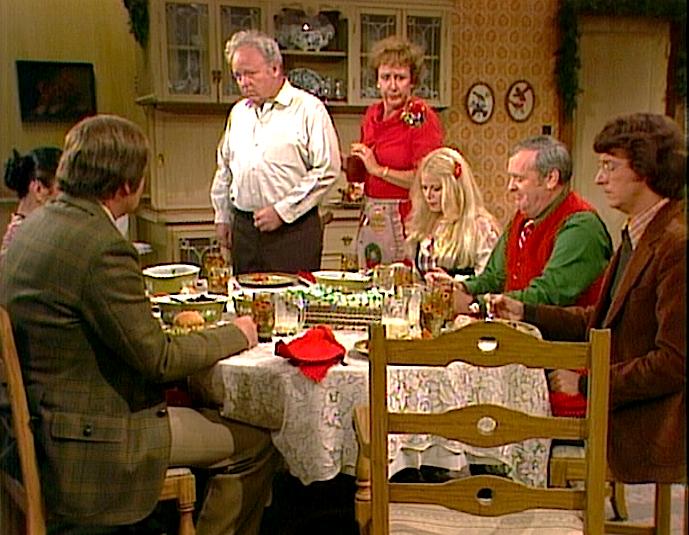
The episode refuses the relief of a villain. The father’s grief is not an argument to be defeated. The young man’s conscience is not cowardice simply because Archie calls it that.
Mike’s usual political language cannot solve the room. This is not a campus debate. The cost of war is sitting at the table in two different forms.
For viewers who encountered the episode years later, the historical particulars remained clear enough, but the emotional structure traveled forward: what happens when one person’s moral choice appears to dishonor another person’s loss?
The two-part story centers Edith’s survival and aftermath rather than using violence only to deepen Archie.
The attack is horrifying partly because it occurs inside the Bunker home, a space audiences had visited for years and assumed they understood.
Jean Stapleton plays Edith’s recognition, fear and resistance without transforming her into a different person. The qualities Archie dismisses—attention, empathy and improvisation—become survival tools.
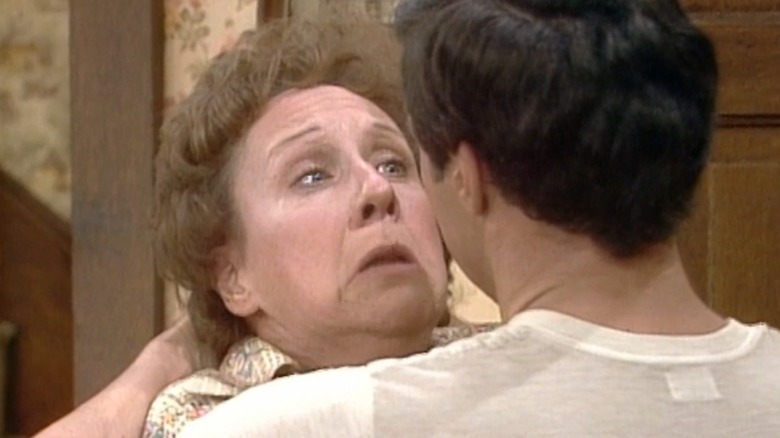
The episode reflects the language and production standards of 1977, and a modern viewer may find aspects difficult. The central creative decision remains important: Edith’s experience belongs to Edith.
The aftermath does not vanish because the immediate danger has ended. The house remains familiar and altered. A sitcom reset cannot make the room innocent again.
Archie’s response matters, but he does not become the primary victim. The story understands the difference between a husband’s rage and the woman who must continue living in the body and home where the attack occurred.
The series’ commercial success is central to its history. All in the Family did not survive as a respected curiosity tucked into a low-rated corner of the schedule. After its slow beginning, it became the top-rated show in prime time and remained there for five seasons. That reach meant millions of households encountered the same arguments at the same time, long before audiences fragmented across hundreds of channels and endless streaming menus.
The Television Academy records 55 Emmy nominations and 22 wins for the series. Carroll O’Connor, Jean Stapleton, Rob Reiner and Sally Struthers all received major recognition, while the show won top comedy honors multiple times. Awards alone do not make a program culturally important, but the breadth of the recognition reflects how fully the acting, writing, directing and production worked together.
The success also changed network behavior. Once a show this confrontational became No. 1, topical comedy stopped looking like a reckless experiment. Networks pursued programs about single women, Black families, working-class households, political conflict and institutions that were not functioning perfectly. The results varied, but the door could no longer be closed with the claim that viewers only wanted escape.
| Measure | Why it matters |
|---|---|
| 1971–1979 under the original title | Nine seasons of the Bunker household before the continuation as Archie Bunker’s Place. |
| Five consecutive seasons at No. 1 | Proof that challenging comedy could also be mass-audience television. |
| 22 Emmy wins | Recognition across acting, writing, directing and series categories. |
| Multiple major spin-offs | The characters and social world were strong enough to support an entire connected television universe. |
Maude grew from Edith’s outspoken cousin. The Jeffersons followed George and Louise into a very different economic world. Good Times emerged through a branch connected to Maude. Archie Bunker’s Place continued Archie’s story after the original series title ended. The connections were sometimes direct and sometimes stretched by television logic, but together they created a broad portrait of American households.
The important point is that these were not identical shows with swapped casts. Maude centered a politically liberal woman whose certainty could be as combustible as Archie’s. The Jeffersons explored upward mobility, marriage and race from a Black family’s perspective. Good Times made economic pressure impossible to separate from family love.
This expansion normalized the idea that a supporting character might carry a complicated history into a new series. It also created internal arguments across programs. Lear’s television world did not have one approved political voice. It had people who could be wrong from different directions.
Modern franchise television often builds universes around mythology and plot. Lear’s universe was built around neighbors, relatives, workplaces and class. Nobody needed a portal. They needed a reason to knock on another door.
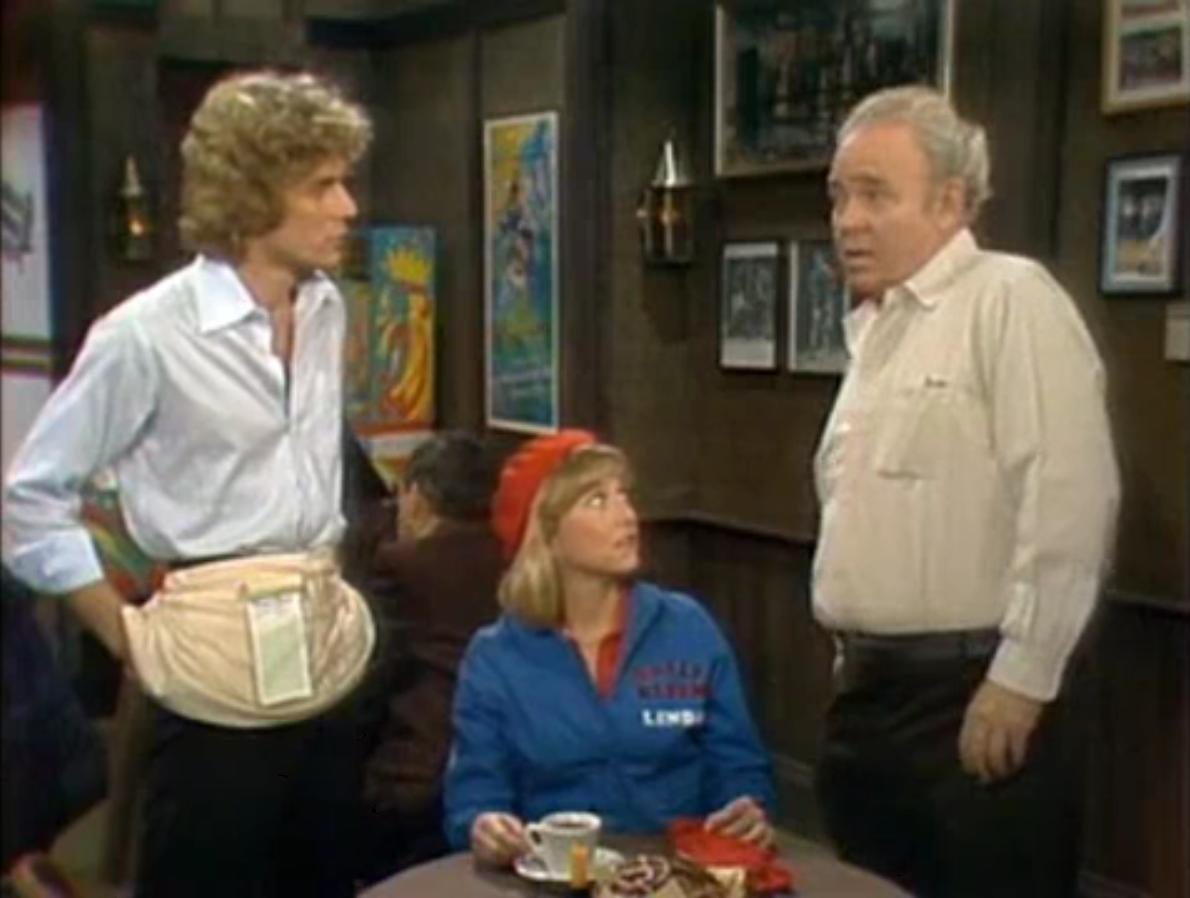
The Jeffersons moves George and Louise into economic mobility, a Manhattan apartment and a different set of class and racial tensions. The exact show history belongs in The Jeffersons and the Sitcom That Moved On Up.
Good Times reaches the family tree through Maude and places economic pressure, Black family life and public-housing reality at the center. Its exact history belongs in Good Times and the Complicated Legacy of J.J. Evans.
The broader Black-sitcom comparison belongs in The Best Black Sitcoms of the 1970s, while this article stays focused on the Bunker show and the branches it created.
Mike and Gloria’s departure altered the premise instead of pretending another young couple could reproduce the same argument.
The original four-person household gives the series its most recognizable shape. Once Mike and Gloria leave, the stairs no longer deliver the younger generation into Archie’s living room every day.
Stephanie introduces a different relationship. Archie becomes responsible for a child without the familiar political sparring, allowing care to emerge in ways he cannot dismiss as argument.
The bar grows more important, moving Archie into a social setting where work, friendship and customers create another version of community.
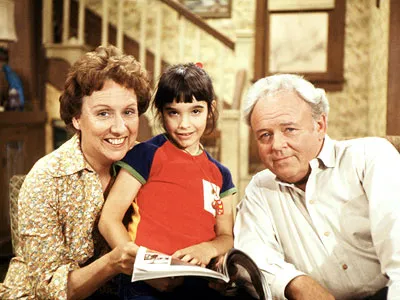
The later episodes are less culturally central than the peak years, but they reveal the cost of change. A family sitcom cannot lose half the household and remain emotionally untouched.
The transition to Archie Bunker’s Place acknowledges that the original title no longer describes the same show. The Bunker story continues, but the era defined by Edith, Gloria, Mike and the living room has ended.
The ensemble acting has aged beautifully. O’Connor and Stapleton can turn a routine exchange into a history of a marriage. Reiner and Struthers prevent the younger couple from becoming symbols. The pacing, especially in the strongest years, remains astonishingly confident. Episodes know exactly when to push, pause and let a reaction land.
The insistence that working-class life belongs at the center of television also remains powerful. The Bunker home looks lived in. Money matters. Jobs matter. Pride and status are not abstract political terms; they shape how characters hear every conversation.
Some language and comic framing can be difficult. The series used slurs as part of its strategy, and not every viewer will experience the intended satirical distance in the same way. Certain secondary characters are broader than modern audiences may accept. The honest approach is not to erase those elements or praise them automatically. It is to examine what the episode is doing, who absorbs the harm and whether the writing provides a perspective beyond the insult.
The show also occasionally gave Archie so much comic charisma that some viewers adopted the surface without the critique. That risk has followed satire forever. Yet the solution is not to imagine that television should avoid complicated characters. It is to make the consequences and countermelodies strong enough to be heard. At its best, All in the Family did exactly that.
Later family comedies, workplace comedies and dramedies inherited the permission All in the Family helped secure. Television could build comedy around flawed adults rather than lovable eccentrics. It could let political disagreement shape character. It could end an episode without solving the culture.
The influence appears in obvious descendants—socially conscious sitcoms, antihero comedies and series about families divided by values—but it also appears in tone. Modern television assumes comedy can hold grief, anger and moral failure without surrendering its identity. That assumption was not invented by one show, but the Bunkers made it impossible to ignore.
The program’s greatest achievement may be Edith. Archie created the noise and the headlines, but Edith demonstrated the difference between niceness and moral clarity. She listens because she sees people. When she finally refuses to bend, the room changes. The series understood that empathy is not the absence of conflict. Sometimes it is the reason conflict becomes necessary.

These annual guides place the Bunkers back beside the sitcoms, dramas, variety shows and news programs competing for the same shared living-room audience.
The essential facts about Archie and Edith, the run, ratings, Emmys, spin-offs, Smithsonian chairs, essential episodes and what has or has not aged well.
The series premiered on CBS on January 12, 1971, and ran under the All in the Family title through April 1979. Archie Bunker’s story continued in Archie Bunker’s Place.
It made race, class, politics, gender, religion, sexuality, war and generational conflict regular material for a mass-audience family sitcom. It also proved topical comedy could become the most popular program in the country.
No. Archie is the central character, but the series repeatedly exposes the fear, contradiction and harm inside his worldview. His humanity explains the character; it does not turn his prejudice into a model.
Edith begins as the person who absorbs Archie’s noise and gradually emerges as the household’s moral authority. Her empathy is active, and several landmark episodes place her experience at the center.
All in the Family ran for nine seasons and produced 205 episodes under the original title.
After a slow beginning, it became the No. 1 program in American prime time for five consecutive seasons.
The Television Academy lists 55 nominations and 22 Emmy wins for the series.
The direct and extended family tree includes Maude, The Jeffersons, Good Times, Gloria and Archie Bunker’s Place, with additional branches created through those programs.
The chairs became symbols of a program that placed national political and social conflict inside an ordinary working-class living room. The National Museum of American History preserves them as major popular-culture artifacts.
Begin with Meet the Bunkers, Judging Books by Covers, Sammy’s Visit, Edith’s Problem, Edith’s Christmas Story, The Draft Dodger, Edith’s 50th Birthday, Two’s a Crowd and The Stivics Go West.
The ensemble acting, class detail and willingness to confront conflict remain powerful. Some slurs, stereotypes and comic framing require historical context, and the satire does not land identically for every viewer.
The Stivics moved to California near the end of the eighth season, ending the original four-person household and allowing the series to explore a later Bunker family structure.
These archives document the series run, awards, development, cast recollections, landmark episodes, ratings rise and the Smithsonian chairs.