1968
The novel creates the 4077th
Richard Hooker’s novel introduces the mobile surgical hospital, rebellious doctors and collision between medical skill and military absurdity later reshaped by film and television.
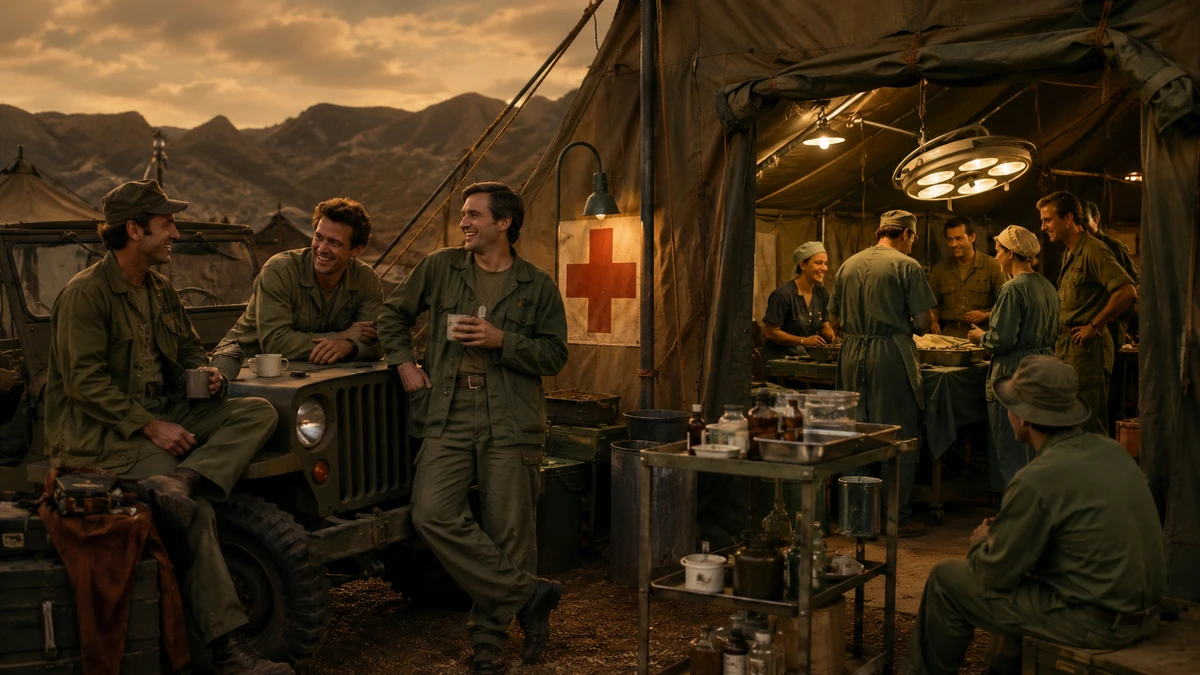
The jokes kept the 4077th moving. The wounded kept arriving. The show became great because it understood that comedy was not the opposite of pain. It was what people used while pain waited for another opening.
For Gen X, M*A*S*H was often already there—after the local news, in afternoon reruns, on a television adults had left running. We grew into the show one quiet turn at a time.
M*A*S*H combined workplace comedy, medical drama, antiwar anger and evolving character relationships without pretending one tone erased the others. Its doctors used humor to survive, its ensemble changed instead of freezing in place, and its best episodes trusted viewers to move from a joke to grief without being told television had switched genres.
We usually did not meet the 4077th in sequence. We met it through reruns, adult habits and the moment one familiar episode finally found us old enough to understand it.
The helicopters crossed the opening credits. The music sounded sad before we knew why. Then Hawkeye said something fast, Klinger walked through wearing an outfit no other show would have tried, and Radar heard incoming wounded before the rest of the camp heard anything.
For a lot of Gen X kids, M*A*S*H lived in the part of television controlled by adults. It came on after the local news, before prime time, late at night or in the dead zone between school and dinner. Nobody sat us down and announced we were about to watch one of television’s greatest shows. It was simply on, the way the coffee maker was on, and eventually we learned the geography.
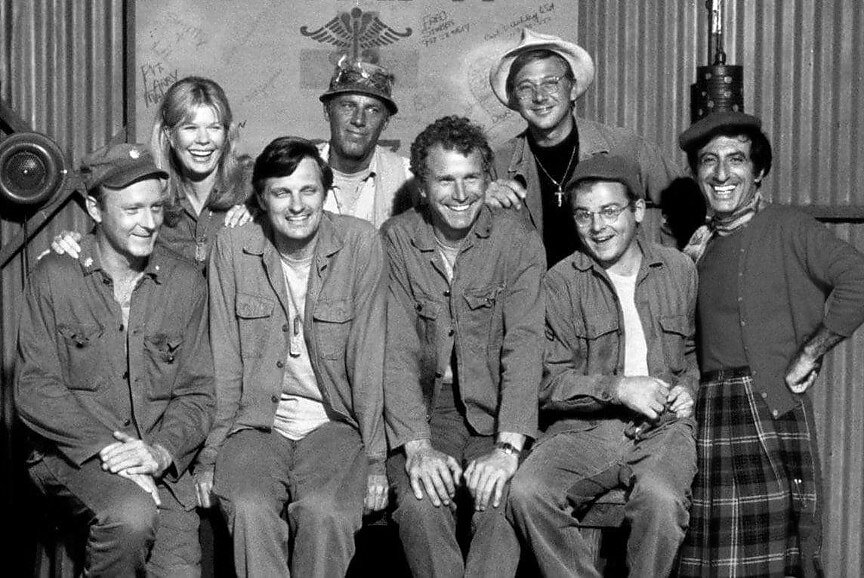
We knew the Swamp before we understood why grown men would build a still inside a tent. We knew the signpost pointed toward places everybody missed. We knew Radar’s face could change the mood before he delivered the message. We knew the operating-room lights meant the jokes had to become smaller and sharper.
Syndication scrambled everything. Henry commanded the unit one afternoon and Potter commanded it the next. Trapper disappeared; B.J. arrived already homesick. Frank could be Margaret’s partner in one episode, while Charles judged everyone’s table manners in another. We did not experience cast changes as clean historical eras. We experienced the 4077th as a memory with several versions layered on top of each other.
That disorder may have helped the show last. Instead of following plot, we learned character. Hawkeye talked when silence felt dangerous. B.J. mentioned Peg or Erin when the distance became unbearable. Potter carried earlier wars in his posture. Margaret could be furious and frightened without becoming weak. Charles hid kindness as though compassion were socially embarrassing.
Then one episode would stop us. Henry’s death. Potter’s toast. A soldier looking at the camp through eyes that could not speak. Hawkeye trying to explain a chicken until the story changed. The old show we half-watched suddenly felt more adult than whatever new program we were waiting to see.
We did not call it dramedy. We just knew the funny show with bathrobes and martinis could make the room go quiet without changing channels.
That quiet was the education. M*A*S*H trusted us to notice when humor had stopped being entertainment and become a survival reflex.
The series was adult television, but its images traveled everywhere—onto kitchen tables, school lunchrooms and the magazines stacked beside the remote.
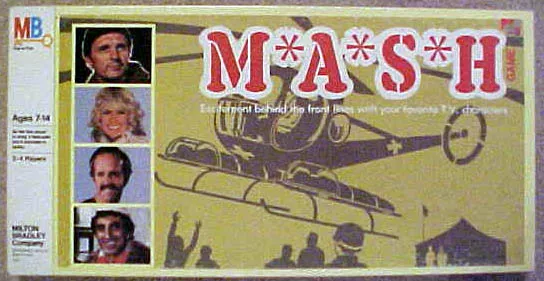
M*A*S*H did not sell childhood fantasy the way a superhero cartoon did. It sold recognition. The olive drab, red cross, signpost and familiar faces were enough to make a lunch box or board game feel connected to the television set adults watched every day.
A TV Guide cover could turn the cast into the week’s main national conversation. A newspaper advertisement could make the finale feel like an appointment rather than another episode. The publicity art often emphasized comedy, even though regular viewers knew the same faces could be standing over an operating table a few minutes later.
For Gen X kids, the merchandise created an odd overlap. The show belonged to grown-ups, yet its lunch box could sit beside Star Wars and superheroes. We carried the 4077th to school before many of us understood why the opening theme sounded so sad.

The series did not alternate neatly between a funny episode and a serious episode. Its signature was making both conditions exist in the same minute.
The loudspeaker interrupted breakfast, sleep, poker, romance and arguments with the same announcement: incoming wounded. The camp could not finish one emotional state before the war imposed another. That instability became the show’s natural rhythm.
Hawkeye and Trapper did not joke because they were shallow. They joked because outrage without release would make the work impossible. Potter’s dry comments, Klinger’s outfits, Radar’s routines and Charles’s insults performed related jobs. Each person built a language for remaining recognizable to himself.
The greatness came from refusing to confuse coping with cure. A prank could restore morale and still fail to repair anyone. A martini could end the day without erasing it. A patient could survive surgery and return to a system designed to place another body on the table.
The show also understood moral people are not automatically pleasant. Hawkeye could be bullying when convinced of his own righteousness. B.J. could turn resentment into cruelty. Margaret could use rank as armor. Charles could make compassion look like an administrative error. Their flaws made the antiwar argument stronger because the series did not need perfect heroes to prove the situation was wrong.
The 4077th passed through a novel and landmark film before weekly television discovered how rebellion, friendship and consequence could accumulate over years.
The television show did not arrive as a blank idea. It inherited a world already associated with irreverent surgeons, military absurdity and a Korean setting American audiences understood through the shadow of Vietnam.
Richard Hooker’s novel supplied the mobile surgical hospital, its surgeons and the collision between medical competence and military bureaucracy. Robert Altman’s 1970 film made the material more anarchic and cinematic. The doctors behaved like raiders inside an institution they despised, using pranks, sex and irreverence to create their own temporary republic.
Weekly television needed a different emotional engine. A film could leave audiences with the force of disruption. A series had to make viewers return to the same tents, live with the same people and care when one empty bunk represented somebody who would not return. Larry Gelbart and Gene Reynolds preserved the anti-authoritarian center while building relationships sturdy enough to carry repetition.
The shift required more than softening. Television Hawkeye needed to be available for moral injury, not only mischief. Margaret had to become more than an object of ridicule. The commanding officer had to function as a human being, because a camp cannot remain emotionally credible if everyone with rank is merely stupid. The patients could not become props for the doctors’ freedom.
The early seasons remain closer to the film’s antic energy. The later seasons allow consequence to occupy more space. Neither era completely abandons the other. The best episodes understand the joke and the wound came from the same need to survive the institution.
The series was set in Korea, but it premiered in 1972. Viewers did not need a speech to connect young soldiers, distant battlefields, official explanations and bodies arriving on television screens. Historical distance let the show speak about the present without becoming a weekly topical argument that expired with the headline.
The cast, balance and visual experiments changed repeatedly. The helicopters, the work and the desire to go home remained.
Richard Hooker’s novel introduces the mobile surgical hospital, rebellious doctors and collision between medical skill and military absurdity later reshaped by film and television.
The film sharpens the sexual, anarchic and anti-authoritarian edges. It is set in Korea, but audiences living through Vietnam understand the argument without needing the geography explained.
Larry Gelbart and Gene Reynolds build a version that can return weekly. The first season already knows comedy and death belong in the same camp, even while viewers are still learning how to watch them together.
A stronger schedule position and growing audience allow the ensemble to deepen. The show is no longer simply the television version of a famous film; it has developed its own moral rhythm.
McLean Stevenson’s departure becomes the moment viewers understand that a beloved sitcom character can leave for home and still be claimed by the war before the credits.
Mike Farrell and Harry Morgan do not imitate Trapper and Henry. The replacements alter the emotional temperature, making home, age and responsibility more central.
The series replaces a broad antagonist with a gifted rival. Charles can be wrong without being foolish, which forces Hawkeye and the audience to work harder.
The boyish clerk who once heard helicopters first leaves with more experience than he wanted. Klinger takes the desk, and another era of the 4077th closes.
Episodes built around dreams, real-time surgery, letters, subjective viewpoints and memory stretch the form while the camp remains visually familiar.
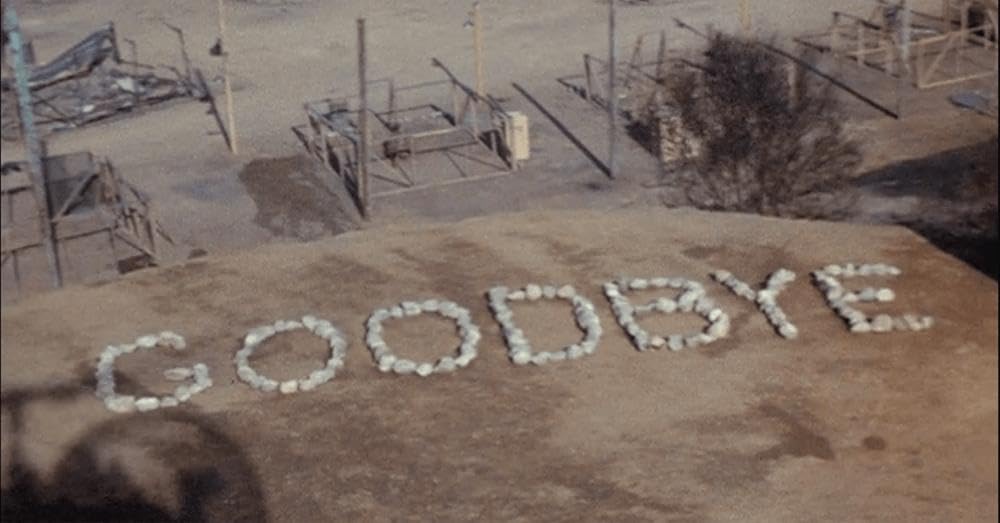
Goodbye, Farewell and Amen closes the camp before 105.9 million viewers. The spectacle is enormous, but the final image is handmade: one friend spelling goodbye for another in stones.
The first season did not arrive as an untouchable institution. The series had to survive long enough for viewers to understand its unusual tonal contract.
The program’s early ratings were uncertain. That fact feels almost impossible from the distance of endless syndication, awards and a finale watched by more than one hundred million people. We tend to imagine classics being recognized immediately, as though television history arrived with a plaque already attached.
But M*A*S*H asked a lot from an audience. It looked like a military comedy and then insisted death would not reset by next week. It used a laugh track and withdrew laughter in the operating room. It made authority ridiculous while allowing some career officers to be honorable. It borrowed recognizable characters from a successful film but gradually changed their emotional weight.
A stronger position in the schedule and word of mouth gave viewers time to learn the language. Once they did, the show became unusually durable because it could satisfy several expectations without becoming trapped by one. A viewer could come for jokes, medical tension, character chemistry or the emotional risk that any episode might become something else.
That flexibility also helped syndication. Episodes had a recognizable world but did not require strict continuity. The camp reset enough to be watched out of order while character development accumulated slowly enough that repeat viewing revealed different eras. Gen X inherited the result: a show that seemed to be on everywhere because it had learned how to work in almost any time slot.
Had the series been canceled before the cast changes, formal experiments and later moral complexity, it might be remembered as a clever film adaptation. Instead, it became proof that a network comedy could grow older, sadder and more ambitious without surrendering its audience.
The series rarely needed direct references to Vietnam. Draft anxiety, bureaucracy, body counts and official language already made the connection.
The Korean War setting functioned like a thin curtain. Viewers could see the older conflict in the story and the current one through it.
America in the early 1970s had spent years watching Vietnam enter the home through news footage, casualty reports and political argument. The language of military necessity had become familiar. So had distrust of leaders who explained suffering as strategy while other families absorbed the consequences.
M*A*S*H approached that anger through labor. Hawkeye’s antiwar position was not theoretical because he placed his hands inside the result. The doctors did not oppose war only during speeches in the mess tent. They opposed it through every hour spent repairing bodies and every furious reaction to regulations that delayed treatment.
The series made bureaucracy physically visible. A missing form could cost medicine. A superior officer could value procedure over a patient. Promotions, statistics and public relations could turn human damage into a line on a report. The comedy came from absurdity, but the anger came from knowing absurdity had consequences.
Potter and Margaret prevented the politics from becoming childish. Potter had given his adult life to the Army and still recognized waste, cruelty and stupidity. Margaret believed discipline could save lives because, in her world, it often did. Their integrity separated criticism of war from contempt for every person wearing a uniform.
That distinction remains one reason the antiwar message lasts. It does not require every soldier to be corrupt or every civilian doctor to be pure. It argues decent people can perform brave work inside a system whose purpose keeps delivering new victims to their door.
The tents, signpost, operating room, mess hall and helicopter pad were not interchangeable backdrops. Each location changed what people were allowed to admit.
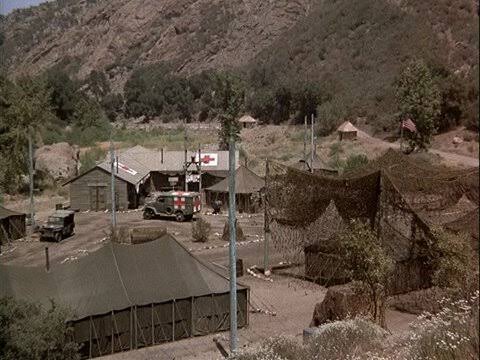
The tent let surgeons drink, sleep, argue, confess and pretend they had privacy. The still transformed local ingredients into a ritual of civilian identity.
In surgery, talent mattered more than personality. Hawkeye and Charles could hate each other’s attitude while trusting each other’s hands.
Announcements turned private moments into camp business. The public-address system could be comic, bureaucratic or terrifying depending on the first two words.
Toledo, Crabapple Cove and Boston existed as directions rather than destinations. The signpost made homesickness visible.
Meals and complaints allowed the camp to imitate ordinary institutional life. Complaining about breakfast was safer than discussing the last patient.
The sound of rotors ended whatever story the characters thought they were in. Romance, poker and bureaucracy became secondary when stretchers came down the hill.
The series lasted through major departures because replacements changed the chemistry instead of pretending the missing person had never mattered.
Alan Alda’s Hawkeye can be brave, childish, compassionate, vain, generous and impossible within the same half hour. He hates war because he sees exactly what it does, yet his certainty can become another way of controlling a room. The show’s greatness depends on letting its moral center be morally serious without turning him into a saint.
Wayne Rogers gives Trapper an easy, dangerous charm that matches the early show’s speed. He and Hawkeye operate like a comedy team, but Trapper is not merely a sidekick. He is a gifted surgeon, a married man behaving badly and another civilian doctor trying to keep the Army from owning the last private piece of him.
Mike Farrell’s B.J. arrives with a wife, a baby daughter and a clear picture of what the war is stealing. His humor is warmer than Trapper’s at first, but missed birthdays, photographs and milestones accumulate. By the later seasons, the mustache is not the only thing that has changed.
McLean Stevenson makes Henry disorganized, affectionate and ill-equipped for military theater while remaining a doctor the camp trusts. His command feels improvised because the unit itself is improvised. That warmth makes his departure hurt in a way a more conventionally heroic leader never could.
Harry Morgan’s Potter is career Army without becoming a mouthpiece for war. He respects discipline, horses, competence and the people under his command. His authority gives the later show a steadier center, while his age allows memories of earlier wars to haunt the Korean one.
Loretta Swit gradually turns Margaret from an early caricature into one of television’s strongest long-form character evolutions. She remains demanding because the work demands it. She also learns that loyalty to the Army, marriage or a commanding officer cannot substitute for ownership of her own life.
Larry Linville plays Frank as pompous, jealous and often medically suspect, but the performance understands the panic beneath the superiority. Frank clings to rank, patriotism and Margaret because he has very little self-respect without them. He is funny until the fear underneath becomes almost visible.
David Ogden Stiers gives Charles the talent Frank only claimed. He can beat Hawkeye in surgery, music, language and arrogance. That forces the show to build conflict from class and character rather than incompetence. His private acts of mercy land because he works so hard to keep them private.
Gary Burghoff makes Radar the camp’s early-warning system and emotional younger brother. His innocence is never complete—he runs the office, anticipates orders and understands more than officers notice—but the war’s slow effect on him gives the series one of its clearest measures of lost youth.
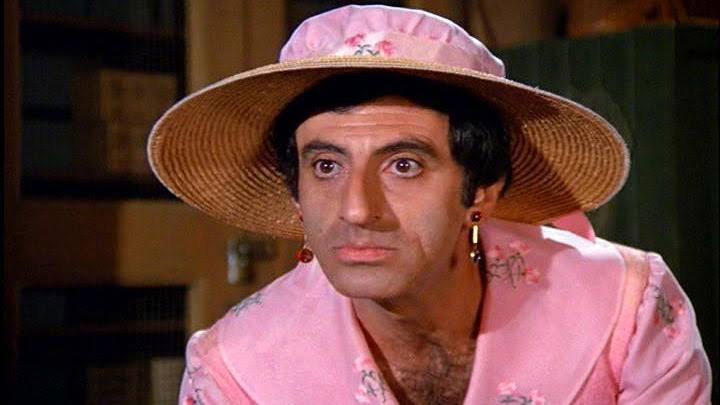
Jamie Farr begins with a running attempt to prove insanity through dresses and turns it into a full human being: proud of Toledo, loyal to the camp, resourceful under pressure and eventually capable of replacing Radar as company clerk. The joke changes because Klinger refuses to remain only the joke.
William Christopher’s Mulcahy worries that spiritual care looks small beside emergency surgery. The series repeatedly proves otherwise. He writes letters, finds supplies, comforts the frightened and remains when medicine has run out of answers. His courage is rarely announced before he uses it.
Allan Arbus plays Sidney as the rare visitor who can hear the joke and the panic underneath it. He never treats humor as proof of health. His presence lets the series discuss trauma, memory and breakdown without suggesting that one clever speech can repair what the war keeps reopening.
Alan Alda could move from speed to stillness without announcing the transition. The charm drew us close enough to see the damage underneath it.
Hawkeye is the character most viewers remember first: bathrobe, martini, surgical skill and language moving faster than authority can answer. He treats wit as both weapon and shelter. If the Army insists on turning him into a military asset, he will behave like a civilian every minute he is not holding a scalpel.
His outrage gives the series a clear moral center. He sees the wounded at close range and refuses explanations that make suffering sound clean. He mocks officers who enjoy power, regulations that block care and patriotic language used to avoid looking at bodies.
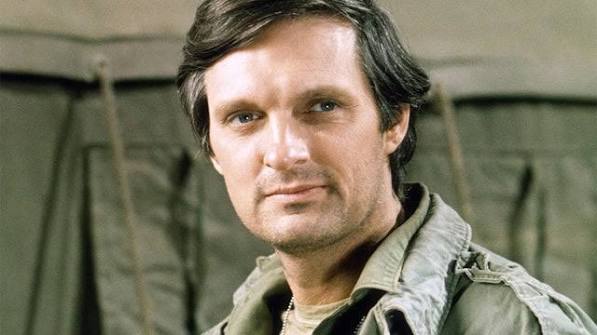
But the show becomes more interesting when Hawkeye’s certainty becomes a flaw. He can humiliate people because he believes the cause justifies cruelty. He can treat women as proof of his charm. He can dominate conversations, resent disagreement and turn moral urgency into personal superiority.
That imperfection matters. A flatter series would make the antiwar hero correct in every private relationship. M*A*S*H understands hating an unjust system does not automatically teach a person how to behave inside friendship, romance or grief.
Alan Alda’s increasing influence deepened the character’s emotional reach. Hawkeye’s speeches became more prominent, but so did breakdowns, silences and recognition that intelligence cannot negotiate with trauma. The most important later stories are not where he wins an argument. They are where his usual language stops working.
For Gen X viewers, Hawkeye was often our first example of a funny adult whose humor clearly cost him something. He looked free because he ignored rules. Watching as adults, we see how little freedom he had. The jokes are movement inside a cage.
One partner matched his appetite for rebellion. The other carried home into every joke and slowly became angrier about the life he was missing.
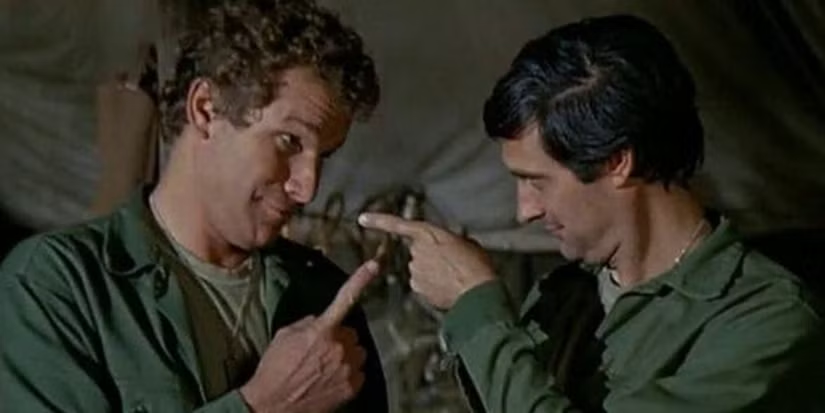
Wayne Rogers’ Trapper moved beside Hawkeye like the second half of a routine already in progress. Their jokes overlapped, their pranks escalated and their behavior toward nurses reflected the early series’ willingness to frame sexual pursuit as roguish freedom.
Trapper also gave rebellion weight because he was an excellent surgeon and not merely Hawkeye’s applause track. The friendship suggested two men constructing a private civilization inside the Swamp.
His departure occurs without the architecture given to Henry, which becomes part of the loss. Hawkeye reaches the camp too late for a goodbye. The empty bunk feels abrupt because military life can separate people before anyone has prepared the scene.
The command structure matured without suggesting affection for Henry required rejecting Potter.
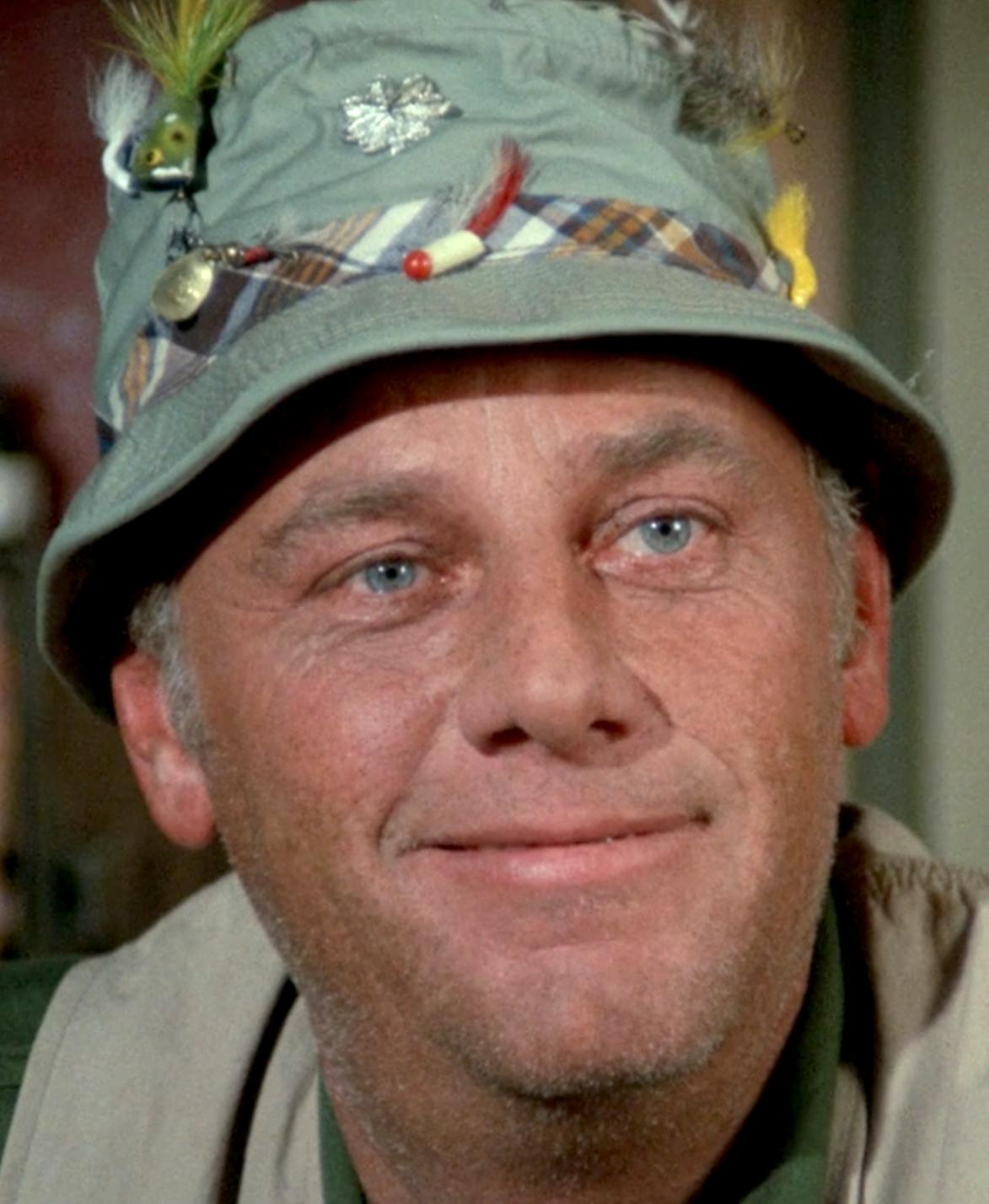
Henry Blake’s authority always feels temporary. He is a doctor caught in command, distracted by fishing, paperwork and the impossible task of controlling people who know he does not truly want military control. His warmth lets the early camp operate like a club whose members occasionally remember they are in a war.
That looseness makes Henry beloved, but it also makes him vulnerable. He cannot impose a heroic arc on his departure. He receives the farewell, boards the plane and dies beyond the show’s immediate view. The news arrives while everyone is working because the wounded do not pause for grief.
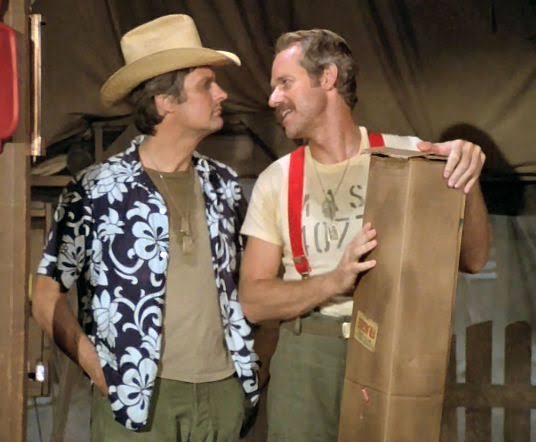
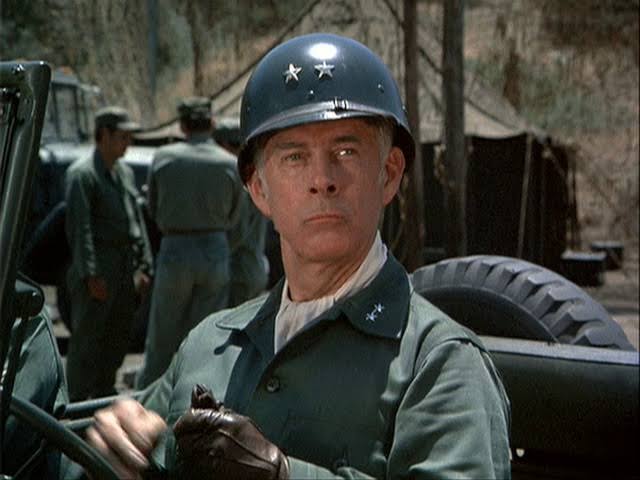
Colonel Potter changes the unit the moment he arrives. He understands the Army, recognizes nonsense and knows when discipline protects patients rather than appearances. Hawkeye cannot dismiss him as another fool in uniform, which forces their conflict into more interesting territory.
Potter also brings age into the camp. He remembers World War I and World War II, old friends, older losses and a version of military life that predates the younger doctors’ anger. His experience does not make war noble. It makes the repetition of war more exhausting.
The transition teaches a mature lesson about ensemble television: replacement does not have to erase grief. Potter never becomes Henry, and Henry’s absence never prevents Potter from becoming essential. The camp is large enough to contain both memories.
Loretta Swit turned an early target of the male doctors’ jokes into a senior officer whose competence, loneliness and ambition could no longer be treated as decoration.
The early series often asks us to see Margaret through Hawkeye and Trapper’s contempt. The later series asks whether that contempt was ever the whole truth.
Margaret begins as a rigid head nurse aligned with Frank Burns, military discipline and the authority Hawkeye opposes. The nickname “Hot Lips” reduces her before she has entered many scenes. Her sexuality becomes public comedy while the male doctors’ behavior is framed as rebellion.
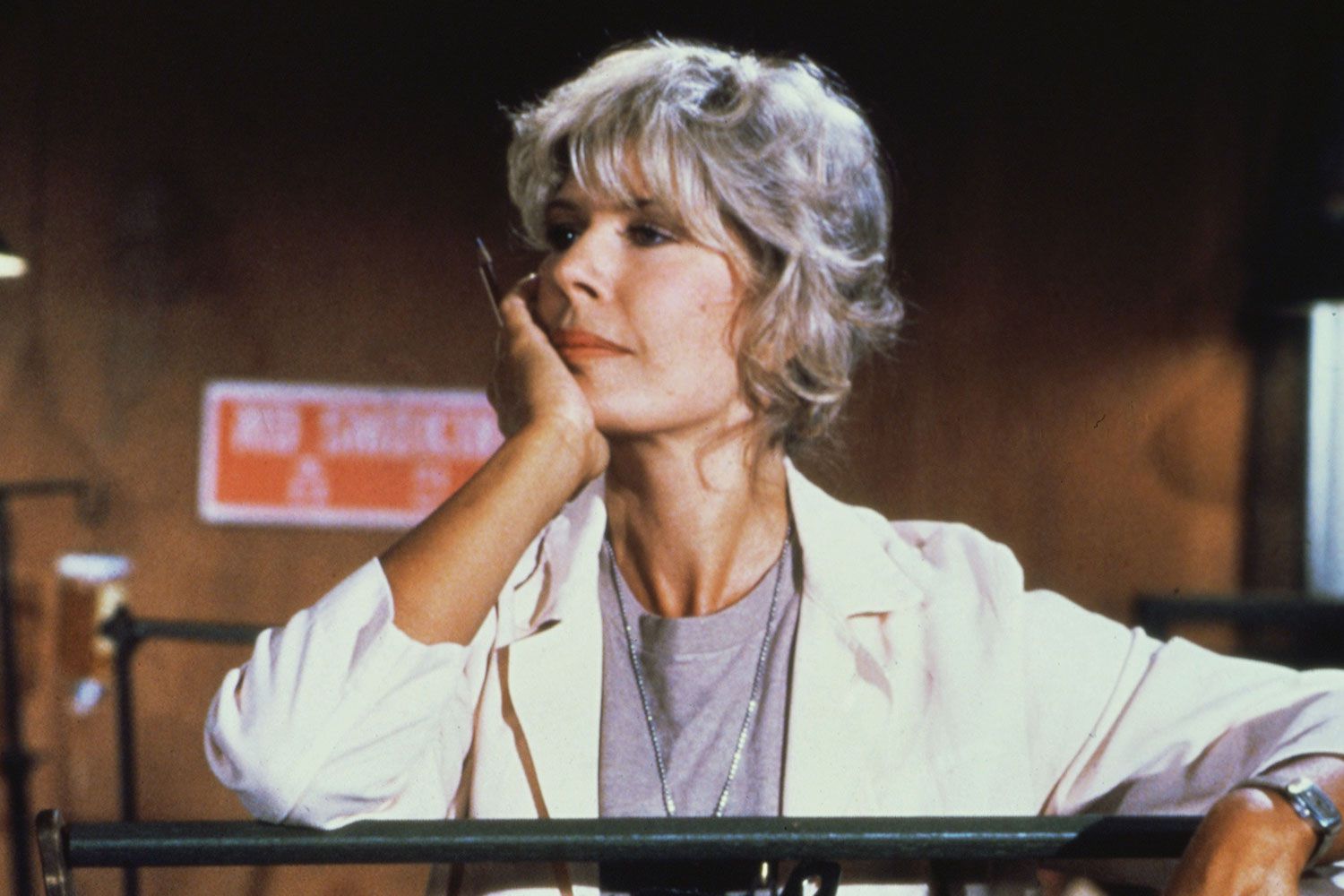
Over time, the writing and Loretta Swit’s performance insist on the person inside the role. Margaret is not demanding because the show needs a humorless woman. She is responsible for nurses working under wartime conditions, and competence is one of the few forms of control available to her.
Her marriage to Donald Penobscott exposes the limits of the future she thought she wanted. Rank, respectability and a military husband do not deliver emotional safety. The dissolution of that relationship allows Margaret to define herself without requiring immediate replacement by another man.
She also confronts the isolation created by command. “The Nurses” gives the staff a perspective beyond the male surgeons and lets Margaret admit authority has cost her companionship. The episode does not make her surrender standards. It makes the standards part of a complete human life.
Watching now, the growth is admirable and revealing. The show became better because it moved beyond some original assumptions. It also reminds us how much screen time men received before women were allowed comparable interior lives.
Frank represented the danger of insecure authority. Charles represented the danger—and occasional beauty—of genuine superiority.
Frank is easy to laugh at: medically weaker, emotionally jealous and desperate to make patriotism cover every insecurity. Larry Linville keeps the fear visible enough that the character does not become cardboard.
His relationship with Margaret gives him borrowed status and private reassurance. When she moves toward marriage, Frank’s collapse reveals how little identity he has outside resentment and rules.
The show eventually exhausts what Frank can do. Keeping him would require either growth the character resists or repetition the series has outgrown.
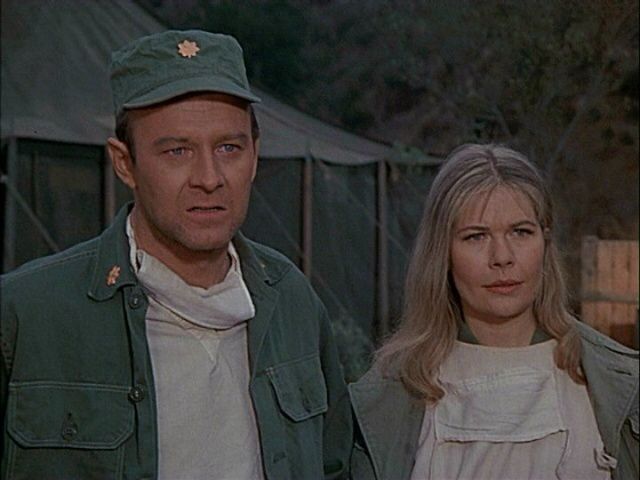
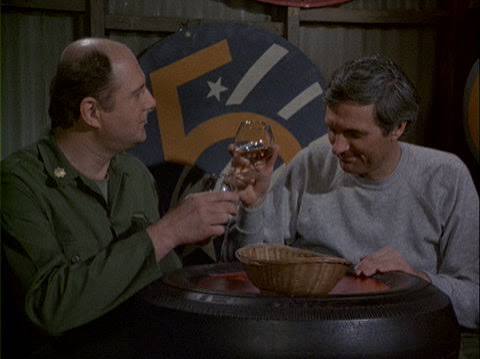
Youth, escape, faith and psychological damage each needed a character who could make the issue personal rather than theoretical.
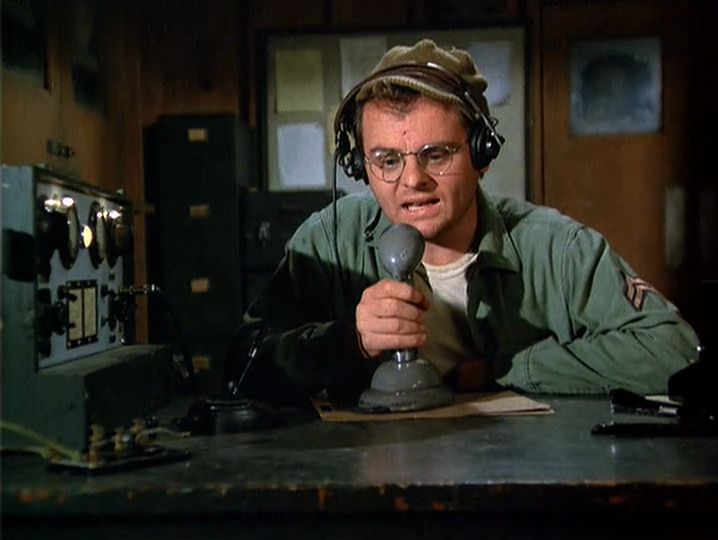
He could run the office, predict Potter’s orders and hear helicopters first, yet the teddy bear and Iowa stories reminded viewers competence did not make him ready for everything he witnessed.
The dresses were funny because everyone understood the goal: prove insanity and go home. The character endured because Jamie Farr filled the plan with pride, loyalty, hustle and Toledo mythology.
He could not perform surgery, but he could remain with the dying, locate supplies, write families and keep faith from becoming a slogan.
He understood jokes, anger and silence could all be symptoms. The series used him to show psychological survival required attention, not shame.

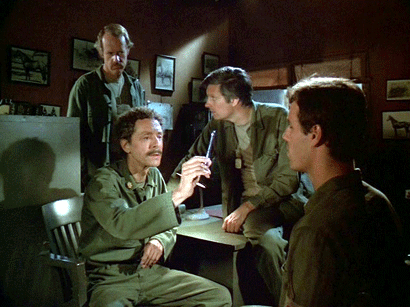
The improvement is real, but a modern rewatch can still see how often nurses functioned as dates, reactions or background before the perspective widened.
The early show inherits sexual politics from the film and 1970s television comedy. Hawkeye and Trapper’s pursuit of nurses is framed as evidence of civilian freedom, while women frequently appear as interchangeable opportunities. The behavior is part of the characters’ rebellion, but that does not make every joke age well.
Margaret receives the largest correction because she remains central long enough to demand one. Her authority, marriage, divorce, friendships and professional standards become full stories. The nickname loses power as the audience increasingly understands Major Houlihan as the better description.
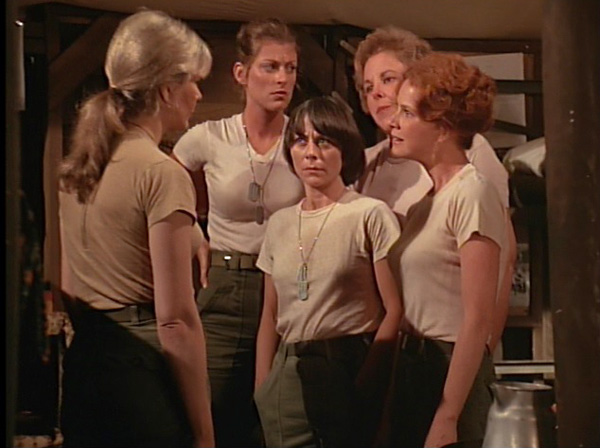
Episodes centered on the nursing staff reveal how much camp life the male perspective ignored. Nurses face the same incoming wounded, exhaustion and homesickness while navigating a hierarchy in which doctors receive more narrative and institutional authority.
Individual characters such as Nurse Kellye occasionally push against invisibility, especially when the show lets her confront Hawkeye’s failure to see women who do not fit his preferred image. Those moments make the series examine the charm it spent years celebrating.
The growth does not erase the early imbalance. It demonstrates something more valuable: a long-running show can become aware of people it has underwritten. The later series is not perfect, but it is less satisfied with using women as scenery around male pain.
Pranks, insults, costumes and martinis created temporary control for people whose real work was defined by helplessness.
A visiting general, useless regulation or self-important officer becomes a target. The prank cannot end the war, but it can make power look ridiculous for one evening.
Bathrobes, homemade gin, dresses, poker and music remind the characters the Army does not own every part of their identity.
Recurring jokes turn strangers into an ensemble. Potter’s reaction, Radar’s anticipation and Charles’s disgust become forms of belonging.
The joke creates a few minutes in which grief can wait. It does not disappear. It waits—and the show becomes most honest when the delay stops working.
Hawkeye talks faster, B.J. pushes harder, Margaret becomes sharper and Charles becomes colder when usual defenses are close to failure.
The wounded arrive. Comedy contracts into concentration. Personal enemies become a surgical team because the patient cannot wait for emotional resolution.
The show’s moral authority came from returning every argument to bodies arriving from somewhere beyond the frame.
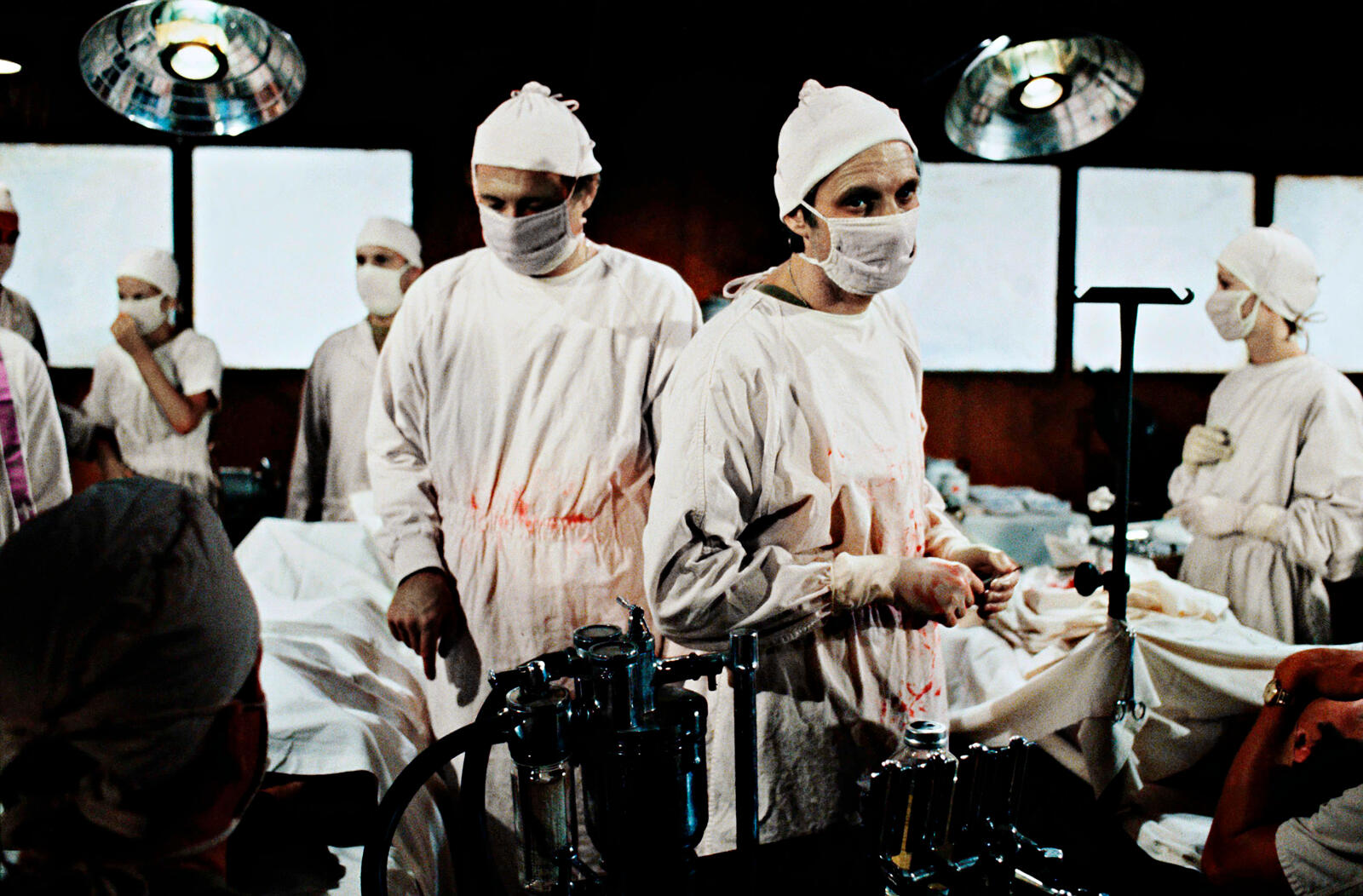
Operating-room scenes changed the rules. The laugh track disappeared. Dialogue became shorter. Rank mattered less than skill, and the camp’s most irritating personalities could become indispensable hands.
The show did not need graphic realism to communicate urgency. Blood, fatigue, repeated procedures and the flow of stretchers created a rhythm of industrialized injury. The doctors were not performing one miraculous television surgery. They were processing the result of a system that kept producing more work.
Competence became one of the deepest forms of respect. Hawkeye could be selfish outside surgery and completely present at the table. Margaret’s discipline mattered because nurses held the room together. Charles’s arrogance became more complicated because his talent could save a life. Potter’s authority carried weight because he understood the work.
The medical scenes kept the antiwar message grounded. A speech can be dismissed as politics. A surgeon removing shrapnel from another young body is harder to abstract. The show’s argument lived in repetition: repair, stabilize, evacuate, receive the next helicopter.
For Gen X kids, the operating room was where we stopped treating the series as background. The lighting changed, the voices tightened and the grown-ups became serious in a way that did not feel performed for us. We understood whatever they had been joking about no longer mattered.
Modern viewers often hear canned laughter as an intrusion. M*A*S*H also used its absence to draw a moral border around surgery and loss.
The laugh track is one of the first things a new viewer notices. It can make early episodes feel broader than the writing is, and occasionally tells us to laugh where the scene would be stronger without instruction.
Yet the series did not use laughter indiscriminately. Operating-room scenes excluded it, creating an immediate boundary between comic survival and medical consequence. The same characters could carry the same verbal rhythm into surgery, but television stopped supplying approval.
That choice became part of the show’s larger tension with sitcom form. A familiar comedy sound wrapped scenes that increasingly questioned whether the people inside them were coping at all. Audience laughter could feel like one more institution trying to keep the program manageable.
Later episodes relied more confidently on silence, reaction and tonal turns. By then the show had trained viewers to hear the difference between a joke that released pressure and one that revealed it. The laugh track could not control meaning because the ensemble often continued acting after the laugh had finished.
For Gen X viewers raised on syndicated sitcoms, the track did not initially seem unusual. What felt unusual was when it vanished. The absence told us the room had crossed a line before we were old enough to explain the line.
Documentary interviews, patient perspective, real-time clocks, dreams and letters turned experimentation into character rather than decoration.
Black-and-white direct address makes characters explain themselves without the usual protection of plot. Pauses and contradictions reveal as much as prepared answers.
The audience becomes a patient who cannot speak. Familiar doctors become looming strangers, restoring vulnerability to the person on the table.
An on-screen clock turns medical urgency into visible structure. Every choice costs minutes, and the audience cannot escape the same countdown.
Surreal sequences remove the characters’ verbal defenses. Fear appears as image because the usual jokes cannot contain it.
Narration lets characters edit camp life for people far away. What they include, soften or avoid reveals the distance between experience and what can be mailed home.
Episodes centered on the operating room reduce plot machinery. Repetition, fatigue and teamwork become the drama because the war has supplied enough story.
The experiments worked because the camp was already deeply familiar. We knew the Swamp, the operating room and the voices. Changing the camera or structure did not make the show unrecognizable; it made the known world feel newly unstable.
This is why the series belongs in discussions of television innovation rather than only lists of beloved sitcoms. Formal ambition was not reserved for a special event outside the normal run. The show kept asking which form could best reveal what these people were unable to say in an ordinary episode.
The replacements were not copies, and departures did not all receive the same closure. That unevenness made camp feel more real.
Long-running television often treats cast turnover as a threat to the formula. M*A*S*H made turnover part of the formula’s meaning. People arrived under orders, became essential, received new orders or disappeared. The unit continued because the work continued.
Henry’s departure became tragedy. Trapper’s absence became unfinished friendship. Frank’s exit removed a comic structure the series had outgrown. Radar’s farewell made camp feel as though it had lost a younger version of itself. Each departure created a different empty space.
The replacements changed relationships instead of restoring them. Potter could not reproduce Henry’s affectionate confusion because his competence would not allow it. B.J. could not reproduce Trapper’s appetite because Peg and Erin made every day away from home specific. Charles could not reproduce Frank’s incompetence because talent forced Hawkeye to respect the person he disliked.
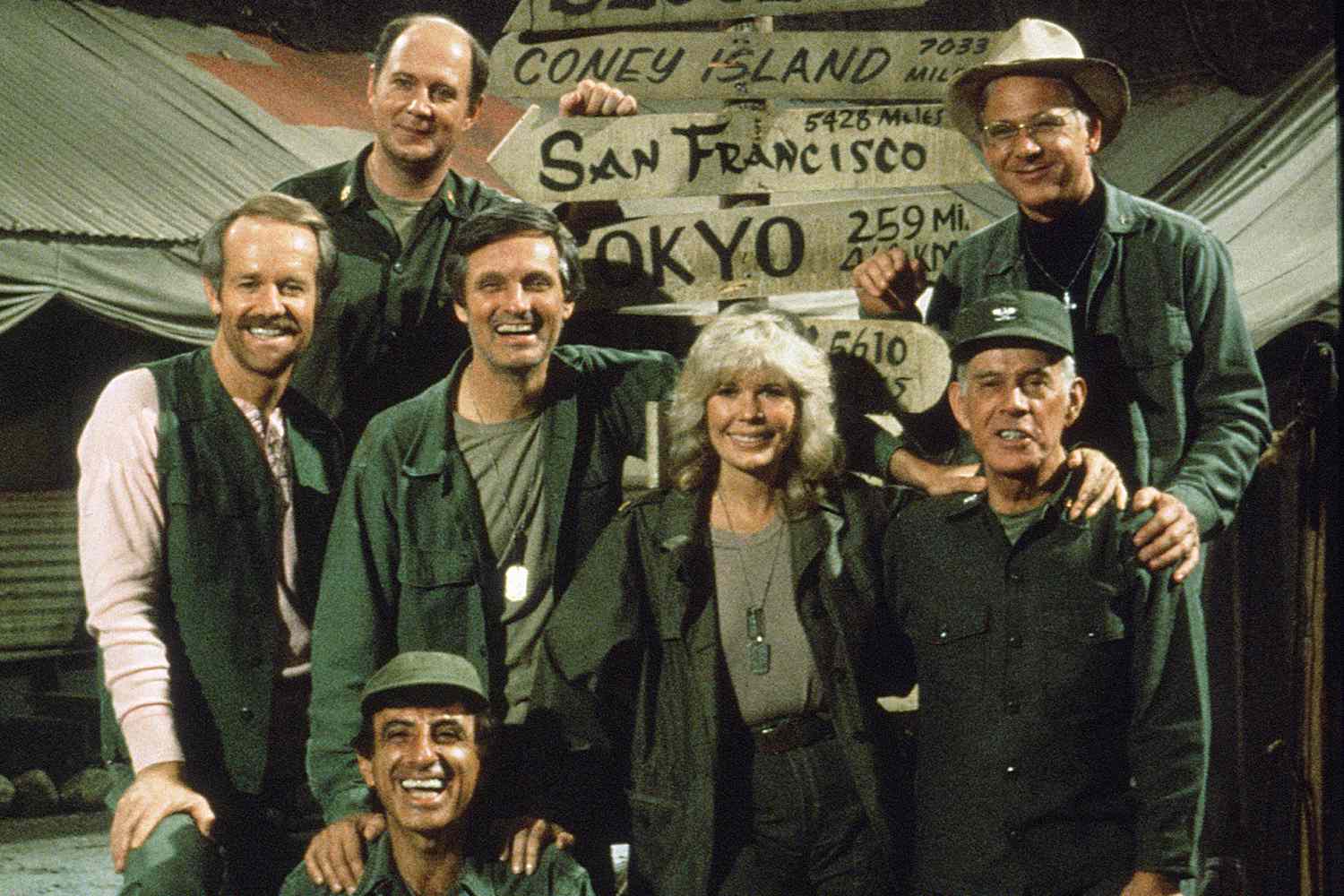
This accumulation gave the later seasons emotional weight even when an episode did not mention the past. The camp had history. The audience remembered who used to sleep in the bunk, sit behind the desk or command the office.
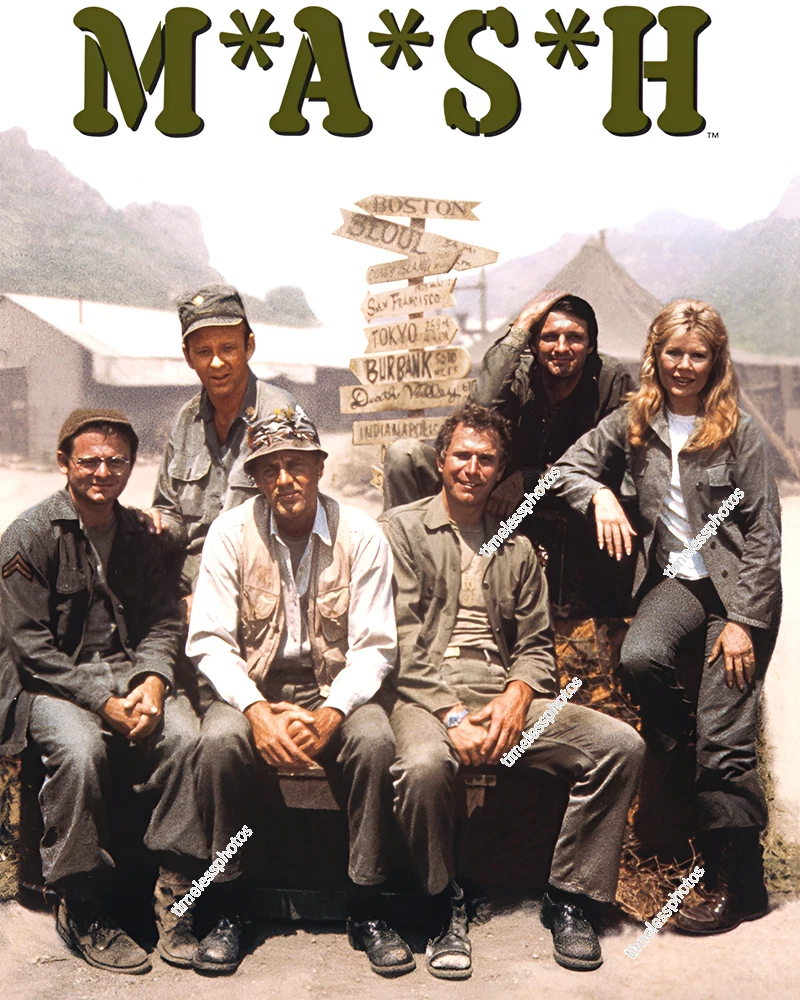
For Gen X viewers watching out of order, those eras existed simultaneously. That created occasional confusion, but it also made the 4077th feel larger than one fixed cast photograph. We learned a television family could change members and still carry the shape of people who were gone.
Creative leadership changed, Alan Alda’s influence grew and the program learned to trust silence, consequence and moral disagreement.
Larry Gelbart and Gene Reynolds established the television version’s essential balance: rebellious comedy, medical competence and belief that war damages everyone required to participate. The early seasons move quickly because the show remains close to the film’s anarchic energy.
As the run continued, Alan Alda became increasingly important not only as performer but writer and director. That influence helped produce ambitious emotional stories and direct moral arguments. It also contributed to the debate among fans who prefer the lighter early seasons and those who value later depth.
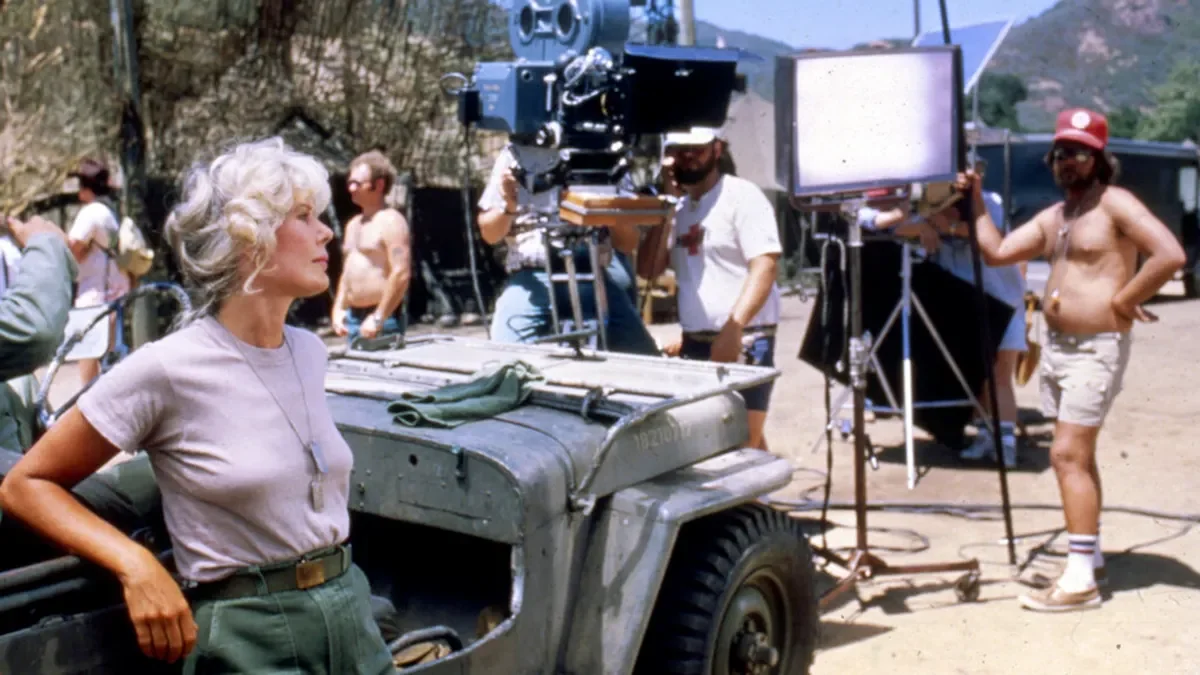
The disagreement is healthy because both versions are real. Early M*A*S*H can be faster, rougher and more willing to behave badly. Later M*A*S*H can be slower, more earnest and occasionally determined to underline its message. The achievement is the show survived the transition without becoming entirely separate programs.
Production design maintained continuity. The dusty exterior, tents, signs and interiors made camp stable even as tone shifted. Viewers could accept documentary form, dream imagery or a new commanding officer because the helicopter pad and Swamp still told us where we were.
The long evolution mirrors the characters’ exposure. A show about people living through years of casualties would become false if everyone retained the comic balance of season one. Later seriousness is not automatically better, but change itself is necessary to the premise.
This is a viewing path rather than an official ranking: comedy, death, character evolution, formal experimentation and the dismantling of camp.
Hawkeye invents Captain Jonathan Tuttle to move supplies through the system, and the imaginary officer acquires a record, a bunk, a salary and a reputation because bureaucracy trusts paperwork more than people. Every attempt to solve the lie gives Tuttle a stronger institutional existence.
For Gen X viewers finding the episode in reruns, it felt like the camp had discovered a loophole in reality. Watching now, it looks like an early mission statement: the Army can manufacture authority from forms, while Hawkeye uses the same machinery to get help to people the system ignored.
Hawkeye’s old friend Tommy arrives while writing about war and later reaches the operating table as a casualty. The episode refuses to make personal history a shield. Henry’s attempt to explain that there is no fairness in war lands because the surrounding minutes have behaved like a comedy.
Many of us first saw this one without warning in afternoon syndication. The laugh track had trained us to expect the room to reset. Instead, Hawkeye sits with grief that cannot be outtalked. The show reveals its contract: it will make us laugh, but it will not use laughter to lie.
A shell lands in the compound during the Army-Navy football game, and the camp tries to identify it while military loyalties remain hilariously intact. The episode balances broad rivalry with the fact that everyone may die because somebody somewhere fired something without caring where it landed.
The setup is pure early M*A*S*H: sports chatter, command confusion and Hawkeye treating fear as another target for sarcasm. What keeps it from becoming a stunt is the camp’s practiced response. Panic and procedure have learned to share the same tent.
A poker game holds the episode together while Sidney Freedman, intelligence officers, wounded personnel and personal crises circulate through the room. The cards create a temporary space where rank loosens and people reveal more than intended between bets.
This is the ensemble at full early speed. Nobody needs to announce the theme because the rhythm carries it. War has scattered everyone’s nerves, and the game gives those nerves something ordinary to do with their hands.
The episode spends nearly all of its time during a long surgical session. Comedy remains, but it is stripped to the banter people use when concentration and exhaustion have to coexist. Personal conflicts shrink beside bleeding, anesthesia and the next patient waiting.
We could feel the difference even as kids. This was not a normal sitcom set with a medical story dropped into it. The operating room had its own rules. Nobody could storm out because the argument was unfinished; the body on the table had already decided what mattered.
Henry receives his discharge and the camp sends him home with affection, jokes and a farewell designed to leave viewers smiling. Then Radar enters the operating room and reports that Henry’s plane was shot down with no survivors.
The power is not only surprise. It is the collision between the farewell we watched and the death that occurred beyond the camp’s knowledge. In reruns, even when we knew it was coming, the room changed when Radar opened the door. The show removed the safety rail from situation comedy.
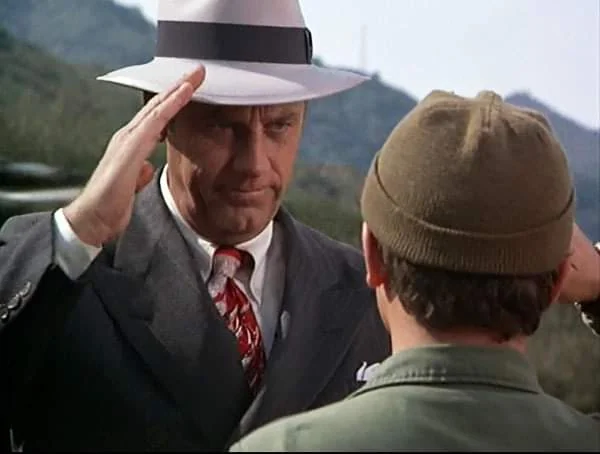
Structured as a documentary interview, the episode allows characters to speak toward the camera about work, loneliness, fear and home. The looseness feels spontaneous, but the answers reveal carefully accumulated lives. Humor appears because these people cannot discuss the war without using it.
The format changes our relationship to the ensemble. We are no longer eavesdropping on the Swamp; we are the person asking what this place has done to them. The pauses matter as much as the answers.
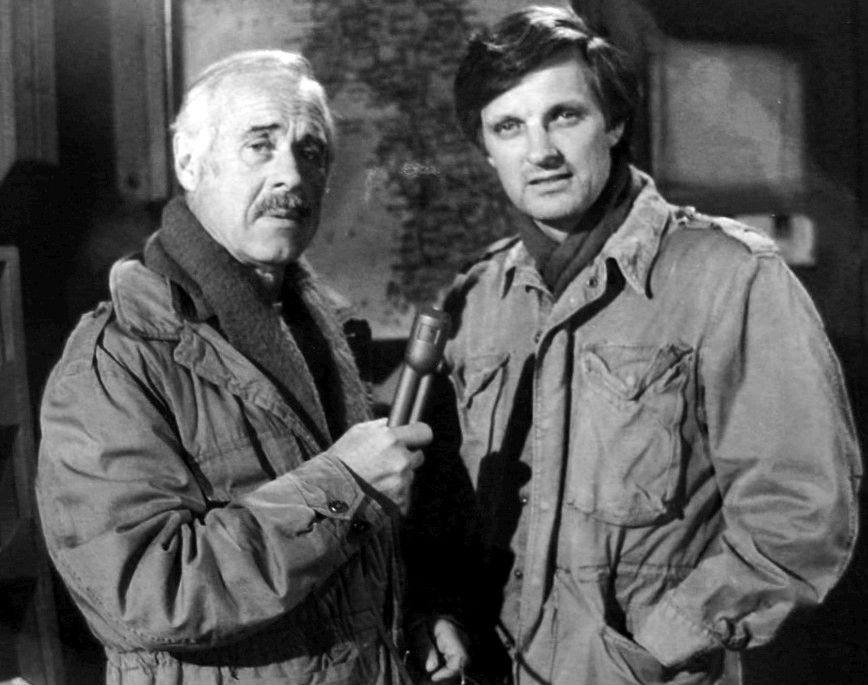
Tension between Margaret and the nurses exposes the cost of command, isolation and the early series’ habit of treating the nursing staff as background for male stories. Margaret wants discipline and respect, but discovers authority has left her outside the companionship she envies.
Loretta Swit makes the episode more than a correction. Margaret is not suddenly easy or universally liked. She is a woman realizing that the role she built for survival has become a wall, and the show lets that realization hurt without taking away her rank.
Sidney Freedman writes to Sigmund Freud while observing practical jokes, anger, tenderness and signs of strain. The episode understands coping mechanisms can be useful and unhealthy at the same time. A prank may restore breath for an hour without fixing the panic.
This was the kind of rerun that grew with us. As kids, we remembered the joke. As adults, we notice Sidney watching the person who needs the joke too much. The show trusted viewers to return with more life experience and find a different episode waiting.
Charles records messages home, expecting family influence to remove him from the 4077th. The tapes expose class assumptions, homesickness and the recognition that the Army is unimpressed by his preferred social order. He is a brilliant man discovering that brilliance does not restore control.
The episode establishes why Charles can last. We may enjoy watching his arrogance punctured, but the performance gives him enough interior life that victory over him is never the only pleasure.
The camera adopts the perspective of a wounded soldier whose throat injury prevents speech. Characters we know as comic personalities become the faces leaning over a frightened patient. Their routines are suddenly unfamiliar because the viewer has lost the protection of belonging to the ensemble.
It is one of the clearest demonstrations that the staff’s ordinary work is another person’s catastrophe. The experiment restores the patient to the center of a show whose doctors are charismatic enough to take over every room.
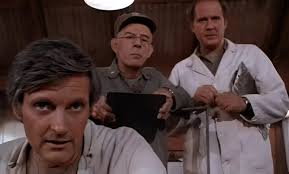
A wounded soldier needs an arterial graft within a narrow window, and the episode places a clock on screen as the staff races against time. The device creates suspense, but the deeper conflict involves who may have to die for the material that could save someone else.
The episode makes triage impossible to treat as background. We watch brilliant people work inside choices no decent person should have to make. The clock measures more than minutes; it measures how little control even the best doctors possess.
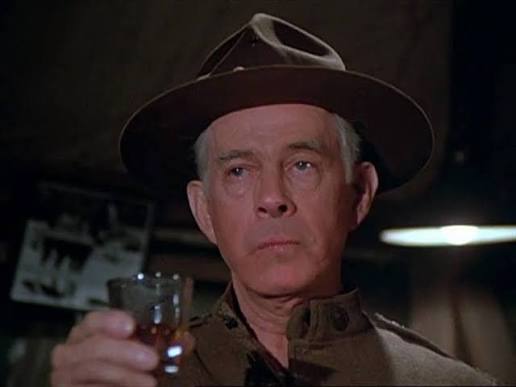
Colonel Potter returns with the last bottle from a pact made by old friends and reveals he is the final survivor. Harry Morgan lets history arrive in pieces, with the restraint of someone who has outlived enough people to know grief does not require performance.
The toast hit differently depending on when we saw it. As younger viewers, Potter was simply old. Rewatching after losing people, we understand the loneliness of being the only person left who remembers the original version of the story.
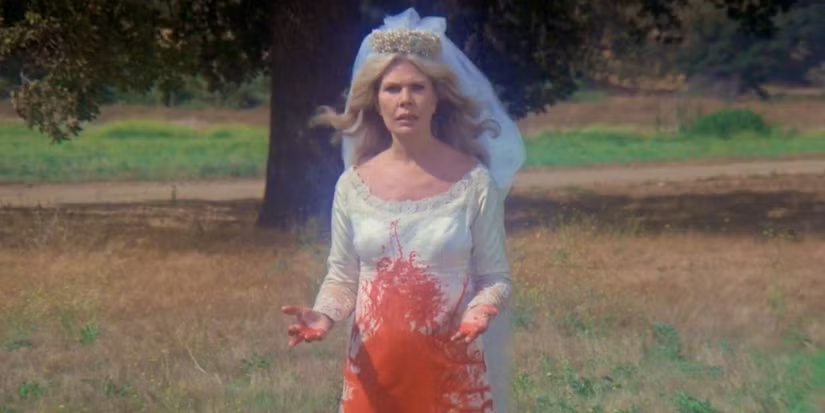
During an overwhelming stretch of casualties, exhausted members of the unit sleep in fragments and experience surreal dreams built from fear, desire, guilt and identity. The images divide viewers because they refuse the comfort of dialogue and explanation.
That discomfort is the point. The characters are experts at verbal defense. Dreams remove the jokes, rank and professional competence, leaving images they cannot argue away. Trauma does not obey the show’s ordinary grammar.
The finale follows Hawkeye through psychiatric treatment, B.J.’s struggle to leave, Charles losing music as refuge, Margaret choosing her next stage and the camp dismantling itself. Hawkeye’s memory of the bus becomes more terrible as the protective story collapses.
For Gen X, the finale was not only an episode. It was one of those television events adults discussed before and after it aired, then reruns turned it into inherited memory. The final GOODBYE in stones works because it is handmade, enormous and temporary—exactly like the relationships built in a camp never meant to last.
The scene became legendary because it denied the emotional guarantee built into the farewell episode that came before it.
“Abyssinia, Henry” gives Henry the exit television audiences understand. Camp celebrates him, jokes through sadness and sends him toward home. The emotional business appears complete.
Then Radar enters the operating room. The doctors and nurses are already working. He reads the message that Henry’s plane was shot down and there were no survivors. Nobody receives a private place to react because the patients remain open on the tables.
The scene’s power comes from structure, not only shock. The audience has been allowed to imagine Henry arriving home. The episode has performed closure. The message destroys both fantasies in a few sentences.
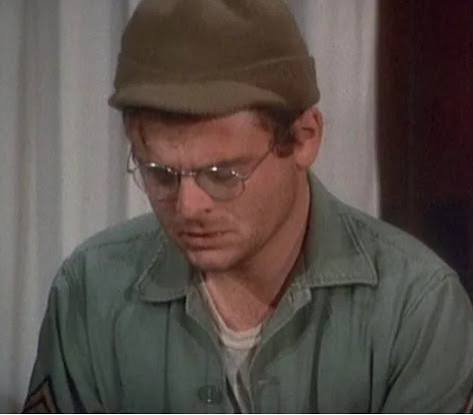
For television comedy, the moment declared departure and safety were not the same thing. A character could leave the regular cast without protection from the logic of production. War remained active beyond the edge of the set.
For Gen X viewers encountering the episode in reruns, the impact could be stranger. We may already have known Potter. We may have known Henry was gone without knowing how. The episode turned a cast change we had accepted into a death we suddenly had to feel.
Most importantly, the show does not stop the operating room for our grief. Henry matters, the loss is enormous, and the wounded still require the hands of people who have just heard the news.
More than one hundred million people watched, but the story closed through memory, music, marriage, career choices and two friends trying to say goodbye.
The finale had to end an institution without pretending the end of camp could repair what camp had done to its people.
Hawkeye begins away from the 4077th under Sidney Freedman’s care, struggling with a memory from a bus trip. He has converted the unbearable event into a story about a chicken because the true memory—a mother silencing her baby to protect everyone from enemy soldiers—is too terrible to hold directly.
The revelation is not a twist designed only to shock. It is the final collapse of Hawkeye’s most reliable defense. He spent eleven seasons turning horror into language. Now language protected him by changing the victim, and recovery requires admitting what the joke-shaped mind refused to name.
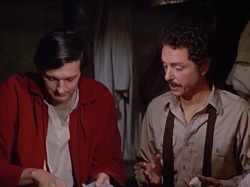
Charles experiences a different destruction. He teaches captured Chinese musicians to play Mozart and discovers connection across language and war. When the musicians are killed, music he used as refuge becomes attached to loss. His final contempt for the record is grief wearing the only expression he trusts.
Margaret chooses a future that belongs to her professional life rather than a man. Klinger, who spent years trying to escape Korea, remains because he has married Soon-Lee and will help search for her family. The reversal works because he has become more than the original exit plan.
B.J. struggles with the goodbye he claims he cannot say. Hawkeye wants language because language defined their friendship. B.J. eventually writes GOODBYE in stones large enough to be seen from the helicopter. The gesture is intimate and cinematic at once.
Camp is dismantled. Tents come down, possessions disappear and the place that seemed permanent becomes temporary material. That image completes the contradiction: the 4077th was never supposed to last, but the people inside it carry the place long after the ground is empty.
The 105.9 million viewers matter because they represent shared television on a scale difficult to recreate. Yet the finale does not spend that audience on spectacle alone. Its most remembered image is one friend arranging stones for another.
For older Gen X viewers, the finale was one of those nights when television felt less like a menu and more like a national room. Adults talked about it before it aired. The next day, people who had never met had seen the same helicopter rise.
Younger Gen X inherited the event through reruns, clips and family memory. Even when we did not watch live, we understood this ending had once stopped ordinary television.
A series that needed time to find its audience ended as one of the largest shared viewing events American television produced.
Longevity alone does not explain greatness, but the scale of the run allowed M*A*S*H to attempt something unusual. Characters could accumulate years of frustration, friendship and absence. Camp could feel older without physically aging in ordinary time.
The 251 episodes cover more broadcast years than the Korean War lasted. That mismatch affected the emotional experience. Viewers lived with the characters for a decade. Home became a promise repeated so often that even arrival began to feel unimaginable.
The Television Academy lists 109 Emmy nominations and 14 wins, reflecting recognition across acting, writing, directing and the series itself. Awards did not create the audience, but show how broadly the industry understood the achievement.
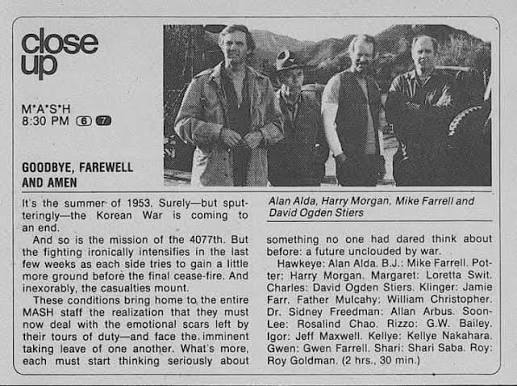
The finale’s 105.9 million viewers represent more than a record-sized audience. They capture a television culture with fewer channels and a greater possibility of communal endings. Millions arrived together.
| Measure | What it reveals |
|---|---|
| 1972–1983 | Eleven seasons in which a fast military comedy developed into layered television dramedy. |
| 251 episodes | Enough time for cast turnover, formal experiments and genuine long-term change. |
| 109 Emmy nominations | Recognition across the ensemble, writing, direction and production. |
| 14 Emmy wins | Award success that followed the show through multiple creative eras. |
| 105.9 million finale viewers | A shared national audience for the dismantling of the 4077th. |
“Suicide Is Painless” arrived from the film without lyrics in the television opening, leaving a melancholy melody beside images of incoming wounded.
The opening credits are among the most efficient tonal statements in television. Helicopters move over the landscape. Medical personnel run toward stretchers. Music is gentle, almost beautiful, while the images show an emergency already in progress.
The opening sequence moves straight toward the wounded while “Suicide Is Painless” plays with a calm sadness no normal sitcom theme would attempt. Even before we understood the title or the politics, the music told us this comedy belonged beside loss.
The instrumental theme does not prepare viewers for conventional comedy. It creates sadness before Hawkeye speaks. Even kids who did not know the title understood the melody belonged to something heavier than a normal sitcom opening.
That contrast continued through the episode. The show could become loud, verbal and chaotic, but the opening reminded us the wounded were the first fact. Everything else—the martinis, pranks, romances, arguments and catchphrases—happened after the helicopters.
In syndication, the opening functioned like a household signal. We knew what show had begun before the first face appeared. For some of us, it meant an adult had control of the television. For others, it meant half an hour that could be funny, sad or both before dinner.
The melody belongs in the larger history of 1970s television themes: music did not merely brand a show. It trained the emotional response before the story started.
A modern rewatch can value the antiwar humanism while recognizing when local people are full characters, stereotypes or plot functions.
M*A*S*H repeatedly argues Korean civilians are not abstractions. Children, families, patients and villagers experience war without the mobility or institutional protection available even to the trapped American doctors. Episodes condemn racism, indifference and the habit of treating local suffering as background.
At its best, the series gives Korean characters needs and moral weight that force camp to confront American assumptions. The doctors cannot reduce every problem to military categories when people in front of them have homes, families and losses that existed before the 4077th arrived.
At other times, writing relies on accents, recurring comic types or generic villagers whose purpose is moving an American character’s story. Moral ambition does not automatically free the show from habits of 1970s American television.
The imbalance is built into point of view. The series centers an American unit, and Korean life usually enters when it intersects with that unit. We understand camp intimately while the surrounding country remains episodic.
A serious appreciation should hold both truths. The show often pushed viewers toward empathy and criticized dehumanization. It also stopped short of granting Korean characters the sustained interiority given to the American ensemble.
The performances and antiwar labor remain immediate. Some sexual politics, stereotypes and late-series habits require more context than nostalgia alone provides.
Great scenes continue after the punch line. Reactions reveal exhaustion, affection and resentment dialogue has not named.
The show understands professional competence can coexist with trauma, anger, detachment and humor delivered too quickly.
The argument returns to labor and bodies rather than abstract speeches. Somebody always has to repair the result.
Hawkeye and Trapper’s pursuit of nurses is often framed as charm while women receive less interior life and less permission to define the encounter.
The series can be compassionate and critical of racism, yet it also uses stereotypes and centers American experience almost completely.
Some viewers prefer early speed. Others see later emotional weight as necessary. Both reactions reflect a real shift rather than simple decline.
The show remains worth revisiting because it can survive criticism. Its best ideas do not depend on pretending every joke aged well or every perspective was complete. The larger achievement is a series willing to recognize that exposure changes people and television characters should not remain untouched by what their stories keep doing to them.
The later seasons are slower, more moral and openly psychological. That change can feel like growth, loss or both.
Fans often divide the series into early and late M*A*S*H. The early years have faster jokes, stronger ties to the film and a chaotic sense Hawkeye and Trapper can prank their way around almost anything. The later years give more space to speeches, trauma, aging and the cost of remaining in camp.
Some criticism is fair. Later stories can underline their moral conclusion. Hawkeye can become the only person permitted to explain the meaning of an episode. The balance occasionally moves so far toward seriousness that the old comic unpredictability feels managed.
But the opposite choice would also fail. If Hawkeye, Margaret, B.J. and the others continued through years of casualties without becoming more exhausted or reflective, the show would betray its central idea. Humor can sustain people; it cannot keep them psychologically frozen.
The later cast supports different storytelling. Potter brings age, Charles brings intellectual equality and B.J. brings a family life unfolding without him. Those characters naturally produce quieter conflicts than Frank’s incompetence or Henry’s confusion.
Gen X syndication blurred the debate because early and late episodes aired beside each other. We could love Klinger’s extravagant escape plan at 5:00 and watch Potter mourn old soldiers at 5:30. The schedule accidentally demonstrated both versions belonged to the same camp.
The fairest verdict is not that one era is the true show. The greatness lies partly in the argument between them: how long can comedy remain the same when the people using it are not?
Later workplace comedies, medical dramas and ensemble series inherited its willingness to let humor and grief occupy the same room without permission.
The series is often credited with helping define television dramedy, but the label makes the achievement sound tidier than it was. M*A*S*H did not blend fifty percent comedy with fifty percent drama. It allowed tone to change because an announcement, memory or patient changed the people in the scene.
Workplace television inherited the idea professional competence could generate humor and moral seriousness. Medical dramas inherited tension between brilliant care and institutional failure. Ensemble comedies inherited the possibility a replacement character could alter the group rather than imitate the person who left.
The show demonstrated political television did not need every episode to become a debate. Its antiwar argument lived in routine, exhaustion and constant arrival of consequences from decisions made elsewhere.
Characters after Hawkeye inherited the model of the funny, wounded professional whose intelligence becomes both gift and defense. Imitation often misses the grounding. Hawkeye is not compelling only because sarcasm hides pain. He is compelling because pain is connected to work, responsibility and impossibility of saving everyone.
The finale proved television comedy could earn an ending with enormous cultural weight. It also proved the ending did not need to solve the characters. Camp closed. Damage, friendships and memories traveled home.
These annual guides place the 4077th beside the sitcoms, dramas, variety shows and news programs competing for the same shared living-room audience.
The essential facts about the run, Korean setting, cast changes, laugh track, theme, awards, finale and best episodes.
M*A*S*H premiered on CBS on September 17, 1972, and concluded with “Goodbye, Farewell and Amen” on February 28, 1983, after eleven seasons.
The series produced 251 episodes, including the feature-length finale “Goodbye, Farewell and Amen.”
The story is set during the Korean War. It aired during and after the Vietnam era, however, so its distrust of bureaucracy, draft-age anxiety and focus on war’s human cost carried clear contemporary resonance.
It offered several shows at once: a fast workplace comedy, a medical drama, an antiwar argument and a long-running ensemble story. Viewers could enter through the jokes and remain for characters who changed under pressure.
Actors left at different points in the eleven-season run. The series introduced characters with different personalities rather than copying the departing roles, so B.J., Potter and Winchester changed the chemistry instead of merely filling empty spaces.
The series used Henry’s death to reject the safe television assumption that a beloved character who leaves camp automatically reaches home. The war could still claim him after the farewell.
Yes, although the series did not use canned laughter in operating-room scenes. The laugh track remains one of the most debated elements of the show, especially for viewers accustomed to modern single-camera comedy.
The instrumental television theme is “Suicide Is Painless,” inherited from the 1970 film. The television opening uses the melody without the film song’s lyrics.
The Television Academy reports that “Goodbye, Farewell and Amen” drew 105.9 million viewers in 1983.
The Television Academy lists 109 nominations and 14 Emmy wins for the series.
A strong path begins with “Tuttle,” “Sometimes You Hear the Bullet,” “O.R.,” “Abyssinia, Henry,” “The Interview,” “Dear Sigmund,” “The Nurses,” “Point of View,” “Life Time,” “Old Soldiers” and the finale.
The later years are more openly reflective and psychologically focused, which some viewers prefer less than the early farce. The change is also part of the achievement: characters exposed to years of casualties could not remain emotionally unchanged without making the series dishonest.
These archives document the series run, awards, production history, cast recollections and finale audience.