CBS
Still the deepest network lineup.Medical Center, Hawaii Five-O, Gunsmoke and Here’s Lucy gave CBS medical drama, modern crime, western authority and one of television’s most durable comedy stars.
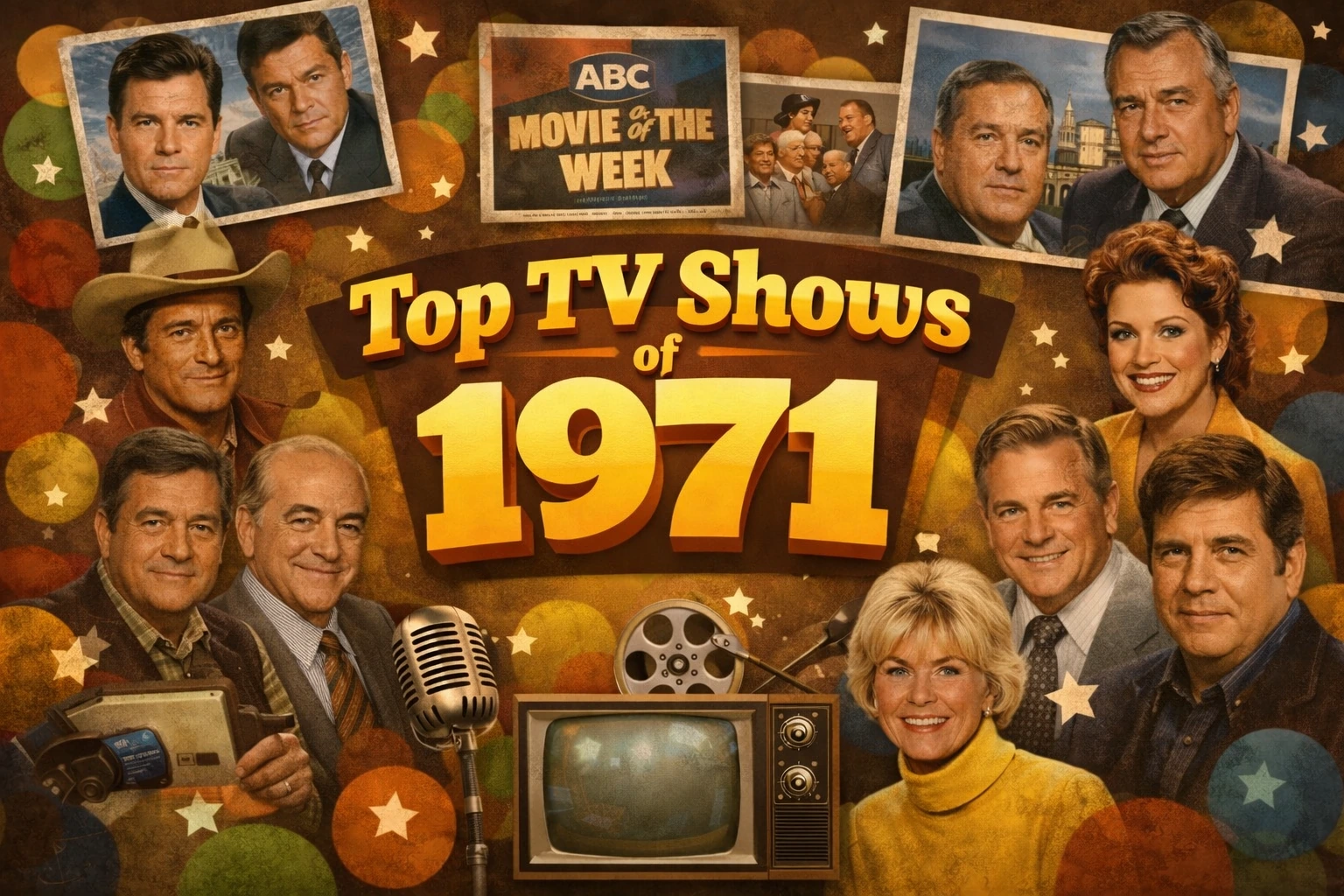
The top TV shows of 1971 show the old network order finally losing its exclusive grip on the living room. Westerns and Lucille Ball remain powerful, but medical dramas, modern crime shows, event movies and a fresher style of variety television are moving directly into the center of prime time.
This countdown uses the 1970–71 Nielsen season, the site’s season-ending-year method for the 1971 rankings. The list runs from The F.B.I. at #10 to Marcus Welby, M.D. at #1, with Flip Wilson, Lucy, Ironside, Gunsmoke, Hawaii Five-O and a weekly movie event filling the changing dial between them.
Marcus Welby, M.D. ranked #1 in the 1970–71 Nielsen season. The Flip Wilson Show finished #2 and Here’s Lucy ranked #3. CBS placed four shows in the top 10, while NBC and ABC each had three. Jump to the complete ranking or begin the full show-by-show countdown.
The ranking moves from institutional crime drama and a fading western giant to event movies, Lucy, contemporary variety and the medical drama that took over the entire season.
CBS still placed the most shows, but ABC owned the #1 program and NBC held the #2 position. The ranking no longer feels like one network or one old formula controls the room.
Medical Center, Hawaii Five-O, Gunsmoke and Here’s Lucy gave CBS medical drama, modern crime, western authority and one of television’s most durable comedy stars.
Flip Wilson, Ironside and Bonanza connected contemporary variety and modern crime drama to one remaining western institution.
Marcus Welby, ABC Movie of the Week and The F.B.I. gave ABC the season winner, event programming and procedural authority.
From The F.B.I. at #10 to Marcus Welby, M.D. at #1, the countdown catches prime time in motion: westerns are still alive, Lucy is still royalty, crime drama is surging, and contemporary television is starting to take over the room.
The F.B.I. rounding out the 1971 top 10 shows how much procedural authority still mattered in prime time. This was television built around structure, official competence, and the reassurance that complicated threats could be identified, pursued, and resolved inside a clear moral framework. That kind of confidence played extremely well in an era when networks still depended on weekly reliability as much as novelty.
What helped the show stay so competitive was its seriousness. It did not need broad comedy, domestic sentiment, or frontier mythology to connect. Instead, it offered viewers a disciplined law-enforcement world where professionalism was the point. That gave it a different kind of appeal from many of the more personality-driven hits around it. It was less about hanging out and more about trust in institutional competence.
In the larger story of 1971 television, The F.B.I. matters because it helps explain why cop shows came to rule so much of 1970s television. Audiences were clearly ready for more modern forms of weekly tension, as long as they still came wrapped in order.
Bonanza slipping to ninth in 1971 does not mean the western suddenly lost its power. It means the competition around it was changing. The series was still a top-10 giant, which says a lot about how durable its world remained. The Cartwrights still represented one of television’s clearest models of authority, masculinity, family order, and frontier morality, and audiences still had plenty of appetite for that combination.
What makes the ranking especially revealing is that Bonanza now sits below medical drama, crime drama, variety, event-movie programming, and a Lucille Ball sitcom. That placement captures the transitional mood of the early 70s perfectly. The western was still respected, but it was no longer the unquestioned center of the schedule.
Even so, the show’s continued presence in the top 10 proves it remained a prestige brand for network television. It still offered scale, moral clarity, and a multi-generational viewing experience that few formats could match.
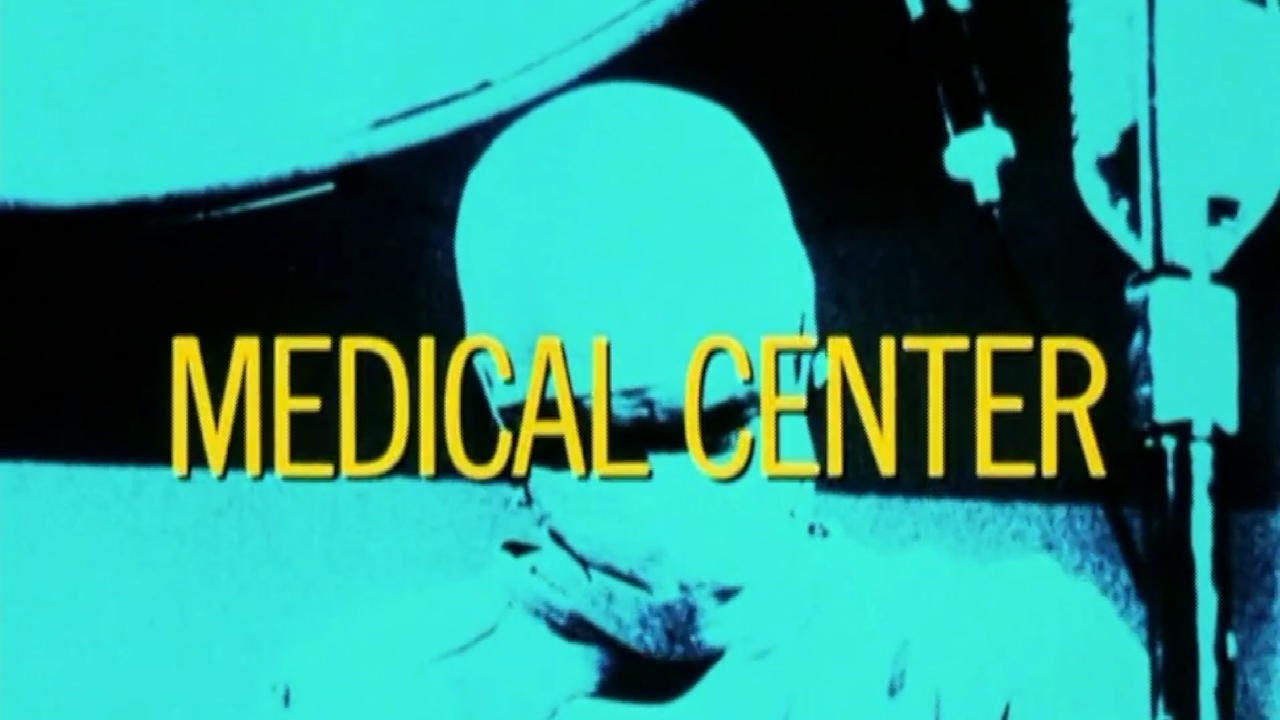
Medical Center landing at #8 is one more sign that medicine had become one of television’s most useful dramatic engines. Hospitals naturally generate urgency, ethical decisions, emotional stakes, and rotating crises, which made the format ideal for weekly network storytelling. It also allowed shows to feel serious and adult without becoming too dark or alienating for a mass audience.
What made Medical Center so effective in this period is that it fit the network sweet spot between authority and emotion. Viewers got institutional credibility, but they also got patients, families, and doctors dealing with situations that felt human rather than abstract. That balance helped medical drama become one of the early 70s’ most durable prime-time lanes.
Its top-10 finish matters because it confirms that Marcus Welby, M.D. was not an isolated hit. The format itself had become a major piece of the television mainstream. That is one of the biggest changes between the old network order and the new one coming into view.
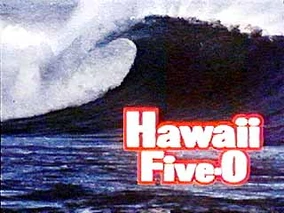
Hawaii Five-O at #7 feels like one of the clearest previews of where 70s television is headed. The series had procedural authority, but it also had visual identity, momentum, and a setting that made it stand out immediately from the rest of the schedule. It was a crime drama, yes — but it was also atmosphere, style, and weekly tension with a stronger sense of place than many of its competitors.
That distinction mattered. By 1971, viewers were still loyal to dependable formats, but they were also responding to shows that felt more contemporary and more cinematic. Hawaii Five-O benefited from that shift. It offered order and professionalism through Steve McGarrett’s command presence, yet the series never felt stiff. It moved. It had urgency.
In a top 10 filled with transitional signals, this show stands out as one of the most obviously forward-looking. It still belongs to network tradition, but it points toward a sleeker, more location-driven version of television that would become increasingly important as the decade continued.
ABC Movie of the Week making the top 10 is one of the most revealing details on the entire chart because it shows how valuable “event television” had become. This was not just another series with a recurring cast and set formula. It was a branded programming slot that trained viewers to expect something self-contained, promoted, and special enough to feel different from ordinary weekly TV.
That model is important historically. It tells you networks were already discovering the commercial power of packaging anticipation. You didn’t need a sitcom family or a long-running western to win the week. You could build audience loyalty around the promise of a movie-style experience entering the home on a predictable schedule.
In 1971, that feels very modern. ABC Movie of the Week belongs to the same broad story as variety, procedural drama, and medical drama rising on this chart: television was diversifying the ways it could become an appointment.
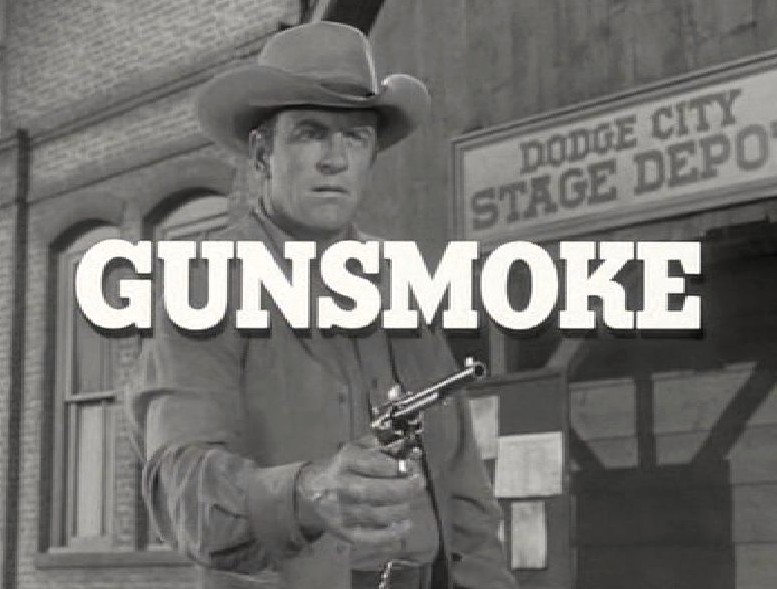
Gunsmoke holding onto the top five in 1971 is one of the strongest arguments against any lazy narrative that westerns disappeared overnight. They didn’t. At least not yet. This was still one of the five biggest shows in America, which means audiences still deeply valued the kind of ordered, morally legible dramatic world the series provided.
What made Gunsmoke so resilient was its confidence. It knew exactly what it was, and it never needed to chase every new television trend to remain compelling. The authority of Matt Dillon, the stability of Dodge City, and the show’s deliberate dramatic rhythm gave viewers something many forms of TV can never quite fake: a sense of durable trust.
But its 1971 position is also revealing because the shows now above it come from multiple newer directions — medical drama, variety, and crime drama. That means Gunsmoke is still powerful, but it is now powerful inside a much more competitive and changing television culture.
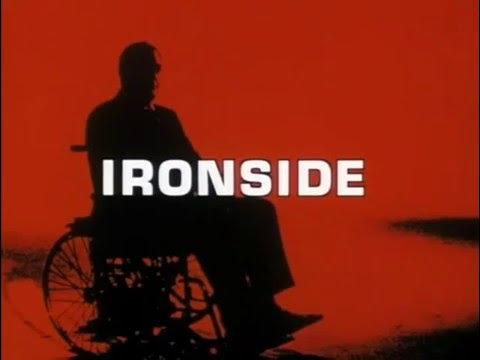
Ironside reaching #4 shows how fully crime drama had embedded itself into the center of prime time. This was not a fringe success or a respectable mid-tier performer. It was one of the biggest shows in the country. That matters because it reflects a broader audience shift toward more urban, modern, and adult forms of weekly storytelling.
What made the series stand out was its strong lead identity. It wasn’t just another case-of-the-week show disappearing into its own mechanics. Raymond Burr’s presence gave Ironside real gravity. The series delivered investigations, yes, but it also delivered a sense of character authority that helped viewers feel anchored inside the format.
In the context of 1971, Ironside feels like one of the clearest examples of the decade’s tone beginning to sharpen. It is more contemporary than the westerns, less sentimental than the family comedies, and more grounded in institutional modernity than a lot of older TV hits. That made it feel timely without sacrificing accessibility.
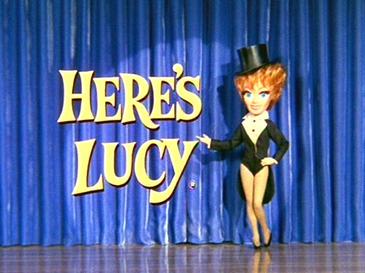
Here’s Lucy climbing all the way to #3 in 1971 is a reminder that Lucille Ball was not merely coasting on legend. She was still a ratings force. In a season increasingly shaped by procedural drama and more modern-feeling programming, she remained one of the few performers whose presence alone could still carry a show near the very top of the national chart.
That kind of staying power does not happen by accident. Lucy’s comic control was so complete that even a familiar sitcom framework could feel elevated just by the way she moved through it. Embarrassment, hustle, panic, and absurd escalation were all native languages for her. Audiences trusted that whatever the setup was, she would find a way to turn it into rhythm.
In the bigger 1971 story, Here’s Lucy is important because it proves the old television royalty had not yet been pushed aside. The schedule may have been changing, but classic star power still had enough force to crash directly into the new decade and stay near the top.

The Flip Wilson Show finishing second in 1971 confirms that variety TV was still capable of dominating the culture — but now with a different kind of charisma. This was not just old-fashioned showbiz polish repeated one more time. The series had personality, energy, timing, and a more contemporary comic feel that made it resonate differently from some of the variety institutions of the previous era.
What gave the show such power was Wilson himself. Variety only really works when the host is not just competent, but magnetic enough to make the format feel personal. That was the advantage here. The material, guests, and recurring comic business all mattered, but the gravitational center was Flip Wilson’s presence and ease.
In the 1971 lineup, the show acts almost like a bridge between television’s older broad-entertainment traditions and the newer, sharper mood taking hold in the early 70s. It still belongs to the network variety machine, but it carries a fresher comic pulse. That helps explain why it finished so high.
Marcus Welby, M.D. taking the #1 spot in 1971 is one of the clearest indicators that television had entered a new phase. The biggest show in America was no longer a western or a traditional variety giant. It was a medical drama — a format built around professional authority, emotional seriousness, and weekly human conflict handled through competence and empathy.
That is a big shift. The show did not win by being flashy. It won by being humane. What made Marcus Welby, M.D. work so well was that it offered audiences a version of adulthood that felt caring rather than cold. The drama came from illness, family stress, ethical choices, and professional judgment, but the emotional core remained reassuring. It gave viewers seriousness without punishing them for showing up.
As the #1 show of 1971, it says a lot about where the decade is heading. Television is becoming more issue-aware, more professionally oriented, and more interested in contemporary institutions than in rural myth or pure nostalgia. The old network order is still visible everywhere on this chart. But by the time Marcus Welby, M.D. takes the crown, the future is already on screen.
The rankings capture the year when medical drama, contemporary crime, event movies and modern variety moved past the western-heavy television order that still dominated only one season earlier.
The top TV shows of 1971 look like a country changing its viewing habits without completely abandoning what came before. Westerns are still strong. Lucille Ball is still dominant. Variety is still a major force. But the real momentum now belongs to medical drama, crime drama, and event programming that feels more contemporary than the old small-town or frontier comfort formulas.
That is what makes 1971 such a useful year in this series. If 1970 still looked like the old television machine was fully in charge, 1971 looks like the same machine starting to retool itself in public. The winners are becoming more adult, more urban, more professionally centered, and a little more restless in tone. The next season would make that break impossible to miss when All in the Family changed television.
For a lot of us who later met this era through reruns, this is where early-70s prime time starts looking less like a holdover from the 60s and more like the decade we actually remember.
Move from the prime-time dial to the toy box, radio and movie theater, then compare the television season before and after it.
Follow the ratings from the western-heavy opening of the decade through the socially sharper sitcoms, crime dramas, family hits and event television that reshaped the living room. For the whole decade in one place, explore the complete 70s TV guide.
Quick answers about the #1 show, network totals, westerns, the Nielsen-season method and why 1971 marks a major prime-time shift.
According to the 1970–71 Nielsen season, Marcus Welby, M.D. was the #1 TV show tied to 1971.
The Flip Wilson Show ranked #2 in the 1970–71 season.
Yes. Gunsmoke ranked #5 and Bonanza ranked #9, proving the western still had serious ratings power.
ABC had the top show with Marcus Welby, M.D. The network also placed ABC Movie of the Week and The F.B.I. in the season’s top 10.
Because television popularity was measured by season rather than calendar year. For year-based nostalgia rankings, the season ending in that year is the standard reference point.
It’s one of the clearest transition points of the early 70s, where medical dramas, crime shows, and movie events start overtaking older prime-time formulas.
Using the 1970–71 Nielsen season, the top three were Marcus Welby, M.D. at #1, The Flip Wilson Show at #2 and Here’s Lucy at #3.
Medical dramas, crime shows, variety comedy, westerns and event-movie programming all made the top 10. The mix shows prime time moving toward more contemporary professional settings without completely abandoning older television institutions.
New television countdowns, decade guides, videos and exactly the kind of woodgrain-fueled memory damage you came here for.