Laverne DeFazio
A factory worker with a defensive wisecrack, a giant sweater initial and a loyalty stronger than every plan she pretended not to believe in.
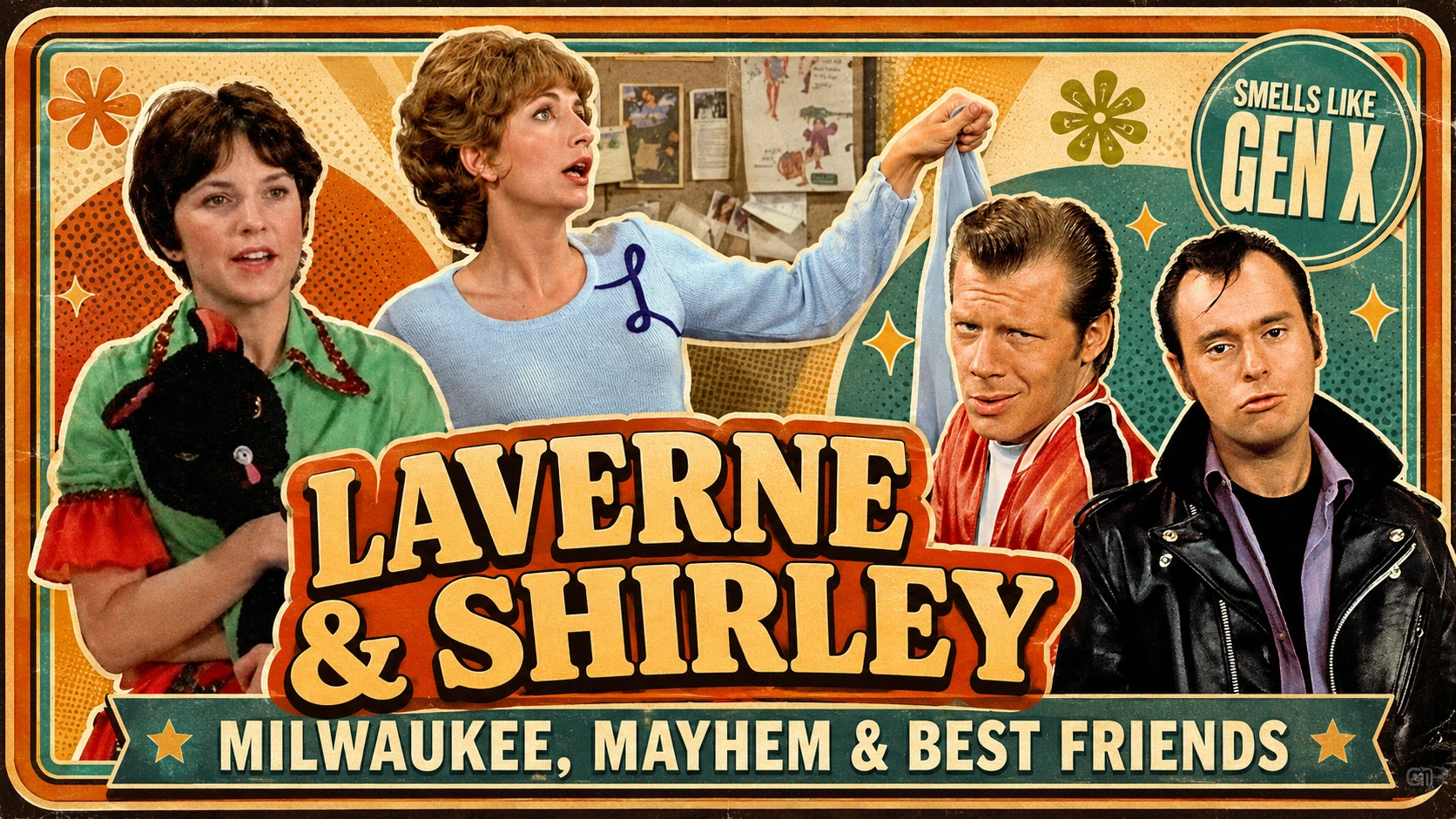
Before we knew what a brewery bottle capper earned, we knew the basement apartment. We knew the L stitched onto Laverne’s sweater, Shirley’s Boo Boo Kitty and the way Lenny and Squiggy could enter a room as if somebody had accidentally summoned them by saying the word “disgusting.” We knew that one small kitchen could hold friendship, family, romance, disappointment and at least one plan involving a ladder nobody should have been allowed to touch.
For Gen X viewers, Laverne & Shirley often arrived in afternoon reruns, after-school blocks or weekend marathons, long after its original Tuesday-night reign. The show looked broad because it was broad. Penny Marshall and Cindy Williams used their entire bodies, every available piece of furniture and the audience’s growing dread that a simple errand was about to require stunt coordination. What made it last was not the fall. It was the hand one woman offered the other after the fall.
Laverne & Shirley mattered because it put two single working women at the center of a huge network comedy without sanding away their class, ambition or weirdness. Laverne DeFazio and Shirley Feeney worked at Shotz Brewery, shared a Milwaukee basement apartment and wanted lives that felt larger than the jobs and dates available to them. Penny Marshall and Cindy Williams turned that setup into fearless physical comedy, but the friendship kept the chaos human. Across eight seasons and 178 episodes, the series became a ratings powerhouse, expanded the Happy Days universe and proved that two women could carry one of television’s biggest hits while getting dirty, getting loud and getting back up.
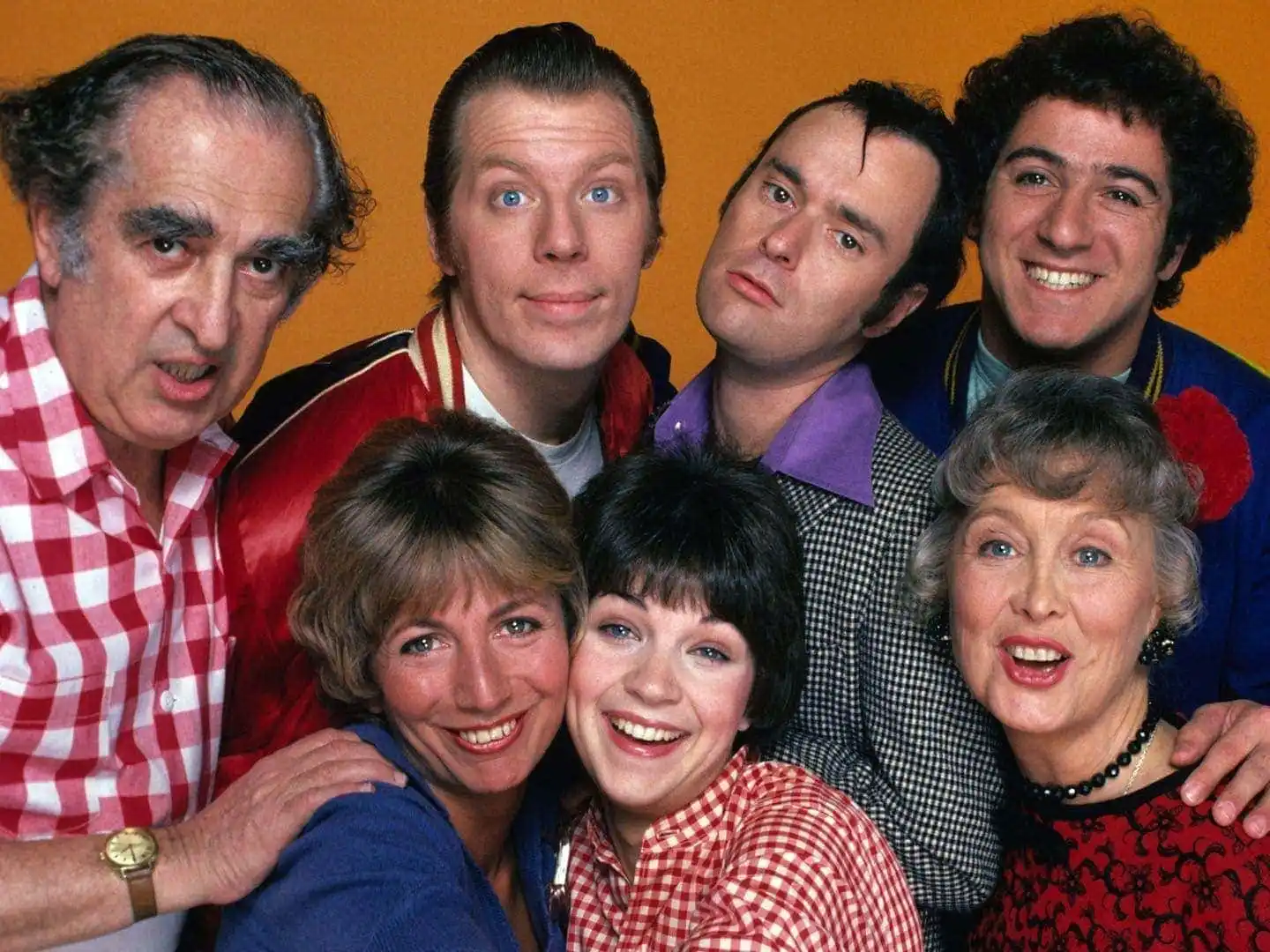
Two bottle cappers, one basement apartment and no shortage of ways for Tuesday night to go wrong.
Laverne & Shirley followed Laverne DeFazio and Shirley Feeney, two single women working as bottle cappers at the fictional Shotz Brewery in late-1950s Milwaukee. They shared a basement apartment, a working-class budget, a collection of questionable boyfriends and the permanent knowledge that Lenny and Squiggy lived close enough to hear opportunity through the walls.
The setup was simple, but the show built a whole neighborhood around it. Frank DeFazio, Laverne’s protective father, ran the Pizza Bowl. Edna Babish became landlord, friend and eventually Frank’s wife. Carmine Ragusa sang, danced, boxed and continued an on-again relationship with Shirley. Lenny and Squiggy appeared whenever dignity needed to leave the room.
Most weeks began with an ordinary working-person problem. The girls needed money, wanted a better job, hoped for a glamorous date or tried to avoid admitting that a terrible idea was terrible. The solution usually required a costume, a performance or an industrial quantity of confidence. By the second act, somebody was hanging from something.
The comedy was physical, but the circumstances were grounded. Rent mattered. Losing a shift mattered. A dress for a special night had to be saved for. The girls could dream about movie stars, doctors and a better apartment while still punching a time clock the next morning.
That combination gave the series its place in 1970s television. It looked back at the 1950s, but the women at its center belonged to the changing expectations of the 1970s: earning their own money, making their own mistakes and treating friendship as the relationship that could not be written out by the next date.
They entered as tougher dates for Richie and Fonzie, then walked away with their own Tuesday night.
Yes. Laverne & Shirley was a spin-off of Happy Days. Laverne DeFazio and Shirley Feeney first appeared in Richie Cunningham’s Milwaukee world before ABC and Garry Marshall realized the two working women could carry their own show. Penny Marshall and Cindy Williams played them with more edge in those early appearances: fast-talking, streetwise and entirely unimpressed by the clean-cut side of town.
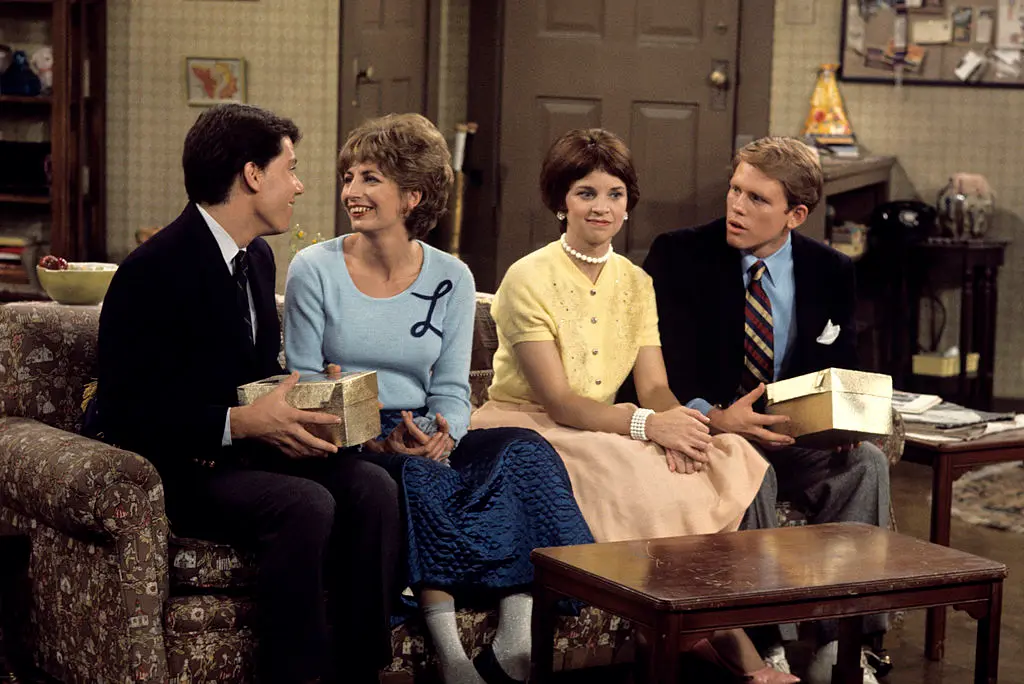
The characters were strong enough that ABC entertainment chief Fred Silverman asked Garry Marshall whether Happy Days had another spin-off hiding inside it. The answer was the two women who worked at Shotz Brewery. Penny Marshall later recalled the speed of the process: development began around Thanksgiving, production moved in December and the new series premiered in January.
Garry Marshall, Lowell Ganz and Mark Rothman received creator credit. The January 27, 1976 premiere, “The Society Party,” sent the women into a world of wealth and manners they were never going to enter quietly. The episode included Fonzie, but it also made clear that the new series had its own rhythm.
The transition required softening and deepening the characters without turning them into generic sitcom roommates. Williams and Marshall later discussed how wardrobe, set design and performance changed the women from their Happy Days versions. Shirley became more openly romantic and proper. Laverne kept the defensive toughness but gained vulnerability, family history and a private sense that she might deserve more than she expected.
The connection remained useful because the shows aired together and could cross characters, but the new series quickly stopped feeling borrowed. For the full parent-show history, the larger story belongs to How Happy Days Became a 1970s Television Phenomenon. Here, the important moment is when two supporting characters became the main event.
The premiere entered a 1976 television season already shifting toward ABC. Laverne & Shirley ranked third in the 1975–76 Nielsen season despite arriving in January, then climbed to number one in its second year.
The giant L was the warning label. Underneath it was a woman who expected the world to take a swing and planned to swing back.
Laverne DeFazio moved through Milwaukee as if the city had already tried to get the better of her and failed. She was loud, suspicious of fancy people and prepared to make the first joke before anybody could make one at her expense.
Penny Marshall understood the character’s physical center. Laverne led with her shoulders, planted her feet and occupied space without asking permission. The cursive L on her sweaters became a visual signature because Laverne did not dress to disappear.
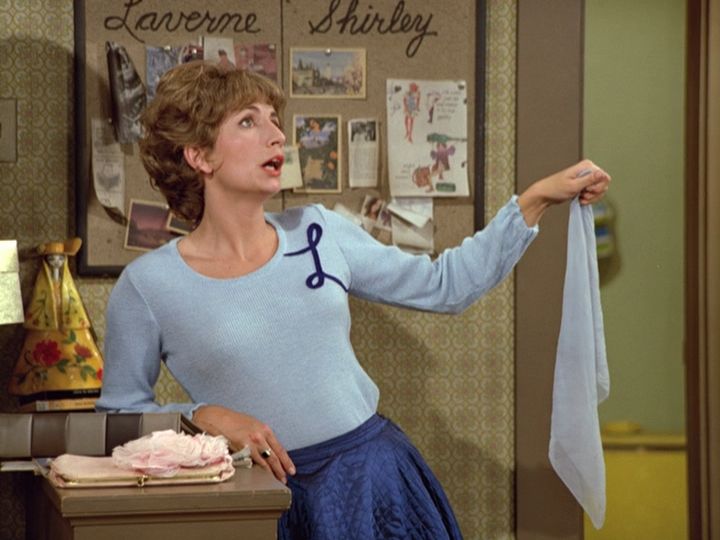
Her toughness was partly class instinct. She recognized condescension immediately. A society woman, polished employer or smooth date could barely complete the first sentence before Laverne knew which side of the exchange she had been assigned. Her response might not improve the situation, but it usually prevented anybody from mistaking her for grateful.
The comedy worked because Marshall never made toughness the whole character. Laverne could be lonely, jealous, romantically hopeful and deeply attached to her father. She wanted a better life but did not possess Shirley’s faith that better people automatically lived in it.
Milk and Pepsi became the perfect Laverne detail: strange, specific and defended with the certainty of somebody who had no interest in allowing taste to become another class test. Williams and Marshall later recalled that the drink grew out of real life, like so many details that made the apartment feel used rather than decorated.
Laverne’s greatest strength was loyalty. She could mock Shirley’s dreams, roll her eyes at Boo Boo Kitty and announce that Carmine was trouble, but the moment somebody outside the friendship did the same thing, Laverne changed sides.
Shirley believed in manners, romance and tomorrow—then proved she could survive when all three went sideways.
Shirley Feeney wanted life to be organized. She wanted a clean apartment, respectable work, a good man and enough evidence that the world rewarded decency to keep believing in it. The joke was that she shared her days with Laverne, Lenny and Squiggy.
Cindy Williams played Shirley’s optimism without making it empty. Shirley was not naive because she lacked intelligence. She was hopeful because hope was the structure she used to hold disorder at bay.
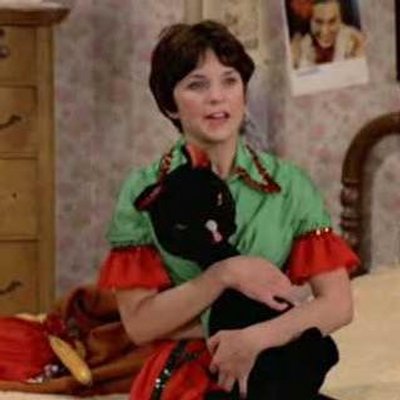
Her neatness gave the show an immediate odd-couple rhythm, but Williams added sudden vocal and physical explosions. Shirley could stay proper until the exact moment proper behavior became impossible, then release a yell that seemed to come from a much larger person.
Boo Boo Kitty was funny because the stuffed animal exposed how much childhood Shirley still carried. She could speak confidently about adult romance, then retreat to an object that made the apartment feel safer. Williams said she had input into the character and the creation of Boo Boo Kitty, helping turn a prop into emotional shorthand.
Shirley’s relationship with Carmine lasted because neither person fit a clean romantic script. Carmine was devoted but volatile, talented but uncertain. Shirley wanted marriage yet refused to accept marriage as the only proof that her life had succeeded.
Shirley’s optimism could look almost quaint beside Maude Findlay’s refusal to whisper, but both women belonged to the same decade-long argument about how much room television was finally willing to give women with opinions of their own.
Her independence matters in the larger story of how television families changed during the 1970s. Laverne and Shirley created a household from friendship, neighbors and relatives rather than waiting for husbands to make the home official.
Every date, job and dream could change. The person on the other side of the apartment did not.
The series survived its broadest plots because the central friendship felt older than the show. Laverne and Shirley knew each other’s worst habits, old disappointments and favorite lies. They could identify when the other woman was pretending before the audience saw the performance begin.
Penny Marshall and Cindy Williams had met before the series and wrote together in real life. In their Television Academy interview, they talked about the chemistry, rehearsal and personal details they brought to the characters. That history is visible in the interruptions. They do not wait politely for one another to finish because close friends rarely do.
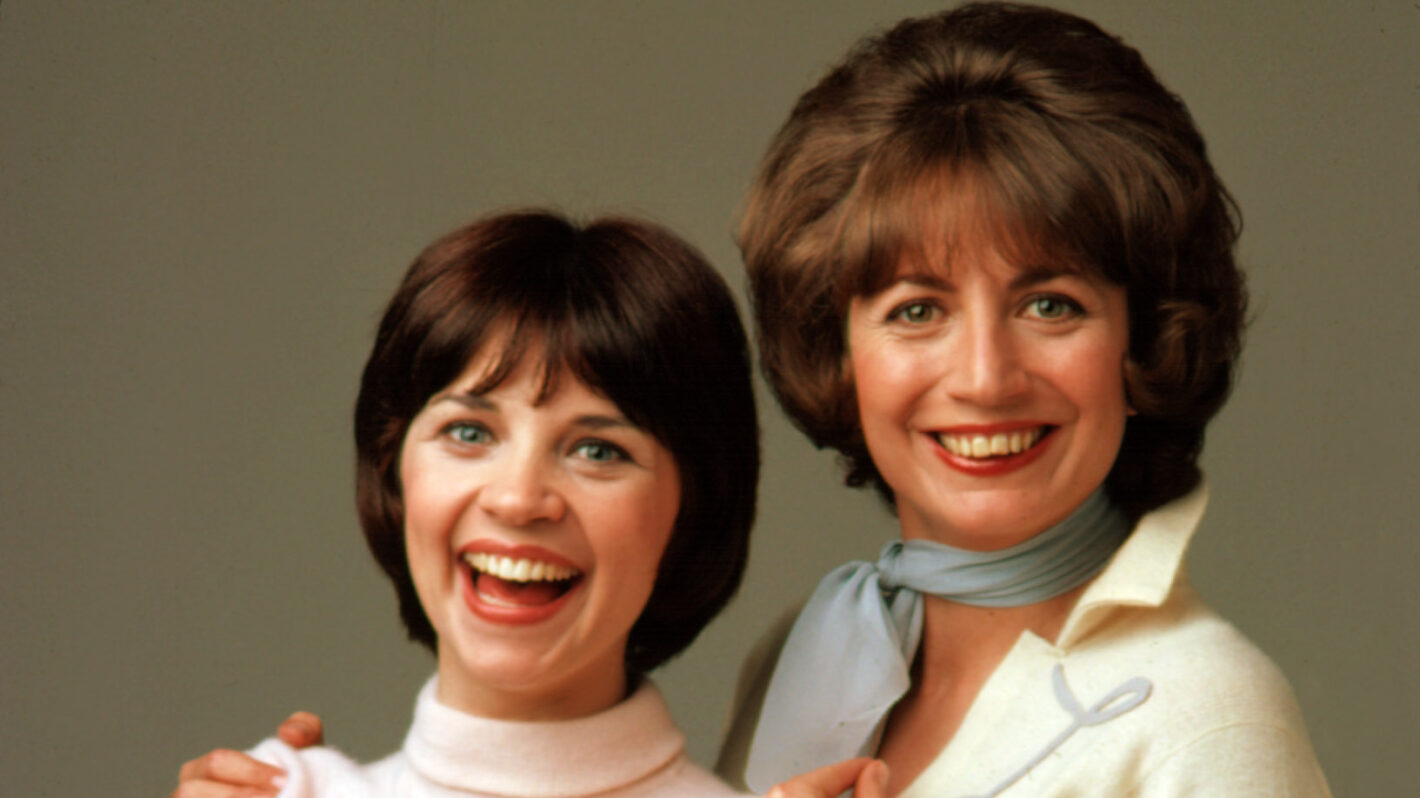
The friendship was not sentimental. They fought about money, men, mess, attention and whose fault the latest catastrophe actually was. Laverne could treat Shirley’s standards as a personal attack. Shirley could treat Laverne’s pessimism as proof that only one of them was serious about improvement.
What kept the fights from becoming cruel was the certainty that separation would hurt more than surrender. One woman eventually crossed the room. Somebody apologized badly. The episode could return to chaos because the emotional foundation had been repaired.
That relationship gave network television a female friendship with the weight usually reserved for marriage or family. The characters dated men, but the series did not ask a boyfriend to become the permanent organizing principle.
The Mary Tyler Moore Show had already shown a single working woman building a life from career and chosen family. Laverne & Shirley made the friendship itself the household, then dropped the household into a box-packing machine.
The show worked because every supporting character could make the apartment louder without making the friendship smaller.
A factory worker with a defensive wisecrack, a giant sweater initial and a loyalty stronger than every plan she pretended not to believe in.
The neat, romantic half of the apartment whose optimism could survive bad dates, bad jobs and Lenny entering without warning.
A leather-jacketed neighbor whose loyalty and occasional sweetness kept him from becoming only the setup for Squiggy’s entrance.
The voice behind that unforgettable hello, armed with impossible confidence and no reliable awareness of personal boundaries.
The Big Ragoo: boxer, singer, dancer and Shirley’s longtime romantic possibility, always one audition from a different life.
Laverne’s loud, protective father and Pizza Bowl owner, certain that every man had arrived with a plan he needed to stop.
The landlord who became family, balancing Frank’s volume with experience, warmth and the ability to see through everybody.
The California neighbor whose glamorous self-confidence belonged to the show’s sunnier, stranger Burbank years.
The ensemble gave the series different speeds. Phil Foster’s Frank could overwhelm a room through volume. Betty Garrett’s Edna could slow the same room with one practical sentence. Eddie Mekka brought theatrical energy whenever Carmine saw a floor large enough to dance across.
Michael McKean and David L. Lander had developed Lenny and Squiggy before the sitcom. The Television Academy notes that Penny Marshall and Rob Reiner introduced the performers to the producers, after which they were hired as writers and wrote themselves into the first episode. They appeared in 156 of the show’s 178 episodes.
Lenny and Squiggy became breakout characters because they were more than intruders. They were part of the girls’ social world, occasionally heroic, often useful by accident and always prepared to transform embarrassment into a competitive event.
The cast also kept class visible. These were not quirky friends floating through an abstract sitcom city. They worked at the brewery, ran the Pizza Bowl, auditioned for entertainment jobs and knew what it meant when a plan required money nobody had.
The conveyor belt was not a decorative backdrop. It was where the girls earned the rent.
Shotz Brewery gave the series something sitcoms often softened: repetitive industrial work. Laverne and Shirley capped bottles, wore uniforms and answered to supervisors. The job could be played for chaos, but the paycheck remained important.
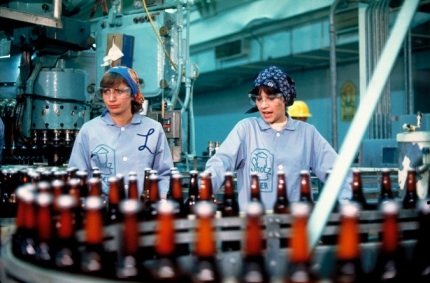
The brewery also made their dreams legible. They did not want fame because they had been raised to expect it. They wanted a chance to escape the limits visible from the factory floor. A talent show, society party or strange promotional opportunity looked enormous because ordinary work was waiting on the other side.
Working-class comedy can become patronizing when characters are treated as funny for lacking polish. This show was funniest when the women recognized the insult before anybody else. Laverne’s class defensiveness and Shirley’s desire for respectability came from different strategies for surviving the same hierarchy.
The basement apartment continued the texture. It was crowded, accessible from the street and close enough to the building’s common spaces that privacy was theoretical. The set felt like a place assembled from what two people could afford rather than from what a decorator wanted viewers to buy.
Frank’s Pizza Bowl joined family and work in one room. The business was never just a hangout. It represented Frank’s livelihood, his authority and his conviction that he could monitor Laverne’s life while serving pizza.
In our ranking of the best 1970s sitcoms, the show earns its place on the strength of Marshall and Williams alone. What makes it hit differently on a rewatch is the paycheck: the pratfalls landed harder because the women had a shift to make, rent to pay and no family fortune waiting offscreen.
They did not decorate the joke with movement. Their bodies were the joke’s machinery.
Williams and Marshall described rehearsing physical sequences carefully. The precision mattered because a fall only looks accidental when every performer knows where the table, door and other body will be.
Neither character remained the glamorous observer while the other absorbed the damage. Laverne could get trapped, Shirley could get soaked and both could finish a scene with clothing that no longer qualified as clothing.
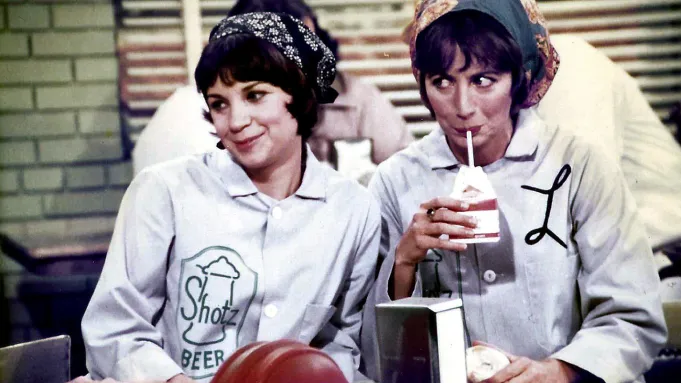
The show’s affection for I Love Lucy was obvious, especially when the girls entered workplaces or performances they could not control. The difference was the partnership. There was no stable husband waiting to restore the household. Laverne and Shirley had to drag each other out.
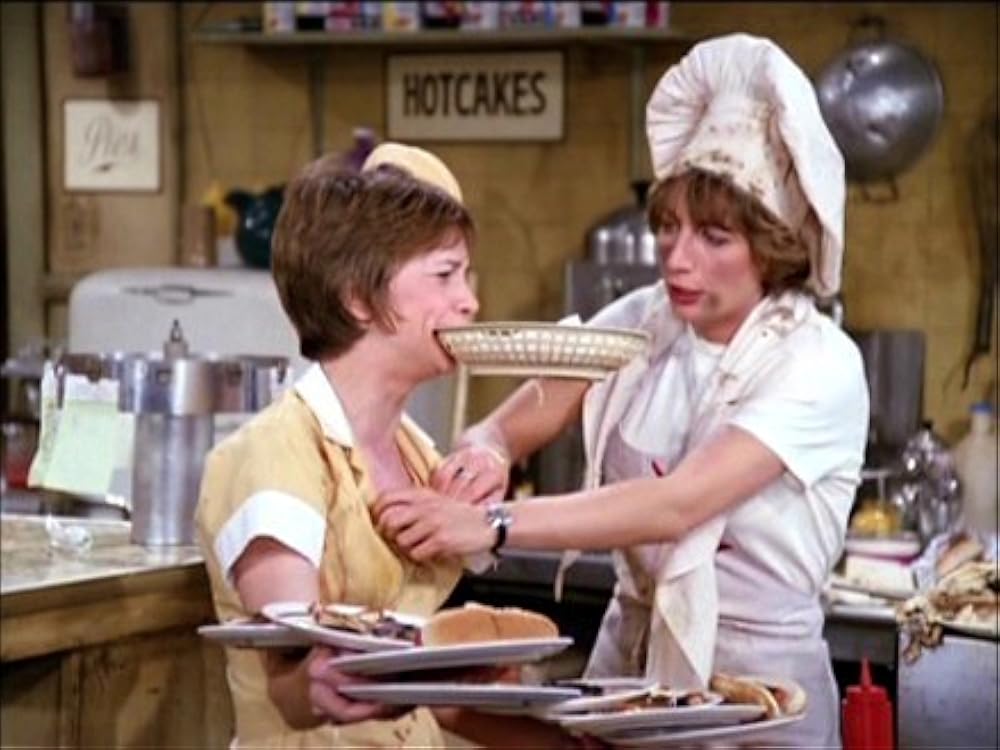
Beds folded, ladders slipped, conveyor belts moved and diner equipment fought back. The sets were constructed as comic environments. A room did not merely contain the scene; it waited for the wrong decision.
Physical comedy can reduce people to objects. Marshall and Williams kept intention visible. Laverne fell because she committed too hard. Shirley crashed because she believed the plan could still be executed correctly. The body revealed personality.
Garry Marshall identified “Angels of Mercy” as an early moment when the physical-comedy style took hold. From there, the series learned that the audience would follow the women into increasingly elaborate disasters as long as the emotional reason remained clear.
The contrast with The Bob Newhart Show is almost comic theory in one decade: Bob could get a laugh by moving one eyebrow, while Laverne and Shirley might need a ladder, a conveyor belt and three pieces of broken furniture. Both styles worked because the character came before the gag.
One word through the apartment door could change the temperature of an entire episode.
The entrance was perfect because it worked before the men appeared. Someone described something filthy, desperate or socially unacceptable. The apartment door opened. Squiggy leaned in and announced, “Hello.”
David L. Lander and Michael McKean had built the characters in their student and comedy-group years. That history gave Lenny and Squiggy a private logic. They did not behave like two actors inventing weirdness for a guest spot. They behaved like men who had spent years confirming one another’s worst assumptions.
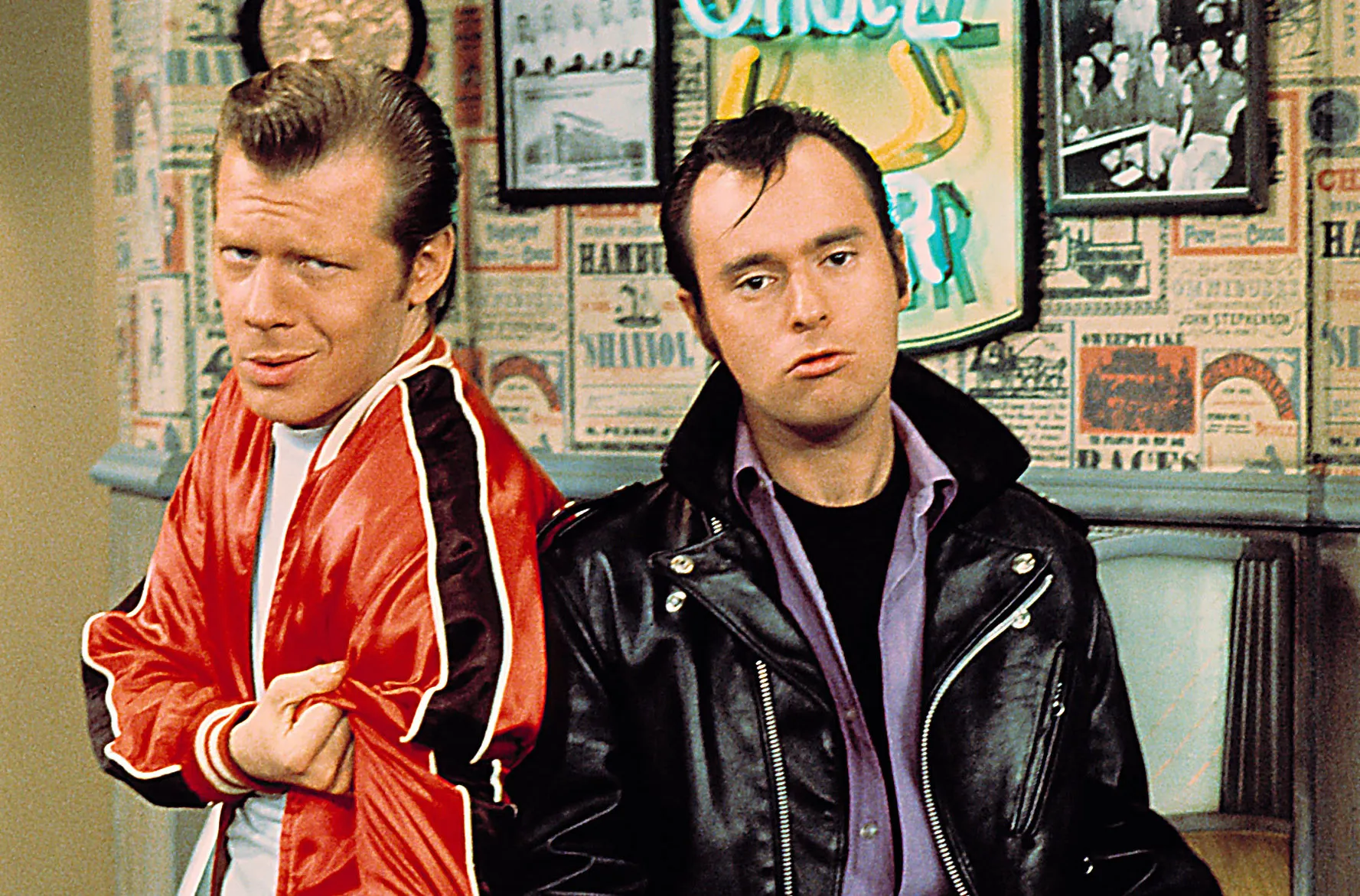
Squiggy supplied confidence without evidence. Lenny supplied a slightly softer center and the occasional glimpse that he understood how the room saw them. Together they functioned as neighbors, unwanted dates, emergency helpers and the last people anybody should invite into a plan requiring discretion.
Their friendship mirrored the title relationship in a distorted key. Lenny and Squiggy were also a permanent pair built from loyalty, shared history and a social language other people did not fully understand.
The show avoided turning them into villains. They were inappropriate and invasive, but they belonged to the neighborhood. When trouble became real, they could help. The girls complained about them with the authority of family.
Their popularity led to the Lenny and the Squigtones album, with Christopher Guest appearing under the name Nigel Tufnel years before This Is Spinal Tap. It was a perfect extension: the characters found a stage and assumed the world had been waiting.
The girls lived on their own, but nobody in this neighborhood was ever completely independent.
Laverne’s relationship with Frank gave the series its strongest biological-family bond. Phil Foster played him as loud, suspicious and genuinely afraid that independence meant his daughter might no longer need him.
Frank’s protectiveness was often chauvinistic, but Laverne did not quietly accept it. Their arguments revealed two people who spoke the same emotional language at maximum volume. He wanted control. She wanted respect. Both were terrified of losing the relationship.
Betty Garrett’s Edna Babish brought a different adult presence. As landlord, friend and later Frank’s wife, Edna could manage the building without pretending it was orderly. Garrett made practical intelligence warm rather than dull.
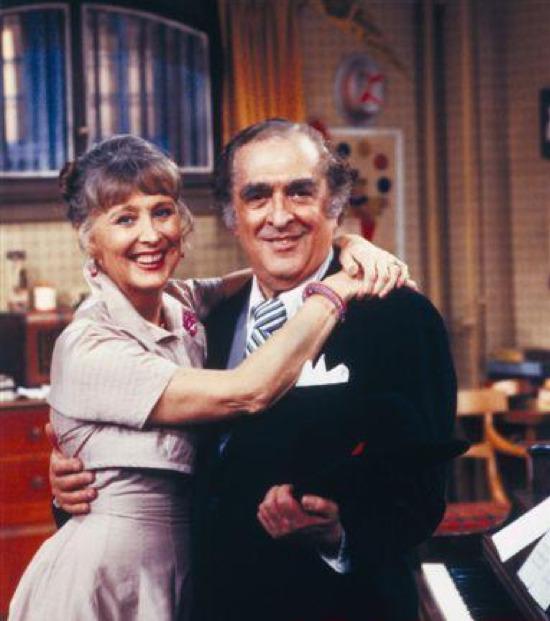
Carmine connected the apartment to performance and romantic possibility. Eddie Mekka could turn a scene into a dance number, but Carmine’s show-business ambitions also fit the working-class theme. He had talent and no guarantee that talent would ever become a living.
The household belongs beside the unconventional families collected in 40 Best Family TV Shows of the 1970s, Ranked. Laverne and Shirley were not raising children, yet the apartment, Pizza Bowl and upstairs neighbors formed a family system with the same obligations, interference and inability to leave one another alone.
The chant opened the door. “Making Our Dreams Come True” told us why the girls ran through it.
Cyndi Grecco sang the Laverne & Shirley theme song, “Making Our Dreams Come True.” Charles Fox composed the music and Norman Gimbel wrote the lyrics.
The song was pure forward motion: dreams, determination and no patience for the word impossible. It matched a show in which the women routinely mistook confidence for a substitute for planning.
Before the melody, the opening gave us the chant: “Schlemiel! Schlimazel! Hasenpfeffer Incorporated!” Penny Marshall and Cindy Williams later discussed the chant and opening credits, which turned a childhood rhythm into one of television’s fastest recognition signals.
The Milwaukee opening showed the girls moving through a neighborhood rather than posing as stars. They ran, skipped and marched toward the day. The sequence made friendship kinetic before the episode began.
The California years changed the pictures, but the song continued carrying the original promise. That disconnect became part of the later seasons: the dreams were still moving forward even when the show had left the brewery, the apartment and eventually one of the women behind.
The theme belongs among the unforgettable 1970s TV theme songs because it does more than trigger nostalgia. It states the series argument: the girls might fail publicly, but they would never accept that failure was the final answer.
Start with the premiere, the physical-comedy breakthrough, the Fabian fantasy, the diner disaster and the move that changed the series.
The premiere sends Laverne and Shirley into a wealthy social setting and immediately establishes the class tension, physical comedy and refusal to behave like grateful outsiders.
The girls enter a hospital setting with more confidence than competence. Garry Marshall later pointed to the episode as an early breakthrough in the show’s physical-comedy style.
The two-part trip takes the friendship out of Milwaukee and gives the performers room for romance, humiliation and large-scale comic movement.
The show turns celebrity worship into a working-girl fantasy, then lets the fantasy collide with the women’s complete inability to remain composed.
A more serious story tests the ensemble’s ability to handle tenderness without abandoning comedy. Betty Garrett later singled it out while discussing favorite episodes.
A dangerous situation becomes a showcase for timing, panic and the way Laverne and Shirley try to protect each other while making every practical decision worse.
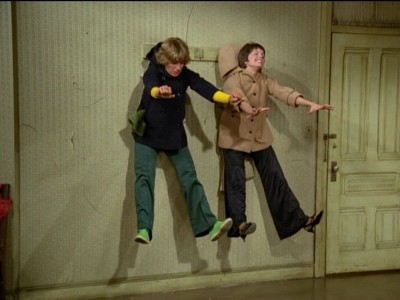
The girls try restaurant work and discover that a small diner contains enough machinery, food and customer pressure to destroy an ordinary day in record time.
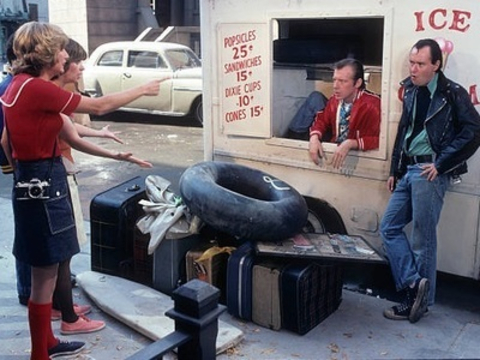
The Burbank move begins. It is not the purest version of the show, but it is essential for understanding how the series tried to restart after leaving Milwaukee.
This is a viewing path rather than a claim that eight episodes can contain the whole series. The list covers the origin, friendship, class tension, physical comedy, tenderness and the California transition.
The full run contains 178 episodes, including talent shows, military training, celebrity guests, factory fights and enough bad dates to justify Shirley’s relationship with a stuffed cat.
The show looked loose because the writing, rehearsal and stunt work underneath it were not.
Garry Marshall, Lowell Ganz and Mark Rothman did not begin with a blank premise. They began with two women who had already disrupted Happy Days and asked what kind of world would make them central.
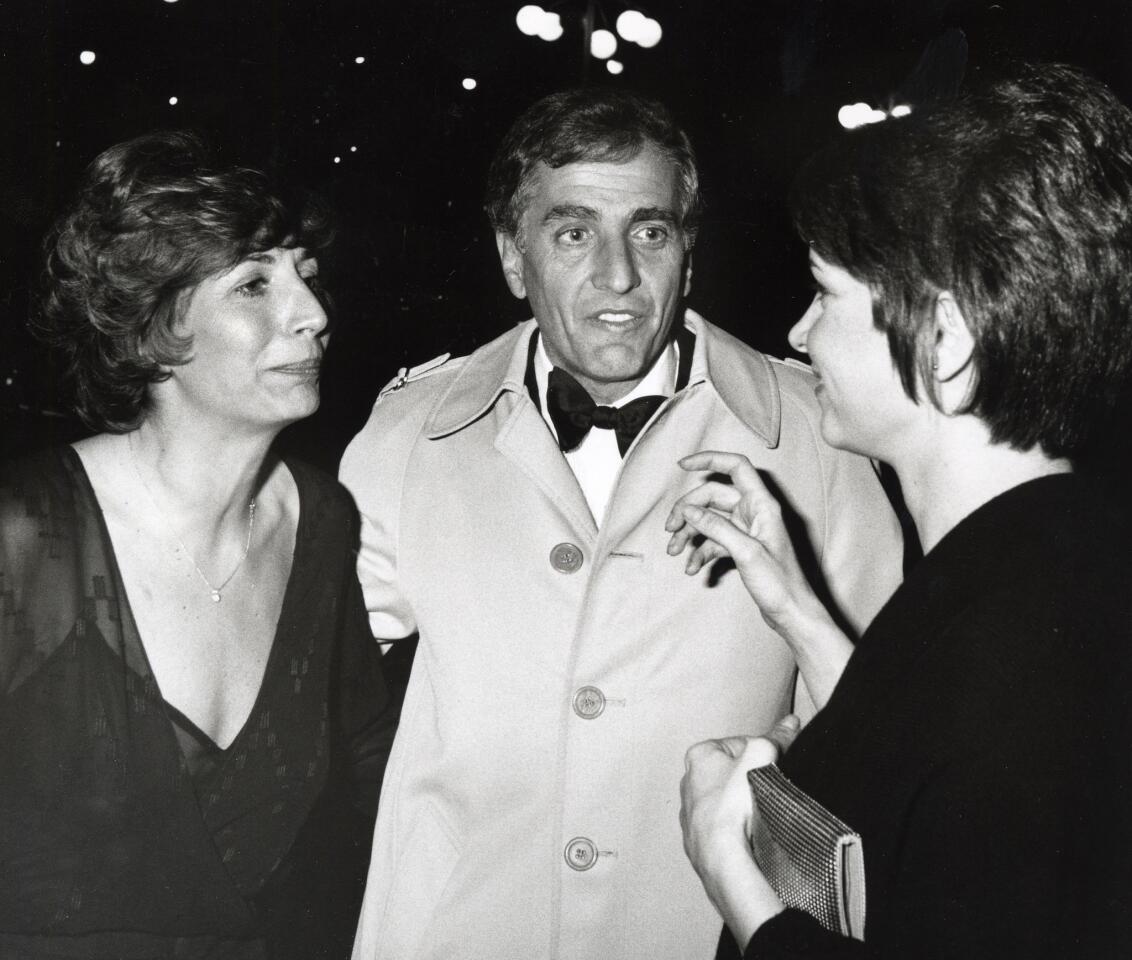
The factory, apartment and Pizza Bowl generated problems naturally. The women wanted better jobs, better dates, better clothes and a chance to perform. Every desire could become a plot without making the characters suddenly wealthy or connected.
The Television Academy archive includes Winifred Hervey discussing her path from intern to staff writer and her work on physical-comedy bits. The presence of women in the writing room mattered on a show where humiliation, work and friendship were experienced through female characters.
The stars were not passive performers. Their interviews describe input into wardrobe, behavior, jokes and physical sequences. That involvement helped keep Laverne and Shirley recognizable even when plots became enormous.
Multicamera comedy requires a director to serve the audience without allowing applause to flatten the scene. Burrows and other directors gave the performers space to build bits while keeping the apartment geography clear.
Doors, stairs, kitchen surfaces and factory equipment were designed to be used. The apartment could support intimate friendship scenes and then become a trap.
It did not become a cult favorite years later. It became one of the biggest shows on television almost immediately.
Laverne & Shirley premiered January 27, 1976 and ranked third for the 1975–76 Nielsen season despite airing only a partial first season. The Television Academy’s program history says it became the number-one program in its second year.
Penny Marshall remembered the speed of the success: the spin-off went from idea to air in weeks, then became television’s top show. The stars suddenly moved from working actors to faces recognized everywhere.
The success helped define ABC’s mid-to-late-1970s rise. Happy Days supplied the launching pad, but the spin-off did not merely inherit an audience. It expanded the appeal of the shared Milwaukee world and gave the network a second anchor.
The ratings also produced merchandise, promotion and an animated series. Marshall and Williams later discussed the merchandising and the demands of promoting a hit. The characters appeared on lunch boxes, dolls and products aimed at viewers who wanted the giant L and Boo Boo Kitty to leave the screen.
Emmy attention was surprisingly limited. The Television Academy lists one nomination for the series, for costume design in 1979. Popular comedy and awards prestige have never been the same thing, and a show built from pratfalls and factory uniforms was easy for institutions to underestimate.
The audience understood the craft. Viewers returned because the stars could make a plan collapse differently every week without making the friendship feel repetitive.
The sunshine made the show brighter. It also removed the factory, apartment and neighborhood that had explained who the women were.
Laverne & Shirley moved from Milwaukee to Burbank, California in season six as the series pushed its timeline into the 1960s and looked for a fresh supply of jobs, locations and show-business stories. The women left Shotz Brewery, found work at Bradburn’s Department Store and suddenly had sunshine where the basement windows used to be.
The change gave the writers new locations, jobs and guest-star opportunities. It also let the show advance its period setting into the 1960s rather than remaining permanently attached to the original Milwaukee years.
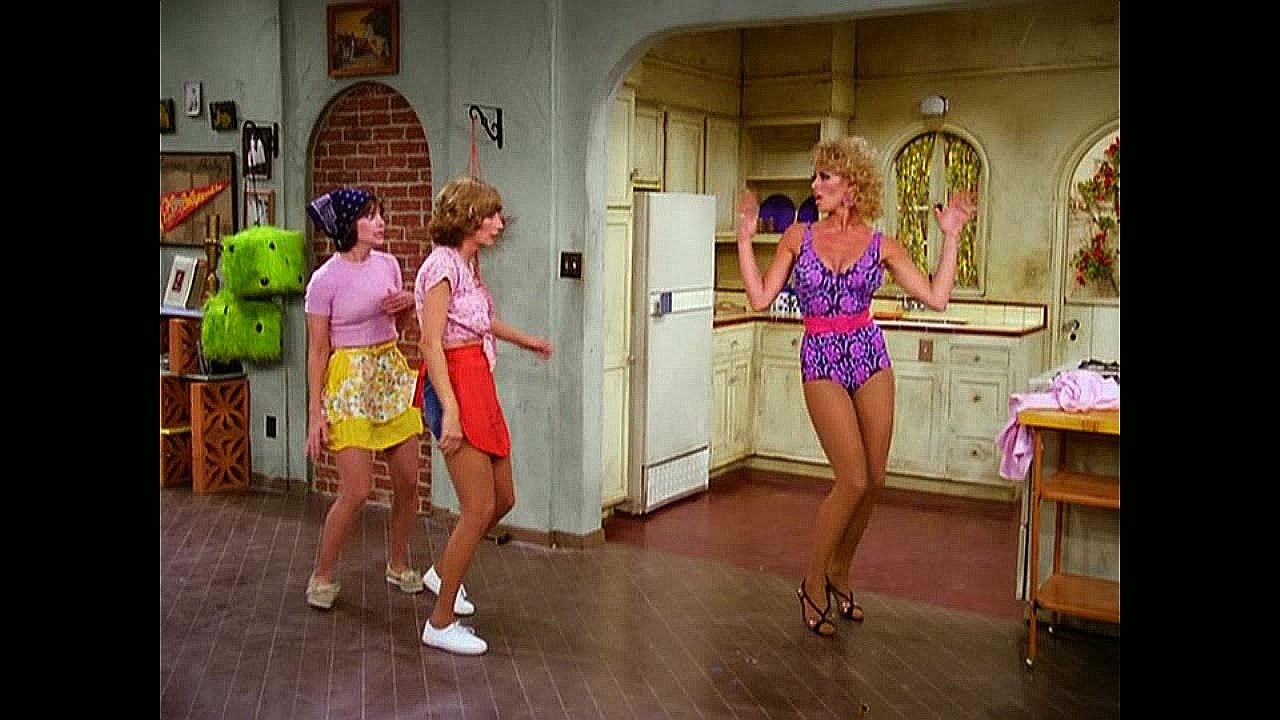
The problem was not that California could not be funny. The problem was that Milwaukee had done invisible storytelling. Shotz explained the girls’ class. The basement apartment explained the closeness. Frank, Edna and the Pizza Bowl made independence feel connected to family.
In Burbank, the series had to invent a new social world while keeping most of the old cast. Rhonda Lee and Sonny St. Jacques brought new energy, but the neighborhood felt more assembled.
Marshall and Williams later discussed the setting change without pretending it was identical to what came before. The physical comedy remained, and individual episodes still worked, but the original working-class pressure became harder to see.
The move belongs in the larger history of how 1970s television revived the 1950s. The early show had used nostalgia as a setting for working women. California gradually moved it toward a more generic show-business version of the past.
The final season kept the title, but the series had already lost the relationship that made the title matter.
Cindy Williams left Laverne & Shirley early in season eight after becoming pregnant and after a production dispute over how the series would accommodate her workload. Shirley was written out after marrying Army medic Walter Meeney, and the show continued with Laverne as its sole central character.
Penny Marshall, Cindy Williams, Garry Marshall and production executives later discussed the departure in Television Academy interviews. Their accounts make clear that the ending was not a clean creative decision made years in advance. It grew from pregnancy, contract expectations, working conditions and a show already under pressure.
The series continued with Laverne as the sole central character while retaining the original title. Friends and guest stars were brought forward, but the organizing relationship was gone.
The last episode aired May 10, 1983. “Here Today, Hair Tomorrow” focused heavily on Carmine’s attempt to pursue Broadway, making the ending feel more like a possible launch than a farewell. There was no final Laverne-and-Shirley scene capable of closing the friendship.
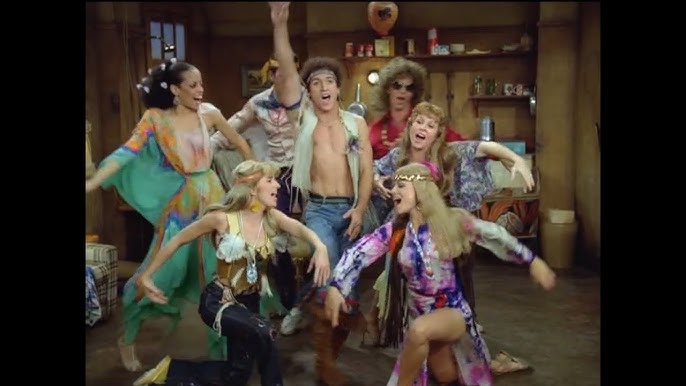
That absence is the honest ending. The show had always argued that the friendship was the permanent thing. Once Williams left, the machinery could continue, but permanence had been disproved.
The later reunion specials mattered because viewers wanted the title restored to two people. Seeing Marshall and Williams together again did not erase the difficult final season, but it returned the series to the image that belonged in memory.
From a Happy Days guest appearance to television’s top show, California and a final season missing half the title.
Laverne DeFazio and Shirley Feeney appear as tougher Milwaukee dates and immediately feel larger than the guest story.
The spin-off premieres January 27 and finishes the 1975–76 season ranked third.
The series reaches the top of the ratings in its second year.
Episodes such as “The Slow Child,” “The Robbery” and the Shotz talent shows deepen the ensemble.
Crossovers, military episodes, merchandise and the Lenny and the Squigtones album extend the characters beyond the apartment.
The cast relocates from Milwaukee to Burbank for season six.
Cindy Williams exits early in the eighth season and the series continues around Laverne.
“Here Today, Hair Tomorrow” closes the eight-season, 178-episode run on May 10.
The slapstick was huge. The achievement underneath it was bigger.
Laverne & Shirley still matters because it gave two working women the freedom to be ridiculous without making their independence ridiculous. They did not need perfect careers, tasteful apartments or inspirational speeches to justify being central.
The show preserved class in a way nostalgia often avoids. The Milwaukee years remembered the 1950s through factory uniforms, rent, neighborhood businesses and women whose ambitions had to survive a shift at the brewery.
It also made female friendship physically powerful. Laverne and Shirley carried each other, fought each other, lifted heavy objects badly and occupied the same comic territory men had long been allowed to dominate.
Penny Marshall’s later directing career changed Hollywood, while Cindy Williams remained linked to a character whose optimism never became weakness. Their later joint interview shows the real friendship still operating through interruptions, memory and laughter.
The series influenced every comedy that understood women could be messy, ambitious and loyal without becoming cautionary examples. The connection runs from roommate comedies to workplace ensembles and stories where friendship is the relationship that survives the romantic plot.
That legacy sits inside the larger story of how television families changed during the 1970s. Laverne and Shirley were not a traditional TV family, and that was exactly the point: two friends, a father, a landlord, a singer and two guys upstairs could create all the obligation, interference and loyalty of any household on television.
Laverne & Shirley became a ratings giant because Penny Marshall and Cindy Williams could make a room explode. It became a lasting show because the women inside that room never treated each other as disposable. The brewery, apartment and Milwaukee streets gave the comedy working-class weight. The theme gave it momentum. The friendship gave every fall a reason to stand up again.
Cast, episodes, Shotz Brewery, the theme song, California and Cindy Williams’s departure.
The sitcom followed Milwaukee roommates Laverne DeFazio and Shirley Feeney, who worked as bottle cappers at Shotz Brewery and tried to build bigger lives while surrounded by family, neighbors, bad dates and physical-comedy disasters.
The series ran for eight seasons on ABC from 1976 through 1983 and produced 178 episodes.
Yes. Laverne and Shirley first appeared on Happy Days before Garry Marshall, Lowell Ganz and Mark Rothman created the spin-off.
Penny Marshall played Laverne DeFazio and Cindy Williams played Shirley Feeney.
During the Milwaukee years, they worked as bottle cappers at the fictional Shotz Brewery. After the show moved to California, they worked at Bradburn’s Department Store.
Cyndi Grecco sang “Making Our Dreams Come True.” Charles Fox composed the music and Norman Gimbel wrote the lyrics.
The opening chant is “Schlemiel! Schlimazel! Hasenpfeffer Incorporated!” It became one of television’s most recognizable opening sounds.
The show changed its setting from Milwaukee to Burbank in season six to refresh the stories and move the characters into new jobs and show-business surroundings.
Williams left early in the eighth season after becoming pregnant and after a production dispute about how the series would accommodate her work.
“Here Today, Hair Tomorrow” aired May 10, 1983. It focused largely on Carmine pursuing a Broadway opportunity rather than providing a full reunion or farewell for Laverne and Shirley.
Television Academy interviews, awards records, Paley archive entries and episode guides.
From Milwaukee friendship to changing TV families and the decade’s biggest sitcoms.