Smells Like Gen X • Top Toys of 1984
Top 10 Toys of 1984: The Toys That Turned the Aisle Into a Franchise War
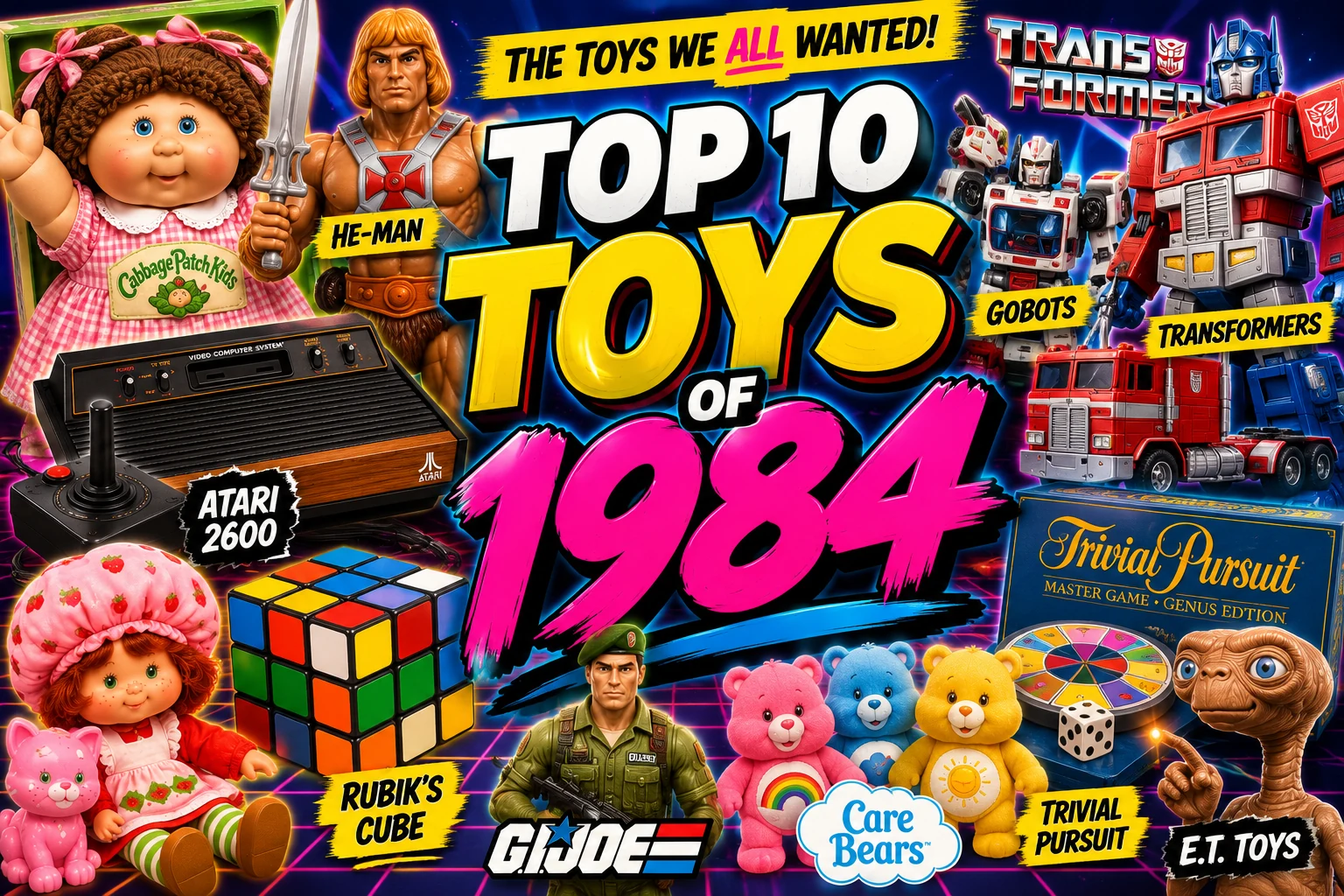
The top toys of 1984 were led by Cabbage Patch Kids, He-Man / Masters of the Universe, GoBots, Transformers, Trivial Pursuit, Atari 2600, Strawberry Shortcake, Care Bears, G.I. Joe, and Rubik’s Cube. These were the dolls, action figures, transforming robots, board games, video-game systems, plush characters, and puzzles that best capture the 1984 toy aisle.
The most popular toys of 1984 show the market splitting into organized camps. Cabbage Patch Kids still carried enormous holiday demand. He-Man and G.I. Joe expanded their action worlds. GoBots and Transformers turned mechanical change into the year’s most visible new toy battle. Trivial Pursuit pushed game-night competition into the same Christmas conversation as figures and dolls.
For Gen X, 1984 was the year the shelf stopped looking like a collection of unrelated products and started looking like a war between universes. Cartoons, commercials, character stories, accessories, vehicles, playsets, scarcity, and repeat purchases all worked together. The result was one of the most recognizable toy years of the entire decade.
Number OneCabbage Patch Kids
Breakout BattleGoBots vs. Transformers
Big GameTrivial Pursuit
Gen X Note:
1984 is the year the toy aisle stops feeling like a shelf and starts feeling like a war between universes.
Quick Answer
What Were the Most Popular Toys of 1984?
The most popular toys of 1984 included Cabbage Patch Kids, He-Man / Masters of the Universe,
GoBots, Transformers, Trivial Pursuit, Atari 2600,
Strawberry Shortcake, Care Bears, G.I. Joe, and Rubik’s Cube.
In this Smells Like Gen X ranking, Cabbage Patch Kids take the number-one spot
because the line remained the year’s strongest combination of Christmas demand, emotional attachment, retail pressure,
and cultural visibility after the explosive 1983 craze.
The Ground Rules
How We Ranked the Top Toys of 1984
This is a transparent editorial ranking rather than a made-up official sales chart. No single complete public U.S.
source ranks every doll, action figure, board game, puzzle, plush toy, and video-game product sold in 1984 on one
comparable list. The countdown therefore weighs several kinds of evidence and explains the limits instead of pretending
the toy industry left behind one perfect spreadsheet.
Retail and Christmas demand
Holiday visibility, catalog presence, store demand, scarcity, advertising, and surviving accounts of what families
were trying to buy all matter. That gives Cabbage Patch Kids an advantage because
their 1983 frenzy carried into 1984 as a genuine retail force rather than a one-week novelty.
Cultural impact during 1984
The ranking favors toys that became part of the year’s larger conversation. Transformers
and GoBots turned robot conversion into a visible shelf war. He-Man represented the
fantasy-action empire at full strength. Trivial Pursuit became a social craze well beyond the children’s aisle.
Influence on the decade ahead
Some 1984 toys predicted where the market was going: cartoons and commercials supporting expandable worlds,
mechanical gimmicks tied to character mythology, increasingly segmented brands, and toy lines designed to make
one purchase feel incomplete without the next.
Honest limits of the evidence
“Popular,” “best-selling,” “hottest Christmas toy,” and “most influential” are not always identical. Exact totals
are often proprietary, category-specific, incomplete, or reported inconsistently. The order reflects the strongest
overall 1984 case, not false precision.
Why this matters:
The methodology keeps the page useful. It separates a reasoned year-specific ranking from a copied nostalgia list
that never explains why one toy appears above another.
The Shelf War Gets Organized
Why 1984 Changed Toy Culture
Transforming robots became the year’s new battlefield.
GoBots and Transformers made mechanical change the demonstration every kid
wanted to see. The toy itself performed a trick, while cartoons, factions, names, and character stories turned
that trick into an expandable world. The robot war showed how quickly one strong play pattern could reorganize an aisle.
Action figures became complete entertainment systems.
He-Man and G.I. Joe sold much more than individual figures.
They offered heroes, villains, teams, vehicles, creatures, bases, weapons, and missions. The
80s Action Figure Wars were now driven by how effectively each brand kept children
inside its world.
Soft toys proved they could survive the machine invasion.
Cabbage Patch Kids, Care Bears, and Strawberry Shortcake held major ground even as
robots and action lines grew louder. Adoption stories, names, symbols, scents, colors, and emotional attachment
created collection systems every bit as powerful as blasters and transforming vehicles.
Game night entered the same holiday pressure cooker.
Trivial Pursuit became a mass-market phenomenon because it turned knowledge into
social performance. Its place in this countdown shows that the biggest Christmas products were not limited to
children’s character lines. In 1984, the whole family room was part of the toy market.
The Main Event
The Top 10 Toys of 1984, Ranked
#10 — Rubik’s Cube
Toy TypePuzzle toy
Brand LaneChallenge icon
1984 Rank#10
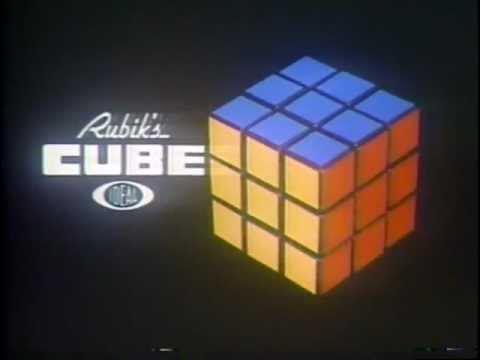
Rubik’s Cube closes the 1984 list because even after its peak craze years, it still functions as one of the most durable symbols of early-80s toy culture. By now, the Cube is no longer the headline-stealing novelty it was in 1981 and 1982. What makes it interesting in 1984 is that it survives the shift from mania to permanence. It has become part of the decade’s furniture — a recognizable object that still signals challenge, cool, and slightly nerdy social prestige.
That durability matters in a year when the toy aisle is increasingly dominated by character systems, emotional branding, and media-backed product lines. Rubik’s Cube has almost none of that. It is abstract, mechanical, and stubbornly non-narrative. And yet it still holds a place because its appeal rests on something harder to replace: the thrill of a problem that won’t flatter you. In a market full of toys designed to welcome kids in, the Cube still dares them to prove themselves.
By 1984, the Cube also feels like one of the last big survivors of a slightly earlier toy logic — the kind where a single brilliant object could become a cultural obsession without needing a cartoon, a plush line, a mythology, or a battery of licensed extensions. That makes it stand out even more inside this year’s heavily franchised environment.
For Gen X, Rubik’s Cube in 1984 feels less like a fad and more like a relic that never stopped being cool. It had already conquered the culture once. Hanging on after the conquest is part of what makes it memorable.
Rubik’s Cube had already survived the first wave of mania. The full Rubik’s Cube 1980s craze follows the puzzle from global obsession to permanent pop-culture icon.
Fun Fact / Why It Still Matters
Rubik’s Cube still made the list because it outlived its own craze and became part of the decade’s visual language.
#9 — G.I. Joe
Toy TypeAction figure line
Brand LaneStructured action universe
1984 Rank#9
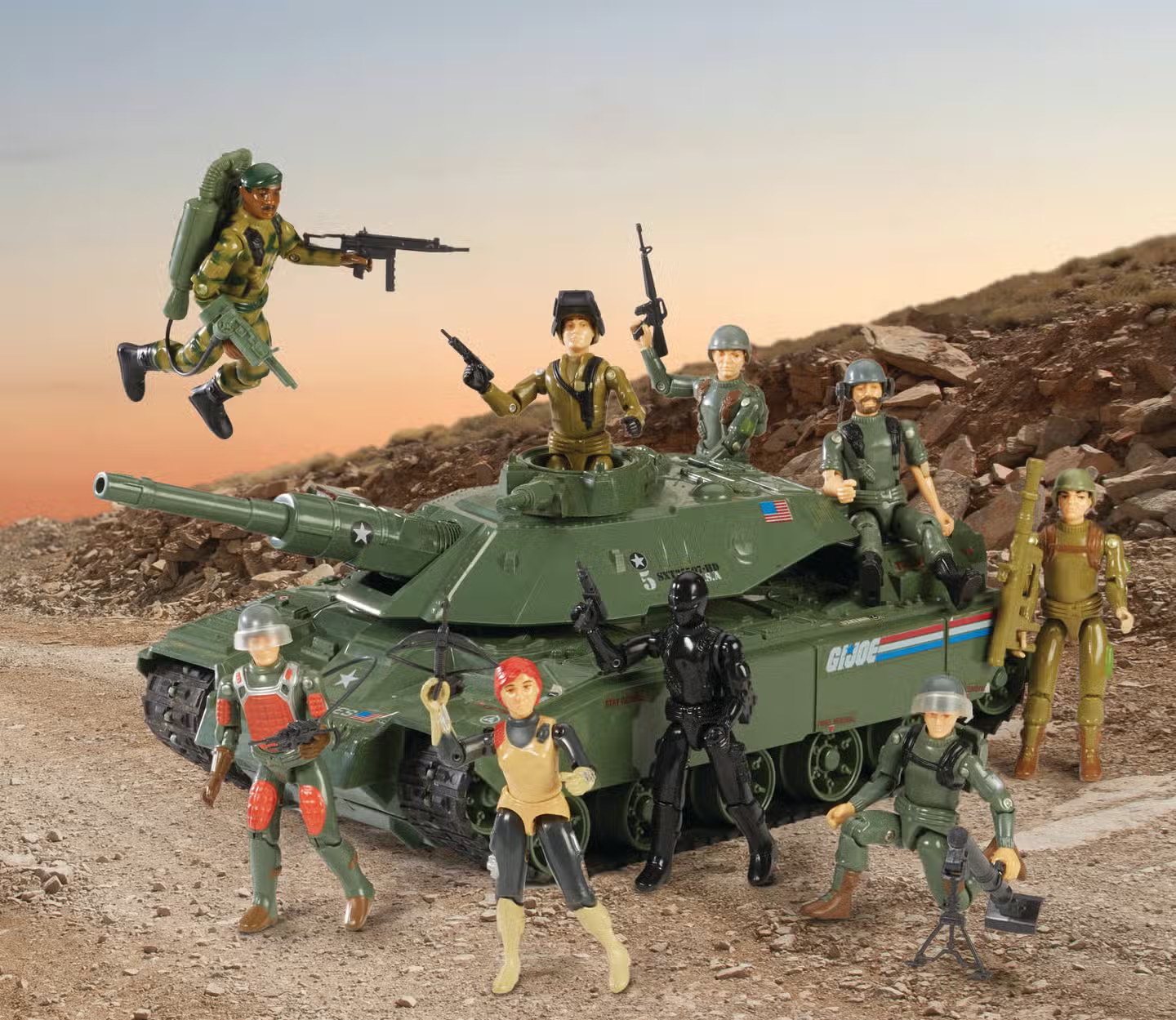
G.I. Joe holds the number nine position because 1984 is a year where the line’s core strength becomes impossible to miss: it makes military-flavored action play feel organized, expandable, and addictive. In earlier years, the line’s importance came from helping re-establish the action figure as a modern 80s category. By 1984, the more interesting story is how well it functions as an ongoing system of accumulation.
The line gives kids a reason to think in terms of teams, roles, specialties, and gear. That sounds simple, but it is one of the decade’s smartest play patterns. You are not just buying a cool figure. You are buying an operative. One figure suggests another. Another suggests a vehicle. A vehicle suggests a mission. That layered expansion model is one of the reasons G.I. Joe remained powerful even as more flamboyant competitors started crowding the aisle.
It also helps that G.I. Joe offered a different emotional texture than the fantasy-heavy and robot-heavy lines around it. It was less about myth and more about tactical organization. That gave it a slightly older, sharper feeling. The brand was not simply loud. It was procedural. Kids could build scenarios with a sense of structure, which made the line especially durable for those who liked ordered play instead of pure chaos.
For Gen X, G.I. Joe in 1984 feels like one of the cleanest examples of the toy aisle learning how to turn discipline into desire. It was not the most outrageous brand on the shelf, but it was one of the most efficient at making one purchase feel like the beginning of a larger commitment.
G.I. Joe’s figures, file cards, vehicles, and Cobra mythology are covered in the complete G.I. Joe toys of the 80s guide.
#8 — Care Bears
Toy TypePlush character line
Brand LaneEmotion-coded plush universe
1984 Rank#8
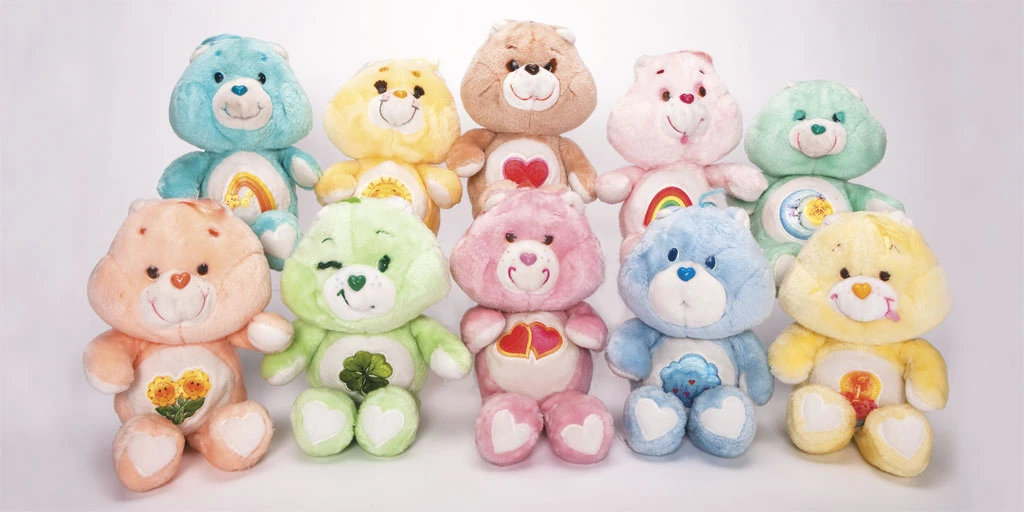
Care Bears remain in the 1984 top 10 because this is the year the brand proves it is not just a burst of plush sweetness. It is infrastructure. In 1983, the line’s rise was one of the year’s biggest stories because it showed how powerfully comfort, color, and emotional symbolism could sell. In 1984, the more revealing thing is how well the brand holds its ground once the aisle gets even more crowded with robots, fantasy warriors, and giant toy-line campaigns.
What keeps Care Bears strong is clarity. Each character communicates something instantly. The toys are approachable, giftable, and emotionally legible in a way that many harder-edged brands are not. That made the line enormously useful in the broader 1984 holiday ecosystem. Parents understood it. Kids bonded with favorites. The line offered collectability without intimidation, and that is a very valuable combination.
The brand also fits into 1984 as a counterweight to the year’s more mechanical and combative energy. Transformers and GoBots turn the aisle into a machine war. He-Man keeps fantasy oversized. G.I. Joe remains tactical. Care Bears hold the softer flank while still operating like a real commercial juggernaut. They were not a niche comfort brand. They were one of the major ways the decade monetized feelings.
For Gen X, Care Bears in 1984 feel like proof that the 80s toy aisle had no problem industrializing tenderness as long as it could be color-coded, character-driven, and turned into a collection.
Care Bears belong to the softer but equally ruthless side of the decade explored in 80s Dolls, Plush & Pet Toy Chaos.
Fun Fact / Why It Still Matters
Care Bears stayed hot because they made emotional identity easy to buy, gift, and collect.
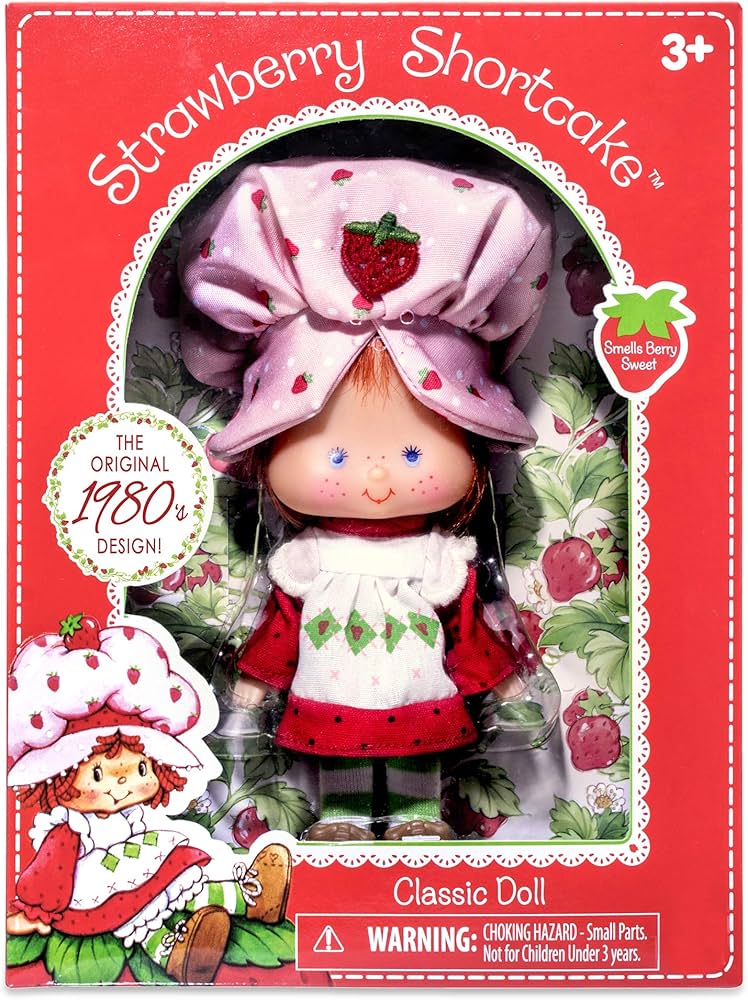
#7 — Strawberry Shortcake
Toy TypeScented doll line
Brand LaneThemed doll universe
1984 Rank#7
Strawberry Shortcake lands at number seven because by 1984 the brand has entered a very interesting phase of toy success: it no longer needs to be the newest thing in the room to remain powerful. In earlier years, the line’s rise and expansion were major parts of the story. Now the bigger takeaway is its stability. In a market increasingly driven by loud launches and high-concept gimmicks, Strawberry Shortcake still holds position because its world is already so complete.
That completeness matters. The brand has a visual language, an emotional tone, a sensory identity, and a cast structure that continues to make sense no matter how crowded the shelf gets. It does not need to out-shout the robot lines or compete with the scale of Cabbage Patch mania. It survives through consistency. That kind of internal coherence is one of the most underrated strengths any 80s toy line could have.
There is also something revealing about how the line ages inside the decade. Strawberry Shortcake still represents softness and sweetness, but by 1984 those qualities read less like novelty and more like comfort-brand familiarity. The dolls are not just a hot product anymore. They are part of the emotional map of the toy aisle, one of the places shoppers know they can still find a fully formed, dependable world.
For Gen X, Strawberry Shortcake in 1984 feels like a brand that had already earned its place. It was not fighting for recognition. It was protecting territory — and doing a very good job of it.
The scents, friends, pets, colors, and comfort-brand logic behind Strawberry Shortcake appear in the full 80s dolls and plush guide.
Fun Fact / Why It Still Matters
Strawberry Shortcake stayed strong because it was no longer just trendy — it had become one of the aisle’s most dependable full-world brands.
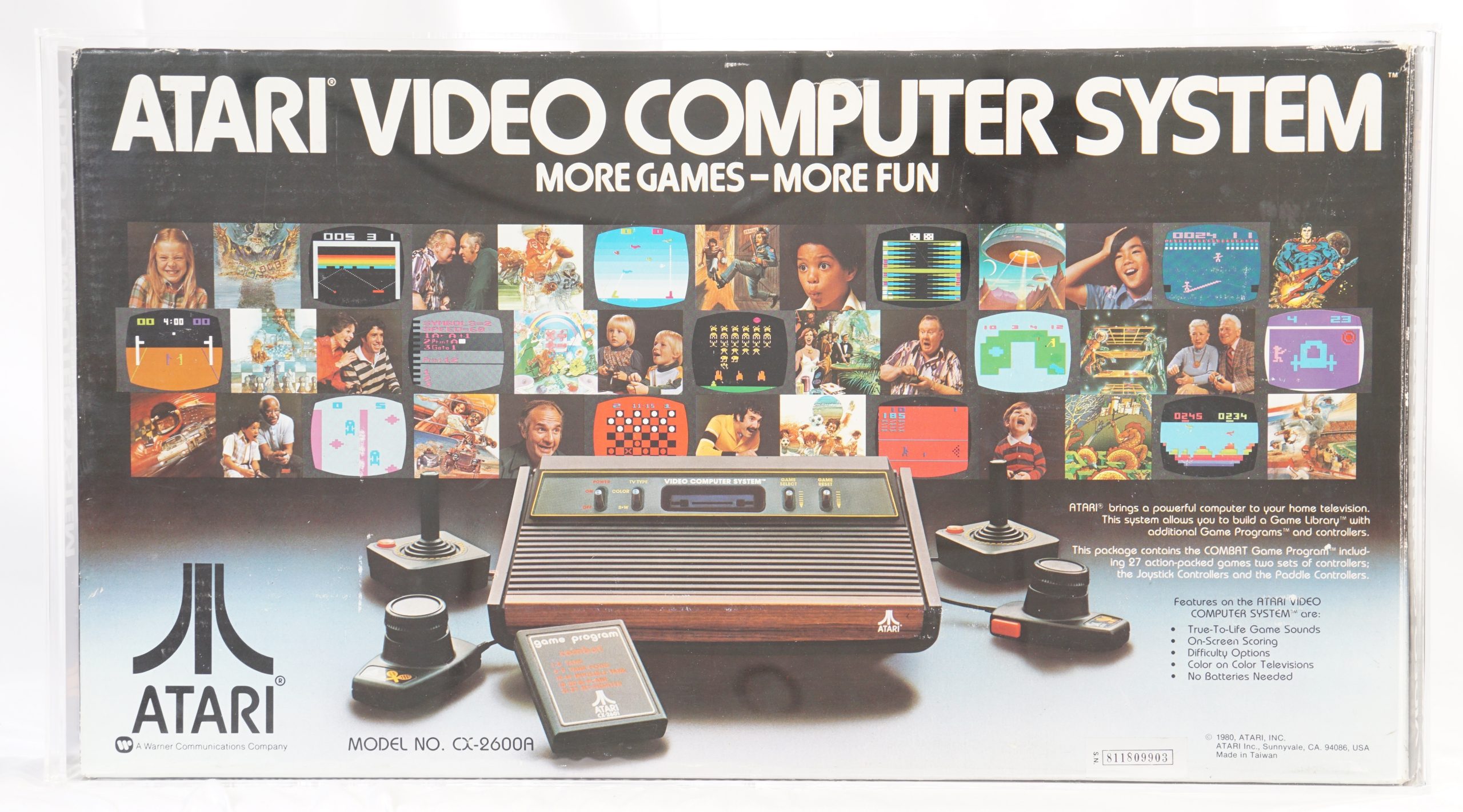
#6 — Atari 2600
Toy TypeHome video game console
MakerAtari
1984 Rank#6
Atari 2600 comes in at number six because 1984 is one of those years where its importance lies partly in momentum and partly in inertia. The system is no longer the unquestioned face of a bright new future the way it was a few years earlier. Instead, it occupies a more complicated position: still recognizable, still culturally central, still powerful enough to matter, but now doing so in a more crowded and less innocent environment.
That makes Atari particularly interesting as a 1984 toy. It is a reminder that categories don’t disappear the moment their glow changes. Home gaming still matters immensely, and Atari still has enough brand presence and installed familiarity to remain part of the top conversation. The machine continues to represent the basic promise that made it huge in the first place: one piece of hardware that keeps generating different experiences. Even when the cultural context shifts, that promise is still strong.
By 1984, though, Atari also reads more like a legacy power than a total disruptor. That gives it a different emotional flavor in the countdown. It is less the thrilling new machine and more the still-significant standard many households already understand. In a decade obsessed with novelty, survival at that level counts for a lot.
For Gen X, Atari in 1984 feels like one of the first examples of a product that had already changed childhood so completely that even its “later” phase remained highly visible. It might not have been the freshest object in the room anymore, but it still shaped the room.
Atari’s place in the family room connects directly to the larger history of 80s video game toys and home consoles.
Fun Fact / Why It Still Matters
Atari 2600 remained important because even after its pure peak, it still defined what many families thought
gaming at home was supposed to be.
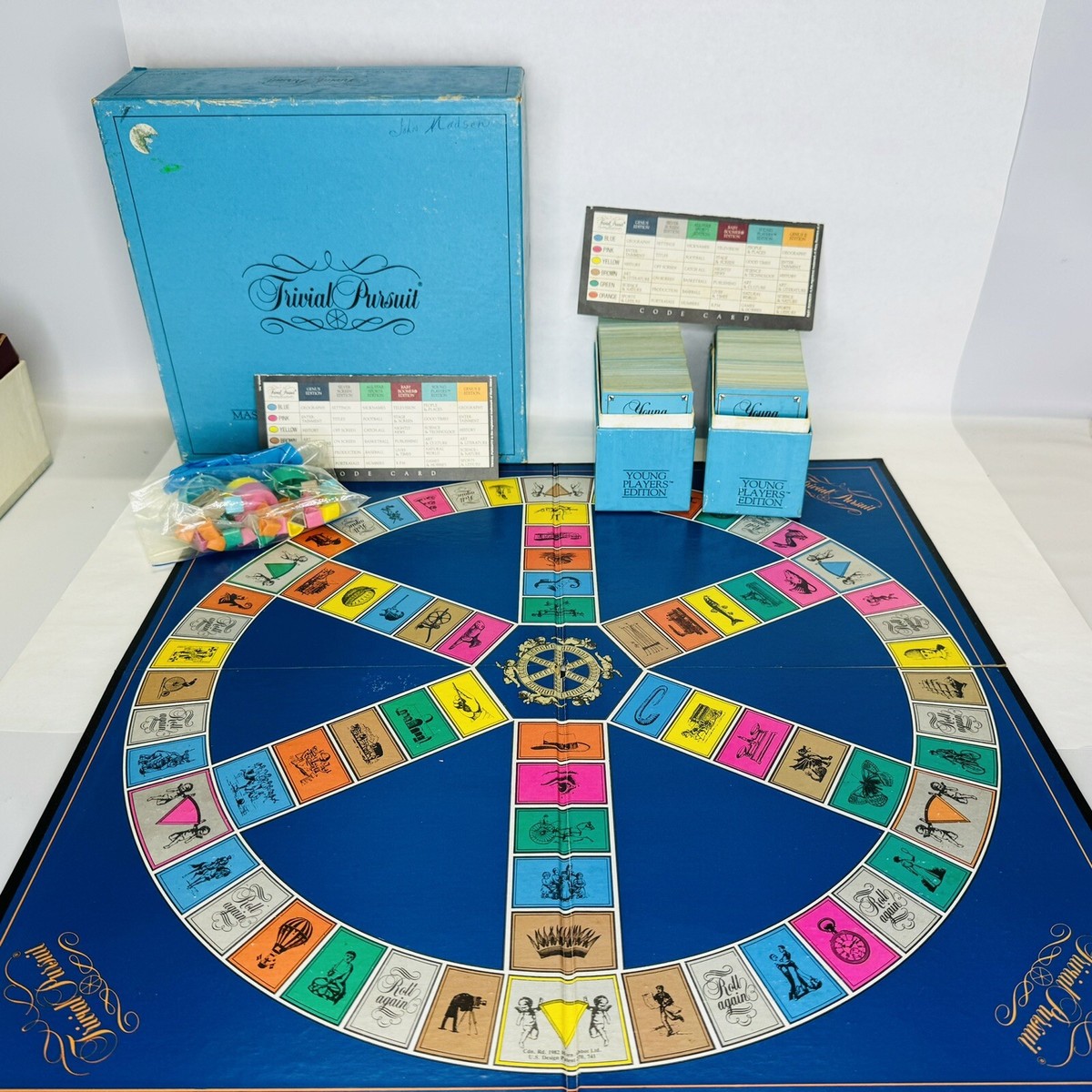
#5 — Trivial Pursuit
Toy TypeBoard game
Brand LaneMass-market quiz craze
1984 Rank#5
Trivial Pursuit lands at number five because 1984 is one of the clearest years where a board game crashes into the larger toy conversation with the force of a mainstream event. That is important. This is not simply a nice family game doing good seasonal business. It is a cultural craze that spilled into living rooms, parties, adult conversations, and holiday shopping in a way that made it feel much bigger than the category it came from.
What gives Trivial Pursuit its power is the way it turns knowledge into performance. A lot of games are about luck, movement, or direct competition. Trivial Pursuit frames social interaction around recall, identity, and the pleasure of knowing obscure things. That gave it a distinctly 80s kind of prestige. It was a party object, but also a status object. Owning it said something about the kind of social environment you imagined for yourself.
It also helps define 1984 because it broadens what “hot toy year” can mean. Not every important product had to be for young kids alone. The holiday ecosystem was increasingly blended, and Trivial Pursuit proved that game fever could take up just as much oxygen as dolls, action figures, or robot toys. In a way, it made the whole season feel more cross-generational.
For Gen X, Trivial Pursuit in 1984 feels like one of those products that made the house itself feel different. It brought a particular kind of smart-competitive energy into family rooms and gatherings. That is why it belongs here. It changed the shape of leisure, not just the shape of the shelf.
Trivial Pursuit’s 1984 breakout sits inside the larger world of 80s board games and family-room toys.
Fun Fact / Why It Still Matters
Trivial Pursuit broke through because it made knowledge competitive, social, and strangely glamorous all at once.
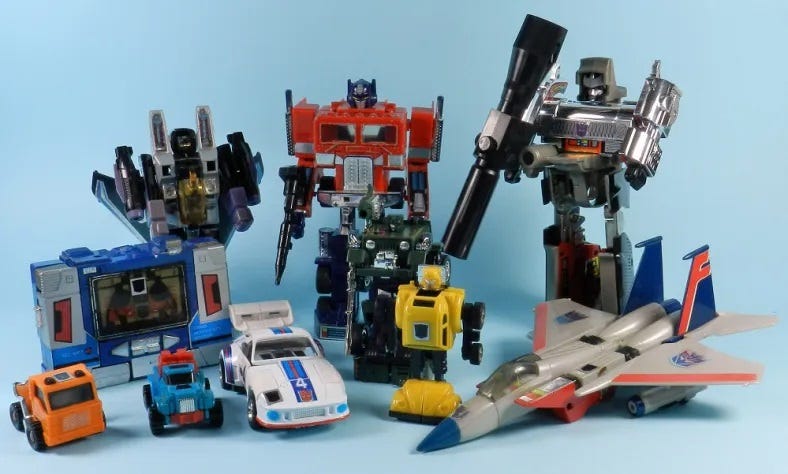
#4 — Transformers
Toy TypeTransforming robot line
Brand LaneRobot-franchise explosion
1984 Rank#4
Transformers hit number four because 1984 is one of those years where a toy line arrives already feeling like a full event. The core gimmick is so good it almost sounds unfair: vehicles and machines that become robots. That concept alone would have been enough to generate attention. But what really makes Transformers matter is how quickly the line turns that gimmick into a whole universe of allegiance, identity, and repeat purchase logic.
The brilliance of the line is that transformation itself becomes the selling experience. Kids are not just receiving a character. They are participating in the trick. The toy changes in their hands. That process turns ownership into performance, and performance into replay value. In an era increasingly defined by strong brand identities, Transformers had the added advantage of being mechanically satisfying on top of all the mythology and visual cool.
It also captures something very 1984 about the broader culture: machines are getting friendlier, shinier, and more personal in the imagination. The future looks less abstract and more toyetic. Transformers embody that shift beautifully. They are technology translated into character, which is a very powerful 80s formula.
For Gen X, Transformers in 1984 feel like the robot line that understood how to make hardware emotional. Cars and machines weren’t just things anymore. They were personalities waiting to unfold. That’s a huge part of why the line hit so hard and so fast.
The full Transformers toys of the 80s G1 guide follows the Autobots, Decepticons, cartoons, characters, vehicles, and transforming gimmicks that began taking over in 1984.
Fun Fact / Why It Still Matters
Transformers mattered because they turned mechanical change itself into the toy’s main source of wonder.
#3 — GoBots
Toy TypeTransforming robot line
Brand LaneFast-moving robot craze
1984 Rank#3
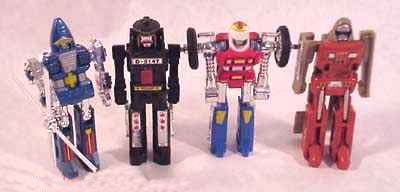
GoBots take the number three slot because 1984 is one of the clearest years where speed matters. The line hit the market at exactly the right cultural moment, riding the new robot-conversion appetite with an immediacy that made it impossible to ignore. If Transformers represent the richer long-game mythology of the machine-war era, GoBots represent something equally important: first-wave heat, clean transformation appeal, and the ability to look instantly exciting on a shelf.
What makes GoBots fascinating is how effectively they capture the mid-80s appetite for toy concepts that are easy to understand and satisfying to demonstrate. A toy that changes form is not just a product. It is a pitch kids can give each other in seconds. “It turns into something else” is one of the strongest toy hooks ever invented, and GoBots made very efficient use of it.
They also help define 1984 because they show how fast an aisle can reorganize itself around a new dominant idea. Once transforming machine toys became hot, the whole landscape started shifting in response. GoBots benefited from that acceleration and helped intensify it. They turned the shelf into a mechanical contest zone, where form change itself was part of the glamour.
For Gen X, GoBots in 1984 feel like the pure velocity version of the robot boom. They remind you that the 80s toy market could move fast, flood hard, and turn one excellent gimmick into a full-blown retail wave before anyone had fully processed what was happening.
GoBots were part of the same commercial and cartoon machinery explored in Cartoons Became Toy Catalogs.
Fun Fact / Why It Still Matters
GoBots mattered because they proved that in the right year, a strong gimmick could become an entire shelf war almost overnight.
#2 — He-Man / Masters of the Universe
Toy TypeAction figure line
Brand LaneFantasy-action powerhouse
1984 Rank#2
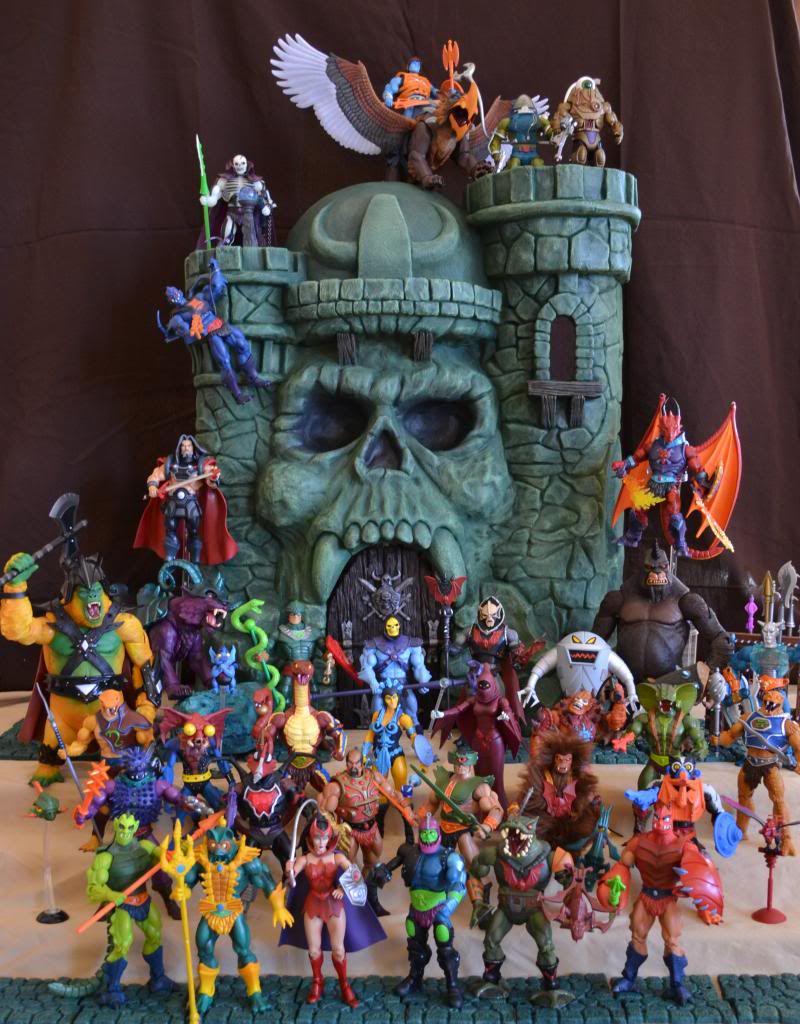
He-Man / Masters of the Universe rise to number two because 1984 is the year the line stops looking like just a successful fantasy toy concept and starts reading like a full-scale franchise machine. The exaggerated bodies, bright color design, and oversized personalities are still part of the appeal, but by now the larger significance is how effectively the brand controls its own world. It is not only selling figures. It is selling belonging inside a universe with its own logic, aesthetics, and escalating cast.
That universe thinking is one of the biggest reasons the line hits so hard in 1984. The toy aisle is becoming increasingly organized around systems that encourage ongoing loyalty rather than one-off purchases. He-Man excels at that because every figure feels like another piece of a realm rather than an isolated product. Heroes, villains, creatures, vehicles, playsets — it all implies expansion. Kids are not just collecting toys. They are assembling a mythology in plastic form.
The line also benefits from its unapologetic excess. In a year full of strong competitors, He-Man still feels like it has its own unmistakable flavor: barbaric, cosmic, theatrical, and just slightly absurd in the most lovable way. That tonal certainty makes the brand sticky. It is not subtle, and subtlety would have hurt it.
For Gen X, He-Man in 1984 feels like one of the purest expressions of what the decade wanted from toy fantasy: bigger muscles, louder villains, bolder colors, and a shelf presence that made everything else look a little restrained by comparison.
The complete He-Man and Masters of the Universe toys guide covers the figures, Castle Grayskull, Snake Mountain, vehicles, creatures, cartoons, and villains behind the fantasy empire.
Fun Fact / Why It Still Matters
He-Man stayed near the top because it turned fantasy action into a fully expandable brand system instead of just a figure line.
#1 — Cabbage Patch Kids
Toy TypeAdoptable doll line
Brand LaneHoliday demand juggernaut
1984 Rank#1
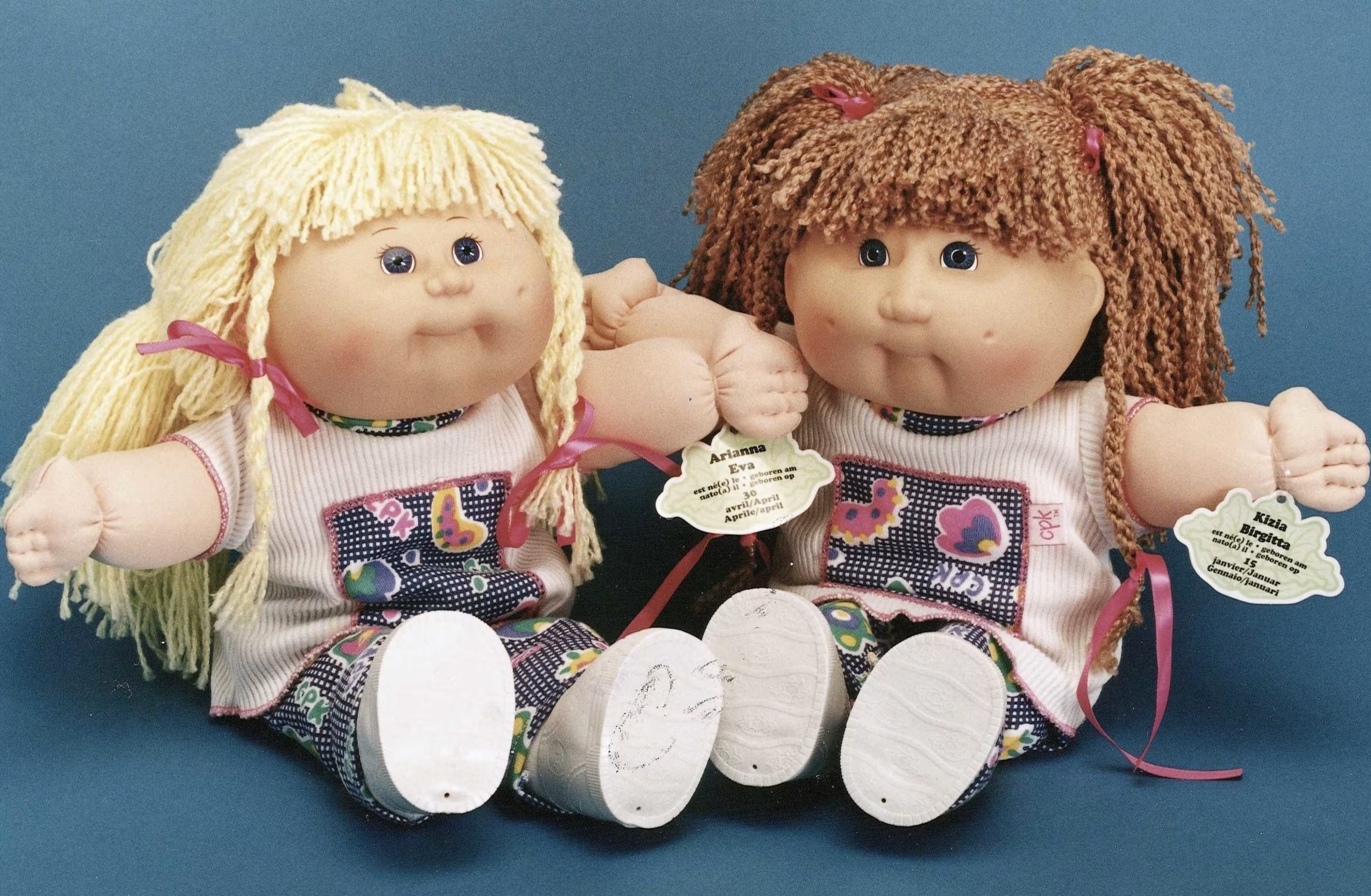
Cabbage Patch Kids stay number one in 1984 because once a toy line achieves the kind of emotional and retail intensity they generated, it does not immediately vanish just because a new holiday season arrives. What changes here is the nature of the dominance. In 1983, the story was chaos — a feverish explosion of demand strong enough to turn shopping itself into spectacle. In 1984, the more revealing story is consolidation. The brand is no longer only a surprise phenomenon. It is now a reigning force trying to prove it can hold the throne.
That makes 1984 Cabbage Patch Kids especially interesting. The line benefits from all the momentum built the year before, but it also demonstrates how thoroughly its emotional framing still works. These are not sold merely as dolls. They are pitched as quasi-personal attachments, objects children feel they should bond with rather than simply own. That distinction remains enormously powerful because it keeps the purchase emotionally inflated.
The brand also continues to symbolize one of the most important lessons of the 80s toy market: scarcity plus emotional identification is almost unbeatable. Once a toy line gets parents and children alike to believe it is more than an object, the commercial consequences can be enormous. Cabbage Patch Kids remain the clearest example of that logic in action.
For Gen X, Cabbage Patch Kids in 1984 feel like the toy phenomenon proving it had real staying power. The panic of 1983 may be the headline memory, but the fact that the line still rules the next year says even more about how completely it had seized the culture.
The full Cabbage Patch Kids toy craze explains the adoption certificates, shortages, store fights, emotional marketing, and collector legacy behind the line’s extraordinary staying power.
Fun Fact / Why It Still Matters
Cabbage Patch Kids stayed number one because the brand wasn’t just popular — it had successfully convinced people the dolls were
emotionally special.
The Toy Box Afterlife
Collecting Toys From 1984 Today
Toys from 1984 can carry real collector interest, but age alone does not make an item rare or valuable. Condition,
completeness, edition, packaging, working electronics, original accessories, and actual buyer demand matter far more
than an optimistic asking price.
Dolls and plush need close condition checks.
Cabbage Patch Kids can vary by manufacturer, head mold, factory, signature, clothing, papers, box, and body condition.
Care Bears and Strawberry Shortcake pieces should be checked for odors, staining, fading, hair damage, missing outfits,
replaced accessories, and fabric or vinyl deterioration.
Action figures depend on small original parts.
He-Man and G.I. Joe figures may be missing weapons, armor, file cards, rubber bands, stands, stickers, removable parts,
vehicle pieces, or edition-specific accessories. A loose figure can look complete while missing the one piece that makes
a major difference to collectors.
Transforming robots must be checked for breakage.
Transformers and GoBots should be inspected for stress marks, broken hinges, loose joints, missing weapons, stickers,
chrome wear, yellowing, replaced parts, and incomplete transformation mechanisms. Repeated changing between modes created
exactly the kind of wear collectors now have to study.
Sold prices matter more than headline listings.
Compare completed sales for the same version, condition, and completeness. The guide to
valuable 80s toys worth money today explains how to separate real demand from a seller
putting a fantasy number on a dusty box and hoping nostalgia does the rest.
Same Year, Different Aisle
Keep Rewinding 1984
The toy aisle was only one part of 1984. Prince, Tina Turner, Van Halen, Madonna, and giant soundtrack hits owned radio
and MTV. Ghostbusters, Beverly Hills Cop, and Gremlins packed theaters. Network television
still controlled the living room, while Trapper Keepers, sticker books, Madonna-inspired fashion, parachute pants,
and mall culture made the year look as loud as the shelves.
Every Number One Hit of 1984
The Billboard chart-toppers from the year pop, rock, R&B, and movie soundtracks all went enormous.
Top 10 Songs of 1984
The year-end hits that made 1984 sound like MTV polish, arena hooks, synths, and soundtrack domination.
Top TV Shows of 1984
The Nielsen-ranked programs shaping the living room and the commercial breaks between them.
Top 10 Movies of 1984
The box-office year of Ghostbusters, Beverly Hills Cop, Gremlins, and peak multiplex chaos.
Biggest Fads of 1984
Madonna style, Trapper Keepers, sticker books, Miami Vice fashion, parachute pants, and teen slang.
Explore the 80s Hub
Music, movies, television, toys, commercials, videos, and Gen X nostalgia across the decade.
Watch the Hype Machine
Watch the Toy Commercials Behind the 1984 Wish List
The 1984 toy aisle was built for commercial-break warfare. Cabbage Patch Kids needed adoption stories and emotional
urgency. He-Man and G.I. Joe needed heroes, villains, vehicles, and missions. Transformers and GoBots needed a camera
close enough to prove the robots really changed shape. Care Bears sold color-coded personalities, while Atari still
had to make the family television feel like the center of the future.
The 80s Toy Commercials and Videos archive preserves that ad-break machinery.
It also shows why cartoons became toy catalogs: the commercial no longer sold only
an object. It sold a role inside a world the child already recognized.
The Big Picture
What the Top Toys of 1984 Reveal About the 80s
The top toys of 1984 show the decade reaching full franchise consciousness. The categories are no longer merely
coexisting. They are colliding. Doll and plush brands still command enormous emotional power.
Action-figure universes keep expanding through characters, factions, vehicles, and playsets.
Transforming robots introduce a mechanical gimmick strong enough to become a mythology.
Home gaming remains part of family life, while Trivial Pursuit
proves a board game can become one of the year’s defining social products.
That is what separates 1984 from 1983. The earlier year is remembered for breakthrough frenzy, especially the
Cabbage Patch Kids shopping panic. The next year is about consolidation and counterattack.
Cabbage Patch Kids hold the crown. He-Man looks like a fantasy empire.
GoBots and Transformers turn transformation into a shelf war.
G.I. Joe keeps building missions and teams. Care Bears and Strawberry Shortcake prove
softness can hold territory even while machines invade.
For Gen X, 1984 is one of the clearest years where the toy aisle starts to resemble the media culture surrounding it:
segmented, branded, commercial-driven, character-heavy, and designed to keep you inside a system after the first purchase.
The toys were fun. The machinery behind them was already learning how to be unstoppable.
The Full Decade
Explore the Top Toys of Every Year in the 80s
Top Toys of 1984: Frequently Asked Questions
What were the most popular toys of 1984?
The most popular toys of 1984 included Cabbage Patch Kids, He-Man / Masters of the Universe, GoBots, Transformers, Trivial Pursuit, Atari 2600, Strawberry Shortcake, Care Bears, G.I. Joe, and Rubik’s Cube.
What was the biggest toy of 1984?
Cabbage Patch Kids take the number-one spot in this ranking because the line remained the strongest combination of holiday demand, emotional attachment, retail pressure, and cultural visibility.
What were the hottest Christmas toys of 1984?
The hottest Christmas toys of 1984 included Cabbage Patch Kids, He-Man, GoBots, Transformers, Trivial Pursuit, Atari 2600, Strawberry Shortcake, Care Bears, G.I. Joe, and Rubik’s Cube.
Did Transformers come out in 1984?
Transformers entered the U.S. toy market in 1984 and quickly became one of the year’s defining new toy lines. The complete Transformers G1 toys guide follows the Autobots, Decepticons, cartoons, characters, and transforming vehicles that built the franchise.
Why are GoBots and Transformers both on the list?
Because 1984 was the defining first-wave robot-conversion battle of the decade. GoBots captured fast early heat, while Transformers paired transformation with a larger mythology, factions, characters, and long-term franchise power.
Why is He-Man ranked above Transformers?
He-Man / Masters of the Universe was already a deeply established fantasy-action system in 1984, with a large cast, vehicles, creatures, playsets, cartoons, and enormous shelf presence. Transformers had tremendous momentum, but He-Man entered the year with a more fully entrenched empire.
Why is Trivial Pursuit included in a toy countdown?
Trivial Pursuit became much bigger than a normal board-game success story. It was a mass-market social craze, a major holiday gift, and one of the products that most clearly changed family-room leisure in 1984.
Why is Atari 2600 still ranked in 1984?
Atari 2600 remained one of the most recognizable objects in home gaming. Even after its brightest breakthrough years, it still shaped what many families thought a video-game system was supposed to be.
Were Cabbage Patch Kids still popular in 1984?
Yes. The most famous shopping frenzy erupted in 1983, but the brand remained a major retail and cultural force in 1984. Its staying power is part of why it ranks first here.
Was G.I. Joe popular in 1984?
Yes. G.I. Joe was growing into one of the decade’s most important action-figure systems, using characters, teams, file cards, weapons, vehicles, Cobra, cartoons, and mission-based play to encourage ongoing collecting.
Why does Rubik’s Cube still appear in 1984?
Because by 1984 Rubik’s Cube had moved beyond peak fad status and become a permanent symbol of early-80s challenge culture. It remained recognizable, playable, frustrating, and culturally embedded.
Where can I watch commercials for 1984 toys?
Start with the 80s Toy Commercials & Videos archive. It includes vintage ads connected to Cabbage Patch Kids, He-Man, Transformers, GoBots, G.I. Joe, Care Bears, Atari 2600, and more.
Are toys from 1984 valuable today?
Some can be, but value depends on the exact version, condition, completeness, original accessories, packaging, authenticity, rarity, and current demand. Compare verified sold prices rather than unsold asking prices.
Was there an official top-10 toy chart for 1984?
No single complete public U.S. chart ranks every major toy category for 1984. This page uses a transparent editorial method based on holiday demand, retail visibility, advertising, cultural impact, brand momentum, and surviving evidence.
What made the 1984 toy aisle different from 1983?
1983 is remembered for breakthrough frenzy, especially Cabbage Patch Kids. In 1984, the market became more openly competitive: established brands defended territory while Transformers and GoBots launched a new robot war.