Top Toys of 1983: Cabbage Patch Kids, Atari, Care Bears and Christmas Chaos

Top Toys of 1983: Cabbage Patch Kids, Atari, Care Bears and Christmas Chaos
Smells Like Gen X • The Biggest Toys of 1983

Top 10 Toys of 1983: The Christmas Toys That Caused Chaos

The top toys of 1983 capture the moment the 80s toy aisle stopped being merely competitive and became a full public spectacle. Cabbage Patch Kids created holiday panic. Care Bears turned emotion into a collectible plush system. He-Man and G.I. Joe accelerated the action-figure arms race. Atari remained a living-room standard, while Rubik’s Cube, Strawberry Shortcake, Smurfs, Simon, and Speak & Spell proved older hits could still survive an increasingly crowded market.

Quick Answer

What Were the Most Popular Toys of 1983?

The most popular toys of 1983 included Cabbage Patch Kids, Atari 2600, Care Bears, Rubik’s Cube, Strawberry Shortcake, He-Man and the Masters of the Universe, Smurfs, G.I. Joe, Simon, and Speak & Spell. Cabbage Patch Kids were the year’s defining Christmas phenomenon, creating shortages, media coverage, store fights, and a level of holiday demand that permanently changed how people remember 80s toy crazes.

Top 10 Toys of 1983 at a Glance

  1. #1Cabbage Patch KidsThe Christmas frenzy that defined the year
  2. #2Atari 2600The living-room gaming standard
  3. #3Care BearsEmotion-coded plush becomes a power category
  4. #4Rubik’s CubeThe puzzle craze becomes an icon
  5. #5Strawberry ShortcakeThe sensory doll empire holds strong
  6. #6He-Man / Masters of the UniverseFantasy action explodes
  7. #7SmurfsCartoon collectibles keep multiplying
  8. #8G.I. JoeThe action-figure system expands
  9. #9SimonThe electronic memory challenge survives
  10. #10Speak & SpellEducational electronics remain relevant
How the List Was Built

How We Ranked the Top Toys of 1983

Retail and Christmas demand

The ranking weighs holiday visibility, store demand, catalog and advertising presence, media coverage, and surviving accounts of which toys families were actively trying to buy. In 1983, scarcity and public shopping behavior matter especially because the Cabbage Patch Kids frenzy became part of the year’s history.

Cultural impact during the year

Some toys became larger than their category. Cabbage Patch Kids moved into news coverage and national conversation. Atari changed household routines. Care Bears made emotion collectible. He-Man and G.I. Joe made toy worlds feel expandable, while Rubik’s Cube remained a recognizable challenge far beyond the toy aisle.

Influence on the decade ahead

The ranking considers what each toy predicted. Adoption-style storytelling and scarcity changed doll marketing. Cartoon-backed action figures built factions, vehicles, and repeat purchases. Character plush expanded through colors and personalities. Home gaming remained a major family-room category even as the market began to wobble.

Honest limits of the evidence

No single complete public U.S. chart ranks every toy sold in 1983. Exact totals are proprietary, incomplete, category-specific, or reported inconsistently. This is a transparent editorial ranking—not a fake precision exercise pretending every manufacturer preserved matching sales spreadsheets.

Why this matters: “Popular,” “best-selling,” “hottest,” and “most influential” are not always identical. Explaining the method makes the ranking more useful than a copied list with no evidence or reasoning.
Christmas Becomes a Contact Sport

Why 1983 Changed Toy Culture

Scarcity became part of the product story.

Cabbage Patch Kids were not merely popular. Their limited availability became inseparable from the brand’s power. News reports, empty shelves, frantic parents, and stories of store confrontations turned scarcity into free cultural amplification. The complete Cabbage Patch Kids 1983 craze shows how one doll line transformed holiday shopping into public theater.

Cartoons and toys became one machine.

He-Man, G.I. Joe, Smurfs, Care Bears, and Strawberry Shortcake demonstrate different versions of the same idea: television created familiarity, while commercials showed exactly which figures, dolls, plush characters, vehicles, and accessories were available. The deeper history appears in Cartoons Became Toy Catalogs.

Action figures became expandable universes.

He-Man and G.I. Joe no longer sold only individual characters. They sold heroes, villains, factions, creatures, vehicles, bases, weapons, and missions. That expanding logic became the foundation of the 80s Action Figure Wars.

Soft toys became commercial heavyweights.

Cabbage Patch Kids, Care Bears, and Strawberry Shortcake prove the decade was not powered only by robots, blasters, and muscle. Adoption stories, emotional symbols, scents, names, colors, friends, and accessories created equally powerful collection systems. The 80s dolls and plush guide follows that side of the aisle in full.

Cabbage Patch Kids rank as the biggest toy phenomenon of 1983, followed by Atari 2600, Care Bears, Rubik’s Cube, Strawberry Shortcake, He-Man and the Masters of the Universe, Smurfs, G.I. Joe, Simon, and Speak & Spell. Together they reveal a year powered by scarcity, adoption-style branding, home gaming, plush characters, cartoon worlds, collectible systems, and television advertising that made every Christmas list feel urgent.

This is an editorial ranking built from the strongest surviving evidence of 1983 retail demand, holiday visibility, cultural impact, advertising presence, brand momentum, longevity, and Gen X memory. No single complete public U.S. sales chart ranks every toy sold in 1983, so the methodology is explained instead of hidden behind fake precision. The goal is to identify the toys that were genuinely hot, visible, influential, and difficult to escape during the year.

Number One Cabbage Patch Kids
Defining Story Christmas Shopping Frenzy
Toy Count 10 Ranked Favorites
Next Year Top Toys of 1984
Gen X Note: 1983 is the year a Christmas toy stopped being something parents hoped to find and became something they prepared to fight another adult beneath fluorescent lighting to obtain.
Same Year, Different Aisle

Keep Rewinding 1983

The toy aisle was only one part of the year. Michael Jackson and MTV-era pop were changing music, Return of the Jedi ruled theaters, network television still controlled the living room, and breakdancing, Mr. T mania, Valley Girl talk, Swatches, Jellies, and Jheri curls made the culture look as loud as the toy shelves.

Watch the Hype Machine

Watch the Toy Commercials Behind the 1983 Wish List

The 1983 toy aisle was built for commercial breaks. Cabbage Patch Kids needed adoption stories and emotional urgency. Care Bears sold color-coded personalities. He-Man and G.I. Joe needed heroes, villains, vehicles, missions, and cartoons. Atari still had to make the family television feel like the center of the future.

The 80s Toy Commercials and Videos archive preserves that ad-break machinery. It also shows why the cartoon-toy system became so powerful: the commercial no longer sold only an object. It sold a role inside a recognizable world.

The Top 10 Toys of 1983, Ranked

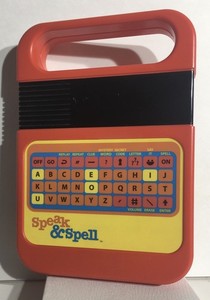
Speak & Spell, one of the top toys of 1983

#10 — Speak & Spell

Toy TypeElectronic learning toy
MakerTexas Instruments
1983 Rank#10

Speak & Spell closes out the 1983 top 10 because by this point it has become less of a flashy breakthrough and more of a proven category veteran. That might sound like a downgrade, but it is actually a sign of strength. The early-80s toy market is now crowded with louder, cuddlier, more aggressively branded products, and Speak & Spell still manages to hold a spot because it offers something increasingly rare: technology with a built-in justification. It is a toy that can still feel exciting to a kid while sounding responsible to an adult.

In 1983, that balancing act matters more than ever. A lot of the year’s biggest toys operate through emotion, character attachment, or visible pop-culture hype. Speak & Spell works through a different kind of promise. It suggests that the future will be interactive, responsive, and educational all at once. It treats the child not only as a consumer of fun but as someone expected to interact with machines in a more direct, more literate way. That gives it a subtle importance beyond its immediate sales appeal.

It also represents a branch of the 80s that could have gone even bigger if the louder brands had not swallowed so much oxygen. Early educational electronics offered a very specific fantasy: that intelligence itself could be toyetic. Buttons, synthetic voices, and machine feedback were not merely practical. They were part of the glamour. Speak & Spell helped create that atmosphere, which is why it still belongs in the story even as the market shifts toward plush mania and action universes.

For Gen X, Speak & Spell in 1983 feels like a durable reminder that the decade was not only about spectacle. It was also about the strange optimism that a child could learn to live with machines early and happily. That idea would outlast the specific toy, which is one reason it still feels important.

Fun Fact / Why It Still Matters Speak & Spell endured because it made learning feel like part of the same futuristic world the rest of the toy aisle was trying to sell.
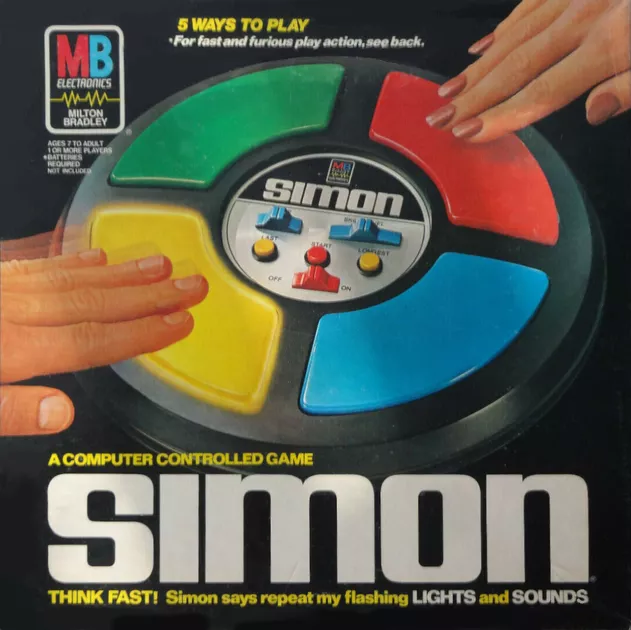
Simon, one of the top toys of 1983

#9 — Simon

Toy TypeElectronic memory game
MakerMilton Bradley
1983 Rank#9

Simon remains on the board in 1983 because challenge never really goes out of style when it is packaged this cleanly. By now, the toy is no longer surviving on novelty. Everyone knows what Simon is, what it sounds like, and exactly how humiliating it can be when your concentration breaks halfway through a sequence. That familiarity is actually part of its strength. It has become culturally legible — the kind of electronic toy people understand at a glance.

What makes Simon especially impressive in 1983 is that it keeps mattering in one of the noisiest toy years of the decade. A lot of toys this year rely on story, softness, collectability, or media tie-ins. Simon does none of that. It is almost aggressively stripped down. Four colors, tones, memory pressure, repeat. That economy gives it a kind of elegance most toys do not have. It does not need a cartoon or a fantasy biography. It only needs your attention and your nerves.

It also keeps a place because it offers a very different social experience than the year’s other hits. Cabbage Patch Kids produce status and scarcity. He-Man produces imaginative conflict. Atari produces screen-based activity. Simon produces visible tension in real time. People can watch you succeed or collapse instantly. That public performance quality makes it a toy that still feels alive in a room, even when someone else is holding it.

For Gen X, Simon in 1983 feels like one of those objects that hung on because it was mean in exactly the right way. It challenged you without pretending to be your friend. And in an era full of highly managed branding, that made it oddly refreshing.

Fun Fact / Why It Still Matters Simon kept its place because the basic thrill of “don’t mess up now” never stopped being addictive.
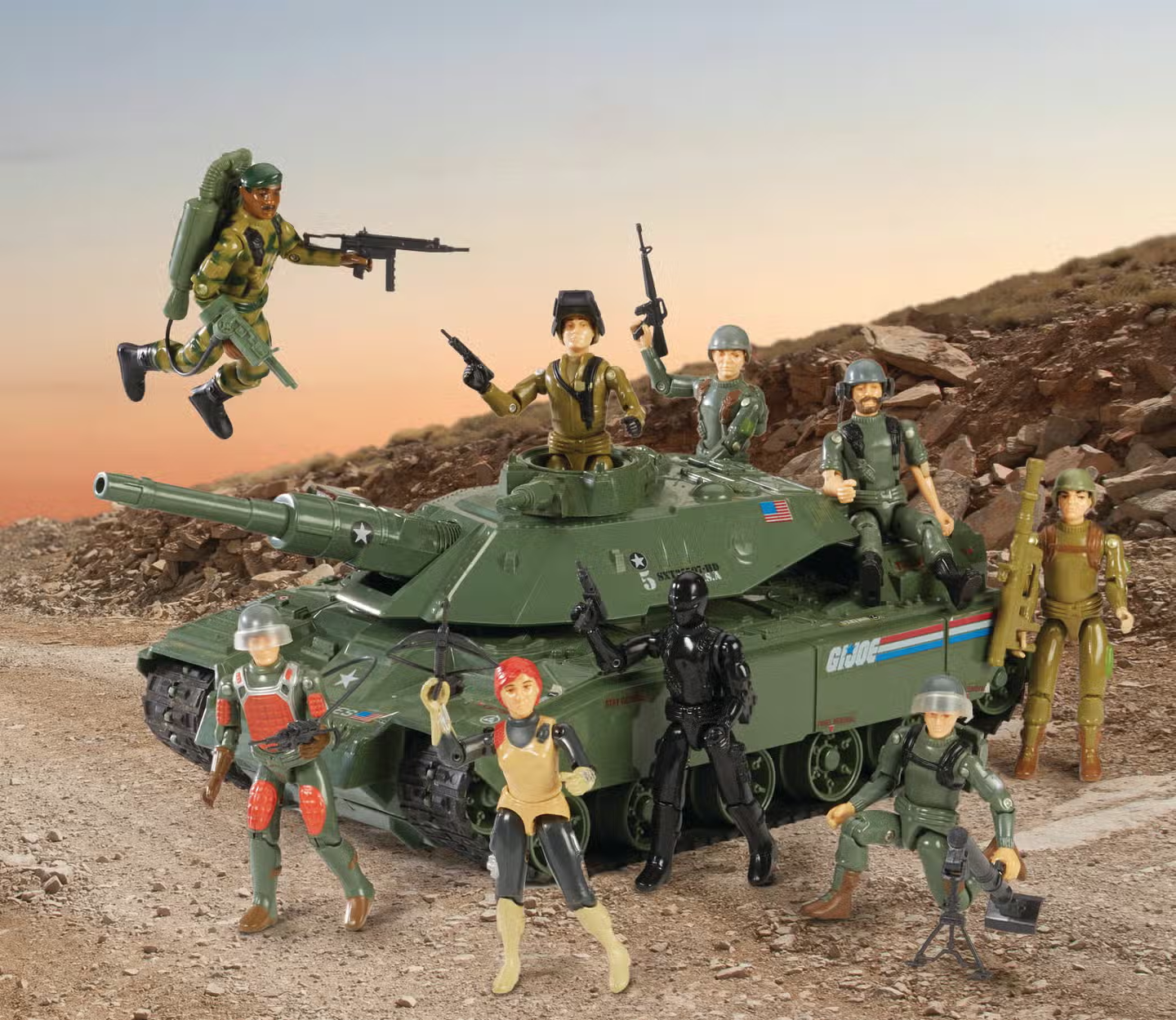
G.I. Joe, one of the top toys of 1983

#8 — G.I. Joe

Toy TypeAction figure line
Brand LaneCollectible action ecosystem
1983 Rank#8

G.I. Joe stays strong in 1983 because this is the year the line starts feeling less like a major relaunch and more like an operational system. In 1982, the important story was that G.I. Joe helped reset what action figures could look like in the modern 80s. In 1983, the line’s deeper appeal becomes more obvious: it gives kids a framework for accumulation. One figure is not the end. One figure is a foothold.

That makes the line especially revealing in the context of the broader year. By 1983, the toy aisle is learning how to create momentum through incomplete satisfaction. You get enough in one purchase to feel engaged, but not enough to feel finished. G.I. Joe thrives under that logic. Figures imply teams. Teams imply vehicles. Vehicles imply bigger battles. The whole design of the line nudges children toward expansion, which is one of the smartest and most durable business tricks of the decade.

The brand also benefits from carrying a very specific kind of seriousness into the play pattern. Even when the line gets colorful, stylized, and exaggerated, it still offers mission structure, role distinction, and a kind of tactical flavor that separates it from more freeform fantasy play. Kids were not just playing with characters. They were organizing forces, assigning specialties, and staging operations. That sense of structure gave the toy line a different emotional texture than the era’s plush and doll phenomena.

For Gen X, G.I. Joe in 1983 feels like one of the clearest examples of the action-figure market becoming more sophisticated. It is not simply about posing plastic soldiers. It is about assembling a war chest. And once that logic clicks, the line becomes very hard to ignore.

Fun Fact / Why It Still Matters G.I. Joe mattered because it turned “buy a toy” into “start building a force,” and that distinction changed the entire action aisle.
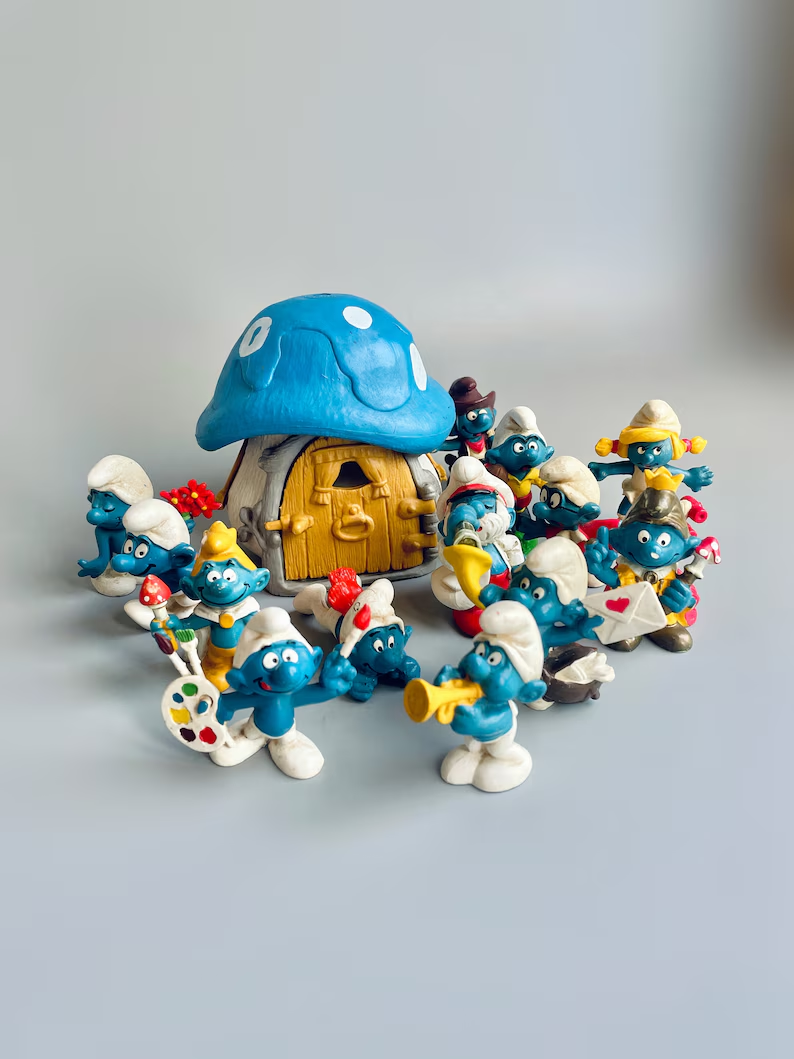
Smurfs, one of the top toys of 1983

#7 — Smurfs

Toy TypeCharacter figure line
Brand LaneCartoon collectible miniatures
1983 Rank#7

Smurfs hold their place in 1983 because by now their greatest strength is obvious: they are frictionless. In earlier years, the key story was how quickly they moved from cartoon familiarity into toy saturation. In 1983, what matters is that the line continues to function with astonishing efficiency. Smurfs are small, inexpensive, instantly recognizable, and endlessly expandable. That combination keeps them relevant even when the market is increasingly crowded with bigger, louder, and more visually dominant competitors.

Their success also says something important about how many different types of winning can exist in the toy aisle at once. A line like He-Man dominates through scale and intensity. A line like Cabbage Patch Kids dominates through emotional mania and scarcity. Smurfs dominate through ease. They are the kind of toys that spread through households almost casually. One gift becomes three. Three become a shelf. A shelf becomes a habit. That low-resistance expansion is a huge part of why the line had such staying power.

They also continue to benefit from the strength of clearly differentiated sameness. Every Smurf belongs to the same world, but each one has enough visual identity to feel individually giftable and collectible. That creates a very stable purchase pattern. Adults can understand what they are buying, and kids can immediately see how one new addition changes the overall collection.

For Gen X, Smurfs in 1983 feel like the quiet professionals of the toy aisle. They were not always the loudest thing on the shelf, but they never really stopped spreading. And in a business where consistency matters almost as much as spectacle, that kind of staying power is its own form of dominance.

Fun Fact / Why It Still Matters Smurfs stayed hot because they were easy to collect, easy to gift, and almost impossible to stop once the collection started.
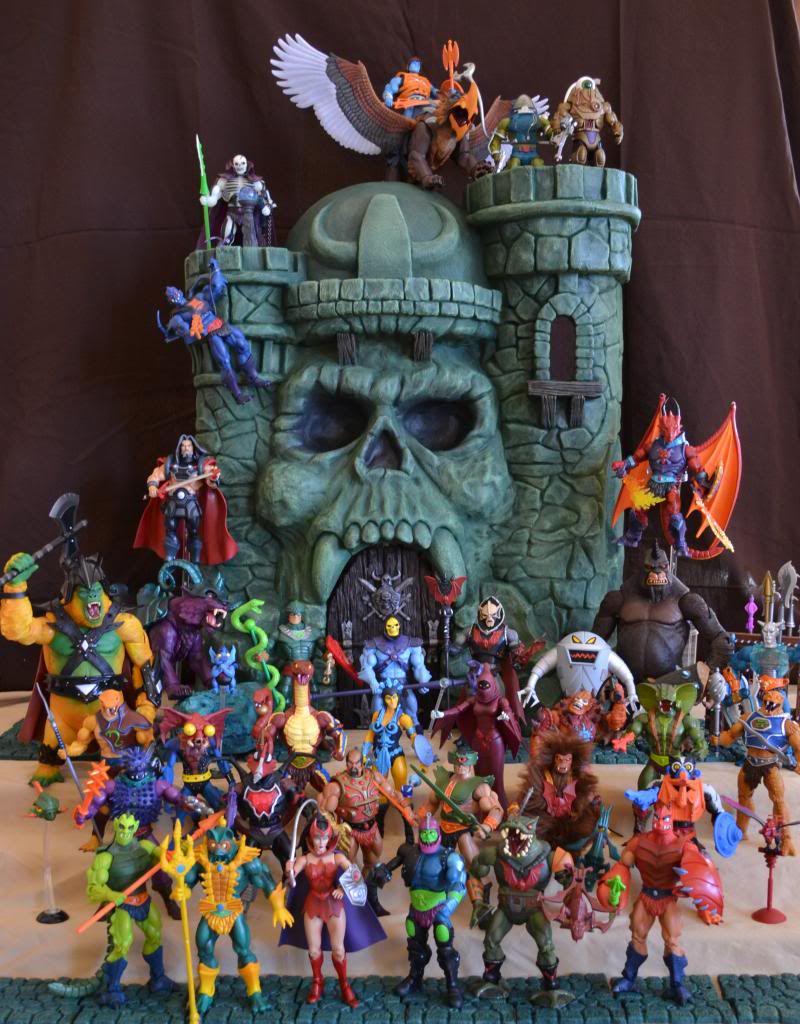
He-Man / Masters of the Universe, one of the top toys of 1983

#6 — He-Man / Masters of the Universe

Toy TypeAction figure line
Brand LaneFantasy action universe
1983 Rank#6

He-Man / Masters of the Universe hits the 1983 top 10 because it captures one of the biggest energy shifts of the toy aisle: maximalism. These figures were not modest. They were thick, exaggerated, colorful, and loaded with the sort of sculpted intensity that made them feel less like ordinary toys and more like tiny declarations of force. If 1983 is one of the years when branding starts going fully theatrical, He-Man is one of the clearest examples.

What makes the line so important is that it combines visual overkill with world-building. The figures were not only distinctive on their own. They hinted at a larger fantasy space with heroes, villains, creatures, factions, and an entire tone of muscular cosmic weirdness. That made the shelf feel alive in a way individual one-off toys could not. Buying into He-Man meant buying into a universe, and by 1983 that kind of universe thinking was becoming one of the most effective forms of toy marketing.

The line also helped redefine what action play could feel like. G.I. Joe offered tactical, mission-based structure. He-Man offered something more mythic and primal, powered by Saturday morning cartoon culture and a toy aisle that suddenly wanted every figure to feel like part of a bigger world. It was less about procedure and more about spectacle. Kids were not only staging fights. They were staging epic confrontations between wildly designed personalities in a setting that felt both barbaric and sci-fi at the same time. That tonal excess is exactly why the line made such an impression.

For Gen X, He-Man in 1983 feels like one of the most blatantly 80s toy ideas ever to succeed: louder, stronger, more colorful, more extreme, and more committed to excess than good taste would normally recommend. Which, of course, is exactly why it worked.

Fun Fact / Why It Still Matters He-Man mattered because it turned the action aisle into a full-scale fantasy spectacle instead of just a place to buy individual figures.
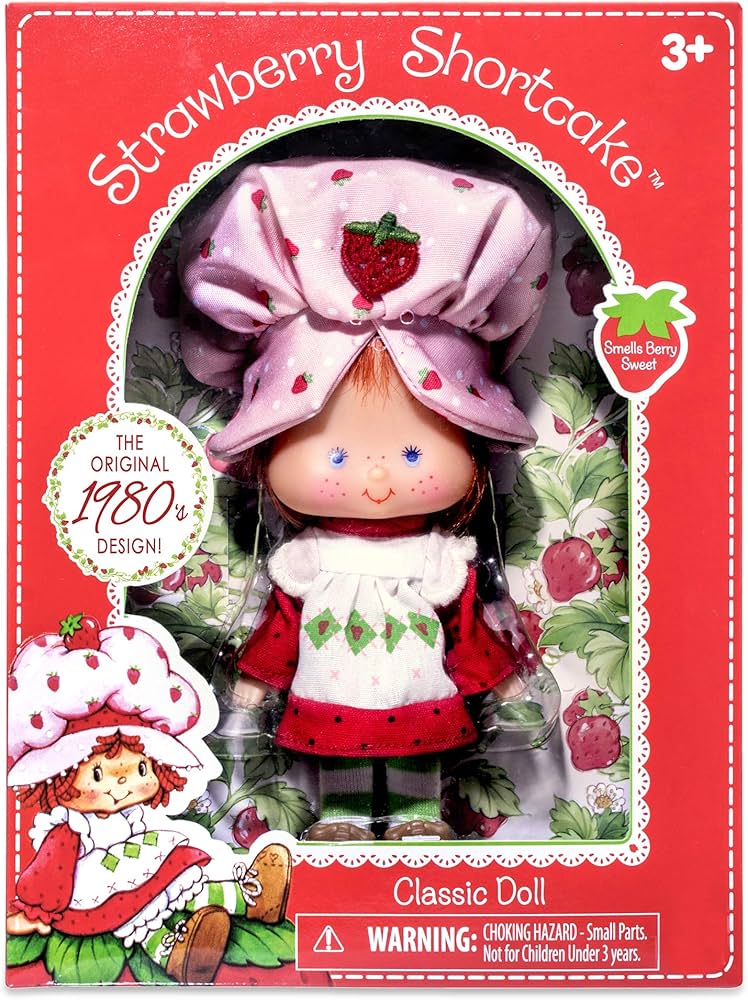
Strawberry Shortcake, one of the top toys of 1983

#5 — Strawberry Shortcake

Toy TypeScented doll line
Brand LaneSoft-power character empire
1983 Rank#5

Strawberry Shortcake remains high in 1983 because the brand had moved beyond momentum and into institutional strength. In earlier years, the line’s rise was part of the story. By 1983, the more interesting thing is how stable it looks in a much more chaotic market. The toy aisle is now being slammed by plush crazes, aggressive action lines, movie-driven products, and increasingly crowded shelves, and Strawberry Shortcake still holds a premium place because its identity is so complete.

What keeps the brand powerful is not simply the scent hook anymore. That detail remains memorable, but by now the line’s larger coherence is doing the heavier work. Strawberry Shortcake had become a world with its own emotional weather: soft, bright, sweet, safe, and intensely consistent. In a marketplace full of products fighting to be louder, there is real value in being the line that feels immediately familiar and emotionally legible.

It also shows how durable strong thematic branding can be when it does not depend on one single gimmick. The dolls, character design, naming patterns, visual language, and overall tone all reinforce one another. That gives the line a kind of resilience. It does not need to reinvent itself every season because children are not only buying the toy. They are buying the entire mood that comes with it.

For Gen X, Strawberry Shortcake in 1983 feels like the brand proving it is not a brief early-80s wave. It is a lasting piece of the decade’s emotional and visual identity. That is exactly why it stays in the upper half of the chart.

Fun Fact / Why It Still Matters Strawberry Shortcake stayed strong because by 1983 it was selling comfort and consistency in a toy aisle that was getting increasingly chaotic.
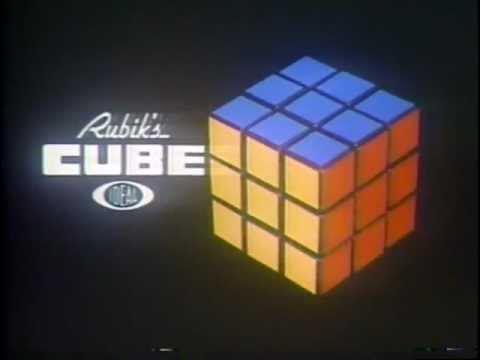
Rubik’s Cube, one of the top toys of 1983

#4 — Rubik’s Cube

Toy TypePuzzle toy
Brand LaneMass-culture challenge icon
1983 Rank#4

Rubik’s Cube drops from the number-one peak of earlier years but still lands at number four because by 1983 it had become too culturally embedded to disappear. The key difference now is not whether the Cube matters. It clearly does. The difference is that the toy aisle has caught up to its level of intensity. Other products are now generating their own forms of mania, and the Cube has shifted from unstoppable headline object to established cultural icon inside 1983 fad culture.

That transition actually makes the Cube more interesting, not less. Plenty of crazes explode. Far fewer manage to settle into long-lasting recognition while the marketplace around them evolves. By 1983, the Cube still works because it keeps offering something none of the year’s character-driven brands can fully replicate: abstract prestige. Solving it still implies patience, focus, and a kind of cool frustration tolerance. It remains one of the rare toys that functions almost like a social signal.

It also continues to cross demographic lines in a way most competitors cannot. Plush crazes tend to skew one direction. Action lines tend to organize themselves around particular fantasies. Rubik’s Cube still belongs almost anywhere. That universality is one reason it keeps lingering so high. Even as new obsession zones appear, the Cube remains recognizably “the smart one,” and that status still carries weight.

For Gen X, Rubik’s Cube in 1983 feels like the phase when a toy craze stops being news and starts becoming part of the furniture of the decade. It is not shocking anymore. It is iconic. And iconic things do not leave easily.

Fun Fact / Why It Still Matters Rubik’s Cube still ranked high because even after the peak mania cooled, it remained one of the decade’s strongest symbols of challenge and cool.
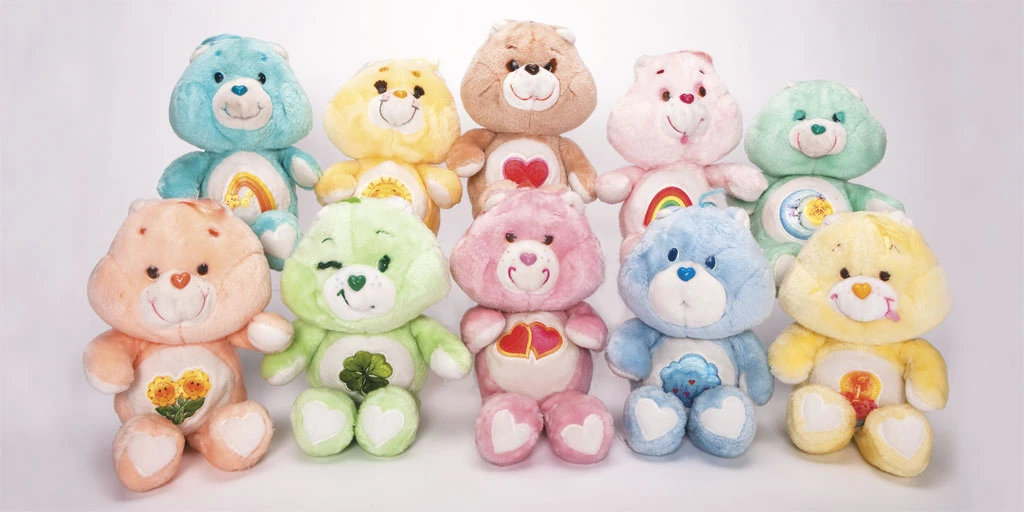
Care Bears, one of the top toys of 1983

#3 — Care Bears

Toy TypePlush character line
Brand LaneEmotion-coded plush universe
1983 Rank#3

Care Bears hit number three because 1983 proves, with almost embarrassing clarity, that softness can be just as commercially powerful as action. In a decade that often gets remembered for muscle, noise, lasers, and toy-line escalation, Care Bears show that an entire brand can thrive by organizing itself around warmth, comfort, color, and emotional symbolism. That is not a side lane. That is one of the main stories of the year.

What makes the line especially strong is that it turns feeling into categorization. Each bear is not only cute. Each bear carries an identity that is immediately legible. That gives the line collectability without needing aggressive world-building or complicated lore. Kids can latch onto favorites, parents can understand the appeal instantly, and gifting becomes easier because the brand’s symbolic shorthand is built right into the characters themselves.

Care Bears also fit perfectly into the broader 1983 toy atmosphere because they make emotional reassurance look marketable at scale. The year is full of intensity, from holiday panic to action lines to gaming hardware. Care Bears provide a softer counter-programming while still being unmistakably commercial. They are friendly, yes, but they are also brilliantly systematized. That combination is what turns them from a cute idea into a major retail force.

For Gen X, Care Bears in 1983 feel like one of the decade’s cleanest examples of brand design becoming emotional architecture. These were not just plush toys. They were a coded language of feelings, colors, and favorites. And once that language caught on, the line had real power.

Fun Fact / Why It Still Matters Care Bears became huge because they made comfort collectible, and that turned plush into a full 80s power lane.
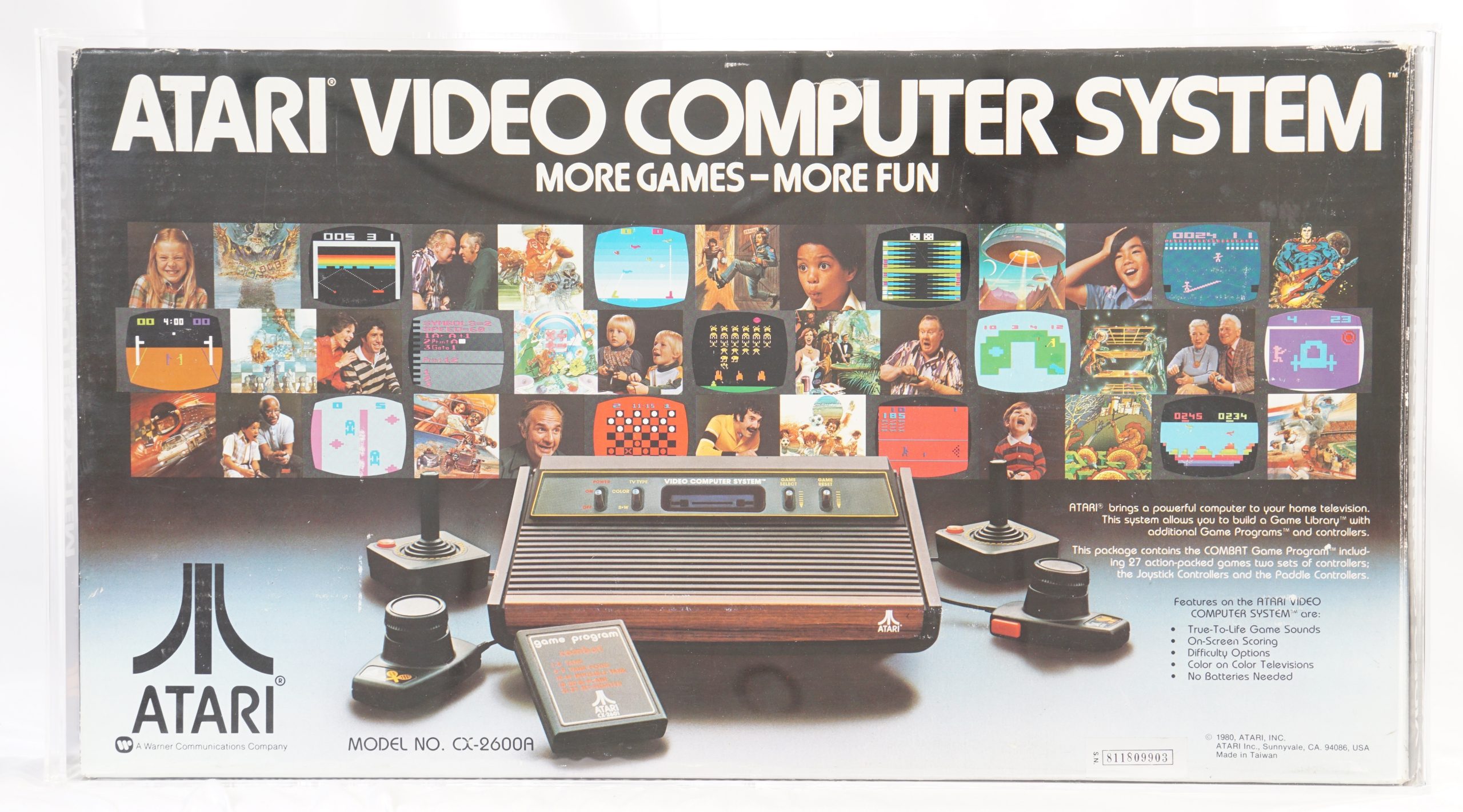
Atari 2600, one of the top toys of 1983

#2 — Atari 2600

Toy TypeHome video game console
MakerAtari
1983 Rank#2

Atari 2600 takes the number two spot because in 1983 it still represents one of the most powerful shifts the decade ever made: turning the television into a permanent play surface. What is different now, compared with earlier years, is that Atari feels less like an exciting arrival and more like a standard. It has become part of the background assumption of what modern childhood can include. That kind of normalization is one of the strongest forms of success a product can achieve.

The 1983 angle is also a little more complicated, which makes the system more historically interesting. By now, the console category is mature enough that its cracks are becoming easier to sense, but from the perspective of children and holiday shoppers, Atari is still a central object of desire. That tension is fascinating. It is both ordinary and still powerful. It is both entrenched and vulnerable. Very few toys ever get to occupy that kind of unstable dominance.

It also remains culturally huge because software-based variety still feels magical. One piece of hardware can keep producing different experiences, and that makes the machine fundamentally different from a conventional one-function toy. In a year already overloaded with strong competitors, that versatility continues to matter. Atari is not selling one fantasy. It is selling a reusable portal to many.

For Gen X, Atari in 1983 feels like the moment a once-revolutionary object becomes woven into normal life while still holding onto its aura. It is not merely a cool toy anymore. It is part of how the house works. That is exactly why it still ranks near the very top.

Fun Fact / Why It Still Matters Atari 2600 stayed this high because by 1983 it had become less of a novelty and more of a household expectation.
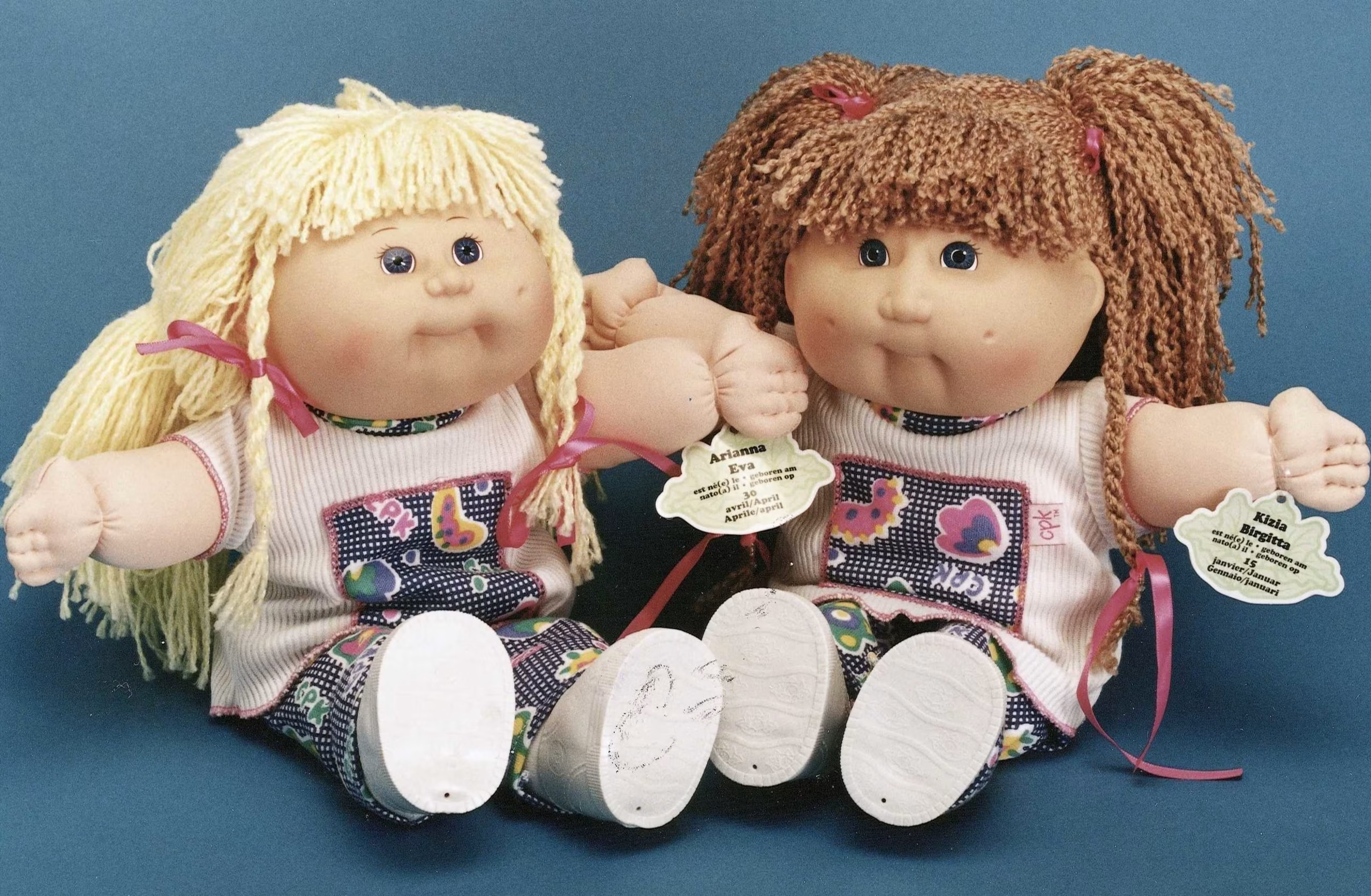
Cabbage Patch Kids, one of the top toys of 1983

#1 — Cabbage Patch Kids

Toy TypeAdoptable doll line
Brand LaneScarcity-driven doll phenomenon
1983 Rank#1

Cabbage Patch Kids take the number one spot because 1983 is the year they stop being just a toy hit and become a social event. Plenty of toys sell well. Far fewer generate the kind of mass public frenzy that spills beyond the shelf and into nightly news energy, parental panic, and the broader cultural imagination. Cabbage Patch Kids did that. They turned retail demand into a story people told each other with the same intensity they used for major trends and public spectacles.

What makes the line so potent is that it combined scarcity with emotional framing. These were not just dolls to purchase. They were children to “adopt.” That slight shift in language did enormous work. It transformed the toy from an object into a relationship. Once that happened, demand acquired a different emotional tone. Children did not merely want one because it was popular. They wanted one because the brand encouraged a sense of personal attachment. That is a very powerful psychological hook, especially during the holiday-season phenomenon of 1983.

The dolls also arrived at exactly the right moment for the 80s toy market. By 1983, branding had become more sophisticated, retail attention had become more feverish, and parents were increasingly vulnerable to the pressure of must-have culture. Cabbage Patch Kids harnessed all of that at once. They felt unique, collectible, emotionally loaded, and frustratingly hard to secure. In other words, they became perfect engines for holiday obsession.

For Gen X, Cabbage Patch Kids in 1983 feel like the clearest example of the toy aisle becoming a battleground of adult behavior as much as child desire. These dolls were cute, yes. But their deeper meaning is that they exposed how completely a toy craze could seize the culture. That is what number one looks like.

Fun Fact / Why It Still Matters Cabbage Patch Kids won 1983 because they transformed toy demand into emotional and retail chaos at the exact same time.
The Toy Box Afterlife

Collecting Toys From 1983 Today

Cabbage Patch Kids require identity checks.

Collector interest can depend on manufacturer, head mold, factory, body style, signature, clothing, adoption papers, birth certificate, box, accessories, and condition. Hair, vinyl, fabric bodies, facial paint, odors, staining, repairs, and replacement clothing all affect desirability.

Action figures depend on accessories.

He-Man and G.I. Joe figures may be missing weapons, armor, file cards, rubber bands, stands, vehicles, stickers, removable parts, or edition-specific pieces. A figure that looks complete at first glance can be missing the one accessory collectors value most.

Electronics and consoles need careful testing.

Atari, Simon, and Speak & Spell should be checked for battery corrosion, worn switches, controllers, power supplies, cartridge contacts, speakers, missing doors, repaired cables, and unverified operation. “Untested” means uncertainty and should be priced accordingly.

Actual sold prices beat headline listings.

Age alone does not create value. Demand, edition, condition, completeness, originality, packaging, rarity, and verified sales all matter. The guide to valuable 80s toys worth money today explains how to separate real collector value from an ambitious asking price.

Final Rewind

What the Top Toys of 1983 Reveal About the 80s

The top toys of 1983 show the business of childhood reaching a new level of intensity. The strongest products no longer sold only play. They sold identities, emotional relationships, factions, worlds, scarcity, status, television familiarity, and the fear that every other family might obtain the toy first.

Cabbage Patch Kids transformed Christmas demand into public chaos. Atari remained household infrastructure. Care Bears proved comfort could become a large-scale collection system. Rubik’s Cube survived its initial craze and became an icon. Strawberry Shortcake remained a complete branded atmosphere. He-Man and G.I. Joe accelerated the action-figure arms race. Smurfs demonstrated the power of inexpensive cartoon collecting. Simon and Speak & Spell proved older electronic concepts could survive a market full of louder competitors.

Continue with the Cabbage Patch Kids 1983 craze, the 50 most iconic toys of the 80s, the hottest Christmas toys of the 80s, and the collector guide to valuable 80s toys worth money today.

The Full Decade

Explore the Top Toys of Every Year in the 80s

Top Toys of 1983: Frequently Asked Questions

What were the most popular toys of 1983?

The most popular toys of 1983 included Cabbage Patch Kids , Atari 2600 , Care Bears , Rubik’s Cube , Strawberry Shortcake , He-Man / Masters of the Universe , Smurfs , G.I. Joe , Simon , and Speak & Spell .

What was the biggest toy of 1983?

Cabbage Patch Kids were the clearest number one because they became more than a toy success story — they became a full holiday-season phenomenon.

What toy caused the most Christmas chaos in 1983?

Cabbage Patch Kids caused the biggest Christmas-season frenzy of 1983, with demand, scarcity, and media attention turning the dolls into a full retail phenomenon.

What toys were popular for Christmas in 1983?

Popular Christmas toys in 1983 included Cabbage Patch Kids , Atari 2600 , Care Bears , Rubik’s Cube , Strawberry Shortcake , He-Man , Smurfs , G.I. Joe , Simon , and Speak & Spell .

Why were Cabbage Patch Kids so popular in 1983?

Cabbage Patch Kids combined scarcity, adoption certificates, individual names, emotional storytelling, collectability, media coverage, and Christmas demand. Read the full 1983 Cabbage Patch Kids craze for the complete history.

Why is Atari 2600 still ranked so high in 1983?

Because even as the market around it grew more crowded and complicated, Atari remained one of the most powerful and normalized objects in home entertainment.

Why are Care Bears above He-Man?

Because 1983 is one of the clearest years where plush and emotional character branding surged into the top tier, and Care Bears became one of the decade’s strongest soft-power toy lines.

Was He-Man popular in 1983?

Yes. He-Man / Masters of the Universe was one of the most important action-figure lines of 1983, helping turn the toy aisle into a full fantasy universe of heroes, villains, creatures, vehicles, and cartoon-driven play.

Where can I watch commercials for 1983 toys?

Start with the 80s Toy Commercials & Videos archive. It includes vintage ads connected to this 1983 toy world, including Cabbage Patch Kids, Care Bears, He-Man, G.I. Joe, Atari 2600, Simon, Speak & Spell, Strawberry Shortcake, and more classic 80s toy-commercial rewind fuel.

Why does Rubik’s Cube still make the list if its biggest craze years were earlier?

Because by 1983 it had moved beyond peak mania and into full icon status, remaining highly visible and culturally embedded even as newer crazes emerged.

Why does this ranking mix dolls, plush, figures, puzzles, and gaming?

Because the goal is to reflect the strongest overall toy heat of the year, and 1983 was broad enough to support multiple kinds of obsession at once.

Why is this an editorial ranking instead of an exact sales chart?

No single complete public U.S. unit-sales chart ranks every major toy category for 1983. The ranking therefore weighs Christmas demand, retail visibility, advertising, cultural impact, brand momentum, longevity, and the strongest surviving evidence rather than inventing false precision.

What were the top three toys of 1983?

This ranking places Cabbage Patch Kids first, Atari 2600 second, and Care Bears third. They represent the year’s strongest forces: holiday scarcity, home gaming, and character-driven plush collecting.

Are toys from 1983 collectible today?

Many are collectible, but value depends on manufacturer, edition, condition, completeness, packaging, originality, working electronics, accessories, and actual demand. Cabbage Patch Kids, early G.I. Joe figures, He-Man toys, boxed electronics, and complete character lines can vary widely.

Did the 1983 video-game crash make Atari unpopular immediately?

No. Atari remained deeply established in homes and continued to be a major toy and entertainment presence during 1983, even as oversupply, inconsistent software, and market problems were becoming harder to ignore.
Get the Weekly Gen X Drop

New videos, rewinds, and savage nostalgia — first.

SUBSCRIBE WATCH VIDEOS

MORE REWINDS