Smells Like Gen X • The Biggest Toys of 1982
Top 10 Toys of 1982: The Most Popular Toys That Defined the Year
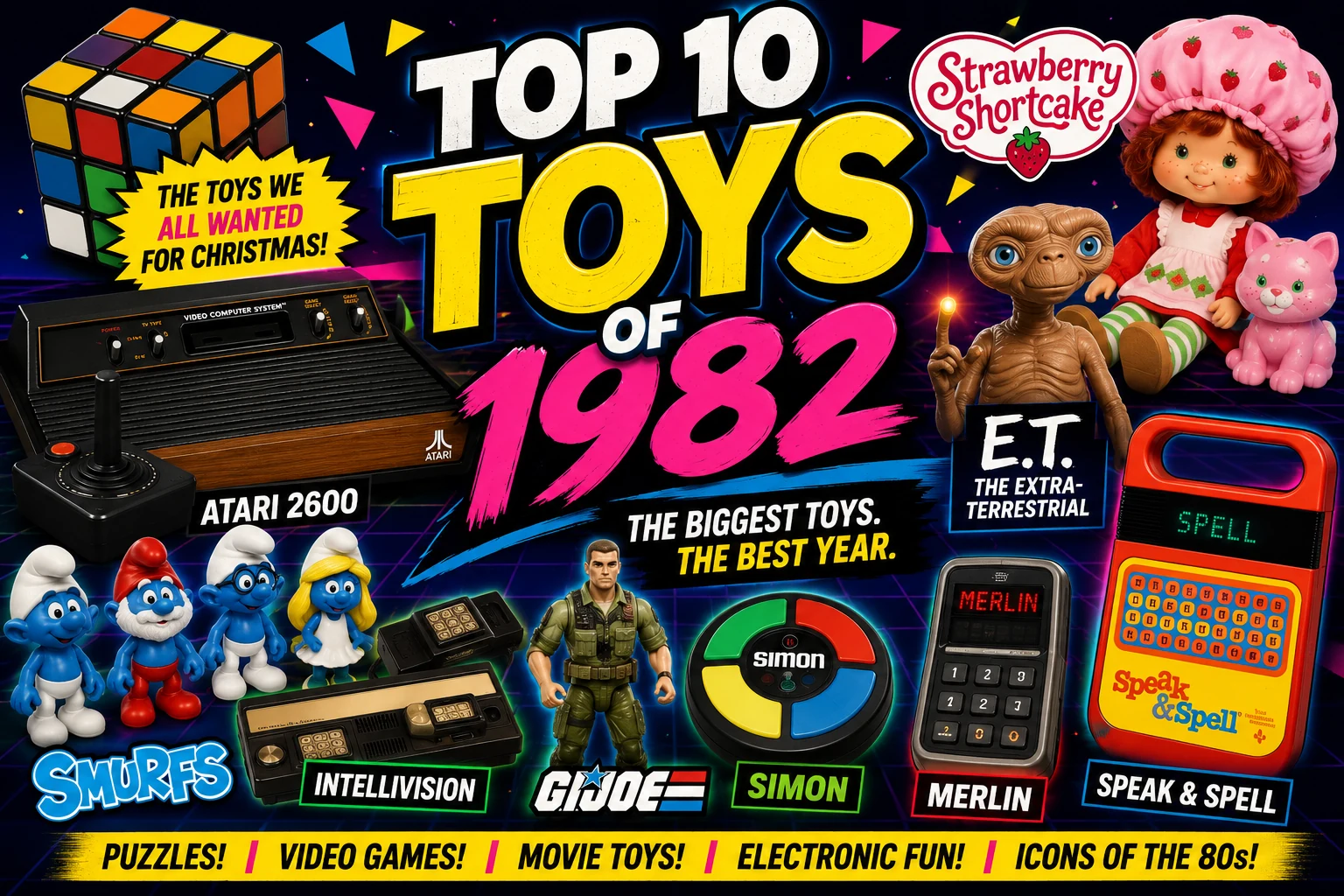
The top toys of 1982 show the early 80s toy aisle turning into a full pop-culture machine.
Rubik’s Cube was still a worldwide obsession. Atari 2600 had become household infrastructure.
Strawberry Shortcake was operating like a complete retail world. E.T. translated blockbuster emotion into merchandise.
G.I. Joe planted the flag for the action-figure wars that would dominate the rest of the decade.
Rubik’s Cube ranks as the biggest toy phenomenon of 1982, followed by Atari 2600,
Strawberry Shortcake, E.T. toys, Smurfs, Intellivision, G.I. Joe, Simon, Merlin, and Speak & Spell.
Together they capture a year powered by puzzle mania, home gaming, movie licensing, cartoon characters,
electronic challenge, collectible systems, and increasingly sophisticated toy marketing.
This is an editorial ranking built from the strongest surviving evidence of 1982 retail demand, holiday visibility,
advertising presence, cultural impact, longevity, and Gen X memory. No single complete public U.S. sales chart ranks
every toy sold in 1982, so the methodology is explained rather than hidden behind fake precision.
The goal is to identify the toys that were genuinely hot, visible, influential, and difficult to ignore during the year.
Number One
Rubik’s Cube
Big Shift
Licensing Meets Systems
Toy Count
10 Ranked Favorites
Gen X Note: 1982 is the year the toy aisle starts feeling less like a store and more like a pop-culture battlefield.
Quick Answer
What Were the Most Popular Toys of 1982?
The most popular toys of 1982 included Rubik’s Cube, Atari 2600, Strawberry Shortcake,
E.T. toys, Smurfs, Intellivision, G.I. Joe, Simon, Merlin, and Speak & Spell.
Rubik’s Cube remained the year’s broadest toy craze, Atari ruled home gaming, E.T. demonstrated the power
of blockbuster licensing, and G.I. Joe previewed the collectible figure systems that would soon dominate the decade.
How the List Was Built
How We Ranked the Top Toys of 1982
Retail and holiday visibility
The ranking weighs which toys appeared repeatedly in holiday promotion, catalogs, television advertising,
year-end coverage, store displays, and surviving accounts of what families were actively buying or trying to find.
A toy did not need to debut in 1982; it needed to be a major force during 1982.
Cultural impact during the year
Rubik’s Cube crossed age groups and public spaces. Atari changed family-room habits.
E.T. connected the year’s biggest movie to the toy aisle. Strawberry Shortcake, Smurfs, and G.I. Joe showed
how characters, factions, accessories, and repeat purchases could create long-running systems.
Influence on the decade ahead
The list considers what each toy predicted. Consoles pointed toward software-driven play.
G.I. Joe previewed the action-figure escalation. E.T. demonstrated blockbuster licensing.
Electronic gadgets made machine feedback normal, while character brands grew through media and collecting.
Honest limits of the evidence
No single complete public U.S. chart ranks every toy sold in 1982. Exact totals are proprietary, incomplete,
category-specific, or reported inconsistently. This is a transparent editorial ranking—not a fake precision exercise
pretending every manufacturer preserved matching sales spreadsheets.
Why this matters:
“Popular,” “best-selling,” “hottest,” and “most influential” are not always identical.
Explaining the method makes the ranking more useful than a copied list with no evidence or reasoning.
The Pop-Culture Machine
Why 1982 Was a Turning Point for Toys
Home gaming became household infrastructure.
Atari and Intellivision no longer needed to prove that video games belonged in the home.
The argument had shifted toward which system, which cartridges, and which family had the better setup.
The 80s video-game toys guide
follows that rivalry through the rest of the decade.
Blockbuster movies became retail launch platforms.
E.T. showed that a film character could move directly from the screen into dolls, figures, plush, games,
and household merchandise. The toys extended the emotional life of the movie, while the movie supplied
instant recognition that ordinary toy lines had to build from scratch.
Action figures became expandable systems.
The 1982 G.I. Joe relaunch pointed toward the
80s Action Figure Wars:
smaller figures, factions, file-card identities, weapons, vehicles, enemies, and a collection designed to keep expanding.
Character worlds became easier to multiply.
Strawberry Shortcake and Smurfs proved that small characters, distinctive colors, names, friends, accessories,
and media support could turn one purchase into a habit. That same machinery powered the
doll and plush crazes
and the cartoon-toy system.
The Top 10 Toys of 1982, Ranked
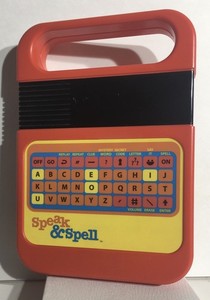
#10 — Speak & Spell
Toy TypeElectronic learning toy
MakerTexas Instruments
1982 Rank#10
Speak & Spell hangs onto the 1982 top 10 because even as the toy aisle gets louder, more cinematic, and more licensing-driven, there is still strong room for products that make technology itself feel exciting. But by 1982, Speak & Spell reads differently than it did in the previous two years. It no longer feels like the fresh shock of a talking educational machine. It feels like one of the early success stories proving that electronics and learning could coexist in a way kids would actually accept.
That makes it a very useful toy for understanding the year. 1982 is crowded with products built to grab attention through brand recognition, character attachment, or obvious sensory flash. Speak & Spell survives in that environment because its appeal is more foundational. It taps into the growing idea that modern childhood should involve interface, feedback, buttons, and machine logic. It is not pretending to be a movie tie-in or a doll universe. It is selling the feeling of being plugged into something smarter than the average toy.
It also reflects how parents were now getting more comfortable buying technology-flavored toys if the educational argument was built in. That balance mattered. Children got a gadget that looked and sounded futuristic, while adults could justify it as something more serious than pure amusement. In a decade increasingly defined by electronics, that kind of two-sided appeal was extremely powerful.
For Gen X, Speak & Spell in 1982 feels like one of the early pieces of evidence that childhood was becoming more digitized, even before most homes thought of themselves that way. It did not need to be the flashiest toy in the store to matter. It just needed to keep teaching kids that interacting with a machine could feel normal, fun, and a little bit magical.
Speak & Spell helped establish the educational side of
80s electronic toys,
letting parents call the purchase educational while children concentrated on making the robotic voice sound strange.
Fun Fact / Why It Still Matters
Speak & Spell mattered because it helped normalize the idea that a toy could feel like a machine first and still be fun.
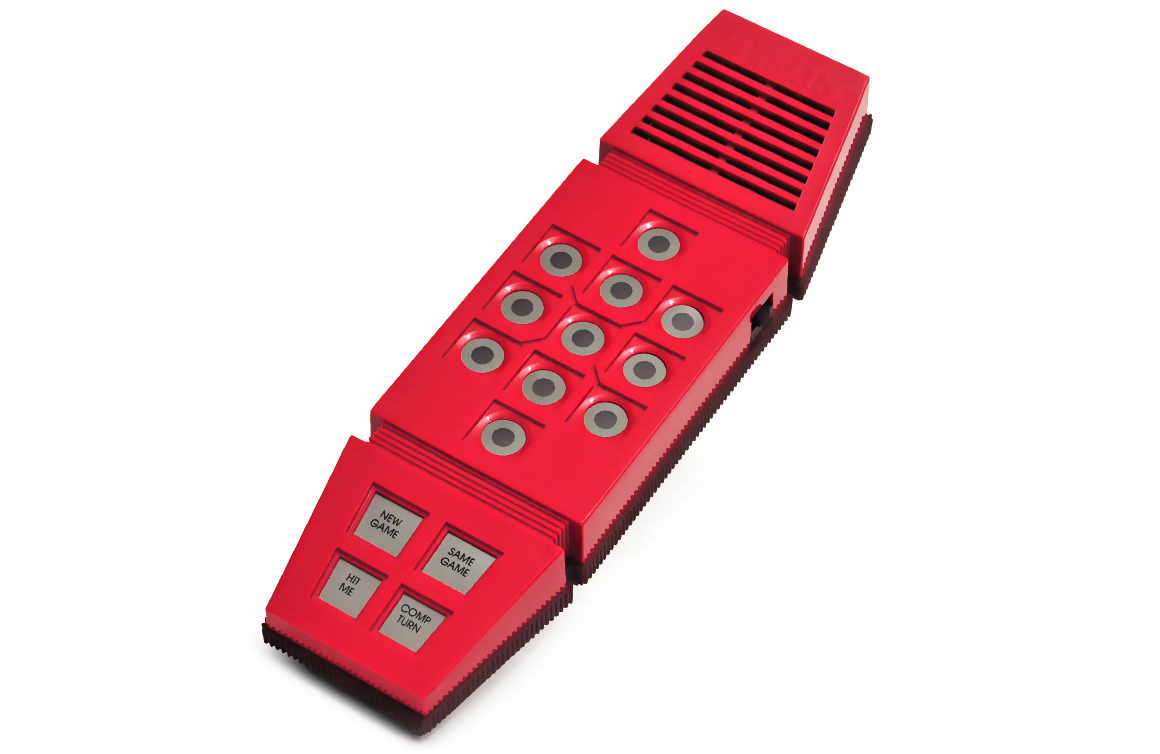
#9 — Merlin
Toy TypeHandheld electronic game
MakerParker Brothers
1982 Rank#9
Merlin stays in the 1982 mix because this is one of the last moments where its blend of toy-like weirdness and handheld electronics still feels genuinely premium. In earlier years, Merlin’s appeal came largely from surprise: it looked like a fantasy gadget and acted like a tiny game system. By 1982, the surprise factor has faded a little, but what replaces it is durability. The toy has become one of those recognizable electronic staples that still communicates “future” even in a market now crowded with consoles and smarter competitors.
What keeps Merlin relevant here is portability. In 1982, a lot of electronic play is pulling toward televisions, cartridges, and systems that occupy shared family space. Merlin still offers something more personal. It belongs in your hands. It creates a little self-contained challenge environment that does not require a living room, a setup ritual, or a big purchase. That gave it a different kind of value than the bigger gaming hardware dominating headlines.
It also benefits from having a very specific personality. Merlin is not sleek or corporate. It is toyish in the best sense, with lights, sounds, and that slightly fantastical presentation that made early electronic products feel less like appliances and more like strange little artifacts from tomorrow. In a year when many products were beginning to feel more polished and media-managed, Merlin still had some of that charmingly odd pre-standardized future energy.
For Gen X, Merlin in 1982 feels like one of the last great examples of the electronic toy as standalone wonder object. It was not trying to become an entertainment empire. It was trying to be cool in your hands. And for a lot of kids, that was still more than enough.
Merlin sits on the path connecting early electronic games to the later
portable video-game toys of the 80s:
short challenges, personal scores, repeat play, and a device that made waiting less unbearable.
Fun Fact / Why It Still Matters
Merlin stayed alive because it offered private, portable tech play in an era when bigger electronic toys were taking over the room.
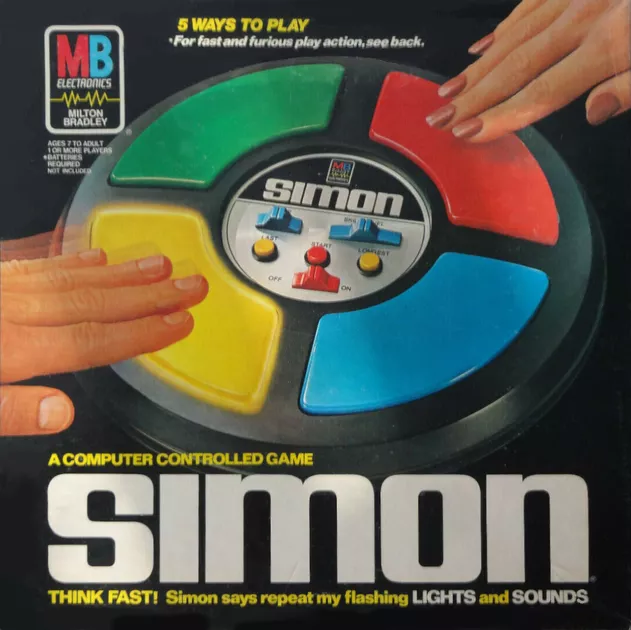
#8 — Simon
Toy TypeElectronic memory game
MakerMilton Bradley
1982 Rank#8
Simon stays on the 1982 list because it had something many toys never achieve: it remained compelling even after the novelty wore off. By now, kids knew what Simon was. The surprise of the colored lights and beeping challenge cycle was no longer the whole draw. What mattered was that the toy still worked. The core formula was brutal in its simplicity and deeply satisfying in a market that was increasingly cluttered with narrative, branding, and feature creep.
That makes Simon especially interesting in 1982. This is a year where toy lines are getting more thematic, more character-based, and more dependent on emotional packaging. Simon does almost the opposite. It strips everything down to reaction, memory, tension, and repetition. It is abstract, immediate, and slightly intimidating — which is exactly why it remains effective. It does not need a universe behind it. It only needs the challenge.
Simon also continues to matter socially. It is the kind of toy that creates spectators, not just players. Friends watch you fail. Siblings try to beat your run. Parents take a turn. That public performance element helped keep Simon culturally visible because it could generate little moments of triumph or embarrassment with almost no setup at all. In a way, it was one of the era’s cleanest party-proof toys.
For Gen X, Simon in 1982 feels less like a futuristic object and more like a proven test. It had crossed the line from “cool new electronic toy” into “recognized challenge machine.” That transition is exactly why it still earns a spot here.
Simon’s lights-and-tones feedback loop is part of the larger history of
80s electronic toys and gadgets,
when responsive plastic began feeling like a machine with rules, memory, pressure, and personality.
Fun Fact / Why It Still Matters
Simon lasted because it didn’t depend on novelty — it depended on pressure, and pressure ages well.
#7 — G.I. Joe
Toy TypeAction figure line
Brand LaneModern 80s action figures
1982 Rank#7
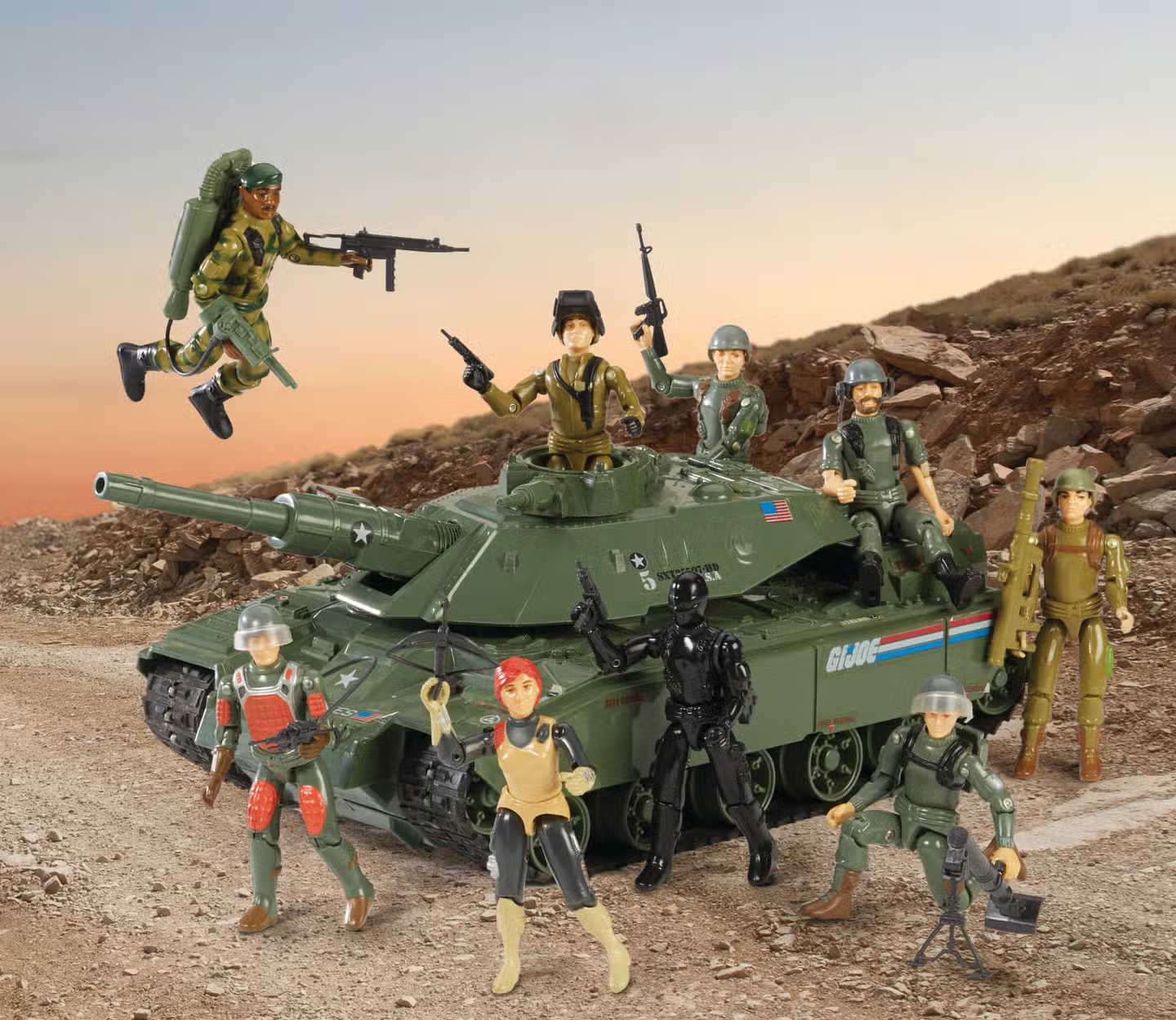
G.I. Joe lands at number seven because 1982 is one of those rare years when a toy line matters not just as a seller, but as a signal flare for what the rest of the decade is about to become. The relaunch of G.I. Joe did more than bring back a familiar brand. It helped define the modern 80s action-figure lane: smaller scale, broader collectability, accessory-driven appeal, and a toy economy that worked best when children felt compelled to keep adding troops, gear, vehicles, and enemies.
What makes G.I. Joe so important in this specific year is how strategic it feels. This is not just a toy line showing up on shelves and hoping for the best. It is part of a new kind of product thinking where the figures imply expansion. One figure is never really the end of the purchase. It is the beginning of a force. That logic would become one of the central business models of the 80s toy aisle, and G.I. Joe is right there near the front of it.
The line also matters because it helps shift action figures into a more systematized era. Kids were not merely buying a hero during the same era that network television and Saturday morning culture were helping drive character obsession everywhere. They were buying factions, loadouts, identities, and the groundwork for larger conflicts. That makes G.I. Joe feel much more in tune with the decade’s coming toy wars than a lot of earlier figure concepts. It is militarized, expandable, and highly structured in a way that screams 80s shelf strategy.
For Gen X, 1982 G.I. Joe feels like one of the moments where action figures stop being just toys and start becoming ecosystems. It does not need to be ranked higher than the year’s biggest mass crazes to be one of the most important lines on the page. Its real significance is how much of the future it contains.
Continue with the complete
G.I. Joe toys of the 80s guide,
covering the 1982 relaunch, file cards, Cobra, vehicles, playsets, cartoons, and the collection system that helped redefine action figures.
Fun Fact / Why It Still Matters
G.I. Joe mattered because it helped teach the 80s toy aisle how to build addiction through collectable factions, gear, and escalation.
#6 — Intellivision
Toy TypeHome video game console
MakerMattel Electronics
1982 Rank#6
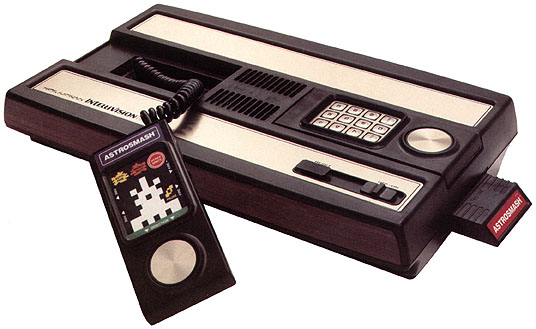
Intellivision takes the number six slot because by 1982 the home-gaming category is no longer merely growing — it is developing attitude. That is a big part of what makes this year feel different from 1980 and 1981. Earlier on, the story was about whether video games belonged in the house at all. By 1982, the story is increasingly about brand identity, quality claims, and the subtle cultural signaling that comes from owning one console versus another.
Intellivision’s role in that story is important because it carried itself as the system with something to prove. It had to define itself against the category leader, which gave it a sharper personality than many products get to have. It was not just another game machine. It was the competitor, the alternative, the system that benefited from comparison. In a market driven more and more by status and difference, that made it feel potent.
It also remains a strong 1982 toy because the console category itself had become one of the biggest symbolic spaces in childhood. A game system was no longer just a present. It was a family investment, a social centerpiece, and a sign that play itself was moving into a software-based future. Intellivision helped reinforce that message even when it was not the dominant name, and that still counts for a lot.
For Gen X, Intellivision in 1982 feels like the proof that the gaming wars were becoming real. The excitement was no longer simply about screens and joysticks. It was about camps, preferences, and arguments. That is a very 80s development, and Intellivision helped push it along.
Intellivision’s challenge to Atari belongs in
Video Games Invaded the Toy Box,
the full history of consoles, cartridges, controllers, handhelds, arcades, rentals, and screen-based childhood.
Fun Fact / Why It Still Matters
Intellivision mattered because it gave the early console market rivalry, and rivalry is what turns a hot category into a culture.
#5 — Smurfs
Toy TypeCharacter figure line
Brand LaneCartoon collectibles
1982 Rank#5
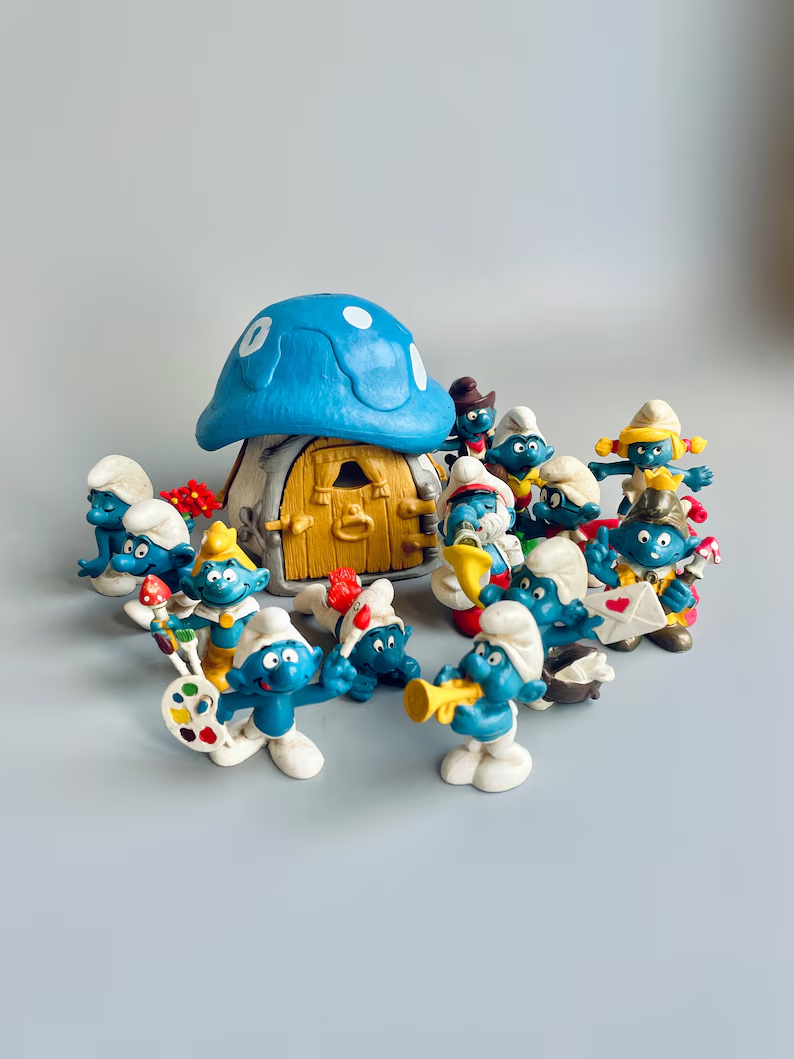
Smurfs move up as one of the strongest character lines of 1982 because this is the year when their shelf logic really starts looking unstoppable. In 1981, the key story was their arrival and sudden spread. In 1982, the more interesting story is how naturally they fit the expanding collectible economy of the early 80s. Small, distinct, easy to identify, easy to gift, easy to multiply — that is an almost unfairly strong formula.
What makes Smurfs especially clever is that they never needed scale to dominate. They did not need giant vehicles or elaborate mechanisms to create desire. Their power came from accumulation. One Smurf is cute. Five are a collection. Ten start to feel like a village. This allowed the line to behave almost like a toy version of low-friction expansion, which is one of the reasons it could spread so effectively in homes, stockings, small gifts, and impulse-buy settings.
They also reflect something important about the 1982 toy aisle: not every hit had to be intense. This was a year of consoles, giant movie merchandise, and increasingly aggressive action concepts, but Smurfs still carved out a major position by being charming, identifiable, and highly repeatable. Their friendliness was part of the business model. They were approachable in a way many louder 80s toys were not.
For Gen X, Smurfs in 1982 feel like the collectible character line settling into real power. They were no longer just everywhere by surprise. They were everywhere because the system behind them worked beautifully.
Smurfs demonstrate the system explored in
Cartoons Became Toy Catalogs:
television familiarity, instantly recognizable characters, easy gifting, and a population that could keep expanding one figure at a time.
Fun Fact / Why It Still Matters
Smurfs stayed strong because they turned tiny, inexpensive character collecting into a habit instead of a one-time purchase.
#4 — E.T. Toys
Toy TypeMovie tie-in toy line
Brand LaneBlockbuster merchandising
1982 Rank#4
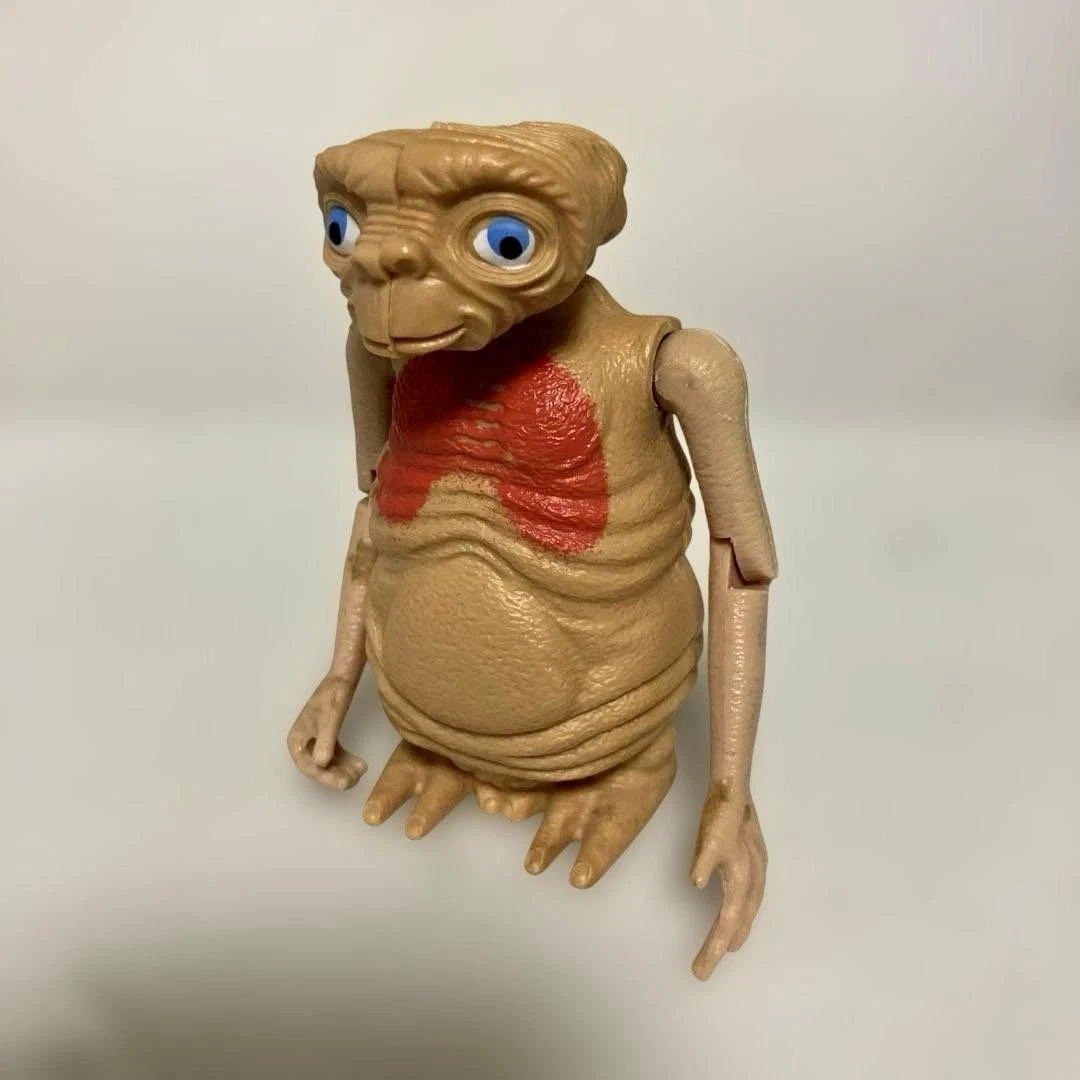
E.T. toys land at number four because 1982 is one of the clearest years where movie emotion turns directly into merchandise demand. What makes E.T. different from many tie-in products is that the appeal was not built mainly on action, danger, or world-building. It was built on affection. Children did not want E.T. because he was powerful. They wanted him because they loved him. That makes this one of the more emotionally revealing toy phenomena of the year.
The line also shows how sophisticated 1982 blockbuster culture and movie merchandising had become by the early 80s. A blockbuster was no longer just a film that sold tickets and maybe inspired a few products. It was now a launch platform for an entire retail afterlife. E.T. was especially strong because the character was instantly recognizable, physically distinctive, and emotionally sticky. That combination is ideal for turning a film into a toy moment.
There is also a fascinating softness to E.T. as a merchandise driver. In a decade often remembered for aggressive branding, louder plastic, and escalating commercial warfare, E.T. proves that tenderness could still move product in a major way. The movie made audiences feel protective, and the toys let kids extend that feeling into the home. That is not the same mechanism as most action or puzzle crazes. It is closer to carrying the emotional residue of the film into daily life.
For Gen X, E.T. toys feel like one of the clearest snapshots of Spielberg-era blockbuster reach. The movie did not just dominate screens. It translated into objects kids wanted nearby. And when a film character becomes something children want to physically keep close, you know the merchandising hook has gone well beyond ordinary licensing.
E.T. merchandise makes more sense beside the
top movies of 1982
and the wider screen-to-shelf toy machine.
The film supplied immediate emotional attachment that ordinary toy lines had to build through years of advertising.
Fun Fact / Why It Still Matters
E.T. merchandise stood out because it sold emotional attachment, not just franchise recognition.
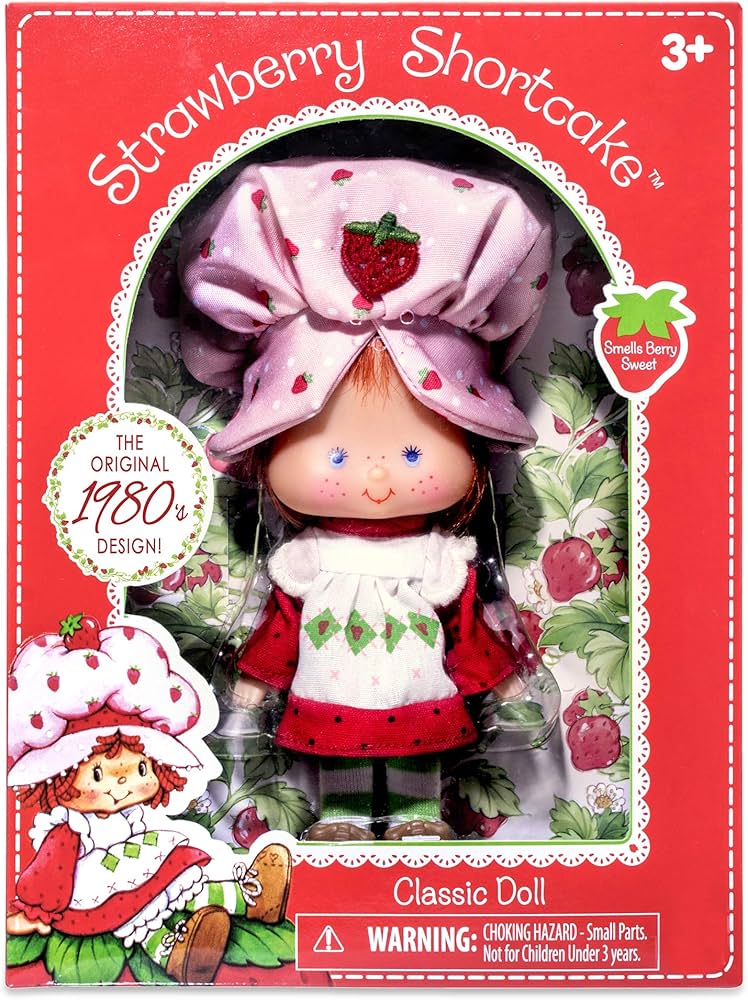
#3 — Strawberry Shortcake
Toy TypeScented doll line
Brand LaneFully expanded toy universe
1982 Rank#3
Strawberry Shortcake reaches number three because by 1982 the brand no longer looks like a hot doll line with a clever sensory hook. It looks like a machine. That is the key difference from the previous two years. The scent gimmick is still memorable, the visual language is still irresistible, and the characters are still easy to love — but the bigger story now is scale. This is what happens when a toy concept graduates into a self-sustaining retail world.
What makes Strawberry Shortcake so dominant in 1982 is how completely its branding system holds together. The colors, sweetness, naming conventions, emotional tone, character identity, and collectible logic all reinforce one another. It does not feel accidental. It feels engineered in the best 80s sense: a toy line built to be instantly recognizable, infinitely expandable, and almost impossible to confuse with anything else on the shelf.
It also benefits from occupying an emotional lane many other products could not access. The brand is comforting without feeling old-fashioned, adorable without seeming weak, and highly themed without being dependent on electronics. In a market becoming more crowded with machines, cartridges, and aggressive boy-oriented action concepts, Strawberry Shortcake offered a different kind of full-system appeal — soft, sensory, bright, and deeply coherent.
For Gen X, Strawberry Shortcake in 1982 feels like the moment the brand reaches full confidence. It is not just surviving the louder toy aisle. It is thriving inside it by being one of the most complete identity packages of the era. That is why it stays so high.
Strawberry Shortcake belongs in the full
80s dolls, plush, and pet toy guide,
where names, scents, colors, pets, cartoons, accessories, and collectible friends turned character brands into complete bedroom worlds.
Fun Fact / Why It Still Matters
Strawberry Shortcake stayed huge because by 1982 it wasn’t just a doll line — it was a
fully managed atmosphere.
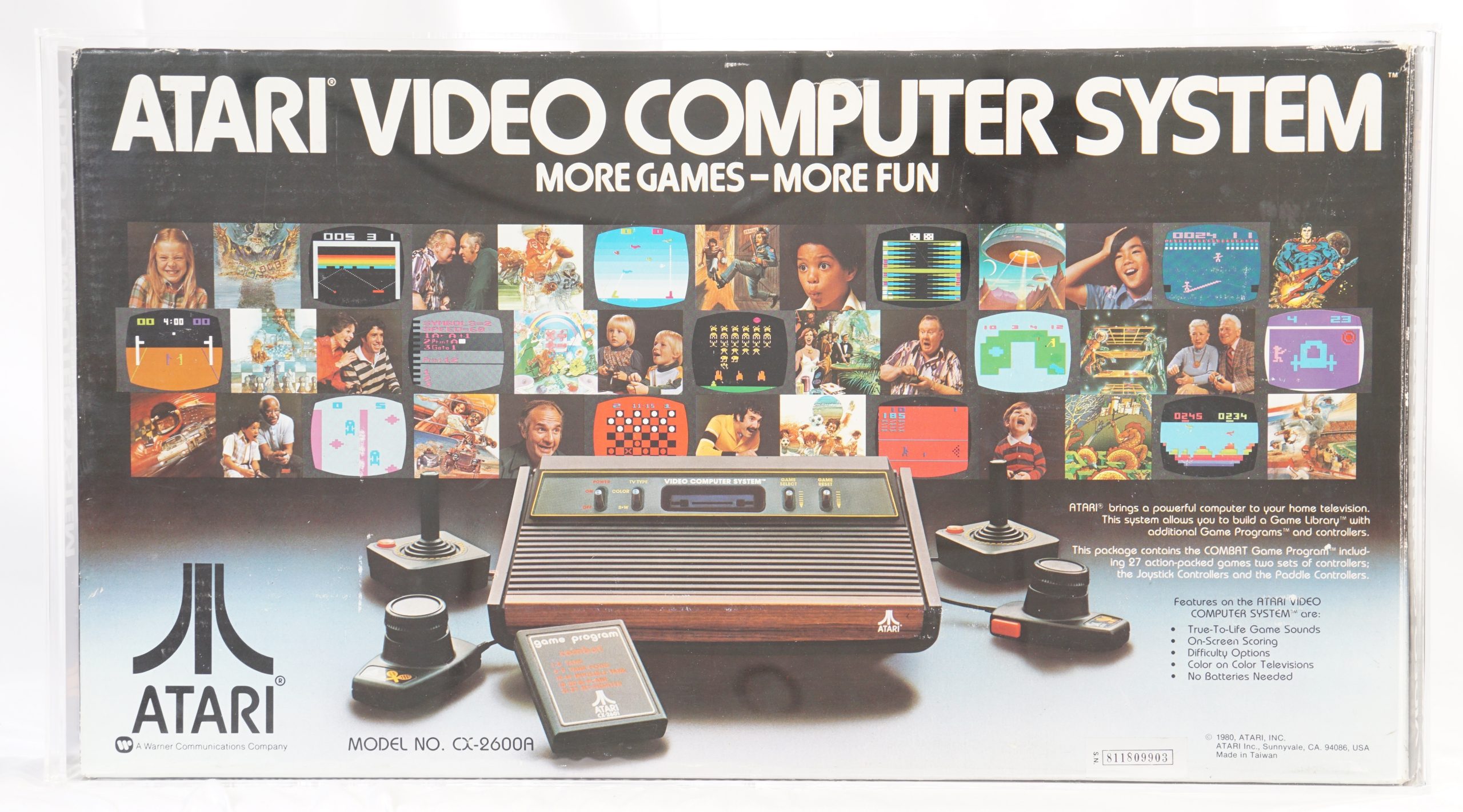
#2 — Atari 2600
Toy TypeHome video game console
MakerAtari
1982 Rank#2
Atari 2600 takes the number two slot because by 1982 it had become something bigger than a hot toy. It was now one of the central organizing objects of home entertainment. In 1980, Atari felt like a breakthrough. In 1981, it felt normalized. In 1982, it feels dominant. The console is no longer merely introducing children to screen-based play during the same period that 1982 music, arcade culture, and early MTV were reshaping entertainment itself. It is teaching them to think of cartridges, libraries, compatibility, and software variety as basic features of leisure.
That matters because the machine’s significance is now cultural as much as commercial. Owning an Atari is no longer just about having a cool present. It is about having access to a category that now carries real social weight. Friends compare games. Families build routines around it. The television becomes even more decisively part of active play. Once that shift happens, a console stops feeling like a novelty gift and starts functioning more like infrastructure.
Atari also captures the 1982 toy aisle’s confidence in a very particular way. The decade no longer seems nervous about putting electronic experiences at the center of childhood desire. The screen is now one of the main events. That is a huge cultural transition, and Atari stands right in the middle of it as the most legible, mainstream face of the category.
For Gen X, Atari 2600 in 1982 feels like the machine that made gaming part of the home’s emotional architecture. It is not just that kids wanted one. It is that having one changed what play looked like, sounded like, and where it happened. That kind of influence is exactly why it ranks this high.
Atari’s 1982 dominance explains why consoles became some of the
hottest Christmas toys of the 80s.
The machine was the major family purchase; every cartridge created another birthday, holiday, rental, or allowance target.
Fun Fact / Why It Still Matters
Atari 2600 hit this high because by 1982 it was no longer a clever idea — it was a standard childhood dream machine.
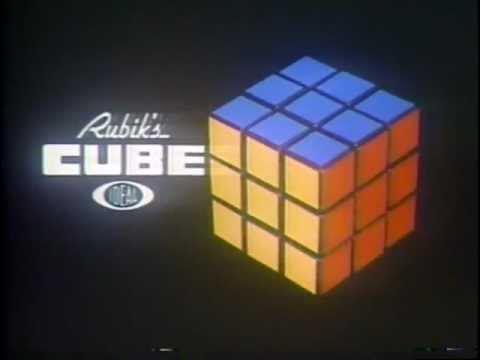
#1 — Rubik’s Cube
Toy TypePuzzle toy
Brand LaneFull-culture craze
1982 Rank#1
Rubik’s Cube holds the top spot because 1982 is the year the craze fully becomes part of 1982 pop culture and feels less like a toy success and more like a cultural condition. By now, the Cube is not only everywhere — it is expected to be everywhere. It has crossed all the usual boundaries that separate children’s products from wider public life. It shows up in schools, offices, media, casual conversation, and personal identity in a way almost no toy can sustain for very long.
What makes the Cube especially remarkable in 1982 is that it remains number one in a market that is much more aggressively commercial than the one it entered. This is a year packed with blockbuster tie-ins, fast-expanding character brands, strong gaming hardware, and increasingly systematized toy lines. And the product at the top is still a color puzzle. That tells you something important. Rubik’s Cube did not just fit the marketplace. It transcended it.
It also benefits from being flexible across age and social setting in a way almost none of its competitors can match. A doll line may dominate one lane. A console may dominate one room. A movie tie-in may dominate one emotional moment. The Cube, by contrast, could live anywhere and belong to anyone. Its difficulty, visual clarity, and almost confrontational challenge level made it feel universal.
For Gen X, Rubik’s Cube in 1982 feels like the high-water mark of toy obsession becoming lifestyle behavior. This is not just something children wanted for Christmas. It is something the culture adopted as a symbol of cleverness, frustration, repetition, and trend consciousness. When a toy reaches that level, number one is the only place it really belongs.
The complete story continues in
Rubik’s Cube and the 1980s craze,
including the 1982 world championship, solution books, schoolyard frustration, knockoffs, collecting, and modern speedcubing.
The Cube also belongs among the
50 most iconic toys of the 80s.
Fun Fact / Why It Still Matters
Rubik’s Cube stayed number one because by 1982 it had become bigger than the toy aisle that launched it.
Same Year, Different Aisle
Keep Rewinding 1982
The toy aisle was only one part of the year. E.T. ruled the box office, radio and MTV were reshaping music,
network television still controlled the family room, arcade culture was booming, and commercial battles
made everything from toys to soda feel like a side had to be chosen.
Top 10 Songs of 1982
The Billboard year-end hits that made the year sound sharper, brighter, and fully early-80s.
Top TV Shows of 1982
The Nielsen-ranked programs shaping the living room, celebrities, and commercial breaks.
Top 10 Movies of 1982
The box-office year of E.T., Tootsie, Rocky III, and blockbuster expansion.
Biggest Fads of 1982
E.T. mania, Commodore 64 fever, Atari, aerobics, and other early-80s obsessions.
The Pepsi Challenge
How a taste-test commercial turned soda into one of the decade’s loudest brand battles.
Explore the 80s Hub
Music, movies, television, toys, commercials, videos, and Gen X nostalgia across the decade.
Watch the Hype Machine
Watch the Toy Commercials Behind the 1982 Wish List
The 1982 toy aisle was built for television. Atari and Intellivision needed to show why the family TV should become
a game machine. G.I. Joe needed to introduce factions, weapons, vehicles, and missions. E.T. merchandise carried
blockbuster emotion into the home. Simon, Merlin, and Speak & Spell had to demonstrate lights, sounds, buttons, and voices.
The 80s Toy Commercials and Videos archive
preserves that ad-break machinery. It also shows why the
cartoon-toy system
became so powerful: the commercial no longer sold only an object. It sold a role inside a recognizable world.
The Toy Box Afterlife
Collecting Toys From 1982 Today
Electronic toys need careful testing.
Simon, Merlin, Speak & Spell, Atari, and Intellivision should be checked for battery corrosion,
worn switches, controllers, power supplies, cartridge contacts, speakers, displays, missing doors, and repairs.
“Untested” should be priced as uncertainty, not automatically translated into “probably works.”
Character lines depend heavily on completeness.
Strawberry Shortcake, Smurfs, E.T. merchandise, and G.I. Joe may have included clothing, combs, weapons,
file cards, accessories, stands, pets, vehicles, packaging, inserts, and edition-specific pieces.
One missing item can separate a complete collectible from a loose survivor.
Boxes and paperwork preserve the sales story.
Console boxes, cartridge manuals, Intellivision overlays, electronic-toy instructions, figure cards,
doll packaging, and movie-tie-in graphics explain how the product was sold and used.
Packaging can matter enormously when the loose toy looks similar across multiple releases.
Actual sold prices beat optimistic listings.
Age alone does not create value. Demand, edition, condition, completeness, originality, packaging, and working features all matter.
The full guide to valuable 80s toys worth money today
explains how to separate collector value from somebody pricing a dusty toy like a used car.
Final Rewind
What the Top Toys of 1982 Reveal About the 80s
The top toys of 1982 show the decade’s major systems gaining real power. Home gaming had become routine.
Blockbuster movies could create instant toy demand. Character brands were learning to expand through names, colors,
cartoons, accessories, supporting characters, factions, and repeat purchases. Electronics remained exciting,
but they were no longer the only future on the shelf.
Rubik’s Cube still stood above the market as a general cultural obsession. Atari became household infrastructure.
Strawberry Shortcake operated like a complete atmosphere. E.T. carried movie emotion into the toy box.
Smurfs multiplied through small-scale collecting. G.I. Joe previewed the action-figure wars.
Simon, Merlin, and Speak & Spell proved strong electronic concepts could survive an increasingly crowded aisle.
Continue with the 50 most iconic toys of the 80s,
the hottest Christmas toys of the 80s,
and the guide to valuable 80s toys worth money today.
Those pages answer different questions: what defined the decade, what created holiday pressure, and what surviving toys may actually be collectible.
The Full Decade
Explore the Top Toys of Every Year in the 80s
Top Toys of 1982: Frequently Asked Questions
What were the most popular toys of 1982?
The most popular toys of 1982 included Rubik’s Cube , Atari 2600 , Strawberry Shortcake , E.T. toys , Smurfs , Intellivision , G.I. Joe , Simon , Merlin , and Speak & Spell .
What was the biggest toy of 1982?
Rubik’s Cube still stands as the clearest number one because the craze remained culturally huge and extended far beyond ordinary toy buyers.
What toys did kids want for Christmas in 1982?
Many kids wanted Rubik’s Cube , Atari 2600 , Strawberry Shortcake , E.T. toys , Smurfs , G.I. Joe , Simon , Merlin , and Speak & Spell for Christmas in 1982.
Why is Atari 2600 ranked above Intellivision?
Because Atari remained the more dominant mainstream face of home gaming, even while Intellivision helped define the competitive edge of the category.
Why are E.T. toys so high?
Because 1982 is one of the clearest examples of blockbuster emotional attachment turning directly into massive toy demand.
Why does G.I. Joe appear here in 1982?
Because the 1982 relaunch marks one of the most important action-figure shifts of the early decade and helps define the direction the 80s toy aisle is heading.
What toy was hardest to find in 1982?
Rubik’s Cube, Atari consoles, and E.T. merchandise were among the hottest Christmas-season items of 1982, depending on region and store inventory.
Why were electronic toys so popular in 1982?
The early 80s were heavily shaped by excitement around technology, home gaming, arcades, and futuristic electronics, making toys like Atari 2600 , Intellivision , Simon , Merlin , and Speak & Spell feel modern and exciting.
Where can I watch commercials for 1982 toys?
Start with the 80s Toy Commercials & Videos archive. It includes vintage ads connected to this early-80s toy world, including Atari 2600, Intellivision, G.I. Joe, E.T. toys, Simon, Speak & Spell, Strawberry Shortcake, and more classic 80s toy-commercial rewind fuel.
Why is this an editorial ranking instead of an exact sales chart?
No single complete public U.S. unit-sales chart ranks every major toy category for 1982. The ranking therefore weighs retail visibility, holiday demand, advertising, cultural impact, longevity, and the strongest surviving evidence rather than inventing false precision.
What were the top Christmas toys of 1982?
The top Christmas toys of 1982 included Rubik’s Cube , Atari 2600 , Strawberry Shortcake , E.T. toys , Smurfs , Intellivision , G.I. Joe , Simon , Merlin , and Speak & Spell .
Was there an official toy ranking for 1982?
No single clean public unit-sales chart covers every major toy category for 1982. This countdown uses a strongest-signals editorial method based on cultural impact, Christmas demand, commercial visibility, category influence, and Gen X memory.