Board Games Still Started Arguments: The 80s Family Room Toy Wars

Board Games Still Started Arguments: The 80s Family Room Toy Wars
80s Toys Deep Dive

Board Games Still Started Arguments: The 80s Family Room Toy Wars

The 80s toy aisle had action figures swinging plastic swords, dolls causing retail panic, electronic toys beeping from the carpet, and video games quietly preparing to take over the television. But board games still had one sacred power: they could turn a quiet family room into a courtroom with dice.

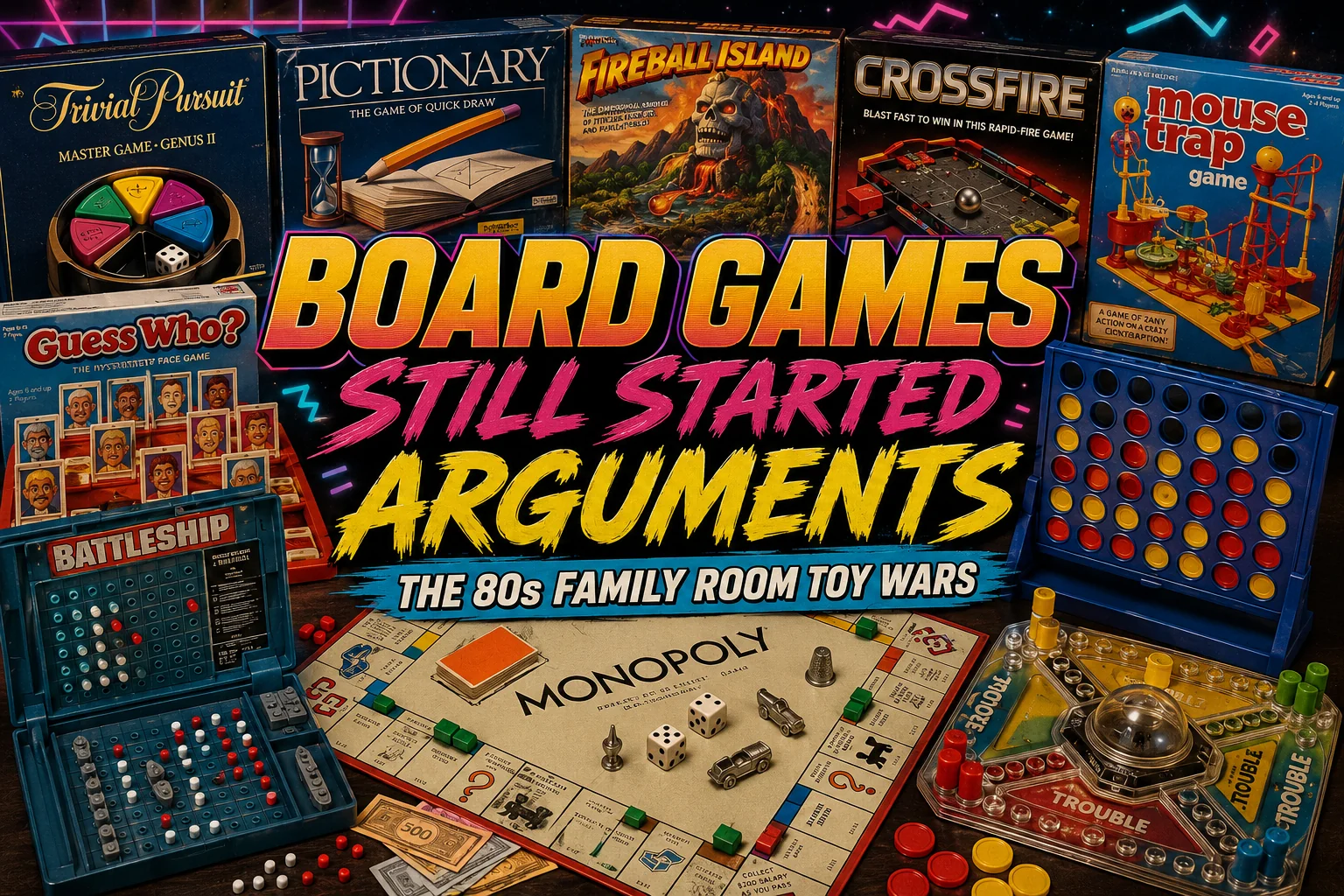
This was the decade of Trivial Pursuit, Pictionary, Fireball Island, Crossfire, Guess Who?, Battleship, Mouse Trap, Connect Four, Trouble, Sorry!, Monopoly, Scrabble, Clue, family game nights, sleepover tournaments, missing pieces, bent cards, and the timeless accusation that someone was absolutely cheating.

Trivial Pursuit
Pictionary
Fireball Island
Crossfire
Guess Who?
Battleship
Mouse Trap
Connect Four
Trouble
Sorry!

Before online rage quits, families had folding boards.

The 80s family room was where game night became strategy, betrayal, questionable drawing skills, trivia humiliation, and one missing red piece that somehow destroyed the entire evening.

Why Board Games Still Mattered in the 80s

They were analog, but never quiet.

The 80s were full of toys that felt futuristic: talking bears, programmable vehicles, handheld electronics, video-game cartridges, laser tag gear, and robots that could maybe cross the carpet if conditions were favorable. But board games survived because they did something those toys could not always do: they pulled everyone into the same room.

A board game did not need batteries, a screen, a cartoon, or a power cord. It needed a table, a floor, a group of people, and a family willing to pretend this would end peacefully. That was enough. The board became the arena. The cards became evidence. The dice became fate. The rulebook became scripture until someone found a loophole.

That made board games deeply social. They were not just things kids played with alone. They were negotiations, alliances, accusations, victory laps, revenge missions, and one person insisting the rules were different at their cousin’s house.

They turned the family room into a battleground.

Family-room games had a specific 80s rhythm. Someone opened the box. Someone dumped the pieces. Someone said they remembered how to play. Someone absolutely did not. The board went down, the snacks came out, the television maybe stayed on in the background, and within twelve minutes someone was angry about turn order.

That tension is why these games stuck. They created memories because they created conflict. Not serious conflict, usually. Toy conflict. Sibling conflict. Dad-knows-every-trivia-answer conflict. Mom-is-way-too-good-at-word-games conflict. Friend-who-won’t-stop-drawing-stick-people conflict.

Board games were one of the last great shared analog rituals before screens took over more of the room. They were messy, tactile, loud, and personal. You could not mute your sibling. You had to sit across from them and watch them win.

The sacred 80s board-game truth: somebody always accused somebody of cheating.

Maybe they moved an extra space. Maybe they peeked at a card. Maybe they “forgot” a rule. Maybe they bumped the board. Maybe they were just winning too much. The accusation was part of the ritual, right next to lost dice and the plastic baggie full of pieces nobody trusted.

How Board Games Took Over the Family Room

The table The coffee table, kitchen table, card table, or carpet became the game zone, usually with someone sitting at a terrible angle.
The box The box art sold the fantasy, the insert tried to organize the chaos, and the lid never fit right again after year two.
The rules The rulebook mattered until someone invented a house rule and acted like it came down from a mountain.
The argument Every great board game had a built-in emotional hazard: cheating, losing, stalling, guessing, blocking, or drawing something no one could identify.

Board games were not just products in the 80s. They were household objects. They lived in closets, under beds, on shelves, in rec rooms, in finished basements, in family rooms, and in that one cabinet nobody opened without triggering an avalanche of puzzle boxes and old decks of cards.

They also fit the decade’s social life. Sleepovers needed something to do after the movie. Rainy days needed a plan. Holidays needed a way for cousins to compete. Family nights needed a safe activity that would somehow become unsafe emotionally. Board games filled that space perfectly.

The 80s board-game shelf was a strange mix of old and new. Classic games like Monopoly, Scrabble, Clue, Sorry!, Trouble, Battleship, and Connect Four were still everywhere, while newer sensations and flashier commercial-driven games brought more gimmicks, more party energy, more plastic, more noise, and more reasons to blame someone else.

The 80s Board-Game Decade in Three Acts

1980–1982: Classics Still Ruled

The early 80s still leaned heavily on familiar family-room staples. Monopoly, Clue, Scrabble, Sorry!, Trouble, Battleship, Connect Four, and Mouse Trap were already part of the household rotation. These were the games kids knew, parents tolerated, and siblings weaponized.

1983–1986: Trivia, Gimmicks, and Bigger Boxes

Mid-decade board games got louder in their own way. Trivia games became adult-party status objects, gimmick games leaned into plastic spectacle, and the toy aisle kept finding ways to make tabletop play look more dramatic in commercials than it ever looked on the actual carpet.

1987–1989: Party Games and Family Chaos

By the late 80s, games like Pictionary helped turn game night into performance. Drawing, guessing, shouting, racing, acting ridiculous, and arguing over what a picture was supposed to be made the family room feel less like a quiet pastime and more like a small claims court with markers.

The Board Games That Kept the 80s Arguing

1980s Trivial Pursuit board game
Tiny Wedges, Adult Confidence, and Public Humiliation

Trivial Pursuit

Trivial Pursuit made trivia feel like a cultural event. It was not just a game. It was a test of memory, confidence, useless knowledge, and whether the adults in the room were as smart as they acted during dinner.

The Hook Answer trivia questions, collect colored wedges, move around the board, and pretend obscure facts were a personality.
The Argument Whether the answer was “close enough,” whether the question was badly written, and whether someone got easier cards.
The Lifestyle Adult game nights, family gatherings, coffee-table dominance, and kids realizing grown-ups did not actually know everything.

The game that made knowledge competitive.

Trivial Pursuit hit differently because it did not feel like a kid game. It felt like an adult object that kids sometimes orbited. The cards were dense. The questions were specific. The little wedge pieces gave the whole thing a strange sense of importance. Winning meant you did not just get lucky; you knew things.

That made the game perfect for 80s family rooms. It let adults show off, teenagers roll their eyes, and younger kids realize that half of adult confidence was just tone of voice. The game rewarded weird memory, broad knowledge, and the ability to sit through several rounds of categories you did not care about.

The wedges were genius.

The little pie pieces made progress visible. You could see who was close, who was lagging, and who had been trapped needing one category for an eternity. That physical progress gave the game tension. A player with five wedges became a threat. A player with one wedge became a cautionary tale.

The board itself was not flashy, but it did not need to be. The drama lived in the questions, the answers, and the smug pause someone took before saying something they were only 60 percent sure about.

The lifestyle memory

Trivial Pursuit belongs to the adult side of the 80s board-game boom, but Gen X kids saw it everywhere: parties, shelves, relatives’ houses, rec rooms, and family gatherings where someone insisted this would be fun.

It helped make board games feel sophisticated, even when the night still ended with someone arguing over a card. Especially then.

1980s Pictionary board game
Terrible Drawings, Loud Guessing, and Total Panic

Pictionary

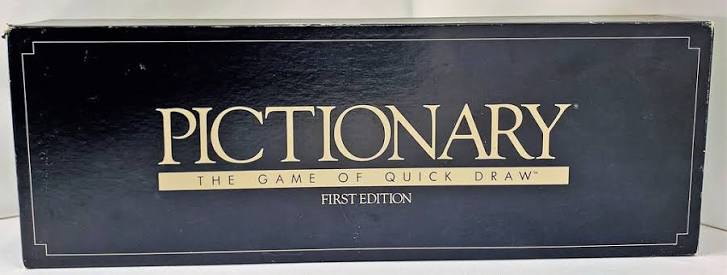
Pictionary turned drawing badly into a group sport. It was fast, loud, ridiculous, and perfectly designed to expose the fact that most people cannot draw a horse, a suitcase, or “justice” under pressure.

The Hook Draw the clue, race the timer, make your team guess, and discover that stick figures can ruin friendships.
The Argument Whether the drawing counted, whether someone used letters, and why that blob was supposed to be a refrigerator.
The Lifestyle Sleepovers, parties, family nights, marker panic, kitchen-table chaos, and people yelling increasingly unhelpful guesses.

The game made embarrassment useful.

Pictionary worked because it made everyone vulnerable at once. A great artist could overthink. A terrible artist could accidentally communicate perfectly. A calm person could collapse under a timer. A competitive person could start yelling “just guess what it is!” while drawing something that looked like a potato with ambition.

That performance energy made it a perfect late-80s family-room and party game. It was not about sitting quietly and thinking. It was about speed, chaos, teamwork, and the very human need to blame your teammates for not understanding your obvious drawing of an escalator.

The timer made everyone worse.

Without the timer, Pictionary would just be drawing. With the timer, it became panic with markers. The countdown turned every clue into an emergency. People shouted guesses before the drawing had meaning. Drawers panicked and added more lines, which rarely helped. Someone would guess “dog” eight times because they had emotionally committed.

That pressure made the game memorable. Pictionary did not need a huge plastic contraption or electronics. It used a pencil, paper, a clue, and the horrifying knowledge that everyone was watching you fail in real time.

The lifestyle memory

Pictionary belongs to the part of the 80s when board games became more social and performance-based. It fit parties, sleepovers, family gatherings, and any situation where people were willing to be loud and wrong together.

It also produced the kind of family-room memories that last forever: not because the drawing was good, but because it was so spectacularly not good.

1980s Fireball Island board game
Plastic Mountain, Rolling Doom, and Commercial Sorcery

Fireball Island

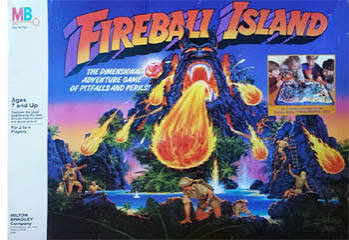
Fireball Island looked like a board game that had escaped from an adventure movie. It had a 3D island, a giant idol, rolling fireballs, bridges, paths, danger, treasure, and the promise that game night could involve actual physical disaster.

The Hook A raised plastic island where marbles rolled down paths, knocked players around, and made the board itself feel alive.
The Argument Whether the fireball hit, whether someone nudged the board, and whether that marble path was supposed to happen.
The Lifestyle Wish-list obsession, dramatic commercials, careful setup, lost marbles, and kids treating a plastic island like sacred terrain.

It was the board-game equivalent of a playset.

Fireball Island mattered because it blurred the line between board game and toy playset. It was not just a flat board with spaces. It was a physical environment. The island had height, shape, paths, danger zones, and a center-piece idol that made the whole thing feel more dramatic before anyone even started playing.

That 3D presence was pure 80s toy-aisle magic. It looked incredible in commercials and on a shelf. Kids did not just want to play it; they wanted to own the object. The game had visual drama, which meant it could compete with action figures, vehicles, and playsets in a way many flat board games could not.

The marble was the villain.

A rolling marble changed everything. It gave the board a sense of motion and threat. Players were not just moving pieces around. They were dealing with physical consequences. The fireball could interrupt the plan, knock pieces around, and create the kind of sudden unfairness that kids find both thrilling and deeply offensive.

That physical chaos made Fireball Island memorable. A card can be unlucky. A die roll can be bad. But a marble that rolls down a plastic mountain and ruins your turn feels personal.

The lifestyle memory

Fireball Island is one of those games remembered partly because of its presence. It looked bigger than normal. It felt like an event to set up. It had pieces that mattered. It had terrain.

It captured a major 80s idea: a board game could be a spectacle, not just a rules system. And if that spectacle also caused arguments, even better.

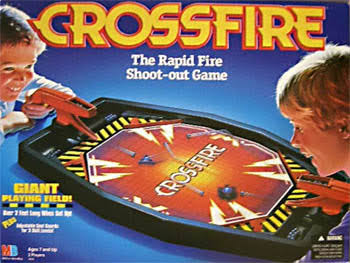
1980s Crossfire board game
Metal Balls, Tiny Pucks, and Commercial Volume at Eleven

Crossfire

Crossfire was barely a board game in the traditional sense. It was more like a tabletop arcade battle powered by frantic clicking, tiny metal balls, and a commercial that made it look like the most intense sport ever invented by plastic.

The Hook Shoot metal balls from both ends of the board to push pucks into your opponent’s goal while everyone loses motor control.
The Argument Whether someone blocked illegally, whether the launcher jammed, and where all the tiny metal balls went.
The Lifestyle Commercial hype, loud play, sore fingers, missing ammo, and kids discovering game night could sound like a hardware drawer.

Crossfire was all adrenaline.

Crossfire did not ask players to sit back and plan an elaborate strategy. It asked them to fire tiny metal balls as quickly as possible and hope chaos became skill. That made it feel closer to an arcade game than a classic board game.

The appeal was immediate. There was motion, sound, competition, and a physical objective. You could understand it instantly, which made it a great kid game. You could also get way too intense, which made it a great sibling conflict generator.

The commercial did a lot of heavy lifting.

Crossfire is remembered almost as much for its advertising energy as for the actual game. The commercial made it feel dangerous, futuristic, and extreme. The name alone sounded like something your parents should probably investigate before buying.

That was very 80s. A game did not have to be complex if the branding made it feel like an event. Crossfire had a name, a sound, a look, and a play pattern that seemed built for dramatic closeups.

The lifestyle memory

Crossfire belongs to the loud, kinetic side of the board-game shelf. It was not calm. It was not educational. It was not subtle. It was a plastic battlefield with tiny projectiles and finger fatigue.

Which means, naturally, kids wanted it.

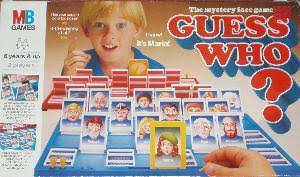
1980s Guess Who board game
Flip Boards, Suspicious Faces, and Interrogation Skills

Guess Who?

Guess Who? turned deduction into a face-flipping ritual. It was simple, visual, fast, and strangely satisfying because every question knocked down possibilities until one weird little plastic person remained.

The Hook Ask yes-or-no questions, flip down faces, narrow the suspects, and hope you did not eliminate the correct person three turns ago.
The Argument Whether that counted as blond hair, whether glasses were obvious, and whether someone answered the question wrong on purpose.
The Lifestyle Quick games, sibling duels, sleepover rounds, face-flipping satisfaction, and childhood’s earliest low-stakes detective work.

The physical flipping made it work.

Guess Who? had a simple genius: every decision created a physical reaction. Ask a question, get an answer, flip down a bunch of faces. That tactile feedback made deduction feel active. You were not just thinking. You were clearing the board.

The game also rewarded a certain kind of kid logic. Ask broad questions early. Narrow fast. Do not waste turns. Try not to panic. Then, when you were down to two people, make a guess with the confidence of a detective who had absolutely no idea what they were doing.

The faces became the game’s personality.

Guess Who? worked because the character cards were memorable. The faces were simple, exaggerated, and easy to scan. Kids did not need lore or a cartoon. The little portraits had enough personality to make the game feel alive.

That visual design made it perfect for younger players but still fun for older kids. It was fast, competitive, and just strategic enough to make losing feel like your opponent had outsmarted you instead of merely guessed better.

The lifestyle memory

Guess Who? sits in the sweet spot of 80s family-room games: easy to set up, easy to explain, quick to replay, and full of tiny accusations about whether someone answered honestly.

It also taught kids a valuable skill: how to ask better questions. Mostly about facial hair, but still.

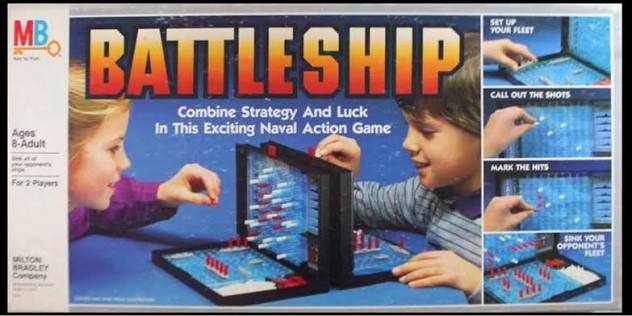
1980s Battleship board game
Coordinates, Pegs, and Sibling Suspicion

Battleship

Battleship was one of the great family-room duels: two plastic grids, hidden ships, red and white pegs, and the quiet psychological warfare of pretending you were not reacting when someone got close.

The Hook Hide your fleet, call coordinates, track hits and misses, and slowly destroy your opponent through grid-based guessing.
The Argument Whether someone moved a ship, miscalled a coordinate, forgot a hit, or reacted suspiciously to B-7.
The Lifestyle Kitchen-table warfare, plastic peg cleanup, sibling staring contests, and dramatic declarations of “you sunk my battleship.”

The drama came from hidden information.

Battleship worked because everything important was hidden. You were not just playing the board. You were reading the other player. Did they pause? Did they look worried? Did they answer too quickly? Was that a normal blink or the blink of someone protecting a submarine?

The game made guessing feel strategic. Every miss was data. Every hit was a breakthrough. Every ship sunk felt like a major victory, even though the whole thing was happening with tiny plastic pegs at a table.

The pegs made it tactile.

The red and white pegs were part of the memory. They clicked into the grid. They got lost in the box. They spilled on the floor. They turned the board into a visual record of the battle. The game had suspense, but it also had satisfying little pieces, which is half the battle in board-game nostalgia.

Electronic versions added sounds and drama, but the basic appeal stayed the same: hide your ships, call your shots, and accuse your opponent of being suspiciously lucky.

The lifestyle memory

Battleship stayed alive in the 80s because it was easy to understand and hard to play without emotional investment. It was quiet for about five minutes, then someone started making faces.

That is exactly what a family-room game needed to do.

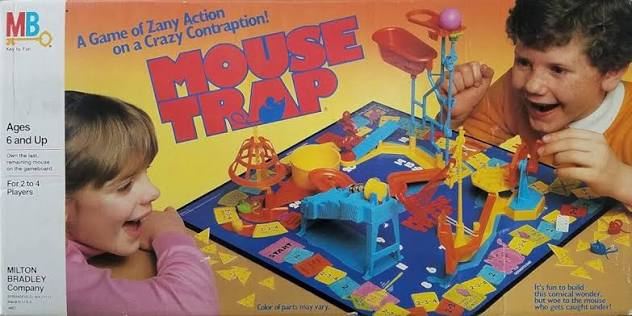
1980s Mouse Trap board game
Plastic Contraptions, Setup Drama, and Engineering Betrayal

Mouse Trap

Mouse Trap was less a board game and more a plastic engineering project disguised as fun. The real excitement was building the contraption and hoping it actually worked when the moment came.

The Hook Move around the board, build a wild Rube Goldberg-style trap, and try to catch opponents under a plastic cage.
The Argument Whether the trap was assembled correctly, whether someone bumped it, and why the cage failed at the worst possible moment.
The Lifestyle Long setup, fragile pieces, dramatic failure, and kids realizing the toy was mostly the machine, not the rules.

The contraption was the star.

Mouse Trap had rules, but let’s be honest: the plastic machine was the reason kids cared. The crank, the gears, the ball, the stairs, the seesaw, the cage — the whole thing felt like a toy commercial brought to life on the table.

That made it a perfect 80s closet staple because it had spectacle. The box promised a device. The game delivered a build. Even if the actual gameplay wandered, the trap itself made the experience memorable.

The failure was part of the charm.

Mouse Trap did not always work smoothly, which somehow made it more memorable. Pieces got misaligned. Something stuck. The ball missed. The cage did not fall. Someone breathed too aggressively near the board and the whole thing lost structural confidence.

Those failures became the story. Kids remember the trap working, but they also remember it not working. That was the entire emotional range of Mouse Trap: anticipation, chaos, disappointment, adjustment, and then “do it again.”

The lifestyle memory

Mouse Trap belongs to the board-game wing of toy engineering. It was tactile, ridiculous, and visually unforgettable. It made the game table feel like a miniature machine shop run by children with no safety certification.

Which is exactly why it still hits.

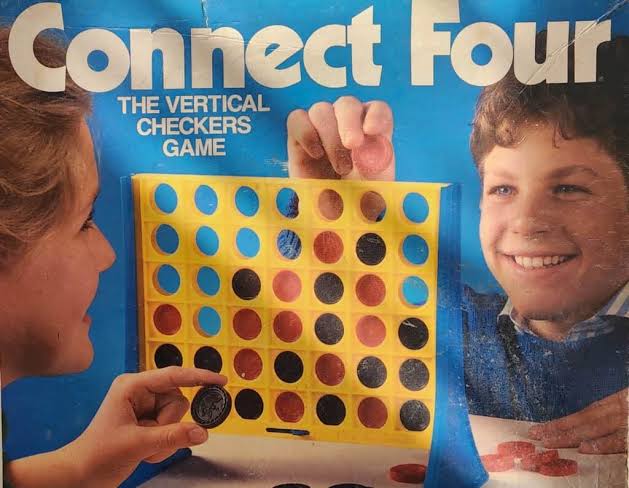
1980s Connect Four board game
Red, Yellow, Vertical Strategy, and Instant Regret

Connect Four

Connect Four was simple enough for younger kids and sharp enough to make older siblings furious. Drop the disc, block the move, miss the diagonal, lose instantly, pretend you meant to do that.

The Hook Drop red and yellow discs into a vertical grid and try to connect four before your opponent sees what you are doing.
The Argument Whether someone took too long, whether a move was obvious, and how nobody noticed the diagonal until it was too late.
The Lifestyle Quick rounds, kitchen-table duels, travel-friendly play, satisfying disc drops, and the loud plastic dump at the end.

The simplicity made it deadly.

Connect Four did not need a long explanation. That was its power. Anyone could look at the board and understand the objective. The challenge came from seeing patterns before the other player did, especially diagonals, the silent assassins of childhood strategy.

Because games were quick, losing created immediate revenge energy. You could reset fast, play again, and convince yourself that the last game was not representative of your abilities as a person.

The physical design was satisfying.

The vertical grid made Connect Four feel different from flat board games. Dropping discs had sound, rhythm, and finality. Once the disc fell, the decision was done. There was no taking it back unless your household tolerated weak moral standards.

The reset was just as memorable. Release the bottom and the discs clattered out in a loud plastic waterfall. That sound is part of the game’s nostalgia.

The lifestyle memory

Connect Four stayed in rotation because it was fast, visual, easy to store, and perfect for repeated sibling combat. It did not need a big event. It could happen anytime.

And it taught one lasting lesson: always check the diagonal. Always.

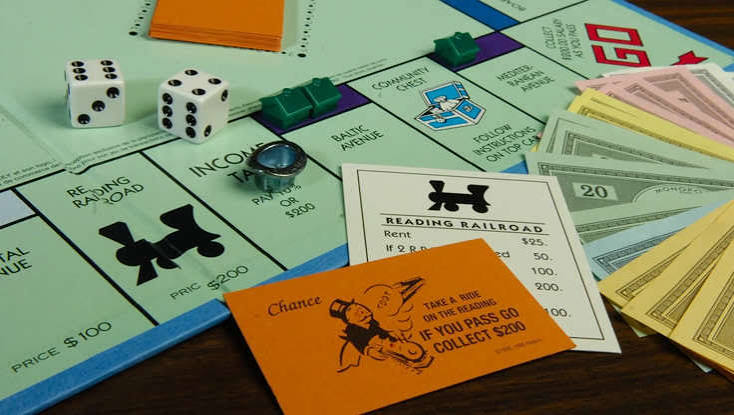
1980s Monopoly board game and classic family game night
Old-School Staples That Refused to Leave the Closet

Monopoly, Scrabble, Clue, Sorry!, Trouble, and the Classic Shelf

The 80s board-game closet was not only new hits and flashy commercials. It was also classic games that kept showing up because every household seemed to own them, lose pieces from them, and argue over them for years.

The Hook Reliable family-room staples with familiar rules, recognizable pieces, and enough conflict to survive decade after decade.
The Argument Monopoly deals, Scrabble words, Clue accusations, Sorry! revenge moves, Trouble dice luck, and the phrase “that’s not a word.”
The Lifestyle Closet stacks, holiday games, rainy days, cousin tournaments, missing instructions, and boxes held together with tape.

Monopoly was the long-form family feud.

Monopoly was not a quick game. It was an event, a commitment, and occasionally a hostage situation. The board promised capitalism in pastel money form, and the result was often three hours of deals, rent, resentment, and someone quietly hoping the game would end through natural disaster.

In an 80s household, Monopoly often lived in the closet as the serious game. It had money, properties, tokens, houses, hotels, and enough rule confusion to keep families arguing across generations.

Scrabble and Clue made thinking competitive.

Scrabble was where vocabulary became combat. Every family had someone who challenged words too aggressively and someone who placed a suspicious two-letter word with the confidence of a person hiding behind the dictionary. It was quiet until it was not.

Clue brought mystery and accusation into the room. The appeal was not only solving the case. It was saying a sentence like “Colonel Mustard in the conservatory with the candlestick” and feeling like a tiny detective in a mansion full of deeply suspicious adults.

Sorry! and Trouble made luck personal.

Sorry! and Trouble were built for emotional damage. They looked simple and kid-friendly, but the core play involved sending people backward, blocking progress, and pretending luck had not turned you into a monster.

Trouble had the Pop-O-Matic bubble, which deserves its own shrine. Pressing that dome felt good even when the number betrayed you. That sound alone could summon a childhood afternoon.

The lifestyle memory

The classic shelf mattered because it gave 80s families continuity. New toys came and went, but these games stayed. They were pulled out on rainy days, holidays, sleepovers, and nights when someone said, “Let’s play a game,” as if that had ever been a peaceful sentence.

These games survived because they were simple, durable, familiar, and perfectly capable of turning relatives against each other.

Missing Pieces Were Part of the Experience

Every 80s board-game closet had a system, and that system was failure. Pieces migrated. Dice disappeared. Cards got bent. Instructions vanished. Money got mixed with other games. Someone used a Monopoly token as a replacement for a missing Sorry! pawn and everyone pretended that was normal.

The box insert always started with noble intentions. Everything had a place. Then real life happened. The game went to a cousin’s house. A dog chewed a card. A toddler ate a hotel. A die rolled under the couch and entered another dimension. The next time the game came out, everyone had to assess whether it was still legally playable.

That imperfection is part of the nostalgia. Board games were physical objects that showed wear. The boxes softened at the corners. The lids split. Tape appeared. Cards smelled like basements and snack dust. The pieces told the story of how often the game had been played and how poorly the household respected storage.

A complete game was nice. An incomplete game was more realistic. Gen X learned flexibility from board games: use a penny, borrow a pawn from another box, make a new score sheet, and keep playing because the argument had already started.

Commercials and Box Art Did the Heavy Lifting

The commercial made every game look louder.

80s board-game commercials were tiny masterpieces of exaggeration. Kids screamed. Families laughed too hard. Plastic pieces moved perfectly. The game looked fast, dramatic, colorful, and socially transformative. Even a simple game could be filmed like an action sequence if the music was intense enough.

That mattered because board games had to compete with action figures, cartoons, video games, and electronic toys. A flat board on a table was not enough. The commercial had to sell the feeling: excitement, suspense, rivalry, laughter, and the possibility that this box would fix boredom forever.

The box promised a better night than reality could deliver.

Board-game box art was a fantasy version of family play. Everyone looked focused but happy. The pieces were all present. The board was perfectly arranged. Nobody had spilled soda. Nobody was mad about losing. Nobody was reading the instructions with rising despair.

But that fantasy worked. The box made the game feel like an event waiting to happen. It sat on a shelf and promised a whole evening inside: strategy, laughter, competition, and maybe one person storming away because someone else would not stop blocking them.

Why 80s Board Games Still Hit

Board games still hit because they represent a type of childhood play that was deeply physical and deeply social. You had to open the box. You had to touch the pieces. You had to sit near people. You had to wait your turn. You had to lose in front of witnesses. Horrifying, but formative.

The 80s made board games share space with flashier competition. Video games were rising. Electronic toys were beeping. Cartoon toy lines were building whole universes. But board games stayed because they offered something different: a shared event where the people in the room became the real content.

That is why the memories are so strong. It is not just the board or the pieces. It is the sibling who cheated, the cousin who took forever, the parent who dominated trivia, the friend who could not draw, the missing die, the broken box, the snack crumbs, the rule dispute, and the moment everyone agreed to play again even though the last round nearly ended civilization.

Board games did not need batteries to cause damage. They had people for that.

80s Board Games FAQ

What board games were popular in the 80s?

Popular and memorable board games in 80s family rooms included Trivial Pursuit, Pictionary, Fireball Island, Crossfire, Guess Who?, Battleship, Mouse Trap, Connect Four, Trouble, Sorry!, Monopoly, Scrabble, Clue, and many other classic and party games.

Why did board games stay popular even when video games got big?

Board games stayed popular because they were social, affordable, familiar, and easy to play with groups. Video games changed the family room, but board games still owned sleepovers, holidays, rainy days, family nights, and situations where everyone had to play together.

What made 80s board games different?

80s board games often mixed classic family play with bigger gimmicks, stronger commercials, party-game energy, plastic spectacle, trivia crazes, and games designed to look exciting on TV. The board-game shelf became more colorful, louder, and more competitive.

Were board games part of 80s toy culture?

Absolutely. Board games were sold in toy aisles, advertised to kids and families, gifted for birthdays and holidays, stacked in closets, and played alongside action figures, dolls, electronic toys, video games, and outdoor toys. They were a major part of the Gen X toy experience.

Why are 80s board games so nostalgic?

They are nostalgic because they were tied to shared rooms, real people, physical pieces, missing parts, house rules, commercials, family arguments, sibling rivalry, and the slower ritual of opening a box and making an evening out of it.

Get More Gen X Rewinds

Want more 80s toys, cartoons, music, movies, fads, and forgotten pop-culture weirdness? Join the rewind and keep the nostalgia machine running.

Get the Rewind

Get the Weekly Gen X Drop

New videos, rewinds, and savage nostalgia — first.

JOIN THE NEWSLETTER WATCH VIDEOS

MORE REWINDS