Electronic Toys Changed the Room: How 80s Gadgets Made Childhood Beep

Electronic Toys Changed the Room: How 80s Gadgets Made Childhood Beep
80s Toys Deep Dive

Electronic Toys Changed the Room: How 80s Gadgets Made Childhood Beep

The 80s toy box did not just get bigger. It got louder. Suddenly toys could talk, blink, remember patterns, count points, fire invisible beams, play songs, move on command, and make parents mutter things about batteries under their breath like they were casting a curse.

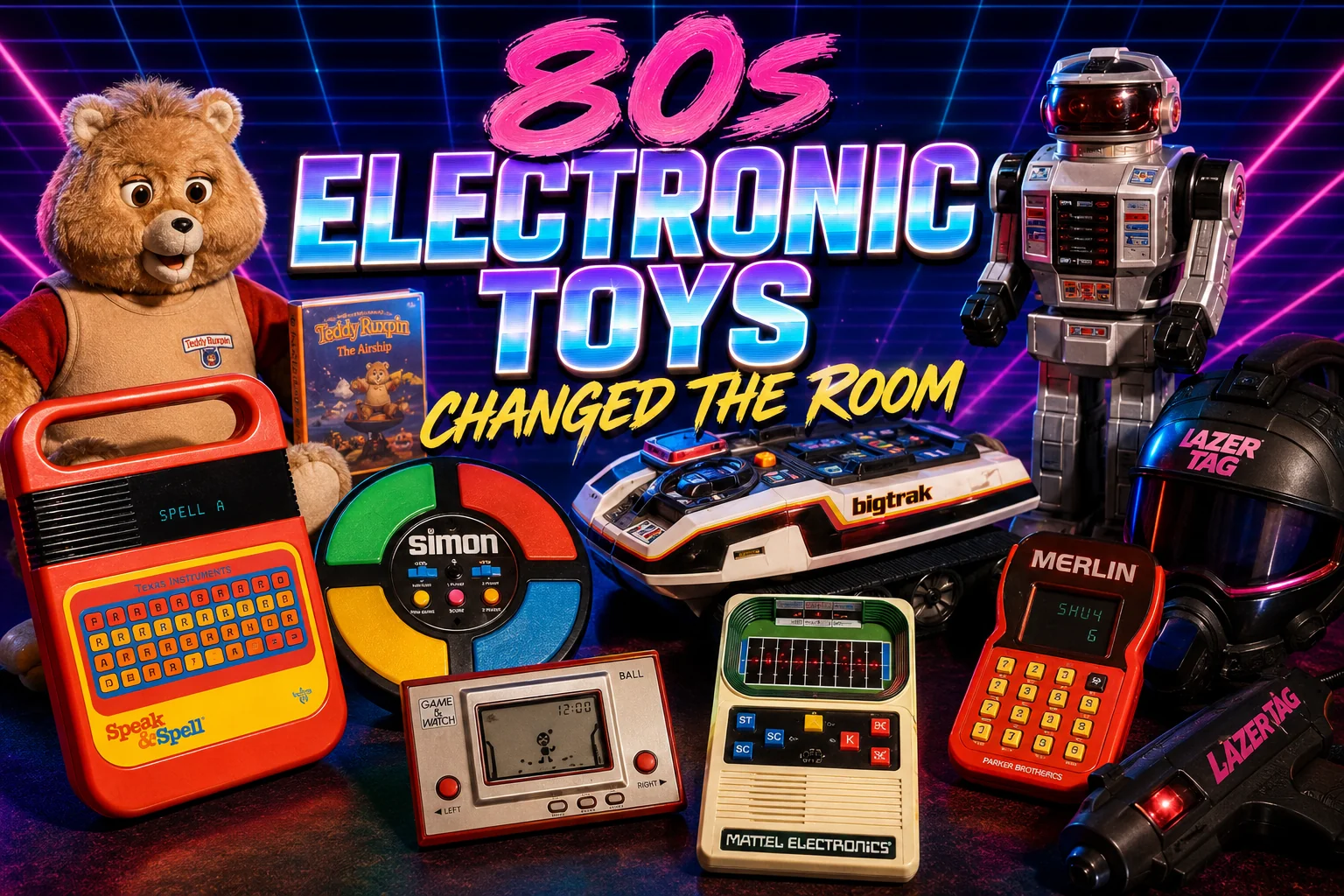
This was the era of Speak & Spell, Simon, Merlin, Mattel Electronic Football, Big Trak carrying its late-70s programmable future into early-80s toy culture, Electronic Battleship, Teddy Ruxpin, Lazer Tag, toy robots, toy keyboards, handheld games, blinking LEDs, robotic voices, and enough 9-volts and D-cells to power a small Cold War bunker.

Speak & Spell
Simon
Merlin
Electronic Football
Big Trak
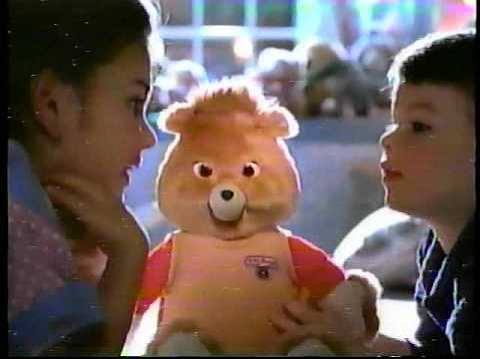
Teddy Ruxpin
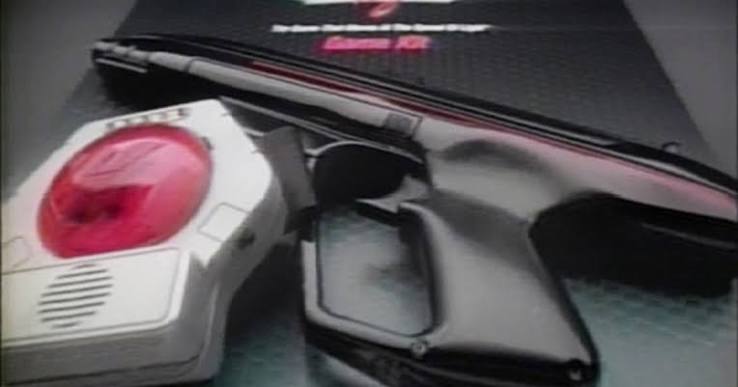
Lazer Tag
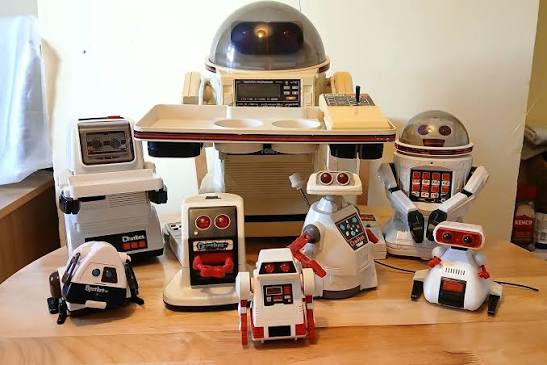
Toy Robots
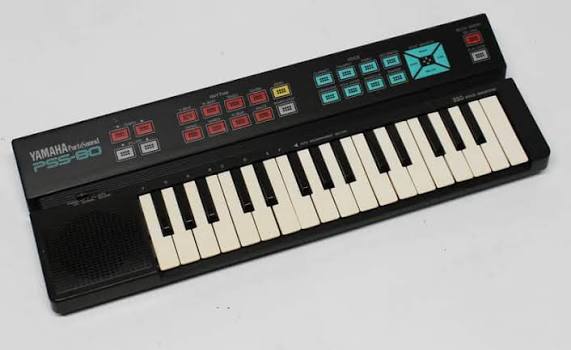
Keyboards
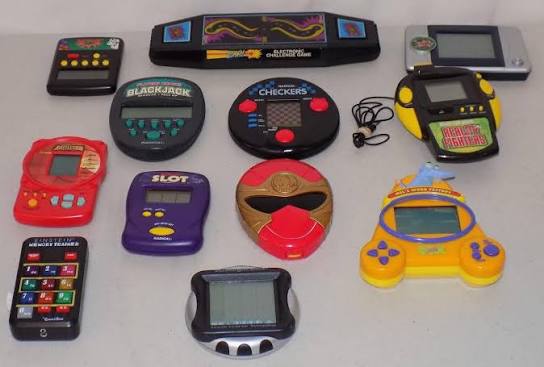
Handheld Games

Before apps, toys had buttons. So many buttons.

These toys made rooms sound different: robotic voices, chirps, buzzes, victory tones, low-battery groans, and the eternal parental phrase, “Do we have batteries for that?”

Why Electronic Toys Felt Like the Future

They answered back.

Before electronic toys took over the room, most toys waited for kids to make the magic happen. Action figures needed voices. Board games needed players. Dolls needed stories. Cars needed sound effects supplied by a child lying on the carpet making engine noises with total commitment. Electronic toys changed that relationship because they responded.

A toy that lit up, beeped, spoke, counted, remembered, or moved felt alive in a completely different way. It did not replace imagination, but it gave imagination a machine to react to. The toy had a voice. The toy had rules. The toy could tell you when you were wrong, which was rude, but impressive.

That changed the energy of a bedroom or family room. Play was no longer silent unless kids made noise. The toy itself joined the conversation. Sometimes it taught. Sometimes it challenged. Sometimes it just screamed electronic nonsense until the batteries died mercifully in the afternoon.

They made technology feel personal.

The 80s were full of technology entering everyday life: home computers, arcade games, cable boxes, VCRs, boomboxes, calculators, digital watches, answering machines, and eventually Nintendo. Electronic toys gave kids a child-sized version of that shift. You did not need to understand how a microchip worked. You just knew the toy had a brain, or at least acted like it did.

That is why these toys felt so powerful. They made technology touchable. Buttons, lights, screens, cartridges, cassettes, command pads, sensors, speakers, and tiny red LEDs all became part of childhood. The future was not some abstract thing. It was sitting on the coffee table asking you to spell “elephant.”

Gen X grew up right as toys started becoming interactive machines. That is why the sound of an old electronic beep can feel as nostalgic as a cartoon theme song. It was the sound of childhood learning how to plug in.

The 80s Electronic Toy Boom in Three Acts

1980–1982: LEDs Take Over

The early 80s were full of late-70s electronic breakthroughs still dominating toy boxes: Simon, Speak & Spell, Merlin, Electronic Football, Auto Race-style handhelds, Big Trak, calculators, and early programmable gadgets. Many of them looked simple now, but at the time a blinking light and a beep could make a toy feel like NASA had entered the family room.

1983–1986: Talking, Moving, Competing

By the middle of the decade, electronic toys had more personality. Toys talked, played music, moved around, told stories, fired invisible beams, and turned everyday rooms into tech demos. Teddy Ruxpin, Lazer Tag, robot toys, keyboards, electronic board games, and advanced handhelds made the toy aisle feel more futuristic and more expensive.

1987–1989: The Screen Starts Winning

Late in the decade, video games and screen-based play put pressure on everything else. Nintendo reshaped the living room, LCD handheld games multiplied, and electronic toys had to compete with full digital worlds. The toy aisle still beeped, but the screen was becoming the new gravitational center.

The Major Electronic Toys and Gadgets

80s Speak and Spell electronic learning toy
Robotic Voice, Orange Plastic, and Educational Flex

Speak & Spell

Speak & Spell made learning feel like a sci-fi object. It was educational, sure, but it also had a robotic voice, a keypad, a display, and the strange authority of a machine that could judge your spelling without needing a teacher nearby.

The Hook A talking learning toy with a keyboard, electronic voice, display, spelling games, and enough futuristic presence to feel like a kid computer.
The Sound That unmistakable robotic voice asking for words, correcting mistakes, and making spelling feel like a transmission from the future.
The Lifestyle Kitchen-table practice, classroom-adjacent play, sibling challenges, road-trip use, and parents pretending it was purely educational.

The toy that made learning feel electronic.

Speak & Spell was the perfect 80s compromise: kids got a gadget, parents got to believe it was good for them. It looked serious enough to pass as educational equipment, but it felt toy-like enough to live in the bedroom or back seat of a car. The buttons made it interactive. The voice made it memorable. The display made it feel like a tiny computer.

That mattered because a lot of kids encountered electronic technology through toys before they had regular access to computers. Speak & Spell taught them that machines could ask questions, process answers, and talk back. It was primitive compared with what came later, but at the time it felt alive in a way most toys did not.

The voice did half the work.

The robotic voice is the part everyone remembers. It was clear enough to understand and strange enough to feel futuristic. It gave the toy a personality even though it was not a character. A doll had a face. Speak & Spell had a voice, and somehow that was enough.

It also made mistakes feel public. If you got a word wrong, the machine knew. If a sibling was nearby, they knew too. Suddenly spelling could become a competitive household event, because apparently even vocabulary needed a scoreboard.

The lifestyle memory

Speak & Spell lived in the gray zone between toy, school tool, and family gadget. It could sit on a desk, a kitchen table, a bedroom floor, or a car seat. It felt useful enough for parents and futuristic enough for kids. That is a powerful combination.

It also set the emotional tone for a lot of 80s electronic toys. The toy did not need a screen full of graphics. It just needed buttons, sound, and the feeling that the plastic had a tiny brain inside.

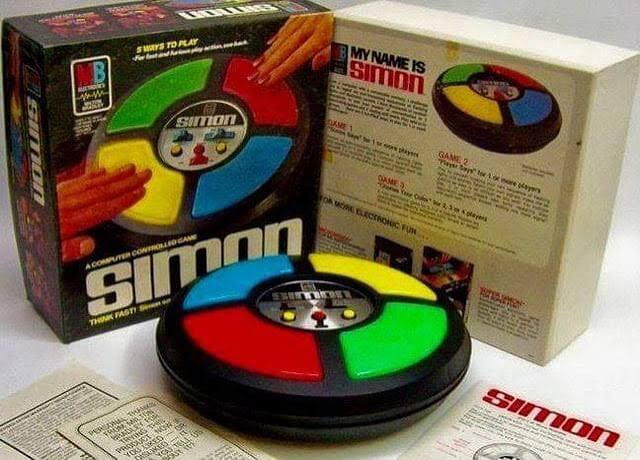
80s Simon electronic memory game
Lights, Memory, and Public Humiliation

Simon

Simon was simple, ruthless, and addictive: watch the lights, hear the tones, repeat the pattern, fail in front of everyone. It was a memory game disguised as a glowing UFO for the coffee table.

The Hook A light-and-sound memory challenge with colored panels, musical tones, increasing patterns, and instant pressure.
The Sound Four tones that became permanently welded into Gen X brains, followed by the crushing sound of getting it wrong.
The Lifestyle Family-room competitions, sleepover challenges, coffee-table play, and the smug silence of someone who remembered one more step than you did.

The rules were perfect because there were almost none.

Simon did not need a long instruction booklet. It showed you a pattern, and you copied it. That was the game. The genius was in the escalation. One light was easy. Two lights were easy. Four felt manageable. Then suddenly your brain left the building and you hit yellow when it was absolutely supposed to be green.

That simplicity made it universal. Adults could play. Kids could play. Siblings could compete. Friends could take turns. Nobody had to pretend to understand a complicated board game. Simon was immediate, visual, musical, and merciless.

It made electronic play social.

A lot of handheld electronic toys were solitary. Simon was different because it worked as a group object. People watched. People counted. People waited for the mistake. The whole room could feel the pressure building as the pattern got longer.

That made Simon a perfect family-room toy. It looked futuristic sitting on a table, but the play pattern was ancient: remember this better than the person next to you. The electronics made it feel new. The embarrassment made it timeless.

The lifestyle memory

Simon is one of those toys that can be remembered through sound alone. The tones, the lights, the pace, the little moment of dread when the sequence got too long. It was not attached to a cartoon world or a character universe. It did not need one.

It proved that an electronic toy could become iconic by being clean, focused, and just annoying enough to make everyone want another try.

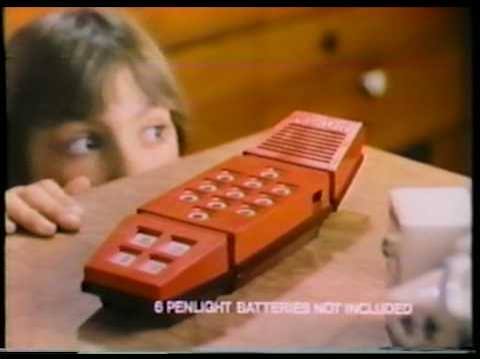
80s Merlin electronic handheld game
Red Plastic, Button Logic, and Pocket-Sized Brain Games

Merlin

Merlin looked like a strange red telephone from the future and packed multiple games into a single handheld device. It was memory, logic, music, patterns, tic-tac-toe energy, and solitary electronic obsession in one very 80s slab.

The Hook A handheld electronic game with multiple modes, numbered buttons, lights, sounds, and enough variety to feel like more than one toy.
The Sound Simple electronic tones, button feedback, pattern prompts, and the kind of tiny beeps that made a quiet room feel technical.
The Lifestyle Solo play, car trips, waiting rooms, couch challenges, sibling borrowing disputes, and figuring out modes without reading the manual.

Merlin felt like a gadget first and a toy second.

Merlin did not have a character face, a cartoon backstory, or a giant playset. Its appeal was pure gadget energy. It had buttons. It had modes. It had lights. It asked you to interact with it through logic and memory. That made it feel more serious than a lot of toys, even if the actual experience was still a kid sitting on the couch mashing buttons.

The shape helped. Merlin looked different from almost everything else in the toy box. It felt like something an astronaut might use if the astronaut’s mission was to play tic-tac-toe during a long car ride.

The multiple-game promise mattered.

In a toy aisle full of single-purpose objects, a device with multiple games felt like value. It could do more than one thing. That sounds ordinary now, but for an early electronic toy, it made Merlin feel deep. Kids could switch modes, learn patterns, test memory, make tones, and treat the toy like a little machine with secrets.

That sense of hidden function was a big part of 80s electronics. Even if the toy was simple, the fact that it had modes made it feel more advanced. A regular toy showed you everything at once. Merlin made you press buttons to find out.

The lifestyle memory

Merlin belongs to the era when handheld electronic games were not yet swallowed by full video-game systems. It was portable, personal, and weirdly satisfying. It could come out during a boring afternoon and make the room feel just a little more futuristic.

It also taught a core 80s lesson: the more buttons a toy had, the more important it looked. Merlin had enough buttons to seem like serious business.

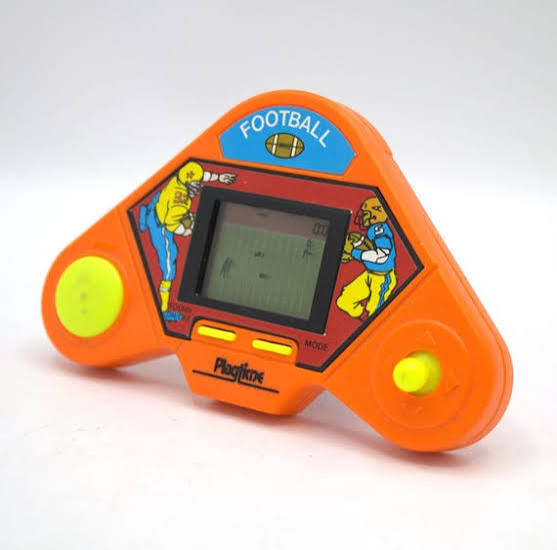
80s Mattel Electronic Football handheld game
Tiny Red Dots, Giant Imagination

Mattel Electronic Football & Handheld Sports Games

Electronic Football and its handheld sports cousins made kids imagine entire games from tiny blinking dots. The graphics were barely graphics, but somehow those little lights became runners, defenders, fields, plays, wins, and heartbreak.

The Hook A handheld sports game using LED blips, simple controls, sound effects, and imagination to create fast solo competition.
The Sound Beeping runs, button clicks, scoring tones, and the tiny electronic panic of trying not to get tackled by a light.
The Lifestyle Bus rides, bedrooms, schoolyard status, jacket pockets, sibling score challenges, and pretending those dots were basically television.

The imagination filled in the graphics.

To modern eyes, early handheld sports games look impossible. A few red LED marks. A plastic case. Buttons. Beeps. That was it. But kids did not experience them as empty. They filled in everything. The field was in your head. The defender was in your head. The drama was in your head. The toy provided the structure, and imagination did the production work.

That is why Electronic Football could feel exciting despite being visually minimal. It had timing, movement, pressure, and a score. A dot could become a player because the kid holding the game agreed to the illusion. Childhood is extremely generous that way.

They made games portable before screens took over.

Handheld sports games mattered because they moved electronic play out of arcades and away from TVs. You could carry them. You could play alone. You could try to beat your own score. You could hand it to a friend and silently hope they failed faster than you did.

They also had status. Bringing one to school, on a trip, or to a boring family event meant you had entertainment in your hands. You did not need a board, a second player, or permission to take over the television. You just needed batteries and enough patience for red dots.

The lifestyle memory

Electronic Football represents the bridge between analog toys and video games. It was not a full screen world, but it was also not pretend-only play. It had rules, electronics, scoring, and feedback. It was a toy that acted like a game system before game systems took over the house.

It also proved that kids will accept almost any level of visual abstraction if the toy feels competitive. A blinking dash can be a linebacker if the beep is convincing enough.

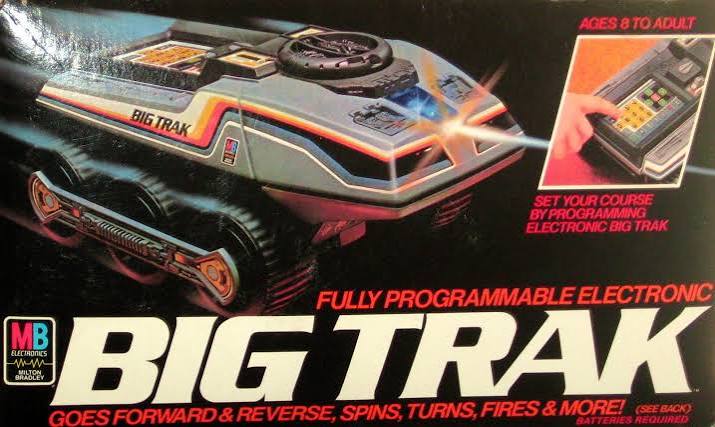
Big Trak programmable electronic toy vehicle
Late-70s Release, Early-80s Future Shock

Big Trak

Big Trak was introduced at the end of the 70s, but it absolutely belonged to the electronic toy future that rolled into the early 80s. It had a keypad, programmable movement, a tank-like shape, and the incredible power to drive across the floor and maybe crash into furniture with dignity.

The Hook A programmable electronic vehicle that followed command sequences, moved across the floor, turned, paused, and fired imaginary laser energy.
The Sound Motor noise, command beeps, rolling plastic, and the sound of a futuristic tank discovering chair legs.
The Lifestyle Living-room missions, hallway courses, sibling obstacles, programming experiments, and parents asking why it needed that many batteries.

Big Trak made programming feel physical.

A lot of electronic toys responded immediately when you pressed a button. Big Trak asked kids to think ahead. You entered commands, sent it off, and watched the result. That made the toy feel different. It was not just reacting. It was following a plan.

Of course, the plan often involved it wandering slightly off course and hitting something, but that was part of the charm. Big Trak turned the floor into a test area. Kids could set up missions, create routes, try to land it near a target, or pretend it was a serious military robot instead of a plastic vehicle obeying the questionable math of a child.

It looked like the future had treads.

Big Trak had that perfect turn-of-the-decade futuristic design language: white plastic, angular shape, keypad, lights, sci-fi attitude. It did not look like a normal vehicle. It looked like something from a moon base, which automatically made it cooler.

The keypad was crucial. It made the toy feel intelligent. Entering commands gave kids the feeling of control over a machine, and that is a powerful thing when you are usually not allowed to touch the VCR because adults are afraid you will destroy time itself.

The lifestyle memory

Big Trak is remembered because it made play feel experimental. You did not just play with it. You tested it. You programmed it. You watched it fail. You adjusted. Then you did it again. That loop made it feel closer to technology than a normal vehicle toy.

It also gave Gen X kids an early taste of command-based thinking. Not that anyone called it coding at the time. It was just “make the robot tank go over there,” which remains an excellent curriculum.

The Board Game Started Talking Back

Electronic Battleship

Electronic Battleship took a classic board-game experience and made it feel more official with sounds, voices, coordinates, and the thrill of technology confirming that your sibling had once again lied about where their ship was.

The Hook A classic naval guessing game upgraded with electronic sounds, command-style play, coordinates, and battle feedback.
The Sound Explosions, hits, misses, command tones, and enough electronic drama to make plastic pegs feel like serious combat.
The Lifestyle Family-room duels, sibling accusations, careful peg placement, dramatic misses, and pretending the machine made the game more official.

It made a familiar game feel high-tech.

Battleship already worked because the core idea was strong: hide your ships, guess coordinates, lie quietly with your face, and hope your opponent does not notice your emotional reaction. Adding electronics made the game feel more modern, more dramatic, and more like a command center.

The electronic version did not replace the imagination. It dressed it up. The sounds made hits feel bigger. The command structure made coordinates feel serious. A board game that once lived fully in plastic now had a little piece of arcade-style feedback.

Electronic upgrades became a toy-aisle strategy.

Electronic Battleship is important because it shows how the 80s upgraded older play patterns with sound and circuitry. The toy industry did not always need to invent a new category. Sometimes it could take a known game, add beeps, and suddenly it felt worthy of a new Christmas list.

That happened across the decade. Classic play met electronic feedback. Buttons made things feel new. Sound made things feel expensive. The box could promise an experience that looked more advanced, even if the family still ended up arguing at the table like always.

The lifestyle memory

Electronic Battleship turned family-room competition into theater. It was slower than handheld games, louder than the original, and dramatic enough to make a hit feel like a tiny military event.

It also belongs to the category of toys that made parents say, “Didn’t we already have this?” Yes. But this one made noises. That was the 80s difference.

80s Teddy Ruxpin talking plush electronic toy
Talking Plush, Story Cassettes, and Mild Bedroom Terror

Teddy Ruxpin

Teddy Ruxpin was where plush toys crossed into electronics. He was soft, story-driven, cassette-powered, and just advanced enough to feel magical while also slightly unnerving when his mouth moved in a dim bedroom.

The Hook A talking animatronic plush bear that used story cassettes to move his mouth and eyes while telling bedtime-style adventures.
The Sound Story narration, cassette hiss, motor movement, and the eerie comfort of a stuffed bear speaking from the shelf.
The Lifestyle Bedtime listening, family demonstrations, cassette rituals, premium toy status, and the feeling that plush had become sentient.

He made plush feel futuristic.

Teddy Ruxpin was not the kind of toy you tossed into a pile with random stuffed animals. He felt more important. He talked. He had tapes. He had a system. He was part plush toy, part story machine, part electronic showpiece, and part family-room demonstration for visiting relatives.

In the 80s, that mattered. A toy that could move its mouth and tell stories felt like the future had wandered into the bedroom wearing a vest. It did not need fast action. It had novelty, and novelty was a major currency in the decade.

The cassette made the ritual.

Teddy Ruxpin play involved a process: choose a tape, insert it, listen, watch, and let the toy perform. That made it feel more like an event than a normal plush toy. It also connected directly to the media habits of the decade. Cassettes were everywhere, so a talking bear powered by tapes made a strange kind of sense.

The slight creepiness helped too. Many kids loved him. Some kids found him unsettling. Both reactions were valid. A plush animal that talks in a dim room is either heartwarming or a tiny haunted appliance.

The lifestyle memory

Teddy Ruxpin sits at the intersection of plush comfort and electronic fascination. He made storytelling feel packaged and mechanical in a way that was very 80s. The toy was soft, but the magic came from the machinery.

He also proved that electronic toys did not have to look like computers. Sometimes the computer could be hiding inside a bear.

80s Lazer Tag electronic toy blasters
Invisible Beams, Backyard Combat, and Sci-Fi Sweat

Lazer Tag

Lazer Tag took electronic play outside and made kids feel like they had wandered into a sci-fi battle. Sensors, beams, blasters, vests, sounds, and outdoor running turned the backyard into a neon war zone without anyone needing to find darts under the couch.

The Hook Electronic blasters and sensors that let kids play sci-fi tag with invisible beams, sound feedback, and wearable gear.
The Sound Laser-style blasts, hit sounds, electronic alerts, and kids yelling rules that were almost certainly made up on the spot.
The Lifestyle Backyard battles, driveway missions, neighborhood teams, running until sweaty, and claiming the sensor definitely did not count that hit.

Electronic toys moved into the yard.

Lazer Tag mattered because it took the electronic toy trend beyond the coffee table. This was not a handheld device or a talking toy. It was wearable, physical, and social. Kids ran, hid, aimed, argued, and treated the backyard like a low-budget science-fiction battlefield.

That made it feel bigger than a normal blaster toy. The electronics kept score, or at least claimed to. The sensor created feedback. The sound effects made every shot feel more official. The whole experience felt closer to a live-action video game before that phrase made sense in normal kid vocabulary.

The sci-fi fantasy sold the gear.

The 80s were loaded with laser imagery: movies, arcade games, cartoons, space toys, neon packaging, and futuristic helmets. Lazer Tag fit perfectly into that atmosphere. It looked like technology kids could wear.

The gear mattered because it made the play feel ceremonial. Putting on a sensor or holding the blaster changed the room. You were not just running around. You were equipped. That was enough to make ordinary suburban yards feel like tactical zones, even if the main obstacle was a patio chair.

The lifestyle memory

Lazer Tag belongs to the sweaty side of electronic play. It was not quiet. It was not educational. It was not subtle. It was pure “go outside and turn technology into an argument.” Beautiful.

It also showed how 80s electronics could make old play patterns feel new. Tag was ancient. Add blasters, sensors, and electronic sounds, and suddenly it felt like the future had arrived in the driveway.

80s electronic robot toys
80s electronic toy keyboards
Robots, Toy Keyboards, and Living-Room Tech Demos

Toy Robots & Keyboards

Robot toys and toy keyboards gave 80s kids a different kind of electronic fantasy: machines that moved, music that came from buttons, and gadgets that made the bedroom feel like a lab, a studio, or a very underfunded sci-fi movie.

The Hook Electronic toys that moved, played sounds, made music, responded to controls, or looked like child-sized versions of adult technology.
The Sound Robot motors, synthetic notes, demo songs, drum beats, tiny speakers, and the universal sound of a keyboard preset being abused.
The Lifestyle Bedroom concerts, robot demonstrations, family annoyance, pretend studios, pretend labs, and kids discovering volume control too late.

Robots made the future seem domestic.

80s robot toys carried huge promise even when the actual toy mostly rolled forward, turned badly, made noises, or carried a tray like a tiny plastic butler. The fantasy was stronger than the function. A robot in the house felt like proof that the future had arrived, even if the future immediately got stuck on carpet.

Robot toys worked because they made technology feel like a character. They did not always need faces or deep play patterns. Movement was enough. Lights were enough. Sound was enough. A kid could project personality onto anything with wheels and a speaker.

Keyboards turned kids into bedroom musicians.

Toy keyboards and small electronic instruments were another major piece of the decade. They gave kids access to music-making without lessons, patience, or the ability to play anything remotely tolerable. Push a key, get a sound. Press a rhythm button, become a band. Hit the demo song, annoy the household.

The 80s were already full of synth sounds, MTV, pop stars, boomboxes, and home electronics. Toy keyboards let kids participate in that sound. They were not just toys. They were tiny performance machines.

The lifestyle memory

Robots and keyboards lived in that wonderful 80s zone where technology felt like magic because expectations were still low enough. A robot moving across the floor was impressive. A keyboard playing a canned rhythm was impressive. A toy making futuristic noises was enough to transform the vibe of a bedroom.

They also made noise. Endless noise. Which means they belong in the electronic toy hall of fame and the parental headache hall of fame at the exact same time.

80s handheld electronic games and early screen toys
Tiny Screens, LCD Worlds, and Pre-Nintendo Pocket Obsession

Handheld Games and Early Screen Toys

Handheld games were the bridge between electronic toys and video-game obsession. LCD screens, simple animations, sports games, arcade-inspired challenges, and pocket-sized devices made kids feel like they could carry a tiny arcade in their hands.

The Hook Portable electronic games with tiny screens, simple controls, scores, repetitive challenges, and just enough motion to feel alive.
The Sound Sharp beeps, score tones, warning sounds, repetitive bleeps, and the low-volume soundtrack of trying to play unnoticed.
The Lifestyle Car rides, school bags, waiting rooms, sleepovers, score competitions, and begging for “one more try” before the batteries quit.

They made boredom survivable.

Handheld games were lifesavers in the parts of childhood where nothing was happening. Long car ride? Handheld game. Waiting room? Handheld game. Visiting relatives with no toys? Handheld game. Boring afternoon? Handheld game until the beeping made someone threaten consequences.

These devices were simple, but simplicity was part of the addiction. Dodge the thing. Catch the thing. Shoot the thing. Score more points. Start again. There was no giant world to explore, but there was always one more attempt.

They trained kids for screen life.

Before handheld gaming became rich and immersive, 80s electronic games taught kids to stare at tiny displays and accept very limited animation as a complete universe. A black shape moving across a small screen could become a car, a player, an alien, a ball, or an enemy if the box art and imagination agreed.

That mattered because it helped prepare kids for the bigger screen shift. The toy aisle and the video-game aisle were not totally separate anymore. Electronic play was becoming digital play, one tiny LCD screen at a time.

The lifestyle memory

Handheld games are remembered through repetition: the same beeps, the same motions, the same score chase, the same frustration when the batteries faded and the display got weak. They were personal toys, often played alone, but the scores made them social.

They also made electronic play portable in a way that felt powerful. The arcade was somewhere you went. The TV was something adults controlled. A handheld game was yours.

Battery Culture Was Its Own Childhood Economy

The toy was only as good as the batteries.

Electronic toys introduced a new childhood problem: power. A non-electronic toy could lose a sword, a wheel, a shoe, or a tiny missile, and still sort of function. An electronic toy with dead batteries became an expensive plastic paperweight. The magic lived and died in the battery compartment.

This made batteries part of the toy experience. Kids learned which toys needed AAs, which needed Cs, which demanded D-cells like a greedy flashlight, and which required a 9-volt that somehow was never in the drawer when needed. The toy box became connected to the junk drawer in a way no one had emotionally prepared for.

Batteries also created tension. Did the toy come with them? Did parents buy enough? Could you steal them from a flashlight? Was the TV remote fair game? These were the moral dilemmas of the 80s household.

The low-battery sound was tragic.

Every Gen X kid knew the sound of an electronic toy dying. The voice slowed down. The beep got sad. The lights faded. The motor dragged. A toy that felt futuristic thirty minutes earlier suddenly sounded like a robot falling asleep in a swamp.

Low batteries created suspense. You could hear the toy fading and know the afternoon was in danger. Sometimes you kept playing anyway, as if determination could generate electricity. It could not. But childhood is optimistic.

That little decline is part of the memory now. The sound of a dying electronic toy is pure 80s atmosphere: plastic, carpet, buttons, static, and someone yelling from another room to turn that thing off.

Catalog and Commercial Chaos

Electronic toys looked incredible in commercials because motion, sound, and light played beautifully on TV. A blinking toy looked alive. A talking toy looked intelligent. A robot looked like it might change your entire life. A handheld game looked like an arcade machine shrunk down by science. The ads did not have to explain much. They just had to show the kid pressing a button and the toy responding.

Catalog pages made electronic toys feel even more serious. They often sat apart from simpler toys because they looked expensive, technical, and futuristic. A product photo of a keypad, screen, speaker, or command panel could do a lot of selling. Kids stared at those pages and imagined the sounds before ever hearing them.

The language around these toys mattered too: programmable, electronic, talking, computerized, laser, digital, interactive. Those words were magic in the 80s. They made toys feel more advanced even when the actual feature was a tiny beep and a flashing light.

That is why electronic toys were often high-priority Christmas-list items. They looked different. They sounded different. They promised a different kind of play. A regular toy let you pretend the future existed. An electronic toy made it beep from the carpet.

The Room Actually Sounded Different

One of the reasons electronic toys still feel so nostalgic is that they changed the soundscape of childhood. A 70s toy room might have had kids making the noise. An 80s toy room had machines joining in. Beeps from one corner. A talking toy from another. A keyboard demo song from the floor. A handheld sports game chirping from the couch. A robot whirring into a baseboard. A parent losing patience in surround sound.

That noise mattered. It made play feel modern. It made the room feel active even when only one kid was playing. It also made electronic toys feel more present than silent toys. A doll could sit quietly. A truck could wait. But Simon wanted attention. Speak & Spell asked questions. Teddy Ruxpin performed. Lazer Tag demanded movement. Electronic toys inserted themselves into the household.

They also created a new kind of memory. You do not just remember how these toys looked. You remember how they sounded when they worked, how they sounded when they failed, and how they sounded when the batteries started dying but you refused to stop because the toy still had one more round in it.

That is the real legacy of 80s electronic toys. They did not just introduce kids to gadgets. They made technology emotional, noisy, personal, annoying, magical, and completely wrapped up in the everyday texture of Gen X childhood.

80s Electronic Toys FAQ

What were the most memorable 80s electronic toys?

Some of the most memorable electronic toys and gadgets associated with 80s childhood include Speak & Spell, Simon, Merlin, Mattel Electronic Football, Big Trak, Electronic Battleship, Teddy Ruxpin, Lazer Tag, toy robots, toy keyboards, and handheld LCD games.

Was Big Trak a 70s toy or an 80s toy?

Big Trak was introduced in 1979, so it technically belongs to the late 70s. But it carried directly into early-80s toy culture and fits perfectly in an 80s electronic toys discussion because it helped define the programmable gadget vibe kids associated with the new decade.

Why did electronic toys feel so futuristic in the 80s?

Electronic toys felt futuristic because they responded with lights, sounds, voices, movement, memory patterns, screens, or command sequences. For kids growing up around home computers, arcades, VCRs, calculators, and digital gadgets, these toys made technology feel personal and playable.

Were electronic toys separate from video games?

Not completely. Many electronic toys were part of the bridge between traditional toys and video-game culture. Handheld sports games, LCD games, programmable toys, and electronic board games helped normalize interactive screen-and-button play before full home video-game systems dominated the living room.

Why do people remember the sounds of 80s electronic toys?

The sounds were part of the play pattern. Robotic voices, beeps, tones, low-battery groans, laser blasts, and tiny speaker music made electronic toys feel alive. Those sounds became attached to bedrooms, car rides, family rooms, Christmas mornings, and the whole noisy texture of Gen X childhood.

Get More Gen X Rewinds

Want more 80s toys, cartoons, music, movies, fads, and forgotten pop-culture weirdness? Join the rewind and keep the nostalgia machine running.

Get the Rewind

Get the Weekly Gen X Drop

New videos, rewinds, and savage nostalgia — first.

JOIN THE NEWSLETTER WATCH VIDEOS

MORE REWINDS