The Most-Watched Television Shows of the Entire 1980s
Four season champions, a crowded field of familiar faces, and a clear look at what it means to say a show owned the decade.
Regular seasons ending 1980–1989. Count first-place finishes; keep the giant individual broadcasts in their own category.
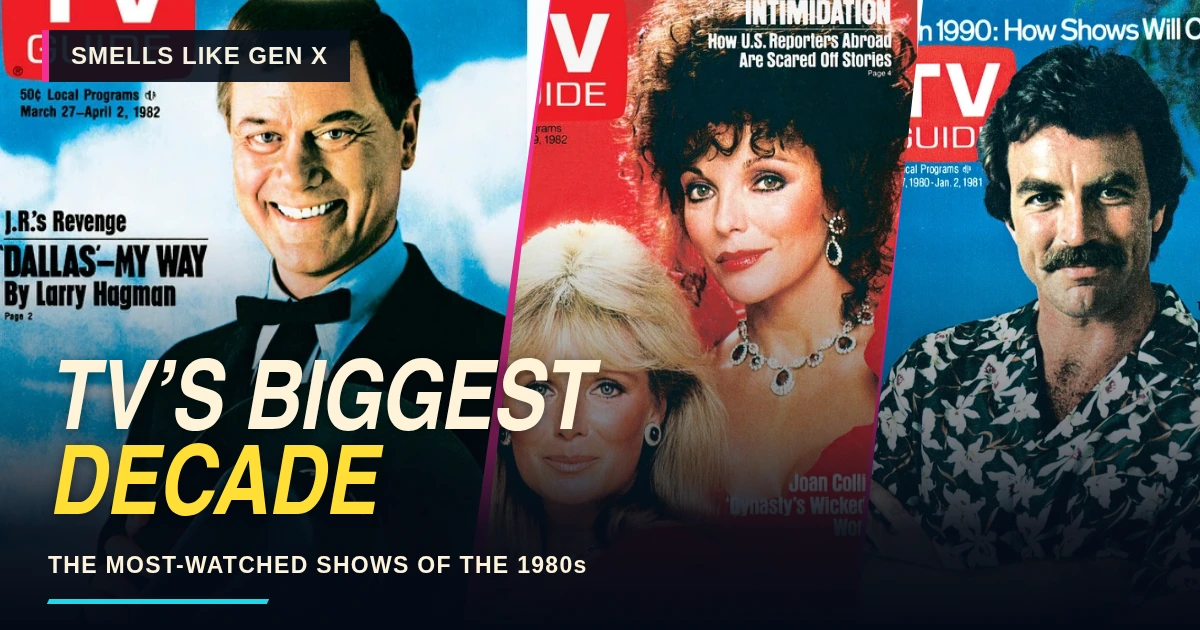
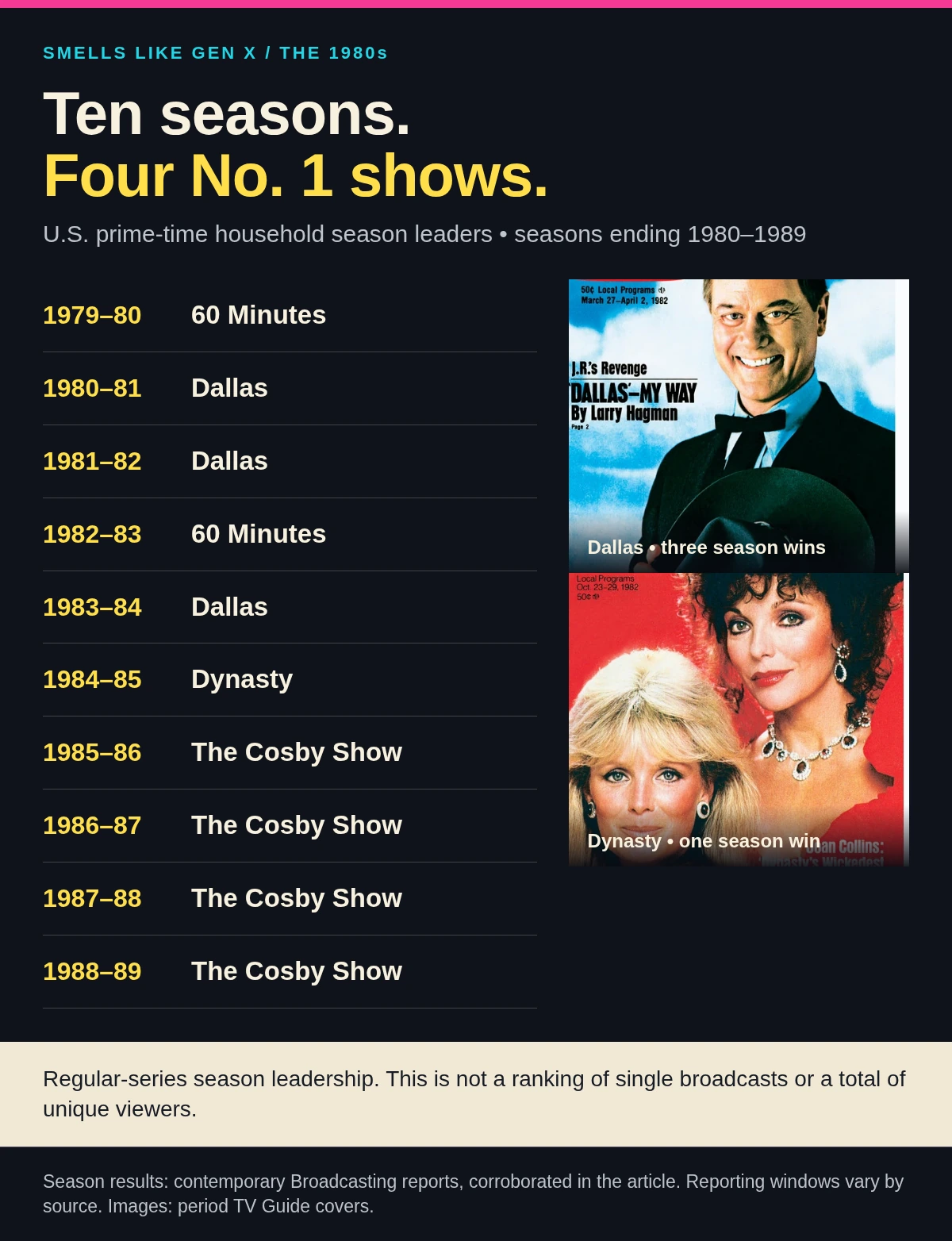
Which shows actually owned the television in the eighties? The Cosby Show, Dallas, 60 Minutes and Dynasty divide the number-one finishes for the ten regular seasons ending in 1980 through 1989. Count those season wins and you get four, three, two and one. That gives us a useful starting point for the most-watched TV shows of the decade—and something firmer than whoever wins the argument at your kitchen table.
The more interesting part is how different those four invitations were. One offered a family argument in a comfortable Brooklyn home. One offered a family argument with oil money and a swimming pool. One brought a stopwatch, questions, and adults who looked prepared to keep asking them. The fourth dressed an argument for a room with a much larger staircase. Apparently America enjoyed family friction at several income levels, with investigative journalism available between visits.
These were not the only enormous eighties shows. M*A*S*H staged a farewell that became a national occasion. Family Ties and Cheers helped turn NBC’s Thursday into a habit. The Golden Girls assembled four women whose kitchen could stop a channel search. Angela Lansbury made murder unusually reassuring. A useful decade feature has room for all of them without pretending they won the same contest in the same way.
Our main comparison counts season championships. The supporting story follows selected major contenders and the different viewing habits they served. Every annual destination retains its own detailed rankings. Here, the pleasure is seeing the larger pattern: who held the top position, who kept appearing in the conversation, and why so many completely different television rooms felt like places the country had agreed to meet.
Inside This Article
- Ten seasons, four champions, one clearly defined comparison
- The stopwatch was already waiting when the decade arrived
- Dallas made waiting part of the program
- Staying enormous was harder than supplying one enormous answer
- In 1983, reporting beat the Ewings to first place again
- Dynasty won the season with the expensive staircase
- The Cosby Show gathered the most season crowns in this window
- By 1986, a very ordinary Thursday had become valuable property
- The 1987 standings make NBC’s depth visible
- Cheers offered a place where other adults had already arrived
- The Golden Girls proved another household could own the evening
- In 1988, the top of the chart gained a different address
- Jessica Fletcher kept a different kind of appointment
- M*A*S*H had the farewell everybody wants to enter in the contest
- Magnum and the A-Team made action into familiar company
- Miami Vice and Moonlighting could look bigger than one rank
- By 1989, another family was changing the conversation
- Who’s the Boss? put another set of household rules on the screen
- The champions shared an ability to make the next visit matter
- The result depends on the question, so keep the question attached
- A few questions before somebody declares their favorite the winner
Ten seasons, four champions, one clearly defined comparison
We’re comparing the ten regular television seasons ending in 1980 through 1989: 1979–80 to 1988–89. Each contributes one reported first-place finish among regular series. Win the season, get one mark. A cliffhanger doesn’t earn bonus points, and a spectacular Thursday doesn’t turn into another championship just because everybody talked about it on Friday.
The resulting order is The Cosby Show with four season wins, Dallas with three, 60 Minutes with two, and Dynasty with one. Those are counts of first-place finishes within this window. The order is not a ranking by cumulative individual viewers. Calling four wins four billion viewers would be an impressive way to lose control of a spreadsheet.
The boundary matters. The 1979–80 season began before the decade, while 1989–90 continued beyond it and is excluded. This matches the annual pages ending in 1980–1989. A calendar-year analysis would require a different dataset and a different explanation. There is no need to pretend the two are identical in order to enjoy the programs.
There’s an obvious catch: a show arriving in 1984 had fewer chances than one already running when the decade began. This tally doesn’t adjust for that, measure total viewing hours, or add together audiences who may have watched the same series week after week. It answers one smaller question cleanly: how many of these ten season titles did each show win? The rest of this feature makes room for the hits that mattered without taking that particular crown.
The table below lays out the ten winners. Contemporary reports and CBS’s historical record supply the results; the season links lead into the larger annual lists. One wrinkle deserves a mention: the networks sometimes disagreed about when a strike-delayed season began. That affects the averages they reported. Counting the reported first-place series keeps this comparison useful without pretending those percentages came from one perfectly identical ten-year measuring window.
| Season | First-place series |
|---|---|
| 1979–80 | 60 Minutes |
| 1980–81 | Dallas |
| 1981–82 | Dallas |
| 1982–83 | 60 Minutes |
| 1983–84 | Dallas |
| 1984–85 | Dynasty |
| 1985–86 | The Cosby Show |
| 1986–87 | The Cosby Show |
| 1987–88 | The Cosby Show |
| 1988–89 | The Cosby Show |
The stopwatch was already waiting when the decade arrived
The first winner in our window is 60 Minutes, the leader for 1979–80. That alone should complicate a memory of the decade assembled entirely from shoulder pads, theme songs, and people leaping over the hood of a car. A newsmagazine stood at the top of the regular-season list.
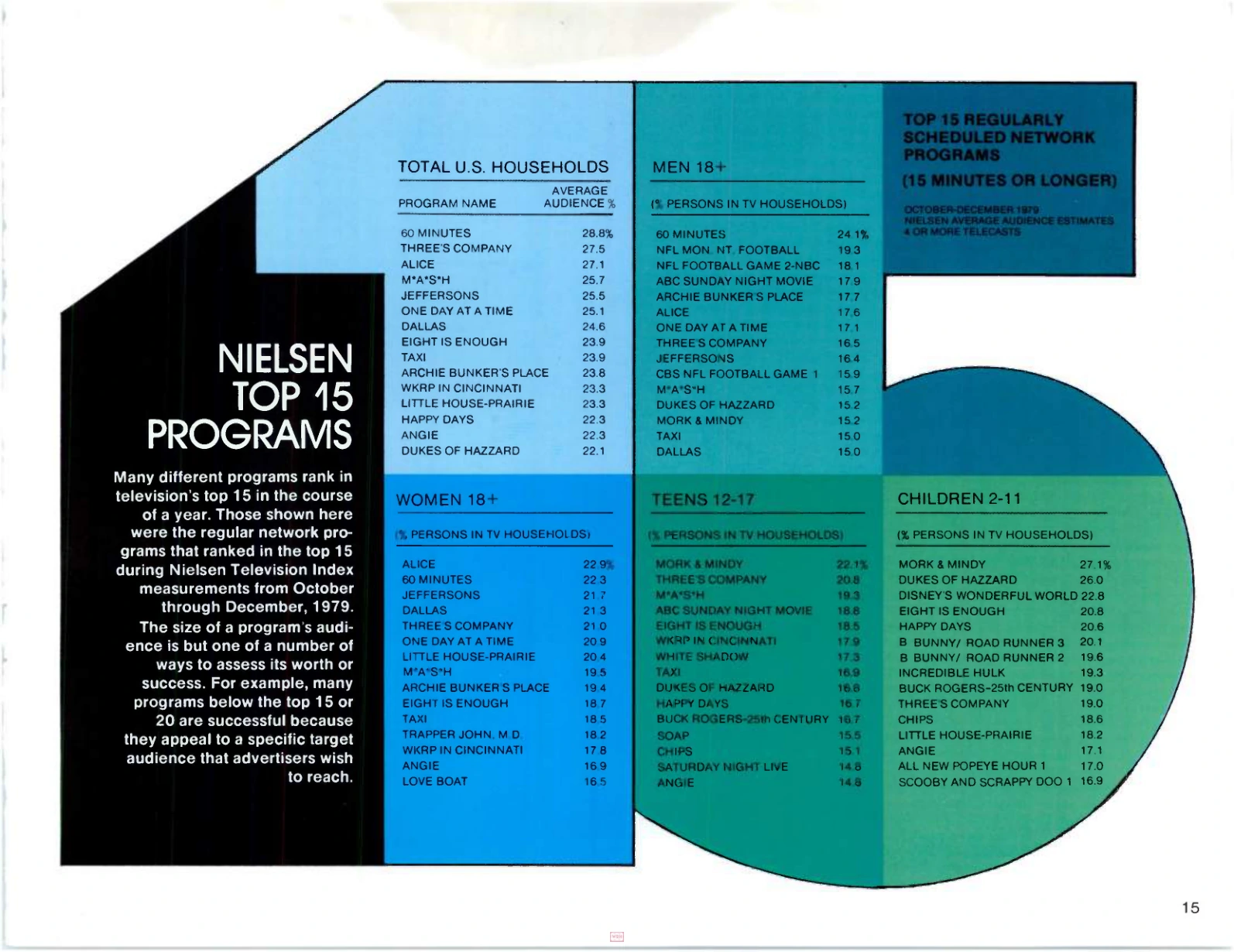
The stopwatch was an unusually stern invitation. It did not promise that a household would leave its worries behind. It suggested there were people who deserved more questions and stories whose reassuring version might not survive inspection. Children passing through the room could recognize its tone long before they understood every subject. The adults were watching something that expected them to pay attention.
Look at the season ending in 1980 and the newsmagazine belongs right beside the era’s familiar entertainment. Its presence is not an exception to television culture. It is part of what that culture actually contained. People could spend one evening with a comedy family and another with a reporter unwilling to accept a convenient answer.
There was a different kind of recurring company here. The questions changed, but the broadcast’s identity remained recognizable. The opening sound announced an approach as efficiently as a sitcom’s living room announced its family. A weekly habit did not always require fictional characters. It could be built around an expectation that someone would investigate, explain, or make a powerful person have a difficult conversation.
That combination gave 60 Minutes a kind of longevity the season-championship count only partly captures. CBS’s own historical records identify its number-one seasons in this window as 1979–80 and 1982–83. Two crowns do not mean it mattered only twice. They identify two first-place finishes in a much longer life of being difficult to ignore.
Dallas made waiting part of the program
Dallas did something remarkable with the space between episodes: it occupied it. A family could switch off the set and remain surrounded by an argument about what the Ewings had done. The next installment was not merely another opportunity to watch attractive people behave badly. It was the place where unfinished business would resume, probably with additional bad behavior.
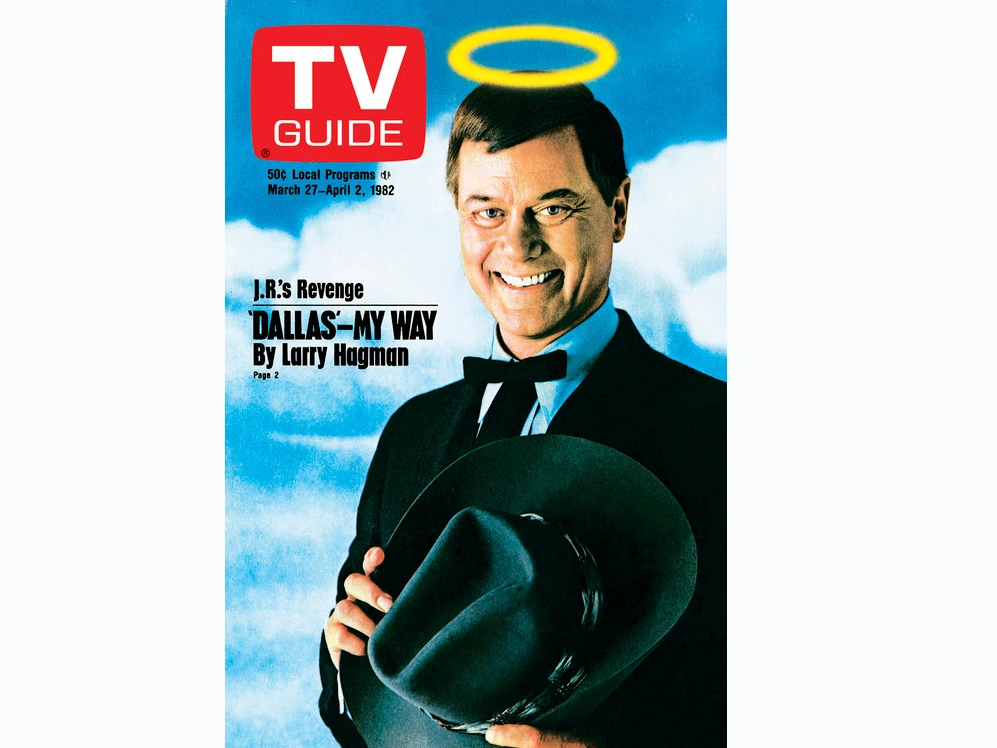
The show’s three winning seasons in this window are 1980–81, 1981–82, and 1983–84. That sequence matters more than a loose claim that Dallas owned the early eighties. It shows both the strength and the interruptions. The Ewings did not hold an unbroken lease on first place, even when their presence in conversation made the series seem inescapable.
The 1980–81 season’s standings put the first of those victories on the record. The famous question about J.R. helped turn the show’s ongoing business into an event people could discuss before they had finished watching it. An individual reveal and a season-long performance remain different accomplishments, but the attraction of wanting the next answer connected them.
J.R. was an excellent engine for that arrangement. A comfortably decent character can settle a scene. A man whose next move may injure several people has a reason to be watched again. Larry Hagman’s charm made the calculation more entertaining: viewers could recognize the damage and still enjoy seeing him prepare to do more of it.
For a child encountering the program through an adult’s television choice, the wealth was almost part of the scenery. The house, clothes, cars, and business discussions belonged to a world where people appeared to have tremendous resources for making one another unhappy. The program let the audience inspect that world without asking anyone to admire the conduct. Luxury had acquired a very busy complaints department.
Staying enormous was harder than supplying one enormous answer
A giant reveal can gather curiosity. Keeping people through an entire season asks for more. Dallas had to turn the attention surrounding its famous cliffhanger into another succession of reasons to return. Its place at the top in the following season shows why the program should be discussed as a sustained hit, rather than filed away as one famous question with a television series attached.
The 1981–82 regular-season page records the second Dallas victory in our comparison. This is the useful distinction between a cultural explosion and a durable attraction. The cliffhanger could make someone try the show. The continuing relationships had to make another evening seem worth arranging around it.
The next season’s winner was 60 Minutes. Then Dallas returned to first place for 1983–84. The season ending in 1984 therefore gives the Ewings a third crown without requiring a myth of uninterrupted dominance. Three wins in four seasons is a substantial achievement all by itself. It does not improve when somebody erases the intervening winner.
That rhythm is part of what a decade comparison can reveal. A show may remain central while losing first place, return to the lead, then gradually give ground to a different kind of attraction. Television history is full of overlapping successes. The arrival of another hit does not cause the previous audience to vanish instantly from every living room.
Our deeper account of Dallas’s ratings and cultural legacy follows the people and reversals in more detail. Here the important shape is the run of victories. The program turned serial anticipation into a repeatable national appointment, then managed to keep a very large audience interested after the most famous piece of business had already been answered.
In 1983, reporting beat the Ewings to first place again
The 1982–83 regular season gives 60 Minutes its second first-place finish in this window. The return is useful because it interrupts the simplest possible eighties story. Neither the big soap nor the big sitcom tells the whole decade. News could still gather the largest regular-season audience.
There is an appealing stubbornness in that result. The program did not need to become a glamorous fictional household to remain an appointment. Its attractions came from reporting, personalities, subjects, and the expectation that a segment would lead somewhere worth following. The room stayed because the question mattered, not because a character was about to announce another unexpected relative.
That did not make every viewer a perfectly attentive civic participant. People could enter late, leave during a segment, enjoy one correspondent more than another, or watch because another person already had the set on. A successful broadcast does not require every member of its audience to have arrived for the same reason. It needs enough people finding enough reasons to remain.
The result also places the M*A*S*H farewell in the right company. An enormous individual broadcast occurred in the same season that 60 Minutes won the regular-series standings. Those statements do not compete. One describes an occasion. The other describes a season comparison. The period had room for both, along with the people insisting that the program on the next channel was better.
For the larger decade story, 60 Minutes is the counterweight that keeps the feature honest. Its presence says the national television habit included curiosity and argument about the actual world. Eighties viewers enjoyed an escape. They also watched a stopwatch count toward an interview somebody probably wished had ended sooner.
Dynasty won the season with the expensive staircase
Dynasty gets one championship in the ten-season window: 1984–85. It is tempting to describe that as a brief victory and move along. For the people making, selling, and watching a lavish prime-time soap, taking the top regular-season position was hardly a minor afternoon at the office.
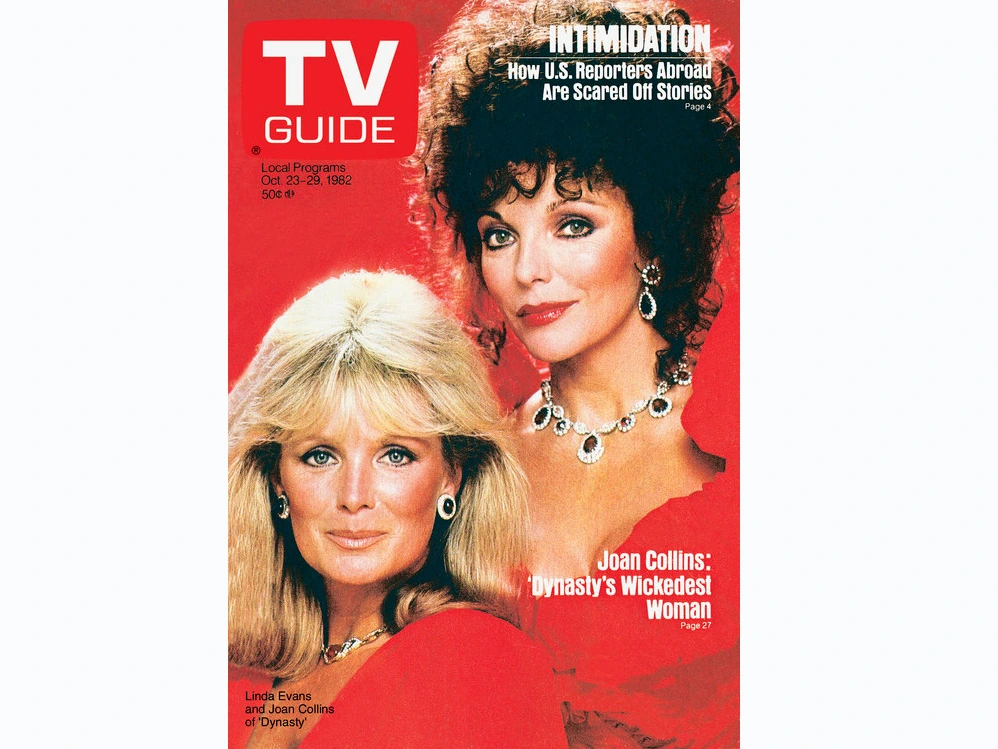
The 1984–85 season’s standings place Dynasty ahead of Dallas, with The Cosby Show already part of the leading group. The transition looks wonderfully untidy from this distance. The old soap rivalries were still potent while a family comedy was assembling the audience that would define the next phase. No one had sent the entire country a memo announcing that its tastes were changing on Tuesday.
Dynasty gave extravagance an exceptionally visible vocabulary. Clothes occupied space. Entrances expected attention. A family disagreement could take place in surroundings so elaborate that an ordinary household’s argument about the electric bill briefly seemed underproduced. The show made looking part of the weekly attraction.
Joan Collins and Linda Evans supplied contrasting presences within that world. A period magazine cover could communicate the promise before a synopsis entered the conversation: recognizable women, deliberate glamour, and the prospect that poise would not prevent an argument. The pictured cover here dates from 1982, before the winning season. Its earlier date is part of the program’s continuing publicity life, not evidence that it had already won that year’s ratings.
One crown still puts Dynasty in a very small club. Alexis didn’t need to win every season to make an entrance people remembered. The clothes, the feuds and the sheer expense of looking furious all had a life beyond that one finish. But 1984–85 gives the glamour a concrete marker: for that season, the Carringtons beat the Ewings to the top.
The Cosby Show gathered the most season crowns in this window
The Cosby Show leads our count with four first-place regular-season finishes: 1985–86, 1986–87, 1987–88, and 1988–89. The result is a statement about those four seasons. It does not claim that a program arriving in 1984 had somehow supplied ten full years of original episodes during the eighties.
The domestic scale helped make the success feel very different from the soap era. A family room, a kitchen, a bedroom conversation, a child confident in an argument that was about to become less comfortable: the series offered situations a viewer could recognize without owning an oil company. Cliff and Clair Huxtable had professional success and a beautiful home, but their children still required the kind of attention that no impressive address eliminates.
The program also mattered as a portrayal of a prosperous Black family at the center of a national comedy hit. Its place in television history belongs to the ensemble, writing, performances, and viewers who made it an appointment. Phylicia Rashad’s Clair was an essential part of that attraction. The household’s authority did not begin and end with the man enjoying his latest argument.
A comparison of audience success can acknowledge that history without turning a television character into a certificate of virtue for the performer playing him. Later knowledge changes how many people encounter the series. The eighties ratings describe the audience then; they do not instruct anyone how to feel about watching it now. No discussion of its numerical success requires a reader to set aside their own response.
For the period audience, the attraction included small recognitions. A child tried to explain away a result. A parent listened with suspicious patience. The room understood that the explanation was running out of road several sentences before the child did. It was television comedy built around people recognizing a family exchange, including viewers who knew perfectly well their own household looked different.
The Cosby Show feature spends more time inside that household and its place at NBC. Here, the four straight season wins explain the size of the hit. You didn’t need a Nielsen report to notice how often the Huxtables came up in conversation, but the reports confirm that a lot of other living rooms had made the same Thursday appointment.
By 1986, a very ordinary Thursday had become valuable property
The 1985–86 season marks the first Cosby Show victory in our window. A hit at the beginning of an evening offers a network something beyond the value of one program. It offers a large audience already present when the next attraction begins making its case.
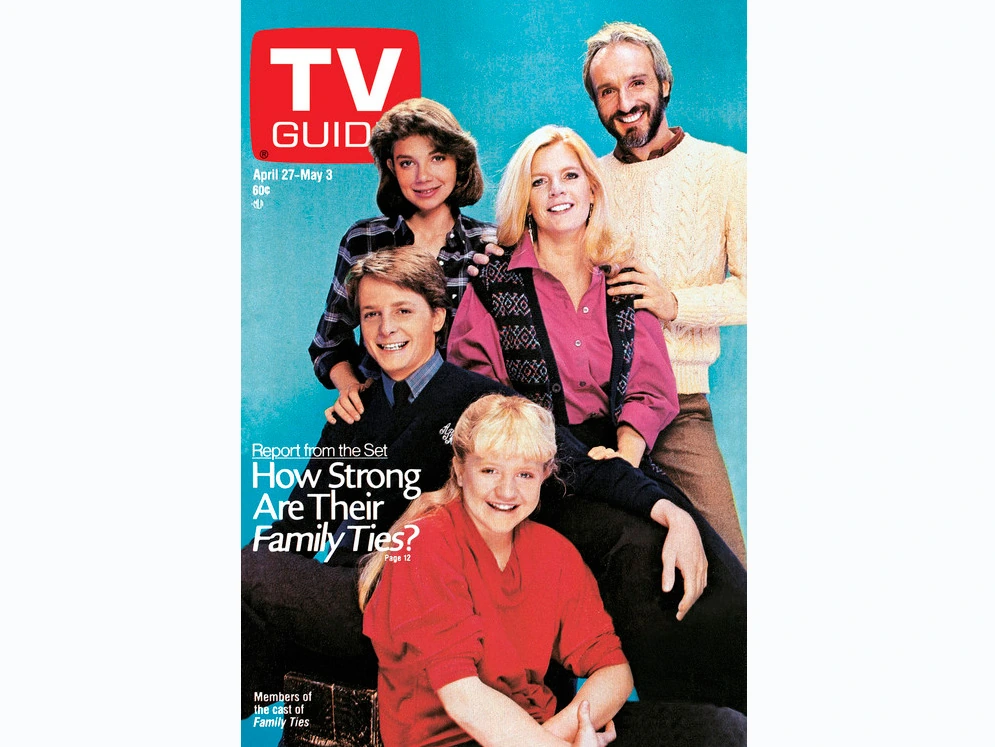
That opportunity is not a conveyor belt. Viewers can leave. A child can lose the argument over the remote. Someone can decide that one half hour is enough television for tonight. A successful lineup still has to give people reasons to remain. The extraordinary attraction is an evening that begins to feel easier to follow than to interrupt.
Family Ties fit that environment with a different family and a particularly pointed generational disagreement. Alex Keaton’s certainty about success could collide with his parents’ values inside a comedy people watched for affection as well as argument. A conservative tie and a household full of other opinions made a durable engine for a half hour.
The April 1985 cast cover reproduced here belongs to the period in which that identity was becoming especially visible. Magazine recognition and Nielsen placement are different things, but both can help explain the feeling that a television family had arrived in the actual household. You saw the faces on the set and then found them looking back from the coffee table.
The story of Family Ties and the Keatons deserves its own room. Within this comparison, it helps explain the depth around a champion. A network can be transformed by a program at the top, then strengthened by the programs that persuade the same room to stay through another set of commercials.
The 1987 standings make NBC’s depth visible
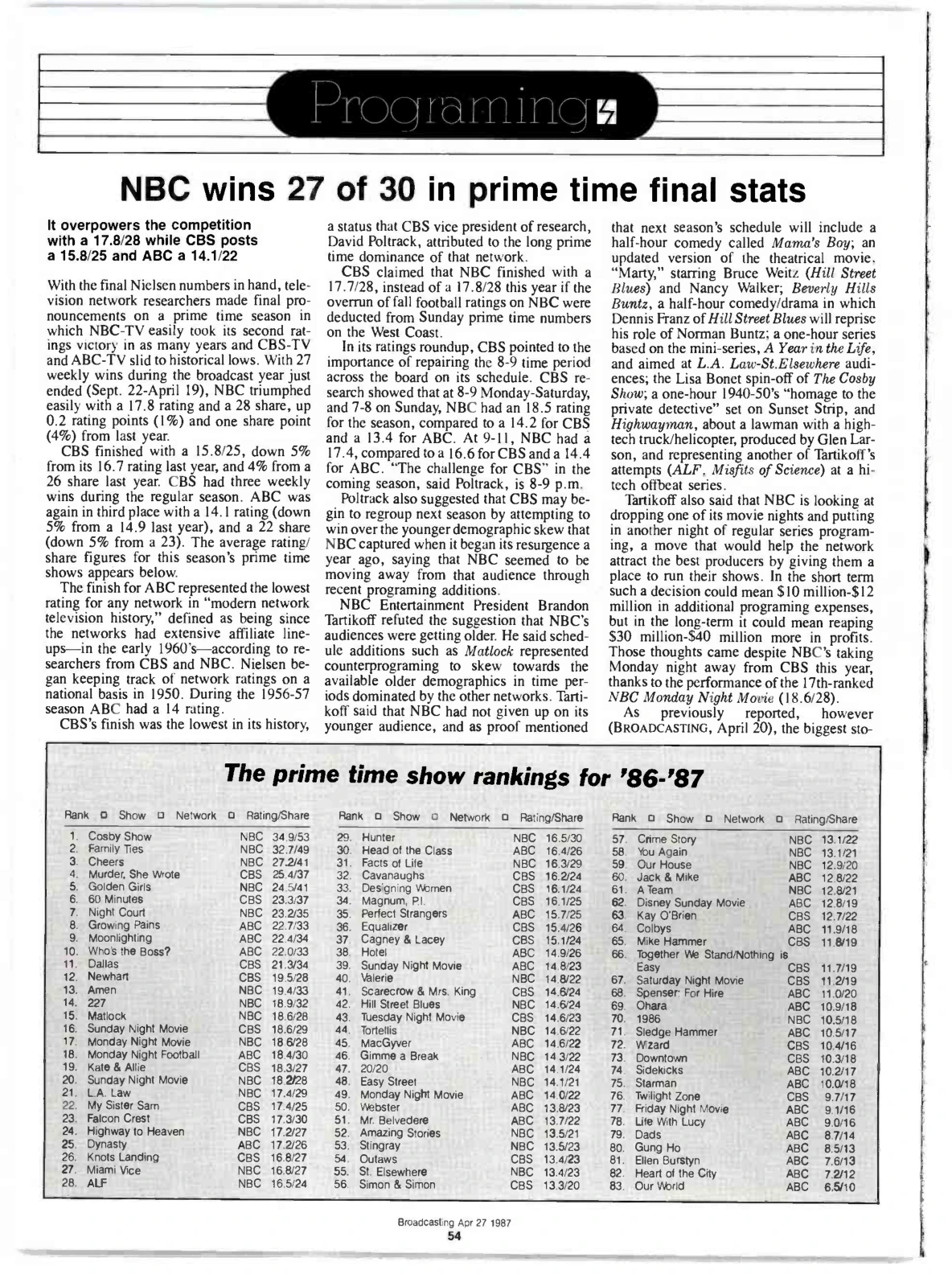
The 1986–87 annual page puts The Cosby Show, Family Ties, and Cheers in the first three positions. Contemporary Broadcasting printed the full regular-season table, reproduced here as a period document. Its reporting window is stated rather than left to the imagination.
That grouping is more revealing than a claim that one star single-handedly occupied every television. A strong evening could contain several attractions with different personalities. The Huxtables offered family negotiation. The Keatons offered another family’s generational friction. Cheers offered adults who had left home and brought their difficulties to a bar with very reliable attendance.
The programs did not need to sound alike to become compatible appointments. A viewer could enjoy the move from one social world to another, carrying the evening forward without having to decide again from scratch. The network’s achievement involved the company around the leader, not just the leader’s own large audience.
The printed table is also a useful corrective to retrospective memory. It places other familiar programs farther down the same season. A show can have an enormous cultural afterlife without finishing near the top in every year it existed. Looking at the actual list prevents a beloved title sequence from quietly taking over the statistical record.
The larger story of NBC’s eighties rise follows how that position developed. Here, the 1987 snapshot shows the outcome at one well-defined moment: three distinct comedies occupying the top of the regular-season table, giving the network more than one reason to feel pleased with Thursday.
Cheers offered a place where other adults had already arrived
Cheers offered another kind of appointment: the bar was open, the regulars were there, and somebody was about to say something they should have kept to themselves. It didn’t need a season-ending shooting to make you return. Sometimes the attraction was simply watching people who knew one another far too well carry on as if tonight might somehow be different.
A bar is a useful television room. People arrive with news, hopes, and a version of themselves that another person can puncture immediately. Work continues behind the counter while conversation refuses to move efficiently in front of it. The audience learns the regulars and begins enjoying a response before anyone has fully explained why a particular remark was unwise.
That sort of familiarity supports a different habit from a prime-time soap. You can care deeply about relationships without needing every evening to end on an emergency. An entrance, a look, or the assurance that somebody at the bar will have an opinion can be sufficient reason to sit down again.
The show’s later first-place success belongs outside the window being counted here. Moving a nineties result backward would make the chart look more familiar to people who remember the complete run, but it would also make the chart wrong. The eighties supplied plenty of success that does not need a borrowed crown.
The longer story of Cheers’s rise from a slow start is one of television’s great reminders that an audience can take time to find its place. By the later eighties, the bar belonged in the national conversation. The season title arrived in 1990–91, outside this tally; the feeling of knowing the place had already been built over years.
The Golden Girls proved another household could own the evening
The Golden Girls made a strong invitation out of four women sharing a home and declining to treat one another’s nonsense with unlimited patience. The kitchen offered a remarkably useful meeting place. Someone had a concern. Somebody else had a sharper comment. A story that sounded dignified at the beginning could lose considerable dignity before the conversation ended.
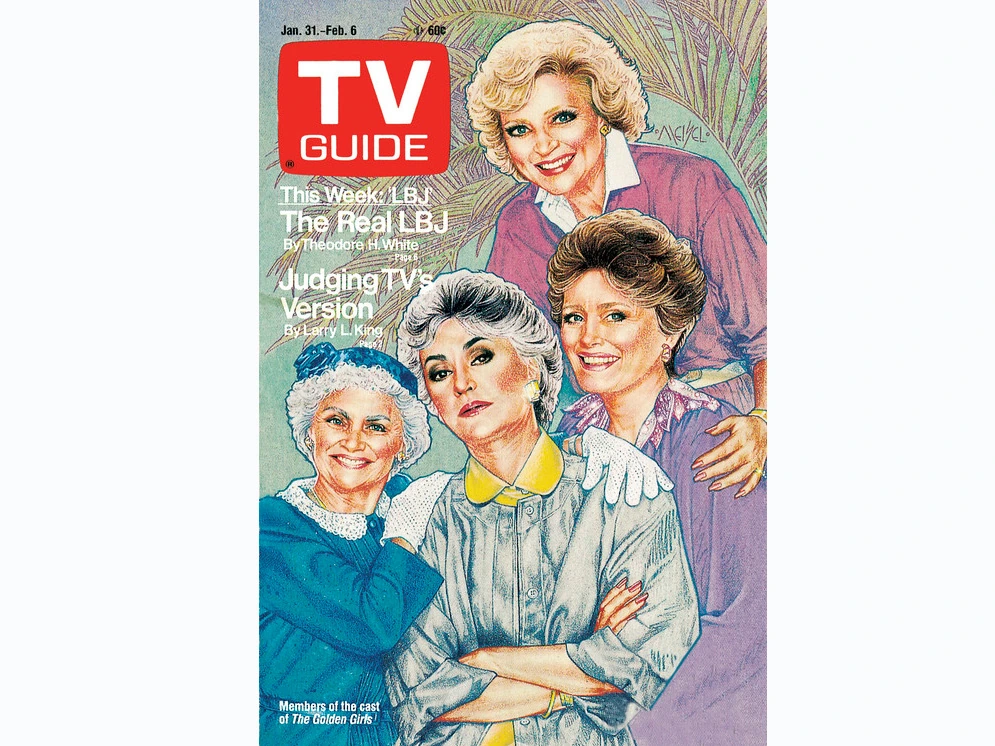
Its strength complicates a lazy version of eighties television taste. The era’s audience was not interested only in young people dressed for an expensive office. Viewers could form a habit around older women with distinct histories, appetites, disappointments, and formidable reactions to being interrupted. The combination supplied warmth without requiring everybody to become polite.
The period cover pictured here shows the four stars together in original magazine artwork. Its appeal depends on recognizing the company. A single familiar face is one invitation; four personalities already known to collide make another. The image can remind a viewer of the program’s rhythm without reproducing a scene or summarizing the next episode.
The comedy worked because the women weren’t four versions of the same person. Dorothy could flatten a foolish remark; Rose might supply the next one with complete sincerity. Blanche had her own priorities, and Sophia had apparently retired from worrying about anybody’s feelings. Four sharply different voices made the kitchen a place where the next answer was worth waiting for.
The separate history of The Golden Girls as a ratings force follows that attraction more fully. Here it helps describe the country around the decade’s winners: households returning for company, with the added pleasure that this particular company might respond to a foolish remark much more efficiently than the people in your actual living room.
In 1988, the top of the chart gained a different address
The 1987–88 regular-season standings keep The Cosby Show first and place A Different World second. The new series carried viewers toward Hillman College, giving the highly successful family-comedy environment another kind of setting and another group of people to follow.
A college changes the terms of television familiarity. Young adults have more room to make choices without a parent already in the next room. Friends become important witnesses. Independence produces new problems along with its considerable promotional appeal. A show linked to a familiar household can introduce a social world with needs of its own.
That result belongs to a particular early phase of the series, not a claim that every later creative identity was fully present from the start. Long-running programs develop. Looking back from the version most loved in memory can blur the distinctions between an initial attraction and what the ensemble eventually made of it.
For the decade comparison, the position demonstrates how broad the space around the leading show had become. The top of the table was not occupied by one comedy and a vast empty area. Programs competed, supported a schedule, and changed while the audience was still learning who belonged in their rooms.
It also shows why a first-place count should be treated as a measuring choice, not a complete history machine. A Different World gets no season crown in this window. The annual result still gives it an important place in the story. Second is not invisibility. Sometimes it is an entirely new address a very large audience has agreed to visit.
Jessica Fletcher kept a different kind of appointment
Murder, She Wrote offered a comforting arrangement with a rather alarming practical consequence: wherever Jessica Fletcher went, the audience could expect a mystery. Angela Lansbury supplied the intelligence, attention, and presence that made the situation inviting instead of a reason to stop accepting invitations from her.
A recurring investigator gives a series a stable center while allowing the surrounding social world to change. Different houses, guests, motives, and suspicious people can arrive around the same dependable observer. The viewer does not need every case to take place in an identical room to feel the pleasure of returning to the same program.
That flexibility matters in a decade comparison. The national audience was not divided into two exclusive camps, one demanding soap opera and the other accepting only sitcoms. A viewer could enjoy a mystery on one evening and a comedy on another. Different programs could answer different needs within the same household’s week.
Jessica listened. That sounds modest beside a helicopter chase, but Lansbury could make attention feel like action. A story didn’t add up, somebody had answered too quickly, or a detail had landed badly. The audience got to notice alongside her. The pleasure came from trusting that she would keep following the loose thread after everybody else had decided to leave it alone.
The dedicated Murder, She Wrote ratings story goes further into that consistency. Here, Jessica’s weekly presence is a reminder that comfort television could arrive wearing an investigator’s expression. An evening did not have to be free of murder to feel pleasantly well organized.
M*A*S*H had the farewell everybody wants to enter in the contest
A decade’s biggest television memories are not always the same kind of measurement. The M*A*S*H farewell was a single broadcast with the force of a shared occasion. People who remembered ordinary visits to the 4077th suddenly had a final visit to arrange around.
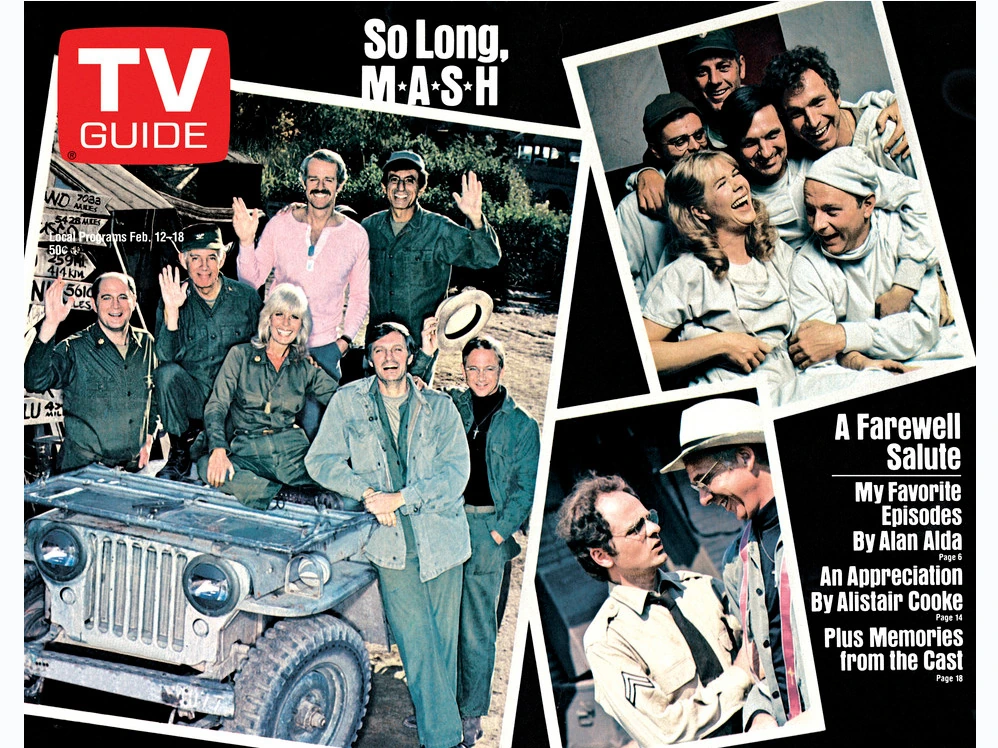
A farewell changes the invitation. A regular episode promises that the company will return. A final one makes the audience conscious of the company it is about to lose. Even a person who had watched unevenly could find a reason to be present for the closing. Familiarity accumulated over years can gather into one evening.
The genuine February 1983 gatefold cover shown here belongs to that sense of occasion. A magazine could devote physical space to the departure, turning something normally small enough to misplace under the newspaper into a larger printed farewell. It illustrates the cultural event. It does not turn the cover into a season-average audience report.
Under our rule, M*A*S*H receives no first-place season in the ten-season window. Its extraordinary finale does not change that count because the count concerns regular-season leaders. That is a limitation of the chosen question, plainly stated, rather than a judgment that the broadcast was unimportant.
The useful conclusion is not that one measurement defeats the other. Season championships identify one kind of sustained competitive success. A farewell identifies an exceptional audience occasion. A decade feature can acknowledge both and preserve the difference, which is much more interesting than making every famous number fight for the same trophy.
Magnum and the A-Team made action into familiar company
A mustache, a car, a helicopter, a van: eighties action programs could announce themselves through objects almost as quickly as through faces. The visual shorthand was useful because these shows asked viewers to recognize a world they wanted to enter again. The case or mission changed. The invitation stayed legible.
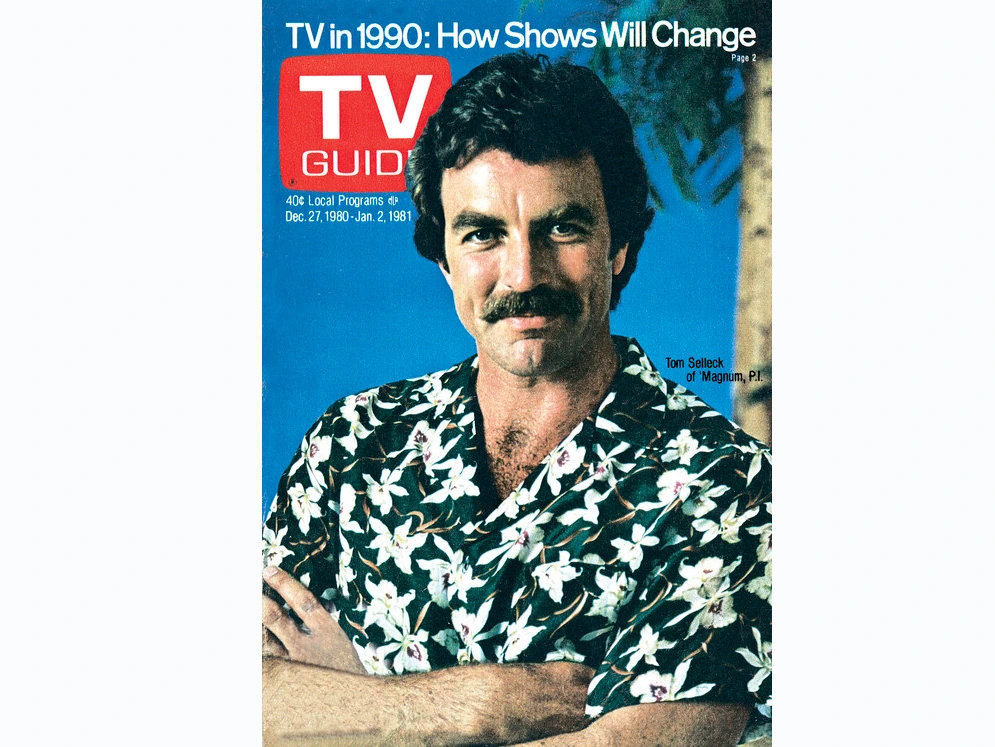
Magnum, P.I. offered Tom Selleck’s charm, Hawaiian surroundings, and the pleasure of a central character whose life looked enviable until the week’s difficulty arrived. The A-Team offered a louder arrangement, with a group whose personalities and ingenuity made the mission a reason to watch them work together. Neither required an expensive staircase to turn an entrance into an event.
Their TV Guide covers show how thoroughly those faces had become part of the furniture. Selleck could sell the invitation with a look; the A-Team needed the group, because half the fun was knowing who would be delighted by the next outrageous idea and who would object. You didn’t have to read the episode description to recognize the company.
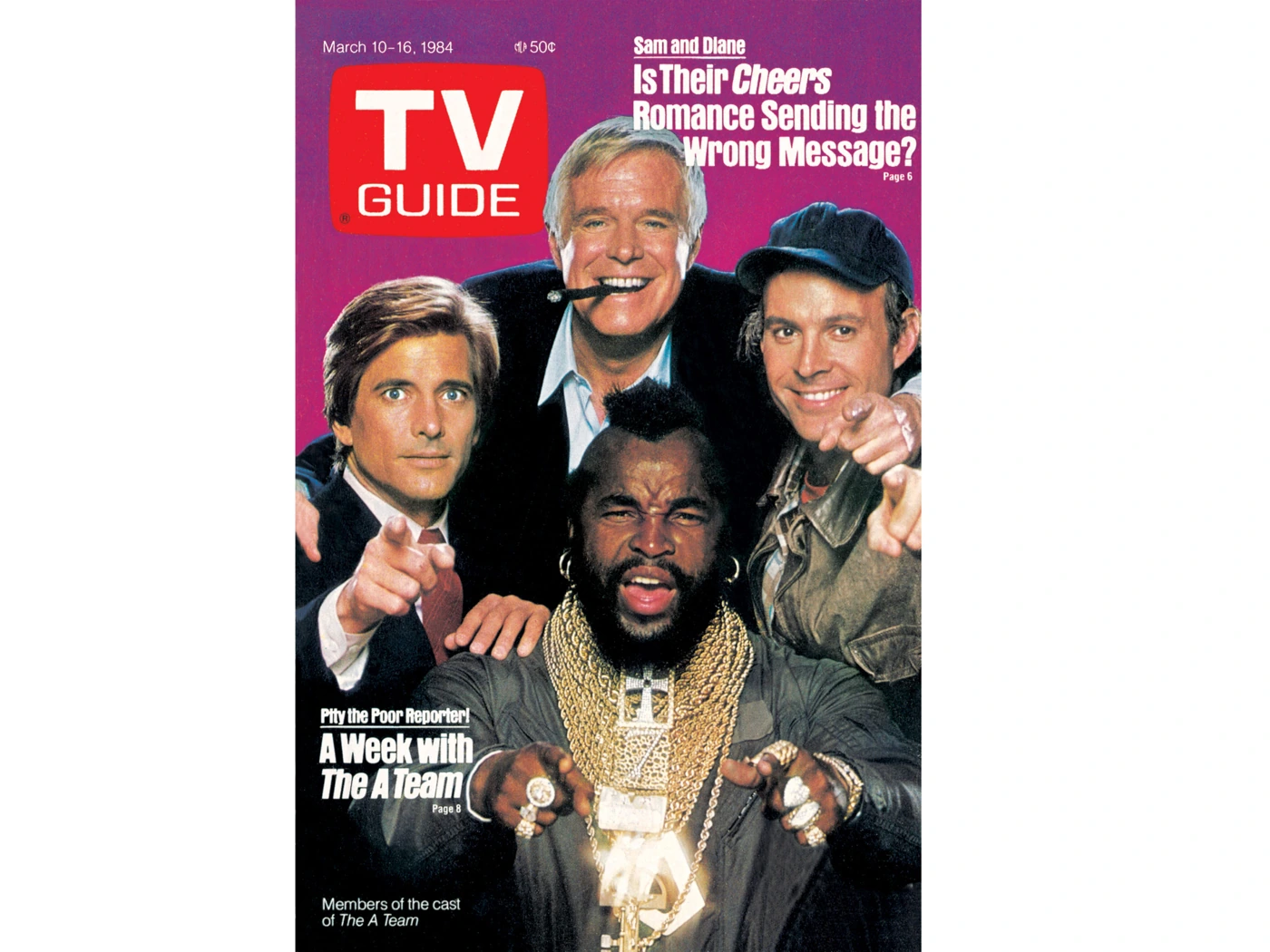
The van could matter more to a kid than the program at number one. So could Magnum’s Ferrari, the helicopter, or the moment somebody said the plan had come together. Children weren’t sitting on the floor allocating enthusiasm in Nielsen order. An action show could own your evening while a comedy or a newsmagazine owned the national chart.
An account of the decade that includes only its four champions would miss some of the pictures that return fastest when someone says eighties television. An account that treats every memorable picture as the statistical winner would miss the evidence. The interesting story lives in the space between those mistakes, where a real hit can keep its own distinctive kind of importance.
Miami Vice and Moonlighting could look bigger than one rank
Miami Vice and Moonlighting make a useful pair of reminders that audience position is only one way a series occupies a decade. Clothes, music, photography, performance style, publicity, and a much-discussed partnership can make a program conspicuous well beyond the precise place it holds in a season table.

Miami Vice brought a highly recognizable visual atmosphere. A magazine image could suggest the clothes and the partnership before anyone described a case. Moonlighting offered a different sort of charge between its leads, with the audience invited to watch how a conversation developed as well as where the mystery was going.
The period covers capture that difference before the television is even on. Crockett and Tubbs bring the Miami look; Maddie and David bring the feeling that the photograph might turn into an argument. These shows had a recognizable charge. Viewers could care about the partnership, the music or the clothes before remembering a single detail of the case.
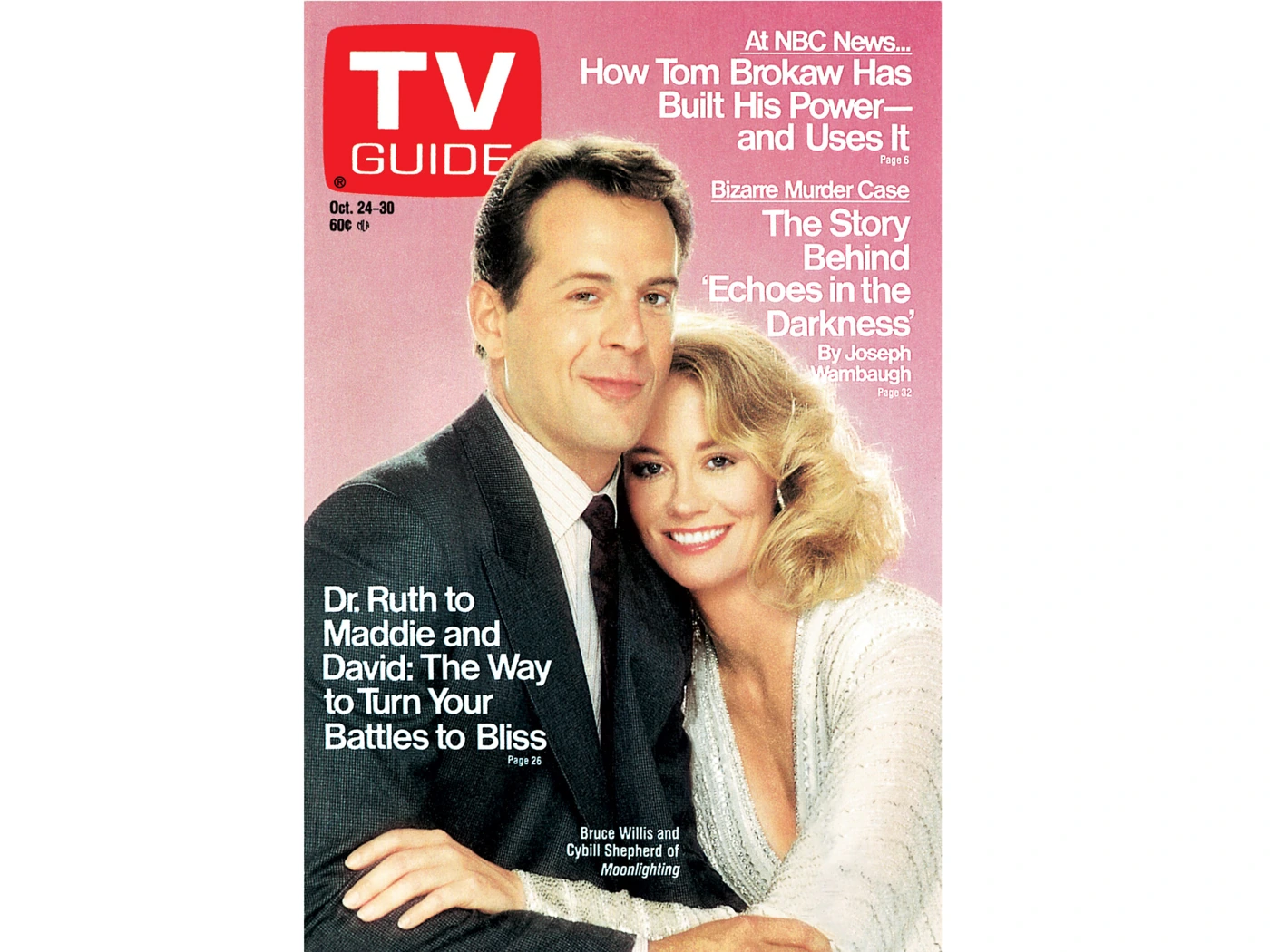
Neither program is being smuggled into the season-championship table. The point is that an eighties show could influence the remembered look or sound of television without collecting the most annual first-place finishes. A wardrobe can travel into popular memory much more easily than a table footnote, especially when the wardrobe has decided that socks are optional.
That is why this feature uses a defined comparison and then gives the surrounding programs room to breathe. The tally explains one pattern. The shows explain why the decade still feels crowded with recognizable people, including people whose importance cannot be condensed into a numerical place without losing most of the fun.
By 1989, another family was changing the conversation
The 1988–89 regular-season page leaves The Cosby Show first and puts Roseanne second. The result offers a fitting end to the ten-season window: the established leader remains on top while another family comedy makes the room feel different.
The contrast was visible in the household itself. Television families did not all have the same money, rooms, work, or manner of arguing. Viewers could recognize a different economic pressure and a less polished kind of domestic negotiation without needing a lecture about a change in the industry. The setting had already begun the explanation.
Roseanne finished second in this season’s regular-series comparison. That was still an extraordinary arrival: the Huxtables remained on top while the Conners made a very different home impossible to ignore. One family’s success hadn’t emptied the audience out of the other family’s living room. By the end of the decade, television had room for both—and plenty of viewers who recognized different parts of their own lives in each.
The next season belongs outside our count. Readers who remember arguments about which program led in 1989–90 are remembering a different comparison period, with its own reporting questions. Pulling that result backward would produce an emphatic ending at the expense of the dates.
The decade therefore closes here with overlap rather than a curtain dropping neatly on an old style. Some families on television looked established and aspirational. Another looked more tired from work and less interested in making the house presentable for company. The audience had not stopped wanting family comedy. It was being offered another family with a different set of bills.
Who’s the Boss? put another set of household rules on the screen
Who’s the Boss? approached the television home through a change in who did which work. Tony Micelli was a live-in housekeeper and a father. Angela Bower had a demanding professional life and a son. The arrangement gave the series a practical reason to put people with different assumptions into the same rooms. Somebody had to run the household while everybody else was having a feeling about how it should be run.
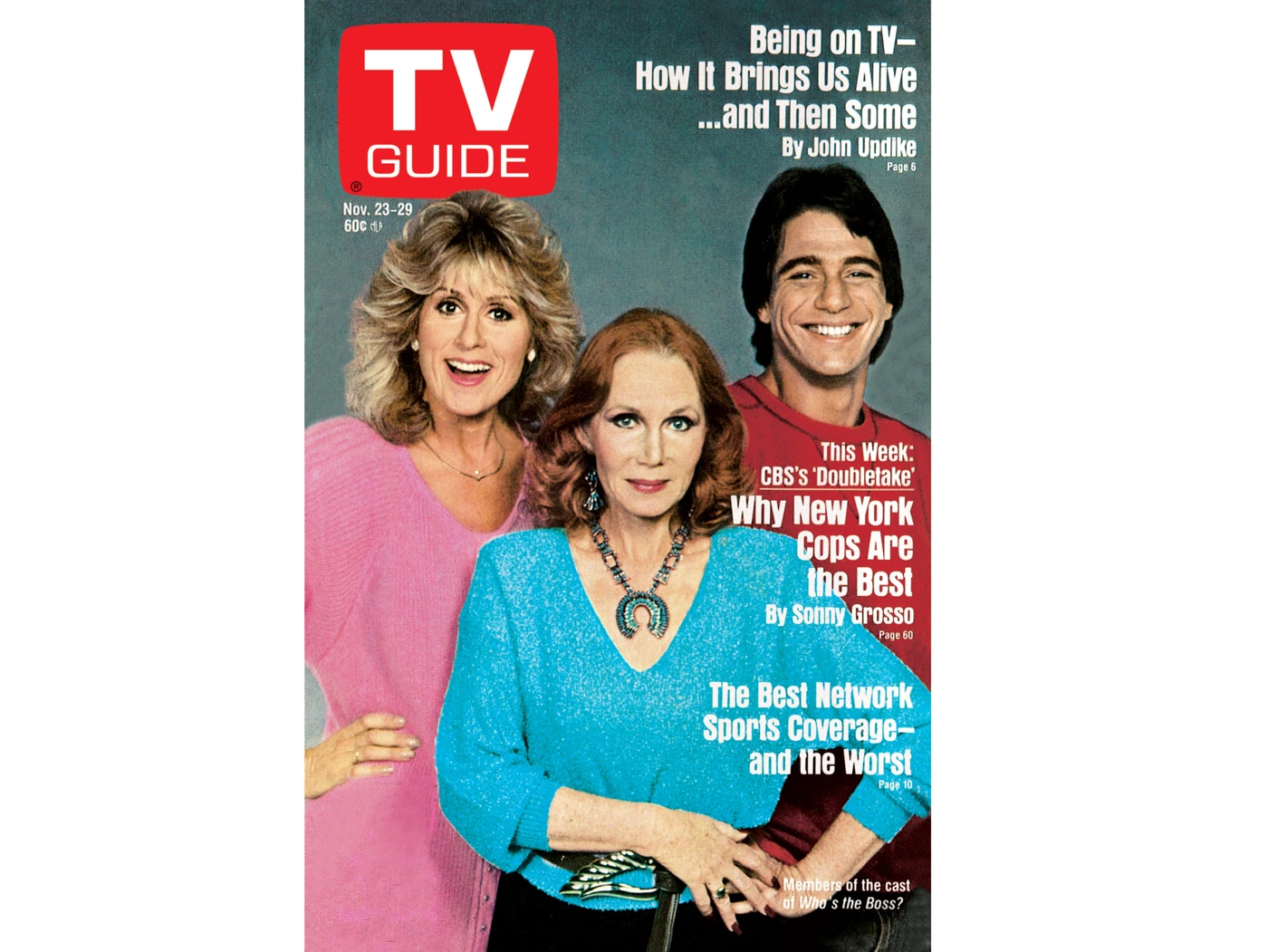
That premise mattered to the broader field around the decade’s champions. The family comedy was not one fixed blueprint waiting to be copied. Children could have one parent, adults could occupy unexpected working roles, and a home could develop its own balance rather than arrive with every traditional job already assigned. Familiar domestic friction remained available even when the family structure changed.
Tony Danza brought the ease of a performer who could make a room feel inhabited before a problem had been explained. Judith Light could give Angela’s control a visibly busy working life. A scene did not require everyone to announce a social position. Put the people together, hand them an ordinary household difficulty, and their reactions could begin doing the work.
The November 1985 cast cover belongs to that period of recognition. The company is presented as a group the reader is expected to know. Somebody opening the magazine to find a movie can encounter the household without watching its episode at all. Television familiarity also accumulated around the screen, through pictures left within reach and conversations happening in other rooms.
Its place in this feature is among the selected major contenders. It receives no season championship under our rule. That leaves plenty to explain about its appeal: a recognizable domestic setting, a group whose relationships could keep developing, and the pleasant expectation that a practical question about the house would shortly become an awkward question about the people sharing it.
The champions shared an ability to make the next visit matter
The four season champions did not share a genre. They shared a capacity to make another broadcast seem worth choosing. The newsmagazine offered a new set of questions. The soaps offered unfinished relationships. The family comedy offered familiar people encountering a fresh domestic problem. Each supplied continuity without supplying the same evening.
That ability is easy to underestimate now that an entire run can appear as a row of episodes on demand. In the eighties, a regular broadcast arrived within a competing schedule. Choosing it meant being available, remembering, negotiating with other viewers, or arranging a recording. A successful show had to earn some place in that practical machinery of the week.
A title sequence could help. So could an actor’s face, a recognizable room, or the promise that a particular combination of people would shortly make one another uncomfortable. Familiarity reduced the effort required to choose. The viewer did not have to learn a new world before finding out whether tonight was worth watching.
The competition also supplied variety within a habit. A program could feel dependable without being identical. A returning audience wanted recognition and a reason to stay. Too much change could disturb the appointment; too little could make it unnecessary. The better long-running attractions managed that balance often enough to become part of the house.
The season counts make the repeated achievement visible. They do not explain every ingredient, and they do not count affection. What they give us is a sequence of competitive results around which the larger story can be told: not one universal eighties viewer, but many households repeatedly finding something they wanted from these different television invitations.
The result depends on the question, so keep the question attached
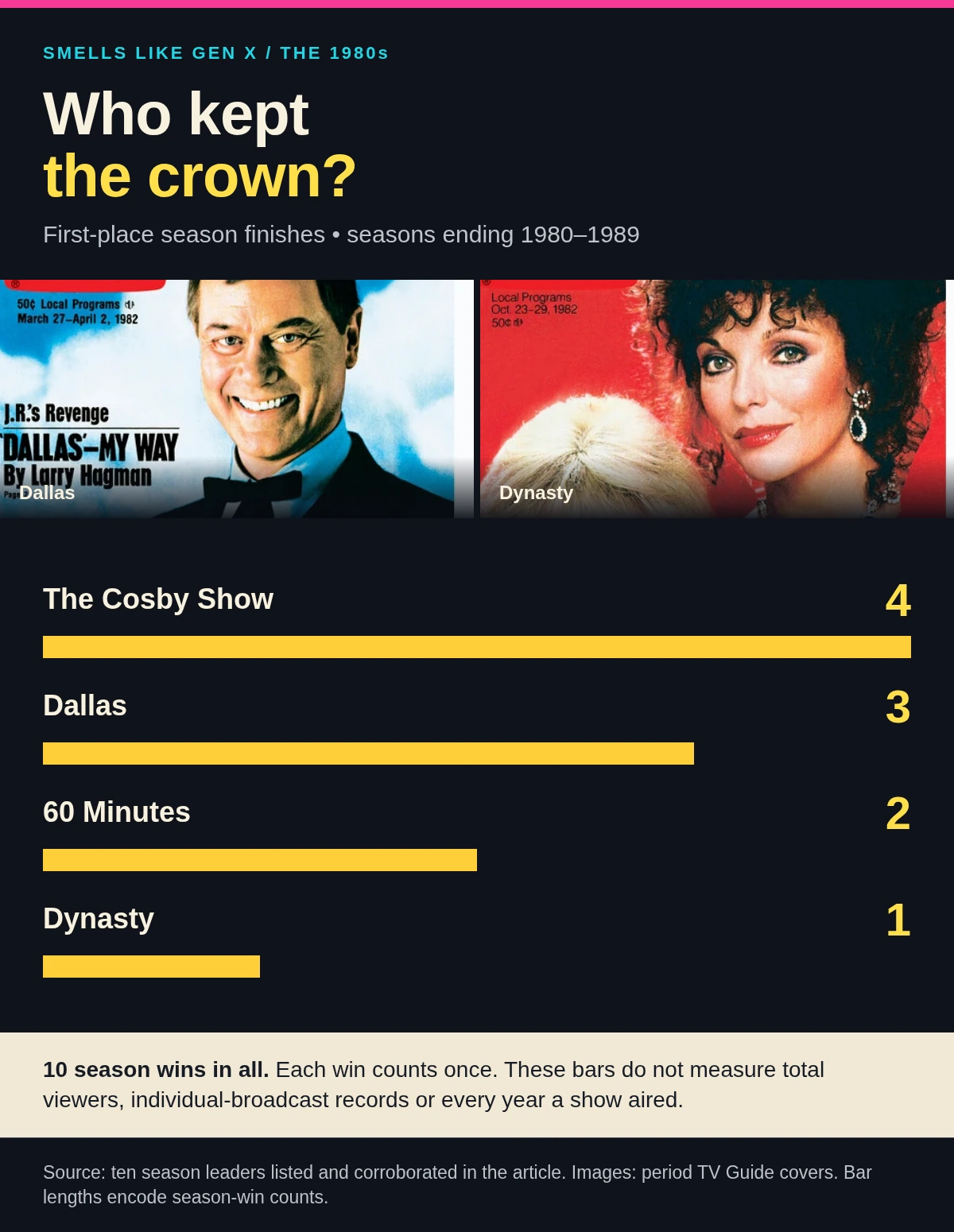
If the question is which program won the most regular seasons ending in 1980–1989, The Cosby Show leads our count with four. Dallas follows with three, 60 Minutes with two, and Dynasty with one. Ten seasons, ten first-place finishes, four programs. The complete season-by-season graphic makes the calculation visible.
If the question is which series accumulated the most individual viewing across every original episode, rerun, recording, station, and year in the calendar decade, this comparison does not provide that answer. It has not collected the compatible episode-level audience records needed to make such a claim. A confident-looking total would not repair the missing measurement.
Once the rules are clear, we can get back to the enjoyable part: the shows. A first-place tally helps explain the big shifts, but it doesn’t tell you why Cheers felt welcoming, why a Dallas cliffhanger ruined your patience, or why Jessica Fletcher was such comforting company. The numbers describe the crowd. The programs explain why it kept coming back.
For the mechanics behind the numbers, our Nielsen ratings explainer covers household units, share, samples, and changing measurement. This feature stays with the audience-success story. It does not need to repeat the equipment manual every time a familiar title appears.
Return to the broader eighties television world and the best part is still the crowded room. Somebody wants the family comedy, somebody is waiting for the mystery, and somebody insists the program everybody else is discussing is wildly overrated. The ratings can tell us something about how many homes made a choice. They cannot settle who deserved the remote.
A few questions before somebody declares their favorite the winner
Was there one official Nielsen ranking of the entire decade?
This feature does not claim to have an official cumulative decade-audience table. It counts first-place finishes in ten defined regular seasons, ending in 1980–1989. That produces an auditable season-championship comparison, not a sum of individual viewers or a measure of every broadcast platform.
Which show leads this article’s comparison?
The Cosby Show has four first-place regular seasons within this window. Dallas has three, 60 Minutes has two, and Dynasty has one. The ten season-and-winner pairs appear in the table and the season-winners graphic above.
Why doesn’t the M*A*S*H finale win this table?
The table counts regular-season first-place finishes, not individual broadcasts. A finale’s audience and a season’s average are different measurements. The farewell remains a major television occasion without changing the rules of this comparison.
Why leave out the 1989–90 season?
The chosen window follows the ten annual pages ending in 1980 through 1989. Including 1989–90 would add an eleventh season and extend the comparison into 1990. Its results belong to a separately labeled window rather than being borrowed to improve this one’s ending.
Sources & Further Reading
- CBS historical record: 60 Minutes first-place seasons
- Broadcasting, April 27, 1987, p. 54: official regular-season standings and reporting window
- Nielsen Report on Television, 1980: historical audience tables with their original reporting periods
- Publisher’s dated cover archive
- Broadcasting, April 27, 1981: contemporary regular-season results
- Broadcasting, April 26, 1982: contemporary regular-season results
- Broadcasting, April 23, 1984: contemporary regular-season results
- Broadcasting, April 29, 1985: contemporary regular-season results
- Broadcasting, April 24, 1989: contemporary regular-season results