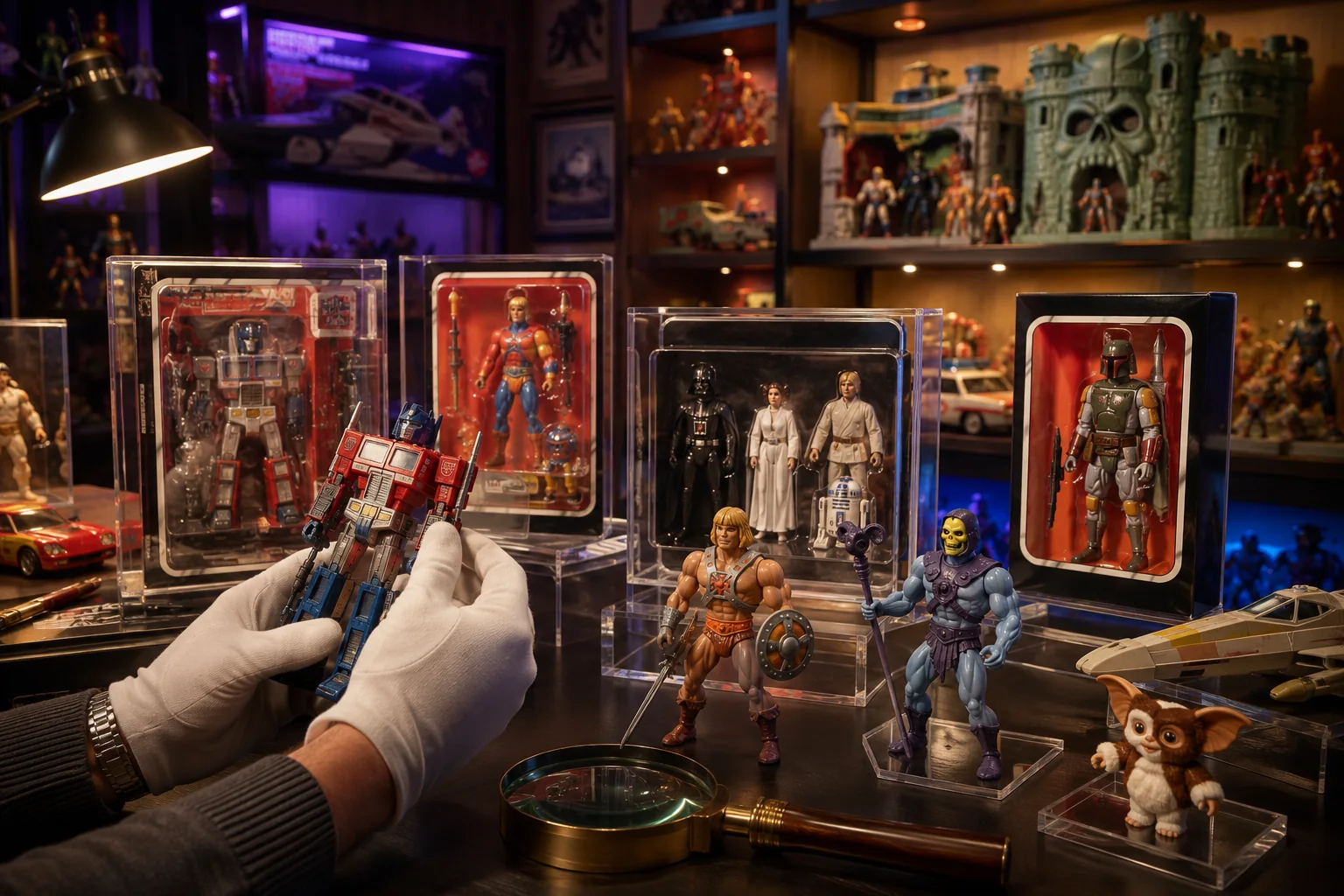
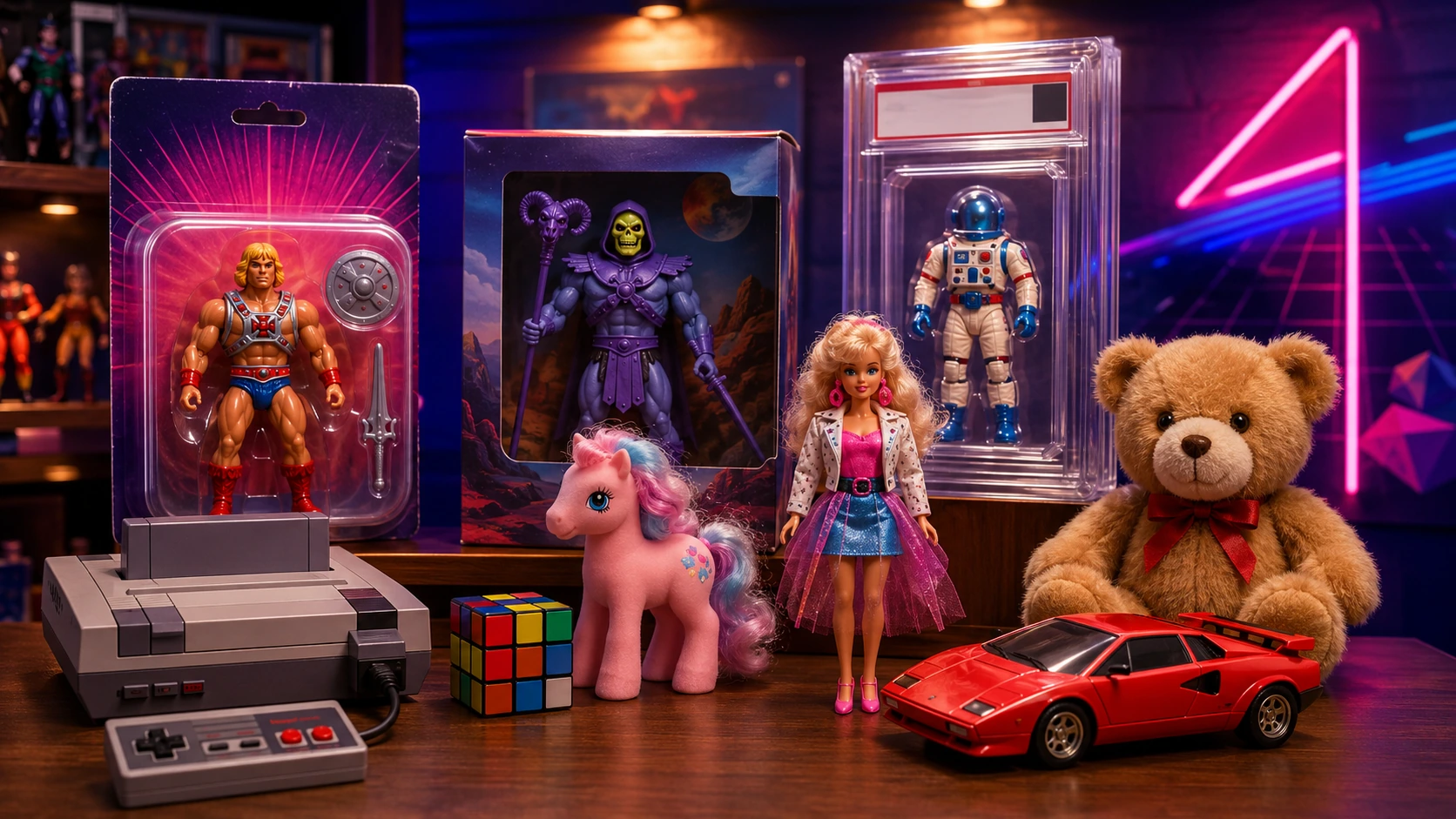
Valuable 80s Toys Worth Money Today: What Your Old Toy Box Could Be Worth
Before the yard sale gets dangerous
The old 80s toys box in the attic may contain something collectors want. It may also contain six common figures, two unmatched boots, a yellowed instruction sheet, and enough unidentified plastic weapons to equip a very small nation. Both can be true.
The most iconic toys of the 80s are remembered because they shaped childhood. Vintage 80s toy values are a different question. Price depends on the exact release, condition, completeness, packaging, rarity, authenticity, current demand, and whether somebody actually paid the number being repeated online.
This guide is built for the real world. It separates common loose toys from complete examples, boxed pieces, sealed rarities, graded showpieces, prototypes, mail-away items, regional variations, and giant playsets that somehow survived four decades without losing half the railings.
Why one old toy is five bucks and another starts a bidding war
What Actually Makes an 80s Toy Valuable?
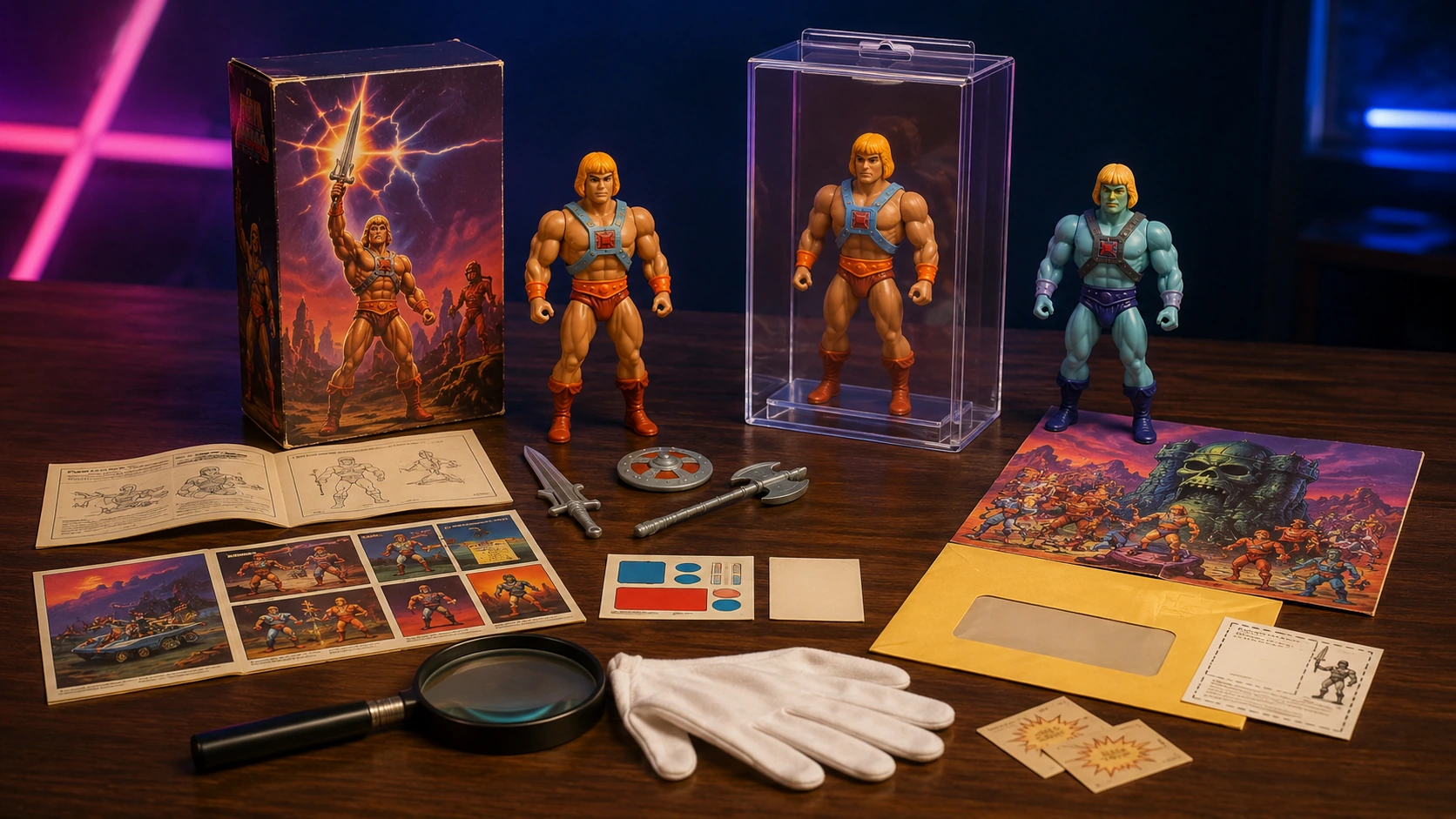
Age alone does not create value. Plenty of common 80s toys survived because millions were made, millions were purchased, and millions were tossed into closets after the child moved on. A toy becomes valuable when demand collides with some form of scarcity—and when the surviving example is desirable enough to make collectors compete.
Rarity
Short production runs, cancelled waves, late releases, regional versions, recalled items, prototypes, test shots, unusual factories, and mail-away exclusives can all reduce the number available.
Condition
Paint wear, broken tabs, loose joints, sun fading, stains, cracked plastic, corrosion, missing electronics, and damaged packaging can turn an exciting find into a repair project.
Completeness
The original weapon, cape, missile, file card, cassette, instruction sheet, sticker sheet, insert, certificate, and cardboard platform may be worth more collectively than the naked figure.
Packaging
Sealed cardbacks, intact bubbles, original boxes, trays, paperwork, unused decals, catalogs, and shipping cartons can create an entirely different market from loose toys.
Character Demand
A rare figure nobody cares about may sell for less than a common character collectors love. Popularity still matters. The number of people chasing the item sets the emotional temperature.
Authenticity
Reproduced weapons, replacement stickers, resealed bubbles, swapped parts, modern reissues, restoration, and counterfeit packaging must be disclosed. Original does not mean “looks close enough from across the room.”
The useful equation: demand, rarity, condition, completeness, and confidence in authenticity all work together. Remove one of those and the price can drop quickly.
Every toy category has its own way of falling apart
Category-Specific Damage That Can Destroy Vintage Toy Value
Action figures: joints, thumbs, paint, rubber, and stress
Hard-plastic figures often fail at the points designed for play. Thumbs break while gripping weapons. Crotches crack where legs pivot. Elbows split. O-rings loosen or disintegrate. Rubber legs become sticky. Soft heads discolor. Capes fray. Chrome rubs away. Spring-loaded features stop returning. A figure may stand beautifully in one front-facing photo and still have several structural problems.
Ask for close photographs of hands, feet, elbows, knees, screw posts, waist seams, neck pegs, and the areas hidden by armor. Move joints carefully. A joint that is extremely stiff can be as dangerous as one that is loose because forcing old plastic may create the damage during inspection.
Transforming toys: tabs, hinges, tires, stickers, and forced movement
Transformers, GoBots, M.A.S.K. vehicles, and other converting toys were designed to move through several mechanical positions. Children often forced parts before reading the instructions, and adults do the same thing forty years later because they remember the general idea but not the exact sequence.
Check hinges for whitening, tabs for hairline cracks, tires for splitting or chemical reaction, chrome for wear, stickers for lifting, and joints for looseness. Never transform an expensive piece on camera without reviewing instructions first. The content is not worth the broken tab.
Dolls and vinyl toys: hair, stains, rust, plasticizer, and hidden odors
Dolls and ponies can hide condition problems that hard-plastic collectors overlook. Hair may be cut, replaced, curled to hide missing plugs, or discolored by storage. Internal metal washers can create tail rust. Vinyl can become sticky, oily, discolored, or chemically unstable. Clothing can transfer dye. Marker can migrate into plastic. A clean face may be paired with a damaged body.
Odor matters. Smoke, mildew, perfume, mothballs, basement dampness, and old storage containers can penetrate fabric and vinyl. Sellers should describe smell directly rather than relying on the phrase “vintage scent,” which often means everybody is about to learn something unpleasant.
Plush toys: tags, seams, stuffing, washing, and storage contamination
Plush toys were hugged, slept with, carried outside, washed, dried, repaired, and occasionally used as a pillow during illnesses. Collectors inspect tags, fabric color, seams, original stuffing, facial details, symbols, sound boxes, accessories, and evidence of replacement parts.
Machine washing can distort the body, damage printed features, mat fur, fade fabric, and remove original finishes. Surface cleaning may be safer, but every material reacts differently. Valuable plush should be researched before it meets detergent.
Electronic toys: corrosion, belts, gears, displays, and brittle wire
Battery compartments deserve immediate inspection. White or green corrosion may be visible, but leakage can travel farther into wiring and circuit boards. Motors seize. Rubber belts stretch. gears crack. speakers degrade. LCD segments fail. cassette mechanisms harden. plastic around screw posts becomes brittle.
A toy that powers on is not necessarily functional. Test every advertised feature carefully: sound, lights, movement, buttons, sensors, targets, remote controls, tape playback, mouth motion, and battery cover fit. Record what was tested and what was not.
Boxes and cardbacks: humidity, crushing, resealing, and sunlight
Paper absorbs the history of storage. Humidity creates warping, foxing, mildew, and adhesive failure. Sunlight fades artwork and yellows bubbles. Heavy boxes crush corners and create stress creases. Tape repairs stain cardboard. Price-sticker removal tears printing. Resealing can hide prior opening.
Store packaging upright or supported, away from pressure and ultraviolet light. Do not stack heavy playsets on carded figures. The bubble survived Reagan, mall culture, and four house moves. It should not be defeated by a storage tote in 2026.
The same character can live in several financial universes
The Vintage Toy Condition Ladder
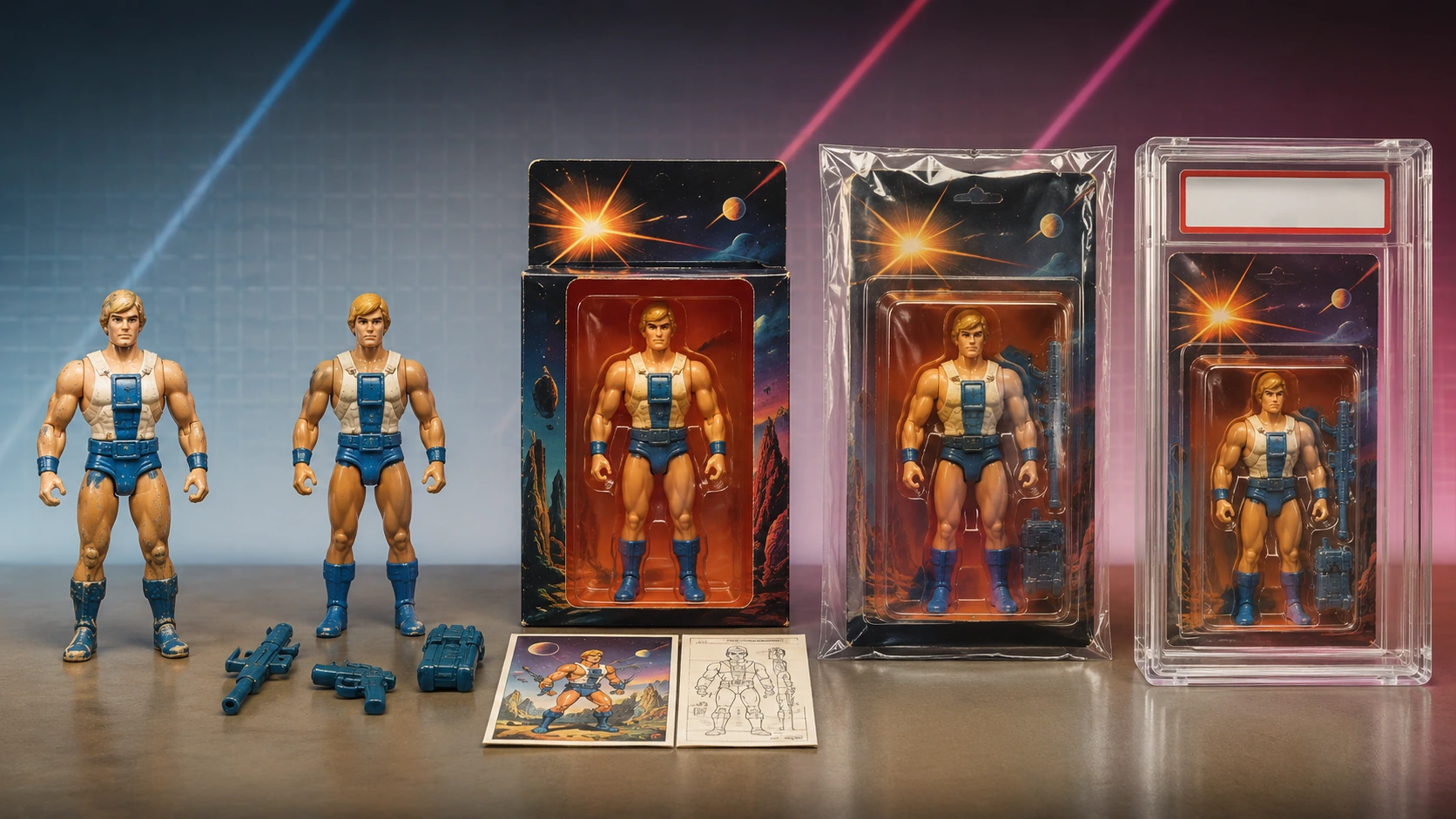
Collectors do not value “a He-Man” or “an Optimus Prime” as one interchangeable object. They value a specific version in a specific state. The difference between a loose played-with example and a sealed, high-grade package can be enormous because the buyer pools are different.
The version most of us actually owned
Paint rub, loose joints, sticker wear, missing weapons, tangled hair, yellowed plastic, and a mysterious bite mark are normal. Common loose toys usually live at the lower end of the market unless the character or variation is genuinely scarce.
The accessories come home
Original weapons, armor, capes, missiles, masks, file cards, and removable parts can multiply interest. This is where careful identification matters because one tiny accessory can separate “complete” from “almost complete except for the part everybody loses.”
The toy and its whole paper ecosystem
Box, insert, instructions, catalogs, paperwork, baggies, decals, certificates, and promotional pieces all matter. Complete-in-box does not automatically mean mint. A crushed box with a complete toy is still different from a clean display example.
The moment before childhood happened
Factory-sealed items attract collectors who value untouched presentation. Bubble clarity, seal integrity, card flatness, edge wear, price stickers, punch status, and internal part placement become important because nobody is judging playability anymore.
A professional opinion inside acrylic
Third-party grading can increase buyer confidence and make rare packaged items easier to compare, but a grade is not magic. Population, eye appeal, line popularity, and actual collector demand still control the result.
The material never meant for normal stores
Test shots, first shots, samples, hand-painted hardcopies, packaging mock-ups, proofs, salesman samples, and unreleased pieces can reach an advanced collector market. Provenance is critical because “prototype” is one of the internet’s favorite words to misuse.
Why December still echoes in the collector market
Holiday Demand, Scarcity, and the Toys Nobody Could Find
Some of today’s strongest collector stories began as yesterday’s shopping problems. The hottest Christmas toys of the 80s were amplified by television, catalogs, playground conversation, and parents calling stores before dawn. That original frenzy does not guarantee modern value, but it can create a powerful base of adults who remember exactly what the toy meant.
Scarcity has to be real, not merely repeated. A toy can feel rare because one family never found it, while thousands of examples still survive. Collector scarcity is narrower: a specific release, package, color, factory, insert, accessory combination, or condition may be hard to locate even when the broad toy line was enormously popular.
Popular and Common
The toy may be loved and easy to sell, but the large surviving supply limits price. Demand creates liquidity, not necessarily a fortune.
Rare but Unwanted
Low supply alone is not enough. If few collectors care, the item can remain cheap despite being genuinely difficult to find.
Rare and Wanted
This is where competition begins: recognizable brand, desirable character, verified scarcity, strong condition, and several serious buyers.
The original demand machine is still sitting in the archive. Rewatch the 80s toy commercials and videos that made every box look enormous, then revisit the 80s cartoon toy commercials that introduced the characters before explaining, with remarkable timing, that the toys were sold separately.
The cardboard, inserts, and paperwork can be half the collectible
How Original Packaging Changes the Value of 80s Toys
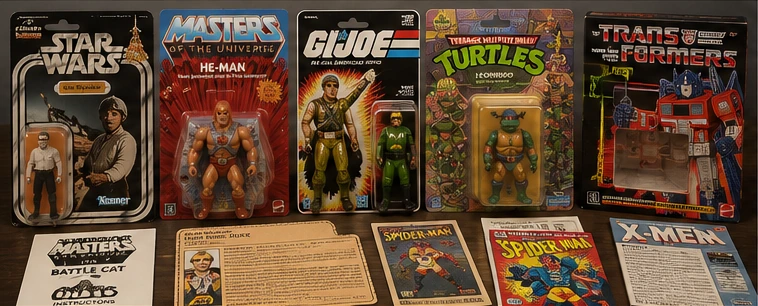
Packaging is not one condition. It is a group of components that can survive in very different states. A box may be present but missing the insert. A blister card may be sealed but badly warped. A game may have the box and manual but not the map, poster, registration card, sleeve, or internal bag. A playset box may exist without the cardboard supports that kept the toy from destroying itself in transit.
Carded Figures
Inspect bubble clarity, cracks, dents, lifting, resealing, card curl, edge wear, creases, tears, punch status, price stickers, offer stickers, and whether the figure or accessories shifted inside.
Boxed Vehicles and Playsets
Look for internal trays, cardboard supports, baggies, unused decals, blueprints, instructions, catalogs, mail-away forms, and the correct box version.
Dolls and Plush
Boxes may include windows, ties, stands, combs, brushes, ribbons, certificates, clothing, shoes, tags, and paperwork. Reboxed dolls are common.
Video Games
Box, manual, map, poster, registration card, sleeve, foam block, baggie, warranty card, inserts, and the correct print variation can all matter.
Board Games
The box is only useful if the special pieces are present. Count cards, tokens, towers, marbles, dice, pawns, bridges, batteries, and electronic parts.
Mail-Away Items
The plain shipping carton, address label, baggie, certificate, letter, catalog, and order paperwork may be part of what advanced collectors want.
Price stickers are not automatically damage
A period store sticker can be part of the object’s retail history, especially when it identifies a famous chain, local toy store, clearance event, or original price. Some collectors prefer clean packaging. Others value the authenticity of the sticker. Removing it can create tearing, discoloration, residue, or a suspiciously bright patch.
Reseals and recreated packaging need disclosure
A professionally recreated box can be useful for display. A resealed blister can protect a loose figure. A reproduced insert can make a playset easier to store. None should be represented as factory original. The difference between restoration and deception is disclosure.
Empty packaging can have value of its own
Collectors restoring complete displays may need an original box, cardback, insert, manual, or catalog even when the toy is missing. Empty packaging markets are especially active when the original toy is common but the paper components were usually discarded.
Market check: July 14, 2026
What Recent Sales Reveal About the Most Valuable Toys From the 80s
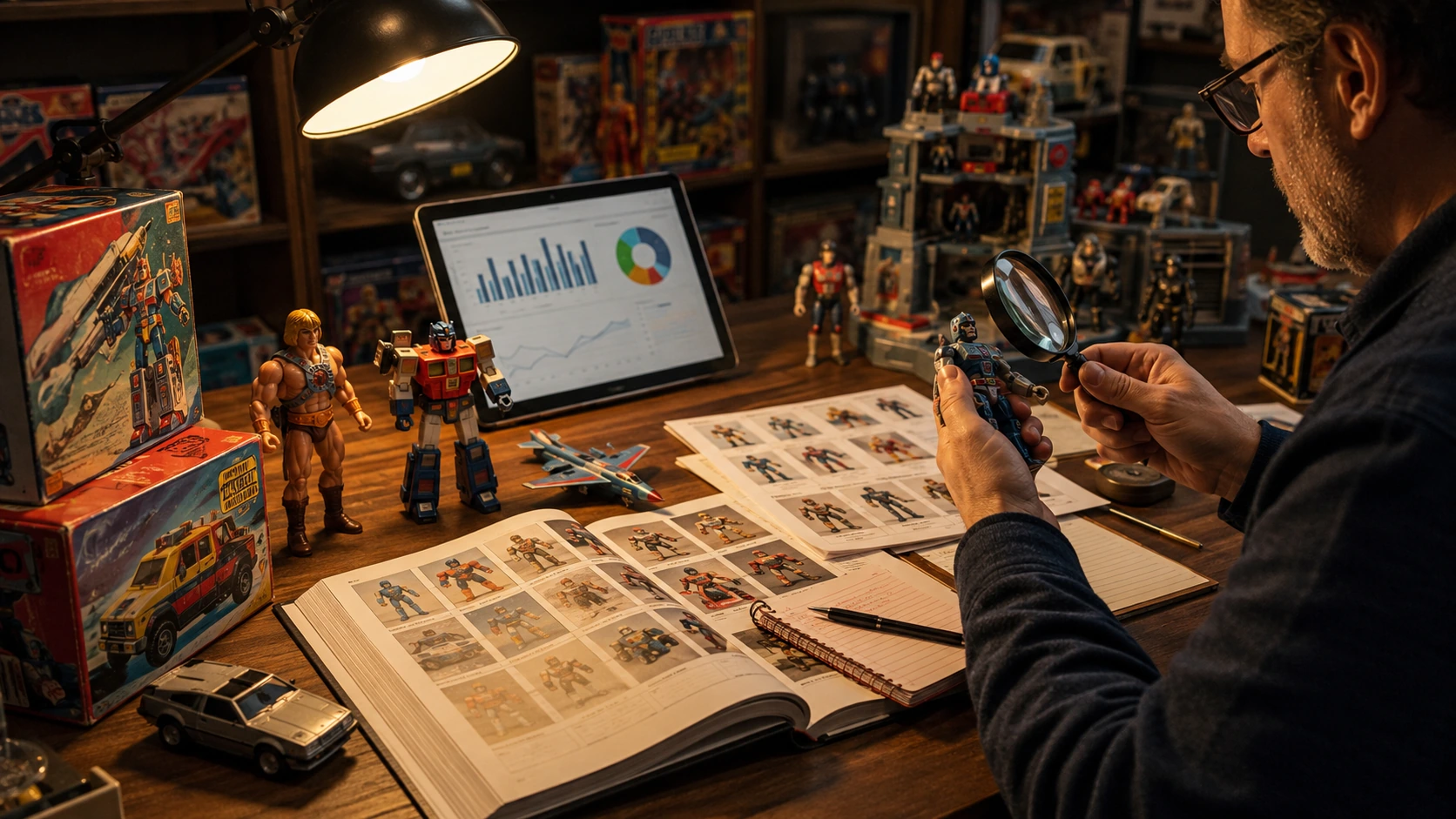
These examples show how dramatically condition, rarity, packaging, grading, and format can change the market. They are not promises. Most are high-end auction pieces chosen specifically because they demonstrate the ceiling, the middle, and the gap between a recognizable toy and an exceptional collector example.
Do not compare unlike items. A graded sealed playset is not evidence for the value of a loose incomplete playset. A complete game with the map and manual is not the same product as a cartridge found behind a VCR. The market punishes lazy comparisons.
The weapons, vehicles, cardbacks, and tiny parts that changed everything
80s Toys Worth Money: Action Figures, Vehicles, and Playsets
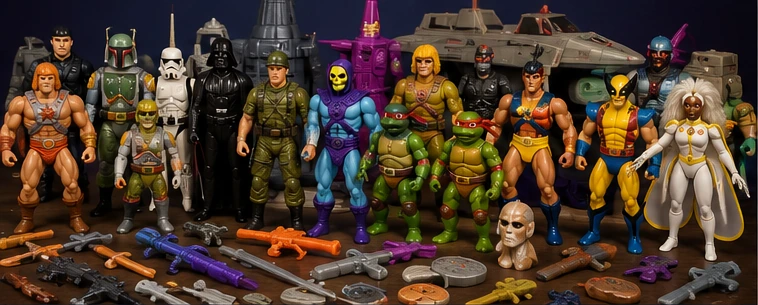
The broad story of the decade’s 80s action figures is about cartoons, toy-aisle competition, vehicles, factions, and bedroom-floor warfare. The collector story is narrower. It asks which exact figure, which package, which accessory, which variation, which release, and whether the item survived without being chewed by the family dog.
Action figures reward precision. A missing rifle, sword, cape, backpack, missile, file card, or removable fist can matter. A figure that looks correct may contain reproduction accessories. A sealed item may have a cracked bubble. A rare cardback may be worth more than the same figure on a later card.
Vintage Star Wars Toys: Small Accessories, Big Collector Consequences
Kenner Star Wars figures began before the 80s, but Empire Strikes Back, Return of the Jedi, and Power of the Force releases made them central to the decade. The line also built one of the most condition-sensitive collector markets in toys.
Why a tiny weapon can decide the whole value
Star Wars accessories were small, specific, easy to lose, and heavily reproduced. A correct original weapon can be more difficult to find than the figure. Collectors examine color, flexibility, mold details, translucency, sound when dropped, and known production characteristics because reproduction sellers have had decades to improve their work.
Capes, sabers, staffs, blasters, coins, and cardboard inserts all create separate completeness questions. “Looks complete” is not a useful condition report. A buyer wants to know whether the item has the correct original accessory for that exact release.
Packaging creates another collecting universe
Cardback count, logo, movie branding, offer stickers, punch status, bubble clarity, price stickers, and character placement can matter. The same character on a different card may attract an entirely different collector audience. A sealed figure is not just the loose figure plus cardboard. It is a preserved retail artifact.
Collector reality: ordinary loose figures can be modest. Rare variants, desirable cardbacks, coins, foreign issues, and high-grade sealed examples belong to a different market entirely.
Vintage He-Man Toys: Castle Grayskull Was Only the Beginning
The original line was built for rough play, which makes clean, complete, boxed examples especially desirable. The full childhood history lives in vintage He-Man toys; this section focuses on condition, accessories, packaging, and the pieces collectors chase.
Basic figures were sturdy, but complete figures are another story
Masters of the Universe figures survived crashes that would have ended lesser plastic people. The accessories did not. Swords, shields, removable armor, staffs, capes, weapons, and tiny pieces migrated into every other toy box. A loose He-Man without gear is common childhood archaeology. A clean complete example with correct original accessories is a collector item.
Action features also matter. A waist punch that barely moves, legs held together by a failing band, broken mechanisms, or damaged flocking all affect desirability. Moss Man’s flocking and scent, Stinkor’s smell, and mechanical gimmicks require more inspection than a quick photo can provide.
The giant playsets magnify every condition problem
Castle Grayskull, Snake Mountain, Fright Zone, and Eternia are ecosystems of loose components. Doors, elevators, guns, flags, clips, cardboard inserts, bridges, rails, towers, sticker sheets, microphones, and instructions separate “the big shell is here” from truly complete.
The documented $20,000 Heritage sale for a high-grade first-release Eternia box in 2026 is a reminder of how high the exceptional market can go. It is not evidence that an incomplete Eternia found in a damp basement is worth anything close to that.
Vintage G.I. Joe Toys: The Accessory Checklist Can Be Longer Than the Figure
The 3.75-inch A Real American Hero line produced an enormous world of specialists, troops, mail-aways, vehicles, headquarters, and paperwork. Revisit the full line through vintage G.I. Joe toys.
Broken thumbs and cracked crotches are not minor details
G.I. Joe figures were highly articulated and used hard plastic hands to grip weapons. That created predictable damage. Broken thumbs, cracked crotches, loose O-rings, rusted screws, elbow cracks, and paint wear are common. A figure can look excellent in a front-facing photo while hiding the exact damage that matters.
Version identification is essential. Many characters received multiple releases with similar uniforms, altered colors, revised molds, different accessories, or updated cardbacks. Sellers regularly combine the right figure with the wrong gear and call it complete.
Vehicles become expensive puzzles
The vehicle may be physically large while the value hides in small removable parts. Missiles, canopies, antennas, tow cables, guns, hoses, wheels, panels, decals, blueprints, and the correct driver can take years to assemble separately. A clean body is only the beginning.
The U.S.S. Flagg proves the point. Documented boxed examples sold around $5,375 to $5,500 in 2025–2026, but the ship contains so many parts that an incomplete example must be inventoried carefully. Size creates spectacle. Completeness creates confidence.
Vintage G1 Transformers: Complete Means More Than the Robot Still Transforms
Original Transformers combine action figures, vehicles, puzzles, stickers, spring mechanisms, weapons, removable fists, missiles, trailers, and paperwork. The full story of vintage G1 Transformers toys explains the line; this section explains why collector condition gets complicated.
Transforming created both the magic and the damage
Every conversion cycle stressed hinges, tabs, clips, joints, stickers, chrome, and removable pieces. A toy can technically transform while showing serious wear. Bent landing gear, cracked hinges, loose arms, missing fists, broken trailer doors, tire damage, and sticker loss are common.
Completeness can be difficult because the robot may look whole without the weapons, missiles, accessories, cassettes, pilots, or combiner parts that belong to it. Some pieces are so frequently missing that original replacements create a market of their own.
Gift sets and boxed combinations can become elite pieces
The documented $20,625 sale of an AFA 80+ G1 Devastator gift set in 2025 shows the ceiling for a rare, high-grade boxed presentation. That result reflects the complete gift-set format, condition, grading, brand demand, and scarcity—not the ordinary value of six loose Constructicons mixed in a plastic bin.
Collector reality: identify whether the piece is vintage, a reissue, a modern homage, a counterfeit, or a mixture of original toy and reproduction accessories before assigning value.
Original Teenage Mutant Ninja Turtles: Soft Heads, Cardbacks, and Variant Confusion
Teenage Mutant Ninja Turtles arrived late in the decade and exploded into the 90s. The earliest 1988–1989 figures, cardbacks, soft-head versions, fan-club inserts, vehicles, and unusual variants attract the most attention.
The unbroken weapon rack matters
Early turtle figures often came with a plastic weapon rack containing extra accessories. Children immediately removed the primary weapons and ignored the rest. An unbroken rack, correct belt, matching weapons, and original cardback create a much stronger package than a loose turtle holding the wrong sword.
Soft-head and hard-head distinctions, package backs, fan-club flyers, belt details, and production changes require careful identification. The Donatello soft-head AFA 80 example that sold for $656.25 in June 2026 was a graded packaged collectible with the right presentation—not a normal loose Donatello.
Late-decade toys can still belong in an 80s value guide
The first Playmates releases landed before the decade ended and represent the beginning of the phenomenon. Later 90s variants should be evaluated separately. A seller who mixes the entire franchise into one “vintage 80s” lot is asking the buyer to do the homework.
M.A.S.K., ThunderCats, Super Powers, Secret Wars, GoBots, Ghostbusters, and More
Smaller or shorter-lived lines can create strong collector demand precisely because fewer complete examples survive. Many of these toys also belong in the history of forgotten toys of the 80s.
M.A.S.K. vehicles hide value in removable pieces
Tiny figures, masks, bombs, guns, missiles, panels, and transformation parts can vanish while the main vehicle still looks respectable. A vehicle that “mostly works” may require a long parts list before it becomes collector complete.
ThunderCats figures suffer from scale and accessory loss
Swords, shields, battery features, companions, vehicle parts, and large playsets create the usual completeness problems. Clean paint and working features matter because the figures were large, handled aggressively, and difficult to store without rubbing against one another.
Super Powers and Secret Wars attract superhero collectors
Capes, shields, lenticular inserts, action features, cardbacks, and vehicles matter. Character demand can be intense even when the line itself was smaller than G.I. Joe or Transformers.
GoBots, Visionaries, Sectaurs, Inhumanoids, Dino-Riders, and short-lived lines
The market for these toys is highly specific. A common loose figure may be modest, while a clean complete vehicle, boxed monster, rare hologram staff, insect mount, or sealed late-wave piece can surprise people who assumed the line had been forgotten.
The softer side of the aisle still had paperwork, variants, and collector traps
Valuable 80s Dolls, Plush Toys, and Character Collections
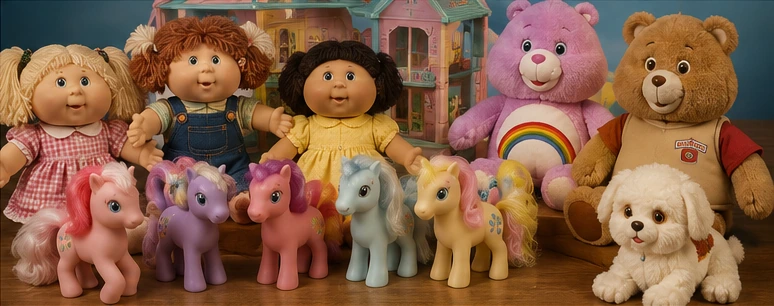
The world of 80s dolls and plush toys has its own condition language. Hair, fabric, elastic, scent, flocking, tags, clothing, shoes, accessories, paperwork, face molds, symbols, factories, and body variations can matter more than hard-plastic collectors expect.
Vintage Cabbage Patch Kids: Most Are Nostalgic, Some Are Special
The famous 1983 frenzy created enormous production and enormous emotional attachment. That means many dolls survive—but specific early, unusual, complete, and well-documented examples can stand apart.
The 1983 shortage is not the same thing as 2026 rarity
The vintage Cabbage Patch Kids story is one of the decade’s greatest retail events, but a toy being hard to find for a few months does not mean every surviving example is scarce forty years later. Production expanded, families preserved dolls, and many examples remain available.
Value rises when the doll has a desirable combination of maker, face, hair, eyes, factory, clothing, paperwork, box, and condition. Original adoption papers and birth certificates matter because the paperwork was part of the toy’s identity. A random dress and a photocopied certificate do not recreate completeness.
Fabric and vinyl create different condition risks
Stains, odors, mildew, haircuts, fabric wear, loose seams, replaced clothing, marker, plasticizer issues, and storage damage should be disclosed. Dolls stored in attics and basements can look acceptable in one photograph while carrying odor or hidden deterioration that becomes obvious in person.
Vintage My Little Pony: The Difference Between a Childhood Pony and a Collector Pony
Original G1 ponies were produced in many characters, poses, colors, countries, sets, and packages. The market rewards accurate identification, clean hair, strong symbols, original accessories, and desirable releases.
Identification is more specific than “pink pony”
The vintage My Little Pony toys line uses body pose, symbol, color, mane, tail, eye design, finish, country, and release set to separate characters and variations. A seller who cannot identify the pony should not leap directly to the word rare.
Condition problems include haircuts, frizz, fading, rehairing, symbol rub, glitter loss, tail rust, head-body mismatch, vinyl discoloration, ink marks, chew marks, and internal mold. Original brushes, combs, ribbons, outfits, cards, and packaging can create significant completeness premiums.
Strawberry Shortcake, Care Bears, Teddy Ruxpin, Pound Puppies, and Other Character Lines
These lines were loved, heavily handled, washed, dressed, slept with, and stored in plastic bags. That history creates a wide condition gap between a childhood survivor and a collector example.
Strawberry Shortcake and scented toys
Scent, hair, hats, pets, clothing, shoes, combs, furniture, and packaging matter. A doll that still smells correct can be attractive, but collectors also inspect for added fragrance used to fake the effect. Clean original accessories are often harder to find than the doll.
Care Bears, Popples, Pound Puppies, and plush condition
Tags, tush labels, fabric brightness, stuffing, seams, facial details, symbols, accessories, and odors all matter. Plush toys absorb their storage environment. Smoke, mildew, perfume, attic dust, and basement dampness can become part of the item unless cleaning is possible and disclosed.
Teddy Ruxpin and the electronic problem
Teddy Ruxpin belongs to both plush and 80s electronic toys and gadgets. The bear’s value depends on cosmetic condition, box, book, cassette, battery compartment, internal belts, eye and mouth movement, audio quality, and whether repairs were performed. “Turns on” is not the same as fully working.
Cartridges, boxes, battery corrosion, and the rise of screen-powered nostalgia
Valuable 80s Video Games and Electronic Toys
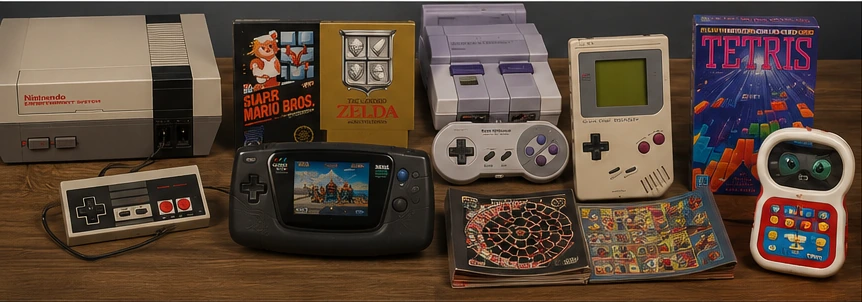
The market for 80s video game toys is more data-rich than many traditional toy categories because individual games are cataloged, sold frequently, and tracked by condition tier. It is also full of reseals, reproductions, swapped boards, counterfeit labels, fake boxes, and spectacular headlines that make ordinary cartridges look like winning lottery tickets.
Loose Cartridge
The game only. Label, shell, screws, board, contacts, authenticity, and working condition matter. Common games often remain common.
Complete in Box
Box, manual, maps, inserts, registration cards, sleeves, posters, baggies, and promotional papers can multiply value.
Factory Sealed
Seal style, box variant, production run, authenticity, condition, grading, and collector confidence become central.
Nintendo Entertainment System
Common NES cartridges may be inexpensive loose and much stronger complete. In July 2026, recent complete-in-box sales for The Legend of Zelda ranged roughly from the mid-$90s to the mid-$300s depending on maps, manuals, box quality, version, and seller presentation. That spread is the lesson: “complete” still contains several levels.
Price guides can separate loose, complete, new, and graded values, but the buyer must confirm the exact variant. Five-screw and three-screw releases, hangtabs, seals, box revisions, cartridges, labels, and inserts can change the comparison.
Game Boy and handheld gaming
Game Boy launched in 1989, placing early hardware, boxes, manuals, inserts, battery covers, link cables, earbuds, games, and pack-in Tetris inside the 80s collector conversation. A common Tetris cartridge is not rare. A clean complete copy, sealed game, or boxed launch-era system is a different object.
Atari 2600 and the dangerous word “rare”
Millions of common Atari cartridges survive. A black cartridge with an old label is not automatically valuable. Rarity can hide in a specific publisher, label variation, regional release, prototype, loaner cartridge, contest item, or genuinely scarce title. The board inside matters more than the dust outside.
Electronic toys beyond video games
Simon, Merlin, Big Trak, Speak & Spell, handheld sports games, Lazer Tag, programmable toys, robots, keyboards, and talking characters can be collectible when complete and functional. Battery corrosion is the great destroyer. Clean terminals, working sound, lights, gears, belts, displays, controllers, targets, manuals, and original boxes all matter.
Never leave old batteries installed for display. A toy can survive forty years and be destroyed by one forgotten set leaking in a closet.
The family-room shelf can hide value, but most games are missing something
80s Board Games, Puzzles, and the Completeness Problem
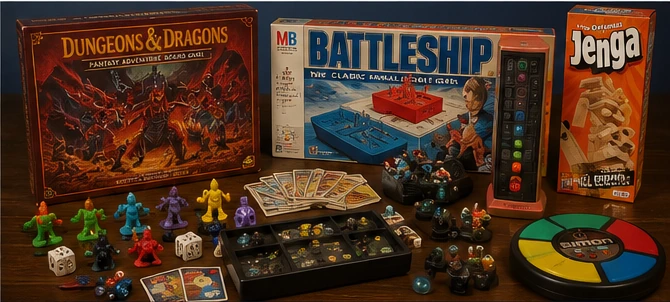
Vintage 80s board games and family-room toys are often sold as complete because the box contains many pieces. That is not an inventory. The correct question is whether it contains every board, card, token, pawn, marble, die, electronic component, instruction sheet, insert, sticker, and special part listed in the rules.
Big-Component Games
Fireball Island, Dark Tower, HeroQuest, Crossbows and Catapults, and elaborate plastic games gain value when the unique structures and small components survive together.
Electronic Games
Dark Tower, electronic strategy games, and talking or light-up games require clean battery compartments and fully tested functions.
Sealed or Unpunched
Unpunched cardboard, sealed bags, unused decals, clean inserts, and strong boxes can separate a collector copy from an ordinary family-game survivor.
Rubik’s Cube: iconic does not automatically mean rare
The vintage Rubik’s Cube collectibles market rewards original packaging, early versions, unusual licensed editions, promotional cubes, competition material, and genuine scarcity. A standard used cube may be nostalgic and common. A sealed early Ideal package is a different product, but even live asking prices must be checked against completed sales.
Condition includes sticker wear, fading, cracked pieces, movement, internal mechanism, box condition, and whether the puzzle is an original period release rather than a later version.
Large toys create large prices, large boxes, and large shipping problems
Vehicles and Playsets: Where Completeness Becomes a Full Inventory Project
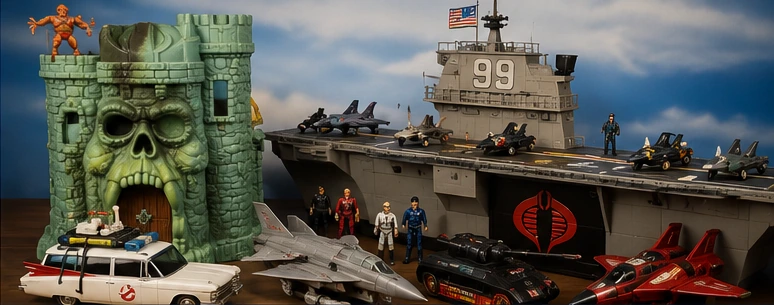
Giant 80s playsets attract attention because they were aspirational when new, difficult to store, easy to damage, and expensive to ship. The surviving population may be large in raw shells and small in complete, clean, boxed examples.
The Shell Is Not the Set
A castle body, aircraft-carrier deck, vehicle chassis, or headquarters wall may be only half the product. Inventory every removable piece.
Cardboard Parts Matter
Elevator platforms, backgrounds, inserts, floors, decals, screens, and packaging pieces were often discarded first.
Shipping Changes the Market
A huge toy can be valuable and still difficult to sell nationally because packing, insurance, dimensional weight, and damage risk reduce the buyer pool.
Build a part-by-part checklist before using the word complete
Use original instructions, collector archives, catalog scans, and trusted reference photographs. Count missiles. Verify colors. Confirm the correct driver. Check that the cardboard insert belongs to the correct version. Make sure replacement pieces are identified.
Original boxes are more than decoration
Large toy boxes were usually flattened, cut, taped, crushed, or thrown away. A surviving box with inserts can create major display appeal. It also creates storage and shipping challenges, so box condition should be described honestly rather than hidden behind the phrase “good for its age.”
The collector market loves details children never noticed
Rare 1980s Toys: Mail-Aways, Prototypes, Regional Releases, and Variations
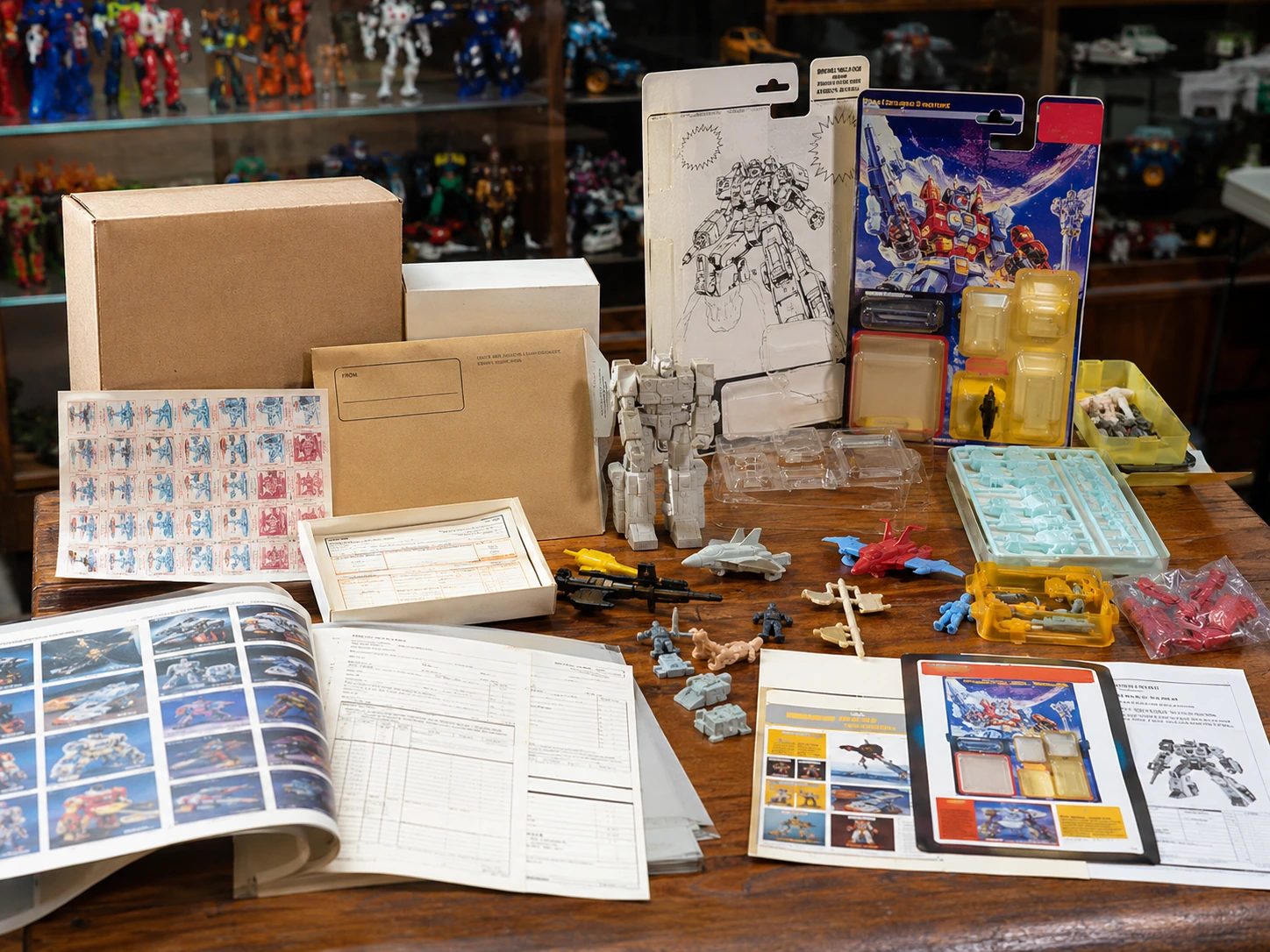
The highest-value items often sit outside the normal retail path. They may have been ordered through proof-of-purchase points, produced only for one region, changed quickly, recalled, distributed to employees, shown to retailers, used for photography, or never released at all.
Mail-Away Exclusives
Figures, weapons, catalogs, certificates, shipping boxes, bags, and paperwork can all matter. The mailer may be part of the collectible.
Packaging Variations
Offers, logos, cardback counts, country markings, price stickers, hangtabs, bubbles, and insert changes can separate releases.
Color and Mold Variants
Paint, plastic color, head sculpt, face, symbol, accessory color, factory, and production changes require reference-level identification.
Recalled or Corrected Versions
Documented recalls and rapid corrections can create scarcity, but folklore is not proof. Find the exact production history.
Foreign and Regional Releases
Different manufacturers, packaging, names, accessories, materials, and production quantities can create separate collector markets.
Prototypes and Samples
Provenance, production markings, materials, mold differences, paperwork, and chain of ownership are essential because extraordinary claims attract extraordinary fakes.
“Rare” must be demonstrated. A toy is not rare because the seller has never seen another one. It may simply be unfamiliar, incomplete, misidentified, or described with excessive confidence.
The line you barely remember may be harder to complete than the famous one
Sleeper-Value 80s Toys and Forgotten Lines
Some of the most interesting collector opportunities live outside the obvious brands. Short-lived lines, large monsters, unusual vehicles, obscure role-play sets, late-wave figures, regional products, and complete boxed examples can attract dedicated buyers even when the wider public has forgotten the name.
The guide to forgotten toys of the 80s is useful because memory often returns only after the image appears. Collector demand can work the same way: a small but committed group may chase one line intensely while most casual sellers overlook it.
Short-Lived Action Lines
Inhumanoids, Sectaurs, Air Raiders, Visionaries, Centurions, Crystar, BraveStarr, C.O.P.S. ’n Crooks, and other lines can surprise when complete.
Large Monsters and Mounts
Oversized toys were difficult to store and expensive to ship. Complete examples with every rider, saddle, weapon, or mechanism may be scarce.
Late-Wave Figures
Characters released near the end of a line often received less shelf time and lower distribution, but demand depends on the line’s collector base.
The fastest way to misprice a toy is to believe the story before checking the object
Vintage Toy Value Myths That Refuse to Die
“It Is Old, So It Is Valuable”
Age creates eligibility for nostalgia. It does not create scarcity, demand, completeness, condition, or collector competition.
“It Is Still in the Box, So It Is Mint”
A box can contain sun fading, corrosion, melted rubber, broken parts, mildew, odors, factory damage, or a toy that was removed and returned.
“The Internet Says One Sold for Thousands”
The sale may involve a prototype, rare variant, grading, sealed packaging, shill bidding, misinformation, or a transaction that was never completed.
“A Price Guide Is the Price”
A guide summarizes past activity. Your exact item still has its own condition, completeness, timing, location, and buyer pool.
“Cleaning Always Adds Value”
Cleaning can remove original paint, flocking, scent, chrome, symbols, stickers, patina, factory marks, or the evidence needed for authentication.
“Grading Always Pays for Itself”
Fees, shipping, insurance, turnaround time, grade risk, and market demand can make grading unnecessary or financially pointless for common material.
The internet has turned every basement into an imaginary auction house
80s Toys People Assume Are Valuable—but Usually Are Not
A common toy can be worth selling. It can be desirable. It can make somebody happy. None of that means it is worth hundreds or thousands. The market is full of emotional inflation caused by viral articles, unsold listings, badly identified variants, and the human desire to believe the attic is handling retirement planning.
Common Loose Main Characters
Famous heroes were produced heavily. Missing accessories and play wear usually place them in the ordinary collector market.
Mass-Produced Dolls
Popularity created millions of examples. Unusual combinations, complete paperwork, boxes, and condition matter more than the brand name alone.
Common Atari and NES Games
A cartridge can be authentic, fun, and inexpensive. Rare variants and sealed copies should not be used to value a normal loose game.
Incomplete Board Games
Large boxes and cool artwork do not overcome missing cards, pieces, electronics, towers, marbles, or instructions.
Nonworking Electronic Toys
Repair potential exists, but corrosion, broken gears, dead displays, missing controllers, and absent accessories limit the audience.
Anything Valued by One Wild Listing
A seller can ask any number. The listing becomes evidence only when a buyer completes the transaction under comparable conditions.
One listing is easier. Twenty listings may pay more. Welcome to the tradeoff.
Should You Sell 80s Toys Individually or as a Collection?
The best financial answer and the best life answer are not always the same. Selling every figure, weapon, game, vehicle, and instruction sheet separately may produce more gross revenue, but it also creates research, photography, messages, packing, fees, returns, and trips to the shipping counter.
Sell Individually When
The item is rare, complete, boxed, graded, highly searched, easy to identify, easy to ship, or clearly worth separating from the group. Important characters, rare variants, complete vehicles, and strong boxed pieces usually deserve their own listing.
Sell as a Small Lot When
The toys share a line, scale, year, faction, condition, or buyer type. A group of common G.I. Joe figures, My Little Pony accessories, or Atari games can be more attractive together than as fifteen tiny transactions.
Sell as a Parts Lot When
Accessories are mixed, incomplete, damaged, or difficult to identify. Clear photographs and honest language allow collectors to spot what they need without the seller guessing.
Use a Specialist Auction When
The material is rare, graded, sealed, prototype, historically significant, or likely to benefit from concentrated collector competition and professional cataloging.
Pull the obvious stars before creating a bulk lot
Do not throw a rare mail-away figure, expensive weapon, desirable cartridge, unusual pony, or prototype part into a mixed box because the rest looks common. A quick identification pass can prevent the classic mistake of selling the valuable item as free packing material.
Time has a value too
A collection that might gross more over six months of individual sales can still be a poor choice for someone who wants the space cleared this weekend. Decide whether the goal is maximum gross revenue, reasonable net revenue, speed, simplicity, or preserving the collection together.
A practical order of operations before the first toy hits a listing page
The Attic-to-Appraisal Workflow
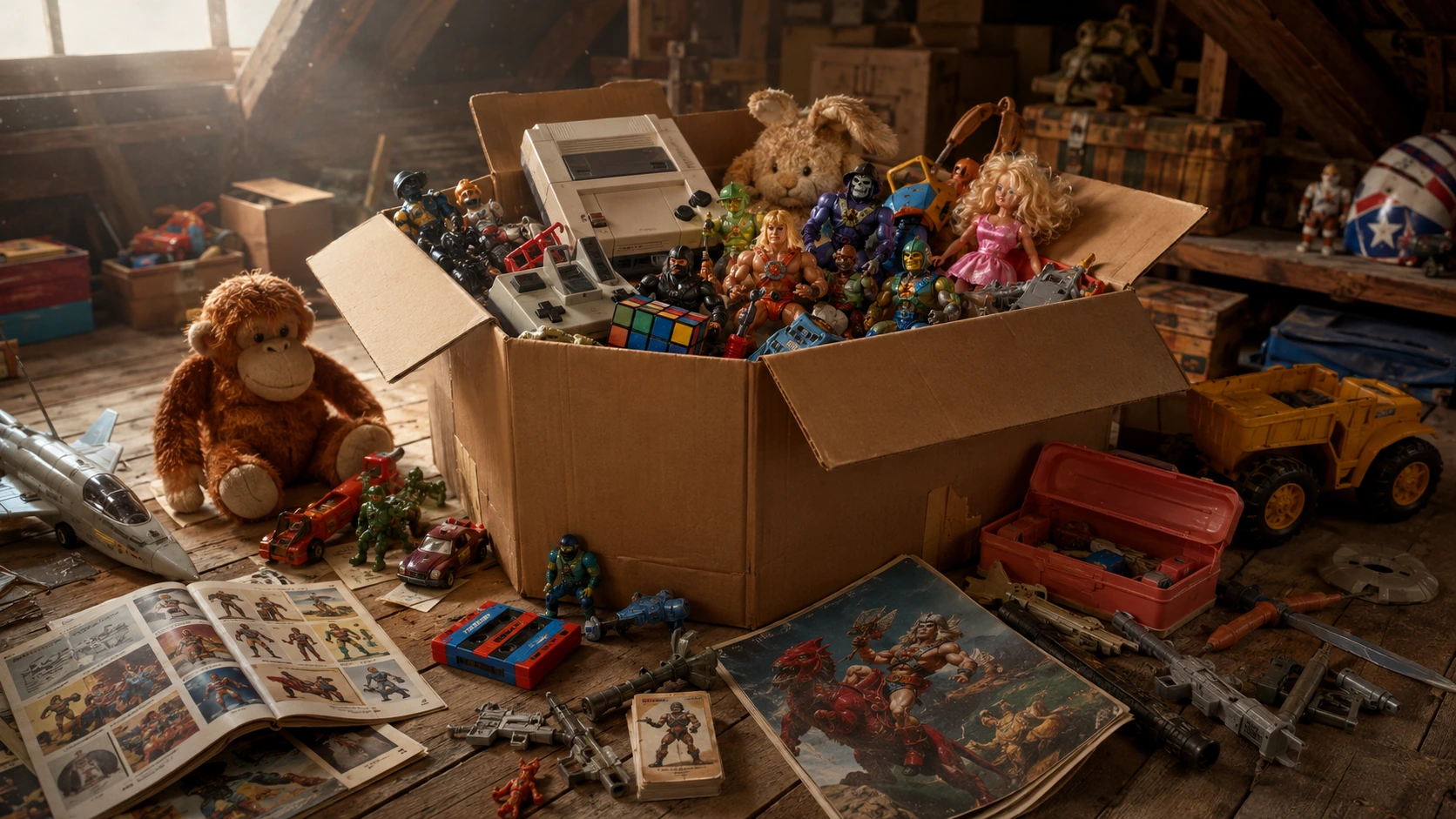
Do not clean, test, or repair anything yet
Separate the toys from leaking batteries, moisture, pests, and direct sunlight, but avoid aggressive cleaning. Photograph the original condition before moving accessories, replacing parts, or wiping away markings.
Group by brand and toy line
Put G.I. Joe with G.I. Joe, Transformers with Transformers, dolls with their clothing, games with their manuals, and unidentified weapons in a separate tray. Mixed bins create false completeness.
Match accessories before pricing
Use reliable visual guides to pair weapons, masks, missiles, capes, file cards, brushes, combs, cassettes, and vehicle parts. Do not force pieces together. A wrong accessory can damage both items.
Record condition honestly
Note breaks, cracks, loose joints, discoloration, odors, corrosion, missing screws, dead electronics, paint wear, haircuts, stains, repaired parts, replaced stickers, and reproduction accessories.
Research sold examples in the correct tier
Compare the item with recent sales that match version, completeness, packaging, and condition. Save links or screenshots with dates so the research can be revisited.
Choose sell, keep, donate, repair, or store
Not every toy deserves a listing. Some are better kept for memory, donated for play, sold as parts, or stored until the identification is stronger.
The headline number is only the first line of the story
How to Read a Vintage Toy Auction Result Without Fooling Yourself
Check whether the reported price includes the buyer’s premium
Auction houses may report a final price that includes the premium charged to the buyer. That number is useful for understanding what the buyer paid, but it is not necessarily what the consignor received. Seller commissions, insurance, photography, shipping, advances, and other terms can affect the net result.
Read the full lot title
The difference may hide in a short phrase: first release, highest graded, population one, sealed case, original box, prototype, salesman sample, foreign release, mail-away, uncirculated, unused sticker sheet, or complete with shipping carton. Removing those words can make an exceptional result sound like the normal value of every example.
Study the condition report and photographs
Two items with the same grade can have different eye appeal. One may have a price sticker in a desirable location, brighter color, a clearer bubble, centered contents, or a box that displays better. Another may have a technical grade that hides the exact flaw a particular buyer dislikes.
Look at the number of bidders and the pattern of bidding
A high result created by two determined collectors can show genuine demand, but it may not repeat immediately. A result supported by many bidders may represent a broader market. Auction excitement, timing, publicity, and a well-known collection can all affect the outcome.
Confirm that the sale completed
Marketplace listings can display “sold” even when payment fails, the buyer cancels, or the transaction is later reversed. Auction-house archives are generally stronger evidence, but even then the specific terms and condition still matter.
Use a range, not a trophy number
The most responsible valuation comes from several recent comparable sales. Remove obvious outliers, adjust for condition and completeness, then create a realistic range. The goal is not finding the highest number ever associated with the name. The goal is predicting what a comparable buyer might pay now.
How to avoid becoming the person who listed a common doll for twelve grand
How to Check Real Sold Prices for Vintage 80s Toys
1. Identify the Exact Item
Brand, line, character, version, year, manufacturer, country, package, color, accessories, and condition. Search results are useless when the item is wrong.
2. Search Completed Sales
Look for transactions where a buyer and seller agreed on a price. Ignore unsold listings unless you are studying what the market rejected.
3. Compare Like With Like
Loose with loose. Complete with complete. Boxed with boxed. Graded with the same grade range. Prototype with documented prototype.
4. Use Several Comps
One auction can be unusually high or low. A group of recent comparable sales creates a more realistic range.
5. Note the Date
Collector markets move. A price from 2021, 2024, or 2026 may reflect different demand, supply, attention, and economic conditions.
6. Subtract the Selling Friction
Fees, shipping, insurance, packing materials, returns, taxes, grading costs, and time all separate the headline sale from what the seller keeps.
Marketplace results and auction-house results answer different questions
Major auction houses tend to feature rarer, graded, sealed, or higher-value material and may reach specialized bidders. General marketplaces contain more ordinary loose and complete toys. Both are useful, but they should not be blended carelessly.
Price guides are starting points, not automatic appraisals
A guide can summarize recent data, but the physical item still has to match the category. It may have a different label, missing insert, altered accessory, damaged box, or undisclosed repair. The final value belongs to the exact object, not the search term.
Update rule: this page’s market examples are stamped July 14, 2026 and should be refreshed at least twice per year. Values are ranges and examples, not guarantees.
Before you price it, figure out what it actually is
Identification, Authenticity, Reproduction Parts, and Restoration
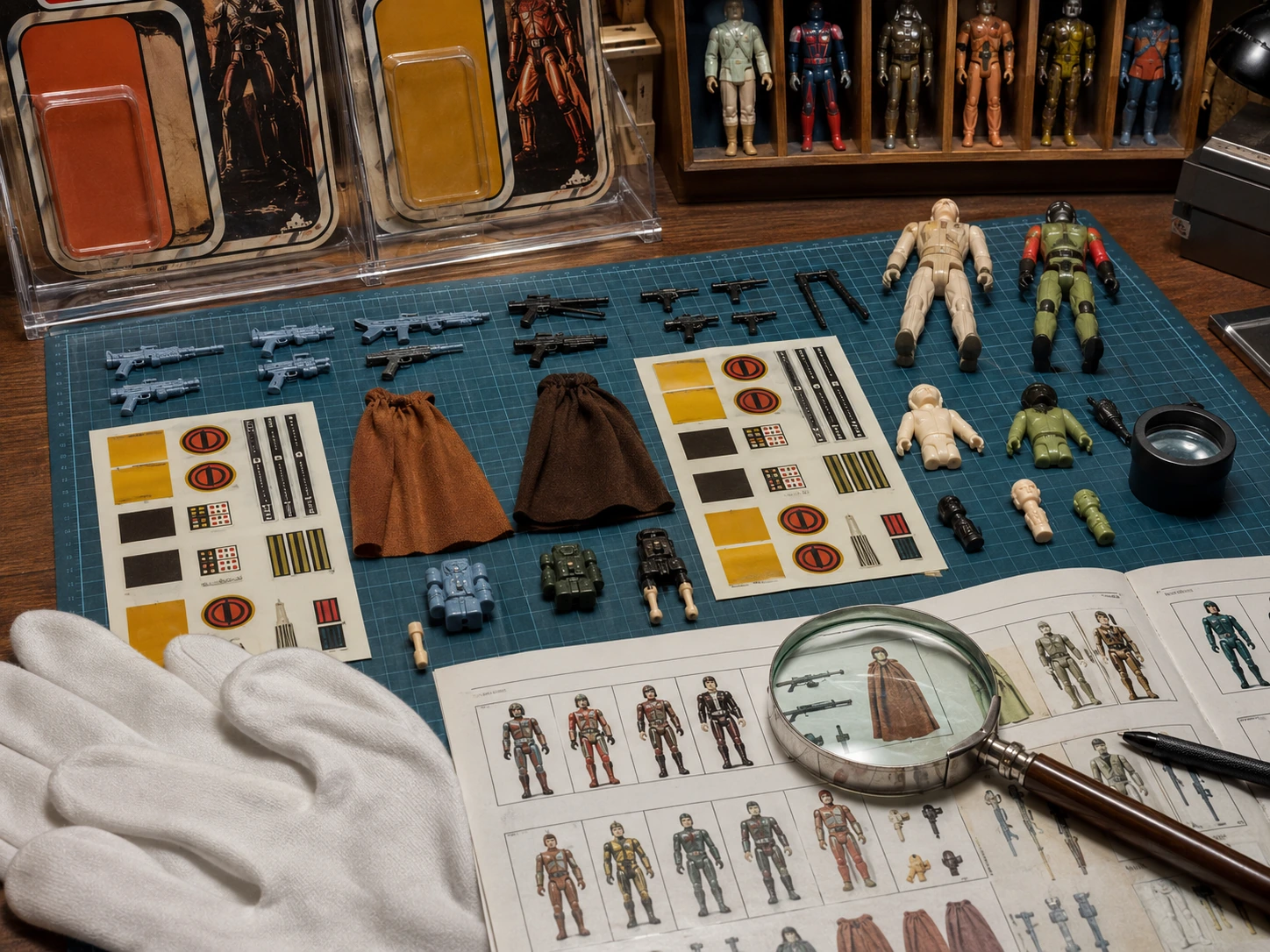
Start with markings, not memory
Read manufacturer stamps, country marks, dates, mold numbers, copyright lines, battery labels, printed codes, and packaging text. Memory tends to merge childhood, reissues, sibling toys, flea-market replacements, and later versions into one confident but inaccurate story.
Reproduction accessories are everywhere
Weapons, capes, missiles, stickers, boxes, inserts, cardbacks, bubbles, and paperwork are reproduced because originals are frequently missing. Reproductions can make a toy display better, but they should never be represented as original. Disclosure protects the buyer and the seller.
Restoration changes the collector conversation
Touch-up paint, replaced decals, rehairing, whitening, repaired electronics, new O-rings, glued tabs, recreated cardboard, cleaned corrosion, and resealed packaging should be documented. Some buyers welcome careful restoration. Others want untouched originality. Hidden restoration creates the problem.
Use specialist references for high-value pieces
When a toy may be genuinely rare, consult line-specific collector guides, reputable archives, grading population reports, experienced dealers, established auction houses, and collectors who can explain the identification rather than merely announce a price.
Sometimes the right move is admitting the item has left casual-search territory
When a Vintage Toy Needs a Professional Appraisal
Most common 80s toys can be researched through completed sales and specialist collector references. Professional help becomes more useful when the item may be rare enough that ordinary marketplace comparisons are unreliable or nonexistent.
Possible Prototype
Unusual material, unpainted plastic, handwritten markings, mold differences, missing production stamps, factory paperwork, or a credible employee history may justify specialist review.
High-Grade Sealed Item
A scarce sealed toy with strong packaging may benefit from authentication, grading advice, insurance documentation, and a venue capable of reaching advanced collectors.
Major Boxed Collection
A large coordinated collection can contain rare variants, hidden upgrades, and valuable paperwork that a general estate buyer may miss.
Documented Celebrity or Production Provenance
Toys tied to designers, photographers, company archives, film production, advertising, or notable collectors require careful chain-of-ownership documentation.
Insurance or Estate Need
Fair-market value for insurance, inheritance, donation, divorce, or estate planning may require a formal written appraisal rather than a screenshot of a marketplace listing.
Value High Enough to Change the Selling Plan
When the likely range reaches the point where shipping, insurance, fraud prevention, taxes, and venue choice matter materially, experienced help can pay for itself.
Choose expertise in the specific line
A general antiques appraiser may know furniture and glass but not the difference between a first-release Transformers gift set and a later reissue. Ask what comparable items the appraiser has handled, which archives they use, and whether the report explains identification and methodology.
An appraisal is still an opinion at a date
Even a professional appraisal cannot guarantee a sale. It estimates value under defined conditions at a particular time. The actual result depends on venue, marketing, buyer competition, condition, and the market when the item is offered.
When the collection belongs to somebody who is no longer available to explain the boxes
Handling an Inherited 80s Toy Collection
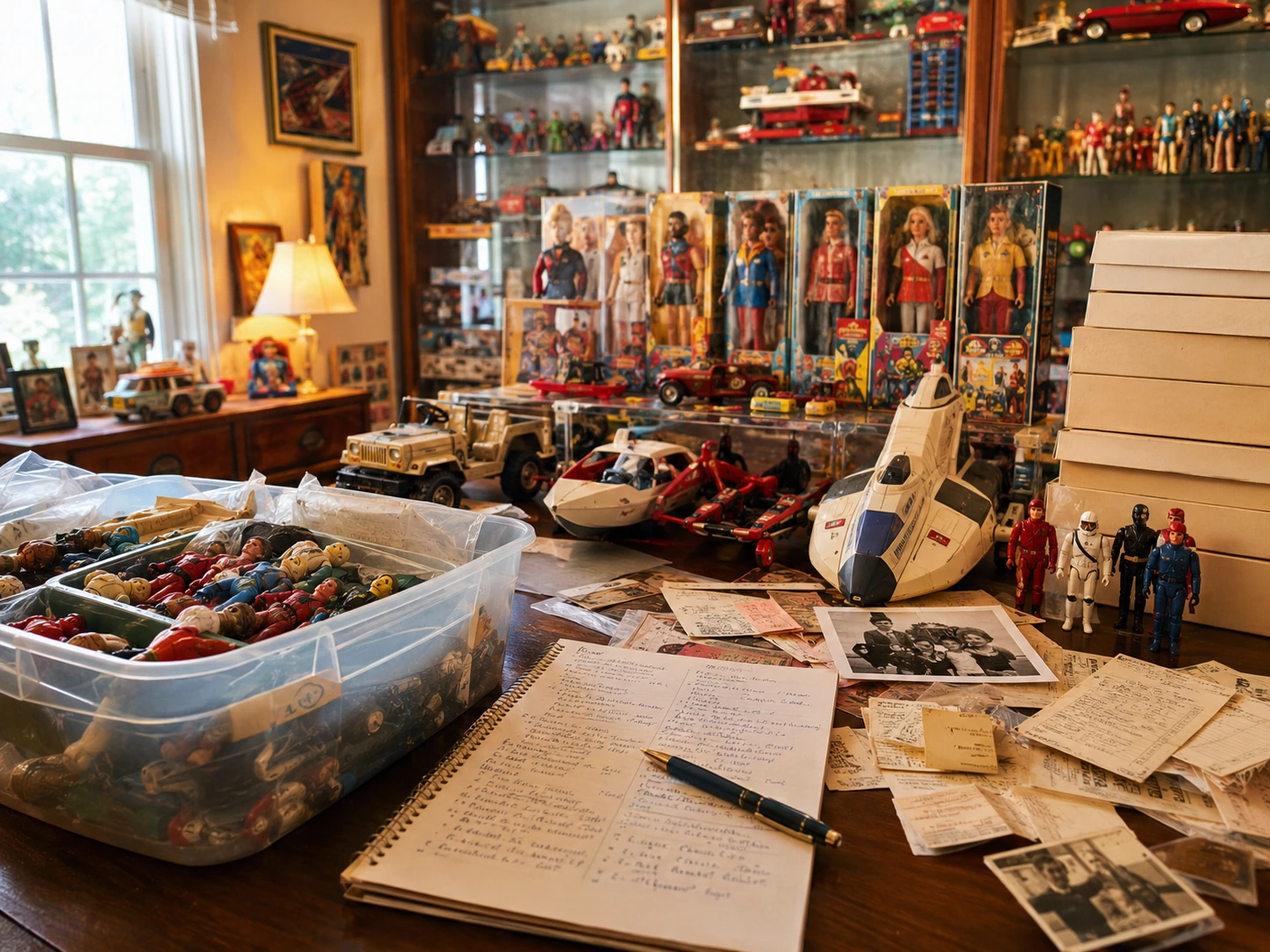
Inherited collections create a special problem: the person who knew why one box mattered may no longer be there to explain it. Family members see shelves of similar figures, duplicate vehicles, parts bins, receipts, shipping cartons, and paperwork. The temptation is to clear the room quickly. That is exactly when valuable context gets separated from the object.
Keep documentation with the collection
Receipts, auction invoices, grading paperwork, certificates, collector notes, correspondence, convention materials, photographs, and shipping boxes can establish identity, provenance, and purchase history. Do not throw away paper because it looks less valuable than the plastic.
Do not reorganize before photographing the room
The collector may have grouped variants, kept accessories near the correct figure, separated reproductions, or organized shelves by release year. Photograph the arrangement before moving anything. The original layout can serve as a map.
Watch for labels and personal codes
Small stickers, handwritten inventory numbers, storage-bin labels, spreadsheet references, and notes may connect items to a larger catalog. What looks like meaningless shorthand may identify purchase source, condition, completeness, or authenticity concerns.
Separate emotional decisions from market decisions
Families may wish to keep representative pieces even when selling the majority. Choose those items before the collection is broken apart. Once a rare figure or childhood centerpiece is sold, buying it back can be difficult and expensive.
Get competing offers on significant material
A fast cash offer provides convenience and transfers the research burden to the buyer. That is a legitimate service, but the price reflects it. For valuable collections, compare outright purchase offers, consignment terms, specialist auction proposals, and the likely work of selling independently.
Turning old plastic into money without turning the process into a second job
How to Photograph, List, Pack, Store, and Sell Vintage Toys
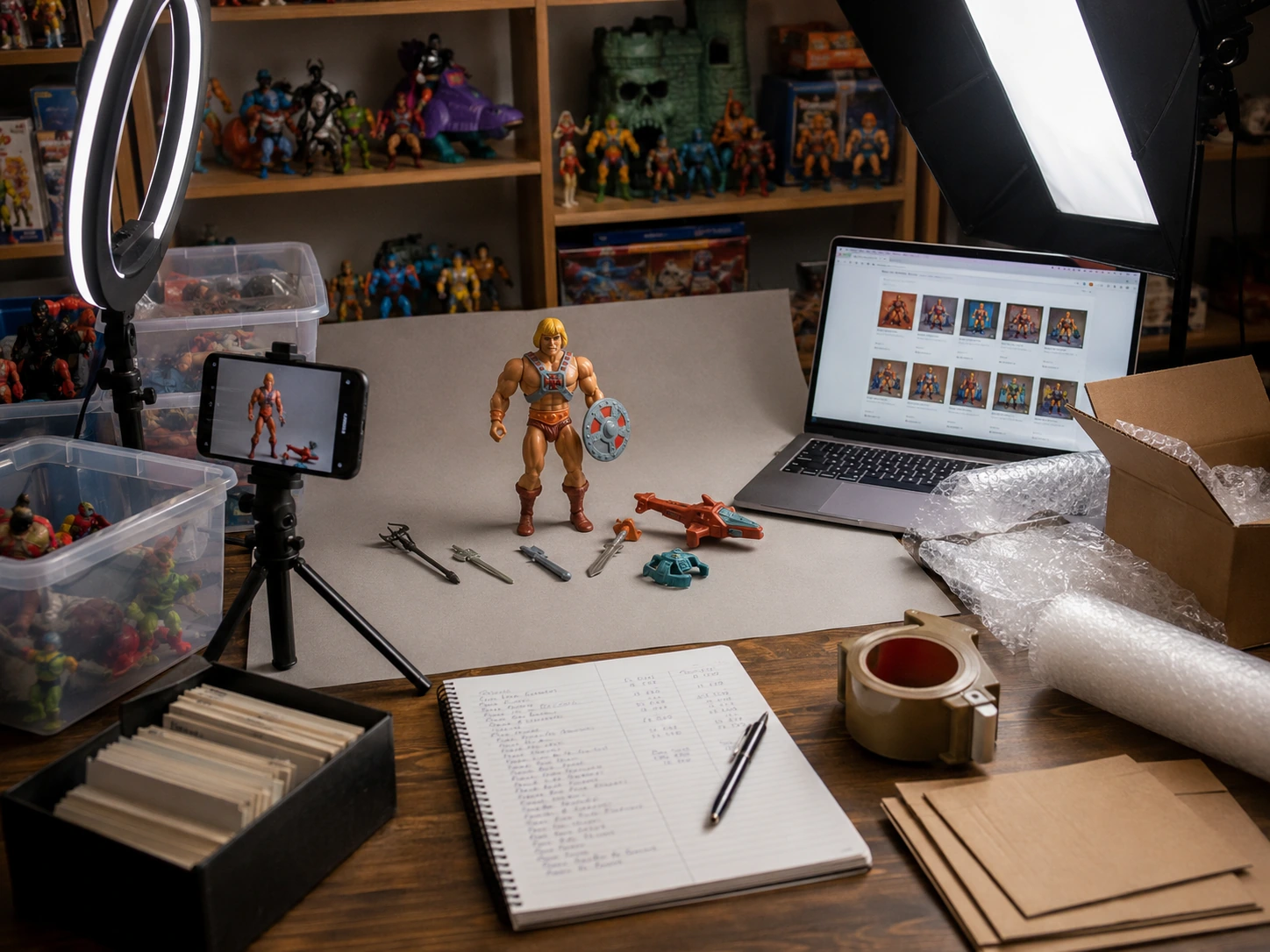
Photograph Every Side
Front, back, top, bottom, markings, accessories, damage, battery compartment, box panels, seals, bubble edges, and moving parts.
Show the Flaws
A visible crack does less damage than a buyer discovering the crack after delivery. Honest listings build confidence.
Inventory the Parts
Lay out accessories clearly. Do not hide pieces inside vehicles or assume the buyer knows what is included.
Test Carefully
Electronic toys, springs, lights, sounds, motors, transformations, and action features should be tested gently and described precisely.
Pack for the Worst Carrier Day
Protect bubbles, cardbacks, corners, antennas, brittle tabs, windows, and loose components. Double-box expensive fragile pieces.
Choose the Right Venue
Common toys may fit a general marketplace. Rare graded or prototype material may benefit from a specialist auction audience.
Storage matters before and after the sale
Keep toys away from direct sunlight, high heat, damp basements, attic temperature swings, smoke, pests, pressure, and leaking batteries. Use archival materials when appropriate, avoid PVC contact for sensitive items, and do not seal damp or recently cleaned toys into airtight containers.
Do not clean aggressively before research
Harsh chemicals can remove paint, symbols, flocking, scent, chrome, stickers, or factory marks. A well-intended deep cleaning can destroy exactly what made the item collectible. Research the material and line before using anything stronger than patience.
Release year helps identify versions, packaging, and what else shared the shelf
Vintage 80s Toy Values by Year: 1980–1989 Reference Links
Year pages are not price guides. They are context tools. They help establish when a line entered the market, which products were competing for attention, and whether the toy being described actually belongs to the year in the listing.
Collector context for 1980
Rubik’s Cube, Star Wars carryover toys, electronic games, and early home gaming create several different collector categories. Compare releases with the top toys of 1980.
Collector context for 1981
Puzzle mania, Atari-era gaming, character dolls, Smurfs, and electronic toys show why release-year context matters. Compare releases with the top toys of 1981.
Collector context for 1982
He-Man, My Little Pony, and G.I. Joe begin the franchise systems that dominate collector conversations. Compare releases with the top toys of 1982.
Collector context for 1983
Cabbage Patch Kids, Care Bears, G.I. Joe, and Masters of the Universe turn retail frenzy into long-term nostalgia. Compare releases with the top toys of 1983.
Collector context for 1984
Transformers and GoBots make condition, transformation wear, stickers, and removable accessories central. Compare releases with the top toys of 1984.
Collector context for 1985
Nintendo, Teddy Ruxpin, She-Ra, Jem, M.A.S.K., and giant playsets widen the market. Compare releases with the top toys of 1985.
Collector context for 1986
NES expansion, Lazer Tag, Ghostbusters, Pound Puppies, and electronic toys create batteries-and-accessories problems. Compare releases with the top toys of 1986.
Collector context for 1987
Nintendo software, Koosh, licensed characters, and crowded late-decade lines produce both common hits and obscure sleepers. Compare releases with the top toys of 1987.
Collector context for 1988
Teenage Mutant Ninja Turtles, Dino-Riders, Nintendo, and late-wave action figures intensify variant collecting. Compare releases with the top toys of 1988.
Collector context for 1989
Game Boy, Polly Pocket, TMNT expansion, Micro Machines, and late-decade packaging create the bridge into the 90s. Compare releases with the top toys of 1989.
How the market examples were checked
Price Sources, Limits, and Refresh Policy
The market examples in this guide were checked against completed auction records and completed-sale tracking available in July 2026. High-end action-figure and playset examples came from Heritage Auctions archives. Video-game ranges and recent completed sales were checked through PriceCharting’s historical-sales data.
Those sources cover different parts of the market. Heritage tends to feature rarer, sealed, boxed, or graded material. PriceCharting aggregates game sales by condition category. General marketplace sold listings remain useful for ordinary loose and complete toys, but every comparison still requires careful identification.
No value in this article is a guarantee, appraisal, investment promise, or instruction to buy. The numbers illustrate how condition tiers behave. They should be refreshed at least twice yearly and replaced when stronger comparable sales become available.
The market moves, and the attic does not issue press releases
Vintage Toy Value Update Log
July 14, 2026
Initial collector guide published with dated sold-price examples, condition tiers, authenticity warnings, category-specific damage notes, and release-year reference links.
Next Scheduled Review
January 2027. Refresh completed-sale examples, remove stale comparisons, verify linked toy pages, and update condition ranges without turning one unusual auction result into a promise.
This page is scheduled for review at least twice each year. Every future market update should include the date and preserve the difference between ordinary loose toys and exceptional boxed, sealed, graded, or prototype examples.
Questions from the attic, basement, and wildly optimistic listing page
Questions About Valuable 80s Toys and Collector Values
What 80s toys are worth the most money?
The highest prices usually belong to rare prototypes, preproduction pieces, early or unusual carded figures, high-grade sealed toys, complete boxed playsets, rare variants, mail-away exclusives, and exceptional examples from brands with strong collector demand. A normal loose toy should not be compared with those results.
Are old He-Man figures worth money?
Some are. Common loose figures without accessories can be modest, while complete figures, sealed early cards, rare variants, foreign releases, prototypes, boxed playsets, and exceptionally complete pieces can be valuable. Exact identification matters.
Are 1980s G.I. Joe figures valuable?
Condition, version, accessories, file cards, cardbacks, troop demand, mail-away status, and rarity determine value. Broken thumbs, cracked crotches, missing weapons, and incorrect accessories are common. Vehicles require a detailed parts inventory.
How much are old Transformers worth?
The range is enormous. A common incomplete robot can be modest, while complete boxed leaders, gift sets, combiners, rare later figures, Japanese releases, sealed examples, and prototypes can sell for far more. Confirm whether the toy is vintage, reissued, restored, or using reproduction parts.
Are Cabbage Patch Kids worth thousands?
Most ordinary mass-produced dolls are not. Earlier hand-crafted dolls, rare combinations, unusual factories, original clothing, paperwork, boxes, and exceptional condition can command stronger prices. Viral asking prices should not be treated as sold values.
Are old Nintendo games valuable?
Some are, but many common cartridges remain affordable. Value depends on title, version, authenticity, condition, box, manual, maps, inserts, seal, and whether the item is loose, complete, new, or graded.
Does the original box make a toy valuable?
It can create a major premium, especially when the box includes original inserts, instructions, paperwork, decals, and internal packaging. Box condition and authenticity still matter. A damaged empty box does not automatically transform a common toy into a rare one.
Should I grade my vintage toys?
Grading may make sense for rare, sealed, high-condition, or highly liquid pieces where the likely value supports the cost and risk. It is usually unnecessary for common loose toys. Research comparable graded and ungraded sales before submitting.
How do I find the value of an 80s toy?
Identify the exact item and version, inventory the original parts, document condition, then compare several recent completed sales for genuinely similar examples. Use more than one marketplace or auction archive when the item is uncommon.
Why are eBay asking prices so high?
Because sellers may ask any amount. Some listings are optimistic, misidentified, copied from viral stories, or designed to wait indefinitely for an uninformed buyer. Completed sales reveal what buyers actually accepted.
Can reproduction accessories hurt value?
Yes, especially when they are undisclosed. Reproduction parts can improve display and are useful to many collectors, but they should be labeled clearly and should not be priced as original.
How often should vintage toy prices be updated?
For a collector guide, at least twice per year is sensible, and more often for fast-moving categories. Every price range should include a date because collector markets, attention, and supply change.