50 Most Iconic Toys of the 70s The Toys That Built the Gen X Toy Box
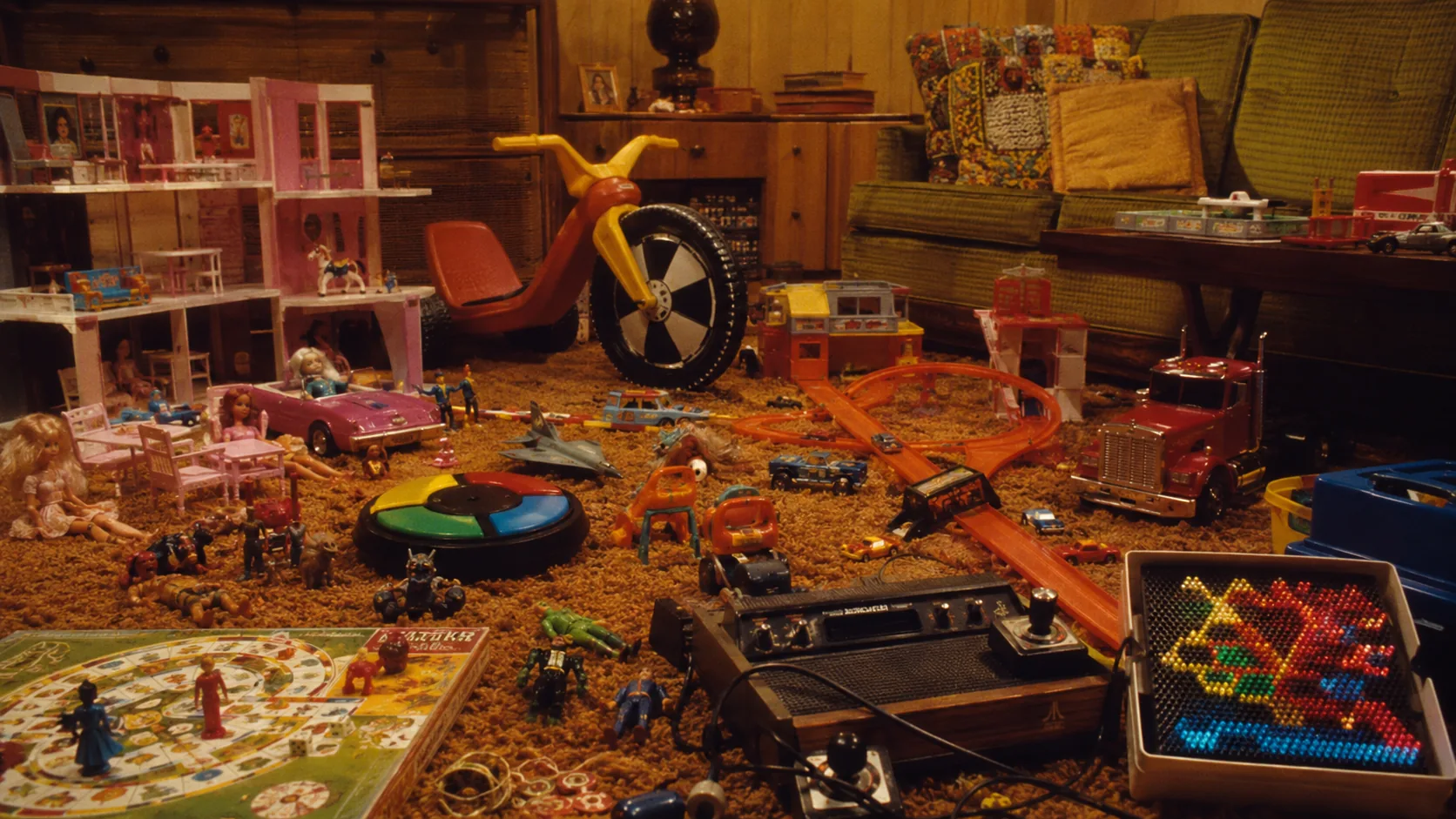
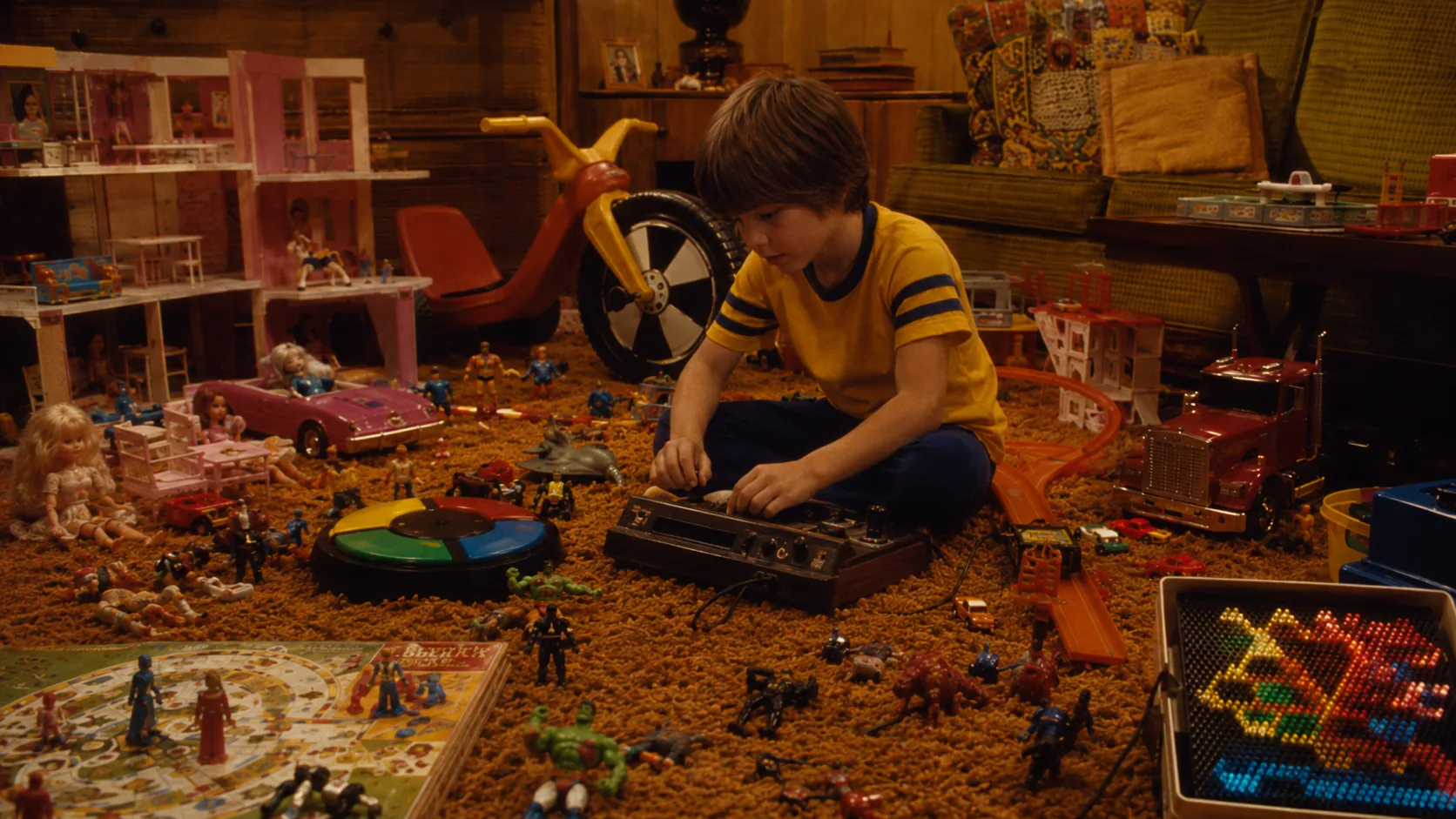
The most iconic toys of the 70s were not all one thing. They were Star Wars figures and Barbie wardrobes, Hot Wheels tracks and Big Wheel skids, Lite-Brite pegs and Play-Doh crumbs, Simon beeps and Evel Knievel crashes. We did not call any of it “analog play.” We called it being a kid, and the carpet was basically the entire universe.
What Were the Most Popular and Iconic Toys of the 70s?
The most popular and iconic toys of the 70s included Kenner Star Wars action figures, Barbie, Hot Wheels, Atari 2600, Big Wheel, Fisher-Price Little People, Stretch Armstrong, Evel Knievel Stunt Cycle, Weebles, Simon, Nerf Ball, Speak & Spell, Mego superheroes, Baby Alive, Lite-Brite, Easy-Bake Oven, Spirograph, Shrinky Dinks, Tonka trucks, and Matchbox cars.
This countdown ranks the toys that best represent childhood across the whole decade. Some were invented in the 70s. Others were older favorites that remained impossible to escape. The question is not just when a toy first appeared. It is whether the thing helped define what a 70s bedroom, family room, kitchen table, sidewalk, driveway, or Christmas morning actually felt like.
Top Toys of the 70s by Year: 1970–1979
Every year had its own personality. The decade began with Nerf, Barbie, Hot Wheels, Weebles, Play-Doh, and kitchen-table creativity. It ended with Star Wars, Atari, Simon, Speak & Spell, and the toy box making suspicious electronic noises.
The Complete List of 50 Iconic 70s Toys
Need the answer before somebody calls you to dinner? Here are all 50 toys. Tap any name to jump straight to it.
How We Ranked the Most Iconic Toys of the 1970s
There was no clean Billboard chart for toys, and anybody pretending otherwise is selling fake certainty with a bow on it. This list weighs cultural footprint, Christmas-list heat, staying power, commercial memory, the size of the play world a toy created, and how strongly it still unlocks the decade.
It Had to Feel Like the 70s
A great toy from another era was not enough. The strongest choices connect directly to the decade’s colors, television habits, family rooms, catalogs, sidewalks, and loose approach to supervision.
It Had to Create Real Play
The best toys kept going after the first demonstration. They built worlds, started competitions, created rituals, or turned ordinary furniture and carpet into part of the experience.
It Had to Leave a Mark
Some toys changed the whole business. Others left a permanent memory through one brilliant gimmick, one perfect slogan, one strange smell, or one noise parents can still hear in their sleep.
Before We Start Counting
How 1970s Toys Changed From Analog Play to Electronic Obsession
The toy box at the beginning of the 70s was not the same toy box we had by the end. The decade started with a lot of familiar carryovers—cars, dolls, blocks, board games, art toys, sturdy metal trucks, and anything that could keep a kid occupied without occupying an electrical outlet. By 1979, toys were flashing, beeping, remembering commands, talking back, plugging into the television, and arriving with movie universes attached.
That change did not happen all at once. Most of us did not wake up one Christmas morning and announce that analog childhood had officially entered its electronic phase. We just noticed that the batteries were disappearing faster. The family television suddenly had to be negotiated. Instructions got longer. Boxes started promising computer power. A toy could still be a pile of plastic parts and a decal sheet, but it could also act like a machine with a mind of its own—even when that mind mostly consisted of four lights, six tones, and a refusal to work after somebody mixed old and new batteries.
The 70s also sat in a sweet spot before every successful toy needed an entire media operation wrapped around it. Kids mixed brands because nobody had convinced us not to. Barbie could borrow a Matchbox car if scale was not important. Fisher-Price people could become passengers in a Tonka dump truck. A Mego superhero might fight a Micronaut, rescue a Weeble, and then spend the night in a homemade cardboard headquarters. The toy companies sold the pieces. We supplied the crossover event.
Early 70s: The Floor Was Still in Charge
At the start of the decade, play still spread outward across carpet, linoleum, sidewalks, and kitchen tables. Cars needed roads made from books. Dolls needed furniture arranged by hand. Games needed actual people in the room. Outdoor toys were expected to make noise, create bruises, or force a parent to yell the name of the child who had taken things too far.
By the middle of the decade, the memorable question became, “What does it do?” Hair grew. Muscles stretched. Babies ate. Motorcycles launched. Ovens baked. Plastic art shrank. The feature did not have to be complicated. It only had to produce one great commercial shot and one moment on Christmas morning when everybody gathered around to watch.
Late in the decade, electronics stopped being a hidden trick and became the whole identity. Simon remembered sequences. Speak & Spell talked. Merlin offered several games. Mattel put football into a red LED display. Atari turned the television into the biggest toy in the house. Big Trak let us program a vehicle before most homes had anything resembling a personal computer.
Long before anybody typed “best toys” into a box, we searched with our fingers. We studied the 70s toy catalogs and Sears Wish Books, bent corners, circled items with decreasing levels of realism, and built a Christmas strategy based on page placement and persistence. The catalog did more than show products. It arranged them into a possible childhood.
Then television supplied the moving evidence. A thirty-second commercial could make a plastic launcher look powerful enough to clear a swimming pool and make a snack machine look like a functioning business. That is why the hottest Christmas toys of the 70s were never just about what sat on a shelf. They were about what had already been planted in our heads for months.
That is the standard behind this ranking. A toy did not need to be invented during the decade, and it did not need to be the most expensive thing in the catalog. It had to occupy real childhood space. It had to start games, create rituals, inspire arguments, survive hand-me-downs, or change what came after it. Some toys did all of that. Some just made a sound no one in the family has forgotten.
50–41
50–41: Weird 70s Fads, Electronic Experiments and Playground Chaos
The early part of the countdown is where the decade’s beautiful lack of supervision really shows. These toys spun, buzzed, popped, launched, smelled suspicious, or became famous because somebody put a rock in a box and kept a straight face.
50
Programmable electronic vehicle
#50 — Big Trak
A plastic moon tank that expected us to understand commands
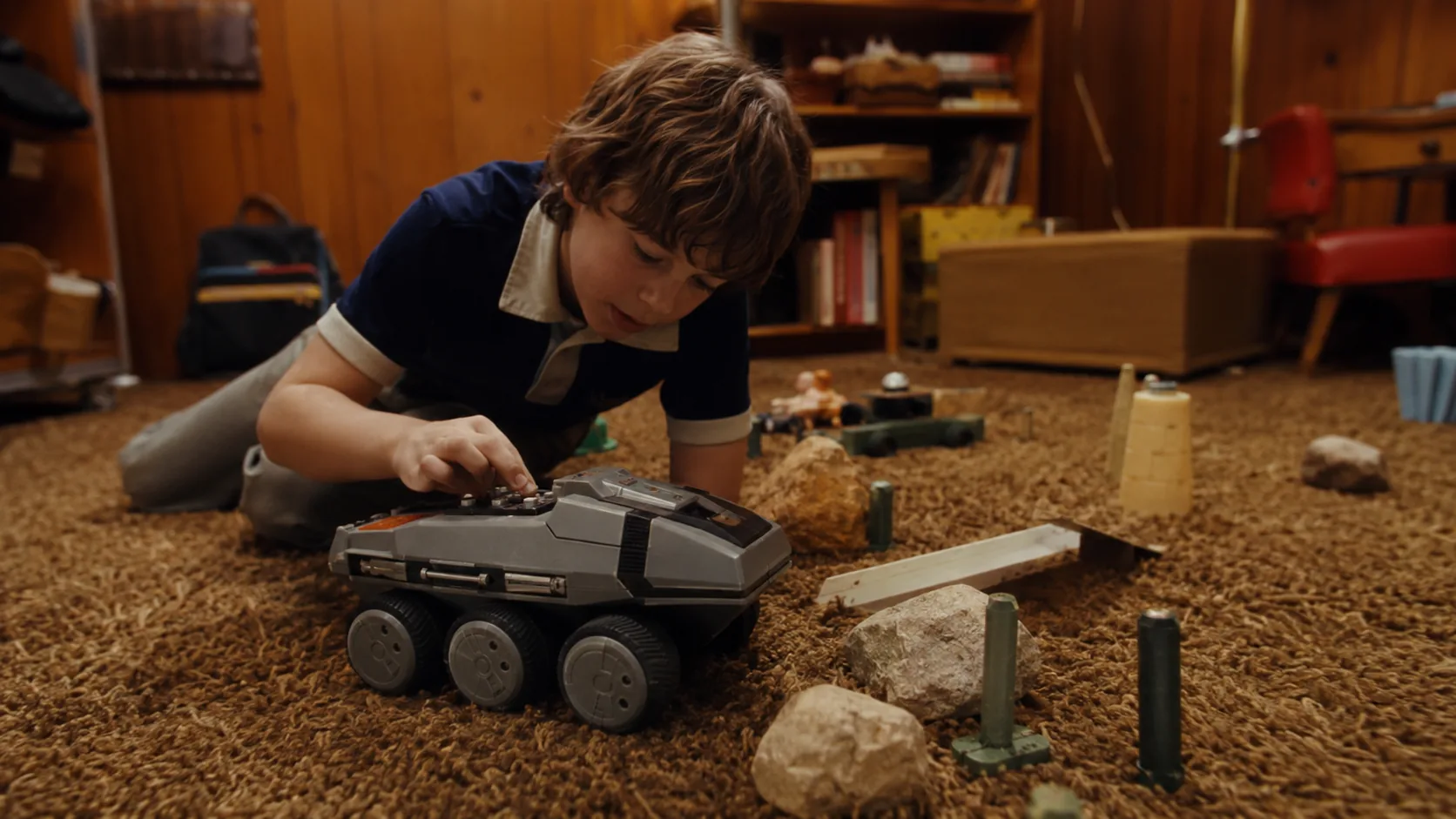
Big Trak looked like a six-wheeled vehicle sent back from a future designed in 1979. Using the keypad on top, kids entered a sequence of forward moves, turns, pauses, and the famous “fire” command, then watched the toy attempt to carry out the program across the kitchen or living-room floor.
It was not always obedient, which made successful runs feel even more impressive. Big Trak belongs on the list because it introduced programming logic as play without making the idea sound educational. You were not studying commands. You were trying to send a moon tank around a chair, fire its blue light, and avoid the wall. That was plenty of motivation.
Why It Felt Like a Real Machine
The keypad changed the relationship between kid and vehicle. Most toy cars went wherever your hand pushed them; Big Trak made you stop, plan, and think several moves ahead. Forward four. Turn right. Forward two. Fire. That little sequence felt like mission control, especially when the six wheels began moving without anybody touching the toy. The low gray body, futuristic decals, and blue lamp made it look less like a truck and more like equipment stolen from a moon base.
What Playing With It Was Really Like
The floor had to be mapped before the mission started. Chairs became craters, table legs became enemy towers, and the kitchen doorway became a narrow pass that exposed every bad calculation. A successful route was satisfying because failure was common. The vehicle drifted, carpets changed the distance, and one wrong turn could send the whole mission into the baseboard. Nobody called that troubleshooting. We called it trying again with a better guess.
Why it stayed with us: Big Trak made a child feel like a programmer without using the word. It gave commands a physical result, and it made sequence, distance, and correction part of play. That was a very late-70s kind of magic: the computer age arriving not as homework, but as a plastic tank rolling toward the refrigerator.
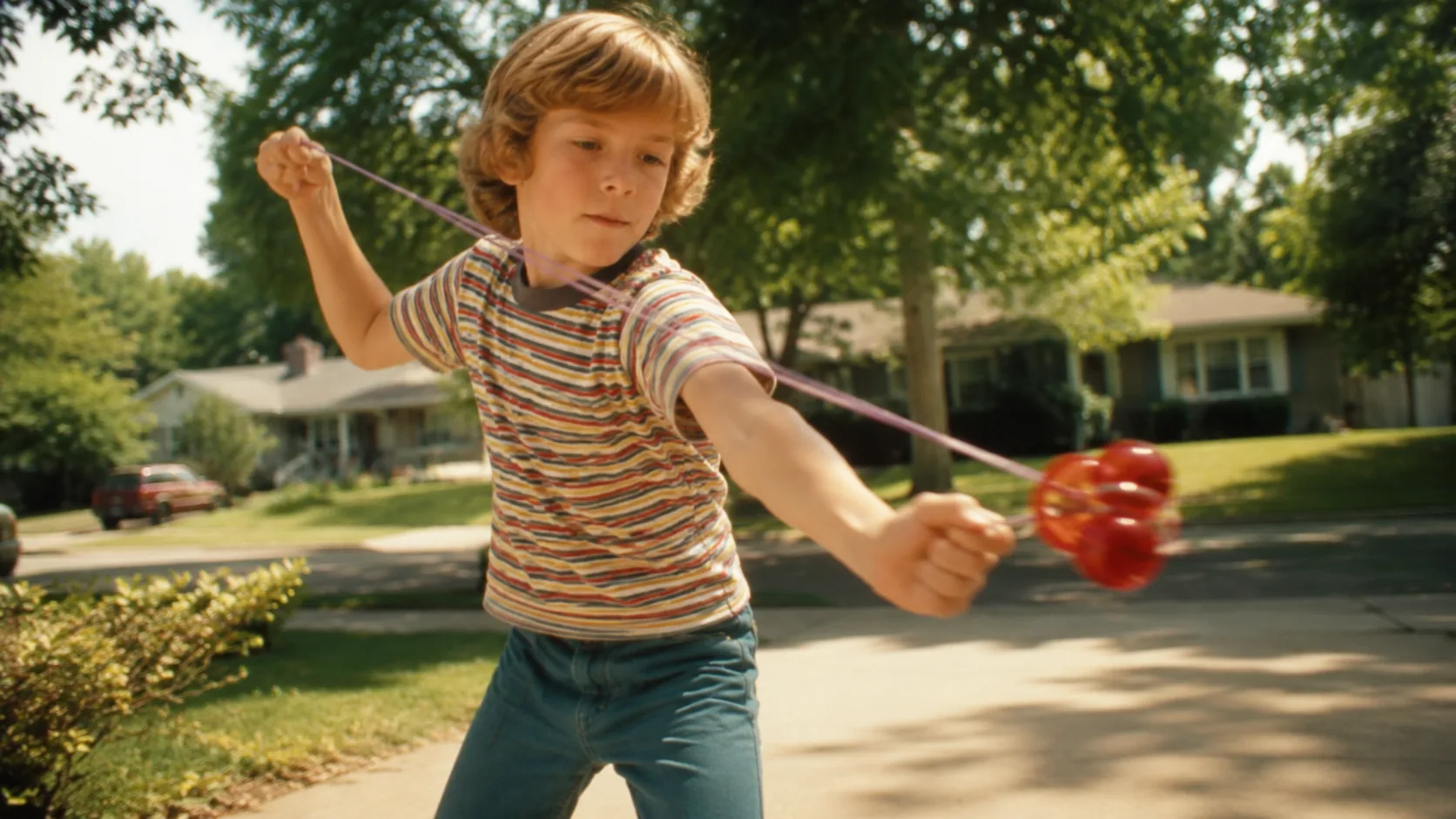
Clackers were beautifully simple: two hard acrylic balls on a string that you snapped up and down until they smashed together above and below your hand. When the rhythm hit, the sound was hypnotic. When the rhythm did not hit, your wrist, knuckles, desk, sibling, or nearby lamp became part of the demonstration.
They are pure early-70s playground memory because the toy was half skill challenge and half public performance. Everybody heard you coming. Everybody had an opinion about whether you were doing it right. And every adult within earshot eventually reached the same conclusion: those things had to go. Few toys better represent an era when danger was not a design flaw. It was practically the feature.
The Sound Was Half the Toy
Clackers announced themselves before anybody saw them. The hard, repeating crack carried across a playground and made every successful run feel like a public performance. Getting the balls to strike below the hand was easy enough. Keeping the momentum going until they also met above the hand required rhythm, nerve, and the willingness to accept that eventually one of those acrylic missiles would find bone.
A Playground Craze With Its Own Warning System
The toy spread because skill was visible. One kid mastered the motion, three others wanted a turn, and suddenly the blacktop had a soundtrack. Adults did not need a product report to understand the downside. They could hear it from inside the building. Clackers belong with the 70s schoolyard toys and playground crazes because they were social, competitive, portable, and just reckless enough to become legendary.
Why it stayed with us: Modern nostalgia sometimes makes old toys look gentler than they were. Clackers correct that memory immediately. They were hard, loud, slightly threatening, and completely irresistible once somebody nearby got the rhythm right.
Keep going: 70s schoolyard toys and playground crazes or browse 70s outdoor toys.
48
Ankle-loop playground toy
#48 — Lemon Twist
Skip, swing, jump, repeat until somebody gets clipped
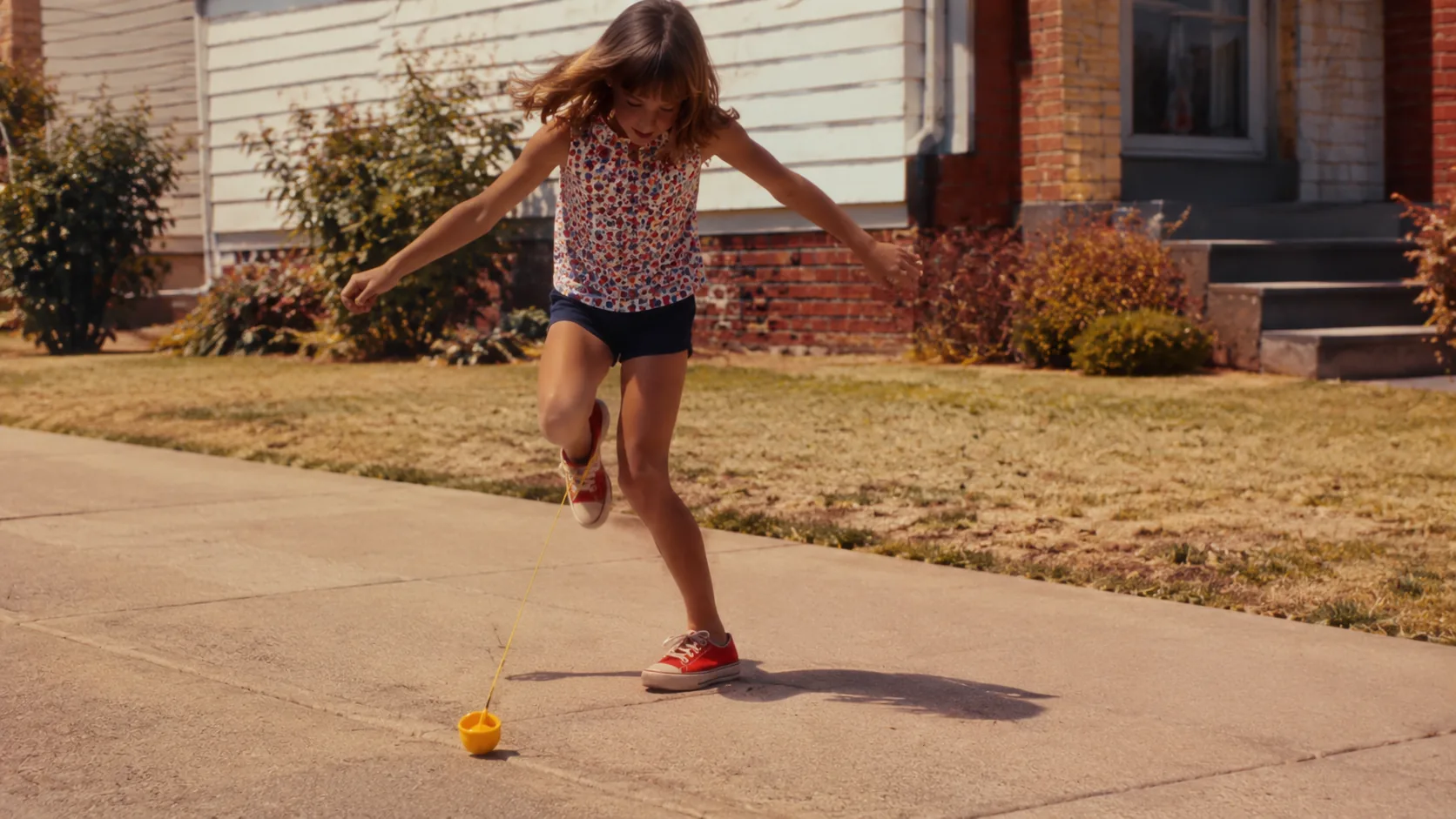
Lemon Twist wrapped around one ankle while a plastic lemon-shaped weight spun in a circle near the ground. The job was to jump over the cord with the other foot and keep the rhythm going. It looked easy in the commercial because the kids in toy commercials had apparently trained with professional dancers and never got tangled in anything.
On the sidewalk, it was exercise, competition, coordination, and occasional ankle betrayal. The toy did not need a screen, a character, or batteries. It needed pavement and enough room to avoid taking out somebody walking past. Lemon Twist earns its place because it was the kind of inexpensive physical toy that could suddenly become the entire neighborhood activity for an afternoon.
A Toy That Turned Rhythm Into Competition
Lemon Twist looked like one child playing alone, but it quickly became a group event. Everybody counted jumps. Everybody noticed a miss. The cord established its own moving boundary, and the spinning weight forced the player to find a pace that was fast enough to keep going but controlled enough to avoid wrapping the whole contraption around both ankles.
The Commercial Made It Look Effortless
On television, Lemon Twist moved like a dance routine. On actual pavement, it involved hopping, resetting, untangling, and explaining that the last mistake did not count because somebody walked too close. That gap between commercial grace and neighborhood reality was part of the fun. The toy was inexpensive, easy to carry, and perfect for the kind of afternoon when one object could organize five kids who had not planned anything.
Why it stayed with us: Lemon Twist represents the physical side of 70s play: repeat the motion until it becomes a trick, then perform it in front of everybody. It needed no scoreboard because the people watching were already keeping one.
Because apparently the room was not spinning enough
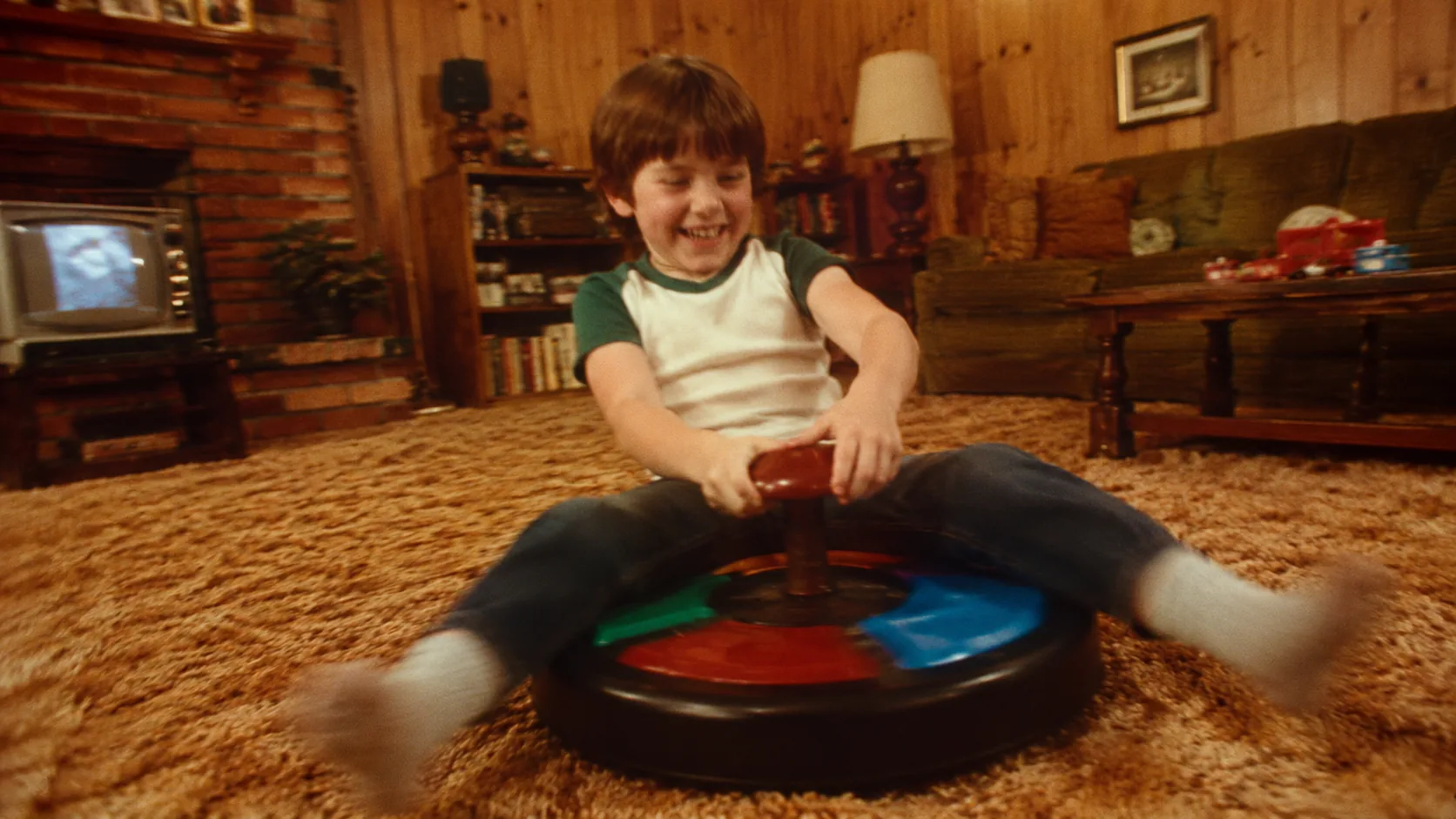
Sit ‘n Spin took the basic childhood urge to rotate until your brain lost contact with the room and turned it into a retail product. You sat on the circular base, grabbed the center wheel, and pulled yourself around faster and faster. No destination. No score. Just velocity, laughter, and the eventual need to lie flat on the carpet.
That simplicity is exactly why it lasted. It was mechanical, immediate, and almost impossible to misunderstand. Small kids could operate it without instructions, while older siblings could help by spinning it harder than any responsible person would recommend. The toy belongs to the 70s because it turned bodily chaos into repeat play with one sturdy piece of molded plastic.
The Mechanism Was the Entire Joke
The center wheel gave small kids control over something they were normally told not to do: make themselves dizzy on purpose. Pulling the wheel worked the arms while the base rotated the whole body, which made the Sit ’n Spin feel active even though the rider technically went nowhere. It was exercise disguised as bad judgment.
Every Family Invented an Unauthorized Version
The official experience was one child spinning at a reasonable speed. The real experience involved an older sibling helping, another kid trying to climb on, and somebody testing whether the toy moved better on carpet, tile, or the smoothest patch of floor in the house. Parents knew exactly what the laughter meant, and usually arrived just before the part where the rider attempted to stand.
Why it stayed with us: A Sit ’n Spin did not provide a story, character, or goal. It provided a physical sensation and let imagination deal with the rest. That directness is why it survived: sit down, grab the wheel, and discover again that the room can move even when the house does not.
The red electronic wizard with more games than buttons
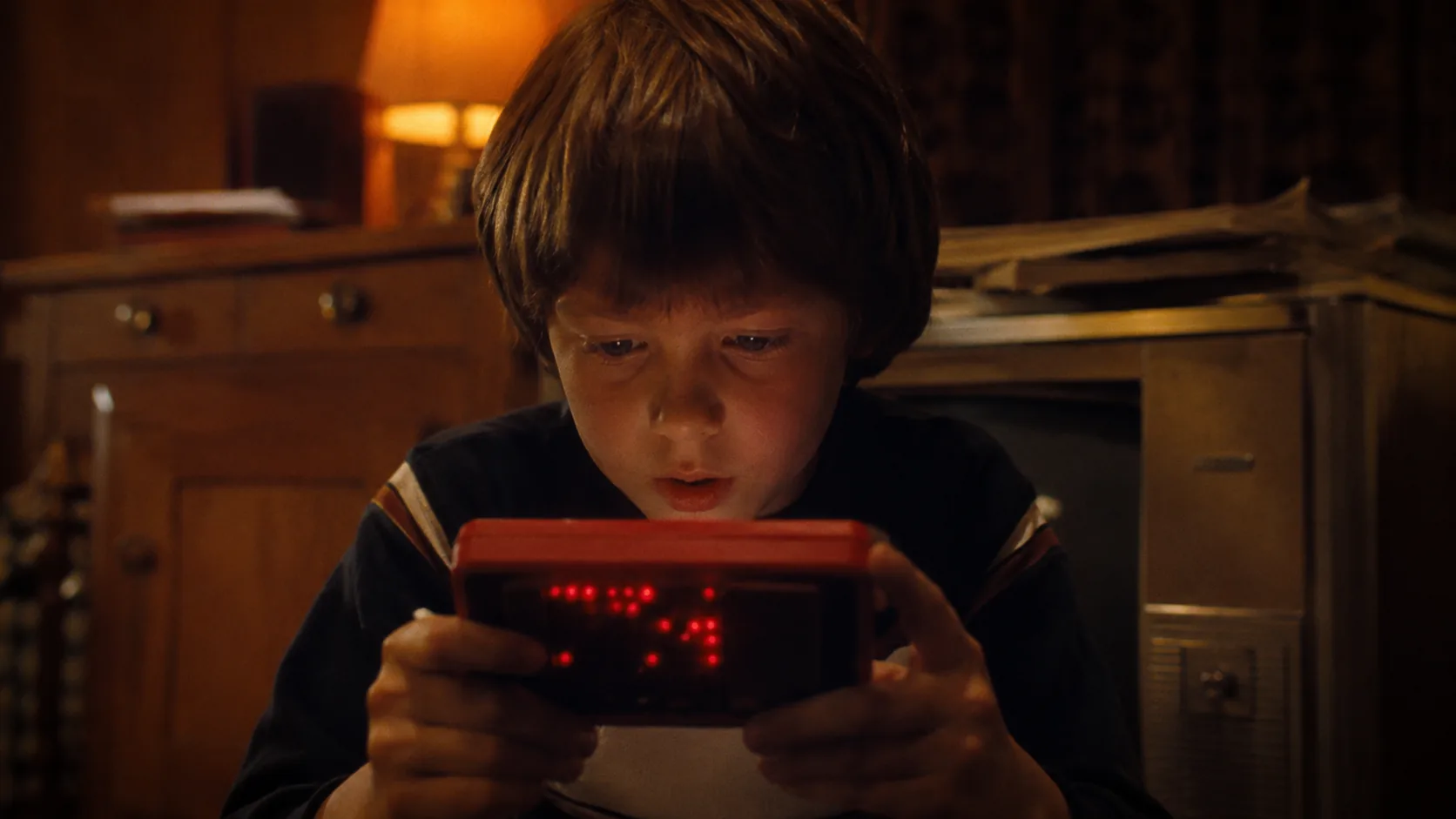
Merlin was a red handheld electronic game with a grid of lighted buttons and several built-in activities, including tic-tac-toe, blackjack, memory challenges, and music. It looked more like a science-fiction control panel than a traditional toy, which was exactly the point.
The real breakthrough was variety. Most electronic toys did one thing; Merlin felt like a little system. It belonged to the moment when kids were starting to expect plastic devices to remember, respond, and offer more than one mode. The sounds were simple, the lights were basic, and none of that mattered. Merlin felt smart enough to make the person holding it feel smart too.
A Handheld That Felt Like Several Toys at Once
Merlin’s real power was not sophisticated graphics; it did not have any. The grid of red lights and numbered buttons was abstract enough to become whatever the selected game required. A light could represent a card, a move, a musical note, or a position in a memory sequence. That flexibility made the device feel much larger than its shell.
The Private Electronic Toy
Unlike a console attached to the family television, Merlin could sit in a lap. That mattered. You could play without negotiating for the screen, setting up a board, or finding another person. The little electronic chirps became a private conversation between child and machine, although everybody nearby still heard every mistake. Our Merlin electronic game history follows the red wizard into the late-70s handheld boom.
Why it stayed with us: Merlin arrived when a toy that remembered anything felt intelligent. It promised variety, responded instantly, and looked like the sort of device a science-fiction captain might use when the main computer was down.
Thirty minutes of cranking for four spoonfuls of syrupy ice
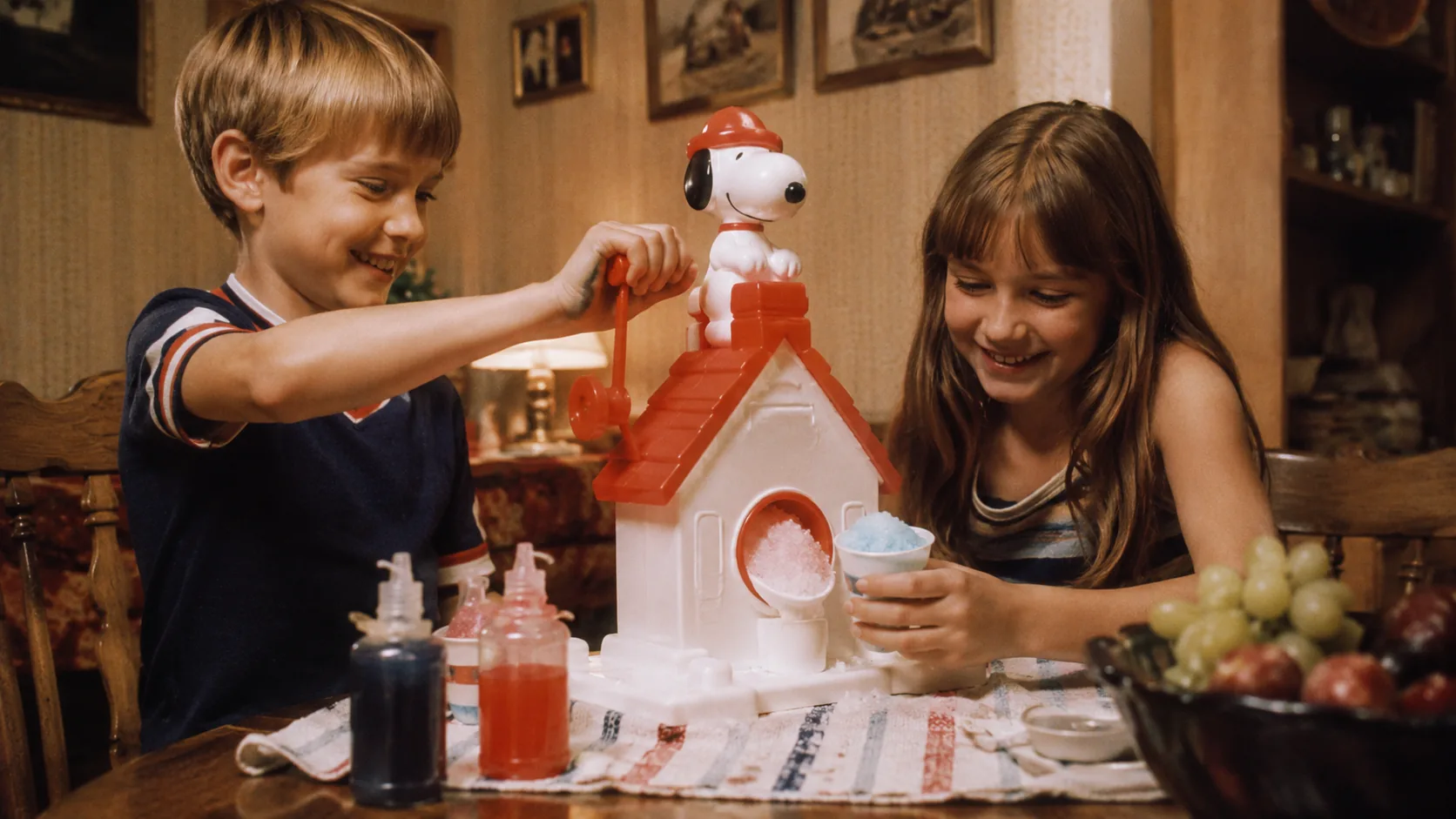
The Snoopy Sno-Cone Machine promised a bright little dessert stand operated by the Peanuts gang. In practice, it asked a child to crank ice through a plastic machine with the determination of someone working a factory shift. Eventually, a modest pile of shaved ice appeared, ready for a packet of concentrated flavor and the smallest paper cup in the Western world.
And we loved it. The payoff was not generous, but the ritual was the toy: load the ice, crank until your arm complained, pour the syrup, and present the result like you had opened a beachfront snack bar. It belongs here because 70s kids were perfectly willing to work absurdly hard for tiny food made by a licensed plastic appliance.
The Work Was Not an Accident
The slow crank was the part adults remembered as a flaw and kids remembered as ownership. Store-bought dessert simply appeared. A Snoopy Sno-Cone had to be manufactured. Ice went in, the handle resisted, tiny flakes finally came out, and the operator guarded them like inventory. The portion was laughably small because the machine was not really selling refreshment. It was selling the experience of running the stand.
Peanuts Made the Appliance Feel Friendly
Snoopy on top of the doghouse gave the machine personality before the first ice cube entered. That license mattered because the product was more than a kitchen gadget. It was a little piece of the Sunday comics living on the counter. The colored syrup, paper cups, scoop, and ritual of serving somebody else turned snack preparation into role-play.
Why it stayed with us: The Sno-Cone Machine sits in the same memory drawer as the Easy-Bake Oven: toys that demanded patience and produced tiny food. The output was never the whole point. The point was that a kid had made it, sold it, served it, and probably left the counter sticky enough to prove the business had been open.
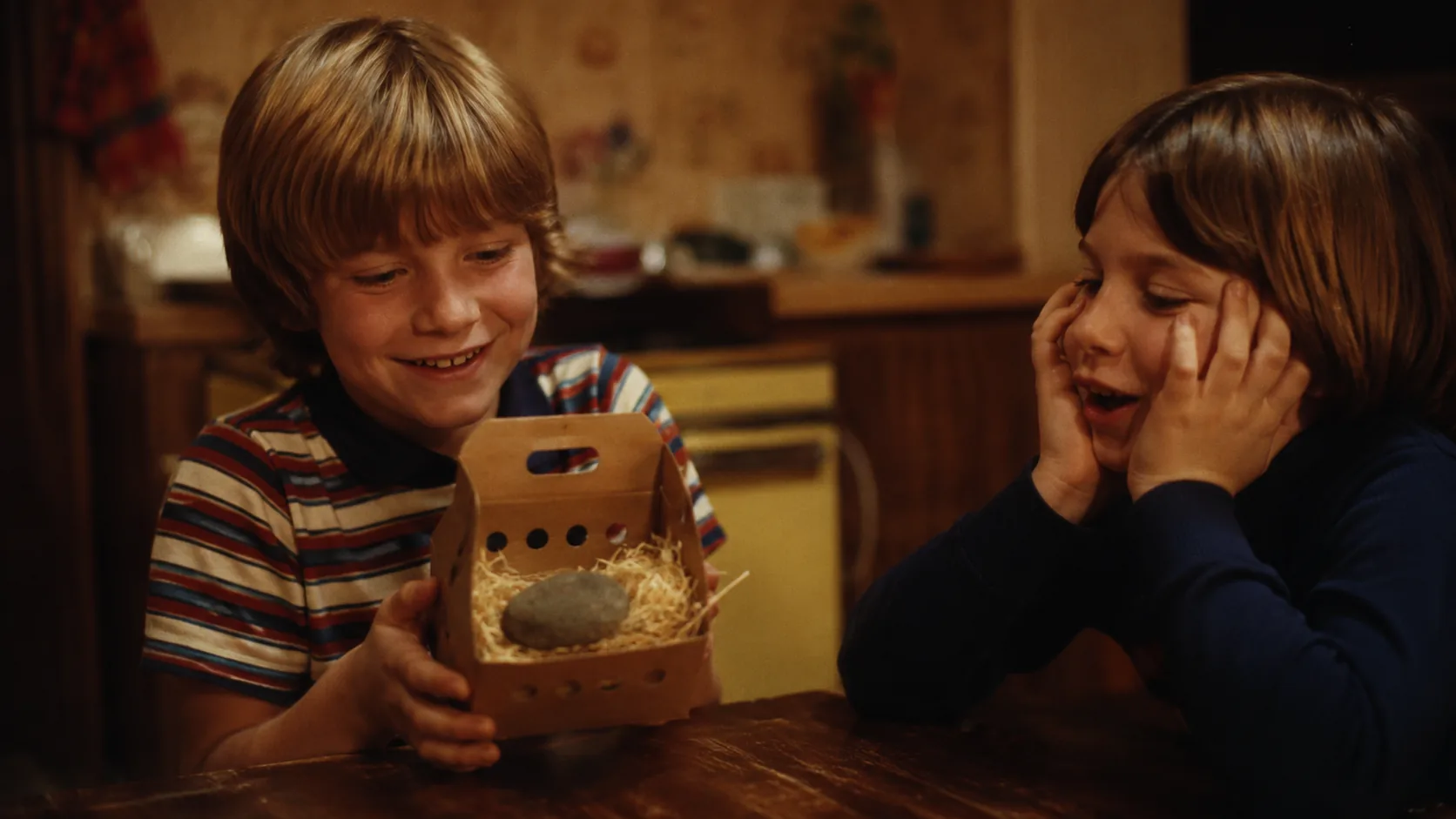
The decade sold us a rock and somehow made it work
The Pet Rock was a smooth stone in a ventilated cardboard box with straw bedding and a training manual. That was the joke, the product, and the cultural event. It required no feeding, made no mess, and could master commands such as “stay” with the discipline of a champion. In 1975, that was enough to turn a gag gift into a national craze.
Calling it one of the most iconic toys of the 70s is not an endorsement of its play value. It is recognition of how perfectly it captures the era’s willingness to make a novelty idea famous overnight. The Pet Rock proved that packaging, timing, and a straight-faced joke could create a must-have item out of something already available for free in every yard.
The Package Was the Product
A bare stone would have been nothing. The carrying case, straw, air holes, instructions, and completely serious presentation turned nothing into a joke people wanted to own. The Pet Rock worked because every detail committed to the bit. It did not wink too hard. It treated the rock like a low-maintenance companion and trusted the buyer to understand why that was funny.
A Perfect 70s Fad
The craze arrived fast, spread through talk shows, newspapers, offices, and gift exchanges, then burned out exactly the way a novelty should. Kids could participate, but the appeal reached adults too. That crossover helped the Pet Rock become bigger than a normal toy. It was a cultural punch line that came in a box.
Why it stayed with us: The Pet Rock is still remembered because it proved that desire could be manufactured from story and packaging alone. Every generation has novelty products. The 70s just had the nerve to sell us part of the driveway and make the box collectible.
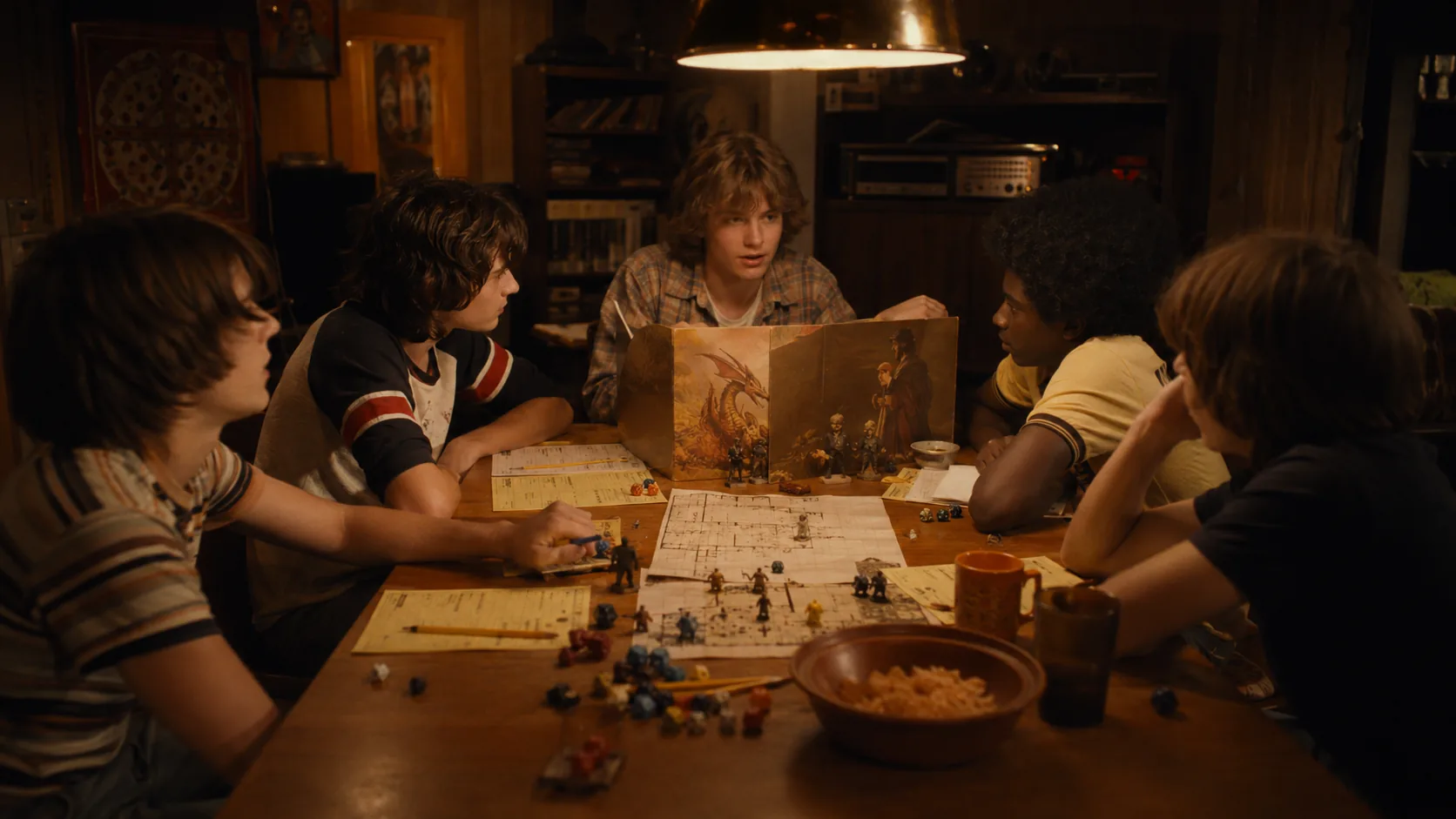
A rulebook, some dice, and a world bigger than the table
Dungeons & Dragons arrived in the middle of the decade and quietly introduced a radically different idea: the game did not need to provide the whole world because the players could build it together. With rules, character sheets, dice, maps, and one highly committed Dungeon Master, a table could turn into a dungeon, kingdom, battlefield, or argument over whether a spell should have worked.
It was not the most universal toy on this list, but its influence is impossible to ignore. D&D made imagination into a shared system and gave kids a reason to spend hours building stories that did not end when the box was closed. It also helped define the basement-table side of Gen X culture long before fantasy became a mainstream entertainment machine.
The Toy Was the Conversation
Dungeons & Dragons did not entertain the table by itself. The players had to describe rooms, make choices, argue about rules, and imagine consequences together. That made every group’s version different. One campaign could be serious fantasy. Another could collapse into jokes before the party reached the first door. The rules created structure, but the people created the world.
It Rewarded the Kid Who Prepared Too Much
The Dungeon Master carried a special kind of authority: maps behind a screen, notes nobody else could see, and the power to announce that the corridor was darker than expected. Players invested in characters, equipment, and stories that continued from one session to the next. A game could live for months without needing a new board or expansion set.
Why it stayed with us: D&D made collaborative imagination feel organized and permanent. It helped create a branch of Gen X culture built around basements, graph paper, dice bags, painted miniatures, and friendships held together by a campaign nobody outside the group could fully understand.
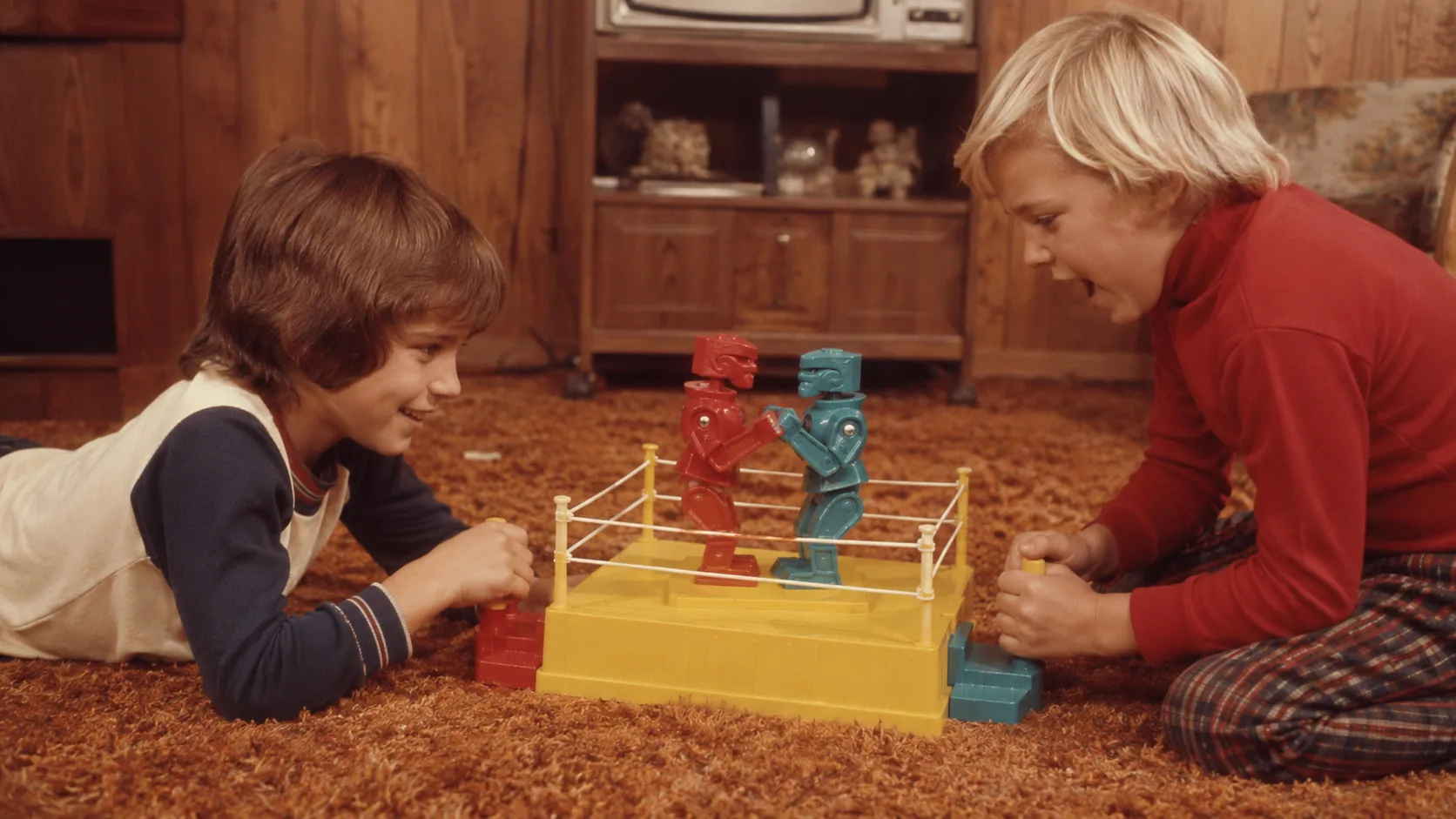
Rock ‘Em Sock ‘Em Robots had been launched earlier, but the red-and-blue fighters remained a familiar part of 70s toy rooms. Each player hammered the controls, throwing stiff mechanical punches until one robot’s head popped up. The design was loud, physical, and just unfair enough to keep every match emotionally interesting.
The joy was not subtle. You did not strategize for twenty minutes. You attacked the buttons and blamed the equipment when you lost. It belongs among classic 70s toys because it delivered the exact kind of head-to-head competition kids could understand instantly. The match took seconds, the rematch was mandatory, and the argument could last through dinner.
The Head Pop Was the Payoff
The punches were stiff and the robot movement was limited, but everything existed to create one satisfying moment: the spring-loaded head shooting upward. That visual finish made a short match feel decisive. It also gave the losing player something concrete to blame—bad angle, sticky mechanism, weak punch, suspicious table movement, anything except the other kid.
A Game With No Learning Curve
Nobody had to explain much. Red robot, blue robot, two control sets, start swinging. That made it perfect for siblings, cousins, and visitors who had only a few minutes before dinner. The physical controls connected effort directly to action in the ring, so even very young players understood what was happening.
Why it stayed with us: Rock ’Em Sock ’Em Robots survived because it reduced competition to a clear mechanical spectacle. It was boxing without strategy, violence without consequences, and a rematch system powered entirely by wounded pride.
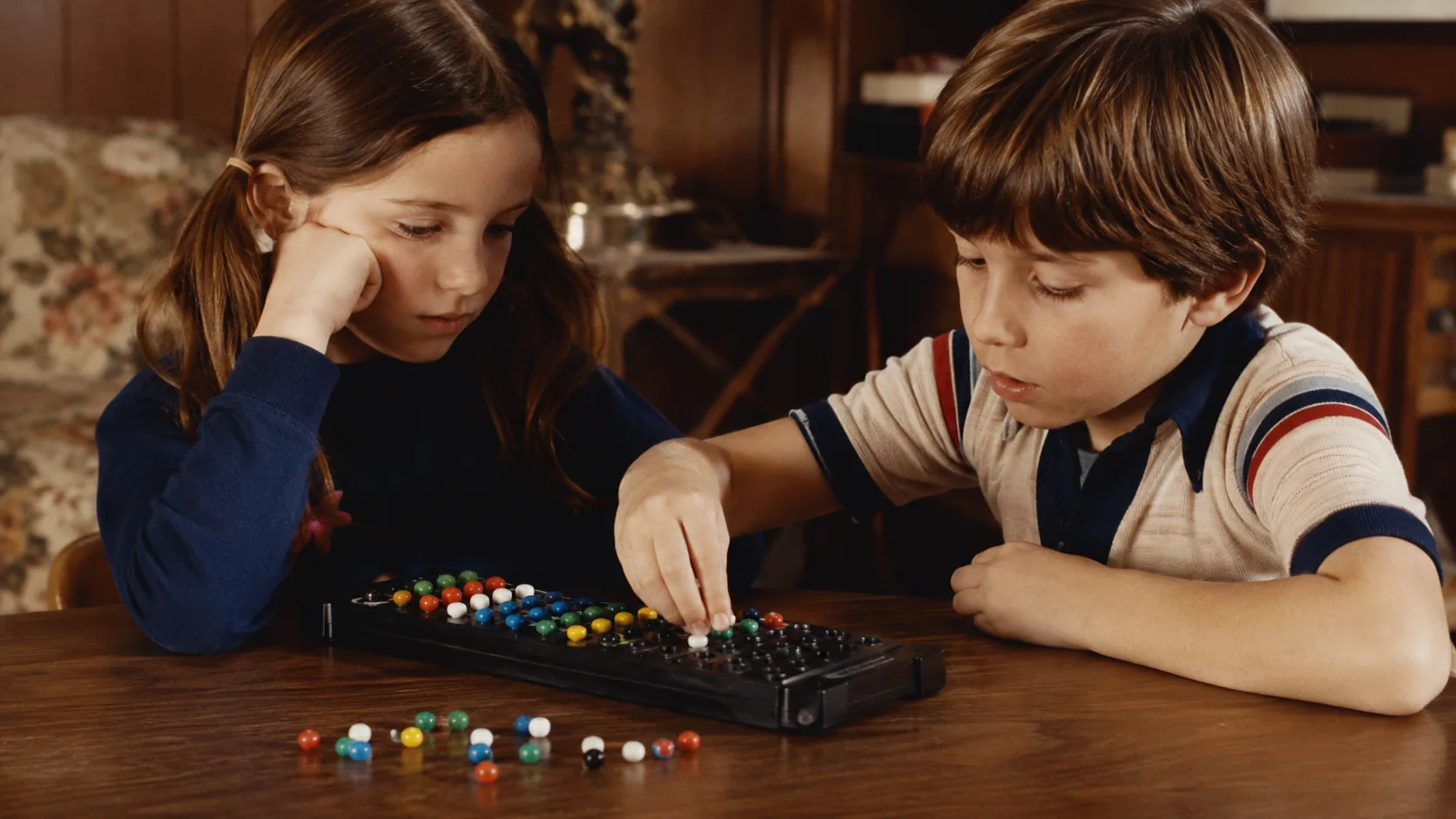
A quiet little game that made everybody feel suspicious
Mastermind turned colored pegs into a battle of logic and nerve. One player built a hidden code, the other tried to crack it, and the tiny feedback pegs offered just enough information to encourage careful reasoning and overconfident guesses. It looked almost elegant compared with the loud plastic contraptions sharing the shelf.
The game belongs to the decade because the 70s toy aisle still made room for products that assumed kids could sit still, think, and enjoy being wrong several times in a row. It was competitive without needing a motor, luck without being purely random, and educational without announcing itself like homework. That is a hard balance, and Mastermind pulled it off.
The Board Made Logic Visible
Each guess stayed on the board, creating a record of mistakes and narrowing possibilities. That physical history mattered. You could scan the rows, rethink assumptions, and realize the clue you ignored three turns ago had already told you everything. The code maker had the quieter job, but also the pleasure of watching confidence slowly evaporate across the table.
A Very 70s Kind of Serious Game
Mastermind looked grown-up. The restrained board, colored pegs, and portrait on the box gave it a mysterious, almost international flavor compared with games built around buzzers and exploding trays. It suggested intelligence, patience, and the possibility that the person across from you was hiding something.
Why it stayed with us: The rules were compact, but the thinking could be deep. Mastermind respected a child’s ability to reason and made deduction feel competitive rather than instructional. That is why it remained satisfying long after the first code was cracked.
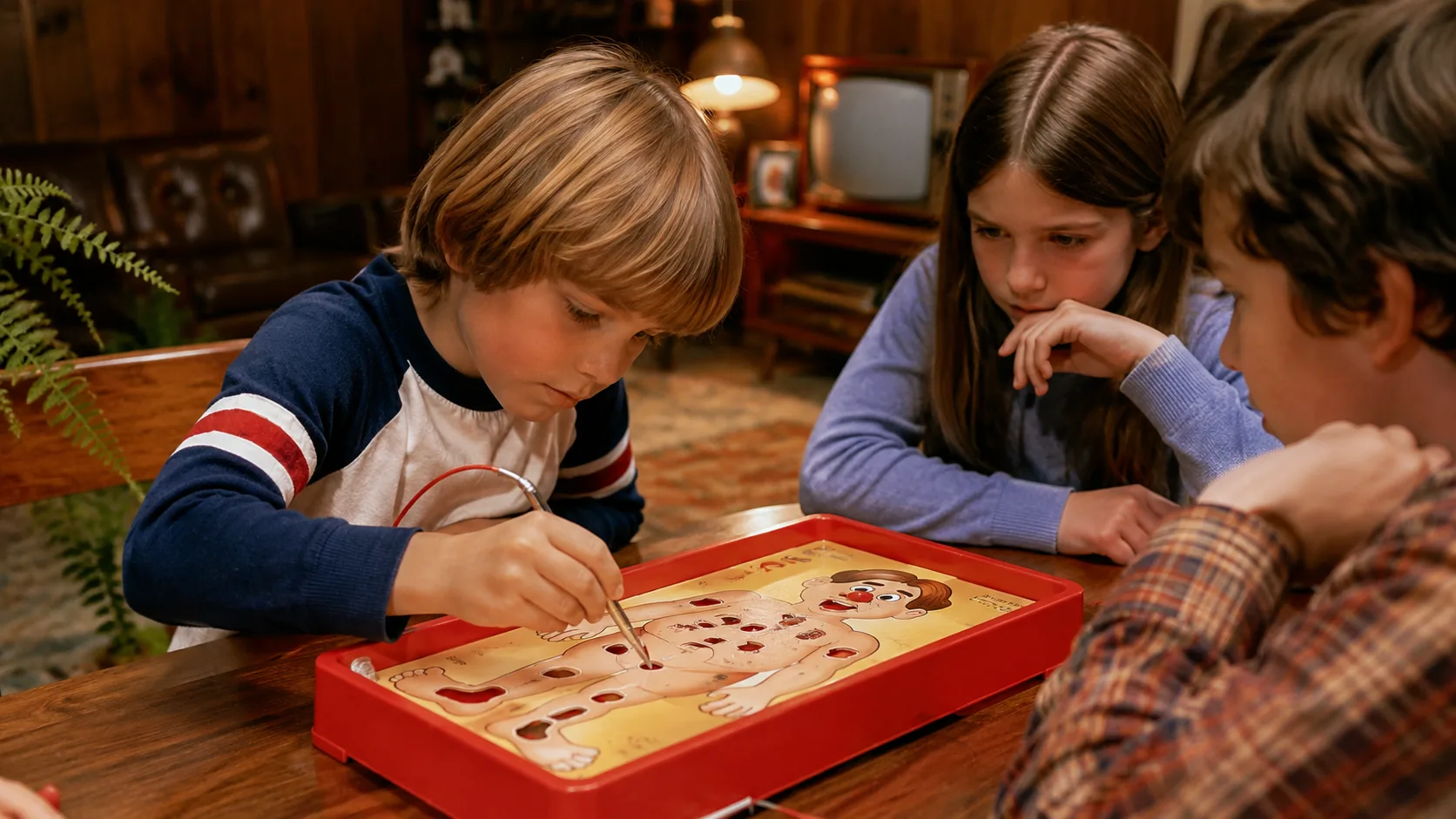
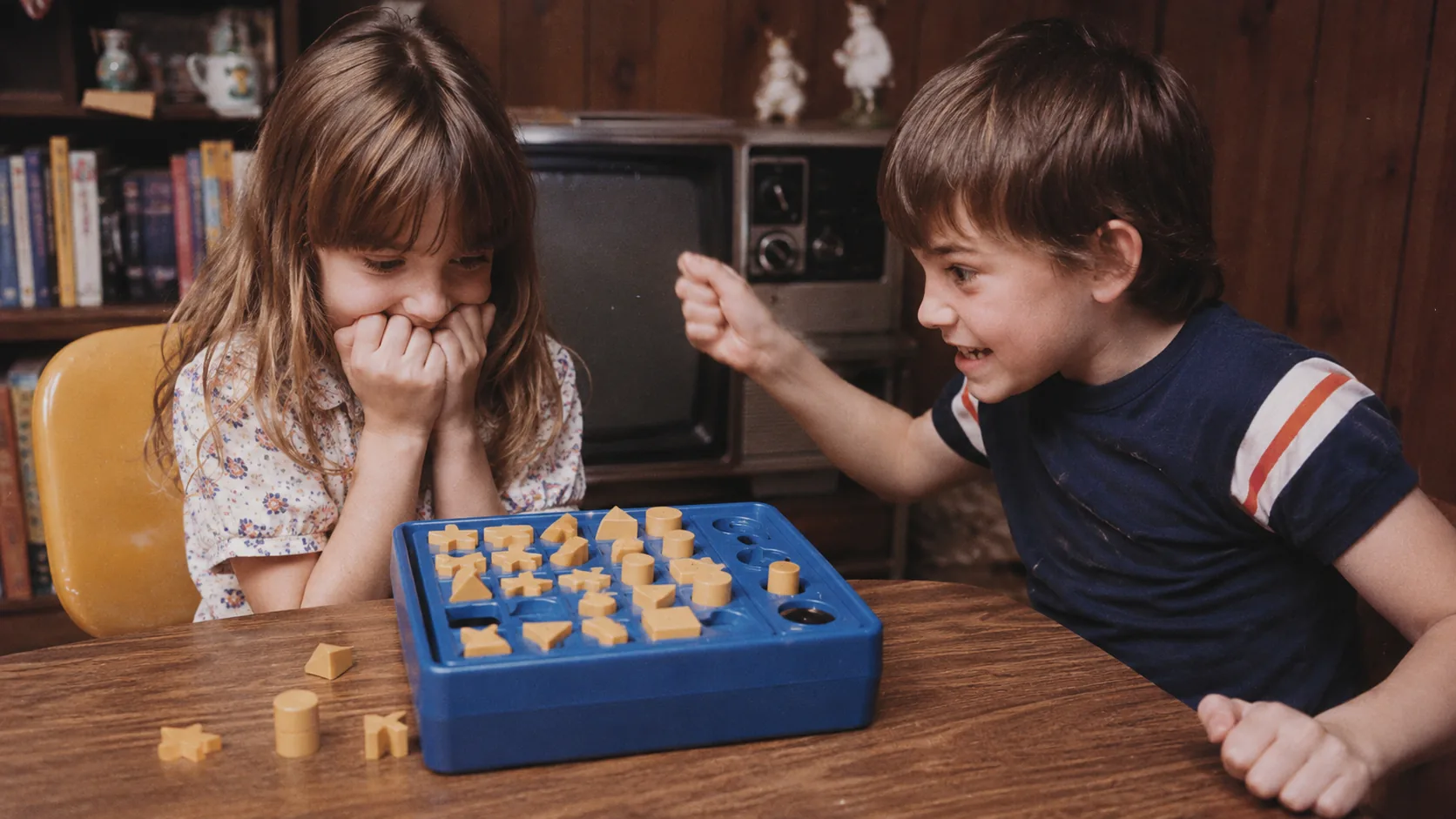
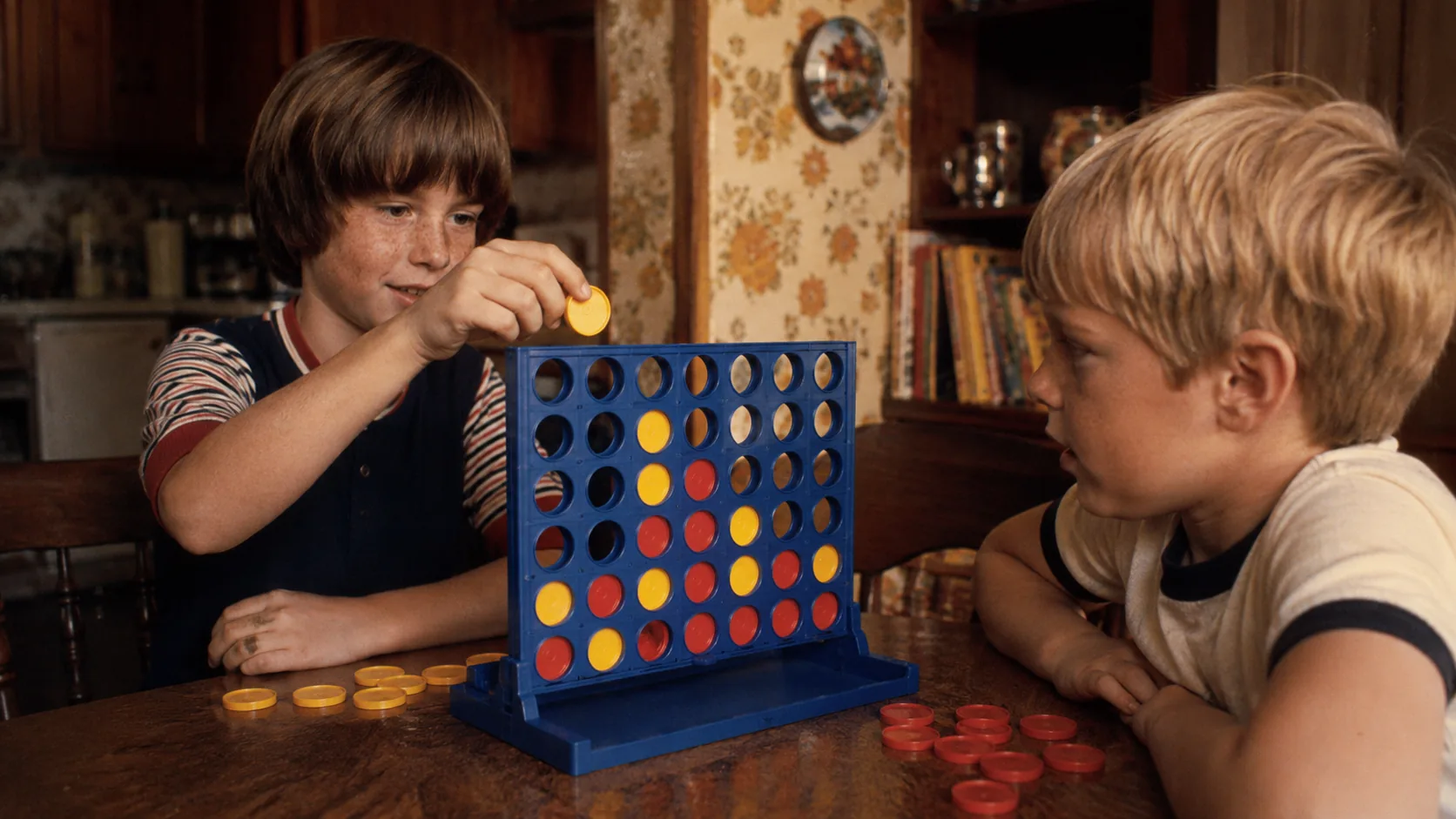
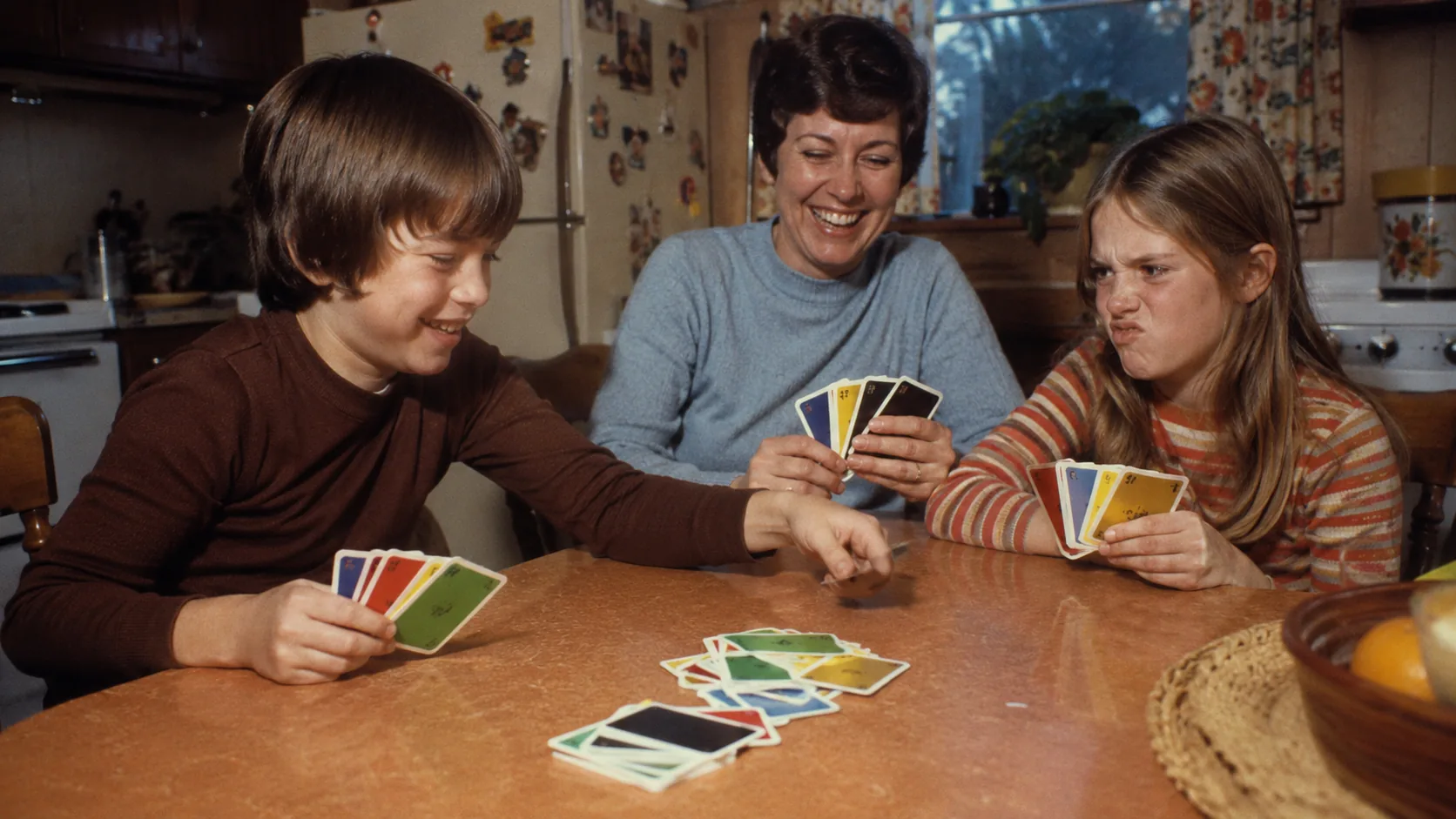
Before every game needed downloadable content, we had plastic grids, ticking timers, tiny pegs, cardboard patients, and relatives who took losing much too personally. The same room could become an operating theater, fashion studio, racecourse, or code-breaking headquarters.
40
Electronic dexterity game
#40 — Operation
The patient is buzzing and everyone is blaming your hand
Operation turned a pair of metal tweezers and a cardboard patient into family-room surgery. The challenge was to remove ridiculous ailments without touching the metal sides. One slip triggered the buzzer, the red nose lit up, and everybody at the table reacted like you had dropped an actual organ.
Although it began in the 60s, Operation felt completely at home in the 70s, when simple electronics could still seem magical. It was part skill game, part suspense machine, and part public humiliation. The game proved that one perfectly timed buzz could create more drama than a box full of complicated rules. It also taught a generation that steady hands disappear the moment everyone starts staring.
The Buzzer Controlled the Room
Operation’s genius was timing. The board stayed quiet while the tweezers moved, which made every attempt feel delicate. Then contact produced a violent buzz and the red nose flashed. The reaction was immediate, even when everybody knew it was coming. The game turned concentration into suspense with almost no moving parts.
The Ailments Made It Weirder
Removing a plain object would not have been enough. The silly names and shapes—wishbone, funny bone, butterflies in the stomach—gave the patient personality and made the board memorable. Kids learned the layout, developed favorite pieces, and argued about which operation was hardest as if the cardboard man’s health depended on it.
Why it stayed with us: Operation is remembered because the experience was social even during one person’s turn. Everybody leaned in. Everybody went quiet. Everybody jumped at the same sound. Few games turned one small mistake into such efficient family entertainment.
Childhood anxiety with a timer and twenty-five yellow pieces
Perfection gave you a tray of yellow shapes, a ticking timer, and the cheerful promise that everything would explode upward if you failed. You pushed each piece into the correct hole while the clock counted down. Then, even when you knew the pop was coming, the board still managed to make half the room jump.
The game is an iconic 70s toy because it turned basic shape matching into a pressure event. It did not need a villain or a story. The enemy was time, the punishment was noise, and the floor became responsible for collecting the pieces. Perfection made stress fun before anyone thought to question whether that was a strange idea.
The Timer Changed Everything
Without the clock, Perfection would have been a shape sorter. With the clock, it became panic. The ticking made hands move faster than judgment, and the knowledge that the tray would explode upward made the final seconds worse. Kids who knew exactly where every shape belonged could still lose because anxiety had entered the room.
Resetting Was Part of the Ritual
After the pieces scattered, the game paused while everybody gathered them, pushed the tray down, and prepared for another run. That reset built anticipation. The next attempt always began with confidence: this time the oval would not hide, the small cross would go in immediately, and nobody would waste six seconds trying to force the wrong piece into a nearly correct hole.
Why it stayed with us: Perfection converted a basic matching skill into a memorable physical event. It did not just tell you time was up. It threw your work back at you.
Connect Four stripped strategy down to a standing plastic grid and a pile of red and yellow discs. The rules took one sentence. The rounds took a few minutes. The emotional damage from missing an obvious diagonal could follow you for the rest of the evening. That combination made it nearly perfect family-room entertainment.
It belongs high on the list because it respected the attention span of an actual kid. Setup was fast, cleanup was simple, and there was always time for one more game. Connect Four also had the rare quality of being easy for young players to understand but still capable of producing real tactical grudges between siblings, parents, and anybody else foolish enough to sit down.
Gravity Made the Board Satisfying
The click of a checker dropping into the grid was part of the game. Every move became permanent until the round ended, and the vertical board made the developing pattern visible to everyone. A player could build horizontally, vertically, or diagonally, while also trying to notice the trap the other person had been constructing in plain sight.
Fast Enough to Demand Another Round
Connect Four found a sweet spot between strategy and speed. Young kids could play immediately, older kids could think several moves ahead, and adults could lose without spending an hour doing it. Emptying the grid at the end produced its own plastic waterfall and reset the rivalry in seconds.
Why it stayed with us: The game was durable, compact, and almost impossible to overcomplicate. It proved that a strong physical design could make a simple abstract challenge feel like a toy instead of a worksheet.
A peaceful family game until somebody drops a Draw Four
UNO came out of an ordinary deck-sized box and could take over a kitchen table faster than games with ten times the equipment. Match the color, match the number, reverse the order, skip somebody, and save the Draw Four card until the exact moment it could damage a relationship. The rules were simple enough for nearly everyone to join.
That accessibility is why UNO became one of the best 1970s toys and games. It traveled easily, played quickly, and did not care whether the table belonged to a family vacation, rainy afternoon, or long visit with relatives. The cards created just enough luck, strategy, and revenge to remain interesting without requiring anyone to read a booklet first.
The Rules Were Simple Until the Family Got Involved
UNO taught color and number matching quickly, then let every household add its own legal system. Could a Draw Two stack? Did a Wild Draw Four require proof? Was forgetting to say UNO an immediate penalty or only if somebody caught it? Those arguments became part of the game, and every family was certain its version was official.
Portable Chaos
A deck could go anywhere: vacation, kitchen table, back porch, camper, grandparent’s house. There was no board to lose and no setup beyond shuffling. The action cards gave younger players enough power to disrupt a careful strategy, which kept the game from becoming a quiet march toward the most experienced person winning.
Why it stayed with us: UNO survived because it welcomed almost everybody and generated just enough betrayal. It was colorful, fast, cheap, and capable of turning a peaceful family evening into a debate over whether someone had changed the color too enthusiastically.
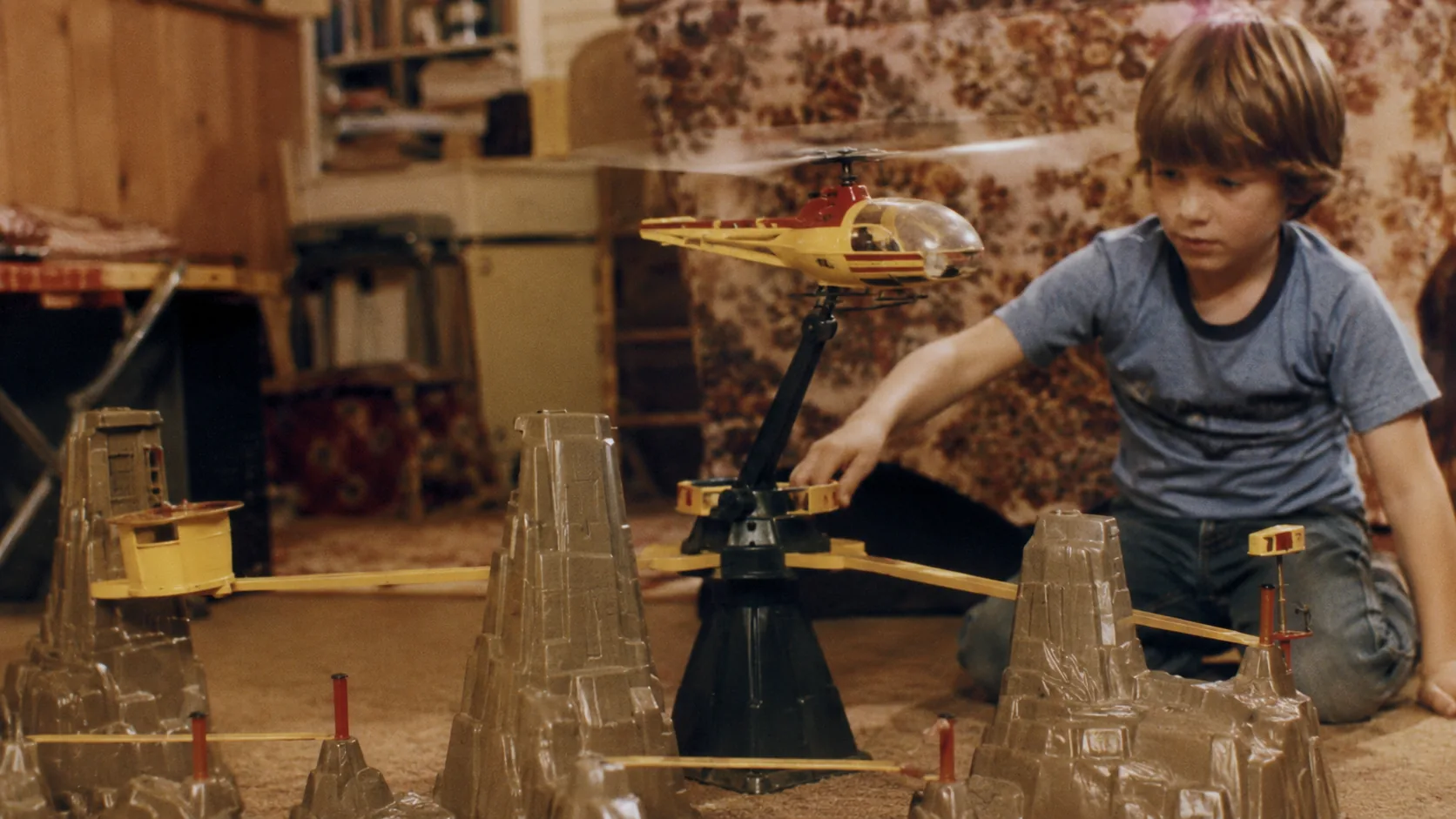
VertiBird put a small helicopter on a long rotating arm and gave kids just enough control to believe they were pilots. You could raise, lower, turn, pick up cargo, and attempt rescue missions over a landscape that usually consisted of couch cushions, books, and whatever else was close enough to become scenery.
It looked more impressive than most toys sitting still because it actually flew—sort of. The tether was always there, but the movement felt real enough to make the room seem bigger. VertiBird earns its place because it captures the 70s fascination with mechanical action toys: motors, levers, visible movement, and a commercial that made every living room look like an aviation center.
The Coffee Table Became an Airfield
VertiBird’s helicopter was attached to a control arm, but the limitation made flight manageable. The player controlled lift and rotation within a circular airspace, trying to pick up cargo, land on small targets, or hover with something resembling precision. The machine made a room feel larger because the action happened above the floor instead of across it.
Mechanical Flight Felt Like a Miracle
The sound of the rotor, the moving arm, and the careful control required made VertiBird feel closer to equipment than a normal toy. It demanded patience. Wild movement sent the helicopter swinging. Smooth movement made the pilot look talented. Our full VertiBird toy history follows the different missions, versions, and reasons the tethered design became so memorable.
Why it stayed with us: VertiBird gave kids a convincing version of flight before affordable remote-control helicopters were remotely practical. It owned the airspace over the family room and made every lamp nearby feel like a navigational hazard.
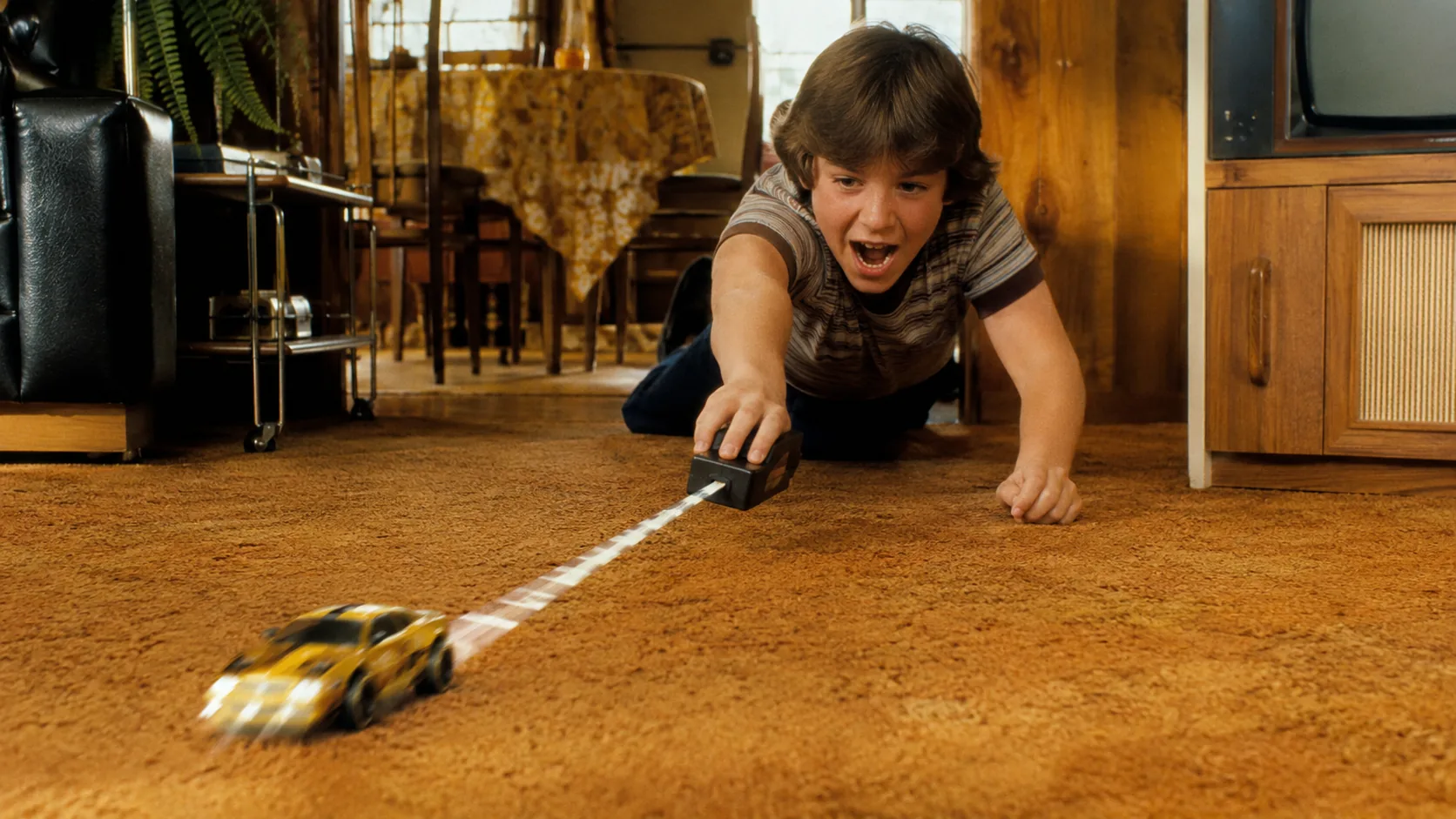
SSP Racers used a toothed ripcord—usually called a T-stick—to spin up a flywheel inside the car. Pull it hard, place the vehicle down, and watch it blast across the floor with enough speed to make the baseboard nervous. The toy delivered a mechanical payoff kids could hear and feel before the car even moved.
That windup ritual was a huge part of the appeal. You were not just pushing a car. You were charging it with your own effort, then releasing the stored chaos. SSP Racers belong among toys every 70s kid wanted because they turned a hallway into a drag strip and made a single launch feel like an event worth gathering around.
The Ripcord Was the Engine
SSP Racers turned a long toothed strip into stored speed. Pulling the ripcord spun the internal flywheel, and the rising whine told you when the car was ready. That sound built anticipation before release. A weak pull produced embarrassment. A hard pull sent the car across the room with enough speed to make furniture legs part of the course.
Cars Built for Impact
The appeal was not delicate collecting. SSP cars wanted open floor, ramps, hallways, and a target. Kids learned which surfaces held speed and which swallowed it. The vehicles looked tough because they had to be. Our SSP Racers full story carries the ripcord story through the models and commercials that made the launch feel almost dangerous.
Why it stayed with us: SSP Racers gave a small car an event before and after release: load, pull, listen, aim, and chase. The process made every run feel earned.
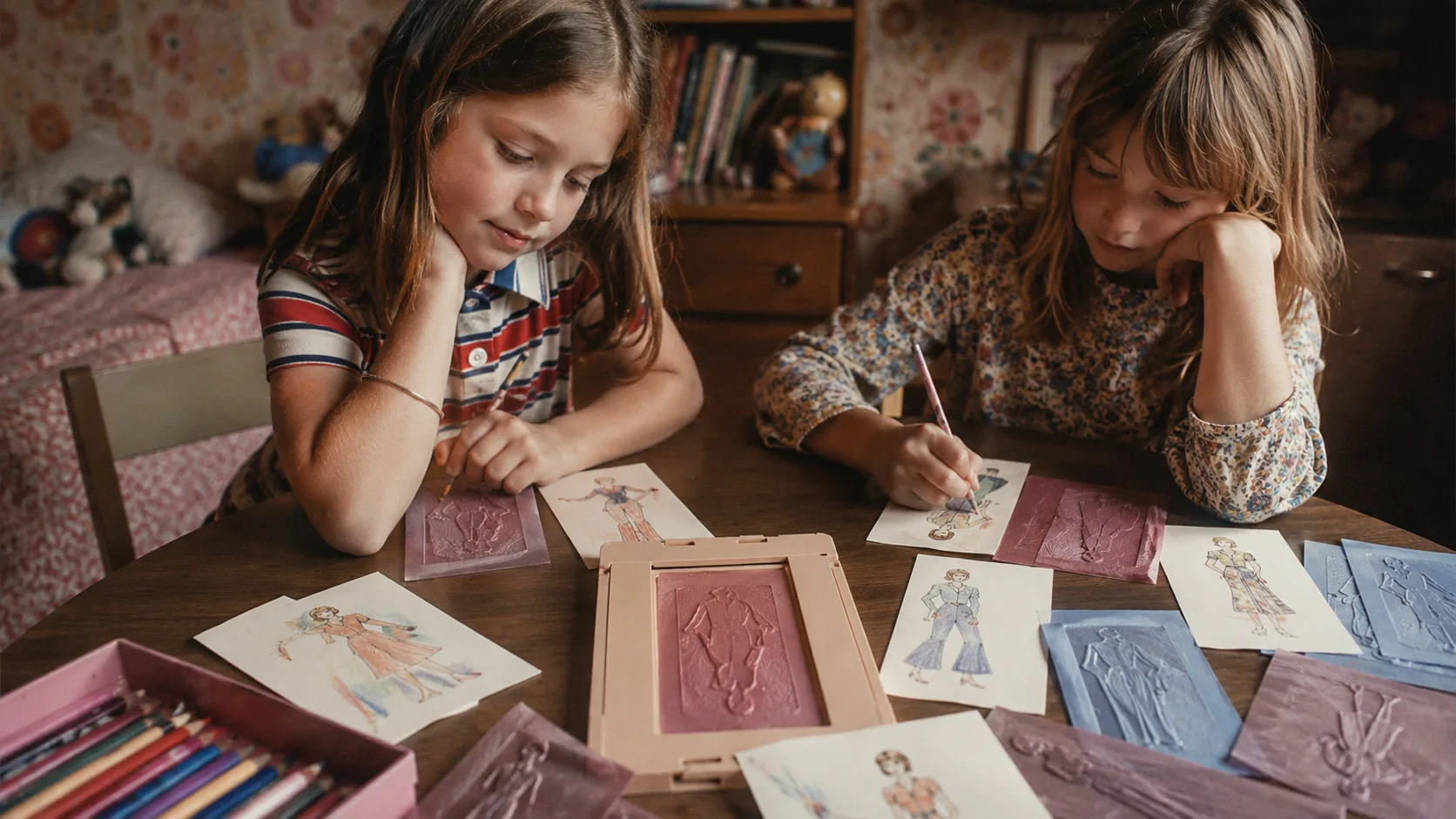
Fashion Plates let kids combine different raised plates for tops, skirts, pants, and hairstyles, cover them with paper, and rub a crayon across the surface to reveal a complete fashion drawing. Then came coloring, pattern choices, and the serious business of deciding whether the outfit looked glamorous or like several catalog pages had collided.
The set felt more sophisticated than ordinary drawing because the finished figure appeared with crisp lines and professional-looking detail. It gave kids a repeatable way to design hundreds of combinations without starting from a blank page. Fashion Plates belongs here because it turned the kitchen table into a fashion department and made creativity feel organized, stylish, and endlessly remixable.
A Design Studio That Fit on the Table
Fashion Plates divided outfits into interchangeable upper, middle, and lower sections. Choosing the plates was the first act of design; rubbing the paper revealed the second; coloring and adding details finished the look. The toy offered structure without trapping the child inside one approved result. A few plates could produce an absurd number of combinations.
The Reveal Was the Magic
Before the crayon passed over the textured surface, the outfit existed only as an arrangement under paper. Then the lines appeared. That slow reveal made the process feel more professional than ordinary drawing, especially for kids who loved fashion but did not yet trust their ability to sketch a figure from scratch. Our Fashion Plates story goes deeper into the original design toy and the commercial promise that every table could become a studio.
Why it stayed with us: Fashion Plates respected creativity while giving it a reliable starting point. It made design repeatable, shareable, and easy to keep in a folder long after the plates went back in the box.
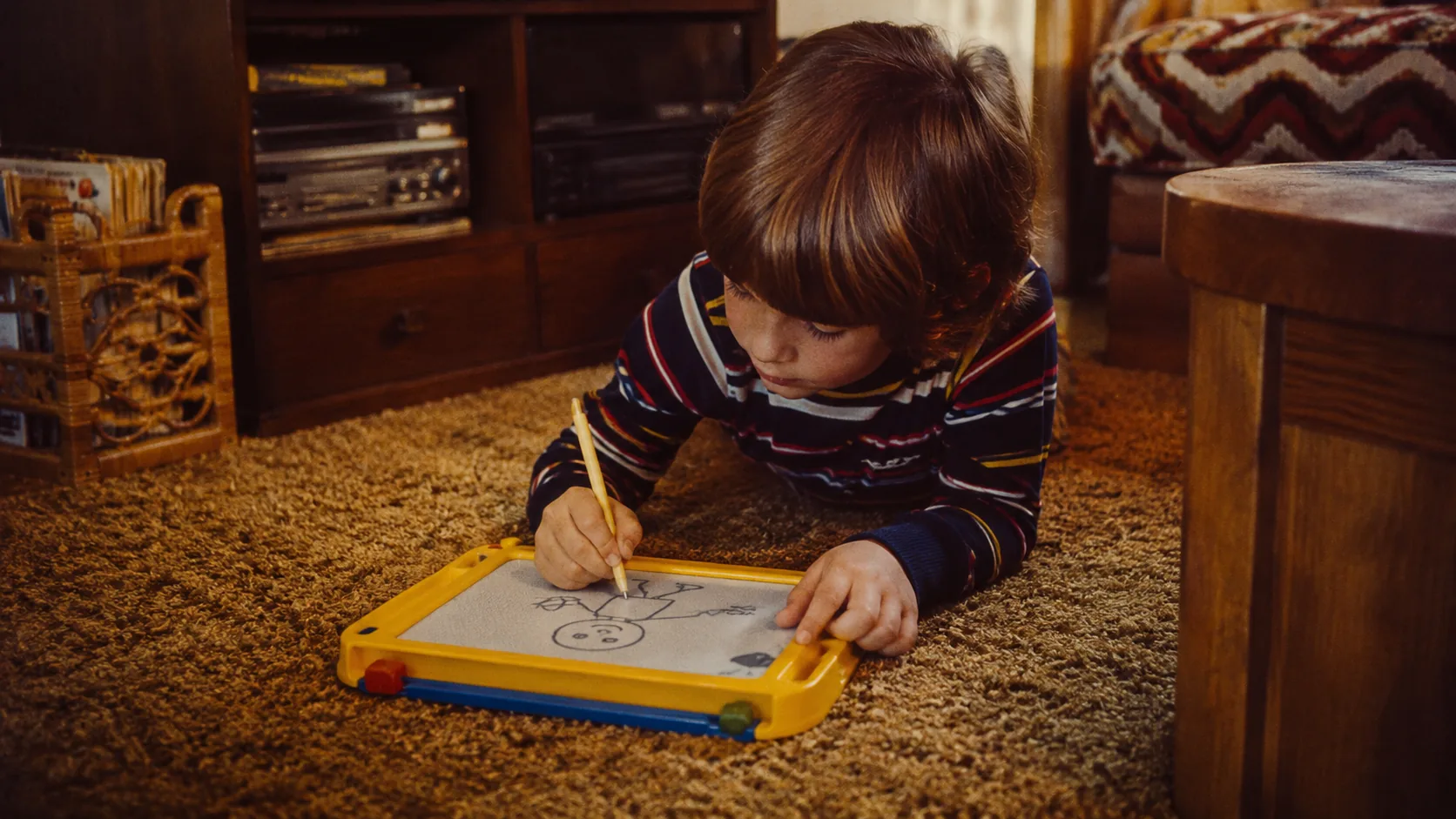
Magna Doodle offered something close to a miracle for parents: a drawing toy that did not require crayons rolling under the refrigerator, markers drying out, or paper covering every flat surface. The magnetic stylus created dark lines on the board, and one sweep of the eraser slider wiped the whole thing clean.
For kids, the magic was the instant reset. Every picture could disappear, which made experimentation cheap and failure meaningless. It belongs on this list because it captured an important mid-70s shift toward toys designed for repeat play inside real homes. The creativity was still analog and tactile, but the mess had been negotiated down to almost nothing.
Drawing Without the Cleanup
Magna Doodle gave kids a drawing surface that erased in one sweep. The stylus moved tiny magnetic particles inside the screen, creating a gray line that felt more mysterious than pencil. Stamps added instant shapes, and the erase slider produced the satisfying sensation of wiping the whole idea away without throwing out paper.
The Blank Screen Kept Returning
That instant reset changed how kids drew. There was no pressure to preserve the picture. You could make faces, messages, mazes, tic-tac-toe boards, or the same lopsided house twenty times. The toy was useful on trips and in waiting rooms because it contained the drawing and the eraser in one sturdy object.
Why it stayed with us: Magna Doodle turned impermanence into a feature. Nothing had to be a masterpiece. The screen always came back, ready for the next idea.
Patchwork, bonnets, and full prairie-bedroom energy
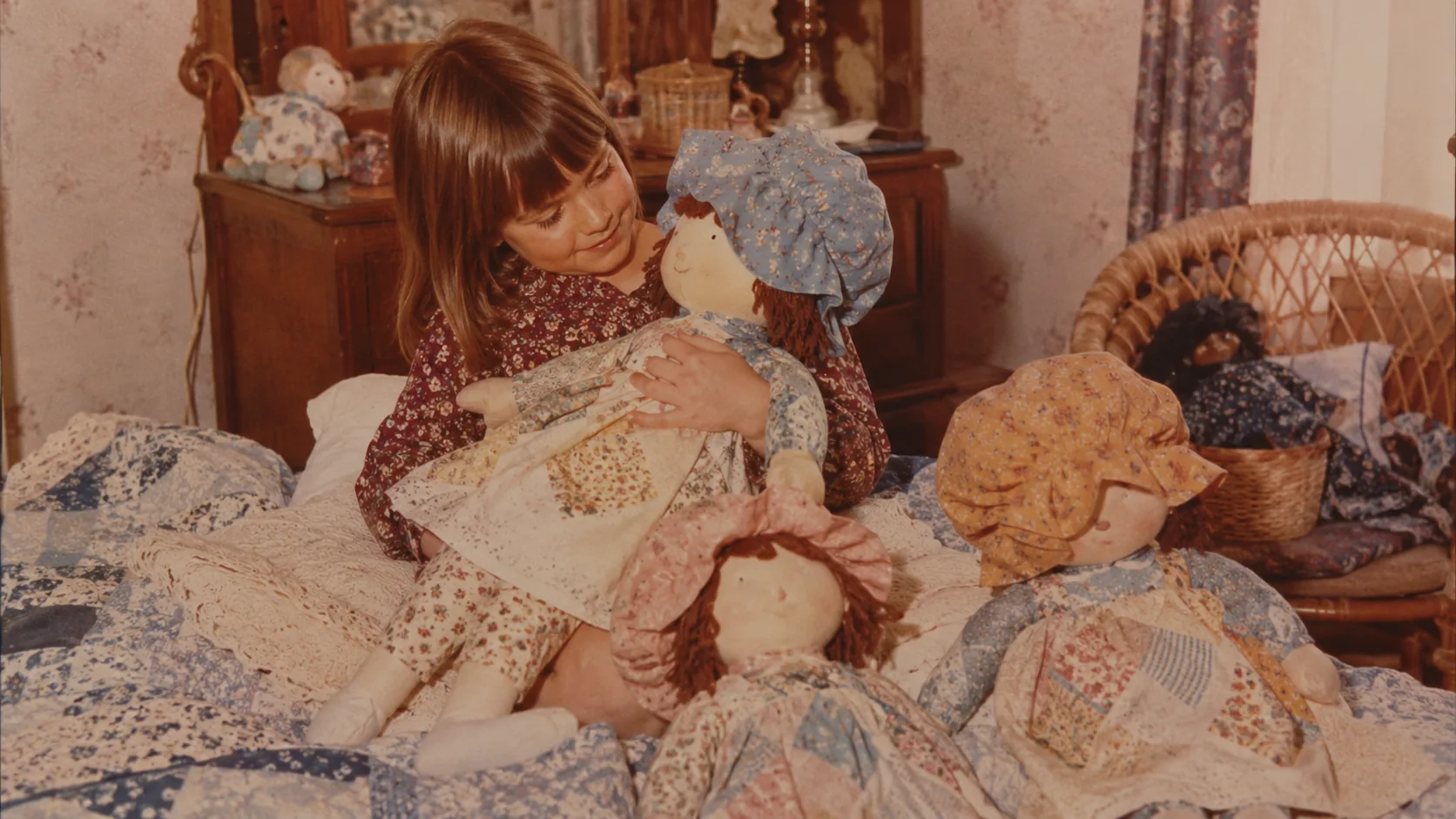
Holly Hobbie’s bonneted, patchwork look became one of the decade’s most recognizable bedroom aesthetics. Dolls, bedding, lunch boxes, wall decorations, and other products carried that gentle old-fashioned image into homes that otherwise contained shag carpet, avocado appliances, and a television showing the future.
The dolls mattered because they were more than one product. Holly Hobbie became an entire mood—soft, handmade-looking, nostalgic, and deliberately removed from the louder plastic side of the toy aisle. She belongs among iconic 70s toys because her look instantly dates a room. One glimpse of the bonnet and patchwork dress, and the whole decade walks back in.
A Whole Mood in a Bonnet
Holly Hobbie represented a softer, handmade-looking corner of the decade. The patchwork dresses, bonnets, muted colors, and old-fashioned imagery stood apart from futuristic electronics and glossy fashion dolls. The character appeared across dolls, bedding, lunch boxes, room decor, and stationery, making her feel less like one product and more like a childhood atmosphere.
The Doll Fit the Bedroom
For many kids, Holly Hobbie was as much part of the room as the toy box. The fabric textures and sentimental look made the doll feel comforting and displayable, but she could still enter ordinary pretend play. Her world did not need a television series explaining it. The visual style supplied enough story.
Why it stayed with us: Holly Hobbie remains a strong 70s memory because the design is instantly tied to the era. One bonnet and one patchwork dress can bring back an entire bedroom palette.
Small scale, big wardrobe, extremely easy to lose shoes
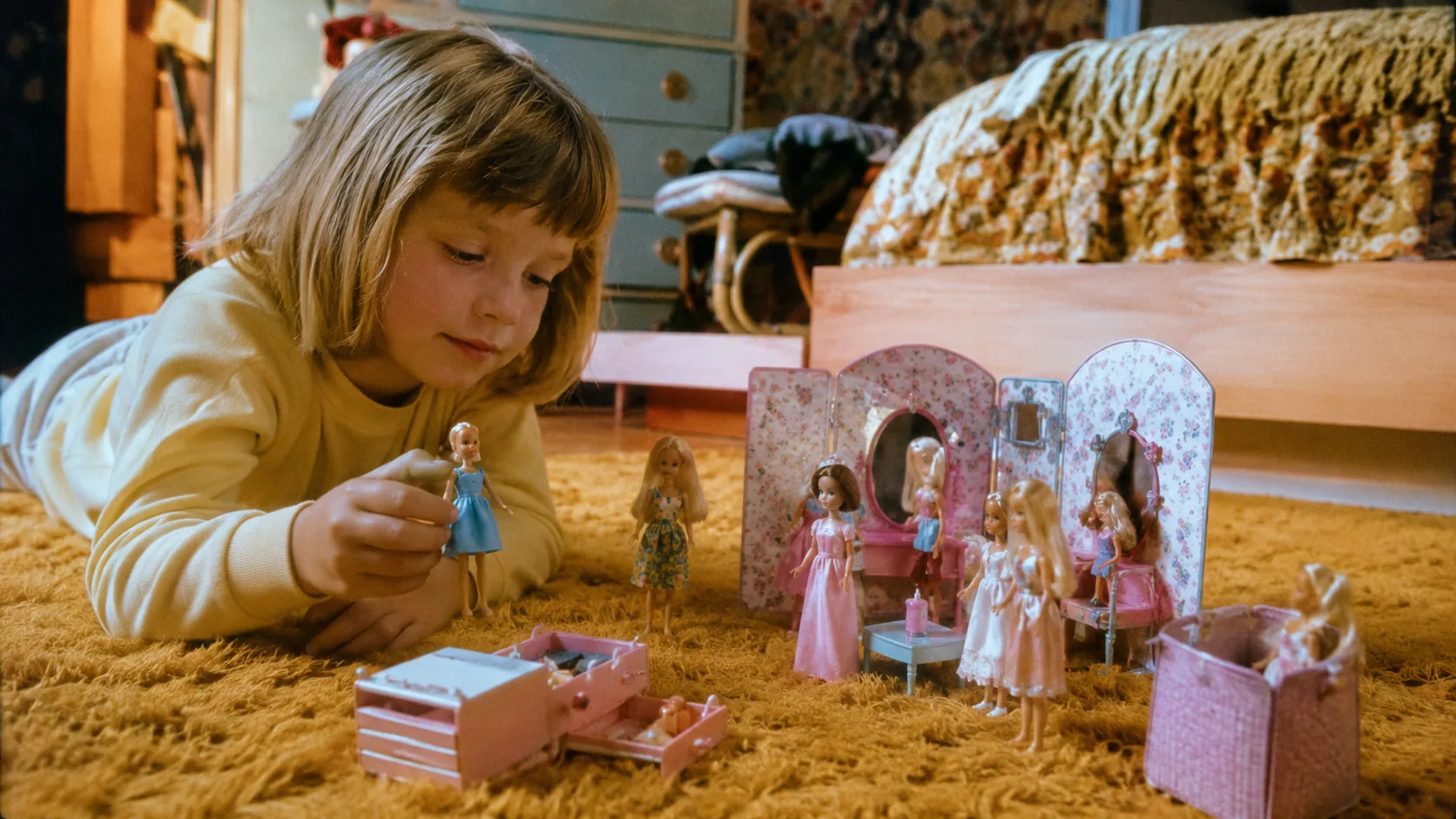
Dawn dolls were smaller than Barbie, which gave them a different kind of appeal. The compact size made fashion play portable and allowed a whole social circle of dolls, clothes, and accessories to take up less room. It also guaranteed that tiny shoes and accessories would disappear into carpet fibers with professional efficiency.
Dawn earns a place because she represents how competitive and varied the 70s doll aisle had become. Barbie was the giant, but she was not alone. Smaller fashion dolls offered another scale, another look, and another reason to keep expanding the collection. For plenty of kids, Dawn and her friends were not substitutes. They were their own complete world.
Small Dolls, Big Fashion Energy
Dawn dolls were much smaller than Barbie, which changed the scale of everything around them. More dolls could fit into a case. Fashion shows could include a whole group. Playsets and accessories occupied less floor space but still created a busy social world. The size made the line feel collectible before most kids used that word.
The Fashion Was the Story
Dawn and her friends lived through clothes, hairstyles, and glamorous settings. Changing the outfit could change the entire scenario. The dolls reflected the early-70s fascination with fashion, modeling, and a more modern adult world. Our Dawn Dolls history digs into the 6½-inch line and the fashion-doll competition that briefly made smaller feel bigger.
Why it stayed with us: Dawn dolls are remembered because they offered a distinct scale and style, not merely another version of a larger doll. They created a compact fashion universe that could take over a table without taking over the whole room.
30–21: 1970s Dolls, Toy Cars, Building Sets and Play Worlds
The middle of the list belongs to toys that did not end with one purchase or one afternoon. They created wardrobes, towns, fleets, missions, buildings, and entire populations that spread across bedrooms and shag carpet.
30
Growing-hair fashion doll
#30 — Crissy Doll
The hair feature was the whole room’s business
Crissy’s signature feature was hair that could appear to grow. Press the button, pull the ponytail, and suddenly the doll had a new look. Turn the mechanism and the hair shortened again. It was a straightforward gimmick, but it made the doll interactive in a way ordinary brushing and styling could not.
The feature was made for demonstrations. A child could show exactly why Crissy was special in seconds, which mattered in an era when toy commercials trained us to expect every product to perform a trick. Crissy belongs on the list because she combined fashion play with mechanical surprise, and because that long red hair remains instantly recognizable to anyone who saw her in a 70s toy aisle.
The Hair Feature Created the Plot
Crissy’s growing hair was not just decoration. It gave every play session a transformation. Turn the mechanism, pull the hair longer, style it, shorten it again, and begin a different look. The feature made the doll feel responsive and gave kids a reason to return even when no new outfit had entered the house.
Hair Play Was Serious Business
Brushes, ribbons, elastics, and patient hands became part of the toy. The long hair invited experiments that ranged from careful styling to knots that required adult intervention. Crissy also belonged to a wider family of growing-hair dolls, which made the aisle feel like a beauty salon with competing personalities. Our Crissy Dolls full story follows that craze and the related dolls who joined it.
Why it stayed with us: Crissy represents the 70s obsession with feature dolls—one dramatic mechanism that could be demonstrated in a commercial and rediscovered every time the toy came off the shelf.
Keep going: Crissy Dolls and the growing-hair craze or browse classic 70s dolls.
Jaime Sommers brought bionic hearing to the toy box
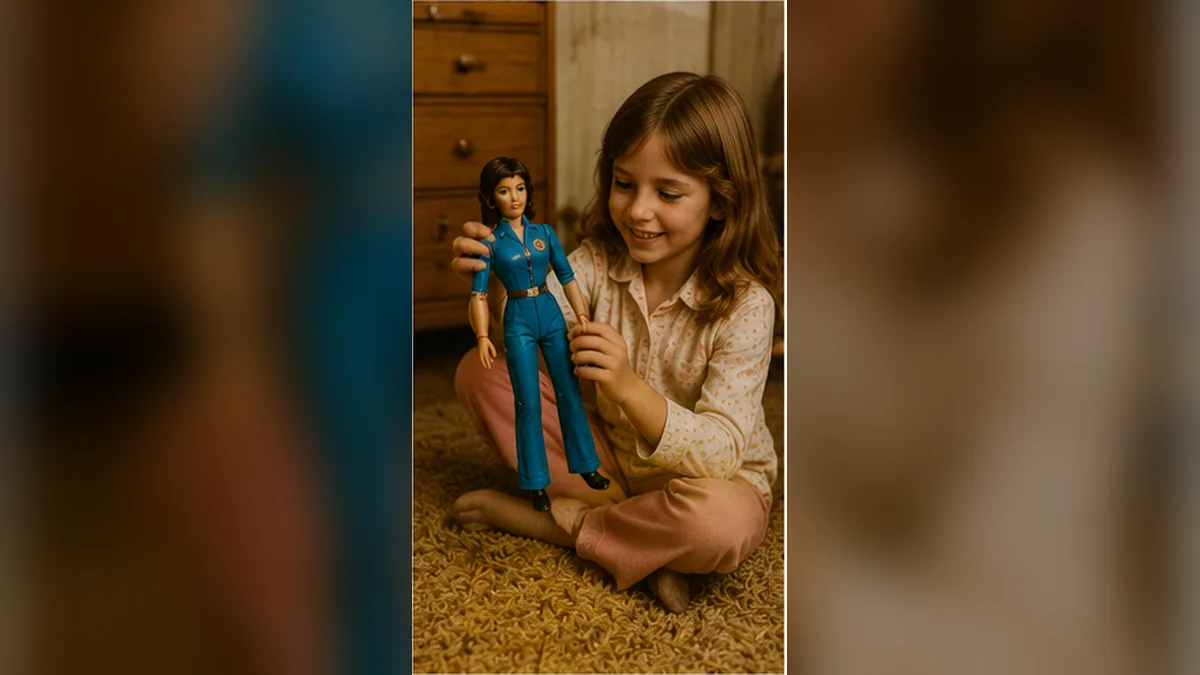
The Bionic Woman doll carried the heat of a popular television hero directly into the toy aisle. Jaime Sommers was not a generic fashion figure. She came with a known identity, powers, missions, and the kind of shared living-room recognition that let play begin before the package was fully open.
That mattered in 1976. The toy market was learning that kids wanted characters they already knew, not only broad categories such as “doll” or “action figure.” The Bionic Woman belongs here because she crossed lanes: television tie-in, action play, doll play, and feature-driven marketing. She also gave girls a central hero in the same bionic world that boys were already acting out with Steve Austin.
Television Power in Doll Form
The Bionic Woman doll brought a prime-time hero into the same kind of extended play already familiar from fashion and character dolls. The appeal was not only appearance. Jaime Sommers could be part of rescues, missions, and action stories, which allowed the doll to cross boundaries between traditional doll play and the growing world of television-based adventure figures.
Bionic Details Made the Character Real
The line connected to the wider bionic universe through outfits, mission gear, and shared imagination with Six Million Dollar Man toys. Kids did not need matching scale or perfect continuity to stage a crossover. They needed a couch cushion to become a mountain and a reason for the heroes to use their powers. Our Six Million Dollar Man and Bionic Woman toy history keeps both connected lines together, exactly where they belong.
Why it stayed with us: The Bionic Woman doll matters because she carried action, competence, and television recognition into a part of the toy aisle that was often expected to stay closer to fashion and domestic stories.
Towering plastic robots with projectiles and absolutely no chill
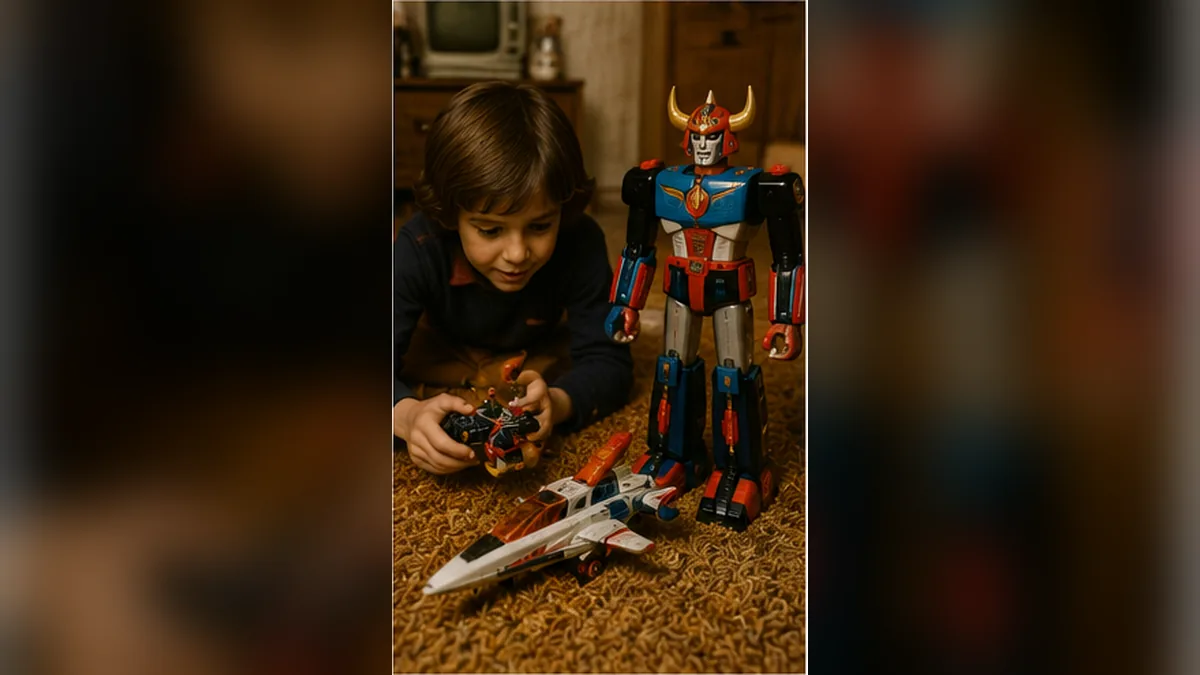
Shogun Warriors looked enormous beside ordinary action figures. The giant robots came loaded with fists, missiles, wheels, bright colors, and the kind of mechanical features that made every demonstration feel slightly dangerous. They did not need a child to know all the original Japanese stories. Being a huge robot with things that launched was enough.
The line belongs on the list because it brought a different visual language into American toy rooms—bold super robots, oversized scale, and feature-packed plastic. Shogun Warriors also helped prepare Gen X for the flood of Japanese-inspired robot and transforming-machine toys that would become even bigger in the 80s. The future was already standing two feet tall in the corner.
The Size Was the First Feature
Shogun Warriors looked enormous beside ordinary figures. Their height gave them instant authority on a shelf and made them feel like machines rather than characters. Bright colors, mechanical details, launching parts, and oversized fists created the impression that the toy had arrived from a different design culture entirely.
Every Feature Became a Safety Briefing
The launch mechanisms were irresistible. Fists, missiles, blades, or smaller vehicles could fly, which meant the owner quickly learned where not to aim—or at least learned after the first complaint. The toys were spectacular because they made action visible across the room. Our Shogun Warriors full story follows the giant robots, their Japanese roots, and the features that made ordinary shelves look undersized.
Why it stayed with us: Shogun Warriors were not subtle toys. They were tall, bright, mechanical, and slightly alarming. That is exactly why people who owned one can still picture it standing above everything else.
Tiny space hardware with a surprisingly deep bench
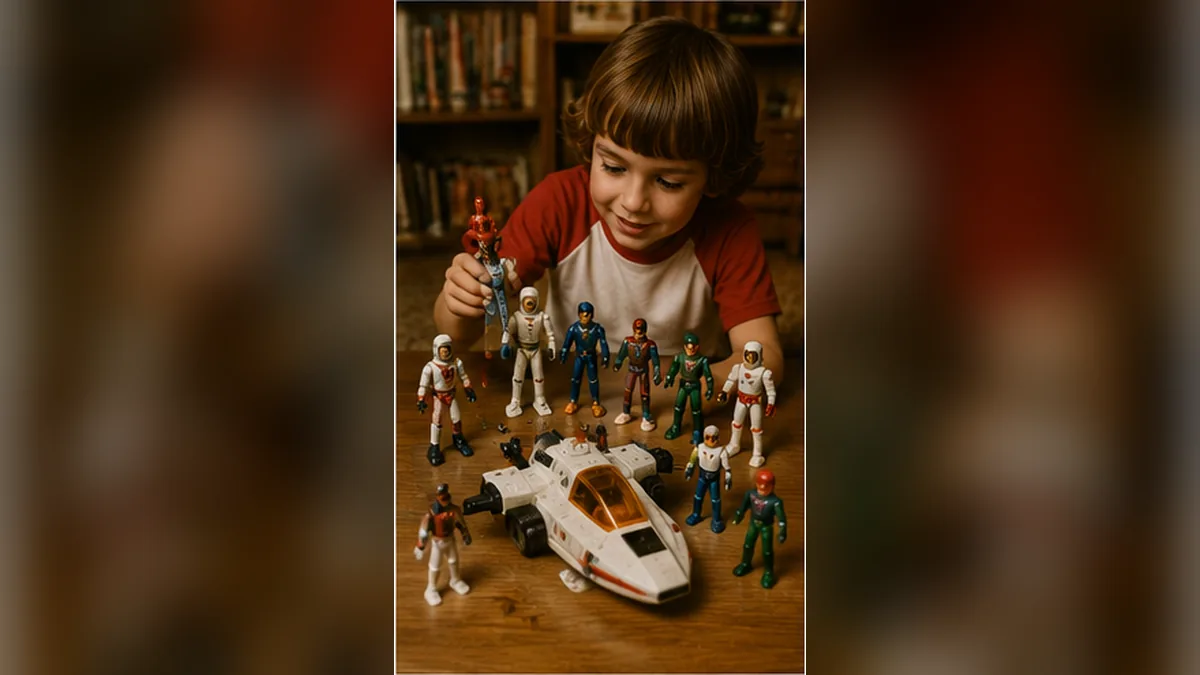
Micronauts combined small action figures, transparent parts, vehicles, robots, and interchangeable pieces into a science-fiction system that felt more advanced than the standard figure line. The designs were strange, mechanical, and flexible enough to support whatever space story a kid wanted to build on the carpet.
They never reached Star Wars-level cultural dominance, but that is part of why they remain such a strong Gen X memory. Micronauts felt like a secret line known by the kids who had them. The toys belong here because they anticipated modular world-building, imported design influence, and the growing late-70s appetite for detailed science-fiction universes.
A Toy Line Built to Be Taken Apart
Micronauts invited kids to connect, detach, swap, and rebuild. Clear plastic, chrome details, interchangeable parts, vehicles, aliens, and strange machinery made the line feel experimental. The pieces suggested a science-fiction world, but they also encouraged the child to redesign that world every time the toys came out.
The Scale Made a Universe Possible
Small figures allowed vehicles and playsets to feel large without becoming impossible to store. A few components could turn into a base, laboratory, spacecraft, or something nobody had named. Our Micronauts history goes deeper into the modular 70s sci-fi line and the reason it still attracts collectors who remember the parts as much as the characters.
Why it stayed with us: Micronauts rewarded curiosity. They were toys for kids who wanted to know how the pieces connected and what else could be built when the official picture on the box stopped being the rule.
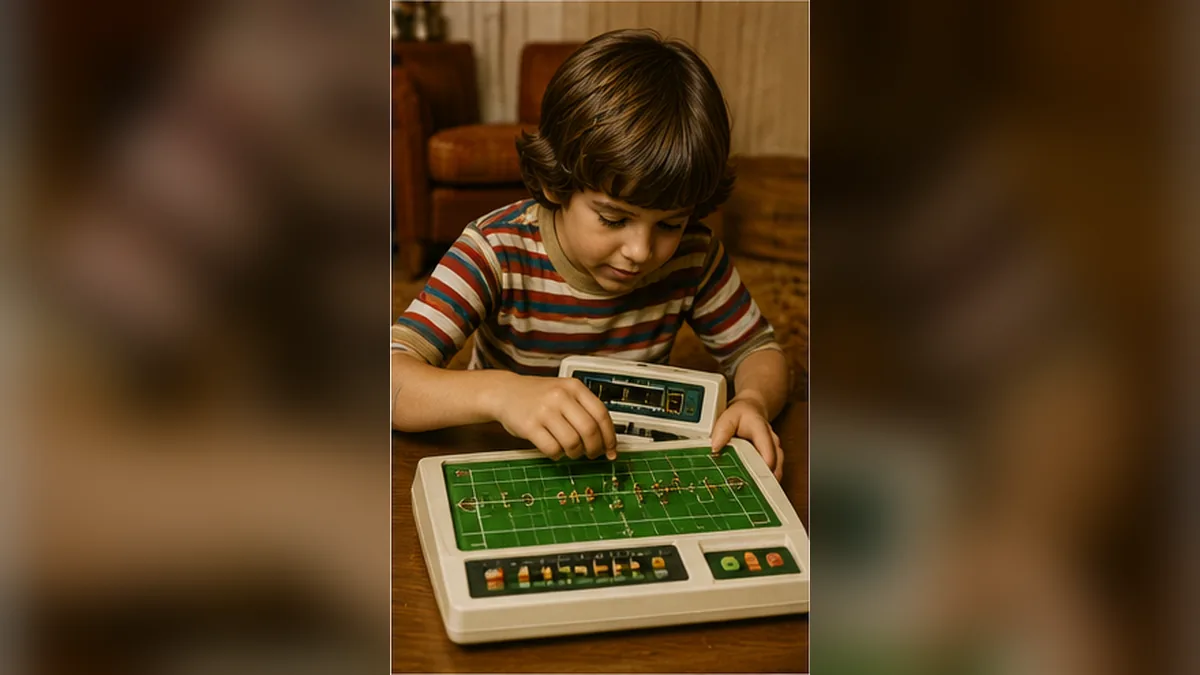
Mattel Electronic Football reduced the sport to glowing red marks moving across a tiny screen, yet the imagination filled in everything the hardware could not provide. You dodged defenders, pushed buttons with increasing panic, and heard simple electronic sounds that somehow felt advanced enough to belong on a spaceship.
It deserves this ranking because it helped make handheld electronic play normal. The graphics were barely graphics, but that was not the point. The game was portable, competitive, and available whenever you could find a working battery. For a generation raised between analog toys and video games, Electronic Football was one of the clearest bridges from one world to the next.
The Field Existed in Your Head
Mattel Electronic Football used moving red LED blips to represent an entire game. The display did not show helmets, sidelines, or stadiums. It showed light. The player supplied the rest: defenders closing in, a runner cutting outside, the clock becoming urgent, and the imaginary crowd reacting to a touchdown represented by beeps.
Thumb Speed Became Athletic Ability
The controls demanded quick taps and repetition. Long sessions could produce the kind of thumb fatigue that felt absurd to explain to an adult. The game was portable, private, and endlessly replayable because the challenge came from timing rather than a fixed board. Our Mattel Electronic Football and Auto Race history keeps the closely related red-LED pioneers together.
Why it stayed with us: The game proved that graphics did not need detail to create immersion. A handful of glowing dots could become professional football if the child holding the device wanted it badly enough.
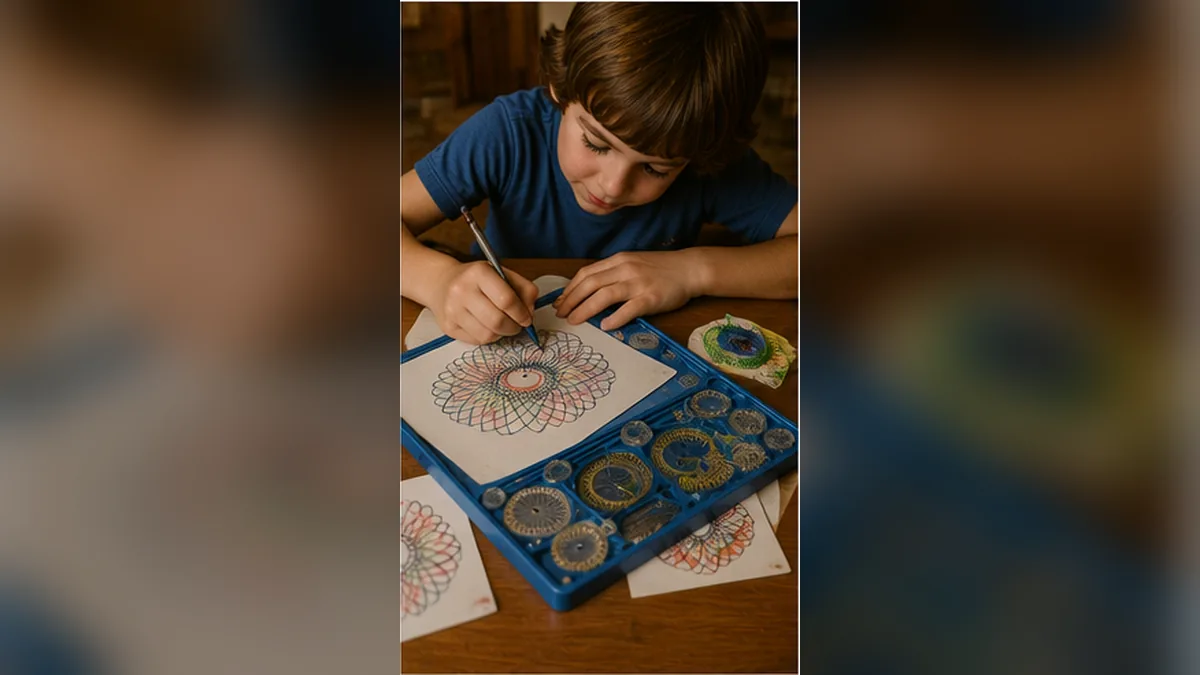
Spirograph made complicated geometric designs appear under your hand using plastic gears, rings, pins, and pens. When everything stayed in place, the patterns looked impossibly precise. When one gear slipped near the end, the whole masterpiece developed a scar and the child developed a vocabulary.
The toy belongs among the most popular toys of the 70s because it made creativity feel technical and repeatable. You did not need to be naturally gifted at drawing to create something worth showing off. Spirograph rewarded patience, color choices, and a willingness to start over. It was educational in the best possible way: the learning hid behind the satisfaction of making something look cool.
Precision Without Drawing Talent
Spirograph made complex geometric art possible through a simple mechanical relationship between gears. A pen placed in one hole traced a pattern as the smaller wheel rolled inside or around the larger ring. Change the hole, color, or gear and the result changed dramatically. The toy offered order, surprise, and the feeling that mathematics had briefly agreed to make something beautiful.
Keeping the Gear Still Was the Real Skill
The pattern looked effortless in finished form. Creating it required pressure, patience, and the ability to keep the gear teeth engaged while moving the pen. One slip could send a line across the whole design. Sometimes that ruined the page. Sometimes it became the beginning of a second color and a claim that the mistake had been intentional.
Why it stayed with us: Spirograph sat between art toy and instrument. It rewarded experimentation but also produced results worth saving, taping to a wall, or giving to someone who was expected to admire the symmetry.
Two knobs, straight lines, and a cruel relationship with circles
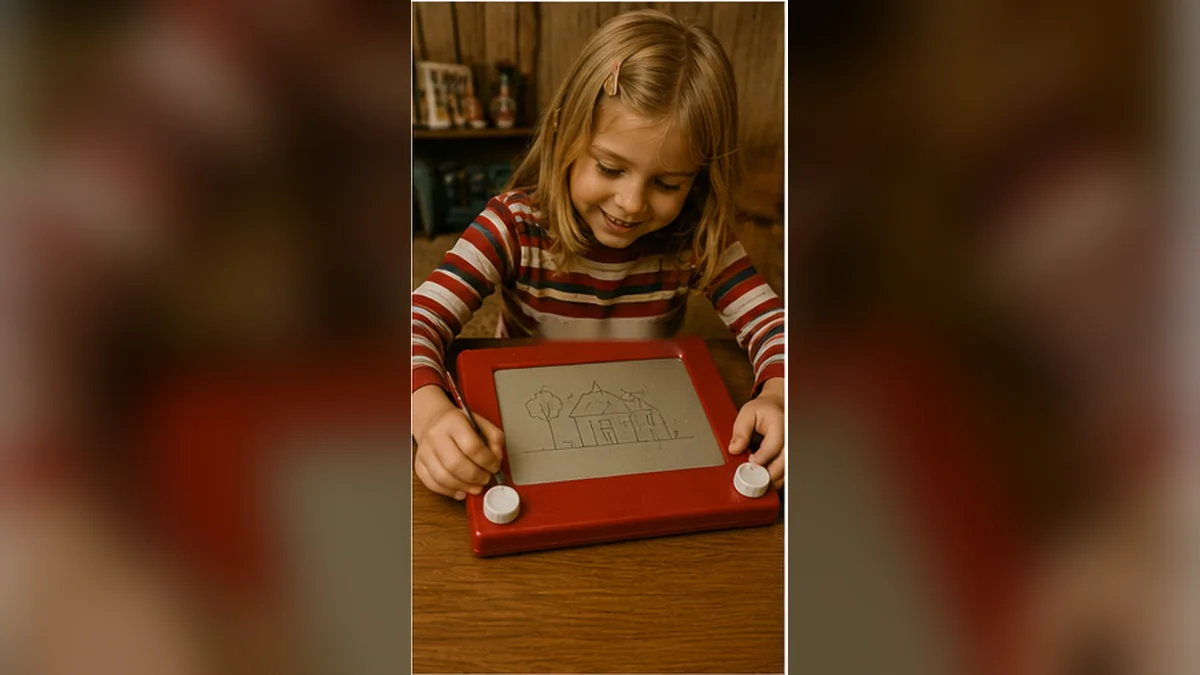
Etch A Sketch was a red-framed test of hand-eye coordination disguised as a drawing toy. One knob moved the line horizontally, the other vertically, and both together theoretically created curves. The word “theoretically” did a lot of work. Most of us produced staircases, boxes, and accidental industrial maps.
Still, the challenge was addictive. A good drawing felt earned because the machine refused to help. Then came the ritual shake, erasing the evidence and resetting the entire world. Etch A Sketch belongs here because it offered endless play without refills, batteries, or parts. It was just you, two knobs, and the growing realization that the kid in the commercial had skills you did not.
Two Knobs, One Unforgiving Line
Etch A Sketch made drawing feel like operating machinery. One knob controlled horizontal movement, the other vertical, and curves required both hands to cooperate. The line could not lift from the screen, so every picture became a continuous-path puzzle. Even a simple house demanded planning once the roof had to connect without crossing the wrong wall.
Erasing Was a Physical Act
Turning the toy over and shaking it restored the blank gray screen. That reset was part of the experience and occasionally part of sibling warfare. A detailed drawing could disappear because somebody wanted a turn, bumped the toy, or decided the artist had received enough praise.
Why it stayed with us: Etch A Sketch offered a permanent challenge inside a familiar red frame. Every generation believes it can do better than the last attempt. Most of us still end up drawing stairs.
Creativity, strange colors, and a lid that was never quite sealed
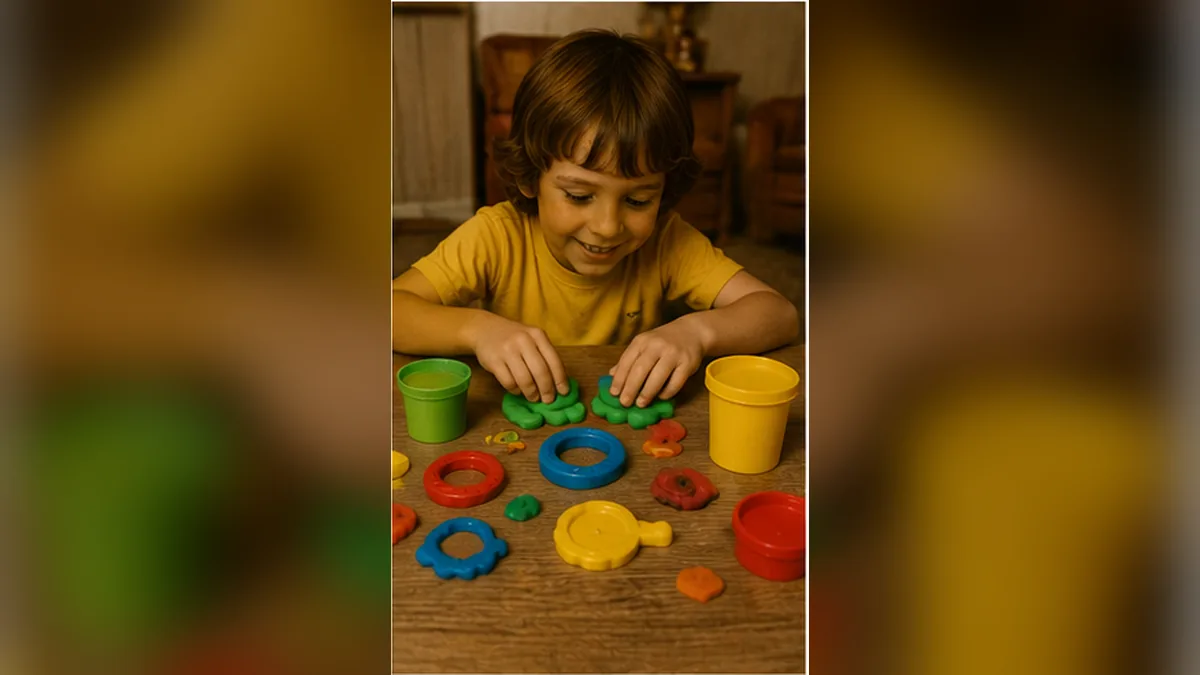
Play-Doh was already established by the time the 70s began, but it remained a toy-box essential. The smell was unmistakable. The colors eventually mixed into a shade found nowhere in nature. The compound dried around the edges if somebody forgot the lid, which somebody always did.
Its lasting power came from freedom. Play-Doh could become food, animals, roads, people, furniture, or a suspicious lump presented as a birthday cake. The play sets added structure, but the basic can was enough. It earns this spot because few toys were as affordable, tactile, and endlessly reusable. The toy did not tell the child what to make. It just handed over the material and accepted the consequences.
The Smell Opened the Memory
Play-Doh was tactile before it became anything else. The soft resistance, unmistakable smell, bright colors, and ability to become almost any crude object made it a universal creative material. It could be rolled, stamped, cut, squeezed through machines, turned into food, or combined into a color that would never become separate colors again.
The Accessories Changed the Job
Basic cans encouraged free-form sculpting. Playsets turned the material into a barbershop, kitchen, factory, or construction site. The tools created repeatable actions kids could master, while the dough guaranteed that the results never looked exactly like the commercial. Crumbs dried on the table. Lids disappeared. Somebody always left one lump exposed long enough to become a colorful rock.
Why it stayed with us: Play-Doh survived because it was not one toy. It was material for a hundred temporary toys, all of which could be crushed and remade before dinner.
Before licensed sets told us exactly what the bricks were for
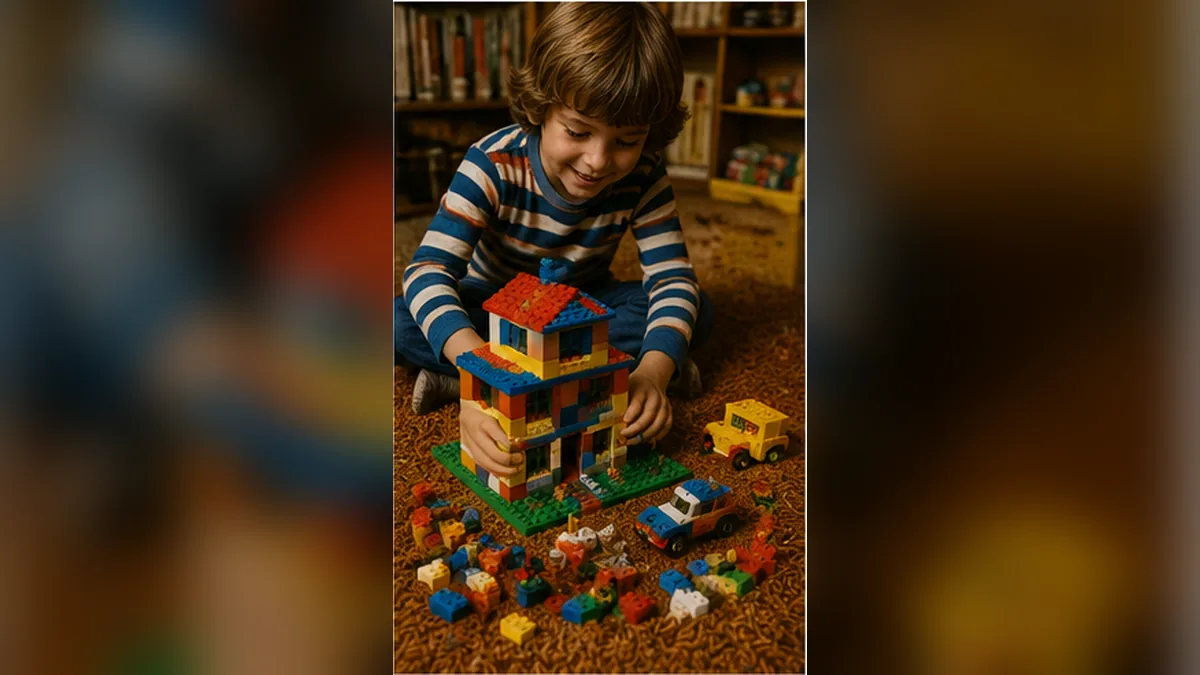
LEGO in the 70s still felt wonderfully open. The bricks built houses, cars, spaceships, towers, garages, and whatever else a pile of mixed colors suggested. Instructions existed, but they were not the permanent law of the box. Once the official model came apart, the pieces joined the larger household brick economy.
That freedom makes LEGO one of the classic toys every 70s kid remembers. The system rewarded construction, destruction, and immediate rebuilding. It also mixed easily with everything else. A LEGO wall could become part of a Hot Wheels city or a fort for figures from a completely different brand. Nobody cared about canon. The carpet was the zoning board.
The Box Never Dictated the Final Answer
LEGO sets provided instructions, but the bricks quickly escaped the official model. A house became a spaceship. A vehicle lost its wheels to another project. The same red brick might be a chimney in the morning and part of a robot by afternoon. That reuse made a growing collection more valuable than any single set.
Minifigures Changed the Scale of Story
As recognizable LEGO people and themed environments developed during the decade, the building system gained characters without giving up flexibility. Towns, vehicles, homes, and imaginary worlds could now be populated. The figures were simple enough to become whoever the story required, which kept them from locking play into one personality.
Why it stayed with us: LEGO rewarded both following directions and ignoring them. Few toys moved so naturally between engineering, storytelling, collecting, and the very specific pain of finding one piece with a bare foot.
Built like small construction equipment because they basically were
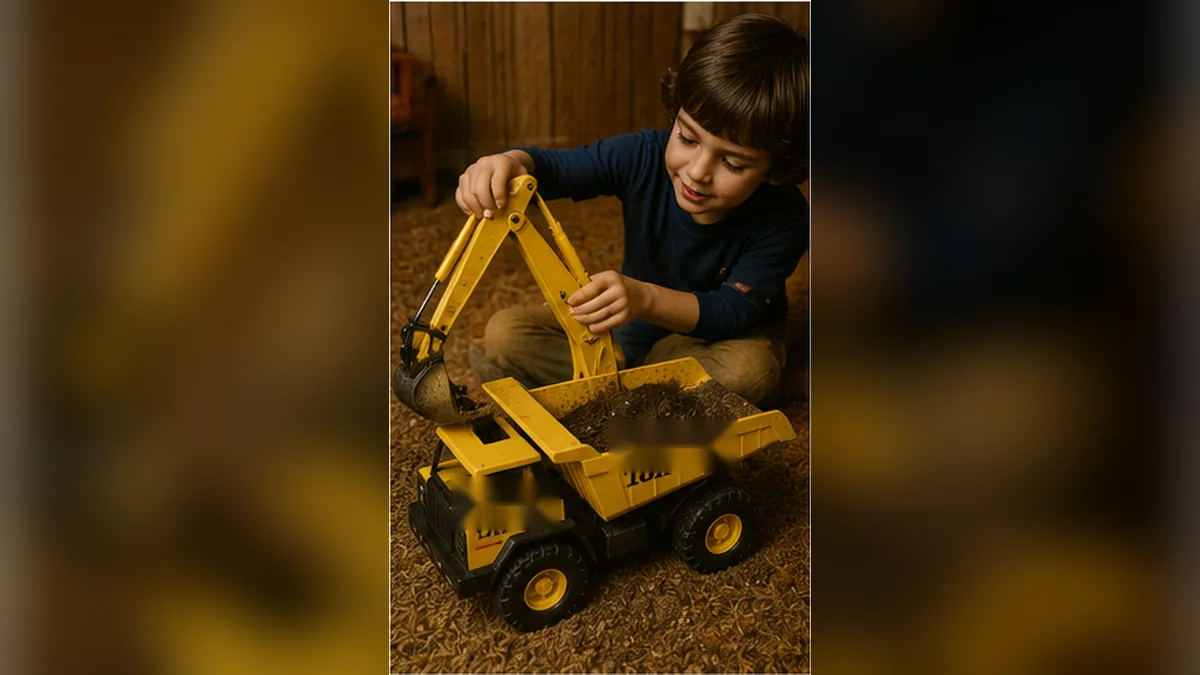
Tonka trucks had weight. The steel dump trucks, loaders, graders, and construction vehicles felt serious enough to do actual work, especially when compared with lighter plastic toys. They hauled dirt, rocks, blocks, smaller cars, and anything else a kid could pile into the bed.
They belong high on the list because durability was part of the fantasy. A Tonka truck did not merely represent a construction vehicle; it behaved like one. It survived driveways, sandboxes, basements, and years of rough handling. For 70s kids, that solid metal feel became the standard by which every later toy truck was judged—and usually found a little flimsy.
Built Like Yard Equipment
Tonka trucks felt substantial. Metal bodies, working dump beds, rugged wheels, and construction-machine shapes gave them a seriousness lighter plastic vehicles could not match. They belonged in dirt, sand, gravel, and whatever landscaping material a child had been told not to move.
The Truck Gave the Kid a Job
A dump truck did not need a story printed on the package because the function created one. Load, haul, dump, repeat. Bulldozers pushed. Cranes lifted. Graders made roads. The play could be solitary and methodical or turn into a whole neighborhood construction project where every child claimed the most important machine.
Why it stayed with us: Tonka trucks are remembered as objects that survived childhood rather than merely passing through it. Scratches and bent paint became proof of work, and many trucks lasted long enough to serve more than one generation.
20–11: Famous 70s Toys Built by Commercials and Big Features
This is where the toy aisle got louder. Television heroes arrived with built-in stories, craft toys performed transformations, electronic games started beeping, and every commercial seemed to feature a kid shouting the product name like national security depended on it.
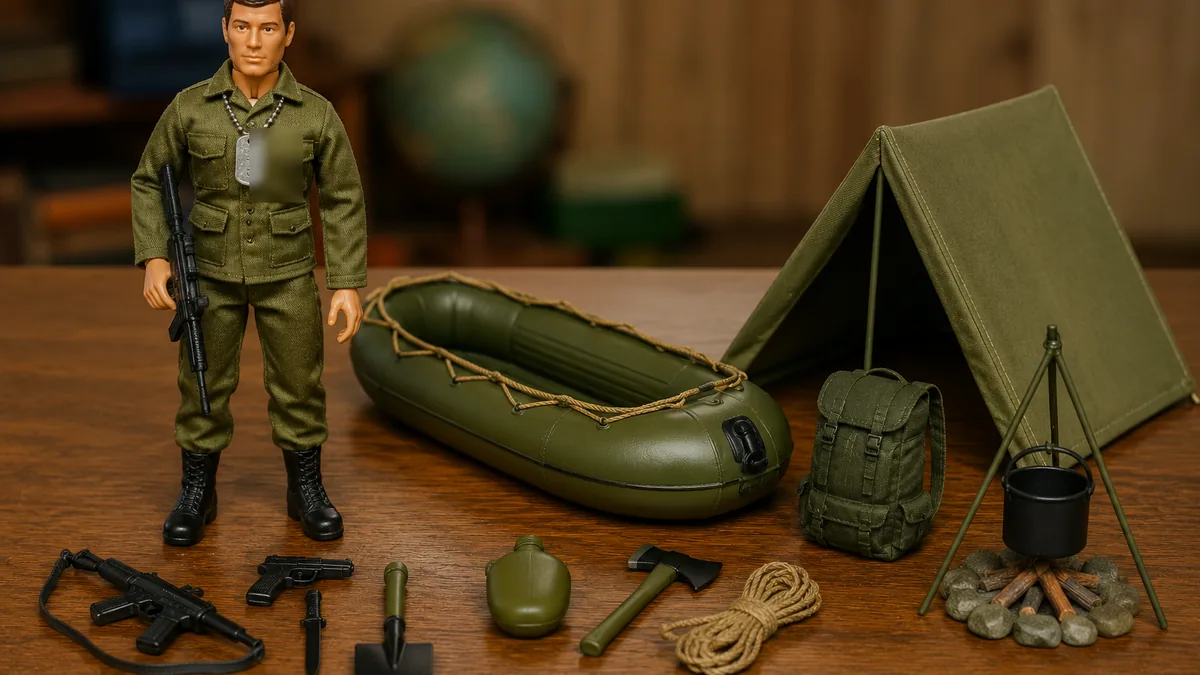
G.I. Joe changed direction in the 70s, moving from military identity toward the Adventure Team. The figures came with gear, uniforms, vehicles, rescue missions, exploration themes, and enough equipment to turn a yard or basement into a complete operation. The famous lifelike hair and gripping hands added to the feeling that this was serious hardware.
The line matters because it showed how an action figure could become a system. Joe was not limited to one story. He could hunt a white tiger, recover stolen treasure, explore dangerous terrain, or undertake whatever mission the available furniture supported. That expandable adventure logic helped set the stage for the increasingly organized figure worlds that would dominate later decades.
A Hero Without a Fixed War
The Adventure Team era shifted G.I. Joe toward missions, exploration, rescue, and dangerous assignments. That opened the figure to a wider range of stories. The bearded commander could investigate a cave, capture an animal, recover equipment, or face a disaster without the child needing to recreate a battlefield.
Equipment Made the Mission
Uniforms, vehicles, accessories, and adventure sets gave the figure a job before play began. A winch, raft, helicopter, or rescue gear suggested the problem. Kids then expanded it across furniture, yards, and whatever natural terrain was available. Our 70s action figures and character toys page places the Adventure Team inside the decade before smaller franchise figures took over the aisle.
Why it stayed with us: G.I. Joe Adventure Team represents the large-scale action figure at its most flexible: part doll, part equipment system, part rugged adult fantasy, and ready for a mission that could last all afternoon.
Color it, bake it, and watch the kitchen perform sorcery
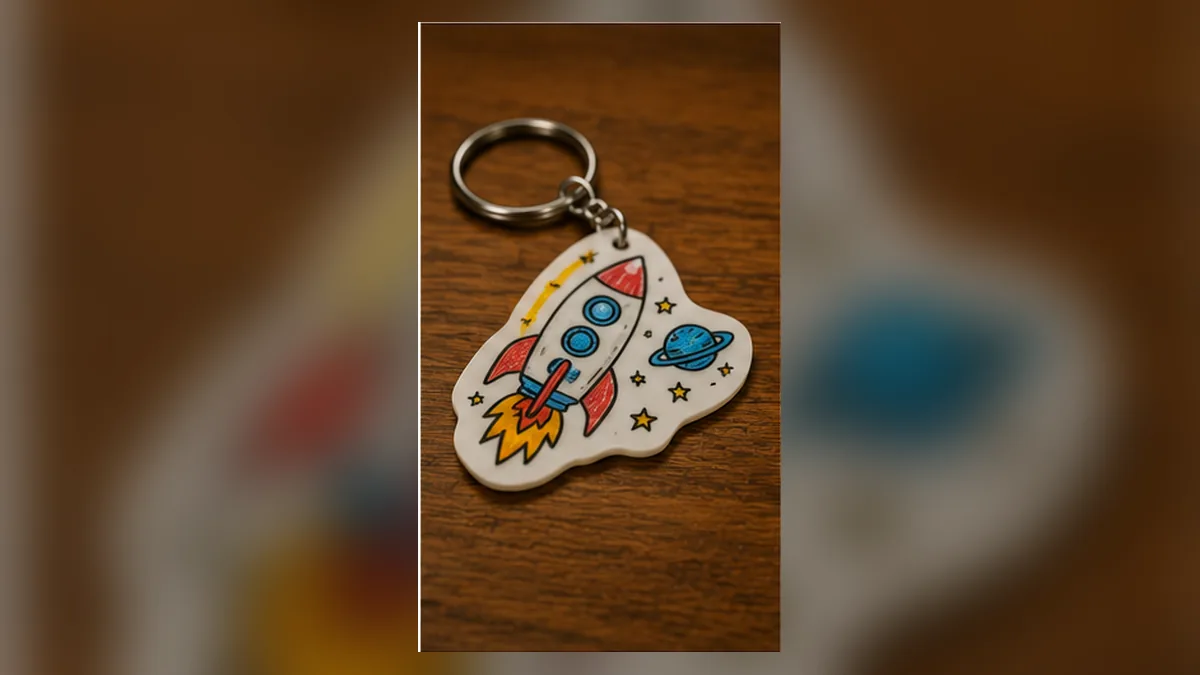
Shrinky Dinks turned thin plastic sheets into tiny hard charms through the power of a household oven. You colored the design, cut it out, placed it on a tray, and watched it curl into what looked like total failure before flattening into a smaller, thicker version of itself.
That transformation was the real toy. The finished object was nice, but the oven-window suspense was the part everyone gathered around to see. Shrinky Dinks belong among the most iconic toys of the 70s because they combined art project, science trick, and kitchen danger in one perfect ritual. We did not call it STEM. We called it Saturday afternoon.
The Oven Became a Science Lab
Shrinky Dinks started as thin sheets that looked too flimsy to become anything important. Kids colored the design, cut it out, placed it in the oven, and watched the plastic curl into a frightening little knot before flattening into a smaller, thicker piece. The temporary panic was part of the show. Every batch looked ruined for a few seconds.
The Finished Piece Felt Manufactured
A drawing that began soft and flexible came out hard, compact, and intensely colored. That transformation made the result feel more official than ordinary art. It could become jewelry, a charm, a keychain, or a small object worth trading. Our Shrinky Dinks full story follows the kitchen-oven alchemy and the reason the curling plastic never stopped being fun to watch.
Why it stayed with us: Shrinky Dinks made the process as memorable as the product. It was craft time, heat, suspense, and a reveal packed into one cookie sheet.
Keep going: Shrinky Dinks and kitchen-oven alchemy or browse 70s craft kits.
Tiny cakes, giant expectations, and one very determined light bulb
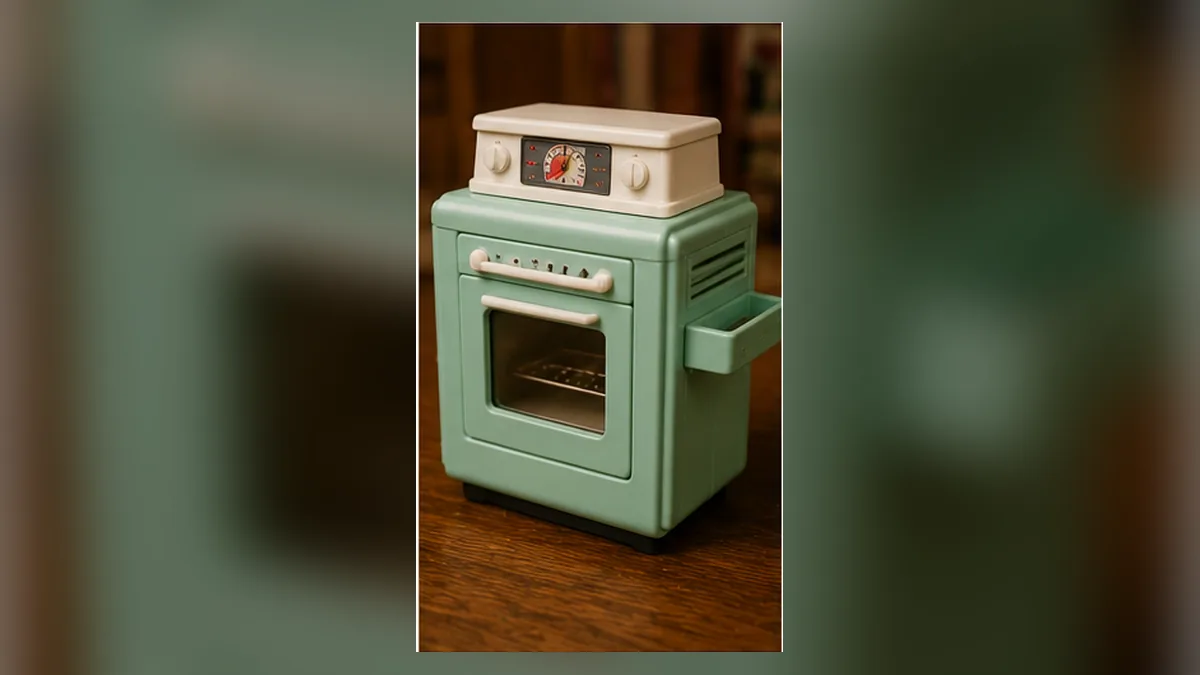
The Easy-Bake Oven transformed a small packet of mix and a light bulb into something technically recognizable as cake. The portions were tiny, the waiting felt endless, and the frosting was applied with the seriousness of a television chef despite covering an object roughly the size of a drink coaster.
It remains iconic because the toy delivered a real result. This was not pretend food. It was actual warm food produced by a machine the child controlled, which made the whole ritual feel grown-up and magical. The Easy-Bake Oven also created its own economy of mixes, accessories, and repeated kitchen ambition. The cake may have been small, but the pride was full size.
A Real Appliance at Kid Scale
The Easy-Bake Oven mattered because it looked and behaved enough like a kitchen appliance to feel serious. Mix the packet, add water, fill the tiny pan, slide it through, wait, and remove something warm from the other side. The portions were small, but the authority was enormous. A child had baked.
The Waiting Made the Bite Important
Preparation took longer than eating, which turned one small cake into an event. Decorations were applied with care or with the uncontrolled confidence of someone holding a packet of frosting. Siblings hovered. Adults were offered ceremonial samples. The finished dessert was judged less by texture than by the fact that it existed at all.
Why it stayed with us: The Easy-Bake Oven survived because it combined pretend play with a real result. It did not merely imitate cooking. It produced evidence—tiny, sweet, sometimes underwhelming evidence—that the child had done the job.
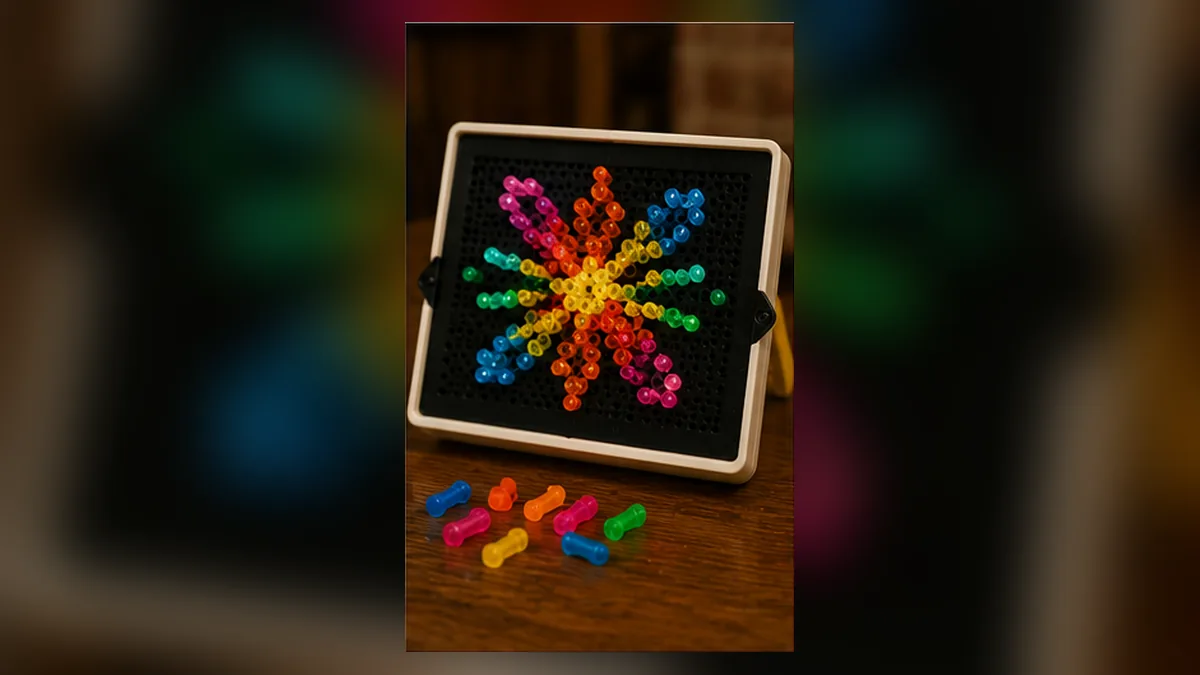
Lite-Brite used a bright bulb, black paper, and colored plastic pegs to create glowing pictures. Follow the template and the image emerged one dot at a time. Ignore the template and create something original, although it would probably be described by adults as “interesting” while they searched the carpet for sharp little pegs.
The toy deserves this spot because it made ordinary craft play theatrical. Turn off the room lights and the finished picture looked like a miniature marquee. Lite-Brite was slow, tactile, and satisfying in a way modern screens rarely are. Every point of light had to be placed by hand, which made the glow feel earned.
The Black Paper Made the Light Matter
Lite-Brite used a simple contrast trick brilliantly. Colored pegs pushed through black paper into a glowing screen, creating points of light that looked vivid in a dim room. Templates offered recognizable pictures, but blank paper invited names, patterns, symbols, and designs that became more ambitious as the peg supply became less complete.
Every Picture Had a Construction Phase
Before the lights came on, the child had to sort colors, find the correct holes, and push dozens of pegs into place. That repetitive work made the final glow feel earned. The scattered pegs also made cleanup a separate activity, often performed by whoever stepped on one first. Our Lite-Brite in the 70s page goes deeper into the templates, pegs, black paper, and living-room glow.
Why it stayed with us: Lite-Brite turned a dark room into the reveal stage. A picture that looked ordinary under daylight became something electric once the lights went down.
Congratulations, your toy has created another chore
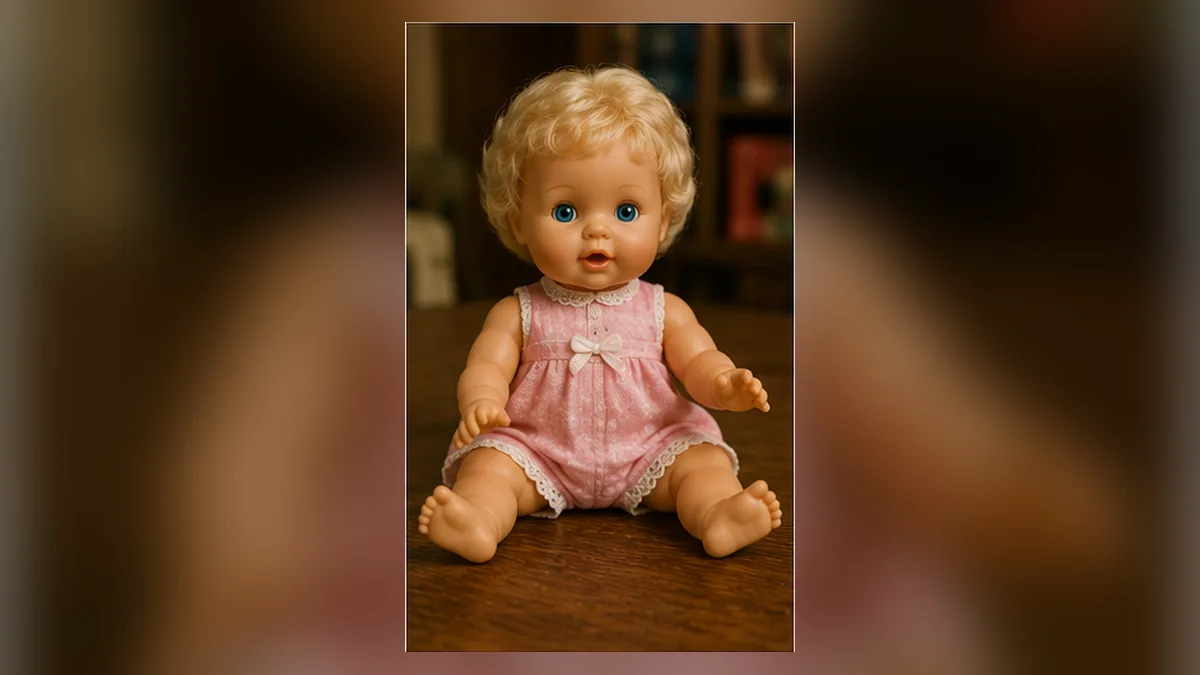
Baby Alive pushed doll play into a more committed form of realism. Feed the doll, give her a bottle, and then deal with the result. The process was both fascinating and deeply inconvenient, which is probably the most accurate preparation for caregiving any toy could offer.
She belongs among toys every 70s kid wanted because the feature was impossible to ignore. This was a doll that did something visible and repeatable, perfect for commercials and demonstrations. Baby Alive also gave role-play a routine: preparation, feeding, changing, cleanup, and doing it all again. The toy was not just a character. She was a tiny plastic schedule.
The Doll Added Consequences
Baby Alive did not stop at being fed. What went in had to come out, and that feature changed the play from simple caretaking into a full routine. Mixing food, filling the bottle, feeding the doll, changing the diaper, and cleaning up created a sequence that felt more realistic than holding a silent baby doll.
Realism Was Both the Appeal and the Problem
The commercials emphasized nurturing. The child at home discovered maintenance. Food mixtures could thicken, feeding could get messy, and the doll introduced chores into pretend parenthood with impressive speed. That did not weaken the appeal. It made the toy feel responsive. Our Baby Alive in the 70s story follows the original eating-and-drinking doll and the new problems she brought into the house.
Why it stayed with us: Baby Alive is remembered because the feature forced interaction. The doll did something, and the child had to deal with it—an unusually honest preview of caregiving for a toy aisle.
The shared-universe toy shelf before anyone called it that
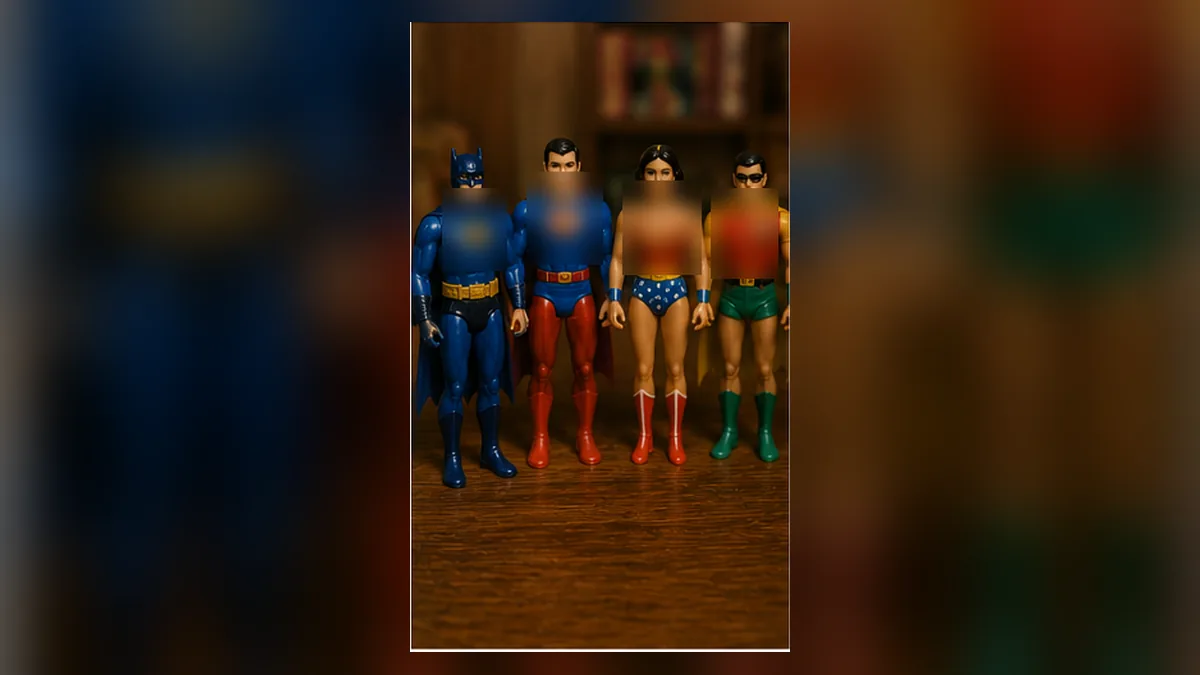
Mego brought Batman, Superman, Spider-Man, Captain America, Wonder Woman, and other heroes into one recognizable action-figure format. The fabric costumes, removable accessories, and poseable bodies made the figures feel more like miniature stars than stiff plastic statues.
The line was important because it let comic-book worlds collide on the carpet years before cinematic universes turned that idea into corporate strategy. A DC hero could fight a Marvel villain, team up with a television character, or borrow a vehicle from another toy line. Mego figures belong high on the list because they made licensed characters collectible, playable, and wonderfully unconcerned with brand boundaries once the box was open.
The Cloth Costumes Made Them Feel Like Characters
Mego’s eight-inch superheroes wore fabric suits, capes, boots, gloves, and accessories that made them look dressed rather than molded. The bodies could pose, sit, punch, and enter vehicles or playsets. Because many heroes shared the same scale, DC and Marvel characters could collide in ways television and comics rarely allowed.
The Line Was a Crossover Machine
Batman could meet Spider-Man. Superman could borrow another hero’s vehicle. Planet of the Apes characters could invade a superhero headquarters. Mego’s broad licensing turned the toy box into a network before anyone used that word. Our Mego action figures full story follows the cloth costumes and the eight-inch empire that ruled before the smaller Star Wars scale changed expectations.
Why it stayed with us: Mego figures felt both toy-like and theatrical. The removable clothing, familiar faces, and flexible scale made them perfect actors for whatever production the bedroom floor was staging.
We had the technology, and it came with a roll-up sleeve
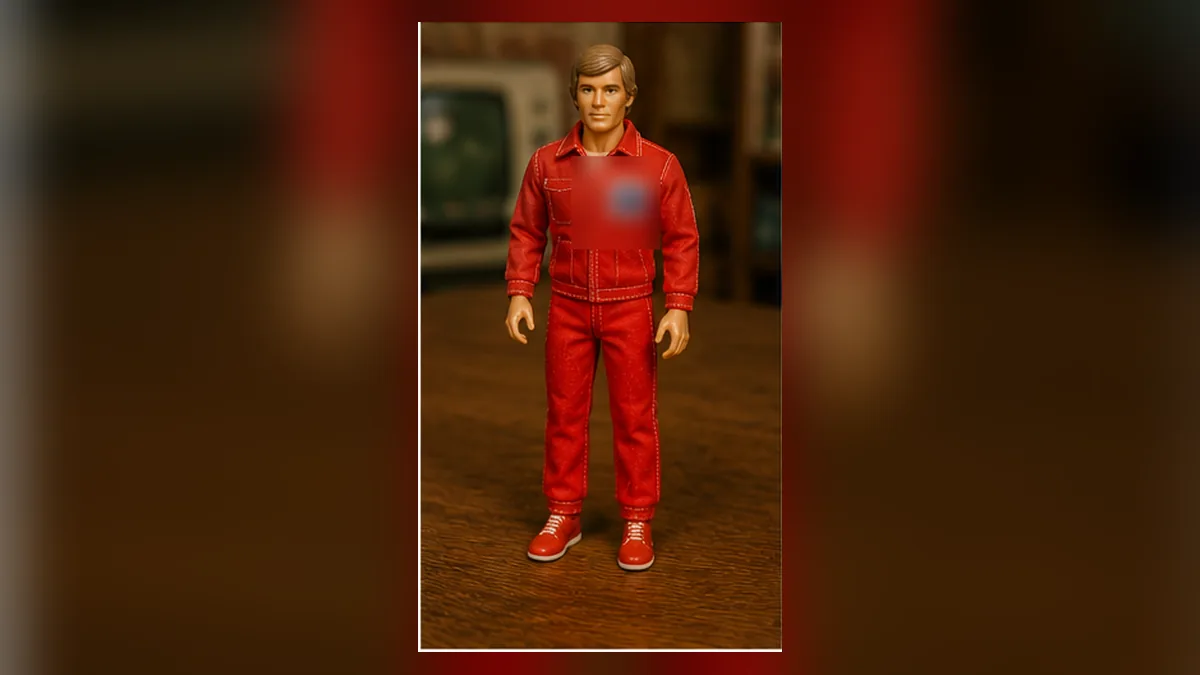
The Six Million Dollar Man figure turned Steve Austin’s television powers into features kids could demonstrate. The bionic eye let you look through the back of his head, the arm could perform strength tests, and the figure’s familiar red tracksuit made him instantly recognizable to anyone watching network television.
Steve Austin belongs here because he was one of the clearest examples of television and toy design learning to work together. Kids already understood the character, the sound effects, and the fantasy before the figure arrived. The toy added physical tricks that extended the show into the room. That screen-to-shelf formula would soon become one of the most powerful forces in the entire business.
The Features Recreated the Show
The Six Million Dollar Man figure did not rely only on Steve Austin’s likeness. The bionic eye, special limbs, mission equipment, and action features let kids imitate the television fantasy of enhanced strength and technology. Looking through the eye was a small trick, but it connected the child directly to the character’s point of view.
Repairable Parts Became Part of Play
Removable or replaceable bionic components made the figure feel engineered. A mission could begin with damage and end with repairs. The lab, clothing, and accessories expanded the line beyond one hero standing alone. Our Six Million Dollar Man and Bionic Woman toys page keeps the connected television heroes in one complete history.
Why it stayed with us: Steve Austin embodied a specifically 70s future: machinery hidden inside a human body, dramatic sound effects supplied by the child, and every slow-motion jump performed by hand over the furniture.
The future arrived in orange plastic and corrected our spelling
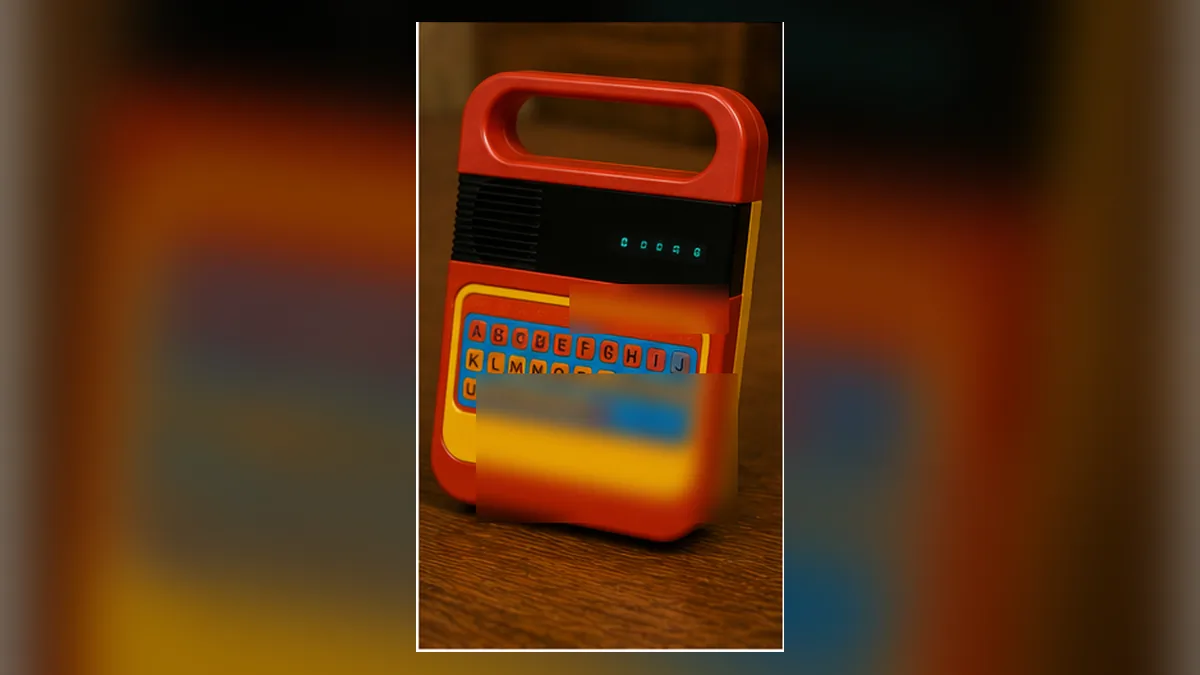
Speak & Spell sounded like technology from the future. The synthetic voice said words aloud, accepted typed answers, and responded with praise or electronic disappointment. It was educational, but the novelty of hearing a machine talk made it feel more like a gadget than a lesson.
That distinction mattered. Plenty of educational toys were purchased by adults and tolerated by children. Speak & Spell was something kids actually wanted to press, hear, and show other people. It belongs near the top because it made speech technology part of ordinary childhood and helped establish the late-70s belief that electronics could make almost any kind of play feel modern.
The Voice Was the Breakthrough
Speak & Spell did not merely light up a correct answer. It spoke. The electronic voice sounded unusual enough to be fascinating and clear enough to turn spelling into a back-and-forth exchange. Keys, prompts, and immediate feedback made the device feel more like a small computer than a conventional educational toy.
Learning Arrived Disguised as Technology
Parents could justify the purchase because it practiced spelling. Kids wanted it because it talked and responded. That combination made Speak & Spell one of the rare educational toys whose instructional purpose strengthened the futuristic appeal instead of smothering it. Our Speak & Spell history follows the 1978 talking learning toy and the technology that made the orange machine sound alive.
Why it stayed with us: The voice became part of pop culture because it was unmistakable. Speak & Spell made the future sound slightly robotic, slightly impatient, and willing to ask the same word again until we got it right.
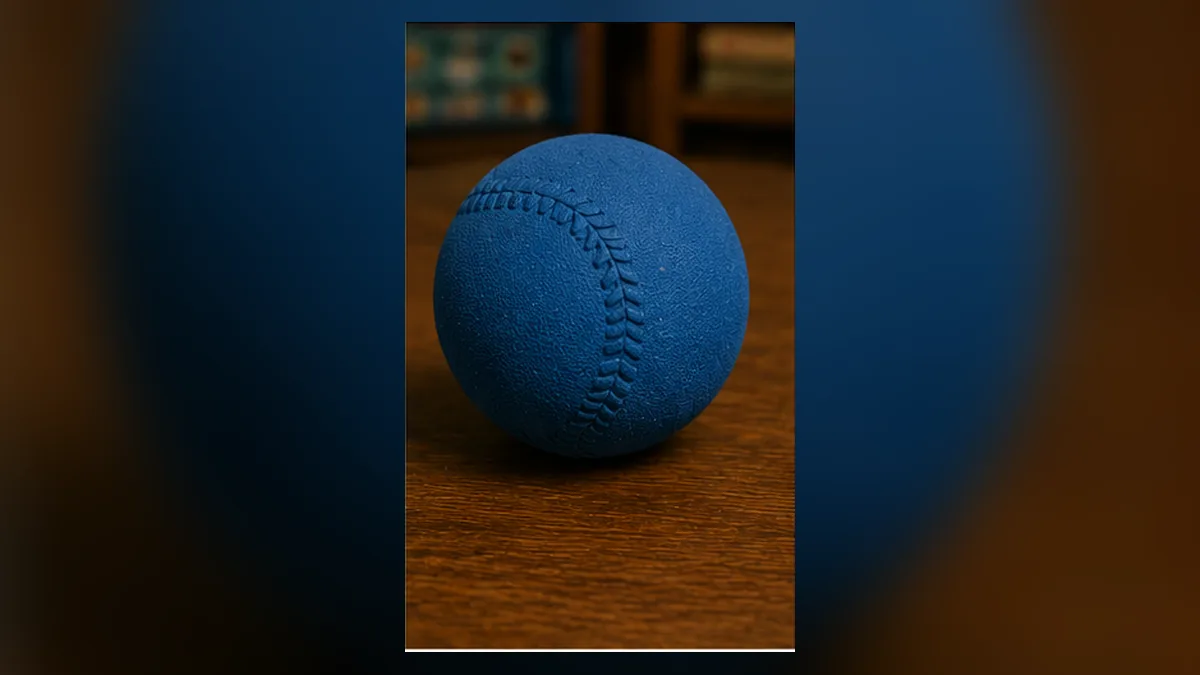
The original Nerf Ball solved a problem every child already understood: adults did not want a real ball flying through the house. The soft foam version turned hallways, basements, bedrooms, and living rooms into legal playing fields—legal in the marketing sense, anyway. Lamps still had opinions.
Its genius was simplicity. No assembly, no batteries, no complicated premise. Throw it. Catch it. Bounce it off something. Invent a game. The Nerf Ball ranks this high because it changed where play could happen and launched a brand that would keep finding new ways to arm children with foam. One basic idea opened an enormous category.
The Ball Adults Could Tolerate Indoors
The original foam ball changed the rules of household throwing. A hard ball near lamps, windows, or younger siblings brought immediate consequences. A soft foam ball created negotiation. Suddenly the living room could become a court, field, or target range under the argument that nothing valuable was likely to break.
Soft Did Not Mean Calm
Kids still threw Nerf Balls as hard as possible. The difference was that the result usually produced laughter instead of damage. The lightweight foam also encouraged invented games because the ball bounced, floated, squeezed, and behaved differently from standard sports equipment.
Why it stayed with us: The Nerf Ball launched a whole philosophy: let children throw things, but redesign the thing. That compromise opened indoor play and eventually grew into an enormous foam-powered category.
The tiny cars that made the carpet look like a real town
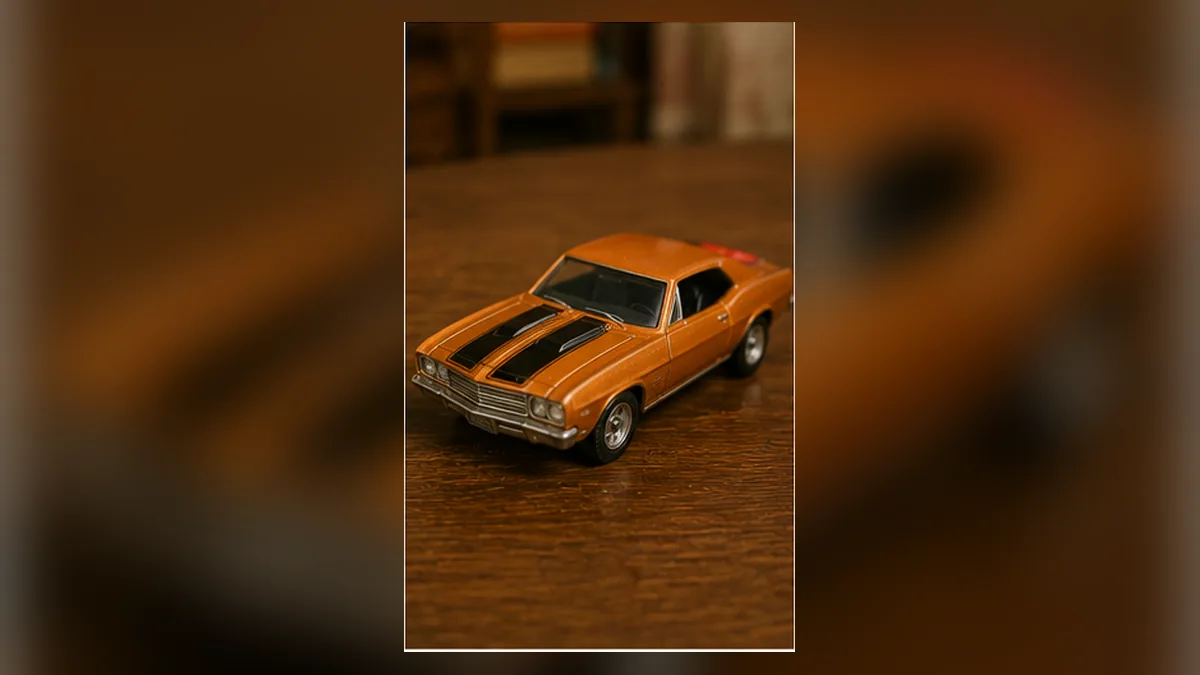
Matchbox cars brought ordinary roads to the toy box. Fire engines, buses, delivery vans, construction equipment, family cars, and emergency vehicles made the collection feel like a functioning town rather than a showroom full of fantasy racers. The small scale meant a handful could travel in a pocket and an entire fleet could live in one battered case.
They rank just outside the top ten because Matchbox captured a different side of vehicle play than Hot Wheels. Hot Wheels sold speed and spectacle; Matchbox sold recognition, variety, and the pleasure of finding a miniature version of something seen on the street. Together with garages, roads, blocks, and improvised buildings, those cars turned every section of carpet into local infrastructure.
Ordinary Vehicles Made the World Feel Complete
Matchbox collections included the vehicles that kept a town running: buses, ambulances, tow trucks, construction machines, delivery vans, police cars, and family sedans. That realism mattered. A child could recognize the miniature version of something seen on the road and immediately assign it a job.
The Case Became a Garage
Cars were lined up, sorted, traded, carried, and protected in cases that rarely remained organized for long. A few vehicles could create traffic. A larger collection could support emergencies, construction zones, road trips, and local government. The toys worked with blocks, cardboard buildings, rugs, and every existing floor plan.
Why it stayed with us: Matchbox cars made the everyday world collectible. They taught us that a fire engine or battered station wagon could be just as interesting as a fantasy racer when the scale fit in one hand.
These are the toys that feel inseparable from the 70s. Some had been around before the decade and some arrived near the end, but all of them shaped how Gen X played, collected, competed, imagined, and bothered adults.
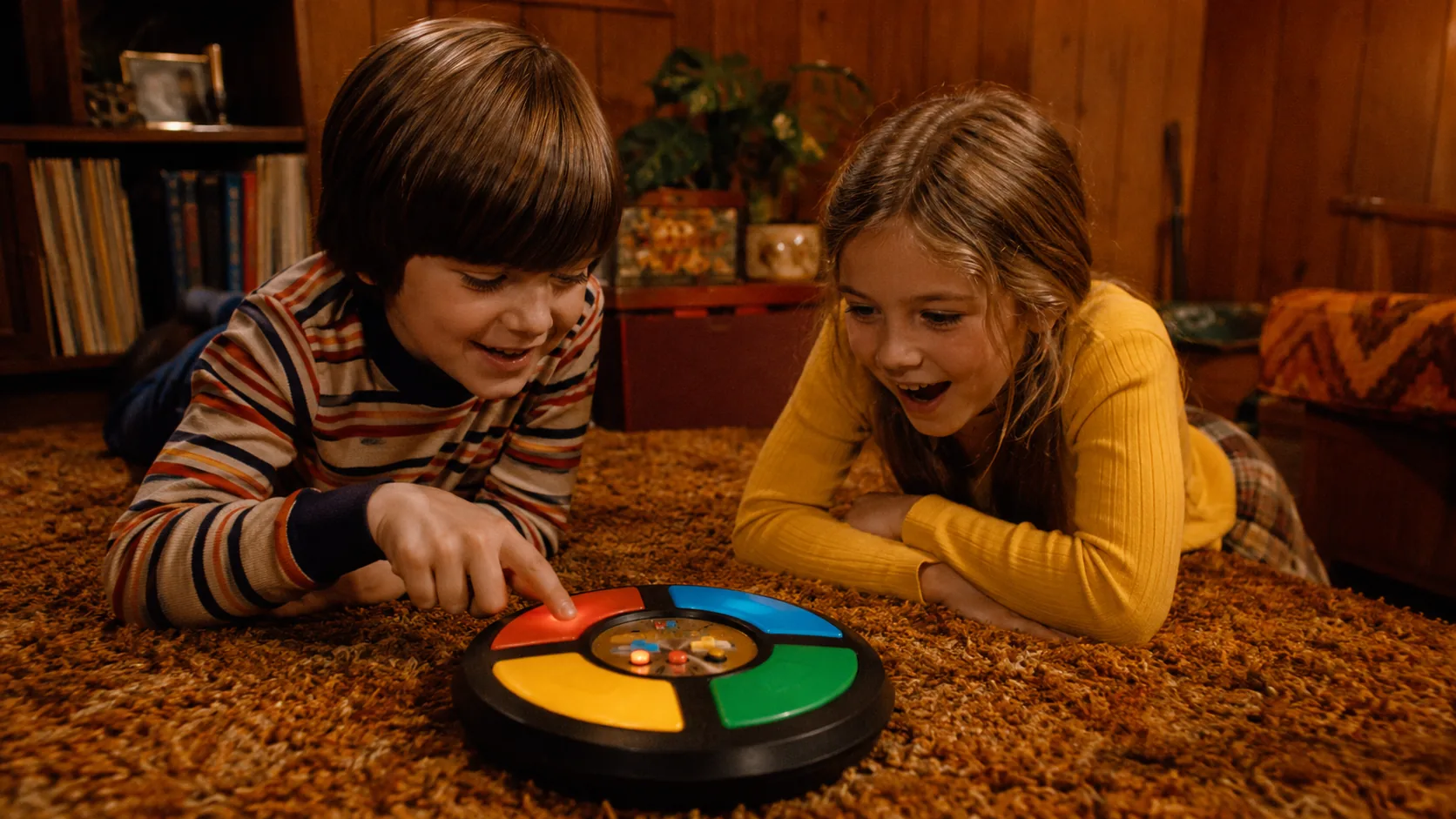
Four colored buttons and the sound of public failure
Simon flashed a sequence of colored lights and tones, then waited for you to repeat it. The pattern grew longer until memory, nerves, or one badly timed finger ended the run. It was simple enough to understand immediately and challenging enough to make everyone in the room believe they could do better.
The toy captures the late 70s perfectly. Electronics were no longer hidden inside a traditional game. The lights, sounds, and computer-controlled sequence were the entire attraction. Simon looked modern, played well alone or in a group, and turned concentration into a performance. When someone reached a long sequence, the room got quiet. When they missed, everybody suddenly became an expert.
The Toy Controlled the Tempo
Simon created a sequence, waited, and judged. That authority made the machine feel intelligent. Each correct round produced a longer pattern and raised the pressure. The colored panels were large enough for group play, but the test was personal. One wrong press ended the performance immediately.
Memory Became a Spectator Sport
People gathered around long runs. Some silently repeated the colors. Others offered advice that was useless after the mistake. The tones helped memory, but they also made failure audible to the whole room. Our Simon electronic game history goes deeper into the 1978 memory toy and the simple four-color design that made computer-controlled play feel social.
Why it stayed with us: Simon was elegant. Four colors, four tones, one rule, and no way to blame a bad roll of the dice. The machine showed the pattern. We forgot it.
They wobbled, refused to fall down, and sold the slogan forever
Weebles used a weighted rounded base that made the little figures wobble and return upright. That one physical trick powered houses, vehicles, playgrounds, boats, haunted houses, and an entire cheerful population that could survive almost any toddler-level disaster.
The slogan became cultural memory because the design delivered exactly what it promised. Weebles were friendly, durable, and satisfying to knock around. They belong in the top ten because they show how a single brilliant mechanism can support a whole toy world. The figures had personality without needing elaborate articulation, backstory, or a Saturday-morning series explaining who everybody was.
The Shape Solved a Preschool Problem
The weighted rounded body made Weebles difficult to leave face down. Younger children could knock them over, throw them into a playset, or crash a vehicle without stopping to stand every figure back up. The wobble became both a visual gag and a practical design advantage.
Playsets Gave the Wobble a World
The figures expanded into homes, vehicles, playgrounds, and themed environments where doors, slides, swings, and ramps made the wobbling movement part of the action. The small characters had simple faces and broad identities, leaving room for kids to decide who they were. Our Weebles in the 70s page follows the playroom population that refused to stay down.
Why it stayed with us: The slogan lasted because it described a real, visible behavior. A child could test the promise immediately, over and over, with increasing force.
The Evel Knievel Stunt Cycle came with a launcher that spun the motorcycle up to speed before sending the figure across ramps, books, boxes, and household obstacles. The toy worked because the real Evel Knievel had already made danger, jumps, crashes, and impossible confidence part of 70s pop culture.
Few toys were better at turning a room into a live event. Everybody watched the launch. Everybody judged the distance. Then the ramp moved and the next attempt became more irresponsible. The Stunt Cycle ranks this high because it combined celebrity, mechanical action, repeatable spectacle, and the universal childhood belief that one more book under the ramp would fix everything.
The Launcher Built the Drama
Winding the Stunt Cycle prepared the audience. The sound rose, the rear wheel spun, and the rider waited at the edge of the ramp like a real event was about to begin. Release converted that stored energy into a jump that might be glorious, short, crooked, or instantly catastrophic.
Every Failure Suggested a Better Ramp
The toy encouraged adjustment. Move the books farther apart. Raise the takeoff. Add a landing surface. Aim away from the lamp this time. Crashes were not the end of play; they were information. Our Evel Knievel Stunt Cycle story follows the launcher, the celebrity daredevil, and the furniture-clearing confidence the toy inspired.
Why it stayed with us: The Stunt Cycle made spectacle repeatable. It let a child create a headline event every few minutes and ensured that the most exciting outcome was not always the successful landing.
Stretch Armstrong did one thing so well that nothing else was necessary: the muscular figure stretched to an absurd length and slowly returned to shape. The feature was tactile, visual, and immediately understandable. One child held the arms, another grabbed the legs, and the experiment began.
The real question was never whether Stretch worked. It was how far he could be pulled before something terrible happened. That made the toy both plaything and household science project. Stretch ranks near the top because he may be the purest example of the 70s “show everybody what this does” toy—a product built around one unforgettable physical behavior and the consequences of pushing it too far.
The Weight Made Him Feel Strange Before the Stretch
Stretch Armstrong was heavier and denser than an ordinary figure. The soft rubber skin and gel-filled body announced that something unusual was inside. Grabbing an arm and pulling transformed a muscular hero into a long, distorted shape that looked impossible and then slowly returned.
The Toy Invited Destructive Curiosity
Every owner eventually wondered about the limit. How far could the arms go? Could four kids pull at once? What was inside? That curiosity was not separate from the play; it was the play. Our Stretch Armstrong full story follows the original stretchy figure and the moment many families discovered what happened when the experiment went too far.
Why it stayed with us: Stretch Armstrong gave the toy aisle a physical mystery. He was a superhero, stress test, and forbidden science project sealed inside one tan rubber body.
The farm, the house, the garage, the airport—the whole town
Fisher-Price Little People sets gave younger kids an entire working community. The barn mooed when the door opened. The house, garage, school, airport, Sesame Street sets, vehicles, furniture, and peg-shaped figures created a world that could keep expanding without becoming complicated.
They rank this high because they were foundational toys for a huge part of Gen X childhood. The figures were easy to hold, the playsets were durable, and every piece invited small stories. Little People also mixed beautifully with the rest of the toy box. A farm animal could ride in a toy car, a garage could serve as a headquarters, and nobody needed an official explanation.
The Sets Made Everyday Life Playable
Fisher-Price Little People did not need superheroes or fantasy powers. Farms, garages, houses, schools, airports, and neighborhood buildings made ordinary life interesting at a child-friendly scale. Doors opened, bells rang, elevators moved, and animals or vehicles supplied small mechanical rewards.
Durability Encouraged Long Stories
The pieces could withstand toddlers, siblings, storage bins, and years of floor time. That toughness let the sets become background infrastructure for other toys. A Little People garage could service Matchbox cars. The farm could receive a visiting superhero. Our Fisher-Price Little People in the 70s page follows the tiny worlds, chunky figures, and floor-time empires in full.
Why it stayed with us: Little People were often among the first toys that let a child manage a whole community. The world was understandable, sturdy, and waiting at floor level.
Driveway freedom, plastic wheels, and zero respect for knees
The Big Wheel put kids low to the ground with a giant front wheel, plastic rear wheels, and enough swagger to make a short driveway feel like a racetrack. The ride was noisy, the traction was questionable, and the handbrake turn became a neighborhood demonstration whether the toy officially had one or not.
It ranks in the top five because it was more than transportation. A Big Wheel represented independence at kid scale. You could race, skid, patrol the sidewalk, and wear flat spots into the wheels until the entire block heard you coming. Few toys are tied as strongly to 70s pavement, warm weather, scraped knees, and the command to stay where your parents could see you.
The Low Seat Made Speed Feel Faster
A Big Wheel sat close to the pavement, so even modest movement felt dramatic. The oversized front wheel handled steering and pedaling while the small rear wheels slid, rattled, and wore down. The rider looked relaxed, but knees pumped hard and plastic wheels announced every trip down the sidewalk.
Neighborhood Rules Developed Immediately
Kids raced, skidded, created courses, and argued over starting lines. Hills were evaluated with more courage than engineering. Older riders learned that worn rear wheels could make spectacular spins and terrible traction. Our Big Wheel in the 70s page follows the plastic ride-on that owned driveways and made every block sound like a rolling suitcase.
Why it stayed with us: The Big Wheel was independence before a bicycle. It gave a child a vehicle, a route, and a reason to keep circling the same patch of pavement until dinner.
The Atari 2600 changed the architecture of play. The television was no longer just where kids watched cartoons and adults controlled the schedule. With the console connected and a cartridge inserted, the screen became an interactive toy platform that could transform from combat to racing to sports to outer space.
By 1979, Atari felt like the future clearing its throat. The graphics were primitive, the joysticks were stiff, and imagination still had to fill in a lot of detail. None of that reduced the impact. Atari ranks this high because it introduced the expandable home game system to mainstream childhood and helped move play from the carpet toward the screen without asking permission from the rest of the toy box.
Cartridges Made the Machine Expand
The Atari 2600 was not one game. A cartridge changed the identity of the system, which made every new box feel like an addition to the television itself. The same joystick could enter a maze, race, battlefield, sports arena, or alien attack. That expandable promise separated the console from single-purpose electronic toys.
The Television Became Contested Territory
Atari play required access to the family screen. Connections had to be made, switches set, and adults persuaded that the program they wanted to watch could begin later. Multiplayer games brought people together, but the console also created a new kind of solitary concentration: one child, one joystick, and a score that had to be beaten before somebody changed the channel. Our Atari 2600 late-70s story follows the moment the toy box moved toward the TV.
Why it stayed with us: Atari did not end floor play overnight. It simply introduced a rival universe glowing across the room—and proved that a toy could become a platform.
Hot Wheels combined fast-rolling die-cast cars, wild designs, bright orange track, launchers, loops, jumps, and endless expansion. The cars were collectible, but they were never too precious to crash into a wall. Track could run off furniture, down hallways, and through carefully negotiated sections of the living room.
They rank near the very top because Hot Wheels did several jobs at once. A car could be a collectible, a racer, a character, or one piece of a much larger engineered system. The line rewarded both the kid who loved lining up vehicles and the kid who wanted to send them through a loop at maximum speed. Hot Wheels did not merely occupy the carpet. They organized it.
The Cars Looked Faster Before They Moved
Hot Wheels exaggerated color, stance, wheels, and body shape so the cars appeared ready to race while sitting still. The low-friction wheels then delivered real speed on the bright orange track. Loops, curves, launchers, and jumps let kids build systems rather than merely push vehicles.
Track Building Was Engineering With Immediate Consequences
A track could begin on a table, descend through a doorway, loop near the couch, and end in a pile of pillows. Every connection affected the run. Too much curve killed speed. A bad joint launched the car. A perfect pass through the loop felt like proof that the builder understood physics, even if the explanation was simply “raise this part with two books.” Our Hot Wheels in the 1970s page follows the orange track, Redlines, and carpet-city speed.
Why it stayed with us: Hot Wheels made collecting active. The cars looked worth lining up, but they were still meant to be launched into danger.
The most complete lifestyle system in the toy aisle
Barbie owned an enormous part of the 70s toy aisle because she was never limited to one kind of play. Fashion, careers, travel, romance, homes, cars, friends, furniture, beauty, storytelling, and collecting all fit inside the same expanding system. Malibu Barbie, Quick Curl, Superstar styles, and the decade’s changing looks kept the line current.
She ranks second because few toys shaped as many childhood rooms or supported as many repeat purchases. Barbie was not simply a doll kids played with and put away. She was a world that kept asking to grow. Clothes were stored, houses were arranged, stories continued, and tiny accessories vanished into shag carpet. That combination of identity, imagination, and expansion made Barbie one of the defining toys of the entire decade.
The Line Sold Possibility More Than One Story
Barbie could change roles as quickly as clothes. One day might involve the beach, another a career, another a formal event, another a completely invented drama involving friends, cars, houses, and somebody being asked to leave the Dreamhouse. The doll’s identity stayed recognizable while the child controlled the plot.
Accessories Turned One Doll Into a World
Clothing, furniture, vehicles, homes, cases, friends, and tiny objects extended play far beyond the original figure. The system rewarded saving, organizing, borrowing, and asking for the next piece. A missing shoe could stop an outfit. A cardboard box could become a room when the official house was not available. Our Barbie in the 1970s page follows Malibu style, Dreamhouses, Superstar glamour, and the decade’s plastic fashion universe.
Why it stayed with us: Barbie remained powerful because the toy was never finished. The world could always absorb another outfit, character, room, career, or story.
Kenner’s Star Wars action figures changed what kids expected from toys. The figures were small enough to collect, affordable enough to build into a group, and supported by vehicles and playsets that let the movie continue across the bedroom floor. Luke, Leia, Han, Darth Vader, droids, aliens, stormtroopers—every new figure expanded the universe.
They take the top spot because Star Wars did more than produce a successful toy line. It rewired the relationship between movies, characters, Christmas demand, collecting, and expandable world play. The 1977 Early Bird package proved that anticipation itself could be sold; the 1978 figures proved the promise could become a plastic empire. After Star Wars, the toy aisle would never again be quite so innocent—or quite so disconnected from the screen.
The Small Scale Made the Galaxy Collectible
Kenner’s figures were compact enough for a child to own several characters and still dream about vehicles and playsets that fit the same world. That scale mattered. A larger doll could represent one hero. A small figure line could represent a cast, army, cantina, spaceship crew, and growing universe.
The Movie Continued After the Credits
Kids recreated scenes, but they also filled the empty spaces. What happened before the movie? Where did the stormtroopers go afterward? Could Darth Vader attack the Fisher-Price farm? The figures let the story spread across bedrooms, yards, school desks, and friends’ collections. Our Kenner Star Wars toys of the 70s page follows the Early Bird promise, the first figures, vehicles, playsets, and the demand that changed the aisle.
Why it stayed with us: Star Wars made collecting part of storytelling and storytelling part of collecting. Each missing character felt like an unfinished piece of the movie, and each new figure made the toy box feel larger than the room holding it.
The decade sat right on the fault line between two kinds of childhood. The old toy box was still physical, mixed-up, and powered mostly by imagination. The new one was beginning to arrive with movie licenses, electronic voices, cartridges, lights, and worlds designed to keep expanding.
The Carpet Was the Universe
Toys from different brands did not remain in their assigned lanes once the packaging disappeared. Hot Wheels drove through LEGO towns. Mego heroes borrowed Tonka trucks. Little People buildings became headquarters. A View-Master reel, television episode, comic book, or half-remembered commercial could supply the story. The toy box was loose, and that looseness made imagination do real work.
Then the Future Started Beeping
By the end of the decade, Atari, Simon, Speak & Spell, electronic football, and Star Wars had changed what “must-have” could mean. The television became part of play. Licensed characters carried ready-made stories. Collecting became more organized. The 80s did not arrive from nowhere; it was already blinking from the shelf in 1978 and 1979.
More 70s Toy Memories, Year Lists and Deep Dives
One list cannot hold every car, doll, game, craft kit, electronic beep, and driveway injury. These are the strongest next stops across the 70s toy box and the opening group of new deep dives.
The decade’s biggest toy names included Barbie, Hot Wheels, Fisher-Price Little People, Big Wheel, Stretch Armstrong, Evel Knievel Stunt Cycle, Simon, Atari 2600, Speak & Spell, Mego superheroes, and Kenner Star Wars action figures. The mix changed sharply across the decade, so the linked 1970–1979 toy lists are the best way to see what defined each year.
What was the biggest toy craze of the 1970s?
For this ranking, Kenner Star Wars action figures take the top spot. The 1977 Early Bird campaign and the figures that followed in 1978 helped turn a movie into an expandable toy world built around characters, vehicles, playsets, collecting, and repeat purchases. Barbie, Hot Wheels, Big Wheel, and Atari 2600 were also decade-defining giants in completely different kinds of play.
Were all of these toys first released in the 1970s?
No. This list ranks toys that defined childhood during the decade, not only toys invented between 1970 and 1979. Barbie, Hot Wheels, Play-Doh, Etch A Sketch, Easy-Bake Oven, Operation, Tonka trucks, and Matchbox cars were established favorites that remained central to the 70s toy box.
What were the hottest Christmas toys of the 70s?
The decade’s Christmas standouts included Big Wheel, Evel Knievel Stunt Cycle, Stretch Armstrong, Baby Alive, The Six Million Dollar Man, Kenner Star Wars toys, Simon, Speak & Spell, and Atari 2600. The exact wish-list leaders changed by year, which is why the separate Christmas-toys guide and annual toy pages are more useful than pretending the whole decade had one holiday list.
Which electronic toys became popular in the late 70s?
Simon, Merlin, Speak & Spell, Mattel Electronic Football, Big Trak, and Atari 2600 helped move toys toward lights, sounds, memory, programmed commands, cartridges, and television screens. They did not replace analog play overnight, but by 1978 and 1979 the future was clearly beeping from the family room.
Which vintage 70s toys can be valuable today?
Collector value depends on the exact version, rarity, condition, completeness, packaging, working electronics, and verified demand. Early Star Wars figures, selected Hot Wheels Redlines, Mego figures, Shogun Warriors, Micronauts, boxed electronic games, and complete playsets may attract collectors, but an asking price is not the same thing as a completed sale.
Where can I find the top toys from each year of the 1970s?
Smells Like Gen X has a separate ranked toy page for every year from 1970 through 1979. The year buttons near the top of this article lead directly to those lists, so each year keeps its own Christmas, trend, and toy-ranking story.
Get the Weekly Gen X Drop
New videos, rewinds, and savage
nostalgia — first.