Smells Like Gen X • Christmas Toy Rewind
Hottest Christmas Toys of the 70s The Wish-List Wars Before Online Shopping
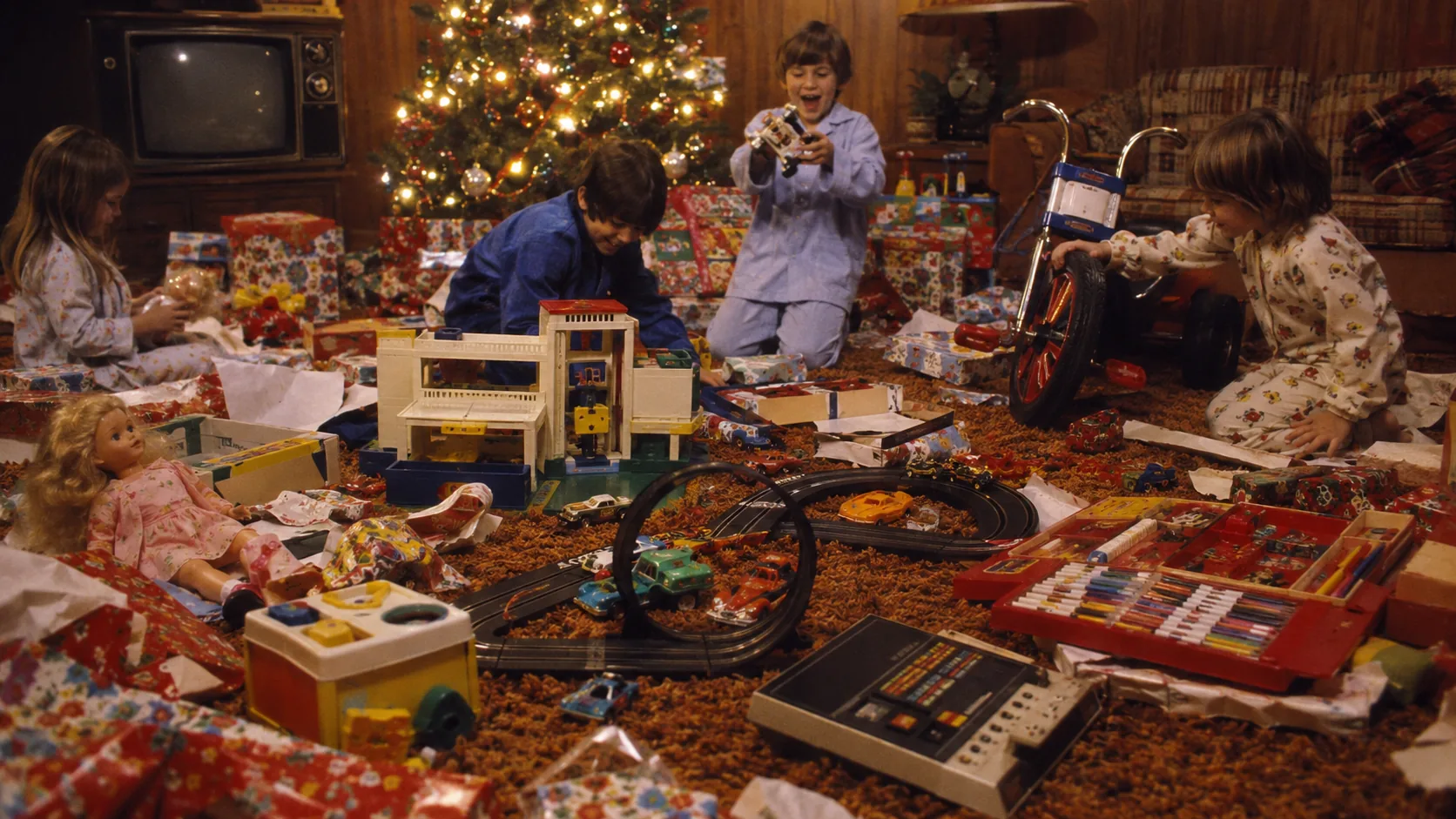
Before one-click ordering, package tracking, and somebody on social media announcing that the hot toy had already sold out, Christmas toy hunting meant department stores, catalog pages, layaway receipts, commercial-break panic, and parents trying to decode whether the box under the tree had the right size and rattle. These were the 70s toys that turned ordinary December households into low-budget logistics operations.
What Were the Hottest Christmas Toys of the 70s?
The hottest Christmas toys of the 70s included Nerf Ball, Weebles, UNO, Shrinky Dinks, Magna Doodle, Pet Rock, Stretch Armstrong, the Evel Knievel Stunt Cycle, Kenner Star Wars toys, Simon, Speak & Spell, Big Wheel, Barbie, Hot Wheels, and Atari 2600. The popular Christmas gifts of the 1970s tell the whole decade in miniature: foam balls and family-room games at the beginning, movie-driven action figures and electronic toys by the end, and plenty of dolls, cars, art kits, ride-ons, and beautifully questionable plastic ideas in between.
The ten annual countdowns tell the full toy story of each year. This Christmas rewind stays with the December frenzy: wish-list pressure, commercial buzz, store-hunt anxiety, catalog obsession, scarcity, and the gifts most likely to become the household emergency of the season. For the broader all-decade ranking, visit the 50 most iconic toys of the 70s.
Hottest Christmas Toys of the 1970s by Year
There was no clean national toy chart telling America what officially won Christmas. Anybody claiming that level of precision is putting a Santa hat on a guess. These yearly champions follow the strongest evidence already used across the Smells Like Gen X toy-year series: cultural footprint, shelf presence, commercial heat, novelty, staying power, and the ability to make children repeat the same request until adults considered relocating.
Before Online Shopping, Christmas Toy Hunting Was a Contact Sport
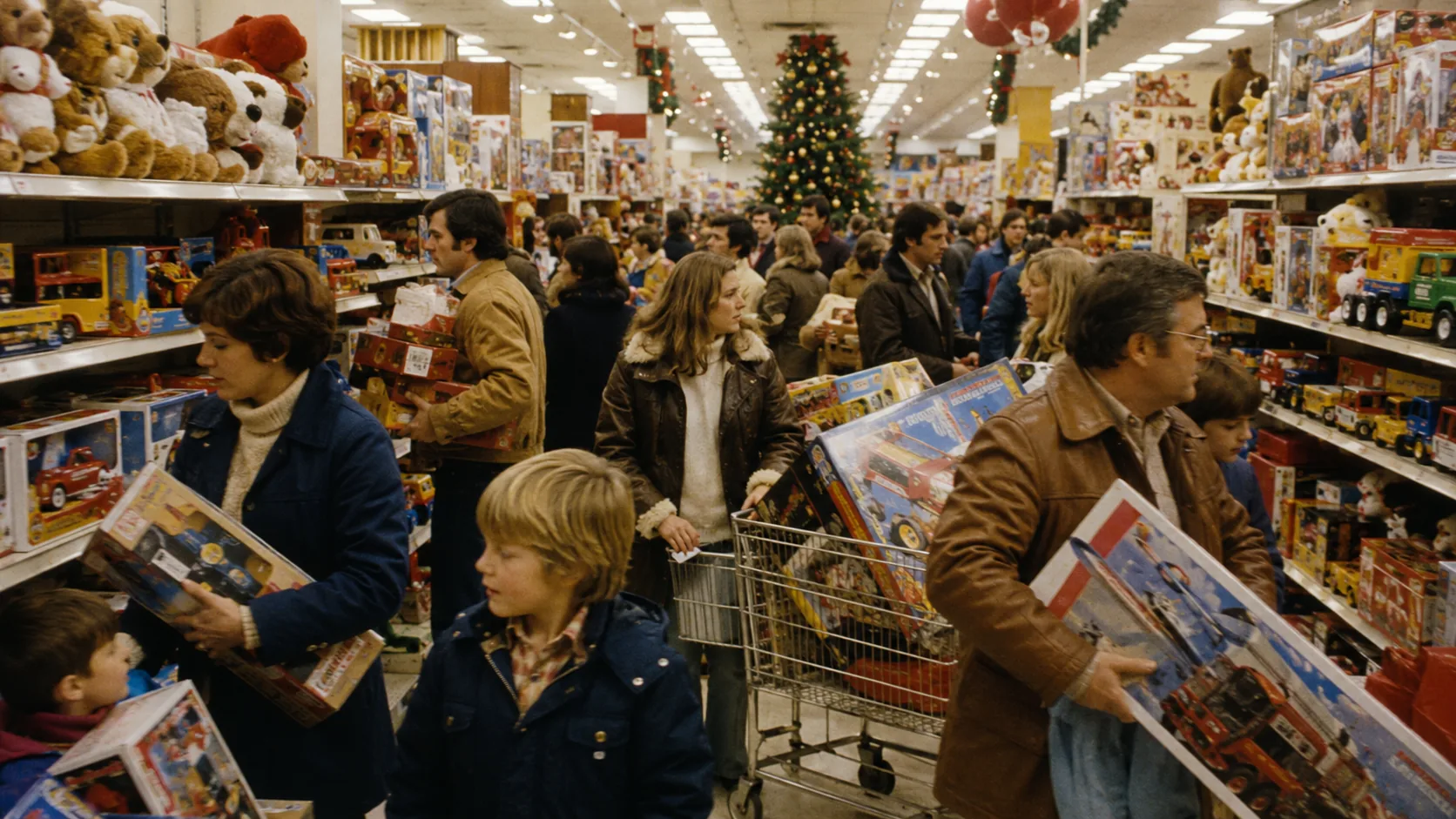
The modern holiday shopping experience can still be annoying, but it at least comes with inventory screens, shipping updates, and a search bar. The 70s offered a giant paper catalog, a television commercial designed to destroy household peace, a store clerk who might know something, and a parent staring at an empty shelf while silently reconsidering every decision that led to this moment.
The Catalog Was the Algorithm
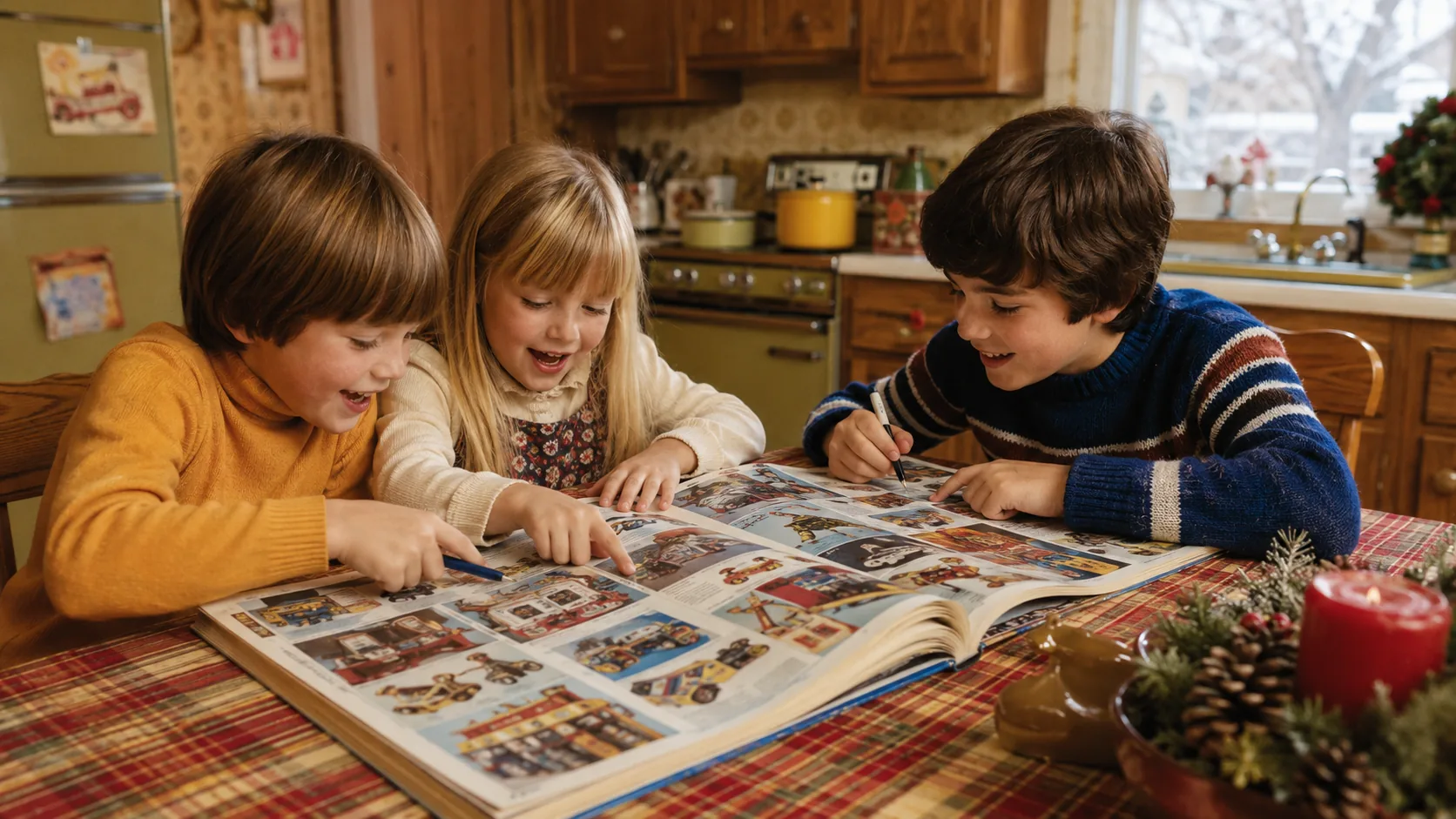
The toy pages arrived before the toy. Kids studied them, circled items, folded corners, changed rankings, and memorized the layout. The 70s toy catalogs and Sears Wish Books rewind digs into that annual ritual, but every Christmas toy here benefited from the same slow-burn anticipation.
Commercials Started the Emergency
A toy commercial rarely showed the ordinary version of play. It showed perfect launches, flawless drawings, dramatic camera angles, and children whose excitement level suggested they had just inherited a small country. The 70s toy commercial archive is where that sales mythology still lives.
The Store Hunt Was Real
Parents called stores, drove across town, checked department counters, worked layaway plans, and accepted substitutes only after every reasonable option had failed. A hot toy shortage did not become a trending topic. It became a rumor chain involving neighbors, coworkers, cousins, and one aunt who claimed she had seen three of them at Montgomery Ward.
Batteries Were a Separate Crisis
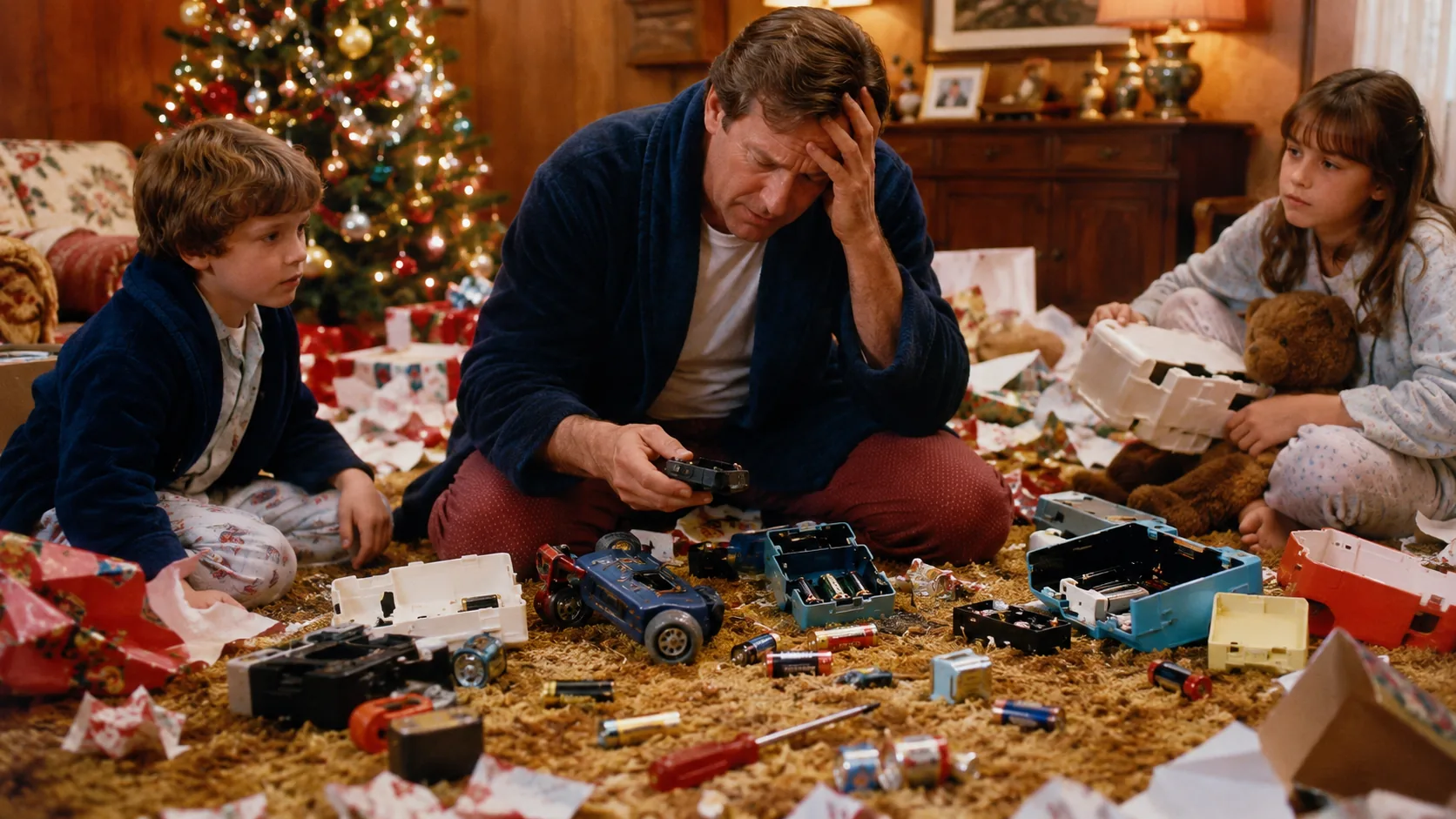
Late-decade electronics introduced a fresh Christmas hazard: opening the miracle toy and discovering the house did not contain the correct batteries. Nothing ages a parent faster than a child holding a silent electronic game while every store is closed and the junk drawer offers only one corroded D cell and six dead flashlight batteries.
What Made a 70s Toy Become a Christmas Hit?
The biggest holiday toys were not always the best toys in some calm, laboratory sense. Christmas demand was emotional, social, and heavily influenced by how well a product could dominate thirty seconds of television, one catalog spread, or the conversation on the school bus. A toy became hot when the object, the pitch, the timing, and the child’s imagination all landed at once.
It Had to Explain Itself Fast
The strongest 70s toys usually had a feature a kid could understand before the commercial reached the price. Stretch Armstrong stretched. Evel Knievel launched. Magna Doodle erased. Simon flashed a sequence and dared you to repeat it. Shrinky Dinks changed size in the oven. The appeal did not need a committee meeting.
That clarity mattered because children were building wish lists from brief encounters. A toy seen in a store window, catalog panel, or commercial had to create instant mental play. The child needed to imagine what would happen after the box opened. When the action was obvious, the desire had somewhere to attach.
The Catalog Picture Had to Survive for Weeks
A Christmas catalog image did not disappear after a scroll. It stayed in the house. Kids returned to it, compared it with neighboring toys, stared at the accessories, and built a version of ownership before the adults had agreed to anything. The page gave the toy time to grow inside the imagination.
That long anticipation favored toys with strong silhouettes and visible systems: a giant track layout, a furnished dollhouse, a stunt set, a vehicle fleet, or a glowing electronic game. The catalog could make a toy look like a complete world even when the actual box contained three important pieces and an ambitious illustration.
The Commercial Needed One Unforgettable Shot
The best toy ads understood that one image could carry the entire sale. A motorcycle cleared a ramp. A figure stretched across two children. Colored lights pulsed in a dark room. A tiny cake emerged from a child-sized oven. A car flew through a loop at a speed no real living-room setup would reproduce.
That shot became the memory kids repeated to parents. Details such as setup time, missing batteries, lighting, camera cuts, and the suspicious competence of the children in the commercial were left out of the negotiation. The promise was clean. Reality could explain itself after Christmas.
Parents Needed a Reason to Say Yes
Children supplied urgency, but adults controlled transportation and money. A hot toy often benefited from an argument that sounded responsible: the game used memory, the kit encouraged creativity, the doll taught care, the building set developed skills, or the electronic device helped with spelling.
Some toys barely attempted this defense. Pet Rock relied on comedy. Star Wars relied on cultural surrender. Stretch Armstrong relied on the fact that the child had already asked thirty-eight times. Still, the parent justification helped many products cross the final distance from catalog circle to shopping cart—except the cart had metal wheels and one bad corner.
The Gift Had to Feel Bigger Than One Afternoon
Christmas favorites created repeat play or future expansion. Barbie added clothes and rooms. Hot Wheels added cars and track. G.I. Joe added gear and missions. Star Wars added characters, ships, and locations. Atari added cartridges. Even a simple game like UNO created endless rematches because nobody accepted the previous result.
This is why expandable toy systems became so powerful. The first gift could be generous while quietly preparing the next birthday, allowance purchase, and Christmas list. The child saw a world growing. The company saw a customer relationship with several convenient holidays attached.
The Box Had to Win the Moment
Christmas morning gave packaging unusual importance. The box sat under lights, beside ribbons, surrounded by relatives, and had seconds to announce whether something serious had happened. Large dimensions, dramatic artwork, windows showing the toy, and the sound of loose parts could turn package inspection into forensic science.
Kids learned to read shapes. A long flat box suggested track or a game. A tall box suggested a doll. A heavy rectangle created electronic hope. Parents tried disguises, double-boxing, and strategic placement behind furniture, but children had spent years developing exactly one professional skill: identifying presents that might belong to them.
How Parents Found the Hottest 70s Christmas Toys
Kids remember the wish. Parents remember the operation. Getting a hot toy into the house could involve budgeting, layaway, several store visits, strategic secrecy, assembly after midnight, and the discovery that the manufacturer had included every part except the one piece clearly shown holding the entire thing together.
Layaway Was the Quiet Holiday Engine
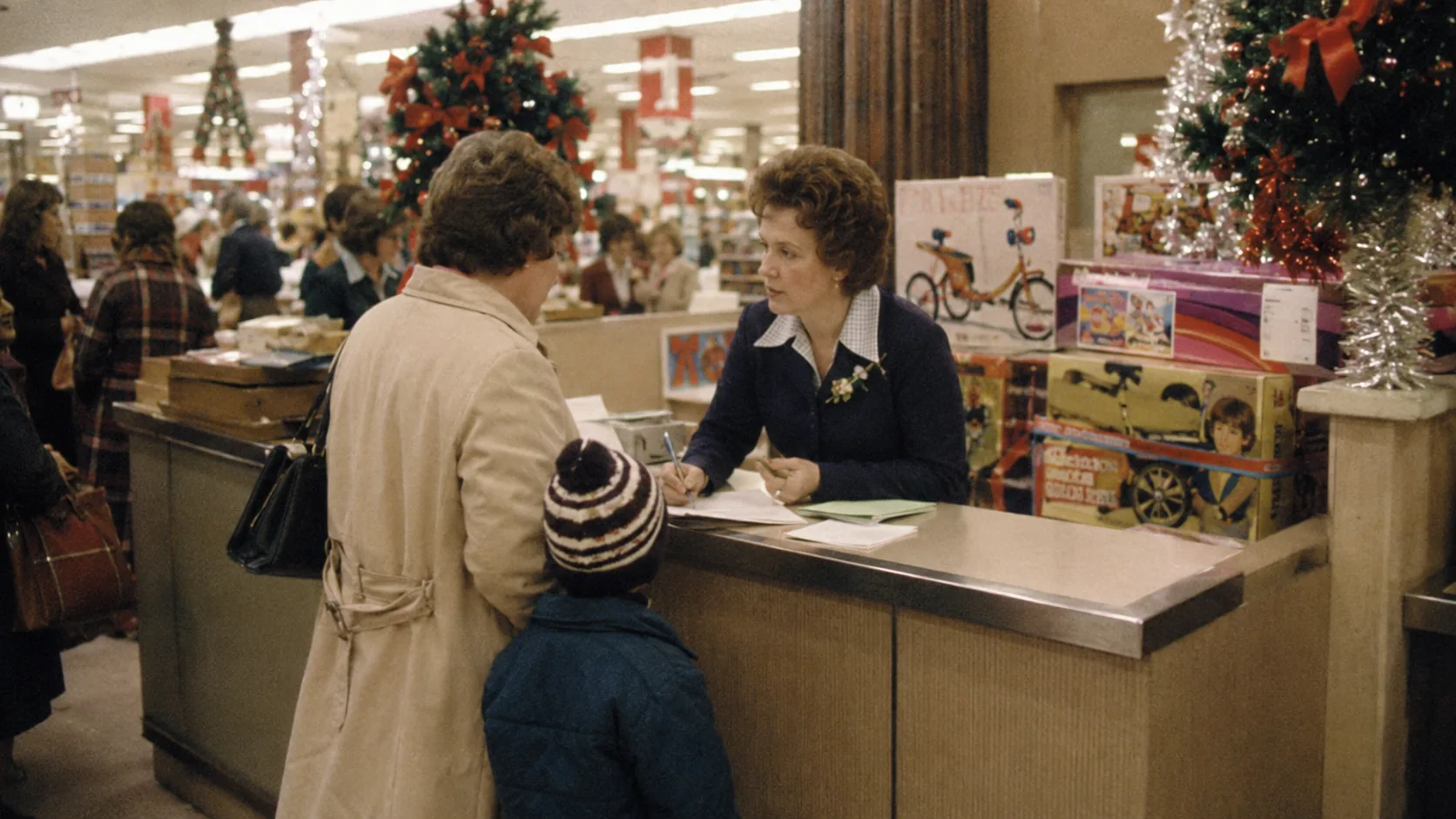
Large Christmas gifts often arrived through planning rather than one dramatic December purchase. Layaway allowed families to reserve toys and pay over time, which made expensive playsets, ride-ons, dolls, and electronics more reachable without pretending the household budget had suddenly discovered oil.
That system also added suspense for adults. The toy was technically secured but not yet home. Receipts had to be kept. Payments had to be made. Pickup had to happen before the deadline. Children saw a miracle under the tree; parents saw a successful multi-week administrative project.
Store Information Traveled by Rumor
There was no reliable inventory page announcing that six units remained at a store fourteen miles away. Parents called departments, asked clerks, checked newspaper ads, and passed information through work, family, and neighborhood networks. One confirmed sighting could redirect an entire Saturday.
The rumor was not always good. “They had some this morning” was the 70s version of a broken tracking link. By the time a parent reached the counter, the shelf could be empty and the clerk might offer a vague suggestion to try another location that had already received the same wave of desperate adults.
The Substitute Gift Required Diplomacy
When the exact hot toy could not be found, parents faced a dangerous decision: buy the closest available alternative or abandon the category entirely. A substitute might be objectively good and still fail because children had spent weeks memorizing the commercial, the color, the name, and the exact shape of the desired box.
Adults attempted persuasive language such as “This one does even more” or “They were out of the other kind.” Children heard only that Christmas had become a negotiation. Sometimes the substitute won them over. Sometimes it became the toy equivalent of a backup singer standing where the headliner was supposed to be.
Gift Hiding Became Household Strategy
A large toy could not simply disappear. Parents used closets, car trunks, basements, attics, neighbors’ houses, and rooms children had been warned not to enter. The secrecy became harder when the package was the size of furniture or made a recognizable sound whenever moved.
Children, meanwhile, treated the weeks before Christmas as an intelligence assignment. They noticed locked doors, unusual errands, new boxes, and adults whispering badly. The surprise survived mostly because parents controlled transportation and children eventually had to sleep.
Assembly Started After the Kids Went to Bed
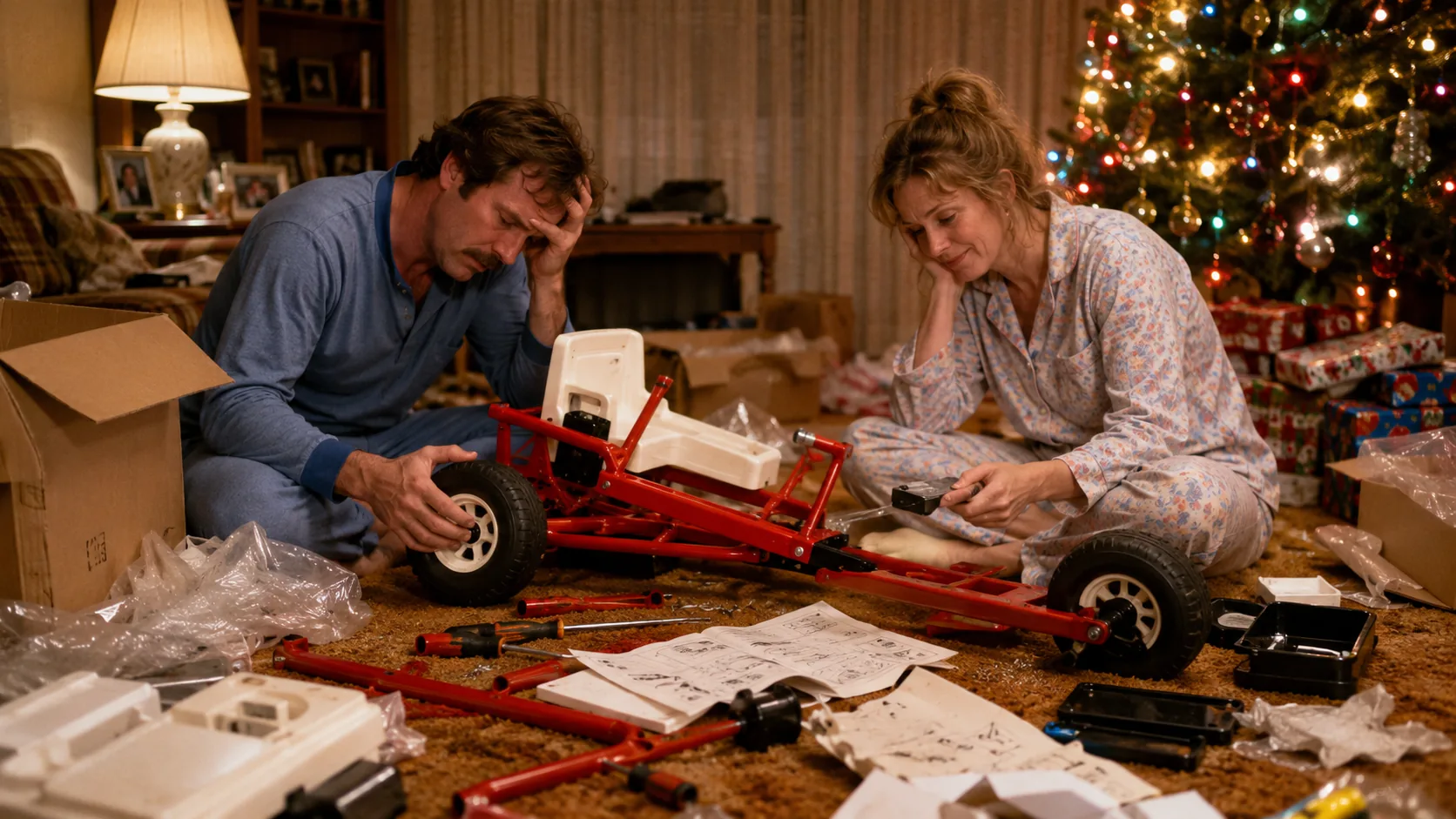
Ride-ons, track sets, playsets, furniture, and electronic systems often required an adult to begin a second shift on Christmas Eve. Instructions unfolded across the floor. Screws rolled under appliances. Decals adhered to the wrong side. One part refused to fit until an increasingly personal amount of force was applied.
The goal was not perfection. The goal was to make the toy appear ready when the child entered the room. Parents tightened, adjusted, tested, and occasionally accepted a mysterious leftover piece as long as the main structure remained upright through breakfast.
Christmas Morning Became Technical Support
Once the gift opened, adults became the help desk. They installed batteries, threaded parts, read rules, opened packages designed to resist human hands, and explained why a commercial’s dramatic stunt did not happen automatically on the first attempt.
This was especially brutal with electronics. The child expected the future. The parent faced switches, channel settings, battery compartments, and cables while several people offered advice based on nothing. When the lights finally flashed or the game appeared on the television, the room reacted as though a small spacecraft had achieved orbit.
1970 Christmas Toys: Nerf Makes the Living Room Fair Game
Christmas 1970 still belonged to the classic toy box: dolls, trucks, cars, hands-on activities, and objects that expected the kid to create most of the entertainment. The breakthrough was not a screen or a franchise. It was permission. Nerf took the thing adults were always telling kids not to do indoors and turned it into a product with a smiling commercial behind it.
Nerf Ball
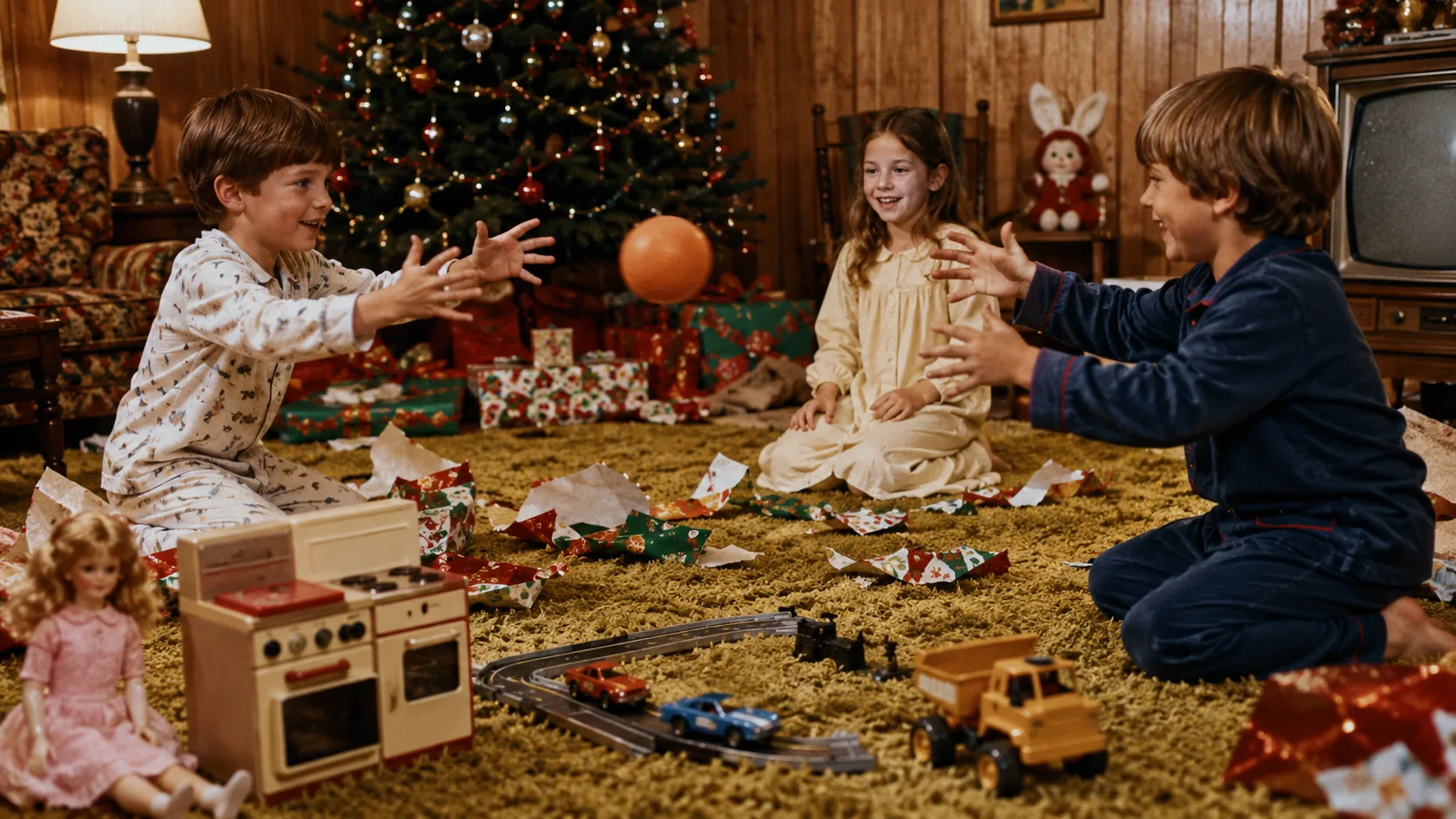
Nerf Ball was one of those beautifully simple ideas that changed the geography of childhood. Before foam sports toys, throwing a ball in the house was less a pastime than a direct attack on lamps, framed photographs, and parental blood pressure. Nerf softened the evidence. Suddenly the hallway became a football field, the basement became an arena, and the living room was available whenever adults briefly stopped paying attention.
That made it a terrific Christmas gift. It looked modest under the tree, but the play started immediately and did not require assembly, instructions, or an adult willing to locate a screwdriver. A child could open it, throw it at a sibling, and begin testing the limits of the advertising claim before the wrapping paper had been gathered. That kind of immediate payoff is Christmas-morning gold.
Nerf also represents the early decade perfectly. It was physical, social, repeatable, and not burdened with a fictional universe. The toy did not tell you who to be. It just made indoor chaos slightly less prosecutable. For more toys built around movement, pavement, and “watch this” confidence, visit the 70s outdoor-toy rewind.
Christmas-morning memory: The first throw was careful. The second was harder. By the fifth, somebody had invented a game involving the couch, a doorway, and rules that changed whenever the older kid started losing.
Barbie
The Gift That Created Ten More Gift Ideas
Barbie entered Christmas 1970 as much more than a doll. She was a growing system of clothes, furniture, careers, friends, vehicles, and tiny household objects that could turn one present into an entire future list. Parents did not merely buy Barbie. They stepped onto an accessory escalator that kept moving long after the ornaments came down.
The holiday appeal was obvious. A large Barbie package looked impressive under the tree, and even a smaller outfit or accessory could create a dramatic reveal for a child already invested in the world. Barbie understood a truth the toy industry would spend decades exploiting: once the character is loved, almost anything connected to the character can become Christmas-worthy. The larger doll-and-house story continues in Dolls, Houses & Domestic Drama.
Hot Wheels
Orange Track, Tiny Cars, Huge Plans
Hot Wheels had the ideal holiday combination: small collectible gifts for stockings and larger track sets capable of dominating the room. One car could be exciting. A box full of track, curves, launchers, and loops looked like a complete transportation department had arrived under the tree.
The best part was how quickly Christmas morning became engineering. Furniture turned into elevation. Books became ramps. Hallways became straightaways. Adults who had spent the night assembling something complicated could now watch a child ignore it while adjusting a strip of orange track for forty-five minutes. That same floor-level engineering runs through 70s toy cars, tracks, garages, and carpet cities.
Tonka Trucks
The Present That Felt Like Equipment
Tonka trucks carried real weight, and that mattered. They did not feel like delicate toys pretending to be machines. They felt like machines that had agreed to be slightly smaller. A big metal dump truck under the tree had authority. It promised sandbox projects, driveway hauling, and the ability to move a pile from one meaningless location to another with complete seriousness.
Christmas also magnified the durability fantasy. Adults liked a toy that looked built to last, and kids liked something they could push, load, crash, and possibly sit on despite explicit instructions. Tonka was the rare gift that could look respectable to a parent and still survive the child who interpreted “heavy duty” as a personal challenge.
Easy-Bake Oven
Tiny Cake, Full-Ceremony Importance
Easy-Bake Oven had one of the strongest Christmas promises in the aisle: open the box, follow the ritual, and produce something edible. The cake might have been the size of a coaster and required the patience of a federal permitting process, but it was real. That separated Easy-Bake from ordinary pretend appliances.
The toy also turned Christmas morning into an event with stages. There was setup, mixing, waiting, inspecting, and finally presenting a tiny dessert to adults who were expected to react as if a new bakery had opened. It fit perfectly beside the decade’s craft kits and kitchen-table activity toys, where making the thing was at least half the fun.
The full 1970 countdown includes Lite-Brite, G.I. Joe Adventure Team, Etch A Sketch, Play-Doh, and Lincoln Logs along with the five Christmas heavyweights above.
See the Top Toys of 19701971 Christmas Toys: Weebles Wobble Into the Wish List
By Christmas 1971, the toy aisle was still heavily analog, but it was learning how much power could live inside one unforgettable gimmick. Weebles turned a simple physical trick into a recognizable world of figures and playsets. It was preschool toy design with a commercial line so sticky that adults can still hear it decades later without anyone pressing play.
Weebles
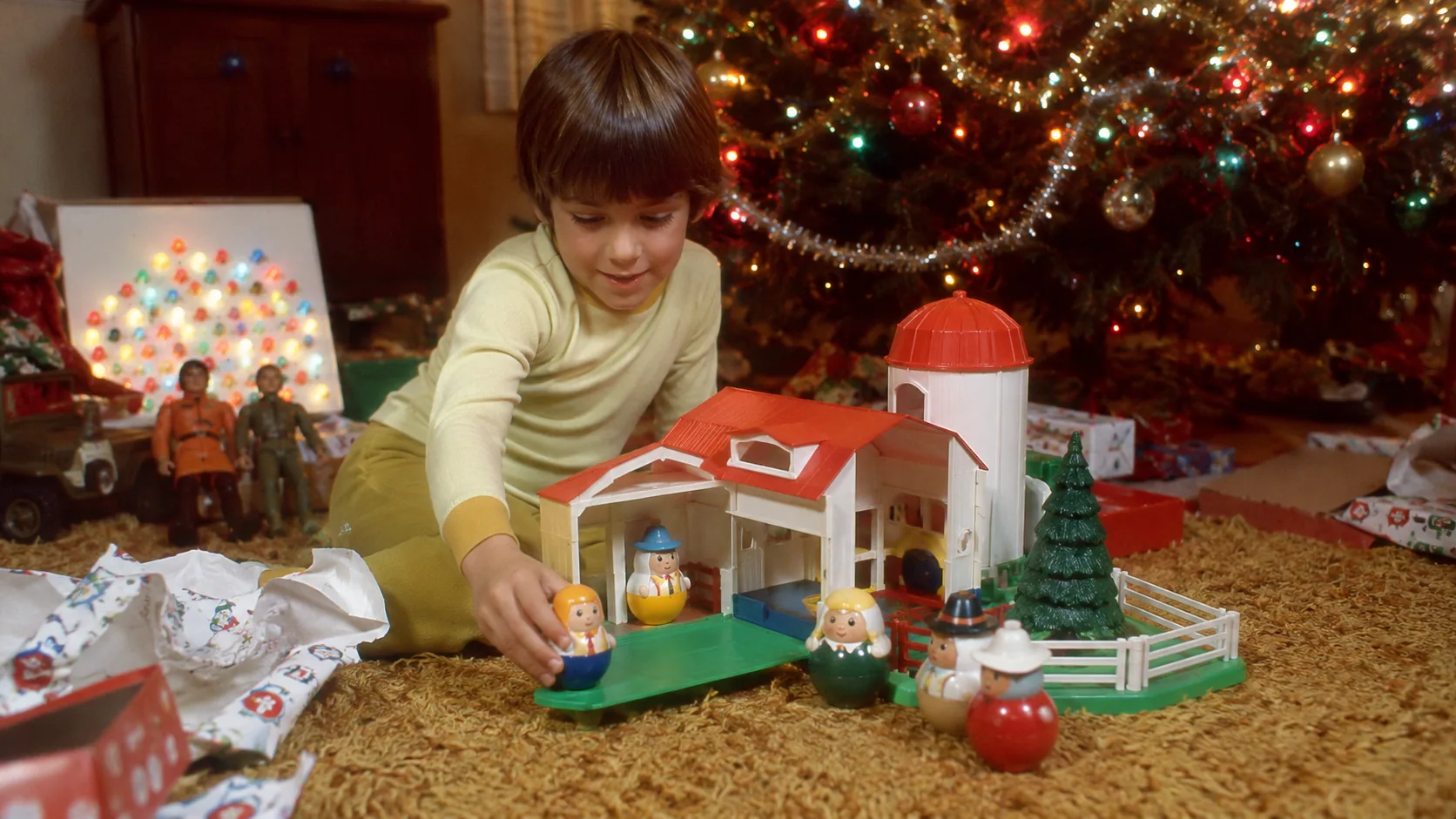
Weebles were built around the kind of toy feature that could be demonstrated in two seconds and remembered forever. Push one over, let go, and watch it return. That was the whole trick, and it was enough. Kids understood it instantly. Parents understood why it would survive. Commercial writers received a slogan gift from the universe.
As a Christmas present, Weebles also scaled beautifully. A single figure was amusing, but playsets turned the wobble into a neighborhood, a family, or a whole little civilization where nobody had knees and falling down had been removed from the laws of physics. The packaging looked colorful and active, and the pieces were chunky enough to feel substantial in small hands.
The deeper appeal was repeatability. Weebles invited the same action over and over, yet the figures also supported ordinary pretend play. That combination kept them from becoming a one-joke object. They had a gimmick, but they also had a world. The early-decade love of chunky figures and floor-sized environments also runs through the dolls, houses, and tiny family worlds of the 70s.
Christmas-morning memory: Every child immediately tried to prove the slogan wrong. Weebles were shoved, slapped, rolled, launched, and subjected to tests that would have gotten a real person a medical helicopter.
Barbie
Still Running the Miniature Economy
Barbie remained a Christmas force because the line did not depend on novelty. It depended on renewal. New outfits, rooms, accessories, friends, and lifestyle additions kept the gift possibilities fresh even when the central doll was already living in the house.
That made Barbie easy to shop for and dangerous to underestimate. A parent could buy one impressive item, a relative could add clothes, and a stocking could hold the tiny accessories destined to vanish into the carpet. Christmas did not merely expand the collection. It often created an entirely new chapter in whatever long-running bedroom-floor drama had been happening since summer.
Hot Wheels
The Track System Kept Growing
Hot Wheels stayed hot because every new car or track piece could attach itself to what a kid already owned. That made the line ideal for repeat Christmas business. One year brought the cars. Another brought the loop, launcher, carrying case, or larger set that suddenly made the old pieces feel new again.
The physical play also remained unbeatable. Kids could build, test, crash, blame the track, adjust the track, and start over. The line rewarded tinkering without looking educational, which is the perfect arrangement. Nobody wants a Christmas toy announcing that it plans to improve them.
G.I. Joe Adventure Team
Missions, Gear, and Backyard Emergencies
G.I. Joe Adventure Team made Christmas feel bigger by selling the mission, not just the figure. Gear, clothing, vehicles, animals, and rescue scenarios turned the toy into an expandable adventure system. One present created a hero. The next several created his workload.
The line fit the early 70s because it still depended on open-ended invention. A child did not need a movie plot to explain what happened next. The backyard supplied cliffs, jungles, oceans, and several imaginary disasters before lunch. That shift from open-ended adventurers to licensed TV and movie heroes runs through 70s action figures and character toys.
Lite-Brite
A Small Light Show Under the Tree
Lite-Brite looked like creativity had finally received electricity. The toy asked kids to do the work—placing peg after peg—but rewarded them with a glowing picture that felt far more dramatic in a darkened room than the materials had any right to be.
Christmas amplified that theater. The first picture was usually attempted immediately, while the floor filled with wrapping paper and adults tried not to step on bright plastic pegs. Lite-Brite occupied the sweet spot between craft activity and visual spectacle, making it one of the era’s best examples of a simple idea elevated by the reveal.
The complete 1971 ranking also includes Etch A Sketch, Play-Doh, Spirograph, Lincoln Logs, and Tinker Toys—the older analog backbone still holding its ground.
See the Top Toys of 19711972 Christmas Toys: UNO Deals the Family a New Grudge
Christmas 1972 leaned into replay. The strongest gifts were not necessarily the largest objects. They were the things that could come back out after dinner, survive a visit from cousins, and create instant competition without requiring anyone to read a manual the size of a phone book.
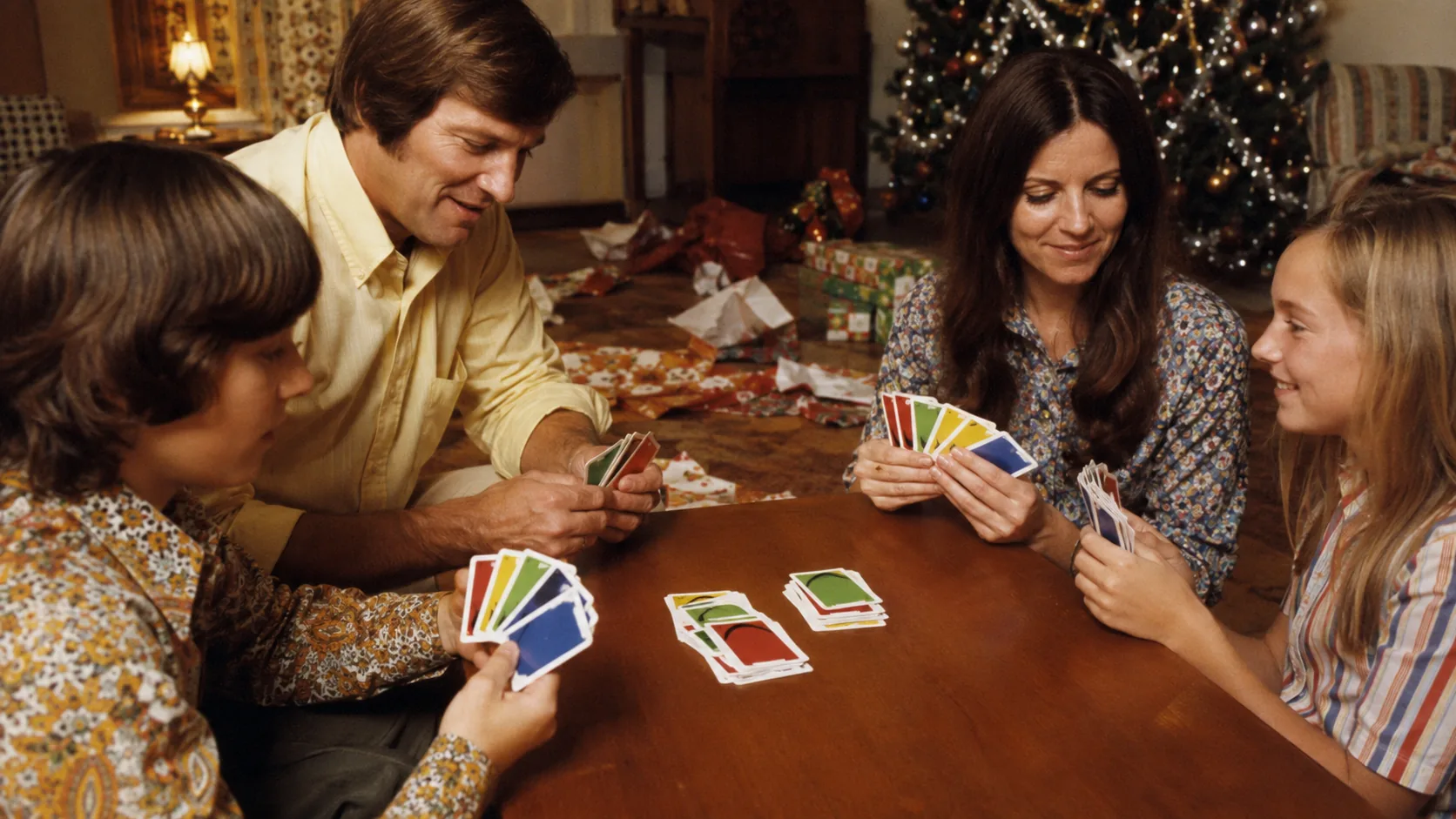
UNO
UNO was a nearly perfect holiday gift because the rules were easy, the colors were bright, and the game could turn a peaceful room into personal betrayal in under ten minutes. It was portable, affordable, and simple enough for mixed ages, which made it ideal for the long stretch of family togetherness when adults were tired and children still had dangerous amounts of energy.
The game also benefited from Christmas timing. Card games thrive when people are already gathered, food is everywhere, and nobody has anywhere else to be. UNO did not need a dedicated play area. It could happen at the kitchen table, on the floor, or on a tray balanced between chairs while somebody complained about the Draw Four rule as though Congress had personally written it.
Its staying power came from speed and rematch energy. A loss did not end the session; it created an immediate demand for another round. That is exactly what a holiday toy needs. UNO did not produce one big moment and fade. It kept producing smaller moments until everyone had developed a private list of relatives they no longer trusted. The larger family-table universe lives in Board Games Took Over the Room.
Christmas-morning memory: Somebody always put down the wrong card, somebody else insisted the rule worked differently at their house, and one adult eventually said, “Just play,” which has never resolved an argument in recorded history.
Barbie
A Reliable Star in a Changing Aisle
Barbie remained near the top because she could absorb almost any cultural mood and translate it into a new reason to buy. Fashion shifted, lifestyles shifted, and the toy line simply added another outfit, room, role, or accessory that made the whole world feel current again.
At Christmas, that adaptability mattered. Barbie could be the main gift, a supporting gift, or the reason several different relatives accidentally bought items that all worked together. She was less a single toy than a holiday coordination system nobody had formally agreed to use.
Hot Wheels
Stocking-Size Collecting, Living-Room Scale
Hot Wheels remained a gift-list powerhouse because the cars were small enough to collect and the track systems were large enough to create spectacle. That allowed the brand to live at several price levels without losing its core appeal.
A child opening one car could still be thrilled. A child opening a full track set could begin rearranging the room before breakfast. The line made Christmas feel expandable, which is one reason it kept returning year after year without needing to reinvent the basic pleasure of speed.
Spirograph
Instant Design Genius, Until the Pen Slipped
Spirograph offered one of the era’s most satisfying creative deceptions. The equipment made elaborate geometric designs possible even for children whose ordinary drawings suggested the family dog had held the pencil. When the gears stayed in place, the results looked precise, adult, and suspiciously impressive.
That made it a strong Christmas gift for parents who wanted creativity without a bucket of glue. It felt artistic, slightly educational, and still genuinely fun. Of course, one tiny slip could destroy twenty minutes of work, which taught patience in the same way a flat tire teaches transportation.
G.I. Joe Adventure Team
The Mission System Keeps Expanding
Adventure Team remained holiday-friendly because the line was built to grow. A new outfit, vehicle, rescue setup, or piece of gear could refresh the entire collection. That is the kind of repeat-purchase logic toy companies dream about and parents slowly discover after the first figure enters the house.
The line also preserved a looser kind of action play. The figures had missions, but children still supplied most of the plot. That kept G.I. Joe flexible in a year when family games and creative toys were becoming more prominent. One aisle could hold social competition, geometric art, fashion worlds, and a bearded adventurer preparing to rescue a plastic tiger.
The complete 1972 countdown adds Etch A Sketch, Lite-Brite, Play-Doh, Weebles, and Lincoln Logs to the mix.
See the Top Toys of 19721973 Christmas Toys: Shrinky Dinks Turn the Oven Into a Laboratory
Christmas 1973 loved transformation. The hottest gift energy came from toys where something visibly happened: plastic shrank, patterns appeared, pictures glowed, cars launched, and ordinary materials became more interesting after a child interfered with them. It was still analog, but the reveal was getting stronger.
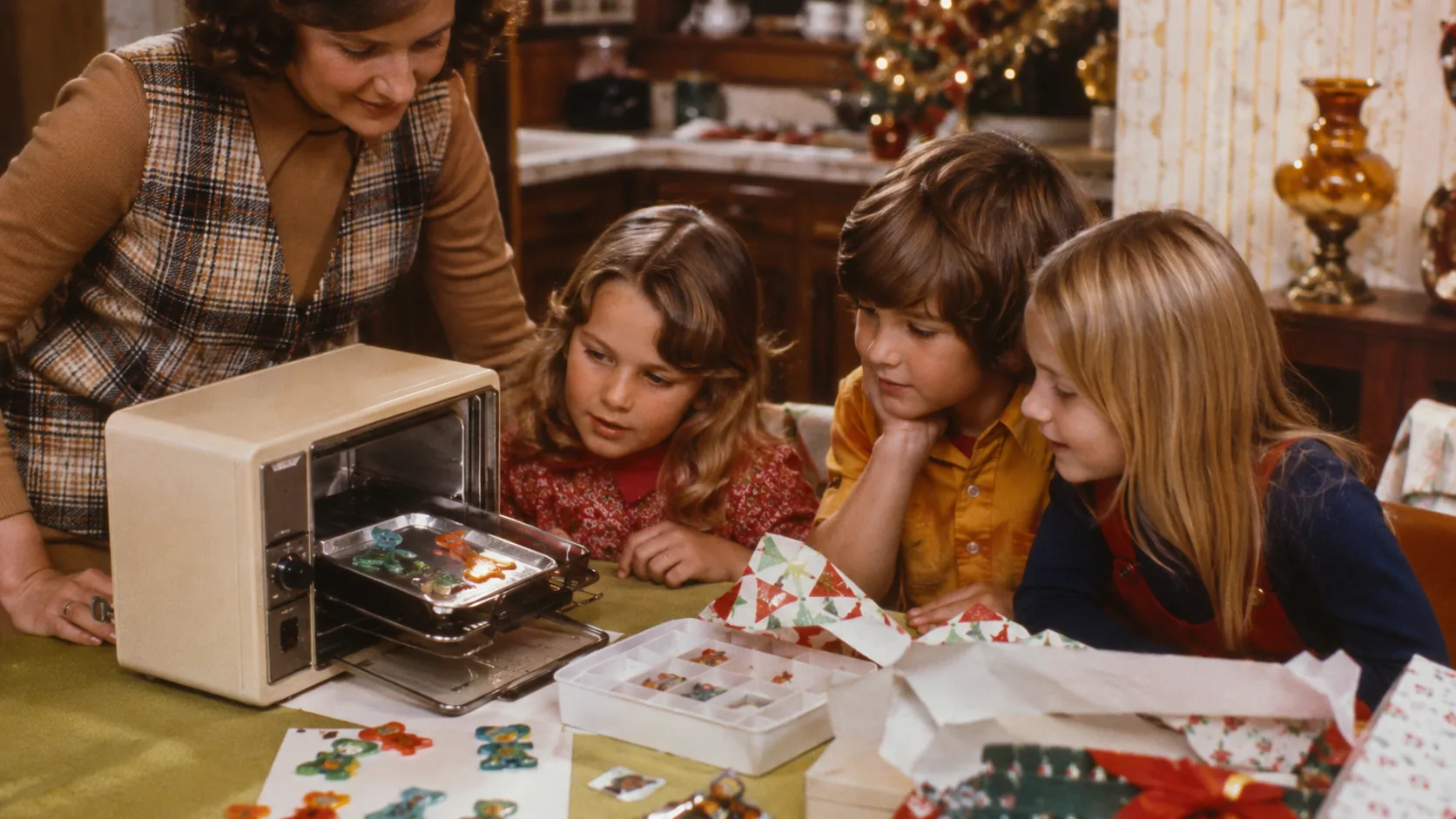
Shrinky Dinks
Shrinky Dinks made the household oven part of the toy. That alone gave the activity a seriousness ordinary craft kits could not match. You colored the plastic, cut it out, watched an adult handle the dangerous part, and then stared through the oven door while the piece curled, twisted, and appeared to be destroying itself before flattening into a tiny hardened version.
The transformation was the magic. Kids did not merely make an object; they watched it pass through a dramatic stage where success looked exactly like failure. That created suspense, and suspense makes a Christmas toy feel bigger. The process also had enough steps to turn the gift into an afternoon rather than a five-minute distraction.
Shrinky Dinks fit the early-70s craft culture while also hinting at the decade’s growing obsession with visible features. The toy did something. It changed in front of you. That phrase—“watch what it does”—would become one of the most powerful sales tools of the entire toy decade. It also guaranteed that the kitchen was now involved in whatever mess the kids had started at the table.
Christmas-morning memory: The best part was the moment the plastic curled into a horrifying little wad and every child in the room became certain the project was ruined. The second-best part was the adult pretending this had always been under control.
Barbie
Fashion Play Refuses to Leave the Top Tier
Barbie stayed near the front of the Christmas line because she offered continuity. New toys had novelty, but Barbie had history inside the child’s room. Every added piece connected to stories, characters, and routines already in progress.
That made a Barbie gift feel both new and familiar. The new outfit or accessory arrived with an immediate purpose because the child already knew the cast, the house, and the current drama. Christmas morning did not start the play from zero. It dropped a plot twist into a series that had been running all year.
Hot Wheels
Still Faster Than Household Permission
Hot Wheels continued to own the kinetic side of the holiday. The cars were built for instant testing, and the track turned any available elevation into an experiment. Children did not see a chair, shelf, or staircase. They saw infrastructure.
Christmas added fresh cars and components to the system, which meant old track suddenly mattered again. That ability to reactivate earlier purchases is one of the brand’s great strengths. A new vehicle could make last year’s setup feel current without anyone admitting they were still doing the same thing on the same carpet.
Spirograph
Precision Art With Emotional Risk
Spirograph stayed strong because the reward looked more sophisticated than the labor. A child could make layered geometric patterns that resembled professional design, provided nobody bumped the table, touched the paper, moved the gear, or breathed with unnecessary enthusiasm.
The set looked substantial as a gift, offered many combinations, and supported repeat use. It also satisfied adults who liked the idea of an artistic present but did not want paint on the curtains. Spirograph was creativity with guardrails, even if the guardrails occasionally slipped and ruined everything.
G.I. Joe Adventure Team
Still Finding New Emergencies to Solve
G.I. Joe held on because adventure play remained one of the toy aisle’s deepest wells. A rescue mission or expedition could begin with one figure and expand through whatever gear, vehicles, animals, and household objects were available.
The line’s Christmas power came from that expansion. New equipment looked meaningful because it changed the mission possibilities. A child could receive a single accessory and treat it like a strategic upgrade. Adults saw plastic gear. Kids saw the difference between an ordinary afternoon and a dangerous expedition behind the sofa.
The full 1973 list also includes Lite-Brite, Etch A Sketch, Play-Doh, Weebles, and Lincoln Logs.
See the Top Toys of 19731974 Christmas Toys: Magna Doodle Cleans Up the Art Table
Christmas 1974 brought a subtle shift toward cleaner, faster, more resettable play. Kids still wanted to draw, compete, care for dolls, and make things, but the best gifts reduced the setup or made the payoff easier to repeat. The toy aisle was not becoming less physical. It was becoming more efficient.
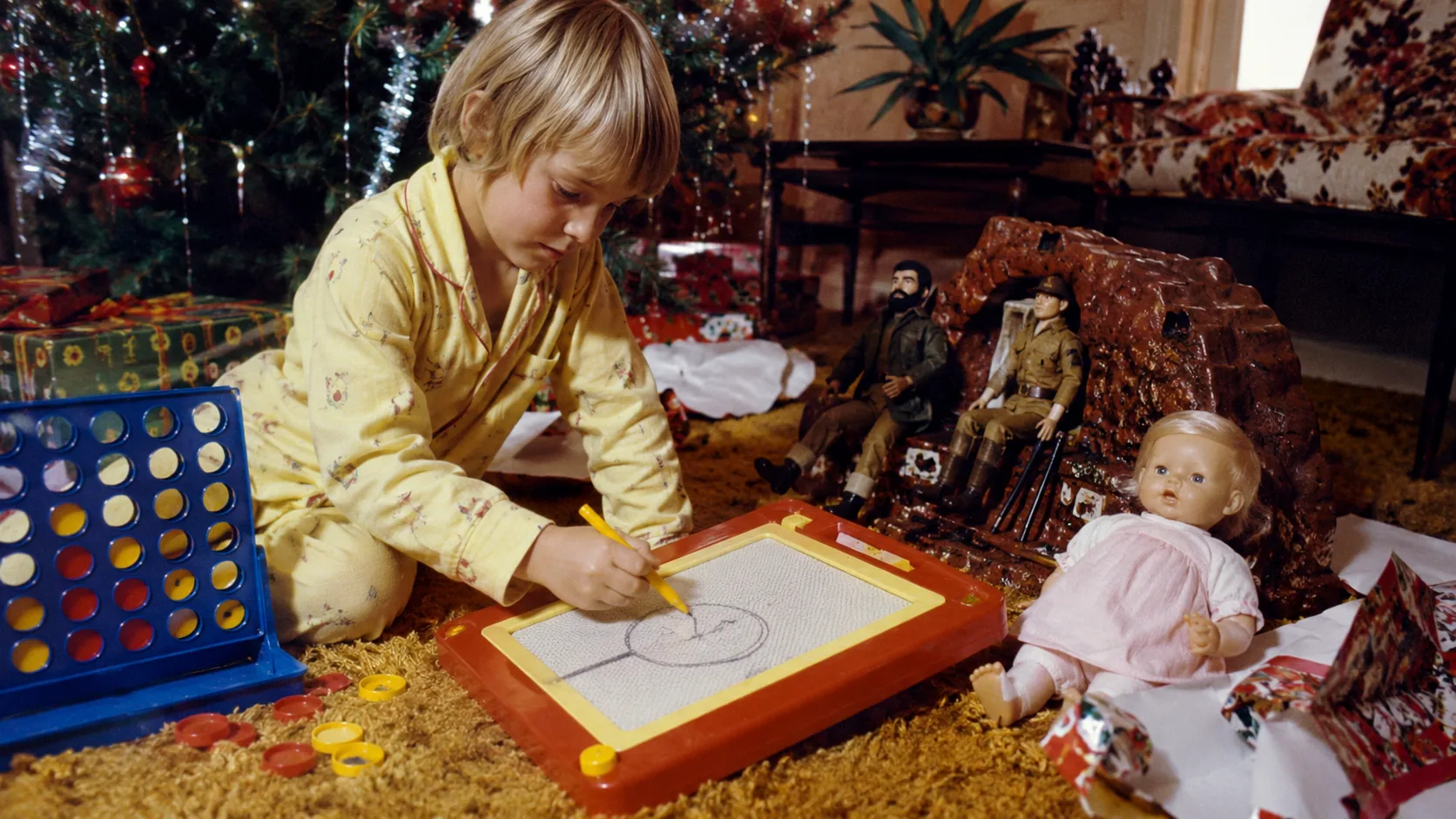
Magna Doodle
Magna Doodle made drawing feel endless. There was no stack of paper to run through, no crayon box to dump, and no evidence left behind once the slider erased the screen. A child could draw, judge the result, destroy it, and begin again in seconds. That made the toy almost perfectly tuned for repeat play.
As a Christmas gift, it also delivered immediate independence. Kids did not need an adult to sharpen anything, pour anything, or locate replacement supplies. The screen was ready. The stylus was attached. The reset mechanism provided the rare thrill of making a mistake disappear without consequences, a feature adulthood has still failed to reproduce.
Magna Doodle also reflected a broader toy trend: the mechanism itself was becoming part of the sales pitch. The drawing mattered, but so did the erase. Children could demonstrate it to relatives. Commercials could show the before-and-after in seconds. The toy took a familiar activity and added one clean feature strong enough to make it feel new.
Christmas-morning memory: The first masterpiece lasted eight seconds because the younger sibling wanted to see the slider work. Family diplomacy did not improve from there.
Connect Four
Fast Strategy and Plastic Revenge
Connect Four was built for holiday gatherings. The rules took almost no time to explain, the pieces made a satisfying sound, and every game created the illusion that the loser could fix everything with one immediate rematch.
The vertical board also gave the game visual drama. Everyone could see the threat developing, which allowed siblings to provide unsolicited strategy and adults to say “I saw that coming” after it was too late to be useful. Connect Four turned a small amount of plastic into a dependable family-room conflict machine.
Baby Alive
Doll Play Becomes a Schedule
Baby Alive raised the commitment level of doll play. Feeding and changing added procedure, props, and a stronger illusion of care. This was not a doll content to sit quietly on the bed. It arrived with needs.
That realism made the toy especially powerful at Christmas. Opening the box felt like receiving a responsibility, which children interpreted as maturity until the first cleanup. Baby Alive belonged to the larger 70s doll world, where miniature domestic life could become more complicated than the real household.
Shrinky Dinks
The Transformation Trick Still Works
Shrinky Dinks remained a strong gift because the reveal never stopped being fun. Each design created another chance to watch the plastic curl, shrink, and recover. The kit did not depend on one surprise; it reproduced the surprise every time.
Christmas also gave the activity a captive audience. Relatives were nearby, the oven was already working overtime, and kids had new designs to display with the confidence of inventors presenting a major polymer breakthrough.
G.I. Joe Adventure Team
The Analog Hero Still Has Work to Do
Even as cleaner art toys and quick family games gained ground, G.I. Joe remained a premium action gift. The figures, gear, and vehicles offered size and presence in a way smaller toys could not match.
Adventure Team also showed how resilient open-ended action play could be. The line did not need one exact story. It could absorb the backyard, the basement, and whatever television plot a child had half understood. That flexibility kept it Christmas-ready while the aisle around it became more specialized.
The complete 1974 countdown also includes Weebles, Lite-Brite, Play-Doh, Hot Wheels, and Barbie.
See the Top Toys of 19741975 Christmas Toys: Pet Rock Proves the Box Can Be the Toy
Christmas 1975 was the year holiday demand became openly weird. The toy aisle still had dolls, games, cars, and action figures, but the Pet Rock showed how completely packaging, novelty, and cultural timing could overpower the basic question, “What does it do?” It did almost nothing. America handled that problem by buying it anyway.
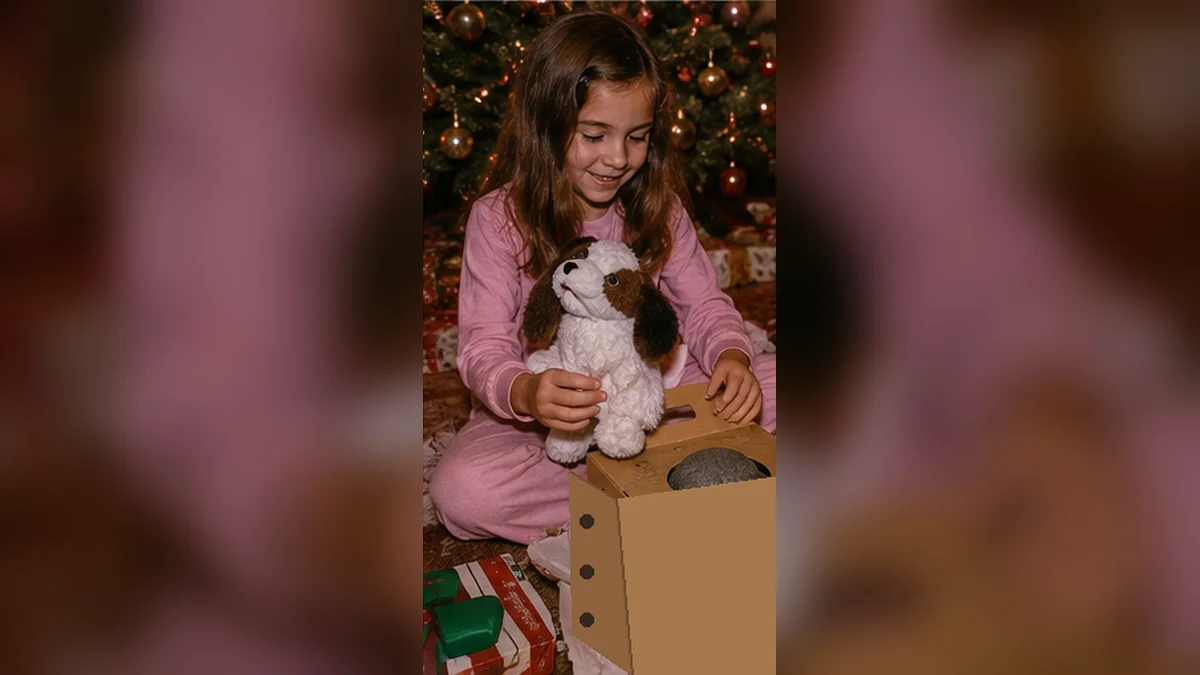
Pet Rock
The Pet Rock was the perfect 1975 novelty because the joke was visible from across the room. It was a rock sold as a pet, presented with enough commitment that the absurdity became the entire product. The packaging, instructions, and cultural conversation mattered more than the object inside. The object had already been available free in the yard.
That made it a powerful Christmas gift for a particular kind of buyer: the person who wanted the present to get a reaction before it got used. Pet Rock was funny, current, easy to wrap, and immediately recognizable as part of the year’s fad. It did not promise years of imaginative play. It promised one excellent moment and the right to say you owned the thing everybody was talking about.
The frenzy also revealed something the toy business understood better every year: demand could be manufactured around story and scarcity, not only play value. A ridiculous object could become a legitimate holiday target if the media attention was strong enough. That is why Pet Rock belongs with the weird and half-remembered 70s toy aisle, even though bringing it back would mostly require stepping outside.
Christmas-morning memory: The child opened a rock. The adults laughed. The younger sibling wanted one too because logic had left the building sometime around Thanksgiving.
The Six Million Dollar Man
Television Heat Walks Into the Toy Aisle
The Six Million Dollar Man showed how powerful a recognizable television hero could be at Christmas. Kids were not receiving an anonymous adventurer. They were receiving a character whose abilities, sound effects, and dramatic purpose had already been established in the living room.
The physical features gave the figure additional sales power. Character recognition pulled kids toward the box, and the toy mechanism gave them something to demonstrate after opening it. That combination helped move the decade toward a more media-driven action aisle, where television heroes, superheroes, stunt performers, and movie characters increasingly shared the shelf.
Baby Alive
The Doll That Added Cleanup to Christmas
Baby Alive remained a major gift because interaction created realism. Feeding, changing, and caring made the doll feel more responsive than traditional dolls, even when the result was a tiny domestic routine nobody had fully considered before purchase.
The toy also had strong demonstration value. A child could show relatives what the doll did, which made it feel more special than a passive object. The fact that adults might eventually become involved in the maintenance was a detail the commercial preferred to treat as somebody else’s problem.
Connect Four
Holiday Competition Without a Long Setup
Connect Four kept winning Christmas attention because it was fast. Nobody had to sort money, assign characters, or read a page of exceptions. The board went up, the pieces came out, and the first grudge began almost immediately.
That speed mattered during holidays when attention was divided and relatives rotated through the room. A full game could happen before dinner, after dinner, or while adults argued about where somebody had parked. The toy fit the household rather than asking the household to fit the toy.
Magna Doodle
Still Drawing Without Leaving Evidence
Magna Doodle stayed high because the basic loop was almost impossible to wear out. Draw something, erase it, and begin again. There were no consumable supplies and no masterpiece important enough to create storage problems.
It was also the kind of gift adults appreciated on long holiday visits. A child could carry it around, work quietly for several minutes, and erase any unfortunate portrait before the subject noticed. That qualified as family peace by 1975 standards.
The complete 1975 list also includes G.I. Joe Adventure Team, Barbie, Hot Wheels, Play-Doh, and Weebles.
See the Top Toys of 19751976 Christmas Toys: Stretch Armstrong Turns the Living Room Into a Test Lab
Christmas 1976 belonged to demonstration toys. If a gift could stretch, launch, move, or recreate a television superpower, it had a built-in audience. The play was partly private and partly performance. You did not merely use the toy. You called people over and showed them the thing.
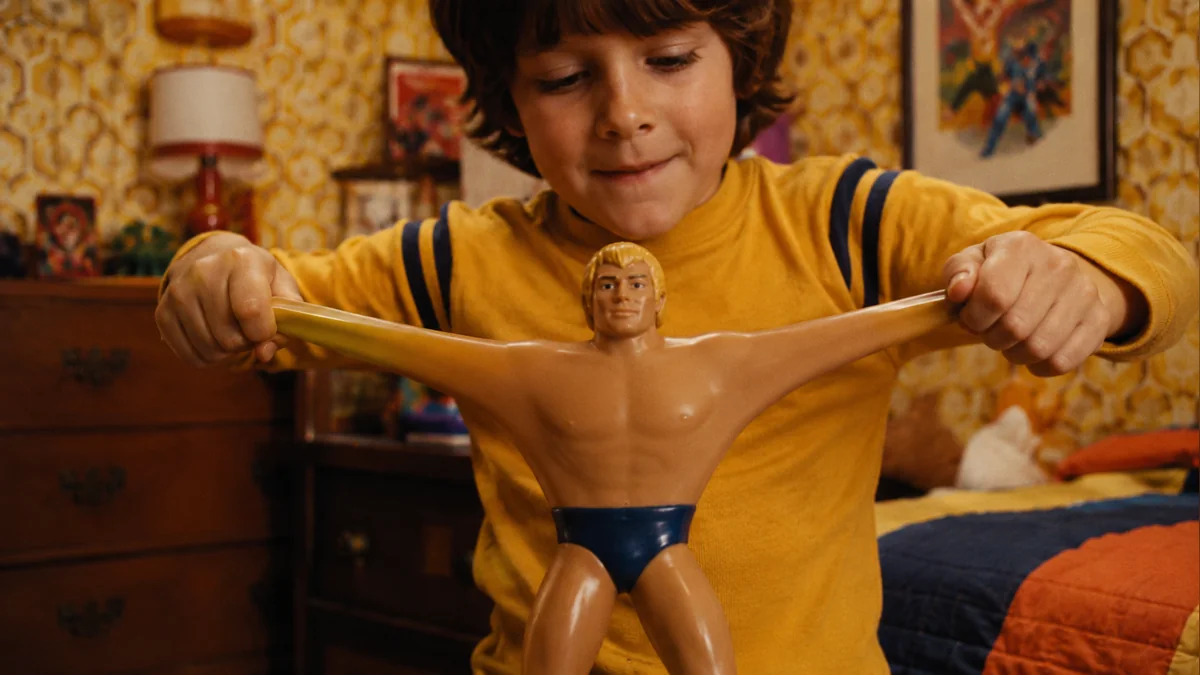
Stretch Armstrong
Stretch Armstrong was one of the decade’s purest “you have to see this” toys. The figure looked solid, but children could pull his arms and legs to ridiculous lengths, hold the pose, and then watch the body slowly return. It was strange, physical, and easy to understand from one commercial shot.
That made it a devastating Christmas-list item. A child did not need to explain a fictional world or long-term play pattern. The demand could be summarized with an urgent sentence: “You stretch him.” Adults may not have understood why that justified the price, but kids knew a living-room spectacle when they saw one.
The danger was that the toy’s central feature invited escalation. If stretching was fun, stretching farther had to be better. Two children could turn the figure into a tug-of-war while confidently assuming toy engineers had prepared for everything. Stretch Armstrong did not merely invite play. He invited experiments performed by children who had no laboratory, no safety board, and tremendous confidence.
Christmas-morning memory: The toy survived the careful demonstration. It survived the first competitive pull. Then someone asked the sentence every 70s toy feared most: “How far do you think it can really go?”
Evel Knievel Stunt Cycle
Wind It Up, Launch It, Blame the Furniture
The Evel Knievel Stunt Cycle offered motion, celebrity recognition, and repeatable crashes. The launcher built suspense, the motorcycle delivered speed, and the landing introduced the possibility that success might be improved through a taller ramp and worse judgment.
As a Christmas gift, it created a whole-room event. Family members gathered to watch the first launch, then watched children redesign the course using books, boxes, and furniture that had not volunteered. It was stunt play, engineering, spectacle, and household liability packed into one unforgettable routine.
The Bionic Woman
Television Power With a New Hero
The Bionic Woman brought recognizable television action into a doll format with enough character heat to compete in the feature-toy rush. Kids already understood the bionic fantasy, so the toy arrived with a ready-made set of powers and stories.
Christmas amplified that familiarity. The box did not need to introduce the hero; television had done the advance work. This is where media, character, and toy feature began operating as one system, a preview of how aggressively the next decade would connect entertainment and retail.
The Six Million Dollar Man
Still Bionic, Still Demonstrable
The Six Million Dollar Man stayed in the holiday fight because the figure offered both identity and action. Kids knew who he was, what he could do, and how the toy was supposed to translate the television fantasy into their hands.
The figure also supported the show-and-tell energy of 1976. Features could be demonstrated to siblings and cousins immediately. That social proof mattered. A toy looked more powerful when somebody else had to stand there and watch you use it.
Baby Alive
Realism Keeps Its Place Under the Tree
Baby Alive remained powerful because interactive caregiving offered a very different fantasy from stunts and bionics. The appeal was not speed or strength. It was responsibility, routine, and the feeling that the doll responded to the child’s actions.
That contrast shows how broad the 1976 toy aisle had become. One child was launching Evel Knievel over a stack of encyclopedias. Another was carefully feeding a doll. Both were using gifts that made the child perform a process rather than merely hold an object.
The complete 1976 countdown also includes Connect Four, Barbie, Hot Wheels, Play-Doh, and Weebles.
See the Top Toys of 19761977 Christmas Toys: Star Wars Sells Anticipation in a Box
Christmas 1977 changed the emotional temperature of the toy aisle. The movie had created enormous demand, but the full action-figure line was not ready in time. The solution was one of the boldest holiday moves in toy history: sell children a package promising that the figures would come later. Somehow, the absence became the story.
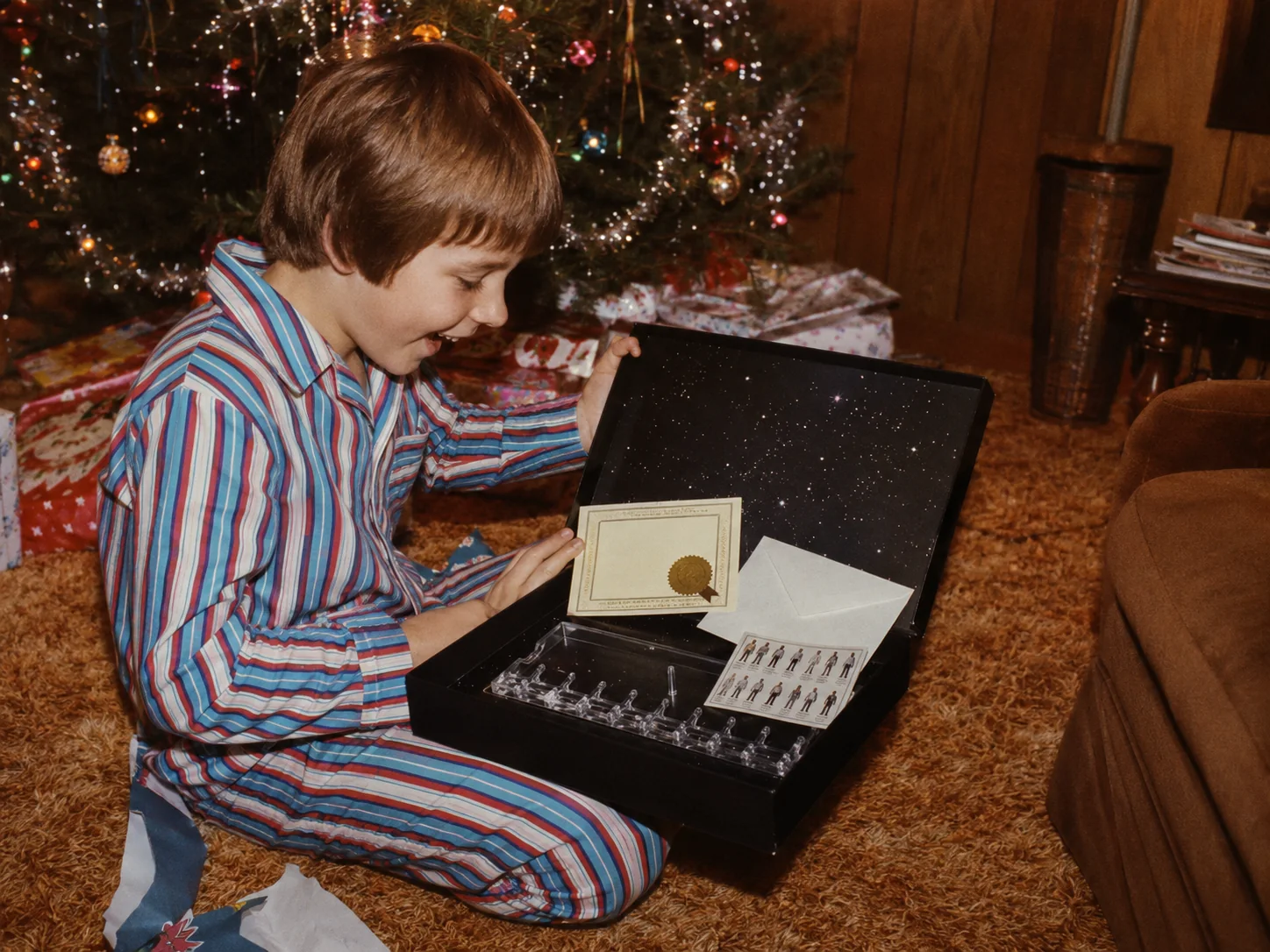
Star Wars Early Bird Certificate Package
The Star Wars Early Bird package turned anticipation itself into a Christmas product. The figures children wanted were not yet available in the needed quantities, so the gift offered a certificate and the promise that the first characters would arrive later. Under normal circumstances, a child opening paperwork instead of action figures would qualify as a holiday emergency. Star Wars had enough cultural heat to make the promise feel valuable.
The package captured the strange power of 1977 perfectly. Kids did not merely want a toy. They wanted access to the movie world. The characters, vehicles, battles, and locations were already alive in their heads, and the certificate represented admission to that universe as soon as the plastic caught up.
This was the point where Christmas toy demand began behaving more like franchise demand. A movie could create a nationwide emotional deadline, and the toy company could sell into the gap before the product existed. The figures, vehicles, scale, packaging, and collecting loop that followed became a turning point in the larger history of 70s action figures and character toys.
Christmas-morning memory: The child opened a promise, looked at the pictures, and accepted delayed gratification because the galaxy had already taken over every rational part of the brain.
Stretch Armstrong
The Gimmick King Still Pulls Strong
Stretch Armstrong remained a major Christmas toy because the feature had not lost its ability to stop the room. It did not require a movie or television show. The physical impossibility was the brand.
In a year increasingly dominated by franchise energy, Stretch represented the older 70s model: one weird mechanism, one unforgettable demonstration, and a child determined to find the exact point where engineering surrendered.
The Six Million Dollar Man
Television Licensing Holds the Line
The Six Million Dollar Man still showed how television could create Christmas demand before movie franchises fully took control. Character recognition made the figure feel important before the box opened.
The difference was scale of imagination. Television heroes created a familiar play script. Star Wars suggested an entire collectible universe. Both mattered in 1977, but the balance of power was beginning to shift toward worlds designed to expand.
Evel Knievel Stunt Cycle
The Living-Room Ramp Era Is Not Finished
The Stunt Cycle continued to earn wish-list space because few toys produced such a clear before-and-after moment. Wind it, release it, and watch the stunt succeed, fail, or take out an object that had been peacefully minding its own business.
Christmas made the audience larger and the ramps more ambitious. New boxes provided construction material. Visiting cousins provided bad ideas. The toy could transform an orderly holiday room into a stunt venue before anyone found the trash bag for the wrapping paper.
The Bionic Woman
A Recognizable Hero in a Franchise Turning Point
The Bionic Woman remained significant because character-driven play was broadening. Girls were not limited to passive fashion or domestic roles; the toy aisle also offered television action, strength, and mission-based fantasy.
That mattered in a year when licensing became more important across the board. The Bionic Woman and Mego’s superhero world helped prepare the ground for the character shelves that would soon dominate. Christmas 1977 still held several generations of toy logic at once—and then Star Wars changed the argument.
The complete 1977 countdown also includes Baby Alive, Connect Four, Barbie, Hot Wheels, and Play-Doh.
See the Top Toys of 19771978 Christmas Toys: Star Wars Arrives, and the Toy Box Starts Beeping
By Christmas 1978, the promise had become plastic reality. Star Wars figures were on the shelf, and electronic toys were bringing lights, voices, tones, and computerized authority into the family room. The old toy box still had cars, dolls, games, and stretchable musclemen, but the sound of childhood was changing.
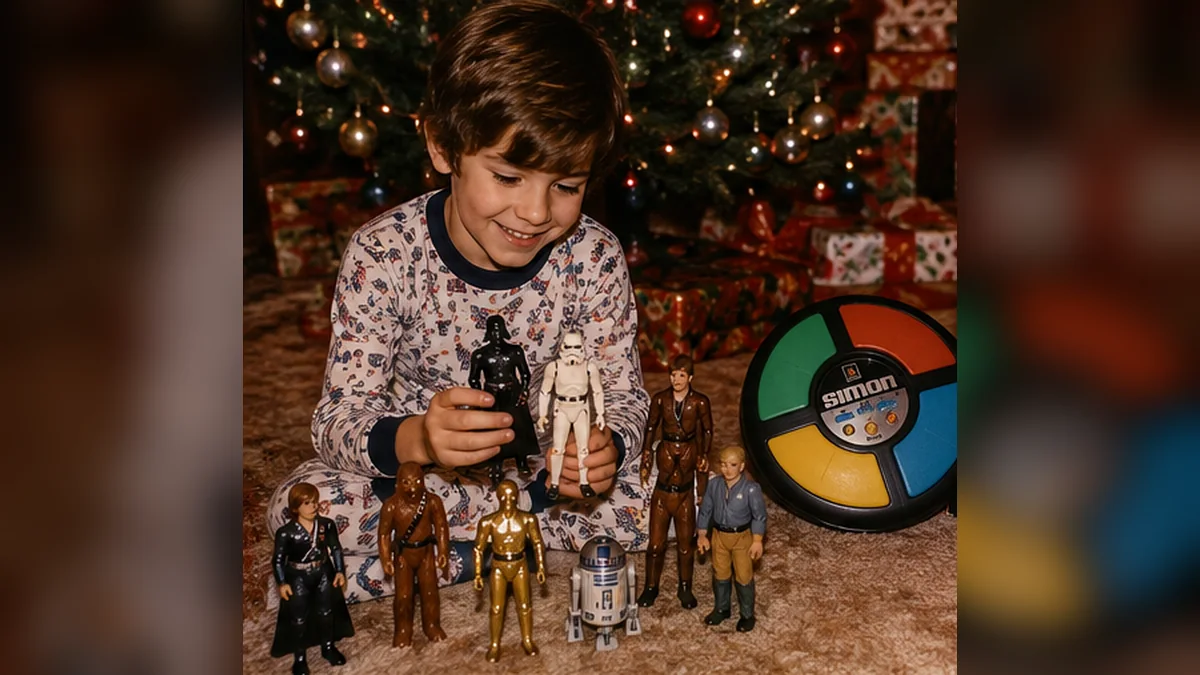
Kenner Star Wars Action Figures
Star Wars figures became the Christmas gift because they solved a problem children had carried since leaving the theater: how do you bring the movie home? The small figures allowed kids to restage scenes, invent new ones, and keep the galaxy operating long after the television had been turned off.
The scale was crucial. Smaller figures made vehicles, playsets, and larger collections possible. One character was desirable, but the real magic came from the growing cast. Every new figure expanded the story, which meant the line naturally created future wish lists. Christmas 1978 was not the end of the purchase. It was the enrollment date.
The figures also changed how toys occupied the carpet. The play was no longer just “hero has an adventure.” It was a connected universe with factions, ships, locations, and recognizable relationships. The child still invented the action, but the pieces arrived with unusually strong mythology attached. That combination would define enormous parts of the 80s toy business.
Christmas-morning memory: Every figure was inspected, compared, and assigned a role immediately. The missing character became more important than the ones already in hand, because collecting has always known how to ruin a perfectly good moment.
Simon
Lights, Sound, Memory, Public Failure
Simon looked futuristic without needing a screen. The glowing color panels and electronic tones made the game feel alive, while the memory sequence turned every round into a performance with witnesses.
That made it almost ideal for Christmas gatherings. Anyone could understand the challenge, several people could watch, and failure arrived with a sound effect. Simon converted a quiet mental task into visible family-room pressure. The larger transition lives in Early Electronics Changed the Vibe.
Speak & Spell
Educational, Electronic, and Somehow Cool
Speak & Spell gave educational play a futuristic voice. The orange device looked unlike traditional school materials, and the synthesized speech made it feel as though a small computer had moved into the house to judge spelling.
Parents could defend the purchase as learning. Kids could enjoy pressing buttons and hearing the machine respond. That dual identity made it one of the strongest holiday products of the late decade: technology impressive enough for children, educational purpose reassuring enough for adults.
Stretch Armstrong
Analog Weirdness Survives the Electronic Future
Stretch Armstrong remained high because physical spectacle still mattered. In a year of voices, lights, and movie universes, the figure continued to deliver a direct tactile experience no circuit could replace.
The toy also proved that 70s gimmick design had real durability. Children still wanted to pull, test, compare, and tempt disaster. The future was beeping, but it had not yet convinced kids to stop trying to break something with their bare hands.
The Six Million Dollar Man
The Television Hero Faces a New Galaxy
The Six Million Dollar Man still carried recognition and feature value, but 1978 made the changing market impossible to ignore. A television character could remain popular; Star Wars demonstrated how a whole universe could dominate.
That contrast makes the year fascinating. The bionic hero represented the mature 70s licensed toy. The Star Wars figure represented the next system: smaller scale, more characters, more vehicles, and a collecting loop designed to keep expanding.
The complete 1978 list also includes The Bionic Woman, Hot Wheels, Baby Alive, Connect Four, and Barbie.
See the Top Toys of 19781979 Christmas Toys: Atari Moves Play Onto the Television
Christmas 1979 felt like two childhoods sharing the same room. Traditional toys still rolled, stretched, dressed, and clicked across the floor. At the same time, Atari 2600 pulled play toward the family television and made the screen itself part of the gift. The 80s had not arrived yet, but it was clearly waiting outside with a power cord.
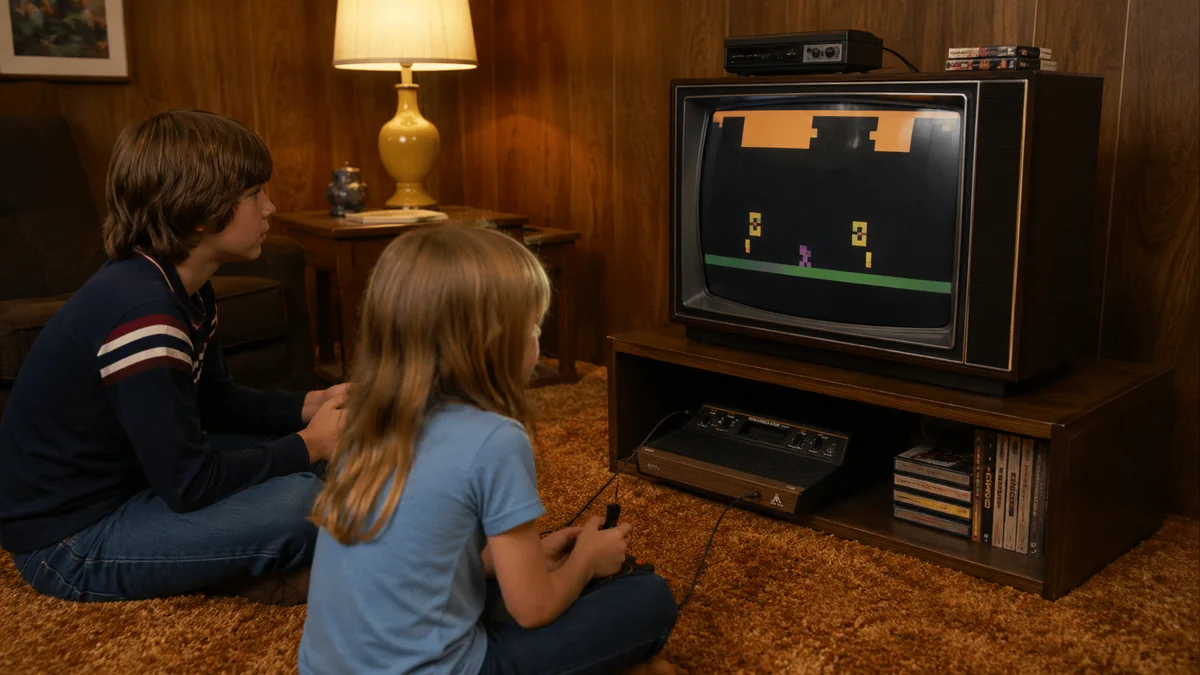
Atari 2600
Atari 2600 was not merely another toy under the tree. It changed the room. The television, previously controlled by adults and network schedules, could become an interactive play space. That shift made the console feel larger than its plastic shell. Kids were not asking for one object. They were asking for a new way to use the most important screen in the house.
The Christmas impact was enormous because the gift created an instant event. Setup involved cables, switches, cartridges, and negotiations over which television could be used. Once the picture appeared, family members gathered to watch and take turns. The console made play both electronic and communal, at least until one person refused to hand over the joystick.
Atari also introduced a new kind of expandable wish list. The hardware was only the beginning. Cartridges could be added, traded, discussed, and requested later. The toy box was becoming a library of software, and the television was becoming the playground. It was the biggest late-decade leap in the electronic toys that changed the 70s family room.
Christmas-morning memory: The adults handled the wires, the kids shouted contradictory instructions, and somebody spent ten minutes on the wrong channel before the future finally appeared in a burst of blocky color.
Star Wars Action Figures
The Galaxy Keeps Expanding
Star Wars remained a Christmas powerhouse because the collection was designed around incompleteness. There was always another character, vehicle, creature, or environment capable of making the existing toys feel more complete.
The line also owned imagination away from the screen. Atari pulled play toward television; Star Wars brought a movie world back onto the floor. Both represented modern entertainment-driven childhood, but one used electronics and the other used a growing army of small plastic characters.
Simon
The Family-Room Electronic Showdown
Simon remained hot because it turned electronic play into something everyone could see and understand. The lights flashed, the tones sounded, and the player either kept up or failed in public.
That made it perfect for Christmas visits. Simon did not isolate one child for long. It created spectators, challengers, and adults who insisted they were excellent at memory before losing in the first thirty seconds.
Speak & Spell
The Orange Computer With Homework Energy
Speak & Spell continued to feel futuristic because voice technology still carried enormous novelty. The device seemed intelligent in a way ordinary electronic toys did not, even when its job was spelling words and correcting children with machine confidence.
It remained a strong parent-approved gift, which matters in every Christmas market. Adults could buy technology without feeling they had surrendered completely to entertainment. Kids received buttons, sound, and a device that looked like it belonged in the coming decade.
Stretch Armstrong
The Old Show-and-Tell Hero Refuses to Leave
Stretch Armstrong still held a place because the toy’s appeal was immediate and physical. The new electronic future could not duplicate the strange satisfaction of pulling a figure across the room and watching it slowly recover.
Its persistence also shows that toy eras do not switch overnight. Christmas 1979 held Atari, Star Wars, Barbie, Hot Wheels, Connect Four, Baby Alive, and Stretch Armstrong at the same time. The shelves were not replacing one childhood with another. They were stacking them.
The complete 1979 countdown also includes Hot Wheels, Barbie, Big Wheel, Connect Four, and Baby Alive.
See the Top Toys of 1979Popular 70s Christmas Toys That Kept Coming Back
The yearly champions tell the decade’s changing story, but Christmas toy culture was never a clean parade where one winner vanished and another took its place. Several brands returned year after year because they could refresh the experience without abandoning what children already loved.
Barbie Kept Updating the World
A Gift System Built for Renewal
Barbie remained visible across the decade because the line could change without losing its center. Fashion, careers, furniture, friends, vehicles, and rooms gave each Christmas a reason to revisit the same miniature society. A child did not need to start over. The new gift entered a world already carrying history.
That continuity was emotionally powerful. The doll on the bed was not merely an object from last year. She was the lead character in a long-running production. A new outfit could change the plot. A vehicle could change the geography. A house or room could promote the entire cast into a better neighborhood.
Hot Wheels Made Every Piece Count
One More Car Was Never Just One More Car
Hot Wheels solved repeat gifting through compatibility. New cars worked with old track. New track changed old cars. A launcher, loop, carrying case, or fresh set could reactivate everything already shoved under the bed. That gave the line unusual Christmas endurance.
The toys also crossed gift sizes gracefully. A single car could fit a stocking. A multi-car set felt substantial. A large track system became the main event. Relatives with different budgets could all contribute to the same obsession without coordinating, which is more than can be said for most families trying to plan dinner.
Baby Alive Turned Interaction Into Loyalty
The Doll With a Routine
Baby Alive returned because the play pattern was procedural. Feeding, changing, and caring created a routine children could repeat, and the doll’s response made the child feel involved rather than merely decorative. It asked for attention in a way traditional dolls did not.
The props also created renewal. Food packets, clothing, accessories, and replacement supplies extended the life of the gift and gave adults obvious ideas later. The toy industry loves a product with needs. It is basically a subscription service that has not yet learned to charge monthly.
Family Games Survived Every Trend
UNO and Connect Four Needed No Franchise
UNO and Connect Four kept returning because they worked in the exact environment Christmas created: several ages in one room, limited patience, and a strong possibility that somebody wanted revenge. The games were quick to explain and quick to replay.
They also aged well inside a household. Younger children could learn them, older children could take them seriously, and adults could join without performing enthusiasm for a fictional universe they did not understand. The emotional complexity came from the people, not the plastic.
Stretch Armstrong Outlasted His Moment
A Gimmick So Good It Became a Ritual
Stretch Armstrong stayed near the top from 1976 through the end of the decade because the toy had a perfect social action. One child stretched it, another watched, and eventually everyone tried to establish a new limit. The product turned ownership into performance.
It also remained distinct as electronics and franchises grew. Nothing else felt quite like it. A toy can survive huge market changes when its core sensation is impossible to replace, though the children who cut one open in the name of science may have discovered more sensation than they wanted.
Star Wars Made the Next Gift Inevitable
The Collection Was Never Finished
Once Star Wars figures arrived, the line produced a new kind of holiday momentum. Each character mattered because the others existed. Each vehicle mattered because figures could use it. Each playset mattered because the movie had already taught children why the location was important.
The collection therefore generated its own missing pieces. Christmas could add several figures and still leave the child focused on the one character not received. That is the dark genius of a successful toy universe: abundance can somehow increase awareness of absence.
What Christmas Morning With 70s Toys Really Felt Like
The Toys Arrived Before the House Was Ready
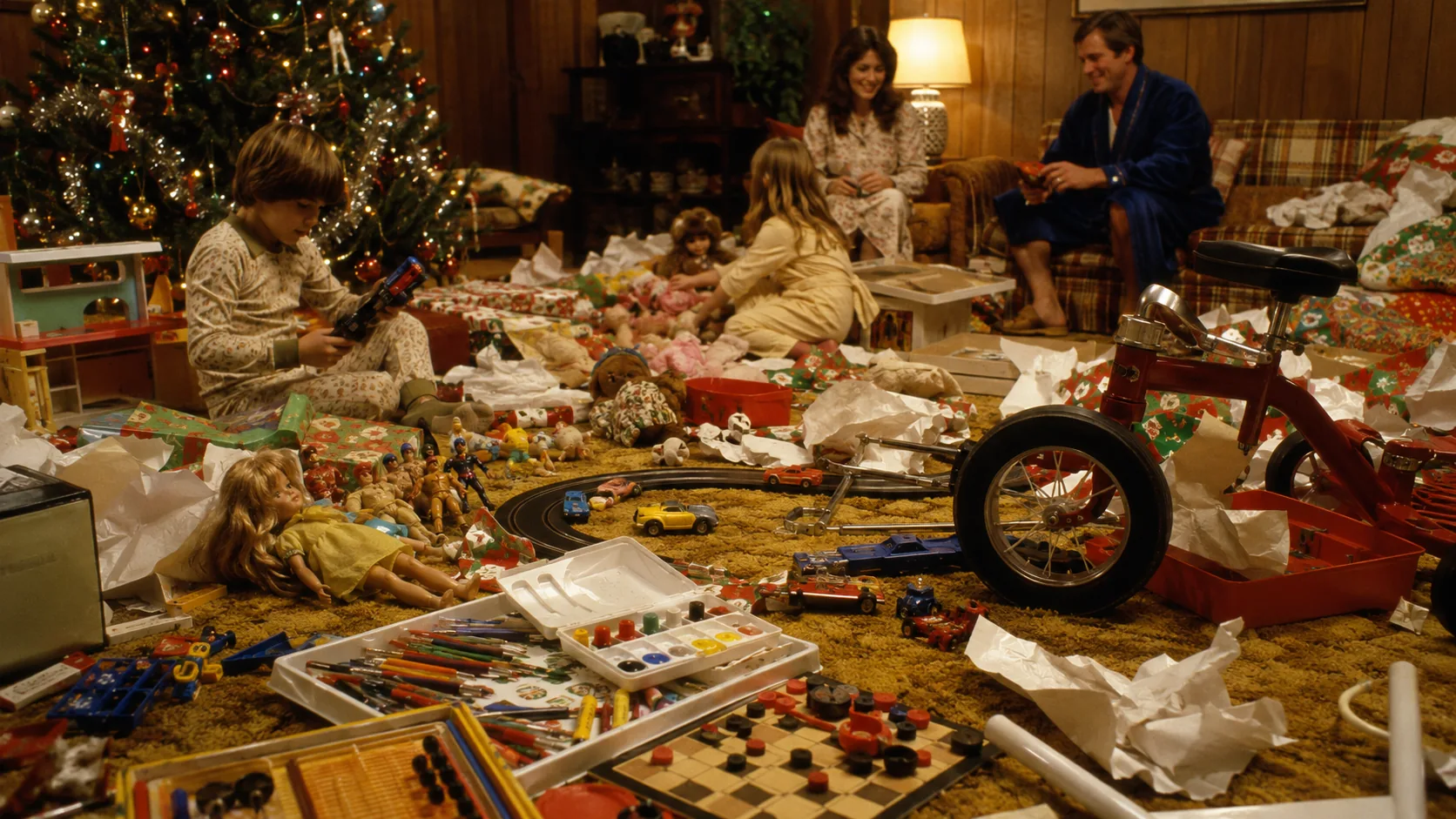
Christmas morning was not a clean product reveal staged on an empty set. It was pajamas, wrapping paper, tape stuck to socks, coffee cups on unsafe surfaces, relatives asking who gave what, and children trying to begin play while adults were still searching for the instruction sheet that had been thrown away with the cardboard insert.
Some toys were merciful. A Nerf Ball, doll, toy car, or deck of UNO cards could start almost immediately. Others demanded adult labor. Track needed assembly. Decals needed placement. Electronic devices needed batteries. Vehicles required parts to snap together with a force nobody wanted to apply to a brand-new present. The phrase “Let me see it” often meant the toy had entered temporary adult custody.
The house also had to absorb the gift. Hot Wheels claimed the hallway. Big Wheel wanted the driveway even if the weather disagreed. Barbie furniture expanded across the bedroom. Star Wars figures established positions around lamps and table legs. Atari needed the television, which meant a child’s present had entered negotiations with every adult who planned to watch something later.
Then came the first loss. A peg vanished. A card slid under the sofa. A tiny accessory entered the heating vent. A sticker went on crooked and became permanent. One part of the toy was often missing before lunch, which gave the object the lived-in quality collectors now spend enormous money trying to avoid.
That disorder is part of the memory. The toy was not isolated from the day. It became the day. The box, the first use, the sibling argument, the adult repair, the commercial comparison, and the eventual migration into the bedroom or basement all fused together. We remember wanting the toy, but we also remember the room around it.
How the 70s Christmas Toy List Changed in Ten Years
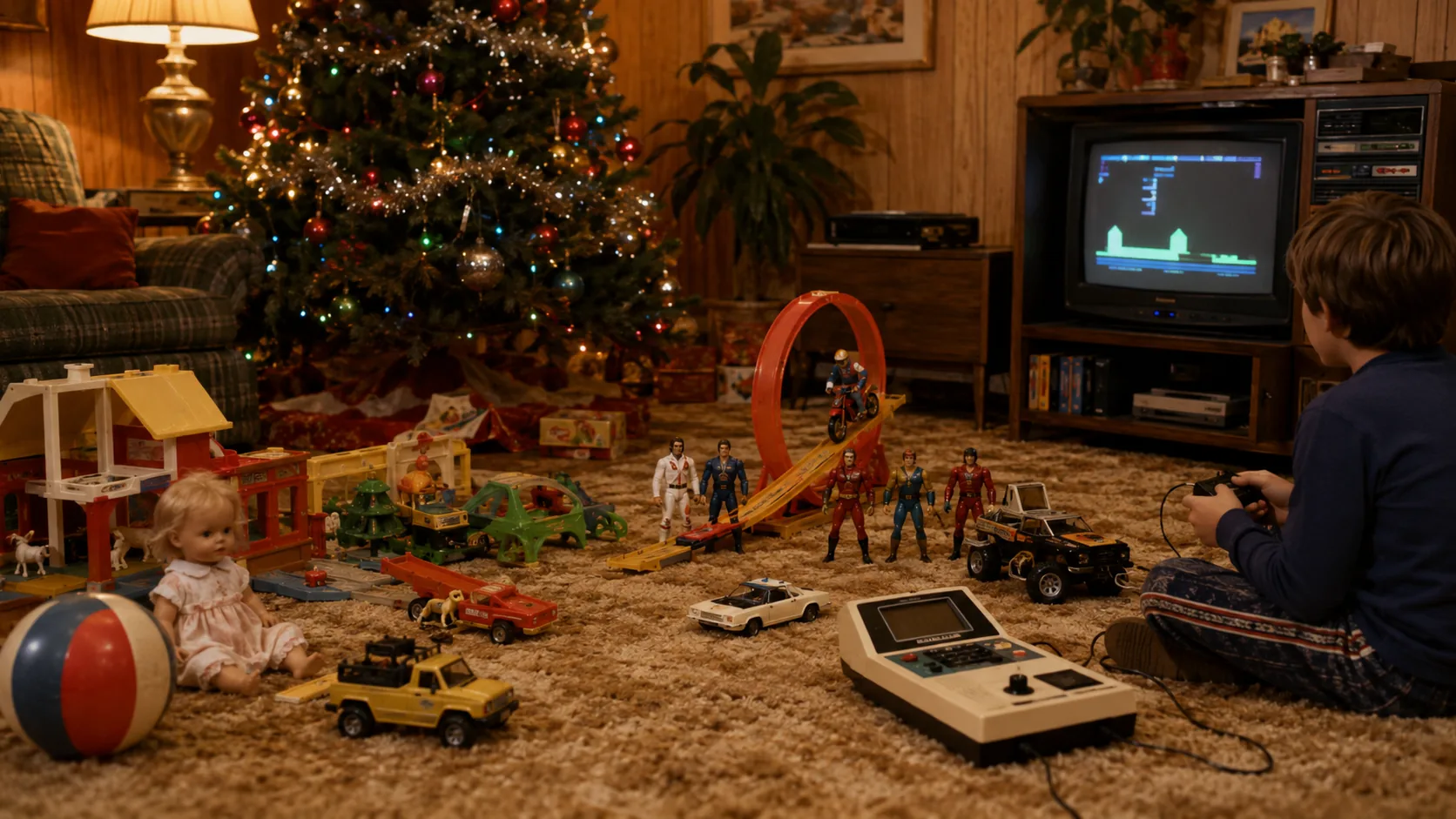
The decade did not move in a straight line from simple toys to complicated ones. Old favorites remained powerful, and analog play never disappeared. What changed was the amount of outside machinery surrounding the toy: more features, more commercial urgency, more character recognition, more collecting, and eventually more electronics.
1970–1973: The Toy Did the Talking
Nerf, Weebles, UNO, Shrinky Dinks, Barbie, Hot Wheels, and Spirograph sold a clear play pattern. Throw it. Wobble it. Deal it. Shrink it. Dress it. Race it. Draw with it. The product could usually explain itself before the commercial finished shouting.
1974–1976: Features Became the Event
Magna Doodle erased. Baby Alive ate. Evel Knievel launched. Stretch Armstrong stretched. Bionic heroes translated television powers into plastic mechanisms. Christmas morning became increasingly built around demonstrations, challenges, and the phrase “watch what this does.”
1977–1979: Worlds and Screens Take Over
Star Wars made a connected universe collectible. Simon and Speak & Spell made electronics feel like the future. Atari moved play onto television. The toy itself still mattered, but so did the movie, the character line, the cartridge, and the next purchase waiting behind it.
Keep the 70s Christmas Rewind Going
This rewind tells the decade-wide Christmas story. The annual countdowns handle the full Top 10 lists, while the toy hub, catalogs, commercials, and play-pattern pages keep the rest of the aisle open.
70s Christmas Toys FAQ
The catalog pages were enormous, the official sales records were not always public, and memory has had several decades to move the furniture. These are the useful answers without pretending the toy aisle had a Billboard Hot 100.
What was the hottest Christmas toy of the entire 1970s?
Kenner Star Wars toys have the strongest claim because the 1977 Early Bird package turned a product delay into a national Christmas story, and the action figures then became the defining toy system of 1978 and remained powerful in 1979. Stretch Armstrong, Big Wheel, Barbie, Hot Wheels, Simon, and Atari 2600 were also enormous decade-level Christmas names, but Star Wars most clearly changed what the toy business became next.
What were the hottest Christmas toys each year in the 70s?
This Smells Like Gen X holiday timeline names Nerf Ball for 1970, Weebles for 1971, UNO for 1972, Shrinky Dinks for 1973, Magna Doodle for 1974, Pet Rock for 1975, Stretch Armstrong for 1976, the Star Wars Early Bird Certificate Package for 1977, Star Wars action figures for 1978, and Atari 2600 for 1979. Each linked year page contains the complete annual Top 10.
Why were Star Wars toys so unusual at Christmas 1977?
Demand created by the movie arrived faster than the complete action-figure line. Kenner sold an Early Bird Certificate Package with a display stand and a certificate promising that the first four figures would arrive by mail later. That meant a child could receive a real Star Wars Christmas present even though the figures themselves were not ready in the quantities the country suddenly wanted. The complete Top Toys of 1977 countdown puts that strange cardboard promise in the rest of the year’s toy-aisle chaos.
Did Sears Wish Books really influence 70s Christmas toy demand?
Large Christmas catalogs gave children weeks or months to study toy pages, compare options, circle favorites, and build ranked wish lists. Catalogs did not single-handedly determine national demand, but they were a major discovery and anticipation channel alongside television commercials and store displays.
When did electronic toys become major Christmas gifts?
Electronic toys became much more visible during the late 70s. Simon and Speak & Spell were major 1978 and 1979 gifts, while Atari 2600 represented the bigger shift toward screen-based home play. The transition was gradual—traditional dolls, cars, games, ride-ons, and action figures remained important at the same time.
How were the yearly Christmas toy picks chosen?
There is no single public national toy chart covering every Christmas of the 1970s. These picks use the strongest available signals: the established Smells Like Gen X annual countdowns, cultural impact, catalog and commercial visibility, novelty, staying power, gift appeal, and how clearly each toy captures that holiday season. Every year section links to the complete Top 10 for the broader toy picture.
Which 70s Christmas toys can be valuable today?
Value depends on the exact version, completeness, working condition, packaging, rarity, and actual sold-market demand. Early Star Wars figures and vehicles, selected Hot Wheels Redlines, complete Mego figures, certain Atari hardware and games, and boxed examples of popular feature toys may attract collectors. Avoid relying on optimistic asking prices; verified completed sales are more useful than somebody’s ambitious listing.
How did kids find the hottest Christmas toys before the internet?
The wish list usually started with giant 70s toy catalogs and Sears Wish Books, got louder during television commercials, and became urgent after school-bus talk or a trip through the department-store toy aisle. Kids circled pages and repeated product names until the adults either surrendered or developed selective hearing. The 70s toy commercial archive still shows how thirty seconds of perfect launches and suspiciously happy children could turn a normal toy into a December emergency.