Kenner launches the original Stretch Armstrong
The muscular blond figure turns one physical behavior into a complete toy craze: grab, pull, watch him grow and wait for him to return.
Smells Like Gen X • Household Stress Test Since 1976
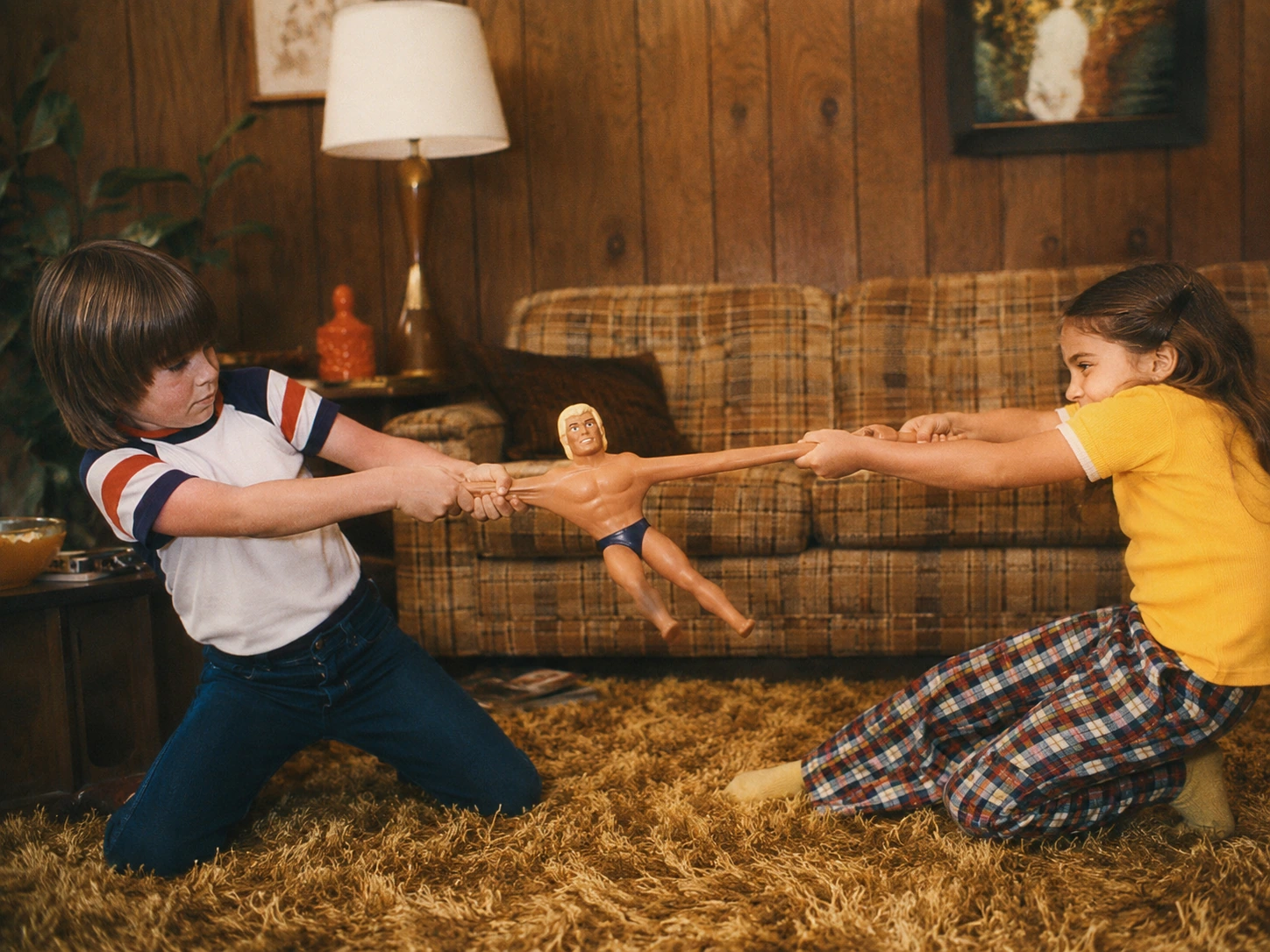
I’m Gen X, and Stretch Armstrong is one of those toys I remember through my hands: the surprising weight, the rubbery skin, the slow resistance and the moment somebody said, “Pull harder.” He was filled with mysterious red goo and sold with the confidence that kids could stretch him several feet without consequences. We treated that as a challenge.
Stretch Armstrong was a large Kenner action figure introduced in 1976. His flexible latex-rubber body was filled with a thick corn-syrup-based gel, allowing children to pull the roughly 13-to-15-inch figure to around four feet before he slowly returned toward his original shape.
I lived this one. Stretch did not sit politely with the other action figures. He came out when another kid visited, because the toy needed witnesses, extra hands and somebody else to blame if the skin started looking thin.
It did not need a cartoon, a playset or an instruction-heavy world. Somebody pulled one arm, the room reacted and the product sold itself.
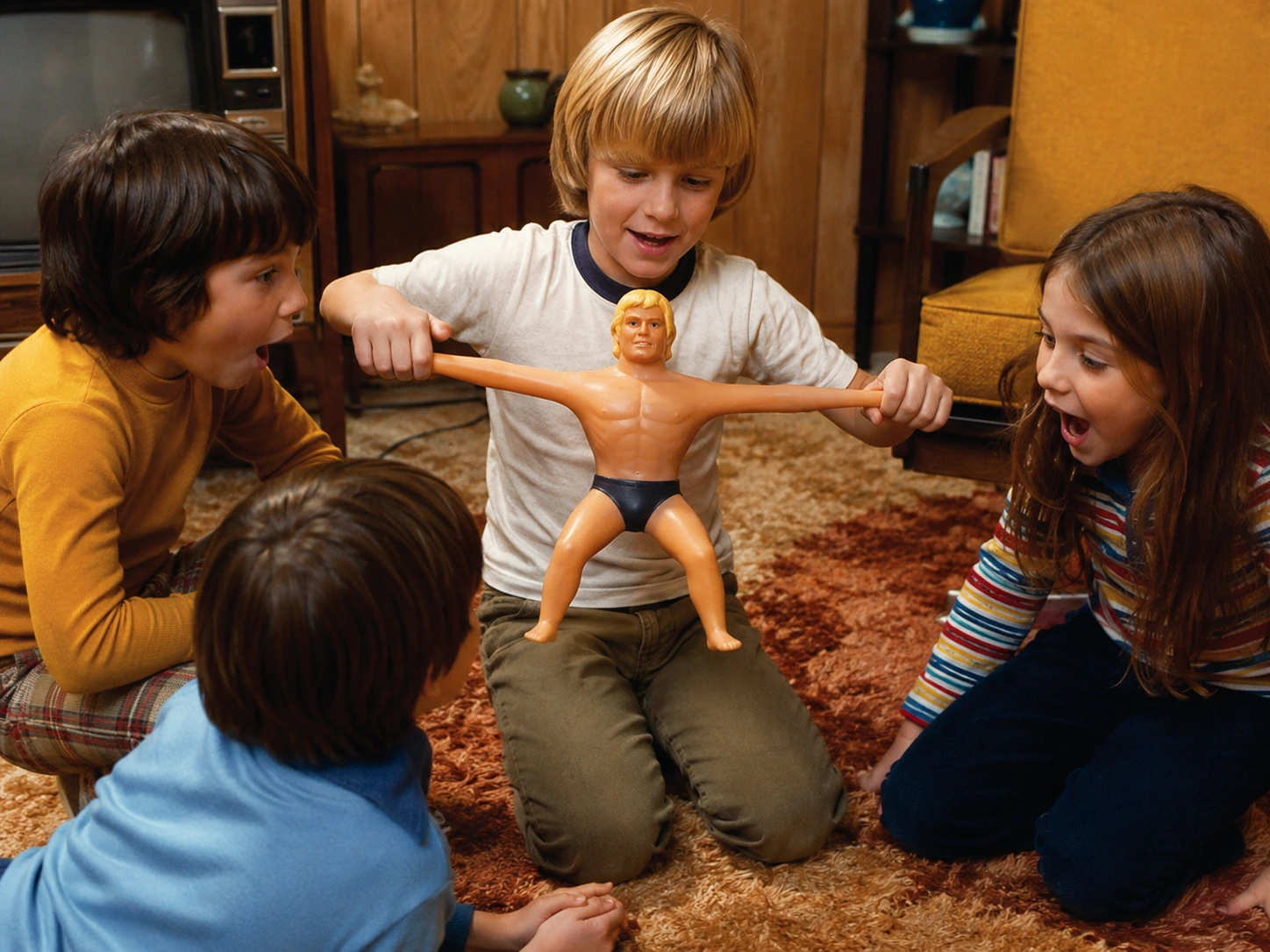
Stretch Armstrong may be the purest expression of the mid-70s feature-first toy boom. The figure did one impossible-looking thing, did it in your hands and invited everybody nearby to participate. A television commercial could explain the entire product in seconds. A child could demonstrate it even faster.
That directness is why I still put Stretch at the front of our 1976 toy rewind. The year had figures, vehicles and games everywhere, but few toys turned one physical gimmick into such an immediate living-room event.
Stretch looked like a muscular blond action hero wearing dark trunks. Then someone pulled his arms and the proportions became ridiculous. The visual joke and mechanical mystery arrived at the same moment.
Many action figures depended on a character background. Stretch’s identity came from the behavior. He could wrestle, escape, tie himself into impossible shapes and survive sibling experiments because stretching was already his superpower.
A child who watched Stretch being pulled wanted a turn. A child who got a turn wanted to pull farther. The toy spread through living rooms and schoolyard conversations because the feature was easy to describe and difficult to forget.
Kenner advertised durability and return-to-shape performance. Children heard a challenge. The question was not only what Stretch could do. It was what happened one inch beyond what he was supposed to do.
One kid takes the arms. One kid takes the legs. Everybody promises not to pull too hard. Nobody defines “too hard.”
The final toy looked simple: a rubber body filled with thick gel. Reaching that combination required industrial design, chemistry and a willingness to sell a muscular syrup container to children.
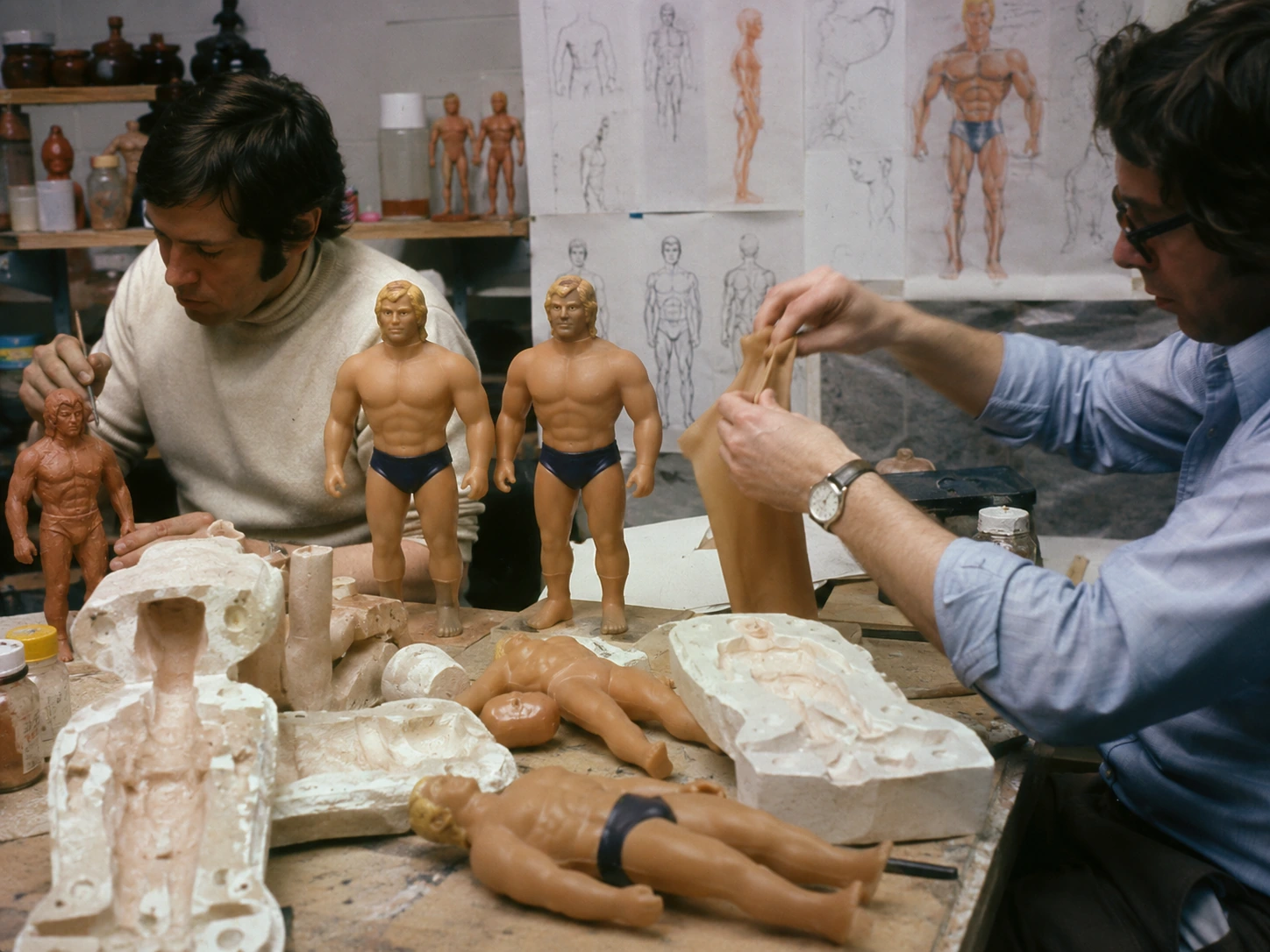
Histories of Stretch Armstrong’s development credit Kenner designer Jesse D. Horowitz with the original stretch-man concept and research leader James “Jeep” Kuhn with helping solve the filling problem. The team explored ways to make a figure extend dramatically without rigid internal mechanisms tearing through the skin.
An internal spring system could lengthen, but it would have created hard pressure points inside a soft shell. Springs were also difficult to place throughout arms and legs without making the body stiff or risking punctures.
A thick gel could redistribute as the figure stretched. Pull an arm and some filling moved into the extended limb. Release it and the elastic skin encouraged the body to contract while the gel worked its way back.
Development stories describe several possible body ideas, including a sumo wrestler. Kenner chose an all-American blond strongman whose physique made stretching feel like a superpower rather than a chemistry demonstration.
“Stretch Armstrong” told children what the figure did and gave the anonymous muscleman a heroic identity. Armstrong sounded strong, athletic and vaguely space-age at a moment when “Armstrong” still carried astronaut associations.
Kenner had a gift for turning one memorable behavior into a national toy obsession. Stretch arrived just before Kenner’s Star Wars figures changed the late-70s toy aisle, making him one of the company’s last giant original-character hits before licensed worlds took over.
The playground answer was blood, poison or classified military gel. The real answer was stranger in a completely different way: concentrated corn syrup.
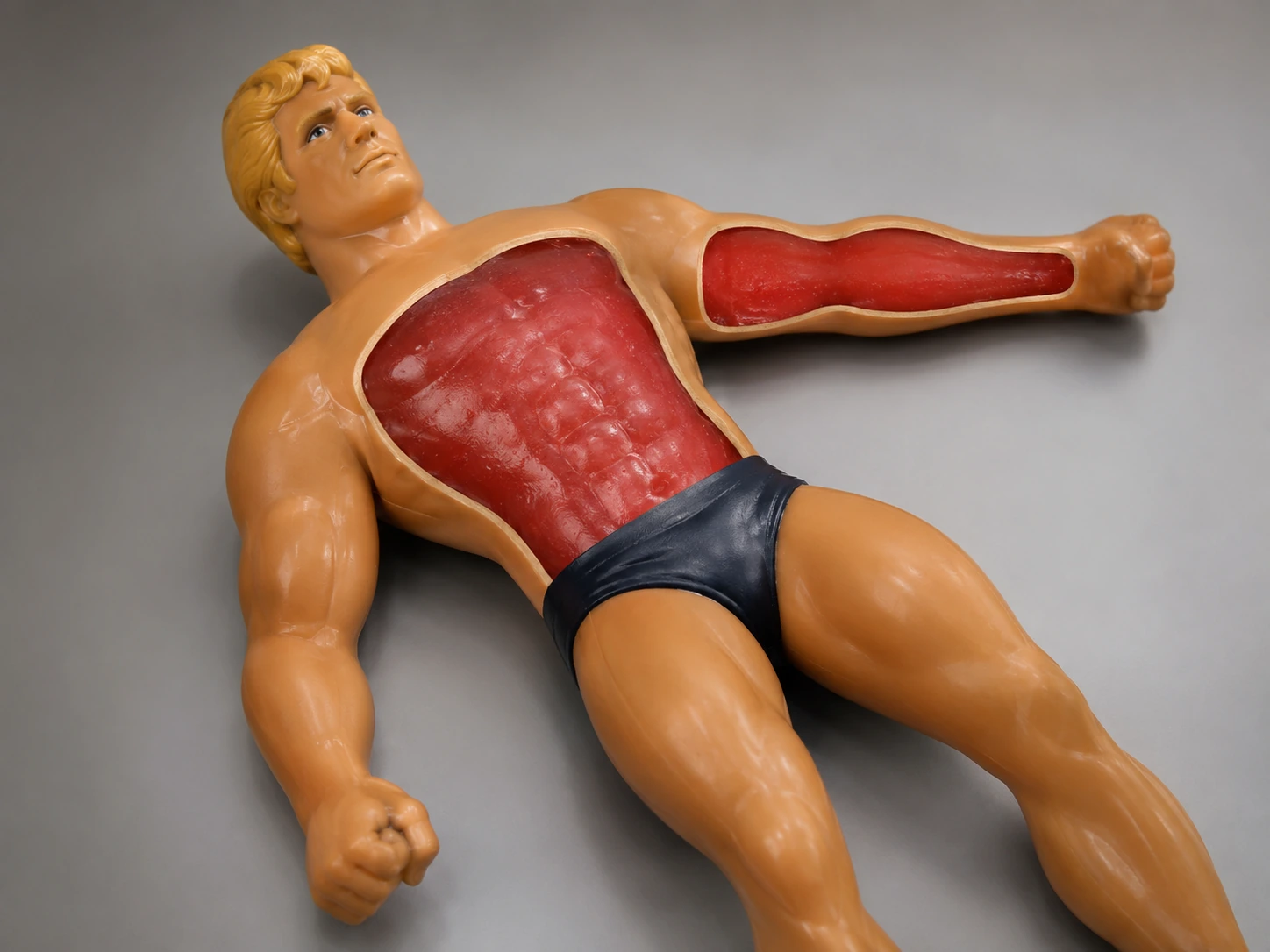
The original Stretch Armstrong used a flexible latex-rubber body filled with a thick sugar-based gel. The Strong National Museum of Play identifies corn syrup as the famous interior, while later histories describe the material as concentrated, cooked down or gelled to reach the needed viscosity.
Ordinary liquid would have rushed through the body and pooled immediately. The internal mixture needed to flow when the figure was stretched while remaining dense enough to give Stretch his heavy, solid feel.
When a puncture exposed red, amber or brownish goo, children supplied explanations before adults found the box. The filling looked biological enough to inspire claims that Stretch had blood, organs or something highly toxic inside.
The latex shell provided elasticity. The gel provided mass and controlled movement. A body without enough filling would collapse. A filling without a flexible shell would remain in the container where corn syrup normally belonged.
Sugar-based gel, latex and decades of temperature changes do not age like solid plastic. The materials can harden, separate, discolor, leak or stress the seams even when the figure has not been actively played with for years.
Knowing the filling was corn syrup did not make the toy feel less weird. It made the design more audacious. Kenner had filled a superhero with thickened pantry chemistry and sold millions of dollars’ worth of curiosity.
He did not snap back like a rubber band. He slowly gathered himself, as though the figure needed a minute to reconsider what the kids had just done.
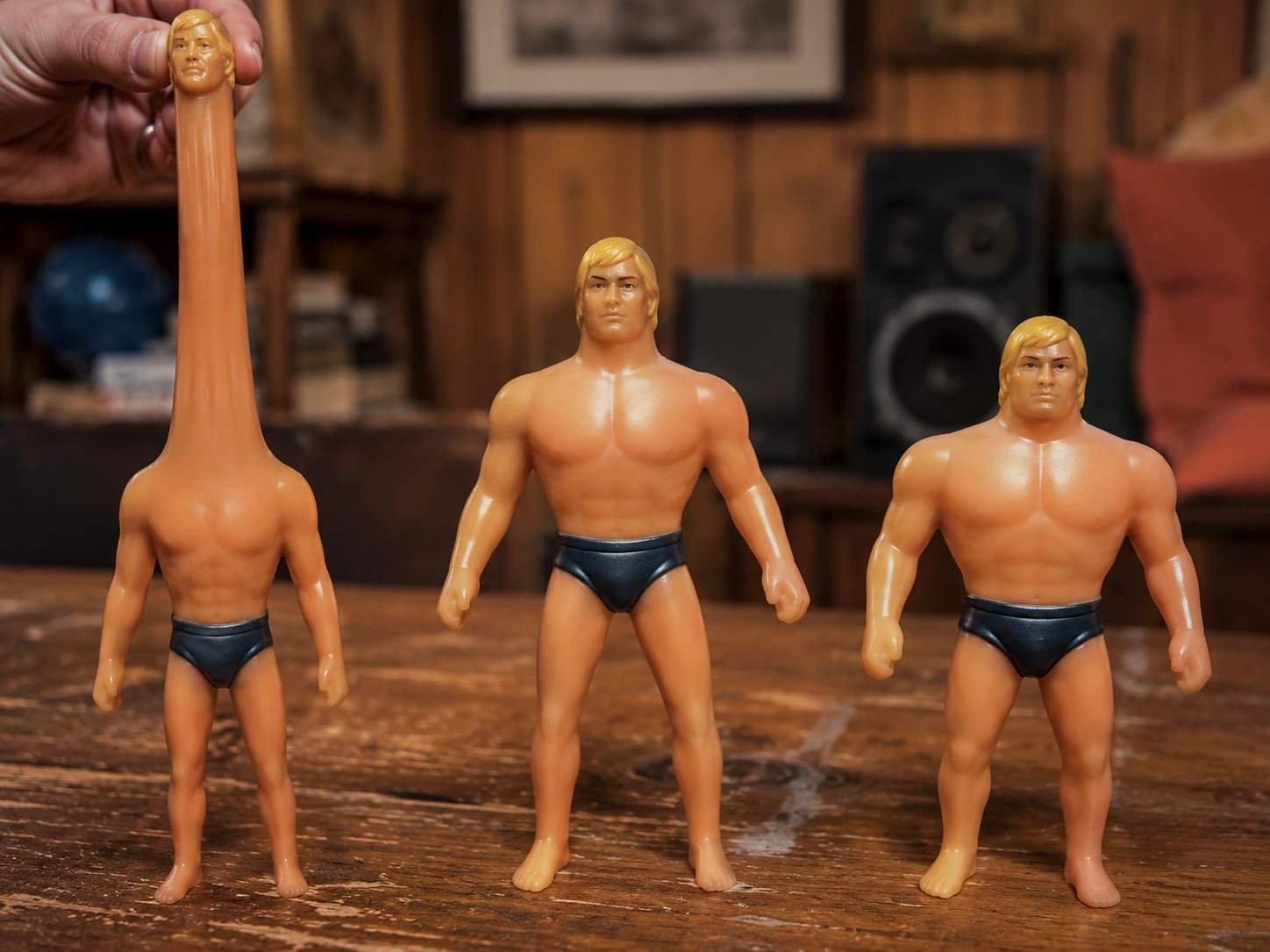
Pulling the body elongated the rubber shell. The material resisted the extension and wanted to return toward its molded shape after the force was removed.
As an arm lengthened, the internal filling spread into the new space. The torso narrowed and the limb became thinner. The figure looked less like a muscular hero and more like a tan piece of taffy with hair.
The skin contracted while the dense filling moved back toward its original distribution. The return was gradual enough to watch, which made recovery another part of the demonstration.
Pulling both arms or both legs evenly spread stress across the figure. Twisting, yanking one small area or using sharp objects concentrated force and increased the chance of a puncture.
Warm material tended to feel softer and move more easily. Cold filling and aged latex could become stiff and less forgiving. Children interpreted that as another variable to test rather than a reason to stop.
Stretch demonstrated elasticity, viscosity, material stress, pressure and failure points. The lesson ended when somebody asked why syrup was on the carpet.
Before anyone pulled him, the figure already felt unlike every hollow action figure in the toy box.
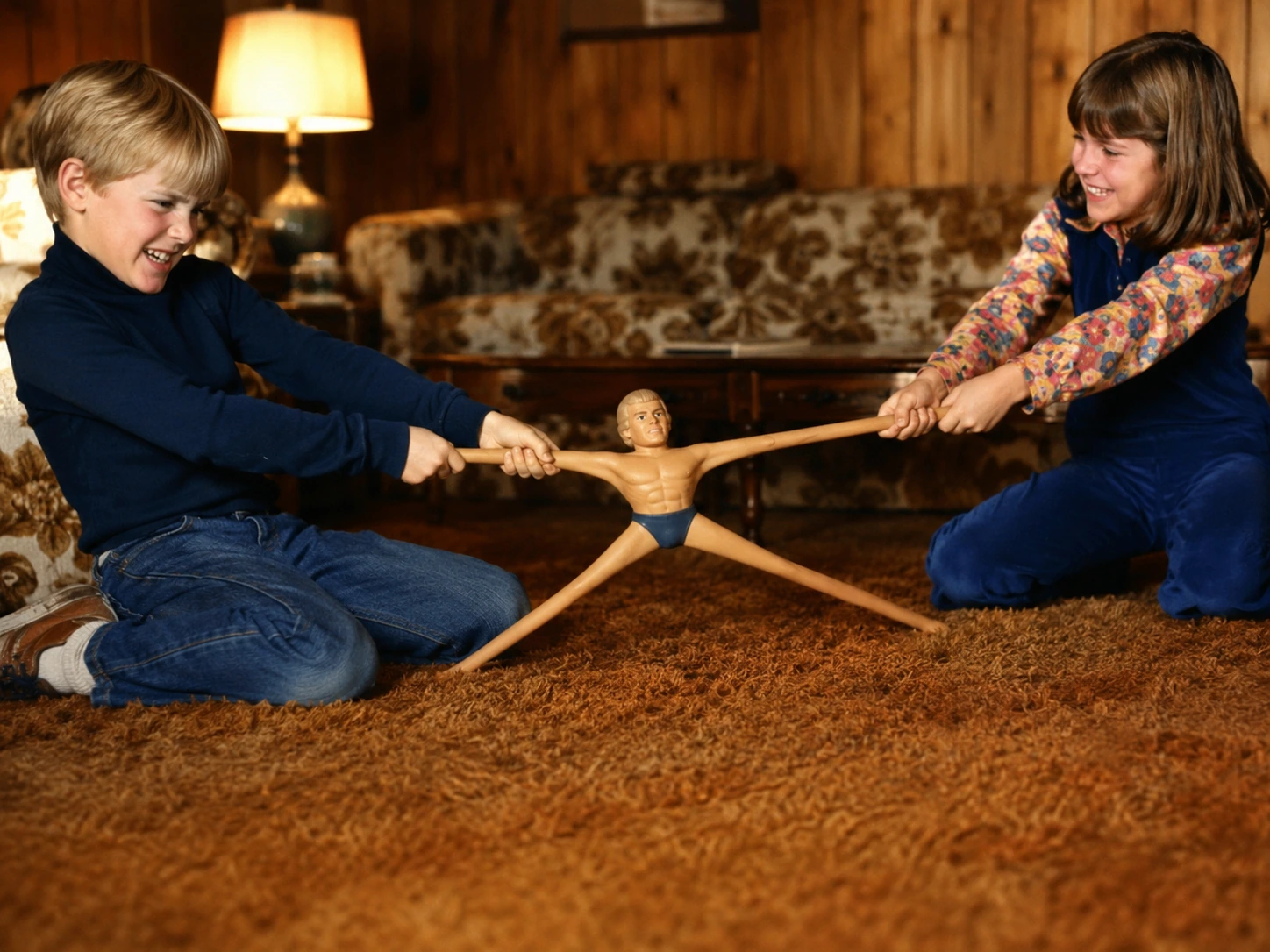
Stretch Armstrong was dense. Pick him up and the weight surprised you because the body looked like a large rubber figure while behaving more like a warm bag of sand.
Children associated weight with substance. Stretch did not feel cheap or hollow. He felt like a toy capable of surviving the challenge printed on the box.
The rubber surface flexed under a thumb. It did not have the hard click of a plastic torso or the softness of a stuffed doll. The figure occupied an uncomfortable middle ground between toy and specimen.
The filling could move subtly inside the shell. Holding Stretch by an arm or leg changed the distribution and made the figure feel alive in a way a rigid toy never could.
Dark wrestling trunks gave the blond muscleman a simple heroic identity. Everything below the packaging looked conventional until the limbs started extending across the room.
Many Gen X adults cannot describe the exact face sculpt or box artwork. They remember the weight, the rubber smell, the resistance and the slow return. Stretch was remembered through hands as much as eyes.
He was not a licensed superhero and barely had a costume. Kenner still gave him enough personality that nobody confused him with an ordinary rubber doll.
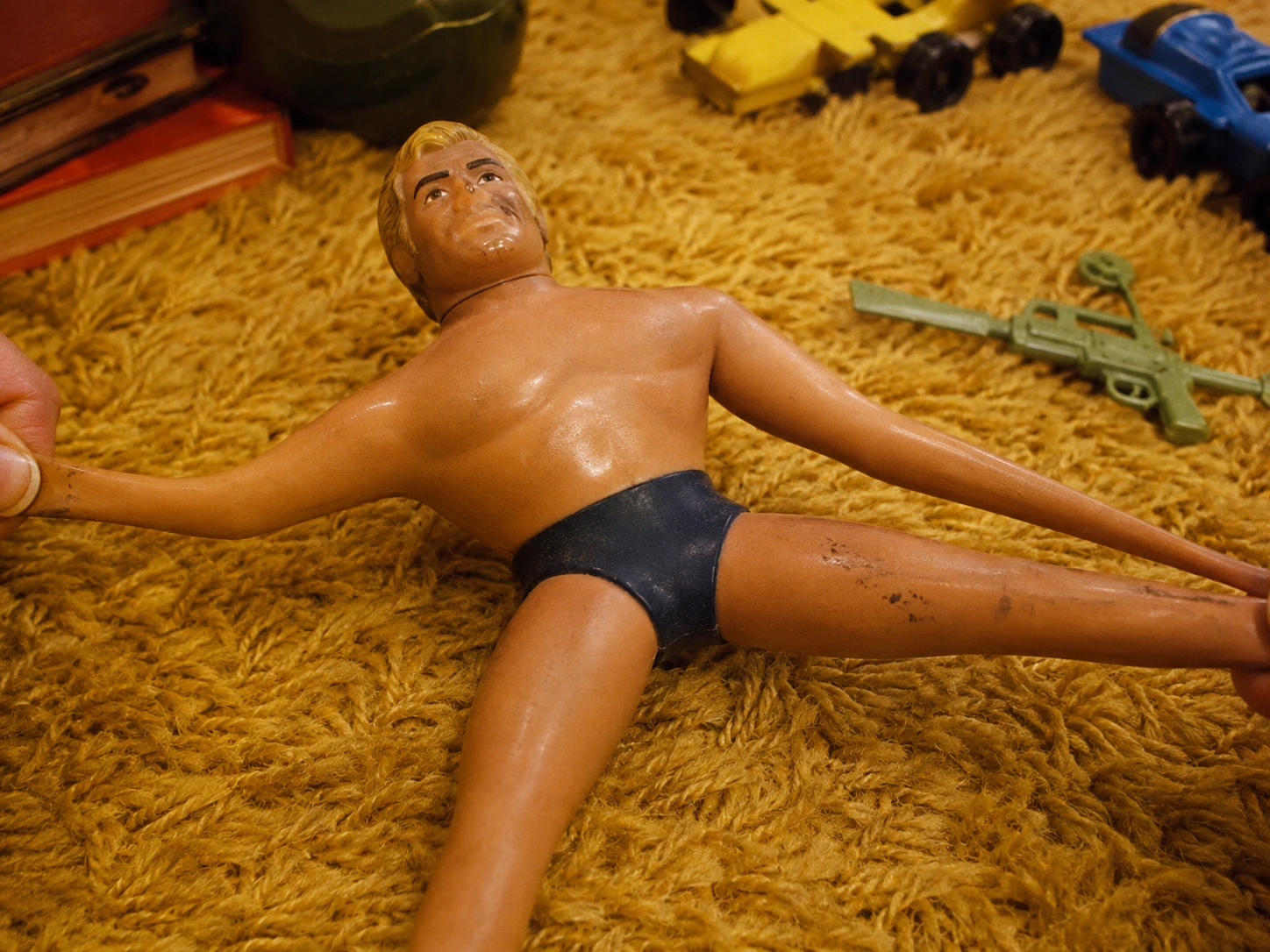
Short molded hair and a square heroic face gave Stretch the appearance of a wrestler, lifeguard and cereal-box athlete combined. He looked capable of surviving whatever the feature promised.
Clothing would have restricted movement, wrinkled or hidden the changing body. A nearly bare figure allowed children to watch the chest narrow and the limbs extend.
Dark shorts established the strongman identity without creating fabric pieces to lose. The simplicity made Stretch look like a character while keeping the material system exposed.
Bulging arms and chest created the starting point. Once pulled, the powerful body became thin and rope-like. The toy’s visual transformation depended on that contrast.
Broad extremities were easier to grip than narrow wrists and ankles. Kids still grabbed wherever convenient, but the sculpt naturally supported the advertised two-person demonstration.
Stretch could be tied in a knot, wrapped around a chair and pulled across the carpet while wearing the same neutral expression. That unchanging confidence made the abuse funnier.
He did not need a secret headquarters or detailed biography. Blond strongman plus impossible elasticity was enough. The feature supplied the character.
Kenner introduced a figure that looked like an action toy, behaved like a science experiment and arrived at exactly the moment television could turn one strange feature into a national demand.
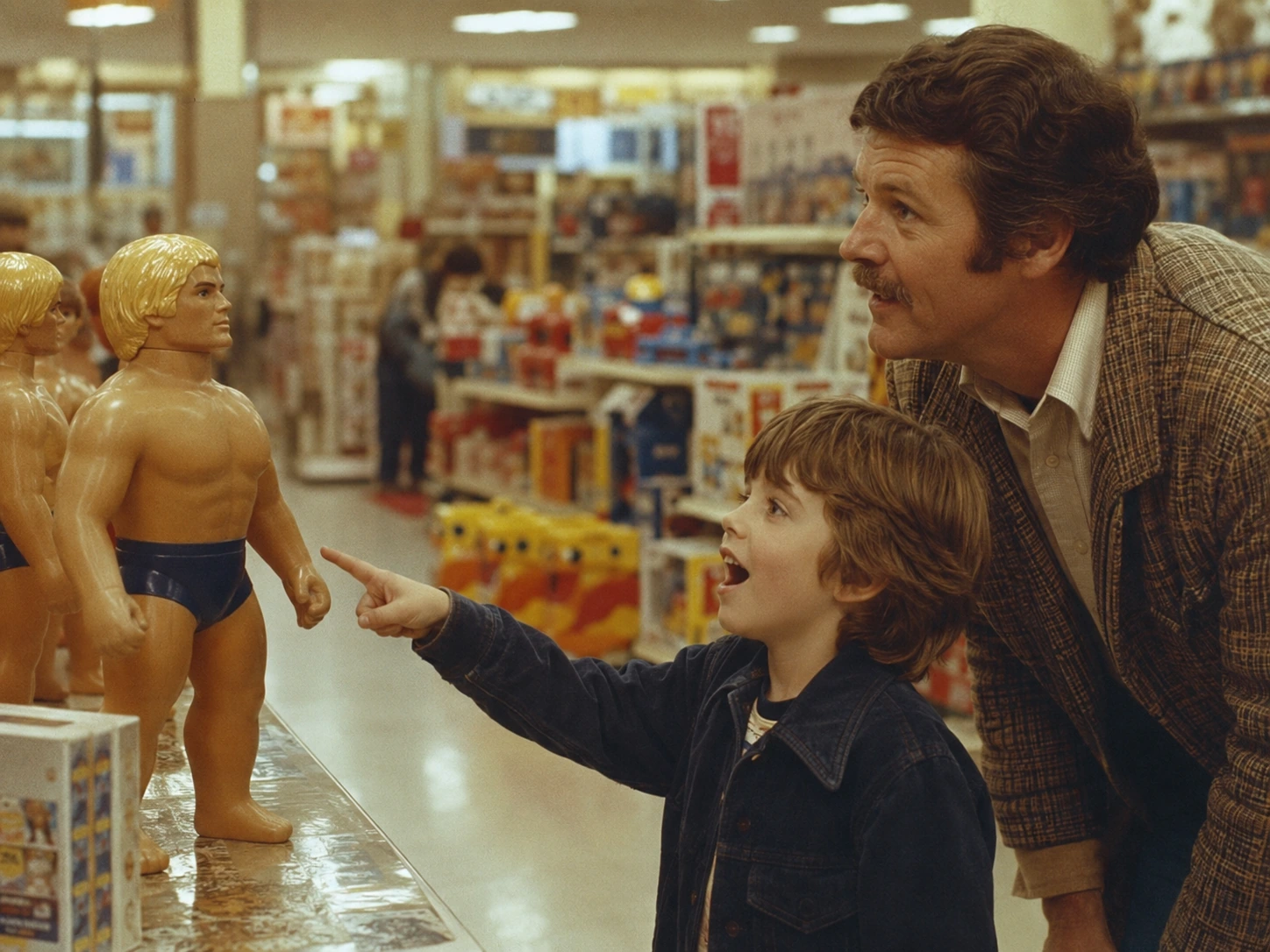
Stretch Armstrong reached stores in 1976, joining a toy aisle increasingly comfortable with products built around instant demonstration. The original figure stood roughly 13 to 15 inches tall depending on the source and could be stretched to around four feet.
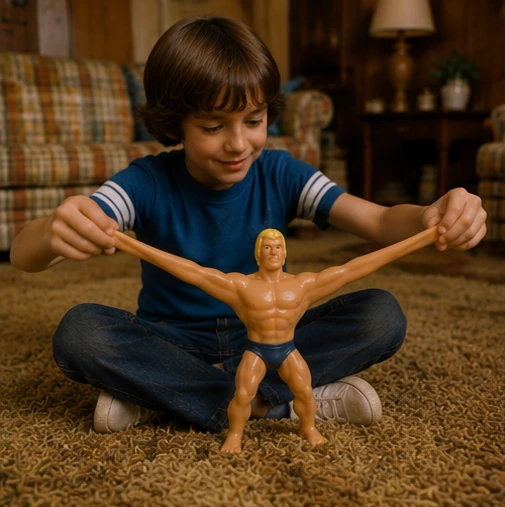
A small figure extending a few inches might have felt like a novelty. Stretch grew across a significant part of the room. Two children could move apart and watch the body bridge the distance.
He began as a compact strongman. A few seconds later, the chest narrowed, arms became ropes and the heroic proportions disappeared.
The box did not have to include a vehicle, fortress or pile of weapons. The entire experience was sealed inside the figure. That helped Stretch compete with more complicated toys while keeping the pitch simple.
Our top toys of 1976 place Stretch first because he captured the year’s physical, performance-driven energy. He was a toy, a dare and a demonstration all at once.
Stretch had no television series or comic mythology supporting the launch. The feature created the brand. Kenner would later build one of history’s biggest licensed toy worlds, but Stretch proved a single original idea could still take over Christmas.
A normal picture of the figure would have looked like a muscular man in trunks. The package needed arms crossing the entire front panel.
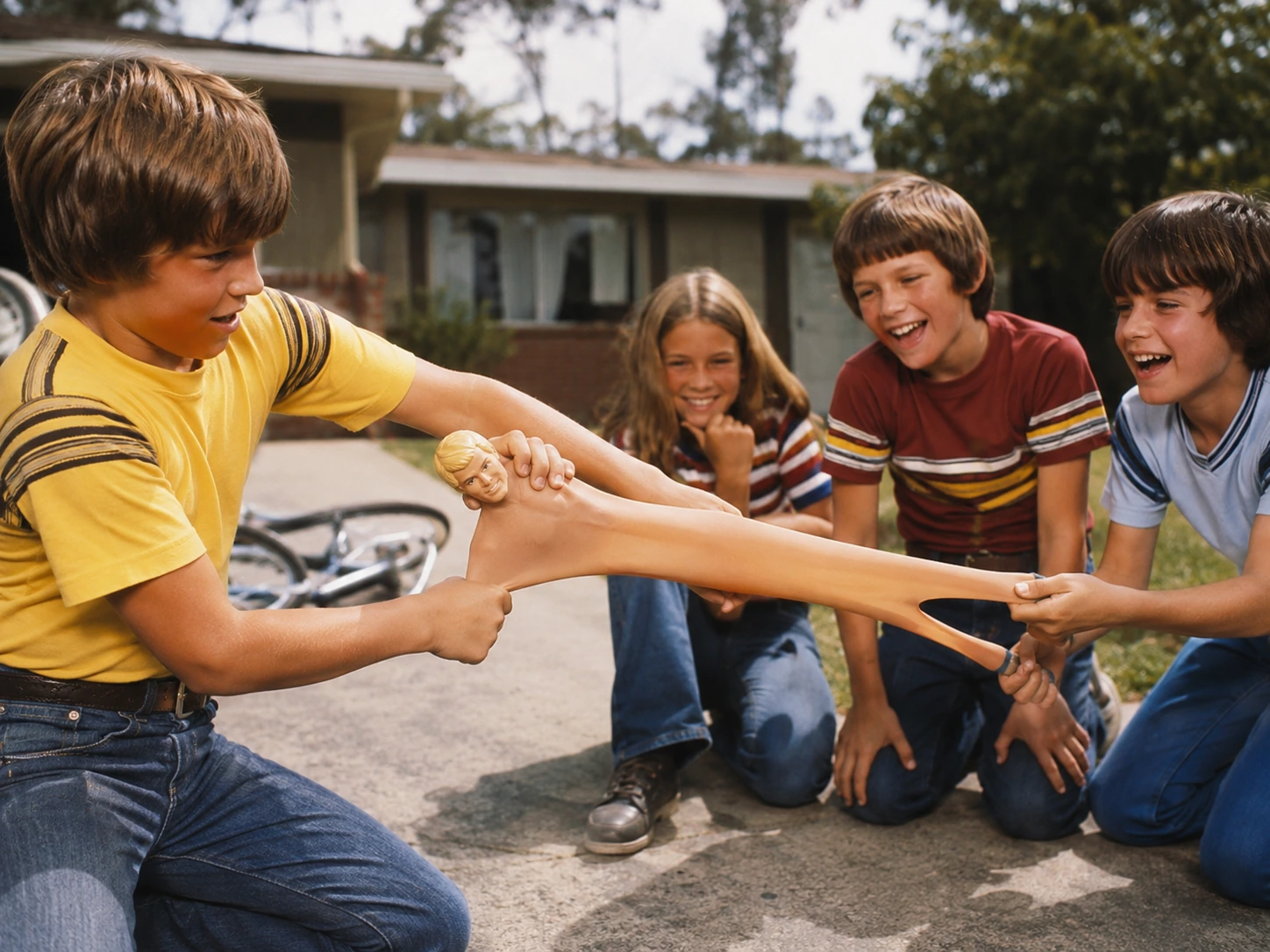
Packaging featured the figure being pulled far beyond human proportions. The image explained the feature before anyone read a word.
Two kids holding opposite ends told buyers that Stretch was interactive and social. The toy needed no batteries because the operators were printed on the box.
The important claim was not only that Stretch grew. He came back. That separated him from putty, rubber strips and disposable novelty material.
The body looked athletic rather than grotesque. Kenner presented the strange material experiment as an action figure with a heroic gimmick.
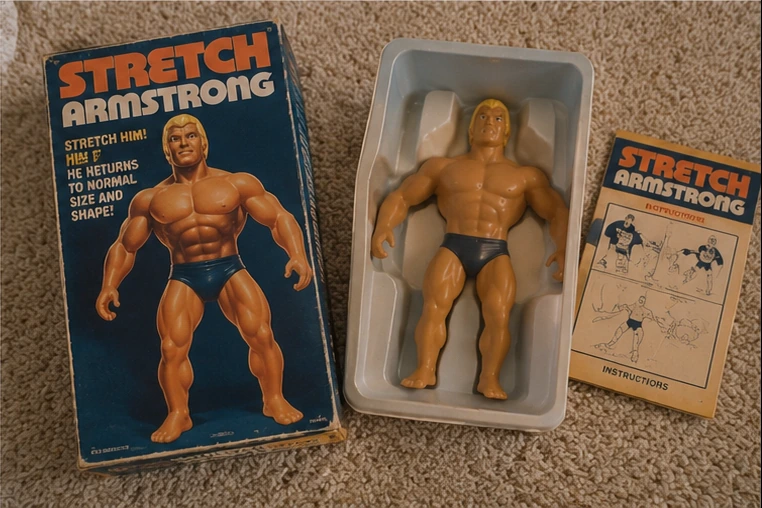
Stretch was heavy, soft and awkward. The original package supported his body better than a crowded toy box, but few children preserved it for long.
Care sheets explained pulling, temperature, recovery and small repairs. Families often discarded the paper after understanding the main feature, which is why original instructions matter to collectors now.
Stretch Monster, Octopus and X-Ray relied on color, creature design and visible anatomy to stand apart while still showing the same stretch-and-return promise.
The commercial showed the impossible part immediately, and every child understood that the only acceptable next step was owning one.
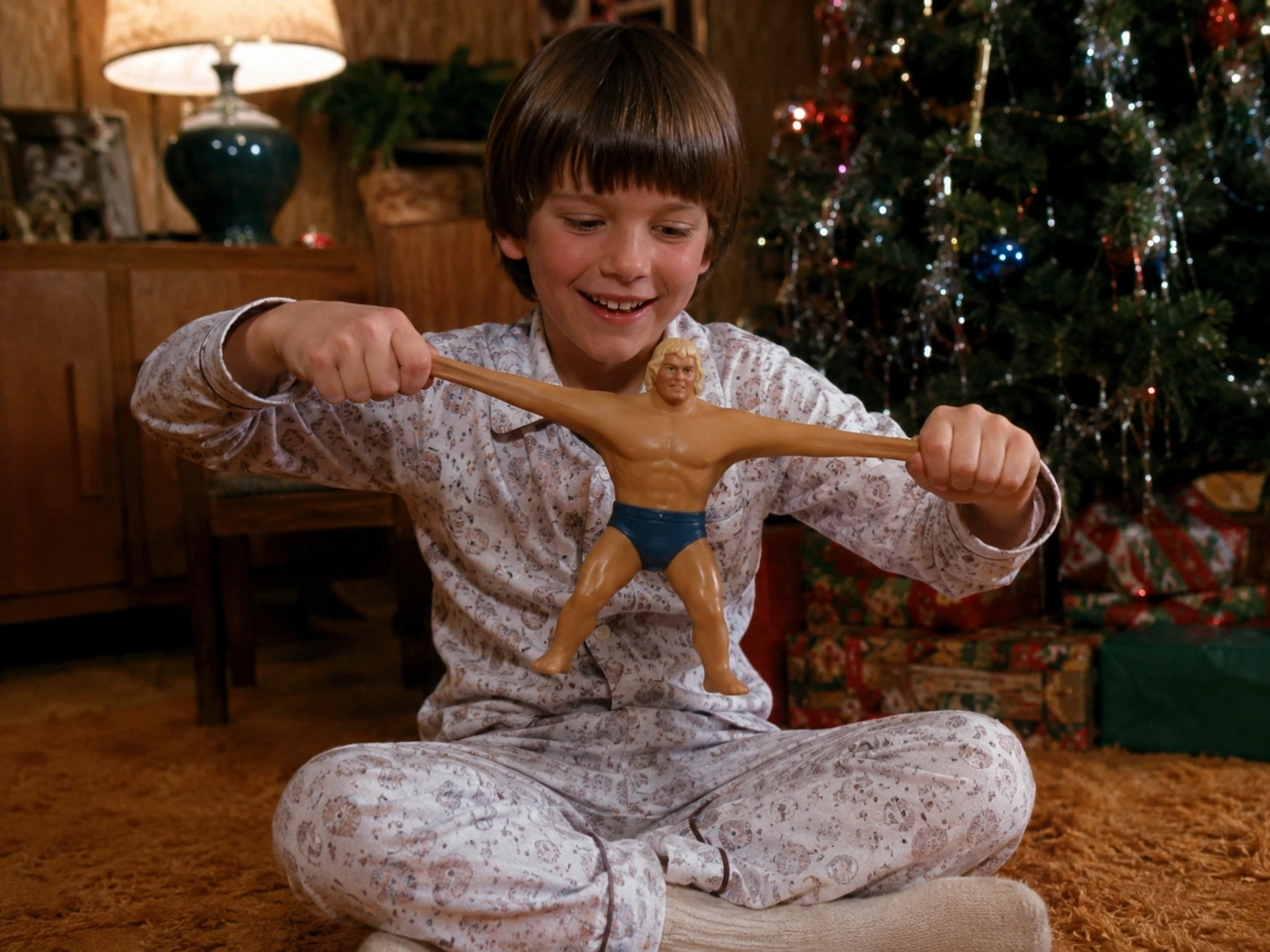
Stretch Armstrong was built for holiday demand. The figure looked substantial inside the box, carried a clear visual promise and produced a demonstration that worked in a store, commercial or living room.
There was no large assembly project. Open the package, lift the unexpectedly heavy figure and begin testing. Christmas morning could become destructive before the adults finished coffee.
Siblings, cousins and visiting friends gathered around the figure. More hands meant more experiments and fewer people willing to accept responsibility for the first leak.
Department-store displays and television ads showed children pulling the figure across wide spaces. The feature made static toys beside it look temporarily ordinary.
Like many remembered Christmas toys, Stretch became more desirable when children heard stores were selling out or another kid had already received one.
I remember that exact holiday pressure, and our look at the hottest Christmas toys of the 70s follows the same pattern: television exposure, catalog desire and one unforgettable feature turning a toy into a seasonal emergency.
The box said he could take it. The figure felt expensive, heavy and suspiciously alive.
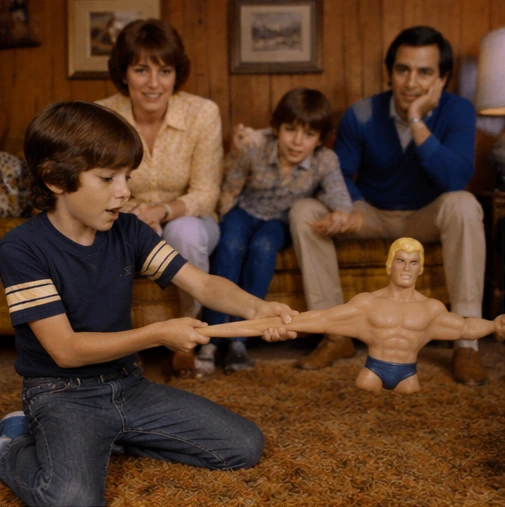
One person held the torso while another extended an arm. The skin tightened, the body narrowed and everybody waited for a sound that would indicate the experiment had ended badly.
Once released, Stretch slowly gathered himself. The arm shortened, the chest filled and the figure looked almost normal again. That recovery authorized a much harder second attempt.
Advertising promised feet of extension. A short pull did not settle the question. Furniture moved, more hands joined and the body crossed a larger section of the floor.
Stretching him felt physically resistant. The farther he extended, the more the skin and filling seemed to argue. That feedback made the toy feel like it was actively surviving.
No sharp objects. No tying him to a doorknob. No freezer. No pulling without an adult. The number of rules suggested what had already been attempted.
One child could test the toy. Two children could create a controlled structural emergency.
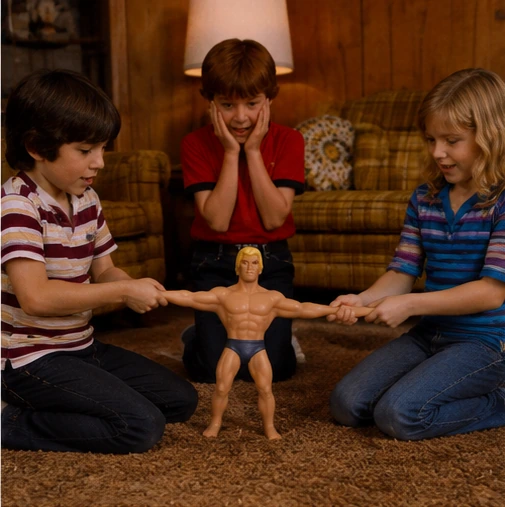
One child held both arms while another took the ankles. They backed away until Stretch became a long, narrow bridge between them.
The moment the skin looked too thin, both sides reduced effort and increased blame. If something leaked, responsibility became impossible to establish.
An older sibling could control the pace or apply a sudden pull. Younger children held on, slid across the carpet and still considered themselves equal participants.
Stretch’s identity as a hero did not protect him from being used as sporting equipment. The trunks and blond hair remained visible somewhere in the middle of an increasingly ridiculous shape.
More hands meant more stretching, twisting, dropping and temperature experiments. A toy designed for repeated use encountered several years of play during one crowded afternoon.
“I barely pulled” remains the official explanation for every Stretch Armstrong failure.
Kenner advertised a huge stretch. Kids treated the number as a minimum requirement and the beginning of independent testing.
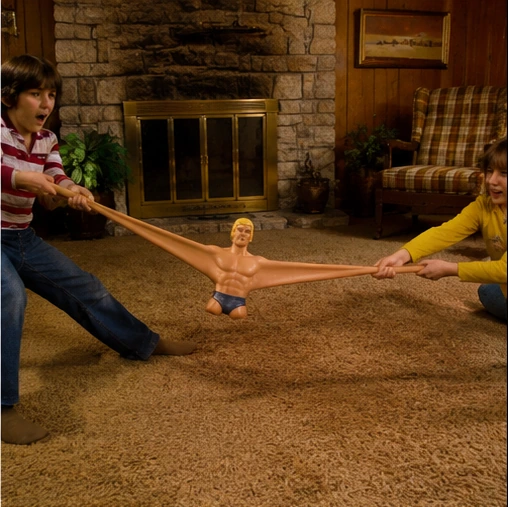
Period descriptions said Stretch could extend from his original height to roughly four feet. Later Hasbro descriptions sometimes used four to five feet. Those numbers assumed a healthy figure, even pulling and materials that had not spent decades in an attic.
Children rarely placed a ruler beside the figure. They measured against arm span, carpet patterns, couch length or the distance between siblings.
A limb narrowing dramatically or a seam looking stressed suggested the filling had moved away from one spot. That should have ended the pull. It usually caused everyone to lean closer.
A straight pull distributed stress more evenly. Wrapping a limb, knotting the body or rotating the figure concentrated force on small sections of latex.
Fresh 1970s material and a surviving vintage figure are not the same object. Latex becomes brittle, filling changes and previous repairs create weak points.
A child stopped when fear of breaking the toy finally exceeded curiosity. Different families discovered that balance at different distances.
Once everybody had watched the standard arm pull, the figure became equipment for every contest the room could support.
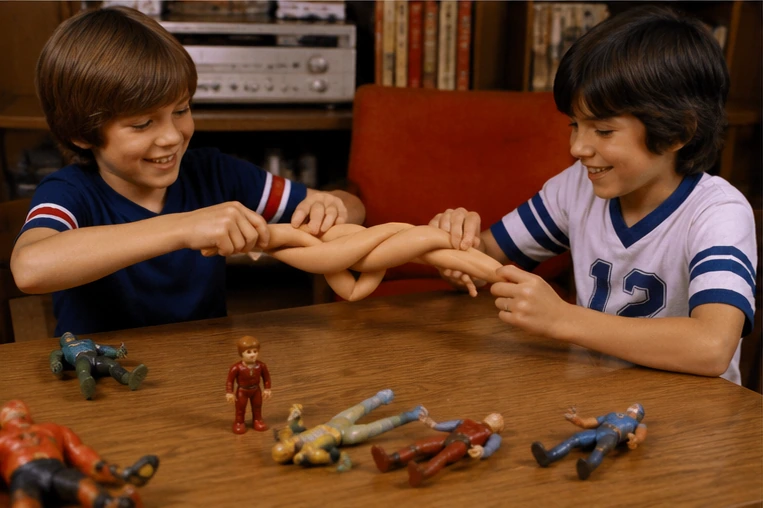
Two teams moved apart while a third child judged distance using carpet squares, couch cushions or an imaginary record book.
Children released differently stretched limbs and watched which section returned first. Temperature, angle and filling distribution changed the result.
Arms and legs wrapped around the torso or each other. The goal was to create an impossible shape and see whether Stretch could recover without help.
The figure was wrapped around furniture, then slowly uncoiled. The chair usually won because it did not contain corn syrup.
Stretch became a rope for action figures, lowering them from beds, stairs or improvised buildings. The heavy body made the rescue more dangerous than the original problem.
Limbs tangled around another figure while children announced moves that had no official names. Stretch Monster improved this game by providing an equally flexible opponent.
Children attached objects to a stretched limb to see what he could hold. This was not a use Kenner needed to advertise because childhood engineering arrived without encouragement.
One child stood on each side while Stretch crossed the opening. The experiment ended when somebody tried to close the door.
The toy provided one feature and children multiplied it into dozens of increasingly questionable activities.
The figure had one official feature and a predictable sequence of escalation that almost every household discovered independently.
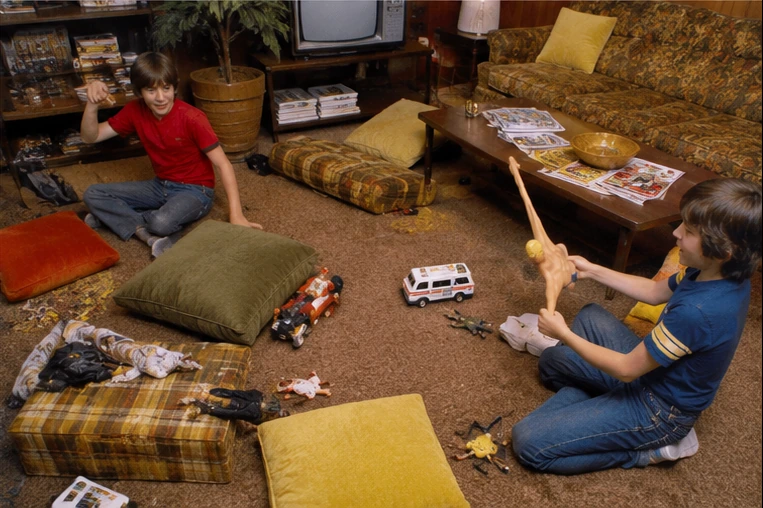
Stretch came out of the box or toy bin and received a careful pull from both arms. The operator watched the skin, released him and waited for the body to return. Everybody agreed the feature was amazing.
A second child joined. One held the wrists, the other held the ankles and the figure extended across a much larger section of carpet. The cautious tone disappeared.
Someone claimed the figure had reached four feet. Somebody else insisted it was closer to six. A ruler was suggested and ignored because the next test had already begun.
An arm wrapped behind the back, legs crossed and the torso twisted. Children watched to see whether the figure could untangle himself through slow material recovery.
Stretch met another action figure, stuffed animal or sibling’s toy. His limbs became holds, ropes and restraints while the heavy torso delivered impacts no hollow figure could match.
A chair leg, bedpost or doorknob provided an anchor. The figure’s advertised strength was compared with an object that did not move and had no concern about warranty language.
The freezer, refrigerator, warm water or sunny window entered the conversation. Adults intervened or discovered the experiment later.
Children checked seams, thin spots and sticky areas. A clean figure returned to the toy bin. A suspicious spot received intense attention and several fingerprints.
An adult reminded everyone not to pull too hard, use sharp objects or leave Stretch twisted. The toy rested until the next visitor needed a demonstration.
Stretch remained a question waiting in the room. Even after the novelty of the first pull faded, another child, rumor or household object could restart the experiment immediately.
The figure looked like a strongman, wore trunks and could wrap himself around almost anything. The wrestling storyline wrote itself.
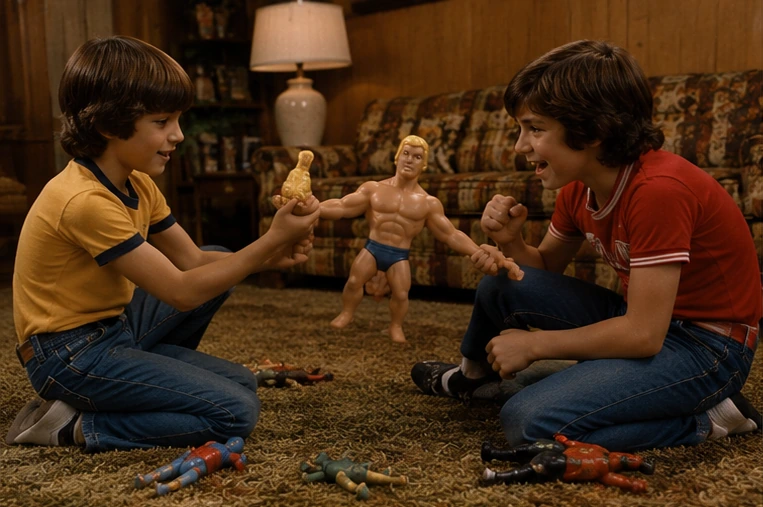
A rigid action figure had fixed leverage. Stretch could be wrapped around an opponent, furniture leg or his own body.
Large dolls, superhero figures and plastic monsters all entered the ring. Stretch could tower over small figures or become a long rope around larger toys.
Dropping Stretch onto a plastic opponent produced more force than his soft appearance suggested. Parents eventually explained that “soft” did not mean “safe to throw.”
One minute he wrestled. The next he became the ring rope, escape device or restraint. His superpower made him unusually flexible in every sense.
Once Kenner introduced a green opponent, the line gained a built-in rivalry. Two elastic figures could pull, wrap and tangle without one rigid toy appearing unfairly outmatched.
Stretch belongs inside the larger world of 70s action figures and character toys, but his play pattern was more physical and experimental than the category around him.
The figure was too heavy and expensive to carry around casually, but the rumors traveled perfectly well without him.
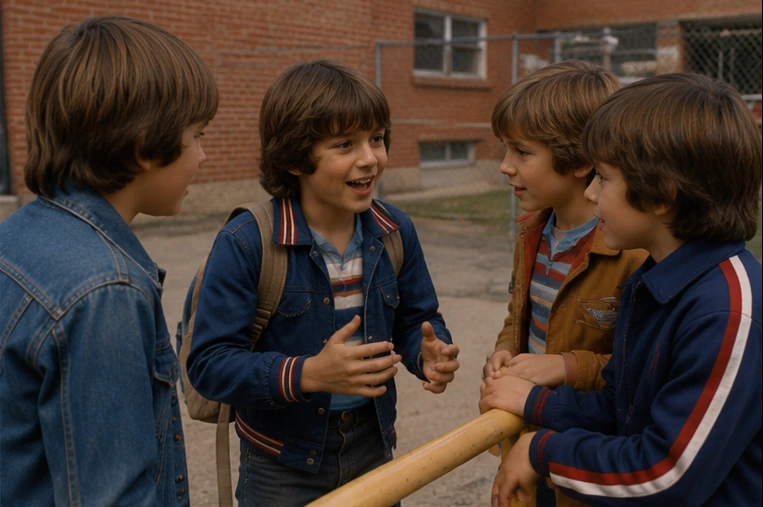
The distance increased with each retelling. Four feet became six, then a hallway, then the space between two houses.
One child said syrup. Another said fake blood. Somebody’s older brother supposedly worked at Kenner and knew it was a government compound.
If the filling had been described honestly as thickened corn syrup, the story would have ended. Calling it poison guaranteed a second audience.
A child described the sticky disaster with horror while every listener imagined performing the same test.
The kid with Stretch could invite friends over for a demonstration. The figure became social currency because the feature needed witnesses.
Some children preferred the green villain because he looked stranger. Others insisted the original hero was stronger despite no controlled testing.
Most original toys leaked, hardened or disappeared. The schoolyard explanations remain in Gen X memory with remarkable flexibility.
A hand entered the frame, pulled the figure several feet and released him. No backstory could compete with that.
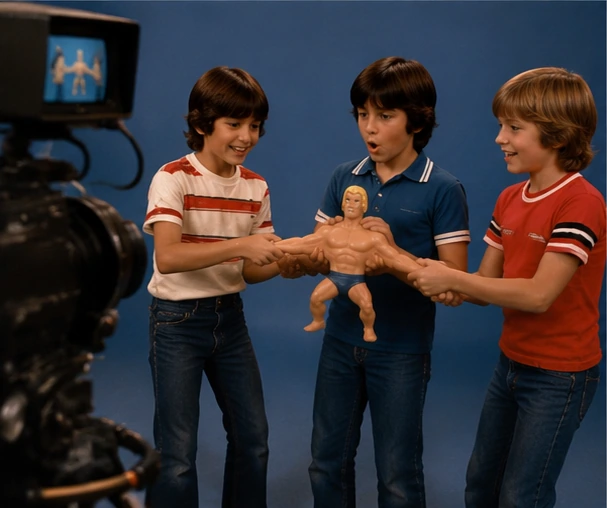
Stretch Armstrong commercials focused on the physical claim. Children held the figure, moved apart and watched him return. The feature was so clear that the ads could spend the remaining time showing wrestling, twisting and another child reacting.
The camera needed to show both children and the extended figure between them. That composition made the transformation appear larger than a close-up ever could.
Stretching alone might have suggested a disposable novelty. Watching the figure recover sold repeat play.
Commercial language emphasized strength and repeated use. Children heard permission to test the claim under conditions no commercial director had approved.
A hero and monster pulling against each other created action without requiring vehicles, sets or animation. The toys performed the special effect themselves.
You can see the whole feature-first formula in our 70s toy-commercial rewind. Stretch remains one of the clearest examples because the entire sales pitch happened right there on screen.
Catalog pages froze the figure at maximum extension and placed every new stretchy creature nearby, making one toy look like the beginning of a collection.
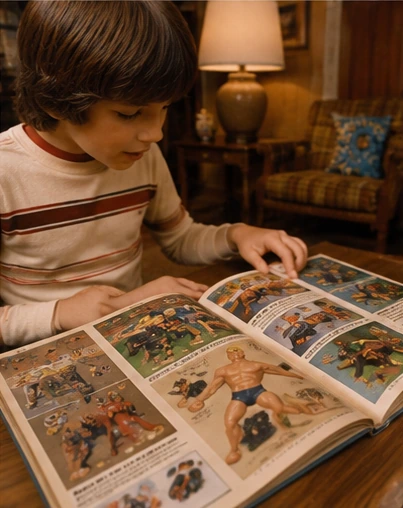
Catalog photography used children pulling the figure or displayed the body elongated across the layout. A normal pose would have hidden the reason anyone wanted him.
Parents compared Stretch with large action figures, vehicles and games. Children compared him only with the possibility of not receiving Stretch.
Stretch Monster, Stretch Octopus and other oddities made the original figure look like the center of a growing line rather than a one-season novelty.
Period pages preserve body colors, box designs, trunks, faces and product combinations. They are useful when a loose figure has lost its package and family history has become vague.
I remember circling toys like this in 70s catalogs and Sears Wish Books, where every page made the toy box look one impossible object short of complete.
Kids remember the impossible stretch. Parents remember the price, the sticky spot and why the freezer suddenly contained a muscular rubber man.
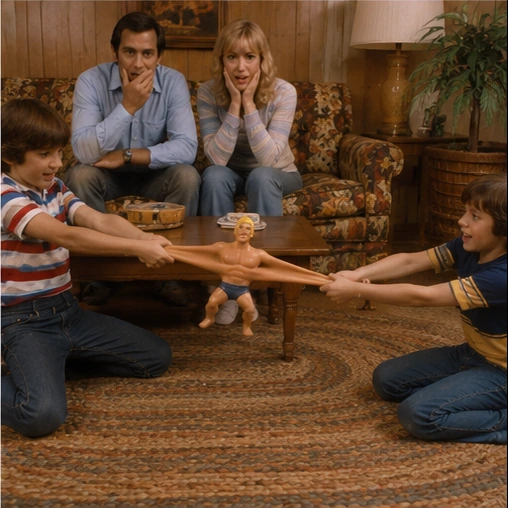
Stretch had size and weight, which made him feel substantial. That also made every aggressive test look like a child pulling apart the holiday budget.
No sharp objects, no pets, no tying him to furniture, no freezer and no stretching without somebody responsible present. The rules mostly provided ideas.
Stretch did not stand comfortably on a shelf, fit neatly with smaller figures or enjoy being crushed beneath hard toys. His body needed space the toy box did not have.
A soft body suggested harmlessness until a child swung or threw several pounds of gel-filled rubber across the room.
Thick syrup did not remain politely inside the damaged figure. It attached itself to hands, clothing, rugs and every surface used during the attempted rescue.
Parents patched a superhero with ordinary first-aid supplies while children waited to resume the exact activity that caused the wound.
For all the anxiety, Stretch created hours of physical, experimental play without batteries, screens or a pile of accessories.
Every family story includes the adult who warned what would happen, the child who insisted it would not and the carpet that settled the argument.
The toy changed with temperature, which meant children immediately wanted to find out how much.
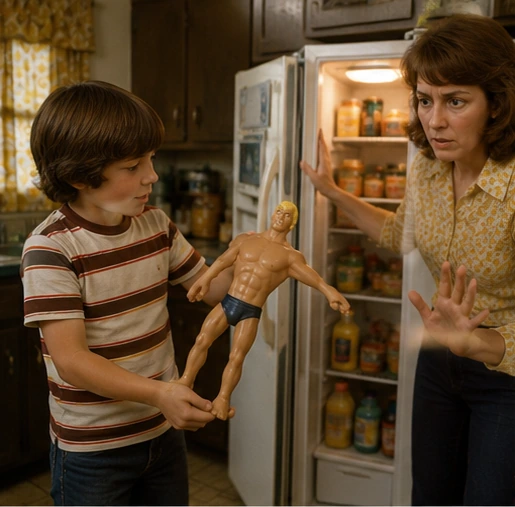
The gel moved more slowly and the latex became less flexible. A cold Stretch could feel solid and resist extension, creating the false impression that more force was the solution.
A freezer experiment could harden the filling and stress the skin. On a modern reissue it is unnecessary. On a vintage figure it risks destroying irreplaceable material.
Warm conditions could soften the body, speed redistribution and make leaks worse. Direct sunlight, radiators and hot water were not preservation strategies.
The figure was designed for ordinary indoor play. Stable moderate conditions gave the skin and filling the best chance to behave as intended.
Many memories describe putting Stretch in cold places to see whether he would hold a shape or become harder. That was a household experiment, not a separate original Kenner figure.
Age has already changed the chemistry. A surviving original should be treated as a fragile artifact, not a laboratory volunteer.
The first sign might be a shiny spot, sticky finger or tiny red bead forming where the skin had gone too thin.
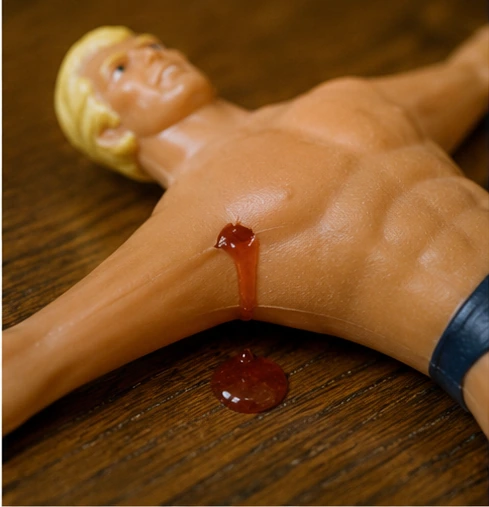
A pinhole did not always create an immediate disaster. Thick filling escaped slowly, attracting dust and making the damaged area easier to find after it had touched the carpet.
Repeated pulling stressed specific areas. Twists, teeth, sharp toys, pet claws and improvised experiments added damage the design never promised to survive.
Concentrated syrup did not pour away like water. It clung to skin, fabric and flooring while the figure continued losing body mass.
Children described Stretch as bleeding. The visual transformed a broken toy into an emergency scene and increased the certainty that something dangerous had been released.
A child might hide the figure, but sticky residue, footprints and a suspiciously sweet-smelling area revealed the accident.
Once enough filling escaped, the body collapsed or returned unevenly. Even a sealed puncture could leave one limb thinner and the internal mixture contaminated.
The original instructions reportedly treated a tiny puncture like a scraped knee: dry the area and cover it with an adhesive bandage.
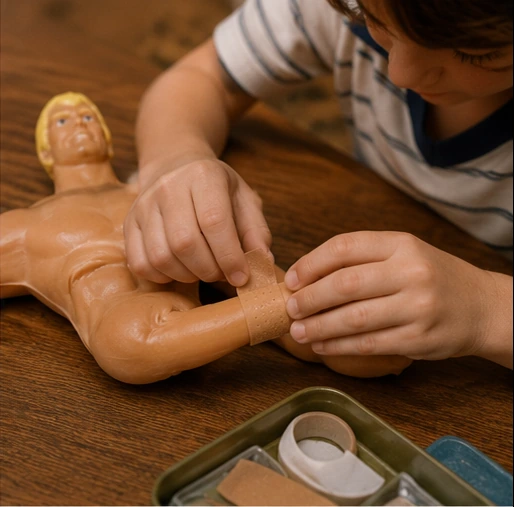
Thick filling moved slowly enough that a well-placed adhesive strip might contain a pinhole. That gave families a practical emergency response using something already in the medicine cabinet.
Syrup residue worked against adhesive. Cleaning too aggressively could damage old latex, while leaving the area sticky made the patch temporary.
A split seam or stretched opening continued to move under pressure. A bandage could cover the wound without restoring the body’s strength.
A repaired Stretch was supposed to rest. Instead, the bandage became the area everybody watched during the next pull.
Adhesives, replacement latex and refilling methods can improve appearance or function. They also change originality and may introduce materials that age unpredictably.
An intact display figure with a historic patch may survive longer than an aggressively restored figure returned to active play.
The toy stopped being a superhero and became a heavy rubber shell with a sticky internal problem.
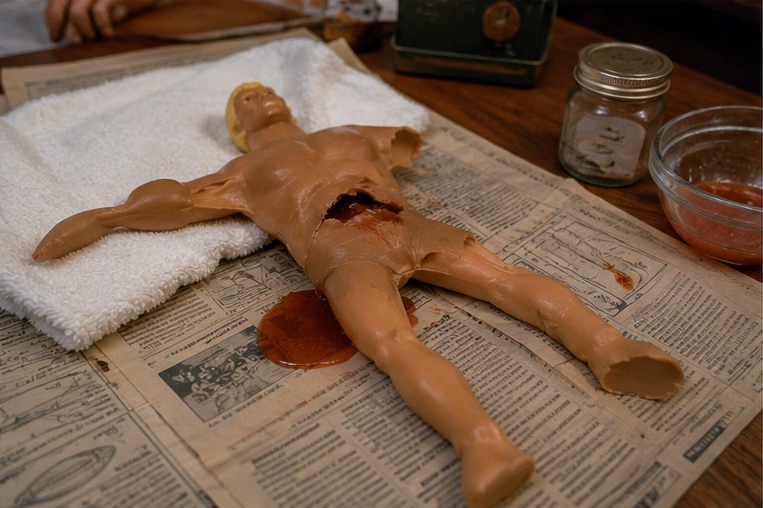
Filling escaped from the damaged area while other sections remained full. One arm might collapse as the torso stayed heavy.
Carpet fibers, hair, lint and dust joined the repair attempt. The cleaner the figure needed to become, the harder the surface was to clean safely.
A badly leaking figure was difficult to store, transport or explain. Many originals disappeared quickly after the first serious rupture.
Once a hole existed, curiosity changed from prevention to investigation. Cutting the toy open answered every question and guaranteed no repair would be necessary.
Stretch was marketed for physical use, built from aging materials and irresistible to experimental children. Those conditions were not designed to create mint collectibles fifty years later.
Even people who no longer remember receiving Stretch remember how he ended. The leak became the final chapter and often the most retold one.
The toy invited abuse while quietly asking for stable temperature, clean surfaces, careful pulling and no sharp objects.
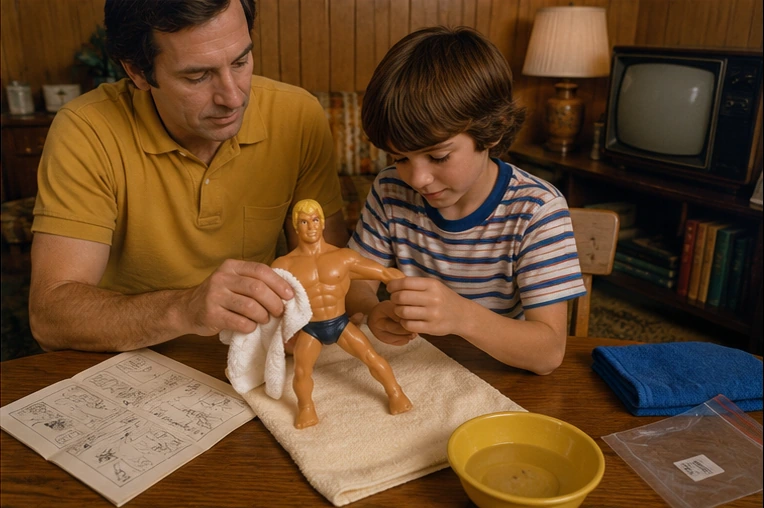
Sudden jerks concentrated stress. A steady pull gave the filling time to move through the body.
Pins, pet claws, metal edges and damaged plastic toys could puncture the latex. The rule was obvious and therefore repeatedly tested.
Temperature altered the filling and skin. Stable room conditions were safer than cars, attics, freezers or sunny windows.
Stretch needed time to return. Beginning another pull while the body was still uneven increased strain on already thin areas.
Folding or pinning limbs beneath other toys could deform the body and stress the shell. A flat, supported position was more sensible.
Old latex can react badly to solvents and scrubbing. A damp soft cloth is safer than household chemistry experiments.
They understood that Stretch should be protected. They also understood that owning a nearly unbreakable toy created a moral obligation to investigate the claim.
Most figures were built to hold a pose. Stretch was built to stop looking like himself.
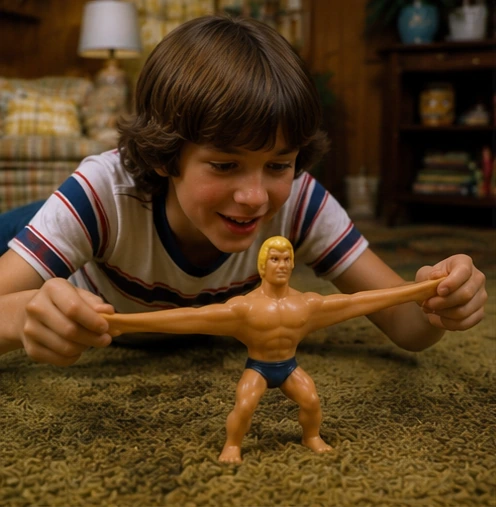
Stretch was much larger than the small figures that soon dominated the aisle. His height and weight made him an event before the feature started.
Traditional figures used joints. Stretch used the flexibility of the entire body. He could not hold a precise elbow angle, but he could wrap an arm around a chair.
Many action figures depended on weapons, outfits and vehicles. Stretch arrived almost empty-handed because his body was the accessory system.
Licensed heroes brought television and movie plots into the room. Stretch’s story began with the current experiment and ended with whether he returned.
Hard plastic survived scratches and missing accessories. Stretch survived pulling until the skin or filling failed, after which the damage became much more dramatic.
Small figures were easy to store in groups. One Stretch occupied significant space and aged according to chemistry rather than simple wear.
A conventional figure is often remembered by character. Stretch is remembered by touch, resistance, weight and the day something leaked.
That difference is why he belongs under the broad 70s Action Figures story while still needing a complete history of his own.
The original strongman created the hit, Stretch Monster supplied the rivalry and the final creatures pushed the idea into increasingly strange territory.
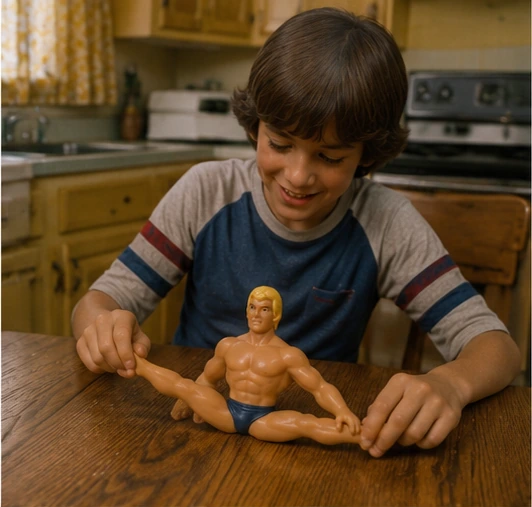
The muscular blond figure turns one physical behavior into a complete toy craze: grab, pull, watch him grow and wait for him to return.
Kenner adds a green reptilian opponent and turns household stretching into a proper hero-versus-monster wrestling match.
Catalogs continue featuring Stretch Armstrong and Stretch Monster while creatures such as Stretch Octopus and Stretch Serpent broaden the gimmick beyond one muscular hero.
The see-through invader pushes the line’s body-horror curiosity even further as franchise toys begin dominating more of the aisle.
The company was still proving that a single original feature could create a hit just before licensed figures changed its future.
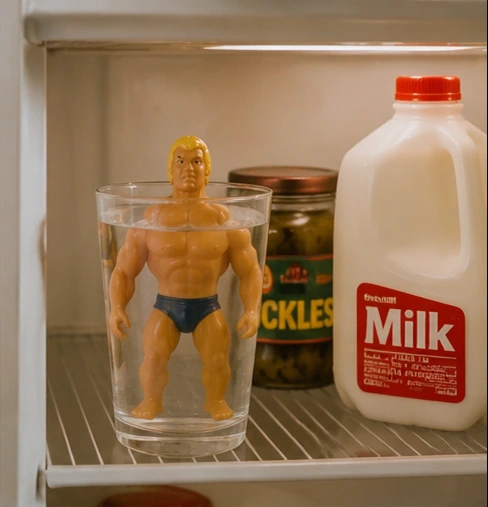
No movie studio supplied the name, costume or audience. Kenner controlled the concept from body shape to filling formula.
The company’s strongest products often made a physical behavior easy to understand. Stretch converted chemistry and material science into one obvious action.
Within a year, Kenner’s business would become closely associated with small licensed figures, vehicles and playsets. Stretch represented another path: one large original character built around a proprietary gimmick.
Star Wars figures needed a growing fictional world. Stretch needed another pair of hands. One encouraged collecting characters; the other encouraged testing material limits.
Stretch’s silhouette was simple. The act of pulling him created the brand identity more strongly than costume or story.
Monster, Octopus, Serpent and X-Ray changed the character design while keeping the same physical promise. Kenner treated elasticity as the franchise.
He belongs to the moment immediately before toy aisles became increasingly organized around movies, television and long character lists.
A stretchy hero was interesting. A stretchy hero fighting a reptilian monster made the line feel like a complete action-figure universe.
Kenner followed the original success with Stretch Monster, a green creature whose scales, teeth and broad body turned the same material idea into something deliberately unpleasant.
Stretch Armstrong’s skin hid the syrup inside a human body. Stretch Monster’s colors and creature sculpt made every bulge and distortion look natural.
Rigid opponents could be wrapped or knocked over. Stretch Monster could pull back, tangle limbs and survive the same experiments.
Stretch Armstrong finally had a reason for the strongman pose. The trunks, blond hair and square jaw looked more heroic beside a green reptile.
Two gel-filled latex figures meant twice the weight, twice the pulling and twice the chance that something sticky would happen.
Many children owned the villain instead of the hero or remember the green figure more clearly because the design was so strange.
Stretch Monster belongs in the same story because the hero and villain were designed as one elastic rivalry. The broader world around them remains part of the 70s Action Figures page.
Once Kenner proved children would buy one corn-syrup creature, the logical next step was apparently an entire elastic biology department.
An octopus offered more places to pull and a body shape that did not need to remain heroic. The creature pushed the concept toward preschool-friendly oddity.
A snake-like body fit the gimmick naturally. Stretching no longer distorted the character; it exaggerated what a serpent was already designed to do.
The see-through invader used visible internal details to transform the old question—what is inside?—into the selling point.
There was no carefully managed fictional universe. The shared connection was material behavior. If it could stretch and look memorable in a catalog, it belonged.
Licensed and regional versions appeared in multiple markets, creating differences in packaging, colors and character selections that complicate collector identification.
Every variation changed the body shape but preserved the moment children wanted: grab two points, move apart and watch something impossible happen. That strange extended family belongs naturally with the forgotten 70s toys that deserve another look.
A physical gimmick that required almost no translation naturally traveled far beyond one American toy aisle.
Companies outside the United States produced or distributed Stretch figures under license, sometimes changing packages, markings or small visual details.
Language, retailer requirements and local marketing created packaging that does not match the familiar Kenner box while still belonging to the original era.
Different markets experimented with heroes, creatures and familiar licensed forms built around similar fillings and skins.
Once Stretch proved the demand, competing companies produced gel-filled, elastic and vacuum-based figures. Some were close copies; others used entirely different mechanisms.
A figure without American Kenner markings may be a licensed regional version rather than a counterfeit. Packaging and catalog evidence matter.
Current licensed products can reproduce classic colors and names. Date marks, material differences and package branding help establish the era.
No translation was needed once two hands pulled the figure apart. That simplicity helped Stretch become recognizable far beyond his original market.
A sealed rubber body filled with red goo was never going to receive a calm, accurate explanation from children.
The red or amber filling looked biological when it leaked. It was a concentrated sugar-based gel, not blood.
Playground stories made the mess more dangerous than it was. The filling was not intended for eating, and old material should be handled carefully, but the famous secret was corn syrup rather than military waste.
Advertising emphasized strength, not literal indestructibility. Latex has limits, seams fail and concentrated force creates punctures.
Cold made him harder and slower. It also increased risk, especially for old material. The experiment was memorable, not recommended.
The original line and later revivals included several villains and regional variations. Molded marks and body design matter.
A small patch could slow a pinhole. It could not restore missing filling, damaged seams or brittle skin.
Survivors exist, but intact flexible examples are difficult to find because play, temperature and time damaged the materials.
A blond rubber strongman is not automatically a 1976 original, especially after several revivals and decades of lookalikes.
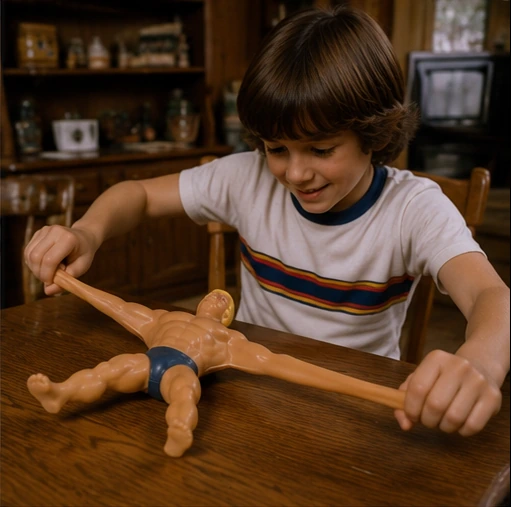
Look for molded Kenner identification, copyright details and production markings. Placement and wording can vary, so compare with documented examples.
The face, painted features and molded blond hair help separate the original design from later versions that modernized the expression or proportions.
Color, shape and construction are version clues. Repainted or replaced trunks can make an original body look incorrect or a later body look older.
Loss of filling reduces weight. Hardened gel can distort dimensions. A measurement alone does not establish originality, but it helps identify obvious mismatches.
Original seams, adhesive patches, glued punctures and replacement skin tell the figure’s history. Repairs should be documented rather than hidden.
Uneven limbs, hard areas, collapsed sections and discoloration suggest internal changes. Do not puncture a figure to confirm what is inside.
Box graphics, inserts and care sheets identify release details. A real box can still be paired with the wrong figure, so all evidence should agree.
Later Stretch Armstrong releases are legitimate toys with their own collector appeal. They should not be represented as original Kenner production.
A solid plastic figure can sit in a box for decades. Stretch contains aging latex, moving gel and seams that spent their working life under tension.
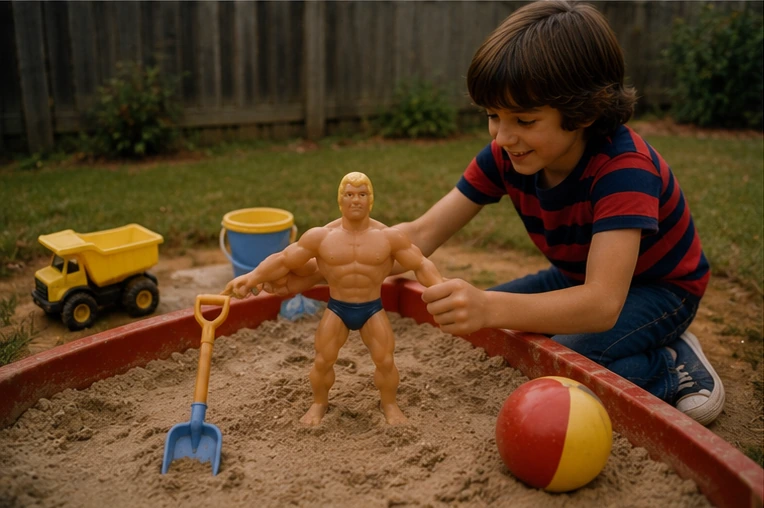
Age, oxygen, light and temperature slowly change the outer skin. A figure can look intact while losing flexibility.
The gel may become uneven, watery or solid in places. Those changes affect weight, appearance and the ability to return to shape.
Stored standing or hanging, the heavy filling can settle into the lowest areas. Limbs or torso sections may remain enlarged.
Adhesives dry, shrink and react with latex. A patch that held for years may create a hard edge where a new tear begins.
The face can remain attractive on a body that no longer stretches, or the material can stay flexible after the paint has rubbed away.
A boxed figure may have experienced attic heat, basement dampness or internal leakage. The sealed appearance can hide serious material failure.
Testing maximum stretch can turn a valuable survivor into a leaking example. Many collectors preserve originals for display and use a reissue for demonstration.
The best preservation plan is boring: stable temperature, low light, support and no heroic demonstrations.
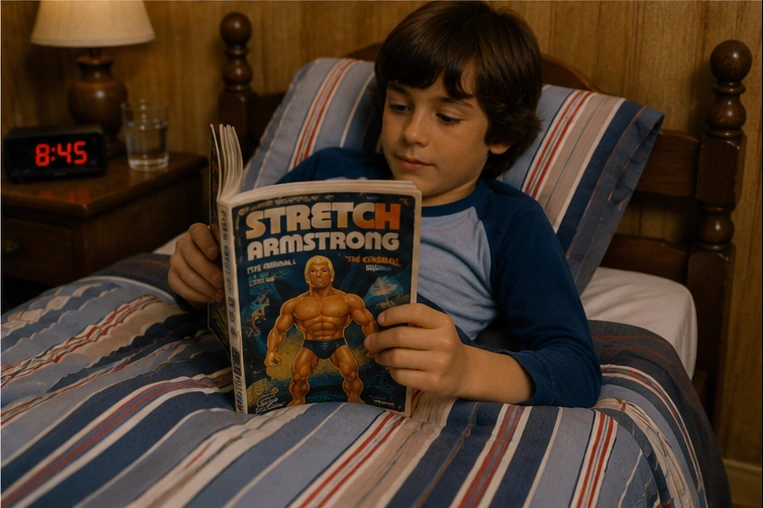
Avoid attics, cars, radiators, freezers and direct sunlight. Repeated heating and cooling stresses both skin and filling.
Store Stretch flat or in a fitted cradle so the heavy interior does not pool into one limb.
Acid-free tissue and archival supports are safer than colored foam, vinyl bags or newspaper that may transfer chemicals and ink.
A figure that feels damp or sticky should be evaluated before being enclosed. Sealing contamination can accelerate damage.
Clean dry hands and gentle support reduce oils, pulling and accidental drops. Do not lift a vintage figure by one limb.
Images help track changes in swelling, color and repairs. Slow deterioration becomes easier to recognize when compared year to year.
Opening the body and replacing gel is major intervention. It can preserve display shape while permanently altering originality.
The name attracts high asking prices, but the market cares about whether the figure is original, complete, intact and still shaped like Stretch Armstrong.
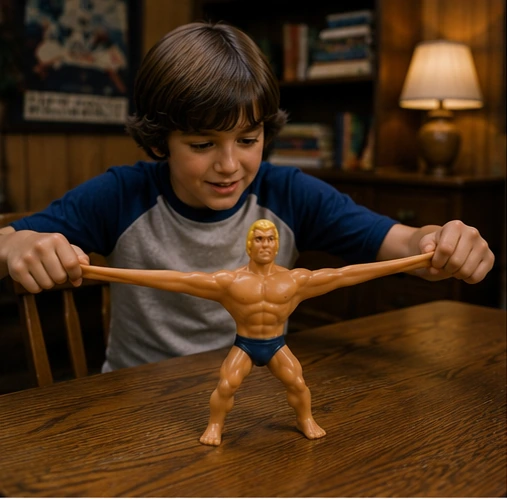
Original Stretch, Stretch Monster, X-Ray and other figures differ in rarity and demand. International variations can create additional complexity.
Leaks, tears and hardened patches affect both appearance and function. A repaired figure should be evaluated as repaired.
A soft figure may be more desirable than a rigid one. Aggressive testing can destroy the condition being evaluated.
A partially empty figure may look collapsed or uneven. Replacement gel changes originality even when the silhouette improves.
The toy is still a character figure. Strong facial paint and correct clothing matter alongside the material condition.
Original packaging, inserts and care sheets can significantly increase interest because they identify the release and rarely survived childhood.
Use completed sales for the same version and condition. A sealed-looking box, leaking loose figure and professionally restored display piece are not comparable objects.
For current pricing, compare recent completed sales for the same version and condition. A repaired loose figure, an intact flexible original and a boxed example are three very different collectibles.
The gimmick remained unforgettable, but the toy aisle was shifting toward smaller figures, bigger fictional worlds and collections that could expand for years.
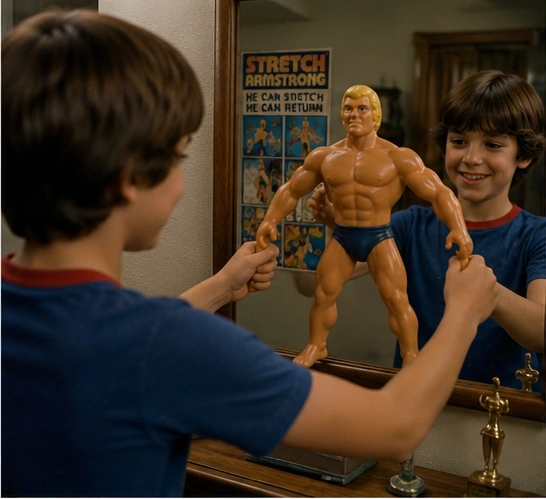
Kenner could change the body into a monster, octopus, serpent or transparent invader. Every new figure still answered the same question. Children eventually understood the mechanism even when the sculpt changed.
Latex, seams and gel created a toy that could fail dramatically. Returns, leaks and damaged figures were more complicated than replacing a missing plastic weapon.
A child could own several small action figures for the space required by one Stretch toy. Building a complete elastic cast demanded money and storage.
Star Wars, television heroes and other character lines offered named figures, vehicles and playsets connected to stories children already knew. The toy aisle shifted from one-feature demonstrations toward entire universes.
The simplicity had helped him become famous. It also made long-term expansion difficult. Stretch Monster created a rivalry, but there was no weekly show introducing new villains and locations.
Stretch X-Ray pushed visible anatomy and creature design as far as the concept reasonably needed to go. The line had become stranger while the wider market became more franchise-driven.
Production could slow while the idea remained instantly recognizable. Children remembered the physical experience more clearly than many larger lines with dozens of characters.
Each return introduced Stretch to people who had heard the stories or remembered the original. The product could vanish from shelves for years and still explain itself in one pull.
Stretch Armstrong belongs tightly to the late 1970s because the original figure, monster and final oddities arrived within a concentrated period. The toy did not slowly evolve out of recognition. It left behind the exact image Gen X remembered.
The original formula was too visually clear to stay gone: pull him several feet, release him and watch a new generation react.
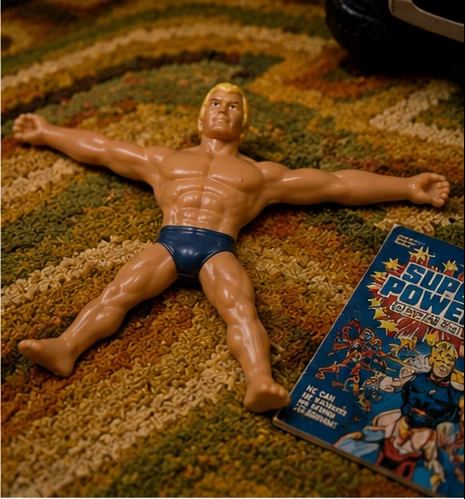
Hasbro has described Stretch Armstrong as a 1976 classic that returned in the 1990s and again through later licensing and entertainment projects. A 2016 revival brought the classic figure back as Hasbro expanded the character into a new animated series.
New materials and styling refreshed the figure while preserving the central stretch-and-return experience.
Hasbro promoted the classic character again around his 40th anniversary period, proving the 1976 silhouette still carried recognition.
Stretch Armstrong and the Flex Fighters turned the name into a superhero team concept. The original toy had worked without any narrative beyond “see what happens when we pull him.”
Current licensed versions use updated fillings and include classic-style Stretch, X-Ray and other figures. The mechanism remains understandable without instructions.
Collectors can preserve a fragile original while using a modern version for the behavior that made the toy famous.
Children still understand Stretch instantly. The technology has changed less than the packaging around it because the physical reaction remains the product.
Some toys survive in memory through a theme song or character name. Stretch survived through weight, resistance, smell and the feeling that the skin was getting thinner in your hands.
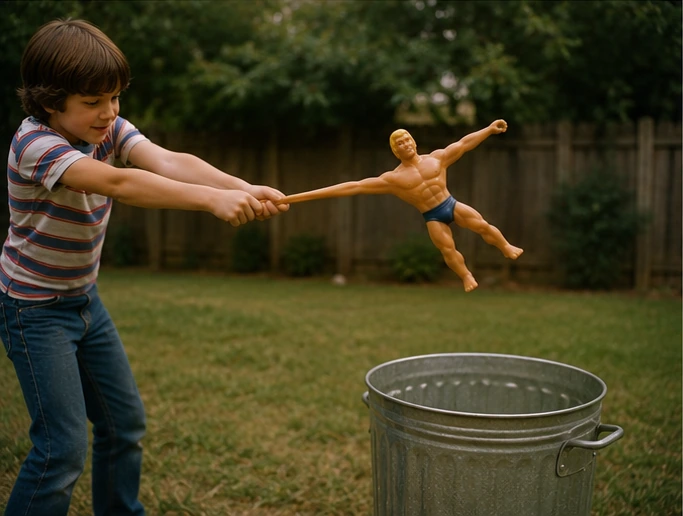
Picking Stretch up created the first surprise. The body was denser than it looked, and that heaviness made the figure feel expensive, strange and slightly alive.
A normal rubber toy stretched easily or snapped back. Stretch pushed against your hands. The slow extension made children aware that material was moving inside and that the experiment had a limit somewhere.
Muscles flattened, limbs narrowed and the surface became taut. Children could watch the figure transform while feeling the exact force required to keep it there.
After release, Stretch did not instantly erase the evidence. The body shortened gradually, filling back out while everyone watched to see whether the original shape would return.
Rubber, old packaging and, in unfortunate cases, exposed syrup created details no photograph can reproduce. Those sensory fragments are why the toy feels so specific decades later.
Every stretch carried a small possibility that the skin might fail. Children wanted to avoid breaking the toy and discover exactly what would happen if it broke. That contradiction kept the experience tense.
Videos explain the gimmick. A modern reissue can reproduce much of the feel. The original memory came from holding the weight, hearing another child say “a little farther” and deciding whether to listen.
He was a superhero, stress test, wrestling opponent and forbidden science experiment sealed inside one tan rubber body.
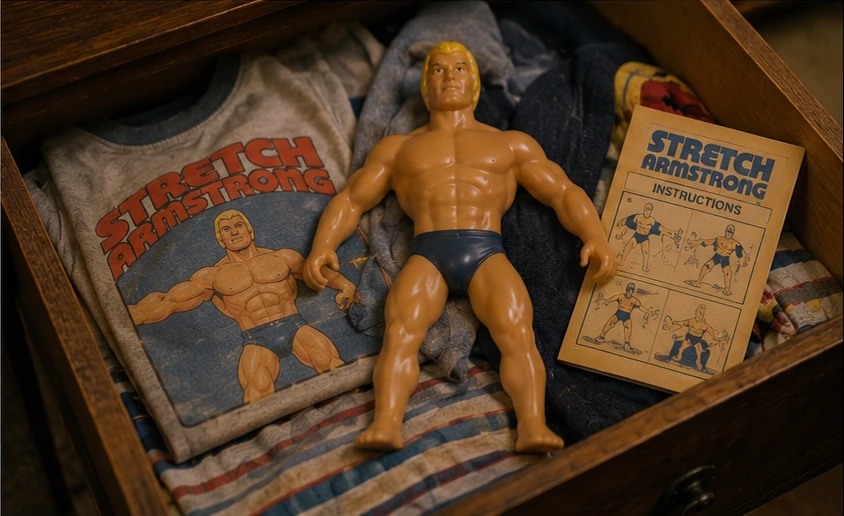
The question “how far can he go?” created the activity. There was no separation between learning the feature and playing with it.
One child could hold him. Two children made the experience larger. A group created a demonstration everybody remembered.
The weight, texture and soft body made Stretch feel unusual even at rest.
A successful stretch led to a longer stretch, a knot, a wrestling match or a temperature experiment.
Children could feel something shifting inside but could not see it until the day they absolutely should not have seen it.
The leaks, Band-Aids and sticky endings are remembered as clearly as the intact toy.
That is why Stretch ranks among the most iconic toys of the 70s. He did not need a media franchise or a giant accessory system. The physical behavior was enough.
Inside the wider 70s toy box, Stretch sits beside Evel Knievel launching into furniture, Big Wheels rattling across the driveway and Hot Wheels racing on orange track as proof that Gen X toys were often loudest when they challenged the laws of the house.
The figure was simple to understand and surprisingly complicated to keep alive for fifty years.
Kenner introduced the original Stretch Armstrong in 1976. The figure quickly became one of the decade’s most recognizable feature-driven toys and remained prominent through the late 1970s.
The original figure used a flexible latex-rubber skin filled with a thick gel based on concentrated or gelled corn syrup. The dense filling helped the figure stretch and then slowly return toward its original shape.
Period descriptions commonly said the roughly 13-to-15-inch figure could stretch to about four feet, with some later Hasbro descriptions saying four to five feet. Real results depended on temperature, condition and how evenly the figure was pulled.
The body was filled with a dense sugar-based gel rather than hollow air or light stuffing. That made Stretch feel unusually heavy and solid before anybody pulled an arm.
The elastic latex skin wanted to contract while the thick internal gel redistributed through the body. After release, the figure slowly shortened and filled back out instead of snapping instantly into place.
Original instructions and period collector references describe using an adhesive bandage for a small puncture. A tiny repair might slow a leak, but larger tears or hardened filling were much more difficult to fix.
No. The red or amber interior inspired years of playground rumors, but the famous filling was a thick corn-syrup-based gel. A leaking vintage toy is still a sticky mess and should not be eaten or handled as food.
Stretch Monster was Kenner’s green reptilian opponent for Stretch Armstrong, added after the original figure became successful. The villain used the same basic stretch-and-return idea with a much stranger monster design.
The late-1970s Kenner line included Stretch Monster and additional oddities such as Stretch Octopus, Stretch Serpent and Stretch X-Ray. They shared the same basic appeal: a body that could be pulled into an impossible shape and slowly recover.
Cold can make the filling and old latex less flexible. Vintage examples should be kept at a stable room temperature and never frozen for experimentation because aged material can crack or fail.
Check molded manufacturer marks, body sculpt, hair and face details, trunks, skin color, size, weight, seams, package style and surviving instructions. Modern reissues can look similar, so exact markings and materials matter.
Yes. Intact originals are difficult to find because the latex, seams and filling deteriorated through play and storage. Value depends heavily on exact version, flexibility, leaks, repairs, discoloration, completeness and packaging.