Craft Kits Made a Mess: 70s Art Toys, Lite-Brite, Spirograph & Shrinky Dinks
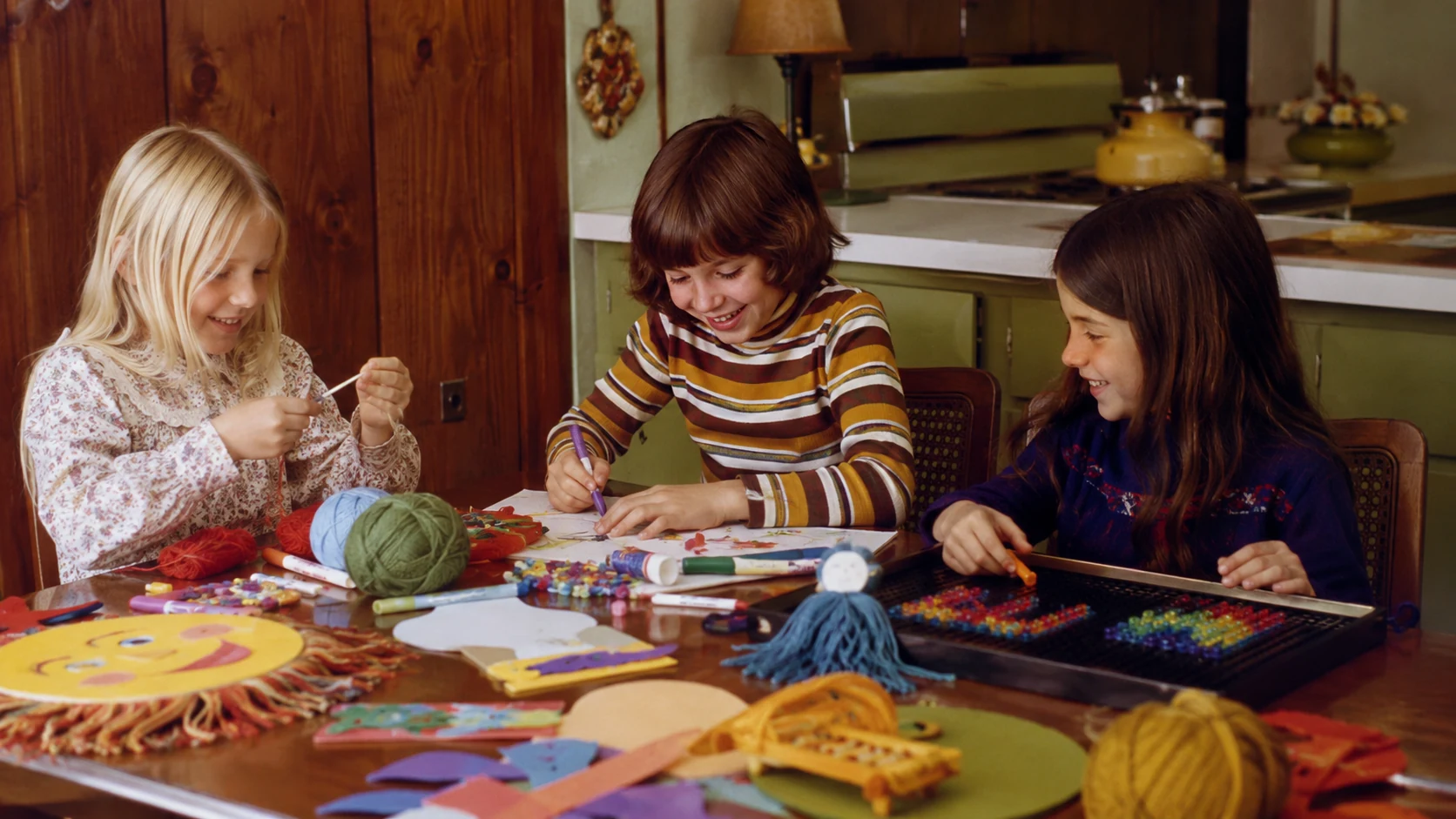
70s Craft Kits Lite-Brite, Spirograph and Shrinky Dinks
Before creativity had filters, undo buttons and perfectly clean screens, kids made things with pegs, pens, glue, yarn, plastic sheets, paints, beads, scissors and the confidence to permanently change at least one kitchen table.
This deep dive revisits Lite-Brite, Spirograph, Shrinky Dinks, Fashion Plates, Etch A Sketch, Play-Doh, latch hook kits, potholder looms, paint-by-number sets, velvet posters, model kits and the household mess that proved something real had been made.
The Kitchen-Table Studio
Craft Kits Made a Mess
Pegs, pens, yarn, paint, glue and tiny parts transformed the family table into a working creative laboratory.
What Defined 70s Craft Kits and Creative Toys?
Seventies craft kits were hands-on toys built around drawing, coloring, weaving, sculpting, assembling and transforming real materials. The biggest creative names included Lite-Brite, Spirograph and Etch A Sketch, Shrinky Dinks, Fashion Plates, Play-Doh, latch hook kits, potholder looms, paint-by-number sets, velvet posters, model kits, beads and string art. The process mattered as much as the finished project.
Essential 70s Craft Kits and Creative Toys
The great 70s craft table mixed drawing machines, glowing pegboards, heat transformation, textile projects, paint kits and free-form supplies. The common thread was simple: the child had to make the result.
Why 70s Craft Kits Felt Different
Most toys arrived ready to use. Craft kits arrived as potential. The useful or decorative object existed only after the child sorted the pieces, followed the process, made decisions and survived the part where the instructions stopped feeling obvious.
That made every project personal. Two kids could open identical kits and produce different results because color choices, patience, mistakes and improvisation became part of the object. The kit supplied boundaries without completely controlling the outcome.
Craft toys also created a slower play rhythm. They rewarded concentration, repetition and waiting. Glue had to dry. Paint had to set. Yarn had to be hooked one piece at a time. The project could not be rushed without leaving evidence.
Tools and physical limits turned line-making into a repeatable challenge.
The material changed shape, scale or texture and made the process feel slightly magical.
Repetition slowly built something tactile, decorative and occasionally useful.
Guided assembly taught patience while glue and paint tested the household.
The Kitchen Table Became the Studio
70s craft kits did not politely stay in one corner of the house. They spread. The kitchen table became an art studio. The coffee table became a cutting station. The floor became a drying rack. The couch became a place where yarn somehow appeared even though nobody remembered bringing yarn over there.
A craft kit usually began with ambition and ended with evidence. Newspaper got spread out like that would protect anything. A parent said, “Do not get this on the table,” which immediately confirmed something was absolutely getting on the table. The box promised beautiful results. The actual results depended on patience, coordination, lighting, drying time, and whether the family scissors had already been used to cut something sticky.
That was the charm. These toys were not passive. They asked kids to make something. Not imagine it, not move it around, not watch it light up — make it. The finished product might be a crooked potholder, a lumpy latch-hook square, a melted plastic charm, a questionable velvet poster, or a Spirograph design ruined by one tragic pen slip. But it was yours.
Craft kits gave kids a different kind of play loop: open the box, dump out the parts, misunderstand the instructions, make a mess, produce something half-amazing, abandon the cleanup, and proudly present the final object like the household had not suffered enough.
They also created a special kind of silence. Not peaceful silence, exactly. More like “something is happening and an adult should probably check on it” silence. A kid hunched over a table with glue, paint, yarn, or shrink plastic was not necessarily being good. They were concentrating. There is a difference, and the table usually knew it first.
Lite-Brite, Spirograph and Etch A Sketch
The great drawing toys of the 70s did not imitate a blank sheet of paper. Each one created its own physical language. Lite-Brite used pegs and light. Spirograph used gears and repetition. Etch A Sketch used horizontal and vertical motion that had to be coordinated through two knobs.
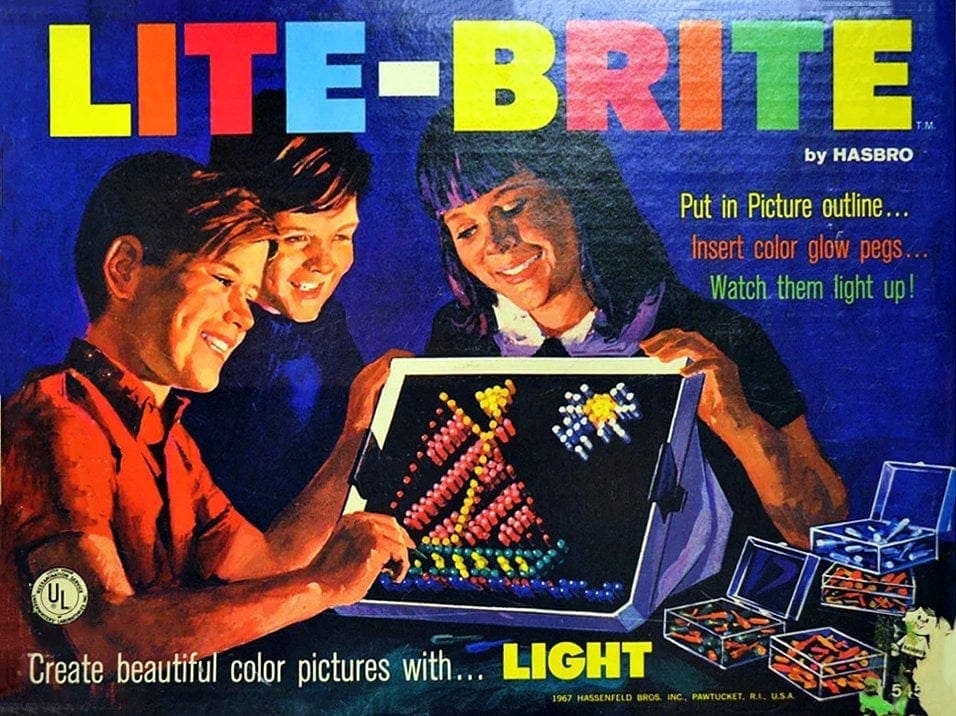
Lite-Brite: Tiny Pegs, Big Glow
Lite-Brite made picture-making feel electronic without becoming a video game. Kids pushed colored pegs through black paper into a lighted board, building patterns one glowing dot at a time. Templates made recognizable pictures possible, while blank sheets invited original designs and spelling experiments.
The appeal came from contrast. Ordinary plastic pegs looked almost insignificant until the light came on. Suddenly the room changed and the picture felt more impressive than the same design would have looked in crayon. The downside was inventory control. Pegs rolled, vanished into carpet and appeared years later in places no reasonable peg should have reached.
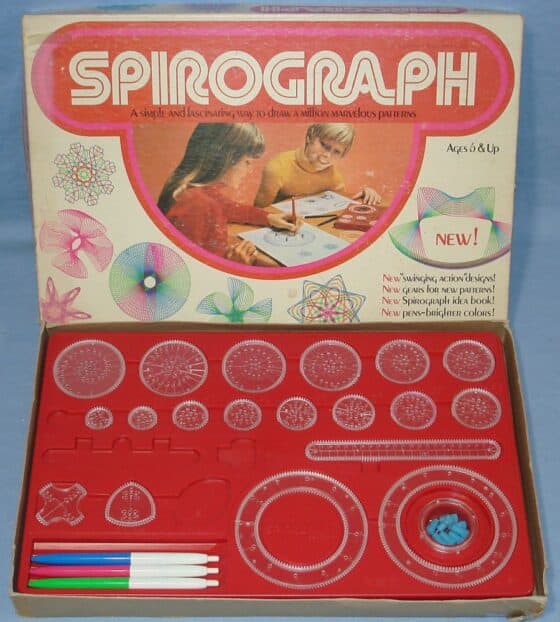
Spirograph: Mechanical Geometry With Pen Pressure
Spirograph used plastic rings, gears and pen holes to turn circular motion into elaborate geometric designs. The system looked mathematical and orderly, but successful results depended on very human variables: keeping the gear engaged, holding the ring still and not lifting the pen at the wrong moment.
The best designs felt far beyond what a kid could draw freehand. That was the magic. The machine expanded ability without completely removing skill. One small slip remained visible, but a second color could sometimes turn the accident into a design choice.
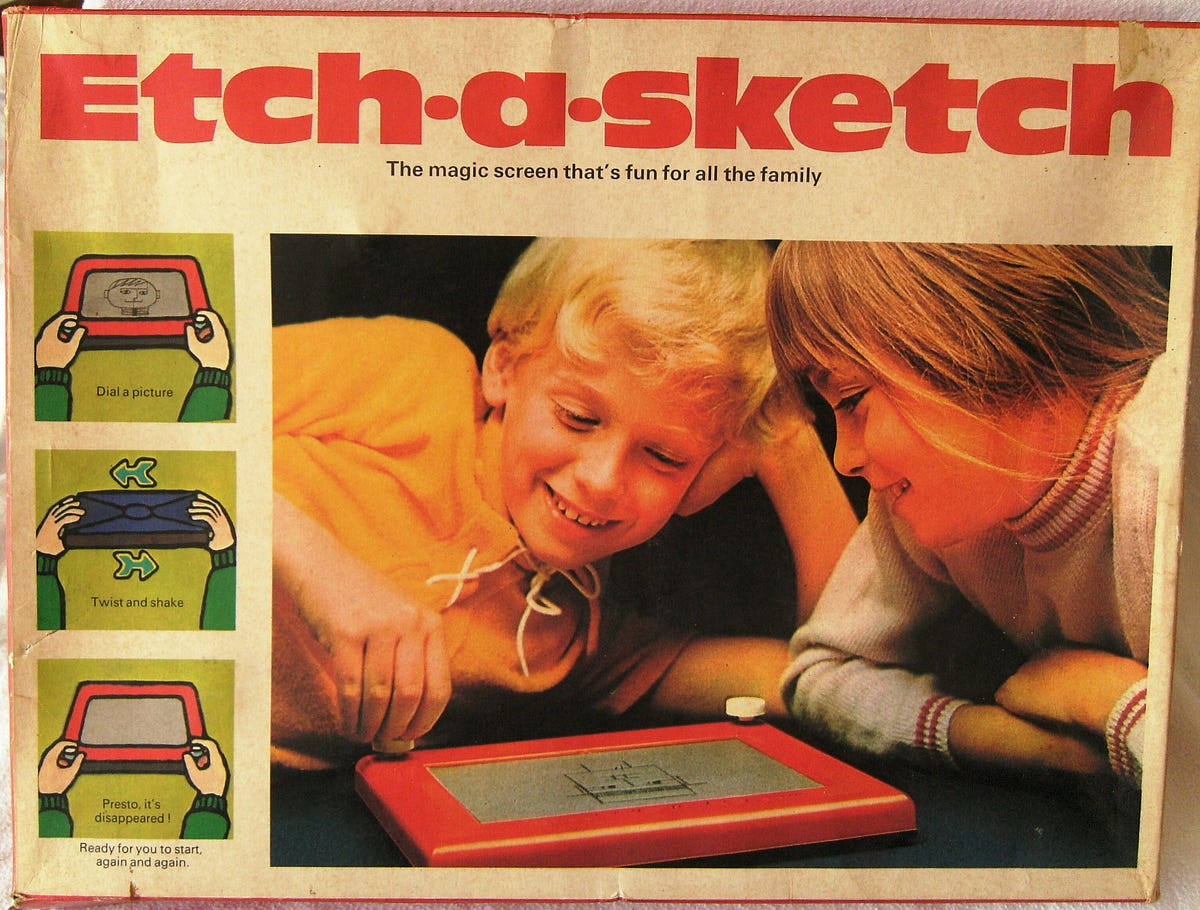
Etch A Sketch: Drawing Without an Undo Button
Etch A Sketch was less a traditional craft kit than a mechanical drawing challenge. One knob controlled horizontal movement, the other vertical movement and curves required both hands to cooperate. A simple house was achievable. A recognizable face suggested supernatural talent.
Erasing was dramatic. The whole drawing disappeared together. There was no saving the good section or correcting one corner. Shaking the screen meant surrendering the entire composition and beginning again.
Shrinky Dinks, Fashion Plates and Play-Doh
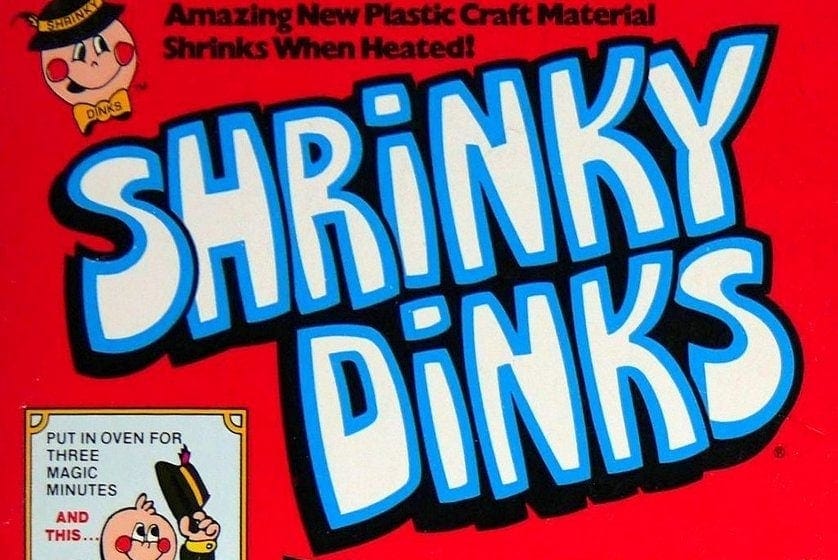
Shrinky Dinks: The Oven Became Part of the Toy
Shrinky Dinks delivered one of the decade’s most satisfying transformations. Kids drew and colored on thin plastic, cut out the shapes and watched through the oven door as the pieces curled, twisted and finally settled into smaller, thicker versions of themselves.
The waiting was part of the excitement because the project appeared to go wrong before it went right. The plastic curled dramatically enough to make everyone question the instructions, then flattened into a finished charm or decoration. The process felt like kitchen chemistry with crayons.
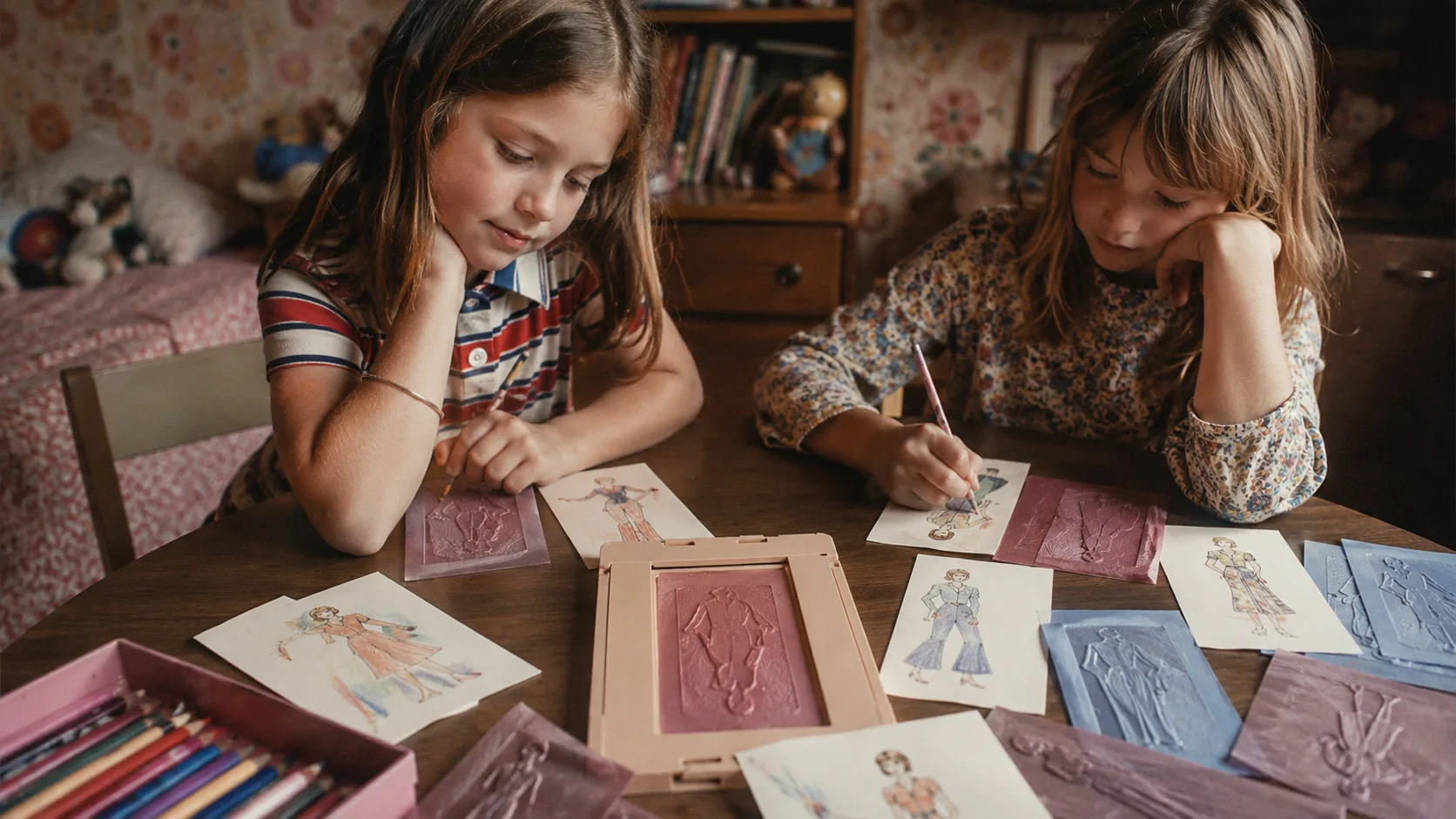
Fashion Plates: A Design Studio in a Plastic Case
Fashion Plates turned outfit design into a modular system. Kids selected head, torso and leg plates, placed paper over the arrangement and rubbed across the textured surface to reveal a complete fashion figure. Different plate combinations made the activity reusable before coloring even began.
The toy succeeded because it lowered the hardest part of fashion illustration without eliminating creativity. The figure and clothing outlines appeared cleanly, but the colors, patterns, textures and final styling still belonged to the child.
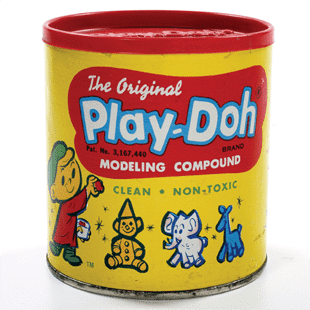
Play-Doh: Reusable Sculpture Until the Colors Met
Play-Doh made sculpting approachable because mistakes could be flattened and reused. Kids rolled, cut, pressed and molded the soft compound into food, animals, people and unidentifiable objects that were still presented with confidence.
The creative freedom came with an unavoidable color problem. Separate bright tubs rarely stayed separate. Eventually red, blue, yellow and green became a single historical record of every project that had come before.
Latch Hook, Potholder Looms, Beads and Macramé
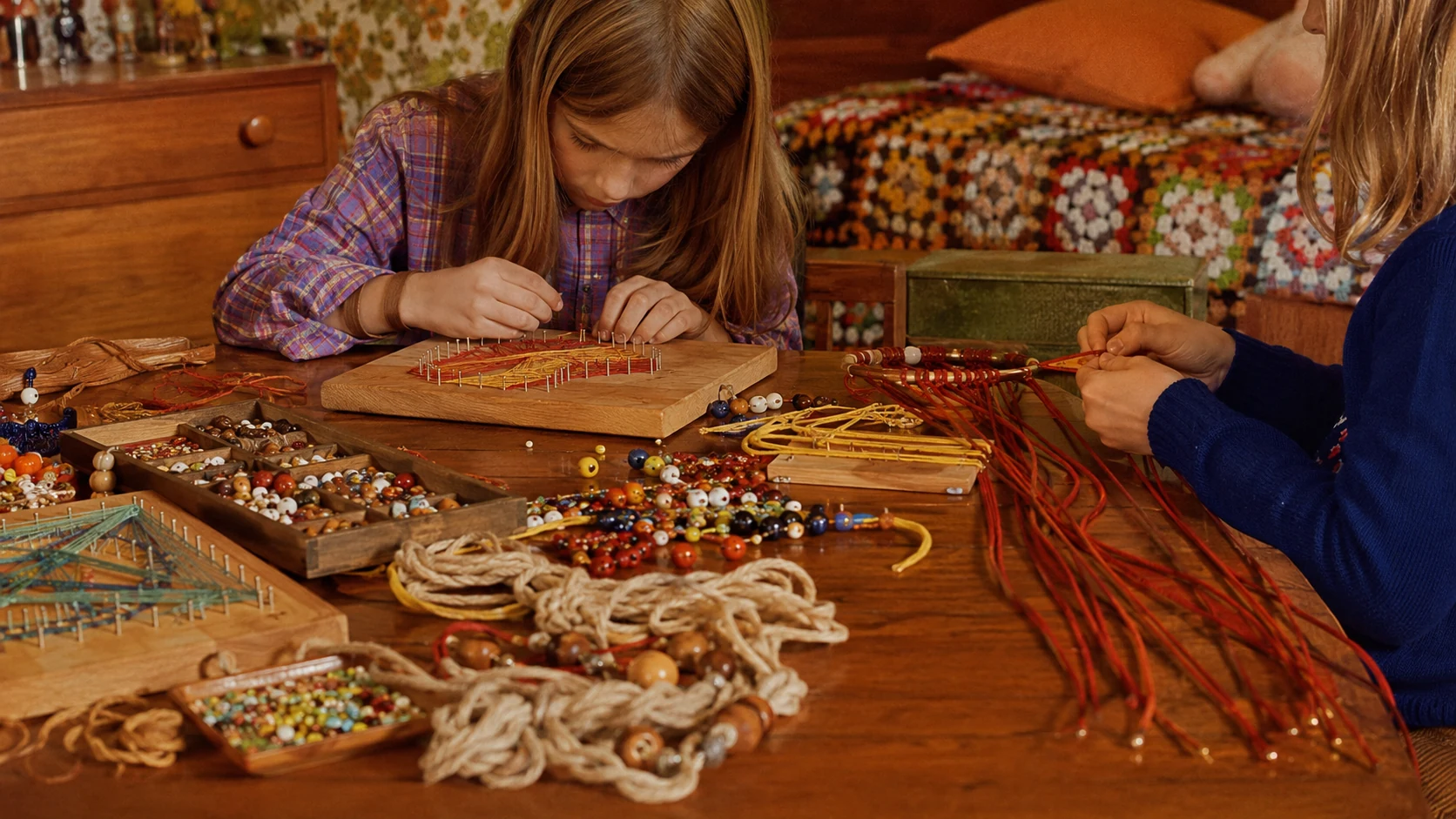
Fiber crafts were the slow-burn side of the 70s creative table. They did not produce instant glowing pictures or dramatic oven transformations. They asked for repetition: one yarn piece, loop, knot or bead at a time until a pattern finally appeared.
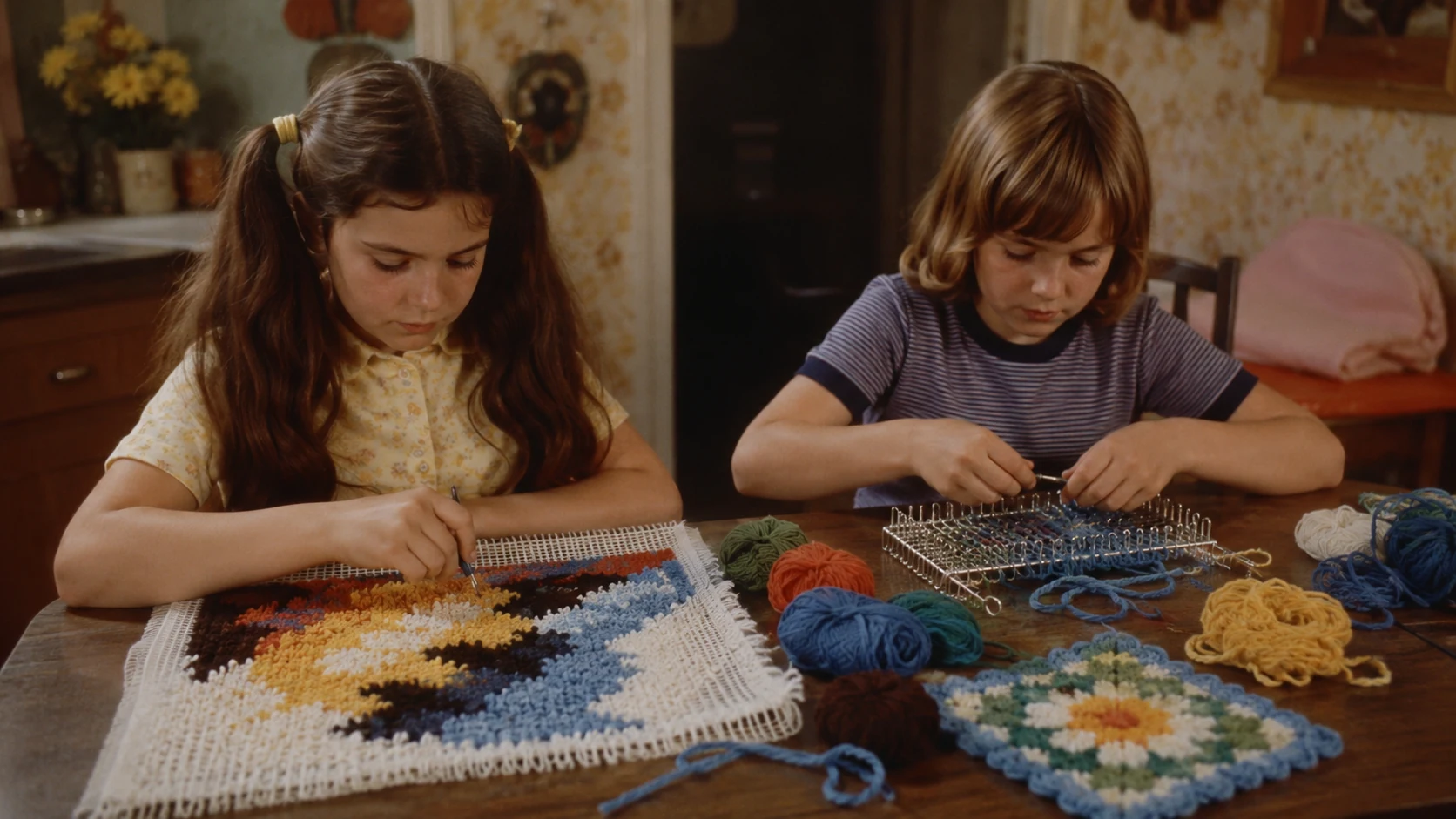
Latch hook kits used printed grids and short yarn bundles to create rugs, pillows or wall hangings. The method was repetitive enough to become calming and precise enough that skipped squares remained obvious. Finishing a large design felt substantial because the project contained visible hours.
Potholder looms promised usefulness. Stretchy fabric loops crossed over and under each other on a small frame until they became a square household object. The finished potholder was often given to a parent or grandparent, who displayed appropriate gratitude while quietly evaluating its relationship with actual heat.
Bead kits, friendship jewelry, string art and macramé expanded the same idea. Materials became decorations through pattern and patience. The results ended up on walls, around necks, hanging from plants or occupying drawers because nobody was emotionally prepared to throw them away.
Latch Hook
Short yarn pieces slowly became shaggy pictures, rugs and pillows through one repeated knot.
Potholder Loom
Colored loops crossed into practical squares that became mandatory gifts for nearby adults.
Macramé
Knots and cord created wall hangings and plant holders perfectly suited to a brown-and-orange decade.
Bead Kits
Tiny pieces required sorting, stringing and the ability to recover after one catastrophic spill.
String Art
Thread wrapped around nails turned geometry into wall décor with mild hardware involvement.
Embroidery Sets
Simple patterns and colored thread introduced needlework through compact, gift-friendly projects.
Paint-by-Number, Velvet Posters and Model Kits
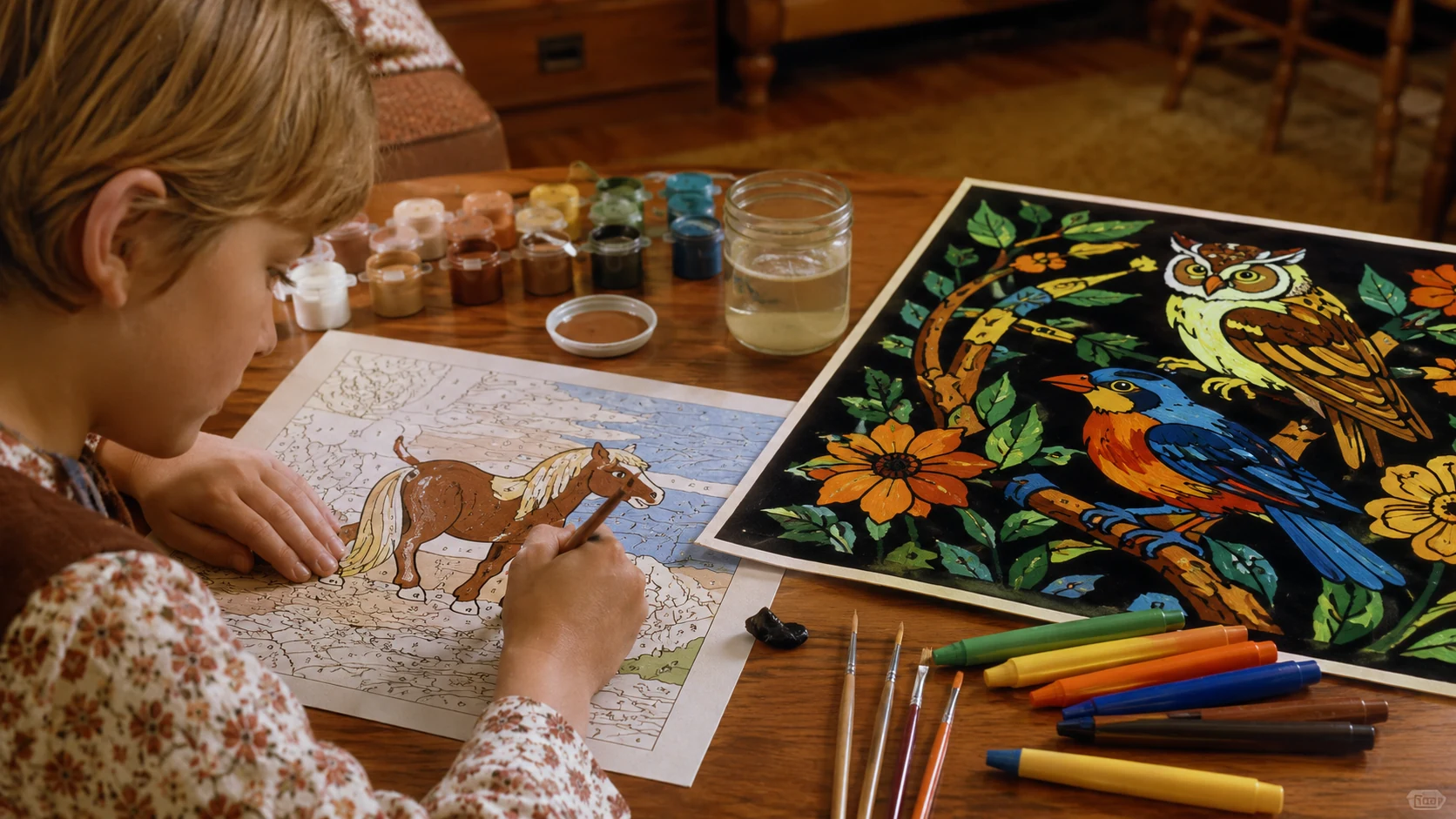
Paint-by-number kits promised a recognizable image through discipline. Each numbered space corresponded to a paint color, turning a blank panel into a map. The challenge was staying inside increasingly small boundaries while keeping the paint usable and the brush from hardening into a tiny stick.
Velvet posters offered a more forgiving system. Raised black lines separated areas and made bright markers or paints look intense against the dark surface. The finished image usually featured animals, fantasy scenes, hot rods, flowers or designs that felt completely at home under a bedroom blacklight.
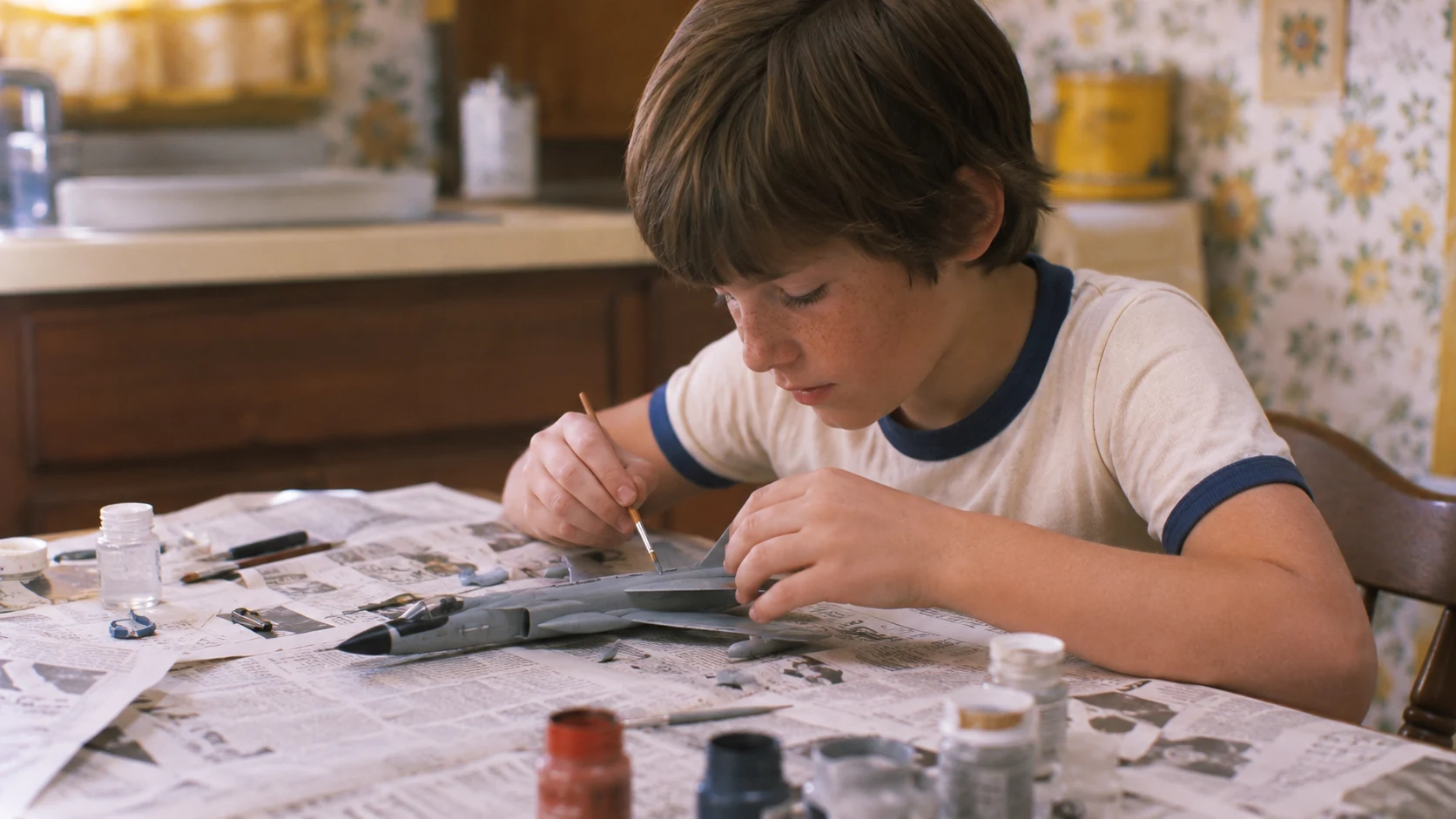
Model kits added engineering to the mess. Cars, planes, ships, monsters and science-fiction subjects arrived as plastic parts attached to sprues. Kids cut, glued, painted and assembled the pieces, often discovering that precision instructions and impatient hands were natural enemies.
These kits occupied the line between toy and hobby. A project might be completed in one afternoon or remain unfinished for months, still carrying one unpainted piece and a glue fingerprint that had become part of the design.
Why Craft Kits Felt Different
A lot of 70s toys created action. Cars rolled. Dolls lived. Board games argued. Backyard toys injured pride and occasionally elbows. Craft kits did something else: they slowed the room down. They made kids sit, focus, sort, line up, color, weave, trace, pin, cut, glue, and wait.
That patience mattered. A finished project could not be reset like a game. You could not reroll a dice or start over without consequences. If you colored outside the line, the mark stayed. If the Spirograph gear slipped, the design was wounded. If the Shrinky Dink warped weirdly, that was the object now. Craft kits taught commitment in the rudest possible way.
They also gave kids a sense of ownership. A toy car was manufactured. A doll was manufactured. A board game was manufactured. But a craft kit let you make the thing, even if the thing looked like a museum artifact from a civilization that had recently discovered markers.
That ownership made the project feel bigger than the materials. A handful of yarn became a rug. A sheet of plastic became a charm. A pegboard became a glowing picture. A frame of loops became a potholder. The transformation was the point. The kid got to watch plain supplies become proof that they had actually done something.
The Mess Was Part of the Memory
The mess is not a side detail. It is the memory. The smell of glue. The feel of yarn. The click of Lite-Brite pegs. The pen sliding inside Spirograph gears. The tiny plastic Shrinky Dink pieces cooling on the counter. The newspaper stuck to paint. The glitter that somehow migrated to places no craft project had permission to enter.
Parents tolerated craft kits because they looked educational, creative, quiet, and useful. That was the pitch. The reality was that these kits created a debris field. Tiny parts under the table. Dried paint lids. Markers with missing caps. Bent paper. Yarn knots. Plastic scraps. Beads with an escape plan.
And somehow, for Gen X kids, that was magic. Craft kits were messy because real making is messy. That is what made them feel more personal than toys that came fully finished in the box.
The mess also lasted. Long after the project was finished, the house kept finding evidence. A single bead in the hallway. A Lite-Brite peg in the vacuum. A fossilized glue drip. A piece of yarn attached to a sock. These toys did not end when the box closed. They left clues.
How a Real 70s Craft Session Came Together
The official instructions explained the project. The household supplied the newspaper, scissors, missing supplies, drying space and increasingly urgent cleanup commentary.
Claim the Table
Move the mail and spread newspaper with the confidence that it could stop paint, glue and gravity.
Dump the Parts
Inventory became optional the moment pegs, beads, yarn or plastic pieces touched the tabletop.
Read Some Rules
Follow the first half carefully, then begin improvising when patience and instructions separated.
Make It Personal
Change the colors, add extra details and quietly abandon the box’s perfect finished example.
Create a Drying Zone
Place the project somewhere inconvenient and announce that nobody may touch it for several hours.
Avoid Cleanup
Display the finished object proudly while pretending the table underneath belongs to another family.
How Craft Kits Fit the 70s Toy Timeline
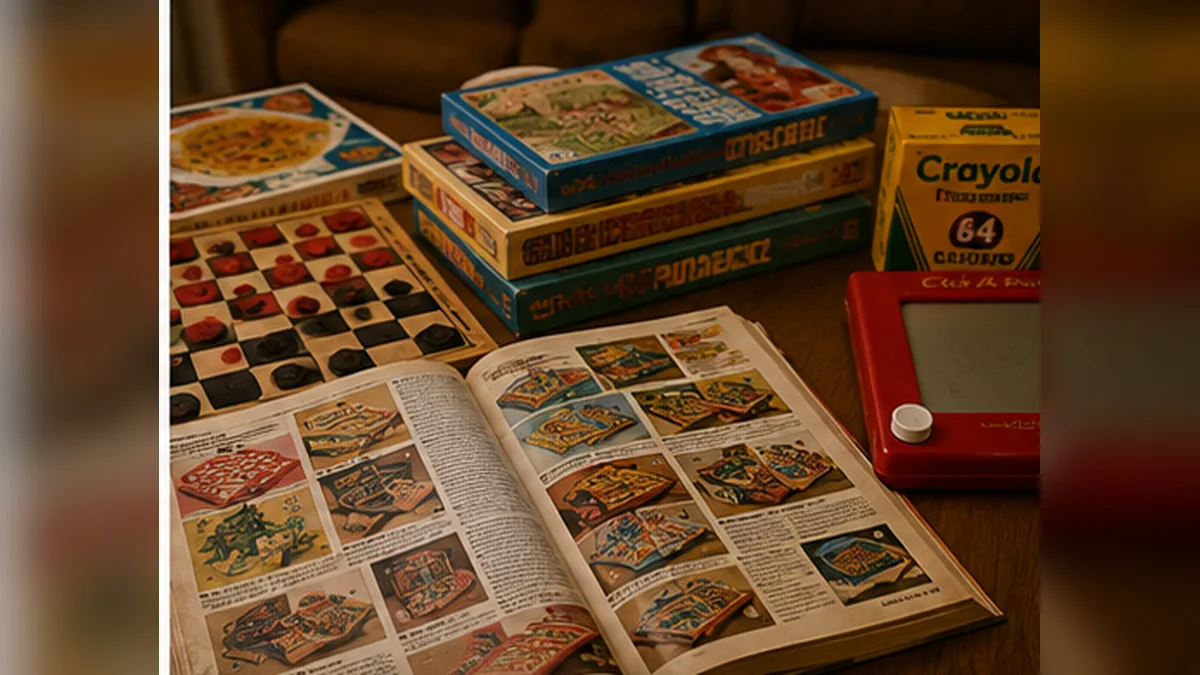
Craft kits sit across the entire 70s toy story because they represent the decade’s loose, analog, hands-on side. In the early 70s, toys still asked kids to bring a lot of imagination and patience to the table. Creative toys like Lite-Brite, Spirograph, and classic drawing toys fit that world perfectly, and plenty of that oddball hands-on energy also shows up in the forgotten 70s toys that deserve a comeback.
By the middle of the decade, transformation and activity kits became a bigger part of the toy experience. Shrinky Dinks, craft boxes, paint sets, hobby kits, and tactile projects gave kids a way to make objects, not just play with them.
By the late 70s, creativity toys started sharing shelf space with electronic games, action figures, Star Wars heat, and screen culture. Fashion Plates, design toys, LEGO building, maker-style kits, and electronic creativity gadgets all pointed toward a toy aisle that was getting broader, louder, and more specialized.
That is why craft kits belong beside the decade’s cars, dolls, board games, backyard toys, and early electronics. They show the quieter side of 70s play: the patient, tactile, imperfect side. The side where a kid could sit at a table and turn a box of supplies into something that had no resale value but enormous personal importance.
1970 Toys
Lite-Brite, Spirograph energy, classic drawing toys, family-room creativity, and the early-decade analog toy box.
1973 Toys
Shrinky Dinks, activity toys, transformation play, and the craft-kit table becoming a full household event.
1978 Toys
Fashion Plates, LEGO momentum, late-70s creativity toys, electronic beeps, and the toy aisle heading toward the 80s.
Early Electronics
The other late-70s shift: handheld games, Simon, Merlin, Speak & Spell, Big Trak, Atari, and glowing screens.
Forgotten 70s Toys
Overlooked craft-table oddities, weird toy-aisle experiments, and comeback-worthy plastic memories from the decade.
70s Toys
Return to the full toy hub for the bigger decade story.
1970 Toys
Lite-Brite, Spirograph, Etch A Sketch and drawing toys keep the early-decade table intensely analog.
1971 Toys
Creative play shares space with family toys, outdoor toys and the first stronger wave of electronic novelty.
1972 Toys
Catalog craft sets, family games and boxed activities make the kitchen table a major toy zone.
1973 Toys
Shrinky Dinks turn drawing, cutting and oven heat into one of the decade’s great transformation rituals.
1974 Toys
Reusable creative toys and cleaner repeat-play systems grow while the craft table remains gloriously untidy.
1975 Toys
Play-Doh, Magna Doodle and novelty toys keep making and drawing central to the toy box.
1976 Toys
Feature-driven toys grow louder, but model kits, yarn crafts and drawing sets still reward patience.
1977 Toys
Star Wars begins taking over imaginative play while kitchen-table creativity remains a separate hands-on world.
1978 Toys
Fashion Plates and LEGO-style building sit beside Simon and Speak & Spell as creativity meets the electronic future.
1979 Toys
Screens enter childhood, but paint, yarn, pegs, clay and model glue carry analog making into the 80s.
Why This Still Hits
Craft kits still hit because they capture a version of childhood that was physical, imperfect, and unpolished. There was no undo button. No template snapping into place. No digital correction. If you made a mistake, the mistake became part of the object, and then the object became part of the memory.
They also represent the best part of the 70s toy box: everything could become something else. A box could be a house. Yarn could be hair. Paper could be wallpaper. Plastic could shrink into a charm. Pegs could become light. A gear could become art. A mess could become a project.
These toys were not always clean, safe, efficient, or good-looking when finished. That is exactly why they matter. They made creativity feel like something you did with your hands, your time, your patience, and possibly a bottle of glue that should have been closed ten minutes ago.
The 70s craft table was where Gen X kids learned that making things was fun, failure was visible, cleanup was optional until someone yelled, and glitter is legally impossible to defeat.
They also hit because modern creativity can be too frictionless. Tap, drag, filter, undo, delete, repost. Craft kits had friction everywhere. Supplies ran out. Lines went crooked. Glue dried wrong. The project had weight. The mistakes were physical. The finished thing existed in the room with you, demanding either display or disposal.
That physical imperfection is the memory. A craft kit was never just about the object. It was about the hour at the table, the smell of the supplies, the sibling hovering too close, the adult pretending not to worry, the project drying on wax paper, and the pride of saying, “I made this,” even when “this” looked like evidence. The same overlooked, slightly chaotic charm is why so many forgotten 70s toys deserve a comeback in the first place.
The lasting appeal is physical evidence. A drawing on a screen can disappear. A crooked potholder, hardened model and tiny plastic charm continue occupying the house. They preserve the time, material and visible mistakes that created them.
That friction is what made the projects memorable. Supplies ran out. Paint dried. Yarn tangled. Pegs vanished. The finished object mattered because the process had resisted completion just enough to make success feel earned.
70s Craft Kits FAQ
What craft kits were popular in the 1970s?
Popular 70s creative toys included Lite-Brite, Spirograph and Etch A Sketch, Shrinky Dinks, Fashion Plates, Play-Doh, latch hook kits, potholder looms, paint-by-number sets, velvet posters, model kits, beads, string art and macramé.
Why were Lite-Brite and Spirograph so memorable?
Both toys made the process visible. Lite-Brite transformed small colored pegs into glowing pictures, while Spirograph turned plastic gears and pen movement into complex geometric designs.
How did Shrinky Dinks work?
Shrinky Dinks used thin drawable plastic sheets. Kids colored and cut the shapes, then an adult heated them so the pieces shrank into smaller, thicker charms or decorations.
Were Fashion Plates a late-70s toy?
Yes. Fashion Plates fit the late-70s design-toy moment by combining interchangeable clothing pieces, rubbing plates, textures and coloring into one repeatable fashion activity.
Why did parents buy so many craft kits?
Craft kits looked creative, educational and capable of occupying a child quietly. They also made easy gifts because the box promised a finished project, even when the household received mostly supplies and cleanup.
What made 70s craft kits different from modern creative toys?
They were usually more physical and less forgiving. Kids cut, glued, heated, painted, wove, traced and assembled real materials. Mistakes remained visible, supplies ran out and finished projects occupied actual space.
Did 70s craft kits need adult supervision?
Some did. Kits involving ovens, sharp tools, model glue, paints or small parts needed adult help or at least adult awareness. The degree of supervision varied considerably from household to household.
Where can I explore more 70s toys?
Start with the 70s Toys hub, then visit the 50 most iconic toys, the hottest Christmas toys, the toy catalog guide and the 70s toy commercial archive.