Top Toys of 1974: Magna Doodle, Connect Four, Baby Alive and Smarter Analog Play

Top Toys of 1974: Magna Doodle, Connect Four, Baby Alive and Smarter Analog Play
Smells Like Gen X • Top Toys of 1974

Top Toys of 1974: Magna Doodle, Connect Four, Baby Alive and Smarter Analog Play

The top 10 toys of 1974 feel like the year the toy aisle starts getting smarter about how play works inside an actual house. The early 70s are still tactile, still physical, still deeply analog, and still dependent on kids doing the work instead of a toy doing a one-button routine for them. But 1974 feels a little more refined. This is the year where creativity gets cleaner, strategy gets faster, and role-play starts leaning harder into realism.

That shift gives 1974 its own identity. The old powers are still here — Barbie still runs a whole lifestyle empire, Hot Wheels still own speed and system play, Play-Doh still turns a table into a soft disaster zone, and G.I. Joe still transforms one figure into a full-scale mission framework. But the year’s center of gravity changes. The breakout energy now leans toward products that are easier to repeat, easier to reset, and easier for parents to tolerate without pretending they are thrilled about it.

Like the other posts in the series, this is a best-supported editorial countdown rather than a fake official chart. There is no single clean year-end toy ranking for 1974, so this list is built around cultural impact, shelf presence, longevity, era fit, and the toys that most strongly define what 1974 felt like under the tree and across the living room floor.

Gen X Note: 1974 is the year the toy aisle starts selling control — cleaner art, quicker games, more realistic dolls, and toys that somehow feel easier to live with even when they still take over the floor.

What Were the Top Toys of 1974?

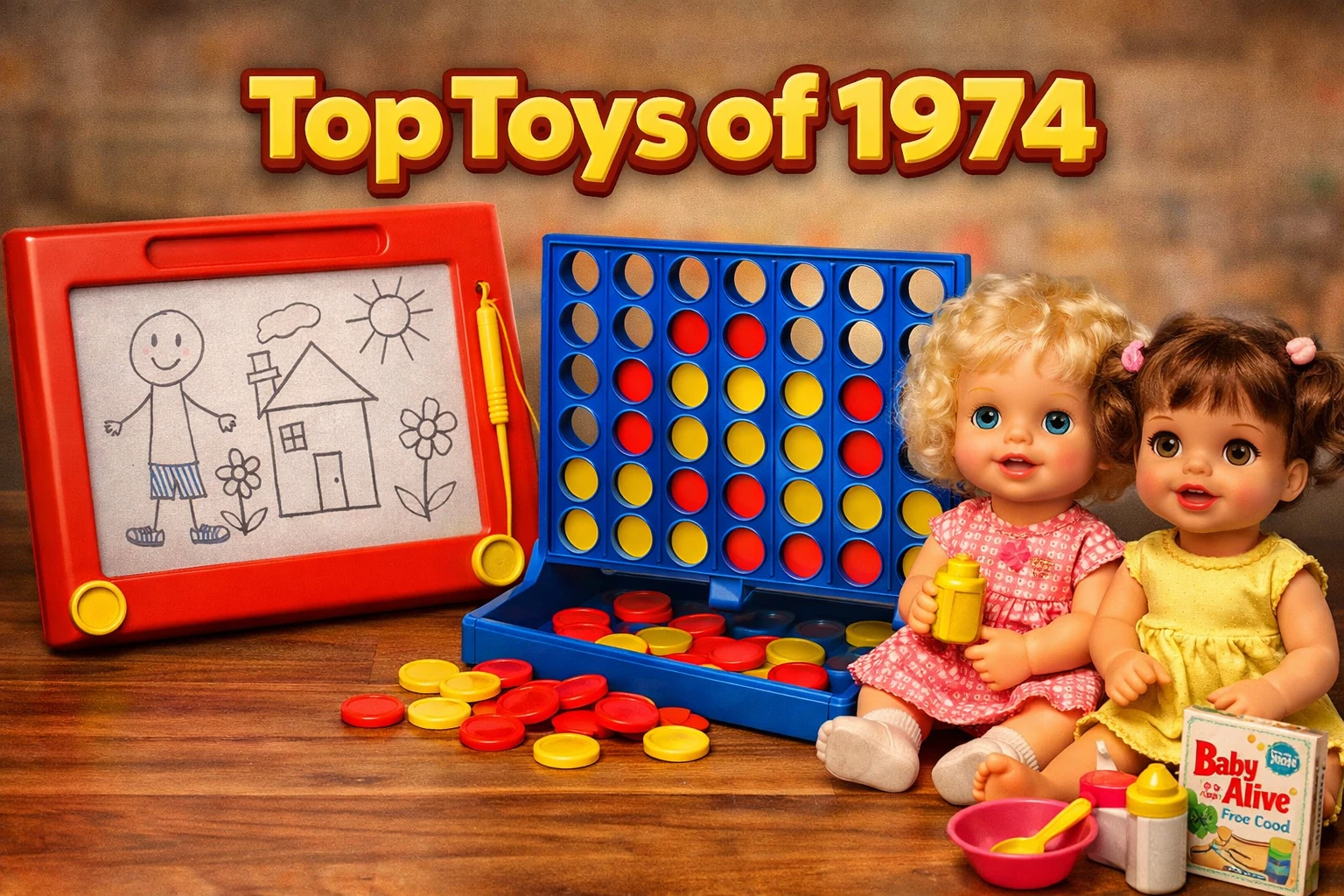
The top toys of 1974 were Magna Doodle, Connect Four, Baby Alive, Shrinky Dinks, G.I. Joe Adventure Team, Weebles, Lite-Brite, Play-Doh, Hot Wheels, and Barbie. For this Smells Like Gen X countdown, Magna Doodle ranks as the #1 toy of 1974 because it captures the year’s clean-creativity shift: still analog, still tactile, but suddenly a lot easier to reset before the carpet filed a complaint.

1974 Toy Ranking at a Glance

Here is the 1974 toy countdown in quick-scan form, with each toy’s main lane and why it mattered to the year’s smarter, cleaner, more repeatable toy-box energy.

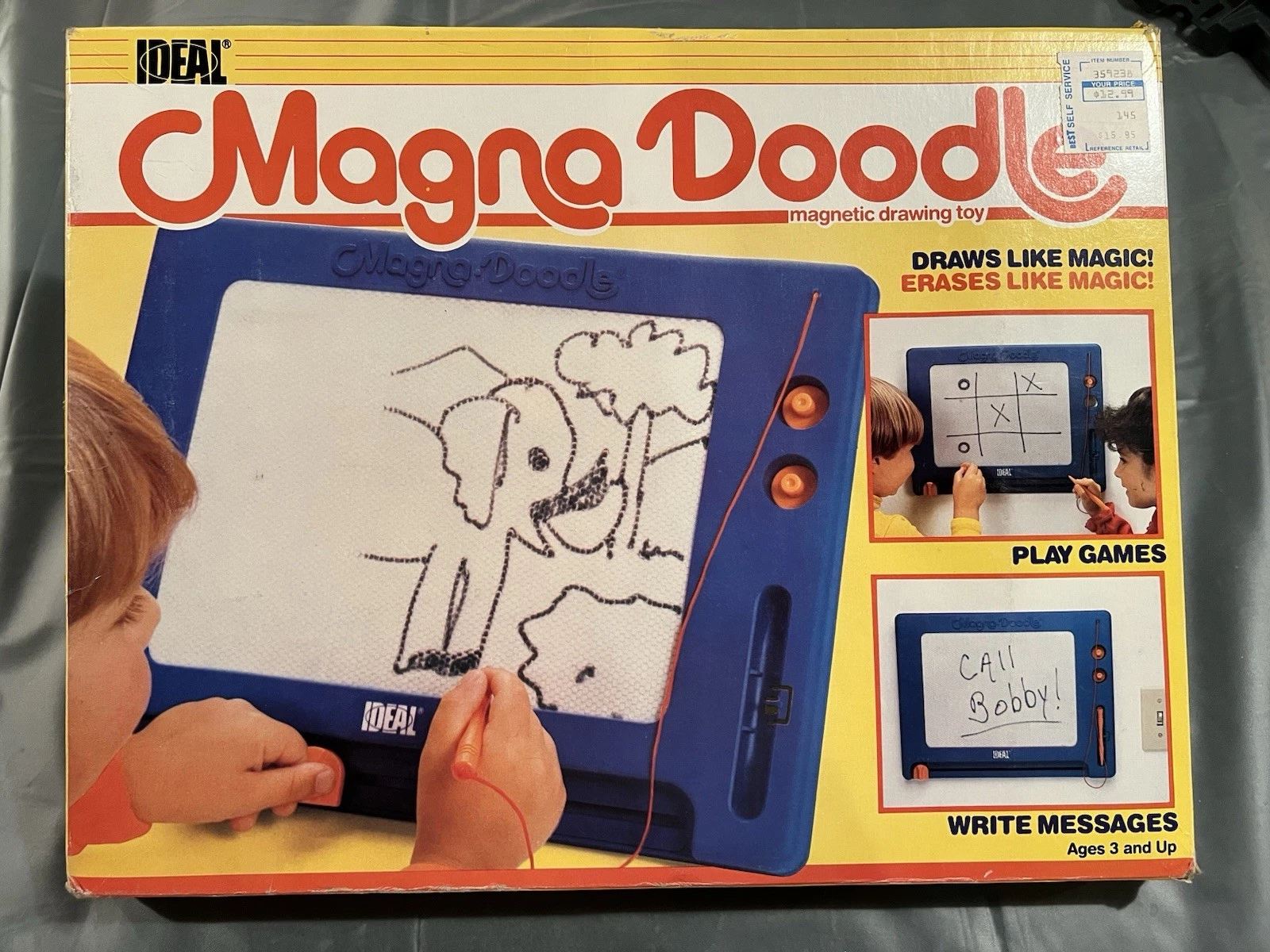
#1 Magna Doodle Mess-free drawing toy

Made creative play cleaner, faster to reset, and easier to repeat without turning the table into a crime scene.

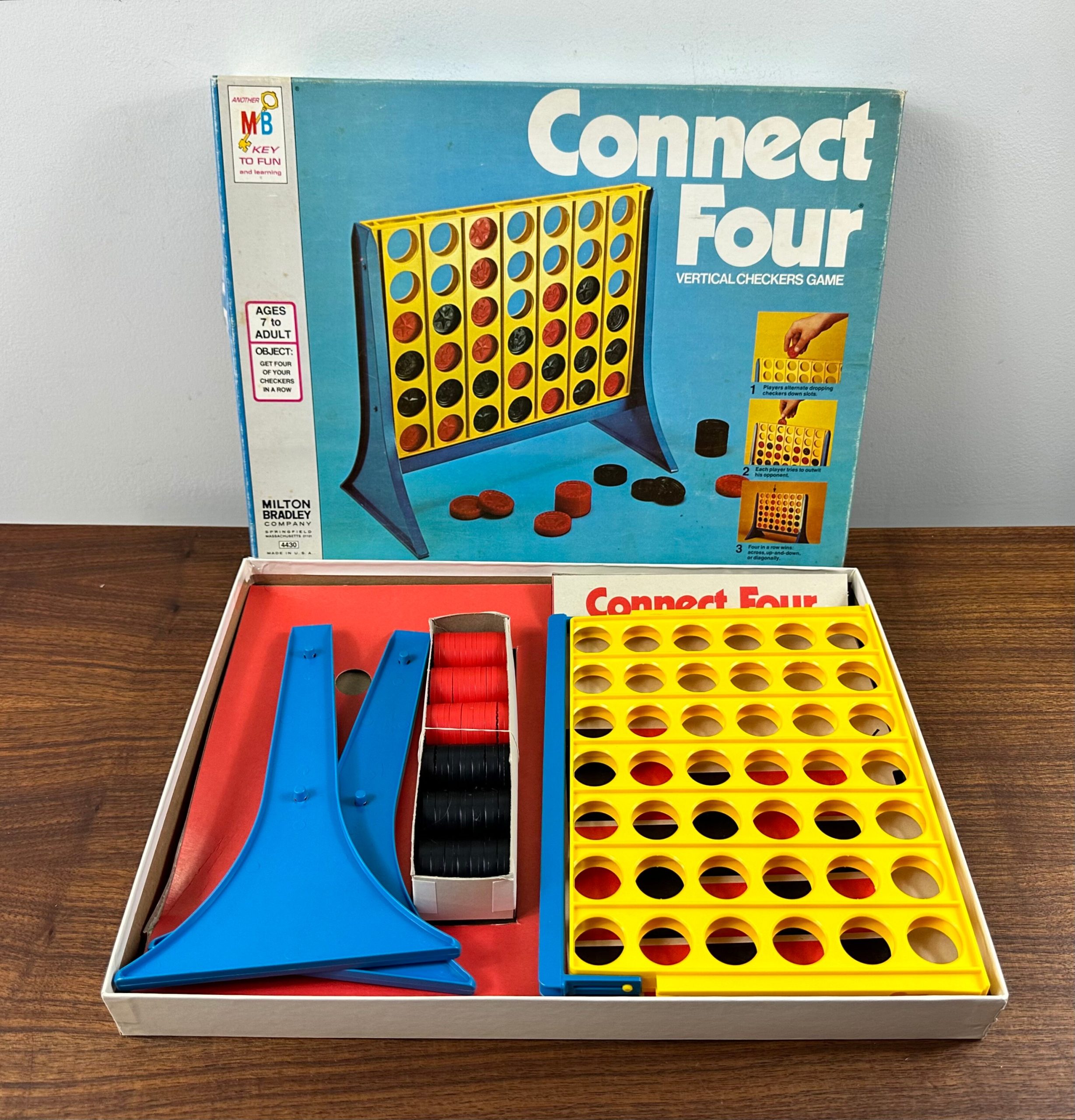
#2 Connect Four Fast strategy game

Stripped family-room strategy down to quick rounds, instant rematches, and satisfying plastic revenge.

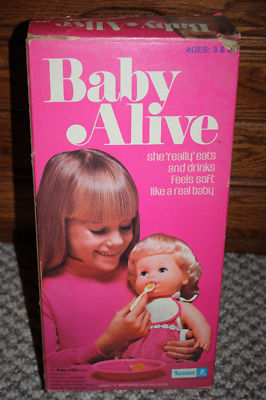
#3 Baby Alive Interactive caregiving doll

Made doll play more procedural, realistic, and weirdly committed to tiny domestic responsibility.

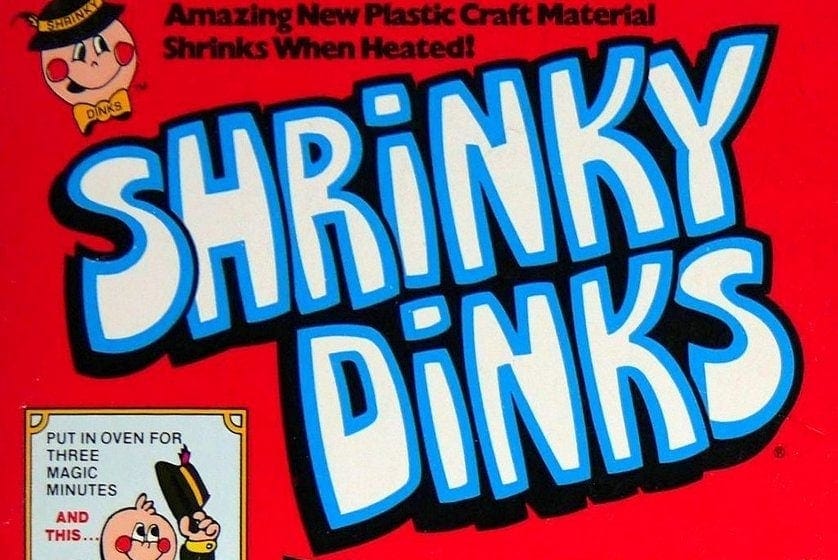
#4 Shrinky Dinks Transformation craft kit

Kept the oven-based “watch this change” magic alive from 1973.

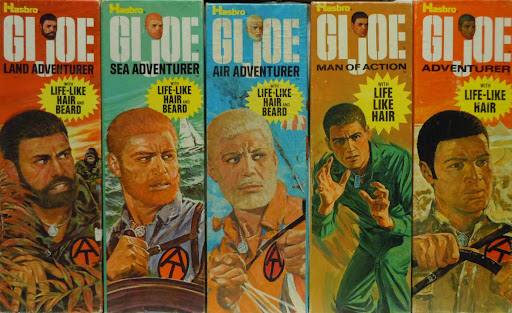
#5 G.I. Joe Adventure Team Mission-based action play

Kept gear, missions, vehicles, and backyard adventure in the middle of the decade.

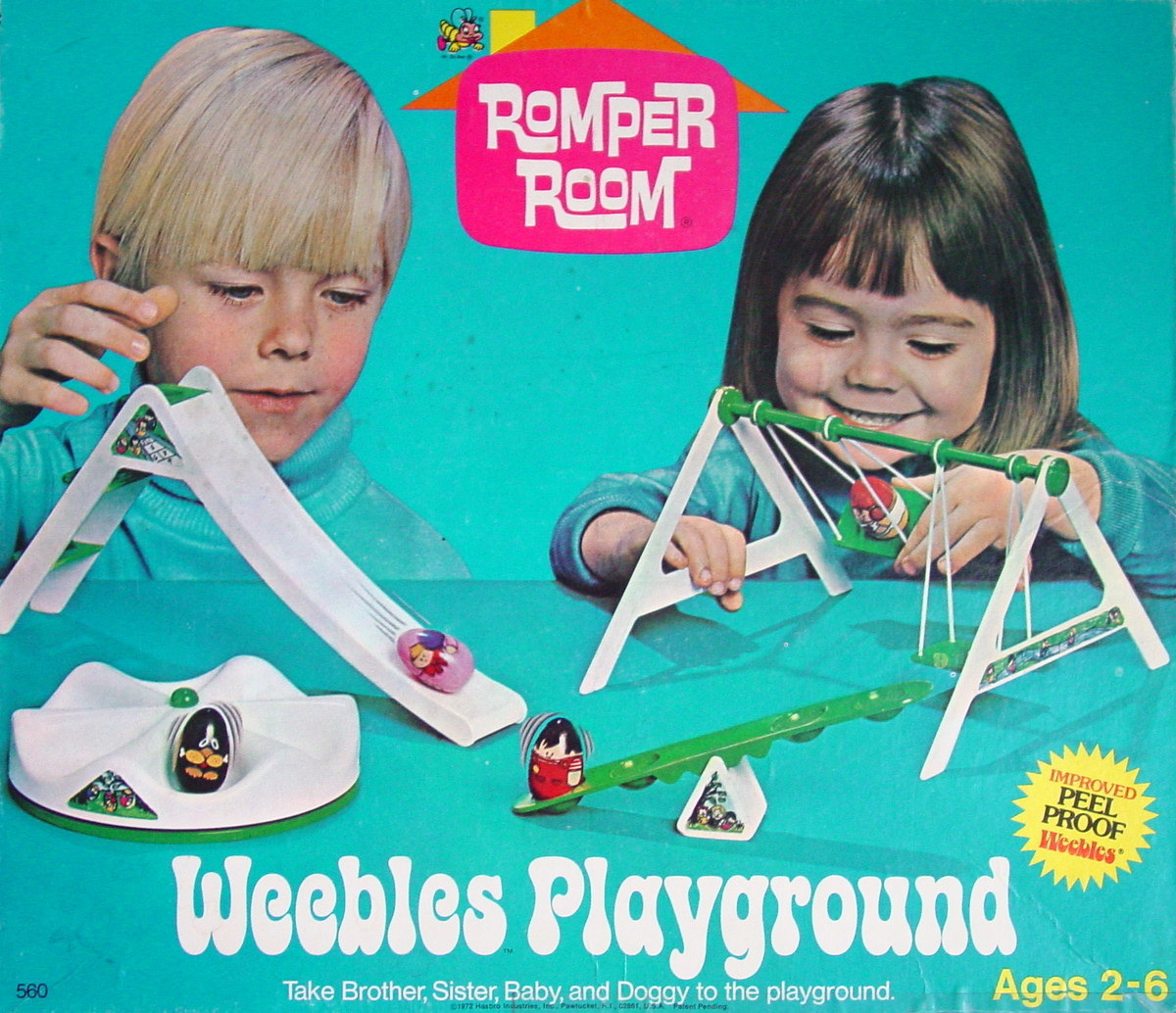
#6 Weebles Preschool wobble play

Proved a simple physical gimmick could still feel iconic when the design was clean enough.

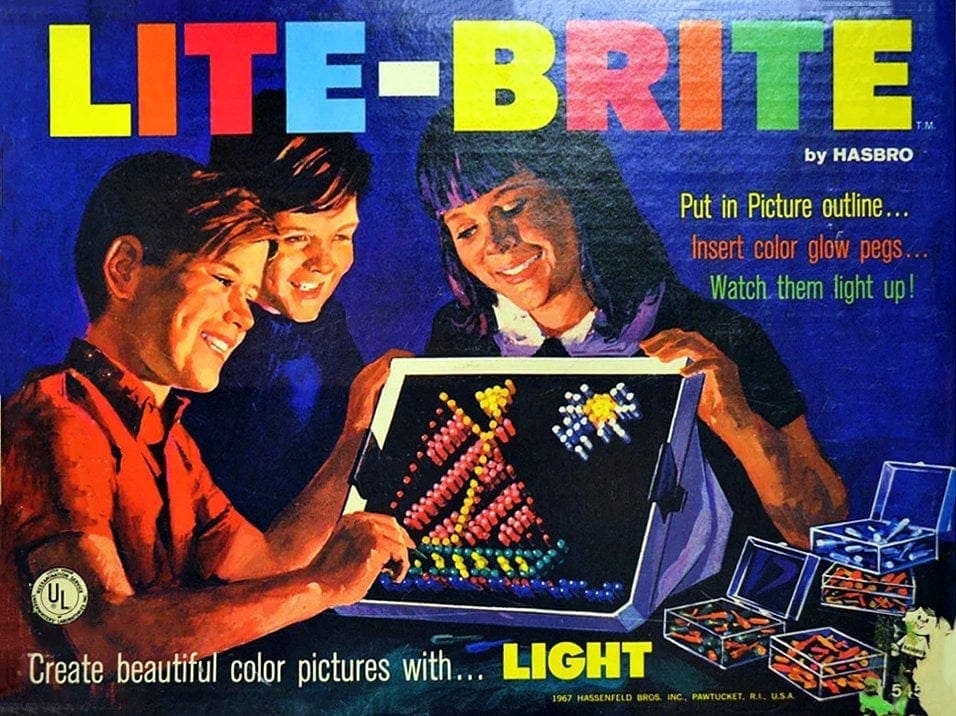
#7 Lite-Brite Glow-board creativity

Turned peg placement into a little light show, plus shag-carpet archaeology.

#8 Play-Doh Soft tactile chaos

Kept messy sensory play alive even as cleaner creative formats started winning attention.

#9 Hot Wheels Die-cast speed system

Still owned the track, crash, collect, and hallway-speed-test lane.

#10 Barbie Fashion fantasy institution

Remained a self-renewing world of outfits, accessories, lifestyle play, and repeat gifts.

Keep Rewinding 1974

The toy aisle was only one part of 1974’s bigger culture shift. Music was sliding through soul, soft rock, glam leftovers, funk, country-pop, and the early rumbles of disco. Movies were still deep in the gritty 70s zone, where theaters could swing from disaster spectacle to paranoid drama without asking if the audience was emotionally hydrated. Television was still built around shared household viewing, back when the remote was basically whoever was closest to the set.

If you want the full 1974 rewind, keep the year together, jump back to the 70s Toys Hub for the full decade toy aisle, or watch the ad-break version of the decade in the 70s toy commercials and forgotten toy videos archive. The toys show what kids wanted on the floor, at the table, and occasionally smeared into the carpet. The commercials show how those same toys became Christmas-list emergencies. The songs show what was coming out of radios. The movies show how 70s cinema kept getting bigger, stranger, and less polite. The TV rankings show what families were still watching together before the living room fully splintered into separate screens and separate algorithms.

70s Nostalgia Hub The main decade hub for 70s toys, music, movies, TV shows, fads, commercials, and Gen X nostalgia. 70s Toys Hub The full 1970s toy aisle by year, from Nerf, Weebles, UNO, and Shrinky Dinks to Atari, Star Wars figures, and late-decade plastic chaos. 70s Toy Commercials & Forgotten Toy Videos Vintage toy commercials, forgotten 70s toy videos, ad-break nostalgia, and the clips that made every toy look like a Christmas emergency. Toys Hub The full toy hub for Gen X Christmas lists, decade-by-decade toy countdowns, and nostalgic toy aisle chaos. Top Toys of 1973 The previous 70s toy year, where Shrinky Dinks, Barbie, Hot Wheels, Spirograph, and transformation play took over. Top Toys of 1975 The next 70s toy year, as the decade keeps moving toward stronger characters, bigger brands, and more memorable Christmas-list energy. Top 10 Songs of 1974 The radio side of 1974: soul, soft rock, funk, country-pop, glam leftovers, and the early disco rumble. Top 10 Movies of 1974 The box-office rewind from a year of disaster spectacle, gritty drama, and the 70s refusing to behave. Top TV Shows of 1974 The TV shows families were still watching together in the shared living-room era. Craft Kits Made a Mess The Magna Doodle, Shrinky Dinks, Lite-Brite, Play-Doh, Spirograph, Etch A Sketch, paint, glue, pegs, and kitchen-table cleanup story. Board Games Took Over the Room The Connect Four, UNO, Trouble, Operation, Perfection, Simon, Stop Thief, and table-based emotional warfare lane. Dolls, Houses & Domestic Drama The Baby Alive, Barbie, dollhouse, tiny furniture, caregiving, fashion, and miniature household chaos lane. Forgotten 70s Toys That Deserve a Comeback The weird, overlooked, and half-remembered side of the decade’s toy box — the stuff still waiting for its comeback tour.

Quick List: The Top 10 Toys of 1974

  1. #1 — Magna Doodle
  2. #2 — Connect Four
  3. #3 — Baby Alive
  4. #4 — Shrinky Dinks
  5. #5 — G.I. Joe Adventure Team
  6. #6 — Weebles
  7. #7 — Lite-Brite
  8. #8 — Play-Doh
  9. #9 — Hot Wheels
  10. #10 — Barbie

Watch the 1974 Toy Commercial Energy

The 1974 toy aisle had perfect commercial-break contrast: Magna Doodle selling clean creativity, Connect Four selling fast strategy, Baby Alive selling realism, Shrinky Dinks selling oven magic, Lite-Brite selling glow, and Hot Wheels still launching tiny cars across household walkways like liability was just a rumor.

The 70s Toy Commercials & Forgotten Toy Videos archive is the best next stop for the ad-break side of this page. If the countdown explains why the toys mattered, the commercials show how the decade sold them: bright demos, loud promises, kid reactions, and zero concern for how many times parents would hear “I want that.”

Countdown: The Top 10 Toys of 1974

Barbie
1974

#10 — Barbie

Fashion Fantasy Institution
Toy TypeFashion doll line
Brand LaneLifestyle world-building
1974 Rank#10

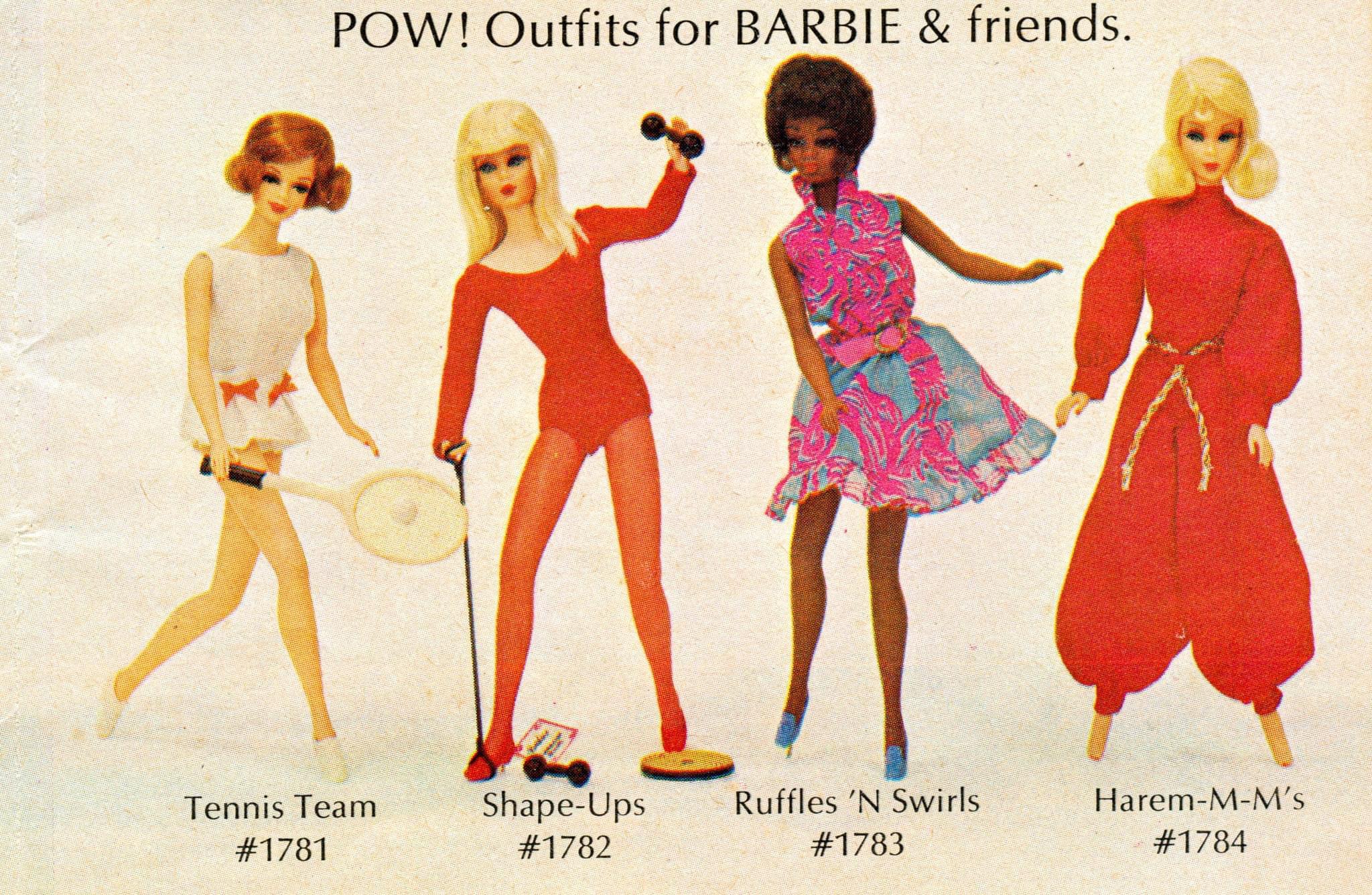
Barbie still belongs in the 1974 top 10 because by this point she is not just a doll — she is a fully functioning toy economy. Outfits, accessories, rooms, cars, social situations, identity play, future aspiration, low-key status signaling — all of it folds into the Barbie lane. She does not need to reinvent herself every year because the format itself is already expandable enough to absorb whatever the culture is selling.

What changes in 1974 is not Barbie’s relevance so much as the competition around her. The toy aisle is getting stronger in activity toys, family games, and realism-based play. That makes Barbie feel slightly less like the center of the universe and more like one of the old guard still holding territory against a shifting market.

She also helps show that 1974 is not only about new formats. Legacy brands still matter when they are strong enough to keep generating their own worlds. Barbie remains powerful because she lets kids create an ongoing lifestyle narrative instead of just playing with one object.

Barbie also belongs in the larger Dolls, Houses & Domestic Drama lane, where fashion play, dollhouses, tiny rooms, homemade accessories, and miniature soap-opera nonsense all live together on the carpet.
Fun Fact / Why It Still Matters Barbie stayed in the upper tier because she functioned less like a one-box toy and more like a self-renewing universe that kept producing new reasons to want more.
Hot Wheels
1974

#9 — Hot Wheels

Track-System Speed Machine
Toy TypeDie-cast cars and track system
Brand LaneCollect-and-race play
1974 Rank#9

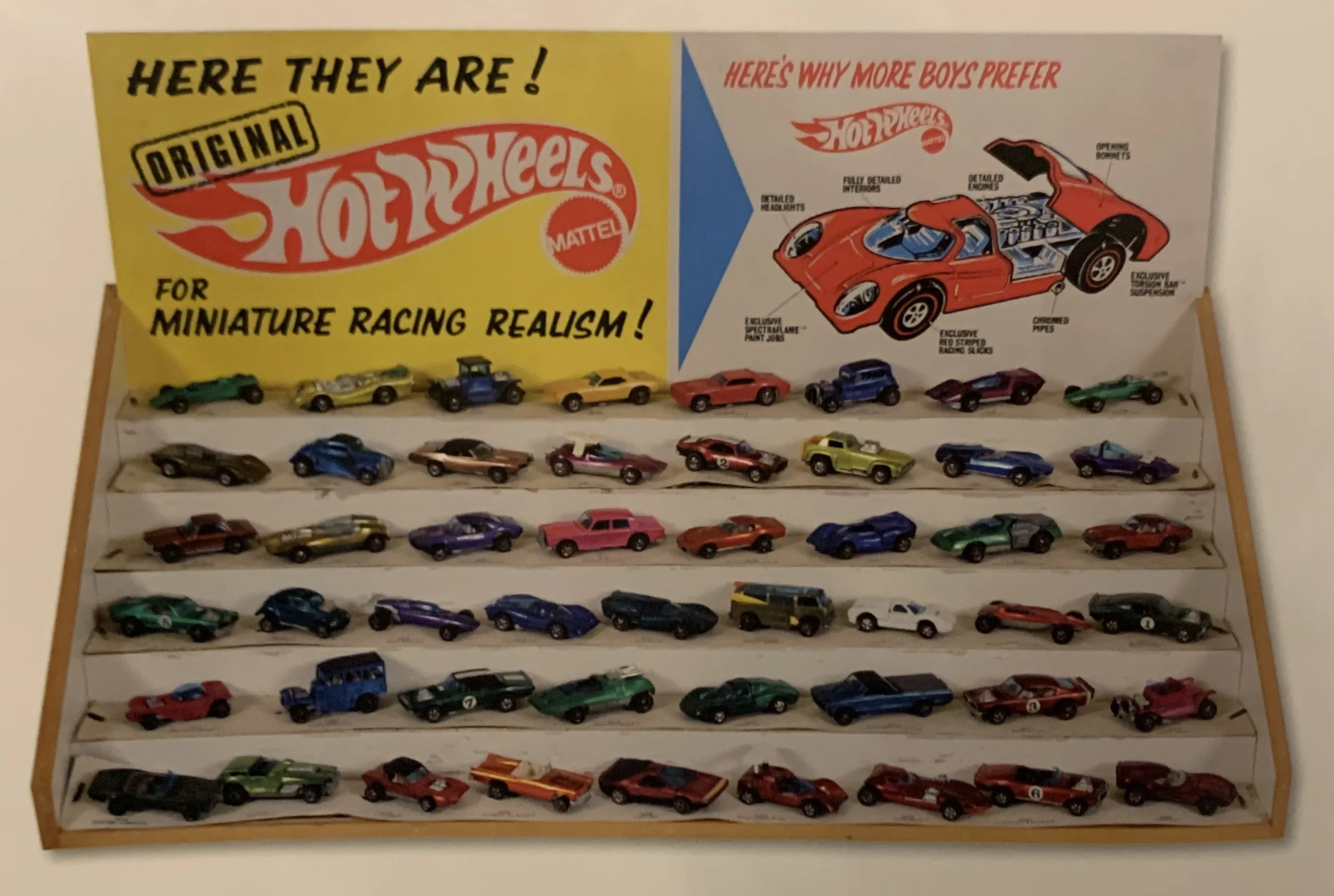
Hot Wheels stay in the ranking because they are still one of the best examples of a toy line that works as both object obsession and active play system. The cars are collectible, the track layouts are endlessly reworkable, and the basic play loop is simple enough to repeat until the adults start regretting every straightaway built across the hallway.

In 1974, though, they feel a little less dominant than they did at their peak because the year’s toy energy is moving slightly away from pure motion and toward products with stronger “use it again right now” convenience. Hot Wheels still have massive appeal, but they share the room with cleaner art toys, faster tabletop games, and more structured role-play.

That said, they remain essential to understanding the year because they preserve the decade’s love of speed, spectacle, and repeatable physical play. Not every great 1974 toy needed to be tidy, educational, or emotionally realistic. Some still just needed to launch.

For the full die-cast, orange-track, Matchbox, Tonka, garage, ramp, and living-room road-system story, take the tiny cars into Carpet Cities & Tiny Roads.

Fun Fact / Why It Still Matters Hot Wheels stayed huge because they never made kids choose between collecting and doing. The cars looked cool on their own and got even better once the track came out.
Play-Doh
1974

#8 — Play-Doh

Soft Chaos Mainstay
Toy TypeModeling compound
Brand LaneSensory creative play
1974 Rank#8

Play-Doh keeps its spot because the tactile appeal is still basically unbeatable. Open the cans, squish the material, invent something half-recognizable, flatten it, and start over. That loop never really stopped working because the material itself is already fun before the child has even made a plan.

What makes it especially interesting in 1974 is that it starts to look like one of the last great holdouts of mess-tolerant creative play before the year’s cleaner formats begin taking more attention. Magna Doodle says “draw without the cleanup.” Play-Doh still says “absolutely not, this is going in the carpet.”

That contrast is useful. It shows how the toy market was shifting. Play-Doh remains loved because open-ended tactile play still matters, but 1974 starts rewarding products that offer creative control without the same level of domestic collateral damage.

That soft chaos puts Play-Doh right inside Craft Kits Made a Mess, along with the pegs, plastic sheets, yarn, glue, paint, and table scars that made 70s creativity feel real.

Fun Fact / Why It Still Matters Play-Doh stayed relevant because the raw sensory experience was already satisfying. The toy did not need a trick beyond “here, touch this.”
Lite-Brite
1974

#7 — Lite-Brite

Glow-Board Creative Showpiece
Toy TypeLight-up art toy
Brand LaneVisual creative play
1974 Rank#7

Lite-Brite remains strong because it gives creativity a payoff that feels theatrical. Plenty of toys let kids make things. Lite-Brite lets them make something and then switch on the evidence. That illuminated reveal gives ordinary peg placement way more drama than it really has any right to claim.

In 1974, that still plays beautifully because the decade loves visual reward. But the difference now is that the market is starting to favor toys that are not just showy, but convenient. Lite-Brite sits right in the middle of those impulses. It has display value, repeat use, and enough structure to feel purposeful without becoming schoolwork in disguise.

It also says a lot about the year’s aesthetic appetite. The mid-70s still loved color, decoration, and a bit of sensory flair. Lite-Brite translates all that into a child-friendly format that feels like a miniature light show on a card table.

The missing pegs and glowing payoff are exactly why Lite-Brite belongs in Craft Kits Made a Mess: beautiful in the dark, absolutely guilty in the carpet.

Fun Fact / Why It Still Matters Lite-Brite lasted because it made kids feel like they were creating something worth showing off instead of just killing time with pegs.
Weebles
1974

#6 — Weebles

Preschool Physics Phenomenon
Toy TypeRoly-poly preschool toy
Brand LanePersonality-based preschool play
1974 Rank#6

Weebles stay comfortably in the top 10 because they are one of those rare preschool toys that nail both physical behavior and character identity. The wobble is instantly understandable, the figures are visually friendly, and the play loop is simple enough for very young kids without feeling inert or overly educational in a forced way.

In 1974, that matters because the toy industry is getting more deliberate about segmenting by age and play style. Not every hit toy is aimed at older kids building systems or managing more complex make-believe. Weebles prove that preschool design can still feel iconic if the core gimmick is memorable enough.

They also fit the year’s broader shift toward safer, cleaner, easier-to-repeat play. Weebles do not demand elaborate setup or complicated imagination scaffolding. You push them, watch them recover, and keep going. Sometimes the best toy design is just physics with a smile.

Weebles also fit the full 70s Toys Hub story because they show the decade’s move toward small character worlds, simple playsets, and toy personalities that could stick in memory after one wobble.

Fun Fact / Why It Still Matters Weebles stayed visible because the central gimmick was elegant, physical, and easy to understand in about half a second.
G.I. Joe Adventure Team
1974

#5 — G.I. Joe Adventure Team

Mission-Scale Action World
Toy TypeAction figure line
Brand LaneMission-based pretend play
1974 Rank#5

G.I. Joe Adventure Team stays high because it still does something a lot of toy lines cannot: it makes one figure feel like the center of an expanding operational universe. The accessories, vehicles, outfits, and mission scenarios keep broadening the play without reducing it to a one-note gimmick.

In 1974, that adaptability helps it survive a market increasingly interested in family games, realism, and cleaner forms of creativity. Adventure Team keeps the action lane alive without feeling stuck in an earlier version of the decade. It is still rugged, still gear-heavy, still built for backyard drama, but the branding is flexible enough to feel more exploratory than strictly martial.

That makes it important to the year. 1974 is not abandoning large-scale pretend play. It is just broadening the definition of what counts as compelling. G.I. Joe remains here because it still delivers scope, equipment, and the fantasy that every extra piece means a bigger story.

G.I. Joe also points toward one of the bigger themes of the 70s Toys Hub: toys becoming expandable systems, not just single objects sitting in a box looking heroic.

Fun Fact / Why It Still Matters G.I. Joe stayed powerful because it sold kids a whole framework for adventure instead of asking one figure to carry the entire fantasy alone.
Shrinky Dinks
1974

#4 — Shrinky Dinks

Transformation-Craft Favorite
Toy TypeCraft and activity kit
Brand LaneTransformational creative play
1974 Rank#4

Shrinky Dinks stay near the top because the transformation gimmick still feels magical. Coloring a flat plastic shape is one thing. Watching it curl, shrink, and harden into a new object is something else entirely. That visible before-and-after is exactly the kind of payoff kids remember.

In 1974, though, they slide a little because the year’s strongest breakout energy starts leaning less toward oven-based reveal and more toward everyday convenience. Shrinky Dinks are still impressive, but Magna Doodle and Connect Four represent a cleaner, quicker kind of replay that feels more specifically tied to this year’s shift.

Even so, Shrinky Dinks remain essential because they capture the period’s appetite for process-based wonder. The toy does not just give a child an object. It gives them a transformation event, and that memory tends to outlast the finished piece itself.

Shrinky Dinks are one of the headline toys in Craft Kits Made a Mess, because nothing says 70s creativity like putting a child’s artwork in the oven and calling it entertainment.

Fun Fact / Why It Still Matters Shrinky Dinks stayed powerful because the actual spectacle was the process. The plastic changing shape was the real entertainment.
Baby Alive
1974

#3 — Baby Alive

Realism Hits the Doll Aisle
Toy TypeInteractive doll
Brand LaneRealistic caregiving play
1974 Rank#3

Baby Alive ranks this high because it represents one of the clearest shifts in the 1974 toy box: doll play becoming more procedural, more lifelike, and a little more intense. This is not just a doll you carry around and occasionally talk for. This is a doll that turns pretend caregiving into an actual sequence of actions.

That realism is exactly why it worked. The toy market was increasingly interested in products that simulated real-life behavior instead of just symbolizing it. Baby Alive made role-play feel more active and more specific. Feeding, care, response, cleanup — the child was not just imagining responsibility. They were performing it.

It also says a lot about mid-70s toy trends. The decade was not only chasing fantasy and spectacle; it was also pushing toys that mirrored domestic routines and adult behavior in increasingly detailed ways. Baby Alive fits that turn perfectly, which is why it feels more “1974” than many older doll lines, even very famous ones.

Baby Alive belongs squarely in Dolls, Houses & Domestic Drama, because it turned doll play into a full caregiving routine with props, mess, and tiny household responsibility nobody asked to be this realistic.

Fun Fact / Why It Still Matters Baby Alive stood out because it made doll play feel like a routine instead of just a vibe — and that realism changed what a lot of kids expected from interactive toys.
Connect Four
1974

#2 — Connect Four

Fast Strategy Family Hit
Toy TypeStrategy game
Brand LaneQuick family tabletop play
1974 Rank#2

Connect Four lands at #2 because it understands something a lot of family games never fully grasped: people love strategy, but they love short strategy even more. The rules are simple, the rounds are quick, the rematches are immediate, and the reset itself is weirdly satisfying. That is not a small design achievement.

In 1974, that fast-repeat format feels especially important. The toy aisle is moving toward products that are easier to revisit and easier to fit into ordinary household rhythms. Connect Four does exactly that. It does not ask for a whole evening, a giant table, or a rulebook lecture from somebody’s uncle. It gets to the point.

It also marks a broader shift in what counts as a hit game. This is not sprawling, slow-burn board play. It is concentrated conflict in a compact plastic format. That cleaner design language makes Connect Four feel incredibly on-brand for the year.

Connect Four also belongs in Board Games Took Over the Room, where quick rematches, family-table strategy, and plastic click-clack grudges all get the respect they deserve.

Fun Fact / Why It Still Matters Connect Four stayed iconic because it stripped strategy down to its most replayable form: simple to learn, fast to finish, and just annoying enough to lose.
Magna Doodle
1974

#1 — Magna Doodle

Mess-Free Creative Breakout
Toy TypeMagnetic drawing toy
Brand LaneClean repeatable creative play
1974 Rank#1

Magna Doodle takes the top spot because it feels like the clearest expression of what 1974 adds to the decade. Kids still want to draw, invent, scribble, and experiment. Parents still do not necessarily want crayons on every available surface. Magna Doodle steps into that gap with a toy that makes creativity feel immediate, repeatable, and drastically easier to live with.

What makes it such a strong #1 is that the core experience feels modern for its moment. The stylus, the magnetic surface, the wipe-clean reset — everything about it suggests smarter design rather than louder gimmickry. It is still analog, still tactile, still satisfying, but it also feels like a practical improvement on the chaos of traditional drawing toys.

It also captures a broader toy trend that becomes clearer in 1974: products that reduce friction start winning bigger. Magna Doodle does not remove imagination. It removes cleanup, hesitation, and the fear of “messing up.” That makes the toy more inviting to use again and again, which is exactly the kind of replay logic the market increasingly rewards.

Magna Doodle is also a perfect fit for Craft Kits Made a Mess, partly because it represents the fantasy of craft play without the table damage. It is the clean creative toy that looked at markers, paint, glue, and Play-Doh and said, “What if the parents didn’t need a drink afterward?”

Fun Fact / Why It Still Matters Magna Doodle hits #1 because it turned drawing into a cleaner, more forgiving, endlessly repeatable experience — basically the 1974 toy aisle discovering usability.

Rewind Verdict

The top 10 toys of 1974 show the early-70s toy box getting a little more efficient without losing its analog soul. Compared with 1973, the magic is still there, the craft energy is still there, and the big legacy brands are still standing — but the overall mood shifts. This year feels more interested in replay value, realism, quick-start strategy, and creativity that does not leave the entire room looking like a craft store exploded.

That is why Magna Doodle feels so right at #1. It is not the most theatrical toy on the list, but it captures the year’s smartest shift: making imagination easier to repeat. Connect Four does something similar for family game night, and Baby Alive pushes doll play further into realism and routine.

At the same time, 1974 does not dump the decade’s earlier strengths. Barbie still rules world-building. Hot Wheels still own motion and systems. Play-Doh still dominates tactile play. G.I. Joe still supplies scale and mission fantasy. Shrinky Dinks still deliver reveal-based wonder. What changes is the center of gravity.

For Gen X memory, 1974 feels like the year the toy aisle starts favoring smarter formats — not less fun, just more streamlined. The toys still take over the floor. They are just getting better at justifying themselves while they do it. The commercial side of that memory lives in the 70s toy commercials and forgotten toy videos archive, where these toys get sold with jingles, close-ups, kid reactions, and absolutely no shame. It also plugs directly into the bigger 70s toy lanes: craft kits, board games, dolls and houses, toy cars and carpet cities, backyard chaos, and the early electronics waiting to start beeping later in the decade.

FAQ: Top Toys of 1974

What was the biggest toy of 1974?

Magna Doodle is the strongest editorial choice for #1 because it best captures the year’s shift toward cleaner creative play, stronger replay value, and smarter product design.

Was there an official annual toy chart for 1974?

No. Like the other posts in this series, this is a best-supported editorial ranking built from cultural impact, shelf presence, longevity, and how strongly each toy fits the actual feel of the year.

Why are Barbie and Hot Wheels still in the 1974 top 10?

Because this series ranks the toys that most strongly shaped the year’s toy box, not only the newest arrivals. Barbie and Hot Wheels were still dominant forces in 1974, even as newer toys reshaped the aisle around them.

How is 1974 different from 1973 in toys?

1973 feels more transformation-heavy and visually magical. 1974 feels more streamlined — stronger on realism, quicker games, cleaner creativity, and toys that fit more easily into everyday household play.

What toy trends defined 1974?

The biggest toy trends of 1974 were mess-free art play, quick strategy games, realistic caregiving dolls, durable preschool design, and legacy toy lines that kept evolving instead of fading out.

Where can I explore more 70s toy categories?

Start with the 70s Toys Hub, watch the 70s toy commercials and forgotten toy videos, then jump into deep dives on craft kits, board games, dolls and houses, toy cars, backyard toys, and early electronics.

Get the Weekly Gen X Drop

New videos, rewinds, and savage nostalgia — first.

SUBSCRIBE WATCH VIDEOS

MORE REWINDS