Dolls, Houses & Domestic Drama: 70s Dollhouses, Barbie & Baby Alive
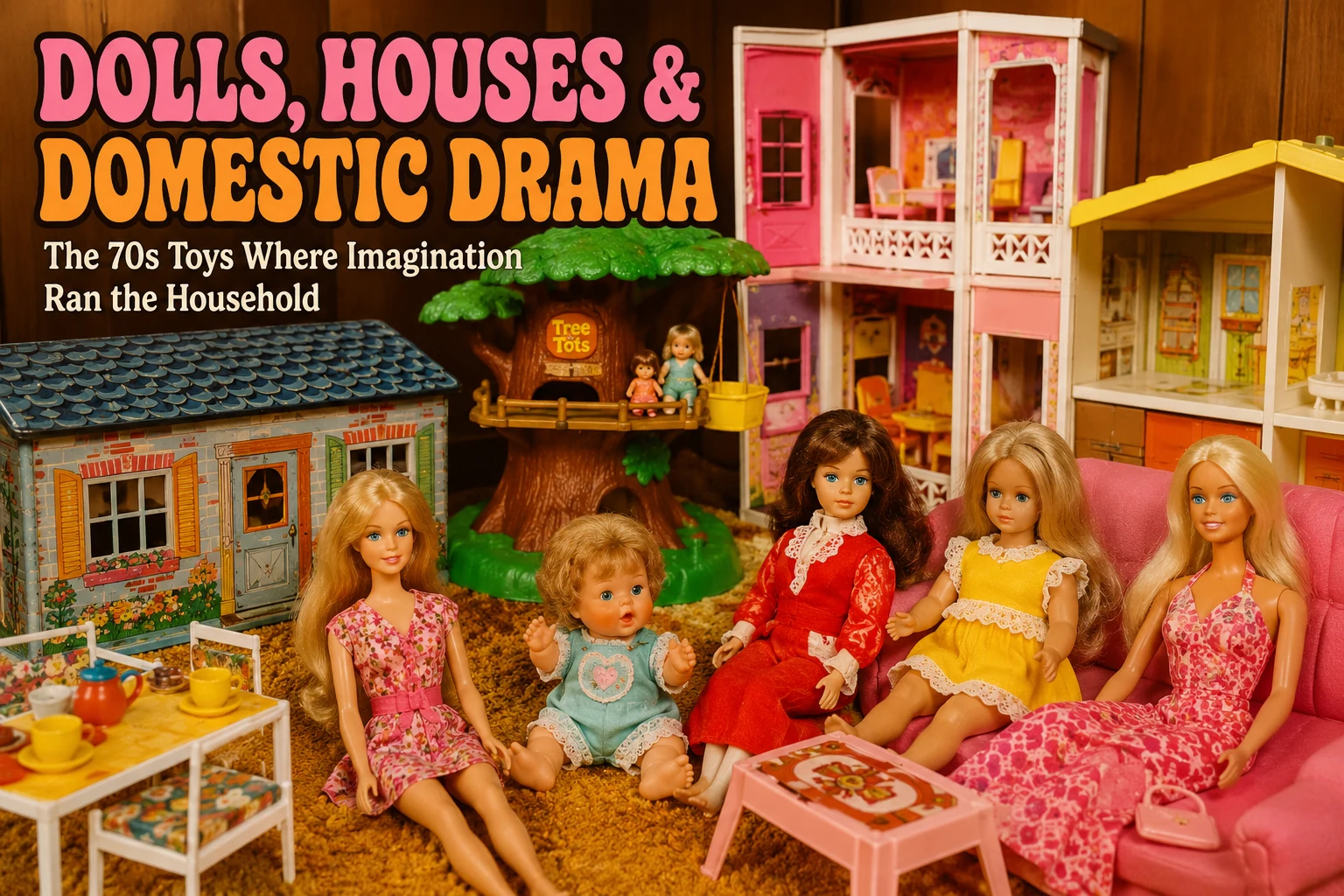
70s Dolls and Dollhouses Barbie, Baby Alive and Domestic Drama
The 70s dollhouse was never a quiet little display. It was a working household, fashion studio, nursery, neighborhood, wedding venue, argument zone and tiny real-estate crisis all operating on the bedroom floor.
This deep dive revisits Barbie, Dawn dolls, Crissy and Velvet, Baby Alive, Fisher-Price Little People homes, Barbie Townhouse, Tree Tots, tin dollhouses, furniture and the open-ended family stories that made miniature domestic life so memorable.
 The Lifestyle World
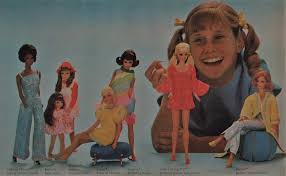
Barbie in the 1970s
Fashion, friends, houses, campers, furniture and the endless social storyline surrounding the decade’s biggest doll world.
The Lifestyle World
Barbie in the 1970s
Fashion, friends, houses, campers, furniture and the endless social storyline surrounding the decade’s biggest doll world.
What Defined 70s Dolls and Dollhouse Play?
Seventies doll and dollhouse play combined fashion dolls, baby dolls, family figures, houses, villages, campers, furniture and household accessories into open-ended miniature worlds. Major names included Barbie, Dawn dolls, Crissy and Velvet, Baby Alive, Fisher-Price Little People, Barbie Townhouse, Tree Tots and older tin dollhouses. The central play patterns were fashion, caregiving, decorating, family routines, moving, visiting, conflict and complete household reinvention.
Essential 70s Dolls, Dollhouses and Family Playsets
The great 70s domestic-play world came from mixing fashion, caregiving, family figures, rooms, vehicles and furniture. Brands supplied the pieces; kids supplied the relationships, crises and highly questionable floor plans.
Why 70s Dolls and Dollhouses Mattered
Dolls and dollhouses gave kids a different kind of control than cars, action figures or board games. The stories were built around routines, relationships, caregiving, decorating, status and family roles. There was no winner. The reward was keeping the household moving—or making it dramatically worse.
The systems were also expandable without requiring perfect brand matching. Barbie could visit a Fisher-Price house. Dawn could move into a shoebox apartment. A Hot Wheels car could arrive at the garage. A random chair from a hand-me-down set could become the most important object in the room.
That looseness made the play personal. The toy company suggested a room or character, but the child decided who lived there, who was in charge, what had gone wrong and whether the entire house needed to be redecorated immediately.
Fashion, careers, houses, vehicles, furniture and social storytelling formed one endlessly expandable world.
Feeding, bottles and diapers made pretend parenting more mechanical, structured and memorable.
Durable figures and familiar buildings made houses, garages and villages easy to understand and endlessly reusable.
Small-scale glamour and growing-hair features turned styling into the central event.
The Dollhouse Was a Stage, Not a Display Case
The great thing about 70s dollhouse play was that it looked quiet from the outside and absolutely unhinged from the inside. Adults saw a kid arranging furniture. The kid saw a full domestic saga: someone moving in, someone storming out, a baby needing care, a dog causing problems, a family dinner going badly, a car in the garage, a neighbor arriving, a mystery illness, a wedding, a divorce, a rescue, and a complete home redesign before lunch.
A dollhouse was never just a house. It was a set. Every room had a job. The kitchen was where everyone gathered and no one actually ate. The bedroom was where dramatic recoveries happened. The living room was for family meetings, television, arguments, and tiny plastic furniture arrangements that made no architectural sense. The garage was transportation, status, and emergency exit.
That is why dolls and houses mattered so much in the 70s toy box. They gave kids a different kind of world-building than cars, action figures, or board games. This was not about speed or winning. It was about control, caregiving, status, decorating, routines, relationships, and tiny household chaos. Basically, a child’s first soap opera, but with more molded plastic and fewer commercial breaks.
The Dolls: The Cast of the Tiny Soap Opera
Every domestic-play world needed a cast. The 70s had fashion dolls, baby dolls, little-family figures, growing-hair dolls, miniature glamour dolls, and small plastic people who could survive being dropped behind a radiator for six months and come back like nothing happened.
The best doll play was rarely clean or brand-pure. A Barbie could live near a Fisher-Price family. A Dawn doll could borrow a random chair. A Crissy doll could become the cool older cousin. A Baby Alive could turn the whole afternoon into a caregiving emergency. The scale was wrong, the story was messy, and the kid did not care.
Barbie in the 70s: Malibu, Townhouse, Camper, and Lifestyle Play
Malibu Barbie helped shift Barbie into a more casual, sun-soaked 70s mode. The look was less formal fashion-model fantasy and more beach towel, sunglasses, tan lines, and “she definitely has a convertible somewhere.” Barbie still carried the glamour, but the fantasy started feeling more like lifestyle play.
That mattered because Barbie was not just a doll. She was a whole social system. She needed clothes, friends, furniture, vehicles, houses, a place to sleep, somewhere to host people, and enough accessories to make the floor feel like a tiny aspirational suburb. A kid could play fashion show for ten minutes, then suddenly transition into moving day, restaurant drama, beach trip, career crisis, or the most chaotic wedding ever held under a coffee table.
The Barbie Townhouse gave that fantasy architecture. The townhouse play pattern was vertical, dramatic, and deeply 70s. Multiple levels meant rooms had purpose. Furniture meant status. The elevator was not just a feature — it was a whole event. If a doll had to take an elevator to get to the bedroom, congratulations, the domestic drama had gone luxury.
And then there was the Barbie Country Camper style of play, where domestic life went mobile. The home was no longer only a house. It could be a road trip, a beach weekend, a sleepover, a campground, or a vehicle full of tiny plastic accessories that immediately disappeared into the carpet.
Dawn Dolls: Small Scale, Big Drama
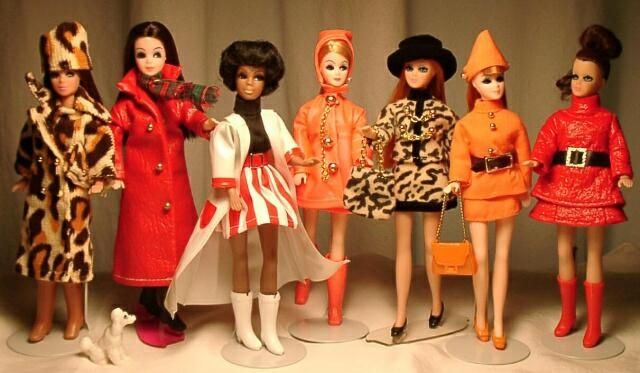
Dawn dolls were smaller than Barbie, which made them feel fast, collectible, and easy to stage. They had fashion energy, tiny outfits, glamorous hair, and the perfect scale for kids who wanted a whole cast without needing a giant storage bin.
Dawn’s smaller size changed the play pattern. A kid could line up several dolls, create a modeling agency, stage a pageant, build a boutique, hold a party, or invent a friendship rivalry in about five minutes. Dawn dolls made domestic drama more portable. They could live in a shoebox apartment, a homemade boutique, a dollhouse room, or whatever cardboard structure got promoted to “penthouse.”
The 70s were full of that kind of miniature glamour. Kids were not just dressing dolls. They were creating social worlds: best friends, rivals, dates, parties, fashion shows, arguments, apologies, and one doll who always got the good outfit because life is unfair.
Crissy and Velvet: Growing Hair, Growing Storylines
Crissy brought one of the great 70s doll gimmicks: adjustable growing hair. That feature turned styling into an event. The doll was not just dressed and posed. She transformed. Hair could be pulled longer, shortened, brushed, styled, fought with, and turned into the emotional center of the whole play session.
Crissy and her cousin Velvet worked because they leaned into the 70s obsession with hair, fashion, and personal style. This was the decade of big hair, long hair, center parts, mod leftovers, hippie influence, and outfits that looked like they came from a department-store catalog your aunt took very seriously.
In domestic play, Crissy often became the older sister, cousin, babysitter, pop star, fashion plate, or resident cool person. She did not need a huge house to matter. She brought personality. And when a doll’s main feature is dramatic hair, the storyline basically writes itself.
Baby Alive: Caregiving With Consequences
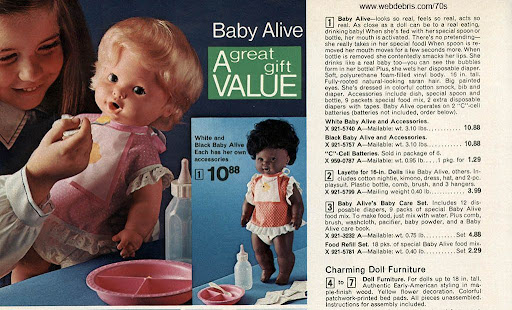
Baby Alive changed the baby-doll routine because the caregiving loop had a payoff — and, frankly, a cleanup problem. Feeding a baby doll was already part of pretend play, but Baby Alive made it mechanical, messy, and weirdly high-stakes. The doll ate, drank, and needed a diaper change. Suddenly “playing house” had consequences.
That made Baby Alive one of the most intense domestic-play toys of the decade. Kids were not only imagining care. They were managing a process. Food had to be mixed. The spoon mattered. The bottle mattered. The diaper mattered. The whole experience felt more real than a basic baby doll, which made it fascinating and mildly alarming in the way only 70s toys could be.
Baby Alive also shifted the emotional tone of doll play. Barbie and Dawn were often about style, social life, and fantasy. Baby Alive was responsibility. A kid became the parent, nurse, babysitter, chef, janitor, and sanitation department. Glamour left the building. The diaper had arrived.
The Houses: Rooms, Garages, Elevators, and Tiny Real Estate
The house was where the play became a world. A doll could exist on its own, but a house gave the story rules. There was a bedroom, a kitchen, a living room, a garage, a front door, a roof, and suddenly everyone had somewhere to go.
70s dollhouses and family playsets came in different flavors. Some were fashion-doll fantasy spaces. Some were preschool-friendly family homes. Some were tin-litho holdovers from an older toy era. Some were cardboard, plastic, fold-out, carry-along, or big enough to take over a corner of the room. But they all did the same job: they made pretend life feel organized enough to ruin.
Fisher-Price Play Family House: The Carry-Along Suburban Stage
The Fisher-Price Play Family House was one of the cleanest domestic-play engines of the era. It folded up, carried like a little case, opened into rooms, and came with a family setup that immediately suggested everyday stories. Mom, Dad, kids, dog, rooms, garage — boom, instant household.
What made it work was the balance between structure and simplicity. The house told kids what the rooms were, but it did not over-explain the story. The kitchen could be breakfast, birthday cake, punishment, argument, or a dog-related incident. The bedrooms could be bedtime, illness, hiding, sleepover, or a dramatic refusal to clean up. The garage could be work, errands, escape, or the place where a toy car from a completely different scale crashed into family life.
The Play Family House was sturdy, portable, and forgiving. Little People figures could fall down stairs, get trapped in the garage, ride in inappropriate vehicles, and still look cheerful about it. That emotional neutrality was part of the comedy. The entire family could be in crisis and every figure still had the same calm little face.
Fisher-Price Play Family Village: Domestic Life Goes Public
The Fisher-Price Play Family Village expanded the world beyond one house. Now there were buildings, shops, streets, community spaces, and a sense that the family lived somewhere bigger than a living room.
That changed the story. The Play Family House was domestic. The Village was social. Kids could send figures to the store, school, work, a neighbor’s house, or some vague civic errand that mostly involved moving small plastic people from one place to another with great purpose.
This is where dollhouse play overlapped with carpet-city play. Vehicles could arrive. Deliveries could happen. People could visit. A whole town could exist around the family. The drama moved from “what is happening in the house?” to “what is happening in this tiny community and why is the dog in charge?”
Barbie Townhouse: The Elevator Was the Main Character
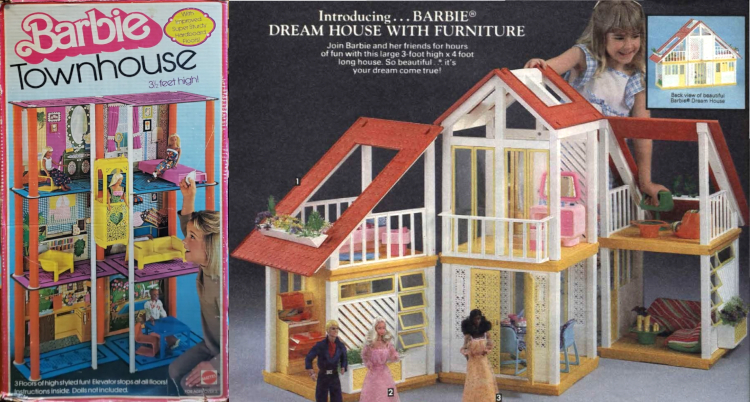
The Barbie Townhouse felt different from a small family house because it was vertical, stylish, and aspirational. It was not a cozy carry-along home. It was a statement. Multiple floors meant rooms had status. Furniture meant taste. The elevator meant Barbie had crossed into high-rise living and was no longer accepting normal dollhouse conditions.
For kids, the townhouse created instant social hierarchy. Who got the bedroom? Who had to stand in the living room? Who rode the elevator? Who got trapped between floors because the mechanism was being dramatic? The house created story problems before the dolls even showed up.
Barbie houses also made decorating part of the play. Arranging furniture was not cleanup. It was interior design. Beds, sofas, tables, lamps, chairs, wall panels, and plastic accessories became personality markers. The room said something about the doll, even if what it said was, “This living room was assembled by a tired eight-year-old with no architectural training.”
Tree Tots Family Treehouse: Domestic Drama Leaves the Ground
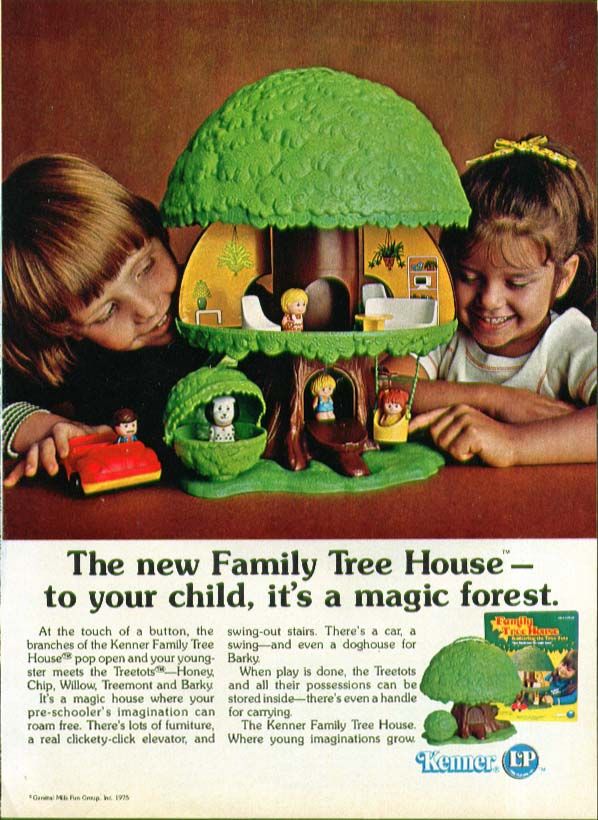
Kenner’s Tree Tots Family Treehouse gave domestic play a weird little woodland twist. It was not a standard house. It was a treehouse world, with tiny figures, secret spaces, and a home that felt more like a fantasy hideaway than a suburban floor plan.
That made Tree Tots work especially well in the 70s. The decade loved toys that sat between ordinary life and weird fantasy. The Treehouse was a home, but it was also a playset. It could be a family residence, a secret base, a neighborhood, a hideout, or a tiny tree-based apartment complex with questionable elevator service.
Tree Tots also had the same mix-and-match power as other small playsets. The figures could visit other houses. Other toys could invade the treehouse. A car could pull up to the tree. A dollhouse chair could suddenly belong in a forest home. The boundaries were extremely flexible because children were running the zoning board.
Marx-Style Tin Dollhouses and Older Room Worlds
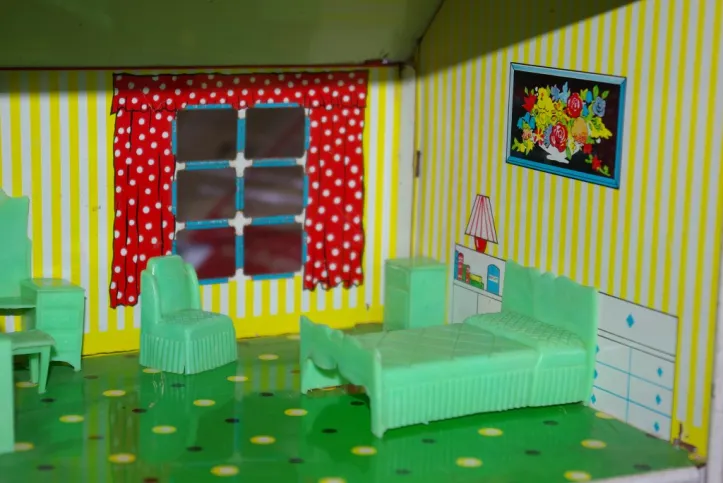
Not every 70s dollhouse felt brand-new. Plenty of homes still had older tin-litho or hand-me-down dollhouses that looked like they belonged to an earlier decade. Those houses had printed walls, tiny furniture, stiff rooms, and a slightly haunted quality once enough pieces went missing.
These older houses mattered because Gen X childhood was full of hand-me-downs. The toy did not have to be current to be active. A 50s or 60s dollhouse could still become the main stage in a 70s bedroom. The wallpaper might be old. The roof might be dented. Half the furniture might be from another set. But the drama still worked.
That is part of the 70s toy-box charm. New toys, old toys, cousin toys, garage-sale toys, catalog toys, and mysterious pieces with no known origin all lived together. The dollhouse world was a democracy of mismatched plastic and metal.
The Furniture: Tiny Objects, Huge Emotional Stakes
Dollhouse furniture was the secret engine of domestic play. Without furniture, you had figures standing around like they were waiting for a bus. With furniture, you had a home. A bed created bedtime. A table created dinner. A sofa created family meetings. A crib created responsibility. A tiny TV created the illusion that even plastic people needed to unwind.
The furniture also created conflict because there was never enough of it. One good chair became the most important object in the house. A missing bed meant someone had to sleep on the floor. A broken table leg became a permanent household issue. If a dollhouse had one tiny phone, that phone controlled the entire social network.
Kitchens: Where the Fake Food Lived
The kitchen was often the most important room because it suggested routine. Breakfast, dinner, chores, birthday parties, baby feeding, family arguments, and every kind of household problem could start there. Tiny plates, plastic cups, molded food, fake ovens, sinks, and refrigerators gave kids props for everyday life.
Kitchen play also had a strange realism. Kids saw adults cooking, cleaning, talking, and managing the house. The dollhouse kitchen turned that into a controllable version. Nobody burned anything. Nobody paid bills. The refrigerator held whatever tiny plastic object was small enough to fit inside.
Bedrooms: Sleep, Sickness, Secrets, and Meltdowns
Bedrooms were where dolls became people. A bed meant the doll had a private life. A dresser meant clothing mattered. A mirror meant style mattered. A crib meant someone was responsible for a baby. A bunk bed meant at least one doll was going to fall.
In 70s play, bedrooms were often used for the emotional scenes: someone was sick, someone was grounded, someone was hiding, someone was getting ready, someone was crying, or someone had simply been placed face-down because the storyline had gotten complicated.
Living Rooms: The Drama Center
The living room was the household command center. It was where dolls gathered, watched imaginary TV, had conversations, hosted guests, held family meetings, and sat on furniture that was almost always too small, too stiff, or too easy to lose.
A dollhouse living room could become anything: birthday party, holiday morning, argument zone, waiting room, talent show, wedding venue, emergency shelter, or the place where every figure got lined up because the kid had run out of plot.
Bathrooms: The Room Nobody Wanted to Overthink
Dollhouse bathrooms were always funny because they introduced realism that nobody was fully prepared to explore. A bathtub was cute. A sink was normal. A tiny toilet was both necessary and extremely weird. Still, bathrooms made the house feel complete, and kids found ways to turn them into bath time, getting ready, baby care, or a room where someone inevitably got stuck.
The Play Loops: What Kids Actually Did
Dollhouse play lasted because it had repeatable loops. The same toys could create different stories every time. A kid could reset the house, move everyone in, create a crisis, fix it badly, rearrange the rooms, and start over with a totally different household disaster.
Move In, Move Out
Every dollhouse had at least one moving day. Furniture shifted, dolls changed rooms, someone got the good bed, and someone else was banished to a corner like tiny real estate was scarce.
Feed the Baby
Baby dolls turned the play session into caregiving. Bottles, spoons, diapers, blankets, cribs, and pretend emergencies made kids responsible for a very demanding plastic roommate.
Redecorate Everything
Furniture rearranging was not filler. It was the story. A room could become a bedroom, school, restaurant, hospital, fashion studio, or interrogation room depending on mood.
Family Disaster
Somebody got sick, lost a pet, broke a chair, missed dinner, crashed a car into the garage, or had an argument dramatic enough to require every figure in the house.
Fashion and Status
Barbie, Dawn, Crissy, and their friends brought outfits, hair, dates, parties, jobs, popularity, jealousy, and one doll who always got treated like the main character.
Neighborhood Crossover
Fisher-Price people visited Barbie. Dawn moved into a shoebox. A Hot Wheels car appeared in the driveway. The whole toy box crossed over before anyone used the word multiverse.
The Domestic Drama Was the Point
Dollhouse play looked gentle, but it was full of conflict. The drama was not always loud, but it was constant. Who lived where? Who was the parent? Who was the kid? Who was sick? Who was visiting? Who got married? Who had to sleep in the tiny bed? Why is the baby on the roof? Why is the dog in the oven? Why is Barbie in charge of everything?
Kids used domestic toys to test control over everyday life. They copied what they saw at home, on TV, in commercials, and in catalogs, then remixed it into something stranger. A normal family dinner could become a disaster movie. A doll’s outfit change could become a career pivot. A missing chair could become a plotline.
That is what makes this kind of play so sticky in memory. It was not about one specific toy. It was about the tiny household systems kids created and destroyed over and over.
Scale Was Optional, Again
Dollhouse scale was a suggestion, not a law. Barbie could visit a Fisher-Price house even if she looked like a glamorous giant. A Dawn doll could sleep in furniture that was clearly wrong. A Little People figure could drive a car from another toy line. A baby doll could be the size of the entire kitchen.
The 70s toy box did not care about clean world-building. It cared about whether the piece worked for the story. If a couch looked close enough, it was a couch. If a box could be a house, it became a house. If a tiny plastic dog looked emotionally important, the dog became mayor.
That looseness is exactly what made the play feel so alive. Kids did not need matching brands. They needed rooms, figures, furniture, and enough imagination to make the household unstable.
How Kids Built a 70s Dollhouse World
The best domestic-play worlds were rarely complete sets. They grew from one doll, one room, a few pieces of furniture and whatever unrelated toys could be promoted into the household.
Choose the Cast
Pick the parents, kids, baby, glamorous visitor, neighbor, pet and one figure whose role changes every ten minutes.
Assign the Rooms
Decide where everyone sleeps, eats, gets ready, argues and temporarily disappears when the storyline gets complicated.
Add the Furniture
Beds create bedtime, tables create meals, sofas create meetings and a tiny phone creates immediate social pressure.
Create a Routine
Breakfast, school, work, feeding the baby, getting dressed and leaving the house give the story a starting rhythm.
Introduce a Crisis
A missing pet, broken chair, surprise visitor, sick baby or disastrous wedding keeps the household from getting comfortable.
Ignore the Scale
Use the car, couch, crib, dog or random plastic object that works emotionally. Measurements are for adults.
How Dolls and Houses Fit the 70s Toy Timeline
The 70s dollhouse world changes across the decade. In the early years, classic doll play, Fisher-Price family houses, Barbie lifestyle toys, Dawn dolls, and Crissy-style fashion/hair play all helped define the toy room. The emphasis was still open-ended: families, rooms, fashion, furniture, caregiving, and tiny social life.
By the middle of the decade, domestic play got bigger and more feature-driven. Baby Alive brought mess and caregiving mechanics. Fisher-Price expanded the Little People world beyond one house. Barbie’s living spaces got taller and more aspirational. Treehouse play and village play made homes feel more like complete environments.
By the late 70s, the toy aisle was moving toward the 80s — more media tie-ins, more character worlds, more electronic features, more collectibles. But dollhouses and domestic play still held onto something very 70s: the idea that a kid could take a room full of mismatched pieces and turn it into a household with rules, problems, and a shocking amount of backstory.
1970 Toys
Dawn dolls, Crissy, Fisher-Price house play, Barbie camper energy, and early-70s domestic toy-box momentum.
1971 Toys
Malibu Barbie, casual 70s fashion-doll energy, beach lifestyle play, and the shift from formal glamour to sunny domestic fantasy.
1973 Toys
Baby Alive, Fisher-Price Village play, caregiving loops, and small-family domestic play getting more interactive.
1974 Toys
Barbie Townhouse-style play, vertical doll real estate, tiny furniture drama, and elevator-based luxury living.
1975 Toys
Tree Tots, tiny family worlds, treehouse hideouts, and domestic play wandering into weird little 70s fantasy spaces.
1970 Toys
Dawn dolls, Crissy, Barbie camper energy and Fisher-Price family play set the early-decade domestic rhythm.
1971 Toys
Malibu Barbie shifts fashion-doll fantasy toward casual 70s lifestyle play.
1972 Toys
Barbie, creative toys and family games share the room while doll worlds remain open-ended.
1973 Toys
Baby Alive and Fisher-Price Village make caregiving and community play more interactive.
1974 Toys
Barbie Townhouse-style vertical living and Baby Alive realism make domestic play more feature-driven.
1975 Toys
Tree Tots and television characters pull family worlds toward fantasy and stronger identity.
1976 Toys
Bionic characters and feature-first toys grow louder, but Baby Alive and Barbie remain durable.
1977 Toys
Star Wars changes the aisle while Barbie, Baby Alive and familiar household play survive the franchise shift.
1978 Toys
Electronic toys rise, yet Baby Alive and Barbie still prove that routines and lifestyle worlds have staying power.
1979 Toys
The screen moves into childhood while Barbie and Baby Alive carry domestic play into the next decade.
Why This Still Hits
Dolls and dollhouses still hit because they were never just about “playing house.” They were about making order out of chaos. Kids took tiny people, tiny furniture, tiny rooms, and tiny accessories and built a world they could control. Then, naturally, they filled it with problems.
That is the Gen X part. The toys gave just enough structure, then left the rest alone. Nobody narrated the storyline. Nobody unlocked the next level. Nobody explained the lore. A kid sat on the floor and decided who lived there, who was in charge, who had a crisis, who needed a diaper change, and which doll was absolutely not invited to the party.
The 70s domestic toy world was not polished. It was mismatched, emotional, funny, weirdly intense, and full of tiny objects that somehow mattered. Barbie’s furniture, Dawn’s outfits, Crissy’s hair, Baby Alive’s mess, Fisher-Price’s little rooms, Tree Tots’ treehouse, and every random chair in the toy box all became part of one ongoing household drama.
Honestly, the tiny people were exhausted.
The nostalgia is not only about the dolls themselves. It is about the feeling that the whole world could be rearranged. Furniture moved. Families changed. A camper became a home. A treehouse became a neighborhood. A shoebox became an apartment. Nothing was fixed except the fact that somebody would lose a tiny shoe.
That is why these toys still feel so Gen X. The products provided just enough structure, then left the room. Kids did not unlock the next storyline. They invented it, destroyed it and started again with different furniture.
70s Dolls and Dollhouses FAQ
What were the most popular dolls of the 1970s?
Popular 70s dolls included Barbie, Dawn dolls, Crissy and Velvet, Baby Alive and many baby-doll and fashion-doll lines. Fisher-Price Little People also supported family and household play even though they were not traditional dolls.
What dollhouses were popular in the 1970s?
Popular examples included the Fisher-Price Play Family House and Village, Barbie Townhouse-style playsets, Barbie campers, Kenner Tree Tots Family Treehouse and older tin dollhouses that remained active as hand-me-down toys.
Why were Barbie houses and campers so important?
They turned Barbie from a single fashion doll into a complete lifestyle system. Houses, campers, furniture, vehicles and rooms gave the dolls destinations, routines, social status and a setting for ongoing stories.
What made Baby Alive different from ordinary baby dolls?
Baby Alive added a mechanical caregiving loop. Kids mixed food, fed the doll, used bottles and changed diapers, making the toy feel more realistic and more demanding than a basic baby doll.
Why did Fisher-Price Little People work so well for domestic play?
The Little People system combined durable figures with familiar places such as houses, garages, villages and schools. The toys supplied recognizable rooms and roles without fixing the story.
How did dollhouse furniture change the play?
Furniture turned empty rooms into scenes. Beds created bedtime, tables created meals, cribs created caregiving, sofas created family meetings and tiny phones created far more social drama than their size justified.
How was 70s doll play different from 80s doll play?
Seventies doll play was usually more brand-mixed and open-ended. The 80s brought stronger cartoon tie-ins, larger franchises and more tightly defined worlds. Kids in the 70s were more likely to combine dolls, furniture, cars and hand-me-down pieces from unrelated sets.
Where can I explore more 70s toys?
Start with the 70s Toys hub, then visit the 50 most iconic toys of the 70s, the hottest Christmas toys of the 70s, the toy catalog guide and the 70s toy commercial archive.