1980
Star Wars still set the rules
Small figures, movie vehicles, and playsets showed the industry how a plastic universe could keep expanding. See the top toys of 1980.
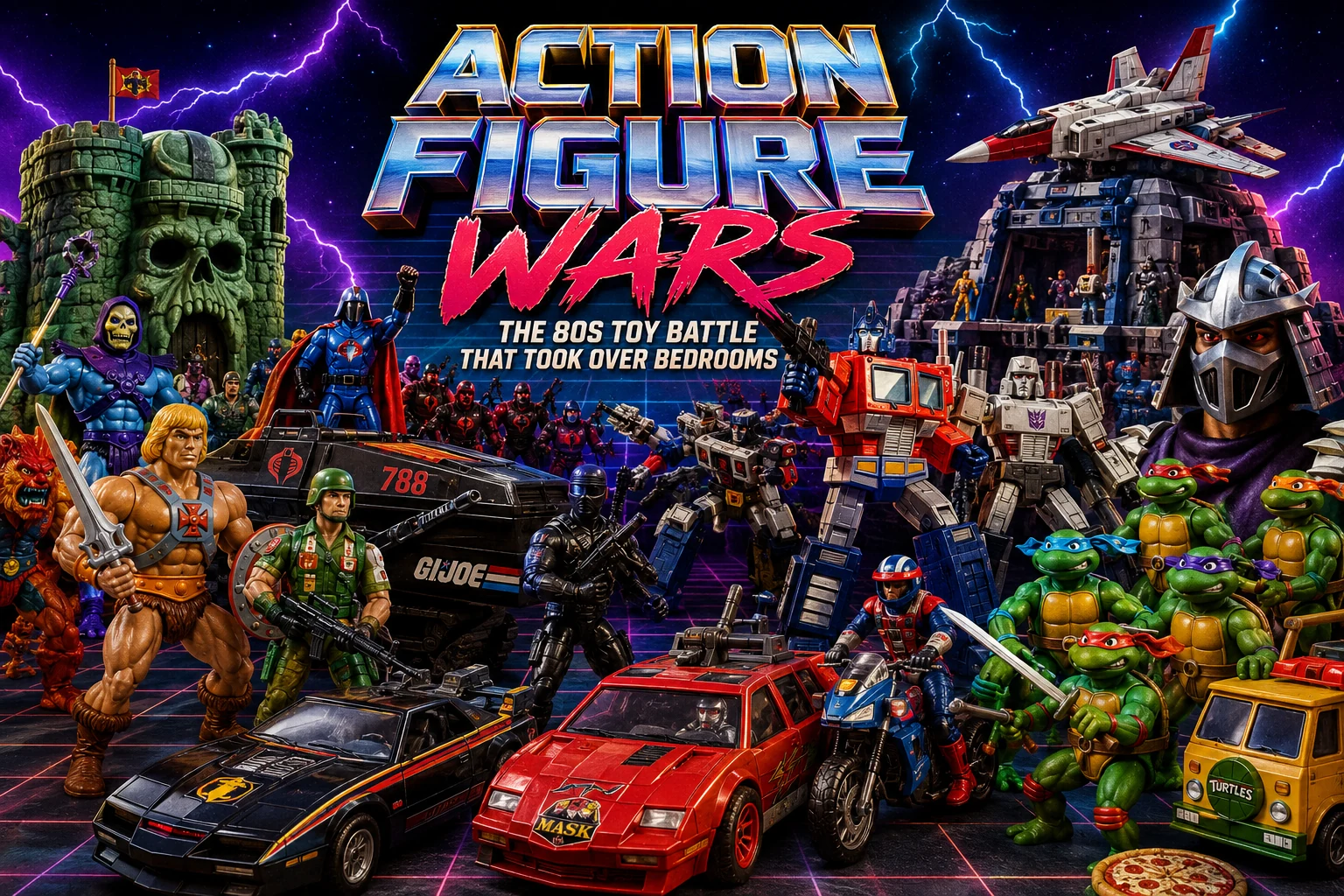
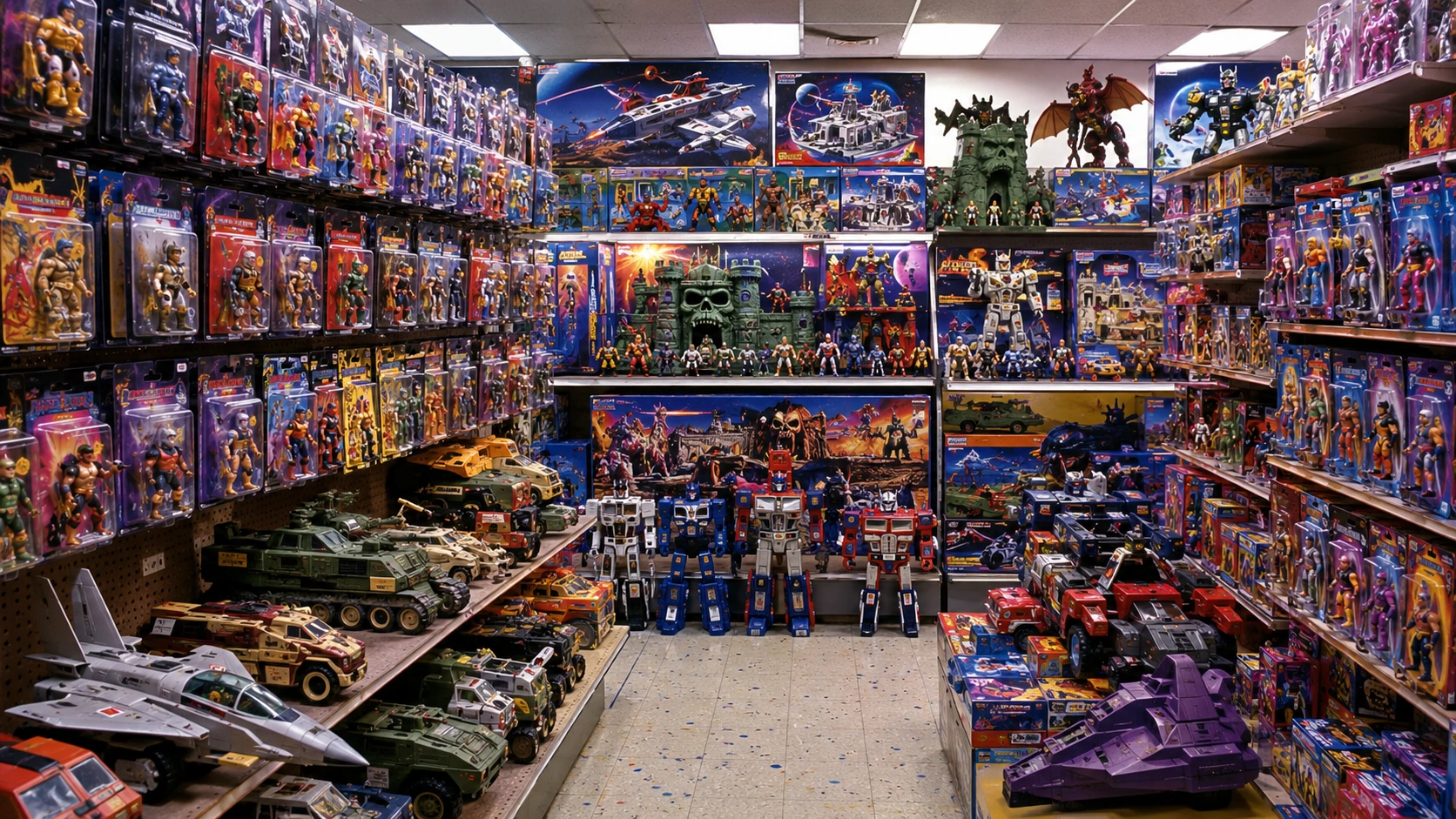
The plastic arms race that raised Gen X
The 1980s did not invent action figures, but the decade turned them into a full-contact retail sport. The 80s toys aisle filled with heroes, villains, transforming robots, military teams, masked drivers, mutant turtles, vehicles, secret bases, weapons, file cards, mini-comics, and playsets large enough to become unofficial furniture.
This is the story of the biggest 80s action figures and the toy lines that competed for shelf space, cartoon time, Christmas-list priority, and control of the bedroom floor. The broader decade-wide countdown lives in most iconic toys of the 80s; this page stays focused on the plastic armies, transforming machines, headquarters, cardbacks, commercials, and kid-made battles that turned action figures into a culture.
Why the aisle exploded
The genius of 80s action figures was scale. Most of these toys were small enough to be affordable, collectible, and easy to scatter across a bedroom floor, but the worlds around them felt gigantic. A kid might only own three figures and one vehicle, but the back of the package showed an entire universe waiting to be conquered.
That was the hook. You were not buying one toy. You were buying into a map: heroes, villains, weapons, bases, creatures, vehicles, sidekicks, factions, and all the missing pieces your parents said you were absolutely not getting today.
A single figure could be a whole afternoon. Two figures were a rivalry. Three figures and a couch cushion became a fortress siege. Throw in a vehicle, a shoebox base, a blanket mountain, or a plastic dinosaur from a completely unrelated toy line and suddenly the room had a plot.
The toy companies understood something brutally effective: conflict sells collections. Good guys need bad guys. Bad guys need vehicles. Vehicles need bases. Bases need special missions. Special missions need more characters. More characters need more commercials. And suddenly your dresser drawer looked like a tiny Cold War with elbow joints.
That structure made action figures perfect for 80s childhood. You did not need instructions. The play pattern was obvious: pick sides, build the battlefield, make explosion noises, lose one accessory forever, repeat until dinner.
The 80s action figure boom was also lifestyle. These toys followed kids from Saturday morning cartoons to lunchboxes, cereal commercials, school folders, birthday parties, Halloween costumes, toy-store aisles, Christmas catalogs, and playground arguments about who would win in a fight. The figure itself was only the physical piece of a much bigger kid-culture machine.
Follow the decade
Small figures, movie vehicles, and playsets showed the industry how a plastic universe could keep expanding. See the top toys of 1980.
Star Wars remained strong while manufacturers prepared the character systems, media tie-ins, and price ladders that would define the decade. See the top toys of 1981.
Masters of the Universe brought chunky fantasy power while A Real American Hero made teams, file cards, and vehicles central to play. See the top toys of 1982.
He-Man and G.I. Joe grew into full media worlds, and the toy aisle began feeling less like a shelf and more like competing television networks. See the top toys of 1983.
Transforming machines joined fantasy warriors and military teams, creating one of the decade’s most crowded and competitive toy years. See the top toys of 1984.
He-Man, G.I. Joe, Transformers, M.A.S.K., Super Powers, and other lines fought through vehicles, headquarters, and nonstop cartoon visibility. See the top toys of 1985.
Larger vehicles, hidden weapons, electronic effects, masks, holograms, and stranger factions became necessary just to stand out. See the top toys of 1986.
ThunderCats, SilverHawks, Visionaries, Centurions, and late-wave competitors fought for attention beside the established giants. See the top toys of 1987.
Teenage Mutant Ninja Turtles mixed martial arts, comedy, monsters, gross-out energy, and character-driven collecting. See the top toys of 1988.
The Turtles, G.I. Joe, Ghostbusters, and other physical toy lines stayed powerful even as Nintendo changed what childhood wanted from a screen. See the top toys of 1989.
The plastic arms race
The early 80s still carried plenty of late-70s toy energy, especially from Star Wars, model kits, die-cast vehicles, board games, and classic dolls. But the shelf was changing. Toy makers had learned that small-scale characters could be collected, repeated, expanded, and sold in waves. Kids did not just want a hero. They wanted the villain, the vehicle, the base, and the weird side character who showed up on the back of the card.
This is where everything goes nuclear. Masters of the Universe, G.I. Joe, Transformers, GoBots, ThunderCats, M.A.S.K., and superhero lines all pushed variations of the same idea: build a universe kids could watch on TV, then sell them the cast, vehicles, headquarters, weapons, enemies, and accessories one blister card at a time.
By the late 80s, the action figure aisle was crowded and competitive. Toy lines had to get louder to stand out. Mutants, monsters, commandos, transforming vehicles, sewer heroes, holograms, space cowboys, martial arts animals, and neon accessories all fought for space before Teenage Mutant Ninja Turtles kicked the entire thing into a new kind of weird.
The engineering battle
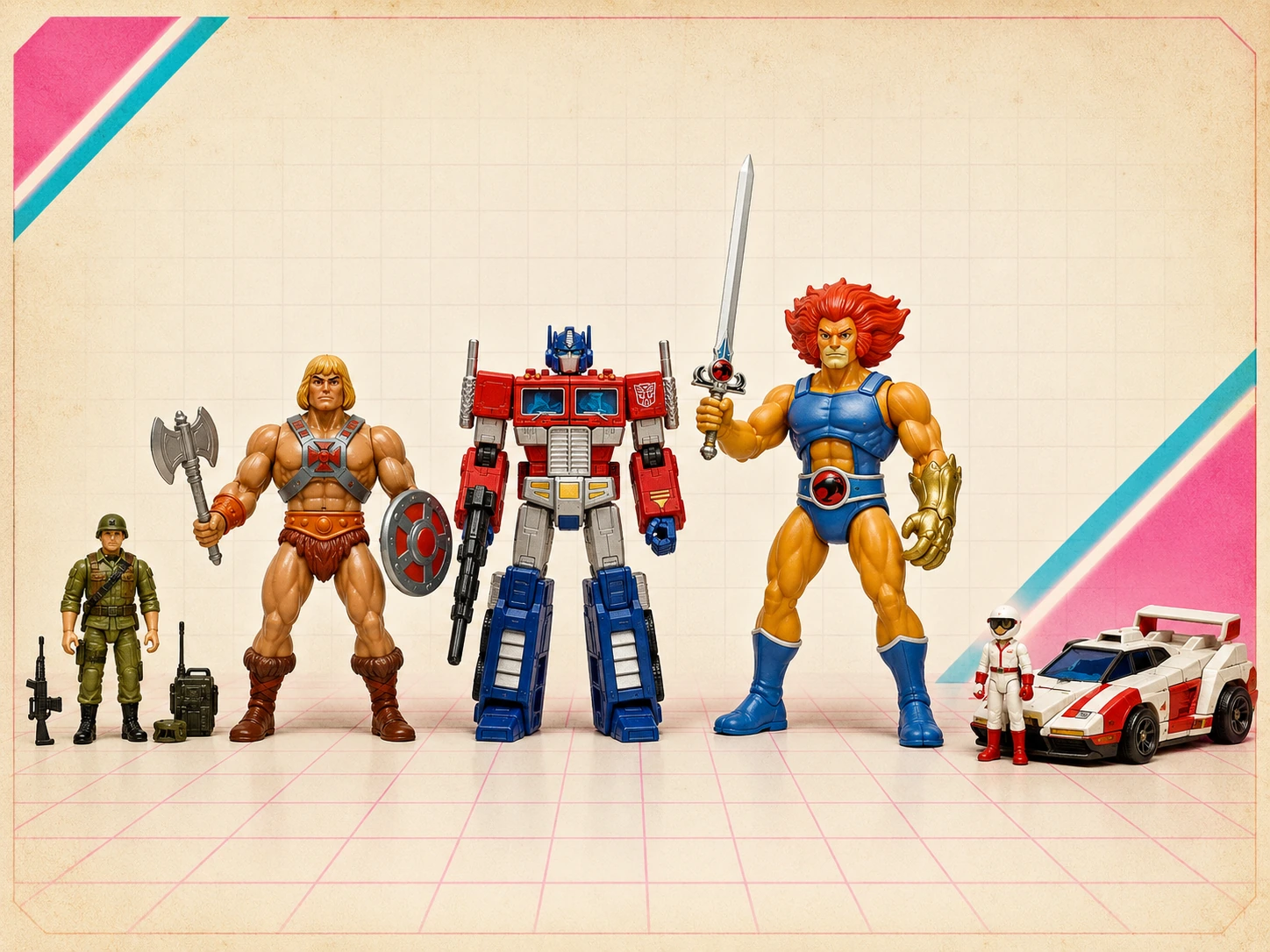
The 80s action figure aisle was a physical argument about scale. G.I. Joe, Star Wars, and M.A.S.K. proved that smaller figures made vehicles and playsets practical. Masters of the Universe and ThunderCats used larger bodies to create visual impact. Transformers ignored the question by changing size and form according to whatever the engineering required.
Scale shaped the entire world around a line. A 3.75-inch pilot could fit into a reasonably sized jet. A larger warrior needed a larger vehicle, which increased the cost and storage problem. Smaller figures encouraged squads and fleets. Larger figures encouraged individual champions and dramatic one-on-one fights.
G.I. Joe figures could bend, sit, hold weapons, and occupy vehicles with a flexibility that made them feel almost technical. Masters of the Universe figures were less articulated but sturdier and more powerful in the hand. Super Powers added character-specific action features. Secret Wars figures were simpler. TMNT figures often used sculpted poses to create personality even when the movement was limited.
Kids did not discuss articulation charts, but they felt the difference. Could the figure sit in the vehicle? Could it hold the weapon? Could it stand without leaning against a book? Could it survive being thrown? The engineering determined the story more than anyone realized.
O-rings wore out. Thumbs snapped. Crotches cracked. Rubber bands loosened. Chrome rubbed away. Stickers peeled. Capes frayed. Missiles vanished. Transparent plastic became brittle. Soft heads discolored. Transforming tabs broke after one final forced movement.
These were not collector concerns at the time. They were ordinary childhood maintenance. Figures were tightened, glued, taped, swapped for parts, or reassigned to roles that explained the damage. A broken arm did not retire a character. It gave him a backstory.
Electronic effects eventually joined hinges, springs, O-rings, and action features. The beeping, talking, light-up side of the same aisle continues with 80s electronic toys and gadgets.
The package sold the world
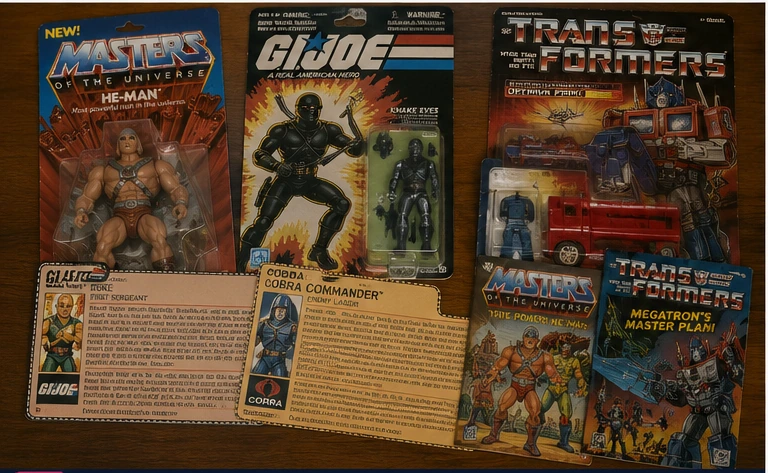
Bright logos, painted explosions, dramatic character art, chrome effects, faction symbols, and visible accessories competed for attention. The bubble showed the figure. The artwork showed what the figure felt like in the imagination.
A toy hanging on a peg had seconds to make a case. The best packaging made the character look more powerful, dangerous, or important than the piece of plastic could manage by itself.
The cardback was where satisfaction became shortage. It showed other figures, vehicles, playsets, and characters that might not even be stocked in the store. A child could leave happy with one figure and still feel newly aware of eleven problems.
Checklists, cross-sells, bios, tech specs, file cards, mini-comic offers, and photographs turned packaging into a catalog small enough to carry home.
G.I. Joe file cards are the clearest example, but many lines used package text to transform anonymous figures into characters. A name, role, allegiance, weapon, birthplace, personality trait, or statistic gave the toy authority. It told the child how the figure fit into the war.
Cutting those cards off the package created a second collectible. Some kids stored them carefully. Others cut through the text, lost half the border, and still treated the damaged piece like military intelligence.
Masters of the Universe mini-comics proved that story could ship inside the package. They introduced characters, locations, conflicts, and versions of the world that did not always match the later cartoon. That inconsistency did not hurt the play. It gave children more material.
The comic also made the purchase last longer. The figure was the object. The story was the invitation. By the time the child finished reading, the first battle had already begun in the imagination.
Where the real fight happened
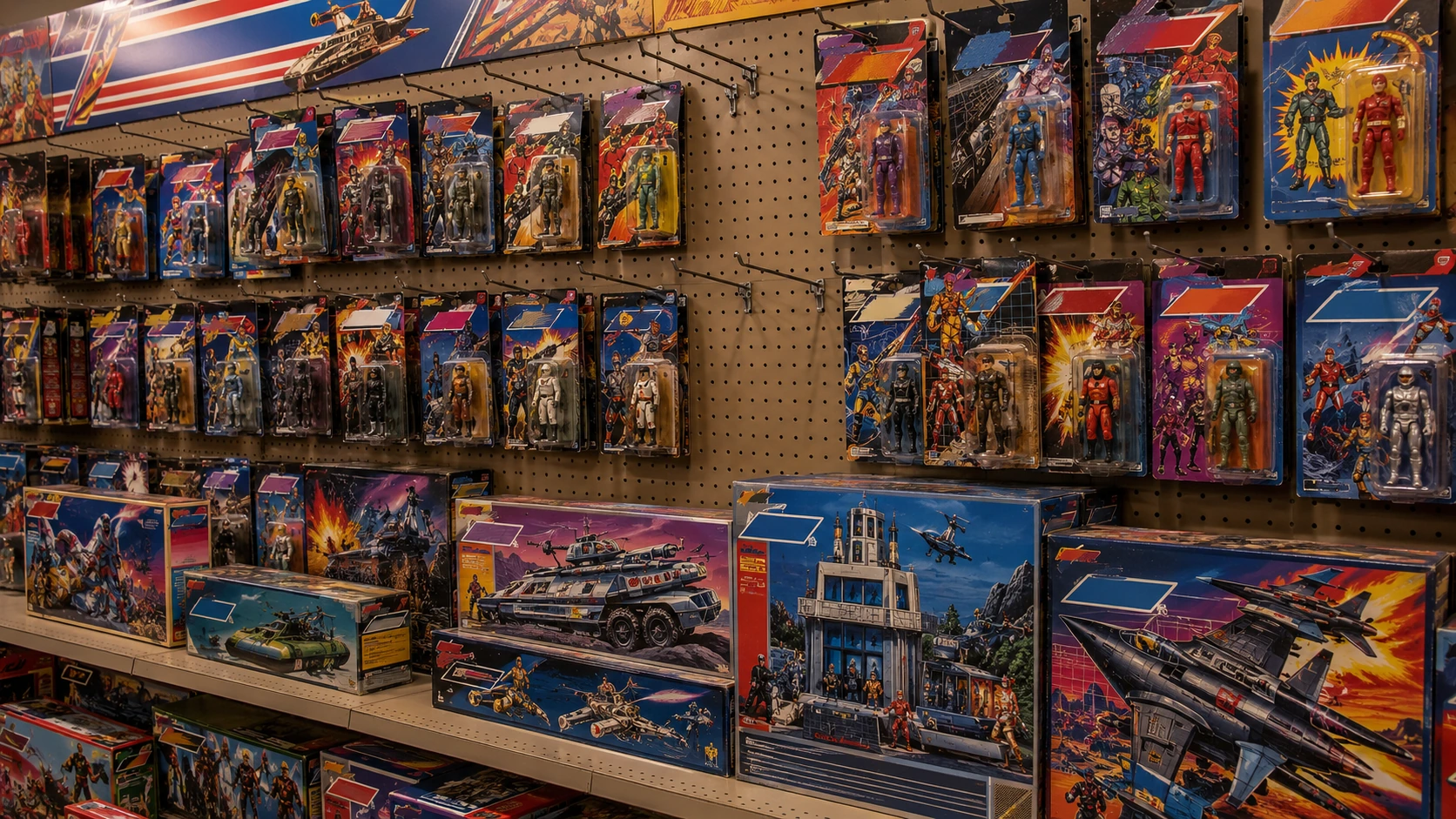
Every line wanted eye-level hooks, complete character waves, a dramatic endcap, and enough room for the vehicles. Retailers did not have infinite space. If one franchise expanded, another lost pegs. A cartoon could make children demand a figure that the local store had never received, creating the uniquely 80s experience of knowing a toy existed only because the commercial kept showing it.
Shelf presence also shaped memory. Lines that stayed stocked looked larger and healthier. Lines with scattered figures and no vehicles felt temporary. A child could sense when a franchise was winning simply by how much wall it occupied.
A department store might have a smaller selection but a strong Christmas display. A mall toy store offered density and the possibility of finding something unusual. A giant toy retailer could make the aisle feel endless, with overhead signs, stacked vehicles, and entire sections dedicated to one plastic conflict.
The store environment amplified desire. Fluorescent lights reflected off bubbles. Card art repeated down the wall. Children scanned for a specific color, logo, or shape. Adults searched for a name they had written phonetically on a piece of paper.
A hard-to-find figure became more important because it was hard to find. Distribution differences, popular characters, late waves, limited shelf space, and regional availability turned ordinary releases into rumors. Somebody’s cousin had seen one. A store across town might get a truck on Thursday. The clerk said to call in the morning.
The hunt made the eventual purchase feel earned. It also gave children a crash course in scarcity, disappointment, substitution, and the suspicious phrase “maybe for your birthday.”
Action figures were only one army fighting for store space. Dolls and plush brands occupied their own bright territory, video games increasingly pulled families toward locked display cases, and electronic toys demanded demonstrations. Keep exploring the other fronts through 80s dolls, plush, and pet toys, 80s video game toys, and 80s electronic toys and gadgets.
Six to eight weeks of torture
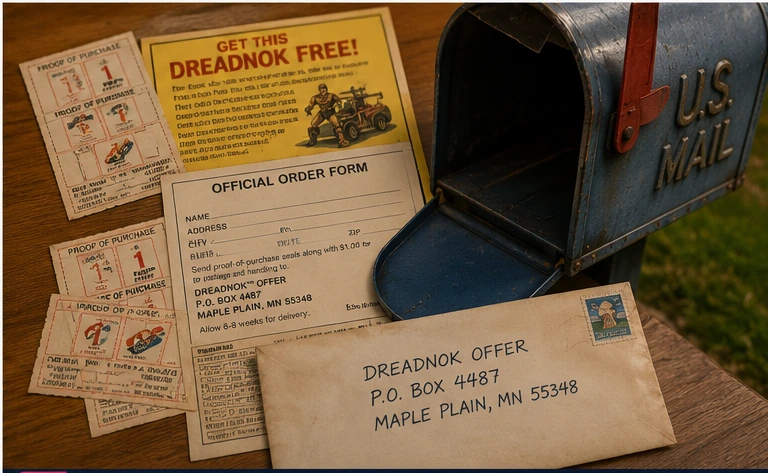
Mail-away offers gave toy companies another way to reward collecting. Save points, cut symbols from packages, include payment for shipping, fill out a form, and place the whole operation into an envelope that felt dangerously important.
The exclusive figure gained power because it was not hanging on a peg. It had to be summoned through paperwork.
There was no tracking page. No delivery estimate updated by the hour. The child mailed the form and entered a long period of faith. Every package or padded envelope became a possibility.
When the figure finally arrived, the plain shipping box often made the contents feel even more secret. This was not something purchased during errands. It had come directly from the toy universe.
Some lines offered newsletters, catalogs, membership kits, posters, patches, or other material that made ownership feel like participation. The child was not merely buying toys. The child was joining a faction, team, club, or classified operation.
These paper materials rarely survived as well as the plastic. They were folded, taped to walls, written on, cut apart, or thrown away by adults cleaning a room. That is exactly why seeing one now can trigger a memory more powerful than a loose figure.
The franchises that owned the decade
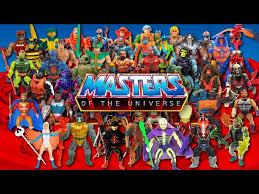
He-Man did not feel like a normal action figure line. It felt like somebody poured fantasy novels, monster movies, bodybuilding posters, barbarian art, laser guns, skull castles, and Saturday morning cereal into the same plastic mold.
Masters of the Universe was built for instant impact. You did not need to understand a complicated story to know what was happening. He-Man looked powerful. Skeletor looked evil. Battle Cat looked like a tiger wearing armor because the 80s had no interest in calming down. The figures were broad, bright, thick, and nearly impossible to ignore on a shelf.
The line also had a genius physical feel. These were not delicate figures. They were chunky, strange, muscular, and made for rough play. They could slam into each other, fall off furniture, ride beasts, hold weapons, stand guard at homemade forts, and survive being tossed into a pile with toy cars, LEGO bricks, and whatever random dinosaurs were already living in the toy box.
Castle Grayskull was the emotional center of the line. It looked mysterious, dangerous, and enormous in a kid’s imagination. Even if it was smaller than the commercial made it feel, it gave the entire toy line a home base. Suddenly your figures were not just fighting on the carpet. They were defending a fortress.
The best part was how weird the world could get. Trap Jaw had a mechanical arm. Man-E-Faces changed identities. Ram Man launched himself into things. Beast Man looked like he smelled terrible. Orko was floating comedy chaos. Skeletor was a skull-faced wizard with the confidence of a substitute teacher who had lost control of the room. The line mixed fantasy, sci-fi, horror, comedy, and superhero energy without asking permission.
He-Man was a toy line you could identify from across the room. Kids brought figures to friends’ houses, argued over who got to be He-Man, and treated missing swords like family tragedies. If someone had Castle Grayskull, that house instantly became the better house to play at. If someone had Snake Mountain, that kid had villain real estate.
Masters of the Universe also trained kids to think in waves. You saw characters in commercials, in mini-comics, on the cartoon, and on the back of the package. You might only own a handful, but you knew there were more. That gap between what you had and what the package promised was where the obsession lived.
The full Eternian story continues in He-Man and Masters of the Universe toys, including the figures, beasts, castles, cartoons, and glorious lack of restraint.
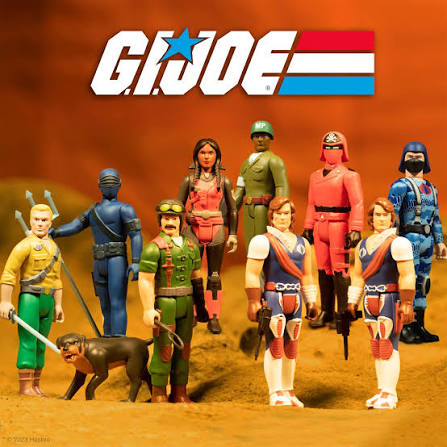
G.I. Joe turned the action figure aisle into a military operation. It had teams, ranks, specialties, vehicles, bases, villains, missions, dossiers, comic-book drama, and enough tiny weapons to disappear into every carpet in America.
G.I. Joe was less about one main hero and more about building a team. Every figure had a job. One was a commando. One was a ninja. One was a pilot. One was a diver. One was a medic. One had a flamethrower. One had a face mask that made absolutely no practical sense but looked incredible. The line made kids feel like they were assembling a tactical unit, even if the mission was mostly knocking Cobra figures off the arm of the couch.
The smaller size mattered. G.I. Joe figures were easy to collect, easy to carry, and perfect for vehicles. They could fit into cockpits, tanks, jeeps, helicopters, boats, and bases. That gave the line a massive play advantage. The figure was only the soldier. The vehicle made the mission.
The secret weapon of G.I. Joe was Cobra. Good guys are fine, but villains make a toy line breathe. Cobra Commander, Destro, Baroness, Zartan, Storm Shadow, and the endless troops gave kids a reason to stage battles over and over again. Cobra had better symbols, better masks, and a better sense of drama. They looked like a villain organization designed by a kid who had just discovered mirrored sunglasses.
That balance mattered. G.I. Joe versus Cobra was simple enough for a kid to grasp in five seconds, but broad enough to support endless missions. Rescue the hostage. Blow up the base. Steal the plans. Defend the convoy. Hunt the ninja. Crash the jet. Rebuild everything. Do it again tomorrow.
One of the best parts of G.I. Joe was the file card on the back of the package. Kids cut them out, saved them, stacked them, read them, and treated them like secret intelligence. Those little bios made every figure feel specific. The toy had a code name, real name, specialty, birthplace, personality, and backstory.
That was huge. It turned action figures into characters before the kid even started playing. You were not just buying a guy with a gun. You were buying someone with a role in the war. That made even secondary characters feel important.
Open the classified file on G.I. Joe: A Real American Hero toys for the figures, file cards, vehicles, Cobra weirdness, and giant-playset dreams.
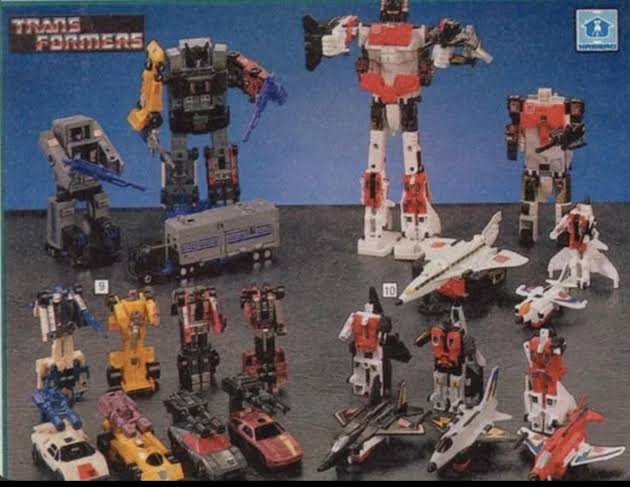
Transformers raised the difficulty level. These were not just action figures. They were robots, vehicles, puzzles, factions, personality tests, and playground status symbols.
Transformers had an advantage that almost no other action figure line could match: the toy itself did something astonishing. It changed. A car became a robot. A jet became a villain. A cassette player became a battlefield commander. A dinosaur became a metal monster. The transformation was the play pattern, the magic trick, and the proof that this toy was more advanced than the average plastic hero.
For kids, that made Transformers feel premium. You did not just hold the toy. You learned it. You figured out the steps. You messed it up. You forced one part too hard. You found the tiny hinge that suddenly made the whole thing work. Once you could transform it without looking at the instructions, you had earned something.
Transformers were playground currency. Bringing one to school meant showing off the conversion. Kids gathered around desks, lunch tables, or the edge of the playground to watch someone transform a figure and then criticize them for doing it wrong. A missing fist, missile, gun, or tiny accessory could ruin the look, but never the pride.
There was also a parental divide. Some adults saw Transformers as expensive puzzles that would break. Some saw them as better than toy guns. Some had no idea why a robot truck needed a backstory. Kids knew exactly why. The transformation made the toy feel alive. It was two toys pretending to be one, and that felt like cheating in the best possible way.
Keep transforming through the complete story of G1 Transformers toys, from Optimus Prime and Megatron to Dinobots, combiners, and missing plastic fists.
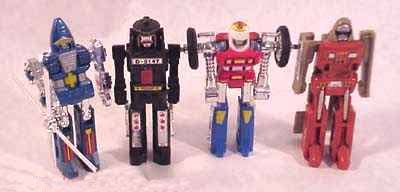
GoBots may have lost the long-term reputation battle to Transformers, but in the actual 80s toy box they absolutely mattered. Plenty of kids owned them, played with them, mixed them into robot battles, and treated them as part of the same transforming-machine fever.
The easy joke is that GoBots were the lesser Transformers. That is how nostalgia often remembers them. But that is not how childhood worked in real time. Kids did not always care which company won the branding war. They cared whether the robot turned into something cool, whether it fit in a pocket, whether it could fight the other robots, and whether their parents were willing to buy it.
GoBots were often more accessible. They were generally straightforward to transform, easy to bring places, and perfect for quick play. You could throw one in a jacket pocket, take it to a friend’s house, transform it on the floor, and drop it into whatever battle was already happening. That gave them a real place in the everyday toy ecosystem.
GoBots also belong in the cabinet of forgotten toys of the 80s that were once everywhere and now trigger an immediate “I had that one.”
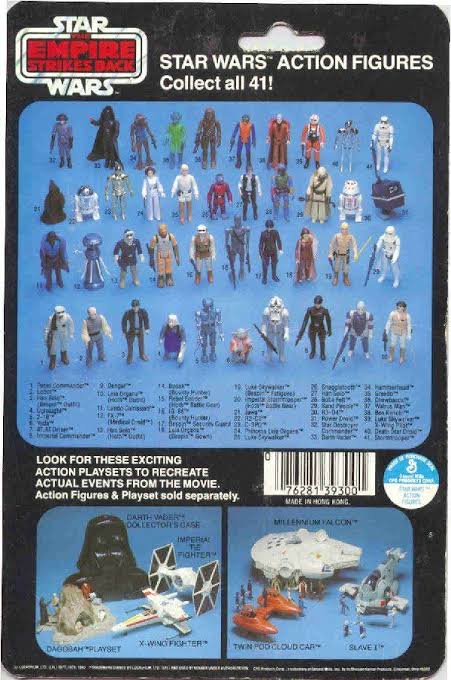
Star Wars was the bridge between the late 70s and the 80s action figure boom. By the time the 80s toy wars exploded, Kenner had already shown the industry that small figures, vehicles, aliens, playsets, and movie mythology could become a collecting obsession.
Star Wars figures were not just popular toys. They were proof of concept. They showed that kids would collect characters across a whole universe, including background aliens, droids, pilots, guards, and villains with barely any screen time. That changed how toy companies thought. The main hero was no longer enough. The world around the hero could become just as profitable.
By the early 80s, Star Wars toys were still everywhere in bedrooms. Some kids had brand-new Return of the Jedi figures. Some had older figures passed down from siblings. Some had battered Darth Vaders with capes missing, Lukes with bent lightsabers, and stormtroopers with one leg looser than the other. These toys aged into the decade rather than disappearing from it.
Star Wars also appears throughout the most iconic toys of the 80s because nearly every action-figure line that followed borrowed part of its playbook.
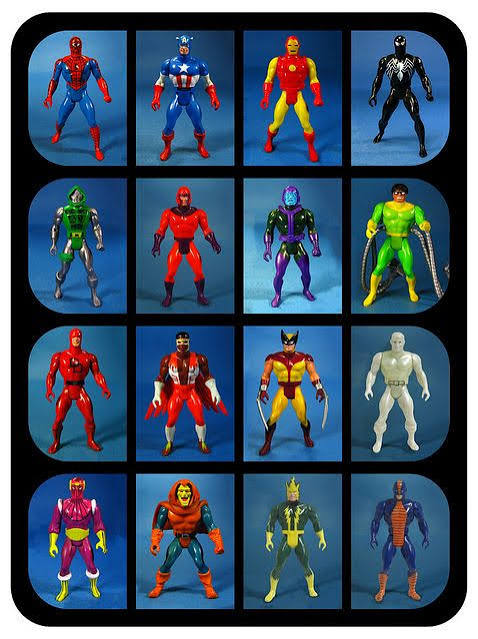
The 80s superhero figure battle was smaller than He-Man, G.I. Joe, or Transformers, but it mattered. DC and Marvel both tried to turn comic-book heroes into action figure lines that could compete in the same toy aisle where cartoons, robots, commandos, and barbarians were already throwing punches.
Kenner’s Super Powers line had a clean, bright, confident look. The figures felt like classic DC heroes translated into 80s toy form without losing their comic-book identity. The colors were bold. The capes mattered. The action features were built into the figures in ways that felt simple but satisfying. Superman could punch. Batman could swing his arms. Characters had gimmicks without becoming unrecognizable.
Mattel’s Secret Wars line had a different flavor. It brought Marvel heroes and villains into the action figure aisle with lenticular-style shield gimmicks and a lineup that mixed obvious heavy hitters with characters that made comic fans feel seen. Spider-Man, Captain America, Iron Man, Wolverine, Doctor Doom, and Magneto all had toy-box potential, even if the line never felt as polished as DC’s Super Powers.
The superhero lines sit beside the decade’s other forgotten and half-remembered 80s toys, where capes, shields, and loose accessories went to disappear.
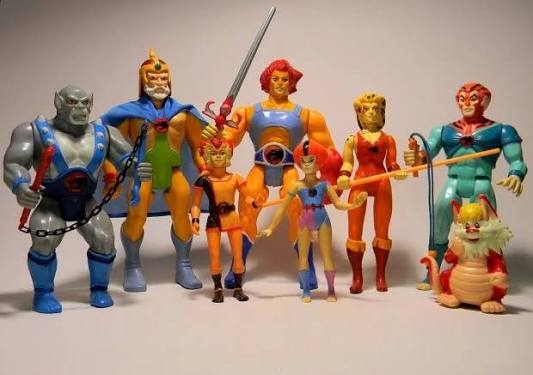
ThunderCats took the fantasy-action formula and gave it its own strange identity: cat warriors, ancient evil, sci-fi weapons, a giant tank, a sword with a logo in it, and one of the most dramatic cartoon intros of the decade.
ThunderCats did not feel like G.I. Joe or Transformers. It had more myth, more melodrama, and more fantasy weirdness. The characters were humanoid cats from another world, which sounds ridiculous until you remember that the 80s could sell almost anything if the theme song was good enough.
The figures had presence. They were larger than many small-scale action figures, which made them feel more like display pieces or battle champions. Lion-O looked heroic. Panthro looked tough. Cheetara looked fast. Mumm-Ra looked like nightmare fuel wrapped in bandages. The line had clear personalities before a kid even started playing.
ThunderCats gained much of its power from the same 80s cartoon toy commercials that turned weekday television into a plastic wish list.
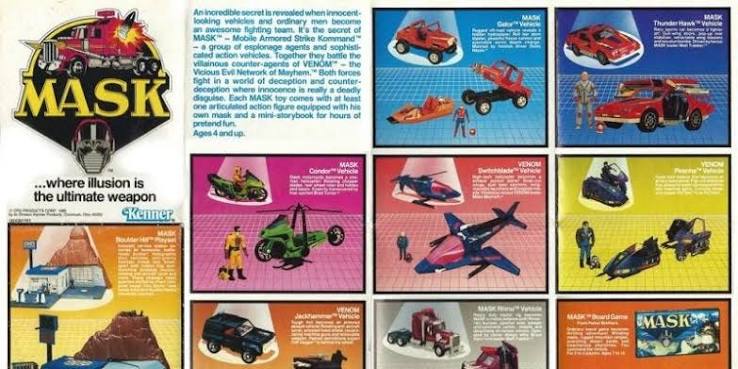
M.A.S.K. was one of the most perfectly 80s toy ideas ever: tiny action figures with masks, secret teams, hidden weapons, and ordinary-looking vehicles that transformed into attack machines.
M.A.S.K. understood that vehicles were already a major part of 80s play. Kids loved cars, trucks, motorcycles, helicopters, jets, and anything with wheels. The genius move was making the vehicle hide something. A sports car was not just a sports car. It could sprout wings. A truck was not just a truck. It could reveal weapons. The transformation was not as robot-focused as Transformers, but it scratched the same itch: the toy had a secret.
That secret made the play pattern immediate. You could stage a chase, reveal the hidden attack mode, fire the imaginary missiles, and turn the whole thing back before the adults had any idea why this car was suddenly more important than every other car in the room.
M.A.S.K. belongs in both the action-figure war and the larger archive of forgotten toys of the 80s with gimmicks too good to stay forgotten.
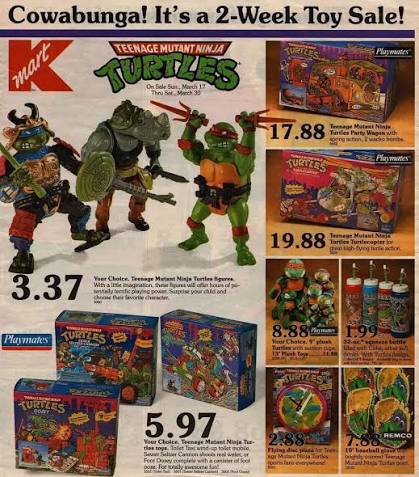
Teenage Mutant Ninja Turtles arrived near the end of the decade and changed the tone of the action figure aisle. After years of warriors, soldiers, robots, and fantasy heroes, here came mutant turtles with weapons, pizza, sewer jokes, gross villains, and a toy line that felt like someone let the weird kids run the factory.
The Ninja Turtles were not polished heroes in the traditional 80s sense. They were strange, funny, messy, and full of attitude. They had weapons, but they also had jokes. They fought villains, but they also loved pizza. They came from the sewer, which instantly made them feel different from the clean heroic worlds of Superman, He-Man, or G.I. Joe.
That mix was powerful. The Turtles were action figures, comedy characters, monster toys, martial arts heroes, and cartoon mascots all at once. They could fit into battles, but they could also make the entire tone of the toy box sillier. That was the beginning of a new kind of toy energy.
Turtlemania became one of the hottest Christmas toy stories of the 80s and the bridge into the even stranger toy aisle of the early 90s.
The reinforcements
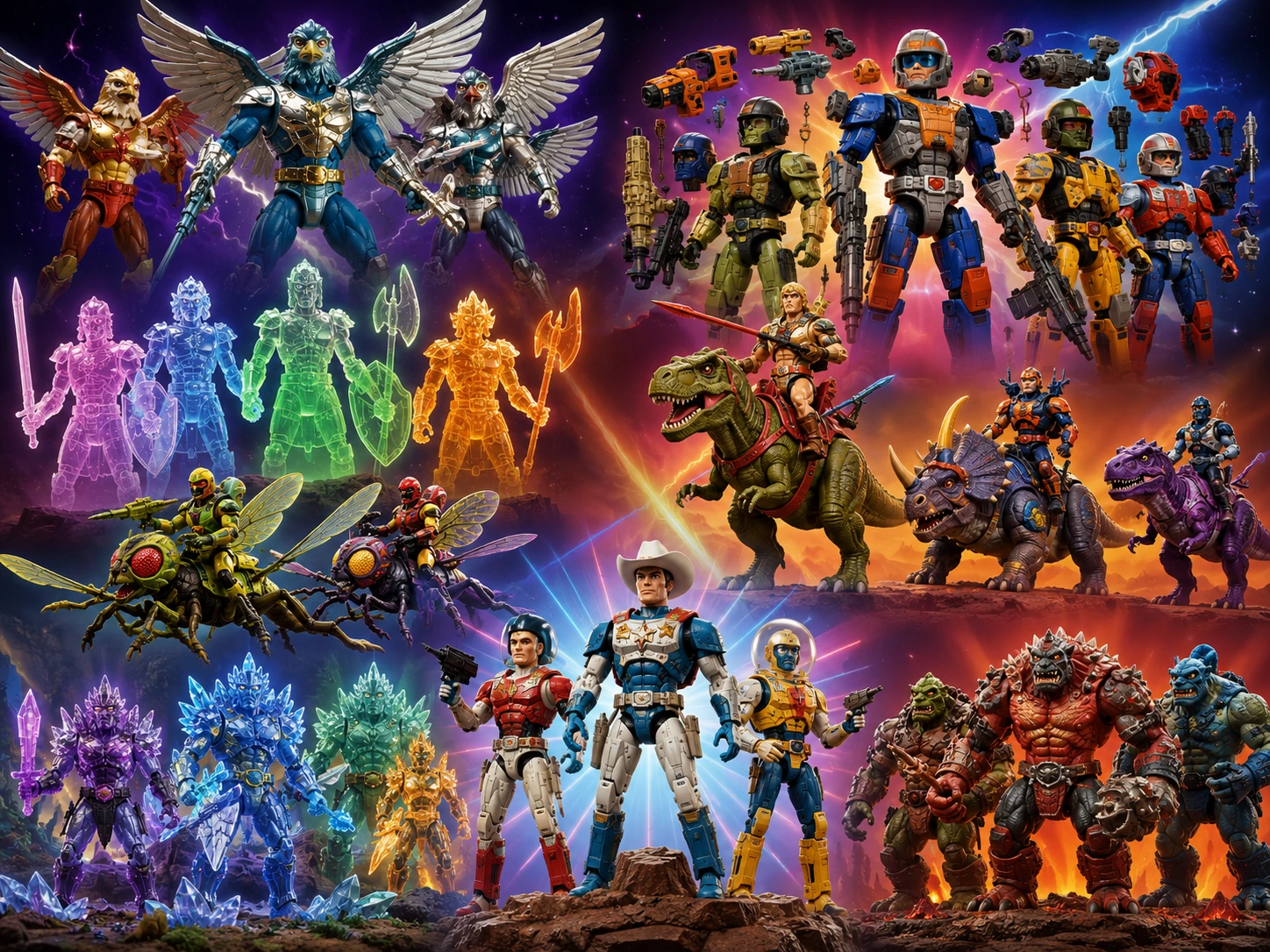
The biggest franchises owned the commercials and the best shelf space, but they were not fighting alone. The 80s action-figure aisle was crowded with lines that burned brightly, arrived late, got weird, or vanished before most parents learned the characters’ names.
Five robot lions combined into one giant warrior, which meant the toy delivered teamwork, transformation, scale, and the permanent risk that one lion would disappear. Voltron felt like a reward for kids who believed one robot was never enough robot.
The line also showed how combination could become a collecting plan. Owning one lion was a start, not a conclusion. The complete robot existed only when every piece was present, working, and not lost behind furniture.
Metallic space heroes with wings, masks, companion birds, and enough chrome to reflect the entire decade. SilverHawks looked expensive, futuristic, and slightly dangerous to hold under strong lighting.
The toys leaned into metallic paint, wing features, and companion creatures, which made them stand out in a dark shelf photograph. They looked like ThunderCats had been launched into space and issued reflective uniforms.
Man and machine, power extreme. The figures wore interchangeable weapon systems that snapped onto their suits, giving kids permission to turn one hero into a walking military hardware catalog.
The attachment system let kids rebuild the same character for air, land, or sea missions. That modular approach made the gear as important as the figure and gave the line a satisfying equipment-room feeling.
Holographic chest plates and staffs gave these fantasy warriors a visual trick no ordinary paint job could match. The figures looked like magic had been laminated directly onto plastic.
The holograms created immediate shelf magic, but the fantasy world around them was harder to explain quickly than robots, soldiers, or turtles. The line looked expensive and mysterious, which was both its strength and its problem.
Oversized police heroes and exaggerated criminals brought cybernetic crime fighting into the late-80s aisle. The line looked like law enforcement after a toy designer had consumed too much Saturday morning television.
The figures had a larger scale and exaggerated proportions that made them visually strong but less compatible with many existing collections. Like several late-80s lines, they entered a toy aisle already overcrowded with established universes.
Dinosaurs were apparently not interesting enough until somebody strapped armor, lasers, and tiny riders onto them. The larger boxes had serious Christmas-morning presence and absolutely no concern for paleontology.
The dinosaur itself often carried more appeal than the tiny rider, which made the line work even for kids who ignored the official conflict. Remove the armor and it was still a dinosaur. Add the armor and it became the most 80s possible version of a dinosaur.
A space western with cyber horses, giant figures, villains, and Thirty/Thirty—the talking horse who carried an enormous gun because subtlety had already left the building.
The western setting mixed with science fiction gave the line a distinctive look, but it arrived when retailers and kids were already choosing between dozens of worlds. The figures had personality; the shelf did not have unlimited patience.
Fantasy warriors rode giant insect creatures with puppet features. The line was imaginative, creepy, and perfectly capable of making the toy shelf look like the basement had developed an infestation.
The giant insect mounts were the memorable centerpieces, combining action figures with hand-puppet features in a way that was tactile, inventive, and unsettling. They looked like toys designed by someone who had found a centipede in the basement and seen opportunity.
Huge subterranean monsters, scientists, military heroes, and horror energy made Inhumanoids one of the decade’s strangest lines. The monsters looked like something the cartoon should have warned children not to purchase.
The enormous monsters created scale and horror few other lines attempted, but the concept was intense for younger kids and expensive to support. The figures now feel like evidence that the decade occasionally forgot toys were supposed to help people sleep.
The adult movie character became a child-friendly animated commando with figures, villains, vehicles, and enough toy weapons to make the original film’s tone feel like a distant administrative problem.
The animated version softened the adult source material enough for toy shelves, yet the basic appeal remained weapons, commandos, villains, and vehicles. It was a reminder that the 80s could convert almost any recognizable character into a child-friendly team with a theme song.
Crystal warriors, lava villains, fantasy weapons, and translucent plastic gave Crystar a visual identity that still jumps out of old toy photographs even when people cannot remember the story.
The translucent materials gave the toys a gemstone effect that made them easy to remember in photographs and hard to confuse with another line. Visual identity was not the problem; building a lasting media world around it was.
Air-powered vehicles and weapons gave the line a built-in physical gimmick. The story may have faded, but the memory of pumping plastic mechanisms until something launched across the room remains strong.
The pneumatic gimmicks turned pressing, pumping, and launching into the central play pattern. The line had a distinct world and mechanical personality, but it entered a market where a strong gimmick still needed a cartoon-sized megaphone.
A lot of these lines now live in the same memory drawer as the forgotten toys of the 80s: instantly recognizable, slightly incomplete, and probably missing the one accessory that made the whole thing work.
Sectaurs, Air Raiders, Crystar, Inhumanoids, and the rest belong beside the forgotten toys of the 80s—the lines that vanished from shelves but never completely left the memory drawer.
Television became the catalog
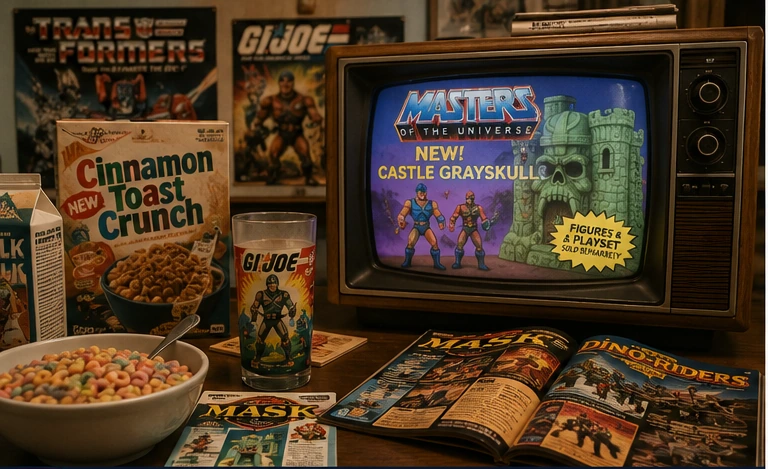
The cartoons did more than entertain kids. They explained who mattered. They gave voices to toys that would otherwise just be plastic bodies with weapons. They showed how the vehicles worked, why the villains were evil, where the bases were, which characters were friends, and which figure you suddenly needed even though you had never cared about him before breakfast.
The effect was brutal and beautiful. A kid could watch an episode, see one new character do something cool, and instantly add that figure to the mental Christmas list. The show made the toy feel necessary.
The episode built the mythology. The commercial sold the plastic. The camera made everything look bigger, faster, louder, and more explosive than it ever was on carpet. Vehicles flew perfectly. Figures stood upright. Weapons never vanished under the couch. Playsets looked like Hollywood backlots.
Then the ad ended, the cartoon came back, and the cycle started all over again. The 80s did not separate entertainment from shopping. It melted them together and handed kids a wish list.
Rewatch the evidence
The cartoon built the mythology, but the commercial break sold the battle. That is where He-Man looked mythic, G.I. Joe looked tactical, Transformers looked unstoppable, M.A.S.K. vehicles looked like spy-tech miracles, ThunderCats looked epic, and every plastic figure suddenly felt like the missing piece your toy box needed immediately.
For the video side of this action-figure war, jump into the 80s toy commercials and videos. The action figure section includes He-Man, G.I. Joe, Transformers, GoBots, ThunderCats, M.A.S.K., Teenage Mutant Ninja Turtles, Return of the Jedi toys, Voltron, Super Powers, and Rambo Power Cycle.
The figure was only the beginning
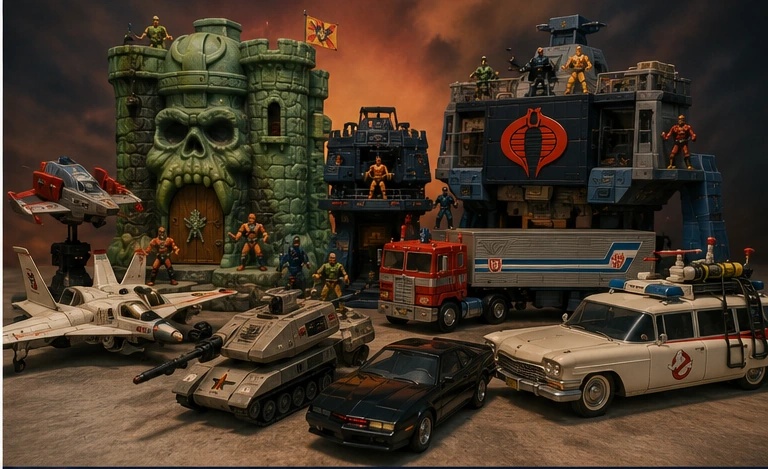
The figure was only the gateway. The real action figure war happened around the extras. Every major line understood that a character alone was good, but a character with a vehicle was better. A vehicle with hidden weapons was better than that. A headquarters was better than everything, especially if it was too large, too expensive, and basically impossible to store without taking over part of the house.
That is why 80s toy memories are so tied to big plastic objects: Castle Grayskull, Snake Mountain, G.I. Joe vehicles, Cobra bases, the ThunderTank, Optimus Prime’s trailer, M.A.S.K. vehicles, Turtle vans, sewer playsets, superhero vehicles, and whatever enormous thing sat in the catalog making every normal gift look like a compromise.
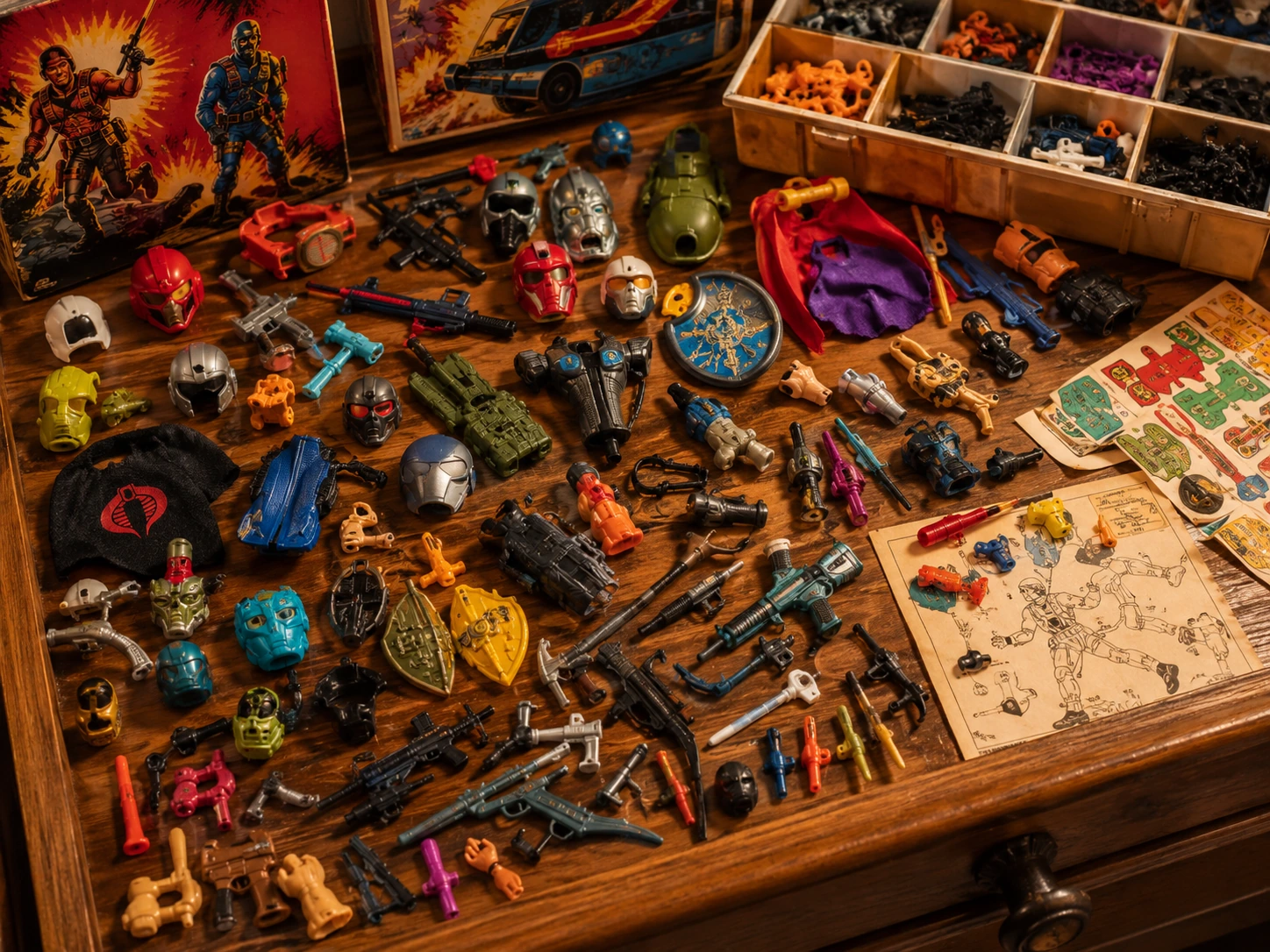
Accessories were their own disaster. Tiny guns, swords, helmets, shields, missiles, backpacks, masks, hands, clips, and random pieces of chrome plastic disappeared almost immediately. Every Gen X toy box eventually became a graveyard of unidentified weapons. Nobody knew what they went to, but throwing them away felt illegal.
A giant playset gave a franchise physical authority. Castle Grayskull, the G.I. Joe Headquarters, Snake Mountain, the Technodrome, Boulder Hill, the Sewer Playset, and other large environments told children that this world was important enough to occupy furniture-sized territory.
They also gave smaller figures a reason to exist together. A headquarters created rooms, entrances, traps, command areas, prisons, repair bays, and defensible positions. The play became less about two figures hitting each other and more about controlling a place.
Vehicles added speed, rescue, pursuit, transport, air support, armor, and scale. They also created a new problem: every vehicle needed somebody to drive it, and the correct driver was often sold separately.
The best vehicles worked even without the official story. A jeep was still a jeep. A jet was still a jet. A transforming car remained a mechanical trick. That basic play value helped the strongest designs survive after the cartoon ended.
Assembly often began with decals. A careful adult could make the vehicle look like the box. An impatient child could create a permanently customized version with crooked warnings, upside-down faction symbols, and one sticker attached to the wrong panel forever.
Applying stickers also slowed down Christmas morning at the exact moment the child wanted immediate action. It was a lesson in patience delivered through adhesive.
Commercials showed every vehicle arranged neatly. Real homes had bins, shelves, closets, and floors. Large toys were difficult to put away without partially disassembling them, which meant they often remained visible and became part of the room.
A major playset could function as furniture, landmark, and ongoing parental complaint.
The annual family negotiation
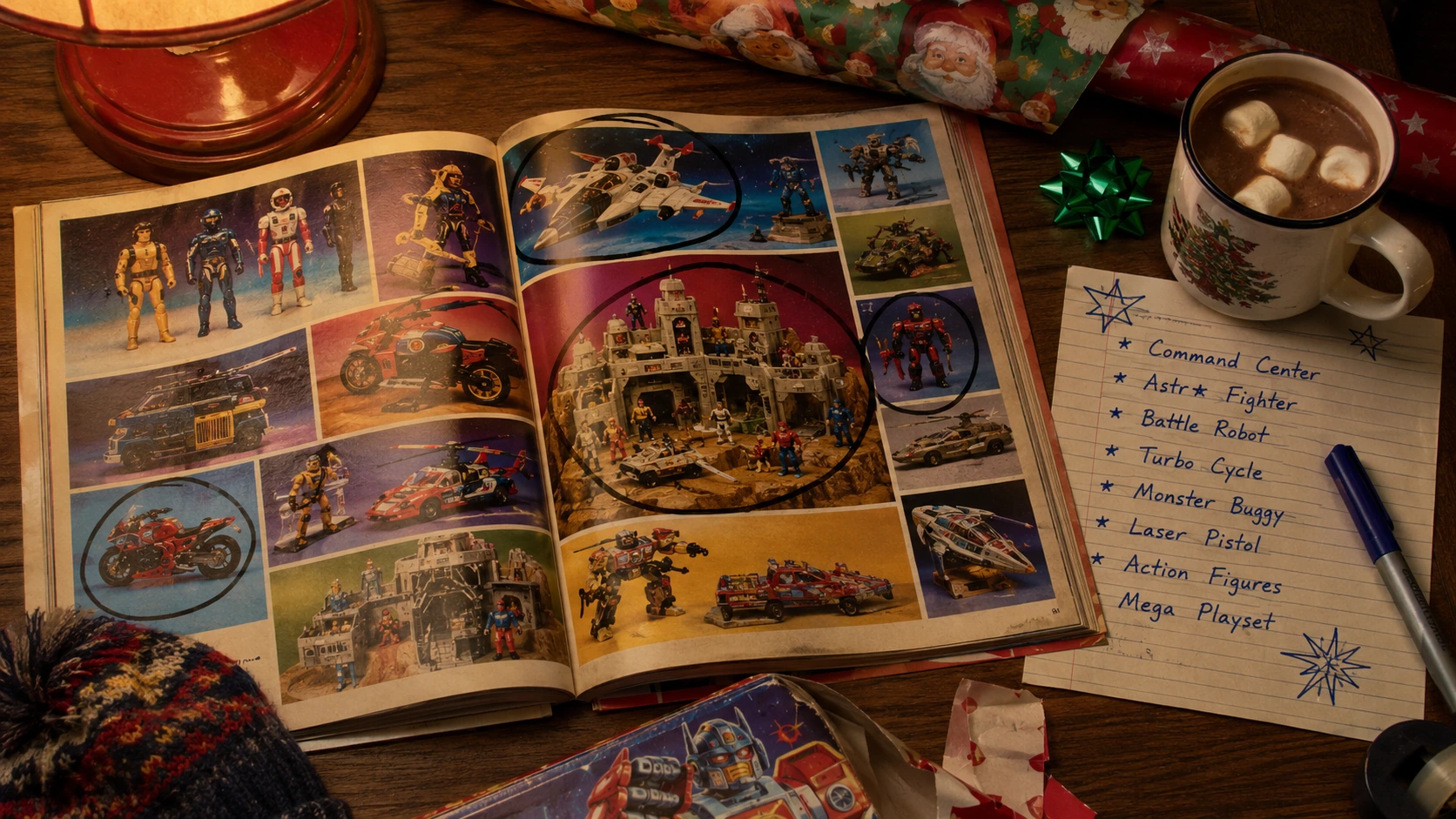
The Christmas catalog was where the action figure wars became emotional. Toy aisles were exciting, commercials were powerful, and cartoons built the mythology, but catalogs gave kids time to obsess. You could stare at the same page for weeks. You could circle the big playset, then circle the smaller vehicle as a backup plan, then circle one figure your parents might actually buy.
Catalog layouts made toy lines feel massive. The figures were arranged like armies. Vehicles looked clean and complete. Playsets looked bigger than they were. Everything appeared together in one impossible dream spread. It was not just shopping. It was strategy.
Kids learned to negotiate through catalogs. The giant headquarters was the opening demand. The mid-sized vehicle was the realistic ask. The single figure was the fallback. Parents thought they were buying toys. Kids were managing a campaign.
That slow anticipation is a huge part of why these toys still matter. You did not click and get something two days later. You waited. You hoped. You studied the package shape under the tree. You tried to guess by weight. You listened for the rattle. You built the toy in your head before you ever owned it.
A store shelf might be missing half the line. The catalog presented heroes, villains, vehicles, and playsets together in a clean arrangement. It showed what completeness looked like, which was useful information for a child and dangerous information for a family budget.
The catalog also froze the toys in ideal condition. No bent cardbacks, missing figures, empty pegs, or crushed boxes. Every item was available in theory, even when the local store had never seen it.
Children marked first choices, backup choices, and impossible choices. The largest box could be circled with dramatic confidence even when everybody understood it was unlikely. The smaller items below it began to look reasonable by comparison.
This was not manipulation in the adult sense. It was childhood strategy developed under the pressure of limited gift opportunities.
Christmas-morning firepower
Action figures gave families a perfect gift ladder. A relative could buy one figure. Parents could handle the vehicle. The truly ambitious request was the headquarters, castle, sewer, mountain, aircraft carrier, or transforming command center that looked enormous in the catalog and somehow even larger once it took over the living room.
The genius was that no collection ever looked finished. One hero needed a villain. One villain needed troops. Troops needed vehicles. Vehicles needed somewhere to park. By December, a kid who owned six figures could explain with courtroom precision why the family was still facing a serious toy shortage.
See which plastic armies created the most holiday pressure in hottest Christmas toys of the 80s.
The real canon happened on the carpet
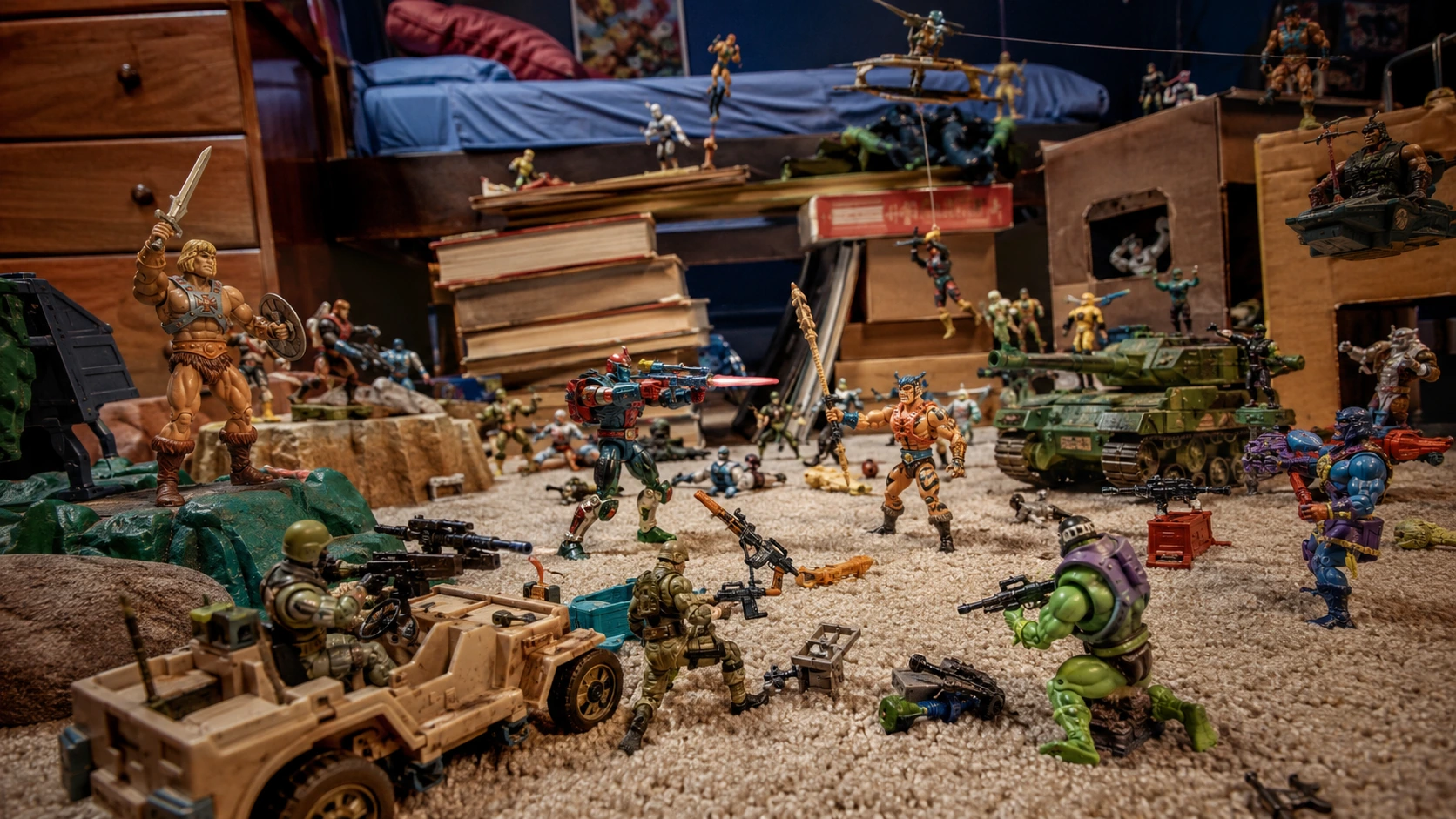
Cartoons and package bios provided a starting point, but toy-box continuity was flexible. He-Man could meet Luke Skywalker. G.I. Joe could recruit Batman. A Transformer could become a fortress. A GoBot could defect. A plastic dinosaur could be the most dangerous creature in Eternia.
Scale mismatches were ignored or explained. Missing weapons were replaced. Broken figures became cyborgs, prisoners, injured veterans, statues, or villains. Children did not see damaged inventory. They saw plot.
The couch was a mountain range. The coffee table was a base. The gap behind a chair was a canyon. The hallway was a runway. The bathtub became an ocean operation until somebody objected to rusting screws and floating stickers.
These household spaces gained recurring meaning. A particular corner might always be Cobra territory. The bed might be Grayskull. The stairs were dangerous because figures could fall dramatically for much longer than necessary.
Lasers, engines, explosions, punches, transformations, computer systems, and dramatic deaths were all produced orally. Every child had a personal library of sounds, and some were better at it than others. The figure did not need electronics if the operator had commitment.
Dialogue mattered too. Villains explained plans. Heroes argued. Vehicles reported damage. Characters returned from death because the story needed them. An afternoon of play was part action movie, part radio drama, and part negotiation with another child who refused to accept the outcome.
Group play meant deciding whose figures could be used, who controlled which side, whether a vehicle was allowed to be destroyed, and what happened when two children both wanted the same hero. Rules were created, challenged, changed, and ignored.
Ownership gave authority. The child who owned Castle Grayskull usually controlled access to it. The child with the largest G.I. Joe vehicle had strategic influence. The child who brought one figure still expected a meaningful role and was prepared to appeal the ruling.
Small figures traveled to school, relatives’ houses, vacations, waiting rooms, and back seats. That portability created trades, losses, mix-ups, and the occasional figure returning home with a weapon it had not started with.
Bringing a toy into public also created status. A new Transformer could attract a crowd. A rare G.I. Joe figure invited inspection. A hidden M.A.S.K. feature had to be demonstrated. The playground became a temporary showroom without adult supervision.
Not every battle stayed indoors. Figures rode bicycles in pockets, invaded sandboxes, occupied tree roots, and joined backyard missions with water guns and foam weapons. The outdoor half of the decade continues with 80s backyard toys, bikes, and blasters.
What made it out of the toy box
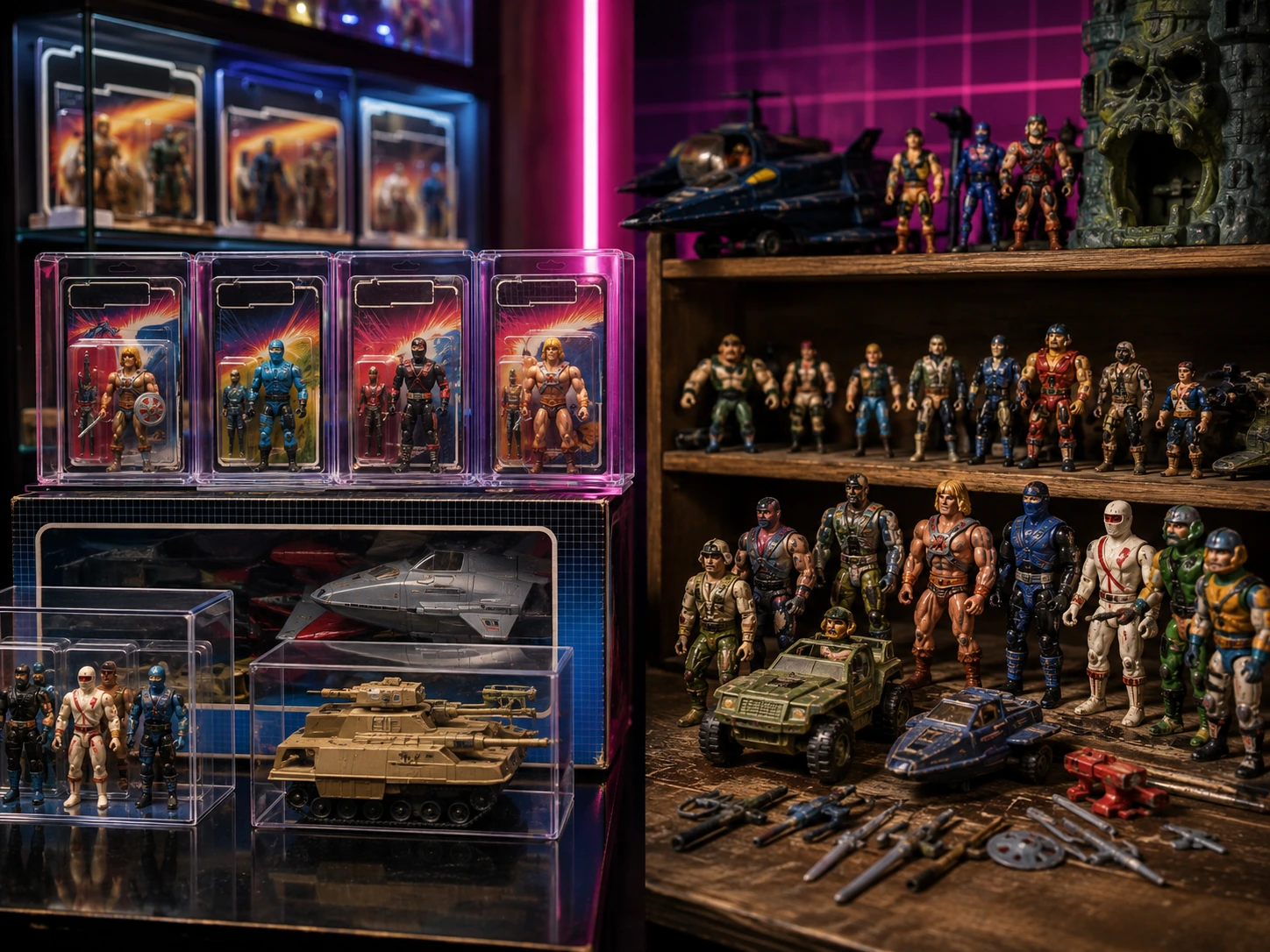
Weapons, masks, missiles, capes, backpacks, fists, stickers, and instructions disappeared first. Vehicles lost projectiles and canopies. Playsets lost clips, chairs, cardboard parts, and anything small enough to fit into a heating vent.
A loose figure with no accessories is often exactly how Gen X remembers finding it years later.
Paint wear, loose joints, rubbed chrome, bent weapons, faded plastic, and sticker damage reveal which toys were handled constantly. Mint examples are impressive. Worn examples often carry more memory.
The realistic value questions belong in valuable 80s action figures, but the emotional value was usually established long before anyone saved the box.
Why it still hits
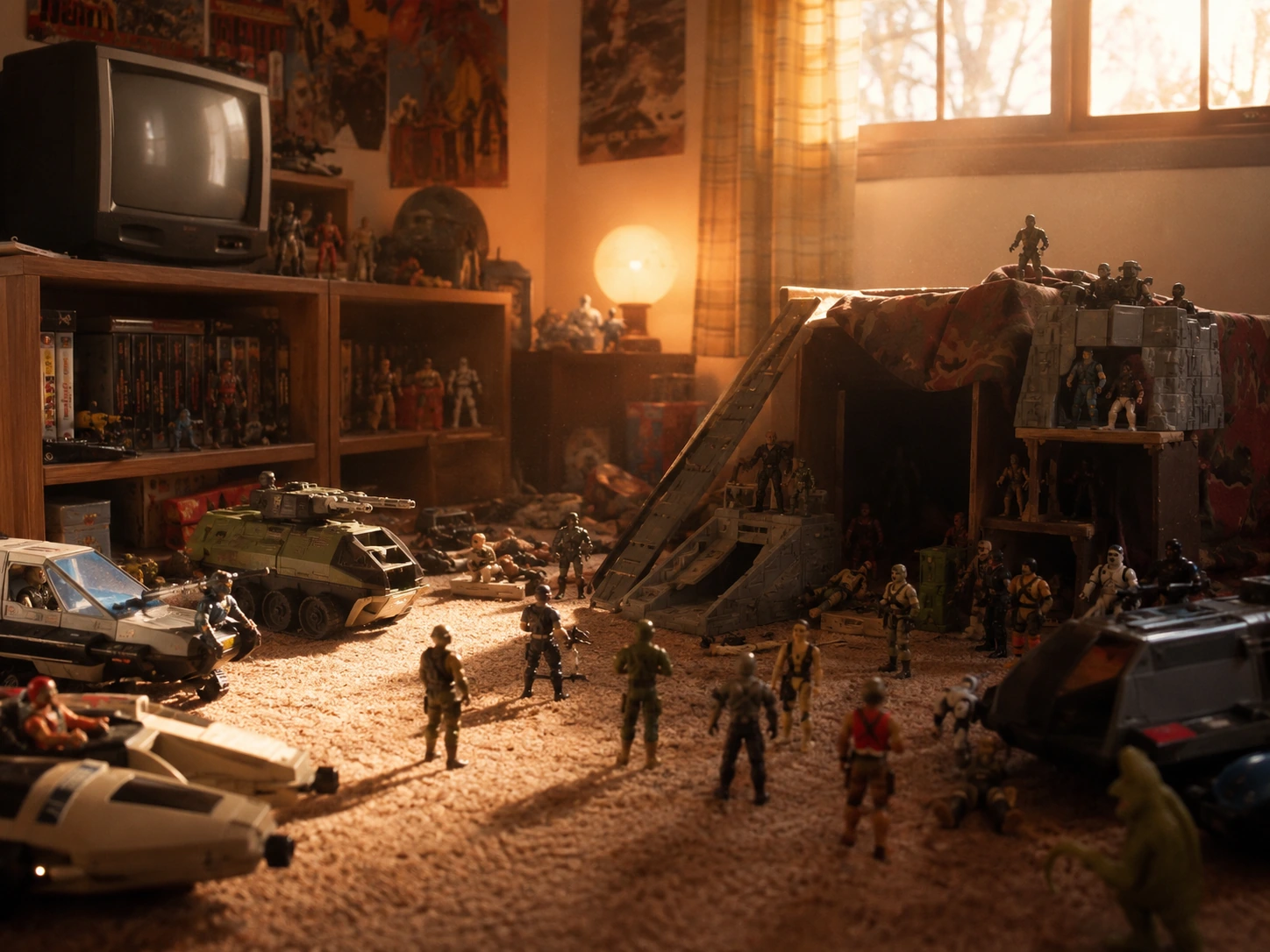
80s action figures still hit because they were not passive toys. They asked kids to build something: a battle, a team, a mission, a fortress, a rivalry, a rescue, a betrayal, a comeback. They gave just enough story to start the engine, then let the kid take over.
They also arrived at the perfect cultural moment. Cable was spreading. Saturday morning cartoons were powerful. Toy commercials were everywhere. Malls were alive. Department-store catalogs still mattered. Video games were becoming huge, but physical toys still owned bedrooms. The action figure aisle sat right in the middle of all of that.
Most of all, these toys felt like a personal universe. Your collection was never complete, but it was yours. Your He-Man battle did not have to match the cartoon. Your G.I. Joe mission could involve Transformers. Your Ninja Turtle could hang out with a Star Wars figure and a random plastic dinosaur. The official story was only the beginning. The real canon happened on the carpet.
The loose figures we actually played with are usually worth less than the sealed examples collectors chase, but condition, completeness, packaging, inserts, weapons, and working action features can change the story. The realistic breakdown belongs in valuable 80s toys worth money today.
Action figures were one part of the larger decade that raised Gen X. Keep the whole rewind moving through the 80s nostalgia hub.
Questions from the battlefield
Rewind the original sales pitches in the 80s toy commercials and videos archive. Then visit 80s cartoon toy commercials for the shows and ad breaks that turned characters into must-have plastic.
The biggest lines included Masters of the Universe, G.I. Joe: A Real American Hero, Transformers, GoBots, Star Wars, DC Super Powers, Marvel Secret Wars, ThunderCats, M.A.S.K., The Real Ghostbusters, and Teenage Mutant Ninja Turtles.
Cartoons gave toy lines voices, rivalries, locations, vehicles, and weekly visibility. The shows built the mythology, and the toy commercials showed children exactly which part of that mythology was sold separately.
80s action figures were tied to TV, commercials, Christmas catalogs, playground arguments, birthday parties, malls, toy stores, and bedroom-floor imagination. They were not just toys. They were little plastic entry points into entire worlds.
Not always in quality or articulation, but they had a different kind of magic. The packaging, cartoons, commercials, and open-ended play made them feel enormous. They left more room for kid-made chaos, which is why they still feel so powerful in nostalgia.
Rare, sealed, complete, short-produced, recalled, or unusually well-preserved figures can attract collector interest. Original weapons, capes, missiles, file cards, inserts, stickers, vehicles, and packaging matter. Start with valuable 80s action figures and pay attention to completed sales rather than somebody’s heroic asking price.
Want more 80s toys, cartoons, music, movies, fads, and forgotten pop-culture weirdness? Join the rewind and keep the nostalgia machine running.
Get the Rewind