20 Forgotten 70s Toys That Deserve a Comeback
The 1970s toy aisle was a beautiful mess: part basement science lab, part driveway stunt show, part kitchen-table craft disaster, and part “this probably would not pass a modern safety review, but it kept us busy for hours.”
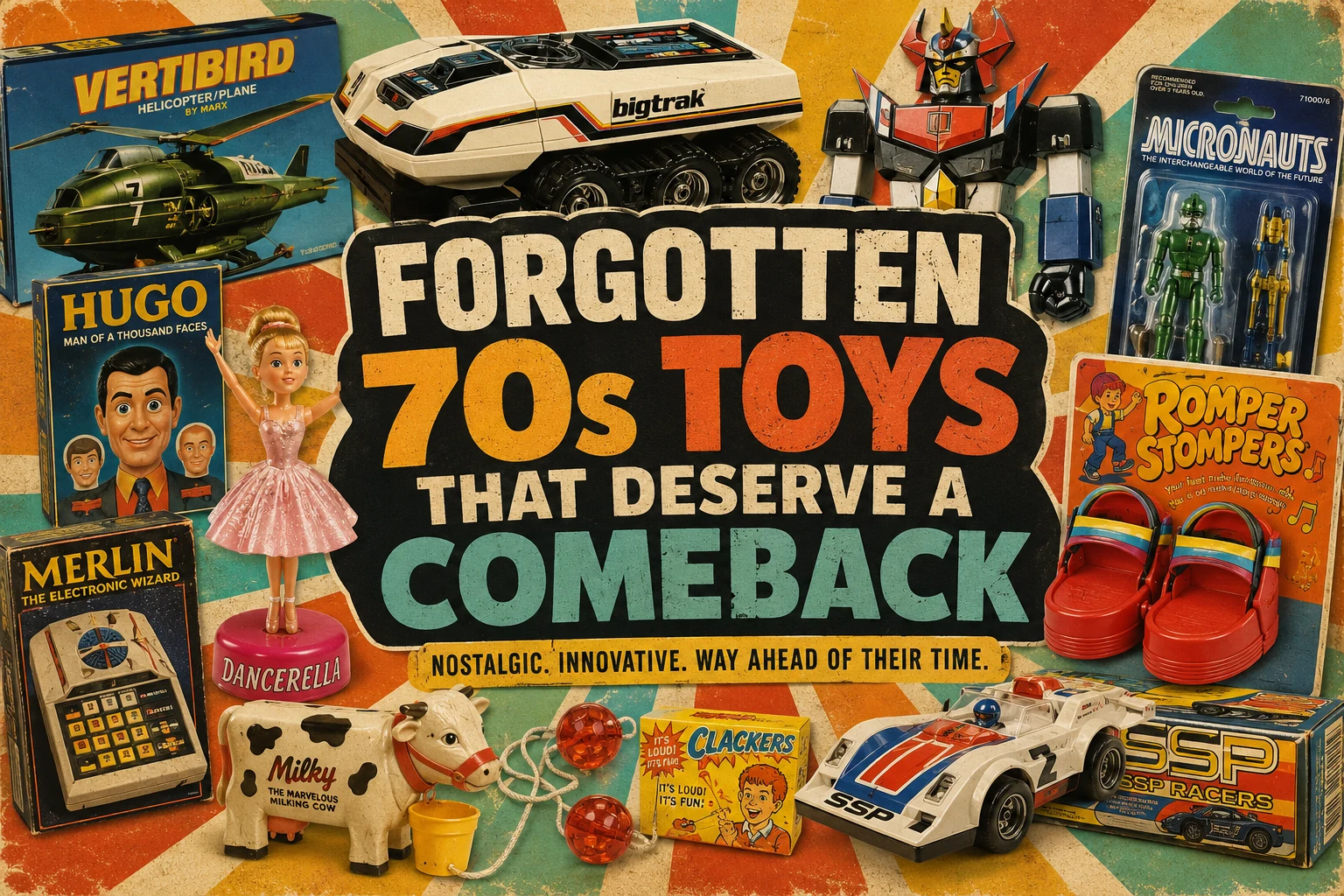
These are 20 forgotten toys from the 70s with play ideas still worth saving—from VertiBird, SSP Racers and Micronauts to Fashion Plates, Merlin, Quiz Wiz and Big Trak.
What Are the Best Forgotten 70s Toys?
Some of the best forgotten 70s toys are VertiBird, SSP Racers, Hot Wheels Sizzlers, Fisher-Price Adventure People, Micronauts, Shogun Warriors, Mego superheroes, Hugo, Dancerella, Romper Stompers, Lemon Twist, Colorforms, Fashion Plates, Merlin, Quiz Wiz and Big Trak. They deserve a comeback because their core play patterns—steering, racing, building, balancing, designing, programming and pretending—still work without an app or subscription.
20 Forgotten Toys From the 70s
This list covers mechanical skill toys, ripcord racers, modular action figures, dolls, outdoor fads, craft kits, building sets and the first wave of electronic play. Use it as the quick index, then jump into the full stories and modern comeback pitches below.
- VertiBird
- SSP Racers
- Hot Wheels Sizzlers
- Fisher-Price Adventure People
- Micronauts
- Shogun Warriors
- Mego World’s Greatest Super Heroes
- Hugo: Man of a Thousand Faces
- Dancerella
- Milky the Marvelous Milking Cow
- Romper Stompers
- Lemon Twist
- Clackers
- Colorforms Adventure Sets
- Fashion Plates
- Latch Hook Kits
- Girder and Panel Building Sets
- Merlin
- Quiz Wiz
- Big Trak
How These Forgotten 70s Toys Were Chosen
This is not simply a list of rare toys or expensive collectibles. Each pick had to possess a memorable play idea that still makes sense now, while receiving less attention than decade-defining names such as Stretch Armstrong, Hot Wheels, Kenner Star Wars toys, Atari, Simon or Big Wheel.
The toy asked kids to steer, launch, build, design, balance, program, compete or create—not merely watch.
The name, commercial, sound, shape or household footprint still triggers recognition for people who were there.
The central idea could work again with safer materials, better durability and thoughtful modern design.
The final list represents toy cars, action figures, dolls, crafts, outdoor play, construction sets and early electronics.
Why Forgotten 70s Toys Still Work
A lot of forgotten 70s toys succeeded because they had a clear physical idea. You pulled a ripcord. You steered a helicopter. You snapped panels into a building frame. You made a doll spin. You answered trivia from a cartridge. You programmed a little vehicle and watched it obey your questionable instructions.
Kids could immediately see what their pull, push, turn, command or mistake caused.
The car crashed, the helicopter missed, the clackers smacked together, and you reset without a loading screen.
These were coffee-table, shag-carpet, hallway, driveway and backyard events—not tiny background objects.
The rules lived in the toy, the kid and the room. Batteries were sometimes required; passwords were not.
That same 70s toy world lives across the messy craft-table kits, family-room board games, carpet cities and toy roads, dolls and miniature homes, backyard toys with no chill, and early electronic toys that started beeping back.
The 20 Forgotten 70s Toys Comeback List
Some of these toys vanished because brands changed, licenses moved, play trends shifted or electronics improved. Others simply got buried beneath the giant franchises that followed. What matters here is the idea inside each toy—and whether that idea could still earn space on a living-room floor.
1. VertiBird
VertiBird deserves a comeback because it did something modern toys often forget how to do: it made skill feel cool. You were not simply watching a toy helicopter fly around. You were trying to control it. You had to judge speed, direction, lift, and landing without pretending you were suddenly a licensed pilot in the family room.
The original VertiBird experience had that perfect 70s “miniature control center” energy. It felt technical, but not impossible. It turned a tabletop or floor setup into a mission zone, and that was the hook. You could pretend you were rescuing people, moving cargo, landing on a pad, or just trying not to spin the poor helicopter into something fragile while your sibling offered useless commentary from the couch.
Part of the lifestyle appeal was that VertiBird felt like a toy you had to demonstrate. This was not the kind of thing you opened, looked at, and shoved into a toy box. You set it up. You called people over. You showed them the controls. You explained, with incredible confidence, how hard it was to land properly. It made the living room feel like a tiny airport staffed by children with no training.
That is what makes it such a strong comeback candidate. Modern kids still understand control, precision, and challenge. They still like toys that make them feel capable. A modern VertiBird would sit perfectly between STEM toy, retro flight simulator, and hands-on skill game. It would not need a screen because the physical movement is already satisfying.
Comeback Pitch: A modern VertiBird could use safer lightweight parts, rechargeable power, modular rescue missions, obstacle cards, cargo hooks, landing challenges, and themed pads. Keep the hands-on control. Lose the part where the living room feels like a flight-risk zone.
2. SSP Racers
SSP Racers are exactly the kind of toy that should be back everywhere. The idea is ridiculously satisfying: pull the ripcord, release the car, and watch it scream across the floor like it has unresolved business. No batteries. No charging. No app. Just mechanical speed and immediate payoff.
The lifestyle around SSP Racers was pure floor culture. Kids needed a hallway, a basement, a driveway, or a long enough stretch of carpet that nobody had vacuumed recently. The whole experience was physical. You crouched down, lined up the car, pulled the strip, released it, and then watched chaos make a break for the baseboards.
What made SSP Racers so good was the way they turned simple motion into competition. Kids could race them, test distance, build makeshift tracks, set up crash zones, or stage impossible challenges with books, cardboard, and whatever household objects were not nailed down. It was the same basic spirit as Carpet Cities & Tiny Roads: the house became infrastructure.
A comeback makes sense because kids still like speed, but parents increasingly like toys that do not require batteries, screens, charging cables, or firmware updates. SSP Racers could come back as a beautifully simple mechanical toy that teaches force, friction, launch timing, and the important childhood lesson that walls are not your friend.
Comeback Pitch: Bring back ripcord racers with modular stunt strips, durability ratings, timed challenges, crash-safe track zones, and classic 70s body styles. Basically Hot Wheels energy with no battery anxiety and more hallway drama.
3. Hot Wheels Sizzlers
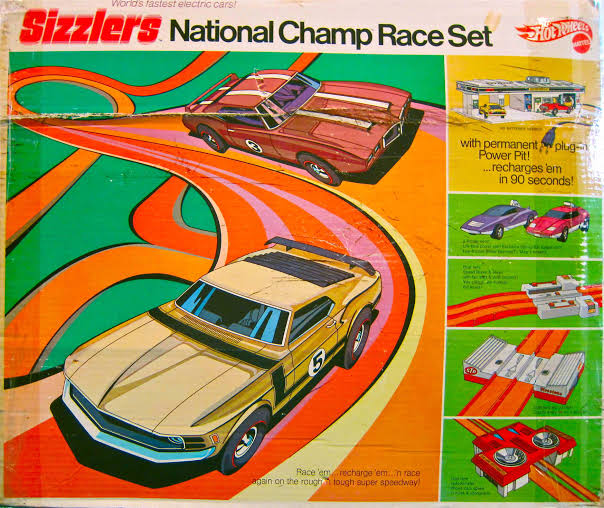
Hot Wheels Sizzlers deserve a comeback because they sit in the perfect space between classic die-cast car play and the electronic future. They still feel physical and track-based, but the rechargeable element gives them a little late-70s “technology is entering the room” energy.
The appeal was different from ordinary toy cars. Regular Hot Wheels were about kid-powered speed, gravity, and track design. Sizzlers added a new layer: stored energy. That made them feel almost alive compared with the standard cars. They were still part of the tiny-road universe, but now they had a little futuristic pulse under the hood.
In a 70s house, that mattered. Anything rechargeable felt special. Charging the car was part of the ritual. You were not just opening a toy and playing with it. You were preparing it. That gave the whole thing extra weight. It made the child feel like a mechanic, engineer, race manager, and mildly irresponsible transportation director all at once.
A modern revival could be fantastic because it would combine the best of old and new toy design. Keep the physical tracks. Keep the cars small and collectible. Keep the racing tactile. But make the charging reliable, the batteries safer, the layouts more modular, and the performance more consistent. In a world full of screen-based racing games, a physical electric racing system would feel surprisingly fresh.
Comeback Pitch: A modern Sizzlers line could use USB-C charging, physical track building, speed classes, pit-stop accessories, classic car bodies, and race sets designed for floors instead of phones. Make it feel analog first, electronic second.
4. Fisher-Price Adventure People
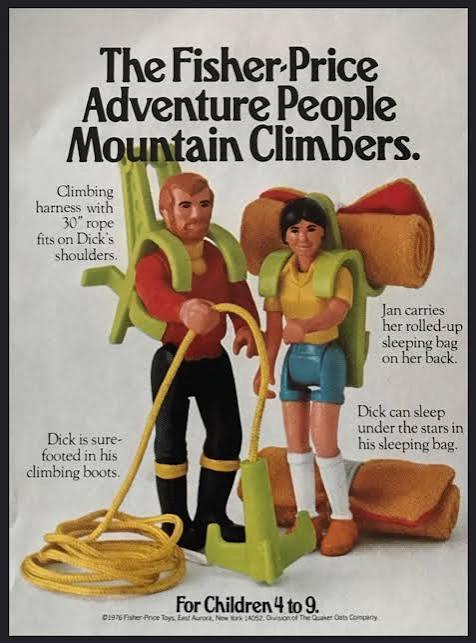
Fisher-Price Adventure People were the kind of toy line that understood childhood scale perfectly. They were small enough to build worlds around, sturdy enough to survive real play, and broad enough to handle rescue missions, explorers, divers, astronauts, pilots, construction crews, and whatever storyline a kid invented after lunch.
The magic was that Adventure People did not over-explain themselves. They gave kids a situation, a figure, a vehicle, maybe an animal or a piece of gear, and then got out of the way. That was a very 70s kind of trust. The toy did not need a three-season animated series and a lore wiki. It assumed kids could make up the mission themselves.
They also fit the lifestyle of the time. These were toys that could live in the sandbox, the basement, the bathtub, the backseat of the car, the yard, or the floor beside a pile of blocks. They were not fragile collector objects. They were working toys. You could bang them up, lose a helmet, mix them with other sets, and keep the story moving.
That is exactly why they deserve a comeback. Modern toy aisles could use more durable open-ended figure lines that are not locked to one franchise. Adventure People could return as a world of missions rather than a world of canon. Rescue, exploration, nature, space, construction, stunts, weather, animals, vehicles — the possibilities are huge.
Comeback Pitch: Bring them back as durable mission packs: rescue team, space crew, wildlife explorers, deep-sea divers, stunt team, storm chasers, mountain rescue, and backyard survival squad. Keep the designs simple. Let kids do the story work.
5. Micronauts
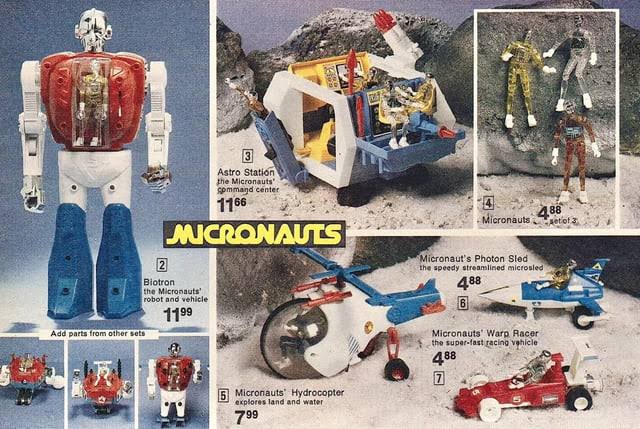
Micronauts feel like one of the great 70s toy concepts that never fully got the mainstream second life it deserved. The line had that perfect late-70s mix of sci-fi mystery, tiny figure scale, translucent parts, vehicles, modularity, and “what even is this universe?” energy. That ambiguity was part of the charm.
The late 70s were starting to shift hard toward space fantasy, electronics, and future-looking design. Micronauts fit that atmosphere beautifully, but they were not simply riding the Star Wars wave. They felt stranger, more abstract, and more toy-like in a pure design sense. Their world was not as instantly recognizable, but that made it more flexible.
Kids could build, swap, rearrange, and invent. The figures and vehicles felt like pieces from a larger unknown system, which made them perfect for open-ended sci-fi play. The appeal was not just “this is a character.” The appeal was “this is a piece of some weird futuristic thing I can keep expanding.”
That is why Micronauts deserve a comeback. Modern kids are used to modularity through games, building systems, and customizable avatars. A revived Micronauts line could bring that idea back into physical form: snap-on parts, translucent vehicles, strange worlds, interchangeable gear, and a retro-future look that feels different from everything else on the shelf.
Comeback Pitch: Revive Micronauts as a modular sci-fi construction line with swappable parts, display-worthy vehicles, kid-friendly building systems, mystery factions, and strange retro-future design. Do not over-explain the universe. Let it stay weird.
6. Shogun Warriors
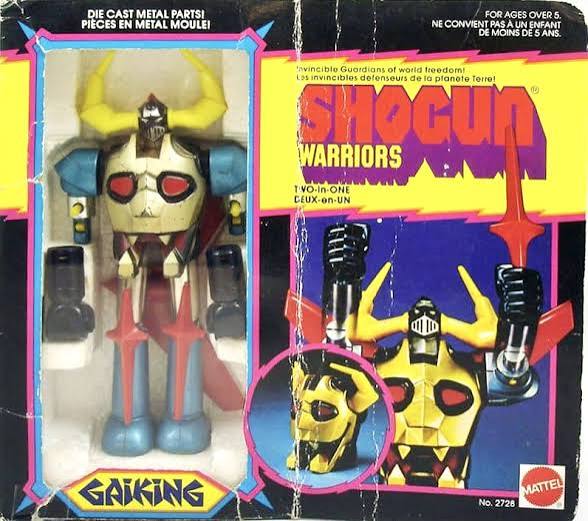
Shogun Warriors deserve a comeback because sometimes the toy aisle needs something enormous, ridiculous, and impossible to ignore. These giant robot toys had presence. They did not politely sit on a shelf. They loomed. They looked like something from another planet had decided your bedroom was now strategic territory.
Scale mattered in the 70s. A big toy felt like an event. Shogun Warriors had that in spades. They were large enough to feel important, colorful enough to feel exotic, and strange enough to make them stand apart from standard action figures. They were not trying to blend into a toy box. They were trying to dominate the room.
They also captured the era’s fascination with Japanese robot design, sci-fi imports, and oversized fantasy objects. The late 70s were hungry for futuristic imagery, but before the 80s turned everything into a syndicated cartoon universe, toys like Shogun Warriors felt almost mysterious. You did not need to know every story. The design did a lot of the work.
A comeback would need to respect the spectacle. These cannot come back as tiny, timid figures. The whole point is size, impact, and visual ridiculousness. They should feel like the kind of toy a kid unwraps and immediately becomes the owner of a bedroom threat.
Comeback Pitch: Bring back oversized robot toys with safer launch features, modular armor, giant display stands, comic-style mission cards, and retro box art that looks like it came from a 1978 toy catalog having a fever dream.
7. Mego World’s Greatest Super Heroes
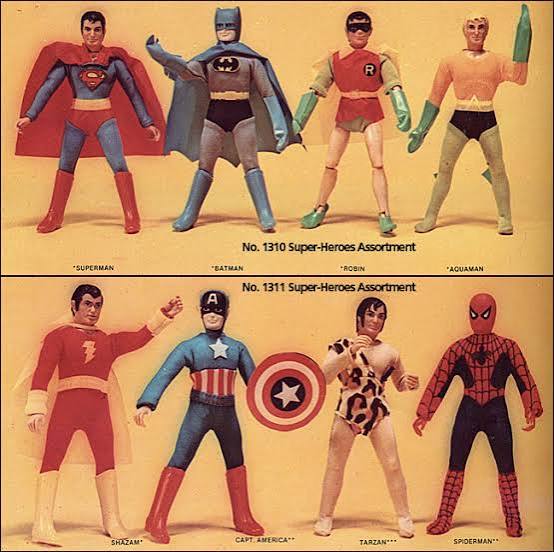
Mego World’s Greatest Super Heroes deserve comeback attention because they understood something modern superhero toys sometimes forget: charm matters. The cloth costumes, shared body types, simple designs, and toy-like proportions gave them personality. They were not trying to look like tiny museum statues. They were trying to be played with.
That difference matters. A lot of modern superhero toys either go collector-heavy or gimmick-heavy. Mego-style figures lived in a warmer middle. They looked like toys. The costumes could wrinkle. The boots could go missing. The capes felt like actual fabric instead of molded plastic drama. That made the heroes feel weirdly alive in a kid’s hands.
In a 70s house, Mego figures could crossover with anything. Superheroes fought monsters, drove Barbie vehicles, invaded dollhouses, teamed with cowboys, got trapped in block buildings, or had deeply inaccurate adventures with whatever other figures were available. That cross-toy flexibility was a huge part of the fun.
A comeback would work because superhero culture is huge, but the toys do not always feel playful enough. Bring back the cloth costumes, the simple bodies, the retro packaging, and the idea that a superhero figure should be durable enough for actual storytelling instead of just standing on a shelf looking expensive.
Comeback Pitch: Relaunch cloth-costume hero figures with durable bodies, retro packaging, simple accessories, vehicles, headquarters playsets, and a style that encourages actual storytelling instead of just shelf posing.
8. Hugo: Man of a Thousand Faces
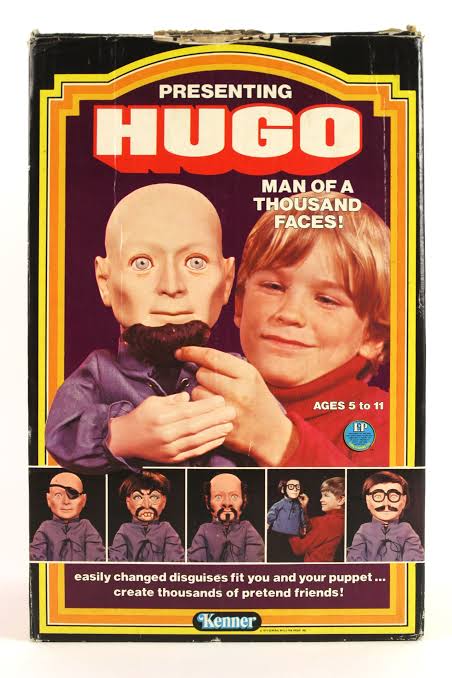
Hugo: Man of a Thousand Faces is one of those 70s toys that feels like it escaped from a stranger’s attic and somehow made it into a legitimate toy catalog. That is also why it deserves a comeback. Hugo was not cute. Hugo was not polished. Hugo was a blank, bald little weirdo waiting for disguises, facial hair, scars, masks, and identity problems.
What made Hugo interesting was that he turned customization into the whole point. You were not simply dressing a doll. You were creating a character. A detective. A villain. A monster. A suspicious uncle. A silent film extra. Whatever was happening, Hugo could become deeply unsettling in a matter of seconds.
That kind of play fits modern childhood better than it might seem. Kids love avatar customization, character creation, skins, masks, accessories, and weird identity shifts. Hugo was doing a physical version of that decades earlier, only with stronger basement energy and fewer parental explanations.
A modern version could lean into spooky creativity, comedy, mystery, and disguise play. It could be part monster lab, part detective kit, part character design toy. The key is not to sanitize it too much. Hugo’s whole value is that he was a little creepy. A comeback version should still make people say, “Wait, what is that thing?”
Comeback Pitch: Relaunch Hugo as a retro monster-maker and disguise kit with magnetic accessories, spooky add-ons, detective themes, villain packs, monster masks, and enough weirdness to make parents ask, “Wait, this is for kids?”
9. Dancerella
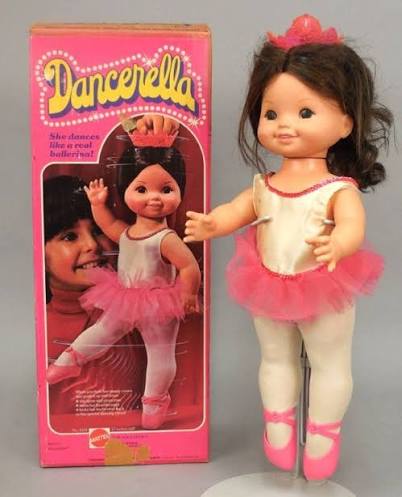
Dancerella deserves another look because she brought performance into doll play without needing a screen, a speaker, or a whole digital personality. The appeal was movement. She could spin, pose, and create the illusion of a tiny stage show happening right there on the floor.
That made Dancerella different from standard doll play. The child was not only dressing her or pretending she had a life. The child was staging something. There was presentation involved. A spin, a pose, a little performance, maybe an audience of stuffed animals and one annoyed sibling who did not ask for tickets.
The 70s were full of living-room performance culture. Kids watched variety shows, dance numbers, pageants, TV specials, and musical moments that made performance feel like part of ordinary household entertainment. Dancerella fit that world perfectly. She was not just a doll. She was a tiny show.
A comeback could work because movement-based doll play still has room to evolve. Not every doll needs a battery-powered voice or a tie-in series. A modern Dancerella could focus on balance, choreography, costumes, stage sets, music cards, and tactile performance. That would feel far more interesting than another doll whose main feature is a plastic drink cup.
Comeback Pitch: Bring Dancerella back with mechanical dance bases, costume packs, stage backdrops, pose challenges, recital cards, and movement-based play that stays graceful, tactile, and just a little dramatic.
10. Milky the Marvelous Milking Cow
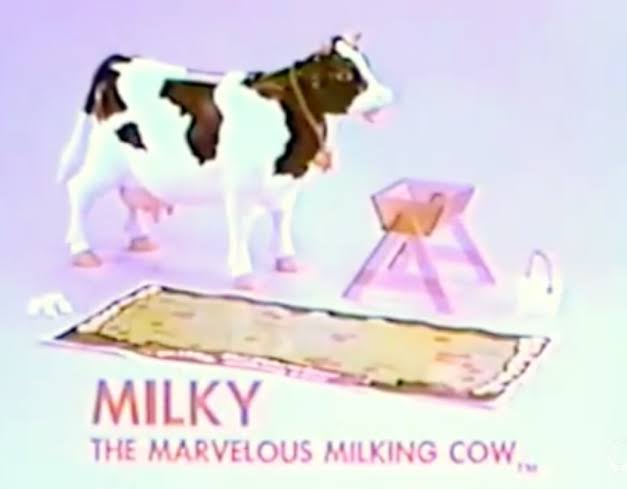
Milky the Marvelous Milking Cow is exactly the kind of toy that proves the 70s were operating on a different frequency. A toy cow you could “milk” is strange, memorable, oddly educational, and just uncomfortable enough to be unforgettable. That is comeback material if handled correctly.
Milky worked because she turned a real-world process into a toy routine. The 70s had plenty of domestic and caregiving toys, but this one moved the action to the farm. It was tactile, cause-and-effect driven, and weirdly specific. A kid could feed the cow, milk the cow, repeat the routine, and feel like they were managing a tiny agricultural operation in the living room.
That very specific kind of realism is what made so many 70s toys memorable. They were not always glamorous. Sometimes they were chores in disguise. Baby Alive had feeding and changing. Easy-Bake Oven had cooking. Milky had farm care. Toys like this reflected a decade when pretend play often copied adult routines in miniature, sometimes in ways that now feel completely unhinged.
A modern comeback could lean into farm life, animal care, and hands-on learning. It would need cleaner mechanics and better materials, obviously. But the core idea still has value: kids like process toys, animals, role-play, and a little bit of safe gross-out realism. Milky was weird, but she was not pointless.
Comeback Pitch: A modern version could be a farm-care playset with cleaner mechanics, washable parts, animal-care cards, feeding routines, barn accessories, and a light STEM angle. Keep the weird. Just make the cleanup less cursed.
11. Romper Stompers
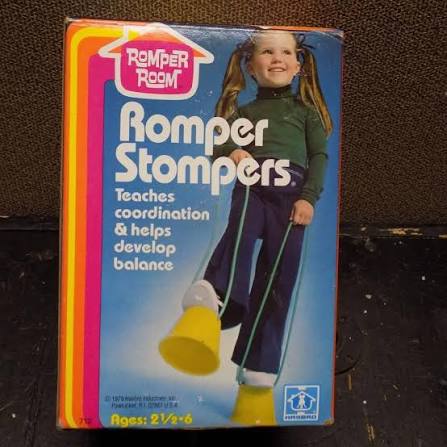
Romper Stompers deserve a comeback because they are almost aggressively simple. Step onto the plastic cups, grab the cords, and suddenly walking becomes a challenge again. It is low-tech movement play, and that is exactly why it works.
The appeal was not speed or flash. It was awkward mastery. Romper Stompers made a child think about balance, coordination, rhythm, posture, and momentum without ever saying those words out loud. It was physical learning disguised as goofy backyard nonsense, which is how a lot of the best childhood learning used to happen.
They also fit perfectly into the 70s outdoor toy lifestyle. Kids were expected to entertain themselves outside with objects that were barely more than molded plastic and a dare. Romper Stompers did not need batteries or a driveway hill. They turned any stretch of sidewalk or patio into a tiny challenge course.
A comeback would make sense now because parents are constantly looking for screen-free active play, but many modern active toys are either too sporty, too expensive, or too structured. Romper Stompers are simple, silly, and accessible. The point is not to become an athlete. The point is to walk around like a tiny unstable parade float.
Comeback Pitch: Bring them back with grippy bottoms, adjustable cord lengths, obstacle course cards, indoor-safe versions, and backyard challenge packs. Make balance play feel like a game again.
12. Lemon Twist
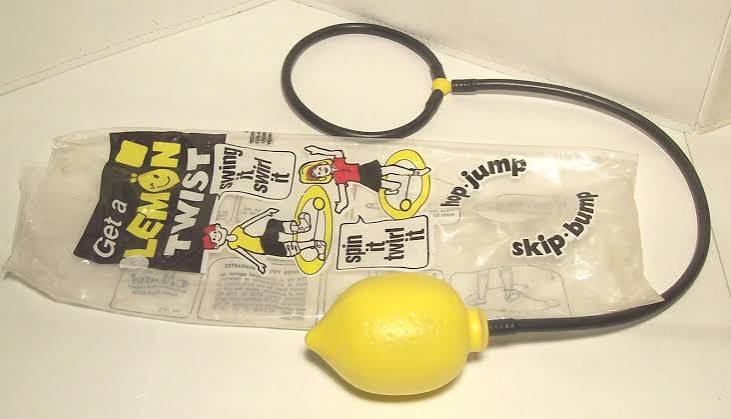
Lemon Twist is one of those toys that looks simple until it exposes your coordination issues in public. The loop went around one ankle, the lemon swung around, and the goal was to keep hopping over it without turning the sidewalk into a personal injury documentary.
What made it great was that it turned rhythm into a toy. You had to find a pace, keep the swing going, time the jump, and avoid stepping on the thing like a person who had betrayed physics. It was part jump rope, part dance toy, part endurance challenge, and part suburban humiliation ritual.
Lemon Twist also belonged to a very specific kind of 70s neighborhood play. It was portable, cheap-looking in the best way, and easy to bring outside. Kids could use it on sidewalks, driveways, patios, playgrounds, or anywhere adults were not actively telling them to stop swinging objects near windows.
It deserves a comeback because it is exactly the kind of compact movement toy that still makes sense. No screen, no learning curve, no team required, no giant storage problem. Just rhythm, coordination, and the deep satisfaction of not falling down in front of people.
Comeback Pitch: Relaunch Lemon Twist with soft weighted ends, adjustable loops, glow-in-the-dark versions, trick challenges, score cards, and indoor-safe practice editions. Bring back the ankle chaos, but make it less hostile.
13. Clackers
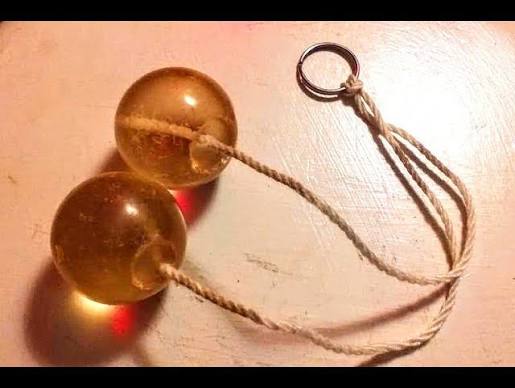
Clackers are tricky because the original versions carry a very 70s warning label in spirit. They were loud, hypnotic, skill-based, and sometimes a little too committed to chaos. That said, the core idea still has comeback potential if redesigned safely.
The appeal was rhythm. Clackers were about timing, confidence, and the dangerous thrill of getting a repetitive motion exactly right. Once you got the motion going, it felt almost like a stunt. The sound was part of the reward, even if everyone else in the house strongly disagreed.
Clackers also represent the great 70s fad-toy tradition: simple object, addictive motion, massive playground spread, questionable adult supervision. They did not need characters, screens, or a deep backstory. They needed one kid who knew how to do it and fifteen other kids who immediately wanted to prove they could do it better.
A comeback would require a serious redesign, but the idea is worth saving. Skill toys still work. Rhythm toys still work. Fidget toys, yo-yos, Kendama-style toys, and trick-based objects all prove there is still demand for small, repetitive, mastery-based play. Clackers just need to come back with less “glass-adjacent danger orb” energy.
Comeback Pitch: Bring back the concept with soft impact materials, wrist-safe cords, noise control, trick progression cards, and playground-safe challenge modes. Keep the rhythm. Retire the shrapnel energy.
14. Colorforms Adventure Sets
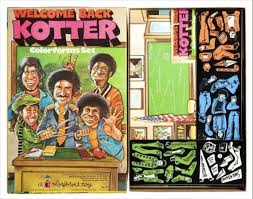
Colorforms never vanished completely from memory, but they absolutely deserve a bigger comeback because the concept is still brilliant: reusable pieces, scene-building, character placement, and story creation without the permanent commitment of stickers.
They were quiet toys, but not passive toys. That is an important distinction. Colorforms asked kids to arrange a scene, move characters, create a story, change the setup, and reset everything again. It was visual storytelling before every toy needed a screen to feel interactive.
The lifestyle fit was perfect for 70s homes. Colorforms could be played at a kitchen table, on the floor, in the car, at a grandparent’s house, or anywhere adults needed a child to stay occupied without bringing out markers, glue, or small pieces that would vanish forever into shag carpet.
A comeback could work beautifully because reusable tactile storytelling feels fresh in a screen-heavy world. Kids still like arranging scenes and making up stories. Parents still like toys that are quiet, portable, and not made of permanent adhesive regret. Colorforms could come back as retro adventure sets, spooky sets, mall sets, space sets, sitcom living-room sets, or even 70s nostalgia sets for adults who know exactly what that smell is.
Comeback Pitch: Revive Colorforms with retro adventure themes, haunted houses, space stations, mall scenes, TV studio sets, road trips, and travel-size story boards. Keep it reusable, tactile, and blissfully screen-free.
15. Fashion Plates
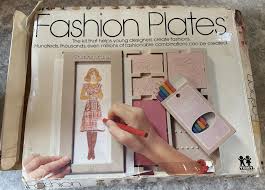
Fashion Plates deserve a full comeback because they gave kids something modern creative toys sometimes overcomplicate: a simple system for making something that looked better than your raw drawing skills should have allowed. Mix the plates, rub the crayon, reveal the outfit, and suddenly you are a designer with no student loans.
The genius was the structure. Fashion Plates did not ask kids to start from a blank page, which can be intimidating. It gave them pieces: tops, bottoms, textures, outlines, patterns. That meant creativity came through choice and combination. You could make something personal without having to be naturally good at drawing.
It also fit the 70s fashion mood perfectly. The decade was visually loud: patterns, textures, big collars, flared shapes, dramatic colors, and outfits that looked like they had been assembled during a wallpaper emergency. Fashion Plates turned that style culture into a tabletop toy.
A comeback would make sense because fashion design, customization, and personal style are still huge for kids. The mistake would be making it fully digital. The rubbing is the magic. The physical reveal matters. The sound and motion of the crayon moving over the plate is part of the whole memory.
Comeback Pitch: Bring Fashion Plates back with retro 70s, 80s, and 90s style packs, streetwear packs, costume packs, music-video packs, and reusable portfolio pages. Do not make it digital. The rubbing is the point.
16. Latch Hook Kits
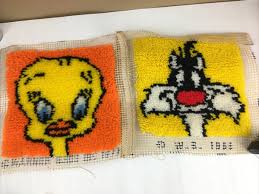
Latch hook kits were not glamorous, but they were deeply 70s. They demanded patience, repetition, and faith that all those little yarn pieces would eventually become a rug, wall hanging, pillow, or fuzzy object with more personality than expected.
This was slow creativity. Painfully slow, sometimes. But that was part of the point. Latch hook kits gave kids a project that could not be finished in six minutes. You had to return to it. You had to keep going. You had to believe that this little grid of yarn chaos would eventually become a tiger, rainbow, mushroom, owl, unicorn, or whatever design had been chosen by someone with very strong 70s taste.
The lifestyle around latch hook was very kitchen-table, rainy-day, grandma’s-house, or basement-rec-room coded. It was the kind of craft that could sit unfinished in a bag for weeks and still make you feel like a creative person every time you saw it. And when you finally finished it, the result felt substantial. Not necessarily beautiful, but substantial.
A comeback would work because slow craft is having a moment again. Kids and adults both need tactile projects that do not disappear instantly. Smaller modern latch hook kits could be a perfect blend of nostalgia, craft therapy, room decor, and “I made this with my own hands, so please pretend it is not crooked.”
Comeback Pitch: Relaunch latch hook kits with smaller starter designs, retro icons, cassette tapes, roller skates, arcade shapes, zodiac patterns, wall-art kits, and designs sized for actual attention spans.
17. Girder and Panel Building Sets
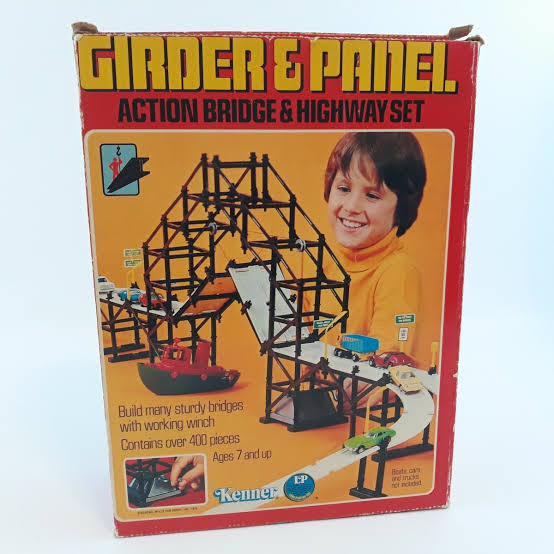
Girder and Panel Building Sets deserve a comeback because they gave kids architecture instead of just stacking. These sets were about frames, walls, structure, and the satisfying feeling that you were building something closer to a real building than a pile of blocks pretending to be one.
That distinction matters. A lot of building toys are abstract, which is great, but Girder and Panel sets felt civic. You were making buildings. Offices. Towers. Construction sites. Cities. They tapped into the 70s world of urban imagination, when kids saw high-rises, shopping centers, parking garages, construction cranes, and city skylines as part of the visual culture around them.
The toy also encouraged a different kind of thinking. You had to understand structure, not just height. A wall needed support. A building had a frame. The panels made it feel finished. It was the toy equivalent of letting a kid become a tiny developer, hopefully with less paperwork and fewer zoning issues.
A modern version could be fantastic because STEM toys often lean too hard into either coding or pure blocks. Girder and Panel-style play could teach real-world structure, design, balance, and visual planning in a way that feels physical and satisfying. It could also connect beautifully with toy cars, figures, and pretend-city play.
Comeback Pitch: Bring back architectural building sets with snap frames, translucent panels, retro storefronts, apartment buildings, garages, malls, office towers, and disaster-proof rebuild challenges.
18. Merlin
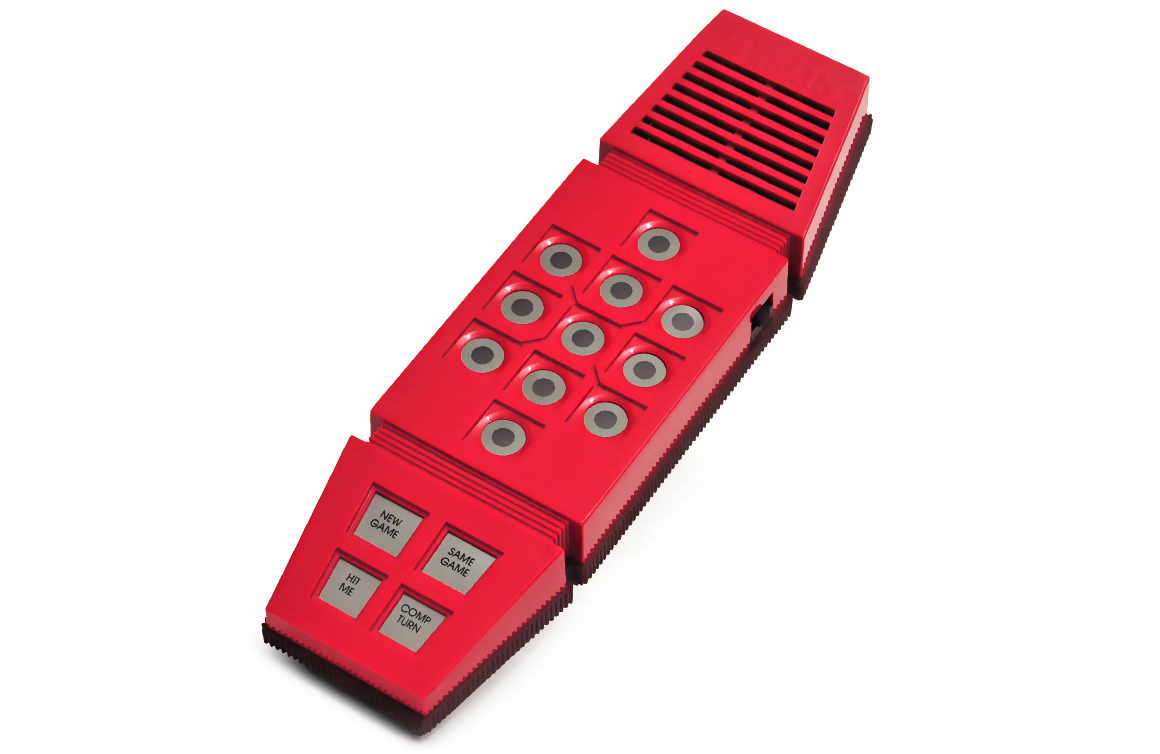
Merlin deserves comeback status because it captured the exact moment electronic toys started feeling like personal devices. It was handheld, beeping, button-based, and weirdly futuristic in a way that made it feel more important than a simple game.
Merlin belonged to the late-70s shift where toys started sounding different. They beeped. They blinked. They had modes. They felt like tiny computers even when they were doing something simple. That mattered because owning one felt like having a piece of the future in your hands, even if the future mostly consisted of red lights and electronic disappointment when you lost.
It also fit the lifestyle of car trips, waiting rooms, couches, bedrooms, and family-room boredom. A handheld electronic toy felt private in a way board games did not. You could hold it, focus on it, and disappear into the challenge. That was a major emotional shift in toy culture.
A modern Merlin revival would be timely because people are tired of every electronic toy becoming a screen, a subscription, or an app ecosystem. Merlin could come back as a simple, self-contained retro gaming device for kids and nostalgic adults. No notifications. No in-app purchases. No login. Just buttons, lights, sounds, and the bitter taste of losing to a plastic wizard.
Comeback Pitch: Relaunch Merlin as a pocket retro electronic game with original modes, new puzzle packs, no ads, no Wi-Fi, no accounts, and the radical concept of letting a toy just be a toy.
19. Quiz Wiz
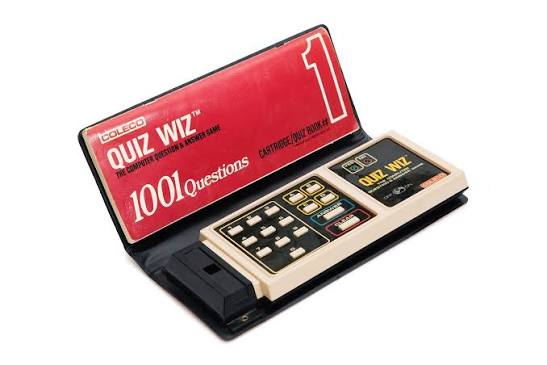
Quiz Wiz deserves a comeback because it was basically cartridge-based trivia before everyone had a phone in their hand ruining family arguments with instant answers. It turned questions into a little electronic event and gave kids the feeling that knowledge could come packaged in a gadget.
That was a big deal in the late 70s. Educational toys were becoming more electronic, but they still had to feel like toys. Quiz Wiz found a smart middle lane. It had the grown-up appeal of trivia, the kid appeal of a device, and the expandable appeal of cartridges. That made it feel like a system instead of a one-and-done game.
It also fit perfectly into family-room culture. This was the era of game nights, TV trivia, quiz shows, living-room competition, and adults pretending they were not annoyed when a child knew an answer they missed. Quiz Wiz could sit between board game, learning toy, and electronic novelty without fully belonging to any one category.
A comeback could work because trivia still works. Families still like quizzes. Kids still like devices. Parents still like toys that can be called educational without sounding completely miserable. The key would be keeping physical question packs and cartridges, because the object itself is part of the charm.
Comeback Pitch: Bring Quiz Wiz back with physical trivia packs: 70s pop culture, 80s movies, animals, space, sports, geography, music, cartoons, history, and family showdown editions. Keep the cartridge feel. That is the charm.
20. Big Trak
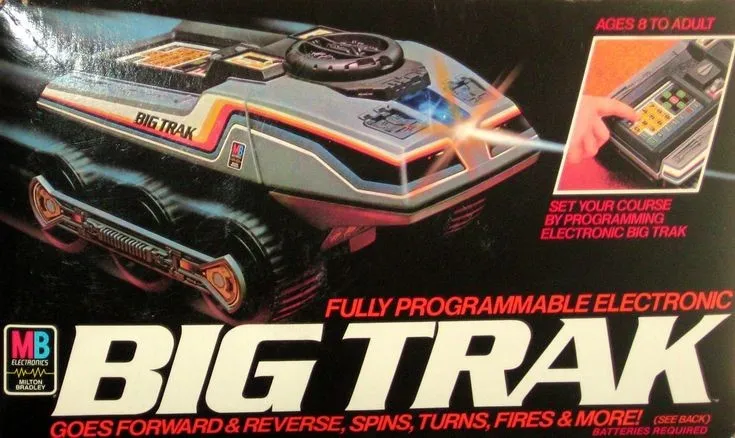
Big Trak might be the most obvious comeback candidate on the whole list because it already feels like a modern STEM toy wearing 1979 armor. You programmed commands, watched the vehicle move, and then learned very quickly whether your instructions were brilliant or whether you had just sent a plastic tank into a chair leg.
The genius of Big Trak was that it made programming physical. You did not type something and watch pixels respond. You entered a sequence and watched an actual object move through actual space. That made the lesson immediate. If your logic was wrong, the vehicle did not politely correct you. It just drove somewhere stupid.
That kind of cause-and-effect learning is powerful. Big Trak taught sequencing, spatial thinking, estimation, planning, and debugging without using any of those words. It made kids think like tiny engineers while still feeling like they were commanding a futuristic vehicle across hostile living-room terrain.
A comeback would be perfect right now because coding toys are everywhere, but too many of them send kids straight back to a tablet. Big Trak could offer screen-free coding with a physical payoff. Keypad commands, mission cards, obstacle layouts, cargo challenges, programmable routes, and expansion accessories could make it feel both nostalgic and genuinely useful.
Comeback Pitch: Relaunch Big Trak with tactile programming, mission cards, cargo challenges, obstacle courses, optional advanced coding modes, and a physical keypad. Keep the keypad. The keypad is sacred.
Why So Many 70s Toys Disappeared
Not every forgotten toy was a failure. The toy business runs on short attention spans, new licenses, new television hits, new technology and shelf space that never gets any larger. A clever mechanical toy could have a strong run and still vanish once the next heavily advertised craze arrived.
The late 70s also changed expectations quickly. Star Wars action figures, cartridge-based video games and electronic toys gave kids expandable worlds. A single self-contained toy suddenly had to compete with collections, accessories, sequels and screens.
Some products also carried designs that would need obvious updating now: hard projectiles, brittle plastic, long cords, exposed mechanisms, loud impact play or battery compartments that aged badly. That does not erase the original play idea. It simply means a comeback should revive the fun rather than blindly reproduce every 1970s engineering choice.
Character lines disappeared when television, comic and movie priorities changed.
Simple lights and sounds looked futuristic until the next generation made them ordinary.
Ripcords, figures, panels, cartridges and tiny accessories made complete sets harder to preserve.
Cartoon-driven franchises and bigger marketing machines pushed many quieter 70s concepts out of memory.
Collecting Vintage 70s Toys Today
Searching for old 70s toys is often less about finding a perfect sealed box and more about knowing which parts made the toy playable. A VertiBird without the right controls, an SSP car without its ripcord, a Girder and Panel set without connectors, or a Quiz Wiz without usable cartridges may look familiar while delivering only half the memory.
Before buying a vintage electronic toy, inspect the battery compartment for corrosion and confirm whether the seller has actually tested the sound, lights, keypad or motor. With mechanical toys, look for brittle plastic, cracked gears, stretched cords, missing launch pieces and repairs hidden in low-resolution photos.
The 70s toy catalog and Sears Wish Book guide can help identify original sets, while the 70s toy commercials and forgotten-toy video archive shows how many of these toys were supposed to move, sound and play.
More 70s Toy Rewinds
The forgotten toys make more sense inside the complete decade: the giant icons, the Christmas crazes, the catalog pages, the commercials and the specific play styles that took over different parts of the house.
Big Guides and Toy Deep Dives
Explore the 70s Toy Aisle by Play Style
Explore 70s Toys by Year
The full 1970s toy timeline shows when these forgotten names appeared beside the decade’s better-known classics. Move year by year to see how the aisle shifted from sturdy analog play toward sci-fi licenses, electronic games and programmable toys.
Why These Forgotten 70s Toys Deserve Another Turn
The best toys on this list asked kids to steer, launch, build, balance, decorate, program, compete, pretend, repair and try again. They were not always elegant, but they were active. A child had to participate instead of merely consume.
A modern comeback does not need to copy every detail. It should preserve the core loop: ripcord speed, tabletop flight, reusable story scenes, modular worlds, low-tech movement, physical programming, mechanical doll magic or early electronic challenge play. Update the materials and safety. Keep the soul.
The 70s toy aisle was weird because it was still figuring itself out. That is why it was so good. These toys deserve another chance not only because Gen X remembers them, but because a toy that makes a kid do something, fail, laugh, reset and try again will always have a place.
Forgotten 70s Toys FAQ
What are some forgotten toys from the 1970s?
Forgotten 70s toys include VertiBird, SSP Racers, Hot Wheels Sizzlers, Fisher-Price Adventure People, Micronauts, Shogun Warriors, Mego superheroes, Hugo, Dancerella, Milky the Marvelous Milking Cow, Romper Stompers, Lemon Twist, Colorforms, Fashion Plates, Merlin, Quiz Wiz and Big Trak.
What makes a 70s toy “forgotten”?
A forgotten 70s toy is not necessarily unknown. It is a toy with a strong idea, memorable commercial or distinctive play pattern that receives less attention today than permanent icons such as Star Wars, Atari, Barbie, Hot Wheels, Stretch Armstrong, Simon or Speak & Spell.
Which forgotten 70s toy deserves the biggest comeback?
Big Trak, VertiBird and SSP Racers have especially strong comeback potential because their play patterns still feel modern: screen-free programming, hands-on control and battery-free speed.
Were 70s toys more dangerous than modern toys?
Some 70s toys used harder materials, long cords, small parts, exposed mechanisms or aggressive launch features that would need redesigning today. A good comeback should preserve the play idea while updating materials, testing and age guidance.
Why do old 70s toys still feel appealing?
Many 70s toys were tactile, mechanical and easy to understand. Kids could see how they worked, test them, fail with them and try again. That direct physical feedback remains satisfying in a screen-heavy world.
What forgotten 70s electronic toys are on the list?
Merlin, Quiz Wiz and Big Trak represent the electronic side of the list. They introduced multi-game handheld play, cartridge-style trivia and keypad programming before the 1980s electronic-toy boom.
What forgotten 70s outdoor toys deserve a comeback?
Romper Stompers, Lemon Twist and a safely redesigned version of Clackers all have comeback potential because they turn balance, rhythm and repetition into active screen-free play.
What forgotten 70s craft toys are still worth trying?
Colorforms Adventure Sets, Fashion Plates and latch hook kits remain strong creative concepts. They encourage reusable storytelling, mix-and-match design and patient hands-on making.
How can I identify a complete vintage 70s toy?
Compare the toy with original catalog images, instructions and commercials. Check for the parts that made the play pattern work, such as ripcords, controllers, cartridges, connectors, figures, panels, battery covers and launch pieces.
Where can I find more 70s toy nostalgia?
Start with the 70s Toys Hub, then explore the 50 Most Iconic Toys of the 70s, the hottest Christmas toys, the Sears Wish Book and toy catalog guide, the commercial archive, the ten year pages from 1970 through 1979, and the category deep dives linked above.