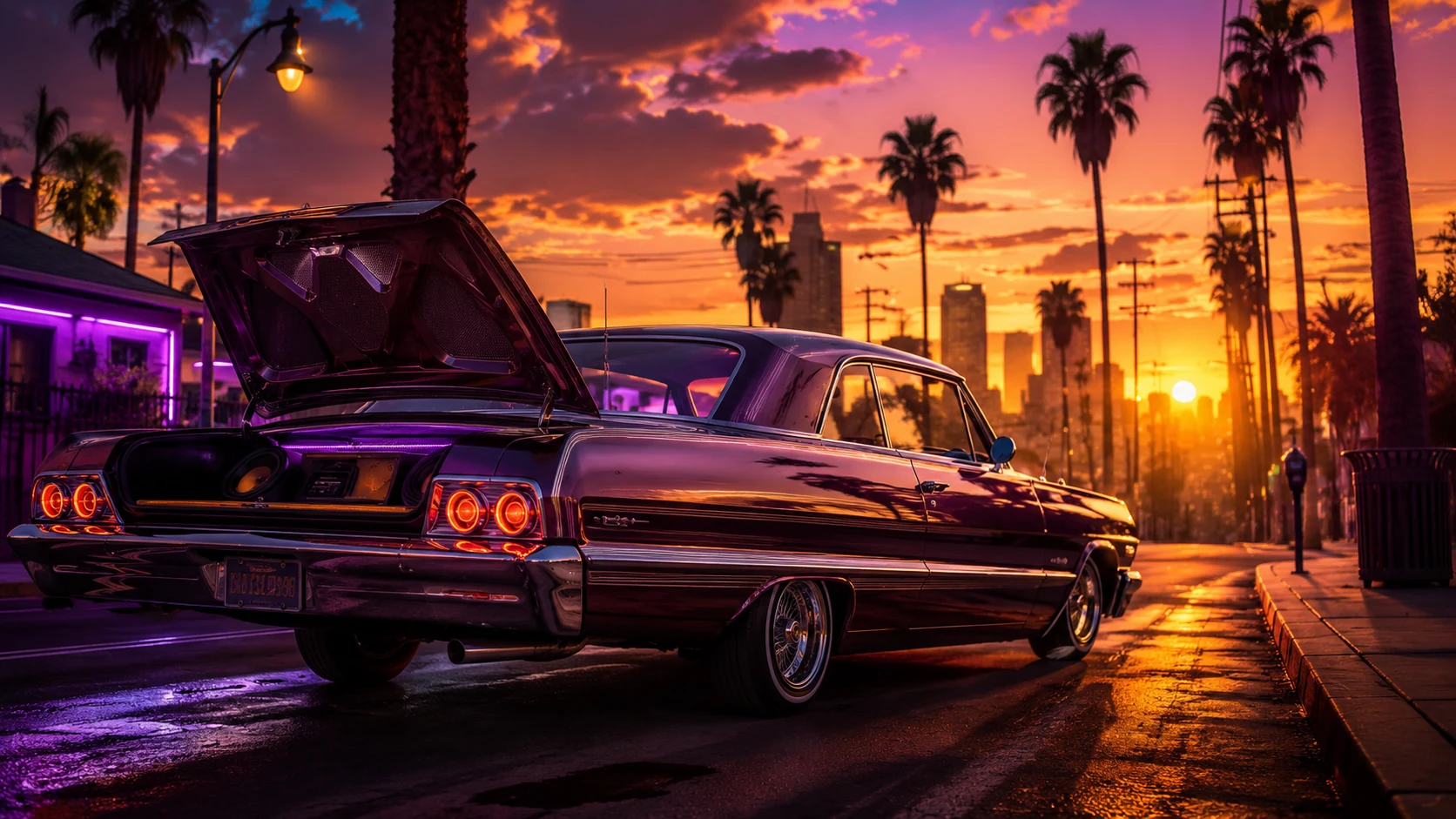
Snoop Dogg and the G-Funk 90s
Snoop Dogg’s G-Funk 90s turned laid-back flow into a whole West Coast language. He arrived on Dr. Dre and The Chronic sounding like he had already solved the decade, then made Doggystyle feel less like a debut and more like a victory lap with better bass. His voice, timing, humor, hooks, videos, style, and effortless cool helped define G-Funk and the 90s West Coast sound, while the bigger 90s hip-hop and rap map suddenly had a new center of gravity wearing a smirk.
Snoop Dogg became one of the defining voices of the G-Funk 90s because his relaxed flow, melodic timing, humor, cool delivery, and chemistry with Dr. Dre fit the West Coast sound perfectly. His appearances on The Chronic introduced him to a national audience, and Doggystyle turned him into a 90s rap superstar. Snoop made G-Funk feel effortless: bass-heavy, smooth, funny, dangerous, catchy, stylish, and built for cars, MTV, radio, house parties, CD binders, and every 1994 stereo that thought it could handle the low end.
Snoop Arrived Like He Had Been Famous Already
Some artists sound like they are trying to introduce themselves. Snoop Dogg did not. When he broke through on The Chronic, he sounded like he had been there the whole time and everyone else was just late. His voice slipped into Dre’s production so naturally that it felt less like a guest appearance and more like the final missing ingredient.
That is what made Snoop’s arrival feel so weirdly complete. The flow was relaxed but precise. The humor was there. The menace was there. The slang was there. The tone was instantly recognizable. The timing was ridiculous. He sounded casual, but the casualness was the craft.
The early-90s rap world was full of incredible voices, from the dense lyricism of the East Coast to the rising regional sounds across the South and Midwest. But Snoop’s voice did something different. It made West Coast G-Funk feel like it had a human shape. Dre’s production gave the sound its architecture. Snoop gave it a grin.
That grin mattered. It made the music feel inviting even when the stories were tense. It made the danger feel cooler, the jokes sharper, the hooks stickier, and the whole West Coast wave easier for the wider public to understand — even if plenty of people understood it badly, loudly, and usually on television.
Snoop also landed at the exact moment rap was becoming a daily-life soundtrack for more people. This was not just music in headphones. It was music in cars, bedrooms, school parking lots, dorm rooms, parties, mall CD stores, and living rooms where MTV was basically background radiation.
He sounded effortless
Snoop’s delivery felt like it was barely trying, which is exactly why it worked. He did not chase the beat. He rode it. He let the groove breathe. He made space sound cooler than speed.
That kind of control is hard to fake. A lot of rappers could sound aggressive. Snoop made sounding relaxed feel like dominance.
He made G-Funk feel human
G-Funk already had bass, synths, funk, and space. Snoop gave it a voice that was funny, sly, melodic, and instantly memorable.
His delivery made the records feel conversational, like the whole song had leaned back in the passenger seat and started telling you a story it probably should not put in writing.
The Flow Was Laid-Back, But the Timing Was Surgical
Snoop’s style gets called laid-back so often that it almost sounds simple. It was not simple. It was timing, tone, melody, breath control, slang, confidence, and the ability to make the beat feel slower just by entering the room.
Relaxed Was the Weapon
Snoop did not overpower G-Funk production. He moved through it, stretched it, joked with it, and made every pause feel intentional.
The magic was in the pocket. Snoop knew how to sit behind the beat without sounding late. He could stretch a word, drop into a phrase, pause, smirk, and land the next line like nothing had happened. That looseness gave his verses personality before you even got to the lyrics.
He also had melody in his delivery. Not singing exactly, but not flat rapping either. His voice moved in a way that made choruses, ad-libs, and verses blur together. That was perfect for G-Funk because the production already leaned melodic. Snoop’s flow did not fight that. It finished the shape.
The humor mattered too. Snoop could be menacing, but he was rarely joyless. His delivery had jokes, exaggeration, side-eye, storytelling, and that extremely 90s ability to sound charming while describing situations that should have everyone involved making better choices.
And for Gen X listeners, that voice became instantly placeable. You could hear two seconds on the radio and know who it was. No Shazam. No algorithm. No “who sings this?” search bar. Just a voice cutting through static, cheap speakers, and somebody yelling from the other room that dinner was ready.
He rode the beat
Snoop’s flow leaned back without dragging. That balance made him sound loose and locked-in at the same time.
The voice was instant
You knew it was him immediately. That kind of vocal identity is not common, and the 90s had plenty of competition.
The smirk mattered
He made hard records feel funny without draining the edge. That was part of the charm and part of the danger.
He made verses sing
Snoop’s delivery had musical movement, which helped his verses fit perfectly inside G-Funk’s melodic production.
Dre Built the Room, Snoop Walked In Like He Owned It
The Dre/Snoop chemistry is one of the great producer-rapper combinations of the 90s. Dre gave Snoop a production world with space, bass, funk, and polish. Snoop filled that space with voice, timing, jokes, threat, and cool.
Producer Control, Rapper Cool
Dre made the beats feel cinematic. Snoop made them feel lived-in. Together, they turned G-Funk into one of the decade’s signature sounds.
Dre’s production did not crowd Snoop. That is the point. The beats had space, and Snoop’s voice knew exactly what to do with that space. He could glide over the rhythm, make the hook feel conversational, and give the track enough personality that it sounded like a short film with better drums.
The pairing worked because their strengths did not compete. Dre brought structure, polish, bass, and atmosphere. Snoop brought looseness, charisma, slang, and the feeling that the whole song had just become more fun and more dangerous at the same time.
That chemistry is why Dr. Dre and The Chronic changed 90s rap so completely. The production was already huge, but Snoop’s arrival made the record feel alive in a way that could not be engineered on a mixing board alone.
The Chronic Made Snoop the Voice Everybody Wanted More Of
The Chronic was Dre’s solo breakthrough, but it also doubled as Snoop’s national introduction. By the time the album finished rolling through 1993, listeners were not asking who he was anymore. They were asking when his album was coming.
“Nuthin’ but a ‘G’ Thang” is the obvious starting point because it made the chemistry impossible to miss. Dre sounded confident. Snoop sounded born for it. The beat leaned back, the hook moved, and the video gave the whole thing a visual language that instantly belonged to the decade.
But Snoop’s impact on The Chronic was bigger than one single. His presence throughout the record gave the album continuity. He was not just popping in. He felt like part of the foundation. His voice connected the world Dre was building.
That is why Snoop’s debut felt pre-sold before it even arrived. The audience had already heard enough to understand the assignment. A Snoop solo album produced inside that G-Funk universe sounded less like a gamble and more like a thing the 90s had already ordered.
It also gave suburban America a new round of parental panic, because apparently adults in the 90s were shocked every three months to learn teenagers were listening to music with questionable language. The Parental Advisory sticker was basically a marketing department with a warning label.
Doggystyle Turned the Arrival Into a Takeover
Doggystyle is one of those debut albums that does not feel like a debut. It feels like the second chapter of a story everyone was already quoting. Snoop had arrived on The Chronic, and Doggystyle turned that arrival into a full-blown West Coast event.
The Debut That Felt Like a Victory Lap
Doggystyle gave Snoop the full frame: hooks, skits, G-Funk bounce, humor, menace, videos, and enough confidence to make 1993 feel like Long Beach had the aux cord.
Doggystyle worked because it understood Snoop’s strengths. It gave him space. It gave him bounce. It gave him hooks. It gave him a world full of characters, jokes, threats, parties, skits, and grooves. The album did not try to turn him into something he was not. It let him stretch out and made the stretch feel iconic.
“Who Am I? (What’s My Name?)” made the solo identity immediate. “Gin and Juice” became one of the most durable party records of the decade. “Doggy Dogg World” showed how naturally Snoop fit inside retro-funk textures. Deep cuts gave the album that lived-in crew energy that made Death Row’s world feel massive.
The album also showed how much of Snoop’s appeal came from contrast. He could sound charming and cold in the same verse. He could make a joke without dropping the tension. He could glide over the beat so casually that the harder lines landed even stranger. That was the trick: smooth delivery, sharp edges.
Doggystyle belongs in the best 90s hip-hop albums conversation because it captures a full moment: artist, producer, label, sound, videos, image, car culture, controversy, CD-store obsession, and 90s attitude all arriving at once with the bass already too loud.
This Wasn’t Just an Album Era. It Was a Whole 90s Mood.
Snoop’s G-Funk era lived way beyond the songs. It was in the way people dressed, drove, talked, watched videos, built mix CDs, argued about rap in lunchrooms, and learned very quickly which parents checked the lyric booklet and which ones just saw the cartoon dog art and gave up.
The Album Traveled Like Contraband With Better Hooks
Snoop’s early run lived in binders, bedrooms, glove compartments, party mixes, and every car stereo that thought bass was a personality trait.
The album traveled
Doggystyle was the kind of CD that got passed around, borrowed, copied, scratched, returned late, and somehow still played through the damage like a little plastic miracle.
The bass was the point
This music was built for motion. Parking lots, after-school drives, late-night cruising, and trunk speakers all turned G-Funk into something physical.
The videos did damage
You did not just hear Snoop. You saw the world: lowriders, backyard energy, sunshine, color, humor, and that early-90s cable-TV glow.
The hooks crossed over
Snoop’s records could slide into rap playlists, party mixes, car tapes, and mainstream radio without sounding like they had cleaned themselves up for company.
That lifestyle piece is easy to miss if you only look at chart positions and album credits. The real memory is more physical than that. It is the CD case sliding across a cafeteria table. It is the friend with the good stereo suddenly becoming the most important person in the room. It is a car trunk rattling so hard it sounded like a mechanical problem nobody planned to fix.
It is also the way Snoop’s music fit into the broader 90s party ecosystem. The decade had club rap, pop-rap, dance records, R&B remixes, New Jack Swing leftovers, and radio-friendly hip-hop all colliding. Snoop’s G-Funk records were not dance records in the same way as the biggest 90s hip-hop dance and party songs, but they absolutely lived at parties. They were the songs that made the room lean back.
That is why Snoop’s early catalog also sits near the same nostalgia shelf as forgotten 90s party anthems. Not because his biggest songs were forgotten — they definitely were not — but because the vibe belongs to the same world: house speakers, car rides, mixed tapes, questionable decisions, and somebody yelling, “Play that one again,” like the rewind button had health insurance.
Snoop Was the Perfect Voice for G-Funk
G-Funk needed a rapper who could make slow beats feel alive without overstuffing them. Snoop did exactly that. His voice moved like part of the groove, which is why his early records still feel glued to the sound.
The G-Funk sound was built on space, and Snoop understood space better than almost anyone. He did not need to attack every pocket. He could let the bass breathe. He could let the synth line curl around him. He could make the hook feel like a conversation. He knew that sometimes the coolest thing you can do on a beat is not panic.
That made him different from a lot of rappers who sounded like they were trying to win a boxing match with the drums. Snoop did not fight the beat. He reclined on it. He made G-Funk feel even smoother, which made the darker moments sneak up harder.
The result was a perfect match between production and personality. The slow bounce made him sound cooler. His voice made the slow bounce feel sharper. The hooks made the songs travel. The videos gave everything a visual stamp. And the car speakers did the rest because apparently they had no choice.
He never rushed
Snoop made the slow tempo feel like confidence instead of laziness. That is harder than it sounds.
The flow had curves
His delivery moved musically, which helped verses and hooks feel like part of the same warm, bass-heavy world.
The cool was structural
Snoop’s cool was not decoration. It shaped the songs. It changed how the beats felt.
MTV Turned Snoop’s Cool Into a 90s Visual Language
Snoop’s music was already vivid, but videos made the image unavoidable: Long Beach, lowriders, backyard parties, studio haze, Death Row swagger, cartoonish humor, and the kind of 90s cable-TV rotation that burned itself into everybody’s memory.
The Sound Got a Screen Glow
Videos made Snoop’s G-Funk world feel larger than records: cars, parties, color, humor, danger, and that unmistakable early-90s cable-TV shine.
The videos mattered because they gave the sound a whole visual identity. You could hear the G-Funk bounce and see the lowrider world at the same time. You could hear Snoop’s flow and see the relaxed menace in the performance. You could hear the hooks and watch the whole thing become a cultural postcard.
That is why Snoop fits naturally into the bigger Hip-Hop on MTV in the 90s story. His rise happened when video rotation could turn an artist from important to unavoidable. MTV did not create Snoop’s appeal, but it made sure nobody could pretend they missed it.
The image also helped rap move deeper into mainstream 90s life. Snoop’s videos were funny, bold, stylized, sometimes ridiculous, sometimes tense, and always recognizable. That made him easy to remember even for people who did not understand the context and were mostly watching from suburban couches while pretending they were not fascinated.
MTV also gave Snoop’s music a weird second life inside everyday routines. You might catch a video before school, after school, late at night, or while flipping between music videos and whatever rerun was on because attention spans were already doomed. The difference was, back then, we had to ruin them manually.
Snoop Helped Make 90s Hip-Hop Cool Look Effortless
The Snoop era was not just about sound. It was also attitude, posture, style, and the way West Coast rap looked on screen. The fashion did not feel like costume design. It felt lived-in, which is why so many kids tried to borrow the vibe with wildly uneven results.
The Fit Had a Soundtrack
Flannels, denim, sneakers, shades, caps, chains, CD players, and palm-shadow lighting — the look matched the bounce.
Snoop’s early image helped shape how a lot of people pictured West Coast hip-hop: relaxed but sharp, casual but styled, funny but not soft. The clothes, the hair, the cars, the posture, the slow movements, the video settings — all of it worked together. He did not look like he was trying to be cool. He looked like cool was something everyone else was overcomplicating.
That matters because 90s hip-hop style was not one thing. East Coast streetwear, West Coast lowrider culture, Southern flavor, dance-floor looks, athletic gear, luxury signals, thrifted weirdness, and regional codes all overlapped. Snoop’s lane was one of the most recognizable because it matched the music so cleanly.
This is where his story naturally connects to 90s hip-hop fashion. Snoop’s G-Funk era helped make style feel inseparable from sound. You did not just hear the record. You pictured the world around it.
And yes, many of us tried to copy pieces of that world with whatever was available at the mall, the local sporting goods store, or the back of a closet. Results varied. Some people pulled it off. Some people looked like their mom had approved the outfit in the minivan. The 90s were not gentle.
The look matched the sound
Relaxed, sunny, bass-heavy, confident, and slightly dangerous. The image and the music were doing the same job.
West Coast had codes
The videos helped spread a West Coast visual language far beyond California.
Everybody tried something
Some kids copied the vibe. Some kids were just wearing oversized clothes and hoping for the best. History is complicated.
The silhouette stuck
Snoop’s early look became part of the 90s rap memory almost as much as the hooks.
Snoop Became the Face of Death Row’s Smoothest Moment
Death Row had plenty of voices, drama, muscle, and mythology, but Snoop gave the label its smoothest superstar presence. He made the label’s danger feel charming, which was probably not healthy, but it was extremely 90s.
The Cool in the Middle of the Chaos
Snoop gave Death Row a voice that could sound playful, cold, catchy, relaxed, and dangerous without ever looking like it was sweating.
Death Row’s early-90s run was built on sound, image, controversy, and a roster that felt larger than life. Dre gave the label its production identity. Snoop gave it an instantly recognizable star voice. Together, they helped make Death Row feel like the loudest rap label in the country.
Snoop’s role inside that machine was complicated because his calm made the chaos feel more magnetic. The label’s image could be intense, but Snoop’s delivery softened the entry point. He made the world feel funny, musical, and charismatic even when the subject matter was heavy.
That is part of why his Death Row era connects to the later Bad Boy, Death Row, and 90s rap rivalries conversation. The music should always stay at the center, but the media climate, label pressure, regional pride, and mythology all shaped how Snoop’s early career was experienced.
It is also why this era needs a little distance when looking back. The records were undeniable, but the surrounding culture could get messy fast. The 90s loved turning real tension into entertainment, then acting shocked when entertainment had consequences. Very on-brand for a decade that gave us both incredible music and terrible frosted tips.
The Snoop Songs That Defined the G-Funk 90s
Snoop’s early run is packed with records that feel permanently attached to the decade. Some were singles, some were album cuts, some were features, and some were simply songs that every 90s CD binder seemed legally required to contain.
Core Snoop Tracks
- “Nuthin’ but a ‘G’ Thang” — Dr. Dre feat. Snoop Dogg
The arrival. Dre’s production, Snoop’s flow, the hook, the video, and the moment G-Funk became national weather. - “Dre Day” — Dr. Dre feat. Snoop Dogg
Diss record, label statement, video event, and Snoop sounding completely comfortable inside the chaos. - “Who Am I? (What’s My Name?)” — Snoop Doggy Dogg
The solo identity statement. Instant hook, instant voice, instant superstar confirmation. - “Gin and Juice” — Snoop Doggy Dogg
One of the most durable party records of the decade, mostly because it sounded like trouble having a great afternoon. - “Doggy Dogg World” — Snoop Doggy Dogg
Retro-funk styling, smooth delivery, and Snoop fully inside the G-Funk universe. - “Ain’t No Fun” — Snoop Doggy Dogg feat. Nate Dogg, Warren G & Kurupt
Very 90s, extremely quotable, and carried by one of the most recognizable hooks in the Death Row orbit. - “Murder Was the Case” — Snoop Doggy Dogg
Darker, more dramatic, and proof Snoop could stretch beyond party-mode charisma. - “Gz and Hustlas” — Snoop Doggy Dogg
A deep Doggystyle cut that shows how naturally he could live inside the sound. - “Lodi Dodi” — Snoop Doggy Dogg
A remake filtered through Snoop’s Long Beach cool and early-90s personality. - “Serial Killa” — Snoop Doggy Dogg feat. D.O.C., Tha Dogg Pound & RBX
Crew energy, darker atmosphere, and the Death Row universe spreading across the album.
Why They Worked
- The hooks were immediate. You could hear them once and somehow already know them.
- The flow was unmistakable. Snoop did not need a complicated entrance. His voice announced itself.
- The beats had space. G-Funk gave him room to stretch, pause, joke, and glide.
- The videos had identity. The songs came with images: lowriders, parties, studios, Long Beach cool, and MTV glow.
- The records crossed over. They moved through rap radio, MTV, Top 40 memory, school dances, cars, and house parties.
- The album cuts mattered. Doggystyle was not just a singles machine. It was a full world.
These songs also belong in the wider 50 essential 90s hip-hop songs conversation because Snoop’s early singles were not just hits. They became shortcuts to the whole G-Funk era.
They also show how slippery Snoop’s lane was. He could fit next to party rap, gangsta rap, radio crossover, soundtrack cuts, and full album deep dives without sounding like he was changing costumes. The voice was flexible because the identity was so clear.
The CD Binder Years: The Chronic, Doggystyle, Features, and Aftershock
Snoop’s early-90s impact was not limited to one album. It was a run: The Chronic, Doggystyle, Death Row features, soundtrack appearances, guest spots, and enough cultural momentum to make his voice feel like part of the decade’s default settings.
The Voice That Kept Showing Up
Snoop’s early run lived in CD binders, glove compartments, bedrooms, parties, soundtrack stacks, and car stereos that never asked for mercy.
The Chronic
The introduction. Dre’s album made Snoop impossible to ignore and set up one of the decade’s biggest solo debuts.
Doggystyle
The takeover. Snoop’s debut captured the full G-Funk moment: hooks, humor, menace, style, skits, and bass.
Features & crew cuts
Snoop’s presence across the Death Row universe made the label feel connected, charismatic, and bigger than any one album.
Movie-era reach
Like a lot of 90s rap, Snoop’s world stretched into soundtrack culture, where songs could travel through movies, radio, and CD racks.
Crossover memory
Snoop’s biggest records crossed into wider 90s life without losing their West Coast identity.
The voice stuck
Long after the first G-Funk wave cooled, Snoop’s early style stayed one of the most recognizable sounds in rap history.
The album-and-feature run is why Snoop belongs in any serious best 90s hip-hop albums conversation and any serious 90s rap songs conversation. He was not just present. He was everywhere in a way that felt weirdly natural.
The bigger 90s soundtrack world also matters here. Rap songs were showing up in movies, trailers, end credits, and compilation albums that kids bought for one track and ended up memorizing three others. That whole lane gets its own rewind in 90s Hip-Hop Movie Soundtracks.
Snoop’s records also sat in a weird middle space between “serious rap collection” and “everybody knows this hook.” That helped him move through 90s rap radio crossover without sounding like he had sanded off the edges. The songs were catchy, but they still sounded like they came from his world.
The Moment Snoop Went From New Voice to 90s Fixture
The timing was absurd. The Chronic carried Snoop into 1993, then Doggystyle hit and made him feel like the decade’s most effortless new star. By 1994, the G-Funk wave was not just happening. It was part of the furniture.
1993 is where Snoop’s arrival became impossible to miss. The Chronic was still moving, “Nuthin’ but a ‘G’ Thang” was everywhere, and Doggystyle made the solo takeover official. It was one of those years where the music felt like it was changing while you were listening to it.
1994 is where the aftershock kept rolling. “Gin and Juice” lived on radio and MTV, G-Funk’s reach got bigger, and Snoop’s voice became part of the larger decade memory. The sound was no longer just new. It was normal, which is how you know a takeover has worked.
By then, Snoop had become more than a rapper with hit records. He was a recognizable cultural figure to people who knew rap deeply and people who only caught the videos between whatever else MTV was feeding them. That reach is a huge part of why his G-Funk run still feels like one of the defining chapters of 90s Music.
Why Snoop’s G-Funk 90s Still Works
Snoop’s early records still work because the voice, production, hooks, image, timing, and lifestyle memory all locked together. Nostalgia helps, sure. But nostalgia cannot fake that pocket.
Instant recognition
Snoop had one of the most recognizable voices in rap, and that mattered in a decade full of major personalities.
The pocket stayed magic
His laid-back timing still feels fresh because it was not laziness. It was control disguised as cool.
G-Funk aged well
The bass, synths, hooks, and funk roots still feel physical, warm, and car-ready.
The videos stuck
MTV helped turn Snoop’s early run into a visual memory: Long Beach, lowriders, party energy, and 90s cable-TV glow.
The reason Snoop’s G-Funk era still feels alive is that it was never just one thing. It was music, image, voice, humor, danger, style, production, timing, and lifestyle all landing together. You can separate the pieces for analysis, but the real effect is how naturally they worked as a whole.
Snoop also helped make rap feel more conversational to a massive audience. He did not need to sound like he was performing at maximum effort. He sounded like he was talking, joking, warning, remembering, and cruising all at once. That made him approachable without making him harmless.
His early 90s run remains one of the clearest examples of an artist meeting the exact right sound at the exact right moment. Dre had the production. G-Funk had the atmosphere. Death Row had the machine. MTV had the screen. Radio had the reach. Snoop had the voice. The rest of us had the CD binder.
And that is why the Snoop era still hits differently. It is not just “remember this song?” It is “remember where you were when this sound was everywhere?” The answer is probably yes — in a car, in front of a TV, at someone’s house, in a mall music store, or rewinding a tape because we apparently had unlimited patience and no streaming options.
Where to Go Next
Snoop Dogg and the G-Funk 90s FAQ
Why was Snoop Dogg important to G-Funk?
Snoop Dogg was important to G-Funk because his relaxed flow, melodic timing, humor, and cool delivery fit the sound perfectly. His voice made Dre’s bass-heavy, synth-driven production feel conversational, charismatic, and instantly memorable.
How did The Chronic introduce Snoop Dogg?
The Chronic introduced Snoop Dogg to a massive audience through songs like “Nuthin’ but a ‘G’ Thang” and “Dre Day.” His chemistry with Dr. Dre made him one of the breakout voices of early-90s rap.
Why was Doggystyle such a big deal?
Doggystyle was a big deal because it turned Snoop’s buzz from The Chronic into a full solo takeover. The album captured the G-Funk sound with hooks, skits, humor, menace, lowrider-ready production, and one of the most recognizable voices of the decade.
What are Snoop Dogg’s essential 90s songs?
Essential Snoop Dogg 90s songs include “Nuthin’ but a ‘G’ Thang,” “Who Am I? (What’s My Name?),” “Gin and Juice,” “Doggy Dogg World,” “Ain’t No Fun,” “Murder Was the Case,” “Gz and Hustlas,” and “Lodi Dodi.”
Why does Snoop’s G-Funk era feel so tied to 90s lifestyle?
Snoop’s G-Funk era feels tied to 90s lifestyle because the music lived through car stereos, MTV videos, CD binders, house parties, mall music stores, fashion, slang, and radio crossover. It was not just something people listened to. It became part of how the decade looked and felt.
What should I read next?
Start with G-Funk and the 90s West Coast Sound, then go to Dr. Dre and The Chronic Changed 90s Rap, West Coast Hip-Hop in the 90s, and the main 90s Hip-Hop and Rap rewind.