Speak & Spell
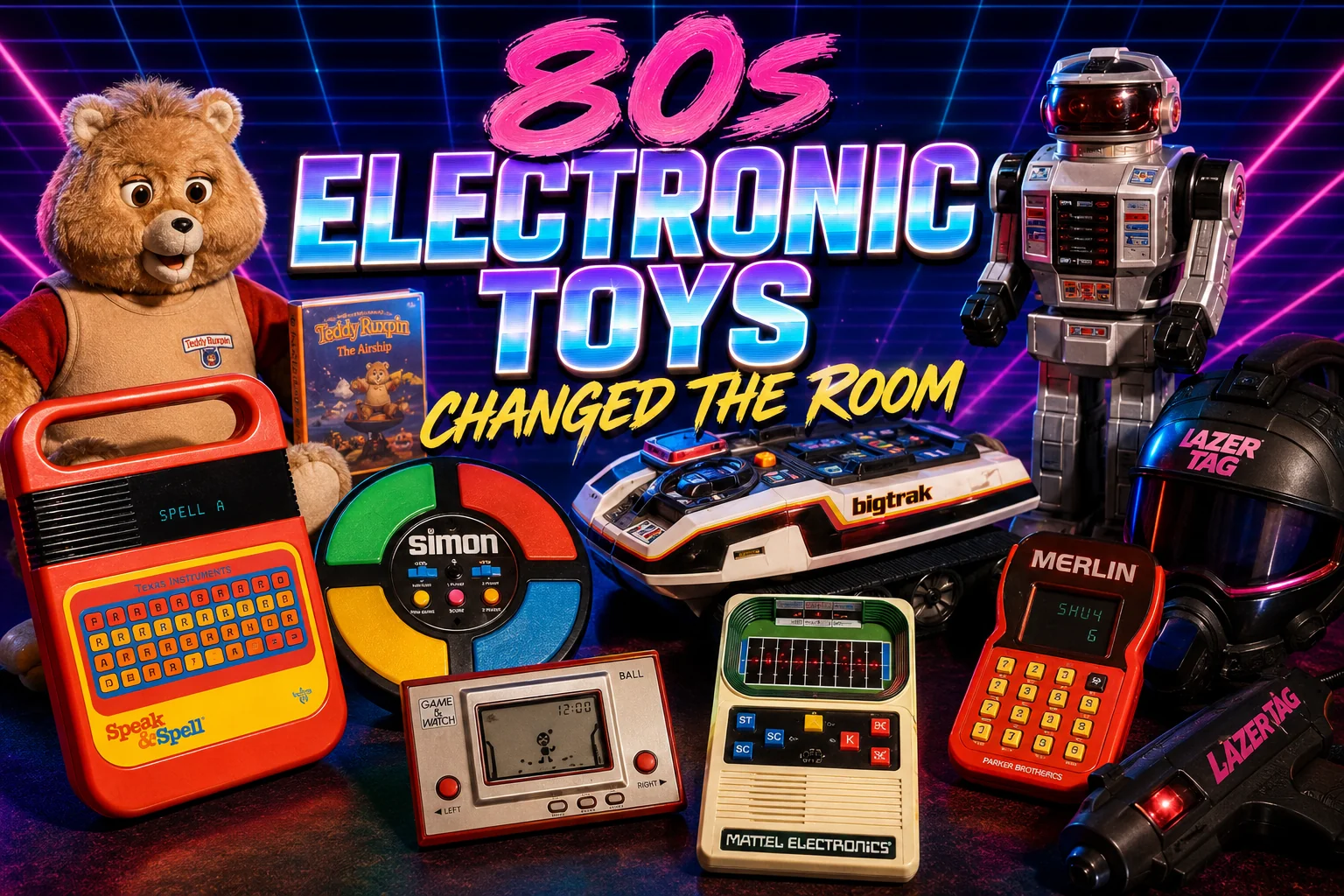
Speak & Spell made learning feel like a sci-fi object. It was educational, sure, but it also had a robotic voice, a keypad, a display, and the strange authority of a machine that could judge your spelling without needing a teacher nearby.
The toy that made learning feel electronic.
Speak & Spell was the perfect 80s compromise: kids got a gadget, parents got to believe it was good for them. It looked serious enough to pass as educational equipment, but it felt toy-like enough to live in the bedroom or back seat of a car. The buttons made it interactive. The voice made it memorable. The display made it feel like a tiny computer.
That mattered because a lot of kids encountered electronic technology through toys before they had regular access to computers. Speak & Spell taught them that machines could ask questions, process answers, and talk back. It was primitive compared with what came later, but at the time it felt alive in a way most toys did not.
The voice did half the work.
The robotic voice is the part everyone remembers. It was clear enough to understand and strange enough to feel futuristic. It gave the toy a personality even though it was not a character. A doll had a face. Speak & Spell had a voice, and somehow that was enough.
It also made mistakes feel public. If you got a word wrong, the machine knew. If a sibling was nearby, they knew too. Suddenly spelling could become a competitive household event, because apparently even vocabulary needed a scoreboard.
The lifestyle memory
Speak & Spell lived in the gray zone between toy, school tool, and family gadget. It could sit on a desk, a kitchen table, a bedroom floor, or a car seat. It felt useful enough for parents and futuristic enough for kids. That is a powerful combination.
It also set the emotional tone for a lot of 80s electronic toys. The toy did not need a screen full of graphics. It just needed buttons, sound, and the feeling that the plastic had a tiny brain inside.
Speak & Spell belongs near the beginning of the decade-wide 50 most iconic toys of the 80s countdown. Its carryover popularity also helps explain why the top toys of 1980 still included so much late-70s electronic innovation.