GOOD TIMES. GREAT SHOWS.Why a Night of 90s TV Felt Like an Event
Before streaming turned television into a library, networks tried to own your whole evening. The lineup mattered, the promos mattered, the lead-in mattered—and sometimes you barely touched the remote for three hours.
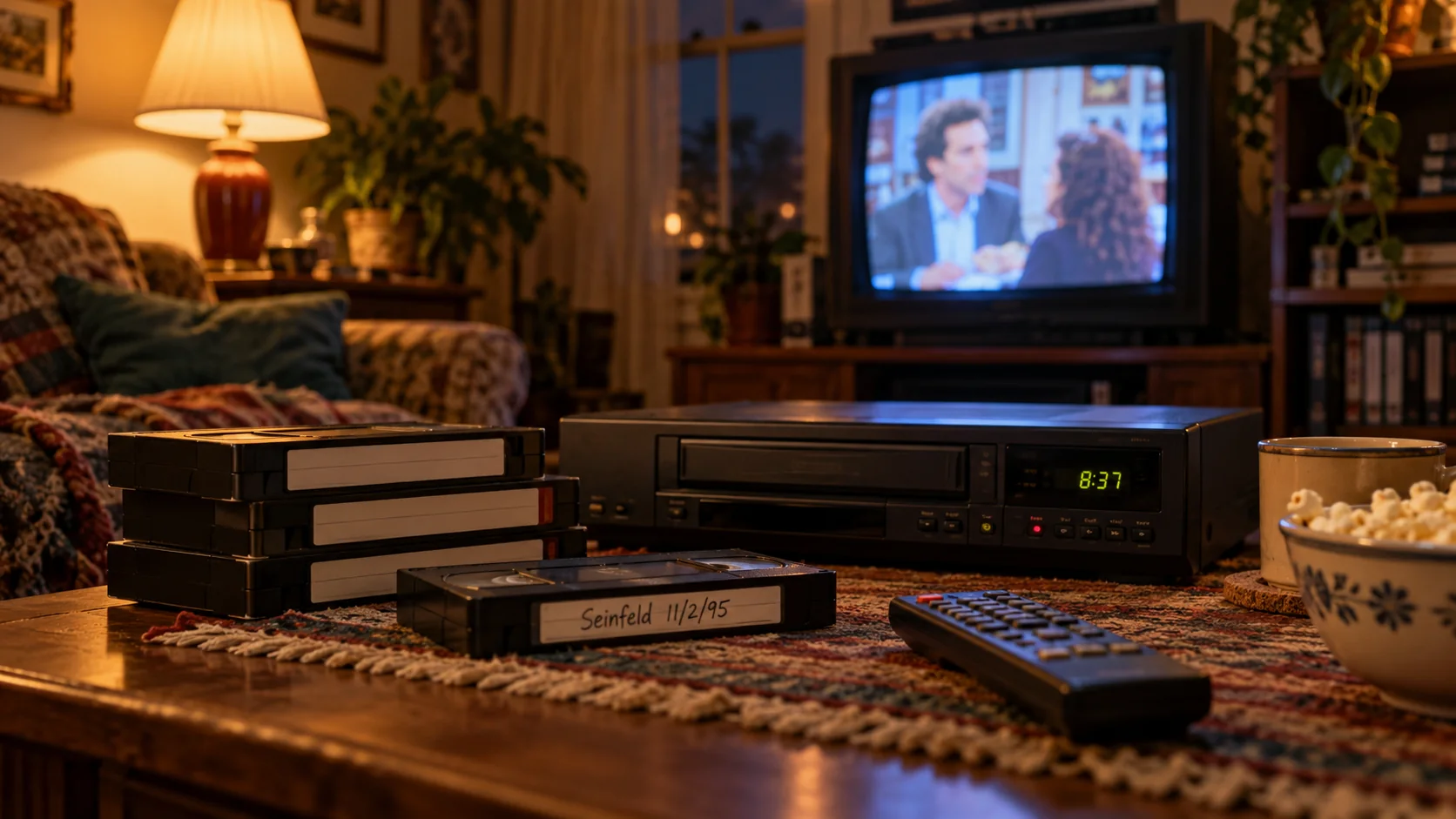
Why did whole nights of 90s TV feel different?
Because networks programmed evenings as packages. A hit show could lead you into the next one, promos told you what was coming, commercial breaks sold the rest of the schedule and familiar blocks like NBC Thursday or ABC TGIF trained viewers to think of a night—not just a series—as the destination.
In the 90s, the Night Itself Could Be the Product
A television network in the 90s did not only sell shows. It sold nights.
That is the part nostalgia loses when we isolate every series into its own streaming thumbnail. Seinfeld was not just Seinfeld. For millions of viewers it lived inside Thursday on NBC, surrounded by other comedies, network promos, a 10 p.m. drama and the expectation that the remote might stay untouched for hours. Family Matters was not just an episode. It could be the opening move in an ABC Friday night that carried a family through 10 p.m.
The schedule turned television into a place you arrived at a specific time. Network graphics and announcers told you what was coming. Commercial breaks sold the next show before the current one ended. A successful lead-in delivered viewers into a new series. A finale or “very special episode” could become the center of the entire night’s promotion. If one network owned your routine, it could keep you long after the show you originally came to watch was over.
That packaging is the subject here. Appointment TV explains why the clock mattered. This article is about what the networks did with that clock: how they built evenings, moved audiences through them and turned the lineup itself into a brand.
The Prime-Time Schedule Grid Was the Original Home Screen
The prime-time grid was one of the most powerful interfaces in American culture, and it was made of time slots.
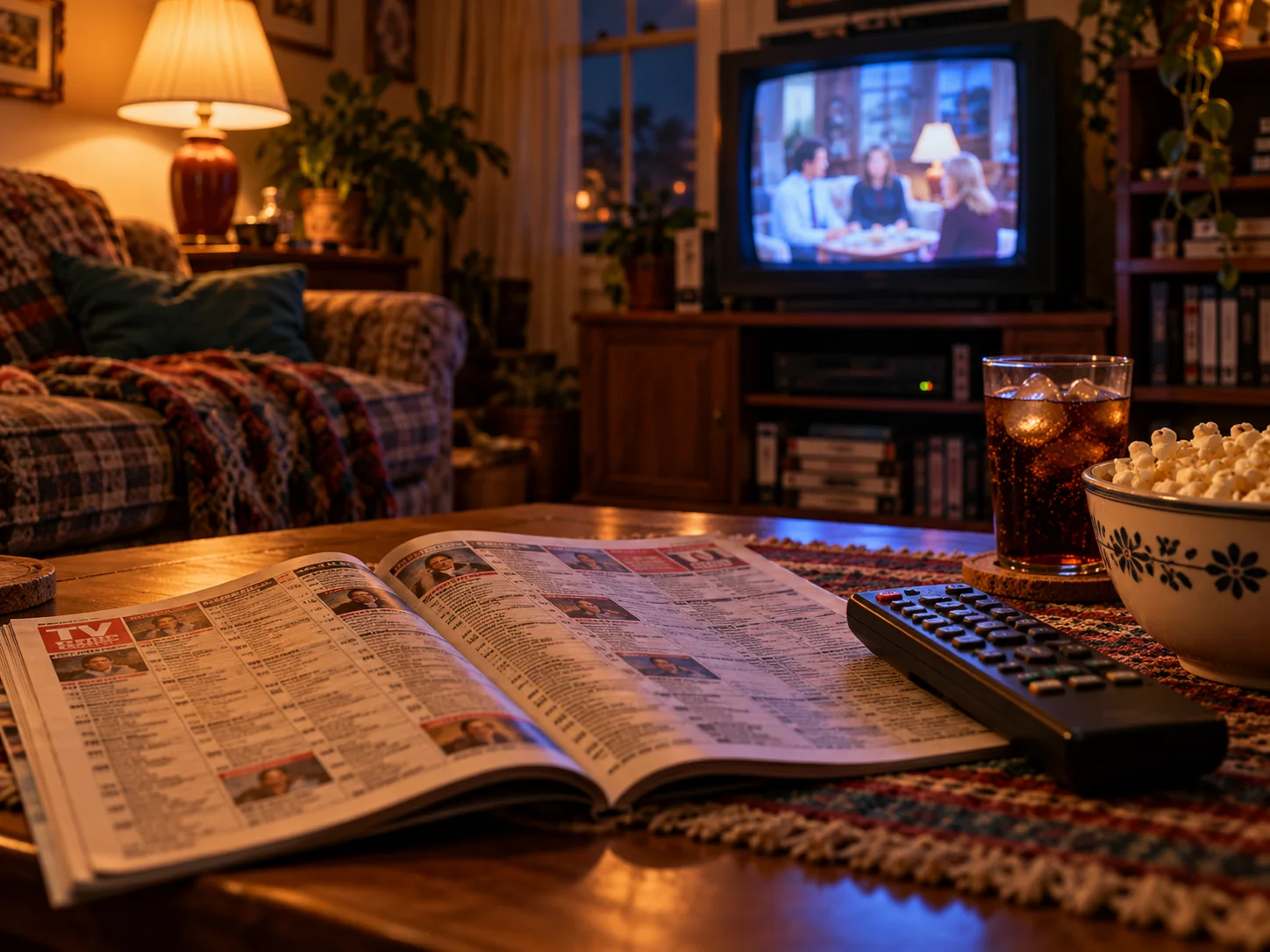
At 8:00, 8:30, 9:00, 9:30 and 10:00, the major broadcast networks placed programs like pieces on a board. An hour drama occupied one kind of space. A half-hour sitcom created another. News magazines, movies, sports and specials changed the shape. The schedule appeared in newspapers, TV Guide, on-screen cable guides and the printed listings people left folded beside the remote.
Viewers learned this grid without trying. You knew that one show ended at 8:30 because another one started. You knew a 10 p.m. drama meant the evening was basically over when the credits rolled. You knew which nights were comedy nights in your house and which nights belonged to a parent’s crime drama or news magazine. The grid made television predictable enough to become routine.
Networks cared about the grid because each program affected the next. A weak 8:00 show could damage 8:30. A powerhouse at 9:00 could launch a newcomer at 9:30. The same series could look healthier or weaker depending on what aired before it, what aired against it and whether the audience associated that night with the network at all.
That is why old ratings charts need context. A forgotten sitcom could post a huge number because it lived in the warm current of a dominant network night. Our Forgotten Must See TV feature is full of shows whose contemporary audience was much larger than their cultural afterlife suggests.
Lead-Ins, Anchors and the Art of Making Viewers Stay
A hit show did more than earn its own rating. It created traffic.
That traffic could be handed to another program. Put a new sitcom after a giant hit and millions of viewers might simply remain seated. The industry language—lead-in, lead-out, hammocking, tent-poling—can make it sound mechanical, but the living-room version was simple: “This is on next.” Sometimes inertia was the best marketing campaign on television.
The strategy worked because changing channels still involved friction. The remote made surfing easy, but viewers also had habits. If a network had already given you an hour you liked, staying for another half hour was a reasonable default. Network promos during the first show made the choice even easier by repeatedly reminding you what was coming.
This could inflate the launch of a new series, but it could also create real discovery. Plenty of viewers found a show because it happened to follow something else. The network’s challenge was converting borrowed attention into a habit strong enough to survive when the schedule changed.
The most successful nights were therefore ecosystems. One show did not merely coexist with another. The shows fed one another. The network’s personality connected them. By the time the audience reached the final hour, the night could feel like one continuous piece of programming interrupted by commercials rather than three unrelated purchases from a menu.
NBC Turned Must See TV Into the Decade’s Ultimate Network Night
No 90s network-night story is bigger than NBC Thursday.
NBC’s “Must See TV” branding became officially associated with its prime-time strategy in the early 1990s and eventually became shorthand for the entire Thursday machine. The lineup changed from season to season, but the core idea stayed powerful: stack desirable comedies, then close the night with a major drama. The network was not asking viewers to sample one show. It was asking them to make Thursday a standing appointment.
By fall 1994, Friends and ER had joined an already formidable ecosystem that included Seinfeld. The results became almost absurd. In the 1995–96 season, six of the top ten programs in the Nielsen rankings aired on NBC Thursday, including ER, Seinfeld, Friends, Caroline in the City, The Single Guy and Boston Common. Our full Must See TV history breaks down how concentrated that power became.
The important thing here is how the brand changed viewer psychology. “Must See TV” transformed a scheduling strategy into an identity. NBC used promos, graphics, cast appearances and constant repetition to make Thursday feel like a single destination. The phrase was broad enough that people could remember the night even when they disagreed about which exact shows belonged to its definitive lineup.
That brand also made weaker shows part of the event. A new sitcom between Friends and Seinfeld did not have to create an audience from zero. It entered a river already moving. Some of those programs became hits. Others vanished. Either way, the night itself gave them a cultural visibility that a similarly rated show elsewhere might never receive.
ABC TGIF Turned the Family Sitcom Block Into a Weekly Ritual
Friday belonged to a different kind of ritual.
ABC’s TGIF block began at the end of the 1980s and became one of the most recognizable family-programming brands of the 1990s. The letters were promoted as “Thank Goodness It’s Funny,” but the emotional meaning was bigger than the slogan. TGIF told kids and parents that Friday night had a personality: school was over, the weekend had started and ABC had built a two-hour lane for family sitcoms.
Lineups changed, but shows such as Full House, Family Matters, Perfect Strangers, Step by Step, Boy Meets World and Sabrina the Teenage Witch became closely associated with the block. The programming itself mattered, but so did the continuity. Cast members appeared in interstitials. Bumpers reminded viewers they were inside TGIF. Promos sold the next comedy without breaking the identity of the night.
For younger Gen X viewers and early millennials, TGIF functioned almost like a weekly event without needing one giant episode. The event was the routine. Pizza, couch, sibling arguments, commercials, theme songs and the knowledge that Friday had a predictable shape. The lineup was family television as atmosphere.
That kind of block could only work because the schedule itself still mattered. A viewer did not open an app and choose Family Matters from a library. They arrived at 8:00 and let the next show come to them. The network was programming sequence, not just content.
This is why the 90s TV hub treats network identity as part of the story rather than background trivia. The network logo in the corner could tell you what kind of night you were having.
Fox Proved a Network Night Could Have a Completely Different Attitude
Fox entered the 90s still carrying the energy of a network that had something to prove.
Its scheduling identity did not mirror NBC or ABC exactly. Fox built strength through younger-skewing comedies, animation, edgy programming and eventually genre television that felt different from the older networks. Sunday became especially important, with shows such as The Simpsons helping create a durable night and The X-Files later becoming part of Fox’s prime-time identity.
The value of Fox in the network-night story is contrast. NBC wanted Thursday to feel polished, urban and desirable. ABC’s Friday block leaned into family ritual. Fox could make a night feel more irreverent or strange. Even when viewers did not consciously describe networks that way, the branding, show mix and promotion trained them to expect different things.
That mattered because television choice was still limited enough for network personality to remain visible. Cable was growing fast, but the broadcast dial was not yet an endless grid of interchangeable tiles. A viewer could have a relationship with a network night: NBC Thursday, ABC Friday, Fox Sunday, CBS Sunday. The night came with a tone.
The six show deep dives now connected from the hub—The Simpsons, The X-Files, Fresh Prince, Buffy, Saved by the Bell and Cops—all make more sense when you remember the network environments around them.
Network Promos and Bumpers Glued the Evening Together
The connective tissue of a network night was promotion.
A 90s commercial break did not only sell cereal, cars and long-distance phone service. It sold television. “Tonight after…” “Next Thursday…” “An all-new…” “The season finale…” Those little spots taught viewers the schedule while they were already inside it. By the time a program ended, the network had spent thirty or sixty minutes telling you why you should stay.
Bumpers and station IDs reinforced the same thing visually. A short animation, a network logo, a musical sting or a cast member saying “We’ll be right back” created continuity between the show and the brand. Blocks like TGIF pushed this further by making the interstitial material part of the identity of the evening.
Promos also created urgency. A regular episode could be marketed like an event if the network found the right hook: a wedding, a guest star, a cliffhanger, a “very special episode,” a live stunt, a crossover or the promise that “nothing will ever be the same.” The language was shameless because it had to stop you from turning the channel.
Home-recorded VHS tapes preserve this machinery beautifully. A clean streaming episode gives you the show. An off-air tape gives you the network selling the whole night in real time. That is why old VHS TV collections are such useful memory machines: the promos survived right beside the programs they were trying to support.
Sweeps Turned Ordinary Weeks Into Television Events
Certain months carried more pressure because Nielsen measurement shaped the business of local advertising and network programming.
Nielsen’s traditional “sweeps” system surveyed television markets during designated months—classically February, May, July and November. The details of measurement varied by market and era, but viewers experienced the consequence more simply: periods when television suddenly seemed full of big episodes, guest stars, cliffhangers and specials.
May was especially loaded because networks were closing the traditional season and selling the next one. Finales, weddings, births, deaths, shocking returns and “to be continued” endings clustered around the calendar. November and February could bring stunt casting or plot turns designed to create noise. Even viewers who had no idea what a sweeps month was could feel that television had become more aggressive.
The promotional machine amplified it. A network did not merely air a special episode. It announced it for days. Entertainment news discussed it. Local stations teased it during newscasts. The schedule made the episode scarce—watch Thursday or risk hearing about it Friday morning—and the marketing made scarcity feel urgent.
This is one of the reasons the 90s produced so many shared television moments. The system concentrated attention by design. Not everybody watched the same thing, but the structure made it possible for a single episode to arrive with enough simultaneous audience to become next-day conversation at school, work and radio.
Local Stations Put Their Own Voice Around the Network Night
The network was only part of what you saw. Your local station wrapped the national feed in its own identity.
That local layer included station IDs, news promos, weather crawls, local commercials, syndicated lead-ins and the personalities who appeared between national programs. The same NBC Thursday lineup could feel slightly different in Tampa, Chicago or Seattle because the local affiliate controlled the seams.
At 10:58, the national drama might end and the local news theme immediately take over. During a commercial break, the network promo for next week could sit beside a local car dealer shouting about prices. Severe weather could interrupt a finale. Election returns could push regular programming. A station might preempt a network show entirely. The “network night” was always a collaboration between the national schedule and the local broadcaster delivering it.
This is another reason off-air VHS recordings have so much texture. They capture the affiliate. A station logo, local news tease or weather warning can identify the city faster than anything in the program itself. The local wrapper reminds us that mass television was nationally shared and geographically specific at the same time.
For Gen X viewers, those station voices were part of the furniture. You may not remember the name of the announcer, but you remember the tone: “Coming up next…” That sentence was the bridge from one show to another.
Channel Surfing Made Networks Work Harder to Keep the Night Together
The remote control changed the power relationship but did not destroy the lineup.
By the 90s, channel surfing was ordinary. Cable gave the remote far more territory to explore. During a commercial break, you could bounce to MTV, ESPN, CNN, Nickelodeon, TBS, USA or whatever else your cable system carried. The danger for networks was obvious: once a viewer left, they might not come back.
That made strong nights even more valuable. Habit reduced the temptation to surf. If you trusted the lineup, you tolerated a commercial break because the next show was part of the plan. If the lineup was weak, the remote became an escape hatch. A network promo had to convince you that staying put was better than exploring.
The VCR complicated the relationship further. Viewers could now record a show on one channel while watching something else, depending on their setup. They could delay a program and fast-forward through commercials later. Our deep dive on recording TV in the 90s covers that first wave of viewer control. The key point is that the network-night ritual survived even as technology started undermining it.
The tension made the late 90s especially interesting. Broadcast networks were still capable of staggering shared audiences while cable, home recording and the early internet were teaching viewers that the schedule was not the only game in town.
A Time Slot Was Part of a Show’s Fate
The same schedule that could launch a show could also bury it.
A series depended on far more than its own creative quality. Move it to a weaker night and the audience might vanish. Put it against a giant hit and the ceiling could drop. Follow a strong lead-in and a mediocre show might look healthy for months. Lose that lead-in and the true size of the audience became obvious.
This is one reason looking back only at ratings can be misleading. A program’s number reflects its environment. The 90s TV ratings explainer covers rating and share; the schedule adds another layer. Who aired before you? What was the competing network offering? Was your night a destination or a dead zone? Did the network promote you or quietly move you?
Fans learned to read schedule moves as bad omens. Friday night could be a thriving family block for ABC and still feel like exile for a different kind of series. A sudden shift to Saturday could trigger panic. Midseason replacement status could mean opportunity or warning. “Check local listings” was not always reassurance.
The network grid was therefore both stage and trap. It gave shows access to mass audiences that are hard to imagine now, but it also made them dependent on a system they did not control.
Cable, VCRs and the Internet Slowly Broke the Shared Night Apart
The network-night ritual did not disappear because viewers suddenly stopped liking television. The distribution system changed around it.
Cable kept multiplying destinations. The remote made switching effortless. VCRs let people time-shift. By the end of the decade, the internet was beginning to compete for evening attention. The old broadcast networks could still create massive hits—ER, Friends and Frasier remained huge at the end of the 90s—but the audience was becoming less obedient.
That transition is the center of our 1999 and the end of the network-TV monoculture feature. The old machine remained powerful enough to produce national events, but it was losing the assumption that the entire household would move through the same handful of channels every night.
DVRs accelerated the change in the 2000s by making the schedule less important. Streaming eventually separated shows from networks so completely that many viewers could watch an entire series without knowing what night it originally aired. The lineup stopped being a map of the evening and became a historical fact.
Something was gained: control, convenience, fewer missed episodes, access to deep catalogs. Something was also lost: the sequence. When everything is available all the time, the service rarely recreates the feeling that tonight has a shape and millions of strangers are moving through it with you.
Why Streaming Can Recreate the Shows but Not the Night
Streaming is better at libraries. Network television was better at rendezvous.
That is not an argument for going backward. Nobody needs to romanticize missing an episode because a school concert ran late. On-demand television solved real frustrations. But convenience changes the emotional texture of viewing. A streaming menu asks, “What do you want?” A 90s network schedule asked, “Are you going to be there?”
That second question created anticipation. A Thursday episode had a week of buildup and one obvious arrival time. A season premiere felt like the beginning of something because the network promoted it as an event and the audience encountered it together. A finale had finality because there was no immediate “next episode” thumbnail. When the screen went black, you were done until everybody discussed it tomorrow.
The old system also made the surrounding material part of the memory. The theme song from the next show, the promo voice, the station ID, the fast run to the kitchen during commercials, the anxiety of getting back before the program resumed—none of those were separate from television. They were television.
That is why the three new features belong together. Ready. Set. Rec. is about using the VCR to fight the schedule. The VHS Tapes We Made is about what we chose to keep. This article is about the system we were fighting and preserving: the network night itself.
Good times, great shows—and a schedule that made the whole thing feel like somewhere you had to be.
Fall Premiere Season Made the Whole Schedule Feel New Again
The fall television season made the calendar itself feel like a premiere event.
Networks spent the summer introducing new shows, recutting promos and teaching viewers which familiar series had moved. By September, newspapers and TV magazines published grids that looked like battle plans. Returning hits came back with season premieres, new series were placed beside them and viewers tried to remember where everything had landed. A successful fall launch could turn a character nobody knew in August into somebody quoted at school by October.
Premiere week also rewarded sampling. You might watch a new sitcom not because the premise sounded irresistible but because it followed a show you already loved. A drama trailer could sell you on trying the first hour. Networks used the first weeks of the season to establish habits before baseball playoffs, holidays and midseason schedule changes made the board more complicated.
January brought another wave: replacements for failed fall shows, returning series and schedule reshuffles. The phrase “midseason replacement” was part of television vocabulary because the schedule was visibly alive. A series could appear in a slot vacated by something that had failed, inherit its lead-in and suddenly become the new piece the network wanted viewers to learn.
This constant maintenance is one reason 90s TV felt seasonal in a way streaming rarely does. September meant premieres. November meant promoted episodes. December meant specials and reruns. January meant changes. May meant finales and cliffhangers. The calendar and the schedule reinforced each other.
Fall premieres teach the audience a new weekly routine.
Sweeps and holiday programming raise the promotional volume.
Midseason launches and moves repair the schedule.
Finales, cliffhangers and network announcements close the traditional season.
Crossovers, Theme Nights and Live Events Made the Schedule Feel Bigger
Networks loved anything that could turn several programs into one larger promotional idea.
Theme nights, crossovers and stunt programming did exactly that. Characters from one show could appear on another. Several sitcoms might build episodes around the same event. A network could schedule a movie, special or live broadcast to pull viewers into the evening, then use the audience to promote the rest of the lineup. The goal was to make channel loyalty feel rewarding.
The crossover was especially powerful because it weaponized curiosity. If a story began at 8:00 and continued at 8:30, the viewer had a reason not to surf. Even softer connections—a shared guest star, a network-wide theme, a promotional contest—could create the feeling that the night was bigger than any single episode.
Sports and live events worked differently but served the same scheduling logic. A huge football game or awards show delivered a mass audience at one time. Networks used that audience to launch shows, preview new seasons and advertise what was coming later in the week. A post-Super Bowl episode became its own category of television opportunity because the lead-in was so enormous.
Live events also exposed the weakness of fixed timers. A game could run long and push the schedule. Viewers watching live simply stayed. A VCR programmed for the listed time might capture the end of the game and half of the show it was supposed to record. The event reminded everybody who really controlled the clock.
The best network nights therefore mixed predictability with surprise. You knew the structure, but the network kept finding reasons to tell you that this particular Thursday or Friday was special.
Shared Schedules Turned Episodes Into Next-Day Conversation
The payoff for all of this scheduling and promotion arrived the next morning.
Television had social power because large groups encountered the same episode within the same narrow window. A finale aired Thursday night and became Friday-morning conversation. A controversial plot twist traveled through school hallways, office kitchens, morning radio and newspapers before anybody had a chance to watch on demand. If you missed it, avoiding spoilers required actual isolation.
That shared timing changed how jokes and catchphrases spread. A line from a sitcom could enter conversation overnight because millions of viewers had heard it within the same half hour. A haircut, outfit or guest star could become a topic before the weekend. Television was not the only force shaping culture, but the synchronized schedule gave it unusual velocity.
It also made ratings feel culturally visible. You could sense when a show had become huge because everybody seemed to know it. The Nielsen numbers in our 1996 and 1997 guides quantify that concentration, but the lived experience was the conversation: people had watched at the same time because the schedule had asked them to.
Streaming can still create appointment moments—major finales, live sports, breakout series—but the default is different. Viewers often arrive across days or weeks. The old network model started with simultaneity and offered the VCR as an escape. Modern streaming starts with flexibility and occasionally tries to rebuild simultaneity around selected releases.
That reversal explains why 90s network nights can feel more memorable than the sum of their programs. The schedule did not just organize television. It organized conversation.
CBS Sunday Proved Network Habit Could Be Built on Stability
CBS is useful in this story because it shows that a network identity did not have to look young or flashy to become a habit.
During much of the 90s, CBS often leaned older than NBC’s urban-comedy image or Fox’s younger edge. Programs such as 60 Minutes, Murder, She Wrote early in the decade and later Touched by an Angel fit a different kind of viewing ritual. Sunday could feel steadier, quieter and more intergenerational. The network’s strength was not that it copied Must See TV. It was that it gave another audience a night that felt dependable.
This matters because “network brand” was not only about logos and slogans. It emerged from repeated scheduling choices. NBC trained viewers to expect a certain kind of Thursday. ABC trained families to recognize Friday. Fox built a younger and more irreverent identity around parts of its schedule. CBS could make familiarity itself a selling point. Viewers learned these differences over years, often without consciously thinking about them.
The same process shaped smaller habits inside a household. One person might think of Sunday as 60 Minutes night. Another knew Monday meant football. Another cared about Thursday comedy. The network schedule overlaid the family calendar until the two became difficult to separate.
Our CBS Sunday Night feature digs deeper into that identity, while Monday Night Football shows how a single long-running event could anchor an entirely different kind of weekly appointment. Together they remind us that the 90s network-night system was not one formula. It was several competing ideas of what an evening should feel like.
90s Network TV Nights FAQ
What was a 90s TV lineup?
A TV lineup was the sequence of programs a network scheduled across an evening. Viewers often experienced the sequence as a package, especially on strongly branded nights such as NBC Thursday or ABC TGIF.
When did NBC start using “Must See TV”?
The slogan became an official NBC branding strategy in the early 1990s and is most strongly associated with Thursday nights during the decade.
What was ABC TGIF?
TGIF was ABC’s Friday-night family sitcom block. Its original run began in 1989 and continued through the 1990s, with shows such as Family Matters, Full House, Step by Step, Boy Meets World and Sabrina the Teenage Witch associated with the brand.
What is a lead-in?
A lead-in is the program airing immediately before another show. Networks value strong lead-ins because viewers may stay on the channel and give the following program a larger starting audience.
What is hammocking in TV scheduling?
Hammocking is the strategy of placing a weaker or newer show between two stronger programs so it can benefit from audience flow on both sides.
What were Nielsen sweeps months?
Traditionally, Nielsen surveyed local television markets during designated sweeps periods, classically February, May, July and November. These periods were commercially important and often coincided with heavily promoted programming.
Why were season finales such big events?
The fixed schedule concentrated viewing at one time. Networks promoted finales heavily, audiences knew spoilers would spread quickly and there was no on-demand library waiting immediately afterward.
Why did network promos matter so much?
Promos taught viewers the schedule while they were already watching. They sold the next show, next week’s episode, special events and the identity of the network night itself.
Did cable kill network nights?
Not by itself. Cable increased competition and fragmented attention, while VCRs, DVRs, the internet and eventually streaming gave viewers more control over when and where they watched.
Why could a mediocre show get huge ratings in the 90s?
Scheduling, lead-ins, network strength and limited competition could expose a new show to an enormous audience. Large ratings did not always produce a long cultural afterlife.
How is this different from Appointment TV?
Appointment TV is about viewers being tied to a broadcast time. This article is about how networks organized and branded multiple programs into a night designed to keep those viewers on one channel.
Why do old VHS recordings make network nights easier to remember?
Off-air tapes often preserve promos, bumpers, commercials and station IDs around the programs, so they retain the sequence and branding that clean streaming copies remove.
Sources & Further Reading
- NBCUniversal — Company history and the rise of Must See TV
- TV Guide — History of the Must See TV branding
- Nielsen — Audience measurement glossary, including sweeps months
- Smells Like Gen X — NBC Must See TV: How Thursday Ruled the 90s
- Los Angeles Times — Network viewing, cable growth and VCR ownership in 1990
- Nielsen — Historical television-event audiences
- Television Obscurities — 1990–91 network-development context
Keep the set on: Read how we recorded the shows we could not watch live, explore the tape libraries we built, or return to the 1990s TV hub.