
BUFFYHow Sunnydale Changed Teen TV
High school was hell. Buffy simply made the metaphor literal. By the end of the 90s, Sunnydale had changed what teen television could sound, feel and attempt.

Quick Answer
Buffy the Vampire Slayer changed late-1990s teen television by combining horror, comedy, romance and coming-of-age drama inside a serialized supernatural world. Premiering on The WB on March 10, 1997, the series treated high-school fears as literal monsters while building a long-running ensemble around Buffy Summers, Willow Rosenberg, Xander Harris, Rupert Giles, Angel and the larger world of Sunnydale.
High School Was Hell—Buffy Just Made the Metaphor Literal
Buffy the Vampire Slayer arrived on The WB in March 1997 with one of the cleanest television ideas of the decade: high school is hell, so what if the monsters were real?
That premise sounds almost too obvious now because so many later shows borrowed pieces of it. At the time, it was a surprisingly flexible engine. A cruel clique could become predatory in a literal sense. Internet dating could introduce an actual demon. A controlling parent could become part of the horror. A fear of being ignored could turn into physical invisibility. Teen anxiety was already dramatic enough; Buffy simply added fangs.
The Los Angeles Times previewed the series the day before its premiere and described creator Joss Whedon’s intention as essentially making a horror movie every week inside a high-school setting. Whedon explained that the television version would make the horror grow out of recognizable teenage experience rather than merely using school as a backdrop.
That distinction is the entire show in miniature. Buffy was never strongest when a monster existed only to be defeated. It was strongest when the supernatural problem exposed something the characters were already afraid to say out loud.
For Gen X viewers who caught it during the original run, Sunnydale did not look like the high school we actually attended. It looked like the emotional version of high school we remembered: everything mattered too much, embarrassment felt fatal, romance felt apocalyptic and adults often seemed completely unaware that the building was on fire.
The Movie Had the Idea, but the TV Series Found the Voice
Buffy began as a 1992 feature film starring Kristy Swanson, but the television series rebuilt the concept rather than simply extending the movie.
The basic inversion remained: the blond girl who would normally die early in a horror movie is actually the person hunting the monster. What changed was tone, depth and continuity.
The television Buffy was not presented as a joke about a shallow cheerleader accidentally becoming heroic. Sarah Michelle Gellar played her as socially aware, quick, wounded and often exhausted by responsibility. She wanted a normal life, but she was never stupid about the fact that normal had already left the building.
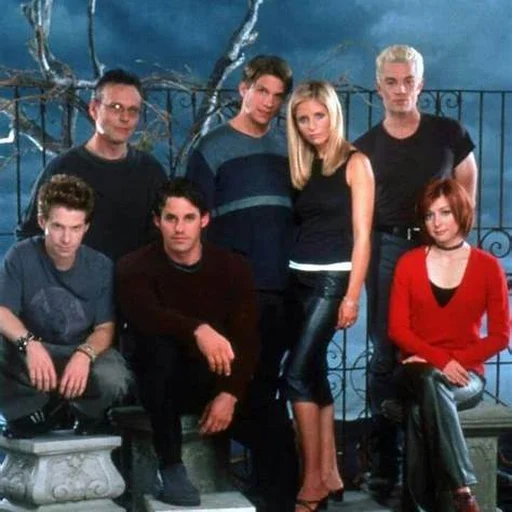
The supporting world changed too. Giles, Willow and Xander gave Buffy an ensemble. Sunnydale gave the series a repeatable setting. The Hellmouth gave writers a reason for supernatural trouble to keep arriving without forcing the audience to ask why every demon in California had the same mailing address.
The Los Angeles Times review of the 1997 premiere called the TV version cooler, funnier and scarier than the movie. That is accurate, but the larger improvement was emotional architecture. The television series had time to let consequences accumulate.
Sarah Michelle Gellar Had to Play Five Shows at Once
Buffy Summers was an unusually demanding network lead because the character had to work across several genres at once.
She had to be funny enough for comedy. She had to sell romantic melodrama. She had to carry action scenes. She had to make supernatural exposition sound conversational. She had to survive scenes of real grief without making the show feel as though it had permanently changed channels.
Sarah Michelle Gellar made those transitions look easier than they were. Whedon praised her extensively when the show launched, telling the Los Angeles Times that he could not imagine making the series without her. The statement reads like publicity until you watch how much tonal work the performance actually does.
Buffy could enter a scene joking because joking was one of her defenses. She could then notice danger, become the Slayer and return to being a teenager in the span of a few minutes. Gellar had to make all of those modes feel like the same person.
The show’s central contradiction depended on her: Buffy was extraordinary because she wanted ordinary things. The superpower did not remove the desire to go to a dance, pass a class, keep a friend or have a boyfriend. It made those desires harder to protect.
The Scooby Gang Made the Series Bigger Than One Chosen Girl
A show about a chosen warrior can easily become lonely by design. Buffy avoided that by giving its Slayer a support system almost immediately.
Willow Rosenberg, Xander Harris and Rupert Giles were not sidekicks in the disposable superhero sense. They became different emotional functions inside the series.
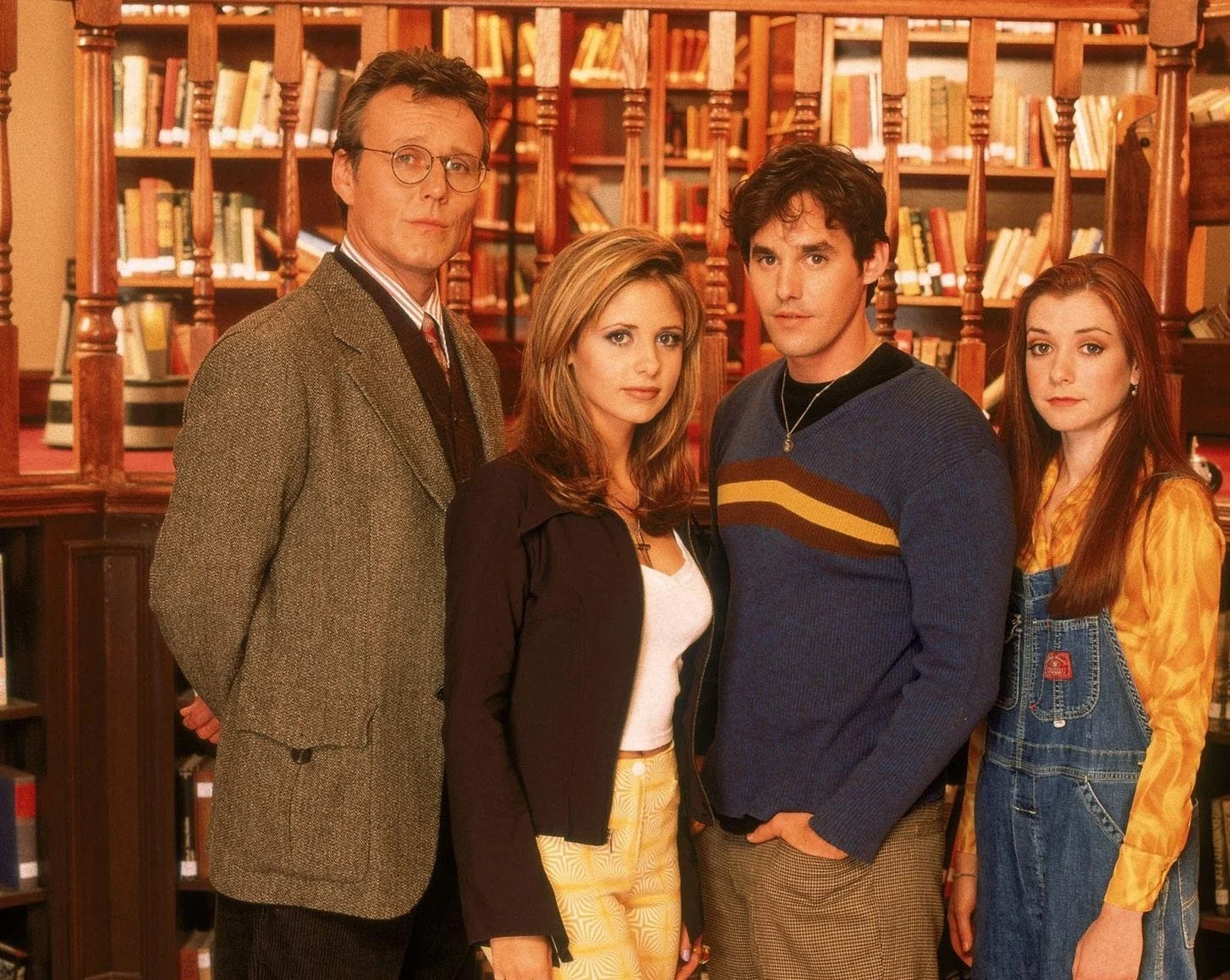
Willow began as shy, brilliant and socially uncertain. Xander was the normal human being standing beside people with powers, training or supernatural knowledge. Giles combined teacher, librarian, Watcher and reluctant father figure.
Together they turned the school library into mission control.
That ensemble mattered because Buffy’s burden became a group problem without ceasing to be her responsibility. Her friends could research the demon, locate the spell or help with the plan, but Buffy still had to walk into the fight.
The group also allowed the series to tell coming-of-age stories from multiple angles. Buffy’s adolescence was shaped by duty. Willow’s was shaped by confidence and identity. Xander’s was shaped by insecurity and ordinariness. Giles, meanwhile, had to learn that supervising teenagers is not the same thing as controlling them.
The show eventually gave fans a name for the group dynamic: the Scooby Gang. The phrase was playful, but the underlying structure was serious. Friendship was one of Buffy’s powers.
Sunnydale High Was the Perfect Television Trap
Sunnydale worked because it looked normal enough to make the supernatural feel invasive.
The school had lockers, cheerleaders, teachers, dances, bullies and homework. Then the floor opened, the dead walked, a teacher turned out not to be what she seemed, or the principal became suspiciously comfortable around catastrophe.
The Hellmouth solved a practical storytelling problem with elegant bluntness. Why did supernatural events keep happening here? Because the school was sitting on a gateway to hell. Fine. Move on.
That explanation freed the writers to concentrate on metaphor instead of logistics.
The school also gave the series a stable social map. The library was where the group researched. The Bronze was where teenagers gathered after dark. The cemetery was where Buffy patrolled. Hallways were where ordinary social humiliation happened five minutes before extraordinary danger.
Those repeated spaces became emotionally loaded. By the third season, Sunnydale High was not just a set. It was a collection of memories.
That is why the graduation story at the end of season three feels so large. Destroying the school is ridiculous, satisfying and thematically perfect. High school literally explodes behind them.

The Bronze Made the Show Sound Like the Late 90s
The Bronze was one of the smartest pieces of world-building in the series because it solved several problems at once.
It gave the teenagers a place to gather outside school. It gave the show a recurring stage for live music. It created a believable location for romance, jealousy, awkward conversations and sudden vampire attacks.
Most importantly, it gave Buffy a soundtrack.
Late-90s teen television understood that music could function as identity, but Buffy integrated it into the physical world. Bands did not always appear as soundtrack wallpaper. They could be playing in the club while characters talked, danced or fought.
That gave the series a slightly scruffier identity than glossy teen soaps. Sunnydale was suburban, but The Bronze made it feel plugged into alternative youth culture.
For viewers, the music dated the show in the best possible way. You can hear the decade in those scenes before you notice the clothes.
Monster of the Week Was Really Emotion of the Week
The early series established a pattern quickly: the supernatural threat usually reflected a recognizable adolescent problem.
That is why even relatively simple first-season episodes matter. The witchcraft story is about parental ambition. The hyena story is about bullying and pack behavior. The Internet demon story is about the fear of intimate connection through new technology.
The metaphors were rarely subtle, but subtlety was not always the point. Teen emotions are rarely subtle when you are the teenager.
A good Buffy monster took something internal and made it visible. Shame could chase you. Desire could kill you. Loneliness could isolate you physically. A bad relationship could become literally dangerous.
That approach created a language the series could keep expanding. By the second and third seasons, the metaphors became less one-to-one and more emotionally complicated. Monsters could reflect several fears at once.
The format also made the show accessible. Viewers could tune in for a self-contained horror story even if they were not tracking every romantic development. The ongoing character arcs then rewarded regular viewing.
Angel Turned Teen Romance Into a Horror Mechanism
Buffy and Angel began as a romantic mystery and became one of the show’s most important structural experiments.
Angel was older, secretive and dangerous before Buffy fully understood why. The revelation that he was a vampire transformed the relationship into a contradiction: the Slayer was in love with the thing she was chosen to kill.
The series then made the romance even more brutal by tying Angel’s soul to a curse. When he experiences a moment of perfect happiness with Buffy, the soul disappears and Angelus returns.
That twist converts a teenage fear into horror with almost embarrassing directness: intimacy changes the person you love, and suddenly the relationship becomes dangerous.
The story works because Buffy cannot solve it with a simple moral lesson. Angelus is not merely a bad boyfriend she needs to dump. He contains the memory of someone she loved.
By the end of season two, the series forces Buffy to choose responsibility over desire in a way that permanently changes the tone. She saves the world and loses the person she wanted to save.
That is the point when Buffy stops being a clever teen-horror show and proves it can sustain tragedy.

Season Two Was Where the Show Became the Show
The first season established the concept. The second season proved the concept could carry real weight.
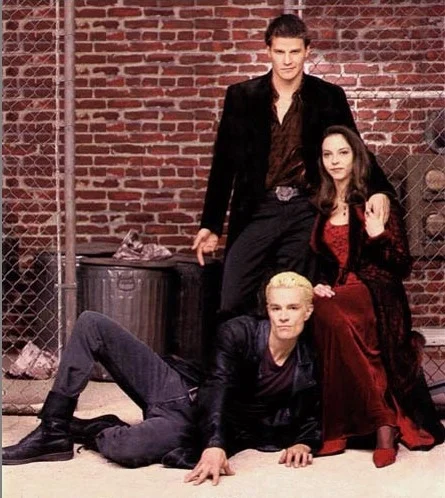
The run widened the ensemble, deepened the mythology and gave the series a season-long emotional spine. Spike and Drusilla brought charisma and unpredictability to the vampire side of the story. Angelus turned the romance plot into the main threat.
The result was a season that could still deliver strange weekly stories while steadily tightening the larger arc.
This balance became one of Buffy’s biggest contributions to television form. The show did not abandon episodic structure when serialization became more important. Instead, an ordinary episode might advance a relationship, plant a villain beat and still tell a complete supernatural story.
For viewers living in the appointment-TV world of the 1990s, that structure rewarded consistency. Missing an episode did not always make the next one incomprehensible, but it could mean missing the emotional event everybody was discussing the next morning.
Spike and Drusilla Gave the Villains Personalities
Early vampires in the series often functioned as threats. Spike and Drusilla arrived as characters.
James Marsters gave Spike attitude, humor and a kind of irritated swagger that made the character immediately different from the more ceremonial vampires around him. Juliet Landau’s Drusilla was eerie in a completely different register—childlike, damaged and unpredictable.
The pair helped the show understand that villains could have relationships, jokes, jealousies and emotional histories too.
That lesson mattered because a recurring antagonist is more useful when the audience wants the character on screen even while hoping Buffy defeats them.
Spike eventually became far more central to the series, but even in his 1990s arrival, the appeal was clear. He punctured the show’s vampire solemnity.
A villain who can make you laugh is harder to file away as a weekly obstacle.
The WB Needed Buffy as Much as Buffy Needed The WB
Buffy’s rise is inseparable from The WB’s rise.
The network launched in 1995 and spent the late 1990s building a recognizable identity around younger audiences. Buffy was not a massive Big Four ratings hit, but it became one of the clearest examples of the network finding value through cultural intensity rather than sheer size.
The Television Academy’s retrospective on The WB notes that Buffy ultimately received 14 Emmy nominations, more than any other WB series, and won two Creative Arts Emmys. The same retrospective emphasizes how strongly the network’s youth-oriented programming connected with younger demographics.
That is crucial context. Buffy did not need to outrate ER or Seinfeld to matter.
The network gave the show space to be specific: female-centered, genre-heavy, sarcastic and serialized. Buffy gave The WB credibility beyond being a small network chasing teenagers.
Together they helped establish a new model of television importance: smaller audience, stronger identity.
The Premiere Immediately Improved Monday Night for The WB
The numbers were modest by major-network standards, but they mattered enormously to The WB.
The Los Angeles Times reported that the two-hour Buffy premiere delivered the network’s highest Monday ratings to that point, improving the WB’s previous Monday high by 16 percent in rating and 14 percent in share.
That kind of measurement is easy to misunderstand if you only compare raw audiences across networks. The relevant question was not whether Buffy beat NBC’s biggest shows. It was whether Buffy improved the young network’s position.
It did.
The show demonstrated that a genre property with a female teenage lead could bring viewers into a network that was still establishing habits.
That is also why our guide to 90s television ratings is useful here. Audience size only makes sense relative to network reach, competition, scheduling and the larger broadcast environment.
Moving to Tuesday Created One of The WB's Defining Nights
In January 1998, The WB moved Buffy from Monday to Tuesday and paired it with the premiere of Dawson’s Creek.
The Los Angeles Times reported that Buffy posted its highest ratings to that point on the new night, while Dawson’s Creek delivered The WB’s best series-premiere performance yet.
That pairing mattered culturally as much as numerically.
Buffy and Dawson’s Creek were very different shows, but together they told viewers what The WB wanted to be: a network where young characters could carry serious emotional stories without being treated as children’s programming.
Tuesday became part of the brand.
Buffy supplied horror, action and dark humor. Dawson supplied dialogue-heavy romantic drama. Both were about teenagers whose emotions were treated as worthy of an hour of television.
That sounds ordinary now. In the late 1990s, it was part of a larger shift.
The Ratings Never Explain Why Buffy Felt Bigger Than It Was
Buffy is one of the clearest examples of the difference between audience size and cultural footprint.
Near the end of the 1998–99 season, Los Angeles Times Nielsen tables placed Buffy around the lower end of the national prime-time rankings, with an audience far below the giant broadcast hits.
Yet the show generated disproportionate discussion, criticism, fan activity and long-term influence.
The Television Academy’s later history of The WB reflects that same imbalance. Buffy was never the network’s largest raw-audience phenomenon, but it became one of the shows most strongly associated with the network’s identity.
This is the kind of series that exposes the limits of simple “top shows of the year” lists. Our 1997 TV rankings show what mass-audience television looked like when Buffy arrived. The contrast is the point.
Buffy belonged to the future in which intensity of engagement could matter almost as much as total household count.
Willow Was the Show's Longest Coming-of-Age Story
Willow begins the series as the shy, academically gifted friend who seems least likely to become powerful.
That is exactly why her growth matters.
In the late-90s seasons, the first pieces of that transformation are already visible: increasing confidence, deeper involvement with magic, romantic change and a growing willingness to act rather than simply assist.
Alyson Hannigan’s performance kept the character emotionally recognizable even as her role expanded.
Willow also gave the series another way to explore intelligence. She was not simply the person who used a computer while Buffy fought. Research, translation and later magic became genuine forms of power.
By the end of the 1990s, Willow had changed enough that the pilot version of the character felt almost like another person, yet the evolution was gradual enough to make sense.
That is serialized television doing what it does best: allowing personality to become history.
Xander Mattered Because He Did Not Have Powers
Xander’s lack of supernatural ability is easy to frame as a limitation, but it was structurally useful.
In a series full of Slayers, vampires, witches, Watchers and demons, Xander remained stubbornly human.
That made him insecure. He could be jealous, immature and wrong. The show did not protect him from those flaws.
But ordinariness also meant his presence had to be voluntary. He stayed in the fight without super strength or mystical obligation.
That gave the group a useful counterweight. Not everybody needed a special destiny.
For a teen audience, that mattered. Most viewers were not secretly chosen by ancient forces. Xander represented the less glamorous question: what do you do when your friends are extraordinary and you still have to decide whether to show up?
Giles Was the Adult the Show Could Actually Trust
Buffy’s relationship with Giles quietly became one of the emotional centers of the series.
Anthony Stewart Head played him as a librarian, Watcher, teacher, researcher and increasingly a parental figure. His job was to train the Slayer, but the emotional problem was that Buffy was not simply a weapon.
Giles had to decide when rules mattered and when caring about Buffy mattered more.
That conflict became especially important because so many adults in Sunnydale were absent, oblivious or dangerous. Giles noticed what the teenagers were facing.
He could be stuffy and exasperated, which kept the relationship funny. But when the story became serious, his presence carried authority.
The character also let the show question institutions from inside. The Watchers Council claimed to represent tradition and order. Giles gradually learned that tradition could become cruelty when it treated Buffy as a function rather than a person.

Cordelia Was Meaner—and More Perceptive—Than a Standard Popular Girl
Cordelia Chase initially looked like a familiar high-school type: wealthy, attractive, socially dominant and casually cruel.
Charisma Carpenter made the character funnier because Cordelia rarely hid what she thought. Her insults came from confidence, but so did her occasional moments of brutal clarity.
As the series developed, the writers allowed her to become part of the group without erasing the personality that made her interesting. Cordelia could help save the world and still complain about the inconvenience.
That mattered because Buffy generally improved when characters were allowed to grow without becoming uniformly nice.
Cordelia’s later move into Angel would extend the character beyond Sunnydale, but the late-90s high-school years established why she was valuable in the first place. She said the socially unacceptable thing everybody else was avoiding.
Faith Turned the Slayer Myth Into an Identity Crisis
Faith’s arrival in season three created one of the smartest variations on the central concept.
If Buffy is the Slayer, what happens when another Slayer exists who responds to the power completely differently?
Eliza Dushku’s Faith embraces danger, aggression and freedom in ways Buffy both recognizes and fears. She becomes an alternate version of what Buffy could be without the same support system, boundaries or sense of responsibility.
The conflict works because Faith is not merely an evil twin. She is lonely, defensive and desperate to belong while pretending not to care.
Her presence forces Buffy to examine her own relationship with power. Buffy complains about the burden of being chosen, but Faith reveals that the role also grants authority and physical freedom.
The season turns their similarity into a threat.
That kind of character mirroring became one of Buffy’s recurring strengths: villains and rivals often represented pieces of the protagonist she would rather not examine.

The Mayor Made Season Three Feel Like a Complete Novel
Mayor Richard Wilkins is one of the best examples of how Buffy learned to build a season around a villain.
He is terrifying partly because he is pleasant. He smiles, worries about cleanliness, behaves like a civic booster and calmly prepares to become a giant demon.
Harry Groener’s performance made the absurdity work by treating the Mayor’s politeness as completely sincere.
The relationship between the Mayor and Faith gave both characters emotional depth. He did not simply use her; he developed something resembling paternal affection. That made the conflict messier.
Season three’s structure steadily connects school life, Faith’s fall and the Mayor’s Ascension until graduation becomes the natural collision point.
The season finale then turns the entire senior class into an army.
That payoff works because the series had spent three years showing Buffy trying to keep her classmates unaware of the supernatural. Graduation reverses the arrangement. Everybody finally knows enough to fight back.
Graduation Day Was the Perfect End to the High-School Era
Few television shows have ended a high-school phase as literally as Buffy.
The class graduates, the Mayor transforms, the students fight, and Sunnydale High is destroyed.
It is ridiculous and emotionally exact.
High school is over because the building itself no longer exists.
The episode also rewards years of background detail. Students who had seemed oblivious suddenly participate in the fight, suggesting they had noticed more than Buffy realized.
That idea gives the high-school years a surprisingly warm ending. Buffy spent much of the series feeling isolated by the secret burden she carried. Graduation reveals that the wider student body understood, at least partially, that strange things kept happening and that Buffy often stood between them and disaster.
The class finally helps save itself.
The Series Could Be Funny Without Making the Danger Fake
Buffy’s humor was not separate from the horror. It was how the characters survived it.
The dialogue often used jokes as emotional armor. Buffy could mock a monster while frightened. Xander could make a bad joke because silence would be worse. Giles could express panic through irritation.
That rhythm gave the show a recognizable voice.
Late-90s television was increasingly comfortable with self-aware dialogue, but Buffy pushed the style into genre storytelling. Characters could comment on the absurdity of the situation without turning the series into parody.
The trick was consequence. The show could joke about danger because danger still hurt.
When characters died, relationships collapsed or choices had permanent effects, the audience understood that humor was not evidence that nothing mattered.
It was evidence that the characters needed a way to keep moving.
The Language Became Part of Buffy's Influence
Buffy’s dialogue had a particular elasticity. Nouns became verbs. Pop-culture references collided with supernatural vocabulary. Characters compressed emotional reactions into strange phrases that sounded specific to their social world.
The style was noticeable enough that later television writers were frequently compared to Buffy whenever dialogue became fast, ironic and referential.
Influence is difficult to measure cleanly, but the show clearly helped popularize a mode where heightened genre material and contemporary conversational humor could coexist.
The important part was character distinction. Giles did not sound like Xander. Cordelia did not sound like Willow. Buffy’s jokes did not land the same way as Oz’s.
The shared rhythm created a world, but personality shaped the sentence.
Oz Made Understatement a Superpower
Seth Green’s Oz entered the series with an entirely different comic temperature.
Where Xander filled silence, Oz seemed comfortable inside it. He could react to the supernatural with the same calm curiosity he brought to everything else.
That understatement made him a useful contrast for Willow and the larger group.
The werewolf storyline also demonstrated how Buffy could use familiar horror mythology without letting the monster completely define the character. Oz was not “the werewolf” first. He was a person who happened to have a dangerous supernatural condition requiring management.
That distinction became increasingly important as the series filled with characters whose moral identity could not be determined simply by species.
The Show Won Emmys for the Craft People Could Actually See and Hear
Buffy never received the level of major-category Emmy attention many fans believed it deserved during the 1990s, but the Television Academy record shows substantial craft recognition.
The series was nominated for makeup in 1997. In 1998 it won Emmys for Outstanding Makeup for a Series and for Christophe Beck’s dramatic underscore. It also received a hairstyling nomination that year. In 1999, it returned with nominations for makeup and sound editing.
Those categories are not side notes. The monster makeup, music, hair, sound and visual transformation were central to the show’s identity.
Genre television lives or dies on craft because the metaphor only works if the world is credible enough to support it.
Buffy’s Emmy history demonstrates that even when awards voters were slow to recognize the writing and acting at the highest level, the technical achievement was already visible.
Christophe Beck Helped Make the Show Hurt
Music gave Buffy emotional gravity.
Christophe Beck’s score could move from horror to melancholy without overwhelming the dialogue. That mattered most during episodes where the supernatural plot was carrying a deeply personal loss.
The Television Academy awarded Beck the 1998 Emmy for Outstanding Music Composition for a Series.
The score’s importance becomes obvious in the show’s most painful sequences. Buffy could be standing in a fantasy setting, but the music reminded viewers the emotion was real.
That combination—genre image, sincere emotional score—helped the series avoid becoming disposable camp.
By 1999, Sunnydale Had Outgrown High School
The fourth season began in fall 1999 with the characters leaving high school for college and adulthood.
That transition was dangerous for any teen series. A school provides built-in structure. Everybody has a reason to occupy the same halls. College and work pull people apart.
Buffy used that instability as story material. The characters were no longer protected by the familiar map of Sunnydale High. Buffy had to rebuild routines, friendships and identity.
The change also mirrored The WB’s audience. Viewers who had entered the series in high school were aging too.
By this point, Buffy was part of a broader late-90s television landscape in which teen-centered shows had become an important network strategy. The shift is visible when comparing the mass-audience shows on our 1999 television rankings with the smaller but culturally intense WB audience.
Television was fragmenting, and Buffy fit the new world unusually well.
Buffy Was Built for the End of the Monoculture
The late 1990s were still dominated by enormous broadcast hits, but the cracks were widening.
Cable had multiplied choices. Fox was established. The WB and UPN targeted narrower audiences. Viewers were beginning to organize around programs that mattered intensely to smaller groups.
Buffy is almost a textbook example of that transition.
It never needed thirty million viewers to become important. It needed a few million committed viewers, a clear network identity and a show specific enough that fans felt ownership.
That cultural shift is part of what we explore in how the network-TV monoculture was starting to break apart by 1999.
Buffy did not cause fragmentation. It showed how creatively valuable fragmentation could be.
The Internet Gave Sunnydale a Second Life Every Week
Buffy arrived when online television fandom was moving from a specialist habit toward a visible part of pop culture.
Message boards, fan sites, episode guides, mailing lists and discussion communities gave viewers places to analyze mythology, relationships and dialogue after the broadcast ended.
That mattered for a series built on continuity.
Fans could debate what a dream meant, whether a villain could be redeemed, which relationship should survive or what an earlier line predicted.
The show rewarded that behavior because details frequently returned.
Today, every television series expects immediate online discussion. In the late 1990s, Buffy belonged to the generation of shows helping establish the pattern.
Buffy and Angel Proved a Genre World Could Expand
By 1999, David Boreanaz’s Angel had become important enough to anchor his own series.
The Angel spin-off mattered because it demonstrated that the Buffy universe contained characters and themes capable of surviving outside Sunnydale.
Angel moved toward an older, darker urban setting and a different kind of moral problem.
For Buffy, the departure also changed the original show. Buffy had to exist without the relationship that had defined so much of the first three seasons.
That was healthy. A coming-of-age show has to let characters lose things.
The spin-off also anticipated the franchise logic that would become increasingly common in television: build a coherent world, then let different series explore different corners of it.
The Show's Feminism Was Strongest When Buffy Was Allowed to Be Imperfect
Buffy is often described through its female-hero premise, and that is part of its importance. But the character would be less interesting if empowerment meant perfection.
Buffy can be selfish, jealous, impulsive, cruel, exhausted and wrong.
She can resent the responsibility she has been given.
The show’s strongest argument is not that a female hero should behave better than male heroes. It is that she should be allowed the same dramatic complexity.
That includes physical power, sexuality, bad decisions, ambition, grief and moral failure.
The series did not always handle every idea gracefully, and later reassessments of the production environment have complicated the way audiences discuss its legacy.
But within the text of the 1990s episodes, Buffy’s central importance remains clear: the chosen hero was a teenage girl whose interior life mattered as much as the monsters she defeated.
Why Buffy Changed Teen Television
Buffy the Vampire Slayer did not become important because it was the biggest teen show in the ratings. It became important because it raised the ceiling on what a teen-centered television series could attempt.
It could be funny and frightening in the same scene. It could tell a complete weekly monster story while advancing a season-long arc. It could use romance as horror, friendship as power and high school as mythology.
It trusted young characters with consequence.
The WB gave it a relatively small stage, and the show used that stage to build an unusually devoted audience. The Television Academy’s later history of the network places Buffy among the defining titles of The WB era and notes that it earned more Emmy nominations than any other WB series.
On the larger 1990s TV landscape, Buffy represents something that became much more common in the next century: a show can be culturally enormous without being the most-watched show in America.
Sunnydale changed teen television because it took teenage feelings seriously enough to make them monstrous.
And if you actually survived high school in the 1990s, that metaphor never seemed all that ridiculous.
Buffy the Vampire Slayer FAQ
When did Buffy the Vampire Slayer premiere?
Buffy the Vampire Slayer premiered on The WB on March 10, 1997.
Was the Buffy TV series based on the 1992 movie?
Yes. The television series reused the central Slayer idea from the 1992 film but rebuilt the tone, supporting characters, mythology and long-form storytelling.
Why is high school so important to Buffy?
Creator Joss Whedon described the television concept as using horror to exaggerate recognizable high-school experiences. The first three seasons repeatedly turn social and emotional problems into literal supernatural threats.
How successful was Buffy in the ratings?
Buffy was a significant performer for The WB rather than a mass-audience Big Four hit. Its 1997 premiere delivered The WB’s strongest Monday ratings to that point, and its move to Tuesday in 1998 produced its highest ratings yet at the time.
Did Buffy win Emmys in the 1990s?
Yes. The series won Emmys in 1998 for Outstanding Makeup for a Series and Outstanding Music Composition for a Series, and it received additional craft nominations in 1997, 1998 and 1999.
What was the Scooby Gang?
The name refers to Buffy’s core group of friends and allies, especially Willow, Xander and Giles, who research supernatural threats and help Buffy fight them.
Why did Angel get his own show?
The character had become important enough to support a separate story world. Angel premiered on The WB in 1999 and moved the character into a darker, more adult Los Angeles setting.
Why is Buffy important to television history?
It helped normalize highly serialized genre storytelling, centered a complex female action hero, expanded the ambitions of teen television and became a model for culturally influential shows built around smaller but intensely loyal audiences.
Sources & Further Reading
- Los Angeles Times — Horror in the Hallways, March 1997
- Los Angeles Times — Buffy premiere review, March 1997
- Los Angeles Times — Buffy premiere gives The WB its best Monday numbers
- Los Angeles Times — Buffy move to Tuesday and Dawson's Creek premiere
- Los Angeles Times — 1998–99 ratings snapshot
- Television Academy — Buffy the Vampire Slayer Emmy record
- Television Academy — The WB at 30
- Television Academy — 1998 Outstanding Makeup for a Series
- Television Academy — 1998 Outstanding Music Composition
- Television Academy — 1999 Outstanding Sound Editing for a Series
Keep the dial moving: Explore more 1990s TV shows, sitcoms, dramas, ratings and prime-time classics.