THE SIMPSONSHow Springfield Took Over American Television
Bart was on the T-shirts, Homer was becoming the center and Springfield seemed to contain the whole country. The Simpsons did not just survive the 90s—it helped define them.
Quick Answer
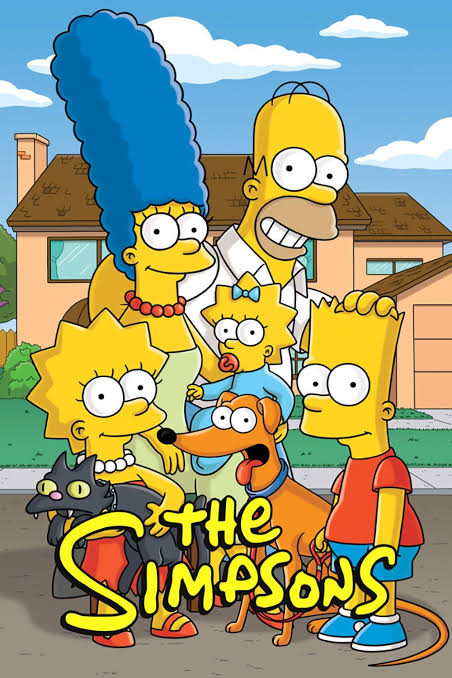
The Simpsons became one of the defining television shows of the 1990s by turning a dysfunctional animated family into a vehicle for satire, character comedy and an enormous fictional community. The series helped establish Fox as a legitimate broadcast network, revived prime-time animation as a viable format and expanded what an American family sitcom could look and sound like.
The 90s Began With Bartmania
The Simpsons technically became a half-hour series at the end of 1989, but culturally it exploded with the 1990s.
Within months, Bart Simpson was on T-shirts, posters, lunchboxes and practically every surface manufacturers could license.
The Los Angeles Times was writing about “Simpsons mania” before the first full season had even settled in. Fox merchandise executives reported enormous demand for shirts and hundreds of licensed products.
Bart became the first breakout symbol because his rebellion was easy to package. He was rude, funny, unimpressed by authority and visually unmistakable.
For kids, he looked like permission.
For adults, he looked like a threat.
That made him perfect 1990 pop culture.
The early controversy around Bart now feels quaint, but it tells us exactly how quickly The Simpsons escaped television and became a national argument about children, family and taste.
The Tracey Ullman Shorts Were the Strange Little Prototype
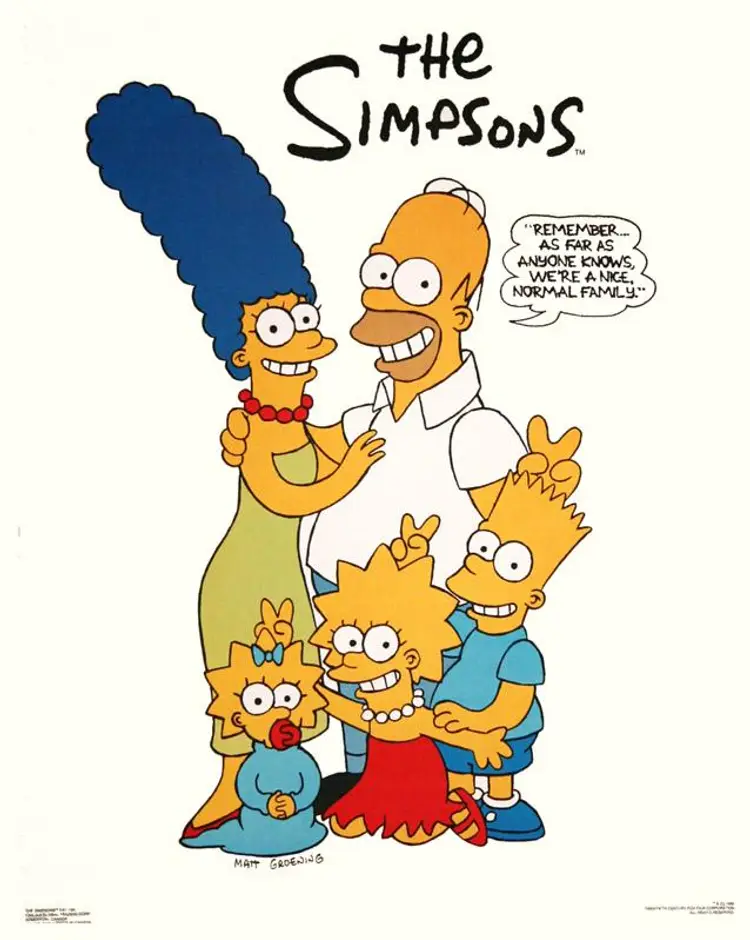
The Simpsons began as short animated segments on The Tracey Ullman Show in 1987.
James L. Brooks brought Matt Groening into the project, and Groening created the family that would eventually take over Fox.
The early shorts look rough compared with the later series. The drawing is looser, the voices are still settling and the characters have not yet accumulated the emotional depth viewers associate with them now.
But the basic idea is already there: a family that loves one another while constantly driving one another insane.
The Television Academy credits Brooks with hiring Groening to create the shorts that led to the series.
That relationship mattered because Brooks brought deep live-action sitcom experience to a cartoon project.
The show was animated, but it was going to be built like character comedy rather than disposable children’s programming.
The First Half-Hour Episodes Looked Like Nothing Else in Prime Time
When the series arrived as a half-hour program, television had almost no comparable prime-time animation.
That absence made the show look more radical than it might now.
The Simpsons used cartoon exaggeration, but the stories were grounded in recognizable family frustration: money problems, parenting failure, sibling rivalry, work and television addiction.
The Los Angeles Times called the series a “guerrilla attack on mainstream TV” in early 1990, praising how it transformed a conventional sitcom formula into commentary on American values.
That phrase captures the contradiction.
The Simpsons was subversive precisely because the underlying structure was so familiar.
Homer worked. Marge kept the family functioning. Bart misbehaved. Lisa was smarter than the adults. Maggie watched.
The family-sitcom machinery was conventional.
Everything inside it was slightly wrong.
Fox Needed The Simpsons to Become a Real Network
The Simpsons was not merely a hit for Fox. It helped legitimize Fox.
In 1990, the Los Angeles Times described the series as Fox’s highest-rated show and a major asset for the young network.
A later retrospective went further, arguing that the show delivered ratings, credibility and a sense that Fox had finally become more than an ambitious experiment.
That mattered because the Big Three still dominated national television.
Fox needed programs that made the network look distinct rather than smaller.
The Simpsons did exactly that.
No other network had a yellow animated family mocking television, schools, corporations, religion and politics in prime time.
The show became proof that Fox could create culture instead of merely scheduling around it.
The First-Season Ratings Were Much Bigger Than People Remember
The Simpsons was not simply a cult show that became famous through merchandise.
The ratings were real.
A 1990 Los Angeles Times profile reported that the series had won its Sunday time slot, nearly reached the national top ten and become Fox’s highest-rated program.
Another 1999 retrospective noted that the first season achieved a 35 audience share and reached the Nielsen Top 30, something Fox would not repeat until years later with The X-Files.
Those numbers need period context.
Our guide to why 90s television ratings were so much bigger than ratings today explains the concentrated broadcast environment.
But even within that environment, The Simpsons was doing something exceptional for the youngest network.
It was not merely famous. It was commercially important.
Bart's T-Shirts Became a National Schoolyard Controversy
The most wonderfully 1990 part of early Simpsons history may be the panic over Bart T-shirts.
Schools banned shirts featuring slogans such as “Underachiever and proud of it.”
J.C. Penney pulled one design after educators complained that the message promoted the wrong attitude.
The Los Angeles Times covered the controversy repeatedly.
From a modern distance, the anxiety seems disproportionate. A cartoon fourth-grader on a shirt was treated as a challenge to educational order.
But that tells us how new Bart felt.
Adults were accustomed to television children learning lessons.
Bart often learned nothing.
That made the character feel more dangerous than he actually was.
The backlash also helped the merchandise.
Nothing sells rebellion to children like adults declaring it inappropriate.
The Merchandise Explosion Nearly Became Its Own Economy
In March 1990, the Los Angeles Times reported that manufacturers were struggling to keep up with Simpsons T-shirt demand and that more than 200 licensed products were expected before Christmas.
That is astonishing for a show only months into its half-hour life.
Bartmania created a level of visibility far beyond the weekly ratings.
T-shirts turned schools into unofficial marketing channels. Fast-food promotions put the characters into homes that might not watch every episode. Music releases and toys made the property feel omnipresent.
The merchandising boom eventually cooled, as most booms do.
By 1997, the Los Angeles Times was looking back at the early licensing frenzy as something that had become overextended.
The television show survived because the writing outlived the fad.
That is the key distinction.
Bartmania could have made The Simpsons a short cultural explosion.
Springfield made it permanent.
Moving Against The Cosby Show Was Fox Declaring War
In fall 1990, Fox moved The Simpsons to Thursday at 8 p.m. opposite The Cosby Show.
That was not a cautious scheduling decision.
Cosby had been one of the defining hits of the 1980s.
Fox was taking its animated sensation and challenging a television institution directly.
The Los Angeles Times described the move as one of the major strategic battles of the new season.
Earlier that year, The Simpsons had already reached the weekly top ten and even beaten Cosby in one ratings snapshot.
The Thursday move turned the rivalry into a symbolic fight between the old broadcast order and the new network.
The Simpsons did not need to destroy Cosby to win culturally.
Simply competing credibly announced that Fox had arrived.
Thursday Night Made the Family-Sitcom War Visible
The scheduling battle worked because both shows were family comedies with radically different ideas about what family television should look like.
The Huxtables represented competence, aspiration and warmth.
The Simpsons represented dysfunction, irritation and lower-middle-class frustration.
That comparison was always too simple—both shows were more complicated than their symbols—but network scheduling encouraged viewers and critics to frame them as opposing versions of American family life.
The fight also made The Simpsons look more adult.
This was not Saturday morning animation.
Fox had placed it in the most competitive real estate in prime time.
That decision permanently helped separate the word “cartoon” from the assumption “for children.”
Bart Was the Star First, but Homer Became the Center
Early Simpsons marketing treated Bart as the main event.
The T-shirts, catchphrases and controversy all centered on him.
But as the 1990s progressed, Homer increasingly became the show’s emotional and comic center.
That shift expanded the storytelling range.
Bart could rebel against teachers and parents.
Homer could fail at work, marriage, money, friendship, parenting, religion and personal ambition.
Dan Castellaneta’s performance made Homer elastic enough to move from stupidity to anger to tenderness within the same episode.
The character became a vehicle for adult frustration while retaining cartoon simplicity.
By the middle of the decade, The Simpsons was no longer the show with the bad kid.
It was the show with Homer Simpson.

Marge Kept the Satire From Becoming Empty
Marge is sometimes treated as the reasonable person surrounded by idiots, but that undersells her importance.
The series needed someone who believed the family was worth holding together.
Without Marge, Homer’s selfishness could become unbearable and Bart’s rebellion could become exhausting.
Julie Kavner’s performance gave the character weariness without bitterness.
Marge could be angry, disappointed, tempted or deeply frustrated while still making the audience believe this family had an emotional center.
That sincerity was necessary because satire works better when there is something worth protecting.
The Simpsons could mock family values all day because underneath the jokes, this family actually loved one another.
Lisa Made Intelligence Feel Lonely
Lisa Simpson gave the series a different kind of emotional register.
She was smarter than most adults around her and aware enough to recognize how limiting Springfield could be.
That intelligence often made her lonely.
The show used Lisa to explore environmentalism, feminism, artistic ambition, religion, politics and the frustration of being correct in a world that does not care.
But the writers also allowed Lisa to be self-righteous.
That matters.
A purely virtuous Lisa would become a lecture.
A flawed Lisa could be a person.
Her stories frequently created some of the show’s most emotionally direct episodes because her conflicts were not always solved by a joke.
Springfield Became the Real Main Character
The family is the center, but Springfield is the machine that made the show inexhaustible.
Mr. Burns, Smithers, Moe, Barney, Krusty, Chief Wiggum, Principal Skinner, Mrs. Krabappel, Reverend Lovejoy, Ned Flanders, Comic Book Guy and dozens of others turned the town into a complete comedy ecosystem.
That density changed the kinds of stories the show could tell.
An episode could leave the Simpson household and still feel completely at home.
A supporting character could carry years of accumulated associations into a single line.
The town also allowed satire to move through institutions.
School, church, police, media, business and local government could all become story engines.
Springfield was America shrunk into a place where everybody somehow knew everybody else.
The Writers Made Density a Style
Classic Simpsons episodes are crowded with jokes.
There are verbal jokes, sign jokes, background jokes, character reactions, parody structures and lines that barely pause long enough for the laugh.
That density made reruns unusually rewarding.
You could watch an episode several times and notice something new.
Matt Groening told the Los Angeles Times in 1993 that James L. Brooks had pushed the creative team toward moments of emotional reality and emphasized writing and acting rather than treating the series like a conventional cartoon.
That philosophy helped the show avoid becoming a machine for topical gags.
The jokes could be dense because the characters were stable.
Viewers always knew who was telling the joke.
Sam Simon Helped Build the Version of the Show That Lasted
The Simpsons is often reduced to Matt Groening as creator, but Sam Simon was crucial to shaping the early series.
The Television Academy describes Simon as a co-developer, co-showrunner and creative force who helped design characters and write early episodes.
He brought television production experience to the project and helped turn Groening’s family concept into a sustainable sitcom.
Simon left the series in 1993 but retained an executive producer credit.
By then, much of the show’s basic machinery was established.
The importance of Simon’s role is part of a larger truth about television: iconic shows are collaborative systems.
The creator may provide the spark.
A durable series requires structure.
James L. Brooks Gave the Cartoon Emotional Ambition
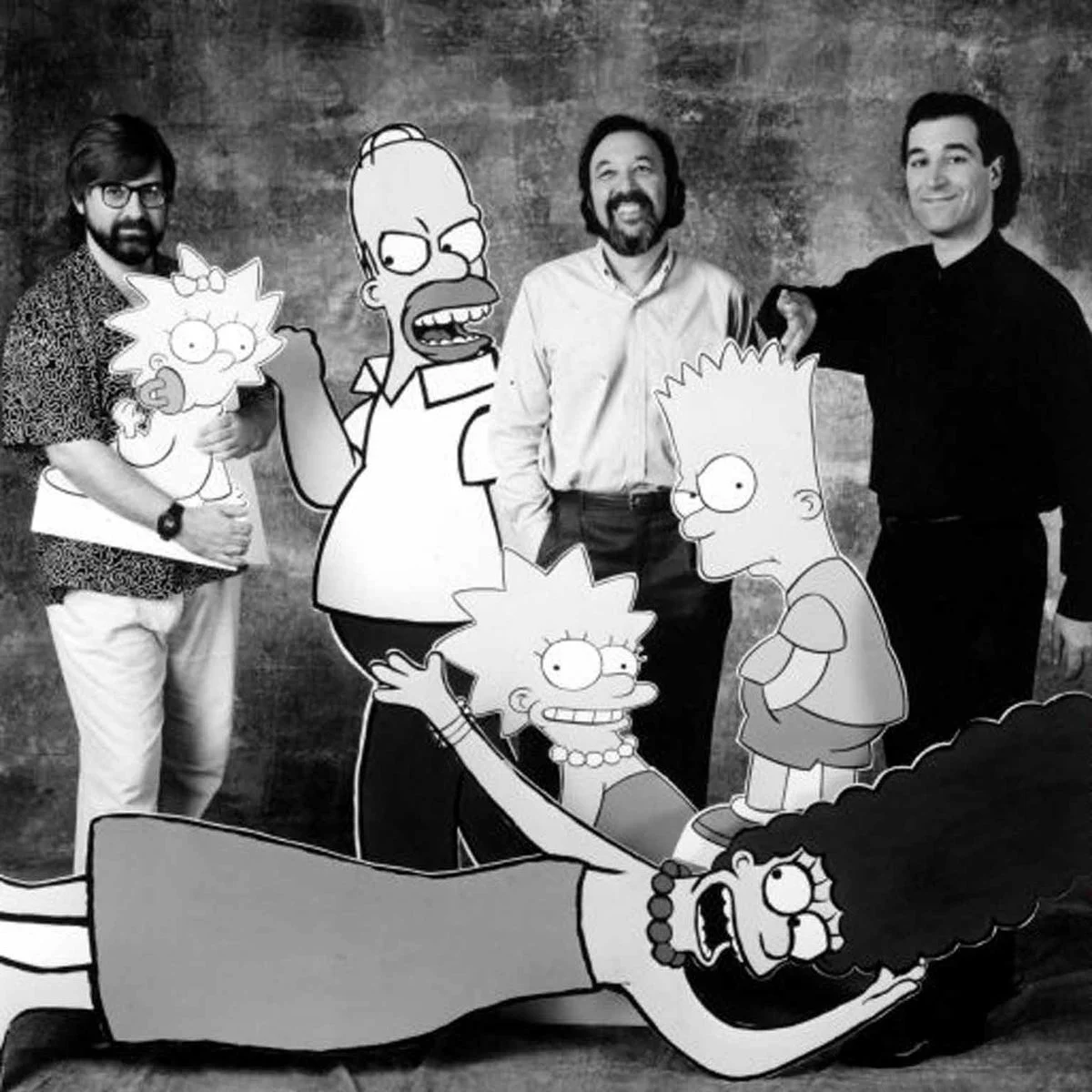
James L. Brooks had already helped create The Mary Tyler Moore Show and Taxi before The Simpsons.
That background mattered.
He approached the animated series as television character comedy rather than as novelty animation.
Groening later described Brooks’s ambition as finding non-cartoon emotional reality.
That phrase explains many of the best episodes.
The characters could behave absurdly and still experience recognizable disappointment.
A marriage could be threatened.
A child could feel ashamed.
A father could fail and apologize badly.
The show did not need realism of appearance.
It needed realism of emotion.
The Show Could Be Mean Without Becoming Cruel
The Simpsons mocked almost everything.
Corporations were greedy. Politicians were useless. Police were incompetent. Schools were underfunded. Television was stupid. Religion could be hypocritical.
Yet the strongest episodes rarely treated people as completely worthless.
Homer could be selfish and still love his family.
Ned Flanders could be ridiculous and still be decent.
Skinner could be pathetic and still be lonely.
That distinction kept Springfield from becoming a collection of targets.
The satire attacked systems and behavior while leaving enough humanity for viewers to care.
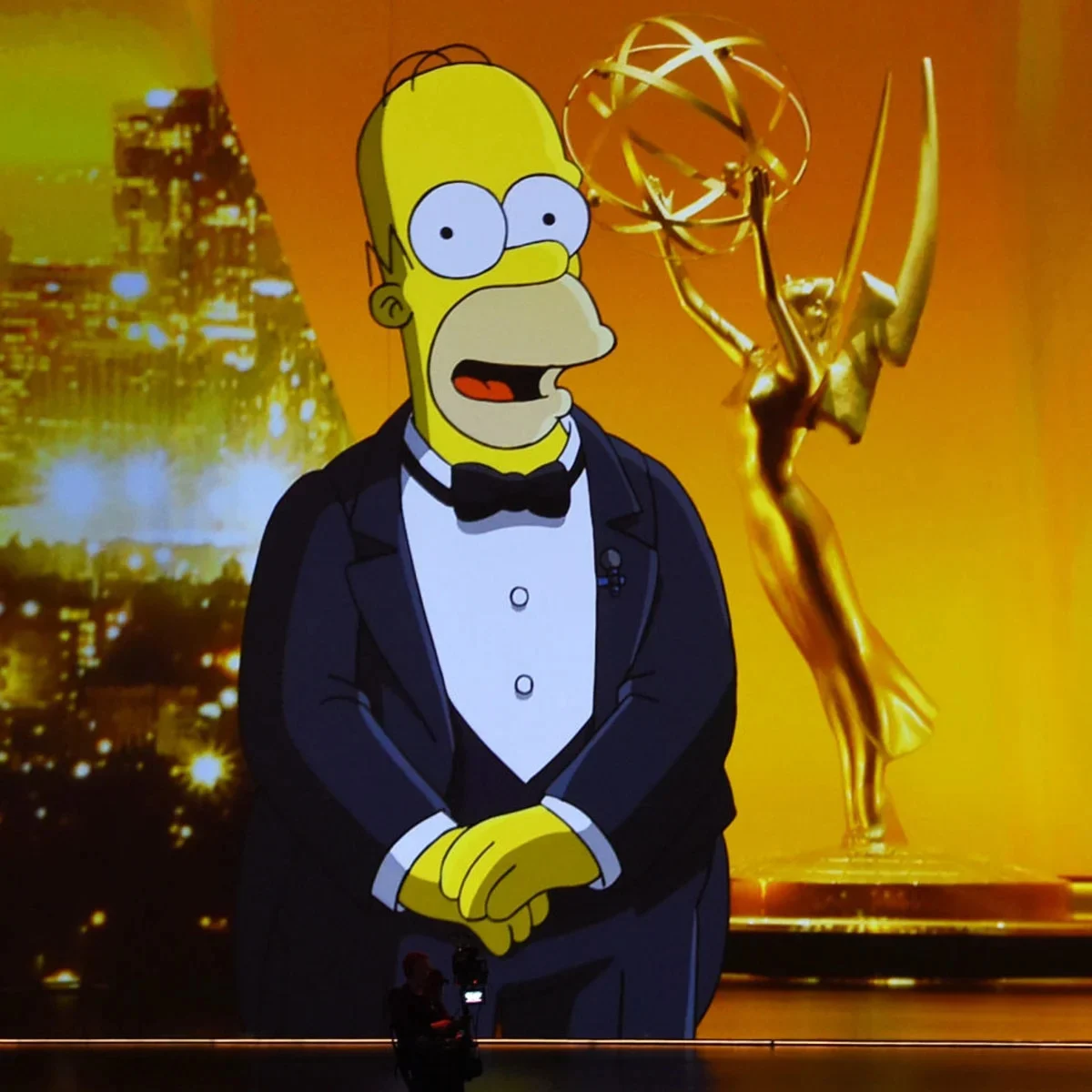
The Emmy Wins Proved Prime-Time Animation Could Be Serious Craft
The Television Academy rewarded The Simpsons almost immediately.
The series won Outstanding Animated Program in 1990 and again in 1991.
It returned to that category repeatedly throughout the decade and won again in 1995 and 1997.
The show also earned recognition for music, voice performance and other craft.
That record mattered because prime-time animation was still re-establishing itself as adult television.
Awards recognition helped confirm that the series was not simply a merchandising phenomenon.
It was writing, performance, directing, music and animation operating at a high level.
Prime-Time Animation Came Back Because The Simpsons Worked
The Simpsons did not invent prime-time animation.
The Flintstones had been there decades earlier.
What The Simpsons did was prove the format could work again for a modern audience.
In August 1990, the Los Angeles Times reported that the show’s success had already triggered new animated prime-time development.
By the end of the decade, the influence was impossible to miss.
King of the Hill, South Park, Family Guy and other series existed in a television world where adult-oriented animation no longer sounded absurd.
A 1998 Los Angeles Times column called The Simpsons the show that helped make the 1990s a golden age for television animation.
That is a major legacy.
The show did not just succeed.
It reopened a category.
Roseanne and The Simpsons Were Different Versions of the Same Correction
The Simpsons and Roseanne looked nothing alike, but they were responding to a similar television problem.
Both pushed against the polished family image that had dominated earlier network comedy.
Money was tight.
Parents were imperfect.
Kids could be rude.
The house did not always look aspirational.
The Los Angeles Times noted that television comedy had already broadened in the late 1980s through shows such as Roseanne and The Wonder Years, creating a climate where The Simpsons could connect.
The difference was that animation gave Springfield permission to exaggerate everything.
Homer could fail in ways a live-action father could not survive.
The nuclear plant could glow green.
The emotional truth remained recognizable.
The Family Values Argument Became Political
By the early 1990s, The Simpsons had become large enough to enter the national argument over “family values.”
President George H. W. Bush publicly contrasted American families with the Simpsons during the 1992 campaign era, prompting the show to answer back.
The exchange made sense because the series had become a symbol.
Critics saw a crude, dysfunctional household.
Fans saw a family that argued constantly and still stayed together.
That tension had been inside the show from the beginning.
The Simpsons mocked idealized family television while quietly making the case that love did not require perfection.
The political argument only made the subtext explicit.
Krusty, Itchy & Scratchy and TV Inside TV
The Simpsons has always been obsessed with television.
Krusty the Clown, Itchy & Scratchy, local news and cheap commercials created a media ecosystem inside Springfield.
That gave the show a way to parody the medium carrying it.
Bart and Lisa were television addicts watching violent cartoons while appearing on an animated prime-time series.
The joke folded back on itself.
This self-awareness became one of the show’s defining strengths.
It could criticize television while enjoying television.
For a generation raised in front of the screen, that contradiction felt honest.
Guest Stars Became Part of the Springfield Economy
By the 1990s, appearing on The Simpsons became a kind of cultural credential.
Musicians, actors, athletes and public figures could enter Springfield either as themselves or as original characters.
The guest-star strategy worked because the town did not stop being itself.
A celebrity had to pass through the show’s comic worldview.
That prevented appearances from becoming simple promotion.
The best guest roles felt like Springfield had absorbed the celebrity rather than paused for them.
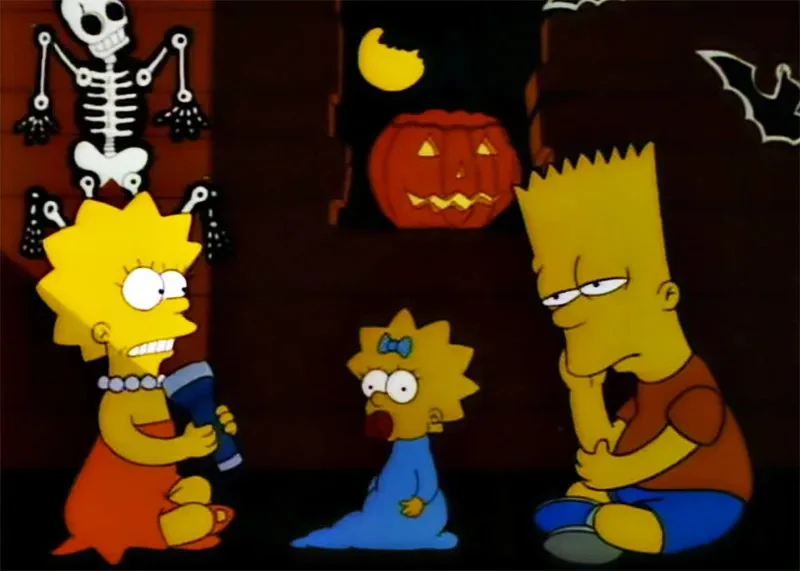
The Halloween Episodes Let the Writers Break Every Rule
Treehouse of Horror became an annual permission slip.
Characters could die.
Continuity could disappear.
The show could parody horror and science fiction without worrying about returning everybody safely to normal.
That flexibility produced some of the decade’s most memorable segments.
The Halloween format also demonstrated how confident the writers had become in the audience’s familiarity.
You could destroy Springfield because viewers knew it would be back next week.
That is the advantage of a strong television world: breaking it can become part of the fun.
The Show's Music Was Better Than a Cartoon Needed to Be
Alf Clausen’s music gave The Simpsons a scale that the animation alone did not provide.
The series could parody Broadway, film scores, advertising jingles and television themes because the musical execution was strong enough to support the joke.
The Television Academy repeatedly recognized the show’s music during the 1990s, including a 1997 Emmy win for Outstanding Music and Lyrics.
Music allowed Springfield to become theatrical without leaving the sitcom.
A silly story could suddenly become a full musical number and somehow remain in character.
The Show Returned to Sunday and Found Its Natural Home
After the high-profile Thursday battle, The Simpsons eventually returned to Sunday.
That move helped create a long-term Fox identity around Sunday animation.
Over time, the night became associated with animated comedy in a way no network had previously established.
The Simpsons functioned as the anchor.
That scheduling legacy extended far beyond the 1990s.
Fox could develop animated programs knowing viewers already understood Sunday night as a place for the format.
By the Mid-90s, the Show Was No Longer a Rebellion—It Was an Institution
One of the strangest parts of The Simpsons’ 1990s history is how quickly the dangerous cartoon became familiar.
The T-shirts stopped causing panic.
Bart’s rebellion looked mild next to Beavis and Butt-Head or South Park.
Homer became one of television’s most beloved fathers despite being catastrophically unqualified.
The culture moved around the show.
Mike Scully joked in a 1999 Los Angeles Times retrospective that, compared with newer animation, The Simpsons had started to look like Ozzie and Harriet even though the show itself had not fundamentally changed.
That is what longevity does.
Yesterday’s subversion becomes today’s institution.
1997 Was Another Reminder the Show Still Had Creative Muscle
The 1997 Emmy win for Outstanding Animated Program came deep into the series’ run.
That mattered because many shows burn through their best ideas quickly.
The Simpsons had already survived Bartmania, scheduling wars, merchandising overexposure and multiple creative eras.
It was still being recognized as top-tier animation.
That longevity helped change expectations for animated television.
A cartoon did not have to be disposable or tied to a short childhood window.
It could function like a long-running sitcom.
By 1999, Springfield Had Outlasted the Decade That Created It
The Los Angeles Times closed out 1999 with a major retrospective arguing that The Simpsons had mixed heart, character and satire through a groundbreaking run approaching 250 episodes.
That framing is important.
The series began the decade as a scandalous novelty and ended it as one of television’s defining institutions.
The monoculture itself was starting to weaken, as explored in our look at the end of the 90s network-TV monoculture.
The Simpsons was perfectly positioned for that transition.
Its audience no longer needed the show to be the newest thing.
Springfield had become a place people returned to.
The Ratings Were Only One Measure of Saturation
By the late 1990s, The Simpsons did not need to dominate the Nielsen rankings to remain culturally enormous.
The characters had become reference points.
Catchphrases, memes before memes, merchandise, guest appearances and reruns extended the series beyond its weekly broadcast.
This is why raw ratings cannot fully explain the show’s footprint.
Our 1999 television rankings capture mass-audience hierarchy.
The Simpsons operated on another layer too: cultural saturation.
A person could know Homer’s voice without knowing the latest episode.
That is a different form of dominance.
The Simpsons Changed Sitcoms That Were Not Animated
The show’s influence did not stop at animation.
Live-action comedies learned from its speed, irony, flawed protagonists and willingness to treat institutions as ridiculous.
Later sitcom fathers could be more selfish.
Family stories could be less sentimental.
Background characters could become recurring comedy engines.
Pop-culture references could arrive faster.
The Simpsons helped move the boundary of what audiences would accept in a family comedy.
That is one reason the series belongs inside the larger story of how early-90s sitcoms changed prime time.
Animation was the format.
The influence was much broader.
Why Springfield Owns the Decade
The Simpsons is hard to summarize because it became too large for a single premise.
It was a family sitcom, workplace comedy, school comedy, political satire, media parody, musical, celebrity showcase and small-town ensemble all at once.
That scale is why the show feels inseparable from the 1990s TV landscape.
It began the decade as a national panic about a cartoon kid with an attitude.
It ended the decade as one of the safest bets on television.
A lot of shows capture their era.
The Simpsons spent the 1990s absorbing the era, mocking it and feeding pieces of it back to us in yellow.
Springfield did not merely survive the decade.
It became one of the places America went to understand it.
The Simpsons FAQ
When did The Simpsons become a half-hour series?
The Simpsons debuted as a half-hour Fox series in December 1989 after beginning as shorts on The Tracey Ullman Show.
Why was Bart Simpson so huge in 1990?
Bart’s rebellious personality, catchphrases and aggressive merchandising made him the show’s first breakout pop-culture figure, creating the phenomenon commonly called Bartmania.
Did schools really ban Bart Simpson shirts?
Yes. In 1990, some schools banned shirts carrying slogans such as “Underachiever and proud of it,” and the controversy received national media attention.
Why did Fox move The Simpsons against The Cosby Show?
Fox wanted to use its biggest breakout hit to establish a stronger Thursday schedule and directly challenge the Big Three.
Did The Simpsons win Emmys in the 1990s?
Yes. The series won Outstanding Animated Program in 1990, 1991, 1995 and 1997, among other awards and nominations during the decade.
Why did Homer become more central than Bart?
Homer gave writers a wider range of adult stories involving work, marriage, money, parenting and failure, allowing the series to expand beyond youth rebellion.
How did The Simpsons affect prime-time animation?
Its success demonstrated that adult-oriented animation could work again in prime time, encouraging later animated series and helping establish Fox as a long-term home for the format.
Why is The Simpsons important to 90s television history?
It helped legitimize Fox, reshaped family comedy, revived prime-time animation, created a massive pop-culture franchise and built one of television’s most influential fictional worlds.
Sources & Further Reading
- Television Academy — The Simpsons Emmy record
- Television Academy — James L. Brooks biography
- Television Academy — Sam Simon biography
- Los Angeles Times — Smart, Vulgar, Subversive, Quirky, Hilarious—and a Hit, 1990
- Los Angeles Times — Bart Simpson's Real Father, 1990
- Los Angeles Times — With a boost from The Simpsons, animation returns to prime time, 1990
- Los Angeles Times — Selling the Simpsons, 1990
- Los Angeles Times — Bart T-shirt school controversy, 1990
- Los Angeles Times — Q&A with Matt Groening, 1993
- Los Angeles Times — Bart Begat Butt-head Begat Bob and Margaret, 1998
- Los Angeles Times — Simpsons 1999 retrospective
Keep the dial moving: Explore more 1990s TV shows, sitcoms, dramas, ratings and prime-time classics.