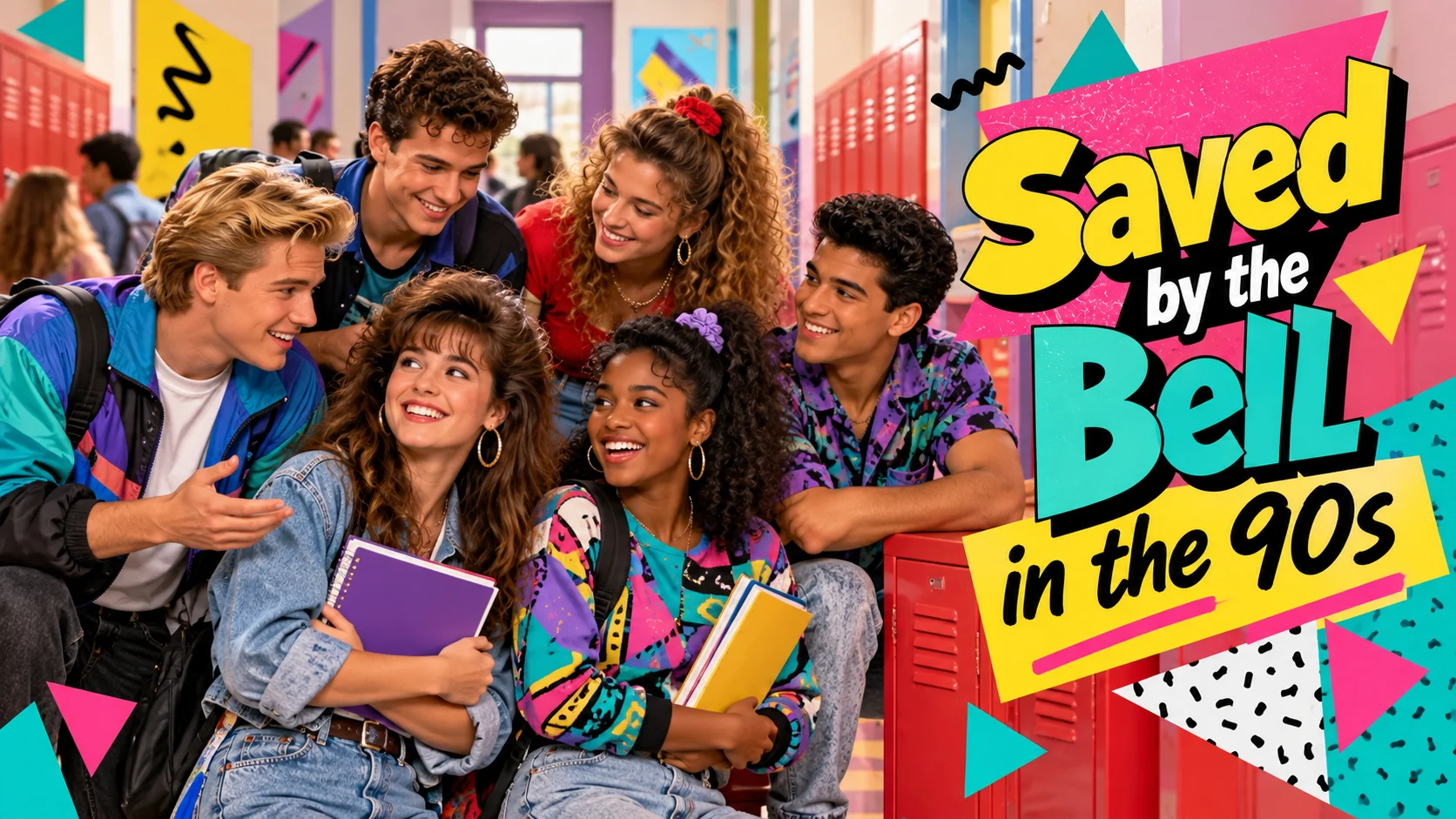
SAVED BY THE BELLHow Bayside Took Over Saturday Morning
The lockers were bright, the problems were huge for twenty-two minutes and Zack Morris could stop time. Bayside became one of the decade’s most durable teen-TV worlds.
Quick Answer
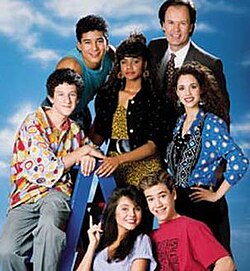
Saved by the Bell became a defining 1990s teen sitcom by bringing live-action high-school comedy to NBC’s Saturday-morning lineup and building a highly repeatable world around Zack Morris, Kelly Kapowski, A.C. Slater, Jessie Spano, Lisa Turtle and Screech Powers. Its success with teen viewers helped NBC shift Saturday mornings away from cartoons and toward live-action programming for older kids.
Saturday Morning Was Not Supposed to Look Like This
For kids raised on cartoons, Saved by the Bell felt like somebody had slipped an actual sitcom into Saturday morning without asking permission.
The schedule around it was full of animation, toy-driven adventure and cereal-commercial energy. Then there was Bayside High: lockers, dances, dating, tests, teachers and teenagers whose problems lasted twenty-two minutes.
That alone made the show feel older than the slot it occupied. A viewer who had not reached high school yet could watch Zack Morris navigate romances, detentions, school politics and part-time jobs as if Bayside were a preview of the next stage of life.
NBC launched Saved by the Bell in 1989, but the series became a 1990s fixture through reruns, new seasons, TV movies and the broader franchise it created.
The key was not realism. Bayside was never trying to document teenage life. It was selling the emotional version: every crush mattered, every embarrassment was catastrophic, every dance seemed important and somehow everybody had time to hang around one hallway between classes.
Good Morning, Miss Bliss Was the Strange First Draft
Saved by the Bell did not appear fully formed.
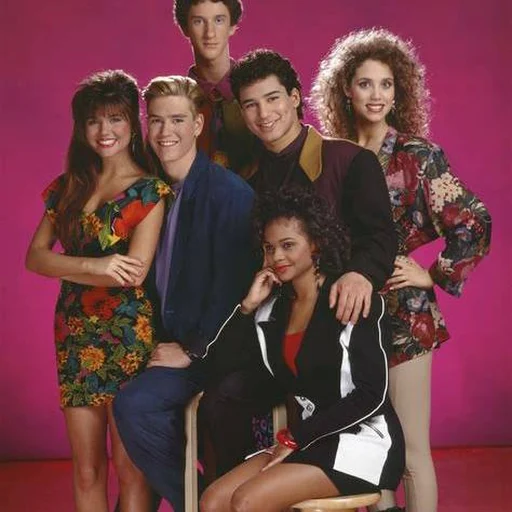
Its roots were in Good Morning, Miss Bliss, a Disney Channel series centered on a teacher played by Hayley Mills. Several characters who later became part of Saved by the Bell—including Zack, Screech, Lisa and Mr. Belding—were already there.
Television Academy material on writer Sam Bobrick notes that Good Morning, Miss Bliss lasted only one season before NBC chief Brandon Tartikoff brought the concept to Saturday morning and reshaped it.
That transition changed almost everything important. The teacher-centered format became student-centered. The setting moved from Indiana to California. The cast expanded with Kelly, Slater and Jessie. The tone became brighter and more youth-focused.
Syndication later blurred the distinction by packaging the Miss Bliss episodes under the Saved by the Bell umbrella, complete with Zack introductions.
That history makes the series feel like one of television’s most successful rebuilds. NBC did not simply rescue a canceled show. It found the part of the idea that worked and rebuilt the rest around it.
Zack Morris Was a Sitcom Cheat Code
Zack could stop time.
That device instantly separated him from a normal teen-sitcom lead. He could freeze the scene, turn to the camera and explain exactly what he was planning while everybody else remained suspended.
The trick made viewers his accomplices. We knew the scheme before Kelly, Slater, Jessie, Lisa, Screech or Belding knew it.
That matters because Zack is often objectively terrible. He lies, manipulates, schemes, exploits friends and looks for shortcuts. The direct address softens the damage by making the audience feel included in the construction.
Mark-Paul Gosselaar had to sell charm because the character’s morality was flexible. Zack could spend an episode creating a problem and still make you want him to escape it.
The time-out device also gave Saved by the Bell a cartoon logic that fit Saturday morning. Zack was not only the star of Bayside. He could bend the rules of the show itself.
The Six Characters Were Built to Clash Immediately
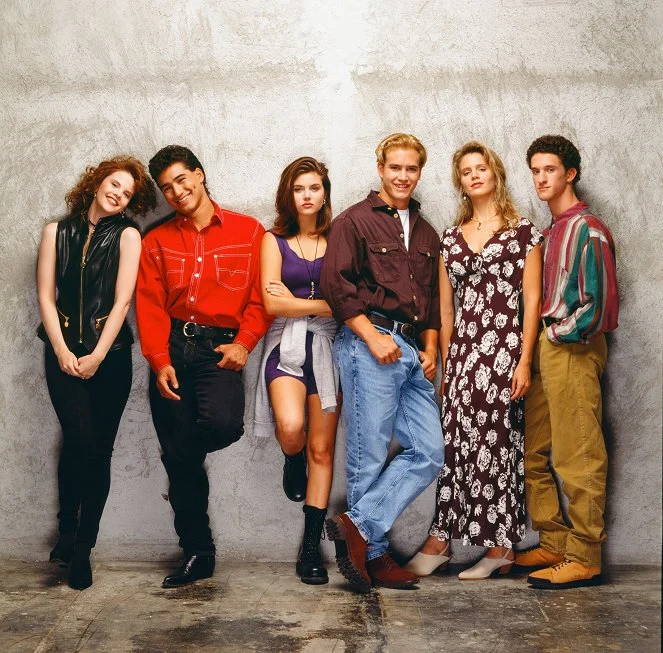
The core cast was almost aggressively easy to read.
Zack was the schemer. Slater was the athlete. Jessie was the intellectual. Kelly was the popular girl. Lisa was fashion-conscious and socially sharp. Screech was the outsider.
Those categories were broad, but broadness was useful in a fast-moving youth sitcom. The show did not need ten minutes to establish why Jessie and Slater would argue or why Zack might exploit Screech.
The personalities created automatic story engines.
Slater could challenge Zack. Jessie could challenge Slater. Kelly could complicate Zack’s plans simply by being the person he wanted to impress. Lisa could cut through nonsense. Screech could accidentally destroy a scheme by trying to help.
Over time, familiarity became the pleasure. Viewers were not tuning in to discover who these people were. We were tuning in to see the same personalities collide in a new arrangement.
Bayside Was a Fantasy of High School Before Most Viewers Reached High School
A huge part of the Saved by the Bell audience watched the show before entering high school.
That made Bayside aspirational in a weird way.
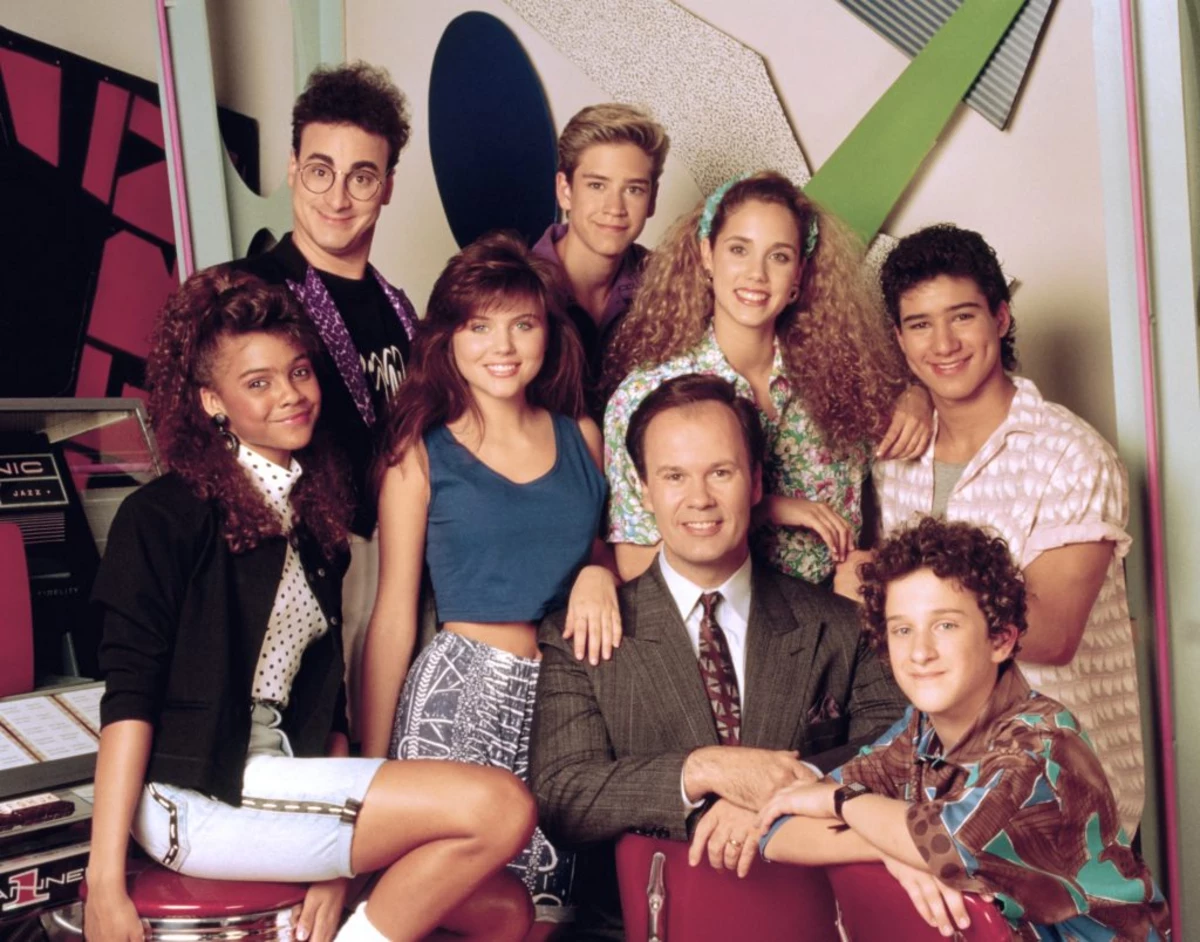
The school looked bright. The halls were social. Teachers could be mocked. The principal knew everybody. Students had elaborate dances, student-government elections and endless extracurricular activities.
Real high school would prove considerably more boring.
But television does not need to be accurate to create expectation. Saved by the Bell taught younger viewers a set of high-school symbols: lockers, prom, football, dating, detention and the hallway as the center of the social universe.
The show’s artificiality was part of the appeal. Bayside was clean enough to feel safe and dramatic enough to feel exciting.
It was less a school than a stage where adolescence could be rehearsed.
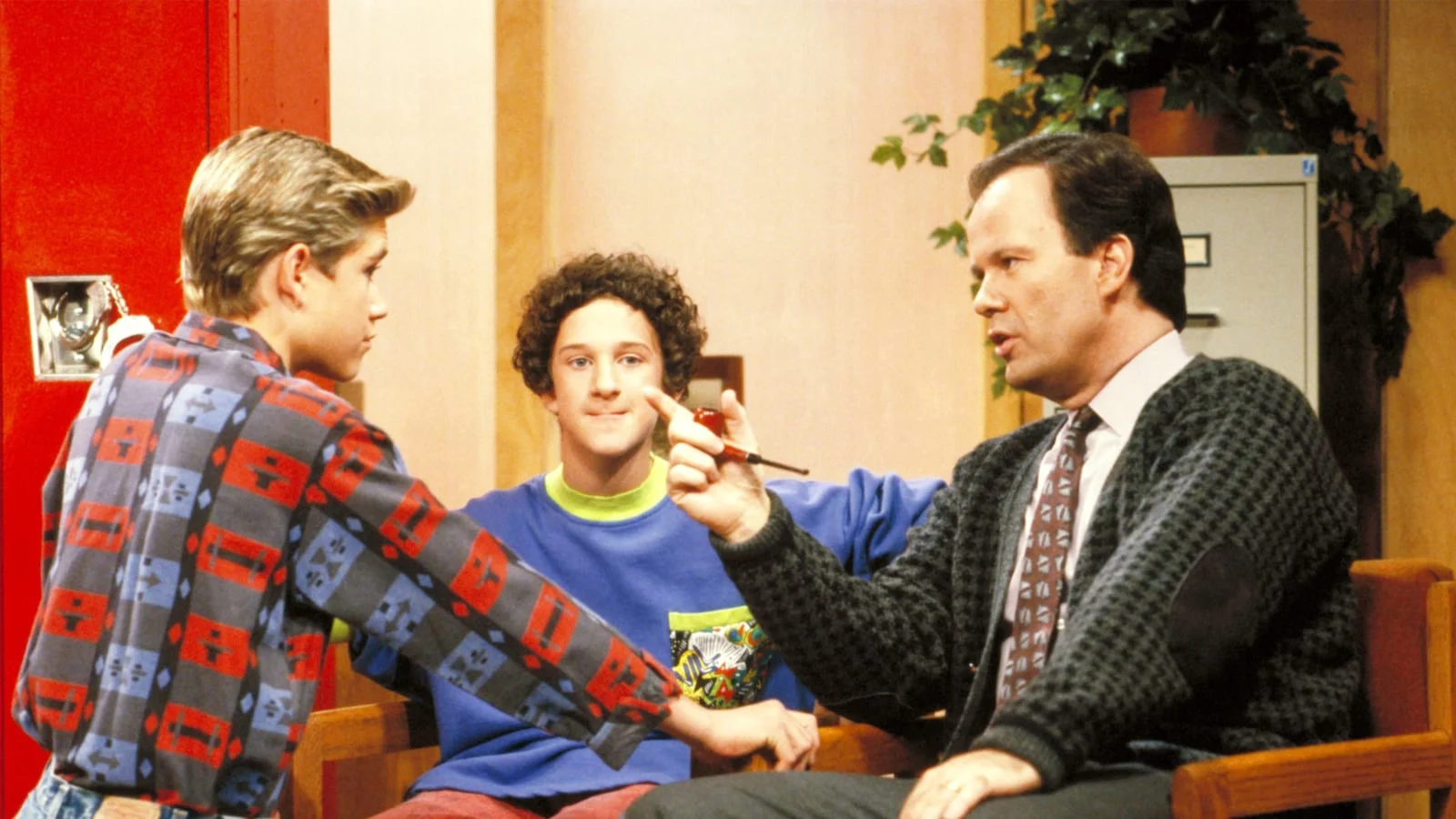
Mr. Belding Made the Adults Part of the Joke
Dennis Haskins’s Mr. Belding was authority figure, comic foil and occasional moral center.
Zack constantly manipulated him, but Belding was not simply incompetent. He often understood more than Zack assumed and could become unexpectedly sincere when the episode needed an adult to matter.
His catchphrase and exasperated reactions made him part of the show’s repeatable language.
More importantly, Belding gave Bayside continuity. Teachers came and went, but the principal remained.
That made the school itself feel stable. No matter what absurd scheme happened, Belding would eventually walk into the room and demand to know what was going on.
For a kids’ show, that dependable adult presence was useful. Zack could bend the rules, but there was still a rulebook somewhere.
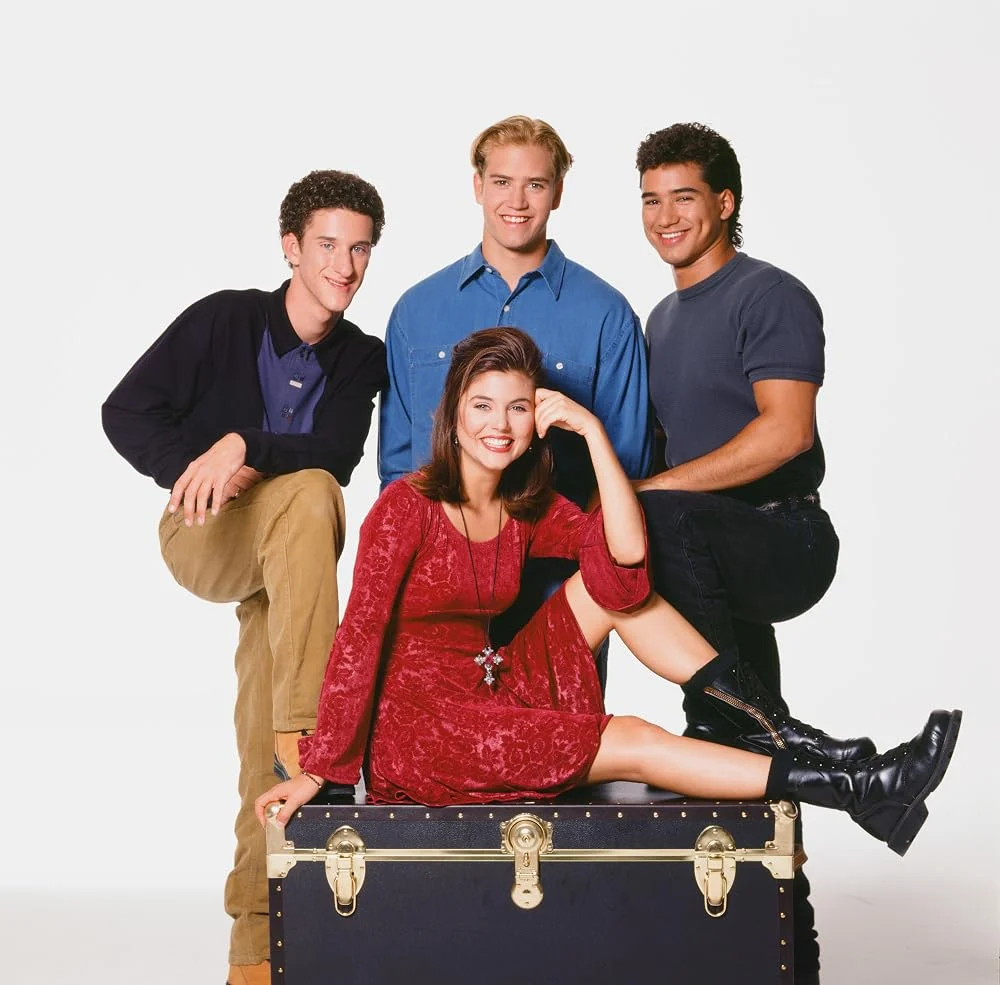
Kelly Kapowski Became a 90s Teen-TV Icon
Tiffani-Amber Thiessen’s Kelly Kapowski became one of the most recognizable teen characters of the period.
Part of that was straightforward teen-idol machinery. Magazines, posters and publicity images extended the character beyond the actual episodes.
But Kelly also worked because Thiessen gave the role warmth. The writing often positioned Kelly as the idealized popular girl, yet she rarely felt deliberately cruel.
That mattered in a cast where status was easy to understand. Kelly could be popular without becoming the villain.
Her relationship with Zack also gave the series its longest romantic through-line. Even when the show sent them through breakups and other relationships, the pairing remained part of the audience’s idea of Bayside.
That eventually carried all the way into the franchise’s wedding story, turning a Saturday-morning crush into a multi-year television romance.
Slater Was More Than the Guy in the Wrestling Singlet
A.C. Slater arrived as competition for Zack.
Mario Lopez gave the character physical confidence, athletic credibility and just enough smugness to create immediate rivalry.
But Slater became more useful once the show stopped treating him only as Zack’s opponent. His relationship with Jessie opened a different comic lane, built on constant argument and attraction.
The show used Slater to explore masculinity in a very broad Saturday-morning way. He could be macho, jealous and competitive, then be forced to reconsider himself because Jessie refused to accept the assumptions behind the performance.
That tension was rarely subtle, but subtlety was not the show’s operating system.
Slater worked because he could be ridiculous without losing dignity. The audience was allowed to laugh at him and still believe he was one of the cool kids.
Jessie Spano Gave the Show Its Loudest Conscience
Jessie was the character most likely to tell everybody else why their plan was wrong.
Elizabeth Berkley played her as driven, outspoken and academically ambitious. Jessie’s intensity made her easy to tease, but it also meant the series had a character who could raise questions the others would ignore.
She could challenge Slater’s attitudes, Zack’s schemes and the group’s casual assumptions.
That made the famous caffeine-pill episode possible because Jessie was already established as the person who pushed herself too hard.
The breakdown became camp legend later, but the story works at all because the character’s perfectionism had been built into the show.
Jessie was not simply the “smart girl.” She was the person most likely to believe every problem could be solved through enough effort—until one story forced her to confront the cost.
The Caffeine-Pill Episode Became Bigger Than the Show
“Jessie’s Song” is one of those episodes that escaped its original context and became a cultural object.
Jessie takes caffeine pills to keep up with school and a singing group, then breaks down in front of Zack.
The scene is remembered because the emotional gear shift is enormous. One minute the show is broad Saturday-morning comedy. The next, Berkley is sobbing through “I’m So Excited.”
Years later, the Los Angeles Times still treated the scene as instantly recognizable when Berkley recreated it on Dancing With the Stars.
The episode is often mocked now, but the melodrama is part of why it lasted.
A more restrained scene might have disappeared into the hundreds of other teen-TV lessons. Saved by the Bell went so hard that everybody remembered it.
That is one of the recurring truths of the series: its lack of subtlety could become a form of durability.

Lisa Turtle Was the Social Intelligence the Group Needed
Lisa is sometimes reduced to fashion, but Lark Voorhies gave the character a sharper role.
Lisa understood status, presentation and other people’s motives better than most of the group. She could be superficial, but she was rarely socially clueless.
Her relationship with Screech also created one of the stranger long-running dynamics. Screech’s crush was usually played for comedy, yet Lisa’s irritation had to coexist with genuine friendship.
The character’s style also made her visually distinct. Bayside was already colorful, but Lisa’s wardrobe pushed fashion into character identity.
For younger viewers, she represented a different kind of competence than Jessie’s academics or Kelly’s warmth. Lisa knew the social world.
Screech Was the Character the 90s Would Handle Differently Today
Samuel “Screech” Powers is central to the show’s memory and also one of the clearest examples of how comedy changes.
Dustin Diamond played the character as exaggerated awkwardness: strange voice, unusual clothes, obsessive interests and almost total lack of social awareness.
Screech was loyal and frequently useful, but the show often made him the target.
That structure was common in youth comedy at the time. The “nerd” existed partly so everybody else could be defined as normal.
Watching now, some of those jokes land differently.
Still, Diamond’s commitment made Screech essential to the group chemistry. Zack’s schemes needed someone who would follow him into ridiculous situations without asking enough questions.
The character’s later continuation into Saved by the Bell: The New Class also made Screech one of the longest threads connecting the franchise.
Saved by the Bell Became NBC's Saturday-Morning Weapon
The network eventually realized it had something more valuable than a quirky sitcom.
In March 1992, the Los Angeles Times reported that Saved by the Bell was the top-rated Saturday-morning program among teenagers. NBC responded by expanding its teen strategy.
The network announced it would drop its remaining Saturday cartoons and create a live-action block targeted at older kids, with Saved by the Bell at the center.
That is a remarkable shift.
For decades, network Saturday mornings were synonymous with cartoons. A teen sitcom had become successful enough to help NBC rethink the entire daypart.
The following year, the Los Angeles Times again noted that NBC had strong teen performance from two editions of Saved by the Bell.
Bayside was no longer an odd live-action show surrounded by animation. It had become the model.
NBC Was Chasing Tweens Before Everybody Used the Word
The early 1990s were changing the economics of kids’ television.
Cable and Nintendo were fragmenting young audiences. Fox was building an aggressive children’s network. The traditional Saturday-morning cartoon model was under pressure.
NBC’s answer was to target older children and teenagers.
The network openly used the term “tweens” for viewers between childhood and adulthood. Saved by the Bell fit that audience almost perfectly.
The show was safe enough for Saturday morning but old enough to feel aspirational. It offered dating and school drama without becoming a prime-time teen soap.
That middle position became commercially attractive.
The audience had its own spending power, and advertisers noticed. NBC could build a block around live-action youth programming that was cheaper than animation and easier to connect with teen culture.
The Show Helped Kill NBC Cartoons
It would be ridiculous to say Saved by the Bell single-handedly killed Saturday-morning cartoons on NBC.
But it absolutely helped prove the network had another option.
By 1992, NBC replaced cartoons with an expanded Saturday Today and a teen-focused live-action block.
The Los Angeles Times described Saved by the Bell as the anchor of that strategy.
That programming decision is historically important because it marks a transition in how broadcast networks thought about Saturday morning.
The old assumption was that children’s programming meant animation.
Saved by the Bell showed that older kids would watch sitcom structure, teen romance and school stories in the same daypart.
It changed the definition of what Saturday morning could sell.
The Ratings Story Has to Be Read Differently Than Prime Time
Saved by the Bell is not a show you evaluate by asking where it ranked against Cheers or Roseanne.
Saturday morning was a different television economy.
The target audience was different. The advertisers were different. The competition was different.
That is why our explanation of how 1990s television ratings worked matters here. A top-rated teen program on Saturday morning could be strategically important even if its household numbers looked small beside prime-time giants.
The Los Angeles Times coverage from 1992 and 1993 makes that clear. NBC valued the show because it delivered teenagers reliably enough to structure a block around it.
Cultural memory later magnified the reach through reruns, but the original business case was already real.
Saturday Morning Was Appointment TV for Kids Too
When people talk about appointment television in the 1990s, the conversation usually jumps to Thursday night or Sunday evening.
Kids had appointments too.
Saturday morning had a rhythm. You woke up, turned on the television and moved through a block of shows with nowhere particularly important to be.
Saved by the Bell occupied that ritual.
The schedule mattered because episodes were not sitting in a library waiting for you. If you missed one, you waited for a rerun.
That scarcity made even lightweight television feel more important.
Years later, nostalgia for Saved by the Bell often includes memory of the room, the cereal and the morning itself. The show is attached to a time of day.
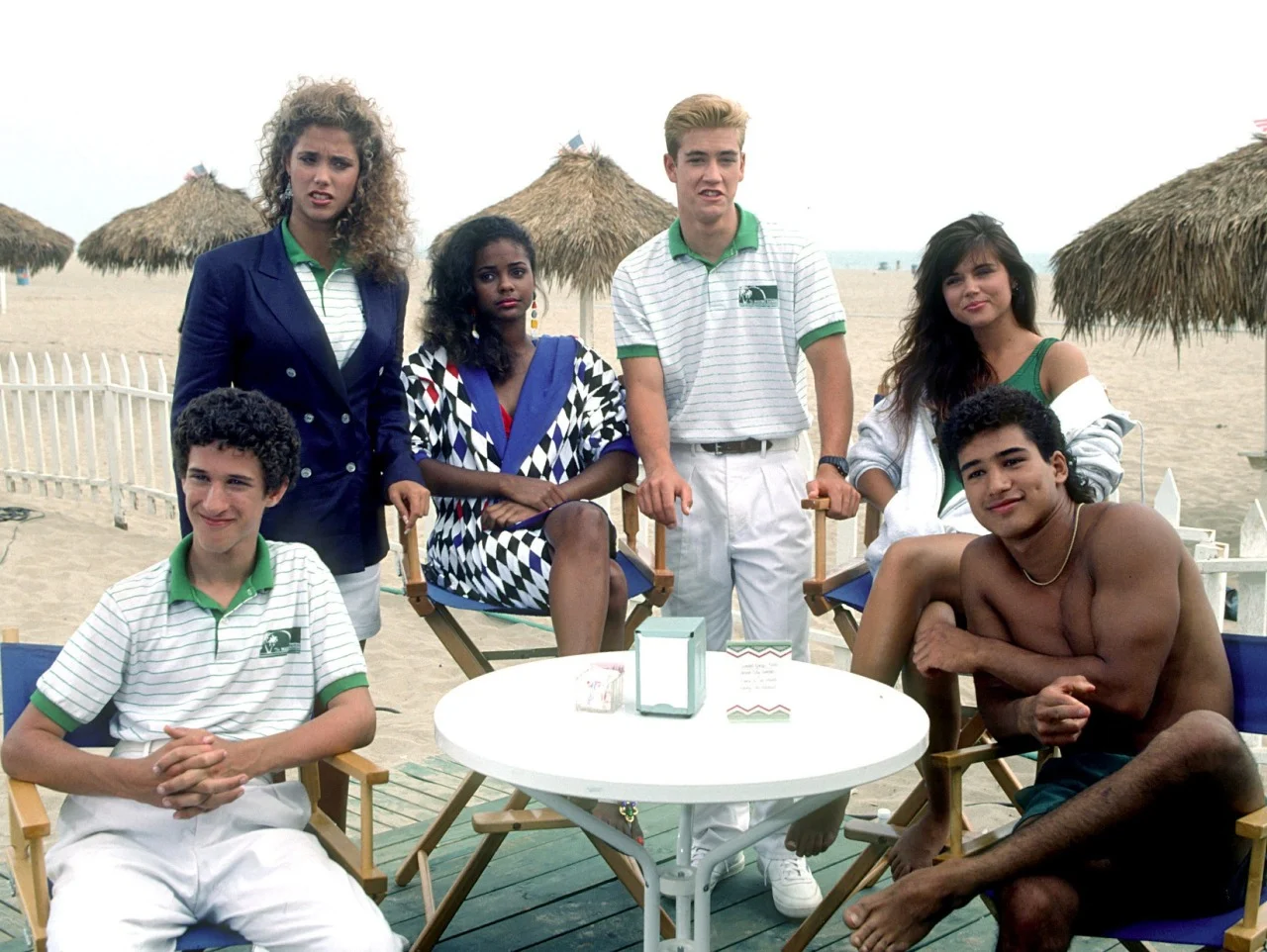
The Malibu Sands Episodes Understood the Value of Changing the Scenery
The summer-job episodes at the Malibu Sands Beach Club gave the show a temporary new world without abandoning the core cast.
That was a smart way to expand the formula.
Bayside could only generate so many school stories before the audience wanted something visually different.
Moving Zack, Slater, Screech and the others into summer jobs created new authority figures, new romance and a different set of responsibilities.
It also made the show feel larger than one hallway.
For younger viewers, the beach-club setting was another aspirational version of teenage life: summer jobs where all your friends happened to work together and attractive people kept wandering through.
The College Question Was Always Coming
A high-school show eventually has to face graduation.
Saved by the Bell had a problem because the cast chemistry was the product.
The answer was not to end the franchise cleanly.
NBC moved several characters into prime time with Saved by the Bell: The College Years while also launching Saved by the Bell: The New Class on Saturday morning.
The College Years struggled, but the attempt reveals how valuable NBC believed the brand had become.
The network wanted to age the original audience upward while keeping the Saturday-morning machine running with new students.
That kind of franchise extension is common now. In the early 1990s, it was a sign that Bayside had become intellectual property rather than merely a show.
The New Class Proved Bayside Could Outlive Zack Morris
Saved by the Bell: The New Class debuted in 1993 and continued the Saturday-morning format with new students.
The cast changed repeatedly, but Mr. Belding remained and Screech later became part of the adult staff.
The show never achieved the same cultural status as the original cast, yet it lasted for years.
That longevity proves the strength of the structure.
Bayside itself had become recognizable enough to support replacement teenagers.
The original series created a template: archetypal students, school conflict, broad comedy, romance and a lesson by the end.
The New Class could keep rebuilding that template.
The TV Movies Turned Sitcom Events Into Franchise Milestones
Saved by the Bell expanded beyond ordinary episodes with television movies such as Hawaiian Style and Wedding in Las Vegas.
Those events elevated relationships that had begun in Saturday-morning plots.
The wedding story is especially important because it completed the Zack-and-Kelly arc for viewers who had watched the couple break up, reconcile and survive the transition out of Bayside.
Television movies gave the franchise scale without requiring theatrical ambitions.
For fans, they felt like special events precisely because they broke the weekly format.
The Show Was Critic-Proof in the Most 90s Way Possible
Saved by the Bell was not a critics’ darling.
The Los Angeles Times review of the 1989 launch was bluntly negative, describing the teen characters as cardboard stereotypes.
That review was not unusual. Adults could see the artificiality immediately.
The audience did not care.
This is an important distinction in youth television. A show can fail adult standards of realism while succeeding completely at creating a world younger viewers want to revisit.
Saved by the Bell was bright, obvious and emotionally simple.
Those qualities were liabilities in criticism and advantages in reruns.
The Merchandising Proved Bayside Had Become a Brand
By 1992, the Los Angeles Times was already writing about the show as a growing commercial property with syndication, foreign broadcasts, merchandise and a television movie.
That is a fast evolution for a program Peter Engel had once been embarrassed to describe as a Saturday-morning sitcom.
The show had escaped the “Saturday morning ghetto.”
Cast members became teen idols. The title could sell products. Reruns created a second audience.
Once that happened, Saved by the Bell no longer depended on its original time slot for identity.
Bayside became portable.
Syndication Made the Show Bigger Than Its Original Audience
The original broadcast run is only one part of Saved by the Bell’s cultural life.
Syndication is where the series became practically unavoidable.
The episodes are modular, visually distinctive and easy to enter halfway through. You do not need to remember last week’s plot.
That made the show perfect for after-school and cable reruns.
Viewers who were too young for the original seasons could discover Zack, Kelly and Slater years later and experience them as current childhood television.
That afterlife explains why the show occupies so much nostalgic space.
A series does not need to be the biggest original-run hit if reruns keep recruiting new generations.
The Clothes, Hair and Sets Are a Time Capsule With the Volume Turned Up
Saved by the Bell does not merely look like the early 1990s.
It looks like the early 1990s after somebody increased the saturation.
Patterns clash. Hair is large. School spaces use colors no real administrator would approve.
The artificial visual style is part of the charm.
Bayside does not look like a real public school because reality would make the show less fun.
The sets create a heightened version of teenage life where every social space is easy to read.
That is why one screenshot can trigger immediate recognition.
You know you are at Bayside before anybody speaks.
The Serious Episodes Reveal What Adults Thought Teenagers Needed to Hear
Saved by the Bell regularly inserted lessons about drinking, drugs, driving, relationships, homelessness and responsibility.
The approach can feel blunt now, but it reflected the network environment.
By the mid-1990s, NBC was explicitly describing the show’s “pro-social” messages as part of its educational value.
That tells us something about the period. Networks were under pressure to provide educational children’s programming, and issue-driven youth sitcoms could be positioned as part of that responsibility.
The lessons were not always elegant.
But they give the show historical texture: this was entertainment built inside a regulatory and programming conversation about what television owed young viewers.
Why Bayside Still Works
Saved by the Bell survives because it created an extremely efficient television world.
You know the personalities within minutes. You understand the stakes. The visual language is loud. The jokes are broad. The moral arrives on schedule.
None of that sounds sophisticated.
It does not need to be.
The show understood the size of teenage embarrassment. A missed date, failed test or public humiliation can feel like the end of the world when you are fifteen.
Bayside gives those feelings bright sets and laugh tracks.
On the larger 1990s TV landscape, Saved by the Bell represents a part of the decade that prime-time histories often skip. Television culture did not begin at 8 p.m.
For a lot of Gen X kids and younger viewers coming right behind us, some of the decade’s most durable television memories happened before lunch on Saturday.
Saved by the Bell FAQ
When did Saved by the Bell premiere?
Saved by the Bell premiered on NBC in 1989 and became a major Saturday-morning youth sitcom through the early 1990s.
Was Saved by the Bell connected to Good Morning, Miss Bliss?
Yes. Good Morning, Miss Bliss was an earlier teacher-centered series featuring Zack, Screech, Lisa and Mr. Belding. NBC later rebuilt the concept as Saved by the Bell.
How popular was Saved by the Bell?
The Los Angeles Times reported in 1992 that it was the top-rated Saturday-morning program among teenagers, strong enough to become an anchor of NBC’s live-action teen strategy.
Why could Zack Morris stop time?
The direct-address time-out device let Zack freeze scenes and explain his plans to the audience, making viewers accomplices in his schemes.
What is the famous Jessie caffeine-pill episode?
The episode “Jessie’s Song” shows Jessie using caffeine pills to keep up with school and singing commitments, leading to the widely remembered breakdown with Zack.
Why did NBC stop airing cartoons on Saturday morning?
Several factors were involved, including competition from Fox, cable and video games. NBC chose to target adults with Saturday Today and older kids with live-action shows, with Saved by the Bell at the center of the teen block.
What came after the original series?
The franchise expanded into Saved by the Bell: The College Years, Saved by the Bell: The New Class and television movies including Hawaiian Style and Wedding in Las Vegas.
Why does Saved by the Bell matter to 90s TV history?
It proved a live-action teen sitcom could anchor Saturday morning, helped NBC shift away from cartoons and built a durable youth-TV franchise whose rerun life became larger than its original run.
Sources & Further Reading
- Television Academy Interviews — Sam Bobrick and Good Morning, Miss Bliss
- Los Angeles Times — Saved by the Bell launch review, 1989
- Los Angeles Times — NBC targets tweens on Saturday, 1992
- Los Angeles Times — Bell Hearing the Sounds of Success, 1992
- Los Angeles Times — NBC cartoon-free Saturday lineup, 1992
- Los Angeles Times — X-Men vs. NBC's teen Saturday strategy, 1993
- Los Angeles Times — Jessie caffeine-pill scene remembered
Keep the dial moving: Explore more 1990s TV shows, sitcoms, dramas, ratings and prime-time classics.