A Different World: How Hillman Changed 90s Television
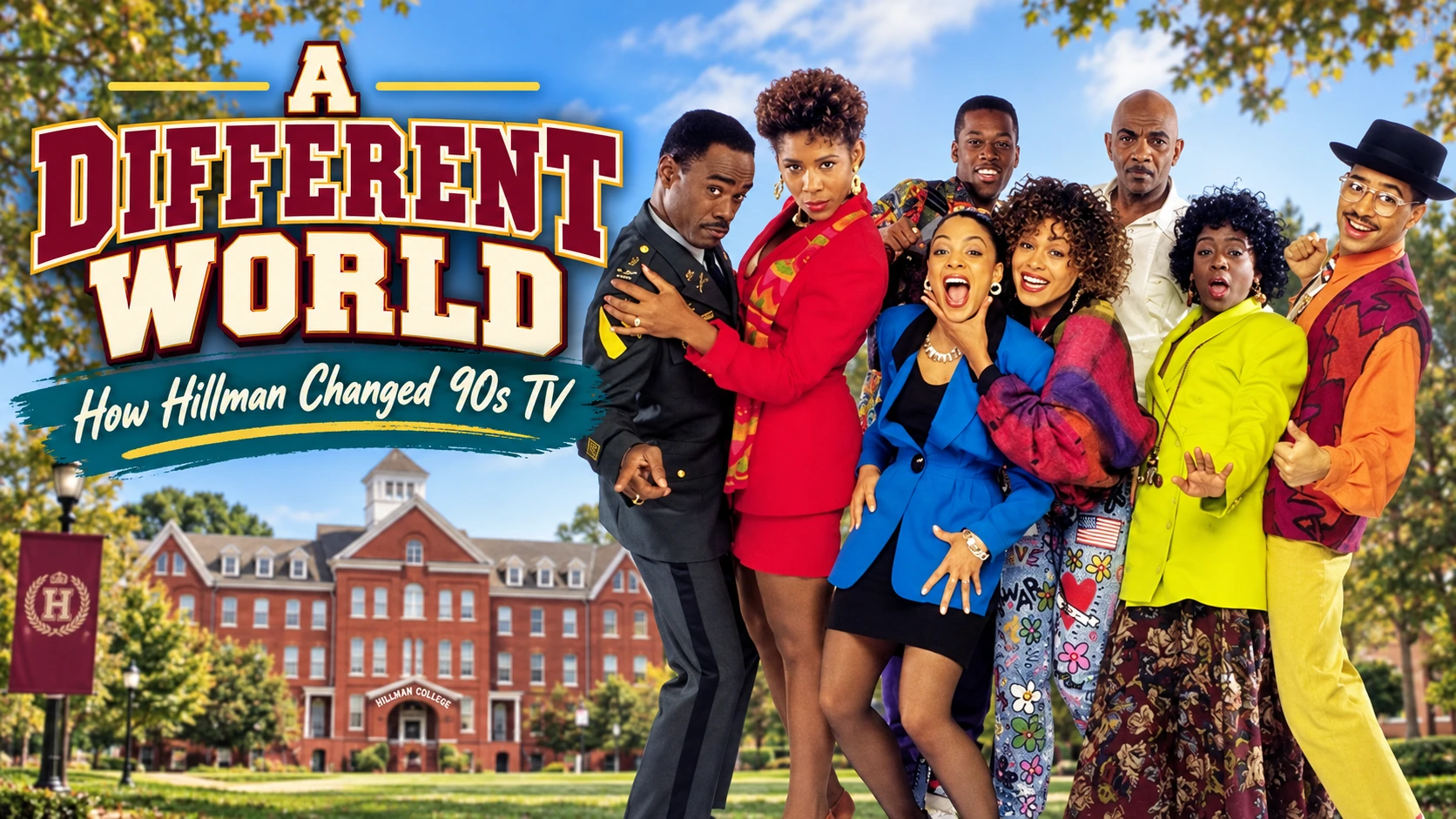
A DIFFERENT WORLD How Hillman Changed 90s Television
A Different World in the 90s was not some niche little college comedy hiding in the schedule. In the 1990–91 season it finished #4 in America, sitting right in the middle of the biggest network shows on television. I remember Hillman feeling different even then. The clothes looked different. The music felt different. The conversations sounded different. Most of all, the people on screen were allowed to be students, dreamers, screwups, activists, romantics and young adults without having to explain why their world mattered.
Why was A Different World so important to 90s television?
A Different World made Black college life part of mainstream American prime time while refusing to flatten that life into one generic experience. Hillman was funny, romantic and stylish, but it was also full of history, class differences, ambition, Greek life, politics, money problems, career pressure and debates that mattered outside the campus gates. By 1990–91, the series had become the #4 show on television—proof that specificity did not shrink the audience. It helped build one.
A Different World in the 90s: Why Hillman College Changed Television
The first thing A Different World changed was not the sitcom. Looking back at A Different World in the 90s, what stands out is how completely it changed the center of the frame.
Hillman College was not a side trip, a one-week “special episode” location or a place where one Black character happened to attend school. It was the whole world.
That distinction sounds obvious now, but it was enormous in 1987 and even more powerful by 1990–91, when the show was reaching one of the largest audiences on television.
The Television Academy’s history of the series describes A Different World as the first sitcom to immerse a broad American audience in student life at a historically Black college. That word—immerse—is the important one.
You did not just hear that Hillman had traditions. You watched them.
You did not just hear that Black students came from different regions and economic backgrounds. You watched those differences produce friendships, arguments, jealousy, romance and embarrassment.
You did not just hear that college could be a place where political ideas mattered. You watched those ideas enter the dorm, the Pit, the classroom and the relationships.
And because this was a sitcom, all of that could happen in the same half hour where Ron was lying about something, Whitley was appalled by somebody’s manners and Dwayne was trying to talk his way through a situation with flip-up glasses on his face.
That balance is the real achievement.
Hillman mattered because it was not presented as an educational exhibit.
It was a place people wanted to be.
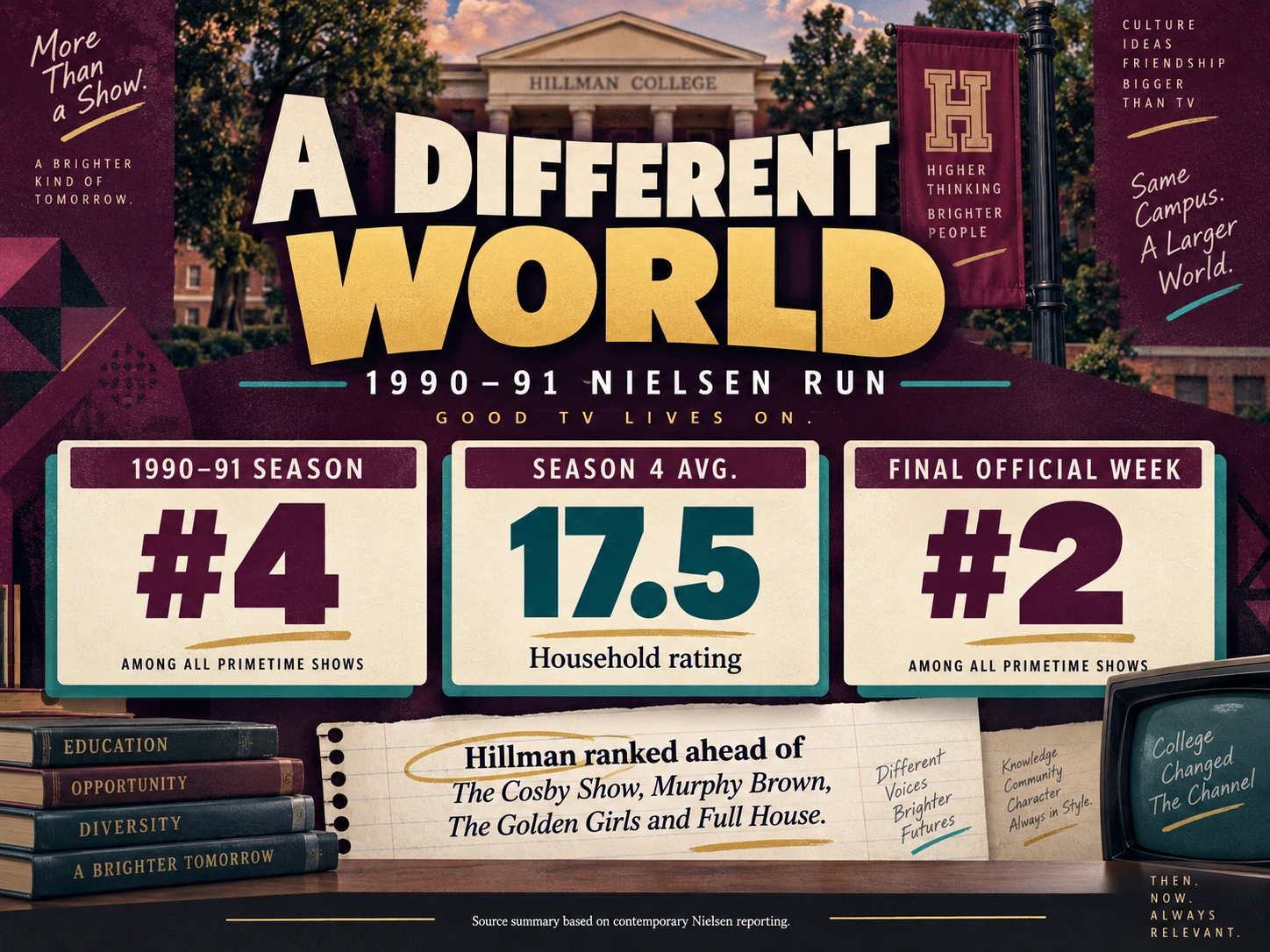
By the 1990–91 season, A Different World ranked #4 in the Nielsen ratings. It sat behind only Cheers, 60 Minutes and Roseanne. That puts Hillman squarely inside our broader guide to our complete guide to 1990s TV shows, sitcoms, dramas and prime-time classics, not as an important footnote but as one of the biggest destinations on television.
How A Different World Became Bigger Than “The Cosby Show Goes to College”
The first season had a famous parent series. The version we remember most clearly learned how to stop leaning on it.
A Different World premiered in 1987 as a spinoff built around Denise Huxtable leaving home for Hillman College.
That was the network logic. Take a popular character from the biggest sitcom in America and move her into a college environment.
The problem was that Hillman did not yet feel fully alive.
The first season had pieces that would matter later—Whitley, Dwayne, Jaleesa, the dorm structure, the idea of a historically Black college—but the show still felt like it was discovering what it wanted to say.
Lisa Bonet left after the first season.
On many shows, losing the original star that quickly would have ended the experiment.
Instead, it forced the series to decide whether Hillman itself was strong enough to be the star.
That is when A Different World became a different show.
Debbie Allen came in as a producer and director, the ensemble broadened, the writing became more connected to actual Black college culture, and characters who had once seemed secondary became the emotional center.
Dwayne Wayne was no longer just the weird kid with the glasses.
Whitley Gilbert was no longer simply the snooty Southern roommate.
The campus stopped being a generic television college with a new paint job.
Hillman began behaving like a place with memory.
The series premieres with Denise Huxtable at Hillman.
After Lisa Bonet’s departure, Debbie Allen helps reshape the show around a stronger ensemble and more authentic HBCU culture.
The series finishes #4 as Dwayne, Whitley, Kim, Freddie, Ron and the wider Hillman world deepen.
Season four again finishes #4, placing Hillman among the most-watched shows in America.
The original series ends after six seasons and 144 episodes.
Debbie Allen Made Hillman Feel Like a Real Black College Community
The creative shift after season one is one of the clearest examples of a television show discovering what it should have been all along.
Debbie Allen had attended Howard University, and when she joined A Different World she brought lived familiarity with the rhythms the series was trying to portray.
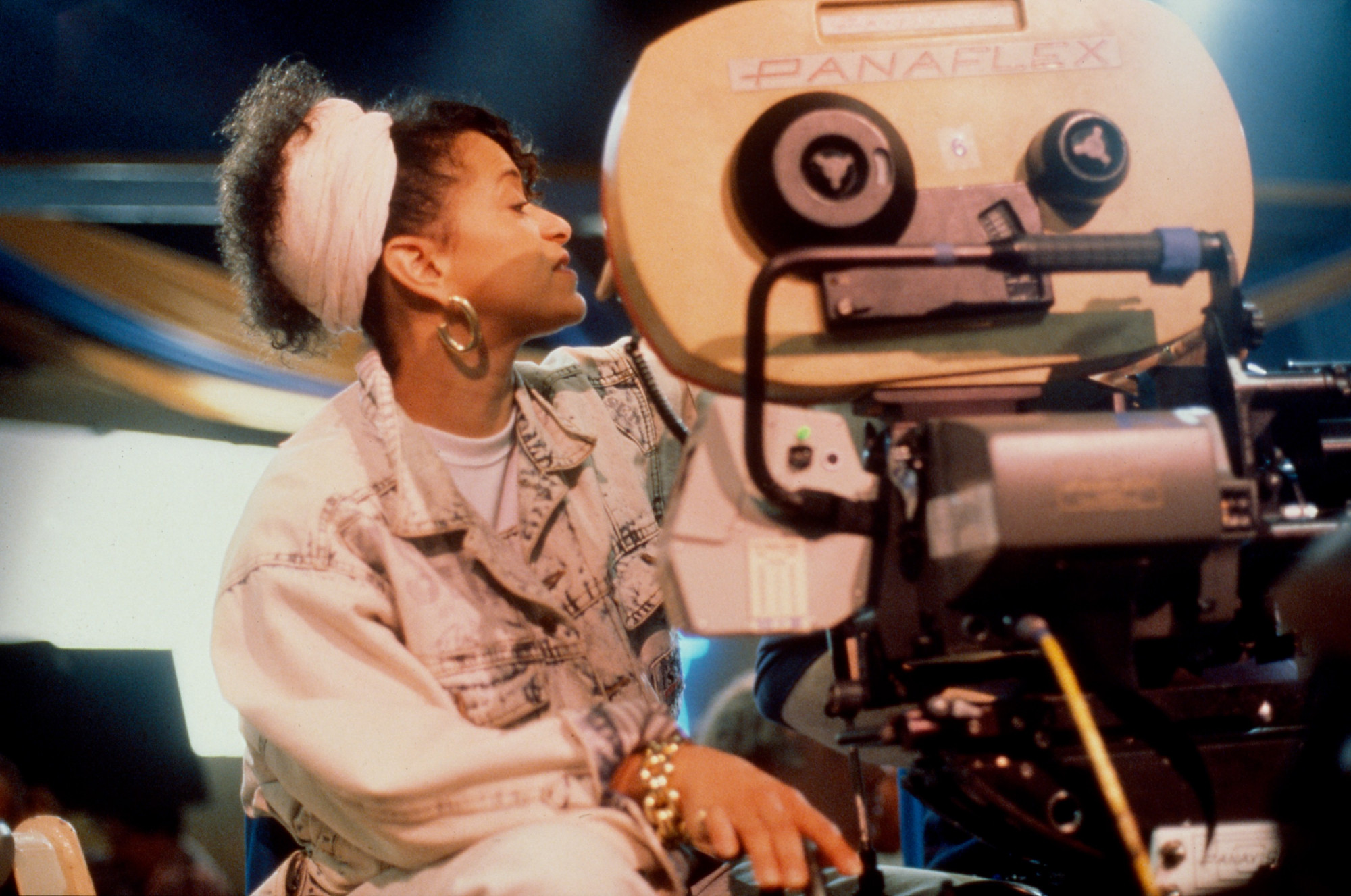
In her Television Academy interview, Allen remembered looking at the early episodes and thinking the show needed purpose.
She wanted fraternity and sorority life. She wanted music and traditions. She wanted the sense that students at an HBCU were not simply attending classes in a building with a sign outside.
They were entering an institution with history behind it and expectations in front of it.
Allen also changed how the creative process worked.
She has described opening communication between writers and actors, encouraging people to speak from what they knew and pushing the series toward stories that reflected actual concerns in Black communities and on college campuses.
That mattered because authenticity on television often comes from small details before it comes from speeches.
The way a dorm room looks.
The kind of joke one student makes about another student’s hometown.
The language around pledging.
The tension between somebody who grew up with money and somebody who is calculating whether the next tuition payment works.
When those details are right, viewers trust the bigger story.
Allen’s version of the show also refused the false choice between “funny” and “important.”
That is one of the reasons it worked.
Hillman College Felt Like Somewhere You Could Actually Go
A good television setting gives characters somewhere to stand. A great one gives the audience somewhere to miss.
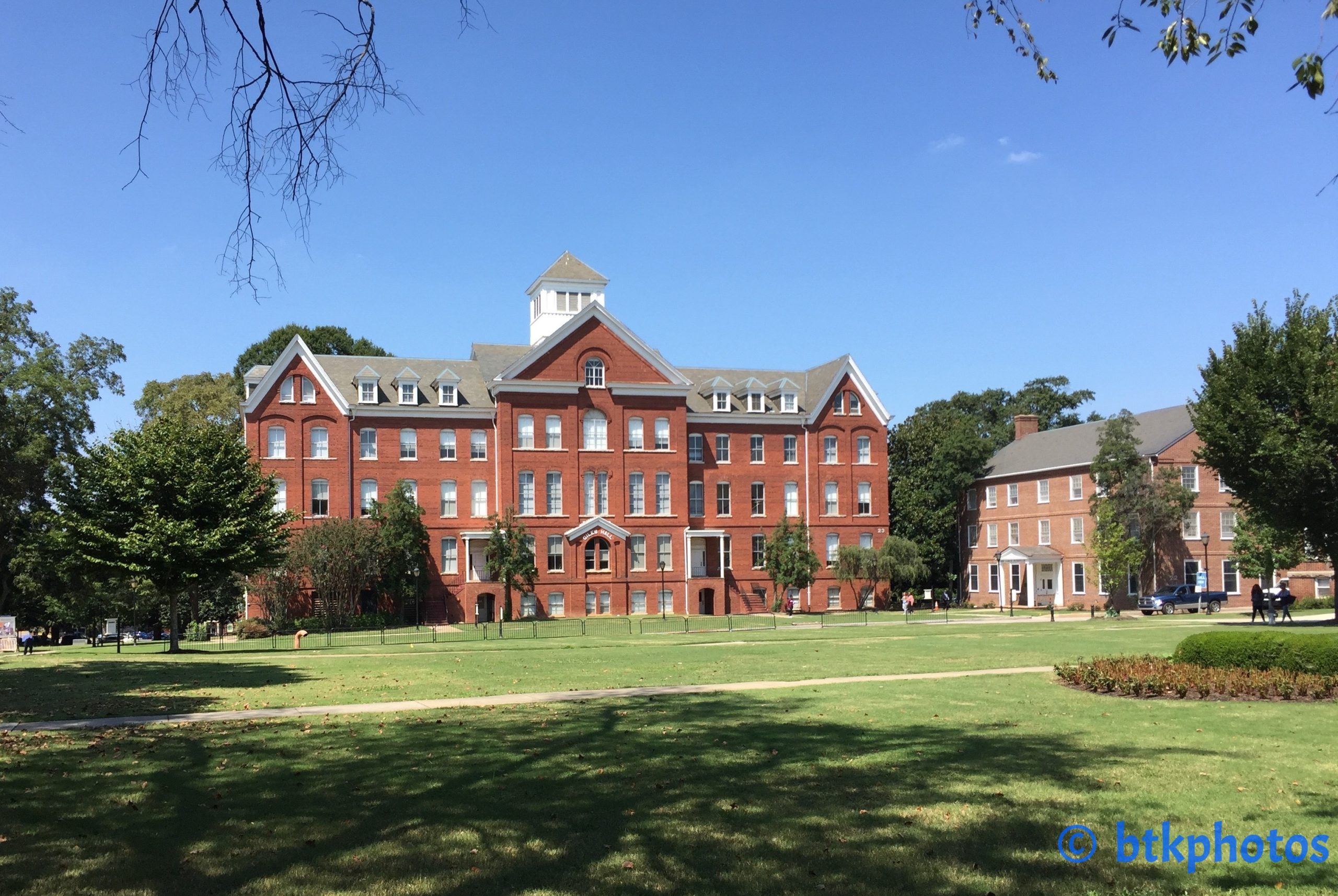
Hillman had that second quality.
The dorms mattered because students were learning how to live around people they had not chosen.
The Pit mattered because Louil Silas “Mr. Gaines” could turn a meal into advice, irritation or a community meeting without ever announcing that a lesson was coming.
The classrooms mattered because professors were not props. They could challenge assumptions, force students into history they had avoided and make academic life feel like part of the drama rather than the boring space between romances.
The campus green mattered because Hillman had weather, movement, rallies, flirtations and people crossing paths.
The outreach center mattered because the school was connected to a community outside itself.
That geography gave the series freedom.
A relationship could start in a dorm room and become an argument in the Pit.
A political issue could begin in class and follow everybody home.
A character could be brilliant in one space and completely lost in another.
If you watched it in real time, Hillman could feel strangely familiar even if your own college life looked nothing like it.
That is what strong television geography does.
It turns a fictional location into memory.
A Different World and HBCU Culture: How Hillman Reached Mainstream Prime Time
For millions of viewers, Hillman was the first sustained television window into the culture of historically Black colleges and universities. It became the defining HBCU sitcom of its era without reducing Black college life to a lesson for outsiders.
That does not mean Hillman was a documentary version of one specific school.
It was fictional and drew inspiration from HBCU traditions more broadly, with Howard University especially important to Debbie Allen’s perspective.
But the series treated those traditions as normal parts of college life rather than exotic details requiring translation.
Greek organizations existed.
Black history courses mattered.
Students talked about careers, service, class, family expectations and what it meant to move through the world as educated Black adults.
Professors and older alumni carried institutional memory.
The school had rituals that existed before the current cast arrived and would presumably continue after they left.
That continuity is part of what made Hillman feel larger than one graduating class.
The impact reached beyond television.
Debbie Allen has long spoken about the show driving interest in HBCUs. A recent Television Academy retrospective cites a 26 percent increase in HBCU enrollment during the original run, while generations of viewers have personally credited the series with influencing where they wanted to go to college.
The exact cause-and-effect number is less important than the cultural reality.
A Different World made the idea of attending an HBCU visible, desirable and emotionally legible to people who had never seen one represented this way on network television.
Dwayne Wayne Became One of the Defining Young Men on 90s Television
Dwayne started out looking like the guy television usually leaves in the corner. Then Kadeem Hardison made him impossible to ignore.
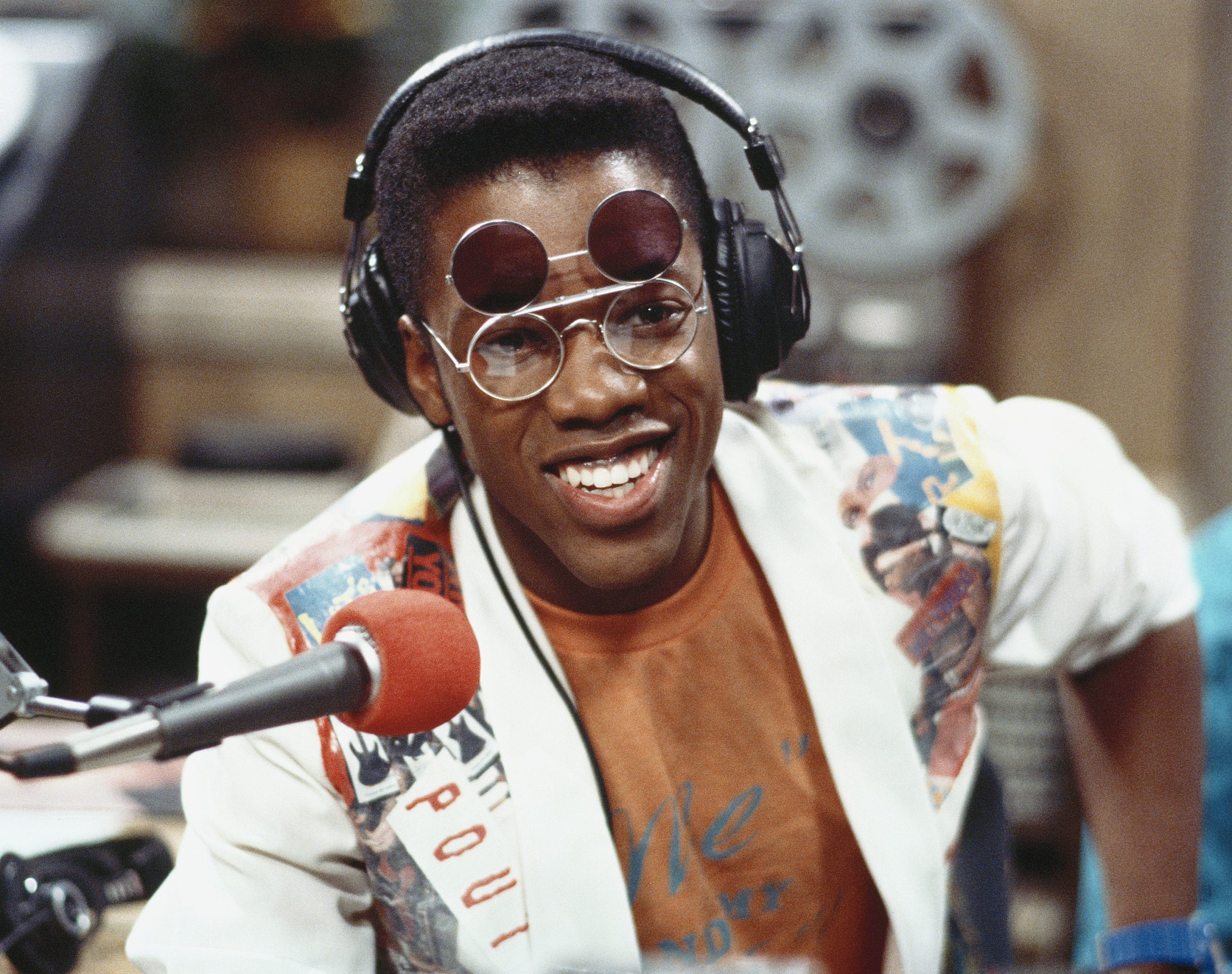
The flip-up glasses are what everybody remembers first.
They were visual shorthand before the character had even spoken.
Dwayne was smart, odd, ambitious, romantic, insecure and sometimes so convinced of his own logic that he could argue himself directly into trouble.
That combination mattered.
Black male characters on network sitcoms had often been asked to fit narrower boxes: cool, comic relief, authority figure, troublemaker, perfect son.
Dwayne was allowed to be a nerd without losing romantic credibility.
He could be technically gifted and emotionally clumsy.
He could chase big professional opportunities and still make bad decisions about Whitley.
He could be the guy who understood math better than the room and relationships worse than he thought.
By the fourth season, Dwayne is facing choices that feel like actual young-adult choices rather than sitcom obstacles.
Does he take a major job opportunity or continue his education?
What does commitment to Whitley mean when both of them are still trying to become people who can stand on their own?
What happens when world events such as the Persian Gulf conflict turn abstract politics into something that can affect a friend directly?
That is what made Dwayne important.
He was not a symbol of young Black excellence.
He was a young Black man trying to figure out what excellence actually demanded from him.
Whitley Gilbert Grew From a Punchline Into the Emotional Center of Hillman
Whitley could have been unbearable. Jasmine Guy made her irresistible enough that we stayed to watch her become more complicated.
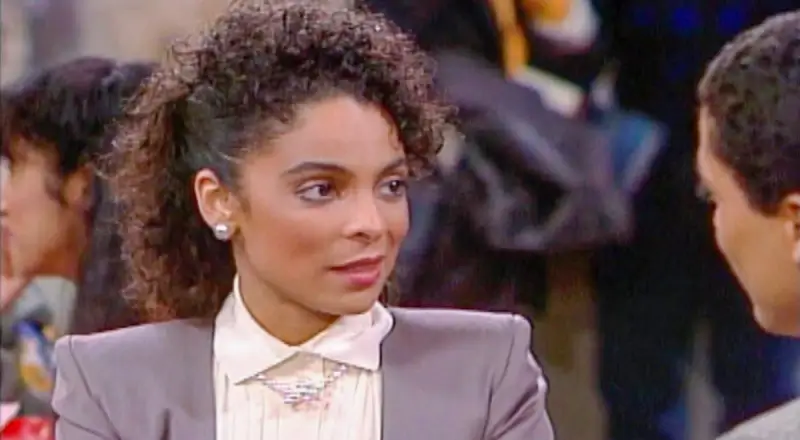
The voice. The posture. The assumptions about money, manners and who belonged where.
Whitley arrived with a social identity so complete that the comedy practically wrote itself.
But the show did not leave her there.
Her privilege became something the series could test.
Her class background mattered because Hillman put her around people who did not share it.
Kim could puncture her assumptions.
Dwayne could frustrate her because he was not impressed by the social hierarchy she understood best.
Work could humiliate her in useful ways.
Money trouble could force her into reality.
Art, relationships and career decisions could reveal that taste and confidence were not the same thing as maturity.
Season four is especially good at stripping away the idea that Whitley’s future will simply arrive because she has been trained to expect one.
Her father cuts off her easy access to money.
She tries to make rent.
She works.
She tries to build professional credibility.
She becomes more serious about Dwayne at exactly the moment when that seriousness scares her.
This is why Whitley remains one of the great sitcom characters of the era.
The show never asks us to pretend her worst traits disappeared.
It lets growth fight with them.
Dwayne and Whitley Worked Because Falling in Love Did Not Fix Either of Them
Television loves opposites because opposites create scenes. A Different World made Dwayne and Whitley work because the differences kept mattering after attraction arrived.
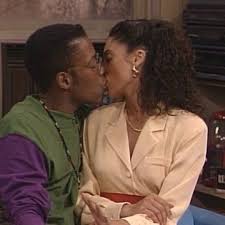
Dwayne is practical in ways Whitley finds unromantic.
Whitley values presentation in ways Dwayne often reads as superficial.
He can be smug about his intelligence.
She can be smug about almost everything else.
Neither person is simply “the grounded one.”
That keeps the relationship alive.
Season four starts with Dwayne returning from Japan in a relationship with Kinu while Whitley finally believes she is ready to admit what she wants.
That timing is exactly wrong, which makes it exactly right for television.
When Dwayne and Whitley finally move toward a real relationship, the show does not treat the victory as an ending.
School gets in the way.
Career possibilities get in the way.
Money gets in the way.
Sex and responsibility get in the way.
Family expectations get in the way.
That is what being young actually feels like.
Love does not arrive after you become a finished adult.
It arrives while you are still building the person who has to carry it.
As a Gen X viewer, that was part of what made them so easy to remember. Their chemistry was big enough for sitcom television, but the arguments underneath it felt like the kinds of things people in their twenties really did not know how to solve yet.
Kim Reese Showed What Excellence Costs When You Actually Have to Earn It
Kim was the character who could make the word “responsible” feel exhausting.
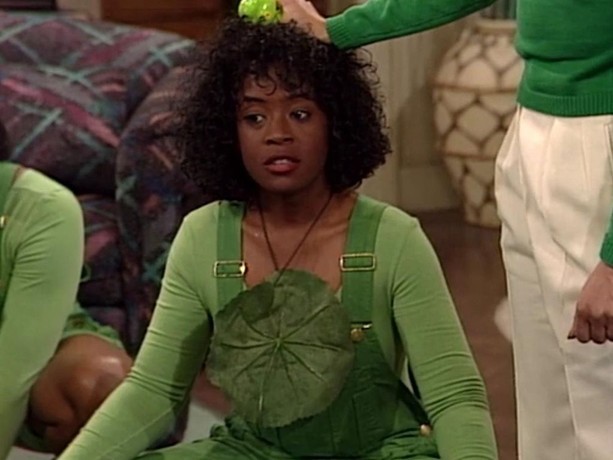
Charnele Brown’s Kim Reese is one of the show’s most important counterweights to Whitley.
Whitley’s privilege gives her room to make mistakes before consequences arrive.
Kim often feels like she is calculating consequences before she makes the choice.
She wants medical school.
She studies.
She works.
She carries expectations.
And the series lets that ambition create strain rather than simply rewarding her for being “the good student.”
In season four, “Whitley’s Last Supper” places Kim under pressure as she prepares for a medical-school exam while Whitley is dealing with suddenly reduced finances.
It is a useful pairing because the episode can put two different forms of anxiety in the same space.
Kim’s life also gives the show one of its clearest pictures of class inside Black college life.
Hillman is not populated by one economic experience.
Some students are cushioned by family money.
Some work.
Some are trying to build careers that their families have invested emotionally and financially in.
Some are learning that opportunity still comes with debt, sacrifice and pressure.
Kim makes that reality visible without turning it into misery.
Freddie Brooks Gave Hillman a Conscience Without Becoming a Lecture
Freddie was the person most likely to turn a campus issue into everybody else’s problem before lunch.
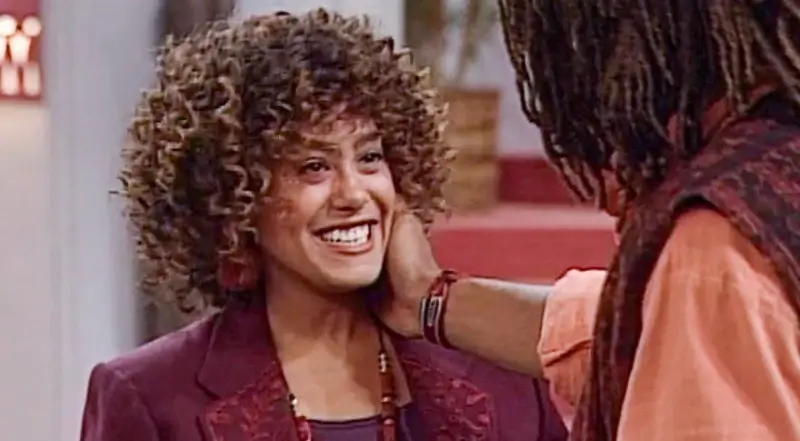
Cree Summer played Freddie with energy that could be funny, irritating, principled and naïve at the same time.
That mix was essential.
A political character becomes dull when the show treats every opinion as automatically correct.
Freddie cared intensely, but she was still a student.
She was learning.
She could be passionate before she understood all the consequences.
She could see injustice quickly and people slowly.
That gave A Different World permission to bring social questions into the campus without pretending one character already possessed the answer key.
Freddie’s activism around issues such as apartheid helped the show connect global politics with ordinary student choices.
Does a scholarship, investment or job opportunity become morally different when you learn where the money comes from?
What does solidarity cost when the cost becomes personal?
Those are real college questions.
Freddie also brought a different kind of style and personality into the ensemble.
She did not look, talk or move like Whitley.
That diversity of Black womanhood is part of the show’s legacy.
Ron Johnson Made Failure, Hustle and Friendship Part of the College Story
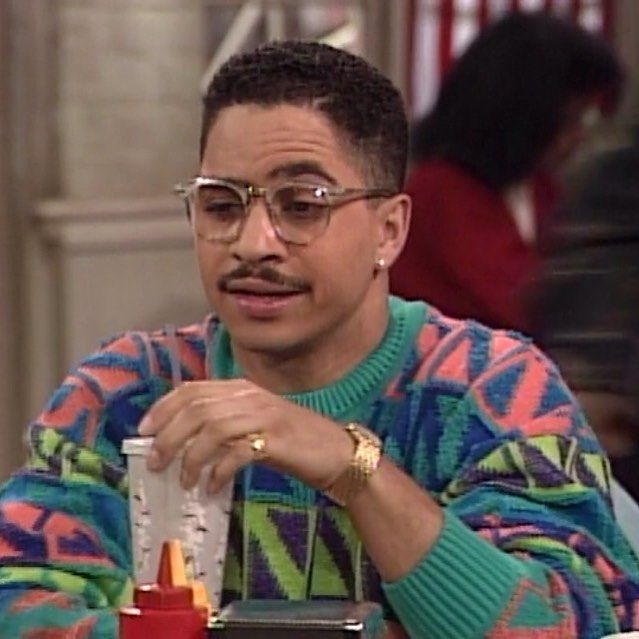
Darryl M. Bell’s Ron was not the student Hillman brochures would put on the cover. That is exactly why Hillman needed him.
Ron could talk himself into a plan faster than he could think through it.
He wanted music.
He wanted women.
He wanted money.
He wanted to avoid consequences whenever possible.
And underneath all of it, he wanted to prove he was not simply the less-serious half of his friendship with Dwayne.
That friendship gave the series another important kind of intimacy.
Young men could compete, clown, lie, disappoint each other and still care about each other without every emotional beat needing a speech.
Season four gives Ron a recurring struggle over whether his future belongs in the family business or in music.
It also makes his academic problems increasingly difficult to ignore.
By “Never Can Say Goodbye,” the fact that Ron may not graduate with the others is no longer a goofy side plot.
It has weight.
That is another thing A Different World understood about college.
Everybody arrives together.
Not everybody leaves on the same schedule.
Jaleesa, Walter, Col. Taylor and Mr. Gaines Gave the Students a World Larger Than Themselves
A college show collapses if every adult exists only to assign homework.
A Different World knew better.
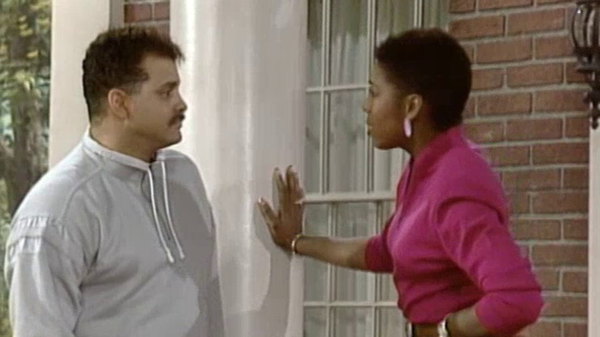
Jaleesa Vinson arrived at Hillman older than many of the other students, already carrying a marriage and adult life behind her.
That immediately complicated the idea that college belongs to one age group or one path.
Dawnn Lewis gave Jaleesa a steadiness that did not make her immune to bad choices.
Walter Oakes, played by Sinbad, could move between coach, counselor, friend and community figure without becoming a sitcom saint.
Col. Bradford Taylor gave Glynn Turman room to play authority with humor, pride and generational complexity.
Mr. Gaines, played by Lou Myers, was one of those television characters who could make a place feel older simply by occupying it.
The Pit belonged to the students emotionally, but Gaines carried the sense that generations of students had already come through before this cast arrived.
That generational layering matters in an HBCU story.
Hillman is not important because these particular students made it important.
These students are important because they are entering something larger.
A Different World Showed Black Identity as a Conversation, Not a Category
One of the show’s most radical choices was also one of its simplest: Black characters disagreed with one another all the time.
Region mattered.
Class mattered.
Religion mattered.
Politics mattered.
Gender mattered.
Family background mattered.
Personal ambition mattered.
That variety is what made Hillman feel real.
Whitley’s Southern upper-class worldview could collide with Kim’s practical ambition.
Freddie’s activism could challenge somebody who cared about the same issue but disagreed about tactics.
Dwayne could be brilliant and still wrong.
Col. Taylor could carry experiences from an older generation that students had not lived.
Terrence could explore religion in ways that unsettled other people’s assumptions.
The series did not treat “the Black perspective” as one perspective because there is no such thing.
That should not have been unusual.
On American network television, it was.
And because the show was popular, these arguments were not happening in some protected corner of the schedule.
They were happening in millions of living rooms.
Greek Life Made Hillman Feel Like an HBCU Instead of a Generic TV Campus
Debbie Allen has specifically talked about bringing fraternity and sorority life into the series because a Black college world without it felt incomplete.
The show had already explored pledging in season two with Dwayne and Ron.
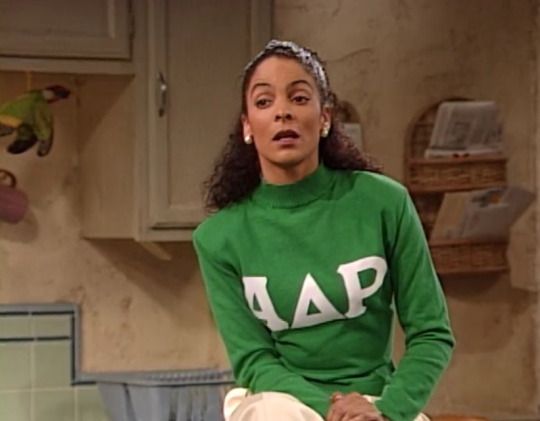
By season four, “Sister to Sister, Sister” returns to Greek life through Whitley, Kim, Ron and Terrence.
The episode is funny because hazing, ego and status create obvious comic material.
But underneath it is a serious question about what tradition is supposed to produce.
Humility?
Community?
Belonging?
Or just another hierarchy where people who suffered now get permission to make somebody else suffer?
That tension is one reason Greek life works so well on the show.
The letters are not costume decoration.
They represent history and membership, which means characters can value them while still arguing about the behavior attached to them.
Again, the show trusts viewers to understand that affection for a tradition and criticism of a tradition can exist in the same person.
The Pit Was Hillman’s Version of the Neighborhood Bar, Diner and Family Kitchen
The Pit was where college stopped being an institution and became a community.
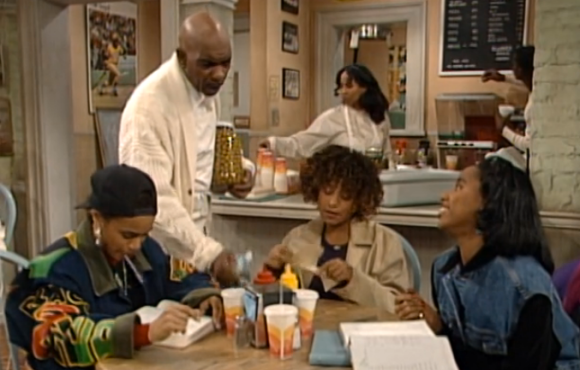
Classrooms gave Hillman its academic spine, but the Pit gave the series a place where different pieces of campus life could collide without an appointment.
Students worked there.
Students ate there.
People argued there because somebody they were trying to avoid had the nerve to walk in hungry.
Mr. Gaines could observe the whole social ecosystem from behind the counter.
That made the location structurally useful in the same way a great sitcom bar or coffee shop is useful.
Nobody needs a complicated reason to enter.
And once people are in the room, story can happen.
But the Pit had another layer because Lou Myers played Gaines like a man who understood that students come and go while the institution remains.
He could be irritable without being detached.
He could deliver advice without suddenly becoming the wise old television oracle.
He had his own life, his own marriage, his own opinions and his own limits on how much nonsense he planned to tolerate before somebody finished a sandwich.
Watching the show then, I probably did not think in terms of “community infrastructure.” I just knew the Pit felt right.
Years later, that is exactly what stands out.
Hillman had places where people belonged even when they were not accomplishing anything.
That is what makes a fictional campus feel inhabited instead of designed.
A Different World Made Careers, Money and the Fear of What Comes Next Part of Growing Up
Hillman was aspirational without pretending aspiration automatically pays the rent.
That is another reason the show hit differently from a lot of television college comedies.
The students were not just waiting for the next party.
They were trying to turn education into a future.
Dwayne’s technical ability opens doors to serious job opportunities.
Kim’s medical-school goal means grades are not abstract. They are connected to the life she is trying to build.
Whitley has to discover that taste and family background do not automatically produce a career.
Ron is pulled between what his father expects and what he wants from music.
Jaleesa’s entire presence at Hillman says that adulthood does not always happen in the sequence somebody drew for you at eighteen.
Season four’s “The Cash Isn’t Always Greener” puts Dwayne directly in front of the kind of choice college is supposed to prepare you for: take a strong job offer or continue to graduate school.
There is no villain in that decision.
Both options represent success.
That is why it feels real.
The show also understood something Gen X learned pretty quickly: becoming educated does not remove uncertainty.
Sometimes it gives you better choices and makes choosing harder.
Hillman was full of people trying to become doctors, engineers, business owners, artists, teachers and professionals, but the series usually kept the future just far enough away that nobody could take it for granted.
That pressure gave the comedy stakes without turning every episode into a crisis.
The Fashion, Hair and Music of A Different World Were Part of the Story
You can mute an old episode and still know roughly when Hillman was on television.
The colors alone will tell you.
Patterned shirts.
High-waisted jeans.
Bold jackets.
African-inspired prints.
Natural hair, braids, sculpted fades, curls and styles that made the ensemble look like different people instead of one network wardrobe department’s idea of “college.”
Dwayne’s flip-up glasses became one of the most recognizable accessories on television.
Whitley could turn a campus walkway into a runway because Jasmine Guy understood that the character’s clothing was part of how she controlled a room.
Freddie’s look told you she was not interested in Whitley’s rules before either of them opened their mouth.
The music mattered too.
The theme song changed voices over the run, but the opening always carried the idea of aspiration—getting somewhere, becoming something, entering a world that expected more from you.
The series also used performances and guest stars in ways that connected Hillman to a wider Black cultural tradition.
That cultural texture is part of why the show still feels so anchored to its era without feeling trapped in it.
A Different World Made Education Part of the Drama Instead of a Break From It
Plenty of college sitcoms barely remember the characters are supposed to attend class.
Hillman did.
Season four’s “How Bittersweet It Is” has students competing for space in an African-American history course.
That is already more interesting than the usual sitcom classroom setup because the class itself matters to who these students understand themselves to be.
Dwayne’s academic talent creates real career possibilities.
Kim’s pre-med path creates real stress.
Ron’s academic struggles create real consequences.
Whitley’s art and professional interests start becoming more than taste.
Education is not just a setting the show uses until a romantic plot starts.
It is one of the engines that changes the characters.
That also lets the series portray professors and academic expectations as part of Black institutional life rather than as barriers to fun.
Hillman expects something from these people.
Sometimes they rise to it.
Sometimes they dodge it.
Sometimes they discover the expectation itself needs to be challenged.
How A Different World Took On Politics, Health and Social Issues Without Leaving the Sitcom Behind
The easiest way to ruin a comedy is to announce that tonight’s episode is important. A Different World was at its best when importance grew out of the characters’ lives.
“No Means No” tackled date rape in season two through Freddie and Dwayne.
“A World Alike” used a scholarship and campus activism to explore South African apartheid.
Season four’s “War and Peace” aired in January 1991 as the Persian Gulf crisis was not some distant history-book subject but a live source of anxiety. Blair Underwood plays Dwayne’s friend Zelmer, whose Army Reserve unit is being sent to the Gulf.
Dwayne, Freddie and Col. Taylor respond differently because the show lets generation, friendship and politics shape the reaction.
Then came “If I Should Die Before I Wake.”
A young woman reveals in a public-speaking class that she is HIV-positive after contracting the virus through unprotected sex.
The episode lets fear, ignorance, sex, responsibility and stigma enter the same conversation.
Whoopi Goldberg appears as Dr. Jordan and the show gives the subject a seriousness that never requires pretending the characters suddenly stopped being themselves.
Debbie Allen has described the episode as groundbreaking in the way network television addressed AIDS.
What matters most now is not whether every line has aged perfectly.
It is that a top-rated sitcom believed its young audience could handle the conversation.
That trust is part of the show’s legacy.
A Different World Season 4 (1990–91): Why the Show Hit Its Peak
The 1990–91 season is where the show’s ambitions line up perfectly with the master-plan reason this article exists: Hillman was culturally specific and commercially enormous at the same time.
The season opens with “Everything Must Change,” which is almost too perfect a title.
Whitley is finally ready to acknowledge what she wants from Dwayne, only to discover he has returned from Japan with Kinu in his life.
That gives the season a romantic spine.
But the show keeps expanding around it.
“Blues for Nobody’s Child” turns attention toward Black children in foster care.
“Whitley’s Last Supper” uses money and academic pressure.
“Love Thy Neighbor” addresses homelessness and forces Ron to examine his assumptions.
“The Apple Doesn’t Fall” deals with career expectations and the legacy of segregation through Col. Taylor.
“War and Peace” puts the Gulf War into Dwayne’s social circle.
“Risk Around the Dollar” lets Whitley discover that rent does not care about family pedigree.
“Sister to Sister, Sister” returns to fraternity and sorority traditions.
“Monet Is the Root of All Evil” uses art, censorship and professional ambition.
“If I Should Die Before I Wake” addresses HIV/AIDS and sexual responsibility.
Then the season ends with graduation pressure, Walter leaving Hillman and Whitley considering a job in New York.
That is a lot of television for one sitcom season.
And yet the show rarely feels like it is checking topics off a list because the stories keep landing on characters we already know.
A Different World Ratings in 1991: How Hillman Finished #4
The cultural legacy sometimes makes people forget the simplest fact: A Different World was a ratings powerhouse. The A Different World ratings story matters because the show’s cultural influence was happening while millions of people were actually watching.
The Los Angeles Times called attention to the show in December 1990 as one of television’s major hits that did not always receive the press attention its audience suggested.
At that point in its fourth season, it was already ranked #4.
The final 1990–91 season ranking kept it there.
Cheers finished #1.
60 Minutes was #2.
Roseanne was #3.
A Different World was #4.
That put Hillman ahead of The Cosby Show, Murphy Brown, The Golden Girls, Designing Women, Full House, Family Matters and a long list of shows we now remember as major network institutions.
Our complete our ranking of the biggest TV shows of 1991 shows what that position meant in the larger Nielsen landscape.
The number is important because it destroys a lazy way of remembering television history.
A Different World was not merely “important representation” that critics later learned to appreciate.
People were watching it in huge numbers while it was happening.
A Different World Was Part of NBC’s Thursday-Night Habit Before Must See TV Had the 90s Label
If you were watching network television then, Thursday night on NBC had a gravitational pull.
The Cosby Show opened the night.
A Different World followed at 8:30.
Cheers came at 9.
That is an absurd amount of audience habit stacked into ninety minutes.
Lead-ins mattered in network television, and the schedule clearly helped expose viewers to Hillman.
But a lead-in cannot explain four seasons of top-tier ratings by itself.
People had to stay.
They stayed because the show built its own relationships, its own language and its own reasons to come back.
The final official week of the 1990–91 season is a nice snapshot: Cheers ranked first for the week and A Different World ranked second.
That is Hillman standing on its own next to one of the most acclaimed sitcoms ever made.
Where A Different World Fit Into the Early-90s Sitcom Shift
The top of the 1991 ratings was not one kind of America talking to itself. Among early-90s Black sitcoms, A Different World occupied an unusually powerful position because Hillman was both culturally specific and one of network television’s biggest hits.
Roseanne’s working-class realism and sharper family comedy.
A Different World was putting Black student life and HBCU-inspired culture there.
Murphy Brown’s mix of work, politics and an outspoken professional woman.
The broader story belongs in our companion about how Roseanne, Murphy Brown and A Different World changed early-90s prime time.
Hillman’s piece of that story is its own.
The show proved that cultural specificity did not have to be sanded down before a broad audience would accept it.
That matters because television has spent decades pretending the safest path to a mass audience is to make characters less particular.
A Different World went the other direction.
It made Hillman more specific.
The audience got larger.
Essential A Different World Season 4 Episodes From 1990–91
This is not a ranking of the best episodes of the entire series. These are season-four stories that show why Hillman could handle romance, politics, money, art, health and campus tradition without losing its identity.
“Everything Must Change”
Whitley returns ready to move toward Dwayne only to discover Kinu is now in the picture. The title could describe the entire post-season-one history of the series.
“How Bittersweet It Is”
Dwayne, Whitley and Ron continue the romantic mess while students compete for a coveted African-American history course, reminding us that Hillman’s academic world actually matters.
“Blues for Nobody’s Child”
Freddie becomes emotionally involved after learning more about Black children in foster care, connecting campus idealism with life outside Hillman.
“Love Thy Neighbor”
Ron’s assumptions about homelessness get challenged by someone he knows. The episode works because the issue enters through Ron’s blind spot rather than a lecture.
“War and Peace”
A friend of Dwayne’s is called to the Persian Gulf with his Army Reserve unit, forcing students and Col. Taylor to confront a live political crisis from different generational angles.
“Risk Around the Dollar”
Whitley’s rent problem turns privilege into arithmetic while Terrence’s interest in Islam broadens another part of Hillman’s cultural conversation.
“Sister to Sister, Sister”
Fraternity and sorority pledging give the show a chance to celebrate Greek life while questioning what tradition looks like when ego starts driving it.
“Monet Is the Root of All Evil”
Whitley’s student art exhibit becomes a test of professional ambition, artistic freedom and whether she will defend an artist when doing so becomes inconvenient.
“If I Should Die Before I Wake”
A student reveals she is HIV-positive, forcing Hillman to confront fear, misinformation, sex and stigma in one of the series’ most remembered issue-driven episodes.
“Never Can Say Goodbye”
Walter prepares to leave Hillman while Ron faces the possibility that he cannot graduate with his friends. College endings do not arrive equally for everybody.
A Different World Connected Young Viewers With Generations of Black Talent
The guest stars did more than make viewers yell, “Wait, is that…?”
Patti LaBelle could appear as Dwayne’s mother.
Diahann Carroll could enter Whitley’s family world.
Lena Horne appeared.
Whoopi Goldberg played a doctor in the HIV/AIDS episode.
Blair Underwood appeared in “War and Peace.”
Gladys Knight, Heavy D and others moved through Hillman’s orbit over the run.
The casting created a sense that this generation of students was connected to a much larger Black cultural world.
That intergenerational bridge matters.
Young viewers could see people who felt current without the show pretending Black television history started in 1987.
Older performers could enter the campus without turning the series into a museum.
Everybody belonged to the same continuum.
Whitley, Kim, Freddie and Jaleesa Expanded What Black Women Could Be on a Sitcom
The show did not ask one woman to carry the burden of representing everybody.
That sounds like a small thing until you remember how often television has done exactly that.
Whitley could be privileged, feminine, sharp, conservative in some ways and surprisingly vulnerable in others.
Kim could be ambitious, disciplined and exhausted.
Freddie could be political, impulsive and idealistic.
Jaleesa could be older, divorced, restarting her life and less interested in the drama that consumed the younger students—until her own life produced drama.
These women could love one another and get on one another’s nerves.
They could disagree about sex, money, men, work, politics and what growing up was supposed to look like.
That plurality is one of the reasons the show still feels richer than many ensemble sitcoms that came later.
Dwayne, Ron and the Men of Hillman Were Allowed More Than One Kind of Masculinity
Dwayne and Ron are friends without being variations of the same guy.
Dwayne’s intelligence is central to his identity.
Ron’s improvisation and charm are central to his.
Col. Taylor represents an older form of Black male authority shaped by military experience and a different generation’s expectations.
Walter offers another kind of adult male presence—less formal, more community-centered.
Terrence brings youth and uncertainty.
The series can put these men in the same episode and let them disagree without deciding one version of masculinity is the correct one.
That is especially valuable when the show takes on subjects such as war, career pressure, romance and fraternity culture.
The men do not become spokesmen.
They remain people.
Watching A Different World in the 90s: Why Hillman Felt Like the Future
This is where the Gizmo part of the memory kicks in for me: Hillman did not feel like a nostalgia show when we were watching it. It felt like the future.
College itself already had that quality if you were young enough.
It was the place where people became adults.
Where you met people from somewhere else.
Where nobody knew the version of you from middle school.
Where your clothes, politics, music and relationships could all change faster than your parents understood.
A Different World made that transition visible every Thursday.
The show also looked young in a way a lot of network television did not.
The colors were brighter.
The music had more movement.
The clothes looked like something people might actually notice in a record store or on campus.
The conversations were about where life was going instead of where it had been.
Even when I did not share the characters’ background, the emotional part of that transition was easy to recognize.
That is how specific storytelling becomes universal without watering itself down.
You do not make everybody identical.
You make the feelings true enough that everybody can find a door in.
Why A Different World Made Viewers Want to Go to Hillman Even Though Hillman Wasn’t Real
Some fictional places sell tourism. Hillman sold possibility.
The number of people who have said the series influenced their college plans is one of the most remarkable parts of its legacy.
That makes sense when you think about what viewers were shown.
College was not only exams.
It was friendship.
It was style.
It was tradition.
It was finding people who understood your references.
It was encountering people who challenged them.
It was becoming part of an institution that had a history before you arrived.
For Black teenagers who rarely saw HBCUs represented in mainstream media, that visibility could be powerful in a very direct way.
For everybody else, it made HBCUs part of the mental map of American higher education.
That is not a small cultural achievement for a sitcom.
Why Was A Different World So Popular in the Early 90s?
Because the show gave viewers two pleasures at once: a world they wanted to visit and people complicated enough to keep surprising them once they got there.
The NBC Thursday slot gave A Different World enormous visibility.
That matters and there is no reason to pretend otherwise.
But scheduling gets somebody through the door.
It does not make them care about Dwayne’s job decision, Whitley’s rent, Kim’s medical-school pressure or Freddie’s latest campaign four years later.
The show kept viewers because Hillman offered aspiration without perfection.
The students were stylish, smart and funny, but they also bombed exams, made terrible romantic decisions, worried about money, picked the wrong fight and occasionally discovered that their strongly held opinion had been built on incomplete information.
The cast chemistry mattered enormously.
Kadeem Hardison and Jasmine Guy could carry a romantic beat without draining the room of comedy.
Darryl M. Bell could make Ron ridiculous without making him disposable.
Cree Summer could push Freddie’s energy into a scene and change everybody else’s rhythm.
Charnele Brown gave Kim enough grounded pressure to keep some of the broader characters from floating away.
Then the adults gave the world weight.
There was also the simple thrill of seeing a television show that looked confident in its own identity.
A Different World did not behave like it was asking permission to take up Thursday-night space.
By 1991, the ratings showed it did not need to.
A Different World Legacy: How Hillman Changed 90s Television
The deepest part of the A Different World legacy is that the show never needed Hillman to become less Black in order to become more popular. Hillman College on television worked because the series trusted the specificity of the world instead of sanding it down.
That is the lesson worth keeping.
Television executives have spent generations worrying that specificity narrows an audience.
Hillman suggested the opposite.
Give viewers a place that feels lived in.
Give characters real differences.
Let the traditions belong to the people on screen instead of explaining them for outsiders.
Then tell good stories.
By 1991, that formula had put A Different World at #4 in the entire country.
The series also helped normalize a kind of Black ensemble television that would echo through later sitcoms and dramas.
Young Black professionals, students, academics, artists and families could occupy television worlds where the story was not always about being Black in relation to white people.
They could simply live inside Black communities with their own internal debates, class tensions, humor, romance and history.
That shift is bigger than one show.
Black college life became a sustained mainstream television world instead of a special-topic episode.
HBCU traditions, class differences and cultural detail made the show broader by making it more believable.
Viewers saw Hillman and imagined college, HBCUs and young adulthood differently.
The final reason Hillman still matters is the simplest one.
People miss it.
Not just the characters.
The place.
That is when you know a television world worked.
A Different World FAQ: Hillman College, Ratings, Cast and Legacy
How popular was A Different World in 1991?
A Different World finished the 1990–91 television season ranked #4 nationally, behind Cheers, 60 Minutes and Roseanne.
Was Hillman College a real school?
No. Hillman College was fictional, but the show drew heavily from historically Black college and university traditions. Debbie Allen’s own experience at Howard University strongly informed the series after she joined as producer and director.
What HBCU was A Different World based on?
Hillman was not a direct copy of one institution. Howard University was especially influential through Debbie Allen, while the show drew from broader HBCU culture and traditions.
Why did A Different World change after season one?
Lisa Bonet left after the first season, and Debbie Allen joined the creative team. The show shifted toward a stronger ensemble, deeper HBCU specificity and more socially and culturally grounded stories.
Who were the main characters in A Different World during the 1990–91 season?
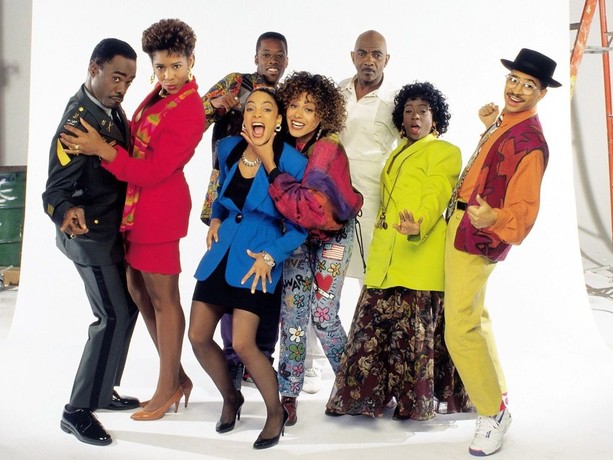
The core ensemble included Whitley Gilbert, Dwayne Wayne, Kim Reese, Freddie Brooks, Ron Johnson, Jaleesa Vinson, Walter Oakes, Col. Taylor and Mr. Gaines, along with recurring students and family members.
What season of A Different World aired in 1990–91?
Season four aired from September 1990 through May 1991 and contained 25 episodes.
What serious issues did A Different World address?
Across its run, the show addressed subjects including date rape, apartheid, homelessness, racism, the Persian Gulf War, HIV/AIDS, class, money, gender expectations and career pressure.
What episode of A Different World dealt with HIV/AIDS?
Season four’s “If I Should Die Before I Wake,” first aired in April 1991, centered on a student revealing that she was HIV-positive and challenged fear and misinformation around the disease.
Did A Different World affect HBCU enrollment?
The show is widely credited with increasing interest in historically Black colleges and universities. Debbie Allen has long described a major enrollment impact, and a Television Academy retrospective cites a 26 percent HBCU enrollment increase during the original run.
Why were Dwayne Wayne and Whitley Gilbert so popular?
Their relationship grew slowly from irritation and attraction into a complicated young-adult partnership. Their class differences, personalities, ambition and mistakes kept the romance from becoming a simple opposites-attract formula.
Why is A Different World still important?
It made HBCU-inspired Black college life central to mainstream prime time, showed a wide range of Black identities and experiences, and proved that cultural specificity could attract a huge national audience.
A Different World history, ratings and cultural sources
- Television Academy Interviews — A Different World, for the series history, creative transition and interviews with Debbie Allen, Yvette Lee Bowser, Marcy Carsey, Tom Werner and others.
- Television Academy Interviews — Debbie Allen, for Allen’s account of reshaping the series, bringing HBCU culture into the show and addressing social issues.
- Television Academy — Debbie Allen Foundation Interview, for her explanation of the changes she made to the show and its HBCU impact.
- Los Angeles Times — “People Pleasers,” December 2, 1990, identifying A Different World as the #4-ranked series during its fourth season.
- Los Angeles Times — April 17, 1991 Nielsen report, for the final official week of the 1990–91 season, when A Different World ranked second for the week.
- TV Guide — A Different World Season 4 episode guide, for 1990–91 episode titles, dates and story summaries.
- Television Academy — A Different World legacy retrospective, for the show’s HBCU influence and later cultural legacy.