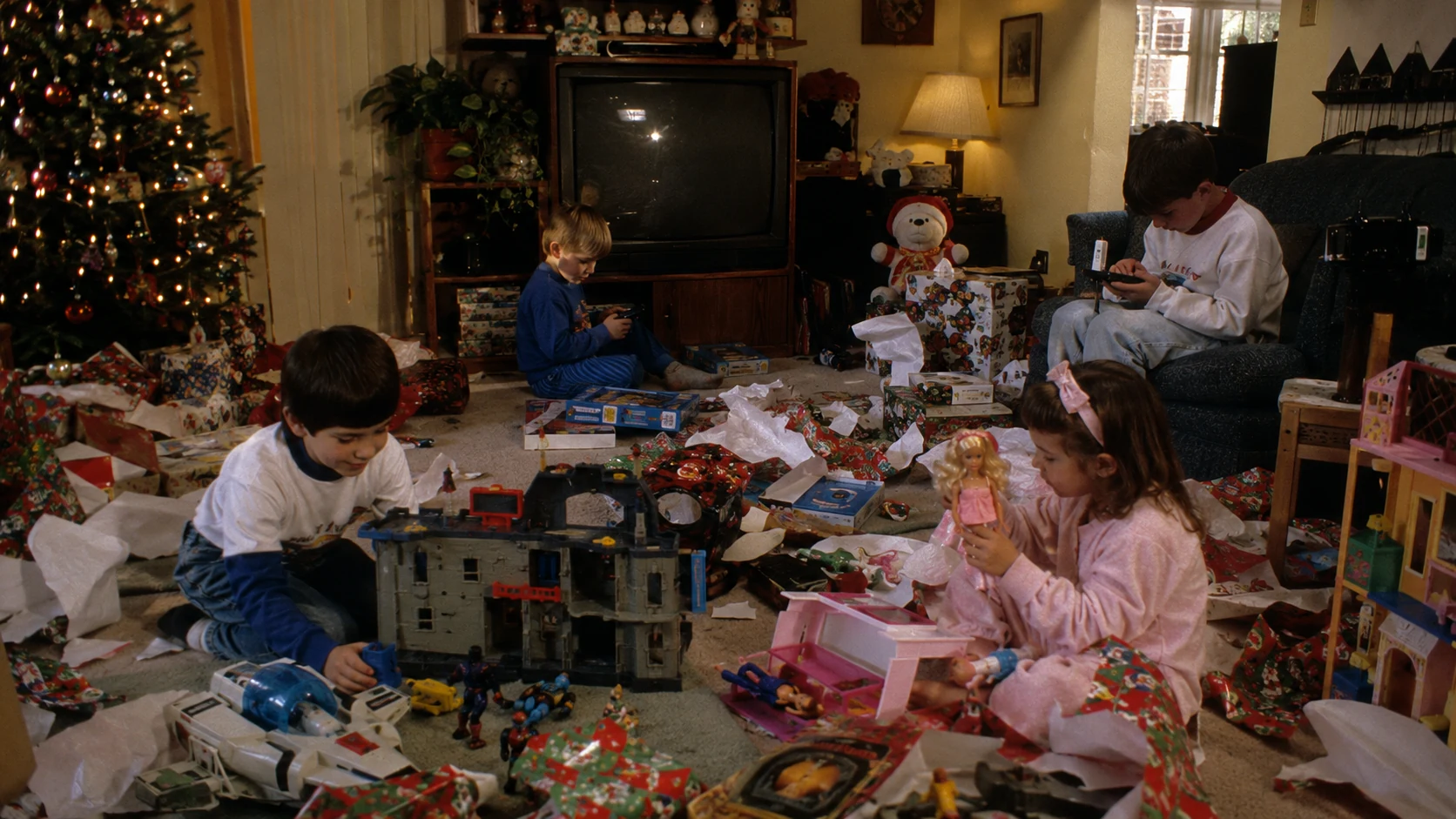
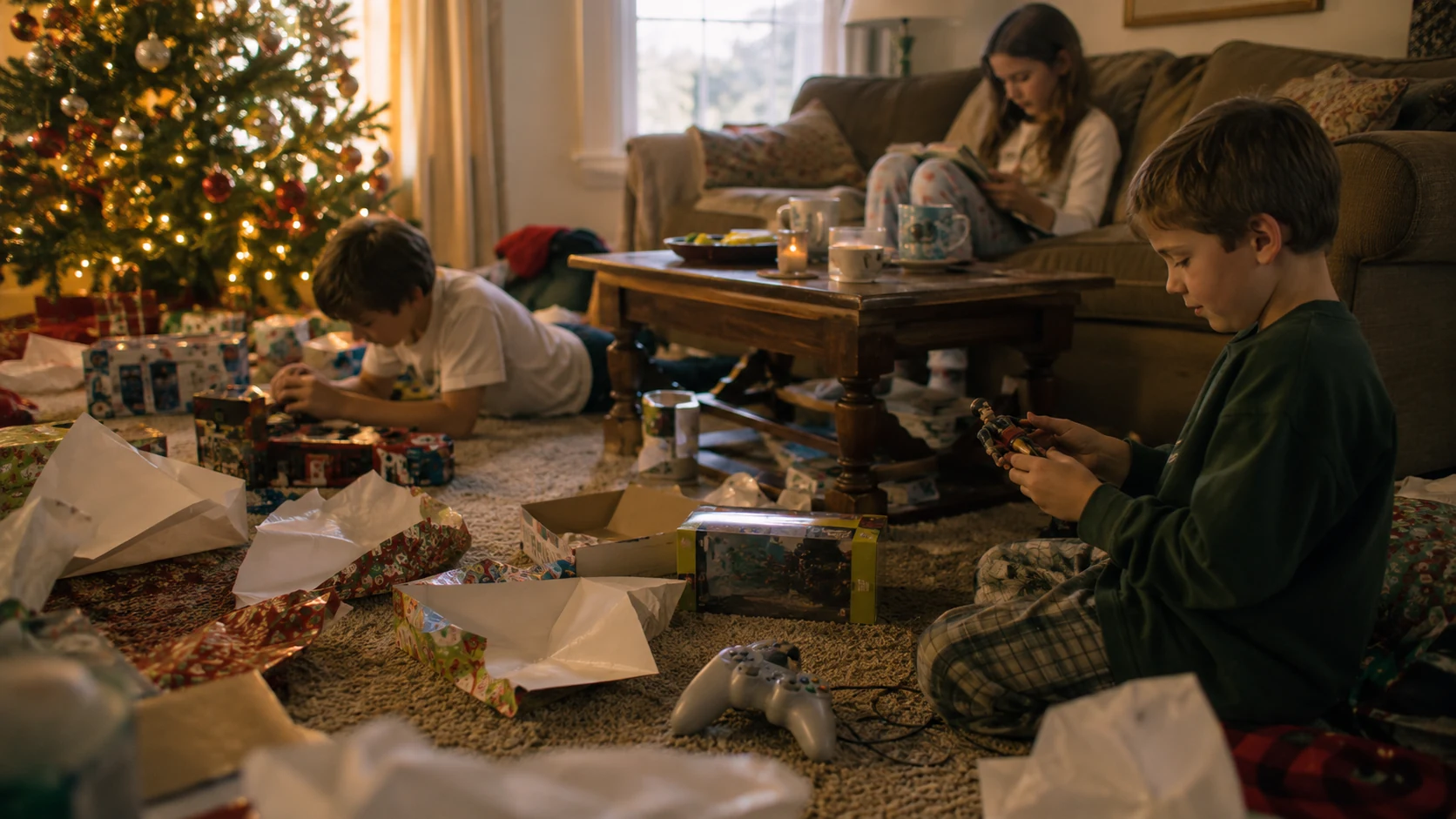
Christmas in the 1990s was not a peaceful little scene of cocoa, wrapping paper and reasonable expectations. It was television commercials at full volume, toy catalogs folded open to the same page for six straight weeks, parents calling three stores before breakfast, and one kid at school claiming his uncle could get the impossible toy “from a guy.”
This year-by-year guide rewinds the hottest Christmas toys of the 90s, from Turtle Power and Super Soaker to Power Rangers, Beanie Babies, Tickle Me Elmo, Tamagotchi, Furby and Pokémon. It is not a modern gift guide and it is not another generic list of every toy sold during the decade. This is the story of the must-have toys that turned ordinary holiday shopping into full-scale cultural events.
Every year section goes beyond the headline toy to examine the competing wish-list hits, the commercials and media that created demand, the way stores and catalogs shaped the hunt, and why each season felt different from the one before it. Start with the 50 Most Iconic Toys of the 90s or explore the complete 90s Toys hub for every year-by-year list and major toy category.
The year-defining holiday leaders were Teenage Mutant Ninja Turtles in 1990 and 1991,
Troll Dolls in 1992, Deluxe Talkboy in 1993,
Mighty Morphin Power Rangers in 1994,
Barbie in 1995, Tickle Me Elmo in 1996,
Tamagotchi in 1997,
Furby in 1998 and
Pokémon Trading Cards in 1999.
Each season also had a deeper field of consoles, dolls, action figures, collectibles and movie toys competing for the same Christmas budget.
The biggest single holiday frenzy was Tickle Me Elmo in 1996, while Furby in 1998 and Pokémon in 1999 closed the decade with the full late-90s formula: electronics, scarcity, media coverage, collecting and parents wondering why a toy with three buttons had become a national emergency.
Jump to a Christmas
90s Christmas Toys by Year
Each annual section connects to the complete Top 10 Toys page for that year, so this post can focus on the holiday rush while the year pages handle the broader rankings.
The Fast Rewind
The Defining Christmas Toy From Every Year
There was never only one popular toy, but each holiday season had at least one product that best captured the mood, the commercials and the level of parental panic.
The toys changed, but the machine behind the craze became more powerful every year.
Commercials created the desire, catalogs organized it, and crowded toy aisles turned it into a holiday mission.
The Commercial
Fast cuts, neon lighting, fake smoke, screaming kids and an announcer with the urgency of a missile launch made ordinary plastic look like the only thing standing between you and a ruined childhood.
The Screen Tie-In
Cartoons and movies no longer merely inspired toys. They functioned as half-hour demonstrations. TMNT, Power Rangers, Jurassic Park, Toy Story and Pokémon made the shelf feel like an extension of the screen.
The Shortage
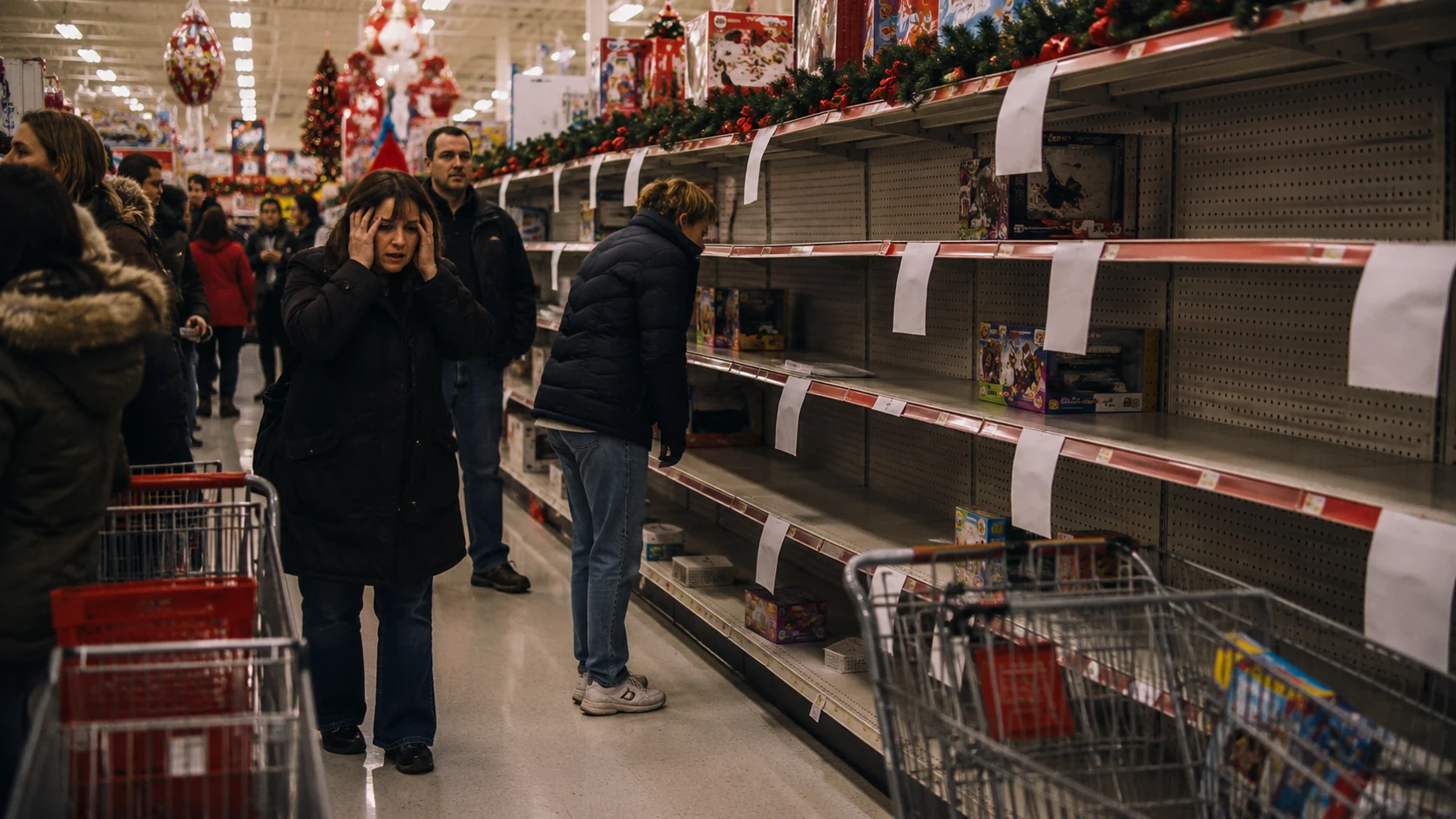
Once parents heard a toy might be hard to find, the toy became harder to find. Empty shelves created news coverage, news coverage created urgency, and urgency turned the next shipment into a parking-lot event.
The Kid Network
School finished the job. Recess, lunch tables, sleepovers and handwritten Christmas lists spread demand faster than any catalog. By December, every kid knew who had the toy and whose parents were still “looking.”
Christmas 1990 • Turtle Power Meets Nintendo Power
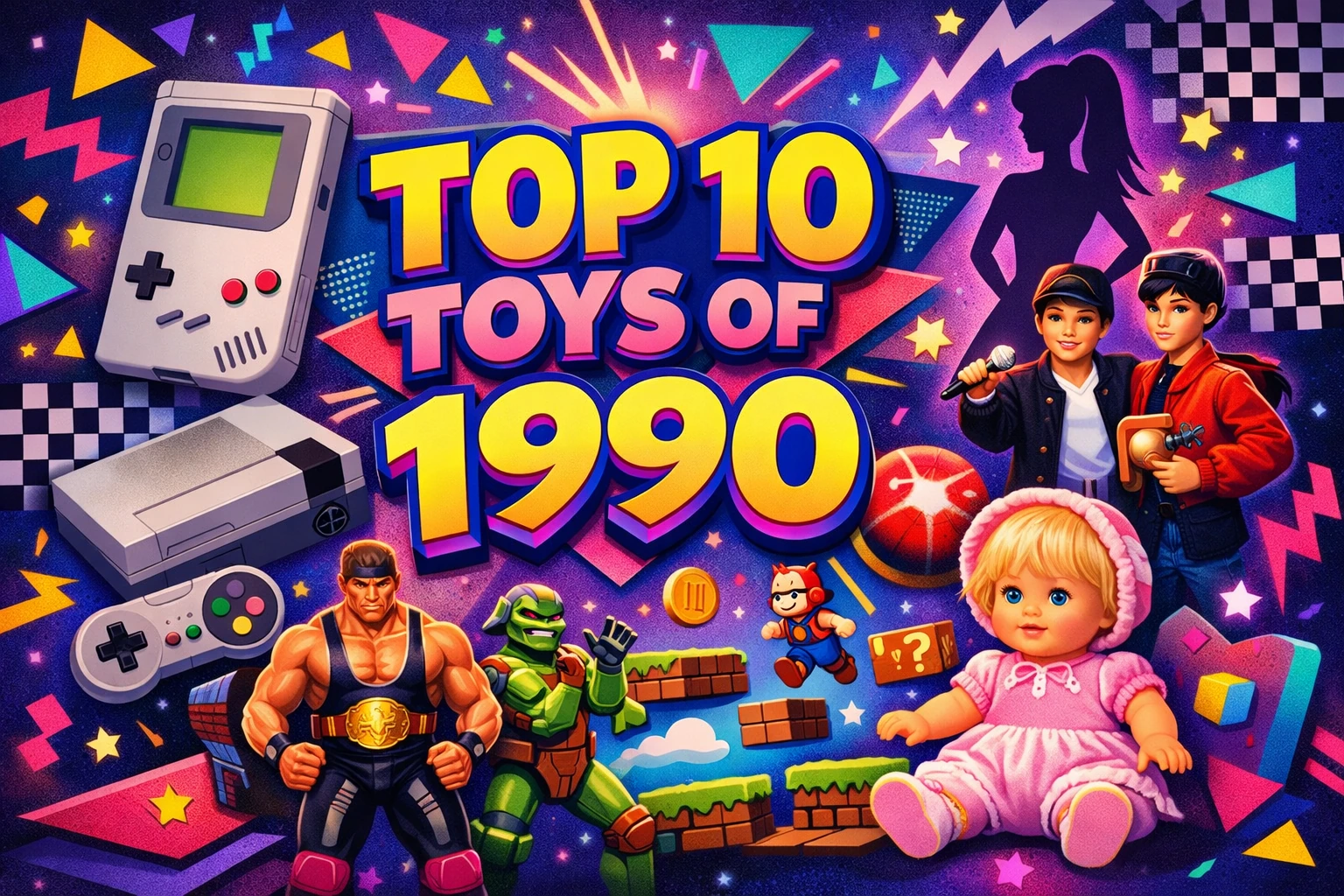
Christmas 1990 was not ruled by one surprise gimmick that appeared out of nowhere. It was ruled by brands that had already become too large to ignore. Teenage Mutant Ninja Turtles sat at the top because the franchise had expanded beyond a few action figures into vehicles, playsets, games, movie momentum and enough licensed merchandise to make the average bedroom look like a sewer-adjacent retail outlet.
Nintendo supplied the other half of the holiday pressure. The Nintendo Entertainment System remained a major family purchase, Super Mario Bros. 3 felt like an event rather than another cartridge, and Game Boy made portable gaming a legitimate Christmas-list category. Barbie held the doll aisle with the confidence of a brand that had survived every cultural shift adults could throw at it.
That combination makes 1990 a perfect opening chapter for the decade. The biggest gifts were not isolated objects. They were gateways into systems. A Turtle figure led to more figures, vehicles and villains. A Nintendo console led to cartridges, controllers and arguments over whose turn it was. Barbie came with fashions, accessories and a retail universe that never seemed to run out of square footage.
The rest of the ranking shows how much late-80s energy was still flowing into the new decade. WWF figures translated television personalities into carpet-level rivalries. New Kids on the Block dolls proved that music fandom could move directly into the toy aisle. Batman remained powerful after the 1989 movie, while Magic Nursery, My Pretty Ballerina and other doll lines pushed nurturing and performance play back into the holiday conversation.
Super Soaker was beginning to change outdoor play, but it does not belong at the center of this specific Christmas ranking. The completed 1990 list is much more clearly about Turtle Power, Nintendo dominance, Barbie durability and the ability of familiar brands to crowd out almost everything else during an uncertain retail year.
The practical shopping experience matched that story. Parents were not trying to decode ten completely unfamiliar crazes. They were being asked for exact characters, exact games and exact versions inside brands they already recognized. That made the request easier to understand and harder to dodge.
Christmas 1990 at a Glance
Top 10 Christmas Toys of 1990
These were the ten toys that best captured the wish lists, store shelves and holiday buzz of 1990. For the full countdown, visit Top Toys of 1990.
#1 — Teenage Mutant Ninja Turtles
#2 — Nintendo Entertainment System
#3 — Barbie
#4 — Super Mario Bros. 3
#5 — World Wrestling Federation Figures
#6 — New Kids on the Block Dolls
#7 — My Pretty Ballerina
#8 — Batman: The Dark Knight Collection
#9 — Magic Nursery
#10 — Game Boy
Why TMNT Was the Clear Number One
The Turtles reached nearly every price level and every kind of play. A basic figure could be an affordable gift, while vehicles and large playsets turned the line into the main event under the tree. The brand also had the rare advantage of being equally powerful on television, in theaters and in toy stores.
Nintendo Became Holiday Infrastructure
The NES was no longer a novelty by 1990. It was part of the household entertainment budget. Super Mario Bros. 3 gave the system fresh urgency, while Game Boy made Nintendo portable and ensured that batteries, cartridges and screen glare became part of family travel.
The Doll Aisle Was Far From Quiet
Barbie remained the center of gravity, but My Pretty Ballerina, Magic Nursery and New Kids on the Block dolls showed how broad the category had become. Fashion, nurturing play, performance and celebrity fandom all had room on the same Christmas list.
#1 for 1990
Teenage Mutant Ninja Turtles
The toy that owned the year’s Christmas conversation.
#2 for 1990
Nintendo Entertainment System
One of the season’s biggest wish-list hits.
#3 for 1990
Barbie
A major toy-aisle presence that helped define the year.
Keep Rewinding 1990
See all ten toys, the full countdown and more of the stories behind that year’s holiday aisle.
1991: TMNT, Barbie and the 16-Bit Console War Rule Christmas
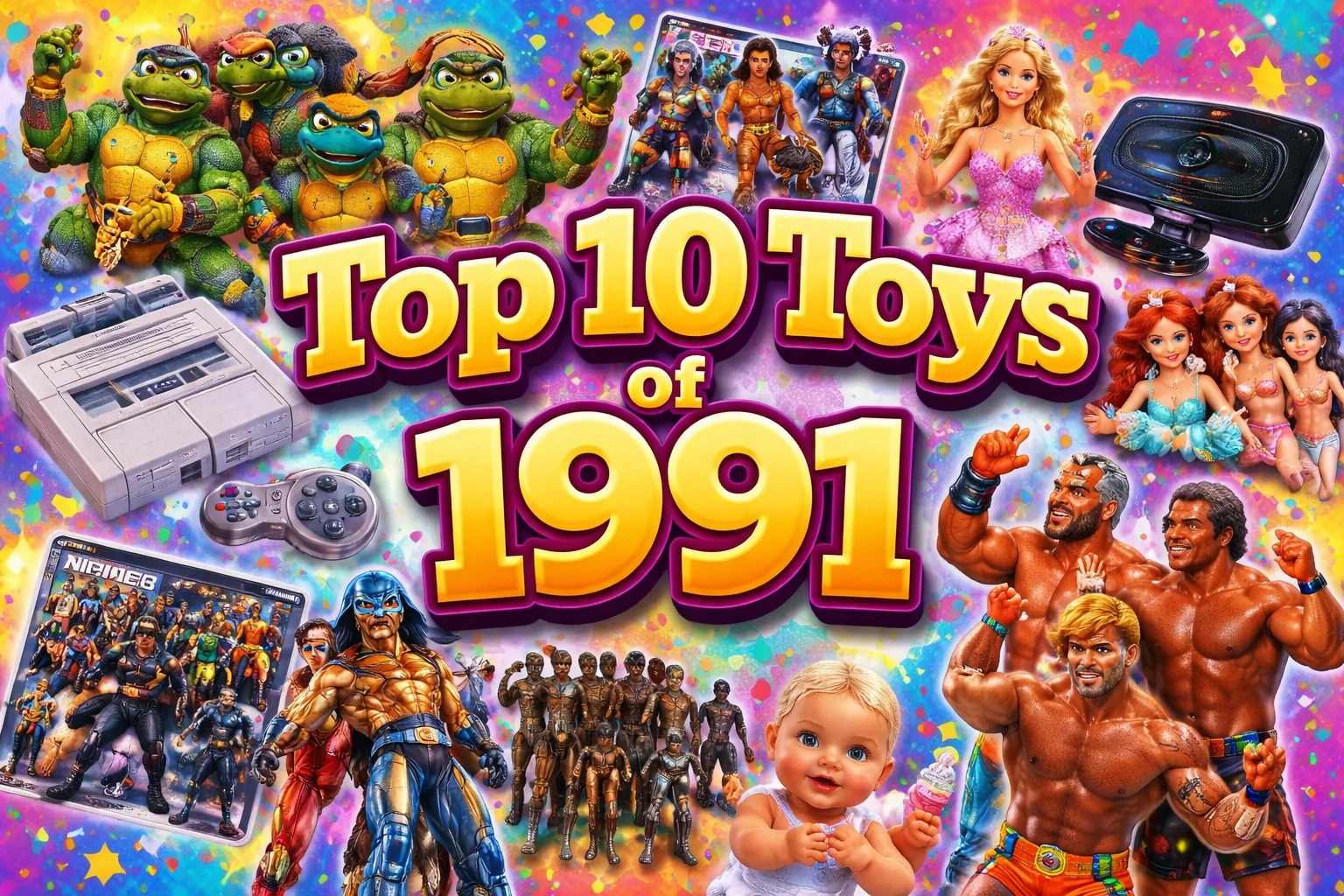
The hottest Christmas toys of 1991 were led by brands families already trusted, but the hardware underneath the tree was changing fast. Teenage Mutant Ninja Turtles stayed on top, Barbie remained nearly impossible to dislodge, and the arrival of Super Nintendo turned the holiday season into a very expensive argument about which 16-bit console deserved the television.
Sega Genesis gave that argument teeth. This was no longer Nintendo competing mainly with the memory of Atari. Kids were comparing speed, graphics, game libraries and playground bragging rights. A console was not merely a toy. It was a platform choice that could shape birthdays and Christmases for years.
The list also shows that 1991 was broader than the console war. The Little Mermaid doll lines extended Disney movie affection into bedrooms and playrooms. Waterbabies offered a softer, nurturing hit. G.I. Joe, X-Men, WWF figures and Robin Hood toys kept the action aisle crowded with military, superhero, wrestling and movie-based options.
Super Soaker was still culturally important, but the completed ranking makes clear that it should not be presented as the central Christmas story of 1991. The year’s strongest holiday narrative is the continued power of TMNT and Barbie combined with the major shift toward 16-bit gaming.
Polly Pocket also belongs to the broader early-90s toy story, but it does not outrank the toys on this annual list. In the Christmas article, it works better as evidence that miniature play was growing rather than as one of the year’s defining top-three gifts.
What made 1991 feel different was the pressure to choose a side. A Turtle fan needed specific characters. A Barbie fan wanted particular fashions or playsets. A gamer had to think about Nintendo versus Sega. Christmas shopping was becoming less about finding a generally appropriate toy and more about entering the exact ecosystem a child had already selected.
Christmas 1991 at a Glance
Top 10 Christmas Toys of 1991
These were the ten toys that best captured the wish lists, store shelves and holiday buzz of 1991. For the full countdown, visit Top Toys of 1991.
#1 — Teenage Mutant Ninja Turtles
#2 — Barbie
#3 — Super Nintendo Entertainment System
#4 — Sega Genesis
#5 — The Little Mermaid Doll Lines
#6 — G.I. Joe
#7 — Waterbabies
#8 — X-Men
#9 — World Wrestling Federation Figures
#10 — Robin Hood: Prince of Thieves Figures
TMNT Still Had Shelf Power
The franchise was no longer new, but it remained one of the most reliable names in the aisle. New figures, vehicles and variations kept the line moving, while television and movie visibility ensured that kids did not need a reminder that Turtle Power was still active.
The Console War Becomes a Christmas Story
Super Nintendo and Sega Genesis turned hardware into identity. The question was not simply whether a family would buy a console. It was which console, which games and which side of the playground debate the household was about to join.
Dolls and Figures Shared the Year
Barbie, Little Mermaid dolls and Waterbabies gave the doll aisle major weight, while G.I. Joe, X-Men, WWF and Robin Hood figures kept action play fragmented across several recognizable worlds.
#1 for 1991
Teenage Mutant Ninja Turtles
The toy that owned the year’s Christmas conversation.
#2 for 1991
Barbie
One of the season’s biggest wish-list hits.
#3 for 1991
Super Nintendo Entertainment System
A major toy-aisle presence that helped define the year.
Keep Rewinding 1991
See all ten toys, the full countdown and more of the stories behind that year’s holiday aisle.
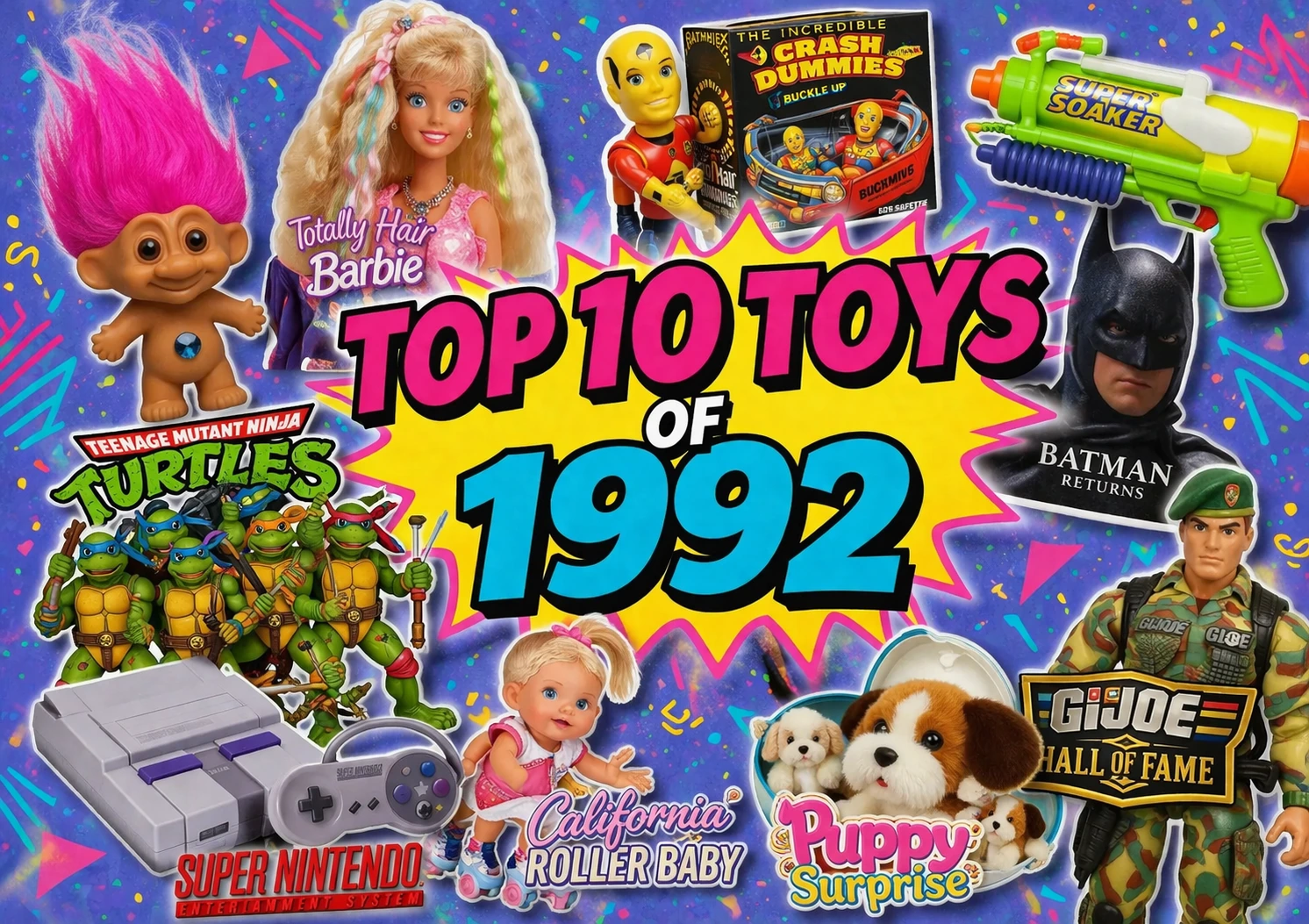
The top Christmas toys of 1992 prove that the decade did not move in one neat technological direction. Troll Dolls returned with neon hair and jewel-bellied weirdness. Totally Hair Barbie turned extreme length into a perfect visual gimmick. The Incredible Crash Dummies made vehicular destruction look educational enough to survive a parent conversation.
Batman Returns toys, Super Soaker, TMNT and Super Nintendo kept blockbuster characters, outdoor play and 16-bit gaming firmly in the mix. Meanwhile, California Roller Baby and Puppy Surprise showed how strongly dolls and plush toys could compete when the product came with an obvious, demonstrable hook.
Talkboy belongs in the cultural setup because Home Alone 2 introduced the fantasy in 1992, but the real retail panic arrived in 1993. Creepy Crawlers and Dr. Dreadful were part of the era’s gross-out energy, while Christmas 1992 itself was ruled by Troll Dolls, Totally Hair Barbie, Crash Dummies, Batman Returns toys and Super Soaker.
The actual 1992 story is much stranger and more interesting. Retro Troll Dolls could sit beside cutting-edge Super Nintendo hardware. Totally Hair Barbie could dominate the doll aisle while Crash Dummies encouraged kids to smash plastic bodies into walls and reset them for another collision. The toy market was becoming comfortable selling nostalgia, novelty and technology at the same time.
Super Soaker earns its place because it had already transformed the expectations around water toys. Batman Returns brought dark movie styling into action figures and vehicles. G.I. Joe Hall of Fame enlarged a familiar brand for a new kind of collector and child, while TMNT demonstrated that the early-decade giant still had momentum.
Puppy Surprise and California Roller Baby also matter because they show how much of toy marketing depended on a feature that could be understood in seconds. A reveal, a rolling motion, extremely long hair or a body that flew apart on impact gave the commercial an instant story. In 1992, the gimmick had to explain itself before the next ad started.
Christmas 1992 at a Glance
Top 10 Christmas Toys of 1992
These were the ten toys that best captured the wish lists, store shelves and holiday buzz of 1992. For the full countdown, visit Top Toys of 1992.
#1 — Troll Dolls
#2 — Totally Hair Barbie
#3 — The Incredible Crash Dummies
#4 — Batman Returns Toys
#5 — Super Soaker
#6 — Teenage Mutant Ninja Turtles
#7 — Super Nintendo Entertainment System
#8 — G.I. Joe Hall of Fame
#9 — California Roller Baby
#10 — Puppy Surprise
Trolls Proved Old Toys Could Become New Crazes
The comeback worked because Troll Dolls were inexpensive, visually loud and easy to collect. Hair colors, sizes and variations turned a toy with older roots into something that felt perfectly at home in the early 90s.
Barbie and Crash Dummies Owned the Demonstration
Totally Hair Barbie was instantly recognizable from across an aisle, while Crash Dummies could show their entire premise in one collision. Both products understood that a strong commercial needed a visual payoff that a child could repeat at home.
Talkboy Was a 1993 Problem Waiting to Happen
The movie planted the demand in 1992, but the mass-market Deluxe Talkboy became the hard-to-find Christmas object the following year. Treating it as a 1992 retail winner blurs the strongest part of its actual story.
#1 for 1992
Troll Dolls
The toy that owned the year’s Christmas conversation.
#2 for 1992
Totally Hair Barbie
One of the season’s biggest wish-list hits.
#3 for 1992
The Incredible Crash Dummies
A major toy-aisle presence that helped define the year.
Keep Rewinding 1992
See all ten toys, the full countdown and more of the stories behind that year’s holiday aisle.
1993: Talkboy and Power Rangers Trigger the First Full-Scale 90s Toy Panic
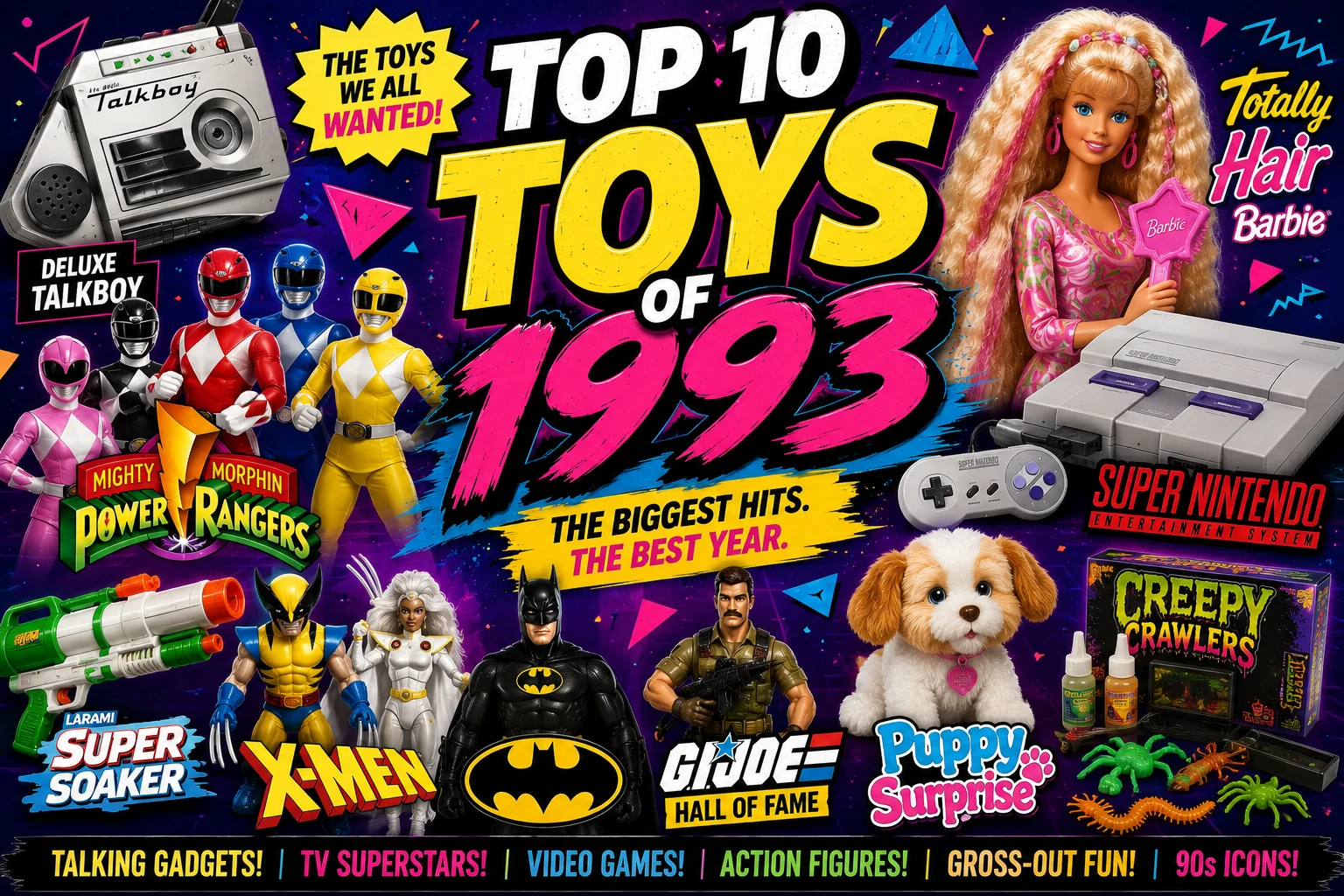
Christmas 1993 is where the toy aisle stopped feeling merely busy and started feeling unstable. Deluxe Talkboy turned a movie prop into a real gadget kids could use for pranks, slow-motion voices and evidence that adults were apparently very easy to fool. Mighty Morphin Power Rangers arrived with enough television momentum to create shortages before many parents had learned the names of all five Rangers.
The completed ranking supports that exact hierarchy: Talkboy first, Power Rangers second, then Totally Hair Barbie, Super Nintendo, Super Soaker and a deep bench of action figures, plush reveals and gross-out activity toys.
Power Rangers created demand on several levels at once. Kids wanted individual figures, weapons, villains, Zords and the combining Megazord. The line was designed to make one purchase feel incomplete, which is excellent franchise engineering and terrible news for anyone hoping to finish shopping in one trip.
Talkboy worked differently. It was a singular object with a crystal-clear fantasy attached to it. Kids had already watched Kevin McCallister use the gadget on screen. The retail version did not have to explain why it mattered. The movie had already performed the demonstration for millions of households.
Totally Hair Barbie remained one of the decade’s strongest doll moments, while Super Nintendo kept its premium-gift status. Super Soaker continued the backyard arms race. X-Men, Batman and G.I. Joe Hall of Fame gave action-figure buyers several universes to enter, and Puppy Surprise and Creepy Crawlers delivered two very different kinds of reveal.
Jurassic Park toys were a major 1993 movie-to-toy event and deserve contextual coverage, but they should not replace any of the ranked toys in the annual Christmas summary. They belong in an additional movie-merchandise paragraph, not in the top-three framing.
Christmas 1993 at a Glance
Top 10 Christmas Toys of 1993
These were the ten toys that best captured the wish lists, store shelves and holiday buzz of 1993. For the full countdown, visit Top Toys of 1993.
#1 — Deluxe Talkboy
#2 — Mighty Morphin Power Rangers
#3 — Totally Hair Barbie
#4 — Super Nintendo Entertainment System
#5 — Super Soaker
#6 — X-Men Action Figures
#7 — Batman Toys
#8 — G.I. Joe Hall of Fame
#9 — Puppy Surprise
#10 — Creepy Crawlers
Talkboy Was the Perfect Movie-Prop Toy
The product arrived with a complete use case already installed in kids’ heads. It was portable, electronic and mischievous, and it let children imitate one of the most memorable gadgets in a massive family movie.
Power Rangers Turned Television Into Immediate Demand
The speed of the takeover mattered. The show did not slowly build a collector base. It created urgent character recognition and a shopping problem almost immediately.
The Rest of the List Shows the Full 90s Mix
Barbie, Nintendo, water blasters, superheroes, military figures, plush surprises and gross-out craft toys all shared the same year. That range is why 1993 feels like the decade reaching full toy-store volume.
#1 for 1993
Deluxe Talkboy
The toy that owned the year’s Christmas conversation.
#2 for 1993
Mighty Morphin Power Rangers
One of the season’s biggest wish-list hits.
#3 for 1993
Totally Hair Barbie
A major toy-aisle presence that helped define the year.
Keep Rewinding 1993
See all ten toys, the full countdown and more of the stories behind that year’s holiday aisle.
1994: Power Rangers, Talkboy and My Size Barbie Dominate Christmas
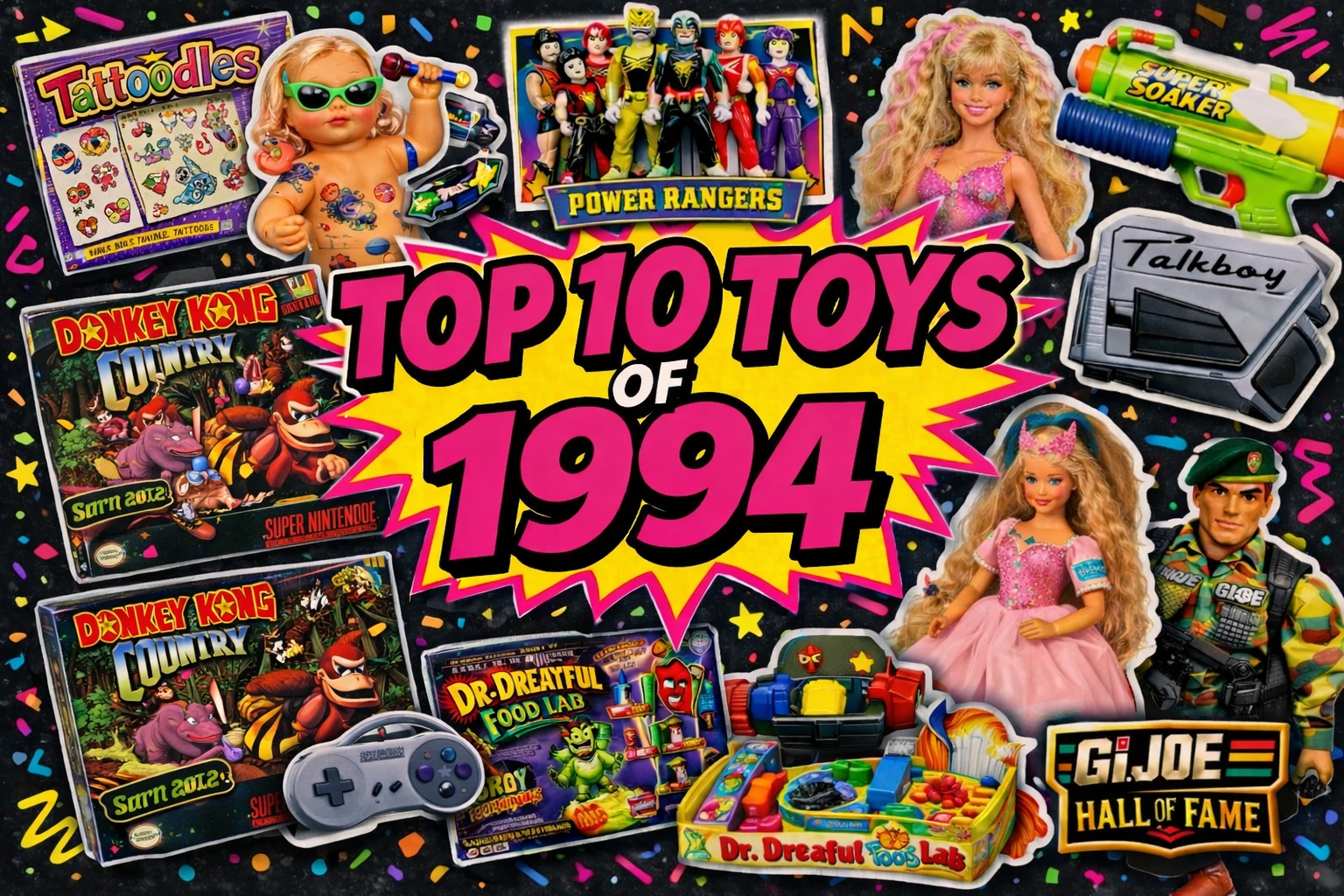
The top Christmas toys of 1994 were led by Mighty Morphin Power Rangers, and this time the frenzy had a full year of television recognition behind it. Parents knew the name now. That did not make the right figures or Megazord easier to find. Deluxe Talkboy remained hot, proving that the gadget had more than one holiday season in it, while My Size Barbie gave the doll aisle a present large enough to become part of the room.
Super Nintendo continued to carry big-ticket status. Dr. Dreadful Food Lab supplied the year’s gross-out laboratory energy, and X-Men, Batman and G.I. Joe Hall of Fame kept action figures divided across superheroes and legacy brands.
Pogs absolutely mattered to schoolyards, backpacks and convenience-store counters, but the biggest gifts under the tree told a different story. Christmas 1994 was led by Power Rangers, Talkboy, My Size Barbie, Super Nintendo and toys with big, easy-to-demonstrate gimmicks.
My Pretty Topsy Tail and Tattoodles show how the doll aisle kept chasing visible features and stronger personalities. A toy needed a hook that worked in a television commercial and still felt fun after the wrapping paper was gone. Styling, scale, tattoos and transformation features gave those products a reason to stand apart from generic dolls.
Dr. Dreadful fit the same commercial logic from the gross-out side. The product promised experiments that looked disgusting, felt mildly rebellious and could be performed in the kitchen while adults reconsidered every purchase decision that led to this moment.
Pogs, Polly Pocket and Mighty Max remain useful secondary context because they capture the miniature and schoolyard energy of the year. They should simply be labeled as parallel crazes rather than presented as toys that outranked the annual list.
Christmas 1994 at a Glance
Top 10 Christmas Toys of 1994
These were the ten toys that best captured the wish lists, store shelves and holiday buzz of 1994. For the full countdown, visit Top Toys of 1994.
#1 — Mighty Morphin Power Rangers
#2 — Deluxe Talkboy
#3 — My Size Barbie
#4 — Super Nintendo Entertainment System
#5 — Dr. Dreadful Food Lab
#6 — X-Men Action Figures
#7 — Batman Toys
#8 — My Pretty Topsy Tail
#9 — G.I. Joe Hall of Fame
#10 — Tattoodles
Power Rangers Had Become the Main Event
By 1994, the brand had moved beyond surprise hit status. It was a full merchandising machine with characters, weapons, villains and combining robots that encouraged increasingly specific Christmas requests.
Talkboy Proved Some Crazes Had a Second Season
The gadget remained desirable because the play pattern survived the initial movie connection. Recording voices and slowing them down was still funny, portable and easy to demonstrate to every relative in the house.
1994 Rewarded Toys With Obvious Features
My Size Barbie, Topsy Tail, Tattoodles and Dr. Dreadful all had a clear visual or physical hook. The product could explain itself in a few seconds and then keep generating play after the commercial ended.
#1 for 1994
Mighty Morphin Power Rangers
The toy that owned the year’s Christmas conversation.
#2 for 1994
Deluxe Talkboy
One of the season’s biggest wish-list hits.
#3 for 1994
My Size Barbie
A major toy-aisle presence that helped define the year.
Keep Rewinding 1994
See all ten toys, the full countdown and more of the stories behind that year’s holiday aisle.
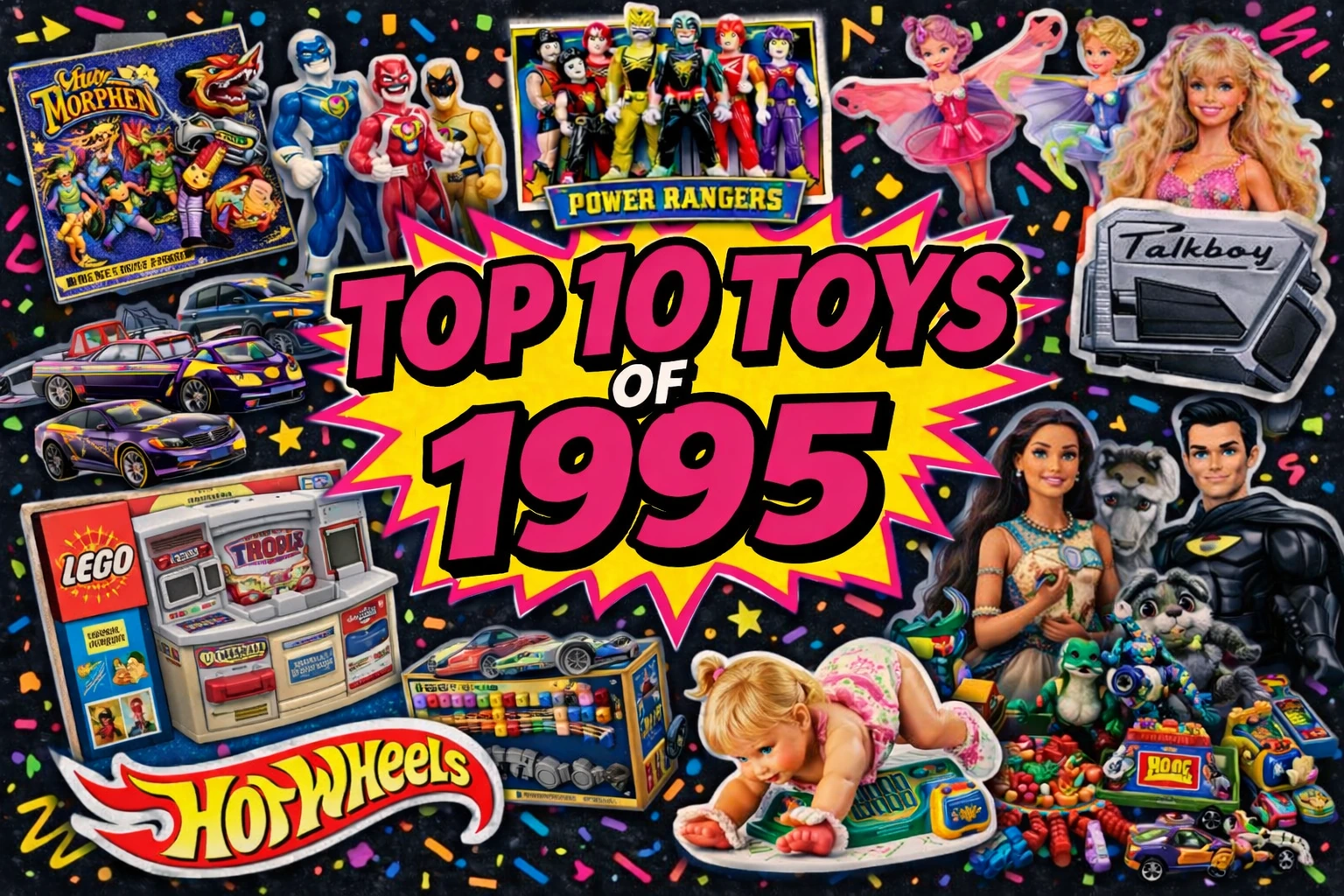
Christmas 1995 was not defined by one unbeatable national shortage. It was a fragmented year led by Barbie, with Sky Dancers emerging as the clearest new sensation and Power Rangers still carrying major franchise power. Deluxe Talkboy remained relevant, while Batman Forever and Pocahontas kept movie merchandise spread across action and doll aisles.
The ranking also includes Baby Tumble Surprise, Hot Wheels, Kitchen Center All-In-One and LEGO, which makes the year feel less like a craze list and more like a broad snapshot of what families were actually buying.
This is an important correction to the earlier version of the Christmas article. Beanie Babies and Pogs were culturally significant in 1995, but neither sits in the year’s Top 10. They should appear as rising collector and schoolyard crazes, not as the official center of the holiday section.
Barbie ranks first because the market had no single obvious successor to the previous Power Rangers panic, and the long-running fashion-doll empire remained one of the most dependable names in the business. Sky Dancers supplied the year’s newness with a launch-and-flight gimmick that looked magical in commercials and occasionally looked like a ceiling-fan incident at home.
Power Rangers and Talkboy represented franchises with staying power. Batman Forever and Pocahontas demonstrated how aggressively movies fed the shelf. Baby Tumble Surprise and Kitchen Center All-In-One showed the continued appeal of interactive nurturing and role-play toys, while Hot Wheels and LEGO remained durable choices that did not need a breaking-news shortage to sell.
The original PlayStation was a major cultural arrival, but it does not appear in this specific annual Top 10. It belongs in the broader story of the year and in the video-game section, not as a replacement for one of the ranked Christmas toys.
Christmas 1995 at a Glance
Top 10 Christmas Toys of 1995
These were the ten toys that best captured the wish lists, store shelves and holiday buzz of 1995. For the full countdown, visit Top Toys of 1995.
#1 — Barbie
#2 — Sky Dancers
#3 — Mighty Morphin Power Rangers
#4 — Deluxe Talkboy
#5 — Batman Forever Toys
#6 — Baby Tumble Surprise
#7 — Pocahontas Dolls and Toys
#8 — Hot Wheels
#9 — Kitchen Center All-In-One
#10 — LEGO
Barbie Wins a Year Without One Giant Craze
A fragmented market favors a brand with enormous awareness, multiple price points and constant product refreshes. Barbie did not need one dramatic shortage to remain the most durable toy presence of 1995.
Sky Dancers Delivered the New-Toy Spark
The launch mechanism and airborne movement made the toy easy to advertise and exciting to demonstrate. The possibility of accidental household damage only strengthened the long-term memory.
1995 Shows the Generational Handoff
Classic brands such as Barbie, Hot Wheels and LEGO shared the aisle with Power Rangers, Disney tie-ins and increasingly feature-heavy dolls. The shelf still carried Gen X toy DNA, but the next wave was clearly taking over.
#1 for 1995
Barbie
The toy that owned the year’s Christmas conversation.
#2 for 1995
Sky Dancers
One of the season’s biggest wish-list hits.
#3 for 1995
Mighty Morphin Power Rangers
A major toy-aisle presence that helped define the year.
Keep Rewinding 1995
See all ten toys, the full countdown and more of the stories behind that year’s holiday aisle.
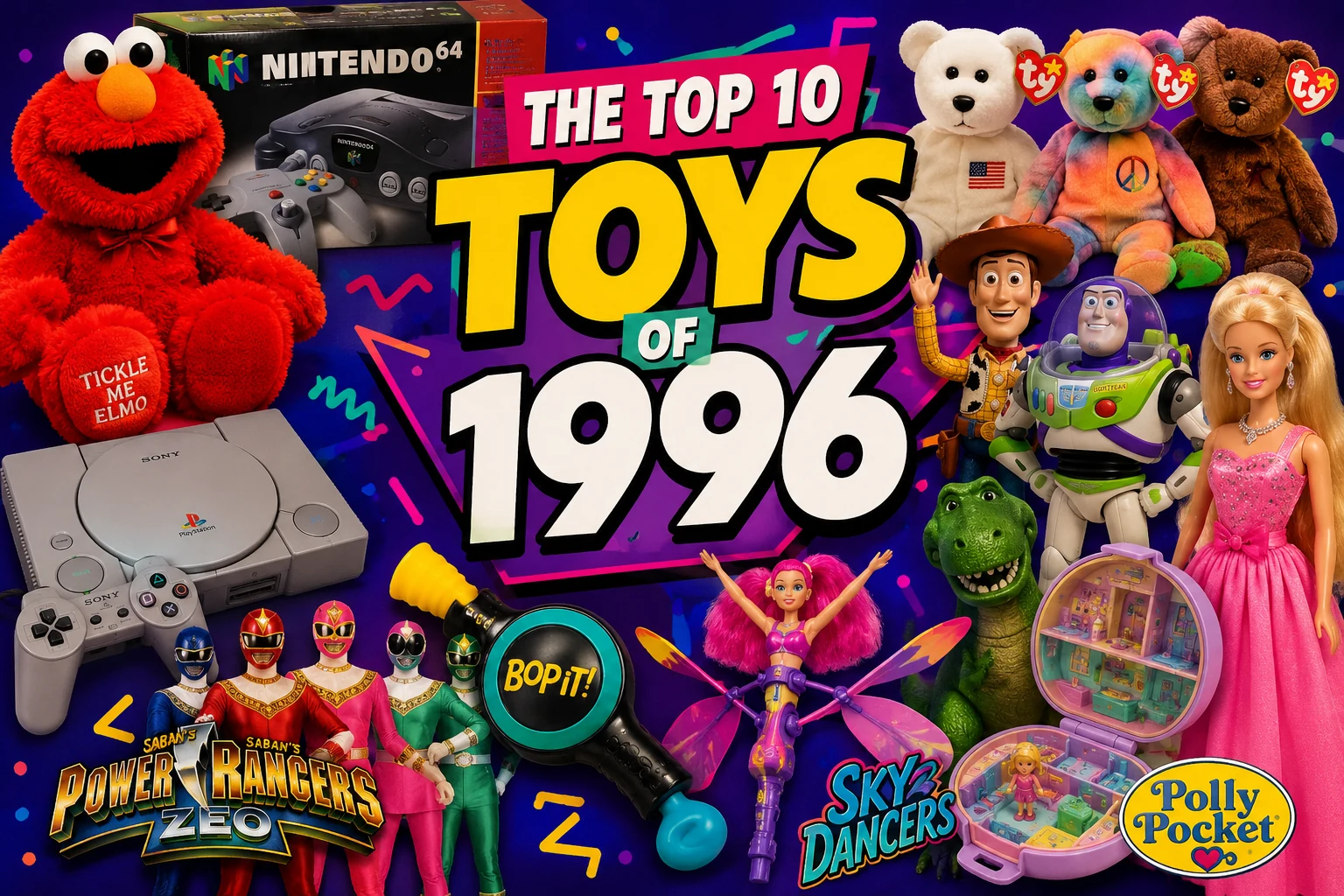
Christmas 1996 produced the decade’s most famous parent panic. Tickle Me Elmo was simple, recognizable and almost perfectly designed for television. Once demand overwhelmed supply, the search became a national story and every empty shelf made the toy seem even more necessary.
But 1996 was not only Elmo. Nintendo 64 and Super Mario 64 introduced a major 3D gaming leap, Beanie Babies pushed collector behavior deeper into family life, Toy Story toys extended Pixar’s characters into the gift economy, and Sony PlayStation made the console aisle more competitive than it had been in years.
The rest of the Top 10 captures how many kinds of toy behavior were active at once. Power Rangers Zeo kept the television-to-action-figure machine running. Bop It turned a spoken command into frantic group play. Sky Dancers remained visually dramatic. Barbie and Polly Pocket held two very different ends of the doll spectrum: one expansive and fashion-driven, the other tiny enough to disappear into carpet forever.
Tickle Me Elmo became the symbol because the hunt escaped the toy store. Local news footage, resale prices and stories about aggressive shoppers transformed a plush doll into a cultural event. The toy’s scarcity was no longer merely a supply problem. It became part of the product’s identity.
Nintendo 64 created a different kind of demand. It was expensive, technically impressive and attached to the promise that games were entering a new dimension. A household buying the system was not buying one afternoon of novelty. It was choosing the next entertainment platform.
Beanie Babies bridged children and adults, while Toy Story toys made movie merchandise feel unusually emotional. The year’s list is therefore not one craze followed by nine leftovers. It is a map of the forces that would dominate the rest of the decade: scarcity, electronics, collecting, media franchises and toys that demanded interaction.
Christmas 1996 at a Glance
Top 10 Christmas Toys of 1996
These were the ten toys that best captured the wish lists, store shelves and holiday buzz of 1996. For the full countdown, visit Top Toys of 1996.
#1 — Tickle Me Elmo
#2 — Nintendo 64 and Super Mario 64
#3 — Beanie Babies
#4 — Toy Story Toys
#5 — Sony PlayStation
#6 — Power Rangers Zeo Toys
#7 — Bop It
#8 — Sky Dancers
#9 — Barbie Dolls and Playsets
#10 — Polly Pocket
Elmo Made the Search Part of the Product
Once stores sold out, finding the toy became a mission with its own stories, rumors and secondary prices. The hunt created more publicity, and the publicity created more demand.
Nintendo 64 Changed the Big-Gift Conversation
Super Mario 64 made the technology visible immediately. The console was not just newer hardware. It represented a different way of moving through a game world and became one of the season’s most expensive status gifts.
Collecting and Interaction Shared the Shelf
Beanie Babies rewarded hunting and condition, while Bop It and Elmo reacted to the user. Toys were becoming less passive and more capable of creating an ongoing obligation, challenge or collecting goal.
#1 for 1996
Tickle Me Elmo
The toy that owned the year’s Christmas conversation.
#2 for 1996
Nintendo 64 and Super Mario 64
One of the season’s biggest wish-list hits.
#3 for 1996
Beanie Babies
A major toy-aisle presence that helped define the year.
Keep Rewinding 1996
See all ten toys, the full countdown and more of the stories behind that year’s holiday aisle.
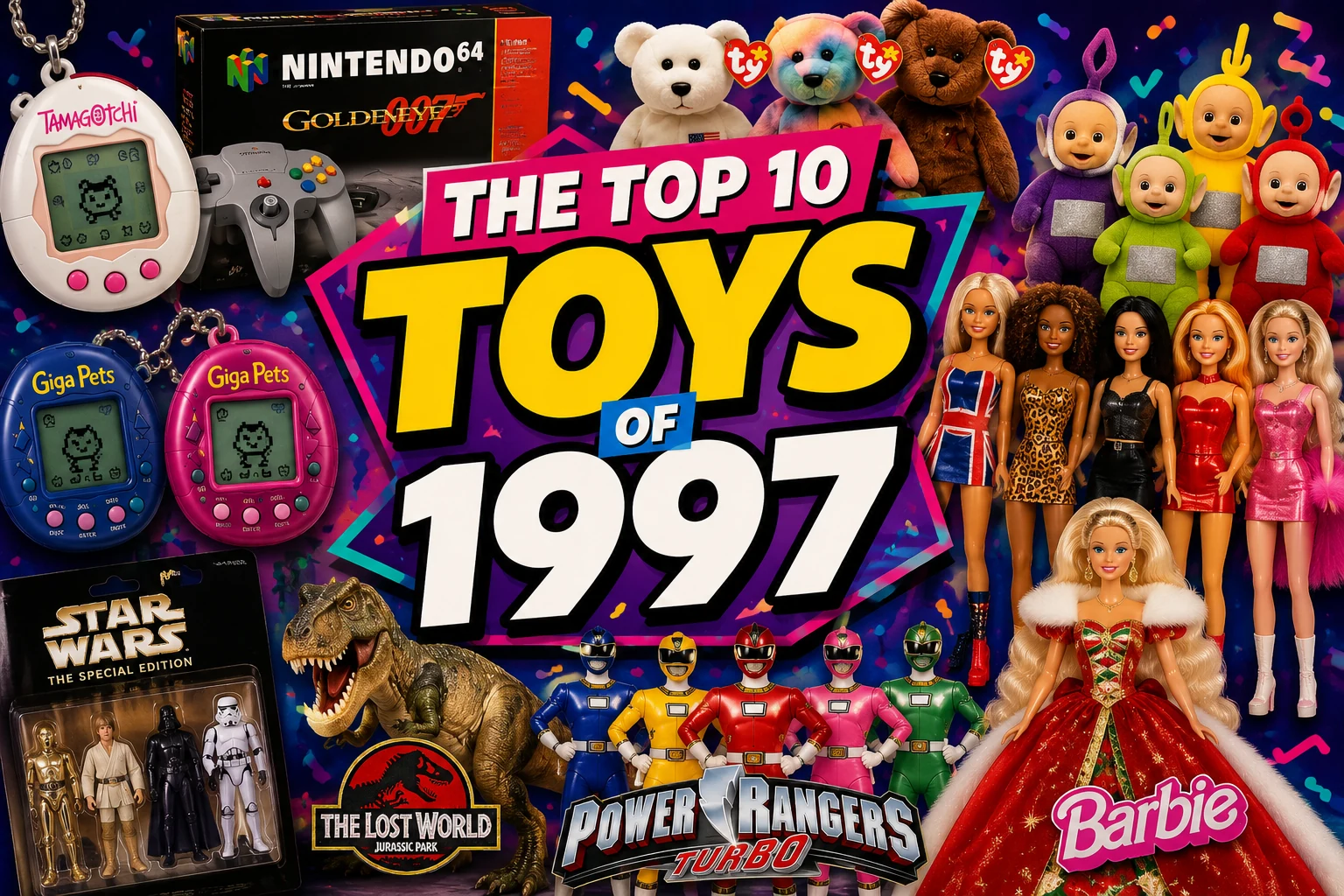
Christmas 1997 put responsibility on a keychain. Tamagotchi became the defining toy because it did not wait for a child to decide when playtime began. It needed feeding, cleaning, discipline and attention, usually at the least convenient moment possible.
Nintendo 64 and GoldenEye 007 turned multiplayer gaming into a sleepover institution. Beanie Babies remained a major collector obsession, and Giga Pets and Nano Pets proved that one digital-pet panic could create an entire category almost immediately.
The rest of the year was pure late-90s media convergence. Teletubbies plush translated television characters into soft holiday demand. Spice Girls dolls moved pop fandom into toy packaging. The Lost World, Power Rangers Turbo and Star Wars Special Edition merchandise kept movie and television shelves packed with familiar characters.
Tamagotchi mattered because the toy created stories after purchase. Pets grew, changed and died. Kids compared care strategies and survival times. Teachers discovered that a three-button electronic egg could interrupt a class with remarkable efficiency.
GoldenEye gave Nintendo 64 a major social advantage. Four-controller multiplayer turned the console into a group activity and made the system feel necessary even to kids who already knew somebody else with one. Beanie Babies worked through the opposite behavior: careful handling, tag protection, rarity talk and the belief that the right plush animal might someday pay for college.
Barbie remained on the list because enduring toy empires do not vanish simply because the culture becomes more electronic. Holiday Barbie also fit the collector mood perfectly, sitting somewhere between plaything, keepsake and item adults insisted should remain in the box.
Christmas 1997 at a Glance
Top 10 Christmas Toys of 1997
These were the ten toys that best captured the wish lists, store shelves and holiday buzz of 1997. For the full countdown, visit Top Toys of 1997.
#1 — Tamagotchi
#2 — Nintendo 64 and GoldenEye 007
#3 — Beanie Babies
#4 — Giga Pets and Nano Pets
#5 — Teletubbies Plush Toys
#6 — Spice Girls Dolls
#7 — The Lost World: Jurassic Park Toys
#8 — Power Rangers Turbo Toys
#9 — Star Wars Special Edition Toys
#10 — Barbie Dolls and Holiday Barbie
Tamagotchi Turned Play Into Maintenance
The digital pet created attachment by demanding repeated care. That obligation made the toy feel personal, portable and slightly stressful, which is about as accurate a late-90s innovation as anyone could design.
N64 Became the Sleepover Console
GoldenEye, Mario Kart 64 and the four-controller design made the system social. The hardware was expensive, but one console could dominate an entire basement or living room.
Pop Culture Filled the Remaining Slots
Teletubbies, Spice Girls, Jurassic Park, Power Rangers and Star Wars show how thoroughly screen recognition shaped Christmas demand. Familiar characters reduced the amount of explanation a toy commercial needed.
#1 for 1997
Tamagotchi
The toy that owned the year’s Christmas conversation.
#2 for 1997
Nintendo 64 and GoldenEye 007
One of the season’s biggest wish-list hits.
#3 for 1997
Beanie Babies
A major toy-aisle presence that helped define the year.
Keep Rewinding 1997
See all ten toys, the full countdown and more of the stories behind that year’s holiday aisle.
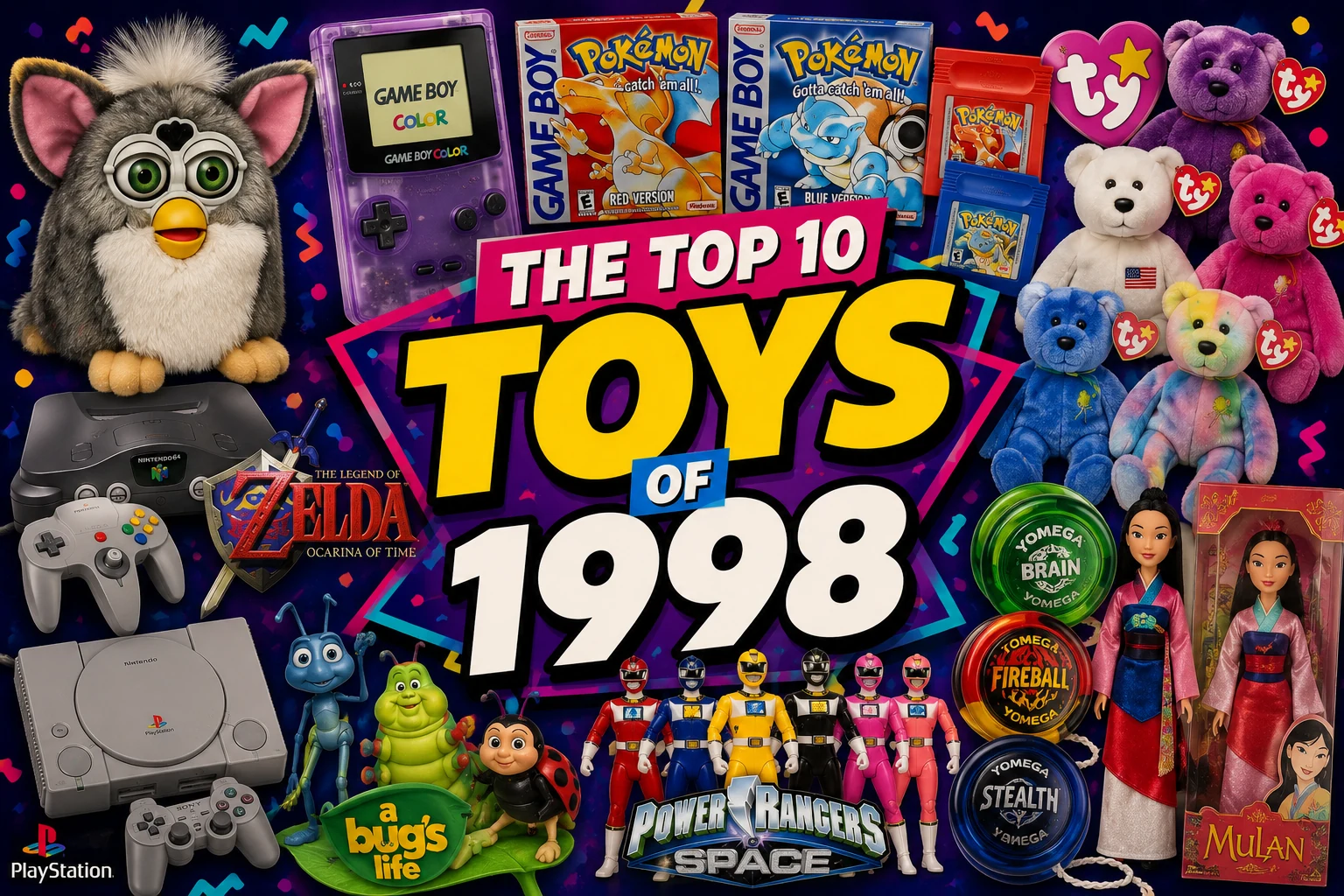
Christmas 1998 belonged to Furby, a blinking, babbling creature that looked futuristic enough to create wonder and strange enough to make adults consider removing the batteries after bedtime. It launched into a market already trained to understand scarcity, interactivity and electronic pet behavior.
Game Boy Color and Pokémon Red and Blue made handheld gaming feel newly essential. Beanie Babies remained strong, Nintendo 64 had The Legend of Zelda: Ocarina of Time, and Sony PlayStation ensured the big-ticket console fight stayed crowded.
Christmas 1998 made the decade’s transition impossible to miss. Furby represented interactive plush. Game Boy Color refreshed proven hardware. Pokémon introduced a franchise built around collecting, trading and linking one form of media to another. These were not isolated toys; they were systems designed to keep expanding.
A Bug’s Life and Mulan toys kept Disney and Pixar merchandise in the holiday mix. Power Rangers in Space showed the franchise still had enough recognition to survive another reinvention. Yo-yos returned because playground fads never disappear permanently; they simply wait for a new group of children to discover that string can cause both joy and forehead injuries.
Beanie Babies remained important because the collector market had not yet accepted reality. Retirements, tag condition and price guides sustained the idea that plush scarcity was meaningful. At the same time, console games were delivering richer experiences and making the difference between toys and entertainment hardware increasingly irrelevant.
Tamagotchi and other virtual pets were still part of late-90s culture, but Furby, Game Boy Color and Pokémon best capture where Christmas demand was heading.
Christmas 1998 at a Glance
Top 10 Christmas Toys of 1998
These were the ten toys that best captured the wish lists, store shelves and holiday buzz of 1998. For the full countdown, visit Top Toys of 1998.
#1 — Furby
#2 — Game Boy Color
#3 — Pokémon Red and Blue
#4 — Beanie Babies
#5 — Nintendo 64 and The Legend of Zelda: Ocarina of Time
#6 — Sony PlayStation
#7 — A Bug’s Life Toys
#8 — Yo-Yos
#9 — Power Rangers in Space Toys
#10 — Mulan Dolls and Toys
Furby Combined Every Late-90s Trigger
It was plush, electronic, interactive, scarce and covered endlessly by the media. The toy appeared to learn, reacted to other Furbys and produced exactly the kind of weird household stories that kept demand alive.
Pokémon Starts Becoming a Full System
The Game Boy games introduced the collecting and trading loop that would soon spread through television, cards, toys, fast-food promotions and nearly every school conversation.
The Console Aisle Was Now Central
Game Boy Color, Nintendo 64 and PlayStation were not side categories. They were among the season’s most important gifts, each tied to libraries of future purchases and long-term household use.
#1 for 1998
Furby
The toy that owned the year’s Christmas conversation.
#2 for 1998
Game Boy Color
One of the season’s biggest wish-list hits.
#3 for 1998
Pokémon Red and Blue
A major toy-aisle presence that helped define the year.
Keep Rewinding 1998
See all ten toys, the full countdown and more of the stories behind that year’s holiday aisle.
1999: Pokémon Cards, Furby and Star Wars Send the Decade Out Loud
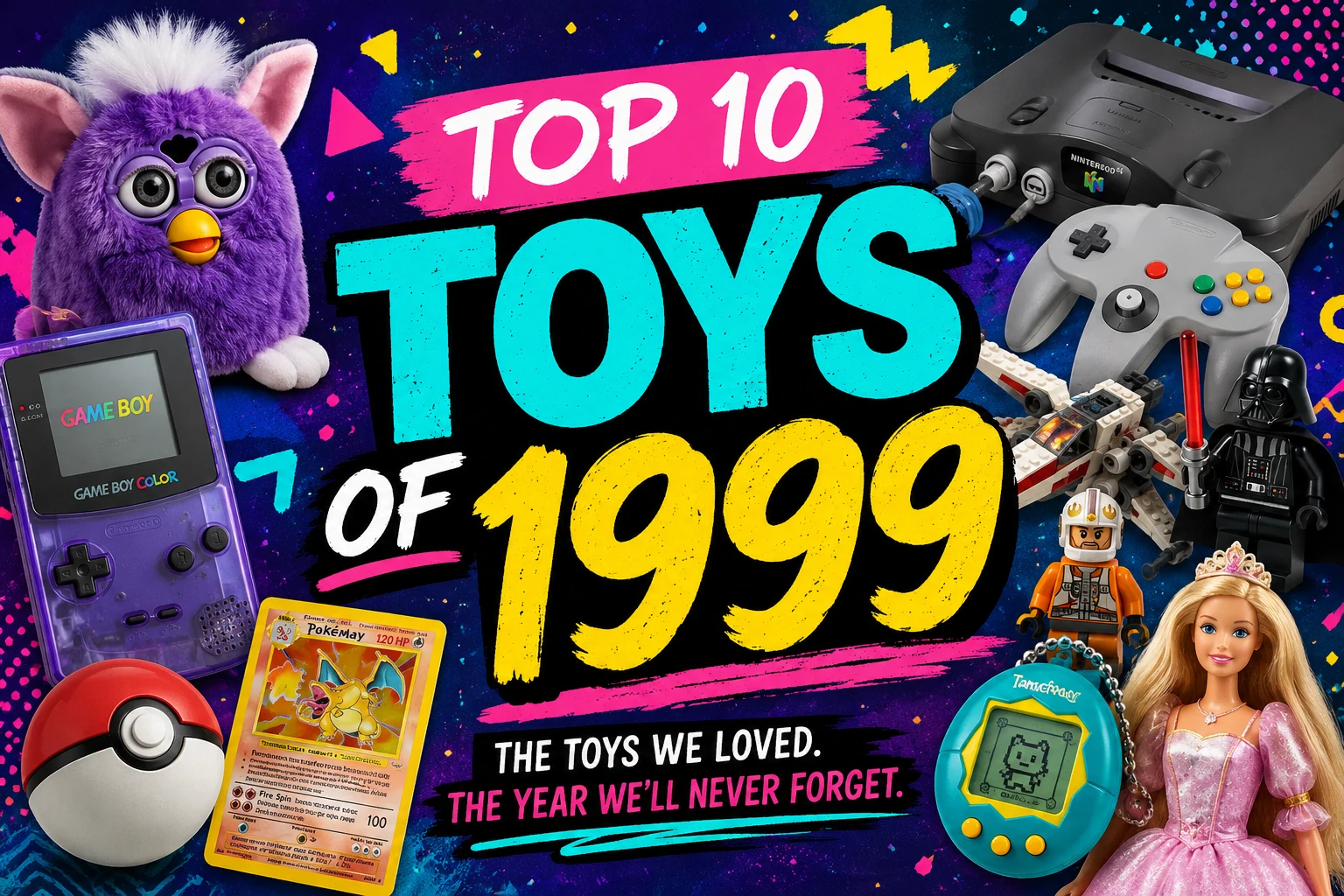
By Christmas 1999, Pokémon was not one product. It was an operating system for kid culture. The trading cards rank first because they dominated schoolyard swaps, binder organization, rarity arguments and the powerful belief that the next booster pack might contain something life-changing.
Furby and Furby Babies remained major interactive gifts, while Game Boy Color and Pokémon games kept the franchise connected to portable gaming. Star Wars Episode I and Toy Story 2 turned two enormous movie events into figures, vehicles, character toys and entire sections of retail shelving.
LEGO Star Wars deserves special attention because it showed how licensed construction sets could merge two enduring forms of fandom. Beanie Babies were still present, though the collector fantasy was nearing the edge of the cliff. Nintendo 64 remained an important big-ticket gift, while Millennium Princess Barbie packaged Y2K anticipation into a collectible doll.
Digimon virtual pets and toys completed the year’s obsession with portable creatures, battling systems and media ecosystems. By this point, a successful toy line wanted to exist on television, in games, in cards and in merchandise simultaneously.
The holiday list had become layered by price. Pokémon cards worked as stocking stuffers and collection builders. Game Boy games and Furby occupied the middle. Consoles, major Star Wars vehicles and large LEGO sets could become the main present. One franchise could therefore reach nearly every part of the family budget.
That is the real ending of the 90s toy story. The decade began with giant action-figure and console brands. It ended with interconnected worlds, portable screens, trading economies and licensed products designed to follow a child from the television to the school bus and back into the toy aisle.
Christmas 1999 at a Glance
Top 10 Christmas Toys of 1999
These were the ten toys that best captured the wish lists, store shelves and holiday buzz of 1999. For the full countdown, visit Top Toys of 1999.
The cards were portable, tradable, competitive and tied to characters kids already knew from games and television. Rarity turned every pack into a small event and every binder into a public status display.
Movie Toys Had a Massive Final Year
The Phantom Menace and Toy Story 2 supplied two very different kinds of demand: collector-heavy science-fiction merchandise and character toys with emotional family appeal.
Y2K Packaging Made Everything Feel Like a Finale
Millennium editions, metallic colors and futuristic styling made ordinary products feel connected to the coming year 2000. The toy aisle understood that the calendar itself could be merchandised.
#1 for 1999
Pokémon Trading Cards
The toy that owned the year’s Christmas conversation.
#2 for 1999
Furby and Furby Babies
One of the season’s biggest wish-list hits.
#3 for 1999
Game Boy Color and Pokémon Games
A major toy-aisle presence that helped define the year.
Keep Rewinding 1999
See all ten toys, the full countdown and more of the stories behind that year’s holiday aisle.
What the Hottest Toys Reveal About Christmas in the 90s
The year-by-year lists make one thing clear: the most remembered toy from an era was not always the toy that best defined a specific Christmas.
The Early 90s Belonged to Brand Empires
From 1990 through 1992, the strongest Christmas toys were usually attached to brands that could occupy several parts of a child’s life at once. Teenage Mutant Ninja Turtles had television, movies, figures, vehicles, games and enough licensed merchandise to make the franchise feel unavoidable. Nintendo worked the same way from a different direction. The console was the starting point, but cartridges, controllers, handheld systems and character recognition kept expanding the gift list.
Barbie’s continued strength matters for the same reason. The brand was never dependent on one single release. A parent could enter the aisle looking for “Barbie” and find a wide range of prices, fashions, dolls and playsets. That retail flexibility is one reason Barbie appears repeatedly even when a louder short-term craze is happening somewhere else in the store.
Looking across the decade tells a richer story than simply listing which toys were released each year. Christmas demand favored products that were visible, understandable and easy to expand. The child already knew the characters. The parent already recognized the name. The new vehicle, game, outfit or variation gave the familiar brand fresh urgency without requiring the whole household to learn a new language.
1992 Through 1994 Rewarded Toys With a Demonstration
Totally Hair Barbie, The Incredible Crash Dummies, Deluxe Talkboy, Mighty Morphin Power Rangers, My Size Barbie and Dr. Dreadful all benefited from an obvious “watch this” feature. The commercial could show the central trick immediately: extremely long hair, figures flying apart, recorded voices slowing down, robots combining, a life-size doll standing beside a child or disgusting food being created in a plastic laboratory.
That mattered because toy advertising had only a short window to turn curiosity into a Christmas request. The strongest products did not need a paragraph of explanation. A child could see the result, imagine repeating it and know the exact name to put on the list. By the time the ad ended, the product had already created a scene in the viewer’s head.
This also explains why some toys remain culturally memorable even when they did not make a specific annual Top 10. A clever commercial could create long-term recognition without producing the same holiday demand as Power Rangers, Talkboy, Barbie or Nintendo. Memory measures how vividly a toy stayed with us. A Christmas ranking measures how strongly it competed during that particular shopping season. Those two things overlap, but they are not identical.
1995 Was a Handoff, Not an Empty Year
1995 can look less dramatic because it did not produce one all-consuming shortage on the level of Tickle Me Elmo or Furby. The annual list shows a fragmented market led by Barbie, Sky Dancers, Power Rangers and Talkboy, with Batman Forever, Pocahontas, Hot Wheels, LEGO and role-play toys sharing attention.
That fragmentation is the story. The toy aisle was carrying several generations of play at once. Evergreen brands still mattered. Television franchises still generated demand. Movie tie-ins were increasingly dependable. Feature-driven dolls needed a visible trick. Video games were becoming more important even when a new system did not crack the final ten.
Beanie Babies and Pogs were undeniably part of 1995 culture, but their strongest roles were collector momentum and schoolyard currency. Treating them as the unquestioned Christmas leaders would flatten the year into the two fads people remember most easily. The broader ranking shows what families were actually choosing across many categories, from a major Barbie purchase to a package of Hot Wheels or a large kitchen playset.
That makes 1995 especially useful in understanding the decade. It is the year when the old model of a few giant toy myths began giving way to a shelf full of overlapping audiences, media properties and product ecosystems.
By the late 90s, the empty shelf became part of the advertisement. Every sold-out sign made the missing toy look even more important.
Scarcity Became Entertainment After 1996
Tickle Me Elmo changed the public meaning of a hot Christmas toy. Shortages had happened before, but the 1996 frenzy became a story adults followed even if they had no intention of buying the product. News cameras, resale prices and reports of chaotic shopping turned availability into entertainment.
Furby followed a similar path in 1998. Once shoppers believed the toy was difficult to find, every successful purchase became a story and every empty shelf reinforced the idea that the product mattered. Scarcity did not merely frustrate demand. It advertised demand.
This feedback loop became one of the defining features of late-90s Christmas shopping. Parents called stores, compared rumors and arrived before shipments were unpacked. Resellers watched the same news reports as ordinary shoppers. The toy’s cultural footprint expanded beyond the children who wanted it because adults were now discussing the search itself.
Tickle Me Elmo and Furby mattered not simply because they sold well or had memorable commercials. They became the season’s story. Nintendo 64, Game Boy Color and other major electronics may have represented larger long-term changes, but Elmo and Furby best embodied the emotional temperature of their respective Christmases.
Electronics Moved From Category to Infrastructure
Nintendo appears throughout the decade because gaming hardware stopped behaving like a separate specialty purchase. The NES, Game Boy, Super Nintendo, Nintendo 64 and Game Boy Color all became normal parts of the Christmas toy economy. A console could be the main family gift. A cartridge could be the specific item a child cared about most. A handheld system could follow the child into the car, bedroom and school backpack.
Sega Genesis and Sony PlayStation made the market more competitive, while software such as Super Mario Bros. 3, GoldenEye 007, The Legend of Zelda: Ocarina of Time and Pokémon helped hardware remain culturally relevant after launch. The system and the game strengthened each other.
By 1999, Pokémon showed how completely electronics could connect to other kinds of toys. The Game Boy games encouraged collecting and trading. The television show expanded character recognition. Trading cards moved the behavior into playgrounds. Fast-food promotions and merchandise made the franchise nearly impossible to avoid. The product was no longer confined to one aisle or one format.
That is why electronics belong in these Christmas rankings rather than being separated into a different universe. For children and parents, they were competing for the same gift budget as dolls, action figures, plush animals and playsets.
A Playground Craze Is Not Automatically the Top Christmas Toy
Pogs are the clearest example. They were cheap, portable, easy to trade and perfectly suited to schoolyard competition. That made them culturally enormous. It did not necessarily make them the biggest wrapped gift under the tree. A handful of Pogs or a new slammer could fit into a stocking, while Power Rangers, Talkboy, Barbie, Nintendo hardware and larger playsets occupied the main-gift conversation.
The same distinction applies to trading cards, miniature collectibles and inexpensive fads. Their influence can be much larger than their price. They may dominate recess, convenience-store purchases and allowance spending while a different product dominates family Christmas shopping.
Pokémon cards break that pattern in 1999 because the craze became so large that cards moved beyond small add-on purchases. Booster packs, starter decks, theme decks, binders and boxed products gave the category several gift levels, while the broader Pokémon system made the cards the clearest symbol of the year.
The distinction helps keep the decade honest. The Christmas list should reflect what families chased during the holiday season, while the broader article can still acknowledge the toys that ruled backpacks, lunch tables and after-school trading.
Release Year and Peak Christmas Are Often Different
Talkboy demonstrates why timing matters. The gadget appeared as a movie fantasy in Home Alone 2 during 1992, but the Deluxe Talkboy retail craze belongs to 1993. Putting it at the center of Christmas 1992 would confuse the moment children first saw the idea with the season when families were actually hunting the mass-market product.
Beanie Babies also built over time. The line did not move from unknown to total cultural saturation in a single December. Collector habits, retirement rumors and adult participation gathered momentum across several years. That is why Beanie Babies can be a major supporting story before becoming one of the clearest symbols of late-90s collecting.
Pokémon followed another staggered path. The games and television series began driving American kid culture in 1998, while the trading-card explosion reached its defining Christmas position in 1999. Furby launched late enough in 1998 to produce immediate holiday scarcity and then remained highly visible into the following year through new variations.
A reliable year-by-year guide therefore tracks peak demand, not merely the date printed on a product history page. The question is not only “When did this toy exist?” It is “When did this toy become the thing families were talking about, requesting and trying to find for Christmas?”
The Decade Ended With Ecosystems Instead of Single Toys
The 1990 list already contained expandable brands, but by 1999 the ecosystem had become the main strategy. Pokémon connected cards, games, television, movies and merchandise. Star Wars Episode I covered figures, vehicles, lightsabers, LEGO sets and collector packaging. Toy Story 2 made character toys feel connected to an emotional story rather than a simple licensing deal.
Even Furby expanded through colors, generations and Furby Babies. Beanie Babies encouraged long-term collecting. Nintendo hardware depended on a continuing library of games. Barbie’s millennium editions could appeal to children, collectors and adults buying a keepsake for the calendar change.
This changed the shape of the Christmas budget. A franchise could sell an inexpensive stocking stuffer, a medium-size add-on and a large main gift to the same household. It could also keep selling after Christmas because the first product created a reason to buy the next one.
The hottest Christmas toys of the 90s therefore tell a larger story about the toy business learning to turn play into an ongoing relationship. The decade began with powerful brands and ended with connected worlds designed to follow children across screens, stores, playgrounds and future shopping trips.
Explore Every Annual Toy Ranking
The ten individual year pages contain the complete rankings and deeper toy-by-toy commentary behind this decade-wide Christmas guide.
The toy itself mattered, but the real phenomenon came from the system around it: commercials, catalogs, school pressure, store scarcity, news coverage and one very short shopping window.
Television Repeated the Same Desire Until It Felt Urgent
Children did not encounter the hottest toys once. They saw them during cartoons, after-school programming, weekend movies and holiday specials. The commercial returned often enough to become part of the season’s soundtrack. It showed the complete playset, every accessory, perfect lighting and several children reacting as though the product had solved winter. Repetition turned recognition into familiarity and familiarity into a request. By the time the toy catalog arrived, the name was already known.
The best commercials also supplied a script for play. Super Soaker meant a backyard battle. Talkboy meant elaborate pranks. Power Rangers meant combining robots and color-coded teamwork. Tickle Me Elmo meant an immediate reaction everyone could understand. Furby meant a creature that seemed to learn. The advertisement did not merely display an object; it demonstrated the social scene the buyer expected to unlock.
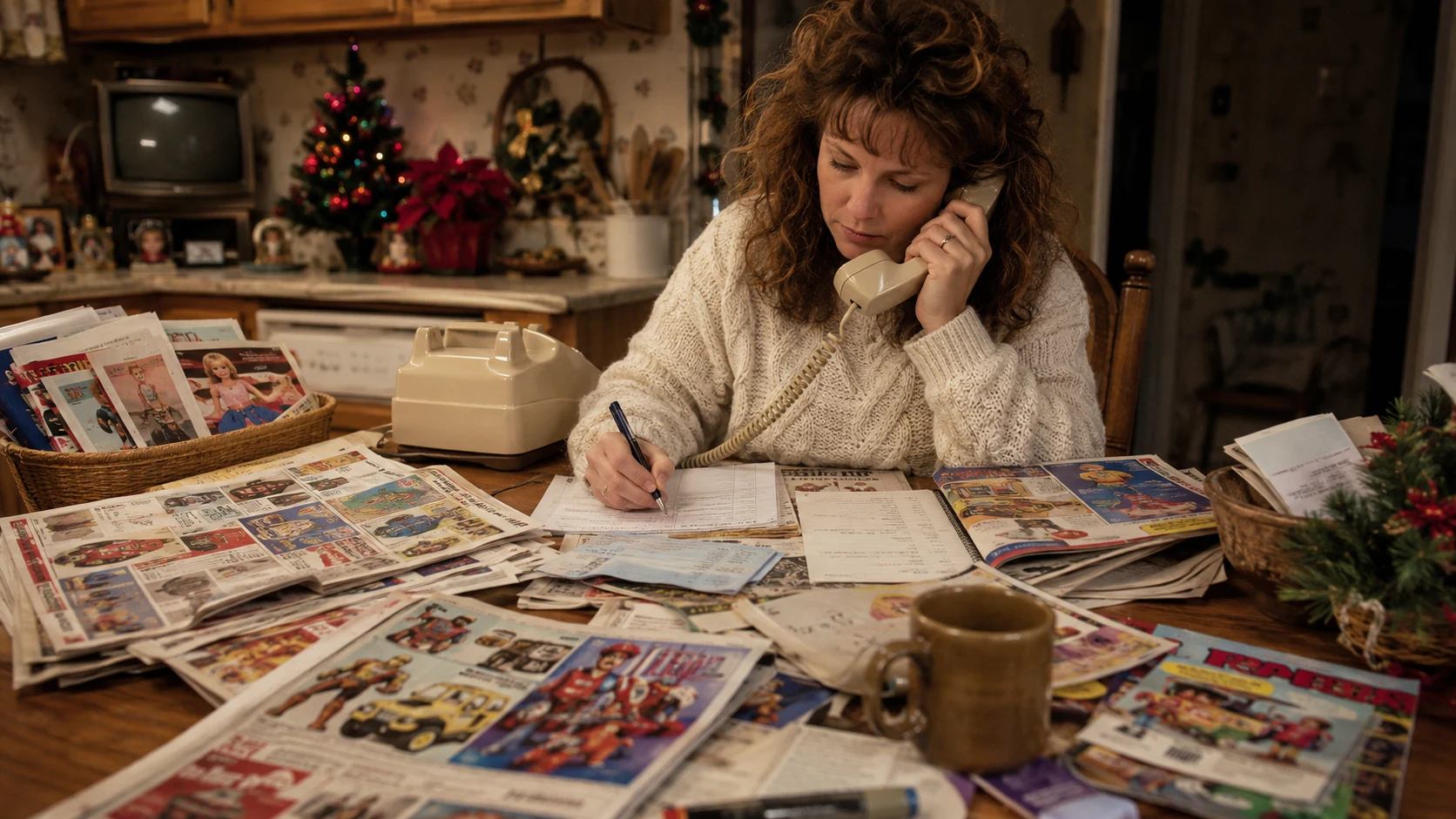
Before online carts and recommendation feeds, the holiday catalog was the research department, shopping map and official wish-list evidence.
Catalogs Turned Wish Lists Into Research Projects
Holiday catalogs gave children time to study the aisle without adult supervision or store closing hours. Pages were folded, circled and revisited until item numbers became almost familiar. A catalog also placed toys into a hierarchy. Small gifts occupied crowded grids. Premium products received large photographs, dramatic backgrounds and enough space to imply importance. The visual scale of the page could make a playset feel like the natural center of Christmas before anyone had seen the box in person.
Catalogs were especially powerful for toys with many versions. They allowed children to specify the exact Ranger, Barbie, game system, doll outfit or electronic pet. That precision helped avoid disappointment, but it also made substitution more difficult. Parents could find a similar product and still be told it was not the right one. The 90s wish list was becoming technical documentation.
The commercial introduced the craze. The lunch table, playground and school bus decided whether it actually mattered.
A commercial could introduce a toy, but school decided whether it had real status. Children compared what they owned, what they expected to receive and what had supposedly sold out. Pogs, Beanie Babies, Tamagotchi and Pokémon became especially powerful because they could travel. They entered backpacks and classrooms, where the craze continued for hours beyond television. Ownership became visible and therefore measurable.
The school network also spread rumors faster than adults could verify them. A particular store might be receiving a shipment. A certain Beanie Baby was about to retire. One Pokémon card was impossibly rare. A Power Rangers figure had been seen at a mall twenty miles away. Most of the information was unreliable, but the uncertainty increased urgency. If the rumor might be true, waiting felt dangerous.
Once a product became difficult to find, the empty shelf did part of the marketing. It told shoppers that other people had already decided the toy mattered. News reports, resale listings and conversations between parents converted limited inventory into cultural evidence. The shortage did not merely frustrate demand; it legitimized it.
This is why the biggest holiday crazes often became detached from the quality of the toy itself. The search created its own emotional investment. A parent who called six stores was no longer casually buying a plush toy. The purchase had become a mission. When the box finally appeared under the tree, it carried the story of the hunt with it.
From Stocking Stuffers to Main-Event Boxes
How 90s Toy Companies Took Over the Whole Christmas Budget
Toy companies learned to occupy every level of the Christmas budget, from inexpensive add-ons to the one giant box that owned the morning.
The strongest brands did not sell one product. They built a price ladder that let every relative buy into the same craze.
The Stocking-Stuffer Level
Cards, Pogs, small figures, batteries, accessories and miniature collectibles created low-cost entry points. These items mattered because they multiplied. One pack was exciting, but several packs looked abundant and extended the suspense of opening. Small products also gave relatives a safe way to participate in a craze without buying the main item. Pokémon cards, Beanie Babies, accessories and cartridges all benefited from this layered gifting behavior.
The Collection-Building Level
Mid-priced figures, dolls, compact playsets, vehicles and electronic games made up the bulk of many wish lists. They were large enough to feel substantial but affordable enough that a child might receive more than one. This level turned brands into systems. A Ranger figure led to a villain. A Polly Pocket compact led to another location. A Barbie led to clothes, furniture and vehicles. The gift expanded what was already owned.
The Main-Present Level
Consoles, giant playsets, premium dolls and large electronic toys became the visual center of the tree. These were the boxes children tried to identify by shape, weight or strategic shaking. The main gift carried the largest budget and the greatest emotional risk. Getting the exact system or playset right could define the morning. Getting a nearby substitute could produce the longest silent pause in family history.
The Ecosystem After Christmas
The purchase continued after December. Consoles needed games. Dolls needed outfits. Collectibles needed more characters. Playsets needed vehicles and figures. A successful Christmas gift created birthdays, allowances and future shopping trips. That long tail explains why companies fought so hard to own the initial holiday decision. The toy under the tree was not the end of the sale. It was the beginning of a relationship with the aisle.
The Biggest Stories Behind the Lists
Go Deeper Into the 90s Toy Crazes
These connected guides own the full story of the toys and culture that drove the holiday rush.
50 Most Iconic Toys of the 90s
The full ranked canon, from Pokémon and Furby to Super Soaker, Talkboy, Pogs and everything else that ruled the decade.
How the Meaning of a “Hot Toy” Changed During the 90s
The decade did not produce the same kind of craze ten times. The source of demand changed as television, gaming, collecting and electronics became more connected.
Early 90s: The Big Box Still Ruled
At the beginning of the decade, the most dramatic Christmas gifts were easy to identify by size. Giant playsets, vehicles, consoles and doll packages created the visual center of the tree. Teenage Mutant Ninja Turtles, Barbie, Super Nintendo and large action-figure environments fit this pattern. The box promised a complete world, and the amount of cardboard helped justify the idea that this was the main present.
That did not mean small toys were unimportant. Game Boy, Polly Pocket and Micro Machines were already proving that portability could be powerful. But the early-90s holiday fantasy still leaned toward abundance you could see from across the room. A large box suggested value, complexity and enough pieces to occupy the entire vacation. The assembly burden and storage problem arrived later.
Mid-90s: The Craze Moved Faster Than the Catalog
Power Rangers, Talkboy, Pogs and Beanie Babies showed that demand could form quickly and spread across different retail channels. Television created immediate character demand. Movies could turn props into products. Schoolyards could make cheap cardboard discs more urgent than expensive electronics. Specialty stores and mall shops could become just as important as the traditional toy aisle.
This period also made the exact version more important. The requested Ranger color, Megazord combination, Talkboy model or Beanie Baby name mattered. A parent could successfully locate the brand and still miss the assignment. The mid-90s shopper needed more product knowledge because the craze had become segmented. Children were not asking for a category. They were asking for a specific object within a rapidly expanding universe.
Late 90s: The Toy Wanted an Ongoing Relationship
Tamagotchi, Furby and Pokémon shifted the center of the holiday experience from one-time opening to continued interaction. The digital pet needed care. Furby responded and appeared to learn. Pokémon cards and games created collections, trades and progress that continued long after Christmas morning. The toy became a system that expected the child to return every day.
That ongoing relationship also created stronger communities. Children compared pet survival, Furby behavior, card pulls, game progress and collection gaps. The product generated conversation by design. A late-90s hot toy was often portable, updateable through new purchases and connected to television or gaming. It could survive past the initial novelty because there was always another character, pack, accessory or stage to pursue.
The Most Durable Toys Combined More Than One Era
The products with the longest cultural life usually crossed these boundaries. Game Boy was a major hardware gift, a portable device and the home of Pokémon. Barbie could deliver a dramatic box while supporting endless accessories and identities. LEGO offered large sets, small expansions and long-term collecting. Super Soaker created immediate physical play but also encouraged upgrades and competition.
That is why a list of the hottest Christmas toys is not identical to a list of the best toys. Heat measures concentrated demand during a narrow season. Durability measures whether the play pattern survived after the wrapping paper disappeared. The most important 90s toys often achieved both, but many memorable crazes were brilliant precisely because they burned so brightly for one holiday and then made room for the next emergency.
The Decade Changed Fast
How Christmas Toys Evolved Through the 90s
The early 90s still revolved around big plastic worlds, action-figure systems, fashion dolls and game hardware connected to the family television.
1990–1992: Plastic Worlds and Console Power
The decade opened with action figures, dolls, vehicles, playsets and video-game systems. TMNT could fill a bedroom floor. Super Nintendo could take over the television. Game Boy made gaming portable, but the toy aisle still revolved around large physical worlds and recognizable brands.
The mid-90s toy aisle became louder, faster and more television-driven, with every major product needing an instantly recognizable trick.
1993–1996: Screen-to-Shelf Mania
Power Rangers, Jurassic Park, Talkboy, Batman, Toy Story and Tickle Me Elmo showed how quickly television, movies and news coverage could create a retail event. The right character could empty a shelf before the store finished hanging the sign.
By the end of the decade, the hottest toys beeped, blinked, demanded attention, connected to games and encouraged kids to collect the entire universe.
1997–1999: Pets, Collecting and Connected Universes
Tamagotchi, Beanie Babies, Furby and Pokémon made ownership feel ongoing. The toy needed care, had rarity, connected to a game or required another purchase. By 1999, the hottest Christmas toy was no longer one object. It was an entire ecosystem.
How the List Was Built
What Counts as a Hot Christmas Toy?
This guide measures holiday impact, not just lifetime sales.
Holiday Demand
Did the toy dominate wish lists, sell through quickly or force parents to keep checking stores during the final weeks before Christmas?
Cultural Visibility
Did people who never owned the toy still recognize it because of commercials, news coverage, cartoons, movies or schoolyard discussion?
Year-Specific Impact
The toy must fit the holiday season being discussed. A product can be iconic across the decade without being the defining Christmas story of every year it remained on shelves.
Lasting Memory
Did the hunt, shortage, commercial or Christmas-morning reaction become part of how people remember the decade?
The Rest of the Wish List
30 More Toys That Made 90s Christmas Morning Feel Huge
The annual winners created the headlines, but the decade was built from dozens of toys that filled out wish lists, stockings, playrooms and the suspiciously large boxes relatives insisted were “just clothes.”
The expensive end of the 90s wish list lived here: consoles, handheld systems, cartridges, controllers and the one big box parents hid until Christmas morning.
The original gray handheld survived nearly the entire decade because it was durable, portable and packed with games that made car rides disappear. Tetris was the universal entry point; Pokémon gave the system a late-90s second life.
As a Christmas gift, Game Boy also solved a practical family problem: it gave one child a screen without surrendering the television. Cartridges made easy follow-up gifts, and the hardware stayed useful long enough that a system bought early in the decade could still feel relevant when Pokémon arrived years later.
The SNES was the serious early-90s console gift: expensive enough to become the main present and powerful enough to make the family television unavailable for the rest of Christmas break.
The console’s holiday power came from how clearly it looked like an upgrade. The box promised richer graphics, bigger worlds and a new generation of games, while relatives could contribute cartridges without needing to coordinate. One system under the tree could organize the entire gift pile around it.
Four controller ports made the N64 feel like a party system even before anyone bought the other three controllers. Mario 64, Mario Kart and GoldenEye turned sleepovers into competitive hearings.
The four controller ports changed the social meaning of the console. Christmas break could immediately become Mario Kart, GoldenEye or Mario Party territory, provided somebody had remembered to buy extra controllers. The system was not only a personal gift; it was an invitation to take over the family room.
Sony’s console helped shift gaming toward discs, 3D worlds and an older audience. By the late 90s, a PlayStation box under the tree carried the same major-gift energy once reserved for bicycles and giant playsets.
PlayStation also widened the age range of console desire. Its disc-based games, memory cards and more mature advertising made it feel less like a toy and more like home entertainment equipment. That distinction helped justify the price while making the box especially powerful for older kids and teenagers.
The Home Alone 2 recorder was the perfect movie-prop fantasy. Variable-speed playback suggested sophisticated pranks; actual use mostly involved recording relatives and making everybody sound possessed.
The toy’s success depended on choosing the correct version. A basic recorder was not the same as the deluxe model with variable-speed playback, and children knew the difference because the feature was the whole fantasy. Talkboy helped teach parents that licensed gadgets now came with specifications that could not be ignored.
Dolls, miniature worlds, surprise pets and family games gave Christmas morning a softer side—at least until somebody launched a flying doll toward the ceiling.
Small compacts hid full miniature worlds, which made them ideal gifts and terrible objects to open near shag carpet. The appeal was part dollhouse, part collectible and part secret world you could carry.
The compact format made Polly Pocket ideal for gift layering. One set could be the main doll gift, while smaller compacts and figures could come from grandparents or fit into stockings. Each new world felt complete on its own but more impressive beside the others, which made the collection expand naturally.
Books, historical characters, detailed clothing and furniture made American Girl a premium holiday universe rather than a single doll. The catalogs were practically literature with prices.
The premium price was only part of the appeal. The books, catalogs, historical settings and detailed accessories gave the gift a sense of seriousness and permanence. Receiving one often felt less like opening a doll and more like being admitted into an entire carefully organized world.
Barbie’s floor-length hair turned brushing, styling and accessory management into the entire event. The doll became one of the era’s most recognizable examples of Barbie understanding the assignment.
The hair was both the visual hook and the activity. It created an immediate play pattern involving brushes, clips, styling and repeated attempts to restore order after ambitious experiments. The oversized feature also made the doll stand out in catalogs and on shelves crowded with other Barbie releases.
A nearly child-sized Barbie felt less like another doll and more like a new household member with better hair. The giant box also delivered maximum visual impact under the tree.
Scale did most of the marketing. A child-sized doll produced the kind of enormous wrapped shape that could dominate a room before it was opened. The gift promised dress-up, companionship and spectacle at once, even if finding a permanent place to store it became the adults’ problem by December 26.
The plush mother dog arrived with a hidden litter, and the number of puppies was part of the surprise. It was cute, collectible and perfectly designed for immediate comparison with somebody else’s result.
The hidden litter added a reveal that worked perfectly on Christmas morning. Opening the box was only the first surprise; discovering how many puppies were inside created a second moment and immediate comparison with friends. Variations and additional animals kept the concept collectible after the first novelty passed.
Tiny animals, playsets and accessories created another portable universe where collecting mattered as much as play. Small pieces multiplied quickly, which was apparently a key 90s design requirement.
The miniature scale supported both imaginative play and collecting. Individual pets were affordable, larger environments felt substantial, and the pieces could be arranged into detailed scenes. Like many successful 90s lines, it rewarded children who already owned some by making every new gift expand the existing world.
The launcher sent winged dolls spinning into the air with a level of drama the commercial absolutely understood. Graceful flight was the promise; lamp-threatening chaos was sometimes the delivery.
The launcher gave the toy a built-in demonstration, which made it easy to sell in a commercial and impossible to ignore in a living room. The first launch created instant drama. Whether the doll floated gracefully or attacked a lampshade depended on space, technique and household luck.
Twist it, pull it, bop it and then panic because the commands were accelerating. The electronic game worked at parties, family gatherings and any place where one mistake could become public evidence.
Because the commands accelerated, Bop It created a natural audience. Family members watched, waited for the mistake and demanded a turn. That made it especially effective during holiday gatherings, when a single electronic toy could pull children and adults into the same noisy competition.
The pink phone and mystery-dating board game turned sleepovers into a highly organized investigation of which fictional boy supposedly liked you. It was romance, deduction and plastic electronics in one box.
The game fit the sleepover culture of the decade as neatly as any product could. It combined a familiar board-game structure with electronic novelty and a mystery that encouraged conversation. The plastic phone made the experience feel private and modern even when everyone in the room heard every clue.
A talking electronic mall directed players through a shopping fantasy where spending money was the entire point and nobody had to carry bags back to the car. Peak 90s mall logic.
Mall Madness transformed the shopping mall into a fantasy board rather than a place where adults became tired. The electronic voice gave instructions and personality to the game, while the store layout turned routine errands into a race. It captured the decade’s belief that the mall was entertainment infrastructure.
The plastic father could spring upright at any moment, converting a simple path game into low-grade household suspense. The commercial sold danger; the mechanism sold repeated nervous button presses.
The spring-loaded figure created suspense that was physical, immediate and easy to understand from across the room. Every button press carried the possibility of a jump scare, which made the game play well with siblings and cousins even when the strategy itself remained simple.
Rapidly firing metal balls across a plastic arena looked like an indoor sport invented by an insurance adjuster’s enemy. Loud, frantic and nearly impossible to play without losing pieces.
The appeal was speed and noise. Players did not carefully consider moves; they fired metal balls as quickly as possible and tried to control a chaotic arena. The game looked active in commercials and became even louder on hard floors, making it one of those gifts the children loved more than anyone sharing the house.
Playground crazes, movie toys, gross-out kits and miniature collectibles rarely stayed organized for more than five minutes after the wrapping paper came off.
Foam darts gave kids permission to stage full battles inside the house while insisting the activity was safe. The darts still disappeared behind furniture like they had entered another dimension.
Holiday gifting encouraged escalation. A single blaster was fun, but several created teams, rules and territory. Darts and accessories also made easy add-on gifts, while new designs gave children reasons to request an upgrade even when a perfectly functional blaster was already under the bed.
The ankle toy turned counting, coordination and driveway space into a personal challenge. It was simple enough to understand instantly and painful enough to remind everybody when the rhythm failed.
Skip-It worked because the challenge was visible and measurable. The counter gave children a score to beat, while the motion looked simple enough that everyone assumed they could master it immediately. Driveways, sidewalks and unfinished basements became practice areas until the ankle bruises suggested a break.
The late-90s yo-yo comeback made tricks, bearings and branded models into serious schoolyard knowledge. For several months, every hallway contained somebody practicing around the world.
The yo-yo comeback turned a familiar toy into specialized equipment. Model names, bearings, strings and trick vocabulary created a small culture around what had once seemed basic. A premium yo-yo made a compact but impressive gift, especially for children already comparing techniques at school.
Tiny skateboards moved skate culture onto desks, textbooks and cafeteria tables. The scale was miniature; the commitment to landing a trick during class was not.
Fingerboards translated skateboarding into a format that survived winter, classrooms and small apartments. Ramps and branded decks expanded the hobby beyond one board, while the low price made the toys easy to trade and collect. Christmas could provide an entire miniature skate park in one package.
Small molded figures became collectibles, game pieces and trade bait. Like Pogs, they were cheap enough to spread fast and weird enough that adults never fully understood the rules.
Crazy Bones followed the classic schoolyard formula: low cost, unusual shapes, simple games and enough variations to encourage trading. The figures were small enough for stockings and numerous enough to make a display feel substantial. Adults often saw clutter; children saw a collection with internal logic.
Gak turned slime into a branded sensory experience with loud colors, gross sounds and packaging designed to make the mess feel officially sanctioned.
Gak sold texture, sound and sanctioned grossness. The container made it feel like a substance from television rather than ordinary slime, and the tactile experience was immediate once opened. It was also the kind of gift that spread across the table faster than the instructions could establish boundaries.
Kids poured liquid into metal molds and heated it into rubbery bugs, which somehow counted as a wholesome craft project. The smell alone could announce that the toy was in use.
The machine added process to the gift. Children selected molds, poured colors and waited for the creatures to become usable, making the result feel manufactured rather than simply purchased. Refill packs extended the life of the toy and gave stores another way to keep the same household buying into the activity.
Skulls, monsters, traps and tiny figures made the pocket playset feel like a horror movie that fit in one hand. The small scale encouraged collecting and guaranteed missing pieces.
The compact shape hid a surprisingly detailed environment, which made opening each set part of the fun. Horror themes, traps and tiny enemies distinguished the line from brighter miniature toys. Several playsets together created a portable monster universe that could be closed and carried away before pieces vanished.
Tiny vehicles and folding city playsets offered an entire traffic system in a fraction of the space. The rapid-fire commercials were nearly as famous as the cars.
The tiny vehicles made quantity feel possible. A package could contain several cars, and larger playsets unfolded into cities, garages or bases. The scale also made every tabletop usable terrain. The famous fast-talking advertisements reinforced the idea that small toys could deliver an overwhelming amount of action.
Rubbery skin, battle damage, vehicles and movie branding made dinosaurs feel newly dangerous. The giant T. rex was the kind of gift that did not need wrapping-paper subtlety.
The movie gave each dinosaur a personality and a remembered scene, while the toys added tactile features such as rubbery skin, wounds and large jaws. A dinosaur gift could stand alone, but vehicles and human figures turned it into a full recreation of the film’s dangerous park.
The movie was already about the secret life of toys, which made buying the characters feel like inviting the story into the bedroom. Buzz Lightyear became an especially powerful wish-list target.
The characters already behaved like toys on screen, so the merchandise carried an unusual sense of authenticity. Owning the cowboy, space hero or dinosaur felt like bringing the movie’s bedroom into your own. The line blurred the boundary between prop, character and ordinary plaything.
The mid-90s figure revival and 1997 Special Editions brought Star Wars back to toy shelves before Episode I turned 1999 into a full merchandising storm.
The return of Star Wars figures introduced a new generation to collecting while giving older fans a reason to enter the aisle. Green-card packaging, vehicles and character waves made the line feel both playable and displayable. By 1999, the prequel merchandise expanded that appetite into a full retail event.
Fast-food giveaways became miniature collecting campaigns tied to movies, cartoons and characters. Completing a set often required several meals and one relative willing to negotiate at the counter.
Fast-food toys added a lower-cost layer to the holiday season. A movie or character craze could continue through meals, road trips and family shopping days without requiring another major purchase. Completing a set often required repeated visits or trades, proving that collecting pressure did not stop at the toy-store door.
Before store apps and inventory alerts, the toy hunt ran on newspaper ads, catalog circles, handwritten lists and repeated phone calls.
Finding the must-have toy required a strange combination of catalogs, commercials, phone calls, mall endurance and retail luck.
The process usually began weeks before the first serious shopping trip. A commercial aired during Saturday-morning cartoons, and the toy immediately entered the house as a talking point. The ad showed a bedroom roughly the size of a suburban gymnasium, six enthusiastic children who appeared to have no homework and a toy performing at a level the real product would never reproduce. Nobody cared. The commercial had already done its job.
Then came the catalogs. Toys “R” Us books, department-store wish books, Sunday inserts and pages pulled from newspapers gave the desire a physical address. Kids circled items, folded corners and developed an optimistic relationship with prices. A giant playset could sit beside a basic figure on the same list because the list was not a budget. It was a vision board with weapons, batteries and several items marked “AGES 8 AND UP.”
Parents had fewer ways to check inventory. There was no reliable app showing that one unit remained at a store twenty-two miles away. Calling the store meant waiting on hold, hoping an employee checked the correct shelf and then believing the answer long enough to drive there. “We just got a truck” was not a status update. It was a mobilization order.
The mall added another layer. KB Toys placed bright boxes and noisy demonstrations in a narrow store designed to create traffic jams. Department stores had seasonal toy departments. Electronics stores guarded game systems behind counters and glass. Toy stores used endcaps to announce the product everybody wanted while simultaneously displaying none of it.
When a toy became genuinely scarce, informal networks took over. Coworkers called each other. Relatives checked stores in other towns. Neighbors passed along rumors. Somebody always claimed a shipment was arriving Tuesday morning. Another person knew a manager. A third person had seen one at a store that had closed fifteen minutes earlier. The information was mostly unverifiable and therefore treated as extremely important.
Resellers existed long before online marketplaces became normal. Newspaper classifieds, local ads and word of mouth could push a hot toy far beyond retail price. The early web made that market more visible by the end of the decade, especially around Beanie Babies, Elmo, Furby and Pokémon. Scarcity was no longer just a store problem. It was content.
The hunt also changed the emotional value of the gift. A toy that required five stores, three phone calls and one lucky shipment felt larger before the wrapping paper came off. Parents remembered the search. Kids remembered the box. Years later, the story often became more durable than the toy itself.
That is why 90s toy-store culture matters to the history of the decade. The store was not merely where the transaction happened. It was part of the experience: the towering shelves, the glass cases, the demo stations, the smell of cardboard and plastic, and the strange electricity of seeing the object from the commercial in real life.
Christmas Morning: Commercial Fantasy vs. Living-Room Reality
The commercial promised a perfect reveal. Christmas morning delivered torn paper, open boxes, scattered parts and four toys making noise at once.
The Setup
The commercial showed the toy already assembled, fully powered and surrounded by every accessory. Christmas morning showed a folded instruction sheet, twelve plastic bags and an adult silently searching for a screwdriver while pretending breakfast was not getting cold.
Nothing tested holiday patience faster than an electronic toy, a tiny battery door, six missing AAs and instructions nobody planned to read.
The Batteries
“Batteries not included” was the four-word phrase capable of stopping the future. The house might contain thirty batteries and somehow none would be the correct size, charged or available without removing them from another toy.
The Missing Piece
Small accessories entered the carpet almost immediately. Polly Pocket figures, Pogs, darts, cards and game pieces began the slow migration toward couch cushions, heating vents and the vacuum cleaner.
None of that ruined the morning. The gap between advertising and reality became part of the memory. The Super Soaker did not fire like a movie prop, but it still changed the backyard. Furby did not become a true artificial intelligence, but it still talked in the dark. Talkboy did not help most children book luxury hotel rooms, but slowing down a sibling’s voice was enough.
The best 90s Christmas toys created a play pattern strong enough to survive the disappointment of ordinary physics. Action figures still fought across the carpet. Game systems still absorbed entire vacations. Pogs still created arguments. Beanie Babies still filled shelves. Tamagotchi still demanded care. The toy did not need to perform exactly like the commercial. It needed to give the imagination somewhere to start.
That is also why the most popular Christmas toys are not always the same as the best-designed toys. A holiday craze measures urgency, visibility and cultural pressure. A great toy can last for years without causing a shortage. A hot toy can dominate one December and disappear by spring. The 90s had plenty of both, and sometimes—Game Boy, LEGO, Barbie, Pokémon—the same product managed to become a craze and an institution.
Holiday Toy Questions
90s Christmas Toys FAQ
What was the hottest Christmas toy in each year of the 90s?
The year-by-year leaders were Teenage Mutant Ninja Turtles in 1990 and 1991, Troll Dolls in 1992,
Deluxe Talkboy in 1993, Mighty Morphin Power Rangers in 1994, Barbie in 1995, Tickle Me Elmo in 1996,
Tamagotchi in 1997, Furby in 1998 and Pokémon Trading Cards in 1999.
What was the biggest Christmas toy craze of the 90s?
Tickle Me Elmo in 1996 is the strongest answer because the shortage, resale prices, store chaos and nonstop media coverage became almost as famous as the toy. Furby in 1998 and Pokémon in 1999 were close behind, but Elmo became the decade’s defining example of holiday shopping panic.
What toys were popular for Christmas in the early 90s?
Teenage Mutant Ninja Turtles, Barbie, Nintendo hardware, Troll Dolls, Totally Hair Barbie, The Incredible Crash Dummies, Super Soaker and licensed action figures were major early-90s holiday toys. The complete 90s Toys hub connects those trends to all ten year-by-year toy lists.
What were the must-have Christmas toys in the mid-90s?
Deluxe Talkboy, Mighty Morphin Power Rangers, Barbie, Sky Dancers, Nintendo 64, Beanie Babies, Toy Story toys and Tickle Me Elmo defined the middle of the decade. Pogs were a huge schoolyard craze, but the annual Christmas rankings were led by larger gifts and major franchises.
What were the hottest late-90s Christmas toys?
Tamagotchi, Giga Pets, Beanie Babies, Furby, Game Boy Color, Pokémon cards and games, Star Wars Episode I toys and LEGO Star Wars were among the strongest late-90s holiday products. Electronics and collecting increasingly replaced giant playsets as the center of the craze.
Why were 90s toy shortages so intense?
Television advertising, cartoons, movies, limited inventory and news coverage reinforced one another. Once a shortage became public, shoppers rushed to stores, resellers entered the market and every new shipment became harder to buy.
Was Furby the hottest toy of Christmas 1998?
Yes. Furby was the clearest defining holiday craze of 1998. Game Boy Color, Beanie Babies, electronic toys and the growing Pokémon phenomenon were also major forces, but Furby generated the strongest shortage story and media attention that season.
What year was Tickle Me Elmo the hot Christmas toy?
Tickle Me Elmo became the must-have holiday toy of 1996. Demand overwhelmed supply, stores sold out and the secondary market pushed prices far beyond the original retail cost.
When did Pokémon become a Christmas toy craze?
Pokémon began building in the United States during 1998, then became the defining toy and collectible ecosystem of Christmas 1999 as the games, cartoon, trading cards, movie and merchandise all reinforced one another.
Were Beanie Babies mainly a kids’ craze?
No. Kids enjoyed the plush animals, but adult collectors helped turn the craze into a speculative bubble built around rarity, retirements, tag condition and supposed future value. That cross-generational behavior made Beanie Babies unusually powerful during the holidays.
Where can I see the complete toy rankings for each year?
Use the linked Top 10 Toys pages for 1990 through 1999. Each year page covers the broader toy landscape, while this guide focuses specifically on holiday demand, shopping crazes and must-have Christmas gifts.
What toys were impossible to find at Christmas in the 90s?
Power Rangers and Megazords, Tickle Me Elmo, Tamagotchi, Furby and certain Pokémon products are among the decade’s best-known hard-to-find holiday toys. Availability varied by city and store, but these products became famous because demand overwhelmed the supply shoppers could actually find on shelves.
What was the most popular Christmas toy in 1993?
Deluxe Talkboy ranks as the #1 toy of 1993, with Mighty Morphin Power Rangers at #2. Talkboy best captured the year’s movie-prop gadget panic, while the Rangers created the larger long-term franchise takeover.
What was the most popular Christmas toy in 1997?
Tamagotchi was the clearest defining toy craze of Christmas 1997. Beanie Babies remained extremely popular, and Giga Pets and Nano Pets expanded the digital-pet category, but Tamagotchi became the symbol of the season’s portable electronic responsibility.
Why do people remember 90s Christmas toy commercials so clearly?
The commercials ran repeatedly during children’s programming and showed toys fully assembled, powered and surrounded by every accessory. They also demonstrated a specific fantasy—backyard battles, pranks, collecting, digital care or giant playsets—so the ad became part of how children imagined using the toy.
After the shopping, shortages and commercial hype came the part that mattered: a quiet room, a glowing tree and kids completely absorbed in what they finally opened.
Christmas Morning Was the Reward. The Hunt Was the Story.
The hottest Christmas toys of the 90s were never just objects under a tree. They were commercials memorized by accident, catalog pages worn soft, calls to stores, rumors at school, impossible boxes hidden in closets and the brief annual belief that one specific piece of plastic would settle everything. It never did. But for about six weeks every year, it felt completely reasonable.