The Year Nostalgia and the Future Shared One Shelf
Top 10 Toys of 1992: Troll Dolls, Barbie & Toy-Aisle Chaos
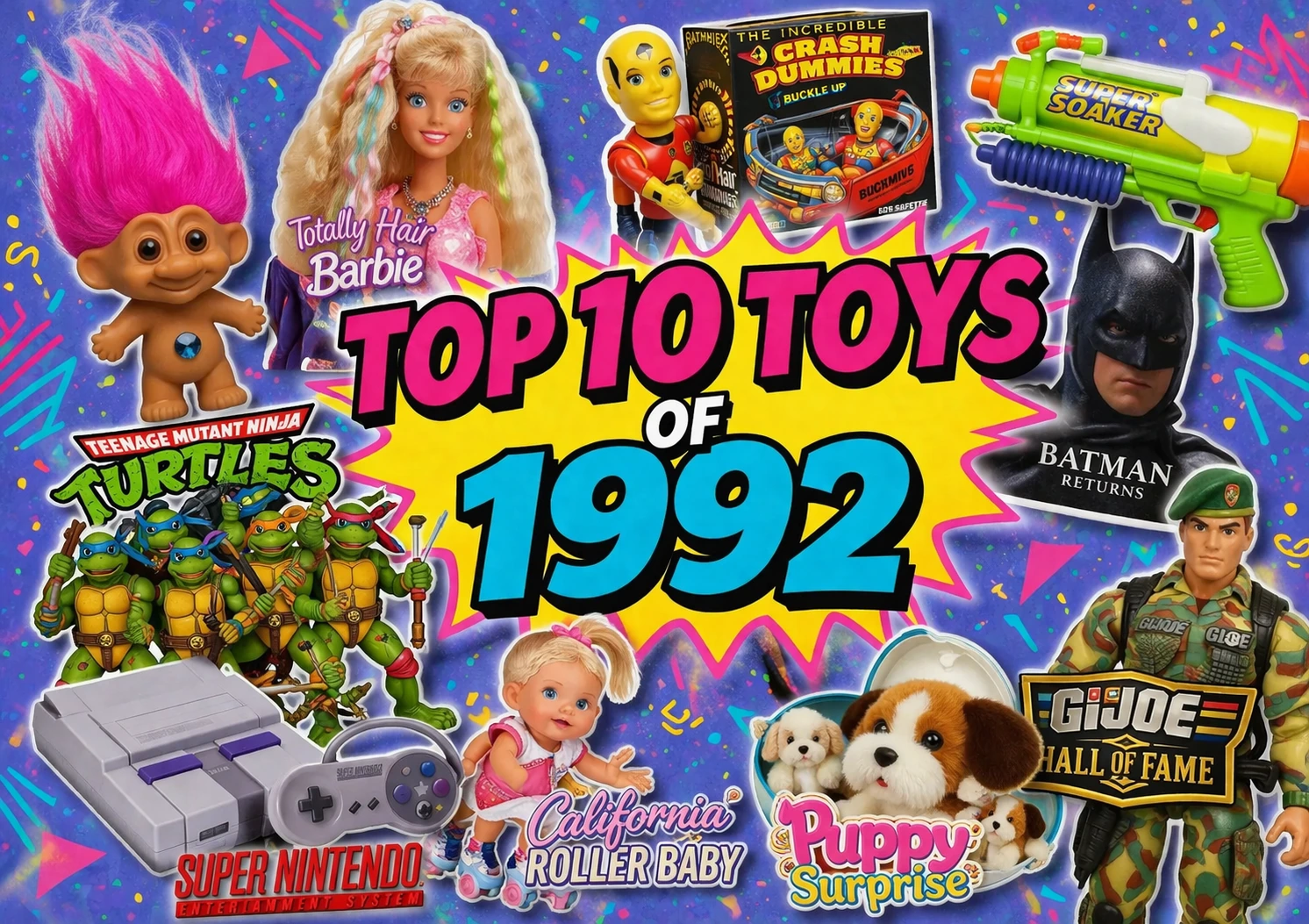
The top toys of 1992 were Troll Dolls, Totally Hair Barbie, Incredible Crash Dummies, Batman Returns toys, Super Soaker, Teenage Mutant Ninja Turtles, Super Nintendo, G.I. Joe Hall of Fame, California Roller Baby and Puppy Surprise.
This was not a tidy toy year. Retro collectibles came roaring back. Barbie found the perfect early-90s exaggeration. Movie toys kept cashing checks. Water blasters turned the neighborhood into a tactical map, and children somehow made room for neon-haired trolls beside 16-bit hardware.
The Short Answer
What Were the Most Popular Toys of 1992?
The most popular toys of 1992 included Troll Dolls, Totally Hair Barbie, Incredible Crash Dummies, Batman Returns toys, Super Soaker, Teenage Mutant Ninja Turtles, Super Nintendo, G.I. Joe Hall of Fame, California Roller Baby and Puppy Surprise.
Troll Dolls rank first because they best capture the year’s combination of nostalgia, low price, collectability, visual weirdness and cross-generational recognition. Totally Hair Barbie was the strongest single doll story, while Super Soaker and Crash Dummies proved a clear physical gimmick could still compete with licensed characters and game systems.
The Fast Rewind
Top 10 Toys of 1992 at a Glance
Start with the complete ranking, then jump directly to any toy for the full explanation.
- #1Troll DollsA weird retro collectible becomes the year’s perfect low-tech hit
- #2Totally Hair BarbieOne enormous hair gimmick refreshes the doll empire
- #3Incredible Crash DummiesA toy line turns falling apart into the entire play pattern
- #4Batman ReturnsA blockbuster license expands an already durable action brand
- #5Super Soaker Water GunBetter range and more power create a neighborhood arms race
- #6Teenage Mutant Ninja TurtlesTurtle Power cools from mania into a durable institution
- #7Super Nintendo SystemThe premium 16-bit future remains a major Christmas gift
- #8G.I. Joe Hall of FameA heritage action brand returns at a larger scale
- #9California Roller BabyVisible movement gives a doll an instant commercial hook
- #10Puppy SurpriseA hidden litter makes the reveal part of the toy
How the List Came Together
How the Top Toys of 1992 Were Ranked
This is a transparent editorial ranking. No single complete public chart cleanly compares consoles, dolls, action figures, plush surprises, water blasters, movie licenses and retro collectibles across the entire year.
Holiday visibility and giftability
The ranking considers how clearly each product functioned as a Christmas gift: shelf presence, commercial demonstration, price flexibility, package recognition and whether adults could understand the appeal quickly.
Year-specific cultural impact
The strongest entries explain 1992 itself: the Troll comeback, Barbie’s giant-hair moment, Crash Dummy destruction, Batman movie merchandising, Super Soaker escalation and the continuing place of SNES and TMNT.
Strength of the play hook
1992 rewarded products with fast explanations. Hidden puppies, rolling dolls, smash-apart figures, longer hair, farther-firing water and bright troll hair all made the value visible in seconds.
Category differences stay visible
A low-priced Troll and a premium game console do not win through the same route. The order weighs year-specific heat and memorability rather than pretending every category produced identical sales evidence.
The Aisle Gets Beautifully Unstable
Why 1992 Changed Toy Culture
The year matters because no single category controls the whole story. Nostalgia, licensed entertainment, physical gimmicks, dolls, action figures and electronic platforms all thrive at the same time.
Retro could feel new again.
Troll Dolls and G.I. Joe Hall of Fame show companies learning to sell familiarity as a feature. Older ideas could return with brighter packaging, new scale or stronger collectible logic.
One visible gimmick could carry a product.
Totally Hair Barbie, Crash Dummies, California Roller Baby and Puppy Surprise each explain themselves through one unmistakable feature. The commercial did not need a mythology lecture. It needed a demonstration.
Outdoor play became an equipment race.
Super Soaker turned water play into measurable advantage: range, pressure, tank size and the ability to soak somebody before they could reach you with an obsolete squirt pistol.
Entertainment licenses remained powerful.
Batman Returns and TMNT prove movie and cartoon visibility still mattered, but established characters needed enough product depth to survive beyond one opening weekend or one ad campaign.
Five Power Centers in One Unhinged Aisle
What Actually Drove the 1992 Toy Market?
The year becomes clearer when the toys are grouped by the kind of demand they created. These were five full-width commercial systems, not five cramped little columns.
Retro Collectible Energy
Troll Dolls combined nostalgia, low price, bright variation and small size. Adults recognized the idea, while children treated the new colors and styles as a current collectible.
G.I. Joe Hall of Fame used the same broad principle at a different scale: the brand’s history became a reason to buy rather than a reason to dismiss it.
The Giant Gimmick
Totally Hair Barbie, Crash Dummies and California Roller Baby all turned one exaggerated feature into a complete product identity: more hair, more destruction or visible motion.
That clarity mattered because the toy could prove itself in a commercial, on a shelf or during one quick demonstration without requiring a long explanation.
Licensed Action Power
Batman Returns used blockbuster attention, while TMNT relied on a deeper continuing universe. Both showed the value of recognizable characters, villains and vehicles.
The difference was durability: Batman could absorb each new film, while the Turtles kept generating variants and mutants even after peak mania cooled.
Backyard Escalation
Super Soaker created demand through competitive advantage. One child’s better blaster made every weaker water gun in the neighborhood feel immediately outdated.
The product did not need a licensed character. Engineering, demonstration and playground status supplied the marketing.
The Electronic Future Holds
Super Nintendo remained a major premium gift, proving that retro comebacks and low-tech novelty did not push gaming aside.
The system’s continuing software library made one hardware purchase the beginning of future demand, even in a year dominated by easier, cheaper and stranger products.
From #10 to #1
The Top 10 Toys of 1992 Countdown
Ten toys, several competing definitions of “modern” and one aisle where trolls, water cannons, giant hair and 16-bit hardware all made commercial sense.
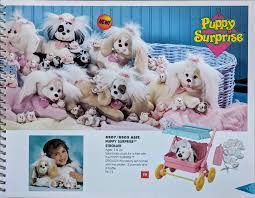
The Reveal Was the Whole Game
Puppy Surprise
Puppy Surprise opens the countdown because it turns uncertainty into the product. The plush dog is cute, but the real hook is the hidden litter: how many puppies are inside, what colors will appear and whether the reveal matches what a child imagined before opening it.
That is a more powerful idea than it first appears. Many plush toys ask children to supply nearly all the story after the package opens. Puppy Surprise builds an event into the first interaction. The product is part companion, part unboxing moment and part miniature collection from the beginning.
The concept also fit the shopping mood of 1992. Adults could understand it immediately, the package offered a clear emotional promise and the toy did not require batteries, a television or a giant supporting mythology. One sentence—“there are surprise puppies inside”—did most of the sales work.
Puppy Surprise also points toward the decade’s growing surprise and collectible logic. The variable litter made one purchase feel less final and helped a nurturing plush product borrow some of the excitement normally associated with blind assortments and trading.
For Gen X, Puppy Surprise feels like the moment a stuffed animal learned that mystery could be a feature, not merely something caused by losing the accessories under the bed.
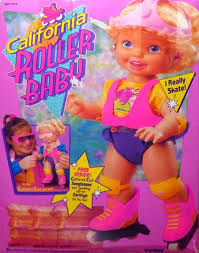
Peak Early-90s Motion Gimmick
California Roller Baby
California Roller Baby lands at number nine because 1992 loved toys that could demonstrate their value in seconds. A doll that moved or rolled had a visible advantage over a product whose entire appeal depended on imagination that could not be shown in a thirty-second commercial.
The name did part of the branding work too. “California” supplied sun, motion and early-90s lifestyle attitude, while the baby-doll format kept the product familiar. It was not a radical category invention. It was a known category with enough movement and styling to look new.
That combination mattered in a year packed with instantly legible gimmicks. California Roller Baby did not need children to learn a fictional universe. The motion was the premise, and the styling kept the product from feeling like a mechanical demonstration with a face attached.
The doll also shows why the 1992 aisle could support products outside the giant franchises. One strong visual trick, presented clearly, could still earn a seasonal identity beside Batman, TMNT, Barbie and Nintendo.
For Gen X, California Roller Baby feels like one of those hyper-specific toy concepts that sounded perfectly normal in a commercial and slightly surreal the moment an adult tried to describe it later.
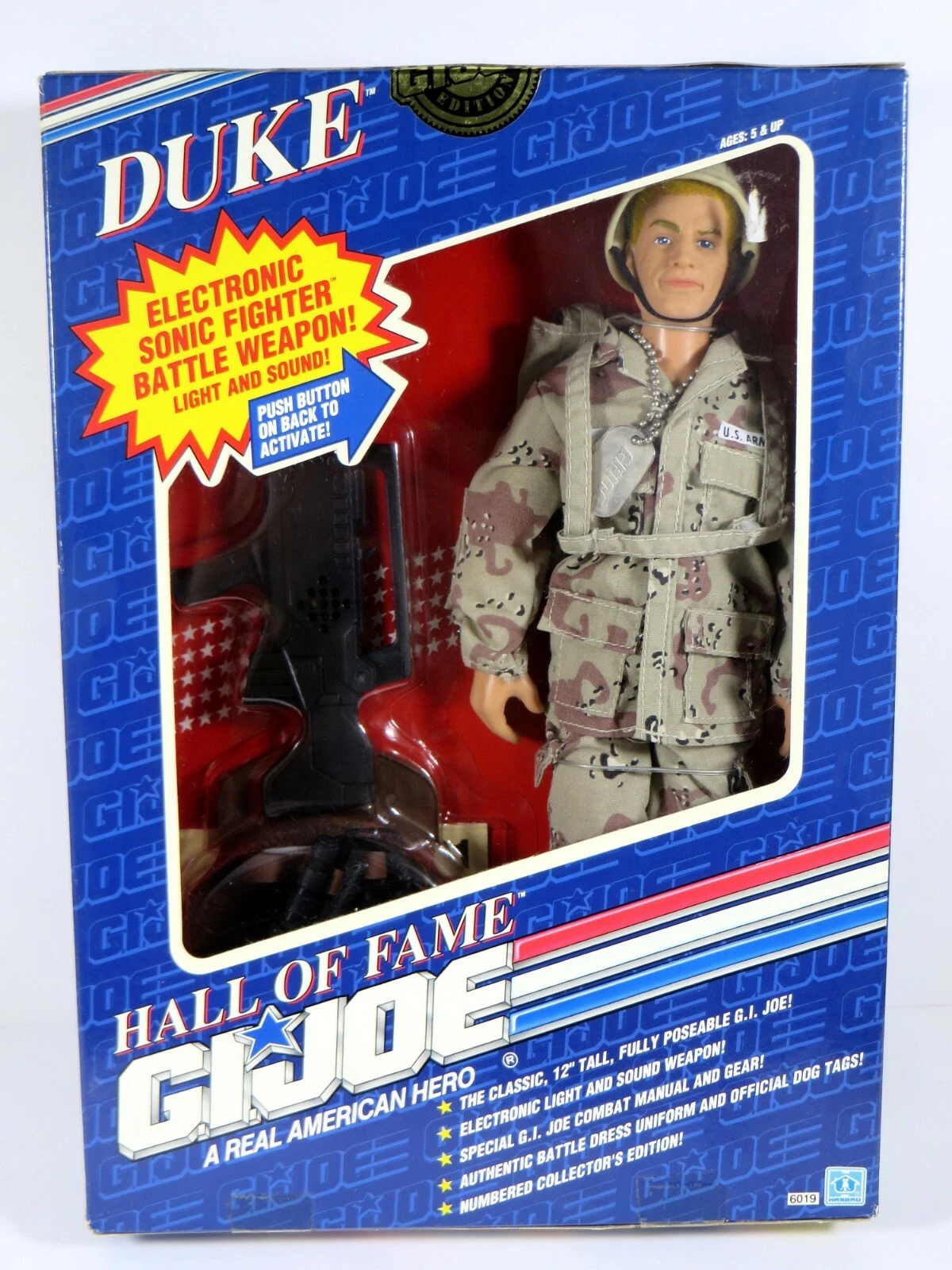
The Big Guy Comes Back
G.I. Joe Hall of Fame
G.I. Joe Hall of Fame ranks eighth because it captures the moment nostalgia becomes an explicit retail strategy. Larger-scale figures did not hide the brand’s history. They used that history as the reason the product deserved attention.
The line could speak to adults who remembered earlier G.I. Joe eras while remaining clear to children who already understood military adventure, uniforms, equipment and named heroes. Familiarity shortened the sales pitch, while the larger body gave the reboot physical presence on the shelf.
Scale mattered because it separated Hall of Fame from the dense smaller-figure ecosystems around it. The product felt more substantial, more display-oriented and more connected to the brand’s heritage. It was nostalgia made physically larger.
The comeback also reveals how broad 1992 was. A heritage action brand could return beside Troll Dolls, Totally Hair Barbie, SNES and a new generation of movie toys without feeling out of place. The market was learning that old could be one of several versions of new.
For Gen X, Hall of Fame G.I. Joe feels like the toy aisle remembering its own family history and deciding the past deserved a bigger box.
The Future Is Still in the Room
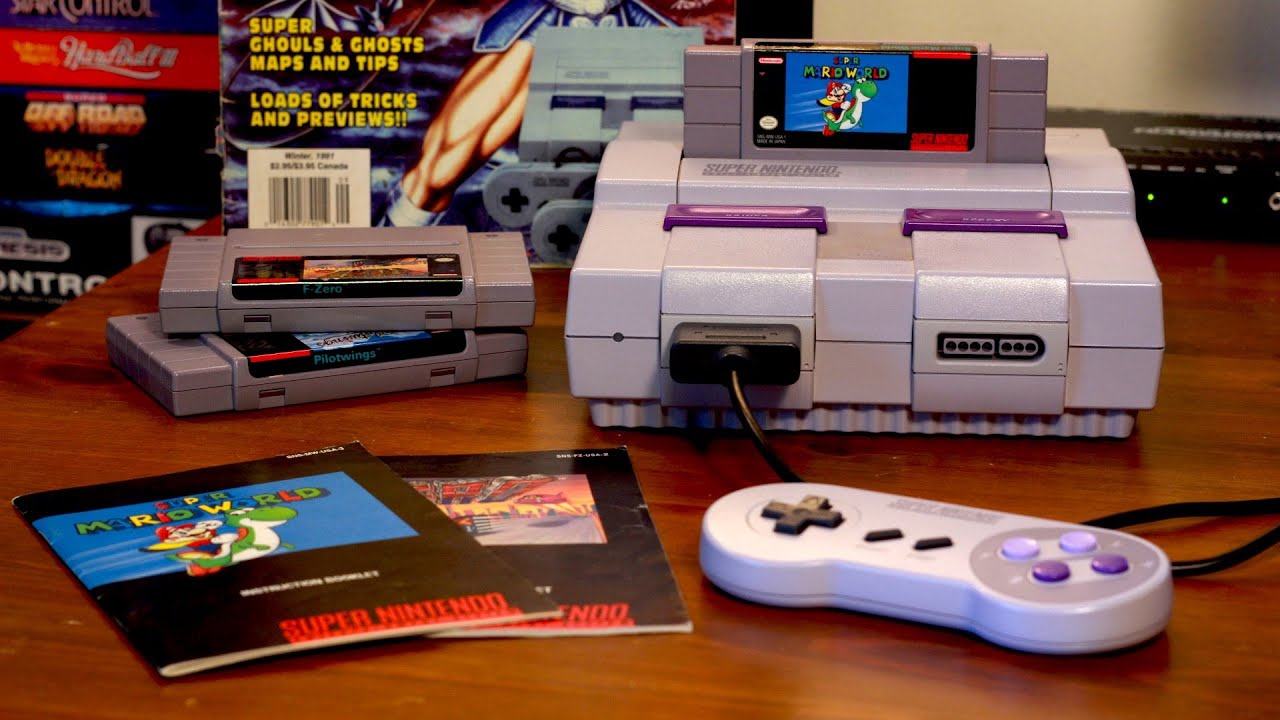
Super Nintendo System
Super Nintendo comes in at number seven because the retro energy of 1992 did not make the year anti-technology. SNES remained a major status gift and a platform capable of generating future cartridge demand long after Christmas morning.
What changed was the context. Gaming no longer needed to prove that it belonged in the toy conversation, but it shared the year with lower-priced hits that were easier to demonstrate and easier for several relatives to buy. The console remained important without controlling every headline.
The platform model kept SNES commercially powerful. Hardware led to software, software led to schoolyard discussion and that discussion generated future wish lists. One box under the tree became the foundation for several later purchases.
Its placement also reflects the difference between historical importance and year-signature heat. Super Nintendo may have mattered more over time than several toys ranked above it, but Trolls, Barbie, Crash Dummies and Super Soaker better capture the strange physical personality of 1992 itself.
For Gen X, Super Nintendo in 1992 still felt like premium household hardware—the kind of gift that changed who controlled the television and what every later birthday request would cost.
From Mania to Durable Institution
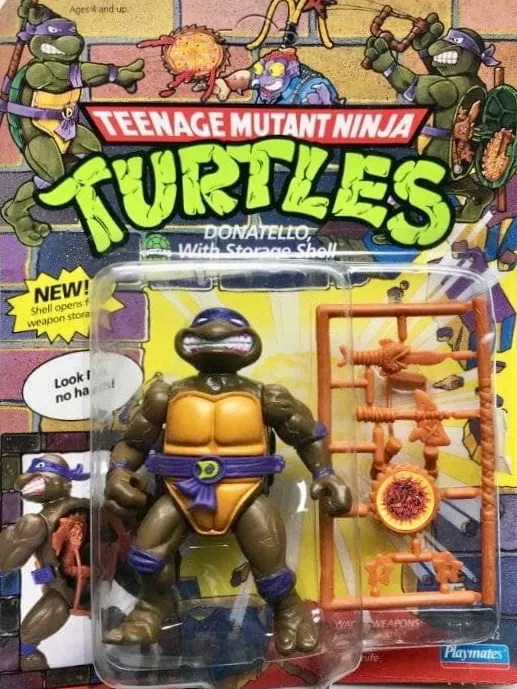
Teenage Mutant Ninja Turtles
Teenage Mutant Ninja Turtles land at number six because 1992 shows the brand moving from world-devouring craze to durable institution. The initial explosion had cooled, but the line still had figures, vehicles, playsets, side characters and variants capable of generating repeat demand.
That durability is significant. Many toy crazes burn through their easiest ideas and collapse. TMNT could keep dressing the core characters differently, introducing stranger mutants and attaching the brand to cartoons or movies without losing the simple identities that made the line readable.
The Turtles also remained unusually child-owned. Humor, grossness, color, pizza and combat kept the brand playful even as the merchandising operation became increasingly disciplined. The product machine was corporate, but the fantasy still felt like something children had claimed for themselves.
By 1992, TMNT was no longer the only loud thing in the room, yet it remained one of the strongest examples in the 90s action figure wars of a franchise surviving beyond peak fever.
For Gen X, 1992 TMNT feels like the moment Turtle Power stopped looking temporary and became part of the permanent architecture of early-90s childhood.
The Backyard Arms Race Escalates
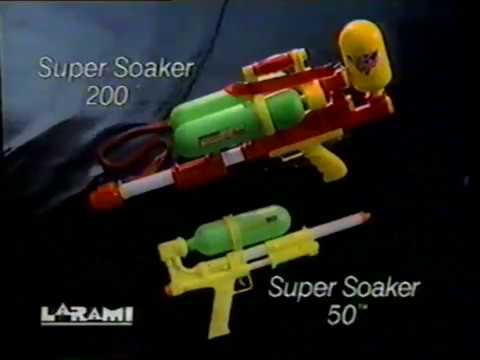
Super Soaker Water Gun
Super Soaker hits number five because its appeal could be understood instantly: farther range, more water and a decisive advantage over anybody still carrying a weak plastic squirt pistol.
The product did not borrow its importance from a movie or cartoon. Engineering created the fantasy. Pressure, tank size and visible performance turned the blaster into playground status and made older water toys look technologically embarrassed.
That status spread socially. Once one child had a more powerful blaster, everybody else gained a reason to upgrade. Super Soaker created demand through competitive imbalance—the same mechanism that drives equipment races in sports, gaming and nearly every backyard conflict involving siblings.
The line also proved the strength of the 90s backyard toy lane. Even in a market full of characters and screens, a well-designed physical toy could create stories through movement, strategy and the immediate consequence of getting drenched.
For Gen X, Super Soaker in 1992 feels like the day ordinary squirt guns were quietly declared obsolete and summer became organized tactical warfare.
The Movie Toy Machine Keeps Working
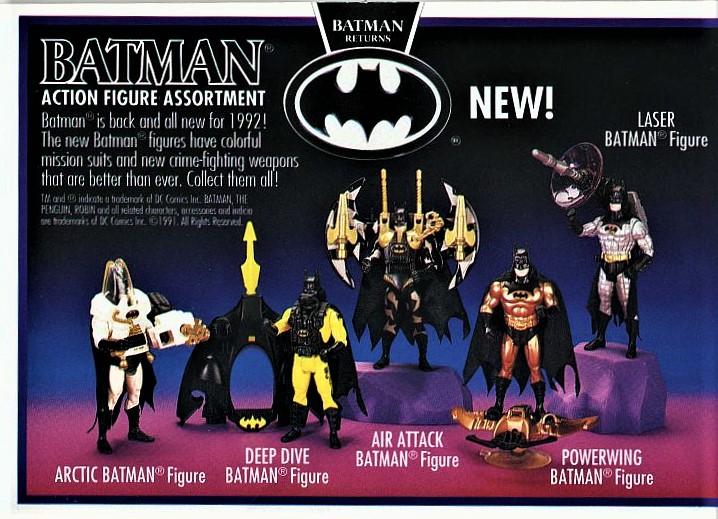
Batman Returns
Batman Returns toys rank fourth because Batman had become larger than any one movie. The film supplied fresh villains, costumes, vehicles and visual mood, while the character’s wider cultural recognition made the line safer than an ordinary one-season license.
That flexibility gave toy makers enormous freedom. Batman could appear in movie-inspired gear, exaggerated armor, bright packaging or accessories that would have looked absurd on screen. The character’s basic silhouette and gadget logic held the toy line together even when the plastic moved far from the film.
The movie still mattered because it created urgency. A familiar character gained a new theatrical event, and the event refreshed merchandise that already had a strong place in the action aisle. The license did not build recognition from zero; it converted existing recognition into another purchase cycle.
Batman Returns also belongs to the broader 90s action figure wars, where superheroes, mutants, military lines and movie properties could all compete through character count, vehicles and visual spectacle.
For Gen X, Batman Returns toys feel like the early-90s figure aisle performing its favorite trick: taking a dark blockbuster and turning it into a wall of brightly packaged plastic hardware.
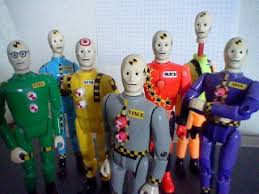
Violence, But Apparently Educational
Incredible Crash Dummies
Incredible Crash Dummies take number three because the line understood its own appeal with almost embarrassing precision. The figures were supposed to fly apart. A quality normally considered a defect became the entertainment.
The concept borrowed crash-test imagery and public-safety familiarity, which gave the product a thin layer of adult respectability. Underneath that layer was pure slapstick destruction: vehicles crashed, bodies separated and children immediately reset everything to do it again.
That resettable mayhem created an excellent repeat-play loop. The toy did not merely survive impact; impact was the button that activated the joke. Children could invent increasingly elaborate accidents without needing a complex story or a large roster of characters.
Crash Dummies also fit the broader world of 90s toy-store culture, where one visible demonstration could stop a child in the aisle and explain the product faster than any paragraph on the back of the package.
For Gen X, Crash Dummies feel like one of the decade’s cleanest toy ideas: loud, kinetic, funny and designed to turn parental warnings about safety into another reason to smash the car.
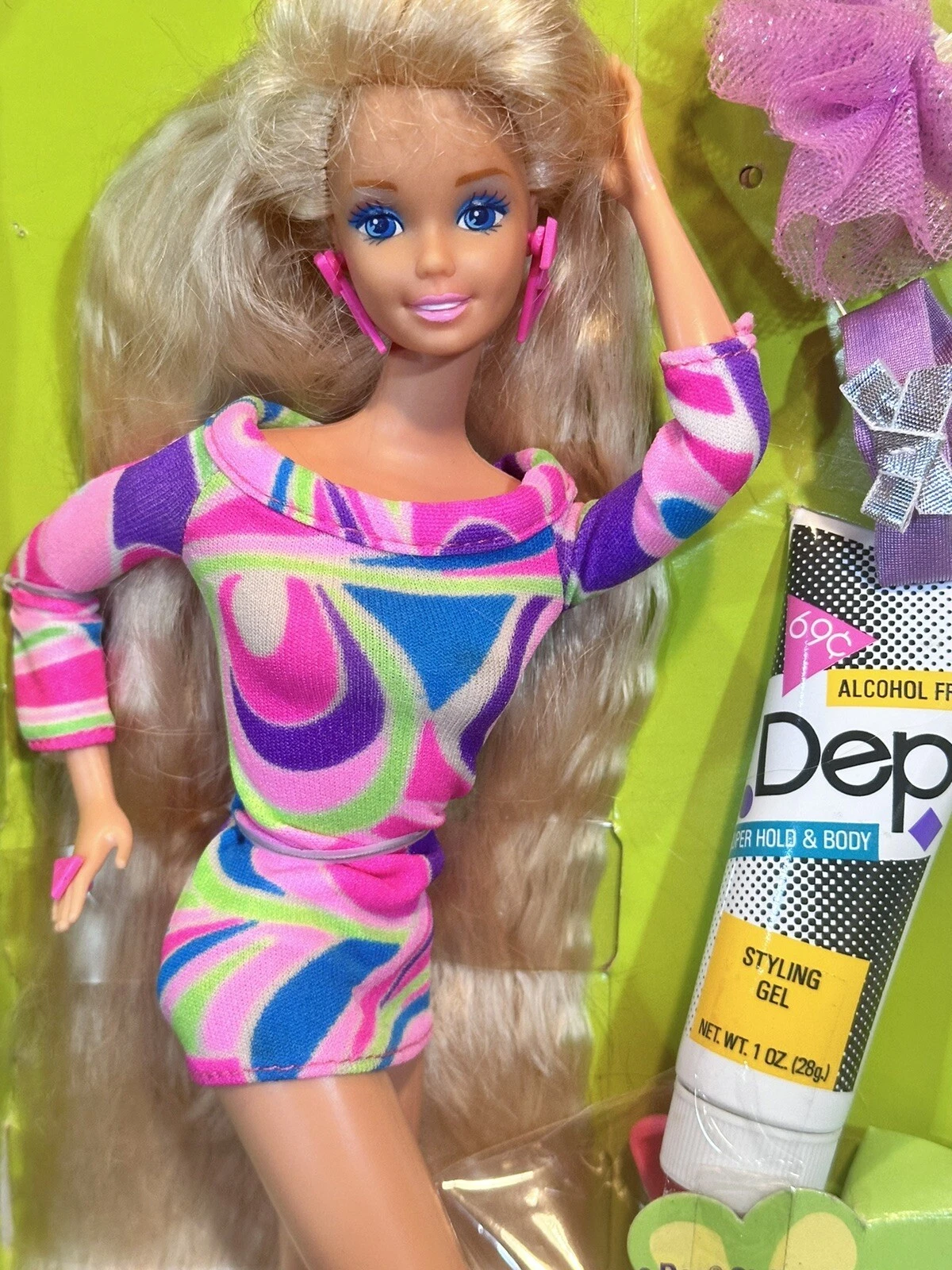
Barbie Finds the Perfect 90s Upgrade
Totally Hair Barbie
Totally Hair Barbie hits number two because the line found the perfect way to refresh an established brand: exaggerate one feature until the entire product becomes unmistakable.
The extraordinary hair made the doll visually loud, immediately tactile and highly demonstrable. It created more brushing, styling and display play without changing the basic Barbie identity that children and gift-buying adults already trusted.
That balance is the real strength. Mattel did not replace Barbie with a new concept. It made Barbie feel specifically 1992. The product remained readable from across the aisle while looking different enough to justify another doll inside an already crowded collection.
The hair also changed the interaction. It was not only a fashion detail. It became a mechanism for repeat play, giving children a reason to return to the doll through styling rather than relying entirely on outfits or environmental accessories.
For Gen X, Totally Hair Barbie feels like one of the purest 90s toy objects ever made: oversized, colorful, tactile and slightly ridiculous in exactly the right proportion.
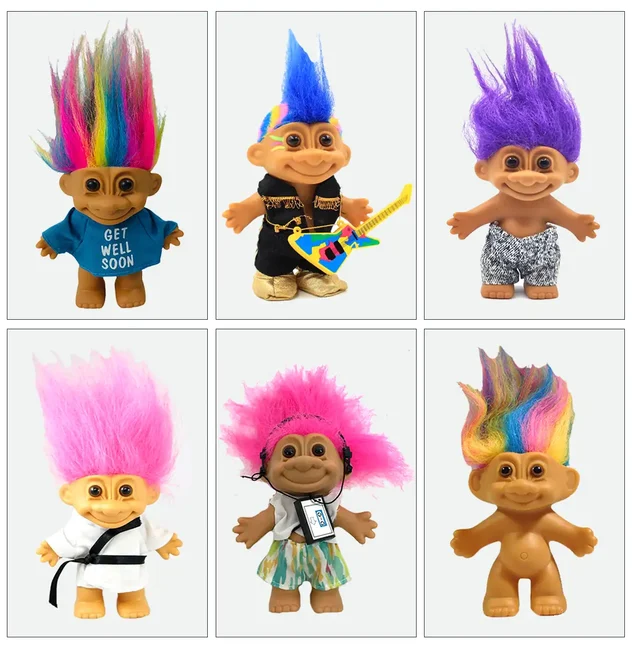
The Weird Little Retro King of 1992
Troll Dolls
Troll Dolls take the number-one spot because they best capture the contradiction at the center of 1992. They were old and newly hot, inexpensive and highly collectible, ugly and somehow charming, familiar to adults and still strange enough for children to claim.
The product worked across price points and generations. Small size made Trolls easy to display or accumulate. Bright hair and endless variations made them visible. Adults recognized the basic idea, while children could treat each color, outfit or theme as another current object rather than a historical curiosity.
Trolls also prove that novelty does not require technology. The sensory appeal came from hair, shape, color and personality. The collectible appeal came from variation. The social appeal came from the fact that they were easy to compare, trade, arrange and bring to school.
Their success feels especially appropriate in a year when the toy aisle refused to follow one direction. A revived novelty could sit above consoles, blockbuster figures, water blasters and a major Barbie release because the object was cheap, weird and almost perfectly suited to multiplication.
For Gen X, 1992 Troll mania feels like proof that childhood taste cannot be organized by adults. Sometimes the country’s biggest toy story really is a tiny goblin with fluorescent hair.
Two Eras in One Shopping Cart
1992 Let Nostalgia and the Future Win at the Same Time
Troll Dolls and G.I. Joe Hall of Fame looked backward. Super Nintendo looked forward. The rest of the aisle borrowed whatever worked from both directions.
The Comeback Argument
Familiar Could Feel Exciting Again
A product did not need to be newly invented when the market could repackage recognition, variation and nostalgia as a current event.
Cross-Generational Recognition
Adults recognized Trolls and G.I. Joe, reducing the risk of the gift while giving the toy a built-in story.
Visible Refresh
New colors, scales, outfits and packaging prevented the comeback from feeling like old stock.
Collectible Multiplication
Variation turned familiarity into repeat demand rather than one nostalgic purchase.
The comeback pitch: you already know this—and now there are twelve new versions.
The Toy Box Afterlife
Collecting Toys From 1992 Today
Exact version, condition, completeness, original packaging, working mechanisms and real buyer demand matter much more than age alone.
Trolls and dolls depend on exact variation.
Troll hair, body markings, outfits, jewels, manufacturer details and packaging can separate common examples from more desirable versions. Totally Hair Barbie should be checked for original hair length, clothing, accessories and box inserts.
Mechanism toys require functional testing.
Crash Dummies should separate and reset properly. California Roller Baby should retain the correct movement parts. Puppy Surprise should include the proper litter and original matching pieces.
Figures and consoles lose value through missing parts.
Batman, TMNT and G.I. Joe pieces may depend on weapons, belts, stands, vehicles, paperwork or card backs. SNES value depends on working hardware, original cables, controllers, packaging and region.
Sold prices matter more than hopeful listings.
Compare completed sales for the same version and condition. The guides to 90s collectible toy crazes and forgotten 90s toys provide useful context before assuming every neon-haired attic find is a retirement plan.
What the Wish List Felt Like
Christmas Morning 1992 Had No Consistent Theme
The gifts ranged from tiny collectibles to premium hardware, but nearly every winner had a hook that was obvious before the wrapping paper reached the floor.
Trolls multiplied quickly because every color and outfit looked like another complete personality.
Totally Hair Barbie announced itself through scale before anybody touched the brush.
Crash Dummies required a vehicle, a target and no meaningful concern for workplace safety.
A Super Soaker under the tree meant several months of anticipation before the neighborhood could be properly attacked.
SNES still created the biggest hardware reveal and immediately generated a list of games not included in the box.
Puppy Surprise turned one soft package into several smaller discoveries.
The memory: somebody got a Troll, somebody got Batman, somebody got SNES, and the kid with the Super Soaker spent the rest of winter waiting for weather that would justify revenge.
Under Fluorescent Lights
What the 1992 Toy Store Looked Like
The aisle looked less like one future and more like several decades colliding: retro faces, blockbuster characters, giant hair, mechanical demonstrations, outdoor hardware and premium electronic boxes.
The collectible bins
Trolls used color and variation to make a small product look like an entire population.
The demonstration shelf
Crash Dummies, Roller Baby and Puppy Surprise sold through visible action or a reveal adults could understand immediately.
The licensed figure wall
Batman and TMNT turned entertainment recognition into vehicles, villains and repeat purchases.
The premium hardware case
Super Nintendo still occupied the expensive, aspirational corner where adults asked about games, cables and what was actually included.
The full 90s Toy Store Culture guide follows the aisle layouts, glass cases, catalogs, mall trips and holiday rituals that made finding the toy part of the memory.
Commercial-Break Pressure
Watch the 1992 Toy Commercial Energy
The year was made for demonstrations: Troll hair, Barbie hair, dummies exploding, water blasting, dolls rolling, puppies appearing and Batman looking cooler than the actual plastic could reasonably support.
The best 1992 toy ads did not ask children to imagine the feature. They showed the feature loudly, repeatedly and with enough fake excitement to make the current toy box seem medically inadequate.
The 90s Toy Commercials & Videos archive is the natural next stop for the ad-break machinery behind Trolls, Barbie, Batman, Super Soaker, Crash Dummies, TMNT, dolls and game systems.
The Rest of the Year
Keep Rewinding 1992
The toy aisle was only one part of a year bouncing between pop royalty, R&B smoothness, hip-hop attitude, network-TV gravity and blockbuster spectacle.
The 1992 Toy Aisle Verdict
Why These Toys Define 1992
The top 10 toys of 1992 refuse to tell one clean story. Technology does not crush everything, and nostalgia does not take over completely. Instead, the year rewards whatever can create the clearest emotional or physical hook.
Trolls sell variation and weirdness. Totally Hair Barbie sells tactile exaggeration. Crash Dummies sell repeatable destruction. Batman sells blockbuster recognition. Super Soaker sells competitive advantage. SNES sells the future, while TMNT and G.I. Joe sell durable worlds.
For Gen X, 1992 feels like one of the last toy years before the decade becomes even more segmented. It is messy, funny and commercially sharp—a fluorescent collision between the past, the future and several products that should not make sense together but absolutely do.
Questions From the Toy Aisle
Top Toys of 1992: Frequently Asked Questions
What were the most popular toys of 1992?
Popular toys of 1992 included Troll Dolls, Totally Hair Barbie, Incredible Crash Dummies, Batman Returns toys, Super Soaker, Teenage Mutant Ninja Turtles, Super Nintendo, G.I. Joe Hall of Fame, California Roller Baby and Puppy Surprise.
What was the biggest toy of 1992?
Troll Dolls take the number-one spot in this editorial ranking because they best represent the year’s unusual combination of nostalgia, collectability, affordability and visual weirdness.
What were the hottest Christmas toys of 1992?
Popular Christmas gifts in 1992 included Troll Dolls, Totally Hair Barbie, Crash Dummies, Batman Returns toys, Super Soaker, TMNT, Super Nintendo, G.I. Joe Hall of Fame, California Roller Baby and Puppy Surprise.
Why were Troll Dolls popular again in 1992?
They were inexpensive, visually loud, easy to collect, familiar to adults and available in enough variations to feel new to children.
Why is Totally Hair Barbie ranked number two?
Totally Hair Barbie gave an established doll brand one unmistakable early-90s feature that created visual impact and repeat styling play.
Why are Incredible Crash Dummies ranked so high?
The line had an exceptionally clear and repeatable play pattern. The figures and vehicles were designed to crash, break apart, reset and crash again.
Why is Batman Returns included?
Batman had already become a durable action brand, and the movie supplied new visual excitement, villains and merchandise inside the wider world of 90s movie toy tie-ins.
Was Super Soaker popular in 1992?
Yes. Super Soaker was one of the defining outdoor toy lines of the early 90s because pressurized range and power created an obvious advantage over older water guns.
Why is Super Nintendo only number seven?
The ranking emphasizes toys that most specifically capture 1992’s physical and retro personality. SNES had enormous long-term importance, but several lower-priced breakout toys had stronger year-signature heat.
Was TMNT still popular in 1992?
Yes. TMNT had moved beyond peak mania but remained a deep action system supported by figures, vehicles, playsets, variants, cartoons and movies.
What was G.I. Joe Hall of Fame?
It was a larger-scale G.I. Joe revival that used the brand’s heritage and recognition as a premium selling point inside the 90s action figure aisle.
What was California Roller Baby?
California Roller Baby was an interactive doll built around visible rolling movement, a strong example of the demonstration-heavy gimmicks found in the 90s doll market.
How did Puppy Surprise work?
The plush mother dog contained a hidden litter of puppies, making the number and appearance of the puppies part of the reveal and the appeal.
What made the 1992 toy aisle so strange?
The year mixed retro comebacks, giant doll gimmicks, smash-apart figures, movie merchandise, water blasters, surprise plush and 16-bit gaming in the same market.
What makes 1992 different from 1991 in toy culture?
1991 is dominated by established brands and the 16-bit console fight. In 1992, those forces remain, but the market becomes more chaotic as retro collectibles, physical gimmicks and surprise toys gain unusual strength.
Are toys from 1992 valuable today?
Some can be, but value depends on exact version, condition, completeness, original accessories, packaging, working mechanisms and current demand. The guides to 90s collectible crazes and forgotten 90s toys provide broader context.
Was there one official top-10 toy chart for all of 1992?
No single complete public list cleanly compares every toy category across the full year. This page uses a transparent editorial method based on holiday visibility, cultural impact, category strength and how clearly each toy represents 1992.
Where can I watch commercials for 1992 toys?
The 90s Toy Commercials and Videos archive connects Trolls, Barbie, Batman, Super Soaker, Crash Dummies, TMNT, dolls and game systems with the advertising that sold them.
Move Through the Decade
Explore the Top Toys From Every Year of the 90s
Follow the toy aisle from Turtle Power and Troll comebacks into electronic pets, collectibles, schoolyard crazes, talking toys and late-90s holiday panic.