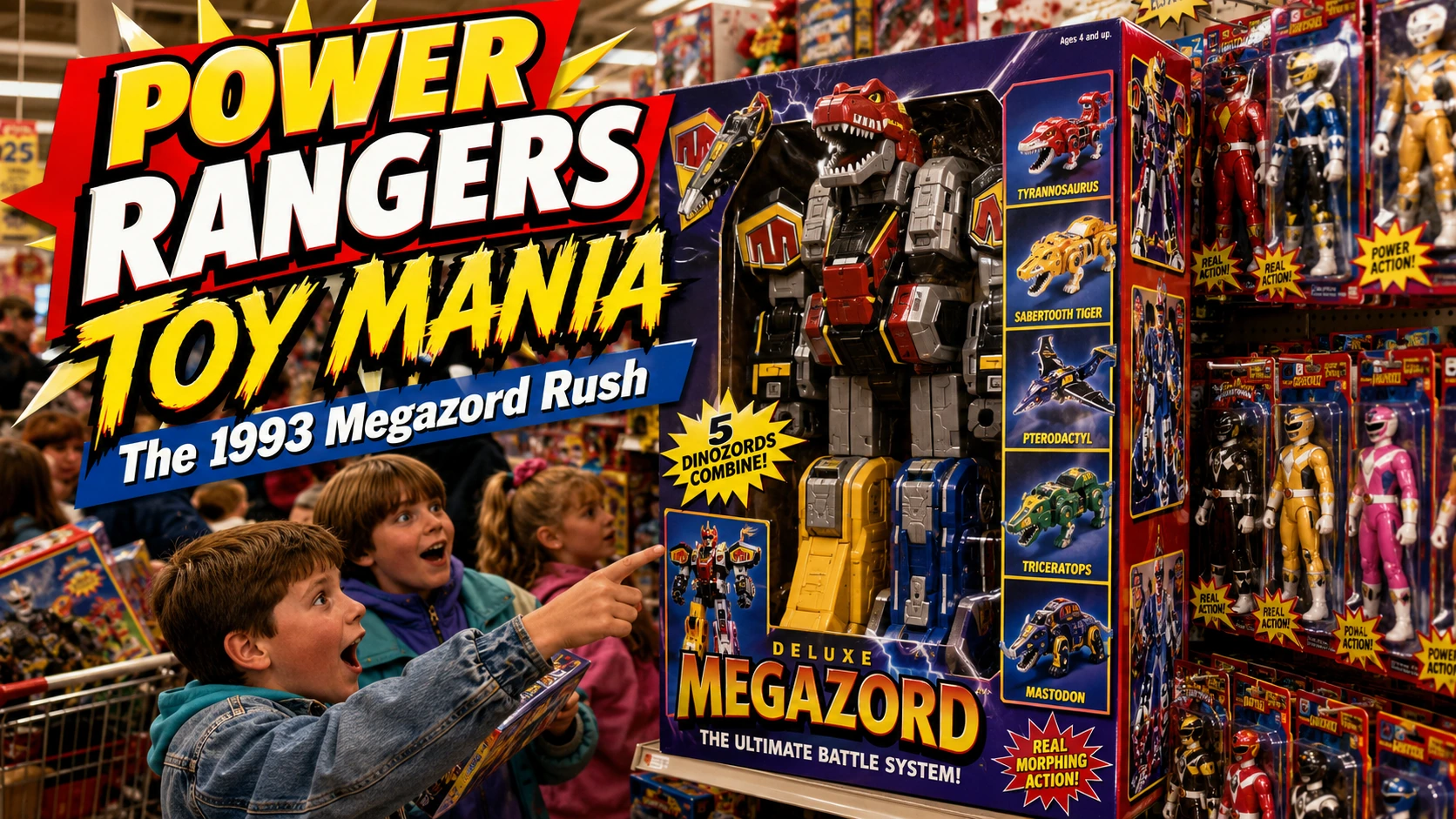
The TV-to-Toy Machine That Hit the Aisle at Full Megazord Volume
Power Rangers Toys in the 90s: The 1993 Megazord Rush
Mighty Morphin Power Rangers toys did not politely enter the 90s action aisle. They arrived in 1993 with color-coded heroes, martial-arts poses, rubber monsters, transforming Dinozords, role-play Morphers and one giant combining Megazord that made every other robot look temporarily underfunded.
The original Power Rangers toy craze worked because the television show and the toys completed each other. Episodes introduced a new Ranger, weapon, villain or Zord. Bandai put a plastic version on the shelf. Kids supplied the couch-cushion explosions. Parents supplied the sentence, “Didn’t we just buy the other robot?”
Why Did Power Rangers Toys Become Such a Huge 1993 Craze?
Power Rangers toys became a massive 1993 craze because the franchise combined action figures, role-play weapons and giant transforming robots with a television show that advertised new play patterns every weekday. Kids could own individual Rangers, recreate martial-arts battles, collect villains, wear a Morpher and combine separate Dinozords into the Megazord.
The line also refreshed itself constantly. The Green Ranger introduced the Dragonzord. The White Ranger brought the Tigerzord. Thunder, Ninja, Shogun, Zeo, Turbo, Space and Lost Galaxy toys gave the same basic fantasy a new robot, new suit and new reason to restart the collection. Power Rangers did not sell one toy. It sold an expanding command center.
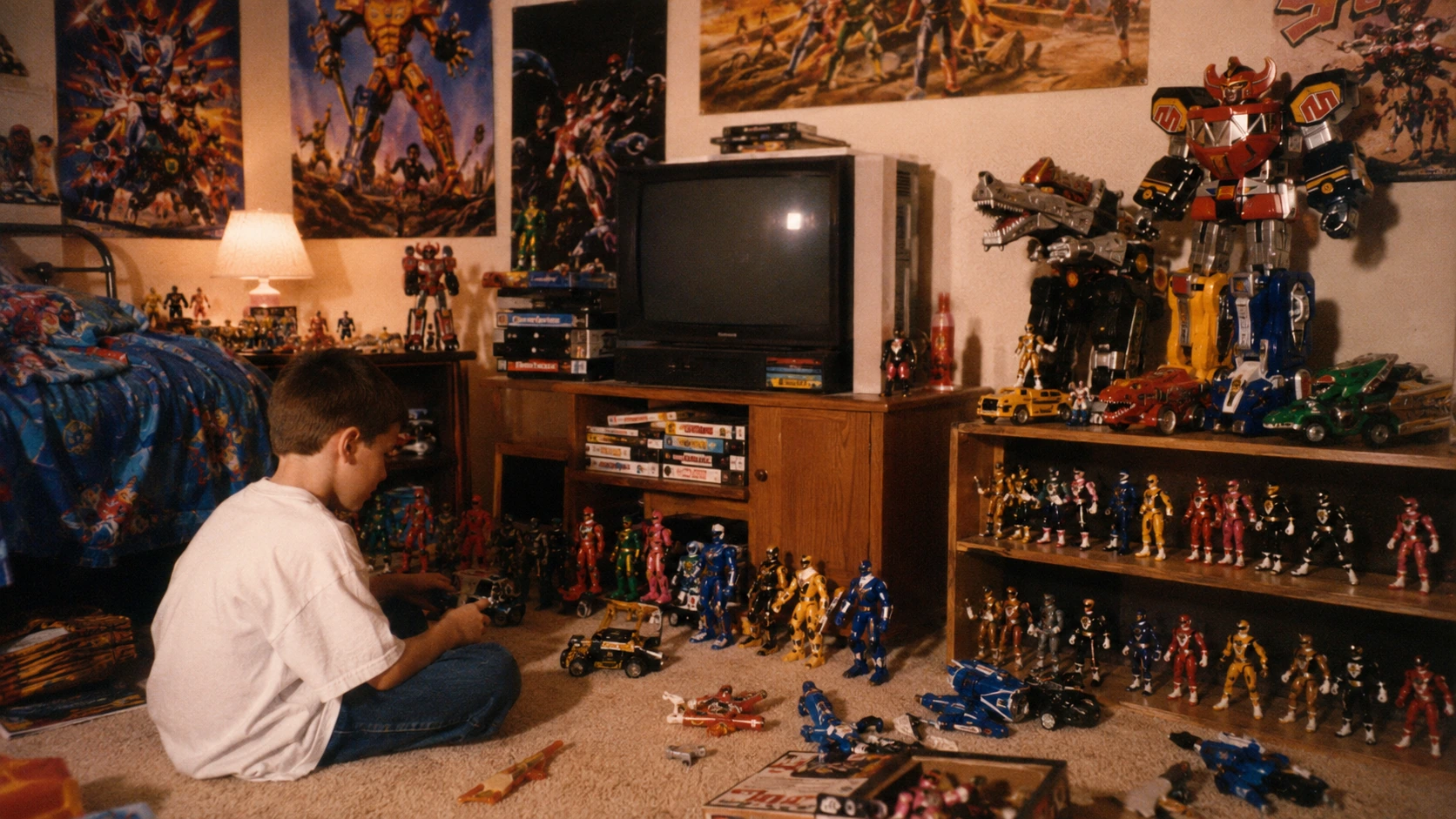
The Complete 90s Toy-History Command Center
The Full Story of Power Rangers Toys in the 90s
This page keeps every major toy generation separated so the original Mighty Morphin line, the movie era and later Zeo-through-Lost-Galaxy toys do not blur into one giant pile of mismatched robot limbs.
Five Toy Aisles Hidden Inside One Franchise
Why the Power Rangers Toy Craze Hit So Hard
The franchise did not depend on one successful action figure. It connected several kinds of play and made each one advertise the others.
Heroes
Color-coded Rangers gave every kid an immediate favorite and every group a simple way to assign roles.
Robots
Zords transformed and combined, creating a giant mechanical payoff far above the figure shelf.
Role Play
Morphers, weapons, gloves and costumes let kids become Rangers instead of merely moving them around.
Television
Episodes demonstrated exactly how each toy should move, combine, transform and defeat a monster.
Constant Change
New Rangers, powers and Zords kept the line fresh while making last season’s collection feel suspiciously incomplete.
Before the Megazord Owned Christmas
How Power Rangers Became a Toy Franchise
The toy phenomenon began with an unusually efficient combination of Japanese action footage, American teen characters and a toy company already familiar with giant combining robots.
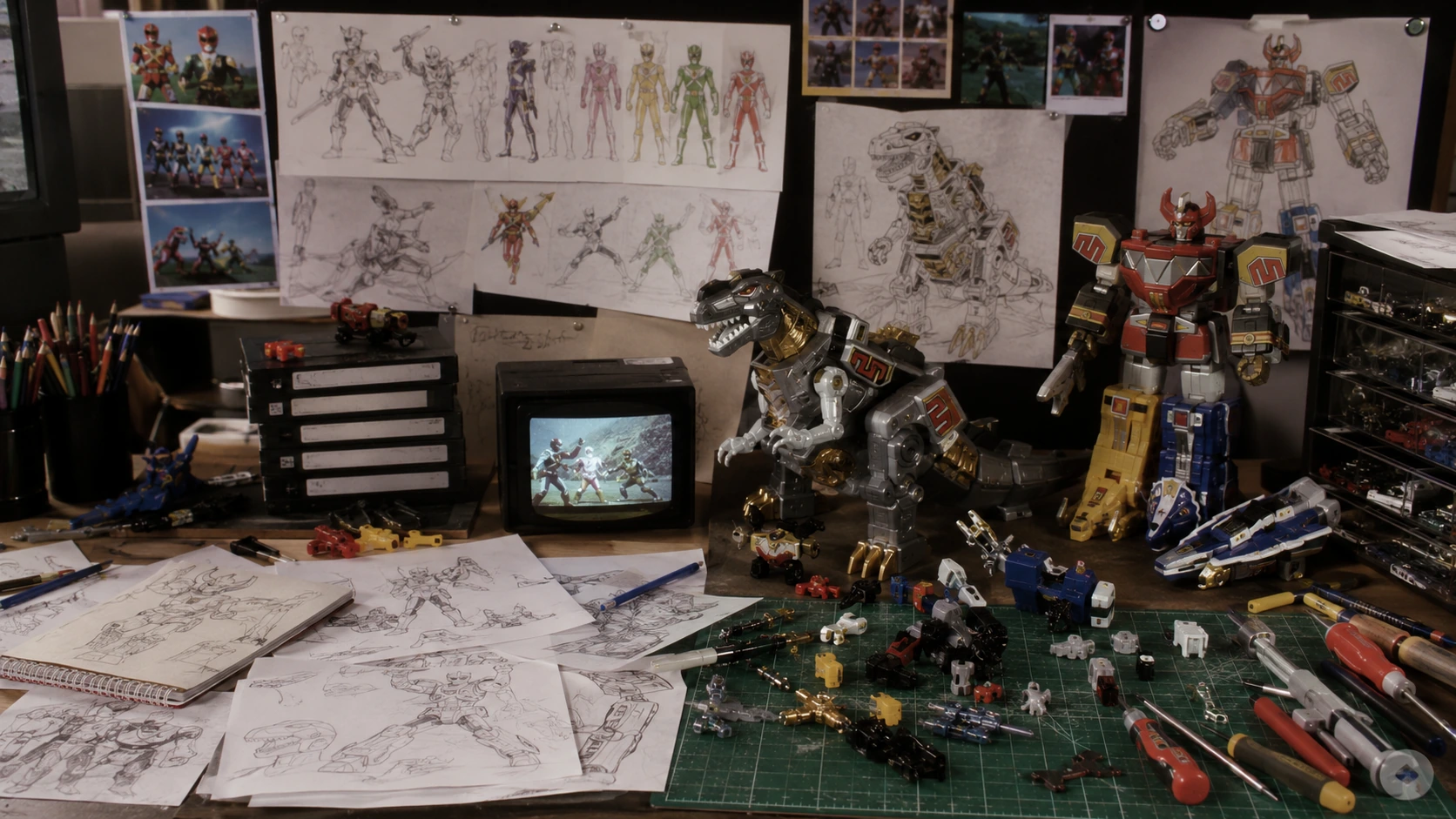
Haim Saban Sees the Possibility
Power Rangers creator Haim Saban spent years trying to adapt Japan’s Super Sentai format for American television. The winning version became Mighty Morphin Power Rangers, launched in 1993 as a Fox Kids series.
The basic production method was half television alchemy and half budget discipline. American footage followed teenagers in Angel Grove. Japanese action footage supplied suited battles, monsters and giant robot fights. Kids did not care which continent had filmed the explosion. The explosion still happened after school.
Toei’s Super Sentai Foundation
The original Ranger suits, monsters and Dinozord footage came from Toei’s Kyoryu Sentai Zyuranger. Later Mighty Morphin seasons pulled additional robot and action material from Gosei Sentai Dairanger and Ninja Sentai Kakuranger.
That source material brought decades of Japanese transforming-robot design into an American toy market primed for superheroes and action figures.
Bandai America Turns Footage Into Shelf Space
Bandai America produced the original Power Rangers toy lines. The company could adapt Japanese designs, create American packaging and build a product range around the same transformation scenes appearing on television.
Bandai had sold toys in the United States before Power Rangers, but the franchise gave the company a breakthrough brand that could compete for the most valuable space in the action-figure aisle.
The Toy Line Was Built Into the Fantasy
The show’s structure naturally created products. A Ranger had a figure, weapon and Morpher. A monster created an enemy. A Dinozord created a vehicle. Five Dinozords created the Megazord. A sixth Ranger created another character, another weapon and another giant robot.
No executive needed to force a skateboard or random vehicle into the story. The series already behaved like a toy catalog with martial arts.
The 1993 Timing
The franchise arrived after Teenage Mutant Ninja Turtles had proven how powerful television-linked action figures could become, but before the decade had settled on a permanent successor.
Power Rangers took the team structure, added live action, introduced giant robots and gave every color a social identity. The result landed squarely in the middle of the 90s action-figure wars.
The Gen X translation: somebody welded a martial-arts show to a combining robot commercial and discovered children had no natural defense.
Why the origin matters: the toys were not merchandise attached to the show. The show and toys were one repeating transformation system.
Every Episode Was a Demonstration
How the Power Rangers TV-to-Toy System Worked
The series taught children the names, combinations and importance of every major toy before a parent ever read the box.
Identity First
Each Ranger had a color, dinosaur and personality. A child could choose an identity before choosing a figure.
Transformation
Morphing sequences turned costume changes into rituals. Role-play toys could recreate that moment with one dramatic pose.
Individual Power
Weapons and Dinozords mattered separately, giving lower-priced toys a complete story.
Team Combination
The Rangers won together. Their weapons combined. Their Zords combined. The collection was designed to feel better when complete.
Escalation
A ground battle led to a giant monster, which led to Zords, which led to the Megazord. The show created a product-price ladder inside every fight.
Weekly Repetition
Kids heard the names repeatedly. By the time a commercial aired, the product already had emotional history.
New Character Events
Green Ranger and White Ranger storylines gave new toys an event-level introduction rather than a quiet shelf reset.
Seasonal Reinvention
New suits and robots made the franchise feel fresh without abandoning the core color-team fantasy.
Play Instructions Included
The show demonstrated poses, attacks, combinations and battles. No one needed to invent a reason the robot had a sword.
Power Rangers belongs beside the decade’s biggest movie and television toy tie-ins, but it pushed the formula harder than most: the program did not merely feature toys. It explained why the next toy was required.
The Aisle Goes Full Morphin
The 1993 Mighty Morphin Power Rangers Toy Launch
The original 1993 Bandai Power Rangers toy line became a breakout hit because it covered action figures, transforming robots, villains and role-play gear at the same time.
The First Figures Established the Team
Bandai’s early assortment centered on the original five Rangers—Red, Blue, Black, Yellow and Pink—along with villains, weapons and the giant robot system.
Packaging used loud green, yellow and red graphics that looked like the box had already entered battle. The Rangers appeared in martial-arts poses, helmets forward and ready to make the rest of the shelf look strangely underdressed.
Multiple Figure Formats Expanded the Line
The franchise offered figures in more than one size and style. Taller figures delivered the full costume silhouette. Smaller figures and gimmick-driven releases provided vehicles, transformation features and easier group play.
That variety let the same character exist at different price points. A kid might own a tall Red Ranger, a smaller Auto-Morphin Red Ranger and a role-play Morpher without anybody admitting those were three versions of the same television person.
The Megazord Was the Aspirational Centerpiece
Figures made the team accessible. The Megazord made the toy line feel important. It was large, mechanical, transformable and connected directly to the episode climax. That completeness pressure also connected the line to the decade’s broader collectible-toy crazes, even though the collecting happened through team colors and robot parts instead of cards or plush animals.
The robot also communicated a hierarchy: a single Ranger was good, five Dinozords were better and the combined Megazord was what happened when the collection achieved enlightenment.
The Launch Covered Several Kinds of Play
Children could choose figures, vehicles, Zords, weapons, costumes and electronic role-play items. The line competed with action figures, robots and dress-up toys simultaneously.
The 1993 Year Page Context
The franchise belongs near the top of the biggest toys of 1993 because it did more than produce a hot item. It changed what the action aisle looked like for the rest of the decade.
The memory: walking into a toy store and seeing five helmet colors repeated across figures, weapons, costumes and a robot box large enough to qualify as furniture.
Plastic Karate at Several Different Scales
The Original Mighty Morphin Power Rangers Action Figures
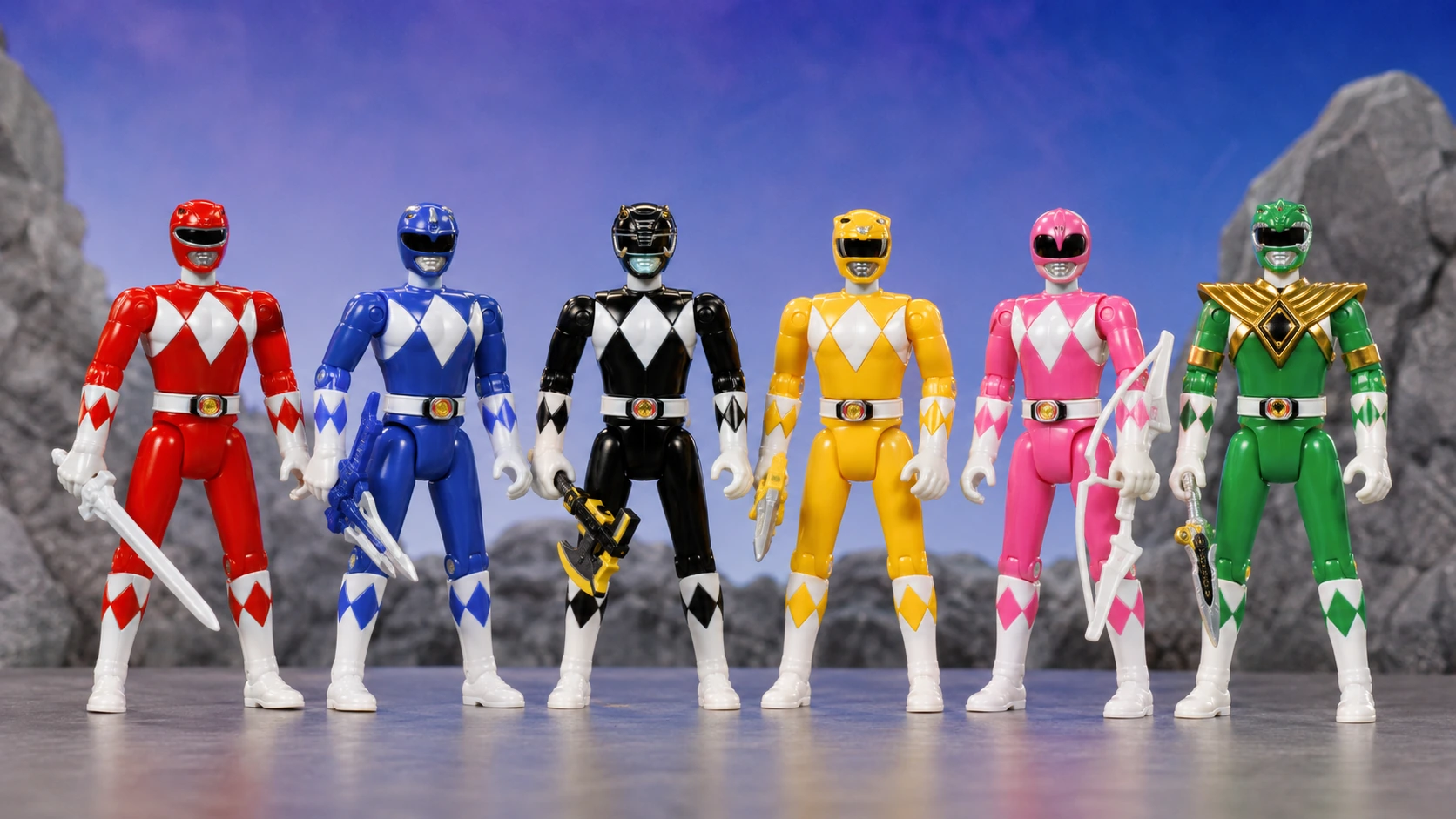
The first figures had one job: make the team recognizable from the end of the aisle. Bright suits and helmet designs handled the rest.
The Tall Ranger Figures
Large-scale figures emphasized the full costume and gave each Ranger a strong shelf presence. The simple bodies and cloth-like costume details were less about perfect television accuracy than immediate character recognition.
These figures were made for broad action. They could stand beside other large heroes, punch rubber monsters and survive the kind of living-room combat that removed accessories forever.
Smaller Figures and Transformation Gimmicks
Smaller-format Rangers worked better with vehicles, playsets and the scale of other action lines. Auto-Morphin-style gimmicks offered a transformation payoff that connected civilian identity and Ranger form.
A transformation feature mattered because morphing was the franchise’s central ritual. The figure did not simply bend. It reenacted the moment ordinary teenagers became superheroes.
Articulation Was Not the Whole Point
Modern collectors may count joints. Kids in 1993 counted whether the Ranger could kick a Putty off the couch. The figures delivered enough movement for poses and enough durability for impact.
Accessories Defined the Character
Weapons, holsters and character-specific gear helped distinguish Rangers whose bodies shared the same basic suit structure. Unfortunately, those accessories were also small enough to enter the carpet ecosystem permanently.
Team Completion Pressure
Owning one Ranger created a hero. Owning five created the team. The color system made missing characters painfully visible.
The Sixth Ranger Problem
The Green Ranger turned a complete collection back into an incomplete one. Later, the White Ranger repeated the trick with brighter armor and a talking sword.
The memory: arranging five Rangers in color order and leaving a suspicious amount of empty space where the Green Ranger should have been.
Six Colors, Six Dinosaurs, One Playground Draft
The Original Power Rangers as Toys
The character system gave every figure a role before the package opened.
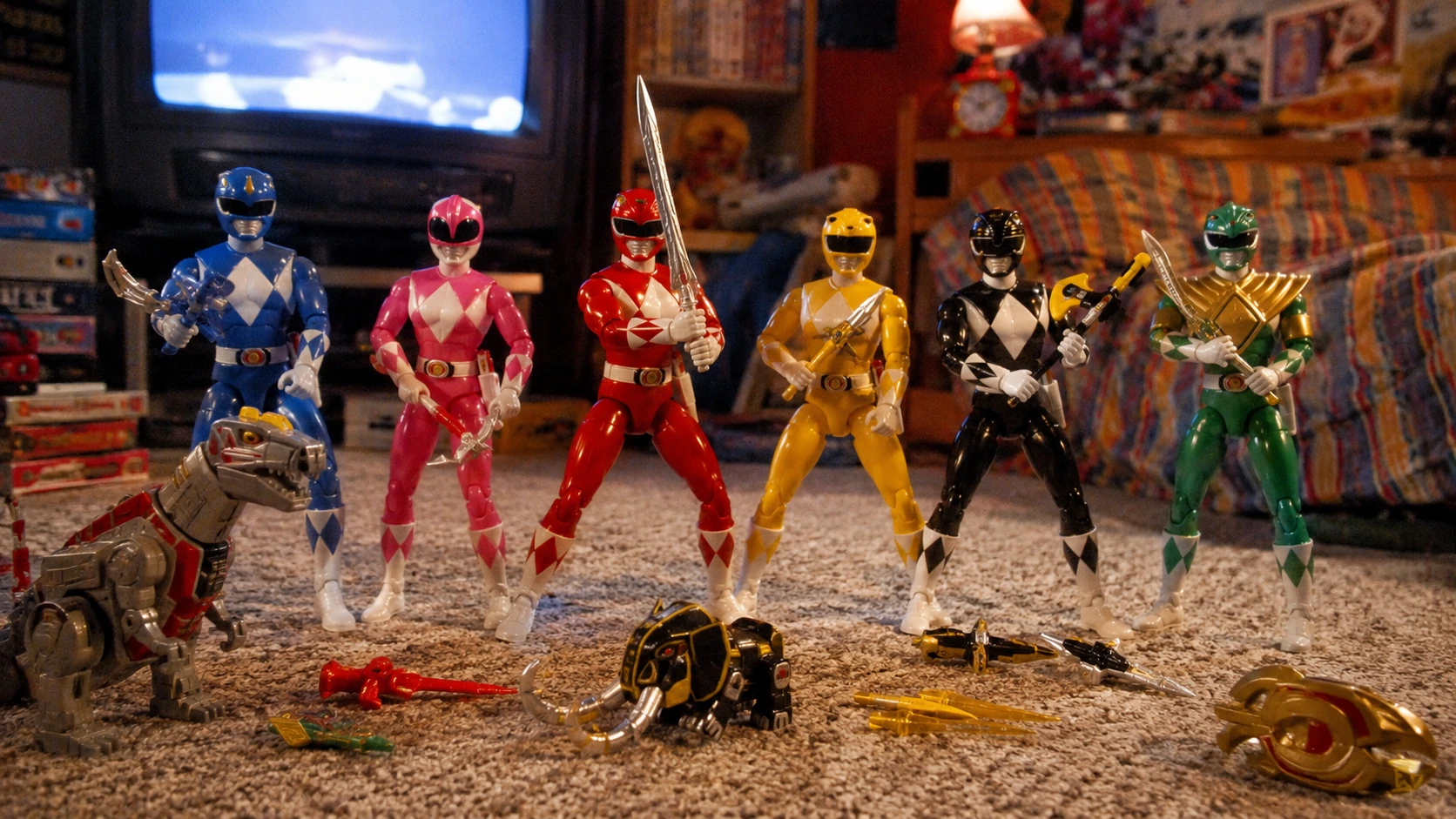
Red Ranger
Jason’s Tyrannosaurus identity placed the Red Ranger at the center of team formations and many early wish lists. Red often became the default leader during backyard play, whether the group had agreed or not.
Blue Ranger
Billy’s Triceratops theme gave the Blue Ranger a technical identity and one of the most recognizable helmets. The figure mattered to children who preferred brains with their kicks.
Black Ranger
Zack’s Mastodon suit brought a broad helmet design and a high-energy character. The figure completed the original male trio and looked especially strong in team displays.
Yellow Ranger
Trini’s Saber-Toothed Tiger identity combined a sharp helmet silhouette with a bright suit that stood apart from the darker team colors.
Pink Ranger
Kimberly’s Pterodactyl theme and bow weapon made the Pink Ranger visually distinct. She was essential to the original team and frequently the hardest figure to substitute with another random hero.
Green Ranger
Tommy’s Dragon shield, flute dagger and Dragonzord turned the sixth Ranger into an event. Green was not merely another color. Green came with a separate power structure.
The original team made Power Rangers unusually social. Kids could divide colors, assign roles and recreate the lineup without explaining complicated character classes. The argument was usually over Red or Green, because democracy had limits.
The Box That Made Every Other Robot Look Underemployed
The 1993 Deluxe Megazord Toy
The Megazord was the centerpiece because it delivered five vehicles, five dinosaur identities, a transformation process and one giant robot payoff.
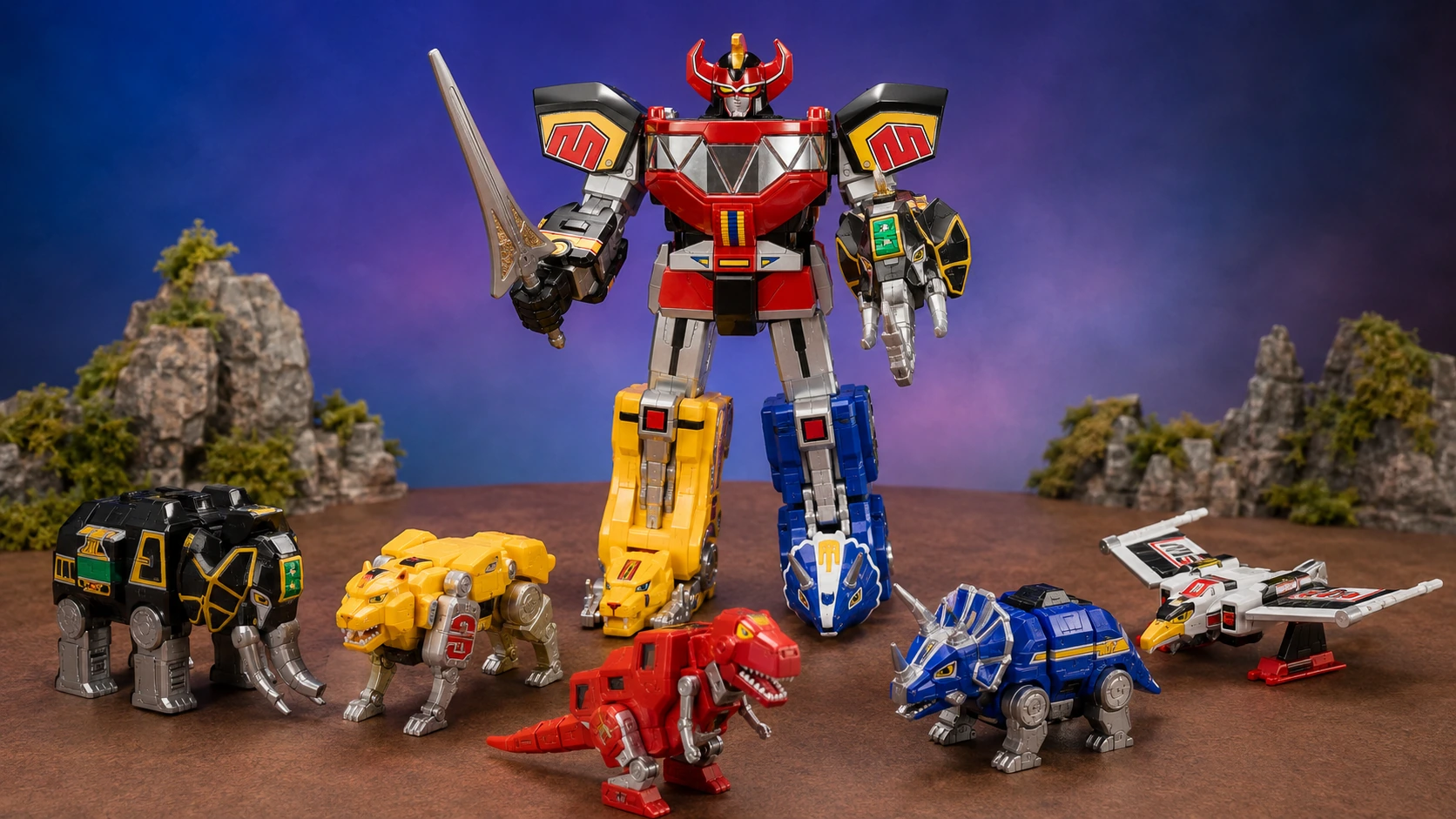
Five Dinozords, One Robot
The Tyrannosaurus, Mastodon, Triceratops, Saber-Toothed Tiger and Pterodactyl Zords combined into the Megazord. The transformation reproduced the sequence children saw repeatedly on television.
That accuracy mattered. The toy did not invent an unrelated robot mode. It performed the exact event that ended major battles.
Transformation Was the Play
Combining the Zords was not preparation for play. It was the play. Separating, repositioning and locking pieces together created a satisfying mechanical ritual.
The Tank Mode Added Another Stage
The intermediate configuration made the process feel more technical and gave the toy another state beyond animals and humanoid robot.
Size Created Authority
The Megazord occupied more shelf space and more mental space than ordinary figures. A child could set it behind the Rangers and instantly establish which toy represented the final battle.
The Sword Completed the Image
The Power Sword transformed the combined robot from assembled machinery into the Megazord kids recognized from the finishing move.
The Toy Worked Without the Full Team
A child could enjoy the robot even without owning every Ranger figure. That independence made it a centerpiece rather than merely an accessory.
Why Parents Remember the Box
The Megazord sat at a higher price than basic figures and arrived during peak demand. It became the kind of purchase discussed with relatives, hidden before Christmas and defended with the phrase “this is the big gift.”
The memory: transforming the Zords slowly the first week, then slamming them together from muscle memory by January.
Why the Megazord won: it made collection, transformation and television accuracy feel like one expensive but undeniable object.
The Collection Had Engineering
Why Combining Zords Were So Powerful
Power Rangers toys used combination as both a feature and a reason to keep buying.
Every Piece Had a Job
One Zord became legs, another arms, another the chest. Each part felt necessary to the final form.
The Missing-Piece Problem
A single missing component made the combined robot visibly incomplete. Collection pressure was built into the engineering.
Transformation Felt Skilled
Children memorized the process and performed it faster, creating a sense of mastery beyond ordinary posing.
The Toys Changed Scale
Animals became vehicles, vehicles became robot parts and robot parts became one towering character.
Combination Extended Play
A battle could begin with separate Zords and escalate toward a combined finish, copying the television rhythm.
New Zords Expanded Old Toys
Dragonzord and Titanus could interact with the original system, giving existing purchases new configurations.
Display Value
A completed robot looked impressive on a shelf even after active play slowed.
Mechanical Memory
Adults may forget episode plots but still remember which dinosaur became which limb.
Future Seasons Repeated the Formula
Every new team could introduce another set of machines and another giant combination hierarchy.
The Sixth Ranger Brought His Own Robot
Green Ranger Toys and the Dragonzord
Tommy’s arrival changed the franchise because he was introduced as a rival, carried unique armor and controlled a Zord that did not need the original five to look dangerous.
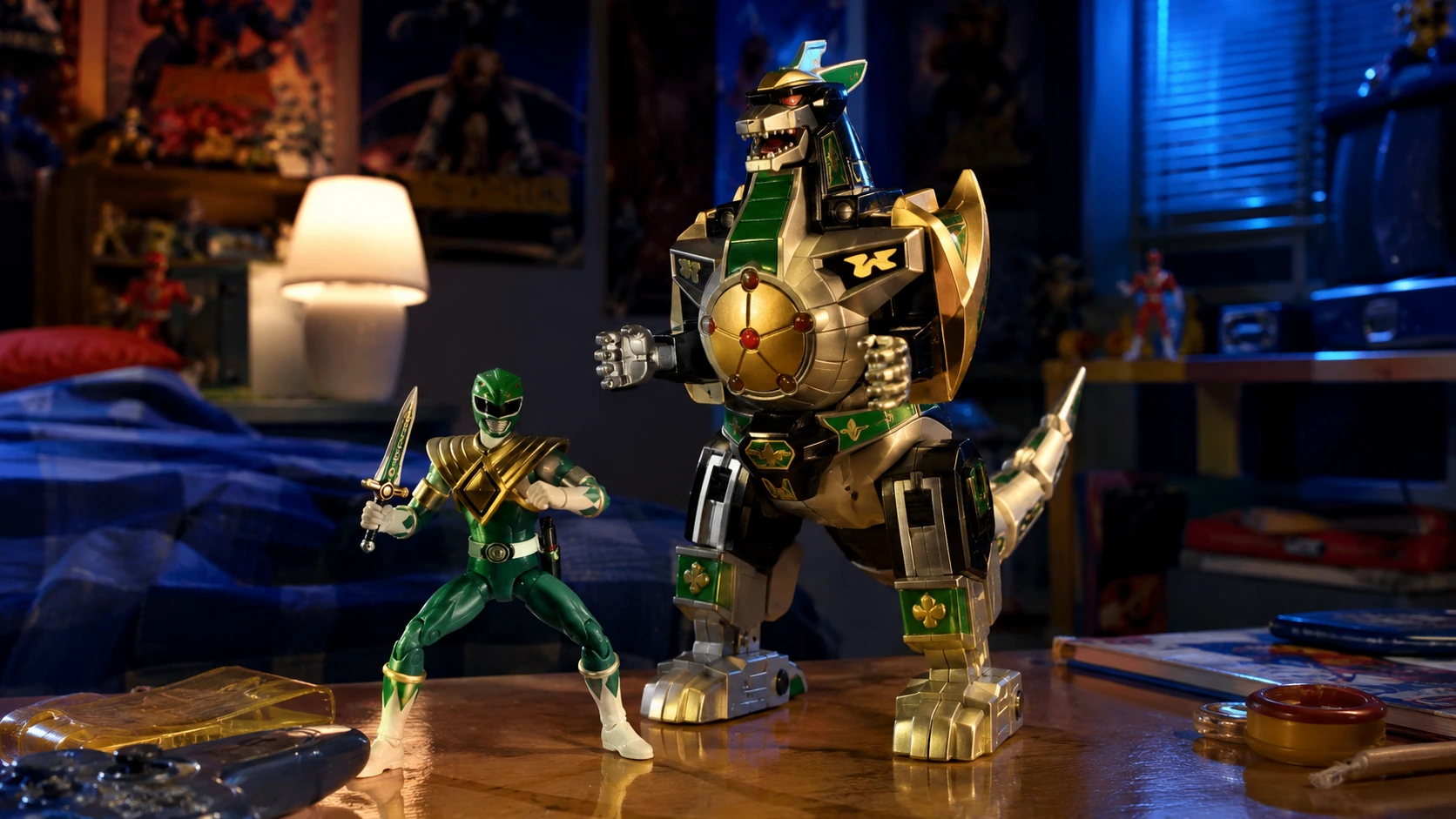
The Green Ranger Figure
The Dragon shield made the Green Ranger instantly different from the existing team. Gold armor, a darker suit and the Dragon Dagger created a premium silhouette before anyone used the word “premium.”
The Dragon Dagger
The weapon doubled as a flute in the show, giving role-play toys a sound-and-summoning identity. Kids did not merely swing it. They attempted the tune and waited for a robot that usually failed to emerge from the neighborhood pond.
The Dragonzord
The Dragonzord looked less like a friendly dinosaur and more like a mechanical city problem. Its upright body, tail and missile features made it distinct from the original five.
Dragonzord Battle Mode
Combining the Dragonzord with components from the original Megazord system created another payoff. The new toy did not replace the old robot. It expanded it.
Mega Dragonzord
The combination created an even larger configuration and proved the franchise could keep building upward. The Megazord was no longer the ceiling.
The Character Story Sold the Toys
Tommy’s Green-with-Evil storyline gave the figure and Zord dramatic weight. Kids wanted the toys because the character felt dangerous, mysterious and temporarily more powerful than the entire team.
Scarcity and Desire
Sixth Ranger products often carried extra demand because the character arrived after collections had already formed. The new figure was both an addition and a correction.
The memory: one kid owning the Green Ranger and suddenly controlling every playground storyline for the week.
Why Green Ranger toys mattered: Tommy introduced the franchise’s most durable retail trick—add one character who feels cooler than the complete team.
Because the Giant Combined Robot Apparently Needed a Bigger Ride
Titanus and the Ultrazord Fantasy
Titanus turned the Zord system into a multi-box engineering project and gave the original line its ultimate configuration.
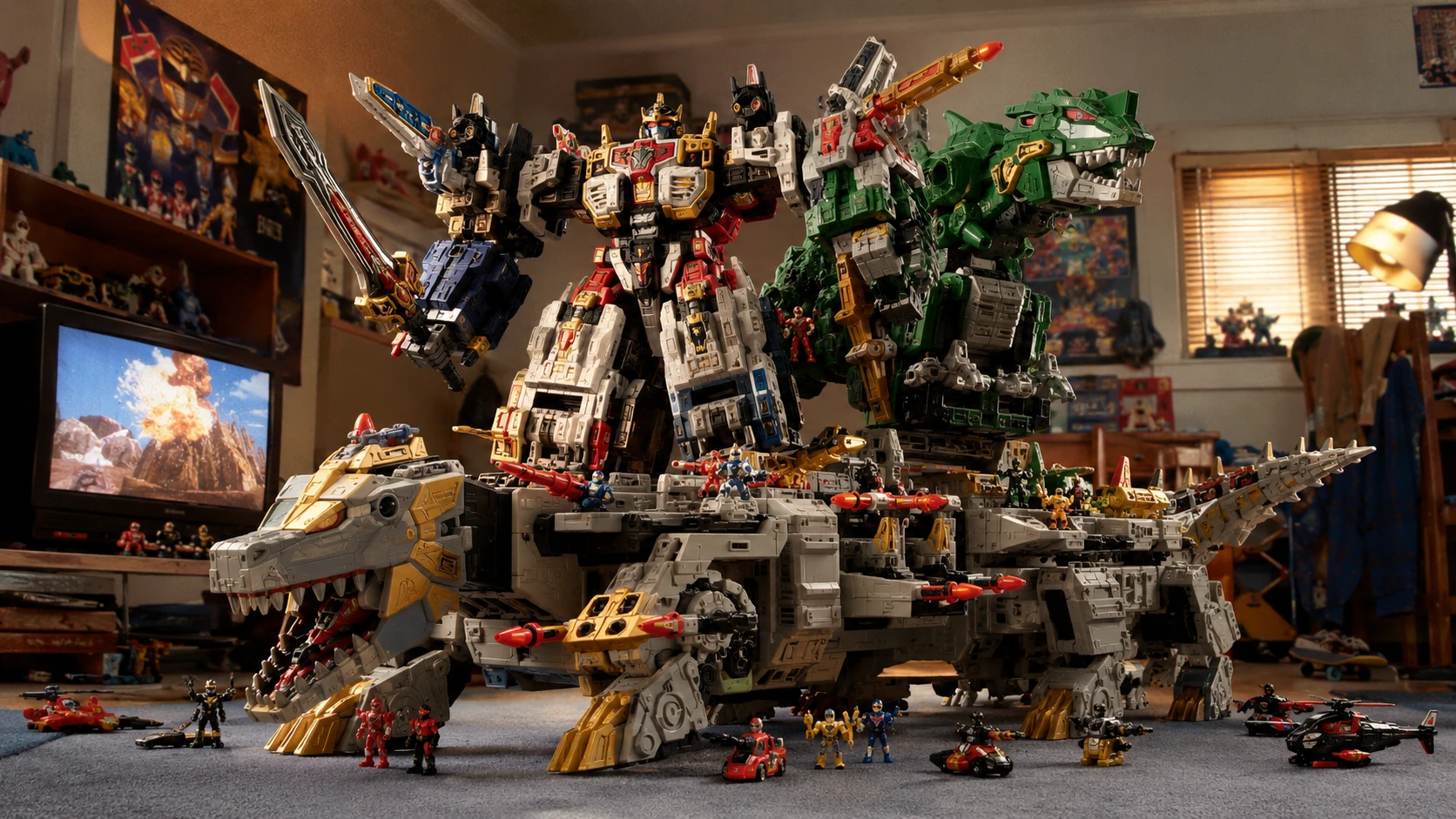
Titanus as a Separate Giant Zord
Titanus had the shape of a large mechanical dinosaur and the retail role of a final-stage upgrade. It looked substantial by itself and even more important beside the Megazord.
Carrier Mode
The toy functioned as a platform for combined forms, creating the impression that the Rangers had moved from giant robot to mobile weapons base.
Ultrazord Combination
When the Megazord and Dragonzord system connected with Titanus, the collection reached its ultimate form. The configuration was large, complicated and exactly the kind of thing a child wanted to display after spending fifteen minutes attaching everything.
The Multi-Purchase Ladder
Titanus demonstrated the line’s smartest economic design. The child who owned the Megazord now had a reason to want Dragonzord. The child who owned both now had a reason to want Titanus.
Compatibility Created Loyalty
New toys made earlier toys more valuable in play. That encouraged families to stay inside one franchise instead of switching to an unrelated robot.
Why Complete Ultrazords Are Hard to Maintain
Large combinations depend on small clips, connectors, weapons and decorative parts. Decades later, collectors often find the major body pieces without every accessory required for the complete configuration.
The memory: building the Ultrazord, stepping back proudly and discovering the entire thing needed a dedicated section of the carpet nobody was allowed to cross.
Action Figures Were Optional Once You Became the Ranger
Power Morphers, Weapons, Costumes and Role-Play Toys
Power Rangers turned dress-up into a transformation ritual with branded equipment and a mandatory dramatic stance.
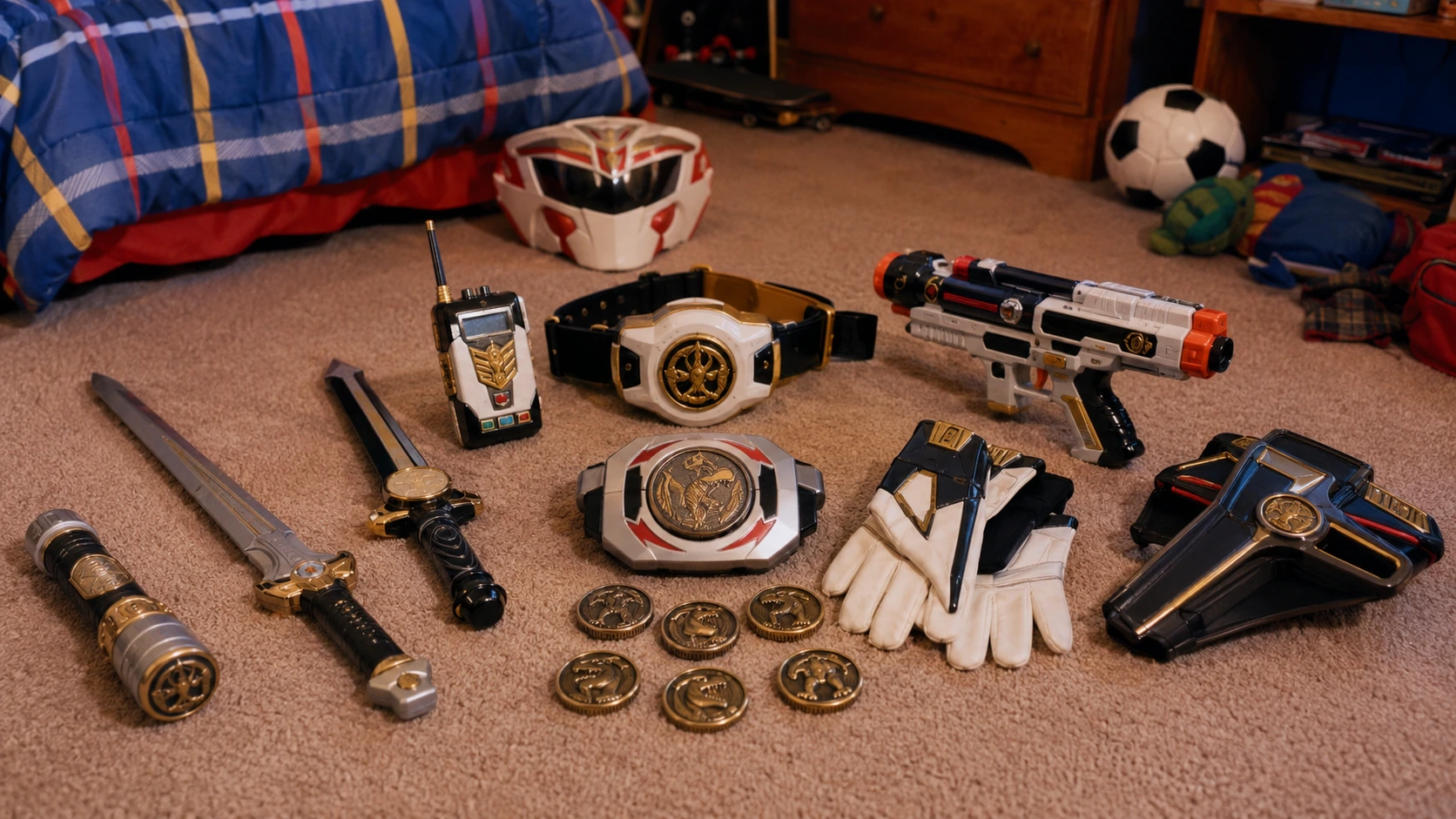
The Morpher was the symbolic center of the fantasy. Coins, sounds and belt placement turned one small device into proof of Ranger membership.
Dinosaur emblems gave each Ranger a unique identity inside a shared device. Losing one coin created a crisis far larger than its physical size.
The sidearm changed forms in the show and offered blaster-and-sword play without requiring the full team weapon combination.
Individual Ranger weapons could combine into the larger team weapon, extending the same “collect everyone” logic used by the Zords.
The Green Ranger weapon connected music, summoning and sixth-Ranger status in one instantly recognizable object.
The White Ranger’s talking sword added a character-like companion to role play and made the weapon feel more important than ordinary plastic.
Small costume pieces helped transform normal clothes into an acceptable emergency Ranger uniform.
Halloween and backyard play turned the television team into a neighborhood population boom.
Wrist devices supported the team-communication fantasy and helped children interrupt adults with mission updates.
Role-play gear made Power Rangers different from many figure lines in the 90s action-figure battle. A Batman figure stayed Batman. A Morpher allowed the kid holding it to become the Red Ranger, assuming the couch cushions represented Putty Patrol.
Morphers also moved the franchise into 90s schoolyard and recess play, where one plastic device and a transformation pose could recruit an entire team before the bell.
Heroes Need Something to Kick Off the Coffee Table
Rita Repulsa, Goldar, Putties and Monster Toys
The villains gave Ranger figures a reason to exist beyond standing in color order.
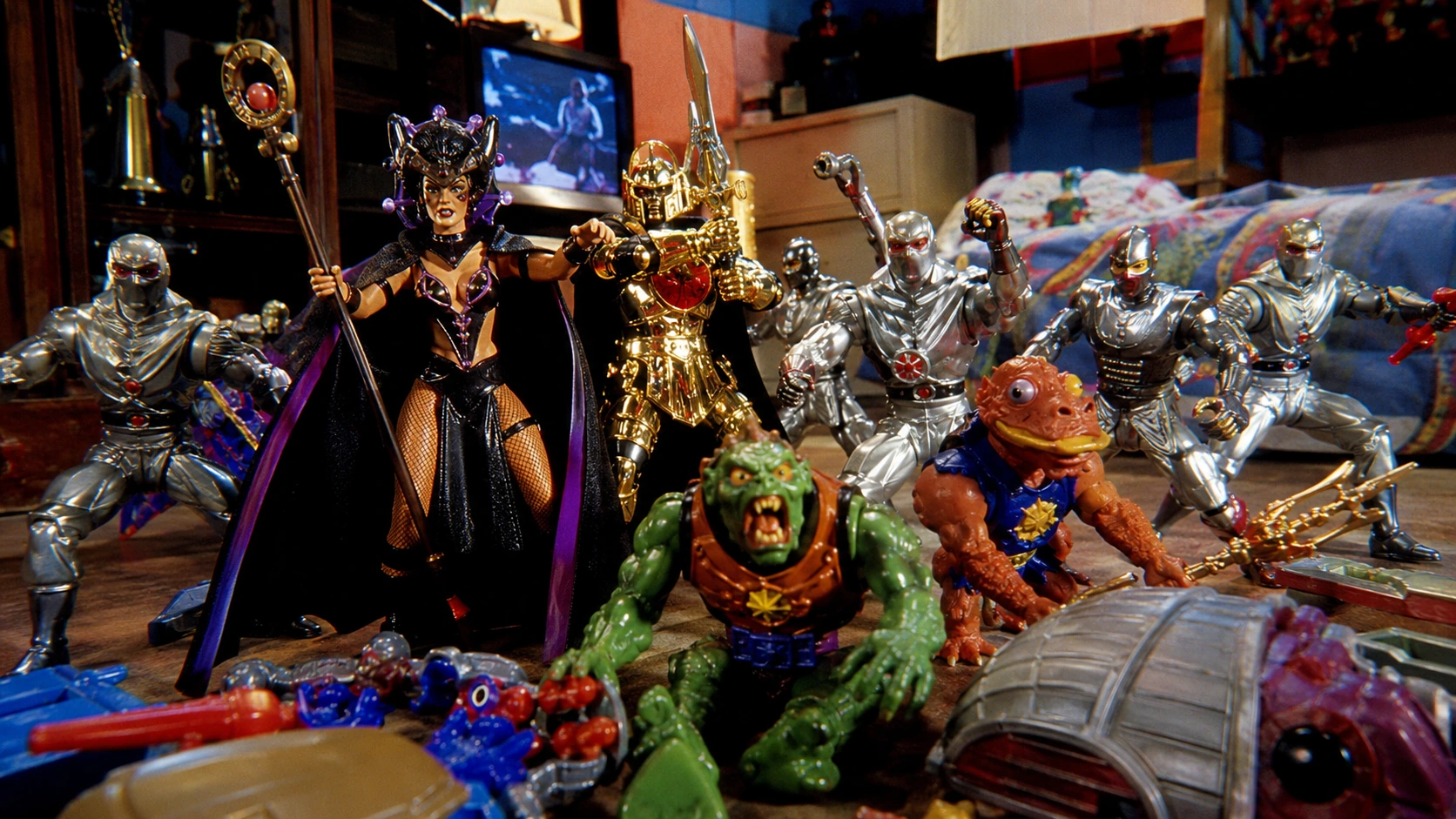
Rita Repulsa
Rita’s elaborate costume and staff made her visually unlike the Rangers. A villain figure could command monsters rather than simply absorb kicks.
Goldar
Gold armor, wings and a sword gave Goldar the physical presence needed to stand against the team’s larger figures.
Putty Patrollers
Putties were the perfect army-builder enemy. One could lose to a Ranger. Five could lose more accurately.
Lord Zedd
Exposed muscle, chrome details and a staff made Lord Zedd one of the decade’s most visually aggressive children’s villains.
Monster Figures
Creature designs gave the line variety beyond human bodies and color-swapped suits.
Scale Problems
Monsters grew giant on television, but toy shelves rarely offered a perfect scale solution. Imagination handled the zoning permits.
Enemy Scarcity
Kids often owned more Rangers than villains. One unlucky Putty could be defeated by the entire franchise repeatedly.
Soft and Rubber Creatures
Different materials and gimmicks gave monster toys a tactile identity separate from the hard-plastic Rangers.
Story Expansion
Villains allowed play to continue before the Zords appeared. Not every battle needed to destroy the living room at robot scale.
Angel Grove Needed Infrastructure
Power Rangers Vehicles, Playsets and Support Toys
Beyond figures and Zords, Bandai expanded the world through bikes, command centers and accessories designed to connect ordinary action play to the television universe.
Motorcycles and Battle Bikes
Vehicle toys gave individual Rangers mobility without requiring a giant robot. Bikes also fit the smaller figure scale and created fast play before monster growth.
Command Center Play
The television Command Center represented mission control, Zordon and Alpha 5. Playsets and environment pieces gave the figures somewhere to receive assignments beyond the edge of the couch.
Alpha 5 and Support Characters
Non-Ranger characters made the toy world feel more complete. Alpha could warn the team, panic and generally provide the same level of operational confidence displayed on television.
Carriers and Large Vehicles
Large toys expanded the perceived scale of the franchise. A carrier or base looked substantial even when it mainly stored smaller items and collected dust with authority.
Electronic Sound Toys
Buttons, phrases and sound effects translated television energy into hardware. A toy that made noise could announce the start of a mission to everybody in the house.
The Accessory Problem
Vehicles depended on missiles, clips, antennas and small weapons. Those parts were designed during a period when carpets operated as aggressive collectors.
Why Support Toys Mattered
They connected the franchise’s different scales. Figures could ride vehicles, report to a base and later summon Zords. The toy line became a world instead of a row of characters.
Twenty-Nine Minutes of Show, Thirty Seconds of Financial Consequence
Power Rangers Toy Commercials Sold the Transformation
The best commercials did not merely show a toy standing on a table. They demonstrated the combination, fired the missile and made the robot look ready to defend the entire suburb.
Transformation Was the Main Event
Commercials showed hands separating Dinozords, repositioning parts and locking them into Megazord form. The movement taught children exactly what the box promised.
Fast Editing Increased Scale
Smoke, lighting, close-ups and rapid cuts made toys appear larger and more explosive than they would look beside a bowl of cereal.
Voice-Over Created Urgency
The language emphasized action, combination and availability. Every product sounded like an immediate threat response rather than a birthday option.
Commercials Connected Product Families
One spot could show figures, a Morpher and a Zord, suggesting the complete fantasy required several aisles.
Kids Already Knew the Names
The television series had taught the vocabulary. Commercials could say “Dragonzord” or “Tigerzord” without explaining why another giant robot mattered.
The Archive Still Works
Watching 90s toy commercials and vintage ads reveals how much of the Power Rangers phenomenon depended on showing mechanics at maximum speed.
The memory: watching a commercial combine the entire Megazord in ten seconds and then spending ten minutes looking for the piece that had rolled under the television.
The Holiday Season Parents Still Describe Like a Supply-Chain Documentary
The Power Rangers Christmas Toy Rush of 1993
The franchise launched late enough in the year that television demand and holiday shopping collided almost immediately.
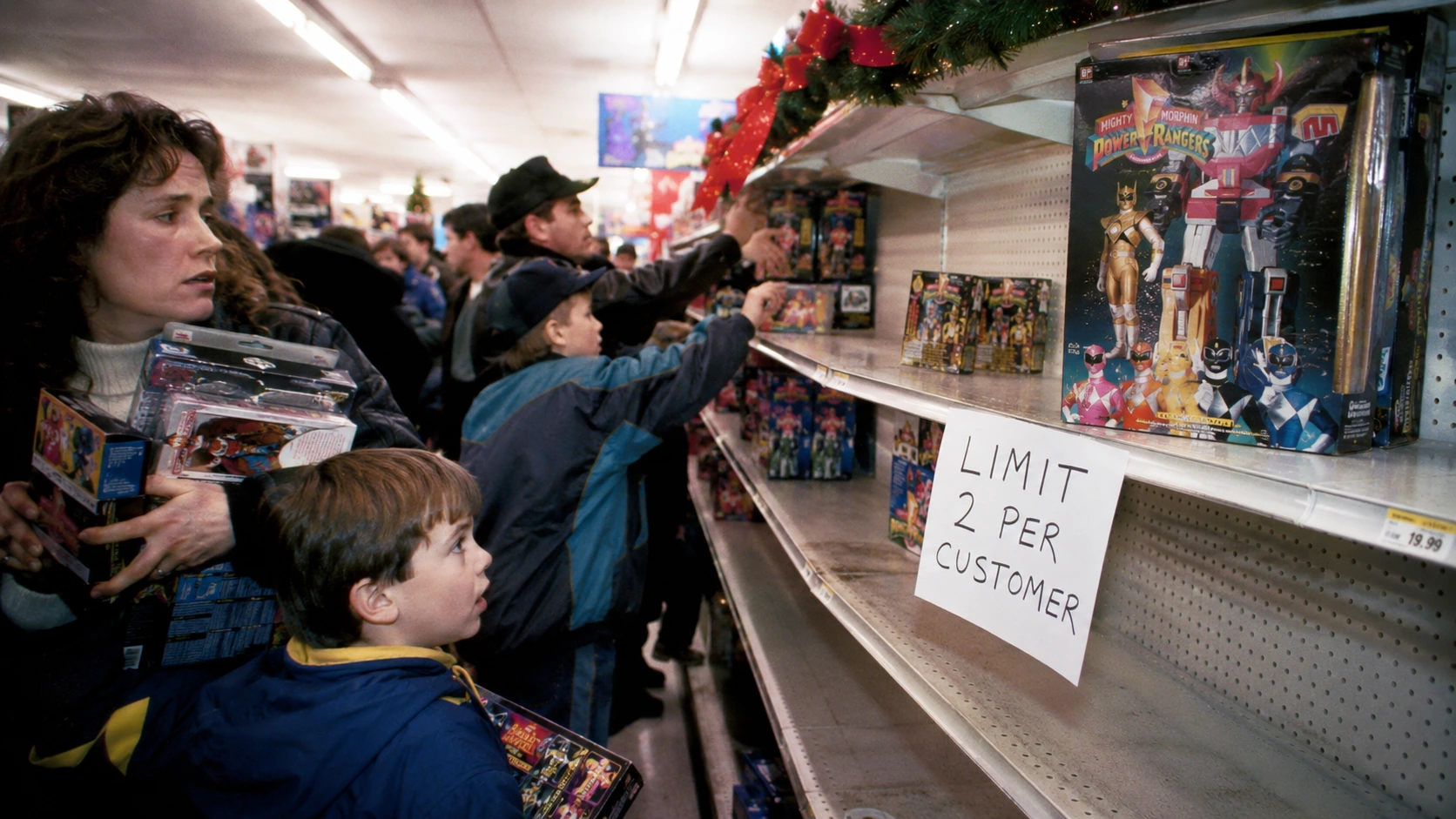
Demand Grew Faster Than Ordinary Restocking
The show became a surprise hit, and the toy line had to catch up with children who already knew which Ranger and robot they wanted.
Basic Figures Became Mission-Critical
Parents did not always need the entire line. They needed one specific color requested by one specific child who would notice a substitution.
Megazord Demand Defined the Big Gift
The robot represented the premium purchase. It was larger, more expensive and easier to recognize in a holiday advertisement.
The Green Ranger Complicated Everything
Tommy’s popularity created demand for products that felt newer and more special than the original team.
Relatives Became Regional Buyers
Families called stores in other towns, assigned grandparents to check local shelves and treated travel plans as an opportunity to inspect another toy aisle.
The Craze Joined the Holiday Hall of Fame
Power Rangers belongs in the story of the hottest Christmas toys of the 90s because it turned an entire franchise—not just one object—into a seasonal hunt.
Shortages Strengthened the Brand
An empty shelf confirmed the toys were important. Children who did not own a Ranger could see that everyone else was trying to find one.
The memory: adults phoning stores from a kitchen wall phone while a child supplied increasingly specific information about helmet color.
Why the 1993 rush mattered: scarcity made Power Rangers look larger than television before the franchise had completed its first year.
The Pegs Were Empty. The Display Still Looked Loud.
The Power Rangers Toy-Store Hunt
Finding the right Ranger became part of the ownership story.
Employees learned when cases arrived and which parents would call before the boxes reached the shelf.
A Pink Ranger could not always be replaced with Blue. The character identity mattered more than the general product category.
Large graphics and helmet colors made displays visible from across the store, even when the best products were gone.
Mall stores created another chance after the big-box aisle failed. Every stop extended the hunt and the family’s patience.
Large aisles suggested abundance, but a national craze could empty even the most intimidating shelf wall.
Big Zords were the kind of holiday purchases adults secured early and stored where children were apparently never supposed to look.
Figures, weapons and giant robots occupied different budgets. Families could enter the craze without buying the top box.
Later, stores carried several Power Rangers eras. A parent could find a Ranger toy and still bring home the wrong suit, Zord or season.
The hunt belongs to the larger world of 90s toy-store culture, where availability, packaging and the trip itself became part of nostalgia.
Every Recess Had a Red Ranger and Three People Who Refused to Be Blue
Power Rangers Toys in Schoolyard and Backyard Play
The franchise gave children a shared movement language: poses, kicks, team colors and a transformation phrase loud enough to alarm neighbors.
Color Assignment Was Immediate
A group could choose Rangers without inventing characters. The argument over leadership usually lasted longer than the fight scene.
Morphing Was the Start Button
The transformation pose created a clear boundary between normal play and Ranger play. Every kid knew when the mission had officially begun.
Martial Arts Became Improvised Choreography
Children copied kicks, punches and poses with varying levels of control. Schools and parents quickly learned that dramatic television movement did not always survive translation to the playground.
Weapons Became Sticks and Cardboard
Not every child owned the role-play gear. Ordinary objects filled in, because the Blade Blaster was mostly an attitude problem anyway.
The Green Ranger Controlled the Plot
Whoever claimed Green could begin as a villain, arrive late and summon a separate robot. It was the playground equivalent of negotiating a better contract.
Monster Duty Rotated Poorly
One child had to be the Putty or monster so everybody else could kick at the air nearby. That role had limited long-term appeal.
The Toys Anchored Imagination
Figures and Morphers moved between indoor and outdoor play, giving the same story a physical object to carry home.
The memory: five kids yelling “It’s Morphin Time” with perfect confidence and absolutely no coordinated plan after that.
The Franchise Replaced Its Coolest Ranger With an Even Shinier Version
White Ranger Toys, Saba and the Tigerzord
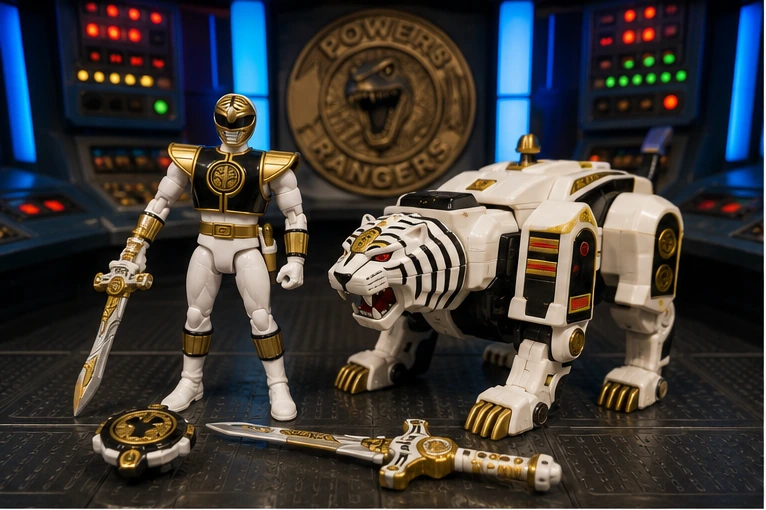
When Tommy returned as the White Ranger, the toy line gained another event character, another role-play weapon and another giant robot hierarchy.
The White Ranger Figure
White and gold armor made the new suit visually brighter than the original team. The chest shield, helmet and black visor created a premium identity without needing a darker color.
Saba the Talking Sword
Saba was a weapon with a face and personality, giving role-play a built-in partner. The design made the White Ranger’s equipment feel ceremonial and distinct from the team weapons.
The White Tigerzord
The Tigerzord transformed from animal to warrior mode and carried the same sixth-Ranger independence that made Dragonzord successful.
Tigerzord and Thunderzord Combinations
Compatibility with the season-two robot system gave the White Ranger’s Zord a larger purpose. Again, one new product increased the value of existing toys.
Leadership Through Product Design
The White Ranger’s visual treatment and robot scale communicated leadership before the child reenacted any dialogue.
Tommy Became a Multi-Generation Toy Character
Few 90s heroes received two separate Ranger identities at the peak of the same franchise. Collectors could own Green and White versions without considering either redundant.
The memory: finally finding the Green Ranger and then learning television had already upgraded Tommy to white and gold.
Why White Ranger toys mattered: the franchise proved it could replace its hottest product with a new version of the same character and make both feel essential.
The Original Dinosaurs Had Been on the Shelf for Almost a Year, Apparently an Eternity
Thunderzords and the Season-Two Toy Reset
Season two demonstrated the franchise’s long-term retail model: keep the characters recognizable, replace the robot system and make the collection exciting again.
New Zords, Familiar Rangers
The Rangers retained their basic identities while receiving a new fleet of Thunderzords. This preserved emotional attachment to the team while changing the largest toys.
The Thunder Megazord
The new combined robot offered another transformation sequence and a more ornate design. Kids could compare the old and new Megazords rather than treating one as a direct copy.
Red Dragon Thunderzord
The Red Ranger’s Zord had a strong individual form and central role in the combination, reinforcing the leader hierarchy.
White Tigerzord Integration
The White Ranger’s robot interacted with the Thunder system, making the sixth-Ranger purchase part of the team architecture.
What Happened to the Old Toys
Nothing mechanically forced the original Dinozords to stop working. Television simply introduced stronger replacements. Childhood collections learned planned obsolescence before the phrase became common.
Why the Reset Worked
The Rangers remained familiar enough for continuity. The robots changed enough for novelty. Parents saw another large box. Children saw upgraded power.
The memory: being asked why the Megazord from last Christmas was no longer the correct Megazord and providing a detailed answer nobody appreciated.
Purple Armor, New Suits and a Summer Blockbuster Shelf
Mighty Morphin Power Rangers: The Movie Toys in 1995
The theatrical film gave Bandai another opportunity to sell the same heroes with redesigned costumes, new powers and movie-specific packaging.
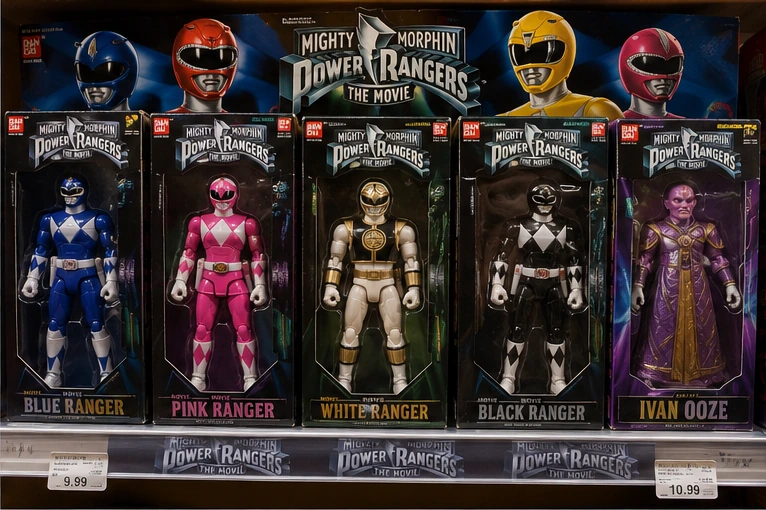
Movie Armor Changed the Figures
The film costumes used sculpted armor and surface detail that looked different from the television suits. Movie figures could justify another full team even to children who already owned every color.
Multiple Figure Sizes Returned
Bandai released movie figures in tall and smaller formats, allowing the film line to connect with both display and vehicle-scale play.
Ninjetti Powers
The movie introduced animal-based ninja identities that created another costume set and another way to assign characters.
Ivan Ooze and Tengu Enemies
Movie villains expanded the enemy side of the shelf beyond television Rita-and-Zedd routines.
Movie Weapons and Role Play
Theatrical costumes and gadgets gave role-play products a more armored, cinematic appearance.
The Movie-Toy Feedback Loop
The film served as a giant commercial event while the toys extended the experience after the theater. Power Rangers became a franchise that could move from weekday television into summer movie marketing without changing its retail logic.
The 1995 Toy Context
Power Rangers remained a major presence among the biggest toys of 1995, proving the line could survive beyond the first holiday shortage.
The memory: owning a television Red Ranger and discovering the movie Red Ranger had enough extra armor to make the first one look underinsured.
The movie assortment also belongs to the larger story of 90s movie and cartoon toy tie-ins, when a theatrical costume change could justify another entire wave before summer ended.
Another Year, Another Fleet of Giant Robots Requiring Shelf Negotiations
Ninja Megazord, Falconzord and Shogun Megazord Toys
The later Mighty Morphin era moved from dinosaurs and Thunder mythology into ninja and animal-based robot systems.
Ninja Megazord
The new Zords combined animal themes with a fresh robot silhouette, giving the original team another major mechanical reset.
Falconzord
The White Ranger’s Falconzord extended the sixth-Ranger upgrade model and connected to larger combinations.
Ninja MegaFalconzord
Attaching Falconzord expanded the robot and reinforced the idea that separate premium toys should improve one another.
Shogun Megazord
The Shogunzords offered a bulkier, more armored team robot and another complete set of transformation mechanics.
Shogun MegaFalconzord
Falconzord compatibility carried earlier purchases forward and created another ultimate display form.
Season-Three Figures
New ninja identities and later costumes expanded the figure shelf beyond the original spandex team look.
Complexity Increased
More robot systems meant more connectors, accessories and opportunities for one missing piece to ruin the full combination.
Television and Movie Overlap
Children encountered similar ninja concepts across the film and series while toy packaging separated versions imperfectly.
The End of the Mighty Morphin Shelf
By 1996, the franchise was ready to replace the entire suit-and-Zord identity with Zeo.
Same Franchise, New Suits, Fresh Reason to Start Over
Power Rangers Zeo Toys in 1996
Zeo proved the brand could survive a complete visual reset and still keep the basic toy equation intact.
New Geometric Ranger Suits
The Zeo helmets and chest designs separated the new team from Mighty Morphin. The character colors remained familiar, but the visual language changed.
Zeo Megazord
The Zeo Zords combined into a new team robot with shapes tied to the Rangers’ symbols. The toy gave the franchise a clear flagship for 1996.
Red Battlezord
The Red Ranger received an additional robot that could combine with the main Megazord, continuing the expansion-ladder strategy.
Super Zeo Megazord
A second major team robot gave children another complete Zord system within the same season.
Pyramidas
The Gold Ranger’s massive carrier Zord expanded scale and represented the season’s premium sixth-Ranger hardware.
Gold Ranger Toys
The Gold Ranger repeated the sixth-Ranger event model through a new color, staff weapon and mystery storyline.
Why Zeo Was a Retail Test
Children had to accept Power Rangers without the original dinosaur suits. The successful transition established seasonal reinvention as the franchise’s permanent model.
The 1996 Toy Context
Zeo toys remained visible among the top toys of 1996, even as Tickle Me Elmo, Bop It and Nintendo 64 pulled attention in different directions.
The memory: being informed that the Rangers now had shapes on their helmets and therefore every previous robot belonged to history.
Why Zeo mattered: it separated the Power Rangers brand from one specific suit design and turned reinvention into the franchise’s retail engine.
Cars, Spacecraft and Galactic Beasts Carry the Franchise to 1999
Power Rangers Turbo, In Space and Lost Galaxy Toys
The late-90s lines kept the brand alive by separating each year into its own visual and mechanical identity.
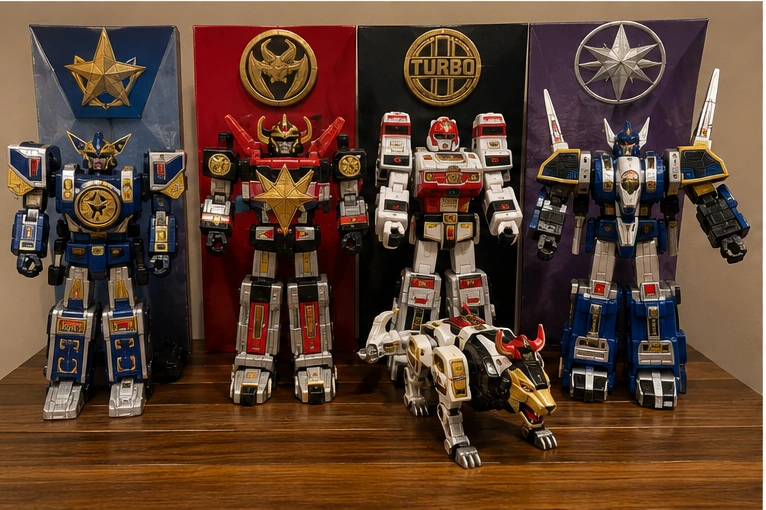
1997: Power Rangers Turbo
Turbo shifted the Zord theme toward vehicles. Cars and rescue-style machines combined into the Turbo Megazord, while the film and television transition introduced another team reset.
Role-play items, Turbo weapons and vehicle figures gave the line a speed-focused identity. The toys joined a crowded 1997 toy market dominated by digital pets, collectibles and new electronic distractions.
1998: Power Rangers in Space
The Astro Megaship transformed into the Astro Megazord, giving the season one of the franchise’s cleanest vehicle-to-robot concepts.
Space Rangers, Astro Morphers, weapons and additional Zords carried the brand into science-fiction territory while 1998 toy shelves filled with Furby, Pokémon and Game Boy Color.
1999: Power Rangers Lost Galaxy
Lost Galaxy introduced a new team and the Galactabeasts, which transformed into mechanical Zords and combined forms such as the Galaxy Megazord.
The line also offered larger supporting Zords and repainted or adapted vehicles, creating a broad end-of-decade assortment during the 1999 toy year.
The Generation Rule
Mighty Morphin, Zeo, Turbo, In Space and Lost Galaxy should be identified separately. A Red Ranger is not one permanent toy design, and one Megazord name does not describe every robot with a sword.
Collector boundary: this page tells the full 90s franchise history, but each generation remains clearly labeled. Mixing 1993 Mighty Morphin parts with 1998 In Space parts creates a parts drawer, not a rare prototype.
Why Power Rangers Felt Different From the Rest of the Action Aisle
Power Rangers Versus TMNT, Batman, X-Men and Transformers
The franchise borrowed familiar strengths from other lines but combined them in a way no single competitor matched.
Versus TMNT
Teenage Mutant Ninja Turtles offered deeper character variety, strange vehicles and a huge villain bench. Power Rangers offered live-action identification and giant combining robots.
Versus Batman
Batman lines used costume variants, vehicles and screen tie-ins. Power Rangers made a full team and yearly robot replacement central to the fantasy.
Versus X-Men
X-Men brought a large superhero roster and individual powers. Power Rangers simplified the team through color and built transformation into every level of play.
Versus Transformers
Transformers remained the transforming-robot standard. Power Rangers added human heroes, role-play identity and team-combination sequences tied to daily television.
Versus Jurassic Park
Jurassic Park delivered realistic dinosaurs and movie spectacle. Power Rangers converted dinosaurs into machines that could become one robot.
Versus Star Wars
Star Wars offered a vast universe and vehicle scale. Power Rangers refreshed more rapidly and gave every season a new retail starting line.
The broader comparisons belong on 90s Action Figure Wars. The exact toy generations, Megazords, figures and role-play systems belong here.
The Retail Engineering Behind the Morph
Why the Power Rangers Toy System Worked So Well
The line made every price level feel complete while giving every owner a reason to move upward.
Clear Character Coding
Color let children identify heroes instantly and made group completion visible.
Entry-Level Figures
A basic Ranger delivered the core fantasy without requiring a giant robot budget.
Premium Zords
Large transforming toys created aspirational products for birthdays and holidays.
Compatibility
Dragonzord, Titanus, Tigerzord and Falconzord made earlier products more useful.
Role-Play Expansion
Morphers and weapons let the same franchise sell identity rather than only characters.
Television Instruction
Episodes demonstrated every major combination and power upgrade.
Event Characters
Green, White and Gold Rangers arrived with story importance and new hardware.
Annual Refresh
New suits and Zords kept the aisle changing without discarding the franchise name.
Mechanical Satisfaction
The Zords did something. Transformation provided value beyond character recognition.
The Box Had Already Started Yelling Before You Reached the Shelf
Power Rangers Toy Packaging and Shelf Design
The original packages used color, team imagery and giant robot photography to make the line readable at a glance.
Color Did the Sorting
Power Rangers packaging benefited from a franchise where character identity was already organized by color. Red, blue, black, yellow, pink, green and white could guide a shopper before anyone read a name.
That mattered during a shortage. A parent scanning pegs could identify the requested Ranger from several feet away, assuming the correct figure had not been replaced by three villains and one lonely Blue Ranger.
The Helmet Was the Logo Inside the Logo
Helmet designs gave the packages another layer of recognition. Dinosaur shapes and visor patterns separated Rangers whose body suits otherwise shared the same basic design language.
Team Art Sold Completion
Even a package containing one Ranger often showed the wider team. The child did not simply see the figure being purchased. The child saw the missing teammates.
Megazord Boxes Demonstrated Every Mode
Large robot packages needed to explain the value. Photography and diagrams showed separate Dinozords, tank mode and the combined Megazord so the buyer understood that the box contained several experiences.
Windows Created Trust
Clear plastic let shoppers inspect the figure, accessories and paint before purchase. It also made missing or shifted pieces visible during the rougher parts of retail life.
Movie Packaging Had to Look New
The 1995 film line emphasized armored costumes and cinematic graphics so another Red Ranger looked like a new product rather than a repeat.
Annual Branding Prevented Generational Confusion—Mostly
Zeo, Turbo, In Space and Lost Galaxy each used new logos, suit art and color treatments. The packaging helped separate generations even when parents continued referring to every product as “the Power Ranger thing.”
Sealed Packaging Became Part of Collecting
Modern collectors care about card condition, window clarity, package fading and whether accessories remain factory arranged. The package now carries historical information the child opening it in 1993 had no reason to preserve.
The memory: studying the back of the box like classified engineering documents while an adult tried to finish shopping.
From One Figure to a Giant Robot Occupying the Entire Birthday Budget
The Power Rangers Toy Price Ladder
The line worked at several price levels, letting one franchise appear in allowance purchases, birthday bags and major holiday gifts.
Coins, communicators and lower-cost role-play pieces offered an entry into the fantasy without requiring a complete figure team.
Individual Rangers were the easiest way to choose a favorite color and begin play immediately.
Enemy figures expanded the story without changing the scale or requiring a premium purchase.
Mid-level products made one figure more exciting and created another purchase between the figure peg and the giant robot box.
Role-play gear moved the child from controlling a figure to performing the character.
Separate machines offered mechanical play and often connected to larger combinations.
The main combining robot represented the premium center of each generation.
Dragonzord, Titanus, Tigerzord, Falconzord and similar products increased the value of the main robot while increasing the total cost of completion.
Ultrazord-style displays rewarded families who had purchased across several boxes and successfully retained every connector.
Why the Ladder Was So Effective
A child did not need the most expensive toy to participate. One Ranger figure was enough to understand the story and join schoolyard play. That low entry point kept the franchise accessible.
At the same time, every smaller purchase pointed upward. The figure had a weapon. The weapon belonged to a team. The team had Zords. The Zords formed a Megazord. The Megazord combined with another Zord. Retail escalation was built into the mythology.
Gift occasions could also be matched to product size. A basic figure worked for an ordinary reward. A Morpher worked for a birthday. The Megazord waited for Christmas, when several adults could collaborate financially and pretend the box was not absurdly large.
The business genius: the line never made a child feel excluded for owning one figure, but it never allowed that one figure to feel like the end of the collection.
Where There Is a Giant Craze, There Is a Suspiciously Light Robot
Power Rangers Knockoffs, Counterfeits and Misidentified Toys
The franchise’s bright colors, shared Japanese designs and long production history create plenty of opportunities for modern confusion.
Not Every Japanese Version Is a Knockoff
Power Rangers adapted Super Sentai footage and designs. Japanese Sentai toys may resemble American Zords because both come from the same source material. A different logo or package language does not automatically mean counterfeit.
American and Japanese Releases Can Differ
Paint, electronics, materials, accessories and safety changes may vary by market. Collectors should compare the exact Bandai release instead of assuming one region is the universal standard.
Generic Combining Robots Borrowed the Look
The 90s were full of inexpensive robots using dinosaurs, bright colors and vaguely heroic packaging. Some were harmless imitators. Others used names and graphics close enough to confuse a hurried buyer.
Replacement Parts Complicate Complete Sets
Modern reproduction swords, horns, labels and connectors can restore display function. They can also be mistaken for original parts when sellers fail to disclose them.
Reissues Are Not Counterfeits
Official anniversary toys, collector releases and later reproductions may intentionally recreate the original Megazord or Ranger designs. They should be identified by manufacturer, year and product line.
Mixed Lots Create Accidental Hybrids
A seller may combine parts from Mighty Morphin, Zeo or unrelated robot lines because the colors look correct. A complete-looking toy can still contain the wrong sword, fist or connector.
Packaging Is Not Final Proof
Boxes can be resealed, paired with the wrong toy or reproduced. Authenticity requires the package, markings and contents to agree.
Check Manufacturer and Date Marks
Molded copyright information, Bandai markings and production details help establish the toy’s origin. Those marks should be compared with trusted examples.
The safe rule: if the listing says “1993 rare original” but the robot contains parts from three seasons and a sword from another franchise, the description has morphed beyond recognition.
A Missing Sword Does Not Become Rare Because the Seller Used Capital Letters
Vintage Power Rangers Toy Collector Myths
Power Rangers values are often distorted by incomplete identification, unsold asking prices and confusion between generations.
Myth: Every 1993 Power Rangers Toy Is Valuable
The first year is historically important, but Bandai sold enormous numbers of figures and toys. A common loose figure with wear and no weapon remains common.
Age creates nostalgia. It does not automatically create scarcity.
Reality: Exact Version and Completeness Matter
A complete Megazord, unusual package variation or high-condition sixth-Ranger item may attract strong demand. The specific toy—not the franchise name alone—determines collector interest.
Recent completed sales for matching examples provide better evidence than a single optimistic listing.
“Vintage” Is Too Broad
A 1999 Lost Galaxy toy and a 1993 Mighty Morphin toy are both vintage 90s products but belong to different generations and markets.
“Complete” Needs Photographs
Ask to see every accessory and every combination. A robot standing upright may still be missing important parts.
Sealed Does Not Equal Mint
Packaging can fade, crush, crack and separate. Batteries can corrode inside unopened electronic toys.
Japanese Does Not Automatically Mean Rarer
Japanese Sentai versions may be desirable, but availability and demand vary by exact release.
Metal Content Is Not the Whole Value
Die-cast parts can increase weight and appeal, but completeness, condition and version still matter.
Tommy Is Not One Figure
Green, White, Zeo Red, Turbo Red and later Tommy releases are separate products with different collector audiences.
The Craze Cooled. The Morphing Never Really Stopped.
Why the Original Power Rangers Toy Mania Faded
The 1993 intensity could not remain permanent, but the franchise survived by trading one giant craze for a long chain of reinventions.
Supply Caught Up
Once stores could stock the toys reliably, scarcity stopped advertising the line for free.
Too Many Resets
New suits and Zords kept the franchise fresh but exhausted families who had just completed the previous team.
Audience Aging
Children who entered in 1993 began moving toward games, sports and older-skewing entertainment.
New Crazes Arrived
Pokémon, Tamagotchi, Furby and other late-90s phenomena claimed attention and allowance money.
Character Turnover
Cast and suit changes reduced attachment for some early fans even while attracting new children.
Robot Saturation
Another Megazord could feel less revolutionary after several complete fleets had already entered the house.
Retail Competition
The action aisle became crowded with superheroes, movie licenses, anime imports and collector-focused figures.
The Franchise Became Normal
Power Rangers stopped looking like a shocking new idea and became a dependable annual brand.
Persistence Replaced Panic
The line no longer needed one national shortage. It had built a repeatable system for new generations.
The fade was not failure. Mighty Morphin became Zeo, Turbo, In Space and Lost Galaxy. The brand traded peak 1993 hysteria for a permanent place in the toy aisle.
Identify the Generation Before Buying Somebody Else’s Parts Bin
How to Collect Vintage 90s Power Rangers Toys Today
Vintage Power Rangers collecting starts with exact identification: year, generation, figure scale, Zord system, completeness and condition.
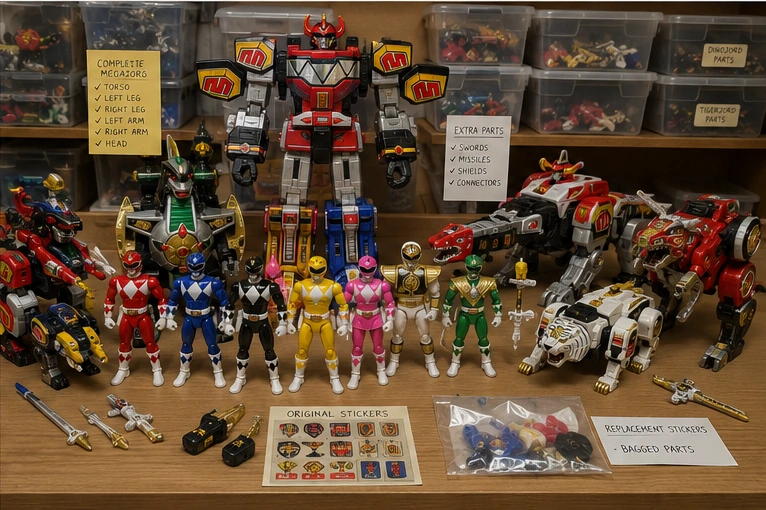
Choose Mighty Morphin, Zeo, Turbo, In Space or Lost Galaxy. A focused collection is easier to identify and display.
Confirm year, package style, figure scale and robot generation. Similar Ranger colors do not guarantee compatibility.
Zords often need swords, shields, horns, clips, cannons and small connectors for the full configuration.
Loose hinges, cracked tabs and stressed connectors affect whether the robot can combine safely.
Original stickers may be worn, missing or replaced. Reproduction stickers improve appearance but should be disclosed.
Sound and light toys may have corrosion, weak speakers or dead contacts even when the exterior looks clean.
A seller should show separate Zords and the combined robot. One configuration can hide missing or broken parts.
Current value depends on exact version, condition and completeness. Unsold asking prices are not transactions.
A loose complete Megazord may provide more satisfaction than a sealed item too expensive to transform.
Value boundary: this article owns toy history, generations and identification. Current prices change constantly and should be handled through recent sold-market research rather than permanent price claims.
Loose parts and incomplete robots often turn up beside forgotten 90s toys in storage bins and yard-sale boxes, which is why exact identification matters before calling anything rare.
Thirty Years Later, the Missing Horn Is Still Missing
Power Rangers Toy Parts, Stickers and Preservation
Remove Old Batteries
Electronic Morphers and weapons should not remain stored with decades-old batteries. Leakage can damage contacts and internal boards.
Do Not Force Transformations
Plastic tabs and hinges become brittle. If a part resists, confirm the correct transformation step before applying more pressure.
Separate Loose Metal Parts
Die-cast components and metal screws can scratch painted plastic during storage.
Protect Stickers From Moisture
Humidity can lift edges and discolor adhesive. Avoid damp basements and unconditioned garages.
Store Accessories Together
Use labeled bags or compartments for swords, horns, missiles and connectors. A complete robot can become incomplete during one move.
Avoid Direct Sunlight
White plastic can yellow, bright colors can fade and stickers can lose contrast.
Document Reproduction Parts
Replacement swords and stickers can make display easier. Keep records so future owners know what is original.
Photograph Every Configuration
Photos prove which parts are present and help with reassembly after storage.
The practical rule: no batteries, no forced tabs, no sunlight and no giant robot thrown loose into a tote with its own sword.
Seven Years, Several Teams and a Lot of Giant Plastic
Power Rangers Toys Timeline: 1993–1999
The decade moved from dinosaurs to Thunder mythology, ninja animals, geometric power, turbo vehicles, spacecraft and galactic beasts.
1993: Mighty Morphin Launch
Original Ranger figures, Morphers, weapons, Dinozords and the Deluxe Megazord establish the toy phenomenon.
1994: Green, White and Thunder
Dragonzord, Titanus, Thunderzords, Tigerzord and new sixth-Ranger products expand the system.
1995: Movie and Ninja Era
Movie figures, Ninjetti designs, Ninja Megazord, Falconzord and Shogunzords refresh the line.
1996: Power Rangers Zeo
New suits, Zeo Megazord, Red Battlezord, Super Zeo Megazord and Pyramidas prove the brand can fully reset.
1997: Power Rangers Turbo
Vehicle-based Zords, Turbo figures and movie-linked toys move the franchise into a new mechanical theme.
1998: Power Rangers in Space
Astro Megazord, Space Ranger figures and science-fiction role play carry the team beyond Earth.
1999: Power Rangers Lost Galaxy
Galactabeasts, Galaxy Megazord and a new team close the decade with another complete reset.
The Permanent Formula
New team, new Morpher, new weapons, new Zords and one giant combined reason to return to the toy aisle.
The Robot Changed. The Wish-List Logic Never Did.
Why 90s Power Rangers Toys Still Matter
The toys captured a particular kind of 90s franchise power: television, identity, transformation and retail escalation working in perfect sync.
They Defined Team Identity
Color-coded heroes made group play simple and gave every child a visible favorite.
They Made Combination the Story
The Megazord was not a random feature. It was the climax children waited for every episode.
They Connected Play Scales
Figures, weapons, vehicles and giant robots belonged to one continuous fantasy.
They Perfected the Sixth Ranger
Green, White and Gold Rangers became event products with their own weapons and Zords.
They Normalized Annual Reinvention
New seasons could replace the entire toy system without abandoning the franchise.
They Broke Bandai in America
The franchise gave Bandai a major U.S. toy hit and established a long-running licensing partnership.
They Created Mechanical Nostalgia
Adults remember transformation steps, missing swords and the sound of plastic joints locking into place.
They Survived the Craze
The 1993 shortage ended, but new teams and collector lines kept the brand active for decades.
They Remain Peak 90s
Bright, loud, imported, remixed, heavily merchandised and somehow capable of making five dinosaurs into one robot.
The line also earned a top position among the most iconic toys of the 90s. Few franchises connected a television catchphrase, a schoolyard identity and a giant Christmas box this efficiently.
The transformation sequences still make the line one of the strongest entries in the archive of 90s toy commercials and videos, where a few fast cuts could assemble a five-part robot before the disclaimer finished.
Keep the Toy Aisle Morphing
More 90s Action Figures, Toy Crazes and Year Pages
Because One Loose Red Ranger Is Not the Entire 1993 Product Catalog
History, Toy-Line and Date Notes
Franchise launch and ownership history were checked against Hasbro’s franchise acquisition history and Hasbro’s toy-license announcement. The adaptation of Japanese action footage and the original 1993 television context were cross-checked against TIME’s history of the original series. Figure formats, movie releases and generation-specific toy catalogs were checked against The Toy Collector’s Guide to Mighty Morphin Power Rangers and its year-specific Zeo, Turbo, In Space and Lost Galaxy guides. The page intentionally avoids fixed current prices. Vintage value depends on exact generation, completeness, condition, packaging and recent completed sales.
Frequently Asked Morphin Questions
Power Rangers Toys in the 90s FAQ
When did Mighty Morphin Power Rangers toys first come out?
The American Mighty Morphin Power Rangers toy line launched in 1993 alongside the first year of the television series.
Who made Power Rangers toys in the 90s?
Bandai America produced the original U.S. Power Rangers toy lines throughout the 1990s.
Why were Power Rangers toys so popular?
The toys combined color-coded heroes, transforming robots, role-play weapons and a television show that repeatedly demonstrated how every product worked.
What was the biggest Power Rangers toy of 1993?
The Deluxe Megazord was the flagship toy because five Dinozords combined into the giant robot seen at the end of major battles.
Which Dinozords made the original Megazord?
The Tyrannosaurus, Mastodon, Triceratops, Saber-Toothed Tiger and Pterodactyl Dinozords combined into the original Megazord.
What was the Dragonzord toy?
Dragonzord was the Green Ranger’s giant Zord. It could operate separately and combine with parts of the original Megazord system.
What was Titanus?
Titanus was a large carrier-style Zord that combined with the Megazord and Dragonzord system to create the Ultrazord configuration.
What was the Ultrazord?
Ultrazord was the ultimate original combination involving the Megazord, Dragonzord and Titanus.
What were Auto-Morphin Power Rangers figures?
Auto-Morphin figures used a transformation gimmick to switch between civilian and Ranger identities or reveal the suited hero form.
Why was the Green Ranger toy so popular?
The Green Ranger arrived as a powerful sixth character with gold armor, the Dragon Dagger and the separate Dragonzord.
What toy belonged to the White Ranger?
The White Ranger was associated with Saba, the White Tigerzord and later combinations with the Thunderzord system.
What was the Power Morpher toy?
The Power Morpher was a role-play device based on the Rangers’ transformation equipment and usually included Power Coins or electronic effects depending on the release.
Were there Power Rangers villain figures?
Yes. Bandai released villains and monsters including Rita Repulsa, Goldar, Lord Zedd, Putty Patrollers and various creature figures.
Why were Power Rangers toys hard to find at Christmas 1993?
The television show became a surprise hit and demand grew quickly during the same year the toy line launched, creating holiday shortages for popular figures and Zords.
Did the Power Rangers movie have its own toys?
Yes. The 1995 film received figures in multiple sizes, movie-armor designs, Ninjetti products and related villains and role-play items.
What came after the original Megazord?
The Mighty Morphin era added Dragonzord, Titanus, Thunder Megazord, Tigerzord, Ninja Megazord, Falconzord and Shogun Megazord systems.
What were Power Rangers Zeo toys?
The 1996 Zeo line introduced new Ranger suits, Zeo Megazord, Red Battlezord, Super Zeo Megazord, Gold Ranger products and Pyramidas.
What were Power Rangers Turbo toys?
The 1997 Turbo line used vehicle-themed Zords and included Turbo Ranger figures, weapons and the Turbo Megazord.
What was the Astro Megazord?
The Astro Megazord was the flagship robot from Power Rangers in Space, formed from the transforming Astro Megaship system.
What were Power Rangers Lost Galaxy toys?
The 1999 Lost Galaxy line featured a new team, Galactabeasts, Galaxy Megazord and several supporting Zords and vehicles.
Are all 90s Power Rangers figures compatible?
No. Figure scales, vehicles and Zord connectors vary by year and generation. Mighty Morphin, Zeo, Turbo, In Space and Lost Galaxy should be identified separately.
Are vintage Power Rangers toys valuable?
Some complete Zords, rare figures and boxed examples attract collectors, but value depends on exact version, completeness, condition and recent completed sales.
What parts are commonly missing from vintage Megazords?
Swords, horns, shields, missiles, clips, cannons, small connectors and decorative pieces are frequently missing.
Do replacement stickers affect collector value?
Reproduction stickers can improve display appearance but should be disclosed because collectors may value original sticker condition differently.
How should vintage Power Rangers toys be stored?
Remove batteries, avoid heat and sunlight, protect stickers from moisture, support transformation joints and store small accessories in labeled containers.
Should I transform an old Megazord?
Yes, if the plastic and joints are healthy, but never force a tab or hinge. Confirm the correct transformation sequence before applying pressure.
What is the best way to identify a vintage Power Rangers toy?
Check the year, generation, packaging style, markings, figure scale, Zord combination and included accessories against a reliable toy guide.
Did Hasbro always make Power Rangers toys?
No. Bandai held the original toy relationship for decades. Hasbro became the global master toy licensee in 2019 after acquiring the franchise.
What page compares Power Rangers with other 90s action figures?
Read 90s Action Figure Wars for the broader comparison with TMNT, Batman, X-Men, Spawn and other lines.
Where can I see more Power Rangers and 90s toy history?
Visit 90s Toys, Top Toys of 1993 and 90s Toy Commercials and Videos.
Five Dinosaurs, Six Rangers and One Very Loud Childhood
Power Rangers Toys Made the Entire Franchise Fit on the Carpet
The show gave kids an identity, a team and a weekly escalation plan. The toys made all of it physical. A Ranger could fight a Putty, summon a Dinozord, combine into the Megazord and upgrade again through Dragonzord and Titanus before dinner.
That was the real 1993 rush. Power Rangers did not ask children to choose between figures, robots and dress-up. It sold all three at once, then returned the next season with a new color, new sword and another giant machine that absolutely had to combine with something.