The Year Toys Became News Stories, Platforms and Collector Markets
Top 10 Toys of 1996: Elmo, Nintendo 64 & Holiday Chaos
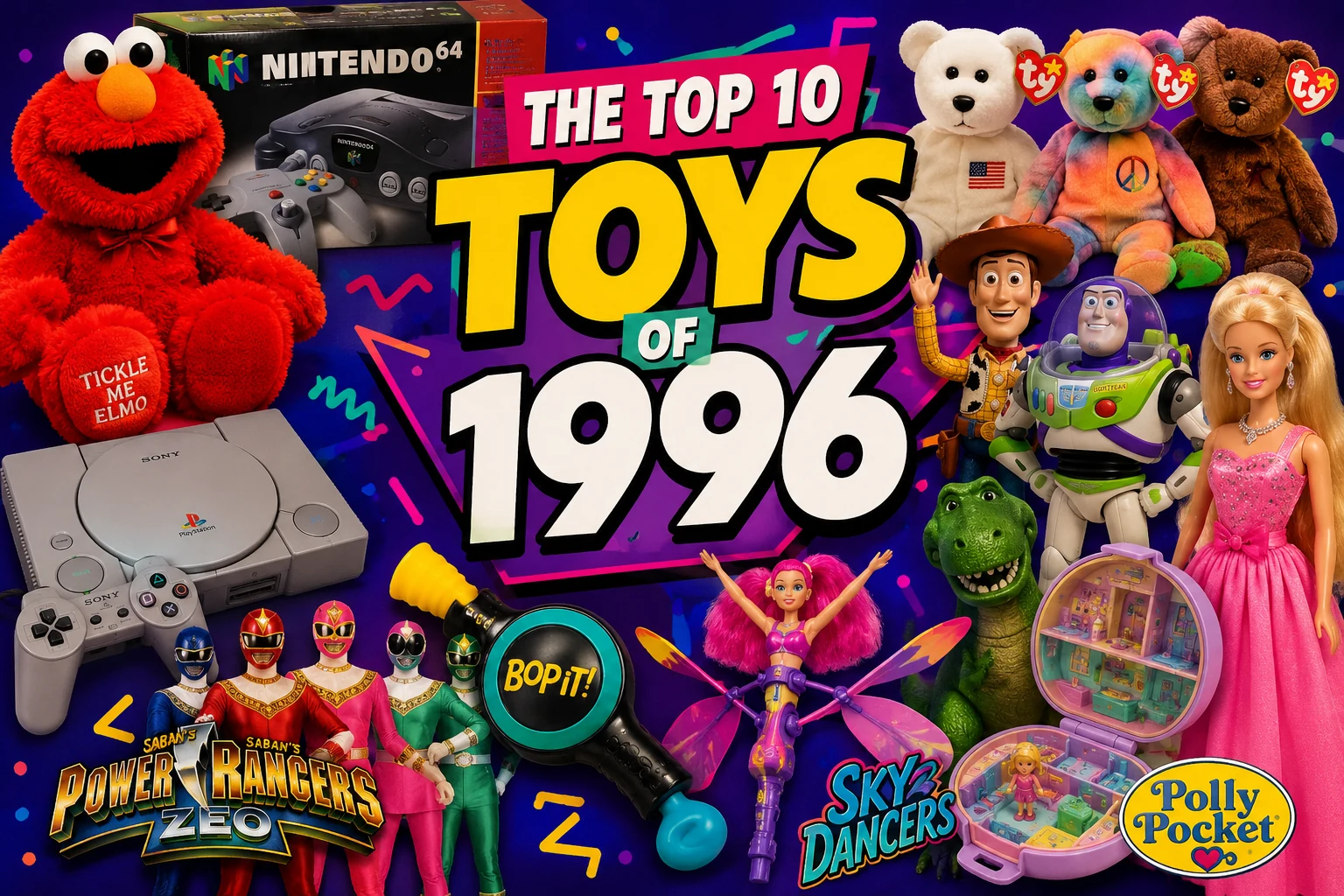
The top toys of 1996 were Tickle Me Elmo, Nintendo 64, Beanie Babies, Toy Story toys, Sony PlayStation, Power Rangers Zeo toys, Bop It, Sky Dancers, Barbie dolls and playsets, and Polly Pocket.
This was the year the late-90s toy machine became fully visible. One plush doll turned Christmas shopping into national theater. A new Nintendo console made 3D gaming feel impossible. Beanie Babies pulled adults into the collector frenzy, while movie and television brands kept feeding the shelf.
The Short Answer
What Were the Most Popular Toys of 1996?
The most popular toys of 1996 included Tickle Me Elmo, Nintendo 64 and Super Mario 64, Beanie Babies, Toy Story toys, Sony PlayStation, Power Rangers Zeo, Bop It, Sky Dancers, Barbie and Polly Pocket.
Tickle Me Elmo ranks first because it defined the 1996 holiday-shopping story through scarcity, television visibility and public frenzy. Nintendo 64 was the more important technological object, while Beanie Babies represented the collector economy that would become even more extreme later in the decade.
The Fast Rewind
Top 10 Toys of 1996 at a Glance
Start with the complete ranking, then jump directly to any toy for the full explanation.
- #1Tickle Me ElmoThe interactive plush that turned Christmas shopping into a public emergency
- #2Nintendo 64 and Super Mario 64The premium console launch that made 3D gaming feel like the future
- #3Beanie BabiesCute plush, perceived scarcity and adult collector fever collide
- #4Toy Story ToysBuzz, Woody and movie emotion keep licensed toys hot
- #5Sony PlayStationCD-based gaming gains older-kid cool and platform momentum
- #6Power Rangers Zeo ToysNew suits and Zords restart a familiar television toy machine
- #7Bop ItA handheld electronic game turns commands and failure into group entertainment
- #8Sky DancersThe launch-doll sensation keeps flying into the mid-90s
- #9Barbie Dolls and PlaysetsPermanent doll-aisle infrastructure survives another wave of crazes
- #10Polly PocketTiny portable worlds remain one of the decade’s strongest miniature systems
How the List Came Together
How the Top Toys of 1996 Were Ranked
This is a transparent editorial ranking. No single complete public chart cleanly compares interactive plush, game consoles, collectible plush, movie merchandise, action figures, electronic games, dolls and miniature playsets across the full year.
Holiday demand and scarcity
The ranking weighs Christmas-list urgency, store availability, public shortage stories, retail visibility and whether the search for the product became part of the toy’s identity.
Technology and platform impact
Nintendo 64 and PlayStation operated as long-term entertainment platforms. Their importance includes hardware demand, game libraries, social play and the way one purchase created future software demand.
Collector and media power
Beanie Babies gained heat through scarcity mythology, while Toy Story and Power Rangers converted movie or television recognition into repeat product demand.
How clearly each toy defines 1996
The strongest entries capture the year’s specific personality: Elmo panic, 3D console fever, Beanie speculation, movie-toy emotion, electronic commands and products expected to perform on cue.
The Late-90s Machine Switches On
Why 1996 Changed Toy Culture
The year matters because toys increasingly became part of larger systems: news cycles, console platforms, collector markets, movie universes and television franchises.
A shortage could become national entertainment.
Tickle Me Elmo was more than an interactive plush. The difficulty of finding one became part of the product story, increasing urgency every time another shelf emptied.
Consoles became household ecosystems.
Nintendo 64 and PlayStation did not end with the hardware purchase. Controllers, cartridges, discs, memory and future game releases turned the console into continuing household infrastructure.
Collecting became adult behavior.
Beanie Babies expanded the audience for toy speculation through retirements, tag details, availability rumors and the possibility that a small plush animal might somehow fund college.
Licensed toys could carry emotional meaning.
Toy Story toys benefited from a movie in which the toys themselves were characters with loyalty, fear and personality. The merchandise felt like a continuation of the story.
Five Demand Engines in One Feral Aisle
What Actually Drove the 1996 Toy Market?
The year becomes clearer when the toys are grouped by the kind of pressure they created. Each force receives a full-width horizontal card.
The Must-Have Holiday Shortage
Tickle Me Elmo combined a familiar character, a simple laugh-and-shake demonstration and limited holiday availability. The hunt itself became free advertising.
Once adults believed the product might disappear, ordinary shopping turned into tactical behavior and the toy’s public mythology grew faster than supply.
The Console Platform War
Nintendo 64 owned the clean 1996 launch spectacle, while PlayStation built momentum through a growing CD-based library and a more mature identity.
Both systems became social infrastructure. The household with the console controlled sleepovers, multiplayer arguments and the next several gift requests.
The Collector Economy
Beanie Babies used low price, frequent variation, retirements and scarcity rumors to create a collectible product adults could rationalize buying repeatedly.
The tag became evidence, condition became doctrine and plastic protectors became tiny monuments to the belief that the future was bean-filled.
The Franchise Ecosystem
Toy Story and Power Rangers Zeo connected toys to stories children already knew. Characters, catchphrases, vehicles, Zords and movie emotion reduced the need for a separate explanation at the store.
The larger movie and cartoon toy pipeline made entertainment releases one of the most reliable engines behind shelf demand.
The Toy That Performed
Bop It gave commands. Sky Dancers launched. Elmo laughed. The feature could be demonstrated instantly and repeated socially, giving the product a built-in reason for everyone nearby to pay attention.
This performance logic helped relatively simple toys compete with much larger entertainment platforms.
From #10 to #1
The Top 10 Toys of 1996 Countdown
Ten products and one year where scarcity, 3D gaming, collector mythology, movie emotion and interactive electronics all competed for the same wish list.
Tiny Plastic Universe, Maximum Carpet Risk
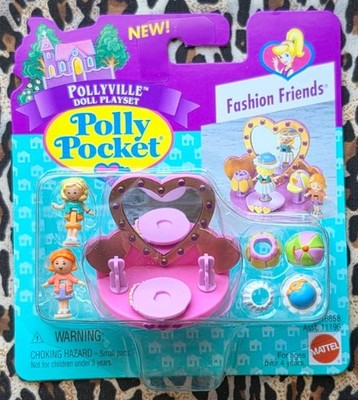
Polly Pocket
Polly Pocket opens the countdown because tiny worlds remained powerful even as the rest of the aisle became louder and more electronic. One compact could hold a house, theme park, school or fantasy setting small enough to disappear under a car seat.
The strongest part of the product was control. A child could open the compact, reveal the entire environment, arrange the figures and close the world again. The container was not just packaging; it was architecture, storage and part of the fantasy.
Portability made Polly especially useful in a decade filled with car rides, restaurants, waiting rooms and relatives who believed one small toy should occupy a child for several hours. The scale also encouraged collecting because another compact added a complete new environment without requiring much shelf space.
The product’s limitations became part of the memory. Figures were easy to lose, accessories could migrate into the carpet and every vacuum encounter felt like a possible historical tragedy.
Polly Pocket also connects miniature play to the wider 90s collecting instinct. A closed compact looked complete, but another shape, theme or color always promised a different hidden world.
For Gen X and older millennial households, Polly Pocket became the quiet opposite of the giant console box: a whole imaginary world small enough to fit inside a pocket and vanish instantly.
Permanent Doll-Aisle Infrastructure
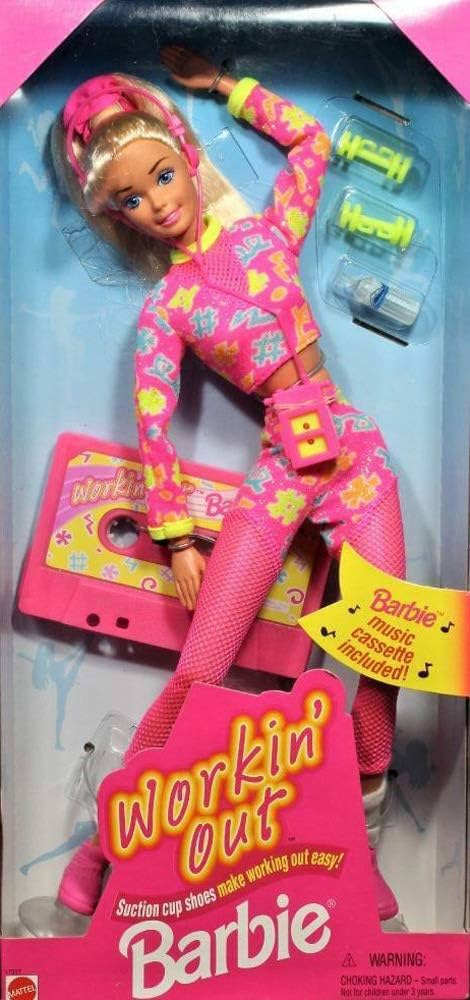
Barbie Dolls and Playsets
Barbie ranks ninth because 1996 belonged to several louder crazes, yet the brand still occupied more permanent toy-aisle real estate than most products could dream of renting.
The strength was variety rather than one universal doll. Fashion releases, careers, vehicles, houses, accessories and seasonal editions allowed different buyers to enter at different prices without leaving the same recognizable system.
That infrastructure protected Barbie from market volatility. A sold-out plush or console could dominate the news, but Barbie remained consistently available and consistently giftable. Adults understood the brand, children understood the fantasy and previous purchases made another item useful.
Barbie also survived because the story was open. The toy could absorb trends without depending completely on them. A new fashion, setting or role refreshed the shelf while the basic identity remained stable.
In a year where many products needed a shortage or technological leap, Barbie demonstrated another form of power: permanent recognition and the ability to serve several tastes at once.
For Gen X, Barbie in 1996 feels like the store fixture that had somehow become a toy empire—the shelf changed around her while she kept changing outfits.
The Launch Doll Keeps Testing Gravity
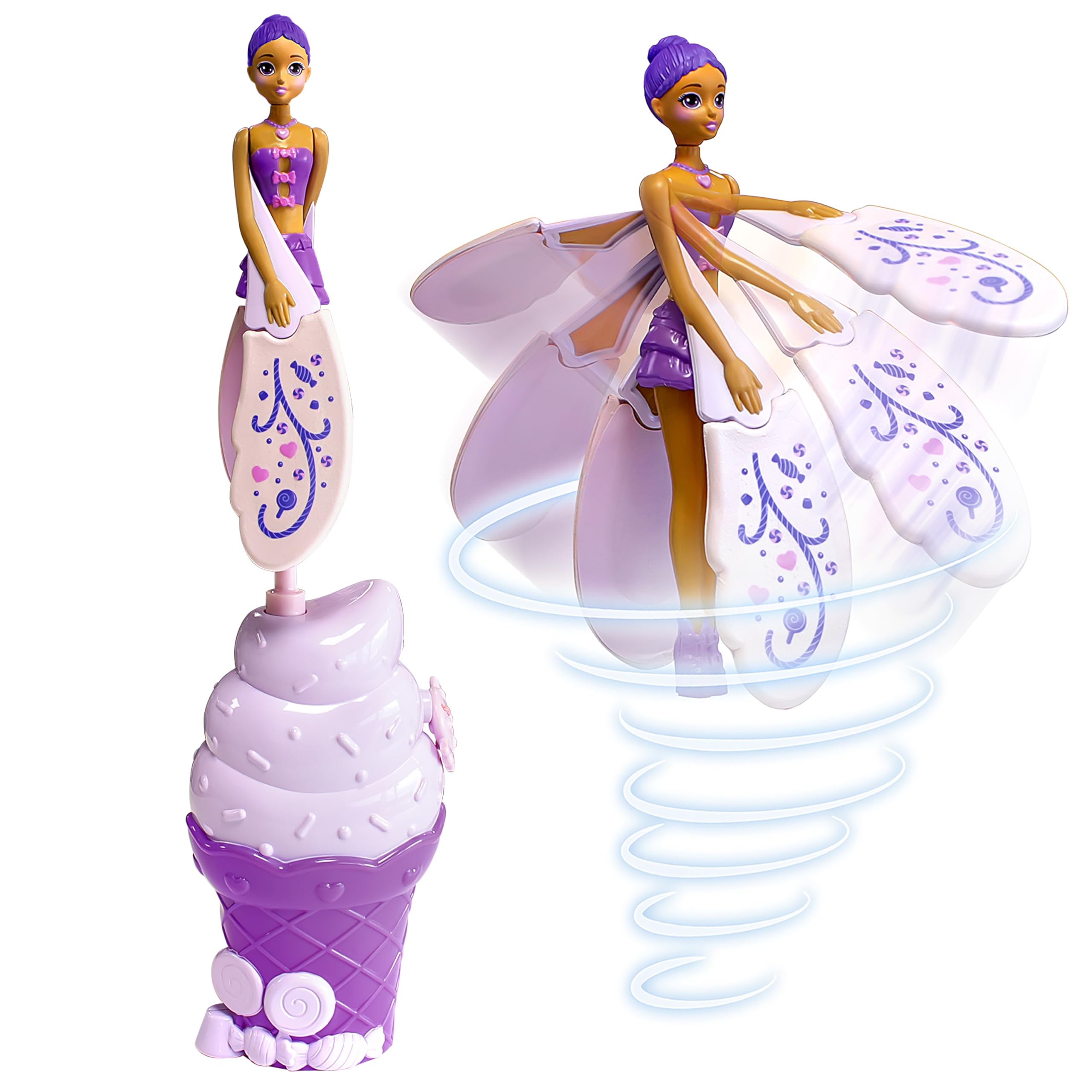
Sky Dancers
Sky Dancers remain in the top ten because the launch feature was too clear, visual and socially entertaining to disappear after one season. Pull the launcher and the doll spun upward. The pitch required almost no explanation.
The product blended doll styling with action-toy behavior. Costumes and character designs supported collecting, while the launch gave every use a visible climax. It was decorative when still and chaotic when activated.
That dual identity helped Sky Dancers stand apart from conventional dolls. The toy did not wait for a child to invent movement; movement was built into the hardware and displayed in every commercial.
The unpredictability added excitement too. The doll might rise gracefully, drift across the room or introduce itself to a lampshade. The feature created both magic and a very specific form of adult supervision.
By 1996, toys were increasingly expected to perform, react or transform. Sky Dancers fit that market perfectly because the performance was physical enough to attract everyone nearby.
For Gen X households watching younger kids, Sky Dancers looked like toy-commercial beauty translated into living-room aviation with only partial regulatory oversight.
The Toy That Yelled Back
Bop It
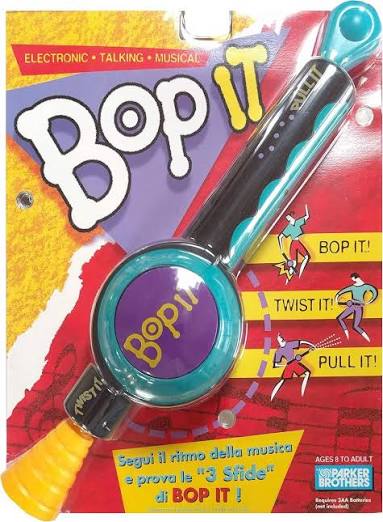
Bop It ranks seventh because its idea was brutally clear: listen to a command, perform the action and try not to fail while everyone else watched.
The original command structure made the toy easy to understand within seconds. Bop it, twist it and pull it were simple actions, but increasing speed turned them into a public argument between the brain and hands.
That pressure gave Bop It strong group value. The toy could be passed around at parties, sleepovers or family gatherings, creating a sequence of short turns, escalating tension and immediate failure. One device entertained several people without a board, score sheet or lengthy rules lecture.
The electronic voice also gave the toy personality. It was not merely measuring input. It was issuing orders, creating urgency and making the player feel personally responsible for disappointing a piece of plastic.
Bop It belongs in 1996 because it points toward a wider rise in interactive electronics: products that responded, demanded input and created their own pace rather than waiting quietly for imagination.
For Gen X, Bop It is the handheld cousin of Simon after several management seminars—less interested in memory than in issuing increasingly hostile instructions.
New Suits, New Zords, Same Retail Logic
Power Rangers Zeo Toys
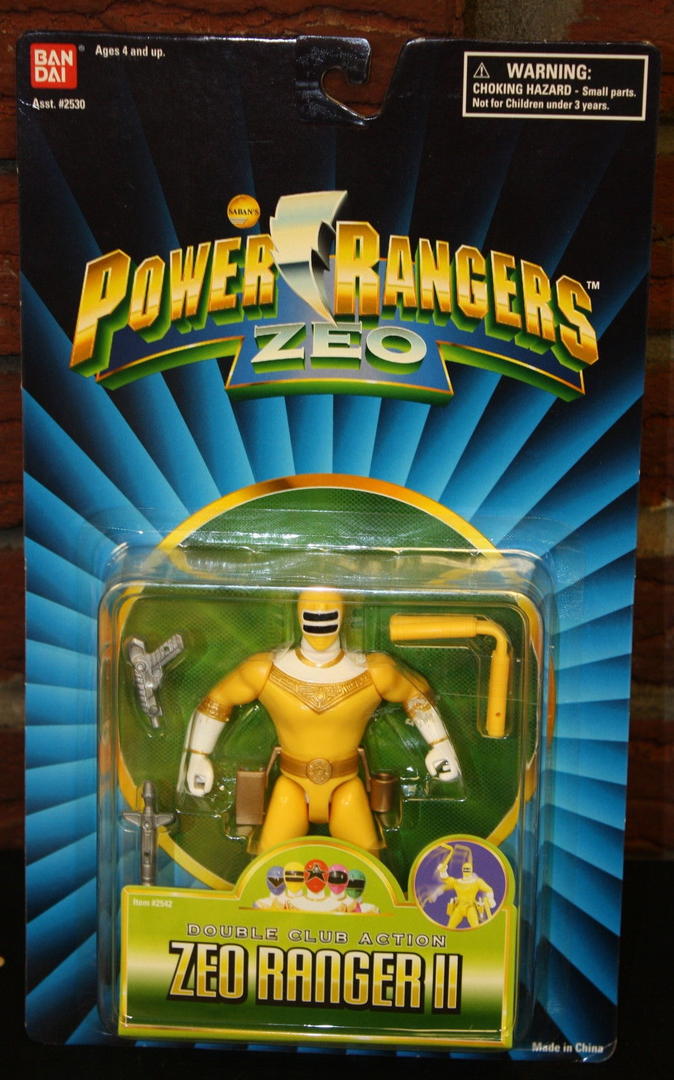
Power Rangers Zeo toys rank sixth because the franchise proved it could replace familiar suits, powers and robots without abandoning the basic product structure that made the brand successful.
The television transition supplied new Rangers, symbols, weapons, villains and Zords. Weekly episodes explained the change while the toy aisle converted every change into another reason the previous collection felt incomplete.
Zords remained the premium destination. Individual figures created character identity, role-play gear let children perform the transformation and combining robots turned several purchases into one larger mechanical payoff.
Zeo also demonstrated the value of planned reinvention. Instead of waiting for fatigue to destroy the line, the franchise refreshed the visual system and asked children to accept a new version of the same fantasy.
Inside the broader 90s action figure wars, Power Rangers became less dependent on one iconic suit design and more dependent on the repeatable cycle of television reset and retail replacement.
For Gen X observers, Zeo felt like the point when the franchise calmly explained that the old robots were history and several new expensive shapes had become urgent.
CD-Based Gaming Gains Older-Kid Cool
Sony PlayStation
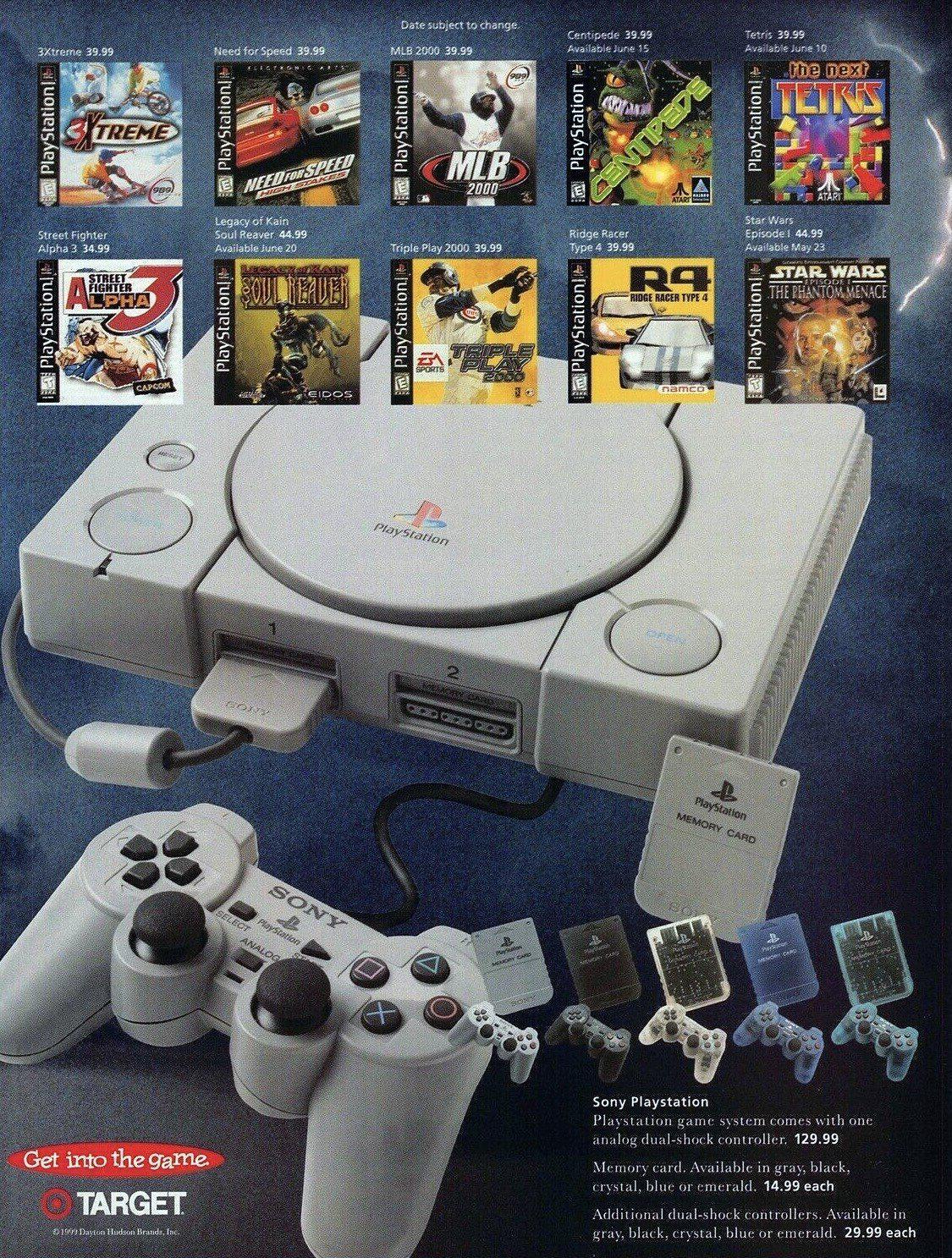
Sony PlayStation ranks fifth because 1996 was the year the system’s momentum became impossible to ignore. Nintendo owned the launch spectacle, but PlayStation was building a broad library and a distinct older-kid identity.
The CD format contributed to the feeling that gaming was moving into a new entertainment era. The console looked less like a bright children’s system and more like consumer electronics, which expanded its appeal among players beginning to distance themselves from the traditional toy aisle.
Platform power made the console larger than one release. Every new game extended the value of the hardware, while memory cards, controllers and multiplayer sessions turned the machine into social infrastructure.
PlayStation and Nintendo 64 also represented different futures. Nintendo emphasized recognizable characters and a dramatic 3D leap. Sony emphasized breadth, style and a medium associated with music and modern electronics.
Its position below Nintendo 64 reflects the clearer 1996 launch moment, not a lack of importance. PlayStation was already changing who gaming spoke to and how the category presented itself.
For Gen X teenagers and young adults, PlayStation looked like the point where video games stopped asking permission to be considered mainstream entertainment.
Buzz and Woody Turn Merchandise Into Companions
Toy Story Toys
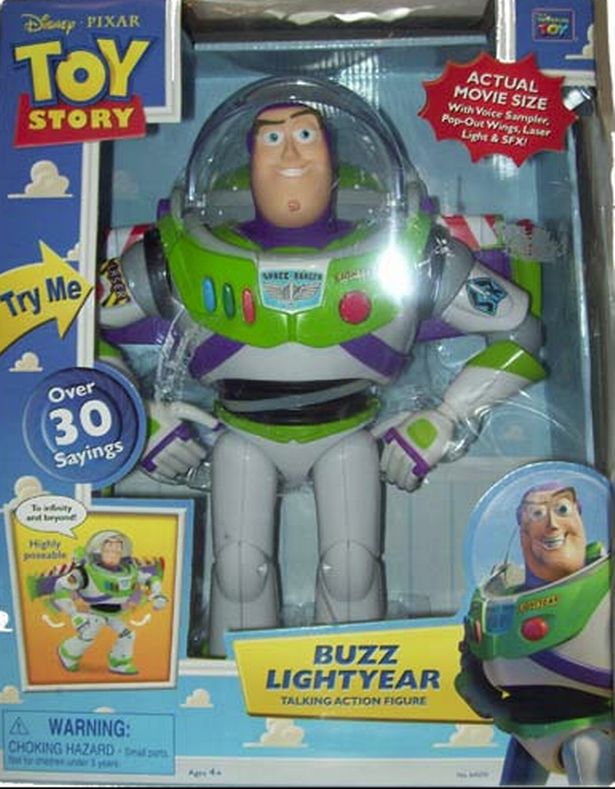
Toy Story toys rank fourth because the movie made toys feel emotionally important. Buzz Lightyear, Woody and the other characters were not simply images placed on products; they were toys inside the story itself.
That narrative created an unusual connection between film and merchandise. Owning Buzz or Woody felt like continuing the movie’s central relationship rather than buying an unrelated plastic version of a screen character.
The late-1995 release gave the merchandise strong 1996 carryover through rentals, repeat viewing, birthdays and holiday shopping. Children had time to choose favorite characters, quote the movie and imagine the bedroom floor as another version of Andy’s room.
Buzz offered especially strong toy logic: wings, buttons, space styling, a helmet and catchphrases. The character looked built for merchandise before the viewer even considered the larger emotional story.
Toy Story demonstrated how powerful licensing became when the product category and the story were perfectly aligned. The movie did not merely advertise toys. It made the idea of loving toys the emotional center.
For Gen X, Toy Story merchandise felt like Hollywood had discovered the exact emotional weakness created by every abandoned figure still sitting in a childhood box.
Collector Fever Becomes a Household Condition
Beanie Babies
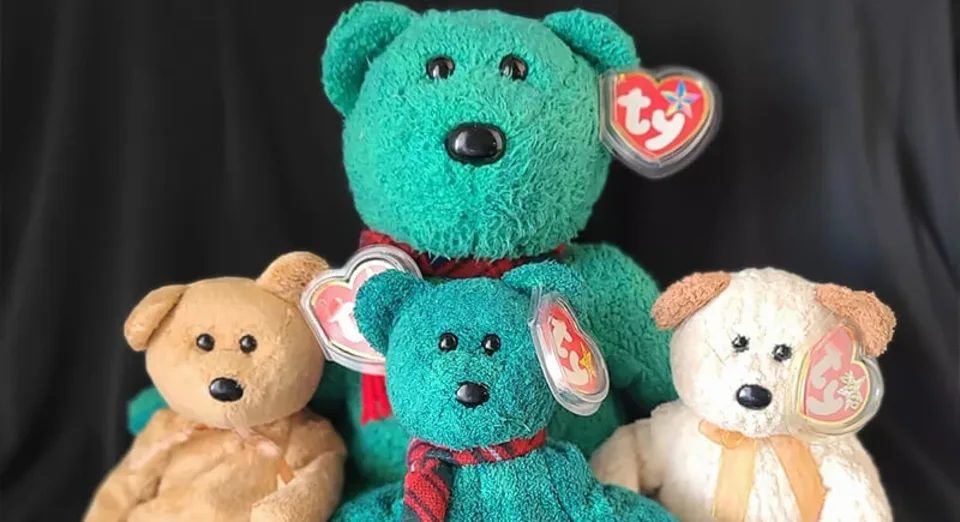
Beanie Babies rank third because 1996 shows the collector machinery operating at full speed. The plush animals were affordable enough for casual buying, varied enough for repeat purchases and surrounded by enough scarcity stories to attract adults.
Retirements and limited availability turned ordinary product changes into events. A character leaving production could suddenly feel important, and the belief that a small plush might become valuable encouraged people to buy duplicates or preserve them instead of letting children play normally.
The tag became part of the collectible identity. Creases, generations, names and details acquired meaning, while plastic protectors transformed cardboard hearts into objects handled with museum-level anxiety.
Children could still enjoy Beanie Babies as soft animals with names and personalities, but adult participation changed the social scale of the craze. Toy collecting became speculation, conversation and a reason to visit stores repeatedly.
The line helped define the 90s collectible bubble because perceived scarcity mattered as much as design. The story around supply became a feature of the product.
For Gen X adults, Beanie Babies were the moment childhood collecting returned wearing business-casual clothes and insisting the stuffed bear was part of a financial strategy.
The Big-Ticket Future Arrives in 3D
Nintendo 64 and Super Mario 64
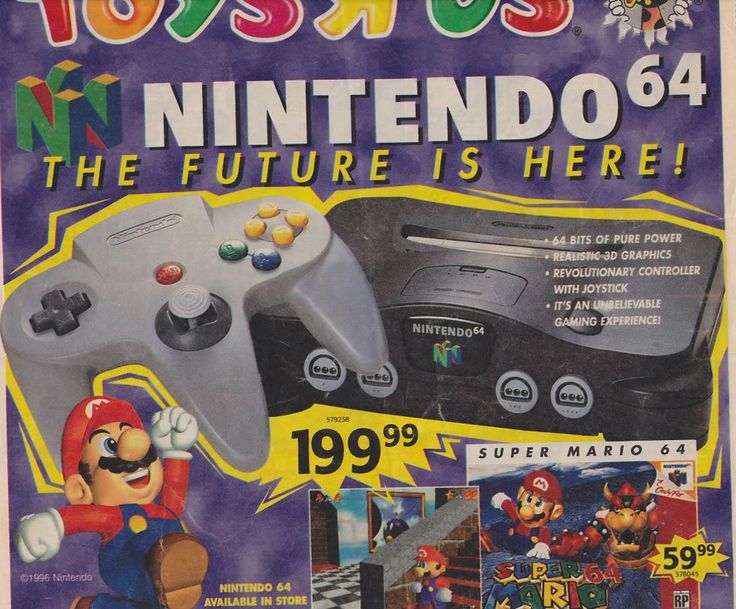
Nintendo 64 ranks second because the console created one of the clearest premium-gift moments of 1996. The system did not feel like a routine upgrade. Super Mario 64 made game space feel newly explorable.
That visual leap is difficult to recreate through nostalgia because three-dimensional movement later became ordinary. At the time, controlling Mario through an open castle and wide environments felt like a change in the rules of home gaming.
The console also became a status object and social destination. One household with an N64 could pull friends into the room, organize sleepovers and create immediate debates about controllers, games and who was allowed the next turn.
Cartridge prices and the cost of the hardware made the system a major household decision rather than a casual purchase. That expense increased the emotional scale of finding the box under the tree.
Nintendo 64 loses the number-one position only because Tickle Me Elmo owned the broader public holiday frenzy. As a technological object and long-term memory, the console may be the heavier legacy.
For Gen X families, Nintendo 64 was the box that made every earlier polygon look temporary and quietly reassigned the living-room television.
The Holiday Panic Legend
Tickle Me Elmo
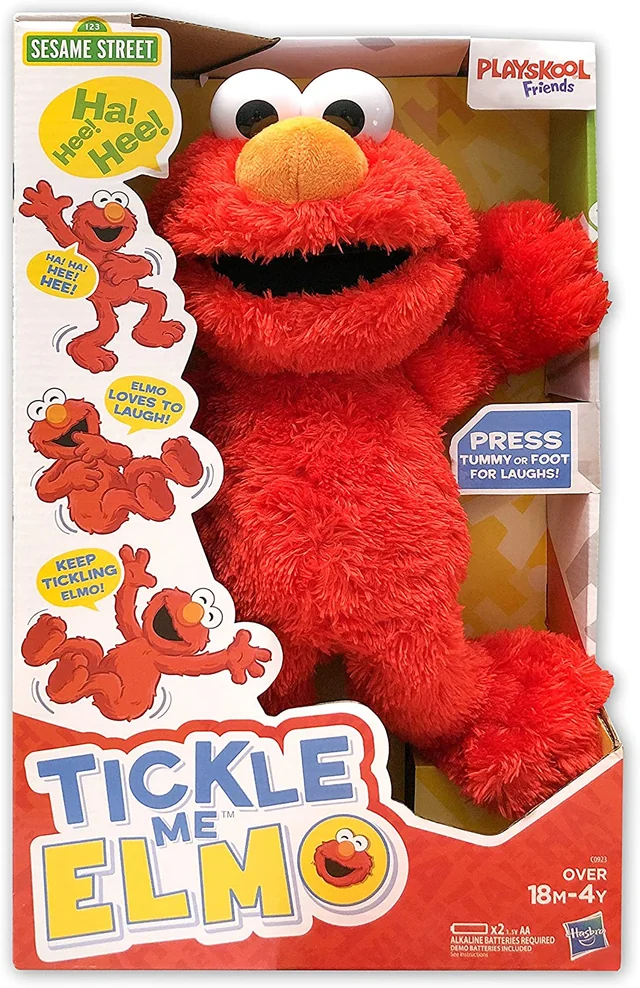
Tickle Me Elmo takes the number-one spot because no other toy defined the public memory of Christmas 1996 with the same intensity. The product laughed and shook when activated, but scarcity transformed that simple behavior into a national retail event.
Sesame Street recognition gave the toy instant emotional familiarity. Adults understood Elmo, children recognized the character and the demonstration was easy to show on television. The product did not require a new fictional universe or complicated instructions.
The shortage became part of the demand. Every story about empty shelves, desperate searches or rising resale prices told shoppers that the toy was becoming harder to obtain. Scarcity turned ordinary interest into urgency.
The craze also revealed how news coverage and retail behavior could amplify each other. Public attention increased demand, demand created more shortages and the shortages generated more attention. Elmo’s giggle became the soundtrack to a feedback loop.
Nintendo 64 may have had the deeper technological legacy, but Tickle Me Elmo owned the year as a cultural event. The number-one toy of a specific year is often the object that best defines how the season felt.
For Gen X adults and parents, Elmo became a cheerful red reminder that civilization was only one sold-out shelf away from becoming extremely negotiable.
The Toy Was Only the Beginning
1996 Turned Toys Into Events and Ecosystems
The year’s defining products expanded beyond one object. They created news, software demand, collector behavior, movie attachment or television-driven upgrades.
The Event Model
Elmo and Beanie Babies Made the Hunt Part of the Product
Scarcity changed shopping from a transaction into a story people repeated.
Tickle Me Elmo
The shortage created urgency, resale attention and national recognition beyond ordinary toy advertising.
Beanie Babies
Retirements, limited availability and tag condition made each purchase feel connected to a larger collector market.
The Emotional Result
Owning the product meant surviving the hunt, finding the right version or proving the item had been secured before somebody else found it.
The event argument: the story of obtaining the toy became part of the memory of owning it.
The Toy Box Afterlife
Collecting Toys From 1996 Today
Exact version, condition, completeness, working electronics, original packaging and real completed-sale demand matter much more than age alone.
Interactive toys need complete mechanical testing.
Tickle Me Elmo and Bop It should be checked for sound, movement, switches, battery corrosion, responsiveness, repairs, model differences and original packaging. A toy that merely looks correct may still have failed electronics.
Consoles depend on hardware, region and accessories.
Nintendo 64 and PlayStation values depend on working systems, controllers, cables, expansion or memory accessories, packaging, manuals and whether included games match the original bundle.
Beanie Babies require exact identification.
Character, tag generation, condition, manufacturing details and provenance matter. Compare the same version and use completed sales rather than assuming every spelling difference creates a rare fortune.
Figures, dolls and compact sets lose value through missing parts.
Toy Story, Power Rangers, Sky Dancers, Barbie and Polly Pocket may depend on wings, launchers, weapons, Zord pieces, clothing, tiny figures, accessories and packaging. The guides to 90s collectible crazes and forgotten 90s toys provide wider context.
What the Wish List Felt Like
Christmas Morning 1996 Was a Collision of Scarcity and Technology
The room could contain one famously hard-to-find plush, an expensive console, several “rare” animals, movie characters and at least one electronic object issuing instructions.
Finding the red box proved an adult had survived the holiday search and understood the national assignment.
Opening the console was only the beginning; the television, controllers and cartridge immediately reorganized the room.
Every plush came with a name, birthday, tag and future argument about whether touching it reduced its value.
Buttons, wings and catchphrases made the character feel like the movie had entered the bedroom.
Within minutes, several relatives were taking turns failing under pressure while the toy remained emotionally neutral.
Graceful toy-commercial flight met ceilings, lamps and the physical limits of the family room.
The memory: Elmo laughed, Mario moved in three dimensions, somebody guarded a cardboard heart tag, and the living room briefly became the command center for the entire late 90s.
Under Fluorescent Lights
What the 1996 Toy Store Looked Like
The store was increasingly divided into hot-item scarcity, premium electronics, collector displays and franchise walls.
The empty Elmo space
A blank shelf and a sign announcing no stock could advertise the craze more effectively than a full display.
The locked console case
Nintendo 64 and PlayStation hardware required adult questions, large budgets and negotiation over what the box actually included.
The collector basket
Beanie Babies made small plush displays feel like rotating inventories where shoppers inspected names, tags and rumored retirements.
The franchise wall
Toy Story, Power Rangers, Barbie and Polly Pocket used characters and compatible products to turn one shelf into an expandable world.
The full 90s Toy Store Culture guide follows the aisles, glass cases, catalogs, scarcity signs and holiday rituals that made the search for the toy part of the memory.
Commercial-Break Pressure
Watch the 1996 Toy Commercial Energy
Elmo needed the laugh-and-shake demonstration. Nintendo 64 needed Mario in 3D. Bop It issued commands. Sky Dancers launched, and Power Rangers Zeo used weekly television to explain why a new robot had become necessary.
The best 1996 advertising showed the behavior, attached it to a character or platform and made the current toy box feel technologically or socially incomplete.
The 90s Toy Commercials & Videos archive is the direct next stop for the advertising behind Elmo, Nintendo 64, Beanie Babies, Toy Story, Power Rangers, Bop It, Sky Dancers, Barbie and Polly Pocket.
The Rest of the Year
Keep Rewinding 1996
The toy aisle was only one part of a year filled with giant radio hits, network-television dominance, disaster movies, spies, sports agents and the cultural feeling that the decade had reached maximum mid-90s volume.
The 1996 Toy Aisle Verdict
Why These Toys Define 1996
The top 10 toys of 1996 capture the moment the late-90s toy economy becomes unmistakable. Tickle Me Elmo is a shortage event. Nintendo 64 and PlayStation are platforms. Beanie Babies are a collector market.
Toy Story and Power Rangers Zeo are entertainment ecosystems. Bop It and Sky Dancers are performances. Barbie and Polly Pocket remain expandable worlds that survive through compatibility, variation and recognition.
For Gen X, 1996 feels like the toy aisle after the handoff became complete. The mall, catalogs and commercial breaks still mattered, but the products were increasingly shaped by news cycles, electronics, adult collecting and entertainment brands capable of creating demand before the store opened.
Questions From the Toy Aisle
Top Toys of 1996: Frequently Asked Questions
What were the most popular toys of 1996?
Popular toys of 1996 included Tickle Me Elmo, Nintendo 64, Beanie Babies, Toy Story toys, Sony PlayStation, Power Rangers Zeo, Bop It, Sky Dancers, Barbie and Polly Pocket.
What was the biggest toy of 1996?
Tickle Me Elmo takes the number-one spot because scarcity, television visibility and holiday demand turned the interactive plush into the defining retail story of Christmas 1996.
Why is Tickle Me Elmo ranked above Nintendo 64?
Nintendo 64 had the larger long-term technological legacy, but Tickle Me Elmo more completely defined the public shopping frenzy and holiday memory of 1996.
Why was Tickle Me Elmo so popular?
The toy combined a familiar Sesame Street character, a simple laugh-and-shake interaction, strong television demonstration and limited holiday availability. Once stores sold out, scarcity increased the demand.
Was Nintendo 64 a top Christmas toy in 1996?
Yes. Nintendo 64 was one of the year’s most wanted premium gifts, and Super Mario 64 made three-dimensional home gaming feel dramatically new.
Were Beanie Babies popular in 1996?
Yes. Beanie Babies were becoming a major collector craze through retirements, perceived scarcity, tag details and growing adult participation.
Why were Toy Story toys still popular in 1996?
The late-1995 movie had strong carryover through repeat viewing, rentals and holiday demand. Buzz Lightyear and Woody also worked especially well because the movie made the toys themselves emotional characters.
Was PlayStation considered a toy in 1996?
For children and holiday shoppers, yes. Although it was consumer electronics, PlayStation occupied the same premium gift conversation as Nintendo 64 and other major entertainment products.
Was Bop It released in 1996?
The original Bop It arrived in 1996 and built its appeal around simple voice commands, fast reaction play and a pass-around social format.
Were Power Rangers toys still popular in 1996?
Yes. Power Rangers Zeo refreshed the franchise with new suits, powers, figures, role-play items and Zords.
Why are Sky Dancers on the 1996 list?
The flying launch feature remained a strong commercial demonstration and gave the doll line motion, spectacle and repeat social play.
Why is Barbie only number nine?
The ranking emphasizes year-specific heat. Barbie remained one of the strongest permanent toy systems, but the 1996 headlines belonged to Elmo, consoles, collectibles and newer interactive products.
Why is Polly Pocket included?
Polly Pocket remained one of the decade’s strongest miniature play systems because the compact combined an environment, storage, portability and collectible variation.
What made 1996 toys different from early-90s toys?
The market was more electronic, platform-driven, scarcity-driven and connected to media or adult collector behavior. The story around the product increasingly mattered as much as the toy itself.
What were the hottest Christmas toys of 1996?
Hot Christmas toys included Tickle Me Elmo, Nintendo 64, Beanie Babies, Toy Story toys, PlayStation, Power Rangers Zeo, Bop It, Sky Dancers, Barbie and Polly Pocket.
Are toys from 1996 valuable today?
Some can be, but value depends on exact version, condition, completeness, working electronics, original accessories, packaging and current demand. Use the 90s collectible toy guide for broader context.
Was there one official top-10 toy chart for all of 1996?
No single complete public list cleanly compares every toy category across the full year. This page uses a transparent editorial method based on holiday demand, scarcity, platform impact, cultural memory and category strength.
Where can I watch commercials for 1996 toys?
The 90s Toy Commercials and Videos archive connects Elmo, Nintendo 64, Beanie Babies, Toy Story, Power Rangers, Bop It, Sky Dancers, Barbie and Polly Pocket with the advertising behind the demand.
Move Through the Decade
Explore the Top Toys From Every Year of the 90s
Follow the aisle from Turtle Power and Troll comebacks into Elmo panic, digital pets, collectible bubbles, Furby, Pokémon and the final Y2K toy rush.