The First Full Year of 90s Toy Mania
Top 10 Toys of 1990: TMNT, Nintendo & the Doll Comeback
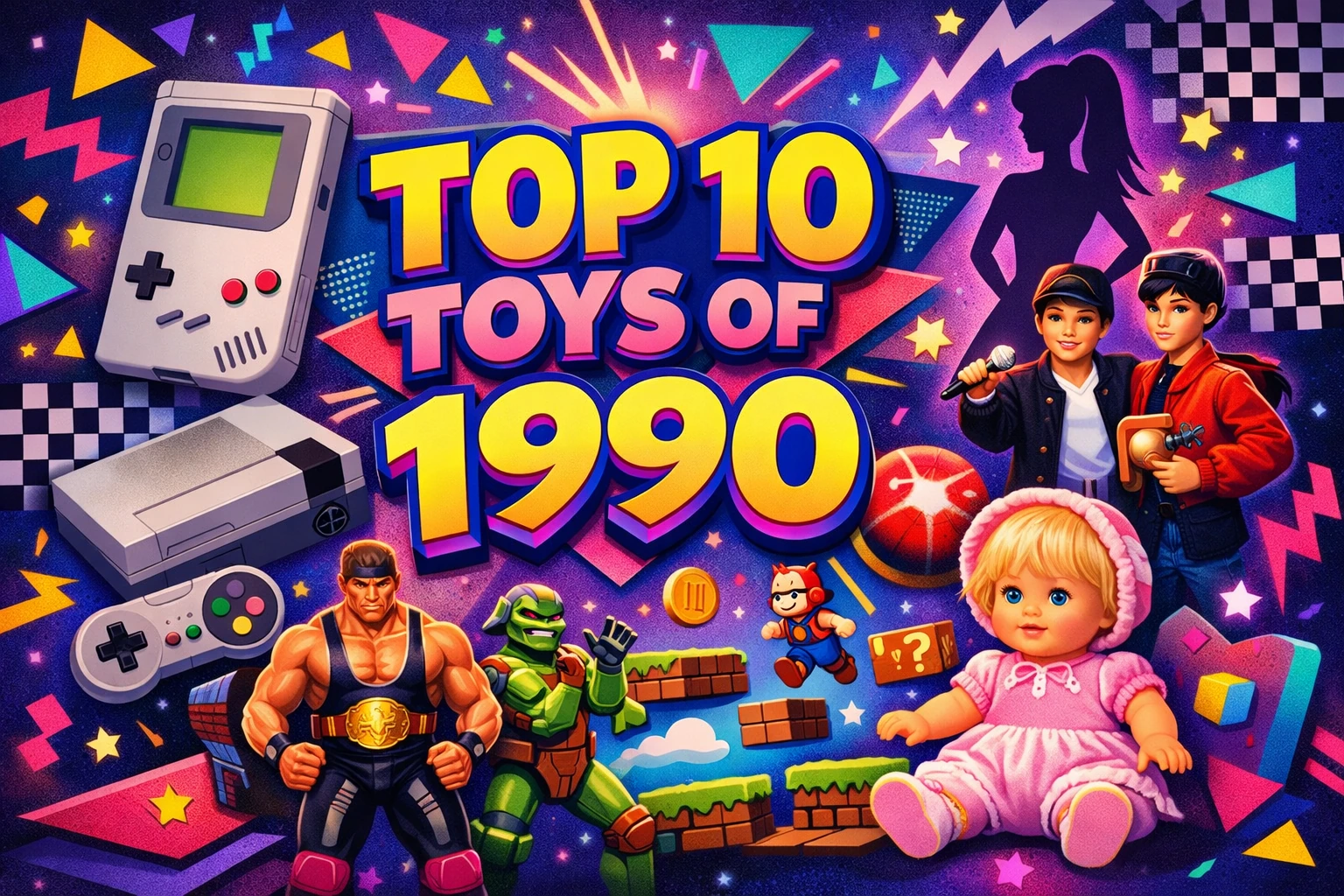
The top toys of 1990 were Teenage Mutant Ninja Turtles, Nintendo Entertainment System, Barbie, Super Mario Bros. 3, World Wrestling Federation figures, New Kids on the Block dolls, My Pretty Ballerina, Batman: The Dark Knight Collection, Magic Nursery and Game Boy.
This was not a clean break from the 80s. It was a takeover. Turtle Power hit full national saturation, Nintendo remained the machine behind the living room, Barbie stayed almost impossible to dislodge and the doll aisle returned with reveals, movement and celebrity fandom.
The Short Answer
What Were the Most Popular Toys of 1990?
The most popular toys of 1990 included Teenage Mutant Ninja Turtles, Nintendo Entertainment System, Barbie, Super Mario Bros. 3, WWF figures, New Kids on the Block dolls, My Pretty Ballerina, Batman: The Dark Knight Collection, Magic Nursery and Game Boy.
TMNT ranks first because 1990 was the year the Turtles became a complete kid-culture phenomenon. Nintendo remained the larger gaming ecosystem, while Barbie and a new generation of interactive dolls made the year much less one-sided than the final stretch of the 80s.
The Fast Rewind
Top 10 Toys of 1990 at a Glance
Start with the whole ranking, then jump directly to any toy for the full explanation.
- #1 Teenage Mutant Ninja TurtlesTurtle Power becomes the year’s biggest child-driven franchise
- #2 Nintendo Entertainment SystemThe platform still organizes the living room and the wish list
- #3 BarbieThe evergreen fashion-doll empire survives every supposed revolution
- #4 Super Mario Bros. 3A single cartridge becomes a full-scale holiday event
- #5 World Wrestling Federation FiguresFandom, rivalries and body slams become instant action play
- #6 New Kids on the Block DollsPop-music mania becomes a collectible toy line
- #7 My Pretty BallerinaA motorized doll sells its entire fantasy in one demonstration
- #8 Batman: The Dark Knight CollectionBatmania remains strong enough to survive into another Christmas
- #9 Magic NurseryA surprise reveal gives nurturing play a theatrical hook
- #10 Game BoyPortable Nintendo turns dead time into cartridge time
How the List Came Together
How the Top Toys of 1990 Were Ranked
This is a transparent editorial ranking. No single public chart cleanly compares every console, cartridge, doll, figure line and licensed product across all of 1990.
Contemporary holiday demand
Period reporting described Christmas 1990 as heavily shaped by Turtles, Nintendo, Barbie and a noticeable doll resurgence. That gives the list a historical foundation instead of relying only on what later became nostalgic.
Retail and commercial visibility
Shelf presence, advertising frequency, recognizable demonstrations and the number of products surrounding a brand all matter. TMNT and Nintendo did not win through one object; they won through systems.
How clearly each toy defines 1990
The ranking favors products that capture the year’s specific mix of Turtle Power, cartridge culture, the doll comeback, celebrity merchandise, wrestling fandom and movie-driven action figures.
Category differences stay visible
A console, a cartridge, a fashion doll and a low-priced action figure do not sell in the same way. The order weighs year-specific heat and cultural presence rather than pretending every category produced directly comparable numbers.
The 90s Machine Starts Running
Why 1990 Changed Toy Culture
The first full year of the decade did not erase the 80s. It reorganized the strongest parts into larger, more disciplined commercial systems.
Franchises became complete childhood environments.
TMNT connected television, figures, vehicles, video games, the live-action movie and everyday merchandise. Children no longer met the brand in one place. The brand followed them everywhere.
Software became a headline gift.
Super Mario Bros. 3 proved a cartridge could create its own event. Nintendo’s hardware was important, but the expanding library kept reactivating demand long after the console entered the home.
Dolls came back with stronger demonstrations.
Magic Nursery and My Pretty Ballerina added surprise and movement to familiar play, while Barbie supplied an evergreen center. The category had learned how to compete for commercial-break attention.
Fandom itself became a toy category.
New Kids on the Block dolls and WWF figures did not need original toy mythology. Music, television and celebrity had already created the characters, loyalties and rivalries the toys converted into collecting and play.
Five Power Centers in One Aisle
What Actually Drove the 1990 Toy Market?
The year makes more sense when the toys are grouped by the kind of demand they created. 1990 was not ruled by one invention. It was ruled by several commercial systems that knew how to keep children asking for the next piece.
Turtle Power
TMNT represented the complete cross-media franchise. Figures led to villains, vehicles, playsets, video games, movie excitement and endless character variants. The Turtles did not ask children to choose between television, toys and movies. They made every format reinforce the others.
This was the most visible example of child-driven demand in 1990. The concept was funny enough to feel rebellious, action-heavy enough to support battles and broad enough to generate products at almost every price point. A child could enter with one figure and immediately see the rest of the collection waiting.
Nintendo’s Platform
The NES and Game Boy represented a different kind of power. Nintendo did not need every product to stand alone because the hardware created a continuing relationship. Once the system was in the house, every cartridge became a possible birthday, allowance or Christmas purchase.
Super Mario Bros. 3 made that logic visible. The game could become a major event because the audience and hardware were already in place. Nintendo had turned the toy market into something closer to a continuing subscription paid one box at a time.
The Doll Comeback
Barbie, Magic Nursery and My Pretty Ballerina show that the doll aisle was not fading under pressure from games and action figures. It was changing how it sold itself. Barbie supplied familiarity and scale, while newer lines added movement, surprise and demonstration-friendly mechanisms.
The category’s strength also exposed how incomplete many toy histories become when they focus only on boys’ action lines and electronics. A huge part of the 1990 market was being driven by nurturing play, fashion, performance and dolls designed to do something memorable in the commercial.
Fandom Merchandise
New Kids on the Block dolls and WWF figures turned existing loyalty into toy demand. The characters did not need new biographies printed on the package. Music television, radio, magazines and wrestling programs had already supplied the personalities, favorites, rivalries and emotional investment.
This made fandom a shortcut into the toy aisle. A product could arrive preloaded with recognition and social meaning. Owning the toy became another way to declare who mattered, who was coolest and which side of an argument a child had chosen.
Licensed Shelf Life
Batman proved that a movie-driven line could remain useful after the first wave of theatrical excitement. The character’s gadgets, vehicles, villains and instantly recognizable silhouette gave the toys more durability than an ordinary one-film product.
That staying power belongs to the larger story of 90s movie and cartoon toy tie-ins. The strongest licenses were no longer limited to a brief release window. They could keep generating new packages, costumes and accessories long after the original marketing blast.
From #10 to #1
The Top 10 Toys of 1990 Countdown
Ten products, ten different kinds of demand and one year where Turtle Power finally shoved its way past Nintendo.
Portable Nintendo Muscle
Game Boy
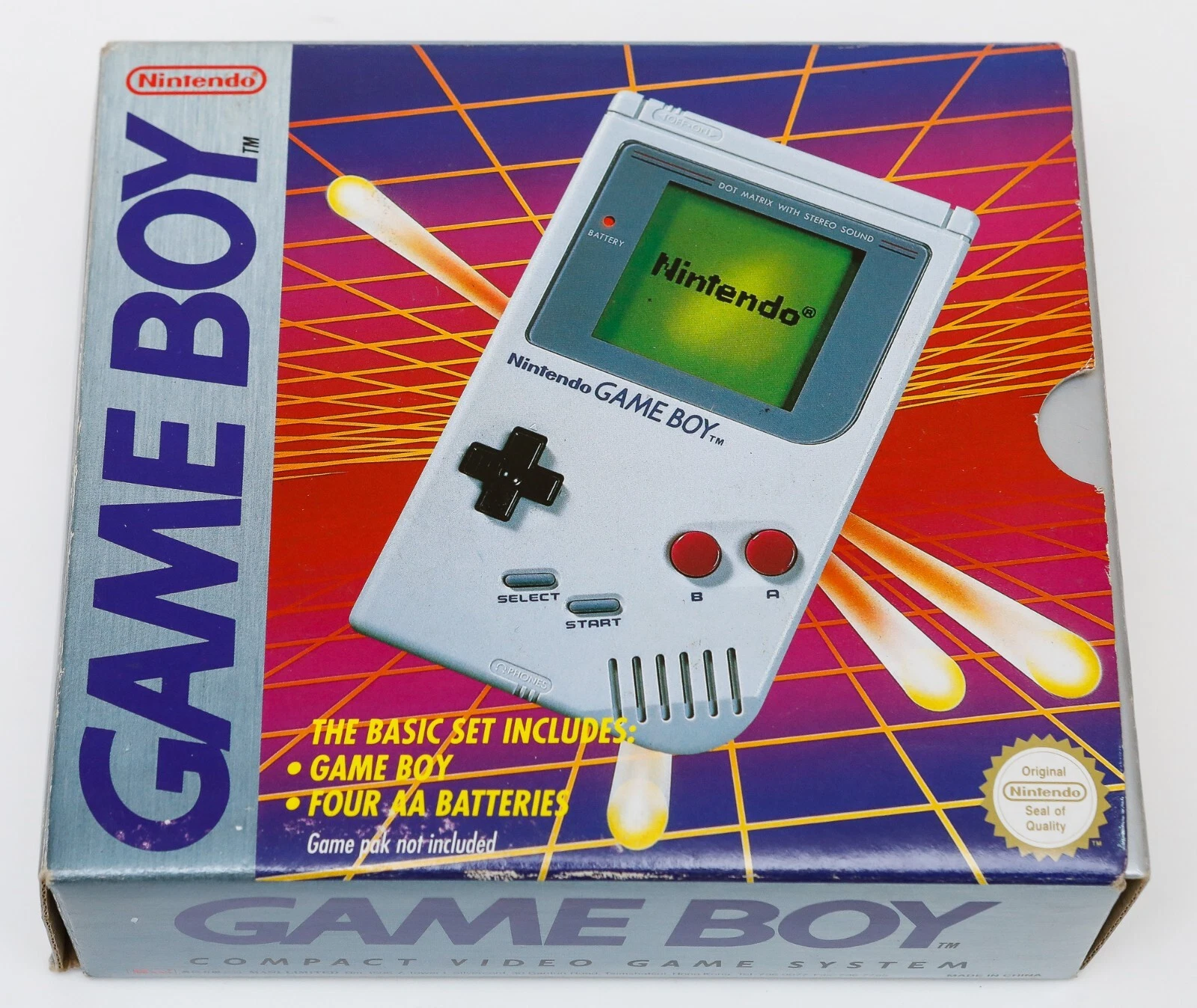
Game Boy opens the countdown because its 1990 importance is no longer based on novelty alone. The gray handheld had already introduced the idea that Nintendo could follow kids beyond the living-room television. By the first full year of the 90s, that idea was settling into normal childhood. Game Boy was becoming the thing pulled out during car rides, waiting rooms, family visits, vacations and any stretch of time adults had incorrectly assumed would remain quiet.
That portability changed more than location. It made gaming personal. The NES usually belonged to the room and had to compete with television schedules, siblings and parental control of the set. Game Boy belonged to the player. The screen was small, the graphics were monochrome and the batteries were always one bad decision away from bankruptcy, but the ability to carry a cartridge world anywhere felt enormous.
It also strengthened the wider 90s video-game toy and handheld ecosystem. Nintendo was no longer selling only one machine. The company was creating multiple ways to stay inside the same trusted brand. A household could have the NES under the television, Game Boy in a backpack and several cartridges circulating like prized property. That kind of platform loyalty would become one of the decade’s most powerful forms of repeat toy demand.
Game Boy ranks tenth rather than higher because 1990 is crowded with louder stories. TMNT had reached full mania. Super Mario Bros. 3 became an event. Barbie and the doll aisle were showing major strength. Yet the handheld remains essential because it points farther into the future than almost anything else on the list. Later 90s obsessions—including the American arrival of Pokémon—would prove how perfectly the device supported collecting, trading and private long-form play.
For Gen X, Game Boy in 1990 was stolen territory. A back seat stopped being dead time. A bedroom no longer needed access to the family television. The little greenish screen was not impressive by modern standards, but it was yours, which was the feature that mattered most.
The Doll Aisle Learns the Reveal
Magic Nursery
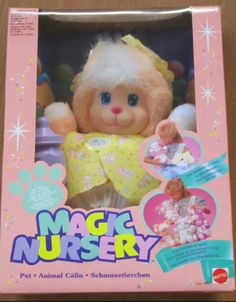
Magic Nursery takes number nine because 1990 was a major rebound year for dolls, and this line understood that a familiar category needed a stronger hook. The central idea was not simply owning a baby doll. The toy turned the introduction into a ritual, with a surprise reveal that made opening the package feel like the beginning of a little story rather than the end of a shopping trip.
That mattered in a market increasingly trained by commercials to expect demonstrations, transformation and immediate spectacle. Action figures had weapons and vehicles. Video games had movement built into the screen. Magic Nursery gave nurturing play its own form of event television. The child did not merely receive a doll; the child completed a process and discovered something about the new arrival.
The line belongs squarely inside the broader 90s dolls and plush toy comeback. Early-90s doll makers repeatedly looked for ways to combine traditional caregiving play with surprise, sound, movement, feeding, changing or some other visible response. Magic Nursery helped establish the decade’s preference for dolls that came with a premise rather than standing silently and waiting for imagination to do every bit of work.
Its success also makes sense in the cautious Christmas market described by contemporary 1990 reporting. Retailers wanted products that could be explained quickly and demonstrated clearly. A surprise-based nurturing toy had both familiarity and novelty. Parents understood the category. Kids understood that something special would happen after the box came home. The concept was new enough to feel exciting without asking families to learn an entirely different form of play.
For Gen X families, the memory is often less about the doll’s exact wardrobe than the reveal itself. That is the sign of an effective early-90s toy hook: the mechanism became the story people remembered decades later.
Batmania Still Had Shelf Life
Batman: The Dark Knight Collection
Batman: The Dark Knight Collection ranks eighth because the aftershock of the 1989 Batman phenomenon was still strong in 1990. Most movie merchandise burns brightest before the credits finish rolling and then disappears into clearance bins. Batman had a deeper advantage: the character was already bigger than one film, and the movie’s black-and-gold visual language had made him newly irresistible to kids who wanted gadgets, vehicles, villains and a hero who looked much cooler than adults expected.
The line also arrived at a moment when action figures were becoming more dependent on recognizable licenses. Batman did not need a new explanation. The silhouette, cape, symbol, Batmobile and utility-belt logic were already understood. That instant recognition reduced the amount of work a commercial or package had to do. A new suit color or gadget could be presented as another tactical version of the same hero, which conveniently made several Batmen seem less ridiculous on one shelf.
The collection belongs naturally beside the 90s action figure wars and the decade’s expanding world of movie and cartoon toy tie-ins. Batman showed how a blockbuster could keep producing toy demand after the original theatrical explosion. The figure line could pull from film imagery, comic-book history and animated possibilities that had not yet fully taken over television.
In 1990, Batman did not match the sheer child-driven frenzy surrounding the Turtles. He did not need to. His strength was durability. The brand offered parents a familiar hero, kids a darker form of fantasy action and toy companies an endless excuse to create suits, vehicles and accessories. That combination kept Batman commercially useful when lesser movie lines would already have gone quiet.
For Gen X, the Dark Knight Collection represents the point where Batmania became part of the ordinary toy aisle rather than a one-summer event. It also connected naturally to the year’s theatrical landscape, making the top movies of 1990 feel even more intertwined with what showed up under the tree.
Commercial Demonstration Magic
My Pretty Ballerina
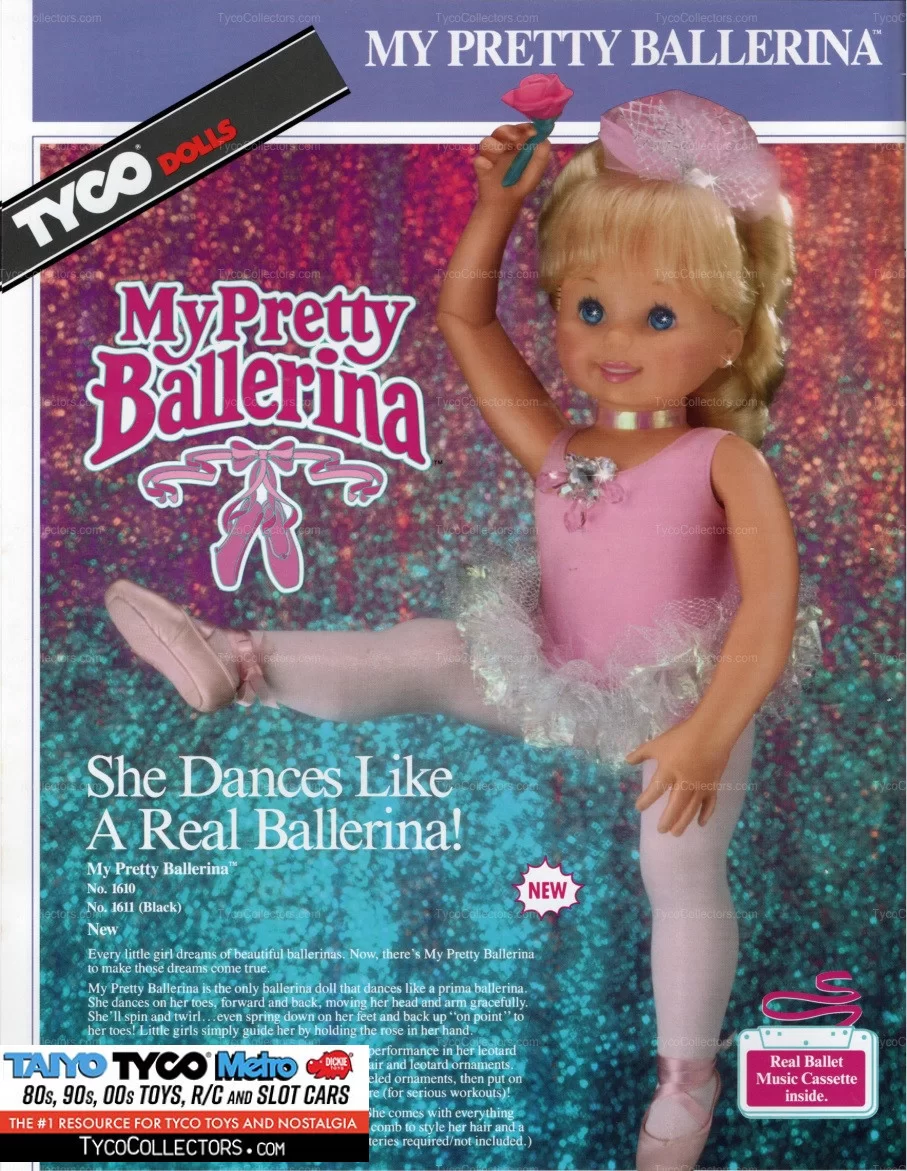
My Pretty Ballerina takes number seven because 1990 rewarded toys that could explain themselves in a few seconds of television. A motorized doll that appeared to dance offered exactly that kind of commercial clarity. The child saw the movement, understood the fantasy and could immediately picture a living-room performance that would definitely work better than it did on thick carpet.
The product modernized a familiar form of doll play without abandoning it. Clothing, hair, grace and performance were still central, but the mechanism added an obvious wow factor. That made the doll feel more active than a traditional fashion figure and gave the commercial something tangible to prove. The demonstration was not decoration around the sales pitch. The demonstration was the sales pitch.
That approach fits the broader 90s doll and plush market, where manufacturers increasingly added motion, sound, transformation, feeding, surprise or some other visible feature. The goal was not to replace imagination. It was to provide one memorable piece of magic that made the toy stand apart in a crowded aisle.
My Pretty Ballerina also reflects the confidence of the 1990 doll resurgence. Barbie remained a giant, but the category was not relying on Barbie alone. Multiple products were testing different versions of interactivity and performance. Some leaned into nurturing. Others leaned into celebrity. This one leaned into motion, elegance and the promise that the doll could perform rather than merely pose.
For Gen X households, the toy is inseparable from the television image of effortless movement and the reality of trying to recreate it on whatever floor was available. The gap between commercial perfection and household flooring is part of the nostalgia. The larger 90s toy commercial archive is full of products that looked ready for Broadway until they met a shag rug.
Pop Fandom Becomes the Product
New Kids on the Block Dolls
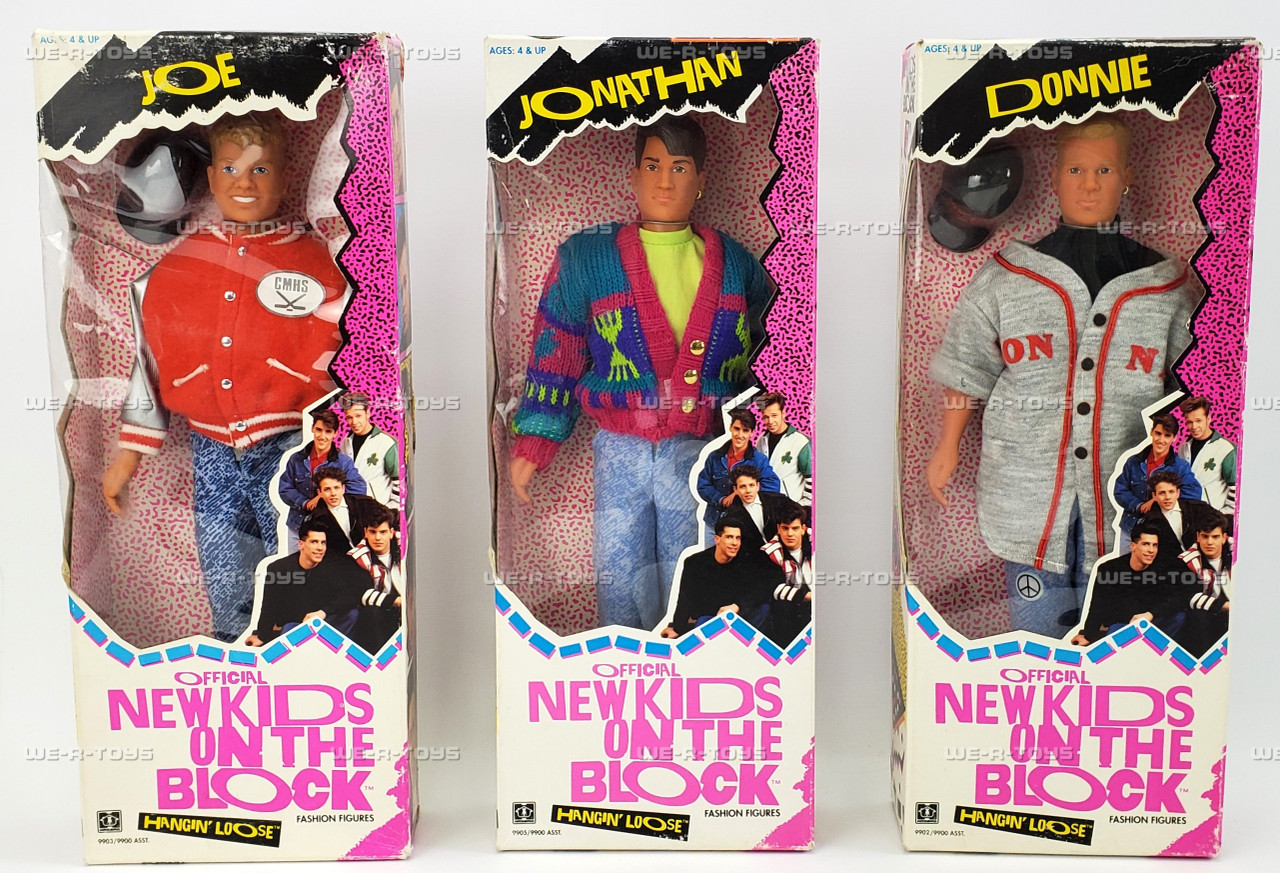
New Kids on the Block dolls land at number six because 1990 was not only a toy year. It was a fandom year. The group had become a youth-culture machine, and the dolls proved that pop stars could move into the toy aisle without needing to become fictional characters first. Joey, Jordan, Jonathan, Donnie and Danny were already personalities kids knew, ranked, defended and discussed. Turning them into dolls simply gave that attachment a physical form.
The line used one of the most dependable strategies in collecting: the set mattered more than the single item. A favorite member might determine the first purchase, but completion pressure did the rest. Owning only one doll left four obvious gaps. That is the same basic engine behind action teams, character groups and trading collections, adapted perfectly to pop music.
The dolls also belong inside the larger 90s doll boom and the changing culture of 90s toy stores. They sat at the intersection of music merchandising, bedroom display, celebrity fantasy and traditional doll play. Posters, cassettes, shirts, magazines and dolls could all support the same fan identity. The toy aisle was becoming one more branch of a much larger youth-marketing ecosystem.
Their presence in the top ten also widens the picture of what counted as a toy phenomenon in 1990. Not every hit depended on technology, a cartoon or a movie. Raw celebrity recognition could do the work. The dolls were current, emotionally charged and easy to give as gifts because adults already knew the name. The top songs of 1990 and the toy shelf were now speaking to the same audience.
For Gen X, the NKOTB dolls recall a moment when group membership was serious business. Choosing one member over another could become a personality test, a friendship negotiation and an argument conducted with the urgency of international diplomacy.
Saturday-Morning Rivalries in Plastic
World Wrestling Federation Figures
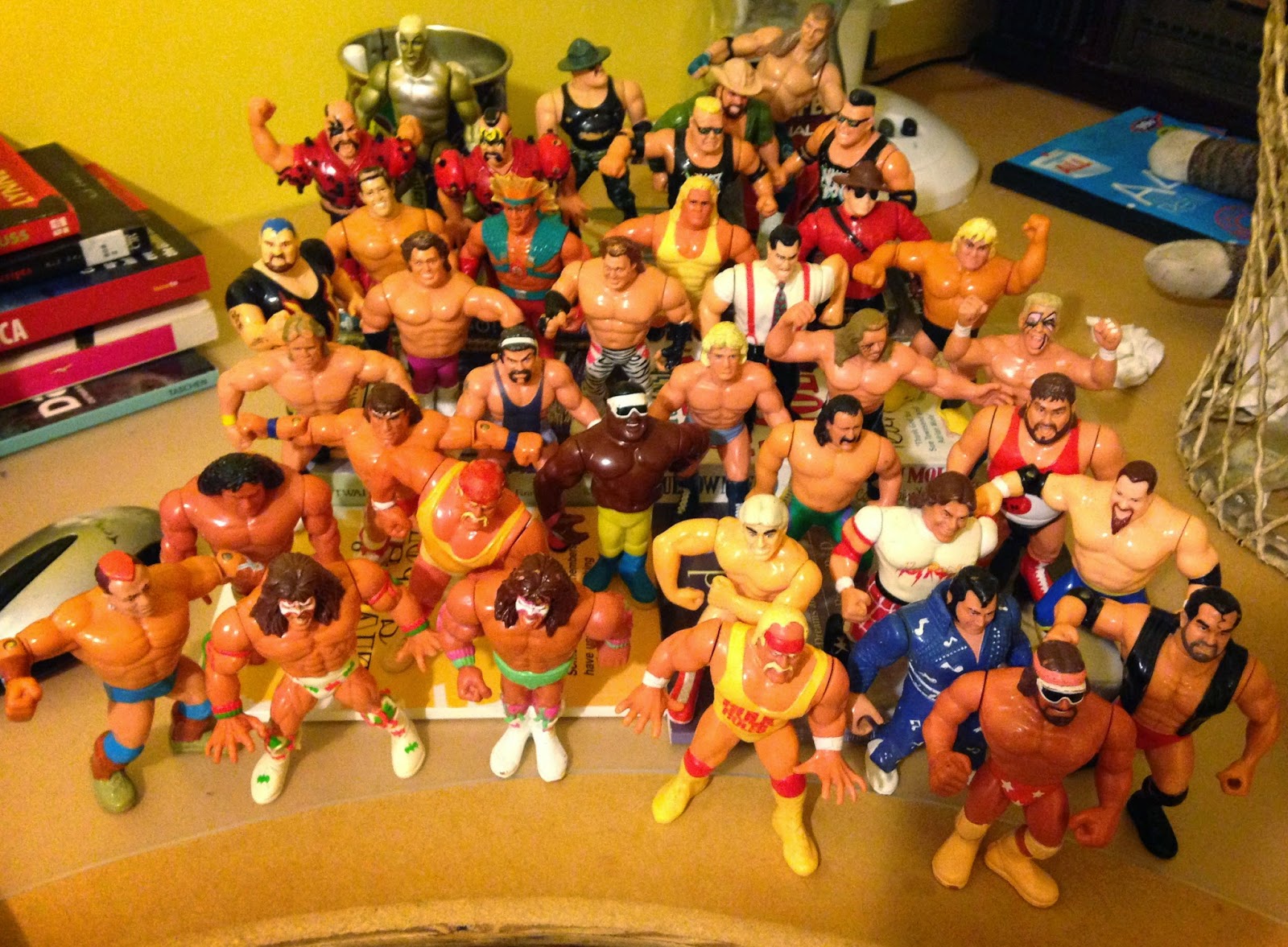
World Wrestling Federation figures take number five because they arrived with the rarest advantage in toy marketing: the conflicts were already built. Kids knew the heroes, villains, finishing moves, rivalries and entrance personalities. Two figures could produce a match immediately. Add a ring, a tag team or a sibling willing to provide commentary, and the entire living room became a pay-per-view event with no concern for structural damage.
The figures sat between sports merchandise and traditional action toys. That gave them a wider emotional range than either category alone. A wrestler was a real performer and a larger-than-life character at the same time. The toy could reenact a televised match, invent a new feud or ignore anything resembling official booking. Children became promoters, commentators, referees and wildly irresponsible safety inspectors.
This is why the line belongs so comfortably inside the 90s action figure wars. The decade’s figure aisle was not limited to superheroes or military teams. Wrestling brought recognizable celebrity, physical comedy, competitive play and a social language kids already used at school. Trading opinions about wrestlers became part of owning the toys.
The line also fits 1990’s preference for established brands. Retailers did not need to gamble on an unfamiliar mythology. Television had already supplied the characters and weekly promotion. The toy simply converted that attention into matchups. In an uncertain market, familiarity was useful. In a child’s hands, it was also an invitation to launch somebody off the arm of a couch.
For Gen X, WWF figures turned television fandom into immediate physical play. They were simple, durable and almost impossible to use quietly. That may be the purest possible description of a successful wrestling toy.
The Cartridge Becomes the Main Event
Super Mario Bros. 3
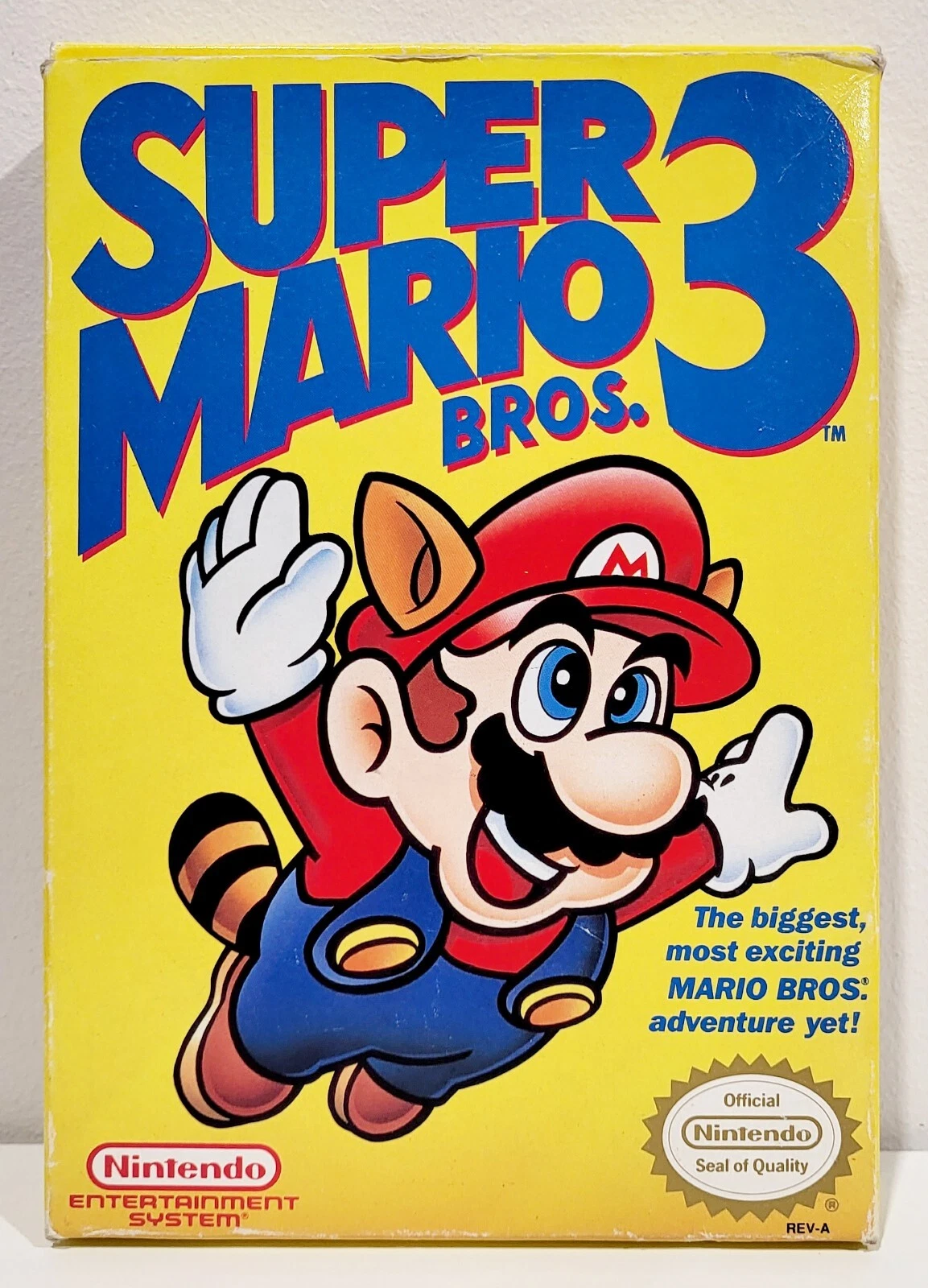
Super Mario Bros. 3 takes number four because 1990 is the year a single cartridge could produce the kind of full-room reaction once reserved for a console, a major playset or an enormous box. The hardware was already established. Mario was already trusted. The new game arrived as an event inside a system millions of children understood, which made the package under the tree feel small and the anticipation around it feel enormous.
The release demonstrated how completely software had entered the holiday toy economy. A game was no longer an accessory purchased after the “real” gift. It could be the gift. Commercials, magazine coverage, playground rumors, screenshots and the movie appearance in The Wizard had helped transform the release into something larger than another sequel. Children knew the flying suit, the world map and the promise of secrets before many of them touched the cartridge.
That event status belongs inside the broader 90s video-game toys and handhelds story. Nintendo had created a market where hardware generated recurring demand and individual games could carry their own celebrity. This was the platform model operating at full strength: the console built the audience, and the software repeatedly reactivated it.
Super Mario Bros. 3 also showed why Nintendo could remain structurally dominant even in a year when TMNT owned the loudest physical-toy mania. The Turtles created demand across figures, vehicles and licensed products. Nintendo created demand across hardware and a growing library of experiences. Both were systems, but Nintendo’s system could change worlds without requiring more bedroom-floor storage.
For Gen X, the game was proof that a cartridge box could feel cinematic. The imagery, the secrets and the sheer size of the adventure gave the release a prestige that older adults often failed to understand. The 90s toy commercials and videos help restore how aggressively games were now sold as cultural events rather than quiet electronics.
The Evergreen Empire Does Not Blink
Barbie
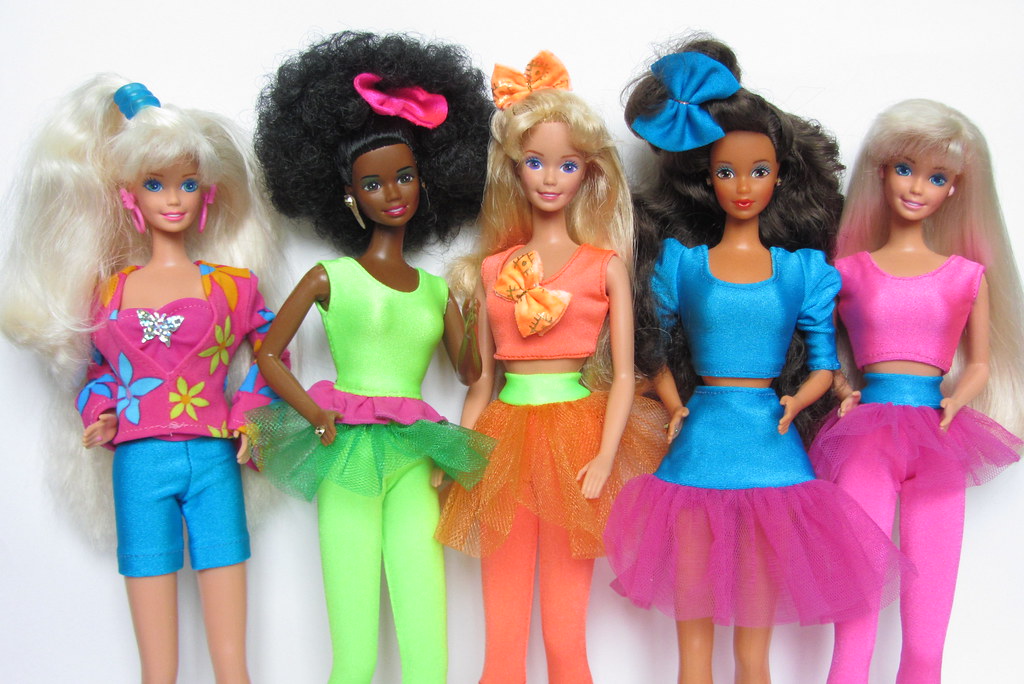
Barbie ranks third because 1990 once again demonstrates that she does not obey ordinary toy life cycles. Fads spike and disappear. Movie licenses flare and fade. Action lines depend on the next cartoon season. Barbie keeps taking shelf space because the brand is not built around one feature. It is a flexible language of fashion, aspiration, friendship, careers, houses, vehicles and accessories.
That adaptability made Barbie especially strong during an uncertain retail year. Parents recognized the brand. Stores understood how to merchandise it. Children could enter at almost any price level and keep expanding later. A single doll could be the beginning, while outfits, friends, furniture, cars and dream spaces turned the line into a continuing system. Barbie had learned platform economics before toy companies used that phrase.
Her placement also confirms that the 90s doll resurgence was not simply a collection of one-season novelties. Barbie provided the category with an enormous stable center while Magic Nursery, My Pretty Ballerina and celebrity dolls tested new hooks around her. The newer lines added movement, surprise or fandom. Barbie offered continuity and near-limitless reinvention.
The polished visual culture of the early 90s also worked in her favor. Bright colors, mall fashion, music-video styling and a constant appetite for new looks were not threats to Barbie. They were raw material. The brand could absorb each shift and present it back as another version, outfit or setting without losing the core identity.
For Gen X, Barbie in 1990 felt less like a comeback than a permanent fact. She was already there before the decade started and would remain after many louder hits disappeared. That durability is why the line belongs among the most iconic toys of the 90s, not merely the top sellers of one year.
Still the Machine Behind the Market
Nintendo Entertainment System
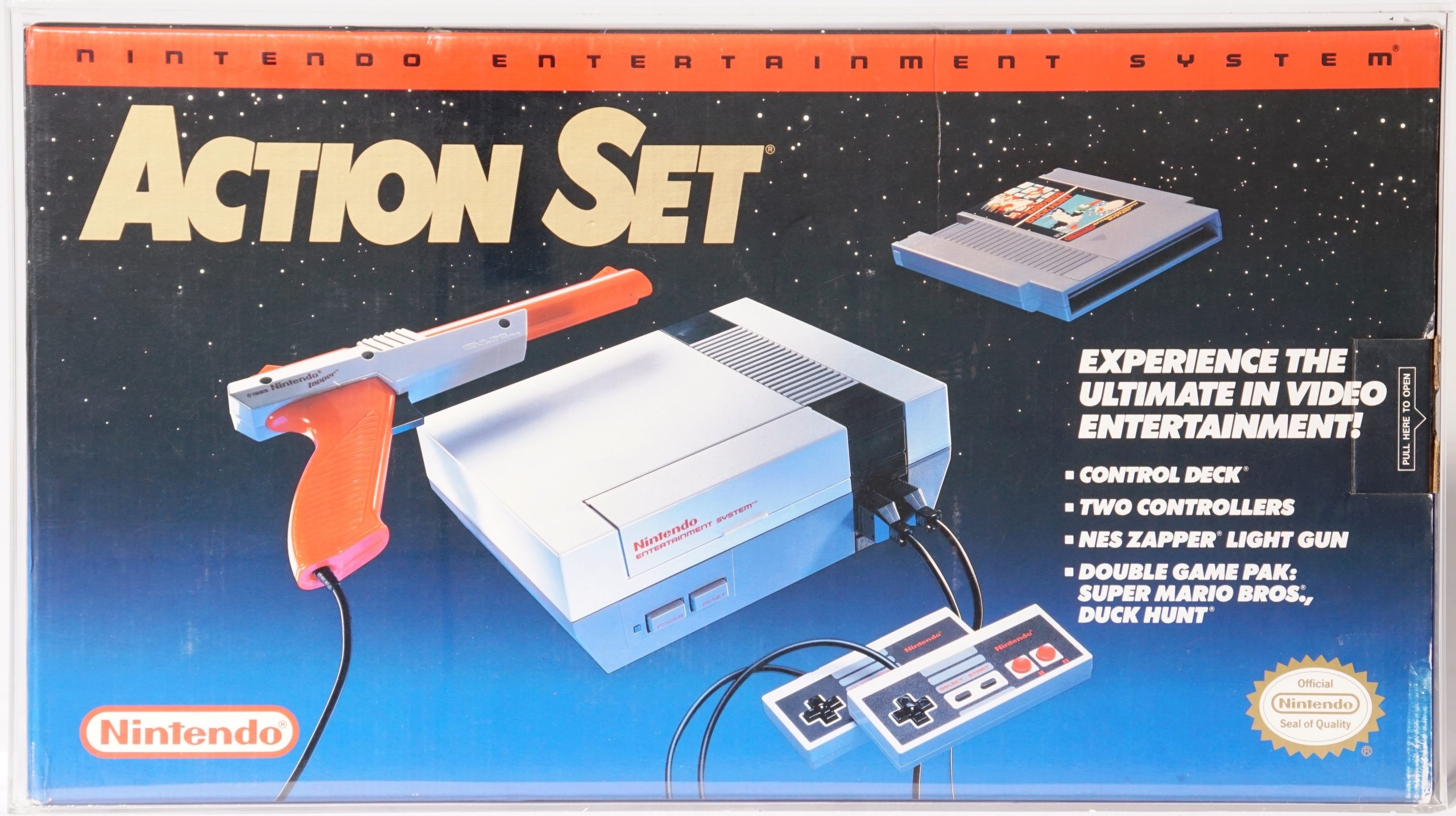
The Nintendo Entertainment System lands at number two because 1990 makes an important distinction between the hottest child-driven toy mania and the market’s largest structural force. TMNT wins the year’s loudest shelf battle. Nintendo remains the machine underneath a huge share of holiday demand. The console, the cartridges and the brand trust surrounding them had already changed how families bought toys.
A console created recurring reasons to spend. The initial hardware purchase did not complete the collection; it opened the door. Every major release, birthday, allowance and Christmas could add another game. That was different from a stand-alone hit and even different from many action lines. Nintendo had turned the television into an expandable play platform and trained households to think in terms of a library.
The presence of Super Mario Bros. 3 and Game Boy elsewhere in the ranking shows how much power the company held. Nintendo was not represented by one item. It occupied multiple positions and multiple forms of play. The 90s video-game toys and handhelds page follows how this ecosystem grew from a living-room console into a decade-spanning network of hardware, software, characters and portable gaming.
Nintendo also shaped social life. Games generated schoolyard advice, secret codes, arguments over turns, controller accusations and informal expertise. Ownership of the system provided entry into a shared culture. A child without the newest cartridge could still discuss it, borrow it, watch somebody else play or memorize information from magazines. The product was personal entertainment and social currency at the same time.
For Gen X, the NES in 1990 was no longer futuristic. It was infrastructure. That may sound less exciting than a breakout craze, but it represents a deeper form of dominance. The machine had become so normal that the toy aisle was beginning to reorganize itself around the expectation that video games would remain.
Turtle Power Takes the Year
Teenage Mutant Ninja Turtles
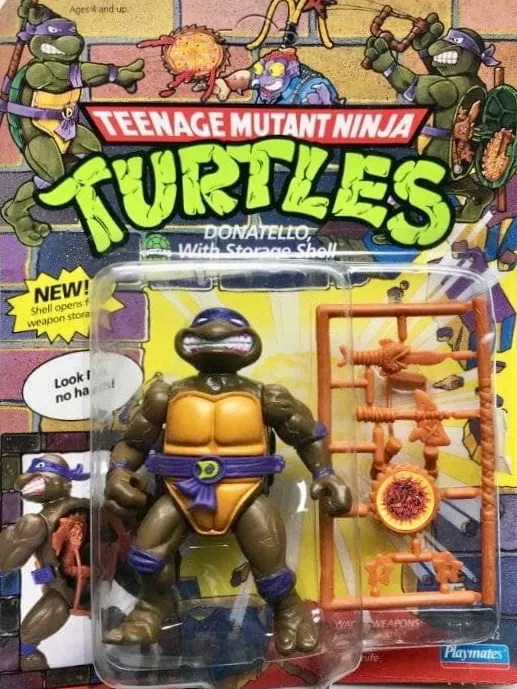
Teenage Mutant Ninja Turtles toys take the number-one spot because 1990 is the year Turtle Power crosses from major success into total childhood saturation. The figures were already hot, but the franchise now existed everywhere at once: television, toys, vehicles, playsets, video games, clothing, party supplies, home video and the live-action movie. The line did not merely occupy the action aisle. It seemed determined to mutate every other aisle nearby.
The toy system was built for repeat demand. Four central heroes created immediate character preference and collection pressure. Splinter, Shredder, the Foot Clan and a growing population of mutants supplied allies and enemies. Vehicles and the sewer playset expanded the world. Variants offered another reason to buy characters children technically already owned. The concept was flexible enough to absorb almost any strange idea without breaking.
That flexibility explains why TMNT beat older figure systems in the 90s action figure wars. G.I. Joe was organized and military. Batman was cinematic and gadget-driven. WWF offered recognizable matchups. The Turtles combined action, comedy, gross-out weirdness, martial arts, color coding and food jokes. They felt current, slightly rebellious and unmistakably designed for children rather than politely approved by adults.
The 1990 live-action film added another surge of visibility and made the line one of the clearest examples of movies, cartoons and toys feeding one another. A child could watch the cartoon, see the movie, play a video game and return to the same characters on the bedroom floor. Each format reinforced the others, turning the franchise into a self-feeding attention system.
The Turtles also fit the cautious retail climate because they were already proven. Stores could stock figures across price points, from individual characters to vehicles and playsets. Parents could find something carrying the name even when the exact requested toy had vanished. That kind of breadth is how a craze becomes a durable Christmas presence rather than one impossible item.
For Gen X, 1990 is the year the Turtles stopped feeling like a hot new property and started feeling like the natural rulers of childhood. The brand was loud, funny, green, heavily merchandised and impossible to escape. In other words, it was the first full year of the 90s behaving exactly as advertised.
The Toy Box Afterlife
Collecting Toys From 1990 Today
Age is not the same thing as value. Exact version, condition, completeness, working mechanisms, original accessories, packaging and real buyer demand matter.
Action figures depend on tiny original pieces.
TMNT, Batman and WWF figures should be checked for weapons, belts, capes, accessories, paint wear, card backs, bubbles, figure variations and replaced parts. A missing plastic weapon can matter more than thirty-five years of age.
Nintendo collecting is about the whole system.
NES and Game Boy hardware require functional testing. Cartridges need authentic shells and boards, clean contacts, readable labels, correct regional versions and honest disclosure of repairs, replaced batteries or reproduction packaging.
Interactive dolls need mechanism and accessory checks.
Magic Nursery and My Pretty Ballerina should be evaluated for working features, battery damage, clothing, papers, packaging, hair condition, stains, odors and whether the accessories belong to that exact version.
Micro-sized pieces require complete-set research.
Although Micro Machines are not in this year’s top ten, they were a major early 90s presence and show the collector problem perfectly: small vehicles, playset parts and packaging are easy to lose. Compare verified sold listings rather than optimistic asking prices.
Wish Lists, Catalog Circles and Store Hunts
What Christmas Toy Shopping Felt Like in 1990
The year’s biggest toys were sold through television pressure, recognizable brands and the growing fear that the exact requested version would disappear before December 25.
The child usually knew the exact name.
“A Turtle” was not specific enough. “A Nintendo game” was not specific enough. “A doll” was definitely not specific enough.
By 1990, many children arrived at the holiday season with product knowledge adults had not volunteered to teach them. They knew which Turtle was missing, which Mario game mattered, which New Kid was the favorite and which doll performed the advertised trick. Commercials, catalogs, friends and store visits had created unusually precise demand.
That precision changed the parent-child negotiation. A substitute might technically belong to the right category and still fail completely. Donatello was not Raphael. A random cartridge was not Super Mario Bros. 3. A normal baby doll was not Magic Nursery. The brand and version had become part of the emotional meaning of the gift.
The hottest Christmas toys of the 90s repeatedly follow this pattern. The more recognizable the product became, the less flexibility parents had when stores ran out. Toy shopping turned into a search for an exact object rather than a general attempt to find something fun.
The box still had to create a moment.
The winning products looked different under the tree, but each one promised an immediate event after the paper came off.
TMNT figures triggered instant character selection and battles. The NES or Game Boy changed control of a screen. Super Mario Bros. 3 meant the household would disappear into a new game world. Magic Nursery offered a reveal. My Pretty Ballerina promised movement. WWF figures could begin a match before breakfast.
This event quality is one reason the 1990 list contains several products with strong demonstrations or recognizable media identities. The gift did not need a long explanation. Children already knew what was supposed to happen. Opening the package activated a scene they had watched in commercials, cartoons, music videos or wrestling programs.
The gap between advertisement and reality was part of the ritual. Floors were less cooperative than studio sets. Figures did not leap without help. Batteries were missing. Adults needed instructions. Packaging fought back. None of that reduced the excitement; it simply added the authentic household layer television had edited out.
The Aisle Was Part of the Experience
How Toy Stores Made the 1990 Hits Feel Even Bigger
Before online inventory, recommendation feeds and one-click ordering, children met the toy market through physical shelves, newspaper ads, catalogs and repeated store visits.
Brand blocks made dominance visible.
A successful line occupied more than one hook. TMNT figures, vehicles and playsets could form a wall of green packaging. Barbie created entire neighborhoods of dolls, outfits, cars and rooms. Nintendo hardware and games transformed electronics displays into a connected system.
Seeing that much shelf space made a brand feel socially important before a child owned anything. The store itself acted as proof that everybody else must already care. That visual scale is a major part of why 90s toy stores remain so vivid in memory.
Glass cases created prestige.
Expensive systems, handhelds and high-demand games often felt different because access was controlled. A child could stare through a case, compare boxes and wait for an employee with a key. The delay added ceremony and made the purchase feel larger than grabbing an ordinary figure from a peg.
Nintendo benefited enormously from that presentation. The products looked less like loose toys and more like important electronics, even though the destination was still a bedroom floor covered with cords and snack crumbs.
Small toys encouraged “one more” buying.
Action figures and dolls could be sold individually while implying a much bigger system. The price of one item felt manageable, especially compared with a console, but the shelf made the missing characters impossible to ignore.
That structure gave TMNT, WWF and celebrity dolls a major advantage. Each package was a complete gift and an advertisement for the rest of the line at the same time. Collecting pressure did not require a speech. The empty spaces did the work.
Commercial-Break Pressure
Watch the 1990 Toy Commercial Energy
The year was made for thirty-second persuasion: Turtles leaping through playsets, Nintendo treating cartridges like blockbuster premieres, dolls revealing secrets, ballerinas moving perfectly on studio floors and WWF figures solving disputes through repeated impact.
The 90s Toy Commercials and Videos archive restores the speed, sound effects, giant reactions and aggressive wish-list pressure that made the toys feel larger on television than they did under the couch.
The 1990 Sales Pitch
- Show the toy doing the impossible part immediately
- Make one figure look like the beginning of a collection
- Turn a cartridge release into a cultural event
- Use television or music fame as pre-sold character development
- End before parents can calculate the total cost
The Rest of the Year
Keep Rewinding 1990
The toy aisle existed inside a year of blockbuster movies, changing television and music preparing to split between the last glow of the 80s and the sound of the 90s.
The 1990 Toy Aisle Verdict
Why These Toys Define 1990
The top toys of 1990 show a market built around power centers rather than isolated inventions. TMNT dominates physical demand. Nintendo remains the deepest gaming system. Barbie anchors a resurgent doll aisle. Celebrity music and wrestling fandom become toy fuel, while Batman proves a movie license can retain strength beyond one theatrical season.
That is what separates 1990 from 1989. Gaming still matters enormously, but it is no longer the only story. The first full year of the 90s belongs to franchises that can move across screens, shelves, music, movies and repeated purchases.
For Gen X, 1990 feels like childhood branding becoming sharper, louder and more organized. The toy aisle was not merely selling objects. It was selling membership in worlds kids already recognized and were expected to defend by name.
Questions From the Toy Aisle
Top Toys of 1990: Frequently Asked Questions
What were the most popular toys of 1990?
Popular toys of 1990 included Teenage Mutant Ninja Turtles, Nintendo Entertainment System, Barbie, Super Mario Bros. 3, World Wrestling Federation figures, New Kids on the Block dolls, My Pretty Ballerina, Batman: The Dark Knight Collection, Magic Nursery and Game Boy.
What was the biggest toy of 1990?
Teenage Mutant Ninja Turtles take the number-one spot in this editorial ranking because the brand combined exceptional figure demand with vehicles, playsets, cartoons, video games, the 1990 movie and near-total child-culture saturation.
Why is TMNT ranked above Nintendo?
Nintendo remained the deeper platform and market structure, but TMNT had the stronger year-specific action-toy mania. The ranking separates the hottest physical franchise from the most powerful gaming ecosystem.
Were Teenage Mutant Ninja Turtles really that popular in 1990?
Yes. By 1990, Turtle Power had expanded far beyond four figures into vehicles, playsets, mutants, video games, clothing, home video, the cartoon and the live-action movie.
Why are the NES, Game Boy and Super Mario Bros. 3 all included?
By 1990, video-game hardware, handhelds and software were separate major gift categories. A console, a portable system and a blockbuster cartridge could each generate their own demand.
Was Super Mario Bros. 3 released in 1990?
Yes. Super Mario Bros. 3 was released for the NES in North America in February 1990 and became one of the year’s defining game releases.
Why is Game Boy only number ten?
Game Boy was already important and would become even more influential, but this ranking focuses on the specific 1990 toy market, where TMNT, the NES, Barbie, major dolls and other heavily promoted products created louder year-specific stories.
Were dolls making a comeback in 1990?
Yes. Barbie remained dominant, while Magic Nursery, My Pretty Ballerina and celebrity dolls showed how the category was adding reveals, movement, interactivity and current pop-culture hooks.
What was special about Magic Nursery?
Magic Nursery turned the arrival of a baby doll into a surprise ritual. The reveal gave traditional nurturing play an event-like feature that worked especially well in television advertising.
Why was My Pretty Ballerina popular?
My Pretty Ballerina had a clear motorized demonstration feature. The doll’s movement made the fantasy easy to understand in a commercial and gave traditional doll play an obvious performance hook.
Why are New Kids on the Block dolls on the list?
The dolls show how celebrity fandom became a serious toy category. They connected the toy aisle with the same youth culture covered in the top songs of 1990 and encouraged fans to collect the full group.
Why were WWF figures popular?
WWF figures converted known wrestlers, rivalries and finishing moves into immediate physical play. They fit naturally into the wider 90s action figure wars.
Why is Batman still included after the 1989 movie?
Batman had enough character recognition, gadget appeal and licensing strength to remain a major figure line beyond one theatrical season. The toys belong to the decade’s larger world of movie and cartoon tie-ins.
What makes 1990 different from 1989 in toy culture?
1989 looks increasingly organized around Nintendo and software. In 1990, gaming remains enormous, but TMNT owns the loudest physical mania, dolls regain momentum and celebrity or sports fandom becomes more visible in the toy aisle.
Are toys from 1990 valuable today?
Some can be, but value depends on exact version, condition, completeness, original accessories, packaging, working mechanisms, authenticity, rarity and current demand. Verified sold prices are more useful than unsold asking prices.
Was there one official top-10 toy chart for all of 1990?
No single complete public list cleanly compares every toy category across the entire year. This page uses an editorial method grounded in contemporary holiday coverage, retail visibility, category strength, cultural impact and year-specific relevance.
Where can I watch commercials for 1990 toys?
The 90s Toy Commercials and Videos archive covers the advertising style behind action figures, Nintendo, dolls, licensed toys and other products from the decade.
Where should I go after the 1990 toy list?
Continue to the top toys of 1991, return to the 90s Toys hub, or explore the decade’s most iconic toys and hottest Christmas gifts.
Move Through the Decade
Explore the Top Toys From Every Year of the 90s
Follow the toy aisle from Turtle Power and Nintendo into electronic pets, collectible crazes, schoolyard trading, talking toys and late-90s panic buying.