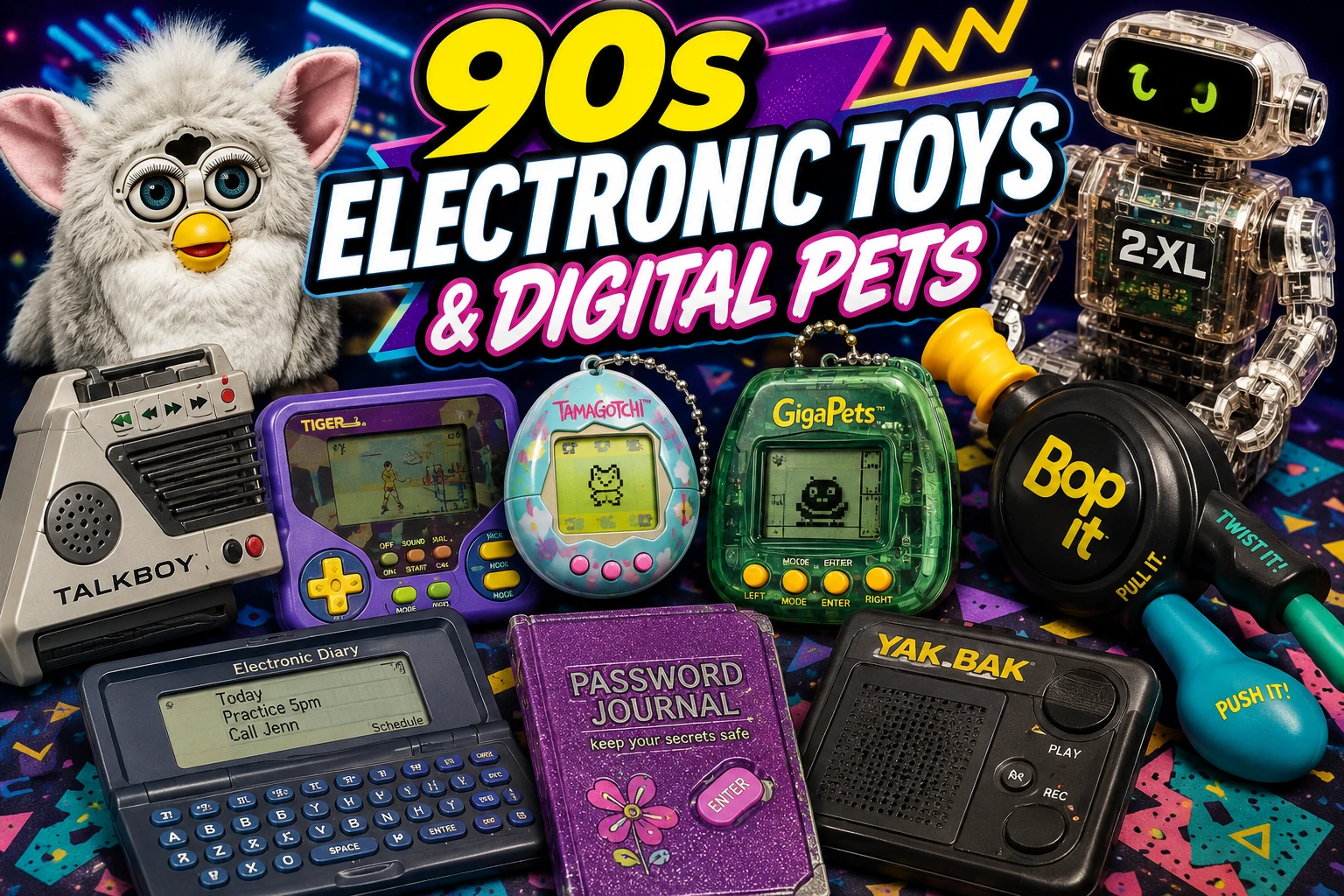
90s Electronic Toys & Digital Pets: The Battery-Powered Toy Era
The 90s toy aisle learned to beep. It chirped. It talked. It recorded your voice and played it back in a stupid voice. It flashed lights. It yelled commands. It asked to be fed during school. It made parents buy batteries in bulk and made kids believe that a keychain with three buttons could somehow be alive.
This is the story of 90s electronic toys and digital pets: Tamagotchi, Giga Pets, Nano Pets, Furby, Bop It, Talkboy, Yak Bak, Tiger handheld games, electronic diaries, Password Journal, 2-XL, and the weird moment when toys stopped just sitting there and started demanding interaction like tiny plastic landlords.
90s Toys
Head back to the full 90s Toys hub for action figures, collectibles, handhelds, dolls, plush, board games, backyard toys, commercials, and the rest of the decade’s plastic chaos.
Related Deep Dive90s Collectible Toy Crazes
Beanie Babies, Pokémon cards, Pogs, Crazy Bones, trading cards, Happy Meal toys, sealed action figures, and the schoolyard economy that made everything feel rare.
Next DoorVideo Game Toys & Handhelds
Game Boy, Game Boy Color, Tiger LCD games, Nintendo 64, PlayStation, cartridges, link cables, rental cases, and the toy aisle’s slow slide toward screens.
Quick Answer: What Were the Biggest 90s Electronic Toys and Digital Pets?
The biggest 90s electronic toys and digital pets were the battery-powered gadgets that made play feel interactive: Tamagotchi, Giga Pets, Nano Pets, Furby, Bop It, Talkboy, Yak Bak, Tiger handheld LCD games, electronic diaries, Password Journal, 2-XL, and every plastic device that beeped, talked, recorded, flashed, demanded care, or slowly murdered the batteries in your house.
What made them different from earlier toys was the sense of response. A digital pet changed because you pushed buttons. Furby talked and reacted. Bop It shouted commands. Talkboy recorded your voice and made you feel like you were running a spy operation from a bedroom with a carpet stain. Electronic diaries locked your secrets behind a password system that felt like NASA if NASA had purple plastic.
The 90s electronic toy boom mattered because it bridged old-school toys and modern devices. These were not apps yet. They were not smartphones. They were chunky, limited, goofy, and often annoying, but they taught kids to expect toys to interact, remember, respond, and need attention. In other words, they were the training wheels for the needy digital future. Cute. Terrifying.
Why the 90s Were Perfect for Electronic Toys
The 90s were the perfect decade for electronic toys because technology felt advanced enough to be magical but limited enough to stay weird. Kids did not have phones in their pockets. Most homes had a family computer, a TV, maybe a VCR, a boombox, a game console, and at least one drawer full of mismatched batteries. That made a toy that talked, recorded, blinked, or displayed little pixel creatures feel genuinely futuristic.
These toys were also portable in a way that felt new. A digital pet could hang from a backpack. A Yak Bak could fit in a pocket. A Tiger handheld could travel in a car. A Talkboy could turn a bedroom into a fake recording studio. Electronic toys made kids feel like they owned little devices, not just toys. That device feeling mattered.
There was also a perfect amount of inconvenience. You had to feed the digital pet. You had to change batteries. You had to reset things. You had to listen to terrible little speakers. You had to hold buttons just right. The tech was limited, but those limitations made the toys memorable. A modern device can do everything. A 90s electronic toy could do one ridiculous thing loudly, and somehow that was enough.
The 90s electronic toy formula
- Interaction: Push a button, get a response. Simple, immediate, addictive.
- Portability: Keychains, handheld games, recorders, and small gadgets could move through school and car rides.
- Sound: Beeps, voices, commands, distorted recordings, and speaker noise made toys feel alive.
- Responsibility: Digital pets created urgency by making kids care for a pixel creature that could suffer because you had social studies.
- Battery dependency: The real hidden cost of 90s electronic fun was constantly needing AA, AAA, button cells, or whatever battery type nobody had.
These toys also predicted the modern attention economy in miniature. The toy made noise, demanded a response, rewarded repeated interaction, and punished neglect. That sounds familiar because apparently we learned nothing.
90s Electronic Toys and Digital Pets Timeline
A fast visual map of how the toy aisle started beeping
The 90s electronic toy boom built in waves: voice gadgets and cassette tricks, LCD handhelds, talking learning robots, electronic diaries, command games, virtual pets, Furby, and the late-decade handoff where every toy seemed to need a screen, speaker, sensor, or fresh batteries.
Tiger games fill backpacks
Movie, sports, cartoon, and action brands become cheap handheld LCD games for car rides and recess boredom.
Talkboy energy arrives
The cassette recorder becomes a kid fantasy gadget: recording voices, slowing them down, and causing trouble.
2-XL gets kids quizzing
Educational electronic toys make talking, trivia, and cartridge-style interaction feel futuristic.
Electronic diaries get serious
Password-protected notebooks and voice-lock toys make childhood secrets feel extremely classified.
Bop It starts yelling
A handheld command toy turns reflexes, sound, and panic into a living-room competition machine.
Tamagotchi, Giga Pets, Nano Pets
Virtual pets become backpack companions, school distractions, and tiny pixel guilt machines.
Furby wakes up
Interactive plush becomes weirdly lifelike, wildly popular, and mildly unsettling in the dark.
Gadgets invade classrooms
Digital pets, handheld games, electronic diaries, and beeping toys become impossible to separate from school life.
Toys start becoming devices
The late 90s push the toy aisle toward pets, screens, sounds, downloads, music clips, and personal electronics.
The Major 90s Electronic Toys and Digital Pets
The biggest battery-powered culprits
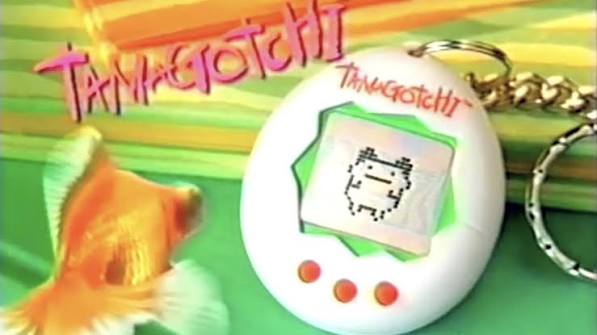
Tamagotchi: The Tiny Egg That Weaponized Responsibility
Tamagotchi was the 90s toy that made children feel responsible and guilty in equal measure. It looked simple: a little egg-shaped keychain with a tiny screen and a few buttons. But once that pixel creature hatched, it became a full-time job with beeps. You fed it. You played with it. You cleaned up after it. You checked on it. You worried about it during school like it was waiting at home reading your diary.
The genius was emotional attachment through limitation. The graphics were tiny. The buttons were basic. The sound was not exactly orchestral. But the toy responded. It changed over time. It needed you. That made the relationship feel weirdly personal. A Tamagotchi was not just a gadget. It was a little pocket obligation.
What it felt like to own one
Owning a Tamagotchi meant your day now had a second schedule. You did not just go to school, eat lunch, and come home. You checked the screen. You listened for beeps. You tried to sneak care sessions during class. You developed the kind of anxiety normally reserved for adults with unread work emails. If the pet got sick, hungry, bored, messy, or neglected, the guilt was instant.
The toy also made kids compare outcomes. What did yours evolve into? How old was it? Did it survive longer than your friend’s? Did somebody’s parent take care of it while they were at school? Did someone reset theirs and pretend it never happened? These were real playground conversations, which is ridiculous and also exactly why the toy worked.
Why Tamagotchi took over
Tamagotchi arrived at the exact moment kids were ready for portable digital companions. It was small enough to carry everywhere and demanding enough to become part of your day. The toy created urgency through beeps and consequences. Ignore it long enough and things went badly. That made it feel alive, which is impressive for something with fewer pixels than a calculator.
It also turned waiting into playing. In the car, at a restaurant, before practice, in a hallway, on the bus — a Tamagotchi filled those empty moments. It did not need a TV. It did not need a big setup. It did not need another kid. It was personal, portable, and needy, which is a dangerous combination for a 90s toy.
The school-ban energy
Tamagotchi created a very specific teacher problem: a silent room full of kids secretly worried about digital pets. A backpack beep could derail attention instantly. Some kids tried to hide them in desks. Some handed them to friends. Some begged parents to babysit them during the school day. The toy crossed the line from “fun object” to “tiny emergency system.”
That is why Tamagotchi sits so high in 90s toy memory. It was not just fun. It interrupted life. It made kids build little care routines around a screen, and it made adults realize the toy aisle had created something that could follow kids into classrooms.
- Core appeal: nurturing, growth, beeps, routines, and the feeling that the pet needed you.
- Kid behavior: checking it constantly, comparing evolutions, panicking during class, and begging adults not to reset it.
- Parent experience: buying tiny batteries, hearing beeps, and somehow becoming backup pet care.
- Most 90s detail: learning responsibility from a keychain that could ruin your morning.
Tamagotchi mattered because it made toys feel ongoing. The play did not end when you put it down. It kept going without you. That was new, strange, and a little exhausting. Basically, it was the prototype for modern notifications, except cuter and more likely to need pixel poop cleaned up.
Its legacy is bigger than the toy itself. Tamagotchi helped normalize the idea of a digital companion, a persistent little screen-based world, and a device that could interrupt your day because it “needed” something. That makes it one of the most important 90s electronic toys, even if it also made everyone slightly more anxious.
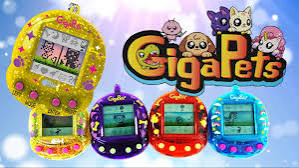
Giga Pets and Nano Pets: The Digital Pet Copycat Explosion
Once digital pets hit, the toy aisle did what the toy aisle always does: it multiplied the idea until every peg had a new version. Giga Pets and Nano Pets gave kids more choices and more reasons to argue about which tiny screen creature was better. Dogs, cats, dinosaurs, aliens, babies, animals, fantasy pets — if it could blink on a keychain and require attention, somebody was going to sell it.
These toys expanded the digital pet craze by making it feel collectible. You did not just have a virtual pet. You had a type. Your friend had a different type. Someone had a dinosaur. Someone had a cat. Someone had one that seemed cooler because the shell color looked better. Suddenly the digital pet was not just a responsibility toy. It was a status object.
Why the copycats worked
Giga Pets and Nano Pets gave the craze variety. Tamagotchi made the concept famous, but the copycat wave made the category feel huge. Different shells, different pets, different animations, and different brands let kids choose an identity. That is exactly how 90s toy crazes worked: one hit idea becomes a shelf full of variations, and every kid insists theirs is the best.
The variety also made digital pets feel more personal. A dinosaur pet had a different vibe than a puppy. A baby version felt different from an alien. A clear plastic shell felt more futuristic than a plain one. Kids were not only buying the function. They were buying the personality they wanted hanging from their backpack.
The playground comparison machine
Digital pets were made to be compared. How long did yours live? Which one did you have? What did it do? Was it easier than Tamagotchi? Was the shell color better? Did it have a cooler animation? Did it make a more annoying beep? The toys created conversation before you even started playing.
That comparison mattered because 90s toy crazes did not live only on shelves. They lived in school. The digital pet hanging from a backpack became part of your kid identity for a while. It was a little signal that you were plugged into the craze, even if your pet was currently one missed meal away from tragedy.
Why they were different from regular pets toys
Earlier pet toys were usually plush, plastic, or pretend-care playsets. Giga Pets and Nano Pets made care measurable. You could see status. You could see change. You could mess up. The toy remembered neglect, at least in its tiny little way. That made the experience feel more urgent than feeding a stuffed animal with an imaginary bottle.
- Core appeal: choice, variety, keychain portability, and pet care routines.
- Kid behavior: comparing pets, shell colors, species, animations, and how long each one survived.
- Craze fuel: one kid having a different version made everyone else wonder if theirs was missing out.
- Most 90s detail: caring deeply about a pixel dog you could barely see in bad classroom lighting.
These toys mattered because they turned digital pets into a movement. The 90s did not stop at one tiny electronic creature. It made a whole digital zoo, attached it to backpacks, and then acted surprised when teachers got annoyed.
They also proved that the real product was not the pet. It was the routine. Check it, feed it, react to it, talk about it, compare it, replace the battery, repeat. That loop was the electronic toy future arriving in miniature.
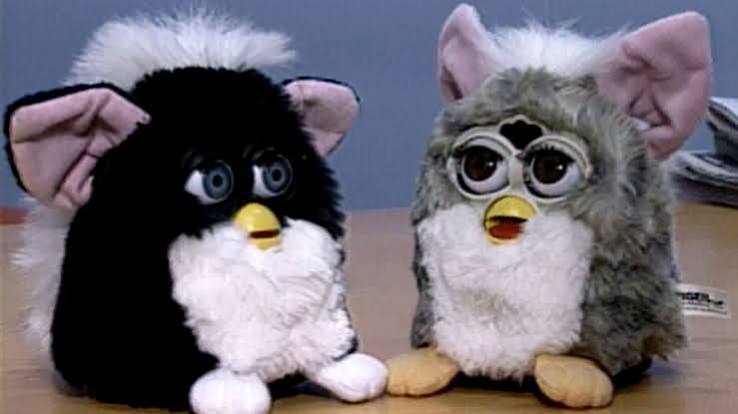
Furby: The Talking Plush Creature That Watched You Sleep
Furby looked like a plush toy, but it behaved like a tiny roommate with secrets. It talked, blinked, moved, reacted, and seemed to develop a personality over time. That made it magical to kids and deeply suspicious to adults. It was cute, weird, noisy, and just unsettling enough to become legendary.
Furby succeeded because it blended plush comfort with electronic unpredictability. A stuffed animal usually stayed where you put it. Furby had opinions. It made sounds. It seemed to learn. It demanded attention. It turned the toy from a passive object into something that felt like it might start talking from across the room at 2:00 a.m., which is childhood magic and horror in the same battery compartment.
Why Furby became a late-90s retail monster
Furby arrived when the toy aisle was already primed for interactive gadgets. Digital pets had trained kids to care for electronic creatures. Talking toys had trained kids to expect sound and response. Plush collectibles had trained families to buy cute things in multiples. Furby fused all of that into one fuzzy little chaos unit.
It also had the perfect holiday-toy energy. It felt new, interactive, hard to get, and easy to demonstrate. A Furby did not need a lot of explanation. It moved. It talked. It blinked. It seemed alive enough that a kid could instantly understand why it was cool and an adult could instantly understand why this might become a problem.
The weirdness was part of the appeal
Furby was not cute in a boring way. It was cute in a “what exactly are you?” way. The eyes, ears, beak, voice, movement, and strange little language made it feel like a creature from a toy-store planet. That oddness helped it stand out. It was not just another plush. It was a personality toy.
Kids liked the sense that Furby could change. They liked trying to get reactions from it. They liked showing it to friends and family. They liked the feeling that it was learning, even if the tech was far more limited than the myth around it. The illusion mattered more than the mechanics.
Why adults reacted so strongly
Adults often found Furby weird because it crossed categories. Was it a stuffed animal? A robot? A talking toy? A recorder? A pet? A surveillance owl from the clearance aisle? The uncertainty made the toy feel bigger than it was. The rumors and jokes around Furby became part of the cultural memory, which is exactly how a toy graduates from popular to legendary.
- Core appeal: talking, movement, personality, collectable colors, and weird interactivity.
- Kid behavior: teaching it, showing it off, comparing colors, and testing how much it could “learn.”
- Retail hook: it looked like a must-have holiday toy because it demonstrated well and felt different.
- Most 90s detail: parents wondering if the toy was listening while kids insisted it was adorable.
Furby mattered because it pushed electronic toys into personality territory. It was not enough for a toy to beep. Now it had to feel like a creature. The line between toy, pet, gadget, and small household nuisance got blurry, and Furby lived right in that blur.
Its legacy is still obvious whenever interactive plush toys promise personality, learning, reactions, or companionship. Furby proved that kids did not just want toys that made sounds. They wanted toys that seemed like they had moods. Unfortunately, Furby had many moods, including “possibly possessed.”
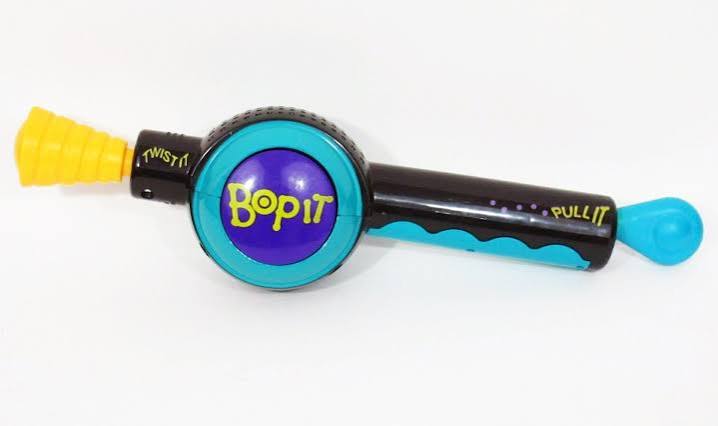
Bop It: The Toy That Yelled Commands Like a Gym Teacher With Batteries
Bop It was simple enough to understand instantly and stressful enough to ruin friendships for three minutes. The toy barked commands — bop it, twist it, pull it — and you had to react quickly. Miss one and the machine judged you with cold electronic finality. It was Simon Says for a generation raised on louder plastic.
What made Bop It work was the group energy. It was fun alone, but it became better when passed around a room. Everyone wanted a turn. Everyone thought they were good. Everyone eventually failed in public. That made it perfect family-room chaos: simple rules, instant pressure, and the humiliation of losing to a toy shaped like someone overdesigned a plumbing tool.
Why Bop It stuck
Bop It had the essential electronic toy loop: listen, react, succeed, speed up, panic, fail, try again. It did not need characters or a screen. The personality came from the voice, the rhythm, and the pressure. It also made noise in a way that announced itself to the whole house, which is important if your goal is parental exhaustion.
The toy was also brilliant because the commands were physical. You were not just pressing a button. You were twisting, pulling, and bopping. That made the toy feel more active than a lot of handheld electronics. It turned a gadget into a reflex game and made everyone in the room lean forward when the speed increased.
The high-score pressure
Bop It made competition immediate. There was no long setup, no board, no pieces, no rules argument that lasted longer than the game. The toy told you what to do, tracked your performance, and ended your dignity. That made it perfect for living rooms, sleepovers, cousins’ houses, and any family gathering where kids needed something loud to fight over.
The best part was how fast confidence collapsed. Someone would grab it like they had mastered the machine spiritually, then fail on a basic command fifteen seconds later. Bop It was a toy, but it also exposed fraud. Respect.
Why it belonged to the electronic toy era
Bop It showed that electronics could create gameplay without a screen. The device itself was the game board, narrator, referee, and scorekeeper. That was very different from older manual toys. The electronics did not just add sound effects. They controlled the whole play pattern.
- Core appeal: commands, reflexes, high scores, and quick competition.
- Kid behavior: passing it around, challenging siblings, chasing scores, and pretending the toy cheated.
- Family-room role: a quick party game that worked almost anywhere and required zero cleanup.
- Most 90s detail: a plastic device yelling verbs at you until everyone in the room got tense.
Bop It mattered because it showed that electronic toys did not need screens to feel interactive. Sound, speed, and physical controls could be enough. It was a toy, game, stress test, and family-room noise complaint in one.
It also aged unusually well because the core idea is still strong: a toy that teaches you the rules in seconds, speeds up the pressure, and makes failure funny. That is not just nostalgia. That is good toy design wearing neon sneakers.
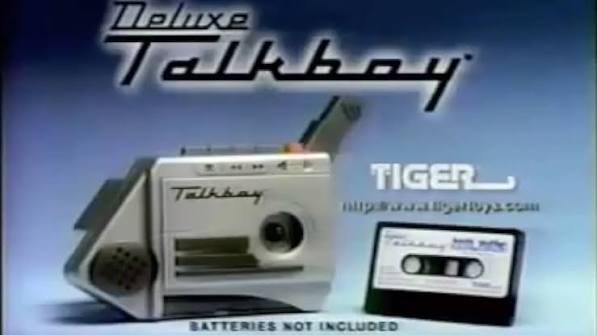
Talkboy and Yak Bak: Voice Gadgets for Tiny Agents of Chaos
Talkboy and Yak Bak lived in the golden zone between toy and gadget. They let kids record voices, play sounds back, change speed, repeat phrases, and generally become household menaces with terrible audio quality. The magic was not that the technology was advanced. The magic was that kids suddenly had control over sound.
Talkboy had movie-fantasy power. It made recording feel like spy gear, prank equipment, and cool-kid tech all at once. Yak Bak was smaller, faster, and more chaotic — a pocket-sized sound repeater designed for maximum irritation. Together, they captured the 90s obsession with voice gadgets before every phone could record video in high definition and remove all mystery from childhood nonsense.
Why voice gadgets felt so cool
Kids love hearing their own voice played back because kids are weird and correct. These toys made that instant. Record a phrase. Play it back. Speed it up. Slow it down. Repeat something stupid until an adult asked you to stop. The feedback loop was immediate, funny, and social.
The voice changer element mattered because it turned ordinary speech into performance. You could sound older, slower, stranger, or just more annoying. That made the toy feel like a prank kit, recording studio, secret-agent device, and comedy machine all at once.
The Home Alone effect
Talkboy had the kind of movie tie-in power most toys dream about. It did not just appear as a product. It looked useful in a kid fantasy. That mattered. Kids saw a character use a gadget to trick adults, control situations, and act independent. Suddenly a recorder was not boring. It was a tool for mischief.
That fantasy translated perfectly into home play. Kids made fake radio shows, recorded siblings, created prank voices, interviewed stuffed animals, taped nonsense, and played clips back until every adult nearby aged visibly. The toy made kids feel like they were producing media, even if the production was mostly “listen to me burp but slower.”
Yak Bak and pocket sound chaos
Yak Bak took the voice-gadget idea and made it even more portable. It was not trying to be a full cassette recorder. It was a quick-hit sound toy: record, repeat, annoy, repeat again. It belonged to the same impulse-toy universe as keychain gadgets and pocket electronics. Small, cheap-feeling, funny, and dangerously easy to bring everywhere.
- Core appeal: recording, playback, voice distortion, pranks, and repetition.
- Kid behavior: fake radio shows, fake phone calls, sibling harassment, and saying the same phrase 900 times.
- Media shift: kids got to create and manipulate sound, not just listen to it.
- Most 90s detail: thinking a handheld cassette recorder made you a professional con artist.
Talkboy and Yak Bak mattered because they made media creation feel like play. You were not just consuming sound. You were making it, editing it badly, and weaponizing it against everyone within earshot.
They also foreshadowed a world where kids would constantly record themselves, remix their voices, and make short bits of audio/video for attention. The 90s version just involved worse speakers, more cassette hiss, and a lot more parental regret.
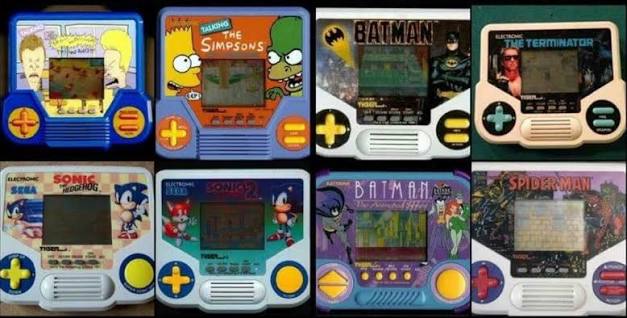
Tiger Handheld LCD Games: Every Franchise, Fewer Frames
Tiger handheld LCD games were everywhere in the 90s. If a movie, cartoon, sports league, wrestler, superhero, or video game brand had kid appeal, there was a decent chance it got turned into a small plastic handheld with a fixed LCD screen and gameplay that required imagination, patience, and forgiveness.
They were not Game Boys. Let us be adults here. The animation was limited, the controls were stiff, and the action often felt like moving a dark little shape around while pretending it was the character on the package. But they were affordable, portable, branded, and good enough to survive a car ride. That mattered.
Why Tiger games were so common
Tiger games filled the gap between cheap toys and real handheld gaming. A Game Boy was a bigger purchase. A Tiger handheld felt more attainable. It also let kids carry a favorite franchise in their hands. Batman, Sonic, wrestling, sports, Disney, action movies — the brand on the shell did a lot of the selling.
The packaging often did more emotional work than the game. The art made it look like you were getting a full adventure. The actual screen gave you fixed-position LCD action and a lot of beeping. But when you were stuck in a back seat for two hours, even limited gameplay could become a lifeline.
The car-ride survival factor
Tiger handhelds were built for boredom. Long car ride? Waiting room? Sibling’s practice? Trip to your grandparents’ house? A Tiger game could come with you. It did not need a TV, cables, cartridges, or permission to take over the living room. It was a self-contained boredom machine.
That portability was huge. In an era before phones filled every empty moment, kids needed objects to survive waiting. Tiger games gave kids a screen, buttons, sound, and a familiar brand. Even if the game was repetitive, it was something.
Why they still matter
Tiger games show how strong licensing had become in the 90s. A handheld could sell because it had the right character or movie name on it. Kids were not always buying gameplay. They were buying the fantasy that their favorite thing had become portable.
- Core appeal: portable, branded, battery-powered gameplay at a lower price point.
- Kid behavior: playing in cars, on buses, in waiting rooms, and anywhere boredom became dangerous.
- Licensing hook: every popular franchise could become a tiny handheld game, quality optional.
- Most 90s detail: believing the little LCD shadow was definitely the hero from the package.
Tiger handhelds mattered because they trained kids to expect every franchise to become playable. They were imperfect, repetitive, and weirdly beloved — exactly the kind of 90s toy that makes no sense until you remember how bored kids could get before phones.
They also deserve credit for democratizing screen play. Not every kid had the newest console or handheld system, but plenty of kids had at least one Tiger LCD game rattling around somewhere. It was not the future of gaming, but it was a very loud preview.
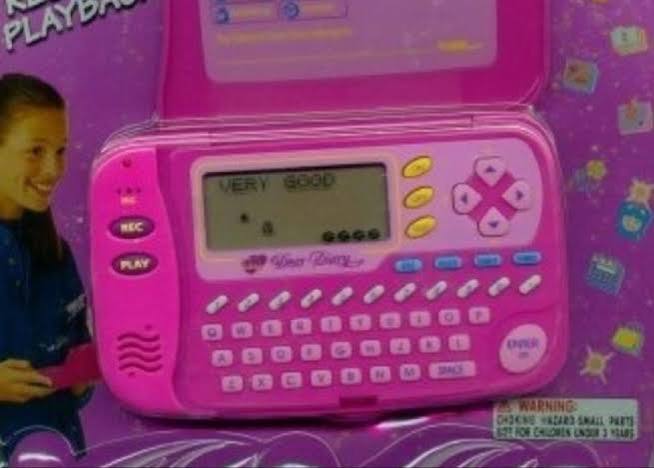
Electronic Diaries and Password Journal: Childhood Secrets Go High-Tech
Electronic diaries and Password Journal made childhood secrets feel like national security. A regular diary had a tiny lock that could be defeated by determination and a paperclip. A password-protected electronic diary felt serious. It beeped. It had buttons. It had codes. Some had voice features. Suddenly your crush list had entered the cyber age.
These toys tapped into a very specific 90s feeling: personal tech as privacy. Kids wanted devices that felt like theirs. Not the family computer. Not the TV. Not the phone attached to the kitchen wall. A personal diary gadget felt private, grown-up, and futuristic, even if it mostly stored extremely dramatic entries about friends being annoying.
Why secret gadgets hit
The appeal was control. Kids could lock something, name something, enter a password, and feel like they owned a little digital space. That was powerful before every kid had accounts, passwords, profiles, and devices. The toy made privacy feel interactive and stylish.
The design helped too. These toys often looked like something between a diary, a laptop, a security console, and a toy purse. The buttons and sounds made the ritual feel important. Opening it was not just opening a notebook. It was accessing a system. Very serious. Extremely classified. Mostly about who was being mean at lunch.
The rise of kid “personal tech”
Electronic diaries were part of a bigger shift: kids wanted devices that felt personal. A toy could now store information, recognize a password, play sounds, or pretend to protect privacy. That made the diary feel closer to a gadget than a notebook. It was not just something you wrote in. It was something you operated.
That mattered because the 90s were training kids to think digitally. Passwords were becoming part of everyday life. Computers were entering homes and schools. Personal organizers and electronic devices were becoming aspirational. A toy diary gave kids a miniature version of that world, wrapped in glittery plastic and emotional drama.
Why they were more than diaries
Electronic diaries also became status objects. They looked cool on a desk. They felt more advanced than paper. They suggested you had secrets worth protecting, which is a powerful concept for kids whose biggest secrets were usually about crushes, friends, siblings, and whether they actually cleaned their room.
- Core appeal: secrets, passwords, personal tech, sound effects, and lockable storage.
- Kid behavior: writing dramatic entries, changing passwords, hiding notes, and testing whether siblings could break in.
- Tech hook: buttons, codes, voice locks, and screens made privacy feel futuristic.
- Most 90s detail: treating a toy diary like mission control for middle-school emotions.
Electronic diaries mattered because they showed how digital identity was creeping into toys. Before social media profiles and phone passcodes, there were plastic diaries teaching kids that personal tech could hold private lives.
They also capture a very 90s version of innocence around technology. A password felt magical. A voice lock felt high-tech. A secret compartment felt powerful. The stakes were small, but the feeling was real.
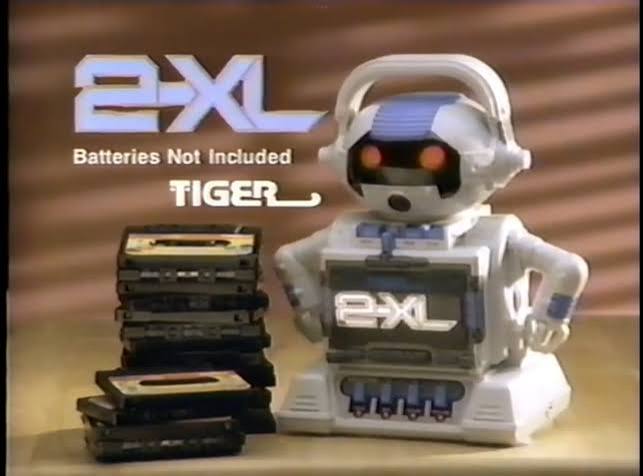
2-XL: The Smart-Toy Robot With Quiz-Show Energy
2-XL was part educational toy, part robot character, part quiz machine, and part “please believe this is the future.” The 90s version updated an older idea for a new generation, giving kids a talking robot-like gadget that asked questions, responded to answers, and made learning feel like a game show hosted by plastic.
What made 2-XL interesting was personality. Lots of electronic toys beeped. 2-XL talked. It had a voice and a format. The toy made kids feel like they were interacting with a character, not just pressing buttons on a device. That character-driven interactivity would become a major part of 90s electronic toys.
Why 2-XL belongs in the electronic toy story
2-XL showed that educational toys did not have to feel like homework wearing a disguise. The robot format made trivia feel playful. The audio made it feel responsive. The buttons gave kids agency. It sat in the same larger movement as electronic diaries, talking plush, and voice gadgets: toys that felt like they were talking to you.
The toy also fit the 90s belief that electronics could make learning cooler. A worksheet was boring. A robot asking questions felt different. The content could be educational, but the delivery had personality. That distinction mattered for kids who were allergic to anything that smelled like school.
The quiz-show toy appeal
2-XL made interaction feel structured. It asked. You answered. It reacted. That gave kids a sense of conversation, even if the conversation was controlled by cartridges, tapes, or pre-programmed paths. The toy felt like a host, not just a speaker.
That host quality is why 2-XL stands out. Electronic toys can be cold when they only flash and beep. 2-XL had a character wrapper, and that made the experience warmer. It gave the machine a face, voice, and role — basically the same trick later interactive toys would keep chasing.
Why parents liked the idea
Parents could justify 2-XL more easily than a pure noise toy. It had educational value, or at least sounded like it did. That gave it a different place in the toy aisle. It could be fun, but it could also be sold as smart, enriching, and maybe slightly less likely to rot a child’s brain than whatever was happening on television.
- Core appeal: talking robot personality, trivia, buttons, and interactive learning.
- Kid behavior: answering questions, swapping content, repeating favorite lines, and treating the toy like a small host.
- Parent hook: an electronic toy that seemed educational enough to justify the purchase.
- Most 90s detail: believing a plastic robot on your desk was extremely advanced technology.
2-XL mattered because it belongs to the early wave of electronic toys that tried to make machines feel personal. It was not just about lights and sound. It was about a toy with a voice, a role, and a reason to keep pressing buttons.
It also helped bridge educational toys and character toys. The toy was not only delivering information. It was performing. That performance side is what connects it to the broader 90s electronic toy boom, where the best gadgets felt like they had some kind of personality trapped in the plastic.
Battery Culture: The Hidden Cost of 90s Electronic Toys
The true soundtrack of 90s electronic toys was not just the beep. It was an adult asking, “What kind of batteries does this take?” Every great electronic toy came with a second problem: power. AA, AAA, C, D, button cells, weird little watch batteries — the toy aisle had entered its battery dependency era, and the junk drawer was never the same.
Batteries added stakes. A dead toy was not just disappointing. It was a negotiation. Could you steal batteries from the remote? Was there a half-dead pair in the drawer? Did the toy need a tiny screwdriver to open the compartment? Did anyone own the correct battery size? Did the sound start slowing down in a way that made the toy seem haunted? These are the questions that built character.
The need for batteries also made electronic toys feel more grown-up. They were not just plastic. They were devices. They required maintenance. They had power needs. They could die at the worst possible time. Digital pets and handhelds especially made battery life part of the experience. The fun was portable, but it had rent.
The battery drawer hall of fame
- AA batteries: the reliable workhorse of family-room electronics.
- AAA batteries: smaller, sneakier, always missing when you needed them.
- Button cells: tiny batteries that made digital pets feel like they needed medical supplies.
- Battery covers: always one screw away from ruining your day.
- Corrosion: the white crust of abandoned toy shame.
Battery culture is part of why these toys remain so memorable. They were fun, but they were also needy physical objects. You had to keep them powered, reset them, open them, silence them, and sometimes accept that the batteries were worth more than the toy’s current emotional contribution.
Digital Pet Panic: Why Tiny Pixel Creatures Took Over School
Digital pets worked because they turned routine into emotion. Feed it. Play with it. Clean up after it. Check on it. Keep it alive. Repeat. That loop was simple enough for kids to understand and needy enough to become addictive. The toy did not just wait for you to play. It created the feeling that play was overdue.
The school setting made the craze even stronger. Digital pets were easy to carry and hard to ignore. A beep from a backpack could cause panic. A neglected pet could create guilt. Kids compared pets, shells, evolutions, and survival stories. Teachers saw a distraction. Kids saw a tiny responsibility simulator that might die if ignored through science class.
The Four Types of 90s Electronic Toy Addiction
The big 90s electronic toys were not all doing the same thing. Some created responsibility. Some created noise. Some created competition. Some created privacy. But they all trained kids to expect toys to respond. That is the real shift. The toy aisle was no longer just selling plastic objects. It was selling little feedback loops.
1. Care toys
Tamagotchi, Giga Pets, and Nano Pets made kids responsible for something digital. These toys used routines, alarms, status meters, growth stages, and consequences to make a tiny screen feel emotionally alive. They were less about action and more about maintenance, which is a weirdly adult concept to hand to a child with a backpack.
2. Voice and sound toys
Talkboy, Yak Bak, Furby, 2-XL, and Bop It all used sound as the main attraction. Some recorded your voice. Some talked back. Some gave commands. Some pretended to have personality. Sound made these toys feel present in a room. It also made them impossible for parents to ignore, which may have been an accident, but probably not.
3. Pocket screen toys
Tiger handhelds and digital pets made small screens feel normal before phones took over every idle second. Their screens were crude, but the portability was powerful. A kid could carry entertainment, responsibility, or a branded mini-game anywhere. That changed the relationship between toys and boredom.
4. Secret-tech toys
Electronic diaries and Password Journal made technology feel private. They were not about public play as much as personal control. Codes, locks, voice access, and stored entries made kids feel like their inner life had security features. Very dramatic. Very 90s. Honestly, kind of adorable.
Together, these categories explain why 90s electronic toys still feel important. They were clunky, limited, and often annoying, but they introduced a new expectation: toys should react to us. That idea never left.
Why 90s Electronic Toys Still Hit
The nostalgia around 90s electronic toys is not just about the gadgets. It is about the first feeling of personal tech. A toy that lived on your backpack. A recorder that captured your voice. A diary that locked your secrets. A handheld game that made a long car ride tolerable. A fuzzy creature that seemed to talk back. These toys made kids feel like technology belonged to them, not just the adults in the house.
They also had personality because they were limited. The speakers sounded crunchy. The screens were tiny. The animations were basic. The voices were strange. The buttons clicked. The batteries died. Modern devices are smooth and powerful, but 90s electronic toys had friction. That friction made them memorable.
Most of all, they were transitional objects. They sat between old toy culture and the digital world that was coming. They were still plastic. Still physical. Still bought in toy aisles and opened on birthdays. But they hinted at apps, notifications, virtual pets, voice recording, handheld screens, digital privacy, and interactive companions. The future arrived one beep at a time, and yes, it was annoying.
90s Electronic Toys and Digital Pets FAQ
What were the most popular 90s electronic toys?
Some of the most remembered 90s electronic toys include Tamagotchi, Giga Pets, Nano Pets, Furby, Bop It, Talkboy, Yak Bak, Tiger handheld LCD games, electronic diaries, Password Journal, and 2-XL.
What were 90s digital pets?
90s digital pets were small handheld or keychain electronic toys where kids cared for a virtual creature by feeding it, playing with it, cleaning up after it, and checking on it throughout the day. Tamagotchi, Giga Pets, and Nano Pets were the best-known examples.
Why were Tamagotchis so popular?
Tamagotchis were popular because they made a tiny digital creature feel alive. The pet needed attention, changed over time, beeped for care, and created a sense of responsibility that kids could carry around on a keychain.
Why was Furby such a big deal?
Furby mixed plush toy appeal with interactive electronics. It talked, moved, reacted, and seemed to develop a personality, which made it feel more advanced and alive than a standard stuffed animal.
Why do 90s electronic toys feel so nostalgic?
They were early personal tech for kids. Before phones and apps, toys like digital pets, voice recorders, handheld LCD games, and electronic diaries gave kids small devices that felt private, interactive, and futuristic.