Smells Like Gen X • Top Toys of 1989
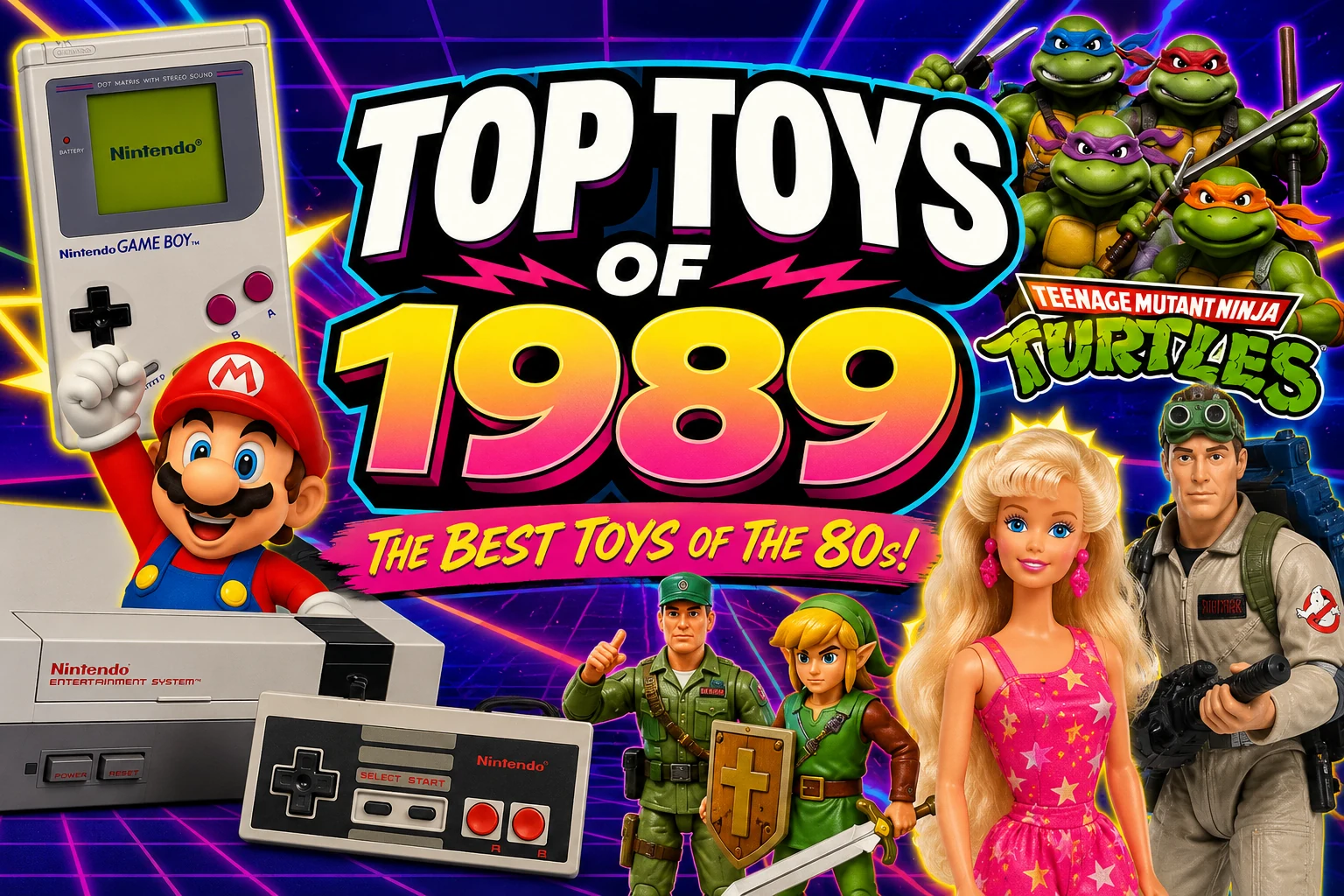
Top 10 Toys of 1989: Nintendo, Barbie and the Console Takeover
The top toys of 1989 were led by the
Nintendo Entertainment System, Barbie,
Micro Machines, Teenage Mutant Ninja Turtles,
Zelda II: The Adventure of Link, G.I. Joe,
Ninja Gaiden, Super Mario Bros. 2,
The Real Ghostbusters, and Game Boy. This was the
year the 80s toy aisle stopped treating video games like one category among many and
finally let Nintendo reorganize the room.
The most popular toys of 1989 show the decade ending under a new
commercial logic. The NES was not merely another
big-ticket gift; it was the platform that made several cartridges into separate holiday
events. Game Boy showed that Nintendo no longer needed the living-room television.
Barbie remained a market institution. Micro Machines proved a physical gimmick could
still break through, and TMNT turned Turtle Power into
one of the biggest action-figure forces on the shelf.
For Gen X, 1989 feels like the final-boss version of the decade:
Nintendo running the room,
Barbie refusing to surrender,
Micro Machines disappearing into couch cushions,
Turtles mutating the action aisle, G.I. Joe still operating like infrastructure, and
parents discovering that “just one more cartridge” was not a request. It was a recurring
expense model.
Number-One Toy SystemNintendo Entertainment System
Evergreen PowerBarbie
Physical BreakoutMicro Machines
Future SignalGame Boy makes Nintendo portable
Gen X Note: 1989 is the year the toy aisle stops feeling like a pile of unrelated categories and starts feeling like a system — and Nintendo is running most of it.
The Short Answer
What Were the Most Popular Toys of 1989?
The most popular toys of 1989 included the
Nintendo Entertainment System, Barbie,
Micro Machines, Teenage Mutant Ninja Turtles,
Zelda II: The Adventure of Link, G.I. Joe,
Ninja Gaiden, Super Mario Bros. 2,
The Real Ghostbusters, and Game Boy.
The NES ranks first because Nintendo was the
dominant force organizing the year’s toy market, while Game Boy represents the
portable future that would matter even more in the 90s.
The Ground Rules
How We Ranked the Top Toys of 1989
This is a transparent editorial countdown rather than a fake universal sales chart.
The toy business did publish trade rankings, but no single public list cleanly compares
consoles, cartridges, dolls, mini vehicles, action figures, handheld systems, and
licensed character lines across the entire year. This ranking weighs contemporary
market visibility, holiday demand, retail strength, cultural impact, category power,
and how clearly each product captures the final full year of the 80s.
Contemporary 1989 market signals
Reporting from the holiday season described Nintendo as the market’s dominant
force, Barbie near the top, TMNT among the strongest action figures, and G.I. Joe
still commercially significant. That gives the ranking a period foundation instead
of relying only on later nostalgia.
Platform dominance versus individual products
The NES ranks first because several other
entries depend on the Nintendo ecosystem. Zelda II, Ninja Gaiden, and Super Mario
Bros. 2 could function as major holiday objects because millions of households
already had the platform.
Physical-toy strength still matters
Barbie, Micro Machines, TMNT, G.I. Joe, and The Real Ghostbusters show that the
traditional toy aisle still had enormous power. The list does not pretend software
erased physical play overnight. It shows how the balance was changing.
Game Boy’s placement versus its later legacy
Game Boy launched in North America during 1989 and immediately introduced a major
new direction. It appears lower here because this is a year-specific ranking rather
than a lifetime-importance list. Its cultural legacy would eventually dwarf that
placement.
Why this matters:
“Most popular,” “best-selling,” “hottest Christmas gift,” “new release,” and “most
historically important” are not automatically the same thing. The order reflects the
strongest overall 1989 case while making those differences clear.
The Console Becomes the System
Why 1989 Changed Toy Culture
Nintendo turned hardware into continuing demand.
The NES changed the retail equation because
buying the system was only the beginning. Every new cartridge created another
holiday, birthday, allowance, or negotiation event. The machine became a permanent
anchor for future purchases.
Software became a top-tier toy category.
Zelda II, Ninja Gaiden, and Super Mario Bros. 2 did not behave like minor
accessories. They had individual identities, reputations, difficulty levels,
characters, advertising, and wish-list power. By 1989, a cartridge could carry
the same emotional weight as a figure, doll, or vehicle.
Physical toys survived through strong systems and gimmicks.
Barbie survived through adaptability.
Micro Machines turned miniature scale into a
collectible hook. TMNT and
G.I. Joe gave children characters, teams, enemies,
vehicles, and reasons to keep expanding the collection.
Game Boy changed where play could happen.
Nintendo’s handheld did not merely shrink console gaming. It removed the household
television from the equation. That made gaming private, portable, and available in
cars, bedrooms, waiting rooms, and anywhere adults had mistakenly expected silence.
From #10 to #1
The Top 10 Toys of 1989 Countdown
#10 — Game Boy
Toy TypeHandheld game system
Brand LanePortable gaming breakout
1989 Rank#10
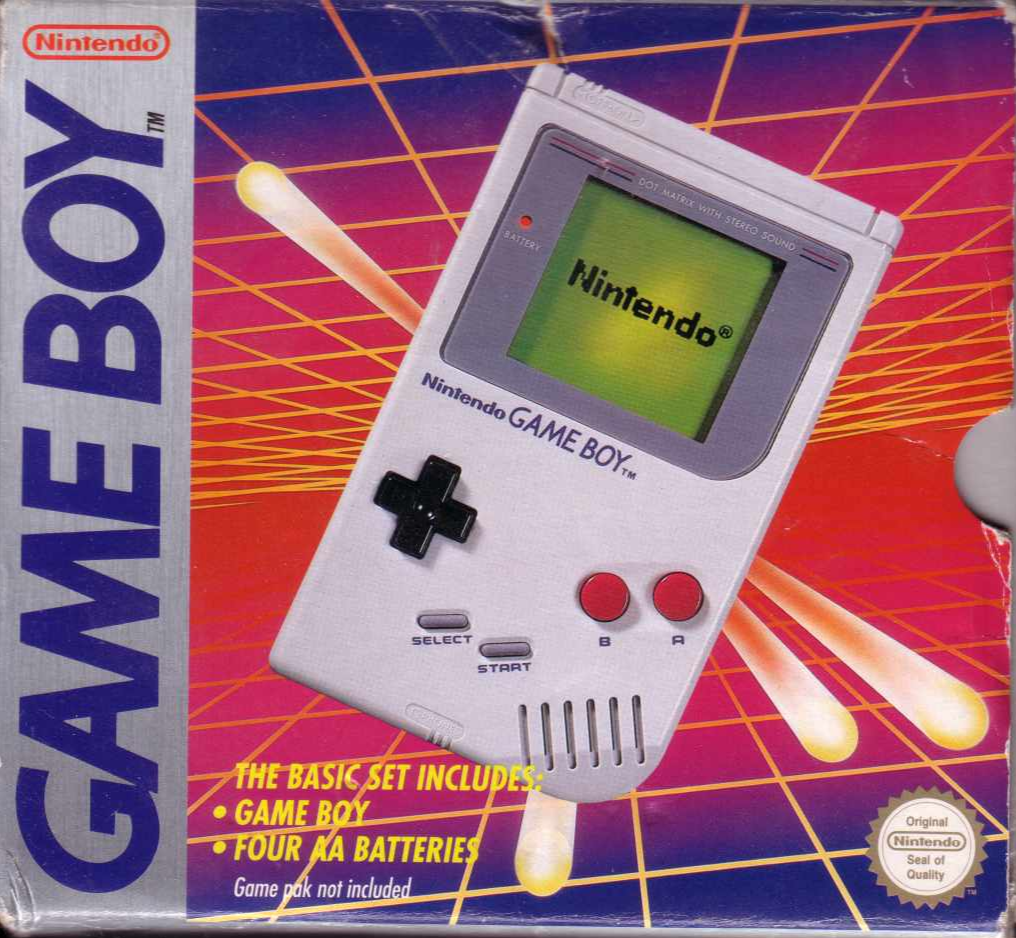
Game Boy opens the 1989 top 10 because it represents one of the year’s biggest structural shifts, even if it lands lower on a stricter sales-weighted chart than its later legacy might suggest. That’s important to be honest about. In long-term cultural memory, Game Boy can feel like one of the defining products of 1989. But if you anchor the ranking to the strongest late-year toy-chart evidence, it makes more sense to place it as the big late-arriving future signal rather than instantly crowning it above the more firmly charted holiday leaders.
What makes Game Boy so powerful in 1989 is not just that it sells. It changes the geography of play. Earlier Nintendo dominance still tethered children to the television and to a shared household device. Game Boy loosens that. It suggests that the next era of gaming may be private, portable, and available anywhere. That is a huge conceptual jump. Suddenly, the most exciting object in the room doesn’t need the room.
It also benefits from the sheer clarity of the promise. This isn’t some overcomplicated late-80s tech fantasy. It’s very direct: the Nintendo experience, but in your hands. That makes it one of the cleanest evolutions of an already dominant brand strategy. Once a company owns the center of play, the obvious next move is to make that center mobile.
For Gen X, Game Boy in 1989 feels like the first clear sign that the 90s are already arriving through the side door. It still belongs to the Nintendo era, but it also points past the decade that built it.
The full 80s video game toys explores Game Boy, the NES, cartridges, consoles, handhelds, electronic gaming, and the portable future of Gen X play.
#9 — The Real Ghostbusters
Toy TypeAction figure line
Brand LaneLicensed supernatural action
1989 Rank#9
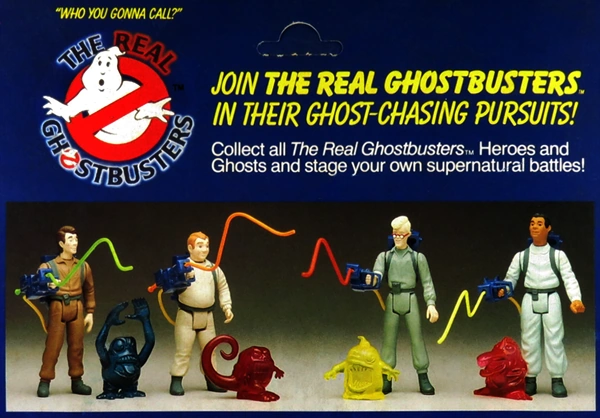
The Real Ghostbusters land at number nine because 1989 shows how durable a strong late-80s licensed action brand could be when it had the right mix of weirdness, recognizability, and toy-aisle flexibility. By this point, Ghostbusters are no longer simply riding the memory of the original film concept. The line has proven it can live as its own merchandise ecosystem, with enough visual oddity and creature-based play to remain highly usable on the shelf.
What makes the line especially interesting in 1989 is that it sits in a transitional zone between older 80s toy logic and the more tightly managed action systems that dominate the end of the decade. It still carries some of that earlier wildness — bright ghosts, goofy threat design, supernatural gadgets, slime-minded imagination — but it operates inside a more professionalized licensing environment. It is familiar, but not stale.
It also benefits from a kind of tonal flexibility many toy lines never achieve. Ghostbusters can be action, comedy, creature play, gadget play, and mild gross-out all at once. That makes the line more adaptable than a lot of single-note figure systems. In a crowded 1989 market, adaptability still sells.
For Gen X, The Real Ghostbusters in 1989 feel like one of the last great examples of the 80s action aisle still making room for products that were weird, playful, and a little less rigidly military or machine-driven.
The full 80s action figure wars explores The Real Ghostbusters, TMNT, G.I. Joe, rival figure lines, vehicles, playsets, and the decade’s plastic arms race.
#8 — Super Mario Bros. 2
Toy TypeNES game cartridge
Brand LanePlatform software hit
1989 Rank#8
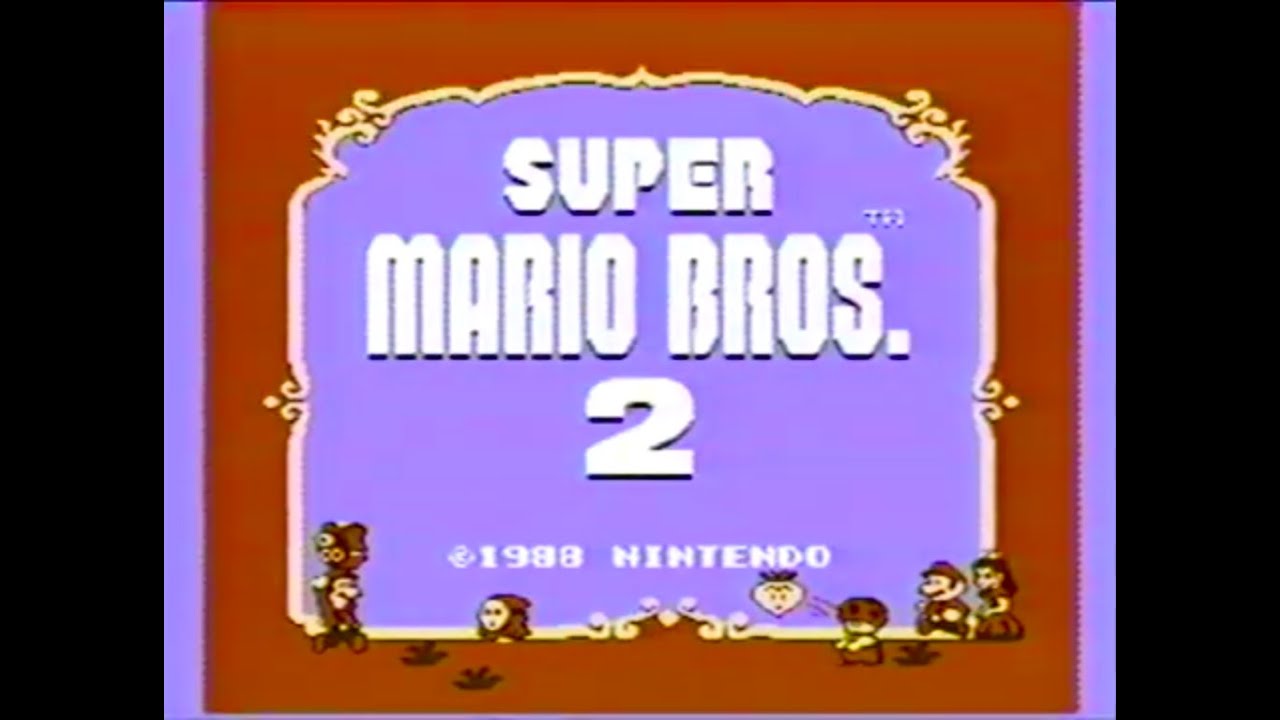
Super Mario Bros. 2 takes number eight because 1989 is one of the clearest years where software itself stops being a side note in toy culture and starts functioning like a top-tier holiday object. That distinction is enormous. Earlier in the decade, the console might have been the event and the games the accessories. By 1989, the software is absolutely one of the main events.
What makes Mario 2 especially important is that it helps define the late-80s Nintendo ecosystem as something broader than one machine and one mascot. It shows that once the hardware is in place, the individual game release can become its own kind of must-have seasonal object. That creates a very different retail rhythm than earlier toy eras. A cartridge can now generate the same kind of anticipation a doll, figure line, or electronic gadget once did.
The game also benefits from the strength of the Mario brand itself. By this stage, Mario is not just a recognizable character. He is becoming one of the decade’s most reliable anchors of play. That makes the cartridge feel simultaneously like a specific product and a piece of a larger system children already trust.
For Gen X, Super Mario Bros. 2 in 1989 feels like one of the moments where the toy aisle quietly admits that a cardboard box with a cartridge inside can now compete directly with almost anything else on the shelf.
The full 80s video game toys explores Super Mario Bros. 2, the NES, cartridge culture, consoles, handhelds, and software as a holiday toy.
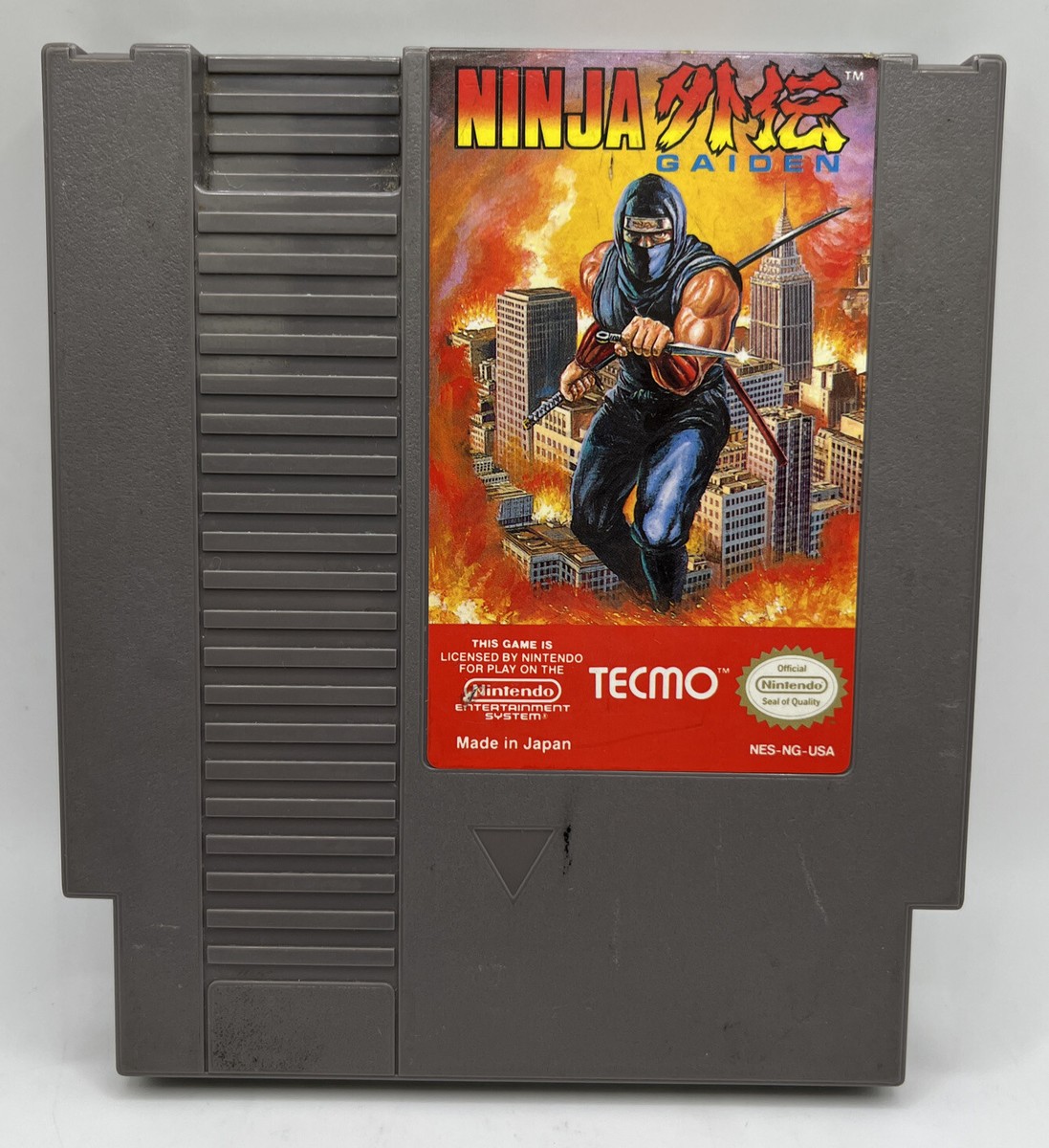
#7 — Ninja Gaiden
Toy TypeNES game cartridge
Brand LaneAction-game prestige
1989 Rank#7
Ninja Gaiden lands at number seven because 1989’s software-heavy toy landscape isn’t only about the broadest family-facing icons. It is also about edge, difficulty, coolness, and the growing sense that game cartridges can carry attitude in the same way action figures or late-80s character brands once did. Ninja Gaiden feels important because it gives the Nintendo aisle a sharper silhouette.
What separates it from some of the more universally recognizable Nintendo products is tone. This is not cheerful mascot play. It is leaner, more intense, and more obviously aligned with the late-80s appetite for sleek action and stylized danger. That makes it a valuable part of the 1989 sales picture. It proves the platform isn’t just strong because it can support a family-friendly flagship. It’s strong because it can host multiple emotional registers of play.
It also reflects a broader maturation of game buying. Once software becomes a serious holiday category, different kinds of software can carry their own status. A cartridge like this starts to mean something about taste, challenge tolerance, and the kind of player you imagine yourself to be.
For Gen X, Ninja Gaiden in 1989 feels like one of the products that helped games seem not just fun, but cool in a more narrow, high-intensity way. It made software feel a little more like identity.
The full 80s video game toys explores Ninja Gaiden, the NES, cartridges, consoles, handhelds, and the growing identity of software.
Fun Fact / Why It Still Matters
Ninja Gaiden ranks here because late-80s game buying had become sophisticated enough for “harder-edge” cartridges to feel like prestige products.
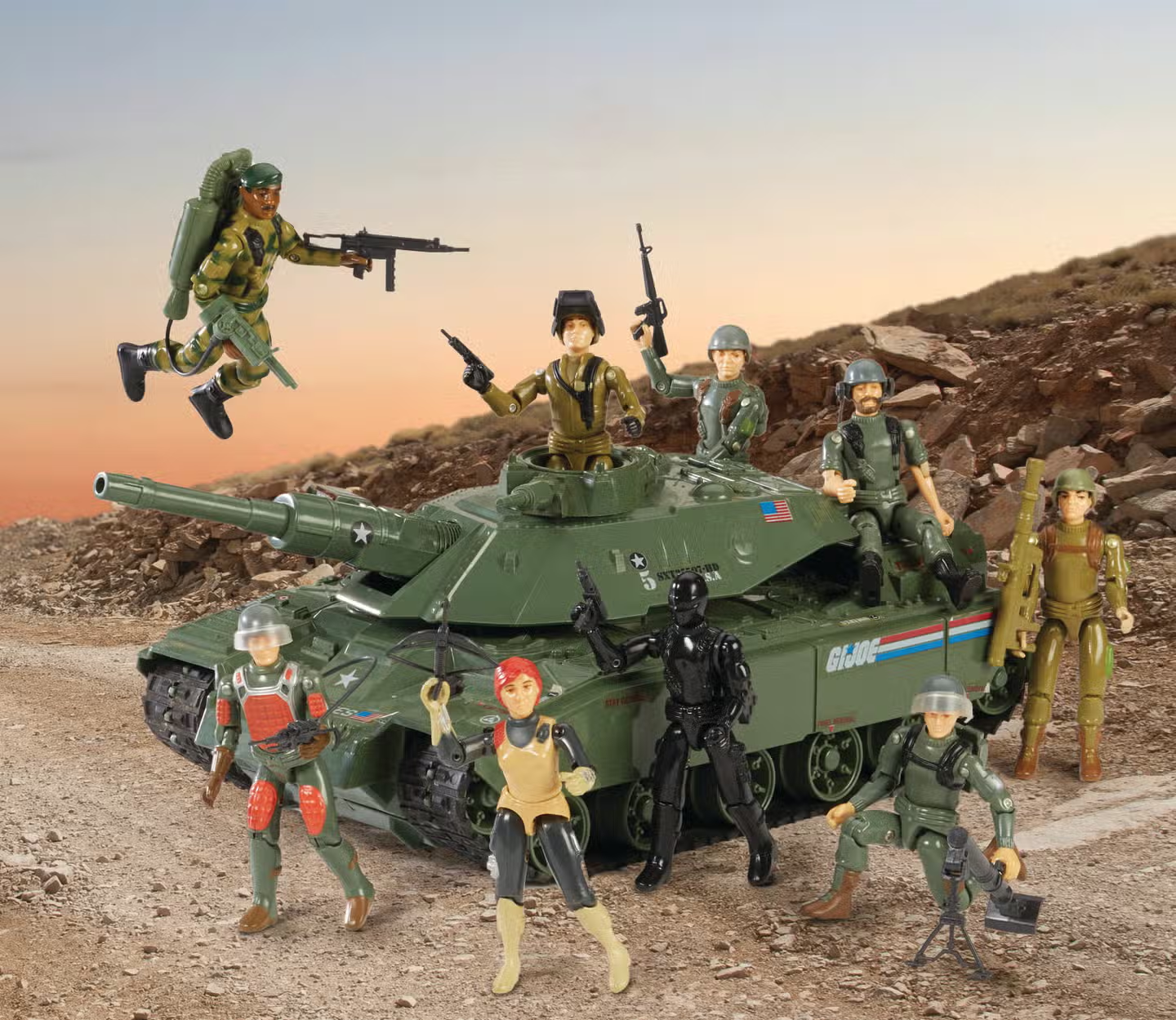
#6 — G.I. Joe
Toy TypeAction figure line
Brand LaneLate-80s action infrastructure
1989 Rank#6
G.I. Joe comes in at number six because by 1989 the line no longer feels like an especially trendy action figure brand. It feels like infrastructure. That’s a different and in some ways more impressive kind of success. G.I. Joe has become one of the default organizing systems of the action aisle — dependable, expandable, and still commercially potent even as software and licensed mutant turtles start swallowing more of the year’s attention.
What keeps the line relevant this late in the decade is its structural intelligence. G.I. Joe was always good at turning one purchase into the need for several more. Figures imply teams. Teams imply vehicles. Vehicles imply bigger conflicts. That logic ages very well because it is not dependent on one single fad hook. It is embedded in how the product line teaches children to imagine play.
In 1989, that makes G.I. Joe feel less like a flashy winner and more like a durable machine still producing results. It can live beside Nintendo because it occupies a different sort of dominance: not platform dominance, but repeatable action-line authority.
For Gen X, G.I. Joe in 1989 feel like one of the last great signs that the traditional action figure aisle still had real commercial muscle even as gaming started trying to eat the whole house.
The full G.I. Joe toys in the 80s explores the figures, file cards, Cobra forces, vehicles, missions, cartoons, and escalating hardware behind A Real American Hero.
Fun Fact / Why It Still Matters
G.I. Joe lasts because a well-built action system can survive individual trends better than almost any one-off hot toy.
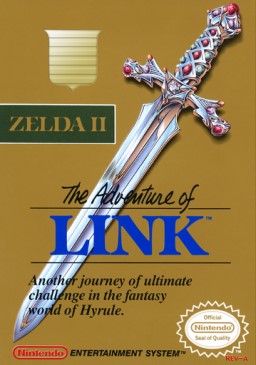
#5 — Zelda II: The Adventure of Link
Toy TypeNES game cartridge
Brand LaneAdventure-game event
1989 Rank#5
Zelda II: The Adventure of Link takes number five because 1989 isn’t just a year where Nintendo wins. It’s a year where different kinds of Nintendo software begin occupying different emotional roles inside the same retail empire. Zelda II matters because it gives the platform an adventure lane that feels distinct from pure mascot comfort or high-intensity action cool.
What makes it especially revealing as a holiday product is that it shows how thoroughly the cartridge market had matured. Consumers were no longer buying software as generic “more games.” They were buying specific kinds of experiences with specific tonal expectations. A title like Zelda II could function as a serious seasonal object because people already understood the broader promise behind the brand.
It also helps explain why 1989 looks so different from the early 80s. Back then, electronic gaming was often about the machine itself. By now, the platform is only half the story. The software line-up is doing major commercial work. That shift changes everything about how toy demand operates.
For Gen X, Zelda II in 1989 feels like one of the moments where a fantasy adventure on a cartridge could hold its own against dolls, figure lines, and gimmick toys as a completely legitimate centerpiece gift.
The full 80s video game toys explores Zelda II, the NES, cartridge worlds, consoles, handhelds, and the software-centered future of play.
Fun Fact / Why It Still Matters
Zelda II ranks high because by 1989
software identity had become strong enough that individual game worlds could sell like major toy brands.
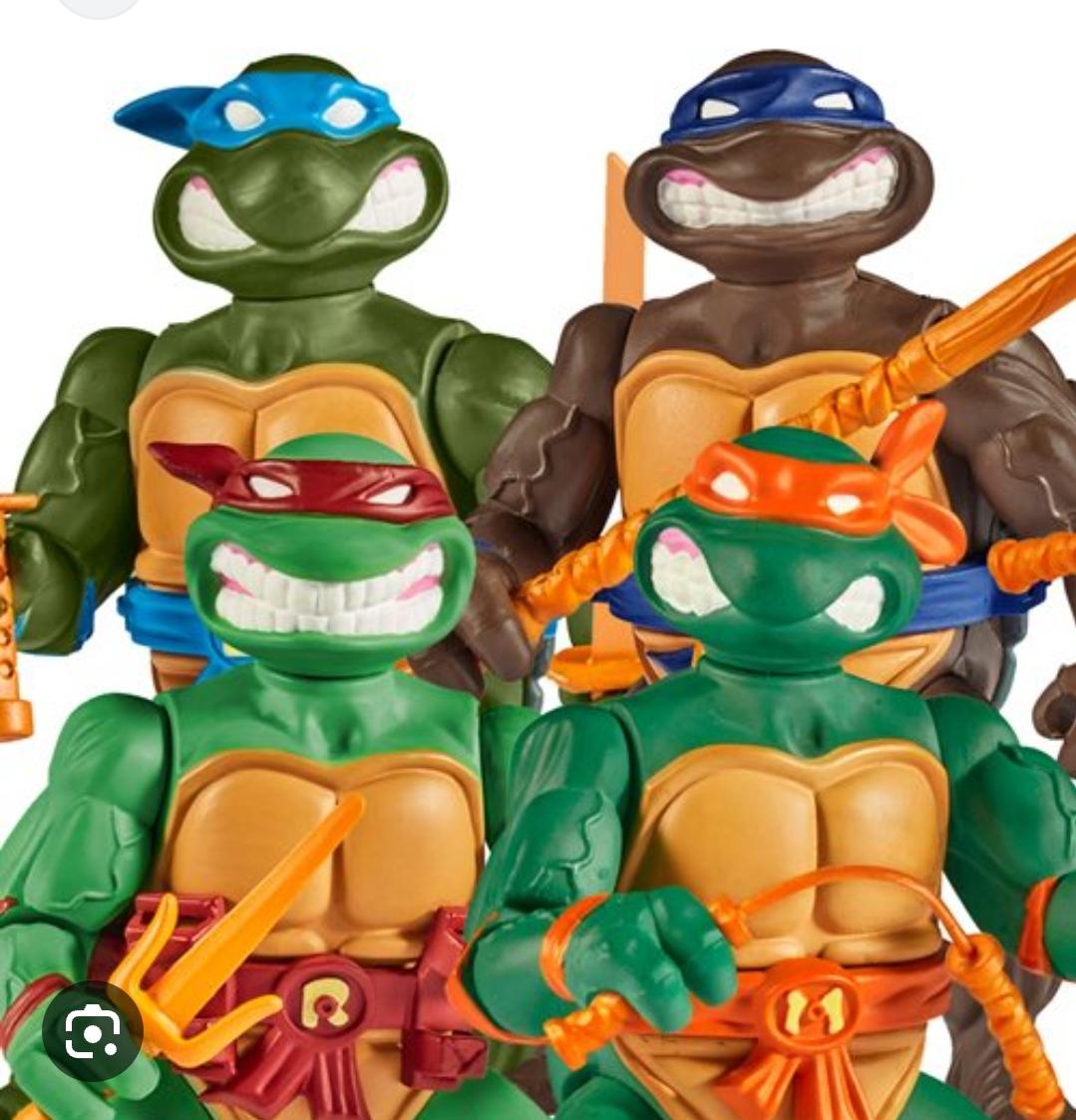
#4 — Teenage Mutant Ninja Turtles
Toy TypeAction figure line
Brand LaneLicensed action phenomenon
1989 Rank#4
Teenage Mutant Ninja Turtles take number four because by 1989 the line is no longer just rising. It has arrived. The turtles now feel like one of the most natural late-80s answers to what a major toy phenomenon should look like: instantly recognizable characters, strong group identity, weird mutation energy, comedy, combat, collectability, and enough attitude to feel fresher than many of the older brands still hanging on around them.
What makes TMNT especially powerful this year is that they bridge several toy logics at once. They are licensed, but not inert. They are funny, but still action-ready. They are weird, but not alienating. They are collectible, but easy to understand. That makes the brand unusually efficient at capturing the late-80s shelf.
In 1989, they also look like one of the clearest signs that the next wave of toy dominance will be faster, louder, and more youth-culture-coded than a lot of the decade’s earlier fantasy or military systems. The turtles feel modern in a way some older lines no longer do.
For Gen X, TMNT in 1989 feel like the point where the brand stops being a hot property and starts becoming one of the unavoidable facts of childhood.
The full 80s action figure wars explores Teenage Mutant Ninja Turtles, rival figure lines, vehicles, playsets, cartoon support, and the late-80s plastic arms race.
Fun Fact / Why It Still Matters
TMNT hit this high because 1989 is when the line becomes less of a breakout and more of a total
late-80s toy event.
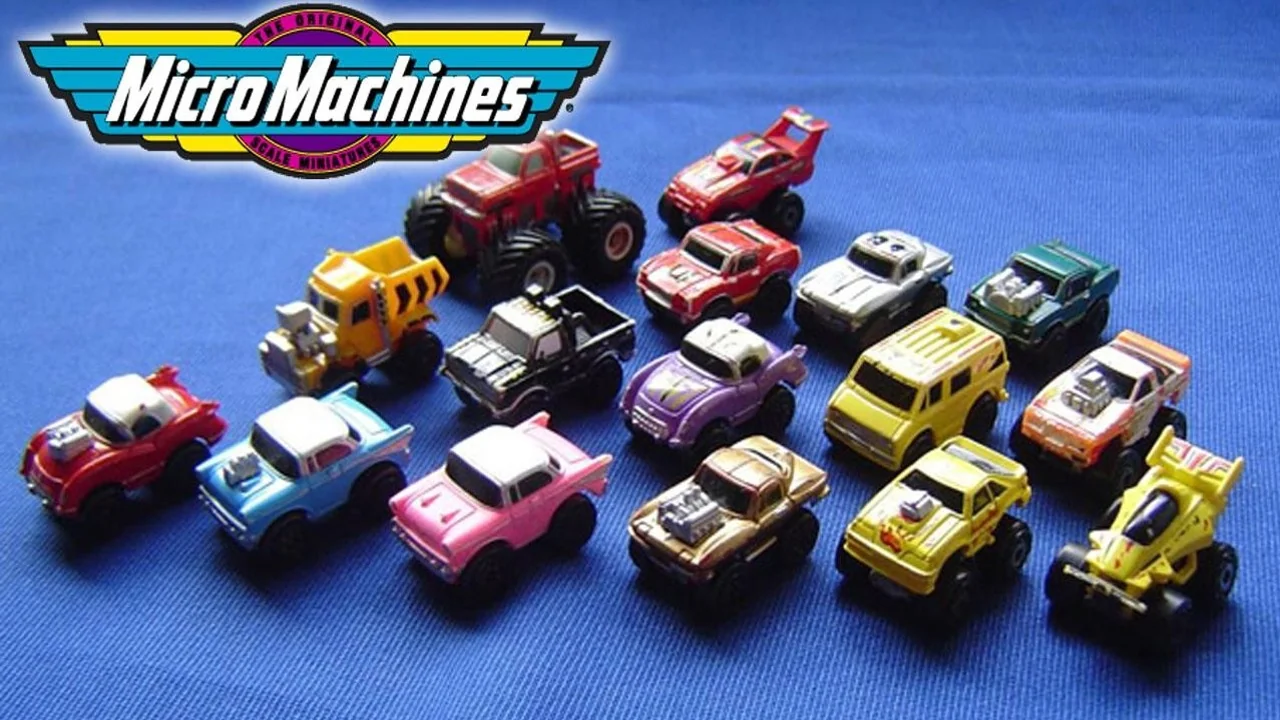
#3 — Micro Machines
Toy TypeMini vehicle line
Brand LaneMiniature novelty breakout
1989 Rank#3
Micro Machines hit number three because 1989 proves once again that the toy aisle can still be conquered by a brilliantly simple physical idea. The hook here is scale. Very small cars and vehicles are not, on paper, some impossibly radical invention. But Micro Machines package miniaturization as its own kind of thrill. They take the normal toy-vehicle fantasy and compress it until the smallness itself becomes the wow factor.
That matters because the late 80s are now increasingly dominated by software, licenses, and heavily managed character systems. Micro Machines win by offering a different kind of pleasure: tactile, collectible, display-friendly, and instantly impressive in person. They are another example of how a strong physical gimmick can still punch through even in a highly branded environment.
They also benefit from giftability. Their scale makes them feel affordable, expandable, and easy to imagine multiplying into a collection. That is a very strong holiday combination. One set is fun. Several sets become a little world. The line is brilliant at turning tiny objects into a bigger accumulation fantasy.
For Gen X, Micro Machines in 1989 feel like one of the last great physical toy breakouts of the decade — a reminder that even at the end of the 80s, the shelf could still be won by something small enough to disappear in a couch cushion.
The full forgotten toys of the 80s explores Micro Machines, tiny gimmicks, oddball products, strange shelf survivors, and toys that vanished into couch cushions.
Fun Fact / Why It Still Matters
Micro Machines broke through because they turned size itself into a gimmick, and kids instantly understood why that was cool.
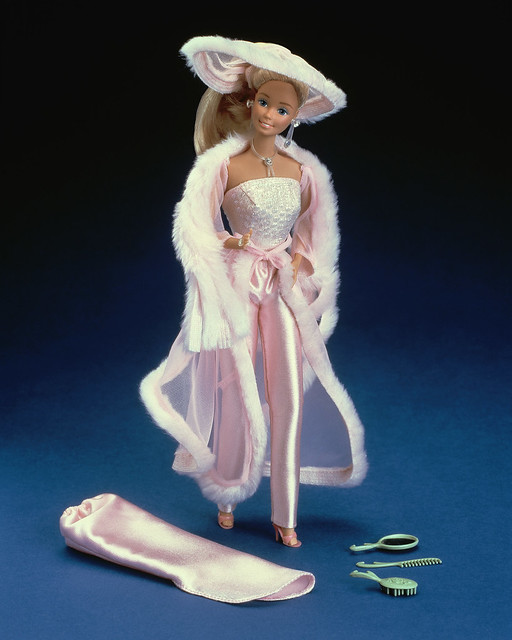
#2 — Barbie
Toy TypeFashion doll line
Brand LanePolished evergreen empire
1989 Rank#2
Barbie takes number two because 1989 is one of the clearest reminders that even in a Nintendo-dominated year, some toy systems are simply too deeply woven into the culture to be displaced completely. Barbie doesn’t need the novelty advantage. She doesn’t need the surprise factor. By the end of the 80s, she benefits from something more powerful: total fluency in the decade’s visual and aspirational language.
What makes Barbie especially strong here is that she thrives in exactly the kind of polished, image-conscious, brand-heavy environment that defines late-80s retail. The decade has now fully embraced display, glamour, styling, and identity through presentation. Barbie was built for that world, which is why she can still chart near the absolute top even while software is swallowing larger portions of the holiday conversation.
She also remains one of the toy market’s strongest open systems. Where Nintendo offers controlled software experiences and TMNT offers branded character universes, Barbie still allows a broad field of projection. That flexibility makes her commercially resilient across shifts in taste. She doesn’t need one specific pop-culture moment to remain relevant.
For Gen X, Barbie in 1989 feel like the proof that no matter how many new toy revolutions show up, some brands remain too adaptable, too polished, and too deeply embedded to lose.
The full 80s dolls, plush toys and pet-toy chaos explores Barbie, fashion dolls, dream houses, accessories, plush brands, pets, and identity-driven play.
Fun Fact / Why It Still Matters
Barbie ranks this high because by 1989 she isn’t just surviving the late 80s — she’s one of the brands most naturally aligned with what the late 80s became.
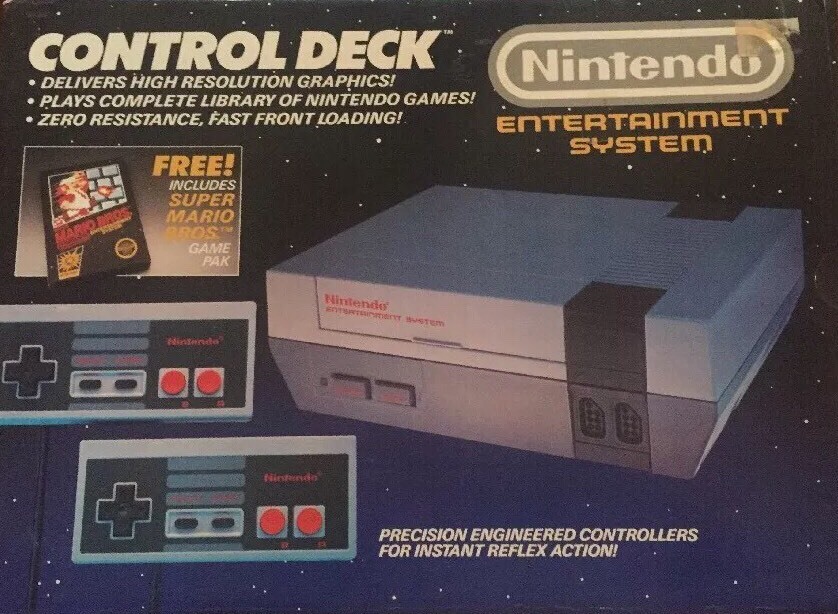
#1 — Nintendo Entertainment System
Toy TypeHome video game console
Brand LaneMarket-dominating game platform
1989 Rank#1
Nintendo Entertainment System takes the number one spot because 1989 is the year the toy market finally looks fully organized around the consequences of Nintendo’s success. This isn’t just a strong product anymore. It’s the framework inside which other 1989 winners start making sense. Software titles chart because Nintendo exists. Game Boy matters because Nintendo has already trained the market to trust its ecosystem. Even the broader holiday discussion of what counts as a major gift now bends toward the logic Nintendo helped normalize.
What makes the NES so dominant is that it changes more than what children want. It changes how demand behaves. A console platform creates recurring reasons to keep buying in, which means the machine never has to stand alone. It becomes a permanent anchor for future purchases. That is one of the most powerful retail models the decade ever produced, and by 1989 it is operating at full strength.
It also carries enormous symbolic value at the end of the decade. The early 80s toy aisle was still a place where puzzles, dolls, novelty electronics, and action figures all felt roughly equivalent in cultural weight. By 1989, the NES makes it clear that one category is beginning to reorganize the rest. The living-room console is no longer one toy among many. It is the product that helps redefine what a “top toy year” even looks like.
For Gen X, Nintendo in 1989 feel like the most honest number one of the late 80s. It isn’t just the hottest thing in the room. It’s the object that has already started rewriting the room around itself.
The full 80s video game toys explores the NES, cartridges, consoles, handhelds, electronic gaming, and the software-centered future of Gen X play.
Fun Fact / Why It Still Matters
Nintendo wins 1989 because by then it wasn’t simply a successful console — it was the
dominant system through which the year’s toy culture was increasingly being organized.
The 90s Arrive Through the Side Door
Game Boy Changed the Geography of Play
The NES owned the television. Game Boy made the television optional.
Nintendo’s handheld launched in North America during 1989 and carried the company’s
cartridge model into bedrooms, back seats, waiting rooms, vacations, and every place
adults had once expected children to stare quietly out a window.
The product’s importance was larger than portability alone. Game Boy created a more
private relationship with gaming. The screen belonged to one player. The cartridge
traveled with the system. Progress, frustration, and Tetris-shaped obsession no longer
had to be negotiated with the rest of the household.
It also showed how strong Nintendo’s brand trust had become. Consumers were willing to
buy another platform because the company had already made the NES ecosystem feel
dependable and essential. The larger 80s Video Game
Toys guide follows how consoles, cartridges, handhelds, and electronic play moved
from one corner of the toy aisle toward the center of Gen X childhood.
The Toy Box Afterlife
Collecting Toys From 1989 Today
Toys from 1989 can attract serious collector interest, but age alone does not create
value. Exact version, condition, completeness, original packaging, working electronics,
authenticity, accessories, rarity, and current buyer demand matter much more than an
unsold listing with enough zeroes to finance a small cartridge factory.
Nintendo hardware needs full functional testing.
NES and Game Boy systems should be checked for power, cartridge reading, screen
condition, dead pixels, sound, buttons, battery corrosion, controller function,
ports, repairs, modifications, regional version, original accessories, manuals,
boxes, and matching serial information.
Cartridge condition includes more than the label.
Zelda II, Ninja Gaiden, and Super Mario Bros. 2 should be checked for authentic
boards and shells, label wear, corrosion, cleaned contacts, replaced batteries
where applicable, boxes, manuals, inserts, region, and whether the cartridge has
been repaired or assembled from mismatched parts.
Figures and miniatures lose value through missing pieces.
TMNT, G.I. Joe, Ghostbusters, and Micro Machines often depend on tiny weapons,
belts, file cards, backpacks, vehicles, hoses, stickers, playset pieces, packaging,
and version-specific accessories. Small original parts remain incredibly skilled
at disappearing forever.
Sold prices matter more than asking prices.
Compare completed sales for the same version, condition, and completeness. The
guide to valuable 80s toys worth money today
explains how to separate real collector demand from nostalgia-priced optimism.
Commercial-Break Pressure
Watch the 1989 Toy Commercial Energy
The 1989 toy aisle was built for high-speed persuasion: Nintendo selling the system
and the cartridges, Game Boy promising gaming anywhere, Micro Machines using
speed-talking as a competitive sport, TMNT turning mutant nonsense into playground
currency, Barbie staying polished, Ghostbusters selling slime and gadgets, and
G.I. Joe continuing to treat every commercial like a mission briefing.
The 80s Toy Commercials & Videos
archive is the best next stop for the ad-break side of the year. The
commercials show how the market had changed: product demonstrations were faster,
licensing was tighter, software had its own star power, and every thirty-second spot
seemed designed to make an ordinary Christmas list look strategically incomplete.
The Rest of the Year
Keep Rewinding 1989
The 1989 toy aisle was only one part of the decade’s closing credits. This was also
the year of Batman, Indiana Jones and the Last Crusade,
Lethal Weapon 2, Ghostbusters II, Paula Abdul, Janet Jackson,
New Kids on the Block, Milli Vanilli, Hard Rock Cafe shirts, biker shorts, fanny packs,
and pop culture preparing to cross into the 90s without lowering the volume.
These same-year guides put Nintendo, Barbie, Micro Machines, TMNT, Game Boy, and the
rest of the toy aisle back inside the music, movies, television, fads, fashion, and
advertising that made 1989 feel like the 80s were ending with a controller in their hand.
The Final Call
Why These Toys Define 1989
The top 10 toys of 1989 show the decade ending under a different commercial logic
than the one it started with. The early 80s were a contest between emerging
categories. By 1989, those categories still exist, but
gaming is now powerful enough to pull much of
the market into its orbit.
Nintendo supplies the hardware, several of the must-have software experiences, and
the portable future. Barbie remains strong because
evergreen adaptability survives every market shift.
Micro Machines prove a physical gimmick can still
break through. TMNT and The Real Ghostbusters keep
licensed action alive, while G.I. Joe demonstrates
how a well-built figure system can outlast multiple toy trends.
For Gen X, 1989 feels like the 80s ending with a system victory. The shelf remains
colorful and chaotic, but the future has clearly picked a direction: platforms,
software libraries, portable screens, powerful licenses, and recurring purchases.
The 90s were already loading.
Top Toys of 1989: Frequently Asked Questions
What were the most popular toys of 1989?
The most popular toys of 1989 included Nintendo Entertainment System, Barbie, Micro Machines, Teenage Mutant Ninja Turtles, Zelda II: The Adventure of Link, G.I. Joe, Ninja Gaiden, Super Mario Bros. 2, The Real Ghostbusters, and Game Boy.
What was the biggest toy of 1989?
The Nintendo Entertainment System takes the number-one spot because Nintendo was the dominant platform organizing the year’s hardware, software, and holiday demand.
What were the hottest Christmas toys of 1989?
Popular Christmas toys in 1989 included Nintendo systems and cartridges, Barbie, Micro Machines, Teenage Mutant Ninja Turtles, G.I. Joe, The Real Ghostbusters, and Game Boy.
Why does Nintendo rank number one?
Nintendo did more than sell one product. The NES created continuing demand for cartridges, characters, accessories, and new game experiences, making it the central system of the 1989 toy market.
Was Game Boy released in 1989?
Yes. Game Boy launched in North America during 1989 and introduced portable cartridge gaming to a huge new audience.
Why is Game Boy only number ten?
This ranking balances immediate 1989 market placement against later cultural legacy. Game Boy was a major new arrival and future signal, but its long-term importance became even larger during the years that followed.
Why is Barbie ranked so high in a Nintendo year?
Barbie remained one of the toy industry’s strongest evergreen systems. Fashion, accessories, careers, houses, vehicles, and open-ended role-play kept the brand adaptable.
Were Micro Machines popular in 1989?
Yes. Micro Machines turned miniature scale into a powerful collectible gimmick and became one of the most recognizable physical toy lines of the late 80s.
Were Teenage Mutant Ninja Turtles popular in 1989?
Yes. By 1989, TMNT had become one of the strongest action-figure lines in the market, supported by distinct characters, villains, vehicles, comedy, mutation, and cartoon visibility.
Was G.I. Joe still popular in 1989?
Yes. G.I. Joe remained commercially important because figures, file cards, Cobra, vehicles, missions, cartoons, and team-building made the line highly expandable.
Why are The Real Ghostbusters included?
The Real Ghostbusters remained a flexible licensed action line that could combine comedy, creatures, gadgets, slime, character play, and supernatural weirdness.
What makes 1989 different from 1988 in toy culture?
1988 still balances tactile novelty, rising TMNT power, Nintendo, and older brands. In 1989, gaming becomes more clearly the organizing force, with hardware, cartridges, and portable play occupying several top positions.
Were Nintendo games really separate major gifts?
Yes. Once households owned the NES, individual cartridges became stand-alone wish-list items with their own identities, advertising, difficulty reputations, and social status.
Are toys from 1989 valuable today?
Some can be, but value depends on exact version, condition, completeness, original accessories, packaging, authenticity, working electronics, rarity, and current demand. Compare verified sold prices and use the guide to valuable 80s toys rather than trusting unsold asking prices.
Was there an official top-10 toy chart for 1989?
Trade publications produced toy bestseller charts, but no single complete public list cleanly compares every category across the entire year. This page uses a transparent editorial method grounded in contemporary market signals, holiday demand, cultural impact, and category strength.
Where can I watch commercials for 1989 toys?
Start with the 80s Toy Commercials & Videos archive, which connects Nintendo, Game Boy, Micro Machines, TMNT, Barbie, Ghostbusters, G.I. Joe, and other toys to the ads that sold them.
Where should I go after the 1989 toy list?
Continue to the top toys of 1990 and the main 90s Toys hub to follow the market into handheld gaming, collectibles, electronic toys, schoolyard crazes, and the next decade.
Explore the Top Toys From Every Year of the 80s
Move through the decade year by year to see how the toy aisle shifted from puzzles,
early electronic games, and character brands into action-figure empires, talking plush,
console gaming, transforming robots, tactile novelty, licensed franchises, handhelds,
and the software-centered future waiting in the 90s.