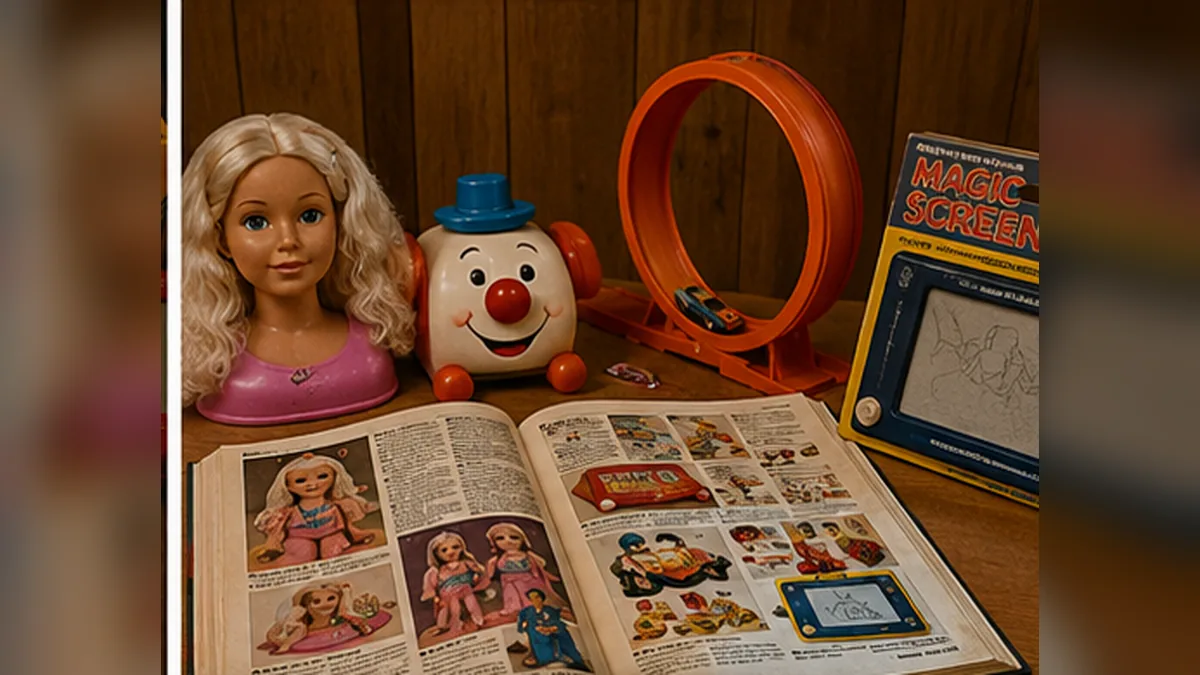
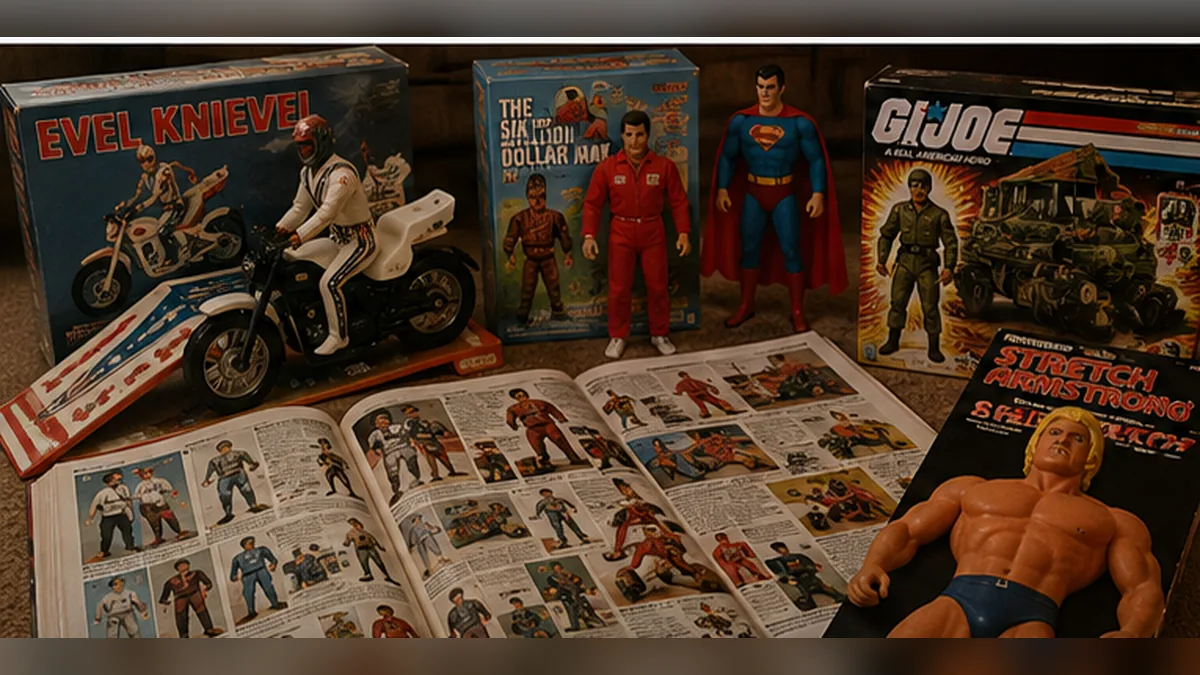
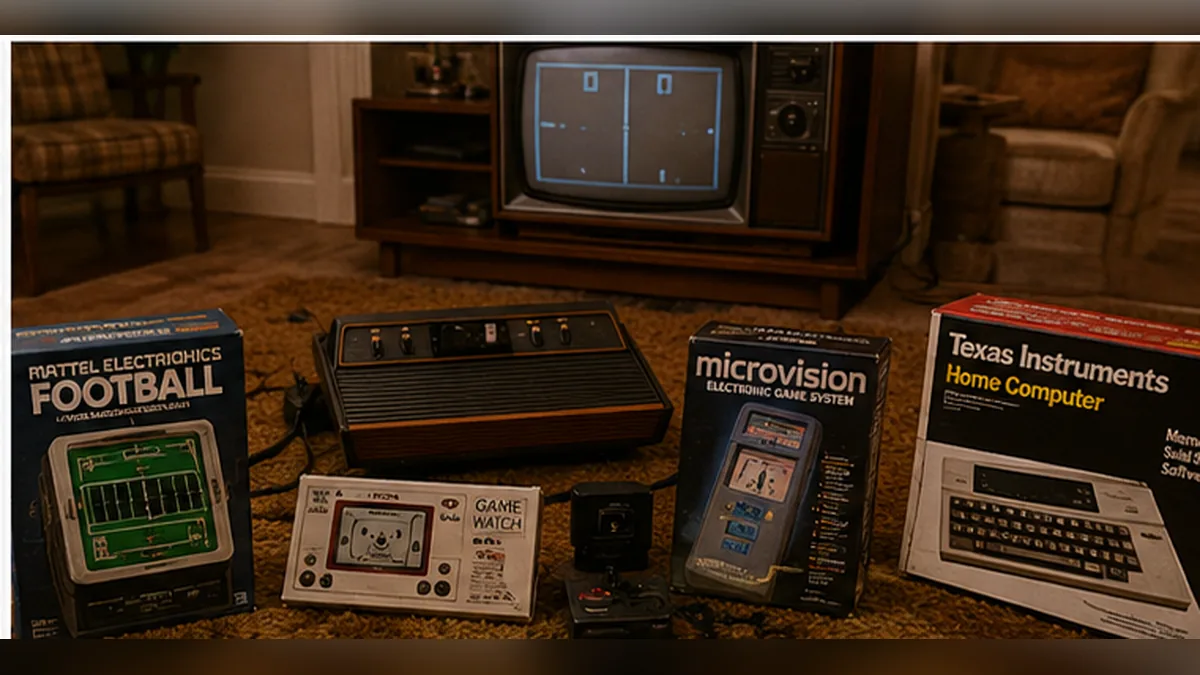
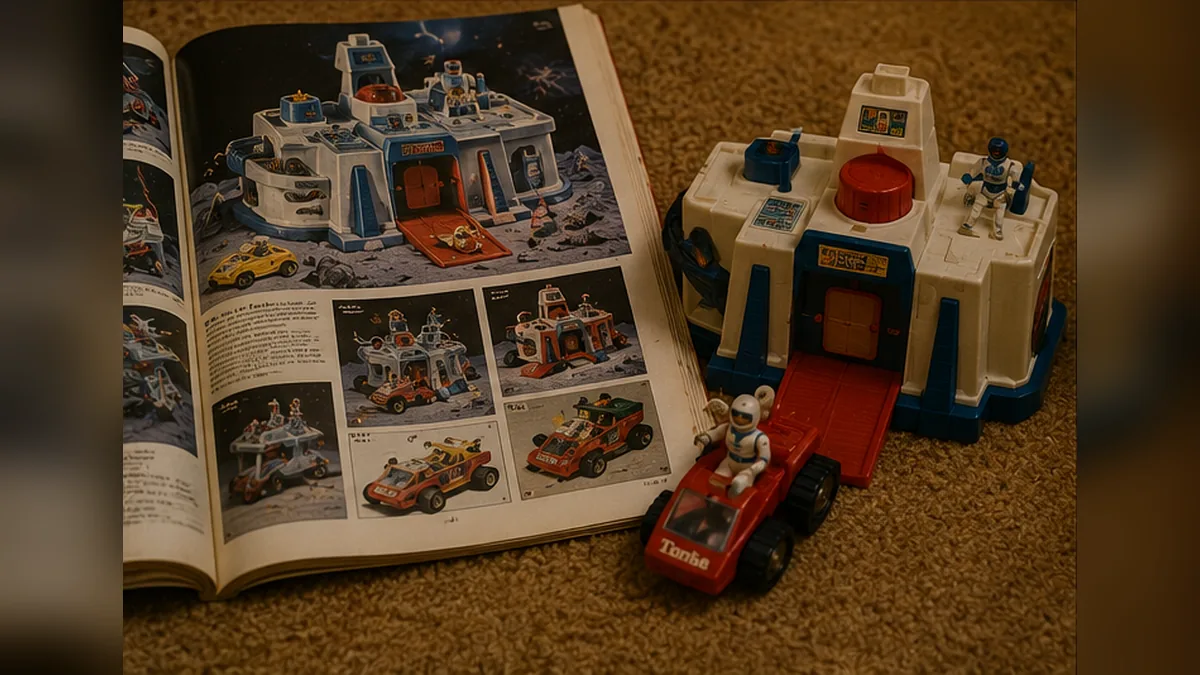
Before anyone reached the toy section, the catalog had already started building Christmas. The cover, the first gift spreads, and the way the book moved from family scenes into merchandise created a whole season in paper.
A Catalog Had to Feel Like an Event
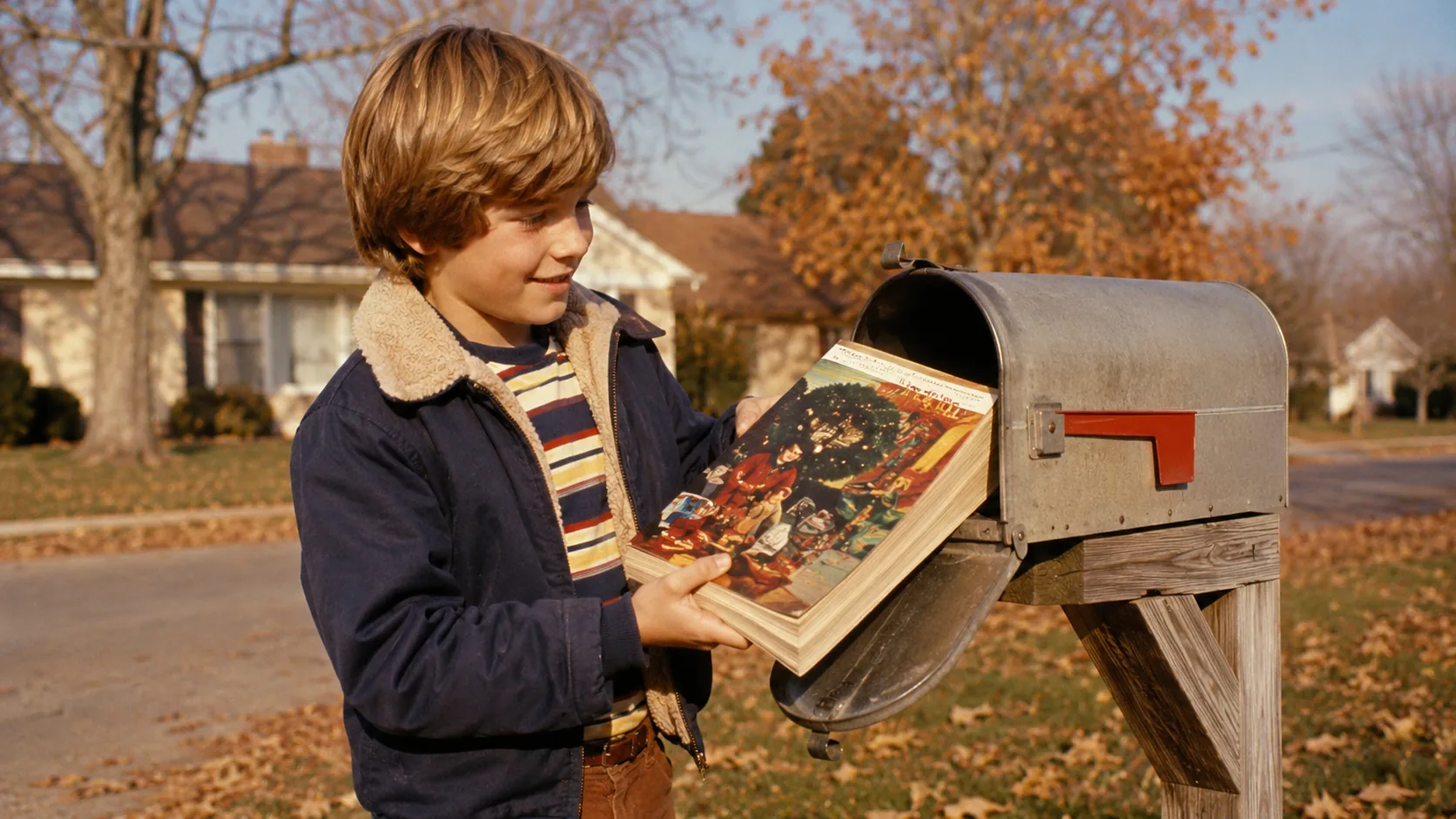
The cover did not need to show the toy that would dominate the house. Its job was larger. It had to announce that Christmas shopping had begun. Snow, ornaments, wrapped gifts, illustrated scenes, holiday colors, and smiling families turned a retail book into a seasonal object.
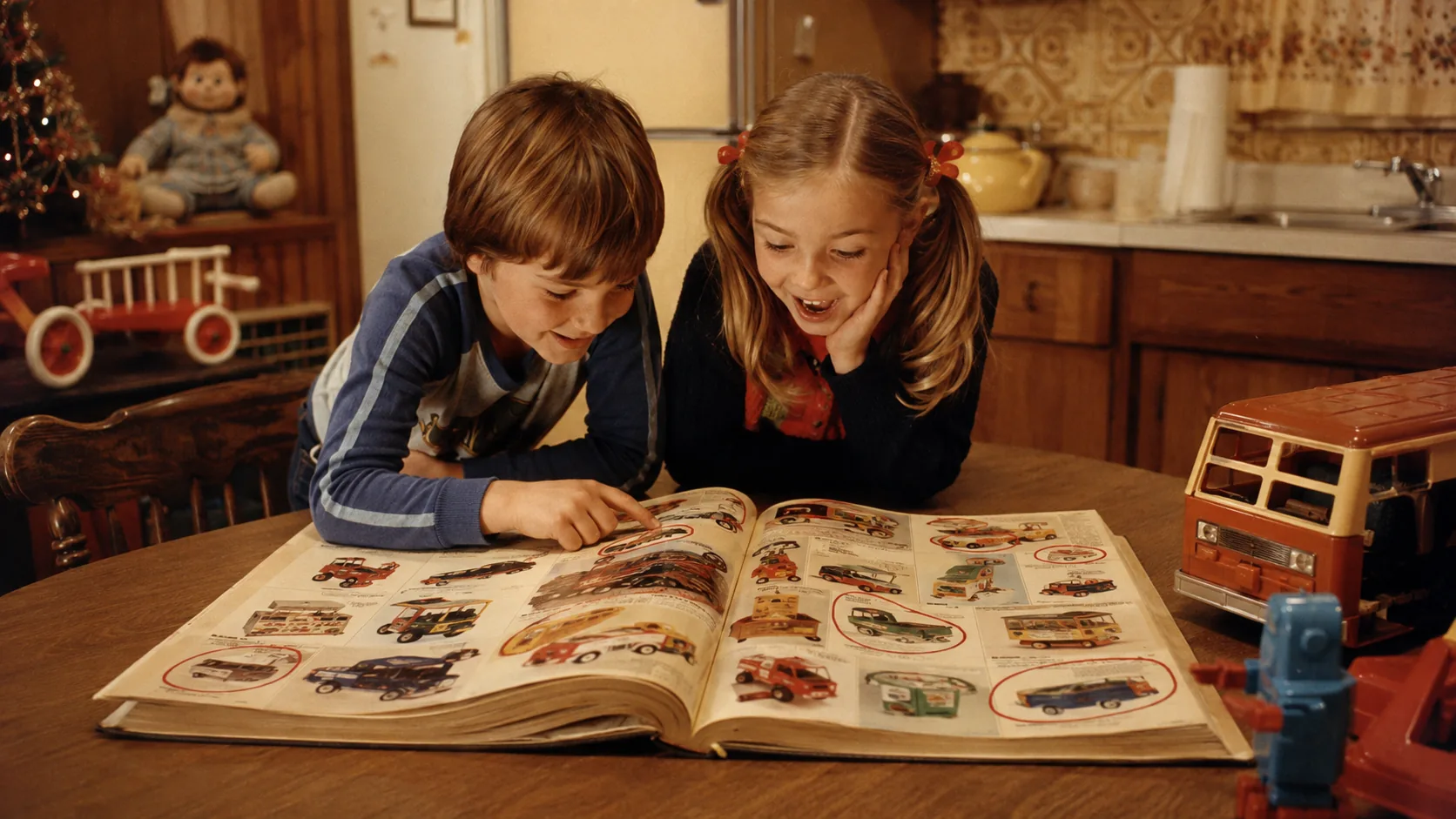
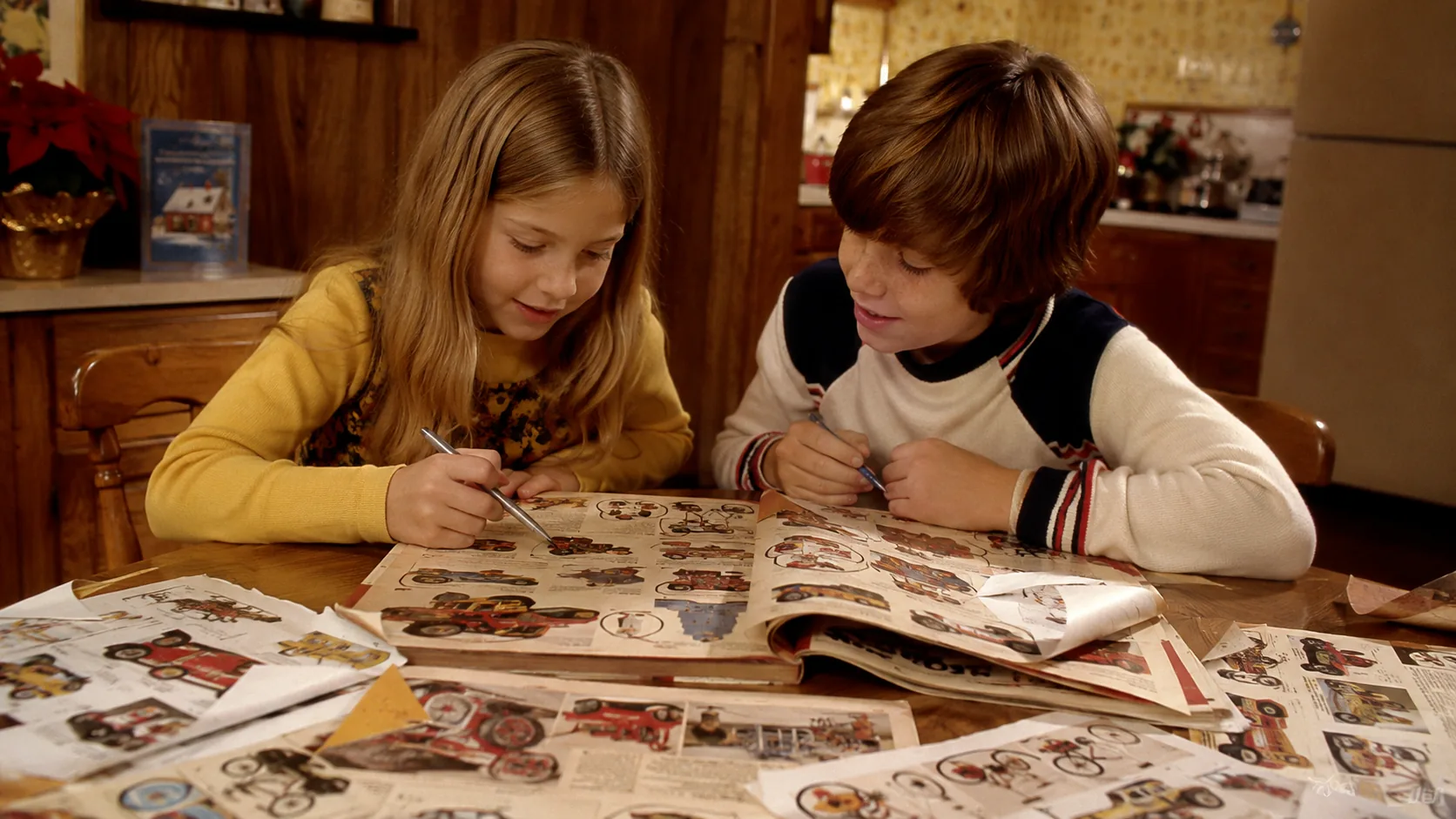
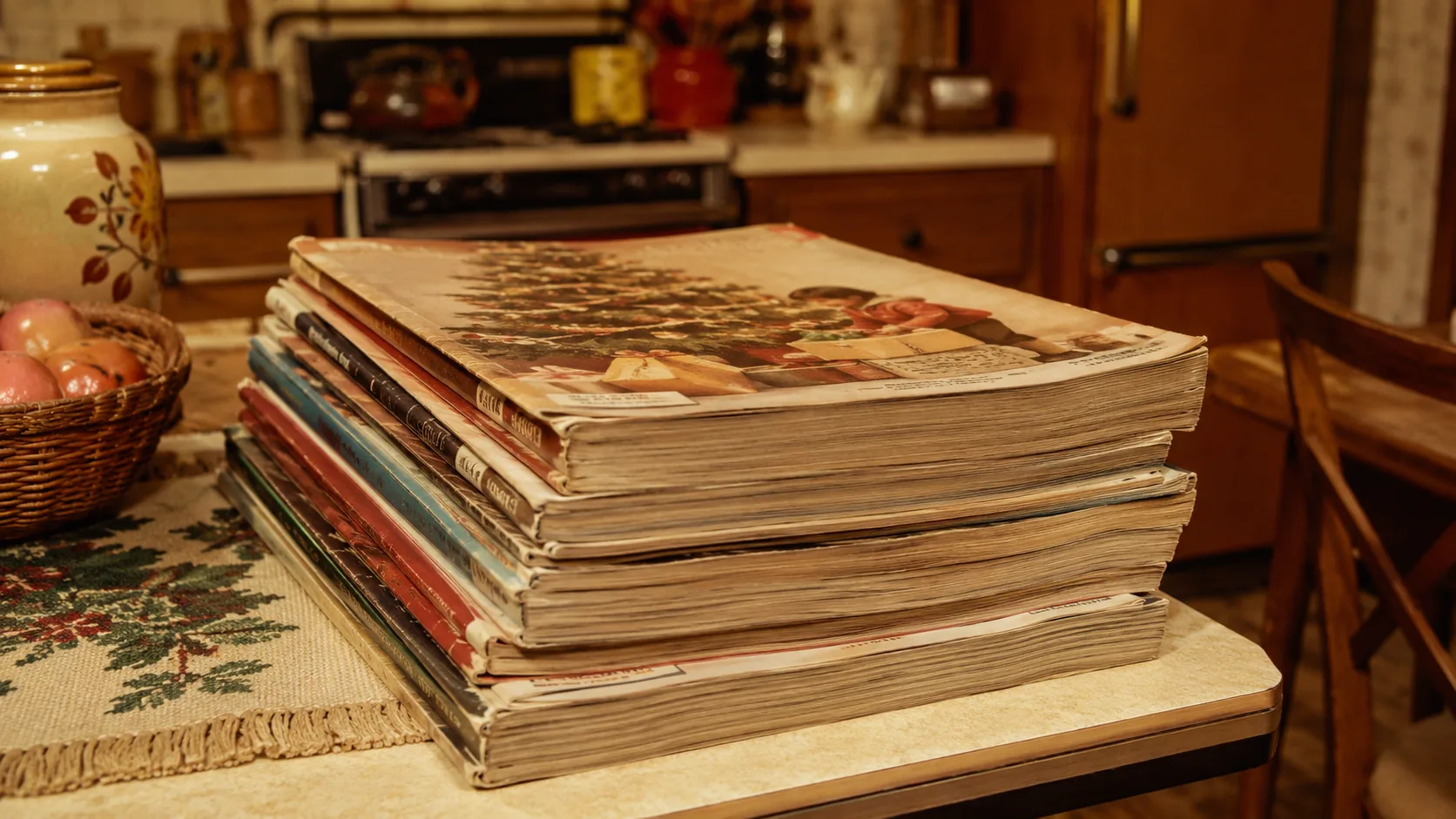
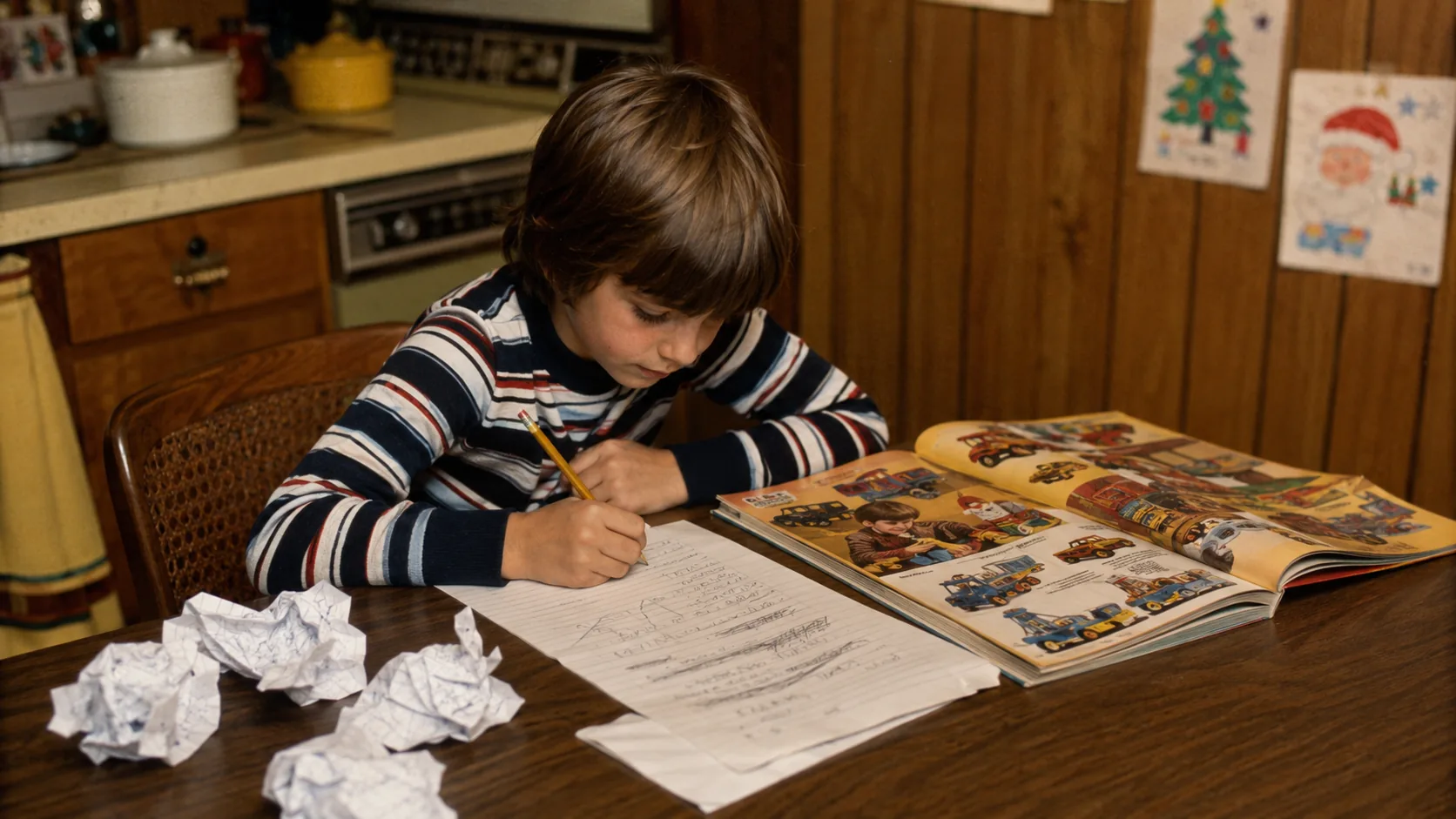
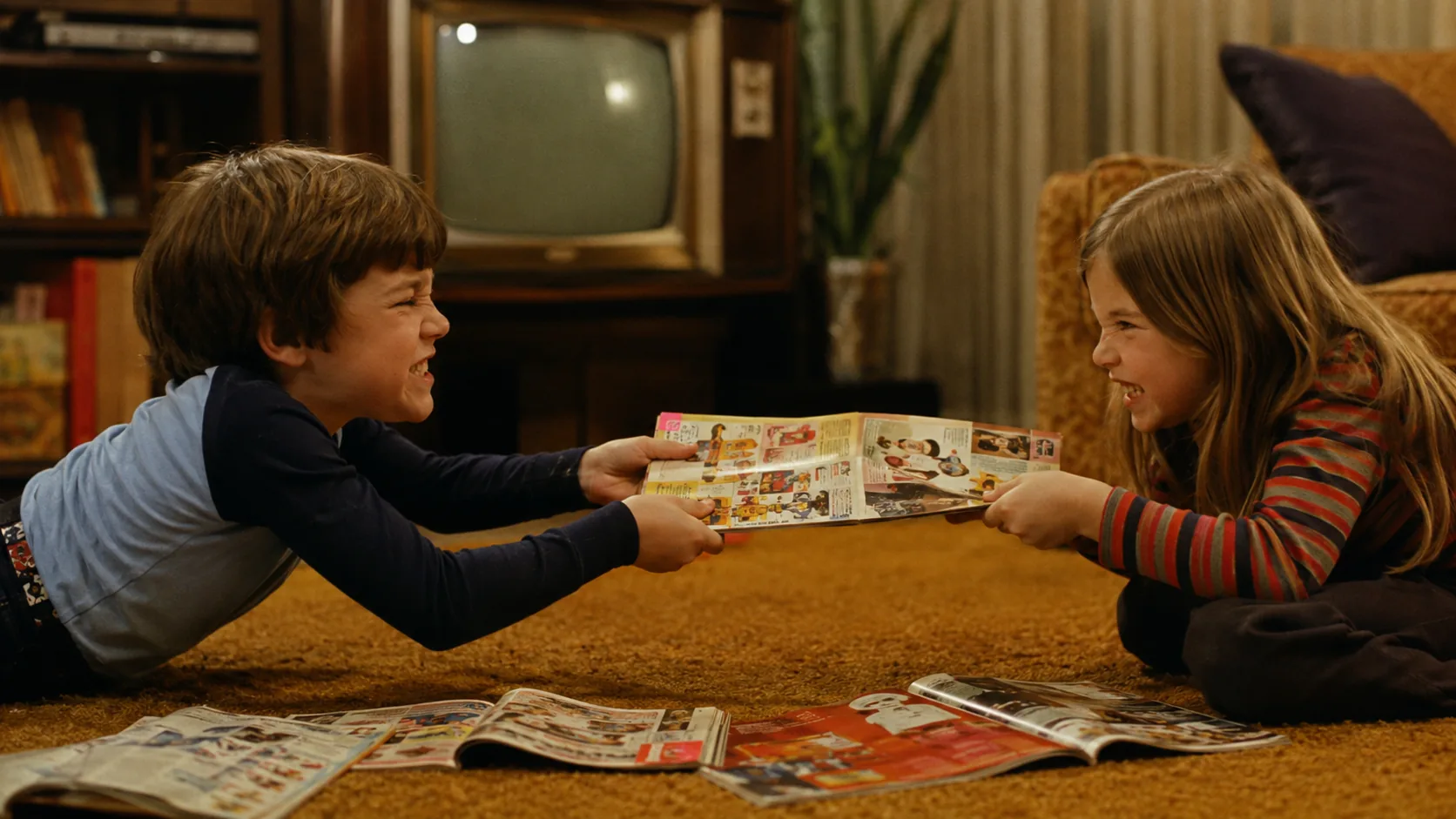
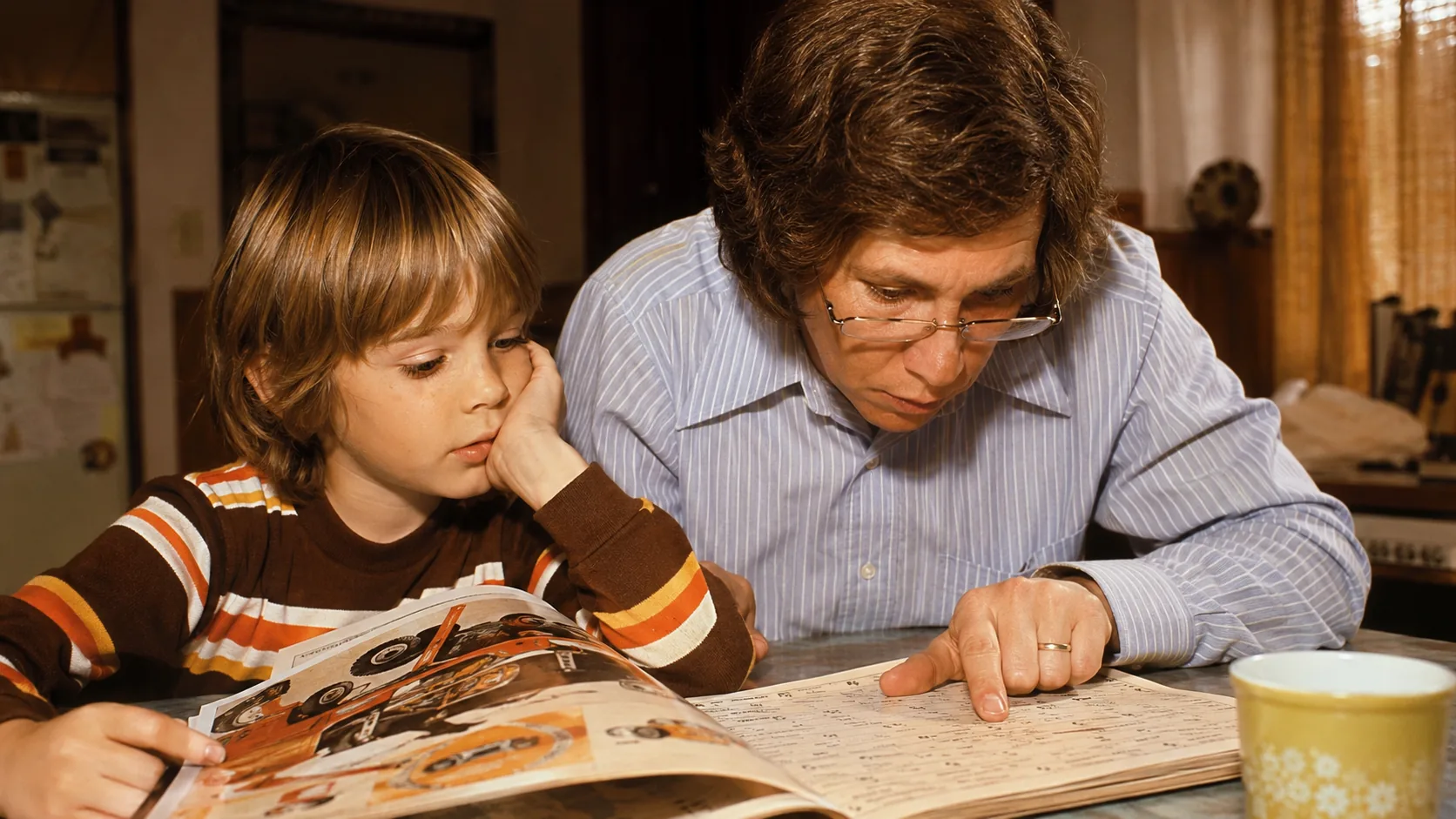
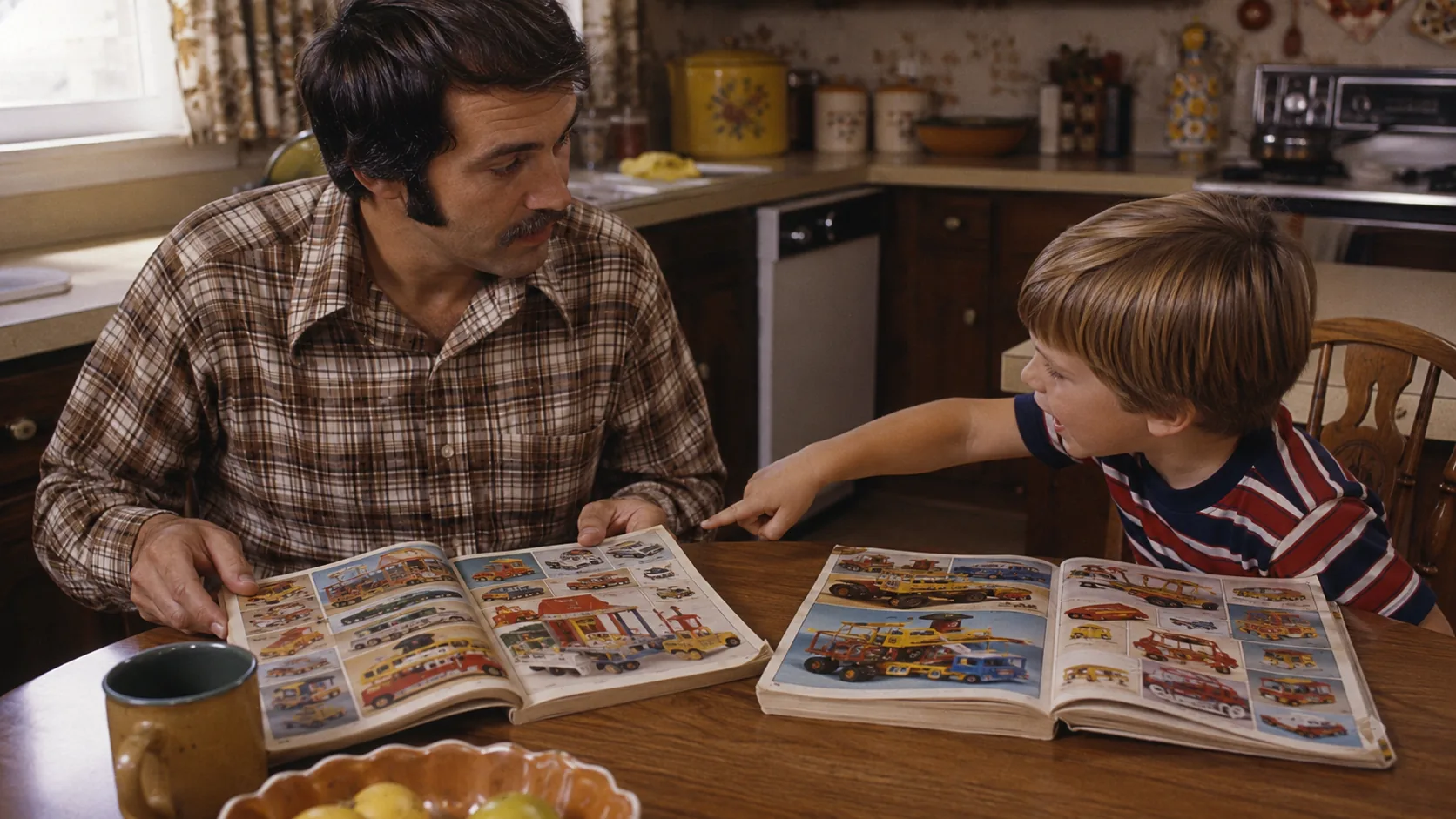
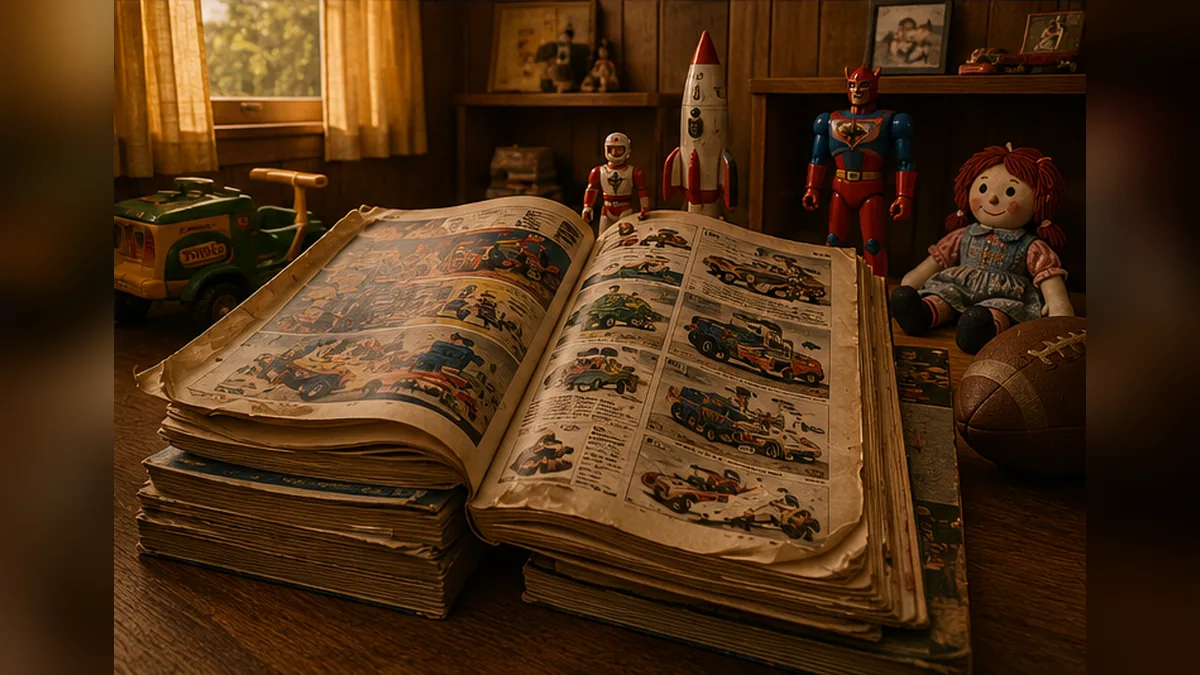
That mattered because the catalog lived in the home for weeks. It was not opened once and discarded. It sat on tables, counters, chairs, and sometimes the floor. A strong cover kept the book feeling special after the fifth, fifteenth, and fiftieth time somebody picked it up.
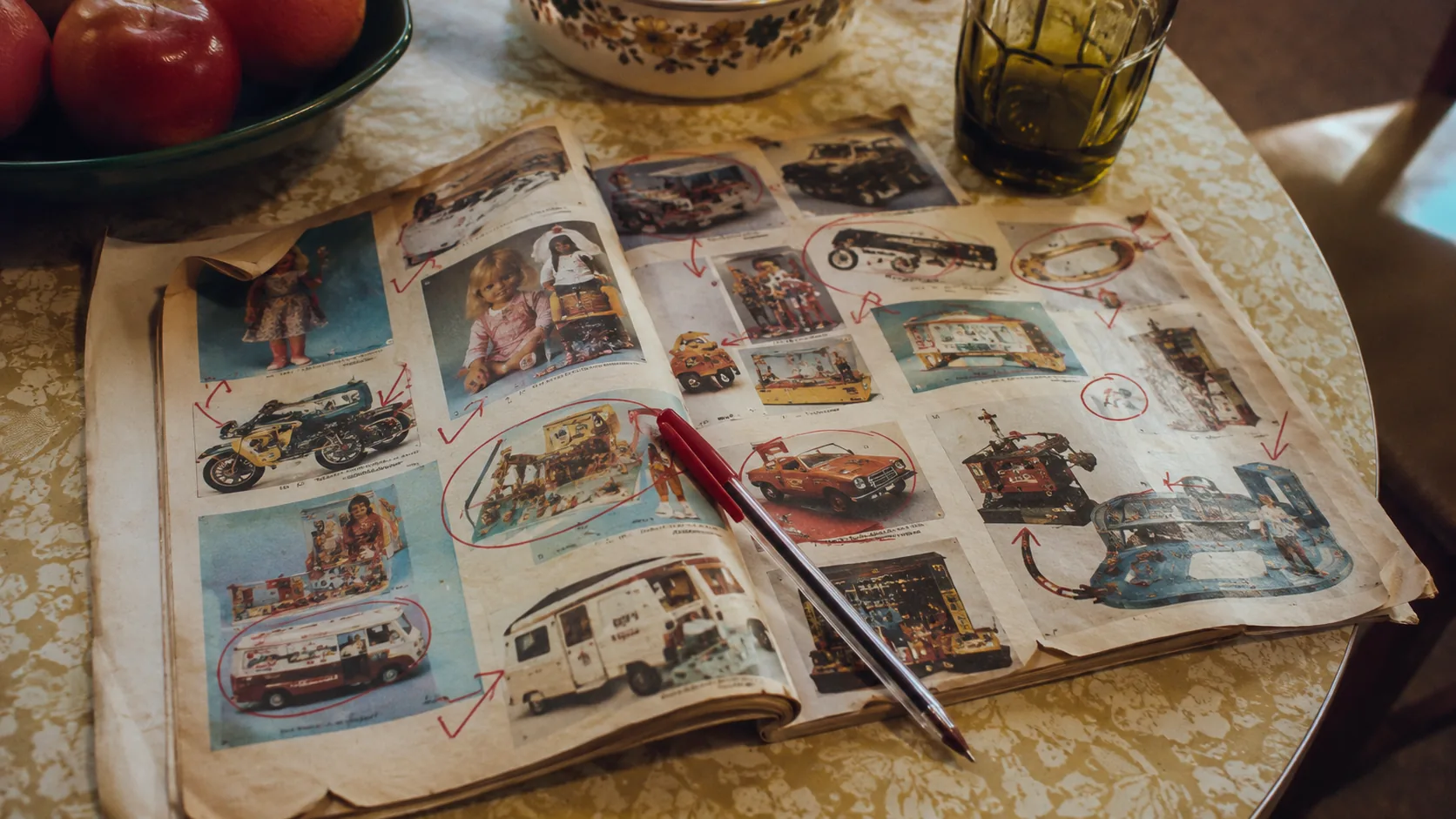
The physical wear became part of the design eventually. The clean cover gathered bent corners, pen marks, fingerprints, and a spine that loosened under repeated trips to the same pages. By Christmas, the catalog no longer looked like the copy that arrived. It looked like the household had used it.
We Traveled Through the Adult World to Reach Toys
Depending on the catalog, the toy section might be near the back, which meant flipping past clothes, bedding, appliances, jewelry, tools, cameras, and furniture. Kids treated those pages like highway miles. They were scenery between the cover and the destination.
Still, some of that adult merchandise seeped in. A stereo could become a teenage wish. A camera looked like access to a more grown-up life. A watch, desk, record player, or bedroom set could catch the attention of a kid beginning to drift out of toys without being ready to admit it.
The catalog therefore recorded more than childhood products. It recorded the transition out of childhood. One year a kid went straight to action figures. A few years later the folded corner moved to stereos, clothes, or sports equipment. The book stayed the same while the destination changed.
The Toy Section Had Its Own Weather
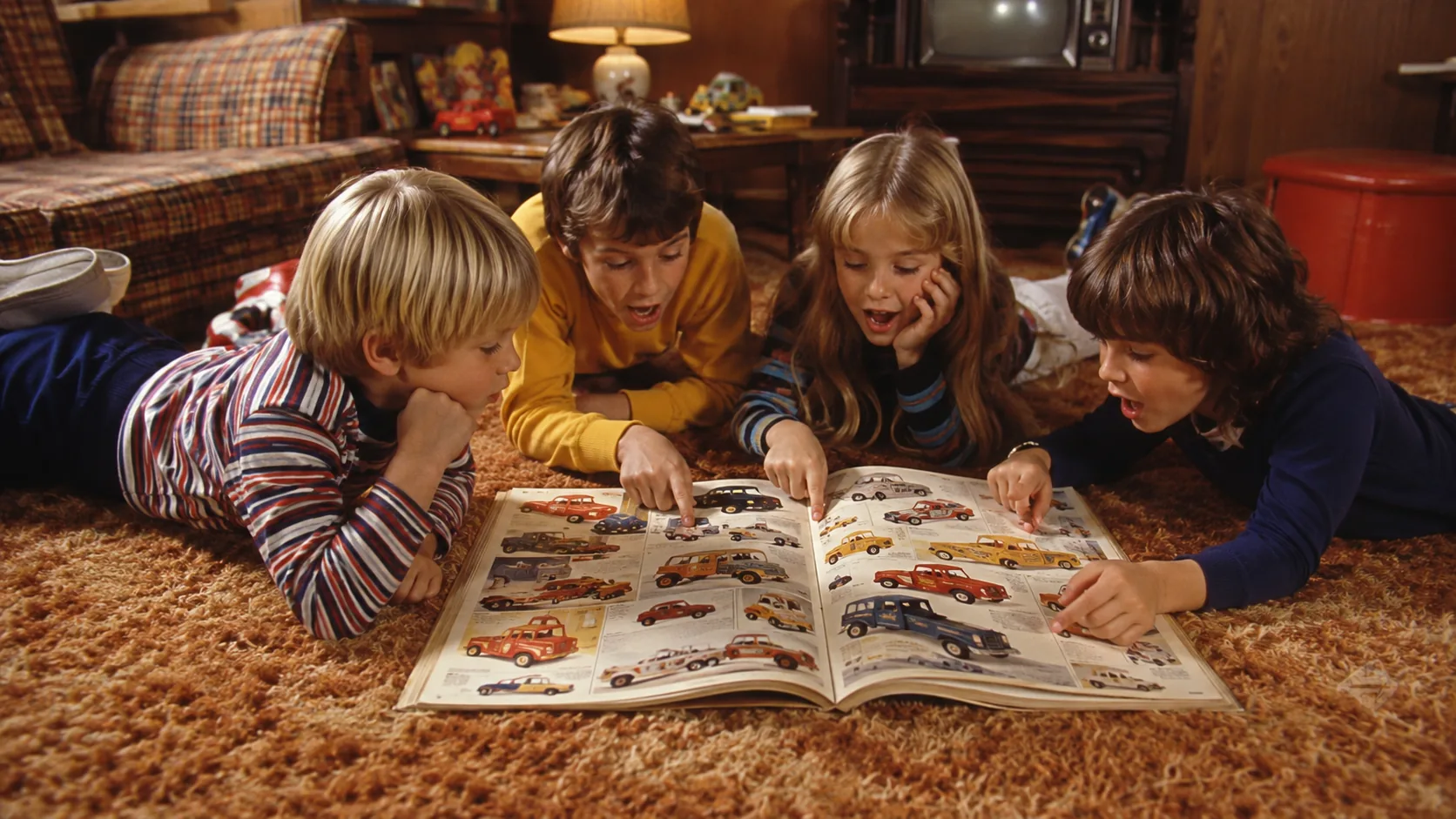
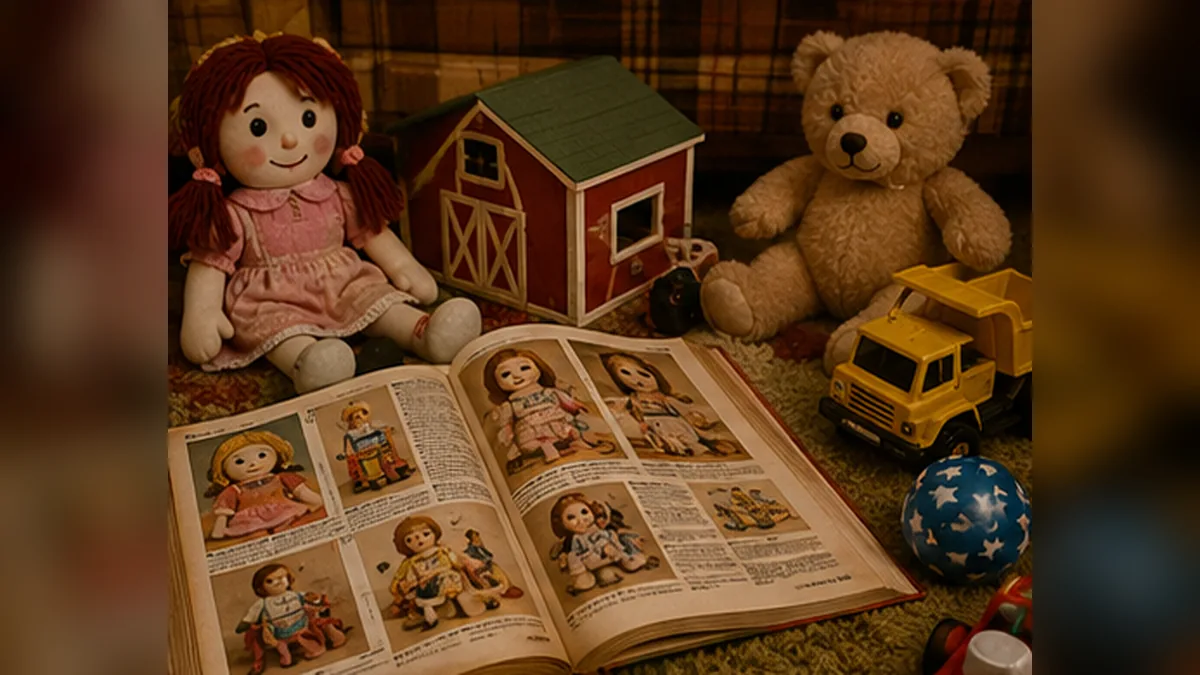
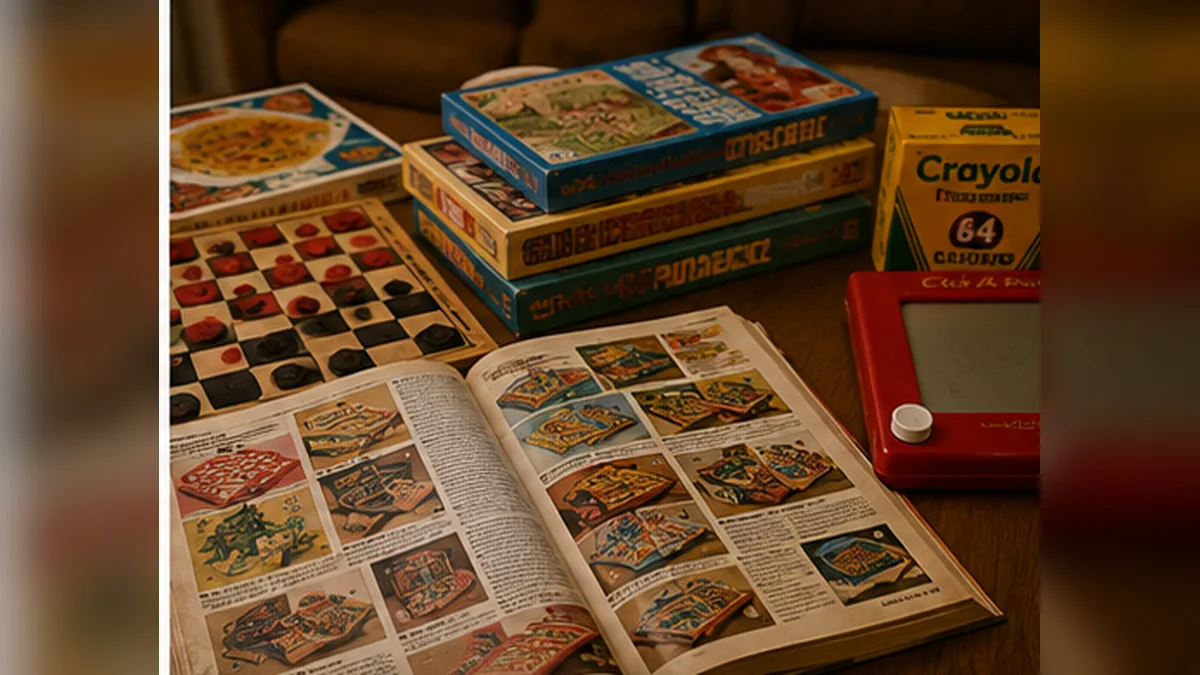
When you finally reached toys, the pages became brighter, busier, and more crowded. Primary colors, product boxes, smiling children, illustrated bursts, price circles, and large headlines created a visual change even before you read a word.
That shift was deliberate. The adult pages sold quality, practicality, and value. The toy pages sold motion, personality, and possibility. A washing machine sat still and promised reliability. A toy vehicle seemed halfway off the page and promised a crash before lunch.