70s Backyard Toys: Big Wheels, Bikes and Outdoor Chaos
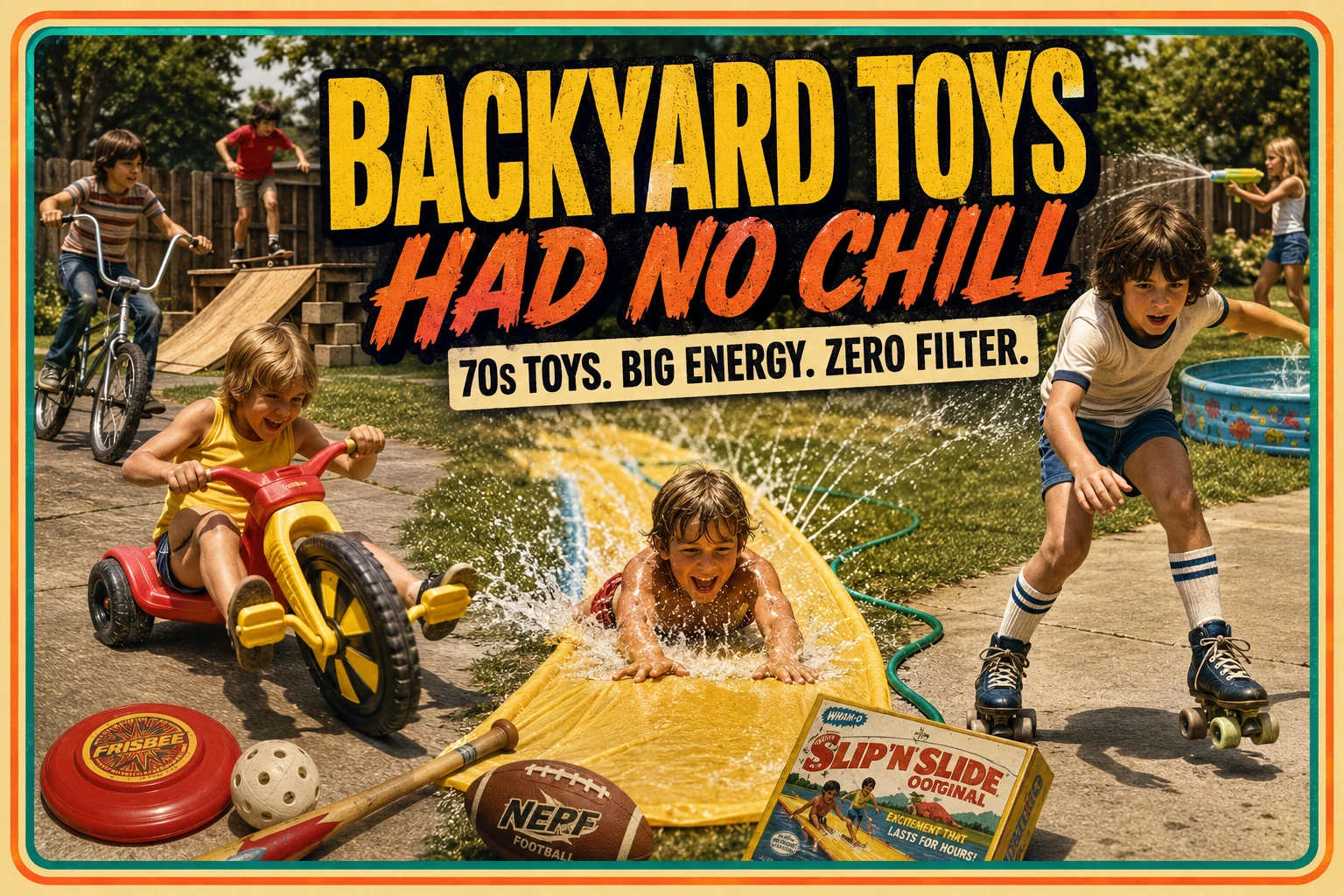
70s Backyard Toys Big Wheels, Bikes and Outdoor Chaos
Before childhood came with apps, trackers and padded schedules, the backyard was a loose collection of bikes, balls, sprinklers, skates, ramps, hoses, plastic ride-ons and bad ideas that somehow counted as “go play outside.”
This deep dive revisits Big Wheel, banana-seat bikes, skateboards, roller skates, Slip ’N Slide, Nerf balls, Wiffle Ball, Frisbees, lawn games, water fights and the homemade stunt economy that kept Gen X outside until somebody yelled.
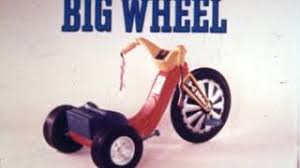 The Driveway Icon
Big Wheel
Low plastic speed, power slides and the dangerous confidence of a child who technically had a vehicle.
The Driveway Icon
Big Wheel
Low plastic speed, power slides and the dangerous confidence of a child who technically had a vehicle.
What Defined 70s Backyard Toys?
Seventies backyard toys were built around movement, speed, water, throwing, riding and improvised neighborhood play. The biggest staples included Big Wheel, banana-seat bikes, skateboards, roller skates, Slip ’N Slide, sprinklers, kiddie pools, Nerf balls, Wiffle Ball, Frisbees, badminton, croquet, jump ropes and homemade ramps or forts. The toys supplied a starting point; kids supplied the rules, terrain and risk assessment.
Essential 70s Backyard and Outdoor Toys
The best outdoor toy box mixed ride-ons, bikes, water toys, foam balls, lawn games and homemade equipment. No single brand owned the yard because the yard itself was the system.
Why Outdoor Toys Owned 1970s Childhood
Outdoor toys multiplied the value of ordinary space. A driveway became a racetrack. A lawn became a ball field, water park or obstacle course. A sidewalk became a skating rink. A fence became a boundary, goal line and retrieval problem.
The strongest toys were also easy to remix. A bike could race, jump or carry a kid to the next neighborhood. A Nerf ball could become football, catch or dodgeball. A hose could power a sprinkler, fill a pool, create mud or end all water-gun diplomacy.
That open-ended design kept the toys active for years. Nothing needed a software update. The expansion pack was another kid, a steeper driveway or a board somebody found behind the garage.
Movement expanded the play area and made every slope, curb and driveway feel important.
A hose turned the yard into an event and made hot afternoons immediately louder.
Simple equipment let kids invent fields, teams and local rules almost anywhere.
Household junk became equipment because imagination had no purchasing department.
The Backyard Was the Original Open World
The 70s backyard was not a curated play space. It was grass, dirt, concrete, a driveway, a fence, maybe a chain-link gate, maybe a rusty swing set, maybe a shed full of suspicious tools, and enough loose objects to turn a regular afternoon into a neighborhood event.
Kids did not need much structure. A ball, a bike, a hose, a stick, a cardboard box, a cracked plastic bat, or a random piece of wood could become a game. The rules appeared as needed, changed constantly, and were enforced by whoever yelled the loudest. Home base could be a tree. The outfield could be a neighbor’s yard. The boundary line could be “before the street,” which everyone ignored.
That was the magic and the menace. The backyard was open-ended in a way that modern play rarely is. Nobody unlocked a level. Nobody completed a tutorial. Nobody tracked steps. Kids created the mission themselves: race to the mailbox, jump the curb, hit the ball past the fence, build the ramp higher, run through the sprinkler, slide across the lawn, climb the tree, throw the Frisbee over the garage, and act surprised when something went wrong.
Backyard toys mattered because they turned outside into a world. They gave kids speed, water, noise, competition, motion, minor danger, and a reason to come home filthy. That was not a side effect. That was the product.
The Ride-On and Wheel Era: Low Seats, High Confidence
Some 70s backyard toys did not stay in the backyard for long. They escaped into driveways, sidewalks, alleys, cul-de-sacs, parking lots, and any sloped surface that looked like it might create speed. This was where play got mobile, loud, and slightly overconfident.
Big Wheel: Plastic Speed and Driveway Skid Marks
Big Wheels were one of the purest 70s ride-on toys because they looked safe enough to buy and reckless enough to become legendary. The low plastic frame, giant front wheel, and shallow seat gave kids the feeling of speed without needing a real bike. It was toddler transportation with the soul of a demolition derby.
The Big Wheel hit a sweet spot that regular tricycles never quite reached. It sat lower, looked cooler, and felt more like a vehicle than a baby toy. The molded plastic body made it feel modern. The handlebars gave kids just enough control to believe they were drivers. The giant front wheel looked powerful even when the whole thing was powered by tiny legs and poor judgment.
The sound was part of it: plastic wheels grinding over concrete, hollow body panels rattling, the front wheel wobbling just enough to make every turn feel dramatic. Kids leaned back like race drivers, pedaled hard, and discovered the joy of the skid-out. A good Big Wheel ride was not elegant. It was sideways, loud, and usually ended with someone dragging the thing back uphill for another run.
Big Wheels were made for driveways, sidewalks, and apartment-complex pavement. They turned tiny slopes into racetracks. Kids invented courses around parked cars, porch steps, trash cans, and lawn edges. The best move was the power slide — hit the pedals, crank the handlebars, and whip the plastic rear wheels sideways until the whole machine looked like it was trying to leave childhood.
They also created neighborhood status. A Big Wheel was not just a toy. It was a vehicle. It could be raced, stickered, wrecked, parked next to bikes like it belonged there, and slowly worn down until the plastic wheels were bald from driveway abuse. The commercials made it look like pure fun. The neighborhood version added gravel, curbs, bruised knees, and one kid who insisted he could make it down the steepest driveway on the block.
The Big Wheel hit because it made little kids feel older. You were not sitting in a stroller. You were driving. Badly, loudly, and very low to the ground.
Banana-Seat Bikes: Freedom With Handlebar Streamers
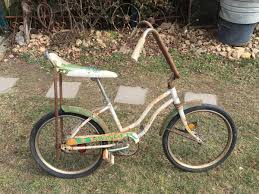
The banana-seat bike was a 70s neighborhood machine. High-rise handlebars, long seats, sissy bars, bright colors, reflectors, streamers, coaster brakes, and enough chrome to make a kid feel like they owned the block. These bikes were not just transportation. They were identity.
The design mattered. The long banana seat let kids slide back like they were riding something cooler than a normal bicycle. The tall handlebars gave the bike a chopper-style attitude. The sissy bar looked dramatic. The colors were usually loud enough to be seen from space. If the bike had a racing stripe, fake tank, sparkly seat, or mag-style wheels, congratulations, you had social currency.
A bike changed the size of childhood. Suddenly the safe zone expanded. You could reach the next street, the corner store, the school parking lot, the empty lot, the friend’s house, the drainage ditch, or whatever place adults probably would have vetoed if anyone had asked them. The bike was mobility, independence, and plausible deniability.
Kids decorated bikes, traded parts, clipped cards to spokes, raised handlebars, added baskets, argued over who had the coolest frame, and learned that coaster brakes were both useful and theatrical. Skid marks were proof of skill. So were scrapes, crooked pedals, bent fenders, and the ability to jump a curb without crying.
The banana-seat bike was also the gateway to neighborhood hierarchy. Older kids had bigger bikes. Younger kids had hand-me-downs. Someone had a bike that was too tall but rode it anyway because pride is a powerful safety hazard. Somebody had a rusty chain. Somebody had streamers. Somebody had a bell and abused that power immediately.
The 70s bike was freedom with a chain guard. You rode until dinner, the streetlights came on, thunder rolled in, or somebody’s mom yelled from a porch with enough force to end the day.
Skateboards: Sidewalk Surfing Gets Meaner
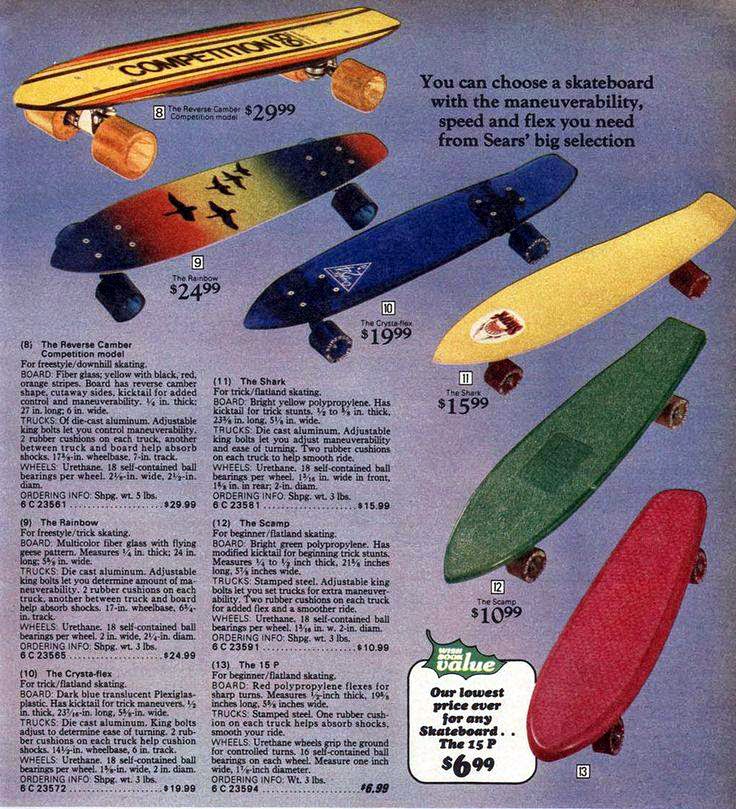
Skateboards in the 70s felt like trouble on wheels. They were simpler than modern boards, often smaller, and a lot less forgiving, but that was part of the appeal. A board, a driveway, and a mild downhill slope could turn into an entire stunt session.
The skateboard carried a different kind of cool than a bike. Bikes were useful. Skateboards were attitude. They came out of surf culture, street culture, and that very 70s feeling that a kid could turn any paved surface into a performance space. You did not need a destination. You needed balance, nerve, and pavement that was not actively trying to kill you.
The boards were not always smooth-riding miracle machines. Wheels could be hard. Trucks could be twitchy. Pavement could be cracked, gritty, and full of pebbles that acted like land mines. A single tiny rock could stop the board dead while the rider continued forward like physics had filed a complaint.
Skateboarding brought a different energy from bikes. It felt cooler, riskier, and more improvised. Kids learned balance on cracked sidewalks, empty pools, parking lots, and driveways where every pebble was a potential betrayal. The board did not care about your confidence. It would leave without you.
It also had a visual language: standing sideways, crouching low, leaning into turns, trying to look casual while deeply afraid. Kids practiced kick turns, hill runs, curb hops, and tricks that were mostly invented on the spot. The driveway became a wave. The curb became a challenge. The fall became part of the afternoon.
The lifestyle part mattered too. Even if you lived nowhere near a beach, you could still pretend the driveway was Venice, the sidewalk was a boardwalk, and the neighbor’s sloped driveway was basically a professional course. The board made ordinary pavement feel like terrain.
Roller Skates: Metal Wheels, Sidewalk Drama, and Toe Stops
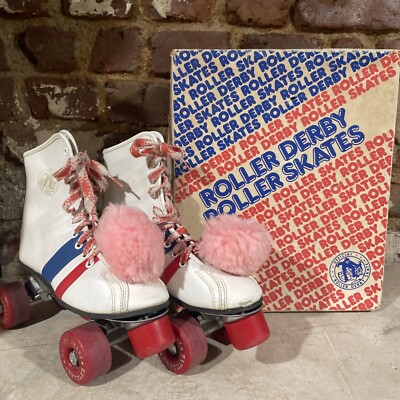
Roller skates brought speed to kids who were not ready for bicycles or who wanted the drama of falling in a completely different way. Adjustable metal skates, strap-on styles, hard wheels, skate keys, toe stops, and sidewalk cracks created a whole category of outdoor comedy.
70s skates had a physical ritual to them. You strapped them on, tightened them, tested your balance, and immediately realized the ground had opinions. Some kids had shoe skates. Some had clamp-on metal skates. Some had hand-me-downs that felt like they had been engineered by someone with a grudge against ankles.
Skates worked anywhere flat enough to try and rough enough to punish overconfidence. Driveways became rinks. Carports became arenas. Sidewalks became obstacle courses. The sound of metal or hard plastic wheels on concrete was part of the neighborhood soundtrack.
Skating also made kids performative. You did not just move. You glided, spun, tried tricks, crashed into lawn chairs, and pretended the fall was intentional. Someone always wanted to skate backward. Someone always regretted it.
Roller skates were especially good at turning ordinary spaces into stages. A driveway could be a roller rink. A garage could be a practice area. A sidewalk could be a parade route. A basement could become a skating rink until an adult heard the wheels and shut down the entire operation.
They were fun because they felt slightly fancy and slightly dangerous at the same time. The toe stop promised control. The sidewalk crack explained otherwise.
Water Toys Turned the Lawn Into a Danger Zone
Summer backyard play had one great rule: if there was a hose, the day could escalate. A hose turned grass into a water park, dirt into mud, concrete into a slip hazard, and ordinary kids into loud, soaked maniacs. Nobody needed a pool to create aquatic chaos. The backyard had water pressure and poor judgment.
Slip ’N Slide: Lawn-Based Speed With Consequences
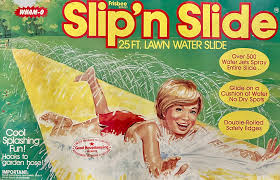
The Slip ’N Slide was one of the most iconic backyard toys because the entire concept was gloriously simple: put plastic on grass, add water, run at it, throw your body down, and hope the end of the slide was kinder than the beginning.
The beauty of the Slip ’N Slide was how little it needed. No pool. No batteries. No scoreboard. Just a long strip of plastic, a hose connection, and a yard that looked flat enough from a distance. In commercials, kids flew across it like summer superheroes. In real life, the slide depended on water pressure, grass quality, yard slope, and whether the plastic had wrinkled into a tiny launch ramp.
The toy worked because it turned a normal yard into an event. Kids lined up, argued about turns, judged slide distance, added more water, adjusted the hose, and invented increasingly unnecessary techniques. The basic belly slide was not enough. There were running starts, knee slides, spins, double slides, races, and at least one kid trying to surf it like that was a good idea.
There was also a whole science to getting it right. Too little water and the slide grabbed your skin like the lawn was angry. Too much water and the end became a mud pit. The hose had to be aimed correctly. The plastic had to stay straight. The landing zone had to be negotiated. Nobody ever did a full safety inspection because summer had momentum.
The Slip ’N Slide also had the great 70s quality of being both fun and mildly alarming. It looked safe in commercials. In real life, the yard had bumps, roots, dirt patches, rocks, uneven grass, and an endpoint that could involve a mud crater, a fence, or a deeply surprised sibling.
It was summer distilled: hose water, hot grass, plastic smell, bare feet, grass clippings stuck everywhere, and the joy of turning the lawn into a speed experiment.
Sprinklers: The Cheapest Water Park in the Neighborhood
The sprinkler was not always marketed as a toy, which is exactly why it became one. It was already there. Adults used it to water the lawn. Kids saw a rotating metal hazard that shot water into the air and immediately decided it was entertainment.
The sprinkler was democratic. You did not need a fancy toy, a pool membership, or a family vacation. If the hose reached the lawn, congratulations, your yard had a water feature. Oscillating sprinklers made tunnels of water. Pulsing sprinklers made surprise attacks. Spinning sprinklers created a wet roulette wheel where everyone screamed even though the pattern was obvious.
Running through the sprinkler had its own rhythm. You waited for the water to turn, sprinted through at the exact wrong time, screamed like the cold water had personally attacked you, and then did it again. Some sprinklers pulsed. Some waved. Some sprayed in circles. All of them created games.
The sprinkler also turned ordinary play into endurance. Who could stand in the cold spray longest? Who could jump over it? Who could run across the yard without getting hit? Who could sit directly on it and make everyone else yell? The answer was usually the same kid who later got banned from touching the hose.
Sprinklers created group play with almost no equipment. Kids raced through them, jumped over them, sat on them, moved them, aimed them badly, and created wet zones across the yard. The parents thought the lawn was getting watered. The lawn was getting destroyed. Big difference.
Kiddie Pools: Plastic Oceans and Grass Soup
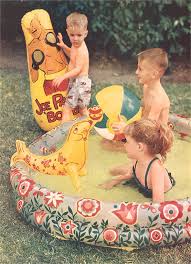
A plastic kiddie pool was not glamorous, but in a hot 70s summer it might as well have been a resort. It appeared in the yard, filled slowly from the hose, collected grass, bugs, leaves, and mystery debris, and then became the center of the day.
The kiddie pool was a low-budget miracle. It was shallow, flimsy, and usually decorated with bright colors or cartoonish summer graphics that made it look more luxurious than it was. The first ten minutes of filling it were thrilling. The next twenty were impatience. The water was freezing at first, then somehow warm enough to be suspicious by mid-afternoon.
Kids did not need depth. They needed water. A kiddie pool could be a swimming pool, boat dock, splash zone, fort moat, car wash, doll bath, action-figure ocean, or recovery station after the Slip ’N Slide. It was also the place where water temperature went from freezing to bathwater in record time.
The pool also became a toy crossover zone. Plastic boats, action figures, dolls, Hot Wheels, buckets, cups, squirt toys, and whatever floated could join. A kid could stage a sea rescue, wash mud off toys, soak feet, or sit there like a tiny exhausted homeowner after a hard day of sprinkler warfare.
The kiddie pool represented the DIY nature of 70s summer. No tickets. No water park. No lifeguard. Just a plastic pool on uneven grass, a hose, and a household pretending this was reasonable.
Water Guns, Balloons, and Hose Warfare
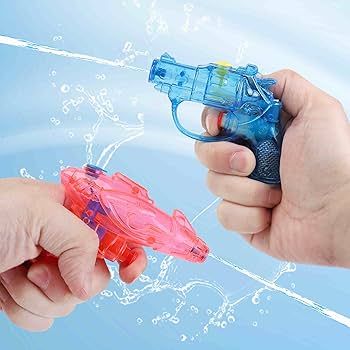
Water guns in the 70s were usually simple plastic affairs, often weak, leaky, and less intimidating than the hose itself. But they still mattered because they gave kids portable authority. A water gun meant you were armed. The hose meant you were overpowered.
The appeal was not accuracy. Most water guns had terrible range and questionable pressure. They leaked down your hand, required constant refilling, and became useless the second someone with hose access entered the battle. But they made kids feel tactical. You could hide behind a tree, sneak around a car, ambush a sibling, and act like you had strategy when you mostly had a plastic squeeze trigger.
Water balloons added planning and betrayal. Filling them was half the work. Tying them was the real boss battle. Carrying them without breaking them required care. Throwing them involved deep emotional commitment, especially when one bounced off harmlessly and everyone judged you.
The balloon bucket was a treasure chest. Kids counted inventory, guarded supplies, made alliances, broke alliances, and launched attacks that were over in thirty seconds after twenty minutes of preparation. Half the balloons broke too early. The other half missed. Nobody cared. The act of preparing them was part of the ritual.
Hose warfare was the nuclear option. Once someone grabbed the hose, all diplomacy ended. Boundaries disappeared. Adults yelled. Kids ran barefoot across wet grass. The yard became a battlefield with terrible aim and no long-term strategy.
The hose was also the ultimate power imbalance. A water gun kid had courage. A hose kid had infrastructure. Once the hose entered play, the game became less “battle” and more “survive the older sibling with water pressure.”
Balls, Bats, Frisbees, and the Lawn Sports Economy
Not every backyard toy had a box or a brand-name moment. A lot of outdoor play came down to objects you could throw, kick, hit, chase, lose, or accidentally send into a neighbor’s yard. Balls and flying discs were the default language of outside.
Nerf Balls: Foam Permission to Throw Things
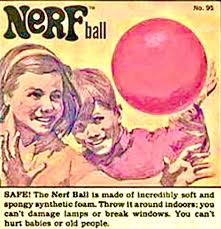
Nerf changed the indoor/outdoor ball conversation because foam made throwing feel parent-approved. The original idea was simple: a ball soft enough that kids could toss it around without destroying the house. Naturally, kids took that permission and expanded it until it became backyard football, hallway football, basement basketball, garage dodgeball, and whatever else could be justified with “it’s Nerf.”
The genius of Nerf was that it lowered the danger level just enough to expand the playing field. A hard ball meant someone might break a window or take a shot to the face and become the afternoon’s medical subplot. A foam ball suggested safety, which made everyone bolder. Kids threw harder, played closer, and moved games into spaces where balls had previously been banned.
In the backyard, Nerf balls were perfect because they were forgiving. They did not hurt like hard rubber balls, they bounced in weird ways, and they could survive being kicked, thrown, sat on, left in the rain, or wedged behind a grill. Foam also made younger kids feel like they could join bigger games without getting wiped out immediately.
Nerf football especially became a neighborhood staple because it made passing possible in small spaces. You could run routes across the lawn, use trees as goalposts, turn a driveway into an end zone, and argue endlessly about whether someone was “in bounds” when the boundary was a shrub.
It also created a kind of low-stakes sports fantasy. Kids invented teams, counted touchdowns, drew plays in the dirt, performed dramatic dives, and treated every pass like it was the Super Bowl even if the field was twelve feet wide and included patio furniture.
Wiffle Ball: The Official Sport of Side Yards
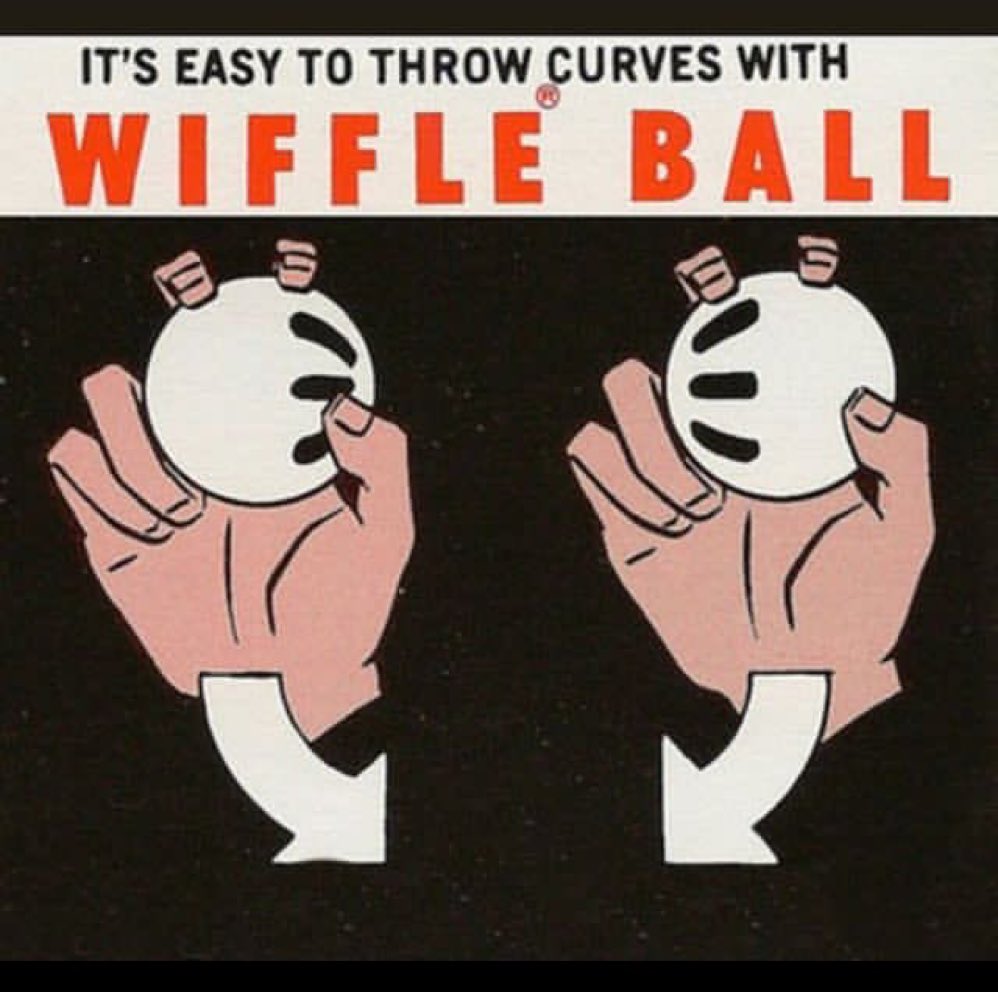
Wiffle Ball was backyard baseball for places that could not handle actual baseball. The hollow plastic ball curved, dipped, floated, and made every average kid feel like they had discovered a secret pitching arsenal. The plastic bat was light, the ball was forgiving, and the game could fit into yards that had no business hosting sports.
The ball itself was the magic. Because it was light and perforated, it behaved differently from a regular baseball. It could curve wildly, stall in the air, drop late, and make a driveway pitcher feel like a backyard legend. Kids who could not throw a real curveball suddenly had movement. Kids who could not hit a baseball could still swing without fear of a hardball rearranging their summer.
The rules were always local. The fence was a home run. The roof was an out. The driveway was foul. The bushes were a ground-rule double. The neighbor’s yard was both out of play and the reason someone had to climb a fence. If the ball cracked, the game continued. If the bat dented, the game continued. If someone’s mom called dinner, the inning suddenly became very important.
Wiffle Ball also made small groups feel like leagues. Three kids could play. Two kids could play. One kid could throw the ball against a wall and call it practice. Teams were uneven, ghost runners were invented, and every yard developed its own stadium personality.
It turned backyards into stadiums. Kids chose teams, picked batting orders, kept fake stats, invented announcer voices, and blamed the wind whenever they struck out.
Frisbee: A Flying Disc With Rooftop Ambitions
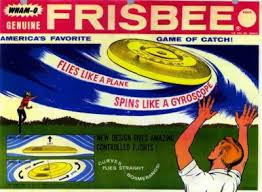
Frisbees were simple, portable, and everywhere. A disc could be tossed in a yard, at the park, on the beach, in the street, or across any open patch of grass. The problem was that “open patch” was usually optimistic. Trees, roofs, power lines, fences, cars, and siblings created obstacles.
The Frisbee had a different feel from ball games. It was about glide, timing, and style. A good throw felt smooth. A bad throw became a chase. Kids tried trick catches, long-distance throws, high floaters, and dramatic dives that were not remotely necessary.
Part of the fun was learning that the disc had moods. Angle it wrong and it sailed into the street. Throw too hard and it knifed into the ground. Catch it wrong and your fingers paid the price. A great throw made you feel briefly sophisticated. A terrible throw made everyone run.
Frisbee play also crossed age groups. Little kids, older kids, teens, parents, dogs, and half-interested adults could all participate. Somebody always threw it too hard. Somebody always threw it into a tree. Somebody always insisted they could get it down with another object, creating a second problem.
It also fit 70s lifestyle perfectly: parks, beaches, cookouts, campgrounds, schoolyards, and big lawns. The Frisbee was not just a toy. It was a vibe — portable, sunny, casual, and one bad throw away from the roof.
Kickballs, Rubber Balls, and Whatever Bounced
Rubber balls carried entire afternoons because they could become anything. Kickball, dodgeball, wall ball, four square, box ball, catch, keep-away, street baseball, and games with names that existed only on one block. If it bounced, it had a future.
These balls were often scuffed, sun-faded, half-inflated, or covered in garage dust. Nobody cared. The point was movement. Throw it at the wall. Kick it across the yard. Bounce it on the driveway. Use it as the only piece of equipment in a game whose rules were invented three minutes ago and already disputed.
A rubber ball also connected yards, schools, sidewalks, and streets. The same ball could be used for recess games, backyard games, driveway games, and neighborhood games. It did not need a brand story. It needed bounce and at least two kids willing to argue about rules.
The games were hyper-local. One block might play wall ball one way. Another had a completely different version. Four square rules changed by school, driveway, and kid-in-charge. Kickball used whatever markers were available: trees, rocks, shirts, Frisbees, or someone’s shoe.
Lawn Games, Yard Equipment, and Things Adults Now Question
The 70s backyard was full of games that looked wholesome in catalogs and slightly more questionable in actual use. Lawn games brought families outside, but they also brought throwing objects, swinging objects, metal objects, pointed objects, tangled nets, and children who believed “farther” was always better.
Badminton and Volleyball Nets: The Net Made It Official
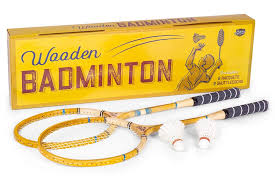
A backyard net instantly upgraded the yard. Suddenly the space had sides. Teams. Rules. A middle. The net made everything feel organized, even if it sagged, leaned, tangled, or collapsed halfway through the game.
The setup was half the experience. Poles had to be jammed into the ground. Ropes had to be tightened. Somebody had to decide where the court ended. The net almost always leaned. The ground was never level. But once the net was up, the backyard had been transformed. It was not just grass anymore. It was a venue.
Badminton had a 70s backyard elegance to it: lightweight rackets, birdies, gentle lobs, and then one kid smashing it like a maniac. It was civilized until it was not. The shuttlecock always found the roof, the tree, or the neighbor’s flower bed.
Badminton worked for family gatherings because it looked refined and required very little athletic dignity. Adults could play. Kids could play. Teams could be uneven. The birdie floated slowly enough to create hope and then dropped stupidly two inches from the racket anyway.
Volleyball was louder and more chaotic. The ball went over the fence. The net was too low. The teams were uneven. Somebody served into a grill. But the presence of a net made the whole backyard feel like a family picnic had become an athletic department.
Croquet, Horseshoes, and Family Picnic Competition
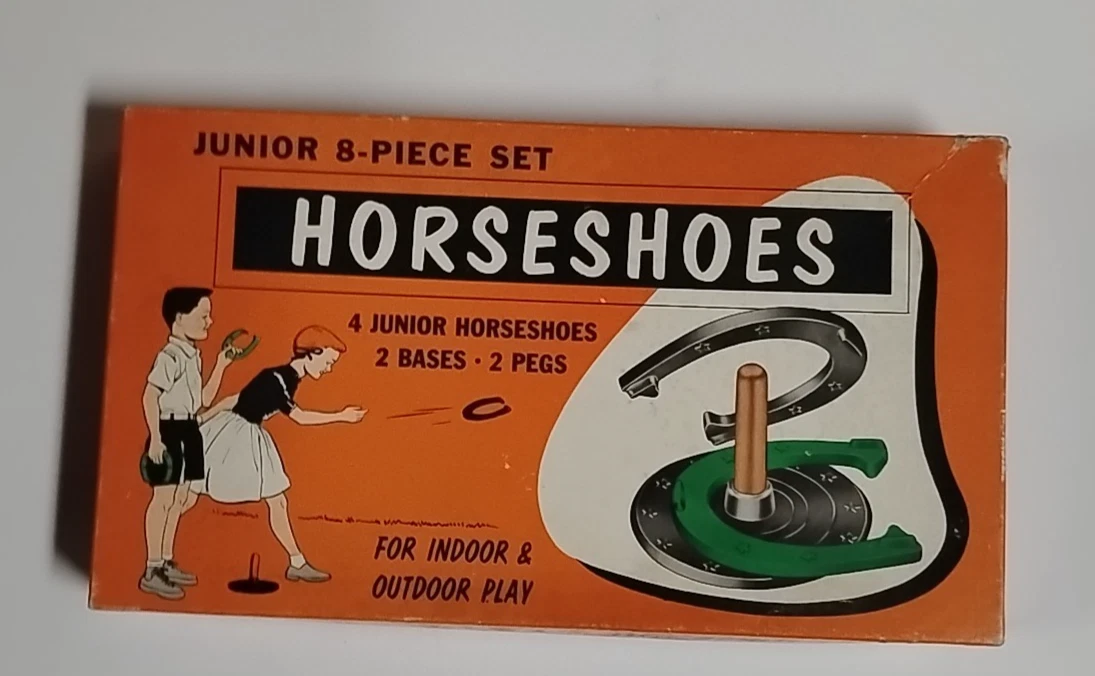
Croquet and horseshoes lived in that strange space between toy, lawn game, and adult social ritual. They came out during cookouts, family gatherings, camping trips, and long afternoons when someone decided kids needed an activity that looked calmer than it actually was.
Croquet had mallets, wickets, colored balls, and a deceptive country-club vibe. Kids treated it like gentle golf for about five minutes before turning mallets into props, weapons, or dramatic pointing sticks. The balls rolled badly on uneven grass. The wickets leaned. The course layout was whatever someone’s uncle decided after lunch.
The game’s appeal was that it made the yard feel formal while still being chaotic. Players took turns, aimed carefully, missed badly, and then insisted the grass was the problem. It was slow enough for adults and strange enough for kids, which made it a perfect picnic game.
Horseshoes had a more serious energy because the objects had weight and adults acted like accuracy mattered. The clang of a good throw felt official. The dirt pit looked like a permanent piece of backyard culture. Kids watched adults play and learned that competition could be quiet, stubborn, and weirdly intense.
These games gave kids a look at adult competition. The pace was slower, but the grudges were real. Someone always got weirdly intense about the rules. Someone else stood too close.
Lawn Darts: The “What Were They Thinking?” Category
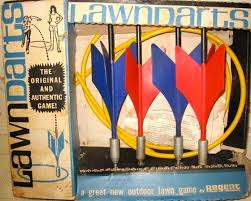
Lawn darts belong in the 70s memory file because they represent a whole category of backyard toys that now make adults pause. The concept was simple enough: toss weighted darts toward a target on the lawn. The problem is sitting right there in the sentence.
In the moment, lawn darts felt like another family lawn game. They had targets. They had turns. They had a clean little competitive structure. They came in a box, which gave everything an undeserved sense of legitimacy. A kid could look at them and think, “This is a game,” while modern adulthood looks back and quietly puts down its coffee.
For many Gen X kids, lawn darts are part of the larger memory of a less padded childhood — not because everything was better, but because the safety expectations were different. Backyard toys often assumed kids would manage risk with common sense, which is adorable because children are famously made of impulse and noise.
The nostalgia is not that lawn darts were a good idea. The nostalgia is that they capture the vibe of the era: adults buying something in a box, kids turning it into a challenge, and everyone learning later that maybe heavy pointed objects and children were not the perfect combo.
Jump Ropes: Sidewalk Rhythm and Playground Endurance
Jump ropes were simple, cheap, portable, and endlessly reusable. One rope could be a solo challenge, a two-person game, a group activity, a race, an obstacle, a boundary line, or a piece of fort equipment. In the 70s, a jump rope was less a single toy and more a tool for whatever game was happening next.
The rhythm mattered. Kids learned timing, chants, speed, tricks, double jumps, crisscross attempts, and group rope games where entering and exiting at the right moment felt like stepping into traffic. Playground chants and sidewalk routines gave the rope a social life beyond the backyard.
It was also one of those toys that looked innocent until competition took over. Who could jump the longest? Who could go fastest? Who could do tricks? Who tripped? Who laughed? Who got whipped in the ankle by accident and decided the game was now personal?
Foam, Plastic, and Backyard “Safe” Weapons
Foam bats, plastic swords, suction-cup arrows, toy bows, cap guns, rubber band-powered gadgets, and pretend sports gear all drifted between backyard play and neighborhood combat. The 70s did not have the same foam-blaster universe the 90s would build, but it absolutely had kids turning harmless objects into action scenes.
The backyard was where role-play got physical. Cowboys, superheroes, cops, robbers, astronauts, stuntmen, soldiers, detectives, explorers — whatever was on TV could end up acted out behind the house. A stick could become a sword. A trash-can lid could become a shield. A foam ball could become ammunition. A picnic table could become a fortress.
The appeal was movement and imagination. A plastic sword was not just a toy weapon. It was a costume without a costume. A foam bat could become sports equipment, a lightsaber substitute, a monster-fighting tool, or something an adult eventually took away because “someone is going to get hurt.”
That is why outdoor toys often crossed categories. Sports toys became battle toys. Ride-ons became getaway vehicles. Lawn furniture became architecture. The backyard did not respect brand categories. It respected imagination and whether something could survive being thrown.
The Homemade Stunt Economy
Not every 70s backyard toy came from a store. Some of the most memorable play came from kids turning household junk into equipment. Boards, bricks, plywood, cardboard boxes, trash cans, lawn chairs, rope, blankets, and old tires became ramps, forts, obstacle courses, goals, bases, and hazards.
Ramps: Two Bricks and a Bad Idea
The homemade ramp may be the most honest 70s toy ever created. It was usually just a board propped on bricks, cinder blocks, a curb, or whatever was nearby. It looked unstable because it was. It still counted.
The ramp had a natural escalation curve. First it was low. Then someone said it was too easy. Then the bricks got taller. Then the board got shorter. Then the landing area became questionable. Then the audience formed. The ramp itself did not change much, but the confidence around it became wildly detached from reality.
Bikes, skateboards, Big Wheels, roller skates, and toy cars all met the ramp eventually. The first jump was low. Then someone said it needed to be higher. Then someone moved the board. Then the ramp shifted. Then the afternoon gained a story that would be retold with increasing exaggeration.
Ramps turned the driveway into a stunt show. Kids lined up, judged distance, argued over who went first, and offered the traditional words of encouragement: “You won’t get hurt.” This was rarely based on evidence.
The homemade ramp was also pure kid engineering. No blueprint. No testing. No adult approval. Just available materials and a shared belief that momentum would solve the problem. Sometimes it did. Sometimes it produced a noise that made adults come outside.
Forts, Bases, and Backyard Architecture
Fort-building was backyard world-building with trash. Cardboard boxes, blankets, lawn chairs, scrap wood, branches, old sheets, and patio cushions became bases, clubhouses, military outposts, haunted houses, spaceships, and secret headquarters.
A fort gave the backyard a story. It created territory. It made teams. It gave kids a place to hide, plan, snack, argue, and declare that no adults were allowed, even though adults owned the yard, the house, the food, and technically everything else.
Forts also changed ordinary household objects into adventure gear. A sheet became a wall. A chair became a support beam. A cardboard appliance box became prime real estate. A pile of sticks became a barricade. An old tarp became a roof until the first gust of wind turned it into a neighborhood incident.
The best forts were not structurally sound. That was part of the charm. If a blanket wall collapsed, you rebuilt it. If a cardboard roof sagged, you called it a design feature. If ants moved in, the fort had been reclaimed by nature and everyone moved operations.
Forts gave kids ownership. Even if the structure lasted only an afternoon, it felt like a place. A secret place. A private place. A kid-made world in a yard where adults usually controlled everything else.
Obstacle Courses: The Backyard Becomes a Game Show
Long before kids watched obstacle-course content online, they built terrible versions in the yard. Jump over the hose. Crawl under the lawn chair. Run around the tree. Touch the fence. Hop across the stepping stones. Don’t step on the grass because now the grass is lava. Nobody asked why. The rules were happening.
Obstacle courses made ordinary objects feel like a challenge. A picnic table became a platform. A sprinkler became a hazard. A jump rope became a boundary. A bike became the final stage. The course changed every round because someone kept making it “harder,” which usually meant more dangerous and less coherent.
The best part was the announcer energy. Kids narrated each other’s runs, timed each other with questionable counting, argued over penalties, and created rematches before the first course had been fully explained. Everyone wanted to make the course. Nobody wanted to follow the course exactly.
This was backyard play at its purest: fast, improvised, rule-heavy, and completely unlicensed. The toy was not one object. The toy was the yard.
The Play Loops: What Kids Actually Did Outside
Backyard toys lasted because they created loops. You did not finish them. You repeated them, escalated them, argued about them, got bored, added water, added speed, added teams, added a ramp, and then watched the afternoon become unstable.
Race Something
Big Wheels, bikes, skateboards, skates, running, crawling, hopping — if two kids had motion, the next step was deciding who was fastest.
Add Water
A hose transformed everything. Sprinklers, Slip ’N Slides, water guns, balloons, muddy yards, and wet pavement turned summer into a lawsuit preview.
Invent Rules
Every yard had its own rule system: roof is out, fence is a homer, tree is base, driveway is lava, and the youngest kid gets one do-over.
Build a Ramp
Two bricks and a board could turn the driveway into a stunt arena. Physics had concerns. Children did not.
Lose the Ball
Balls went over fences, onto roofs, into gutters, under cars, and into yards guarded by dogs, dads, or both.
Stay Out Until Called
The end of play was not a timer. It was dinner, darkness, streetlights, thunder, or somebody’s mom yelling your full name.
The Neighborhood Was Part of the Toy
Backyard play rarely stayed inside one yard. The best outdoor games spilled across driveways, sidewalks, alleys, front lawns, vacant lots, schoolyards, and the mysterious space between houses where nobody knew who was officially responsible.
Kids moved in packs. Someone had the ball. Someone had the bike. Someone had the Slip ’N Slide. Someone had a trampoline cousin. Someone had a dad who would let them borrow tools, which was dangerous information. The neighborhood was a shared toy box with property lines nobody respected until an adult appeared.
That is why the memories feel bigger than the objects. The Big Wheel was a toy, but the driveway was the track. The Nerf football was a toy, but the street was the field. The sprinkler was a toy for the day, but the lawn was the water park. The whole block participated, whether it wanted to or not.
Safety Was Mostly a Vibe
The 70s were not free of safety concerns, but the culture around outdoor play was different. Kids had more room to disappear into the yard, street, or neighborhood for long stretches. The supervising adult might be inside, at a kitchen window, on a porch, or simply operating on faith.
Helmets were not automatic. Knee pads were not standard issue. Shoes were optional until the pavement got hot. Sunscreen was inconsistent. Hydration meant drinking from the hose and deciding the metallic taste was normal.
That does not make it better. It makes it specific. The chaos of 70s backyard toys comes from that mix of freedom, physical play, loose supervision, and toys that encouraged motion before anyone had fully thought through the landing.
How a Real 70s Backyard Day Came Together
Nobody needed a formal itinerary. Outdoor play grew through escalation: start with one object, gather more kids, invent rules and keep adding speed or water until an adult noticed.
Find One Toy
A bike, ball, Frisbee, skateboard or hose was enough to establish the afternoon.
Recruit the Block
Every additional kid brought equipment, rules, opinions and a different tolerance for risk.
Claim the Terrain
The driveway, lawn, sidewalk, fence, tree and neighbor’s yard received official game assignments.
Invent Local Rules
The roof was out, the tree was base and the youngest kid received one deeply disputed do-over.
Escalate It
Add water, a ramp, teams, a stopwatch or one kid saying the current version was too easy.
Wait for the Call
Dinner, darkness, thunder or a full-name porch yell provided the only reliable ending.
How Backyard Toys Fit the 70s Toy Timeline
Backyard toys run through the whole 1970s toy story because they show the decade’s open-ended side. While the late 70s were moving toward action figures, electronics, and franchise play, the backyard was still gloriously analog. Kids needed motion, space, water, and something to throw.
In the early part of the decade, the backyard still felt connected to older outdoor play: bikes, balls, skates, Wiffle Ball, Frisbees, sprinklers, lawn games, and simple ride-ons. 1970 toys capture that bridge between classic play and the plastic-heavy kid culture that followed.
By the middle of the decade, the outdoor toy world felt more stunt-driven and commercial. Kids wanted speed, water, ramps, motion, and products that looked amazing in TV commercials. 1974 toys and 1975 toys sit right in that zone where backyard play and toy marketing started feeding each other hard.
By the late 70s, electronics and franchises were getting louder, but outdoor toys still mattered because they offered something screens could not yet replace: a yard, a driveway, a street, a group of kids, and the belief that a board propped on two bricks was basically engineering.
1970 Toys
Big Wheels, Nerf energy, classic outdoor play, ride-ons, bikes, balls, and the loose beginning of the decade.
1971 Toys
Early-70s summer play, water toys, backyard games, and the kind of simple outdoor chaos that ruled long afternoons.
1974 Toys
Mid-70s stunt energy, plastic action, sidewalk speed, and toys that made the driveway feel like a test track.
1975 Toys
Outdoor games, movie-era kid culture, backyard competition, and the neighborhood getting louder.
1979 Toys
The end-of-decade handoff: electronics rising, franchises booming, and outdoor play still refusing to go inside.
1970 Toys
Big Wheel, Nerf and classic outdoor play set the tone for driveways, lawns and neighborhood games.
1971 Toys
Slip ’N Slide and early-70s summer toys turn the yard into a low-budget water park.
1972 Toys
Bikes, balls and outdoor routines remain central while indoor toy systems grow more elaborate.
1973 Toys
Evel Knievel stunt energy feeds the homemade-ramp economy and driveway spectacle.
1974 Toys
Mid-decade toys get more feature-driven, but wheels, lawns and neighborhood games still dominate outside.
1975 Toys
Novelty and television characters grow louder while simple outdoor play remains stubbornly reusable.
1976 Toys
Stretching, launching and stunt demonstrations match the backyard’s escalating “watch this” energy.
1977 Toys
Star Wars transforms indoor play, but bikes, skates, balls and water toys keep childhood moving outside.
1978 Toys
Electronics enter the toy box while summer still belongs to sprinklers, pavement and neighborhood sports.
1979 Toys
Atari arrives, yet Big Wheel, Hot Wheels and outdoor analog play remain part of the decade’s final handoff.
Why This Still Hits
Backyard toys still hit because they are tied to a version of childhood that felt wide open. Not perfect. Not safer. Not cleaner. Just open. Kids were outside, moving fast, making up rules, getting dirty, negotiating danger, and discovering that boredom could turn into a game if you added a ball, a bike, or a hose.
The objects were simple, but the play was huge. A Big Wheel was a vehicle. A Slip ’N Slide was a water park. A Nerf football was a stadium. A Wiffle ball was a league. A sprinkler was a summer event. A ramp was a stunt show. A cardboard box was a fort. The backyard became whatever the day needed.
That is the Gen X core of it. The toys did not do everything for you. They started something, then got out of the way. The rest was kids, grass, concrete, noise, weather, neighbors, and the faint sound of an adult yelling from somewhere inside the house.
And somewhere, probably in a garage that has not been cleaned since 1983, there is still a half-flat ball, one roller skate, a cracked Wiffle bat, and a Big Wheel wheel worn smooth from one spectacular driveway skid.
The nostalgia is not only about the toys. It is about the size of the world around them. A child with a bike or ball did not experience one product. They experienced the yard, sidewalk, block, weather and neighborhood as part of the same system.
That is why the memories stay physical: hot pavement, cold hose water, scraped plastic, grass stuck to wet legs and the sound of somebody’s mother calling from farther away than modern childhood usually allows.
70s Backyard Toys FAQ
What backyard toys were popular in the 1970s?
Popular 70s backyard toys included Big Wheel, banana-seat bikes, skateboards, roller skates, Slip ’N Slide, sprinklers, kiddie pools, Nerf balls, Wiffle Ball, Frisbees, badminton sets, croquet, horseshoes, jump ropes and simple water toys.
What made Big Wheel such an iconic 70s toy?
Big Wheel gave younger kids a low, stable-looking ride-on with a giant front wheel, loud plastic tires and enough sliding ability to make driveways feel like racetracks.
Was Slip ’N Slide a popular 70s outdoor toy?
Yes. The Slip ’N Slide became one of the decade’s defining summer toys because it turned a regular lawn and garden hose into a repeatable water-speed game.
Why was Nerf important to 70s outdoor play?
Nerf made throwing games feel safer and more flexible. Foam balls could be used for backyard football, catch, hallway games and small-space sports without the same damage risk as harder balls.
Why do people remember lawn darts as unsafe?
Traditional lawn darts used weighted pointed projectiles thrown toward ground targets. That design created obvious injury risks, which is why they now represent the less cautious side of 70s backyard culture rather than a toy to recreate.
How did kids make outdoor games without buying new toys?
Kids used boards, bricks, cardboard boxes, blankets, lawn chairs, ropes, sticks, old tires and household junk to build ramps, forts, goals, obstacle courses and neighborhood games.
How were 70s backyard toys different from 80s outdoor toys?
Seventies outdoor play was often simpler, more brand-mixed and heavily improvised. The 80s toy world brought stronger BMX styling, larger branded systems and more aggressive marketing, while the basic bikes-balls-water formula remained.
Where can I explore more 70s toys?
Start with the 70s Toys hub, then visit the 50 most iconic toys of the 70s, the hottest Christmas toys, the toy catalog guide and the 70s toy commercial archive.