Music Archive Radio memories, chart rewinds and deep cuts.
The Smells Like Gen X music archive covers the songs, artists, albums, countdowns and radio eras that defined the 1970s, 1980s and 1990s—without turning it into another sterile playlist page.
Music Posts
Newest Music-category posts first. No decade or year tags are needed for this grid.
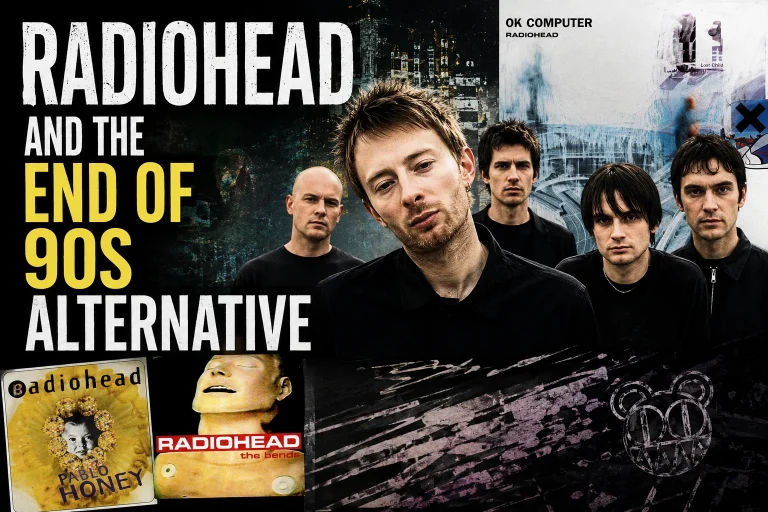
Radiohead and the End of 90s Alternative
Radiohead did not just survive 90s alternative. They helped close its original chapter. From “Creep” and The Bends to OK Computer, this is how Thom Yorke, Jonny Greenwood and the band pushed alternative rock from guitar angst into something colder, stranger and more wired for the future.
Drop the Needle →
50 Essential 90s Alternative Songs
A deep Gen X rewind through the 50 essential 90s alternative songs that defined the decade, from grunge and Britpop to slacker rock, ska-punk, post-grunge, modern rock radio and MTV weirdness. Nirvana, Pearl Jam, Radiohead, Beck, Weezer, Oasis, Alanis Morissette, No Doubt, Sublime and more all show up for the glorious mess.
Drop the Needle →
25 Forgotten 90s Alternative Songs That Deserve Another Spin
A deep Gen X rewind through 25 forgotten 90s alternative songs that deserve another spin, with expanded song stories, album context, a Spotify playlist, modern rock radio memories and buried gems from Hum, Spacehog, Superdrag, Sponge, Catherine Wheel, Failure, The Sundays, Belly, Letters to Cleo, Veruca Salt and more.
Drop the Needle →
30 Best 90s Alternative Albums That Defined the Decade
A deep Gen X rewind through 30 essential 90s alternative albums that defined the decade, with expanded album stories, scene context, key songs, legacy notes and the full messy sweep from grunge and Britpop to industrial rock, alt-pop, slacker rock, ska-punk, post-grunge and modern rock radio.
Drop the Needle →
25 90s Alternative One-Hit Wonders That Took Over Radio
A deep Gen X rewind through 25 90s alternative one-hit wonders that took over radio, MTV and every scratched CD binder in sight — with grunge-adjacent flukes, slacker-rock smirks, post-grunge strays, follow-up singles, career-after-the-hit context and the messy truth behind the one-hit-wonder label.
Drop the Needle →
90s Alternative Rock Songs That Defined the Decade
A deep Gen X rewind through the 90s alternative rock songs that defined the decade, with expanded song essays, MTV and radio context, legacy notes, Gen X memory hits and the messy sweep from grunge and Britpop to industrial rock, post-grunge, alt-pop and college-rock crossover.
Drop the Needle →
90s Grunge Songs That Still Hit Hard
A louder, messier Gen X rewind through the 90s grunge songs that still hit hard, with deep song essays, MTV and radio memories, CD-binder damage, Big 4 gut-punches, grunge-adjacent bruisers and the tracks that still sound like rain on a cracked windshield.
Drop the Needle →
12 90s Movie Soundtracks That Made Alternative Rock Feel Bigger
A Gen X rewind through the 90s movie soundtracks that made alternative rock feel bigger, darker, cooler and way more cinematic — from Singles and The Crow to Reality Bites, Empire Records, Clueless, Romeo + Juliet, Batman Forever and the CDs that turned movies into mixtapes.
Drop the Needle →
20 90s Alternative Videos That Could Only Have Happened on MTV
A deep Gen X rewind through the 90s alternative videos that could only have happened on MTV — the surreal, grimy, funny, unsettling and weirdly beautiful clips that made Nirvana, Soundgarden, Pearl Jam, Beck, Weezer, Radiohead, No Doubt, Garbage, Nine Inch Nails and more impossible to forget.
Drop the Needle →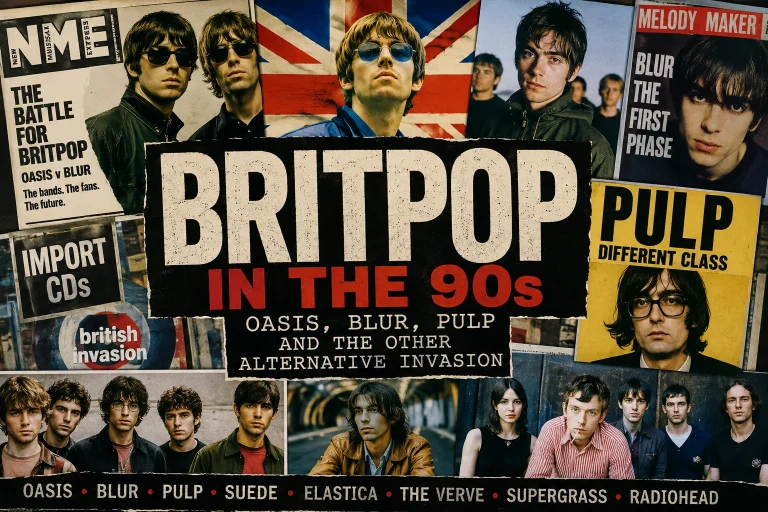
Britpop in the 90s: Oasis, Blur, Pulp and the Other Alternative Invasion
A Gen X rewind through Britpop in the 90s — Oasis, Blur, Pulp, Suede, Elastica, The Verve, Supergrass, Radiohead’s escape route, magazine hype, chart battles, imported CDs, MTV rotation and the other alternative invasion that made British guitar music feel like its own loud, stylish universe.
Drop the Needle →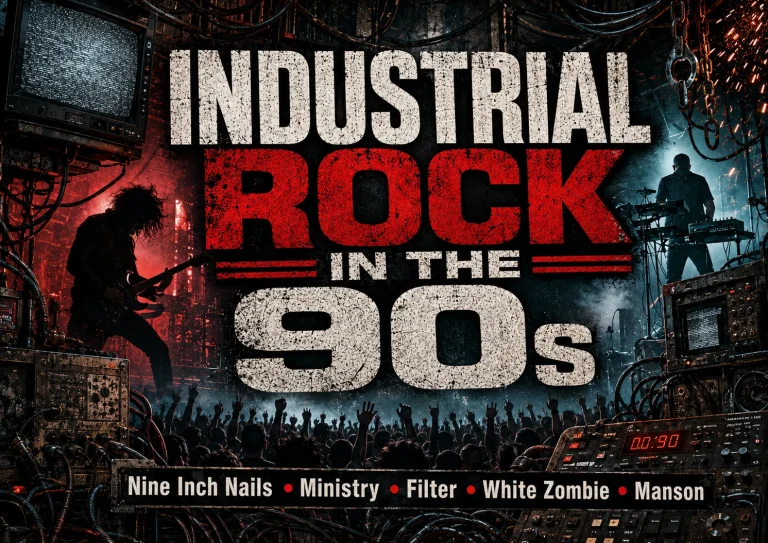
Industrial Rock in the 90s: Nine Inch Nails, Ministry, Manson and the Dark Side of Alternative
A dark Gen X rewind through industrial rock in the 90s — Nine Inch Nails, Ministry, Filter, Stabbing Westward, Gravity Kills, KMFDM, White Zombie, Marilyn Manson, movie soundtracks, MTV videos, mall-goth crossover and the machine-noise side of alternative.
Drop the Needle →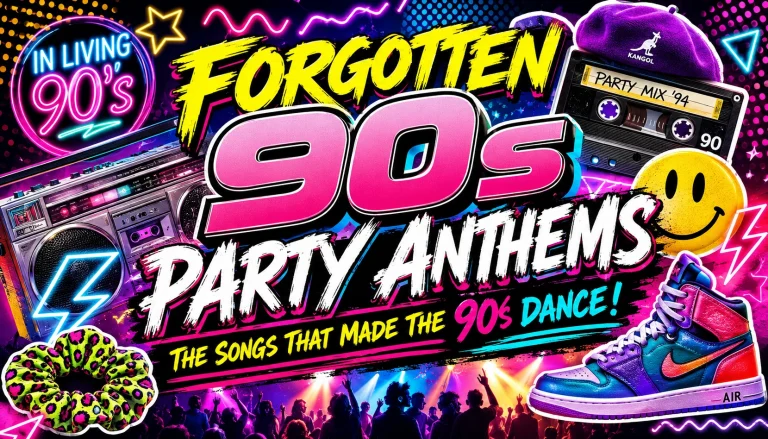
Forgotten 90s Party Anthems That Ruled the Dance Floor
These forgotten 90s party anthems were everywhere: school dances, roller rinks, clubs, weddings, spring break parties, and basement hangouts with terrible lighting. From Miami bass and Eurodance to house classics and hip-hop party tracks, this is the messy, loud, neon side of 90s music that still gets people moving.
Drop the Needle →