MTV’s 90s Alternative Rock Takeover: How Music Television Changed
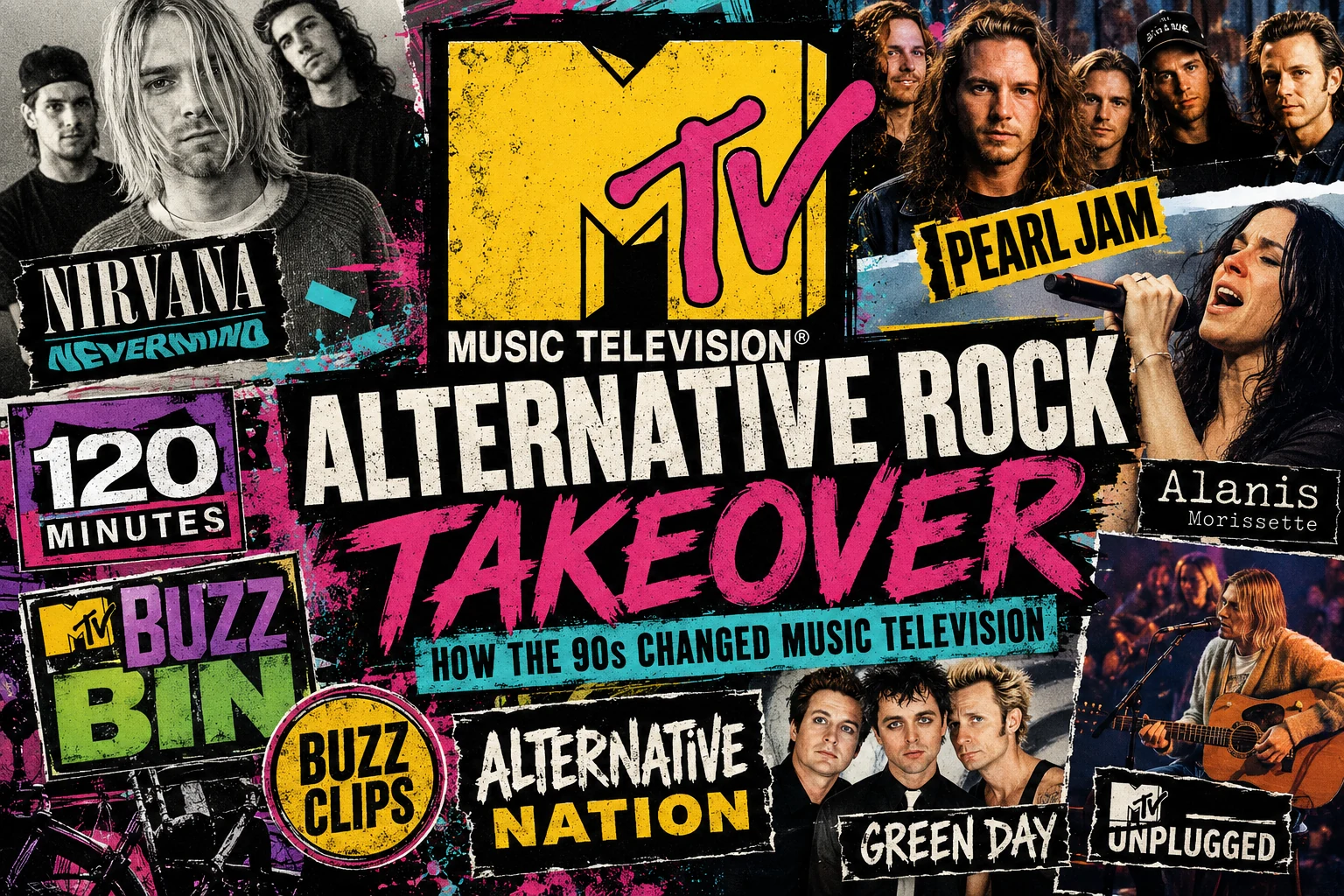
MTV helped turn 90s alternative rock from a collection of underground scenes into a shared national culture. Nirvana, Pearl Jam, Soundgarden, Alice in Chains and the wider alternative wave changed what rock videos looked like, what MTV played and what an entire generation wore, watched and argued about after school.
The takeover moved through heavy rotation, 120 Minutes, Buzz Bin, Buzz Clips, Alternative Nation and MTV Unplugged. Together, those lanes helped 90s alternative and grunge move from record-store discovery to mainstream Gen X culture without ever becoming one tidy sound.
How Did MTV Help Alternative Rock Take Over?
MTV helped alternative rock take over by combining breakthrough videos with repeated exposure, specialty programming and artist-focused storytelling. Nirvana’s “Smells Like Teen Spirit” changed the visual language of mainstream rock, while Pearl Jam, Soundgarden, Alice in Chains and the wider 90s alternative wave gave the channel enough depth to make the shift feel permanent.
120 Minutes handled deeper discovery. Buzz Bin and promoted Buzz Clips created momentum. Alternative Nation gave the scene a regular identity. Heavy rotation made major videos unavoidable, and MTV Unplugged created lasting performances. The 90s alternative music guide connects those MTV moments to the bands, albums, songs and scenes around them.
MTV mattered because viewers experienced the change together. Before streaming and social feeds, a video could move from late-night curiosity to school-hallway conversation, radio hit, mall purchase and wardrobe inspiration through one shared national screen.
How 80s MTV Set Up the Alternative Rock Revolt
To understand MTV’s alternative rock takeover, you have to remember what MTV had already done in the 80s. The channel turned music into image warfare. A song was no longer just a song. It needed a video, a look, a lighting scheme, a jacket, a haircut, a dance move, a strange foggy alley, and at least one person dramatically walking away from something while pretending that made sense.
MTV made pop stars bigger, hair metal louder, new wave weirder, dance music flashier and rock bands more visually self-aware. It was not just a promotional channel. It was a style engine. If radio made songs familiar, MTV made artists recognizable. That mattered enormously for 80s music, especially in the era of Michael Jackson, Madonna, Prince, Duran Duran, Bon Jovi, Def Leppard, Guns N’ Roses, hair metal, synth-pop and every band that suddenly realized a video could make or break them.
By the late 80s, though, the machine had started to feel crowded. Too many rock videos looked like they came from the same warehouse rental package: motorcycles, smoke machines, chain-link fences, models, wet pavement, leather pants, scarf-based decision making and guitar solos staged like emergency weather alerts. The gloss was still entertaining, but it was also becoming predictable.
That is why alternative rock felt so disruptive when it hit the screen. It did not look like the old MTV fantasy. It looked cheaper, stranger, darker and less interested in seducing the camera. In the early 90s, that anti-gloss became the new gloss. MTV did not stop being an image machine. It simply changed the images it rewarded.
Where Alternative Rock Lived Before Heavy Rotation
Alternative rock did not magically appear when Nirvana hit heavy rotation. The 80s and early 90s already had college rock, post-punk, indie scenes, punk, goth, noise rock, industrial, jangle pop, underground metal, regional scenes and bands that existed outside the pop-metal and Top 40 machine. But for most viewers, those sounds lived in the margins: late-night shows, college radio, record stores, mixtapes, word-of-mouth, import bins and the friend who knew too much and made sure everyone else knew he knew too much.
MTV had alternative programming before the full mainstream explosion, and that mattered. It gave strange bands a place to be seen before they could dominate prime rotation. For a certain kind of Gen X viewer, late-night MTV felt like a secret room. You would sit there half-asleep on a school night, volume low so nobody yelled, watching videos that felt like transmissions from a cooler, weirder planet.
That was the pre-takeover energy: R.E.M., The Cure, Sonic Youth, Pixies, Jane’s Addiction, Depeche Mode, The Smiths, They Might Be Giants, New Order, Dinosaur Jr., The Replacements, The Jesus and Mary Chain, Siouxsie and the Banshees, The Church, Violent Femmes, Hüsker Dü, The Breeders, Belly, The Sundays, and a whole mess of bands that made mainstream pop look too clean. Not all of it was grunge, obviously. But it all widened the idea of what MTV could show and what rock could become after the 80s started running out of hairspray fumes.
Alternative music spread through campus stations, record stores, mixtapes, zines and friends who took themselves very seriously because they owned imports.
Shows like 120 Minutes made weird bands feel discoverable, even if you had school in six hours and no idea what you just watched.
By the early 90s, the industry knew underground rock had commercial potential. It just needed the right explosion.
The audience was primed for something less glossy, less fake and less committed to pretending every night was a backstage party.
This is why 90s alternative and grunge hit so hard. The groundwork was already there. Nirvana did not create the underground. They blew a hole between the underground and the mall.
How Nirvana Changed the Look of Rock on MTV
The symbolic detonation was Nirvana. “Smells Like Teen Spirit” was not just a song that got big. It was a video that made the old MTV rock formula look instantly ridiculous. Instead of a glossy stage, luxury excess or a fantasy party, viewers got a burned-out pep rally, bored cheerleaders, a grimy gym, chaotic energy and a band that looked like it had wandered into the center of American youth culture by mistake.
That was the genius of the moment. The video had hooks, movement and visual identity, but it did not feel polished in the old way. It felt aggravated. It felt bored. It felt like school spirit had finally snapped. Every Gen X kid who had spent years sitting through assemblies, gym class and fluorescent institutional nonsense understood the setting immediately. This was not rock fantasy. This was detention with distortion.
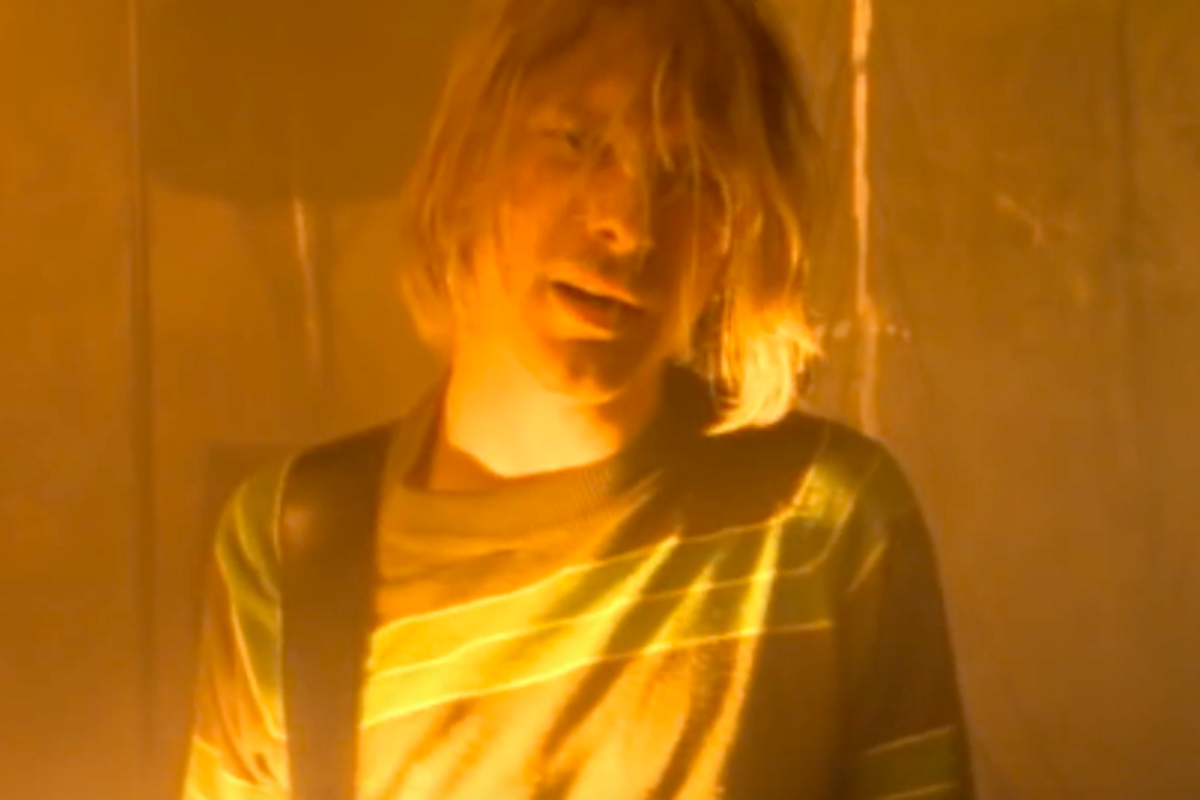
Once Nirvana broke through, MTV had a new template. Rock videos could be weird. They could be cheap-looking on purpose. They could be uncomfortable. They could reject rock-star glamour and still be massively compelling. That visual shift helped explain how Nirvana changed 90s music: the band did not just open a sonic door, they blew up the image system behind mainstream rock.
The old rock video said, “Look how untouchable we are.” Nirvana’s video said, “Everything is broken and we are annoyed you noticed.” For Gen X, that was basically a love language.
How the Big 4 Made MTV’s Grunge Shift Bigger
Nirvana cracked the door, but the movement became a full takeover because there were too many powerful bands for MTV to treat grunge like a one-band accident. The Big 4 of grunge gave the channel different shades of alternative rock: Nirvana’s punk rupture, Pearl Jam’s emotional scale, Soundgarden’s heavy weirdness and Alice in Chains’ dark metallic dread.
Pearl Jam videos often carried an intensity that felt less like performance and more like public exorcism. They were not selling rock-star glamour. They were selling release. The band’s live energy made MTV viewers feel like the crowd was part of the story, not just background decoration. That was a major contrast with videos where the audience existed mostly to scream at hair and leather.
Soundgarden gave MTV something heavier, stranger and more art-damaged than standard hard rock. Their videos could feel surreal, unsettling and huge without falling into the old glam-metal playbook. The sound was heavy enough to connect with metal fans, but the mood and imagery pushed into darker alternative territory. They helped make the 90s rock video feel less like a party and more like a dream you did not fully want to explain.
Alice in Chains brought a different darkness. Their videos and songs had a cold, haunted quality that made the glossy 80s seem miles away. The harmonies, the sludgy riffs, the bleak visuals, the emotional heaviness — it all gave MTV another version of grunge that was not just flannel and feedback. It was gloom with hooks.
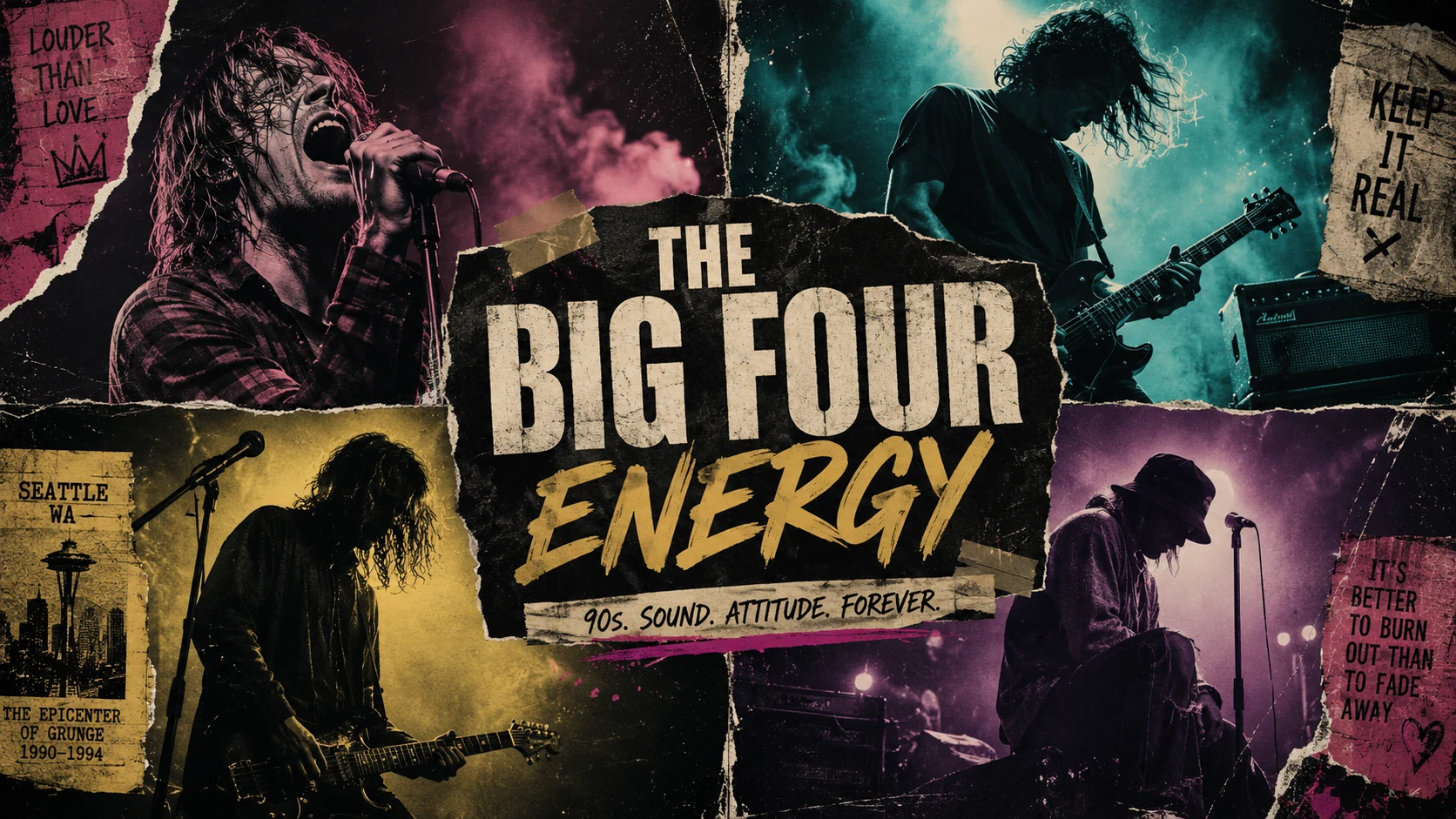
That variety kept the takeover from feeling like a novelty. The best 90s grunge albums gave MTV and radio a deeper world to pull from: Nevermind, Ten, Dirt, Superunknown, Badmotorfinger, Jar of Flies and more. These were not just singles with videos. They were full moods with lighting problems.
Why 120 Minutes Became Alternative Rock’s Late-Night Home
If regular MTV was the brightly lit mall entrance to music culture, 120 Minutes was the weird side hallway by the pay phones where the cool older kids seemed to know something you did not. For Gen X music fans, 120 Minutes was not just a program. It was a ritual. Sunday night, late enough that you knew Monday morning was already ruined, you could watch two hours of videos that did not always fit the main MTV rotation and feel like you had found a secret door.
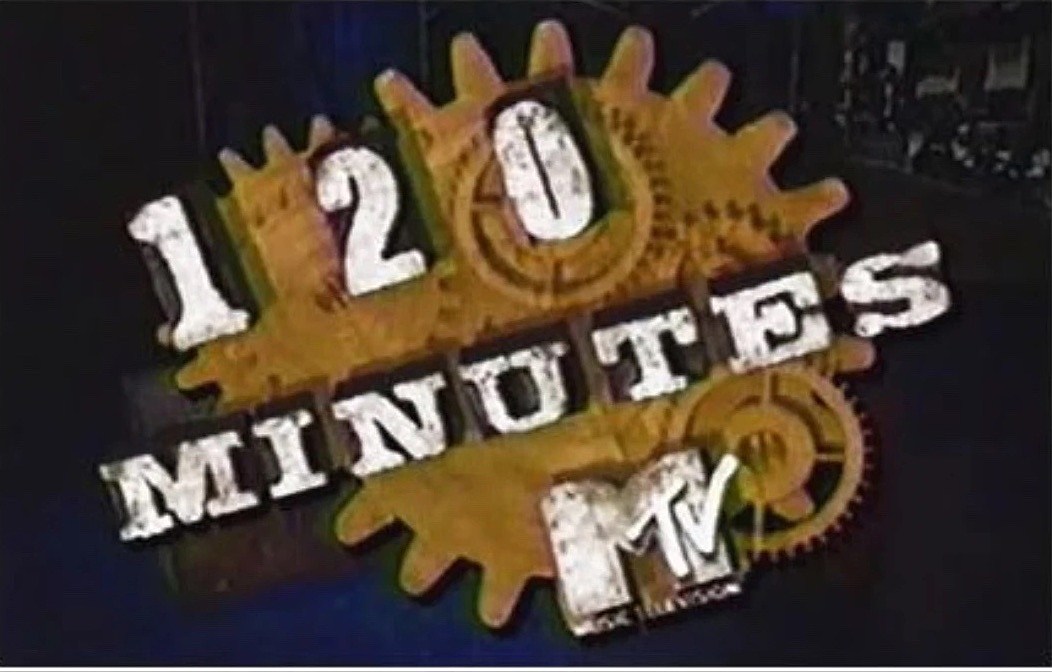
That mattered because before streaming, before YouTube, before playlists, before social media clips and algorithmic discovery, seeing a video was an event. You did not just type in a band and fall into a rabbit hole. You waited. You hoped. You watched whatever MTV gave you because the remote had maybe six buttons and the internet was not coming to rescue your attention span. 120 Minutes rewarded patience. It made discovery feel earned.
The show became a bridge between college radio and mainstream youth culture. It gave screen time to bands that were too strange, too new, too moody, too British, too noisy, too arty, too jangly, too industrial, too ironic or too “what exactly am I looking at?” for daytime MTV. It helped make alternative music feel like a world, not just a genre. And for kids stuck in small towns or suburbs, that world could feel like oxygen.
Why 120 Minutes Felt Different
120 Minutes felt like MTV briefly stopped yelling and started handing you records from the back room. It was slower, stranger and more discovery-driven than the channel’s main rotation. You could see R.E.M., The Cure, Pixies, Sonic Youth, The Smiths, New Order, Jane’s Addiction, They Might Be Giants, Dinosaur Jr., The Jesus and Mary Chain, Depeche Mode, Blur, Oasis, PJ Harvey, Radiohead, Morrissey, The Breeders, Belly, The Sundays, and then some video that looked like it had been filmed inside a haunted thrift store.
It was not always easy viewing. That was the point. Sometimes you loved a song immediately. Sometimes you had no idea what was happening. Sometimes you stayed up way too late just to catch the name of a band because nobody was going to text it to you, and if you missed it, congratulations, you now had a mystery haunting you until your next trip to the record store.
120 Minutes also trained Gen X ears. It taught viewers that “alternative” did not mean one sound. It could be jangly, goth, noisy, industrial, dreamy, punk, arty, British, American, acoustic, electronic, funny, miserable, political or just extremely fond of black-and-white video filters. That broad definition helped set the table for the wider 90s alternative and grunge explosion.
By the time grunge became mainstream, 120 Minutes had already done years of taste-building. It made it easier for MTV viewers to understand that rock could be less polished, less predictable and less interested in the old rules. The show did not just discover the alternative audience. It helped create the habits that made the alternative audience possible.
You found bands by staying awake, staring at a CRT, and hoping the VJ said the name clearly before the next video started.
120 Minutes made bands that lived in record stores and campus stations visible to kids who had no easy way to find them otherwise.
The show connected grunge to goth, post-punk, Britpop, indie rock, industrial, jangle pop and everything else that made the 90s weird.
The beauty of 120 Minutes was that it made you feel slightly cooler for watching it, even if you were wearing gym shorts, drinking flat soda, and praying your parents did not notice the TV glow under the door. It was education by insomnia. It was music discovery with consequences. It was Gen X training camp.
How Buzz Bin and Buzz Clips Created the Next Big Thing
If 120 Minutes was the late-night discovery classroom, Buzz Bin was MTV’s flashing warning label. It was the channel saying, “You may not know this song yet, but you will.” And yes, for anyone whose memory just coughed up those old MTV Buzz Bin CDs: the promoted videos were also commonly referred to as Buzz Clips. That is why the CD branding leaned so hard into the Buzz Clips wording. Buzz Bin was the lane, the feature, the tastemaker bucket. Buzz Clips were the songs and videos getting the push.
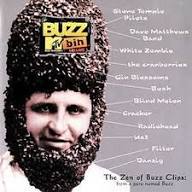
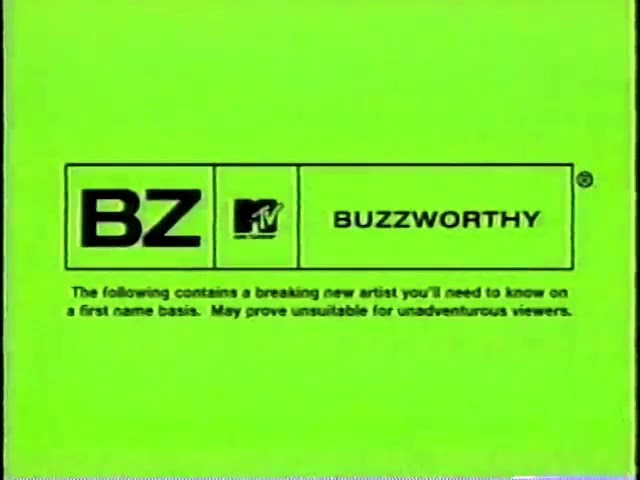
That distinction matters because the memory is a little tangled in the best possible 90s way. You might remember Buzz Bin as the MTV feature. You might remember Buzz Clips from promos, compilation CDs or the way the selected videos were talked about. Both phrases belong in the story. The important thing is what the system did: it identified the videos MTV wanted viewers to notice before they became unavoidable.
Buzz Bin was not just a playlist slot. It was a tastemaker stamp. It told viewers that a band or song had momentum. It also told radio, record stores, labels, magazines and teenagers with CD money that something was moving. In a pre-streaming culture, that kind of coordination could turn curiosity into a hit. You might see a Buzz Clip once and think, “What is this?” See it three more times and think, “I kind of like this.” See it ten more times and suddenly you were at the mall holding the CD while pretending the choice was completely independent.
That was MTV’s power in the alternative era. Repetition did not feel like an algorithm. It felt like culture. A Buzz Bin video could become part of your day because everyone was watching the same channel, talking about the same clips, seeing the same bands, and waiting for the same songs to come around again. The shared screen made the momentum feel real.
Buzz Bin and Buzz Clips also helped alternative music cross from “maybe too weird” into “this is clearly happening.” They gave MTV a way to introduce artists who were not always obvious mainstream bets. Beck, Green Day, The Cranberries, Blind Melon, Stone Temple Pilots, Weezer, Alanis Morissette, Oasis, Radiohead, Hole, Smashing Pumpkins and plenty of other 90s acts benefited from a culture where one video could create curiosity, identity and sales all at once.
Buzz Bin vs. Buzz Clips: The Easy Way to Remember It
Buzz Bin was the MTV feature or category — the place where the channel highlighted videos it wanted to push as important, rising or buzz-worthy. Buzz Clips were the individual promoted videos, which is why the phrase shows up in the old CD-compilation memory. Basically: Buzz Bin was the spotlight. Buzz Clips were what got shoved into the spotlight until you knew the chorus by accident.
That is peak 90s MTV. Part tastemaker, part marketing machine, part music discovery, part “wait, why do I suddenly need this album?” And because we were Gen X, we knew we were being sold to, resented it slightly, then bought the CD anyway because the song ruled.
What Buzz Bin Did Better Than Regular Rotation
Regular rotation made a hit feel familiar. Buzz Bin made a new artist feel like a developing story. It framed the video as something to watch, not just something to leave on while looking for snacks. That framing mattered. MTV was not simply airing music videos; it was teaching the audience how to rank importance.
For alternative rock, that was huge. A band did not need to look like an old-school superstar to become visible. A video could be weird, sarcastic, low-budget, surreal, awkward or emotionally unstable and still get pushed as the next thing. In the 90s, “next” often meant “strange enough to feel honest, catchy enough to survive repetition.”
The feature helped videos feel like events. If MTV kept flagging something, viewers understood it was part of the cultural conversation.
The individual promoted videos became part of MTV’s discovery language. You knew these were the clips the channel wanted you to notice.
See the video, remember the band, go to the mall, buy the CD, read the liner notes like sacred text. This was a business model and a lifestyle.
Alternative videos often needed multiple views. Buzz Bin gave strange songs enough repetition to become familiar without becoming boring immediately.
Buzz Bin was one of the reasons the 90s alternative rock takeover felt so fast. It compressed the distance between discovery and dominance. A song could go from “what is this?” to “everyone at school has an opinion about this” in what felt like a week. And because the music was tied to visuals, the band’s clothes, attitude and video imagery spread right along with the chorus.
That visual momentum fed directly into grunge fashion becoming a 90s uniform. MTV was not just telling you what to hear. It was showing you what the new cool looked like, even when the new cool insisted it did not care about looking cool. Which, naturally, made it look even cooler. Stupid flawless Gen X paradox.
How Alternative Nation Turned a Scene Into an Identity
Then there was Alternative Nation, the show that made alternative rock feel less like a late-night secret and more like an actual address. If 120 Minutes was the deep-dive discovery zone and Buzz Bin was the hype signal, Alternative Nation was the place where the 90s alternative era got a personality. It took the music, the videos, the interviews, the sarcasm, the fashion, the weirdness and the Gen X shrug and made it feel like a nightly culture.
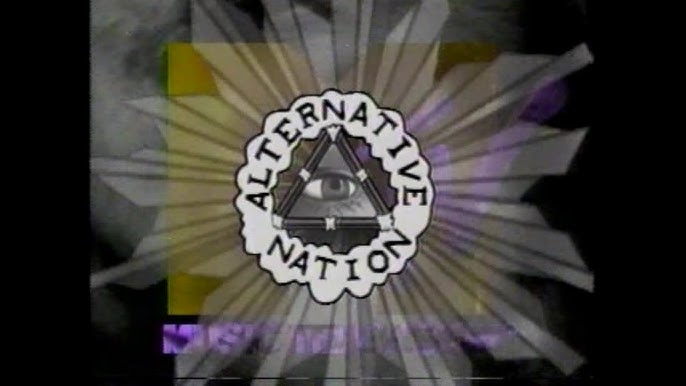
Alternative Nation mattered because it arrived when alternative was no longer just underground but had not yet become totally sanded down by the machine. That middle moment was magic. The music was popular enough to have a show, but still strange enough to feel like it belonged to people who had spent years feeling outside the regular pop system. It was mainstream, yes, but it still carried outsider energy. That tension was the entire 90s in one black T-shirt.
The show also understood that alternative was not only sound. It was attitude. The host, the interviews, the set, the videos, the humor, the fashion and the general lack of polished cheerfulness all mattered. Alternative Nation felt like MTV had finally stopped trying to explain Gen X to adults and instead just gave Gen X a room with a camera in it.
Why Alternative Nation Hit Different
Alternative Nation did not feel like a rock show pretending to be dangerous. It felt like the channel had accepted that the weird kids were now the audience. It played the videos, yes, but it also gave the alternative era a framing device: sarcastic, skeptical, visually messy, culturally aware, and suspicious of anything too polished.
That made it feel less like a countdown and more like a hang. You watched it not just for one specific video, but because the whole thing felt like your lane. It had the mood of a record store after dark, a school-night phone call, a zine with too much photocopier toner, and someone saying “mainstream” like it was a health condition.
Alternative Nation helped normalize the idea that alternative rock could be everyday viewing. Not just a late-night specialty. Not just a single breakthrough video. Not just a Buzz Bin push. A whole block, a whole scene, a whole identity. It made bands like Nirvana, Pearl Jam, Soundgarden, Alice in Chains, Smashing Pumpkins, Hole, Beck, Green Day, Nine Inch Nails, The Breeders, Stone Temple Pilots, Radiohead, R.E.M., The Cranberries and others feel like they were part of the same cultural weather system, even when they sounded nothing alike.
That was huge for Gen X. Alternative Nation turned scattered taste into a tribe. You could be in a town where almost nobody understood your music, and suddenly MTV was broadcasting proof that your weird little universe had a national signal. There were other people staying up, watching, taping, buying CDs, wearing the shirts, cutting their hair badly, and saying “whatever” with the seriousness of a religious vow.
Alternative Nation helped move the music from special-interest discovery into regular MTV identity.
The show understood that alternative was attitude, fashion, humor, boredom, weirdness and music all tangled together.
For Gen X kids outside major scenes, Alternative Nation felt like proof that the weird world was bigger than your school hallway.
Alternative Nation also helped define the difference between “rock” and “alternative” for MTV viewers. The old rock video had been about spectacle. Alternative Nation made room for mood. It did not require every artist to be glamorous, technically perfect or emotionally simple. It made space for awkwardness, anger, irony, sadness, politics, slacker humor, feminist rage, industrial anxiety, British swagger and whatever Beck was doing with leaf blowers and thrift-store prophecy.
It also made the contradictions obvious. Alternative music was anti-mainstream, but here it was on MTV. The artists often resisted packaging, but the channel packaged the resistance. Fans hated selling out, but we also absolutely wanted the video to come on again. Alternative Nation lived inside that contradiction without solving it. That is why it felt honest. The 90s did not solve contradictions. It wore them with boots.
How MTV Built an Alternative-Rock Discovery Pipeline
The MTV alternative rock takeover worked because the channel did not rely on one lane. It built an ecosystem. 120 Minutes handled deep discovery. Buzz Bin created momentum. Buzz Clips gave the selected videos a recognizable push. Alternative Nation gave the scene a nightly identity. Heavy rotation made the biggest videos unavoidable. MTV Unplugged gave the bands emotional weight. Interviews, VJs and countdowns made the artists feel like part of the wider culture.
That pipeline is why alternative did not remain a one-band moment after Nirvana. MTV had ways to introduce new sounds, repeat them, frame them, give them context, make them cool, sell them back to us, and then move the next band into position. It was messy. It was corporate. It was magical. It was also the reason half the school suddenly knew a song that had sounded like a secret two weeks earlier.
120 Minutes Built the Deep End
120 Minutes gave MTV a place for bands that were too strange, too new, too regional or too underground for regular rotation. It trained viewers to explore beyond the obvious.
Buzz Bin Created Momentum
Buzz Bin made new videos feel important. It gave viewers a signal that a band was rising and gave songs enough repetition to become part of the conversation.
Buzz Clips Made the Push Memorable
Buzz Clips were the individual videos getting the spotlight. The phrase stuck in the Gen X brain partly because of MTV promos and those Buzz Bin CD memories.
Alternative Nation Made It a Culture
Alternative Nation made the scene feel like a destination. It framed alternative rock as a lifestyle, not just a genre: music, clothes, humor, interviews, sarcasm and attitude.
Heavy Rotation Made It Mainstream
Once a video moved into wider rotation, everyone saw it. MTV could turn a band’s sound, look and attitude into national youth culture through repetition.
Unplugged Added Emotional Permanence
MTV Unplugged proved that alternative bands could strip away volume and still wreck the room. It turned songs into memories with folding chairs and haunted lighting.
Together, these MTV lanes created a feedback system that turned alternative music into a full cultural package. See a band late at night. Hear the song again through Buzz Bin. Watch the Buzz Clip until it becomes familiar. Catch the video on Alternative Nation. See it in regular rotation. Buy the CD. Wear the shirt. Argue about selling out. Repeat until graduation.
How MTV Expanded Alternative Rock Beyond Seattle
Grunge gets the headline because it changed the channel’s center of gravity, but MTV’s alternative rock takeover was much bigger than Seattle. Once MTV made room for the weird stuff, the floodgates opened. The 90s alternative era pulled from punk, college rock, industrial, alt-pop, noise, Britpop, singer-songwriter angst and whatever category Beck was apparently inventing while everyone else was still trying to understand him.
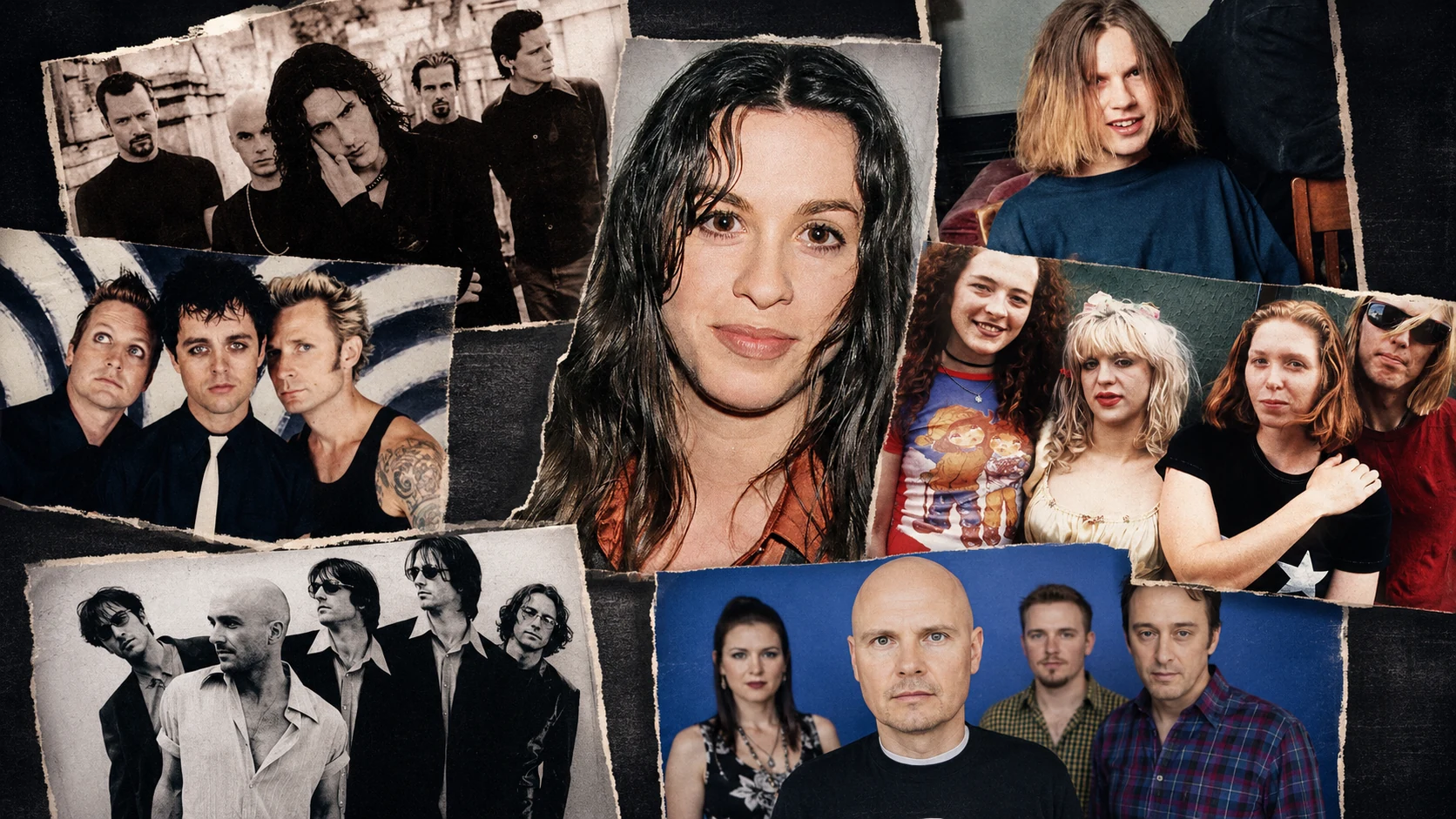
R.E.M. helped prove alternative could be thoughtful, strange and commercially massive without turning into hair metal in a cardigan. Smashing Pumpkins made videos that felt dramatic, arty, wounded and huge. Hole brought rage, glamour, mess and confrontation. Green Day shoved punk energy into daytime America like a prank that became a business model. Nine Inch Nails made industrial anxiety look like the inside of a machine having a nervous breakdown. Beck turned slackerdom into collage art. Alanis Morissette brought jagged emotional confession into the mainstream with enough force to make everyone reconsider old voicemail messages.
MTV’s genius, at least for a while, was that it made all of this feel connected. These artists did not all sound alike. They did not all come from the same scene. They did not all share the same politics, fashion or emotional damage. But on MTV, they formed a larger mood: alternative was the new mainstream because the mainstream itself had started to look suspiciously boring.
Proof that alternative could be smart, strange, melodic and huge without losing its oddball DNA.
Dramatic visuals, heavy guitars, wounded vocals and enough grandiosity to make the suburbs feel mythic.
Anger, glamour, mess, confrontation and a reminder that alternative culture was never just sad dudes in flannel.
Fast, bratty, catchy and perfectly built for bored kids who suddenly needed a skateboard despite having no balance.
Dark, mechanical, unsettling and deeply useful for anyone processing feelings through black clothing and volume.
Alternative could be funny, weird, genre-bent, ironic and impossible to explain to someone’s dad in the garage.
Proof that the alternative era could turn raw personal frustration into a massive mainstream force.
By the mid-to-late 90s, alternative rock could be anxious, arty, beautiful and deeply concerned about everything.
Oasis, Blur and others gave MTV another flavor of alternative: swagger, melody, attitude and very British drama.
That wider range is why the MTV alternative era still feels so rich. It was not one sound. It was a messy coalition of bands, scenes and moods that shared a basic suspicion of polished pop culture while also becoming polished pop culture. Again, the 90s were exhausting, but at least the soundtrack ruled.
How MTV Turned Alternative Style Into a Uniform
MTV did not just turn alternative rock into something you heard. It turned it into something you wore. Videos made the look repeatable: flannel, ripped jeans, thrift-store shirts, combat boots, cardigans, messy hair, long sleeves under short sleeves, oversized sweaters, dark lipstick, baby-doll dresses, band tees, weird hats and the general posture of someone trying very hard not to look like they tried.
That visual repetition mattered. If you lived nowhere near Seattle, MTV showed you the uniform. If you had no cool record store nearby, MTV showed you the mood. If you were stuck in the suburbs with a mall, a bedroom and a vague sense that everything was fake, MTV handed you a look that said, “Correct, and here is a flannel.”
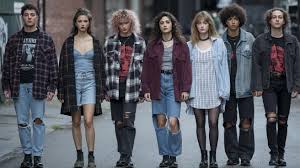
The connection between music television and style is why grunge fashion became a 90s uniform. The clothes were practical and local at first, but MTV made them symbolic. Flannel became shorthand for authenticity. Ripped jeans became shorthand for anti-gloss. Combat boots became shorthand for “I have feelings and probably a scratched CD.”
The funny part is that Gen X knew it was being marketed to. We were not fooled, exactly. We just participated anyway because the clothes were comfortable and the music was good. Sometimes that is the whole bargain.
How Alternative Videos Changed Gen X Teen Culture
The MTV alternative rock takeover changed teen culture because it gave Gen X a shared visual language. Before social media, before streaming, before YouTube, before every band had a camera in its pocket, MTV was the central feed. It was what you watched after school. It was what played in the background when friends came over. It was what taught you which bands mattered, which shirts mattered, which videos were cool and which references would make absolutely no sense to your parents.
This was a lifestyle as much as a music format. We are talking about bedroom TVs, late-night volume control, VJs, countdowns, taped videos, school hallway debates, CD longboxes, record-store runs, mall trips, magazines, posters, headphones, landlines, mixtapes, and the very real pain of waiting for a video to come back on because there was no search bar, just patience and emotional damage.
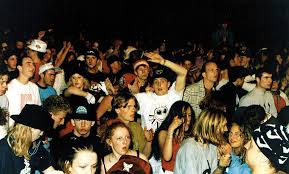
Alternative videos also made weirdness socially usable. Before that, a lot of outsider taste had to be discovered through friends, older siblings, college radio or whatever clerk at the record store silently judged you into better decisions. MTV made the outsider aesthetic visible to millions. Suddenly the weird band was not just weird. It was in rotation. Suddenly your strange taste had backup from cable television. We cannot overstate how powerful that felt before the internet turned everyone into a niche expert with a ring light.
The takeover also changed what teen rebellion looked like. It was less about looking dangerous in the old rock-star way and more about looking skeptical, exhausted, ironic, messy and allergic to pep. Alternative rock made alienation mainstream, which sounds contradictory because it absolutely was. But that contradiction was basically the operating system of the 90s.
Why MTV Unplugged Made Alternative Rock Permanent
MTV’s alternative rock takeover was not only loud. MTV Unplugged gave the 90s another way to understand grunge and alternative music: stripped down, exposed, intimate and somehow even heavier without the full electric wall. That mattered because it proved the songs were not just distortion and attitude. Underneath the noise were melodies, pain, tension and performances that could make a room go quiet in the worst possible way.
Nirvana’s Unplugged episode became one of the defining documents of the decade. Alice in Chains delivered a set that felt fragile, haunted and unforgettable. Pearl Jam used acoustic performance to show another side of their intensity. Even Soundgarden, who never had a proper MTV Unplugged episode, had softer material that proved their emotional range belonged in the same conversation.
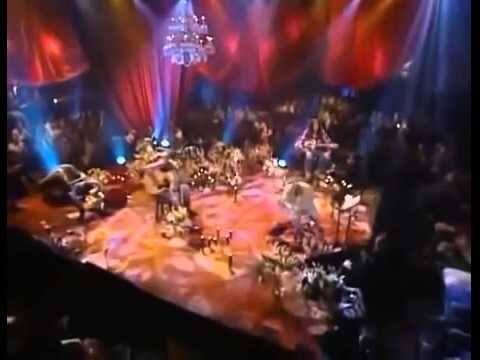
That is why MTV Unplugged and the softer side of grunge still matter. The show helped turn alternative artists into something deeper than a fashion moment or radio trend. It showed that the same bands filling MTV with distortion could sit down under dim lights and make the whole decade feel like it was holding its breath.
How MTV, Radio and Record Labels Amplified the Shift
Once alternative videos started connecting, the machine moved fast. MTV played the videos. Radio added the songs. Labels signed more bands. Magazines chased the scene. Malls sold the clothes. Teenagers bought the CDs. MTV played more videos. The loop fed itself until alternative rock was no longer alternative in the original sense. It was the mainstream with thrift-store lighting.
This loop changed how hits were built. A song could break on modern rock radio, get MTV rotation, become part of school hallway conversation, sell albums, influence fashion and then get fed back into more coverage. Music culture was slower than today, but it was also more concentrated. When a video hit, it could feel like everyone saw it, because a huge part of the country was staring at the same channel waiting for something good to come on.

That concentration is one reason the essential grunge songs of the 90s feel so burned into memory. They were not just songs we liked. They were songs repeated through radio, MTV, friends’ cars, bedrooms, record stores, parties, school dances, tape decks and CD binders that could injure someone if dropped.
But there was a cost. Once the industry realized alternative could sell, it began chasing anything that looked vaguely alternative. That led to brilliant discoveries, yes, but also plenty of imitation. The same machine that overplayed hair metal started packaging alternative. Different clothes, same appetite.
When MTV Made Weirdness Mainstream
The most fascinating thing about MTV’s alternative era is how fast weird became normal. Videos that would have seemed too dark, too strange or too uncommercial a few years earlier became daily viewing. Suddenly mainstream viewers were absorbing surreal images, industrial textures, distorted guitars, ironic humor, emotional collapse, thrift-store style, anti-celebrity posture and lyrics that did not exactly scream “corporate synergy.”
This was the era when a video could look like a fever dream and still become part of the national conversation. It was when slacker jokes, outsider moods, feminist rage, industrial gloom, punk boredom, grunge sadness and alt-pop weirdness all coexisted on the same channel. MTV made the margins visible, then immediately started turning those margins into the new center.
Was that good? Yes. Was it also ridiculous? Absolutely. The channel helped expose millions of kids to stranger, smarter and more emotionally honest music. It also helped commodify the very rebellion it broadcast. Again, welcome to the 90s: the decade where we distrusted selling out while buying the album at Sam Goody.
That is the key to the MTV alternative rock takeover. MTV did not make Gen X weird. Please. We were already doing plenty of that unsupervised. But MTV gave that weirdness a channel, a schedule, a rotation and a national audience.
How Reality TV and TRL Ended MTV’s Rock-Centered Era
The weird thing about MTV is that every era eventually gets eaten by the next one. The alternative rock takeover felt enormous in the early and mid-90s, but by the late 90s the channel’s center of gravity started shifting again. Reality programming became more important. Celebrity culture got bigger. Teen pop roared back. TRL became a daily ritual. The music video channel was becoming something broader, louder and more personality-driven.
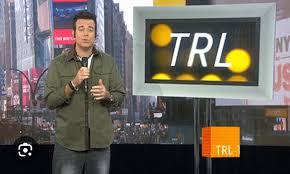
This does not mean alternative rock vanished. It was still present. Rock videos still aired. Post-grunge, pop-punk, nu metal, Britpop and alternative-adjacent bands still had huge moments. But MTV no longer felt like the same weird late-night record-store universe. The channel was becoming a different kind of youth culture machine.
For a lot of Gen X viewers, that shift felt like losing a clubhouse. The old MTV had already been corporate, obviously. Nobody is pretending this was pirate radio run from a basement. But the alternative era made it feel like strange music had won. By the time the late 90s rolled into the early 2000s, it was clear the channel was moving toward another identity.
That is partly why the MTV alternative rock era feels so nostalgic now. It was temporary. It existed in a specific window when cable TV, radio, CDs, malls, magazines and youth culture all overlapped before the internet blew the whole distribution system into glitter. For a while, one channel could make a band feel like a universe.
Why MTV’s Alternative Rock Era Still Matters
MTV’s alternative rock takeover changed music television because it made the underground visible without fully understanding what it was unleashing. It turned Nirvana, Pearl Jam, Soundgarden, Alice in Chains and the wider alternative wave into national culture. It gave Gen X a look, a language and a soundtrack. It made flannel symbolic, weird videos normal and emotional messiness commercially viable.
The takeover also proved that music television could define an era, not just promote one. MTV did not merely follow the 90s alternative rock explosion. It shaped how millions of people understood it. The sound, clothes, videos, late-night shows, Unplugged performances, Buzz Bin pushes and Buzz Clips all became part of the same memory.
Most importantly, 120 Minutes, Buzz Bin, Buzz Clips and Alternative Nation gave the alternative era depth. They made MTV more than a channel that happened to play Nirvana. They made it a discovery system, a hype engine and a nightly clubhouse. That combination is why MTV’s 90s alternative rock era still feels bigger than a programming block. It felt like a whole world, and for a while, that world somehow came through the cable box.
And yes, the machine eventually packaged the rebellion, sold it back, watered it down and moved on. Of course it did. But for a while, MTV felt like the place where the weird kids, bored kids, angry kids, sad kids, sarcastic kids and record-store kids had somehow hacked the mainstream. That was the miracle. That was the scam. That was the 90s.
Explore More 90s Alternative and Grunge
MTV’s alternative rock takeover was one piece of a much bigger Gen X culture shift: grunge, flannel, Unplugged, radio, album culture, weird videos, late-night cable and the slow realization that maybe the adults were not exactly crushing it.
Questions About MTV’s 90s Alternative Rock Takeover
How did MTV help alternative rock take over in the 90s?
MTV helped alternative rock take over by putting grunge and alternative videos into heavy rotation, while shows and features like 120 Minutes, Buzz Bin, Buzz Clips, Alternative Nation and MTV Unplugged gave the movement discovery, momentum, identity and emotional weight.
What was 120 Minutes on MTV?
120 Minutes was MTV’s late-night alternative music program. It introduced viewers to college rock, indie, post-punk, goth, industrial, Britpop and alternative bands that did not always fit regular daytime rotation.
Why was 120 Minutes important?
120 Minutes was important because it gave underground and alternative bands a national visual platform before streaming or social media existed. It helped Gen X viewers discover bands through late-night MTV rather than algorithms.
Was it Buzz Bin or Buzz Clips?
Both terms belong in the 90s MTV memory. Buzz Bin was the MTV feature or tastemaker lane that highlighted buzz-worthy videos. Buzz Clips were the individual promoted videos, which is why the old MTV Buzz Bin CDs leaned into the Buzz Clips wording.
What was MTV’s Buzz Bin?
MTV’s Buzz Bin highlighted videos the channel wanted viewers to notice as rising or important. In the 90s, Buzz Bin exposure could help alternative bands become part of the mainstream conversation.
What were MTV Buzz Clips?
Buzz Clips were the individual videos MTV promoted as part of its buzz-worthy push. In practice, Buzz Bin was the spotlight and Buzz Clips were the selected videos getting that spotlight.
Why did Buzz Bin matter in the 90s?
Buzz Bin mattered because MTV still had enormous influence over youth culture. Repeated exposure could turn a strange or unfamiliar alternative video into something viewers recognized, discussed and eventually bought on CD.
What was Alternative Nation?
Alternative Nation was MTV’s 90s alternative music show that gave the scene a regular identity through videos, interviews, attitude, fashion and Gen X sarcasm. It helped make alternative rock feel like a nightly destination.
Why was Alternative Nation important?
Alternative Nation was important because it turned alternative rock from a collection of videos into a culture. It gave Gen X viewers a place where grunge, indie, punk, industrial, alt-pop and Britpop all felt connected.
What video changed MTV in the 90s?
Nirvana’s “Smells Like Teen Spirit” is the symbolic turning point. The video made grunge impossible to ignore and showed MTV that darker, weirder and less polished rock videos could dominate mainstream youth culture.
Was MTV important to grunge?
Yes. MTV was crucial to grunge’s mainstream visibility. Radio and albums mattered too, but MTV gave grunge a national visual identity through videos, interviews, live performances and MTV Unplugged.
Did MTV help kill hair metal?
Yes, visually and culturally. MTV helped make hair metal huge in the 80s, then helped grunge and alternative rock replace it in the early 90s by shifting rotation toward darker, less glossy and more Gen X-friendly videos.
How did MTV affect grunge fashion?
MTV made grunge fashion visible nationwide. Flannel, ripped jeans, combat boots, cardigans, band shirts and messy hair became recognizable because millions of viewers saw alternative bands wearing them repeatedly on television.
Was alternative rock only grunge?
No. Grunge was central to the 90s alternative explosion, but alternative rock also included college rock, punk, industrial, Britpop, alt-pop, singer-songwriter angst and bands like R.E.M., Smashing Pumpkins, Green Day, Beck, Hole, Nine Inch Nails and Radiohead.
Why did MTV move away from rock videos?
By the late 90s, MTV increasingly shifted toward reality programming, teen pop, celebrity culture and shows like TRL. Rock videos remained part of the channel, but MTV’s identity moved beyond the alternative rock era.
Why does MTV’s 90s alternative era feel so nostalgic?
It feels nostalgic because it happened before streaming and social media, when one cable channel could shape music discovery, fashion, teen culture and shared Gen X memory in a way that feels almost impossible now.
Keep the Rewind Going
Get more 70s, 80s and 90s nostalgia, music rabbit holes, TV memories, toy chaos and Gen X cultural therapy from Smells Like Gen X.